

Community health worker training to reduce mental health and substance use stigma towards patients who have disengaged from HIV/TB care in South Africa: protocol for a stepped wedge hybrid type II pilot implementation trial
Open accessThe DOI matches its Crossref record; 56 of the 56 references it cites were found in a registry or an index.
Abstract
Background: South Africa has deployed community health workers (CHWs) to support individuals to enter and stay in HIV/TB care. Although CHWs routinely encounter patients with mental health (particularly depression) and substance use (SU) conditions that impact their engagement in HIV/TB care, CHWs are rarely trained in how to work with these patients. This contributes to mental health and SU stigma among CHWs, a known barrier to patient engagement in care. Mental health and SU training interventions could reduce CHW stigma and potentially improve patient engagement in care, but evidence of the feasibility, acceptability, and preliminary effectiveness of these interventions is scarce. Therefore, we designed a hybrid type 2 effectiveness-implementation pilot trial to evaluate the implementation and preliminary effectiveness of a CHW training intervention for reducing depression and SU stigma in the Western Cape, South Africa. Methods: This stepped wedge pilot trial will engage CHWs from six primary care clinics offering HIV/TB care. Clinics will be block randomized into three-step cohorts that receive the intervention at varying time points. The Siyakhana intervention involves 3 days of training in depression and SU focused on psychoeducation, evidence-based skills for working with patients, and self-care strategies for promoting CHW wellness. The implementation strategy involves social contact with people with lived experience of depression/SU during training (via patient videos and a peer trainer) and clinical supervision to support CHWs to practice new skills. Both implementation outcomes (acceptability, feasibility, fidelity) and preliminary effectiveness of the intervention on CHW stigma will be assessed using mixed methods at 3- and 6-month follow-up assessments. Discussion: This trial will advance knowledge of the feasibility, acceptability, and preliminary effectiveness of a CHW training for reducing depression and SU stigma towards patients with HIV and/or TB. Study findings will inform a larger implementation trial to evaluate the longer-term implementation and effectiveness of this intervention for reducing CHW stigma towards patients with depression and SU and improving patient engagement in HIV/TB care. Trial registration: ClinicalTrials.gov NCT05282173. Registered on 7 March 2022.
Overview
The claims and statistics of this paper haven’t been checked yet.
Free: it reads the open-access text and checks the first 5 claims that cite a source we can check. Create a free account to check every claim.
Integrity signals
Registry
Cites
Statistics
Figures
Verification
Claims the paper makes
The claims and statistics of this paper haven’t been checked yet.
Free: it reads the open-access text and checks the first 5 claims that cite a source we can check. Create a free account to check every claim.
Self-check
Percentages, sums and reported differences re-computed from the paper’s own numbers.
The self-check needs the paper’s full text.
Citations
Cites
Damschroder, L. J., Aron, D. C., Keith, R. E., Kirsh, S. R., Alexander, J. A., & Lowery, J. C. (2009) · Implementation Science · doi:10.1186/1748-5908-4-50 · Cited by 14,496 · cited 2×
“Interview guides will be developed using open-ended questions and structured probes based on Proctor’s definitions of acceptability, feasibility, and fidelity [47] and the Consolidated Framework for Implementation Research [48].”
MethodLink, B. G., & Phelan, J. C. (2001) · Annual Review of Sociology · doi:10.1146/annurev.soc.27.1.363 · Cited by 8,848
Proctor, E., Silmere, H., Raghavan, R., Hovmand, P., Aarons, G., Bunger, A., Griffey, R., & Hensley, M. (2011) · Administration and Policy in Mental Health and Mental Health Services Research · doi:10.1007/s10488-010-0319-7 · Cited by 8,721 · cited 2×
“Interview guides will be developed using open-ended questions and structured probes based on Proctor’s definitions of acceptability, feasibility, and fidelity [47] and the Consolidated Framework for Implementation Research [48].”
MethodSPIRIT 2013 explanation and elaboration: guidance for protocols of clinical trials
Chan, A.-W., Tetzlaff, J. M., Gotzsche, P. C., Altman, D. G., Mann, H., Berlin, J. A., Dickersin, K., Hrobjartsson, A., Schulz, K. F., Parulekar, W. R., et al. (2013) · BMJ · doi:10.1136/bmj.e7586 · Cited by 6,251 · cited 1×
“This protocol is reported in accordance with the guidelines presented in the Standard Protocol Items: Recommendations for Interventional Trials (SPIRIT) checklist [30] and the Consort Guidelines for Reporting Stepped Wedge-Cluster Randomised Controlled Trials [31].”
MethodWhat can “thematic analysis” offer health and wellbeing researchers?
Braun, V., & Clarke, V. (2014) · International Journal of Qualitative Studies on Health and Well-being · doi:10.3402/qhw.v9.26152 · Cited by 3,056 · cited 1×
“Thematic analysis [53] will be used to analyze qualitative data on implementation outcomes and barriers.”
MethodDesign and analysis of stepped wedge cluster randomized trials
Hussey, M. A., & Hughes, J. P. (2007) · Contemporary Clinical Trials · doi:10.1016/j.cct.2006.05.007 · Cited by 1,393 · cited 1×
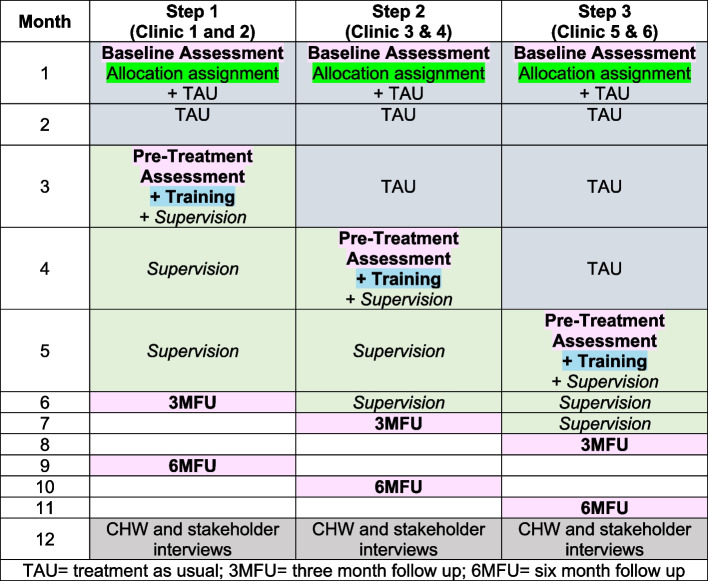
“In stepped-wedge trials, all groups have different intervals of a baseline period in which they are not exposed to an intervention (which we refer to as “treatment as usual” or “TAU”) [35].”
BackgroundEvidence for effective interventions to reduce mental-health-related stigma and discrimination
Thornicroft, G., Mehta, N., Clement, S., Evans-Lacko, S., Doherty, M., Rose, D., Koschorke, M., Shidhaye, R., O'Reilly, C., & Henderson, C. (2016) · The Lancet · doi:10.1016/s0140-6736(15)00298-6 · Cited by 1,338 · cited 2×
“First, as intervention components that involve social contact with individuals with lived experience have the most empirical support for stigma reduction [26, 38–41], peers with lived personal and family experience of mental health and SU will help deliver the training.”
BackgroundInfluentialLivingston, J. D., Milne, T., Fang, M. L., & Amari, E. (2012) · Addiction · doi:10.1111/j.1360-0443.2011.03601.x · Cited by 927
Mental health-related stigma in health care and mental health-care settings
Henderson, C., Noblett, J., Parke, H., Clement, S., Caffrey, A., Gale-Grant, O., Schulze, B., Druss, B., & Thornicroft, G. (2014) · The Lancet Psychiatry · doi:10.1016/s2215-0366(14)00023-6 · Cited by 761 · cited 1×
“This is cause for concern as mental health and SU stigma among health providers is known to impact healthcare quality, including the implementation of evidence-based practices and patient-centered care [25–27].”
BackgroundAn introduction to effectiveness-implementation hybrid designs
Landes, S. J., McBain, S. A., & Curran, G. M. (2019) · Psychiatry Research · doi:10.1016/j.psychres.2019.112513 · Cited by 516
Hemming, K., Taljaard, M., McKenzie, J. E., Hooper, R., Copas, A., Thompson, J. A., Dixon-Woods, M., Aldcroft, A., Doussau, A., Grayling, M., et al. (2018) · BMJ · doi:10.1136/bmj.k1614 · Cited by 475 · cited 1×
“This protocol is reported in accordance with the guidelines presented in the Standard Protocol Items: Recommendations for Interventional Trials (SPIRIT) checklist [30] and the Consort Guidelines for Reporting Stepped Wedge-Cluster Randomised Controlled Trials [31].”
MethodInnovations in Mixed Methods Evaluations
Palinkas, L. A., Mendon, S. J., & Hamilton, A. B. (2019) · Annual Review of Public Health · doi:10.1146/annurev-publhealth-040218-044215 · Cited by 353 · cited 1×
“We will integrate qualitative and quantitative data using a convergent, mixed methods design [54].”
MethodReducing the stigma of mental health disorders with a focus on low- and middle-income countries
Javed, A., Lee, C., Zakaria, H., Buenaventura, R. D., Cetkovich-Bakmas, M., Duailibi, K., Ng, B., Ramy, H., Saha, G., Arifeen, S., et al. (2021) · Asian Journal of Psychiatry · doi:10.1016/j.ajp.2021.102601 · Cited by 317 · cited 1×
“…towards patients with mental health and SU concerns is a major barrier to TB/HIV engagement in low and middle-income countries like South Africa [22, 28], relatively few CHW-level mental health and SU stigma reduction interventions have been tested and implemented in these settings [39–41, 55, 56].”
BackgroundThe South African tuberculosis care cascade: Estimated losses and methodological challenges
Naidoo, P., Theron, G., Rangaka, M. X., Chihota, V. N., Vaughan, L., Brey, Z. O., & Pillay, Y. (2017) · The Journal of Infectious Diseases · doi:10.1093/infdis/jix335 · Cited by 238 · cited 1×
“Evidence suggests that only half of all patients complete TB treatment and less than two-thirds achieve virological suppression on antiretroviral therapy (ART) for HIV [5, 6].”
BackgroundBielenberg, J., Swisher, G., Lembke, A., & Haug, N. A. (2021) · Journal of Substance Abuse Treatment · doi:10.1016/j.jsat.2021.108486 · Cited by 198 · cited 1×
“First, as intervention components that involve social contact with individuals with lived experience have the most empirical support for stigma reduction [26, 38–41], peers with lived personal and family experience of mental health and SU will help deliver the training.”
BackgroundThe HIV epidemic in South Africa: Key findings from 2017 national population-based survey
Zuma, K., Simbayi, L., Zungu, N., Moyo, S., Marinda, E., Jooste, S., North, A., Nadol, P., Aynalem, G., Igumbor, E., et al. (2022) · International Journal of Environmental Research and Public Health · doi:10.3390/ijerph19138125 · Cited by 187 · cited 1×
“Evidence suggests that only half of all patients complete TB treatment and less than two-thirds achieve virological suppression on antiretroviral therapy (ART) for HIV [5, 6].”
BackgroundRivet Amico, K. (2011) · Journal of Health Psychology · doi:10.1177/1359105311398727 · Cited by 149 · cited 2×
“…stigma framework, combined with the Situated Information Motivation Behavioral Skills Model of Care Initiation and Maintenance framework (sIMB-CIM) [37] and adapted based on prior formative work [23, 24], prior training programs to improve CHW mental health and SU literacy and teach…”
BackgroundMethodPeltzer, K., Naidoo, P., Matseke, G., Louw, J., Mchunu, G., & Tutshana, B. (2012) · BMC Psychiatry · doi:10.1186/1471-244x-12-89 · Cited by 144 · cited 1×
“During these visits, CHWs often encounter patients with symptoms of SU and depression due to the high prevalence of depression and substance use (SU) in these patient groups [10–12] and the contribution of these symptoms to HIV/TB care engagement difficulties [11–13].”
BackgroundKemp, C. G., Jarrett, B. A., Kwon, C.-S., Song, L., Jetté, N., Sapag, J. C., Bass, J., Murray, L., Rao, D., & Baral, S. (2019) · BMC Medicine · doi:10.1186/s12916-018-1237-x · Cited by 138 · cited 2×
“Fourth, this study’s testing of the feasibility and acceptability of an intervention and its implementation strategy addresses a critical gap in the mental health and SU stigma reduction literature from LMICs [55].”
BackgroundMethodSorsdahl, K., Stein, D. J., & Myers, B. (2012) · BMC Psychiatry · doi:10.1186/1471-244x-12-101 · Cited by 115 · cited 1×
“These vignettes were informed by previous work in this setting [51, 52] and our pilot test [24].”
Self-citationClay, J., Eaton, J., Gronholm, P. C., Semrau, M., & Votruba, N. (2020) · Epidemiology and Psychiatric Sciences · doi:10.1017/s2045796020000797 · Cited by 103 · cited 3×
“…towards patients with mental health and SU concerns is a major barrier to TB/HIV engagement in low and middle-income countries like South Africa [22, 28], relatively few CHW-level mental health and SU stigma reduction interventions have been tested and implemented in these settings [39–41, 55, 56].”
BackgroundSocial distance towards people with mental illness amongst Nigerian university students
Adewuya, A. O., & Makanjuola, R. O. A. (2005) · Social Psychiatry and Psychiatric Epidemiology · doi:10.1007/s00127-005-0965-3 · Cited by 100 · cited 1×
“CHW stigma CHW stigma towards depression and SU will be assessed at each timepoint through the Social Distance Scale (SDS), a widely used measure of mental health and substance use stigma [46, 49, 50].”
MethodKnowledge of and Stigma Associated With Mental Disorders in a South African Community Sample
Sorsdahl, K. R., & Stein, D. J. (2010) · Journal of Nervous & Mental Disease · doi:10.1097/nmd.0b013e3181f4b2d7 · Cited by 87 · cited 1×
“These vignettes were informed by previous work in this setting [51, 52] and our pilot test [24].”
Magidson, J. F., Joska, J. A., Belus, J. M., Andersen, L. S., Regenauer, K. S., Rose, A. L., Myers, B., Majokweni, S., O’Cleirigh, C., & Safren, S. A. (2021) · Journal of the International AIDS Society · doi:10.1002/jia2.25720 · Cited by 82 · cited 2×
“Based on our previous work [14, 15], approximately one-third of patients with HIV/ TB may screen positive for SU use or depression symptoms, with higher rates among patients with HIV/TB care disengagement.”
BackgroundSelf-citationMagidson, J. F., Joska, J. A., Regenauer, K. S., Satinsky, E., Andersen, L. S., Seitz-Brown, C. J., Borba, C. P. C., Safren, S. A., & Myers, B. (2019) · International Journal of Drug Policy · doi:10.1016/j.drugpo.2018.11.004 · Cited by 80 · cited 2×
“In addition, CHW stigma towards people with symptoms of depression or SU is a known barrier to patient re-engagement in HIV/TB care [22, 28, 29].”
BackgroundSelf-citationSibeko, G., Milligan, P. D., Roelofse, M., Molefe, L., Jonker, D., Ipser, J., Lund, C., & Stein, D. J. (2018) · BMC Psychiatry · doi:10.1186/s12888-018-1772-1 · Cited by 72 · cited 2×
“…with the Situated Information Motivation Behavioral Skills Model of Care Initiation and Maintenance framework (sIMB-CIM) [37] and adapted based on prior formative work [23, 24], prior training programs to improve CHW mental health and SU literacy and teach problem-solving skills [15, 18, 19, 23].”
BackgroundMethodSelf-citationHaroz, E. E., Bolton, P., Nguyen, A. J., Lee, C., Bogdanov, S., Bass, J., Singh, N. S., Doty, B., & Murray, L. (2019) · BMC Health Services Research · doi:10.1186/s12913-019-4097-y · Cited by 70 · cited 1×
“Haroz et al.’s [45] dissemination and implementation measure will quantitatively assess implementation outcomes among CHWs at 3MFU and 6MFU.”
BackgroundMakhmud, A., Thornicroft, G., & Gronholm, P. C. (2022) · Epidemiology and Psychiatric Sciences · doi:10.1017/s2045796022000622 · Cited by 70 · cited 3×
“…towards patients with mental health and SU concerns is a major barrier to TB/HIV engagement in low and middle-income countries like South Africa [22, 28], relatively few CHW-level mental health and SU stigma reduction interventions have been tested and implemented in these settings [39–41, 55, 56].”
Backgroundde Almeida, R. S., Trigueiro, M. J., Portugal, P., de Sousa, S., Simões-Silva, V., Campos, F., SILVA, M. E. I. E., & Marques, A. J. (2023) · International Journal of Environmental Research and Public Health · doi:10.3390/ijerph20043318 · Cited by 70 · cited 1×
“Given the well-documented association between poor mental health literacy and stigma [20, 21], this lack of training likely contributes to CHW stigma towards patients with HIV/TB and depression or SU.”
BackgroundJacobs, Y., Myers, B., van der Westhuizen, C., Brooke-Sumner, C., & Sorsdahl, K. (2021) · Community Mental Health Journal · doi:10.1007/s10597-020-00734-0 · Cited by 65 · cited 5×
“Yet, CHWs receive limited training on how to identify and communicate with patients who have symptoms of SU or depression [16, 17].”
BackgroundInfluentialSelf-citationNgcobo, S., Scheepers, S., Mbatha, N., Grobler, E., & Rossouw, T. (2022) · AIDS Patient Care and STDs · doi:10.1089/apc.2022.0020 · Cited by 64 · cited 1×
“CHWs conduct home visits to promote care re-engagement for individuals who have fallen out of HIV and/or TB care [8, 9].”
BackgroundMyers, B., Petersen-Williams, P., van der Westhuizen, C., Lund, C., Lombard, C., Joska, J. A., Levitt, N. S., Butler, C., Naledi, T., Milligan, P., et al. (2019) · BMJ Open · doi:10.1136/bmjopen-2018-024277 · Cited by 62 · cited 1×
“…Information Motivation Behavioral Skills Model of Care Initiation and Maintenance framework [37] informed training components focused on patient re-engagement in care and to prevent burnout among these frontline workers who witness the difficult circumstances of their patients [16, 42, 43].”
BackgroundSelf-citationRegenauer, K. S., Myers, B., Batchelder, A. W., & Magidson, J. F. (2020) · Drug and Alcohol Dependence · doi:10.1016/j.drugalcdep.2020.108322 · Cited by 62 · cited 3×
“In addition, CHW stigma towards people with symptoms of depression or SU is a known barrier to patient re-engagement in HIV/TB care [22, 28, 29].”
BackgroundSelf-citationTruong, M., Rane, M. S., Govere, S., Galagan, S. R., Moosa, M., Stoep, A. V., Celum, C., & Drain, P. K. (2019) · EClinicalMedicine · doi:10.1016/j.eclinm.2020.100621 · Cited by 58
Myers, B., Joska, J., Lund, C., Levitt, N., Butler, C., Naledi, T., Milligan, P., Stein, D., & Sorsdahl, K. (2018) · Patient Preference and Adherence · doi:10.2147/ppa.s176356 · Cited by 57 · cited 1×
“In addition, CHW stigma towards people with symptoms of depression or SU is a known barrier to patient re-engagement in HIV/TB care [22, 28, 29].”
BackgroundSelf-citationMyers, B., Lombard, C. J., Lund, C., Joska, J. A., Levitt, N., Naledi, T., Petersen Williams, P., van der Westhuizen, C., Cuijpers, P., Stein, D. J., et al. (2022) · The Lancet · doi:10.1016/s0140-6736(22)01641-5 · Cited by 56 · cited 5×
“To limit participant attrition, we will employ similar retention strategies to those we have used in other CHW trials where we have obtained 6MFU rates greater than 80% [15].”
BackgroundMethodInfluentialSelf-citationThomas, L. S., Buch, E., & Pillay, Y. (2021) · Human Resources for Health · doi:10.1186/s12960-021-00565-4 · Cited by 49 · cited 2×
“In response to this challenge, the South African Department of Health has implemented community health worker (CHW) programs to support TB and HIV care [7, 8].”
BackgroundSorsdahl, K., Naledi, T., Lund, C., Levitt, N. S., Joska, J. A., Stein, D. J., & Myers, B. (2021) · Journal of Health Services Research & Policy · doi:10.1177/1355819620954232 · Cited by 47 · cited 2×
“Yet, CHWs receive limited training on how to identify and communicate with patients who have symptoms of SU or depression [16, 17].”
BackgroundSelf-citationMyers, B., Lombard, C., Joska, J. A., Abdullah, F., Naledi, T., Lund, C., Petersen Williams, P., Stein, D. J., & Sorsdahl, K. R. (2021) · AIDS and Behavior · doi:10.1007/s10461-021-03263-3 · Cited by 47 · cited 1×
“During these visits, CHWs often encounter patients with symptoms of SU and depression due to the high prevalence of depression and substance use (SU) in these patient groups [10–12] and the contribution of these symptoms to HIV/TB care engagement difficulties [11–13].”
BackgroundSelf-citationMash, R., Goliath, C., Mahomed, H., Reid, S., Hellenberg, D., & Perez, G. (2020) · African Journal of Primary Health Care & Family Medicine · doi:10.4102/phcfm.v12i1.2632 · Cited by 43 · cited 1×
“In response to this challenge, the South African Department of Health has implemented community health worker (CHW) programs to support TB and HIV care [7, 8].”
BackgroundSaif, F. A., Shakhoori, H. A., Nooh, S., & Jahrami, H. (2019) · PLoS ONE · doi:10.1371/journal.pone.0225738 · Cited by 41 · cited 1×
“This is cause for concern as mental health and SU stigma among health providers is known to impact healthcare quality, including the implementation of evidence-based practices and patient-centered care [25–27].”
BackgroundMoodley, N., Saimen, A., Zakhura, N. M., Motau, D., Setswe, G., Charalambous, S., & Chetty-Makkan, C. M. (2020) · BMC Public Health · doi:10.1186/s12889-020-08562-3 · Cited by 40
Magidson, J. F., Rose, A. L., Regenauer, K. S., Brooke-Sumner, C., Anvari, M. S., Jack, H. E., Johnson, K., Belus, J. M., Joska, J., Bassett, I. V., et al. (2022) · Addiction Science & Clinical Practice · doi:10.1186/s13722-022-00330-5 · Cited by 37 · cited 1×
“…with the Situated Information Motivation Behavioral Skills Model of Care Initiation and Maintenance framework (sIMB-CIM) [37] and adapted based on prior formative work [23, 24], prior training programs to improve CHW mental health and SU literacy and teach problem-solving skills [15, 18, 19, 23].”
MethodSelf-citationGreen, B., Jones, K., Lyerla, R., Dyar, W., & Skidmore, M. L. (2020) · Journal of Mental Health · doi:10.1080/09638237.2020.1713998 · Cited by 22 · cited 1×
“Given the well-documented association between poor mental health literacy and stigma [20, 21], this lack of training likely contributes to CHW stigma towards patients with HIV/TB and depression or SU.”
BackgroundLee, J. S., Bainter, S. A., Tsai, A. C., Andersen, L. S., Stanton, A. M., Magidson, J. F., Kagee, A., Joska, J. A., O’Cleirigh, C. M., & Safren, S. A. (2022) · AIDS and Behavior · doi:10.1007/s10461-022-03906-z · Cited by 22 · cited 1×
“These clinics offer publicly funded, integrated HIV and TB treatment to patients from pre-dominately low-income communities where there is a high prevalence of HIV, TB, SU, and mental health concerns [33, 34].”
BackgroundSelf-citationParry, C. D. H., Myers, B., Londani, M., Shuper, P. A., Janse van Rensburg, C., Manda, S. O. M., Nkosi, S., Kekwaletswe, C. T., Hahn, J. A., Rehm, J., et al. (2023) · Addiction · doi:10.1111/add.16278 · Cited by 22 · cited 1×
“Like previous studies [14, 15, 44], a registered psychological counselor or social worker will provide supervision.”
Self-citationShapiro, A. E., van Heerden, A. C., Schaafsma, T. T., Hughes, J. P., Baeten, J. M., van Rooyen, H., Tumwesigye, E., Celum, C., & Barnabas, R. V. (2018) · Journal of the International AIDS Society · doi:10.1002/jia2.25065 · Cited by 20 · cited 1×
“Challenges with engaging and retaining patients in care contribute to HIV and TB incidence in this setting [1–4].”
BackgroundAbayomi, O., Adelufosi, A., & Olajide, A. (2013) · International Journal of Social Psychiatry · doi:10.1177/0020764012448781 · Cited by 19 · cited 2×
“…sub-Saharan Africa using the SDS to test changes in mental health stigma among community mental health volunteers that had an effect size of 0.75 [49]. of study involvement, that participation is voluntary, and that they may withdraw their consent without any consequences to their role or…”
MethodInfluentialMobility and structural barriers in rural South Africa contribute to loss to follow up from HIV care
Hannaford, A., Moll, A. P., Madondo, T., Khoza, B., & Shenoi, S. (2020) · AIDS Care · doi:10.1080/09540121.2020.1808567 · Cited by 19
Stigmatizing attitudes towards depression among university students in Syria
Swed, S., Sohib, S., Hassan, N. A. I. F., Almoshantaf, M. B., Alkadi, S. M. S., AbdelQadir, Y. H., Ibrahim, N., Khairy, L. T., Bakkour, A., Muwaili, A. H. H., et al. (2022) · PLoS ONE · doi:10.1371/journal.pone.0273483 · Cited by 17 · cited 1×
“CHW stigma CHW stigma towards depression and SU will be assessed at each timepoint through the Social Distance Scale (SDS), a widely used measure of mental health and substance use stigma [46, 49, 50].”
MethodBrooke‐Sumner, C., Williams, P. P., Sorsdahl, K. R., Kruger, J., Mahomed, H., & MYERS, B. J. (2022) · Global Health Action · doi:10.1080/16549716.2022.2123005 · Cited by 15 · cited 1×
“…Information Motivation Behavioral Skills Model of Care Initiation and Maintenance framework [37] informed training components focused on patient re-engagement in care and to prevent burnout among these frontline workers who witness the difficult circumstances of their patients [16, 42, 43].”
BackgroundSelf-citationSmoked drug use in patients with TB is associated with higher bacterial burden
Myers, B., Carney, T., Rooney, J., Malatesta, S., Ragan, E. J., White, L. F., Natcheva, H., Bouton, T. C., Weber, S. E., Farhat, M., et al. (2023) · The International Journal of Tuberculosis and Lung Disease · doi:10.5588/ijtld.22.0650 · Cited by 14 · cited 1×
“During these visits, CHWs often encounter patients with symptoms of SU and depression due to the high prevalence of depression and substance use (SU) in these patient groups [10–12] and the contribution of these symptoms to HIV/TB care engagement difficulties [11–13].”
BackgroundSelf-citationWechsberg, W. M., Doherty, I. A., MYERS, B. J., Morgan‐López, A. A., Emanuel, A., Carney, T., Kline, T., & Zule, W. A. (2013) · International Journal of Drug Policy · doi:10.1016/j.drugpo.2013.10.016 · Cited by 14 · cited 1×
“These clinics offer publicly funded, integrated HIV and TB treatment to patients from pre-dominately low-income communities where there is a high prevalence of HIV, TB, SU, and mental health concerns [33, 34].”
BackgroundSelf-citationScott, K., Sibeko, G., Cummings, B., Myers, B., Sorsdahl, K., Stein, D. J., Kuo, C., & Becker, S. J. (2020) · Training and Education in Professional Psychology · doi:10.1037/tep0000286 · Cited by 13 · cited 2×
“…with the Situated Information Motivation Behavioral Skills Model of Care Initiation and Maintenance framework (sIMB-CIM) [37] and adapted based on prior formative work [23, 24], prior training programs to improve CHW mental health and SU literacy and teach problem-solving skills [15, 18, 19, 23].”
BackgroundMethodSelf-citationRegenauer, K. S., Rose, A. L., Belus, J. M., Johnson, K., Ciya, N., Ndamase, S., Jacobs, Y., Staniland, L., Sibeko, G., Bassett, I. V., et al. (2024) · PLOS Global Public Health · doi:10.1371/journal.pgph.0002657 · Cited by 12 · cited 3×
“…with the Situated Information Motivation Behavioral Skills Model of Care Initiation and Maintenance framework (sIMB-CIM) [37] and adapted based on prior formative work [23, 24], prior training programs to improve CHW mental health and SU literacy and teach problem-solving skills [15, 18, 19, 23].”
BackgroundMethodSelf-citationKey changes in the public health response to TB and HIV in South Africa
Osman, M., du Preez, K., Naidoo, P., Bock, P., Rabie, H., Dlamini, S. S., & Hesseling, A. C. (2020) · The International Journal of Tuberculosis and Lung Disease · doi:10.5588/ijtld.20.0147 · Cited by 11 · cited 2×
“Despite South Africa’s efforts to expand HIV and TB treatment, the country continues to struggle with a high incidence of HIV and TB [1].”
Background
Cited by
Baumann, A. A., Adams, D. R., Baldwin, L., Tabak, R. G., Malone, S. M., Kepper, M. M., Misra‐Hebert, A. D., Stevens, K. R., Fernández, M. E., & Kripalani, S. B. (2025) · Implementation Science Communications · doi:10.1186/s43058-025-00717-w · Cited by 14
Wu, H., Zhu, L., Bao, R.-A., Luo, S., Peng, L., Huang, X., Chen, Z., Zhong, L., Ma, W., Yang, R., et al. (2025) · Public Health · doi:10.1016/j.puhe.2025.106034 · Cited by 10
Hines, A. C., Rose, A. L., Regenauer, K. S., Brown, I., Johnson, K., Bonumwezi, J., Ndamase, S., Ciya, N., Magidson, J. F., & MYERS, B. J. (2024) · Cambridge Prisms Global Mental Health · doi:10.1017/gmh.2024.41 · Cited by 7
“…reduction interventions in low-and middle-income countries focused on HIV-related stigma (Rao et al., 2019); however, trainings intended to reduce stigma toward MH/SU have also been developed and shown to be (Kaiser et al., 2022; Kohrt et al., 2022; Myers et al., 2024; Regenauer et al., in Press).”
BackgroundSelf-citationMagidson, J. F., Regenauer, K. S., Johnson, K., Ma, T., Belus, J. M., Rose, A. L., Brown, I., Ciya, N., Ndamase, S., Sacko, C., et al. (2025) · Journal of substance use and addiction treatment · doi:10.1016/j.josat.2025.209634 · Cited by 2
Self-citationSulistiyorini, D., Mustopa, & Othman, Z. (2025) · Global Health Journal · doi:10.1016/j.glohj.2025.10.002 · Cited by 2
Metadata
- Authors
- Myers, B., Regenauer, K. S., Rose, A., Johnson, K., Ndamase, S., Ciya, N., Brown, I., Joska, J., Bassett, I. V., Belus, J. M., Ma, T., Sibeko, G., & Magidson, J. F.
- Affiliations
- South African Medical Research Council (ZA)
- University of Maryland, College Park (US)
- University of Cape Town (ZA)
- Harvard University (US)
- Swiss Tropical and Public Health Institute (CH)
- Corresponding author
- Myers, Bronwyn
- ORCID
- Venue
- Implementation Science Communications
- Published
- 2024-01-02
- Volume
- 5
- Issue
- 1
- Pages
- 1-1
- ISSN
- 2662-2211 (ISSN-L)
- PMC
- PMC10759561
- OpenAlex
- W4390500396
- Semantic Scholar
- 9ad061cff70a9f39f3d24f0a6bc0c0645ae51e14
- Cited by
- 11
- References
- 56
- Citations by year
- 2026: 2 · 2025: 4 · 2024: 4
- FWCI
- 5.87
- Type
- journal article
- Language
- en
- Open access
- gold
- doi.org
- Licence
- cc-by
- creativecommons.org/licenses/by/4.0 (tdm)
- creativecommons.org/licenses/by/4.0 (vor)
- Locations
- Implementation Science Communications (publishedVersion, cc-by)
- PubMed Central (publishedVersion, cc-by)
- PubMed (publishedVersion)
- DOAJ (DOAJ: Directory of Open Access Journals) (submittedVersion, cc-by-sa)
- eSpace (Curtin University) (submittedVersion, cc-by)
- Funders
- National Institute of Mental Health (R34MH122268, F31MH123020)
- National Institute of Drug Abuse (R36DA057167)
- Topics
- Health Sciences › Health Professions › General Health Professions › Health Policy Implementation Science
- Health Sciences › Medicine › Psychiatry and Mental health › Mental Health Treatment and Access
- Health Sciences › Medicine › Infectious Diseases › HIV/AIDS Research and Interventions
- Keywords
- community health workers, stigma reduction, depression stigma, substance use stigma, psychoeducation, peer trainers, lived experience, clinical supervision, primary health centers, Western Cape
About these checks
Registry, retraction, Cites and statistics results are computed, not judged, with one exception: a printed reference that no index lists is read once by a model before it counts as a citation error. Claims are extracted by a model and kept only when their quote appears verbatim in the text; each cited source is then checked, with a model’s help, for whether it says what the claim relies on. Those verdicts can be wrong — read the claim’s quote and the cited source before relying on one.
Statistics and arithmetic are recomputed, not judged.
Confidence bands are shown only for fields calibrated on our annotated test set. None is calibrated yet, so no band is shown.
What counts as a claim ›How we measure confidence ›How we check this ›
Are you an author, or do you see a problem with this page? Request a review
Data sources
Bibliographic data: Semantic Scholar, OpenAlex, Crossref.
Contains information from the Semantic Scholar Academic Graph Datasets, made available under the ODC Attribution License (ODC-BY 1.0).
Semantic Scholar’s data is described in: Kinney, R., et al. (2023). The Semantic Scholar Open Data Platform. arXiv:2301.10140.
