

The DOI matches its Crossref record; 36 of the 37 references it cites were found in a registry or an index.
A High-Enrollment Course-Based Undergraduate Research Experience Improves Student Conceptions of Scientific Thinking and Ability to Interpret Data
Open accessAbstract
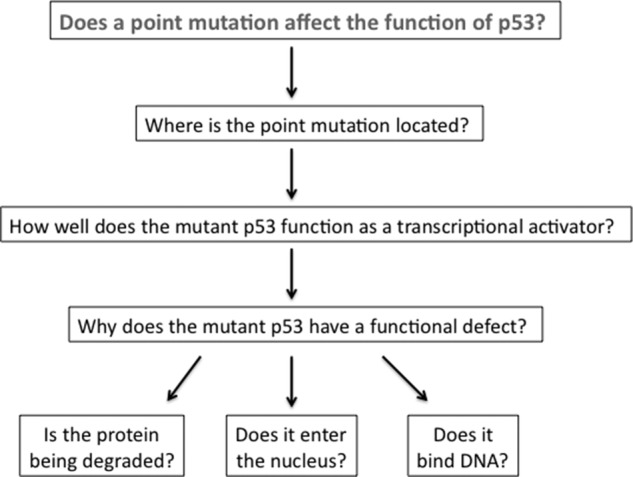
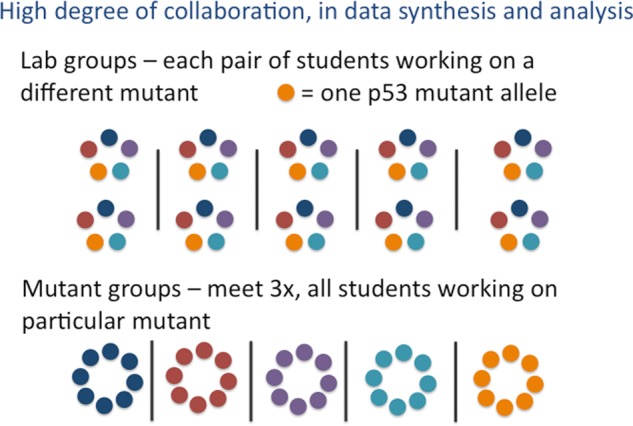
We present an innovative course-based undergraduate research experience curriculum focused on the characterization of single point mutations in p53, a tumor suppressor gene that is mutated in more than 50% of human cancers. This course is required of all introductory biology students, so all biology majors engage in a research project as part of their training. Using a set of open-ended written prompts, we found that the course shifts student conceptions of what it means to think like a scientist from novice to more expert-like. Students at the end of the course identified experimental repetition, data analysis, and collaboration as important elements of thinking like a scientist. Course exams revealed that students showed gains in their ability to analyze and interpret data. These data indicate that this course-embedded research experience has a positive impact on the development of students’ conceptions and practice of scientific thinking.
Overview
The claims and statistics of this paper haven’t been checked yet.
Run the check — free, no account needed. It reads the open-access text and checks the sources it cites.
Integrity signals
Registry
Cites
Statistics
Figures
Verification
Claims the paper makes
The claims and statistics of this paper haven’t been checked yet.
Run the check — free, no account needed. It reads the open-access text and checks the sources it cites.
Claims other papers make about this one
Each is checked against this paper’s own text: does it say what the citing paper says it does?
The source backs part of the claim, not all of it — or backs it for a different population, condition or comparison.
In the citing paper
“Students experience cognitive gains, including analyzing data, interpreting results, and increased content knowledge (6–10, 17, 18).”
From Gains in Scientific Identity, Scientific Self-Efficacy, and Career Intent Distinguish Upper-Level CUREs from Traditional Experiences in the Classroom (2022) · cites this paper as [17]
Experimental — accuracy not yet measured
Self-check
Percentages, sums and reported differences re-computed from the paper’s own numbers.
The self-check needs the paper’s full text.
Citations
Cites
Wagner, H. R., Glaser, B. G., & Strauss, A. L. (1968) · Social Forces · doi:10.2307/2575405 · Cited by 46,525
The Discovery of Grounded Theory; Strategies for Qualitative Research
Glaser, B. G., Strauss, A. L., & Strutzel, E. (1968) · Nursing Research · doi:10.1097/00006199-196807000-00014 · Cited by 39,449
p53 Mutations in Human Cancers
Hollstein, M., Sidransky, D., Vogelstein, B., & Harris, C. C. (1991) · Science · doi:10.1126/science.1905840 · Cited by 8,018
p53, the cellular gatekeeper for growth and division
Levine, A. J. (1997) · Cell · doi:10.1016/s0092-8674(00)81871-1 · Cited by 7,693
(1978) · Medical Entomology and Zoology · Cited by 6,077
Benefits of Undergraduate Research Experiences
Russell, S. H., Hancock, M. P., & McCullough, J. (2007) · Science · doi:10.1126/science.1140384 · Cited by 1,380
Seymour, E., Hunter, A., Laursen, S. L., & DeAntoni, T. (2004) · Science Education · doi:10.1002/sce.10131 · Cited by 1,332
Hunter, A., Laursen, S. L., & Seymour, E. (2007) · Science Education · doi:10.1002/sce.20173 · Cited by 1,324
Assessment of Course-Based Undergraduate Research Experiences: A Meeting Report
Auchincloss, L. C., Laursen, S. L., Branchaw, J. L., Eagan, K., Graham, M., Hanauer, D. I., Lawrie, G., McLinn, C. M., Pelaez, N., Rowland, S., et al. (2014) · CBE—Life Sciences Education · doi:10.1187/cbe.14-01-0004 · Cited by 1,043
Handelsman, J., Ebert-May, D., Beichner, R., Bruns, P., Chang, A., DeHaan, R., Gentile, J., Lauffer, S., Stewart, J., Tilghman, S. M., et al. (2004) · Science · doi:10.1126/science.1096022 · Cited by 928
BIO2010 : Transforming Undergraduate Education for Future Research Biologists
Earth, D. O. (2003) · Cited by 854
Course-Based Undergraduate Research Experiences Can Make Scientific Research More Inclusive
Bangera, G., & Brownell, S. E. (2014) · CBE—Life Sciences Education · doi:10.1187/cbe.14-06-0099 · Cited by 722
Self-citationp53 polymorphisms: cancer implications
Whibley, C., Pharoah, P. D. P., & Hollstein, M. C. (2009) · Nature reviews. Cancer · doi:10.1038/nrc2584 · Cited by 677
Biology in Bloom: Implementing Bloom's Taxonomy to Enhance Student Learning in Biology
Crowe, A., Dirks, C., & Wenderoth, M. P. (2008) · CBE—Life Sciences Education · doi:10.1187/cbe.08-05-0024 · Cited by 629
The cellular response to p53: the decision between life and death
Sionov, R. V., & Haupt, Y. (1999) · Oncogene · doi:10.1038/sj.onc.1203130 · Cited by 608
Corwin, L. A., Graham, M. J., & Dolan, E. L. (2015) · CBE—Life Sciences Education · doi:10.1187/cbe.14-10-0167 · Cited by 513
Jordan, T. C., Burnett, S. H., Carson, S., Caruso, S. M., Clase, K., DeJong, R. J., Dennehy, J. J., Denver, D. R., Dunbar, D., Elgin, S. C. R., et al. (2014) · mBio · doi:10.1128/mbio.01051-13 · Cited by 509
Multifactorial analysis of p53 alteration in human cancer: A review
Soussi, T., Legros, Y., Lubin, R., Ory, K., & Schlichtholz, B. (1994) · International Journal of Cancer · doi:10.1002/ijc.2910570102 · Cited by 351
Increased Course Structure Improves Performance in Introductory Biology
Freeman, S., Haak, D., & Wenderoth, M. P. (2011) · CBE—Life Sciences Education · doi:10.1187/cbe.10-08-0105 · Cited by 306
Teaching the process of science: faculty perceptions and an effective methodology
Coil, D., Wenderoth, M. P., Cunningham, M., & Dirks, C. (2010) · CBE—Life Sciences Education · doi:10.1187/cbe.10-01-0005 · Cited by 282
Brownell, S. E., & Kloser, M. J. (2015) · Studies in Higher Education · doi:10.1080/03075079.2015.1004234 · Cited by 241
Self-citationShaffer, C. D., Alvarez, C., Bailey, C., Barnard, D., Bhalla, S., Chandrasekaran, C., Chandrasekaran, V., Chung, H.-M., Dorer, D. R., Du, C., et al. (2010) · CBE—Life Sciences Education · doi:10.1187/09-11-0087 · Cited by 226
Bloodgood, R. A., Short, J. G., Jackson, J. M., & Martindale, J. R. (2009) · Academic Medicine · doi:10.1097/acm.0b013e31819f6d78 · Cited by 219
Yeast as a model for medical and medicinal research
Mager, W. H., & Winderickx, J. (2005) · Trends in Pharmacological Sciences · doi:10.1016/j.tips.2005.03.004 · Cited by 217
Genomics Education Partnership
Lopatto, D., Alvarez, C., Barnard, D., Chandrasekaran, C., Chung, H.-M., Du, C., Eckdahl, T., Goodman, A. L., Hauser, C., Jones, C. J., et al. (2008) · Science · doi:10.1126/science.1165351 · Cited by 195
The Benefits of Pass-Fail Grading on Stress, Mood, and Group Cohesion in Medical Students
Rohe, D. E., Barrier, P. A., Clark, M. M., Cook, D. A., Vickers, K. S., & Decker, P. A. (2006) · Mayo Clinic Proceedings · doi:10.4065/81.11.1443 · Cited by 188
Shaffer, C. D., Alvarez, C. J., Bednarski, A. E., Dunbar, D., Goodman, A. L., Reinke, C., Rosenwald, A. G., Wolyniak, M. J., Bailey, C., Barnard, D., et al. (2014) · CBE—Life Sciences Education · doi:10.1187/cbe-13-08-0152 · Cited by 178
Mammalian p53 can function as a transcription factor in yeast
Scharer, E., & lggo, R. (1992) · Nucleic Acids Research · doi:10.1093/nar/20.7.1539 · Cited by 177
Sundberg, M. D., Armstrong, J. E., & Wischusen, E. W. (2005) · The American Biology Teacher · doi:10.1662/0002-7685(2005)067[0525:arotso]2.0.co;2 · Cited by 133
Integrating Teaching and Research in Undergraduate Biology Laboratory Education
Kloser, M. J., Brownell, S. E., Chiariello, N. R., & Fukami, T. (2011) · PLoS Biology · doi:10.1371/journal.pbio.1001174 · Cited by 82
Self-citationBrownell, S. E., Kloser, M. J., Fukami, T., & Shavelson, R. J. (2013) · Journal of Microbiology & Biology Education · doi:10.1128/jmbe.v14i2.609 · Cited by 78
Self-citationHow Students Think about Experimental Design: Novel Conceptions Revealed by in-Class Activities
Brownell, S. E., Wenderoth, M. P., Theobald, R. J., Okoroafor, N., Koval, M., Freeman, S., Walcher-Chevillet, C. L., & Crowe, A. J. (2013) · BioScience · doi:10.1093/biosci/bit016 · Cited by 63
Self-citationAcademic Achievement Declines under Pass-Fail Grading
Gold, R. M., Reilly, A., Silberman, R. G., & Lehr, R. (1971) · The Journal of Experimental Education · doi:10.1080/00220973.1971.11011260 · Cited by 47
Etkina, E., & Planinšič, G. (2014) · Physics World · doi:10.1088/2058-7058/27/03/40 · Cited by 15
Gammie, A. E., & Erdeniz, N. (2004) · Cell Biology Education · doi:10.1187/cbe.03-08-0006 · Cited by 14
Teaching Tips: Innovations in Undergraduate Science Instruction
Druger, M., Siebert, E. D., & Crow, L. W. (2004) · Cited by 9
Research works printed but not linked: 5
- American Association for the Advancement of Science, 2011, Vision and Change in Undergraduate Biology Education: A Call to Action
- Brownell SE, 2012, J Coll Sci Teach, 41, 36
- Druger M, 2004, NSTA Press
- Hurtado S, 2009, Thinking and Acting Like a Scientist: Investigating the Outcomes of Introductory Science and Math Courses
- Kloser MJ, 2013, J Coll Sci Teach, 42, 90
Cited by
Sorted by citations
Hanauer, D. I., Graham, M. J., SEA-PHAGES, Betancur, L., Bobrownicki, A., Cresawn, S. G., Garlena, R. A., Jacobs-Sera, D., Kaufmann, N., Pope, W. H., et al. (2017) · Proceedings of the National Academy of Sciences · doi:10.1073/pnas.1718188115 · Cited by 217
Faculty Perspectives on Developing and Teaching Course-Based Undergraduate Research Experiences
Shortlidge, E. E., Bangera, G., & Brownell, S. E. (2015) · BioScience · doi:10.1093/biosci/biv167 · Cited by 196
Self-citationStudent Buy-In to Active Learning in a College Science Course
Cavanagh, A. J., Aragón, O. R., Chen, X., Couch, B. A., Durham, M. F., Bobrownicki, A., Hanauer, D. I., & Graham, M. J. (2016) · CBE—Life Sciences Education · doi:10.1187/cbe.16-07-0212 · Cited by 166
Chemical Exploration with Virtual Reality in Organic Teaching Laboratories
Ferrell, J. B., Campbell, J. P., McCarthy, D. R., McKay, K. T., Hensinger, M. J., Srinivasan, R., Zhao, X., Wurthmann, A., Li, J., & Schneebeli, S. T. (2019) · Journal of Chemical Education · doi:10.1021/acs.jchemed.9b00036 · Cited by 131
Advancing urban wildlife research through a multi‐city collaboration
Magle, S. B., Fidino, M., Lehrer, E. W., Gallo, T., Mulligan, M. P., Ríos, M. J., Ahlers, A. A., Angstmann, J. L., Belaire, A., Dugelby, B. L., et al. (2019) · Frontiers in Ecology and the Environment · doi:10.1002/fee.2030 · Cited by 138
Metadata
- Authors
- Brownell, S. E., Hekmat-Scafe, D. S., Singla, V., Chandler Seawell, P., Conklin Imam, J. F., Eddy, S. L., Stearns, T., & Cyert, M. S.
- Affiliations
- Stanford University (US)
- *Department of Biology, Stanford University, Stanford, CA 94305-5020
- University of Washington (US)
- Corresponding author
- Brownell, Sara E.
- Venue
- CBE—Life Sciences Education
- Published
- 2015-06
- Volume
- 14
- Issue
- 2
- Pages
- ar21
- ISSN
- 1931-7913 (ISSN-L)
- PMC
- PMC4477737
- OpenAlex
- W1864678345
- Cited by
- 287
- References
- 37
- Citations by year
- 2026: 18 · 2025: 17 · 2024: 27 · 2023: 33 · 2022: 43 · 2021: 36 · 2020: 29 · 2019: 27 · 2018: 18 · 2017: 21 · 2016: 14 · 2015: 4
- FWCI
- 95.05
- Type
- journal article
- Language
- en
- Open access
- hybrid
- doi.org
- Licence
- cc-by-nc-sa
- Locations
- CBE—Life Sciences Education (publishedVersion, cc-by-nc-sa)
- Europe PMC (PubMed Central) (publishedVersion, cc-by-nc-sa)
- PubMed Central (publishedVersion, cc-by-nc-sa)
- PubMed (publishedVersion)
- Funders
- National Science Foundation (0941984)
- Howard Hughes Medical Institute
- University of Pennsylvania
- Pennsylvania State University
- Stanford Graduate School of Education
- Topics
- Social Sciences › Education › Science Education and Pedagogy
- Social Sciences › Education › Innovative Teaching Methods
- Social Sciences › Education › Undergraduate Neuroscience Education and Research
- Keywords
- course-based undergraduate research experiences, scientific thinking, student conceptions of science, data interpretation, p53 point mutations, tumor suppressor, research skills development
- MeSH terms
- Concept Formation, Curriculum, Female, Humans, Laboratories, Male, Research, Science, Statistics as Topic, Students, Thinking, Universities, Program Evaluation
About these checks
Registry, retraction, Cites and statistics results are computed, not judged, with one exception: a printed reference that no index lists is read once by a model before it counts as a citation error. Claims are extracted by a model and kept only when their quote appears verbatim in the text; each cited source is then checked, with a model’s help, for whether it says what the claim relies on. Those verdicts can be wrong — read the claim’s quote and the cited source before relying on one.
Statistics and arithmetic are recomputed, not judged.
Confidence bands are shown only for fields calibrated on our annotated test set. None is calibrated yet, so no band is shown.
What counts as a claim ›How we measure confidence ›How we check this ›
Are you an author, or do you see a problem with this page? Request a review
