

The dectin-1/inflammasome pathway is responsible for the induction of protective T-helper 17 responses that discriminate between yeasts and hyphae of Candida albicans
Open accessThe DOI matches its Crossref record; 37 of the 38 references it cites were found in a registry or an index.
Abstract
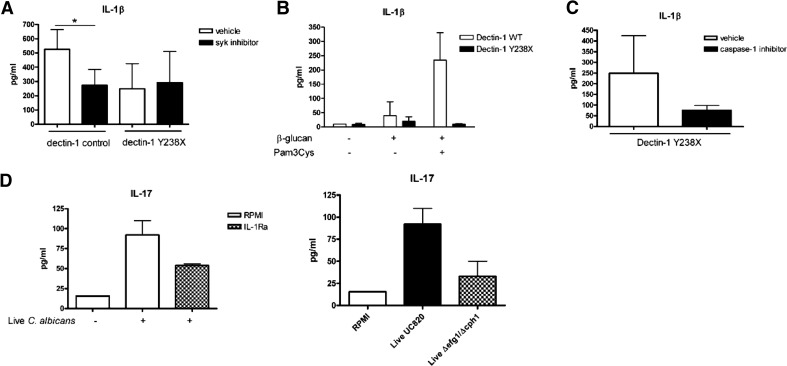
In the mucosa, the immune pathways discriminating between colonizing and invasive Candida, thus inducing tolerance or inflammation, are poorly understood. Th17 responses induced by Candida albicans hyphae are central for the activation of mucosal antifungal immunity. An essential step for the discrimination between yeasts and hyphae and induction of Th17 responses is the activation of the inflammasome by C. albicans hyphae and the subsequent release of active IL-1β in macrophages. Inflammasome activation in macrophages results from differences in cell-wall architecture between yeasts and hyphae and is partly mediated by the dectin-1/Syk pathway. These results define the dectin-1/inflammasome pathway as the mechanism that enables the host immune system to mount a protective Th17 response and distinguish between colonization and tissue invasion by C. albicans.
Overview
The claims and statistics of this paper haven’t been checked yet.
Free: it reads the open-access text and checks the first 5 claims that cite a source we can check. Create a free account to check every claim.
Integrity signals
Registry
Cites
Statistics
Figures
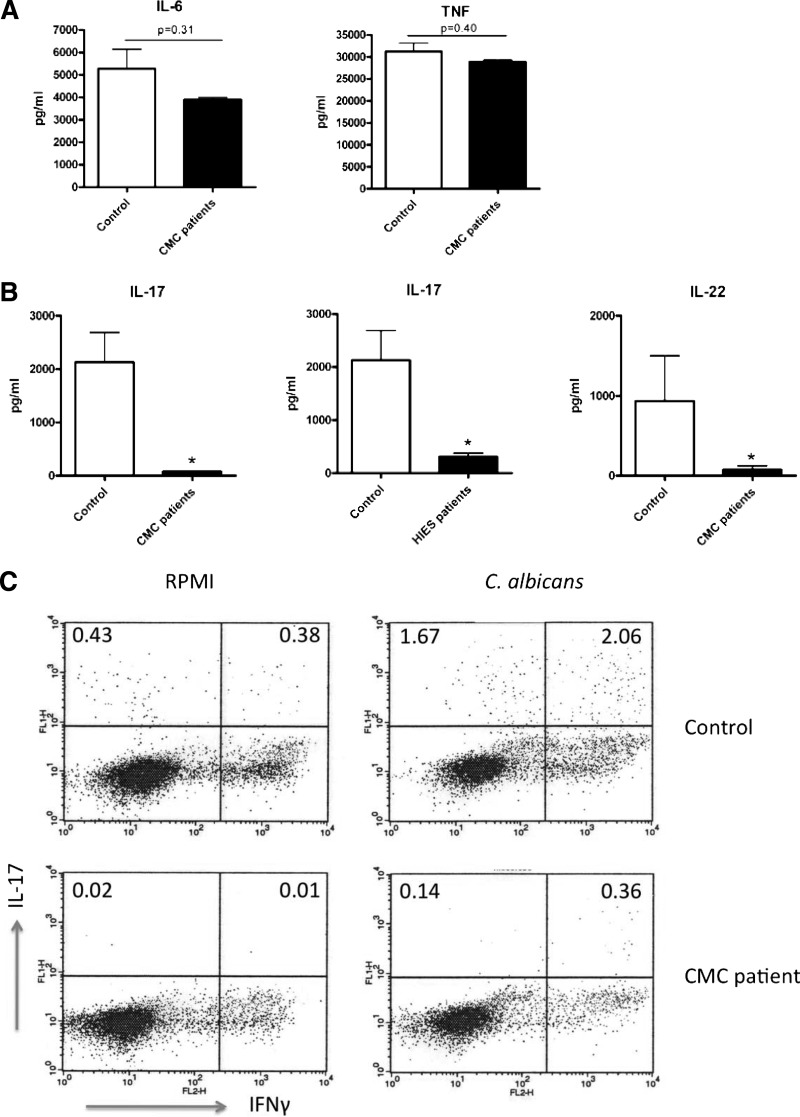
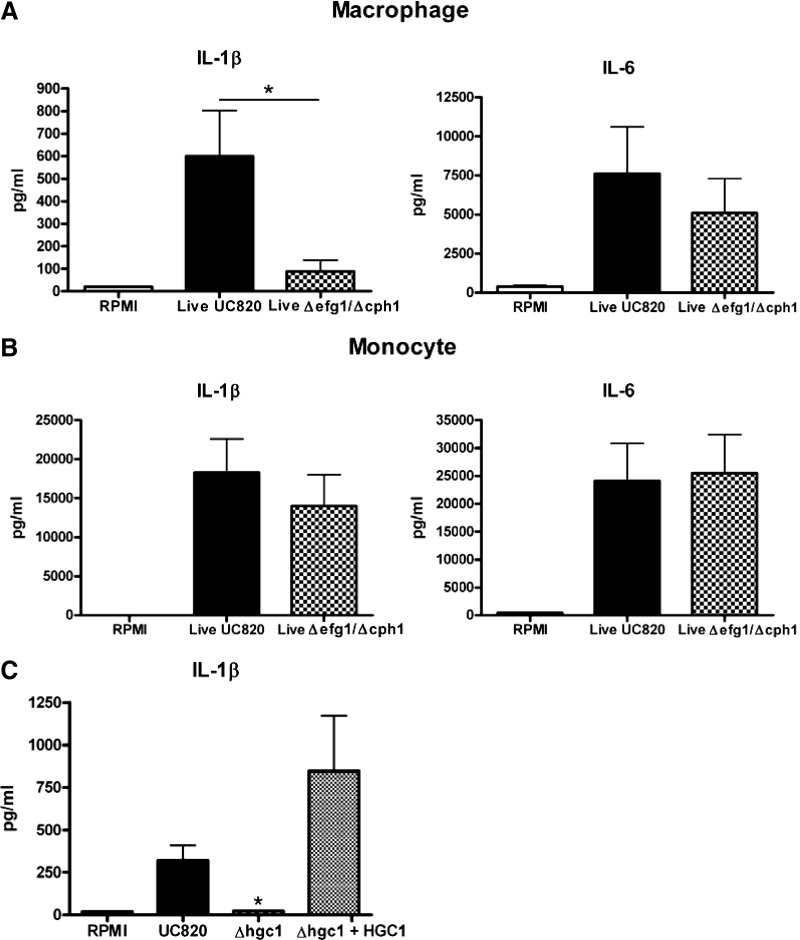
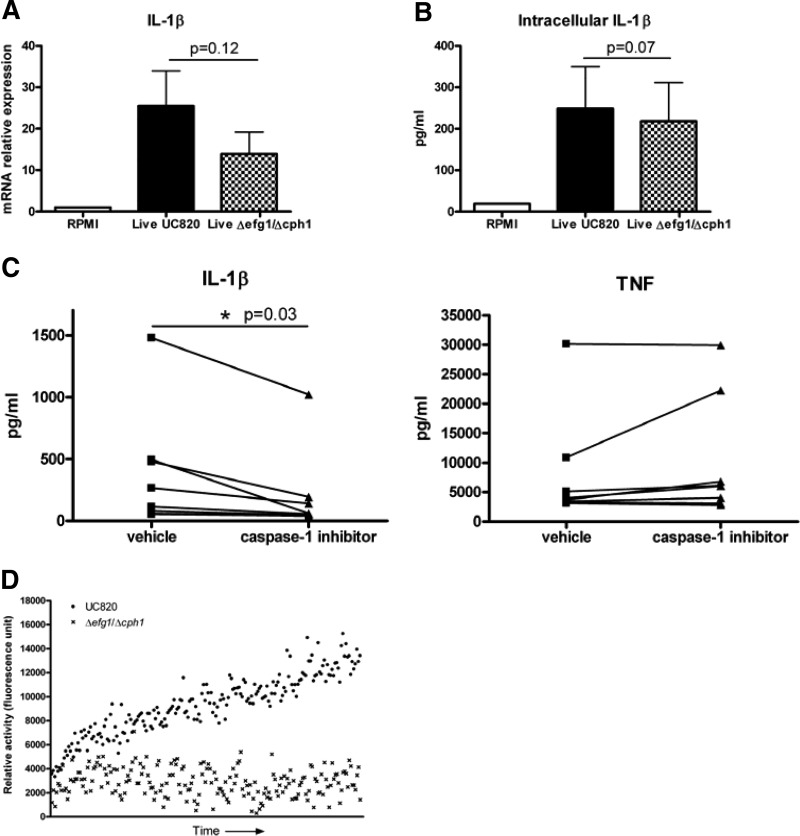
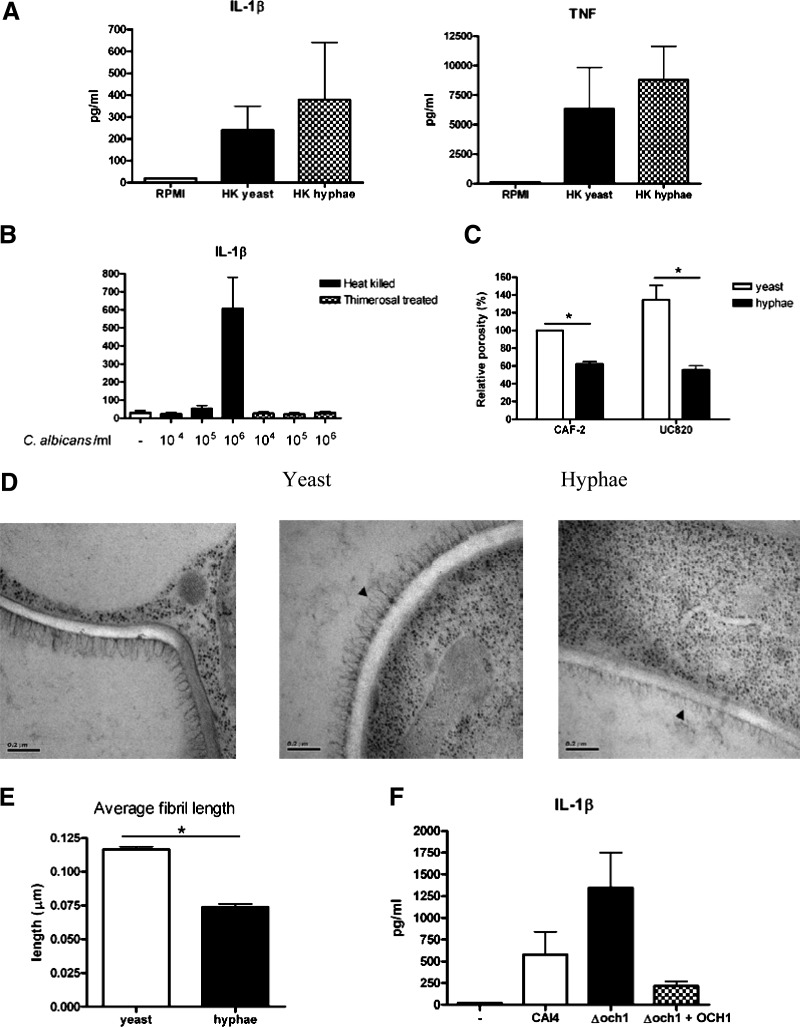
Verification
Claims the paper makes
The claims and statistics of this paper haven’t been checked yet.
Free: it reads the open-access text and checks the first 5 claims that cite a source we can check. Create a free account to check every claim.
Claims other papers make about this one
Each is checked against this paper’s own text: does it say what the citing paper says it does?
The cited source says what the claim attributes to it.
In the citing paper
“When Candida albicans invades the host, filamentation triggers the discharge of proinflammatory cytokines interleukin (IL)-1β [7–10] and IL-6 [11], leading to host inflammatory responses.”
From The F 1 F o -ATP synthase α subunit of Candida albicans induces inflammatory responses by controlling amino acid catabolism (2023) · cites this paper as [9]
The cited source says what the claim attributes to it.
In the citing paper
“Filamentation endows C. albicans with proinflammatory capability [7] to elicit the production and excretion of host proinflammatory cytokines such as interleukin (IL)-1β [7–10,49] and IL-6 [11]”
From The F 1 F o -ATP synthase α subunit of Candida albicans induces inflammatory responses by controlling amino acid catabolism (2023) · cites this paper as [9]
Self-check
Percentages, sums and reported differences re-computed from the paper’s own numbers.
The self-check needs the paper’s full text.
Citations
Cites
Martinon, F., Burns, K., & Tschopp, J. (2002) · Molecular Cell · doi:10.1016/s1097-2765(02)00599-3 · Cited by 6,066
Acosta-Rodriguez, E. V., Napolitani, G., Lanzavecchia, A., & Sallusto, F. (2007) · Nature Immunology · doi:10.1038/ni1496 · Cited by 1,857
Nonfilamentous C. albicans Mutants Are Avirulent
Lo, H.-J., Köhler, J. R., DiDomenico, B., Loebenberg, D., Cacciapuoti, A., & Fink, G. R. (1997) · Cell · doi:10.1016/s0092-8674(00)80358-x · Cited by 1,809 · cited 2×
“It has been also shown that efg1/ cph1 is avirulent in the mouse model [31], demonstrating that hyphae formation is critical for C.”
BackgroundImpaired TH17 cell differentiation in subjects with autosomal dominant hyper-IgE syndrome
Milner, J. D., Brenchley, J. M., Laurence, A., Freeman, A. F., Hill, B. J., Elias, K. M., Kanno, Y., Spalding, C., Elloumi, H. Z., Paulson, M. L., et al. (2008) · Nature · doi:10.1038/nature06764 · Cited by 1,157
Conti, H. R., Shen, F., Nayyar, N., Stocum, E., Sun, J. N., Lindemann, M. J., Ho, A. W., Hai, J. H., Yu, J. J., Jung, J. W., et al. (2009) · Journal of Experimental Medicine · doi:10.1084/jem.20081463 · Cited by 1,024 · cited 3×
“The importance of Th17 responses for antifungal host defense is supported by two additional lines of evidence: IL-17 is important for host defense against systemic fungal infection [29, 30], and IL-17 has been shown to be a crucial component of mucosal antifungal defense in a murine experimental model [4].”
BackgroundAn integrated model of the recognition of Candida albicans by the innate immune system
Netea, M. G., Brown, G. D., Kullberg, B. J., & Gow, N. A. R. (2008) · Nature Reviews Microbiology · doi:10.1038/nrmicro1815 · Cited by 946 · cited 2×
“Th17 responses are initiated by two signals: presentation of a fungal antigen in the context of the activation by costimulatory molecules and the release of an appropriate cytokine milieu by the APCs, such as tissue macrophages [22].”
BackgroundSelf-citationNeutrophil Recruitment by Human IL-17 Via C-X-C Chemokine Release in the Airways
Laan, M., Cui, Z.-H., Hoshino, H., Lötvall, J., Sjöstrand, M., Gruenert, D. C., Skoogh, B.-E., & Lindén, A. (1999) · The Journal of Immunology · doi:10.4049/jimmunol.162.4.2347 · Cited by 880
Requirement of Interleukin‐17A for Systemic Anti– Candida albicans Host Defense in Mice
Huang, W., Na, L., Fidel, P. L., & Schwarzenberger, P. (2004) · The Journal of Infectious Diseases · doi:10.1086/422329 · Cited by 859 · cited 1×
“The importance of Th17 responses for antifungal host defense is supported by two additional lines of evidence: IL-17 is important for host defense against systemic fungal infection [29, 30], and IL-17 has been shown to be a crucial component of mucosal antifungal defense in a murine experimental model [4].”
BackgroundSyk kinase signalling couples to the Nlrp3 inflammasome for anti-fungal host defence
Gross, O., Poeck, H., Bscheider, M., Dostert, C., Hannesschläger, N., Endres, S., Hartmann, G., Tardivel, A., Schweighoffer, E., Tybulewicz, V., et al. (2009) · Nature · doi:10.1038/nature07965 · Cited by 819
Netea, M. G., Nold-Petry, C. A., Nold, M. F., Joosten, L. A. B., Opitz, B., van der Meer, J. H. M., van de Veerdonk, F. L., Ferwerda, G., Heinhuis, B., Devesa, I., et al. (2009) · Blood · doi:10.1182/blood-2008-03-146720 · Cited by 792
Self-citation
Cited by
Items 101–191 of 191
Svobodová, E., Staib, P., Losse, J., Hennicke, F., Barz, D., & Józsi, M. (2012) · The Journal of Immunology · doi:10.4049/jimmunol.1200185 · Cited by 35
“Because the production of several of these cytokines and chemokines was shown to be induced by dectin1– and/or dectin-2–mediated signaling (53, 54), the differential cytokine and chemokine induction by C.”
Candida Infections and Human Defensins
Polesello, V., Segat, L., Crovella, S., & Zupin, L. (2017) · Protein and Peptide Letters · doi:10.2174/0929866524666170807125245 · Cited by 36
“albicans [12], even if the mechanisms are still debated.”
BackgroundGutierrez, M. W., Bernardes, E. V. T., Changirwa, D., McDonald, B., & Arrieta, M. (2022) · Mucosal Immunology · doi:10.1038/s41385-022-00515-w · Cited by 39
Ferrante, C., Recinella, L., Ronci, M., Orlando, G., Simone, S. C. D., Brunetti, L., Chiavaroli, A., Leone, S., Politi, M., Tirillini, B. B., et al. (2019) · Phytotherapy Research · doi:10.1002/ptr.6429 · Cited by 31
“, 2012), an immune receptor playing a key role in fungi phagocytosis and killing by phagocytes, whose deficit has been linked to a severe form of ulcerative colitis (Cheng et al., 2011).”
BackgroundPanelli, S., Epis, S., Cococcioni, L., Perini, M., Paroni, M., Bandi, C., Drago, L., & Zuccotti, G. (2020) · Pharmacological Research · doi:10.1016/j.phrs.2020.104962 · Cited by 34
Advances in Understanding Human Genetic Variations That Influence Innate Immunity to Fungi
Merkhofer, R. M., & Klein, B. S. (2020) · Frontiers in Cellular and Infection Microbiology · doi:10.3389/fcimb.2020.00069 · Cited by 36
Ferreira-Gomes, M., Wich, M., Böde, S., Hube, B., Jacobsen, I. D., & Jungnickel, B. (2021) · Frontiers in Immunology · doi:10.3389/fimmu.2021.698849 · Cited by 29
Tobouti, P. L., Casaroto, A. R., Almeida, R. S., Ramos, S. D. P., Dionísio, T. J., Porto, V. C., Santos, C. F., & Lara, V. S. (2015) · Journal of Prosthodontics · doi:10.1111/jopr.12285 · Cited by 33
Pattern recognition receptors in infectious skin diseases
de Koning, H. D., Simon, A., Zeeuwen, P. L. J. M., & Schalkwijk, J. (2012) · Microbes and Infection · doi:10.1016/j.micinf.2012.03.004 · Cited by 65
Candida albicans N-Linked Mannans Potentiate the Induction of Trained Immunity via Dectin-2
Rosati, D., Pradhan, A., van Heck, J. I. P., Helder, L. S., Jaeger, M., Gow, N. A. R., Joosten, L. A. B., Williams, D. L., Brown, A. J. P., Bruno, M., et al. (2024) · The Journal of Infectious Diseases · doi:10.1093/infdis/jiae112 · Cited by 30
Self-citationZuani, M. D., Paolicelli, G., Zelante, T., Renga, G., Romani, L. R., Arzese, A., Pucillo, C. E. M., & Frossi, B. (2018) · Frontiers in Immunology · doi:10.3389/fimmu.2018.02829 · Cited by 30
“albicans hyphae β-glucans are shielded by a layer of mannoproteins and thus fail to activate dectin-1, it has also been hypothesized that this receptor may be responsible for the recognition of hyphal β-glucans probably due to the presence of thinner mannan fibrils (20).”
BackgroundHost Genetic Signatures of Susceptibility to Fungal Disease
Campos, C. F., van de Veerdonk, F. L., Gonçalves, S. M., Cunha, C., Netea, M. G., & Carvalho, A. (2018) · Current topics in microbiology and immunology · doi:10.1007/82_2018_113 · Cited by 35
“The NLR family pyrin domain containing 3 (NLRP3) and the NLR family CARD domain containing 4 (NLRC4) inflammasomes were specifically credited with a prominent role in the immune response to C. albicans (Borghi et al. 2015; Cheng et al. 2011; Hise et al. 2009; Tomalka et al. 2011).”
BackgroundSelf-citationThe Role of Dectin-1 Signaling in Altering Tumor Immune Microenvironment in the Context of Aging
Bhaskaran, N., Jayaraman, S., Quigley, C., Mamileti, P., Ghannoum, M. A., Weinberg, A., Thuener, J. E., Pan, Q., & Pandiyan, P. (2021) · Frontiers in Oncology · doi:10.3389/fonc.2021.669066 · Cited by 30
Cryptococcus neoformans Secretes Small Molecules That Inhibit IL-1β Inflammasome-Dependent Secretion
Bürgel, P. H., Marina, C. L., Saavedra, P. H. V., Albuquerque, P., de Oliveira, S. A. M., Júnior, P. H. D. H. V., de Castro, R. J. A., Heyman, H. M., Coelho, C., Cordero, R. J. B., et al. (2020) · Mediators of Inflammation · doi:10.1155/2020/3412763 · Cited by 26
Role of Cell Wall Polysaccharides during Recognition of Candida albicans by the Innate Immune System
Pérez-García, L. A. (2012) · Journal of Glycobiology · doi:10.4172/2168-958x.1000102 · Cited by 31
“However, other authors have reported that hyphae, but not yeast cells, are able to stimulate production of IL-1b via the Nlrp3 inflammasome in primary mice macrophages [95,96], a protective Th17 response [96], and an innate response in oral and vaginal epithelial cells [97,98].”
BackgroundBorriello, F., Zanoni, I., & Granucci, F. (2020) · European Journal of Immunology · doi:10.1002/eji.201848054 · Cited by 28
Some like it hot: Candida activation of inflammasomes
Camilli, G., Griffiths, J. S., Ho, J., Richardson, J. P., & Naglik, J. R. (2020) · PLoS Pathogens · doi:10.1371/journal.ppat.1008975 · Cited by 29
“, β-glucan and chitin), have been proposed to enhance recognition by pattern recognition receptors (PRRs) and IL-1β production by macrophages [11].”
BackgroundAn integrative genomics approach identifies novel pathways that influence candidaemia susceptibility
Matzaraki, V., Gresnigt, M. S., Jaeger, M., Ricaño-Ponce, I., Johnson, M. D., Oosting, M., Franke, L., Withoff, S., Perfect, J. R., Joosten, L. A. B., et al. (2017) · PLoS ONE · doi:10.1371/journal.pone.0180824 · Cited by 29
Self-citationRizzetto, L., Weil, T., & Cavalieri, D. (2015) · Pathogens · doi:10.3390/pathogens4030639 · Cited by 25
“new studies revealed that in contrast hyphae, but not yeast cells, stimulate macrophages’ production of IL-1β via the Nlrp3 inflammasome [98,119], a protective Th17 response [119], and an innate response in oral and vaginal epithelial cells [90,101].”
BackgroundSelf-citationRole of Protein Mannosylation in the Candida tropicalis-Host Interaction
Hernández-Chávez, M. J., Clavijo-Giraldo, D. M., Novák, Á., Lozoya‐Pérez, N. E., Martínez-Álvarez, J. A., Salinas-Marín, R., Hernández, N. V., Martínez-Duncker, I., Gácser, A., & Mora-Montes, H. M. (2019) · Frontiers in Microbiology · doi:10.3389/fmicb.2019.02743 · Cited by 24
“The phosphomannan content and the porosity to DEAE-dextran are wall parameters that have been correlated with defects in the protein glycosylation pathways (Mora-Montes et al., 2007, 2010; Cheng et al., 2011; Navarro-Arias et al., 2016, 2017; Perez-Garcia et al., 2016; Lozoya-Perez et al., 2019).”
BackgroundSingle-molecule analysis of the major glycopolymers of pathogenic and non-pathogenic yeast cells
El‐Kirat‐Chatel, S., Beaussart, A., Alsteens, D., Sarazin, A., Jouault, T., & Dufrêne, Y. F. (2013) · Nanoscale · doi:10.1039/c3nr00813d · Cited by 23
Intestinal fungi and systemic autoimmune diseases
Wang, H., Wu, H., Li, K., Wang, Y., Huang, R., Du, Y., Xue, J., Zhang, Q., Li, X., & Li, B. (2022) · Autoimmunity Reviews · doi:10.1016/j.autrev.2022.103234 · Cited by 24
Hyphal Als proteins act as CR3 ligands to promote immune responses against Candida albicans
Zhou, T., Solis, N. V., Marshall, M., Yao, Q., Garleb, R., Yang, M., Pearlman, E., Filler, S. G., & Liu, H. (2024) · Nature Communications · doi:10.1038/s41467-024-48093-8 · Cited by 21
“Reviewer #2 (Remarks to the Author): In the manuscript, the authors show that Candida albicans hyphae Als3 binds to the I-domain of CR3, which is essential for NLRP3 activation and IL-1beta production.”
Dectin-1 is required for miR155 upregulation in murine macrophages in response toCandida albicans
Agustinho, D. P., de Oliveira, M. A., Tavares, A. H., Derengowski, L. D. S., Stolz, V., Guilhelmelli, F., Mortari, M. R., Kuchler, K., & Silva-Pereira, I. (2016) · Virulence · doi:10.1080/21505594.2016.1200215 · Cited by 23
“albicans, and its deficiency results in enhanced fungal dissemination and susceptibility to infection in mice.(63) The distinct morphologies of C.”
BackgroundThe Goldilocks model of immune symbiosis with Mycobacteria and Candida colonizers
Robinson, R., & Huppler, A. R. (2017) · Cytokine · doi:10.1016/j.cyto.2017.05.015 · Cited by 21
The Role of Phagocytes and NETs in Dermatophytosis
Yoshikawa, F. S. Y., & de Almeida, S. R. (2016) · Mycopathologia · doi:10.1007/s11046-016-0069-5 · Cited by 18
“albicans infections [69, 70] and it is suggested that proteases secreted by the fungus could directly activate NLRP3 [71].”
BackgroundInflammasomes and Their Role in Innate Immunity of Sexually Transmitted Infections
Verma, V., Dhanda, R. S., Møller, N. F., & Yadav, M. C. (2016) · Frontiers in Immunology · doi:10.3389/fimmu.2016.00540 · Cited by 21
Stoppelkamp, S., Reid, D. M., Yeoh, J. S. G., Taylor, J., McKenzie, E. J., Brown, G. D., Gordon, S., Forrester, J. V., & Wong, S. Y. C. (2015) · Molecular Immunology · doi:10.1016/j.molimm.2015.07.002 · Cited by 17
Crosstalk between Body Microbiota and the Regulation of Immunity
Rojas, C., Gálvez‐Jirón, F., Solminihac, J. D., Padilla, C., Cárcamo, I., Villalón, N., Kurte, M., & Pino‐Lagos, K. (2022) · Journal of Immunology Research · doi:10.1155/2022/6274265 · Cited by 19
“It has been demonstrated that the intestinal microbiota modulates the migration and function of neutrophils [79] and would a ff ect the di ff erentiation of different T helper cells populations: Th1, Th2, and Th17 and Tregs [80]).”
InfluentialHosseinzadeh, A., & Urban, C. F. (2013) · PLoS ONE · doi:10.1371/journal.pone.0077993 · Cited by 19
Cardone, M., Dzutsev, A. K., Li, H., Riteau, N., Gerosa, F., Shenderov, K., Winkler-Pickett, R., Provezza, L., Riboldi, E., Leighty, R. M., et al. (2014) · PLoS ONE · doi:10.1371/journal.pone.0114516 · Cited by 17
Specific changes of enteric mycobiota and virome in inflammatory bowel disease
Chu, Y., Jiang, M. Z., Xu, B., Wang, W. J., Chen, D., Li, X. W., Zhang, Y. J., & Liang, J. (2017) · Journal of Digestive Diseases · doi:10.1111/1751-2980.12570 · Cited by 18
The critical role of Dectin-1 in host controlling systemic Candida krusei infection.
Chen, S. M., Zou, Z., Qiu, X. R., Hou, W.-T., Zhang, Y., Fang, W. Y., Chen, Y. L., Wang, Y. D., Jiang, Y. Y., Shen, H., et al. (2019) · Europe PMC (PubMed Central) · Cited by 21
Loss of Kex2 Affects the Candida albicans Cell Wall and Interaction with Innate Immune Cells
Gómez-Gaviria, M., Lozoya‐Pérez, N. E., Staniszewska, M., Franco, B., Niño‐Vega, G. A., & Mora-Montes, H. M. (2020) · Journal of Fungi · doi:10.3390/jof6020057 · Cited by 16
“The wall porosity to DEAE-dextran and phosphomannan content are parameters that have been previously associated with defects in the synthesis of mannans [31,33,35,36,49,51,52].”
BackgroundLiu, Z., Yang, H., Huang, R., Li, X., Sun, T., & Zhu, L. (2025) · Clinical Microbiology Reviews · doi:10.1128/cmr.00284-24 · Cited by 23
Bruno, M., Davidson, L., Koenen, H. J. P. M., van den Reek, J. M. P. A., van Cranenbroek, B., de Jong, E. M. G. J., van de Veerdonk, F. L., Kullberg, B. J., & Netea, M. G. (2022) · Journal of Investigative Dermatology · doi:10.1016/j.jid.2022.05.1083 · Cited by 20
Self-citation1 From Commensal to Pathogen: Candida albicans
Whittington, A., Gow, N. A. R., & Hube, B. (2013) · Springer eBooks · doi:10.1007/978-3-642-39432-4_1 · Cited by 20
Self-citationRizzetto, L., Filippo, C. D., Rivero, D., Riccadonna, S., Beltrame, L., & Cavalieri, D. (2013) · Immunobiology · doi:10.1016/j.imbio.2013.07.002 · Cited by 17
Self-citationMucosal Immunity to Gut Fungi in Health and Inflammatory Bowel Disease
Carlson, S. L., Mathew, L., Savage, M., Kok, K. B., Lindsay, J. O., Munro, C. A., & McCarthy, N. E. (2023) · Journal of Fungi · doi:10.3390/jof9111105 · Cited by 19
“Neutrophil extracellular traps (NETs) are antimicrobial structures composed of chromatin and microbicidal molecules such as cathelicidin and calprotectin, peptides that are both associated with IBD [99,100].”
BackgroundQu, X., Che, C., Gao, A., Lin, J., Wang, N., Du, X., Liu, Y., Guo, Y., Chen, W., & Zhao, G. (2015) · PubMed Central · Cited by 14
NLRP3 Inflammasome Contributes to Host Defense Against Talaromyces marneffei Infection
Ma, H., Chan, J. F., Tan, Y. P., Kui, L., Tsang, C., Pei, S. L. C., Lau, Y., Woo, P. C. Y., & Lee, P. P. W. (2021) · Frontiers in Immunology · doi:10.3389/fimmu.2021.760095 · Cited by 14
Naglik, J. R., Tang, S. X., & Moyes, D. L. (2013) · Current Fungal Infection Reports · doi:10.1007/s12281-013-0129-y · Cited by 18
Tapia‐Abellán, A., Ruiz‐Alcaraz, A. J., Antón, G., López, M. M., Francés, R., Such, J. M., Martinez‐Esparza, M., & García–Peñarrubia, P. (2014) · Clinical & Experimental Immunology · doi:10.1111/cei.12428 · Cited by 12
Gut mycobiome in cardiometabolic disease progression: current evidence and future directions
Wei, X., Guo, Z., Wang, J., Gao, D., Xu, Q., & Hua, S. (2025) · Frontiers in Microbiology · doi:10.3389/fmicb.2025.1659654 · Cited by 13
Clemente, A. M., Rizzetto, L., Castronovo, G., Perissi, E., Tanturli, M., Cozzolino, F., Cavalieri, D., Fusi, F., Cialdai, F., Vignali, L., et al. (2015) · European Journal of Clinical Microbiology & Infectious Diseases · doi:10.1007/s10096-015-2443-5 · Cited by 10
“Since the hyphae formation process is accompanied by an increase in the exposure of mannans, different pattern recognition receptors (PRRs) could be engaged [20, 21].”
BackgroundSelf-citationSilva, K. F. E., Nanini, H. F., Cascabulho, C. M., Rosas, S. L. B., Santana, P. T., Carneiro, A. J., Anaissie, E. J., Nucci, M., & de Souza, H. S. P. (2021) · World Journal of Gastroenterology · doi:10.3748/wjg.v27.i9.866 · Cited by 9
Hernández, N. V., López-Ramírez, L. A., Díaz-Jiménez, D. F., Mellado‐Mojica, E., Martínez-Duncker, I., López, M. G., & Mora-Montes, H. M. (2017) · Research in Microbiology · doi:10.1016/j.resmic.2017.07.005 · Cited by 11
“albicans, Candida parapsilosis and Candida guilliermondii, changes in cell wall porosity have been related with defects in the glycosylation of cell wall proteins [18,20,23,30].”
BackgroundImpaired Release of Antimicrobial Peptides into Nasal Fluid of Hyper-IgE and CVID Patients
Cederlund, A., Olliver, M., Rekha, R. S., Lindh, M., Lindbom, L., Normark, S. J., Henriques‐Normark, B., Andersson, J., Agerberth, B., & Bergman, P. (2011) · PLoS ONE · doi:10.1371/journal.pone.0029316 · Cited by 10
“SEB and candida induce Th17cell differentiation by distinct pathways; SEB is a general T-cell activator by virtue of its superantigenic properties [36] whereas candida activates antigen presenting cells (APCs) via dectin-1 ligation [37].”
BackgroundRegulation of IL-17A–Producing Cells in Skin Inflammatory Disorders
Pandiyan, P., & McCormick, T. S. (2021) · Journal of Investigative Dermatology · doi:10.1016/j.jid.2021.06.036 · Cited by 10
Tima, H. G., Huygen, K., & Romano, M. (2016) · Expert Review of Vaccines · doi:10.1080/14760584.2016.1187067 · Cited by 9
Construction and Immunogenicity Testing of Whole Recombinant Yeast-Based T-Cell Vaccines
King, T. H., Guo, Z., Hermreck, M., Bellgrau, D., & Rodell, T. C. (2016) · Methods in molecular biology · doi:10.1007/978-1-4939-3389-1_35 · Cited by 7
A New Tool to Quantify Receptor Recruitment to Cell Contact Sites during Host-Pathogen Interaction
Graus, M. S., Pehlke, C. A., Wester, M. J., Davidson, L., Steinberg, S. L., & Neumann, A. K. (2014) · PLoS Computational Biology · doi:10.1371/journal.pcbi.1003639 · Cited by 7
Candida parapsilosiscomplex induces local inflammatory cytokines in immunocompetent mice
Treviño‐Rangel, R. D. J., González, G. M., Martínez-Castilla, A. M., García‐Juárez, J., Robledo-Leal, E., González‐González, J. G., & Rosas-Taraco, A. G. (2015) · Medical Mycology · doi:10.1093/mmy/myv021 · Cited by 8
Lin, D., Hu, Q., Yang, L., Zeng, X., Xiao, Y., Wang, D., Dai, W., Lu, H., Fang, J., Tang, Z., et al. (2022) · Microbial Genomics · doi:10.1099/mgen.0.000811 · Cited by 10
Commensal to Pathogen Transition of Candida albicans
Niemiec, M. J., Kapitan, M., Polke, M., & Jacobsen, I. D. (2017) · Elsevier eBooks · doi:10.1016/b978-0-12-809633-8.12077-1 · Cited by 9
C-type lectin receptors in skin immunity: Emerging new role for CLEC12B
Blot, L., Passeron, T., & Tulić, M. K. (2022) · Advances in Biomedical and Health Sciences · doi:10.4103/abhs.abhs_20_21 · Cited by 7
Yang, Z., Wang, X., Dong, T.-X., Zhao, W., & Li, H. (2024) · Frontiers in Immunology · doi:10.3389/fimmu.2024.1367048 · Cited by 6
Altmeier, S., & LeibundGut‐Landmann, S. (2017) · Springer eBooks · doi:10.1007/978-3-319-50842-9_2 · Cited by 5
López-Ramírez, L. A., Hernández, N. V., Lozoya‐Pérez, N. E., Lopes-Bezerra, L. M., & Mora-Montes, H. M. (2018) · Research in Microbiology · doi:10.1016/j.resmic.2018.02.004 · Cited by 5
Hasebe, A., Saeki, A., Yoshida, Y., & Shibata, K. (2018) · Archives of Oral Biology · doi:10.1016/j.archoralbio.2018.06.004 · Cited by 7
“albicans is critical for the stimulation of IL-1β production by macrophages (Cheng et al., 2011).”
BackgroundCommensal to Pathogen Transition of Candida albicans
Jacobsen, I. D., Niemiec, M. J., Kapitan, M., & Polke, M. (2020) · Elsevier eBooks · doi:10.1016/b978-0-12-809633-8.21281-8 · Cited by 6
Dexamethasone induced Dectin-1 activation enhances NLRP3 inflammasome activation
Koerber, R.-M., Oberbeck, S., Kotthoff, P., Daecke, S. N., Brossart, P., & Held, S. A. E. (2025) · Frontiers in Immunology · doi:10.3389/fimmu.2025.1656288 · Cited by 4
Li, S., Liu, Y., Weng, L., Zhao, Y., Zhang, Y., Zhang, Z., Yang, Y., Chen, Q., Liu, X., & Zhang, H. (2023) · Virulence · doi:10.1080/21505594.2023.2190645 · Cited by 3
“[11] through recognition of hyphal pathogen-associated molecular patterns [9], secretion of hyphae-specific aspartyl proteinases (SAP4–6) [49,50] or hyphae-specific toxin candidalysin [7], thus inducing host inflammatory responses.”
BackgroundApplying differential network analysis to longitudinal gene expression in response to perturbations
Xue, S., Rogers, L. R. K., Zheng, M., He, J., Piermarocchi, C., & Mias, G. I. (2022) · Frontiers in Genetics · doi:10.3389/fgene.2022.1026487 · Cited by 3
“(2012); Cheng et al. (2011). Interferon signaling, cytokine signaling, immune/adaptive immune, and interleukin FIGURE 3 Differential network analysis for the B cell experiment.”
BackgroundMetagenomic discovery of microbial eukaryotes in stool microbiomes
Crouch, A. L., Monsey, L., Rambeau, M., Ramos, C., Yracheta, J., & Anderson, M. Z. (2024) · mBio · doi:10.1128/mbio.02063-24 · Cited by 5
CBLB ubiquitin ligase: a major regulator of antifungal immunity
van de Veerdonk, F. L., & Netea, M. G. (2016) · Nature Medicine · doi:10.1038/nm.4160 · Cited by 3
Self-citationMicrobiome in Human Gastrointestinal Cancers
Coker, O. O., & Yu, J. Q. (2021) · Physiology in health and disease · doi:10.1007/978-3-030-67951-4_2 · Cited by 2
Improved vaccines through targeted manipulation of the body's immunological risk‐assessment?
Sander, L. E. (2012) · BioEssays · doi:10.1002/bies.201200057 · Cited by 4
“Cell wall architectural changes in the hyphal form are sensed by DCs, which leads to NLRP3 inflammasome activation and induction of T helper (TH) 17 cells [70], a key defense mechanism against invasive fungal infections [71].”
BackgroundWang, J., Gow, N. A. R., & Brewer, M. G. (2025) · Mycoses · doi:10.1111/myc.70133 · Cited by 2
Self-citationInfluence of fungi on epithelial homeostasis and role in inflammatory diseases
Peterson, L. F., Wang, J., Gow, N. A. R., LeibundGut‐Landmann, S., & Brewer, M. G. (2026) · Clinical Microbiology Reviews · doi:10.1128/cmr.00319-25 · Cited by 1
Self-citationPattern Recognition Receptors and Infectious Diseases
Liaunardy, A., Chris, B., Ben, L., Alexander, D., & Tom, P. (2012) · InTech eBooks · doi:10.5772/33481 · Cited by 3
“Furthermore, Dectin-1 activation also upregulates pro-IL-1 for subsequent activation by the NLRP3 inflammasome (Cheng et al., 2011).”
BackgroundRole of Glucan-Derived Polymers in the Pathogenic Fungus Candida albicans
Prieto, D., Román, E., Alonso‐Monge, R., & Plá, J. (2019) · Biologically-inspired systems · doi:10.1007/978-3-030-12919-4_9 · Cited by 1
Modulation of inflammation by genetic variation in innate immunity
Plantinga, T. S. (2012) · Radboud Repository (Radboud University) · Cited by 1
Self-citationGanesan, S. (2014) · eScholarship@UMassChan · doi:10.13028/m28c8f · Cited by 1
CD8 + IL-17 + Cells in Pulmonary Paracoccidiodomycosis
Loures, F. V., de Araújo, E. F., Feriotti, C., Bazan, S. B., Brown, G. D., Calich, V. L. G., & Paulo, S. (2014)
The Fungal Pathogen Candida albicans
Fanning, S., & Mitchell, A. P. (2014) · ASM Press eBooks · doi:10.1128/9781555816636.ch46
Vaccination Against Fungal Diseases: Lessons from Candida albicans
Sampaio, P., & Pais, C. (2017) · Springer eBooks · doi:10.1007/978-3-319-50842-9_10 · Cited by 1
“Engagement of Dectin-1 induces not only direct macrophage activation and internalization of the fungus but it also has a synergistic effect on TLR2 and TLR4 responses, via NF-κB activation, leading to IL-1β production and T helper cell 17 (Th17 cell) activation [32, 42, 43].”
BackgroundHube, B., & Gresnigt, M. S. (2021) · Faculty Opinions – Post-Publication Peer Review of the Biomedical Literature · doi:10.3410/f.738437887.793577404
Pathogenicity Strategies of Candida Species During Interactions with Epithelial Cells
Pekmezovic, M. G., Hube, B., & Gresnigt, M. S. (2024) · The mycota · doi:10.1007/978-3-031-64853-3_2
Management of Denture Stomatitis with a Herbal Armamentarium
Chauhan, V., Saxena, P., Nautiyal, A., & Gupta, P. (2024) · Current Dentistry · doi:10.2174/012542579x317149241202064449 · Cited by 1
INTERLEUKIN-17-MEDIATED ADAPTIVE IMMUNITY TO CANDIDA ALBICANS IN OROPHARYNGEAL CANDIDIASIS
Hernández‐Santos, N. (2012) · D-Scholarship@Pitt (University of Pittsburgh) · Cited by 1
Loiselet, A. (2019) · theses.fr (ABES) · doi:10.70675/8960b3ecz4598z4c60za01cz9399c6404ab8
Jacquemin, G. (2021) · theses.fr (ABES) · doi:10.70675/eb1fecbaz8065z42ebzb918ze92070a1ff72
Charlet, R. (2022) · theses.fr (ABES) · doi:10.70675/11b08f90z8d0dz43efz96ffzf2527c076034
Fonctions et biosynthèse des β-1,6-glucanes de la paroi cellulaire chez Candida albicans
Bekirian, C. (2024) · theses.fr (ABES) · doi:10.70675/b1028289z0c26z4acaz8f96z18e5c0c94464
Jahani, H., Jamshidi, S., Jalousian, F., Shokrpoor, S., Nourizadeh, M., Hosseini, S. H., Malekzadeh, P., & Boluki, Z. (2026) · Journal of Allergy and Clinical Immunology Global · doi:10.1016/j.jacig.2026.100756
“Disclosure of potential conflict of interest: The authors declare that they have no relevant conflicts of interest.”
Beyond pathogen recognition: C-type lectin receptors in microbiota regulation
Greenewood, M., & Round, J. L. (2026) · Mucosal Immunology · doi:10.1016/j.mucimm.2026.100376
RAD51 stabilizes neutrophil extracellular traps to compartmentalize inflammation
Tsansizi, L. I., Guan, S. Y., Aramburu, I. V., Punatar, R. S., Williams, T. J., Qiao, Y. E., Reed, A. K., Armstrong-James, D. P. H., West, S. C., & Papayannopoulos, V. (2026) · Science · doi:10.1126/science.aed9286 · Cited by 2
C-type lectin receptors: bone remodeling and therapeutic potential
Kleim, M., Bözec, A., Weber, M., & Grötsch, B. (2026) · Bone Research · doi:10.1038/s41413-026-00567-9
Metadata
- Authors
- Cheng, S.-C., van de Veerdonk, F. L., Lenardon, M., Stoffels, M., Plantinga, T., Smeekens, S., Rizzetto, L., Mukaremera, L., Preechasuth, K., Cavalieri, D., Kanneganti, T. D., van der Meer, J. W. M., Kullberg, B. J., Joosten, L. A. B., Gow, N. A. R., & Netea, M. G.
- Affiliations
- Radboud University Nijmegen (NL)
- Department of Medicine and Nijmegen Institute for Infection, Inflammation and Immunity (N4i), Radboud University Nijmegen Medical Center , Nijmegen, The Netherlands
- University of Aberdeen (GB)
- University of Florence (IT)
- St. Jude Children's Research Hospital (US)
- Corresponding author
- Netea, Mihai G
- ORCID
- Venue
- Journal of Leukocyte Biology
- Publisher
- Oxford University Press (OUP)
- Published
- 2011-04-29
- Volume
- 90
- Issue
- 2
- Pages
- 357-366
- ISSN
- 0741-5400 (ISSN-L)
- 1938-3673
- PMC
- PMC3513931
- OpenAlex
- W2162303211
- Cited by
- 191
- References
- 38
- Citations by year
- 2026: 5 · 2025: 5 · 2024: 8 · 2023: 3 · 2022: 10 · 2021: 12 · 2020: 14 · 2019: 10 · 2018: 9 · 2017: 13 · 2016: 16 · 2015: 17 · 2014: 22 · 2013: 15 · 2012: 26
- FWCI
- 14.91
- Type
- journal article
- Language
- en
- Open access
- hybrid
- doi.org
- Licence
- Locations
- Journal of Leukocyte Biology (publishedVersion, cc-by-nc)
- PubMed Central (publishedVersion, cc-by-nc)
- PubMed (publishedVersion)
- Florence Research (University of Florence) (submittedVersion, other-oa)
- Radboud Repository (Radboud University) (submittedVersion)
- Radboud Repository (Radboud University) (submittedVersion, other-oa)
- Funders
- EU-FP7 Marie Curie (PITN-GA-2008-214004)
- Wellcome Trust
- Rwandan Ministry of Education
- Thai Ministry of Sciences and Technology
- Netherlands Organization for Scientific Research
- ALLFUN Marie Curie
- Topics
- Health Sciences › Medicine › Infectious Diseases › Antifungal resistance and susceptibility
- Life Sciences › Biochemistry, Genetics and Molecular Biology › Molecular Biology › Inflammasome and immune disorders
- Life Sciences › Immunology and Microbiology › Immunology › Immune Response and Inflammation
- Keywords
- Dectin-1, inflammasome, Th17 cells, Candida albicans, IL-1β, macrophages, Syk, cell wall architecture, fungal pathogen recognition
- MeSH terms
- Dectin-1, Blood Cells, Candida albicans, Candidiasis, Cells, Cultured, Humans, Macrophages, Membrane Proteins, Nerve Tissue Proteins, Saccharomyces cerevisiae, Hyphae, Lectins, C-Type, Interleukin-1beta, Th17 Cells, Inflammasomes
About these checks
Registry, retraction, Cites and statistics results are computed, not judged, with one exception: a printed reference that no index lists is read once by a model before it counts as a citation error. Claims are extracted by a model and kept only when their quote appears verbatim in the text; each cited source is then checked, with a model’s help, for whether it says what the claim relies on. Those verdicts can be wrong — read the claim’s quote and the cited source before relying on one.
Statistics and arithmetic are recomputed, not judged.
Confidence bands are shown only for fields calibrated on our annotated test set. None is calibrated yet, so no band is shown.
What counts as a claim ›How we measure confidence ›How we check this ›
Are you an author, or do you see a problem with this page? Request a review
Data sources
Bibliographic data: Semantic Scholar, OpenAlex, Crossref.
Contains information from the Semantic Scholar Academic Graph Datasets, made available under the ODC Attribution License (ODC-BY 1.0).
Semantic Scholar’s data is described in: Kinney, R., et al. (2023). The Semantic Scholar Open Data Platform. arXiv:2301.10140.
