

The dectin-1/inflammasome pathway is responsible for the induction of protective T-helper 17 responses that discriminate between yeasts and hyphae of Candida albicans
Open accessThe DOI matches its Crossref record; 37 of the 38 references it cites were found in a registry or an index.
Abstract
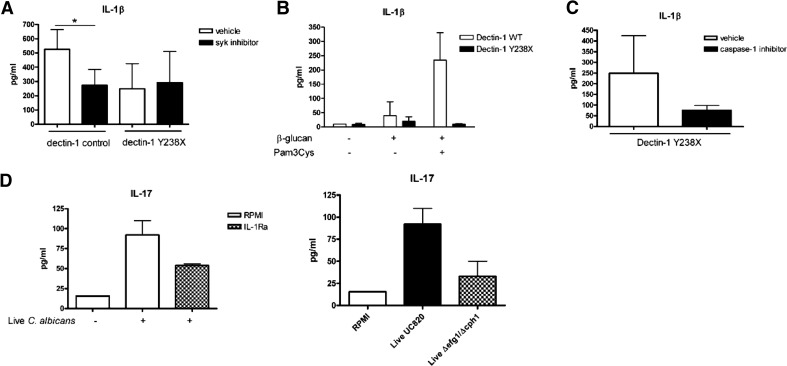
In the mucosa, the immune pathways discriminating between colonizing and invasive Candida, thus inducing tolerance or inflammation, are poorly understood. Th17 responses induced by Candida albicans hyphae are central for the activation of mucosal antifungal immunity. An essential step for the discrimination between yeasts and hyphae and induction of Th17 responses is the activation of the inflammasome by C. albicans hyphae and the subsequent release of active IL-1β in macrophages. Inflammasome activation in macrophages results from differences in cell-wall architecture between yeasts and hyphae and is partly mediated by the dectin-1/Syk pathway. These results define the dectin-1/inflammasome pathway as the mechanism that enables the host immune system to mount a protective Th17 response and distinguish between colonization and tissue invasion by C. albicans.
Overview
The claims and statistics of this paper haven’t been checked yet.
Free: it reads the open-access text and checks the first 5 claims that cite a source we can check. Create a free account to check every claim.
Integrity signals
Registry
Cites
Statistics
Figures
Verification
Claims the paper makes
The claims and statistics of this paper haven’t been checked yet.
Free: it reads the open-access text and checks the first 5 claims that cite a source we can check. Create a free account to check every claim.
Claims other papers make about this one
Each is checked against this paper’s own text: does it say what the citing paper says it does?
The cited source says what the claim attributes to it.
In the citing paper
“When Candida albicans invades the host, filamentation triggers the discharge of proinflammatory cytokines interleukin (IL)-1β [7–10] and IL-6 [11], leading to host inflammatory responses.”
From The F 1 F o -ATP synthase α subunit of Candida albicans induces inflammatory responses by controlling amino acid catabolism (2023) · cites this paper as [9]
The cited source says what the claim attributes to it.
In the citing paper
“Filamentation endows C. albicans with proinflammatory capability [7] to elicit the production and excretion of host proinflammatory cytokines such as interleukin (IL)-1β [7–10,49] and IL-6 [11]”
From The F 1 F o -ATP synthase α subunit of Candida albicans induces inflammatory responses by controlling amino acid catabolism (2023) · cites this paper as [9]
Self-check
Percentages, sums and reported differences re-computed from the paper’s own numbers.
The self-check needs the paper’s full text.
Citations
Cites
Martinon, F., Burns, K., & Tschopp, J. (2002) · Molecular Cell · doi:10.1016/s1097-2765(02)00599-3 · Cited by 6,066
Acosta-Rodriguez, E. V., Napolitani, G., Lanzavecchia, A., & Sallusto, F. (2007) · Nature Immunology · doi:10.1038/ni1496 · Cited by 1,857
Nonfilamentous C. albicans Mutants Are Avirulent
Lo, H.-J., Köhler, J. R., DiDomenico, B., Loebenberg, D., Cacciapuoti, A., & Fink, G. R. (1997) · Cell · doi:10.1016/s0092-8674(00)80358-x · Cited by 1,809 · cited 2×
“It has been also shown that efg1/ cph1 is avirulent in the mouse model [31], demonstrating that hyphae formation is critical for C.”
BackgroundImpaired TH17 cell differentiation in subjects with autosomal dominant hyper-IgE syndrome
Milner, J. D., Brenchley, J. M., Laurence, A., Freeman, A. F., Hill, B. J., Elias, K. M., Kanno, Y., Spalding, C., Elloumi, H. Z., Paulson, M. L., et al. (2008) · Nature · doi:10.1038/nature06764 · Cited by 1,157
Conti, H. R., Shen, F., Nayyar, N., Stocum, E., Sun, J. N., Lindemann, M. J., Ho, A. W., Hai, J. H., Yu, J. J., Jung, J. W., et al. (2009) · Journal of Experimental Medicine · doi:10.1084/jem.20081463 · Cited by 1,024 · cited 3×
“The importance of Th17 responses for antifungal host defense is supported by two additional lines of evidence: IL-17 is important for host defense against systemic fungal infection [29, 30], and IL-17 has been shown to be a crucial component of mucosal antifungal defense in a murine experimental model [4].”
BackgroundAn integrated model of the recognition of Candida albicans by the innate immune system
Netea, M. G., Brown, G. D., Kullberg, B. J., & Gow, N. A. R. (2008) · Nature Reviews Microbiology · doi:10.1038/nrmicro1815 · Cited by 946 · cited 2×
“Th17 responses are initiated by two signals: presentation of a fungal antigen in the context of the activation by costimulatory molecules and the release of an appropriate cytokine milieu by the APCs, such as tissue macrophages [22].”
BackgroundSelf-citationNeutrophil Recruitment by Human IL-17 Via C-X-C Chemokine Release in the Airways
Laan, M., Cui, Z.-H., Hoshino, H., Lötvall, J., Sjöstrand, M., Gruenert, D. C., Skoogh, B.-E., & Lindén, A. (1999) · The Journal of Immunology · doi:10.4049/jimmunol.162.4.2347 · Cited by 880
Requirement of Interleukin‐17A for Systemic Anti– Candida albicans Host Defense in Mice
Huang, W., Na, L., Fidel, P. L., & Schwarzenberger, P. (2004) · The Journal of Infectious Diseases · doi:10.1086/422329 · Cited by 859 · cited 1×
“The importance of Th17 responses for antifungal host defense is supported by two additional lines of evidence: IL-17 is important for host defense against systemic fungal infection [29, 30], and IL-17 has been shown to be a crucial component of mucosal antifungal defense in a murine experimental model [4].”
BackgroundSyk kinase signalling couples to the Nlrp3 inflammasome for anti-fungal host defence
Gross, O., Poeck, H., Bscheider, M., Dostert, C., Hannesschläger, N., Endres, S., Hartmann, G., Tardivel, A., Schweighoffer, E., Tybulewicz, V., et al. (2009) · Nature · doi:10.1038/nature07965 · Cited by 819
Netea, M. G., Nold-Petry, C. A., Nold, M. F., Joosten, L. A. B., Opitz, B., van der Meer, J. H. M., van de Veerdonk, F. L., Ferwerda, G., Heinhuis, B., Devesa, I., et al. (2009) · Blood · doi:10.1182/blood-2008-03-146720 · Cited by 792
Self-citationNetea, M. G. (2006) · Journal of Clinical Investigation · doi:10.1172/jci27114 · Cited by 753 · cited 2×
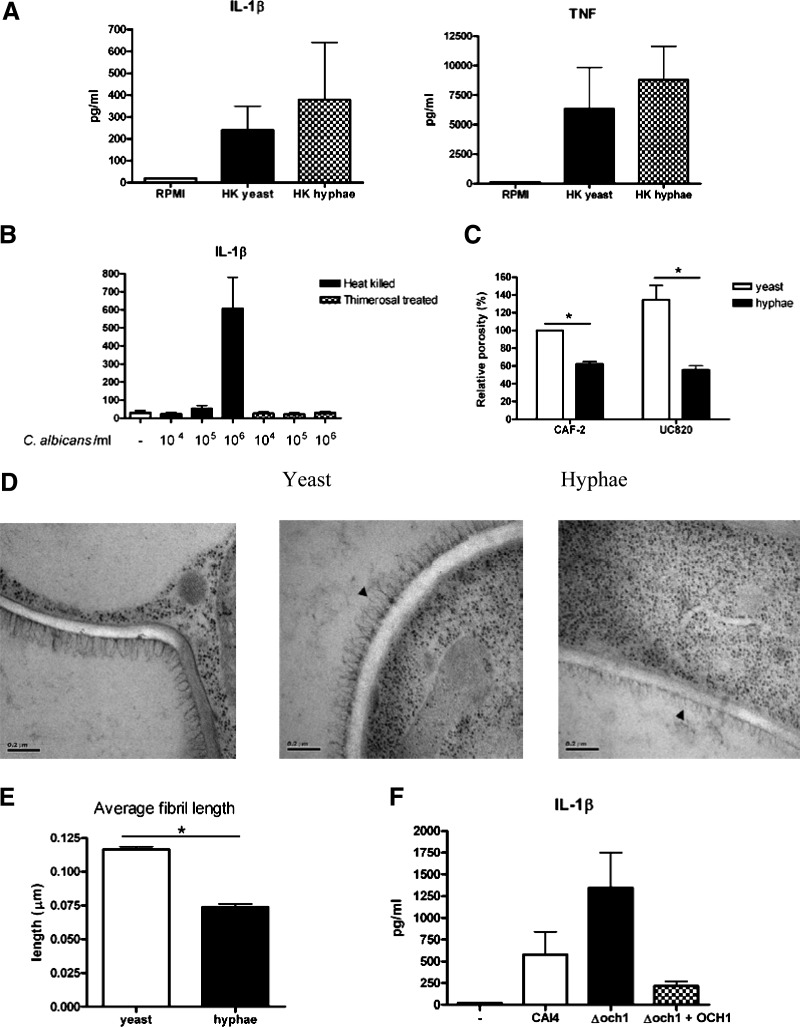
“albicans glycosylation mutant lacks most of the branched outer-wall N-mannan fibrils [15].”
BackgroundSelf-citationHuman dectin-1 deficiency and mucocutaneous fungal infections
Ferwerda, B., Ferwerda, G., Plantinga, T. S., Willment, J. A., van Spriel, A. B., Venselaar, H., Elbers, C. C., Johnson, M. D., Cambi, A., Huysamen, C., et al. (2009) · New England Journal of Medicine · doi:10.1056/nejmoa0901053 · Cited by 752 · cited 2×
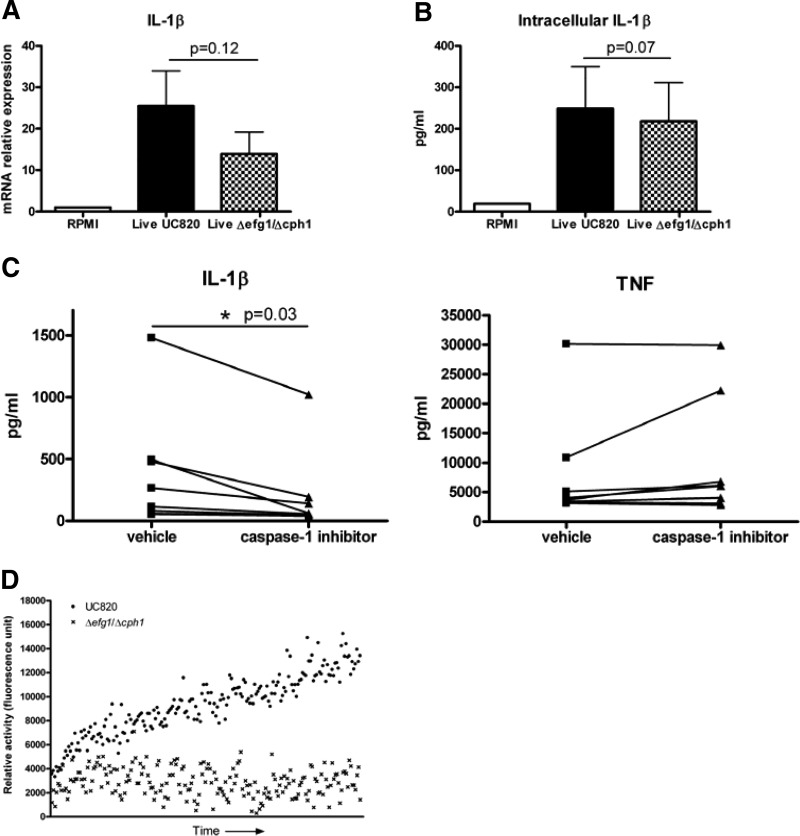
“To test this, we performed a set of experiments using Syk inhibitors and cells isolated from patients with a dectin-1 deficiency [27].”
BackgroundMethodSelf-citationNosocomial fungal infections: epidemiology, diagnosis, and treatment
Perlroth, J., Choi, B., & Spellberg, B. (2007) · Medical Mycology · doi:10.1080/13693780701218689 · Cited by 738 · cited 1×
“tion [1].”
The inflammasome: a danger sensing complex triggering innate immunity
Pétrilli, V., Dostert, C., Muruve, D. A., & Tschopp, J. (2007) · Current Opinion in Immunology · doi:10.1016/j.coi.2007.09.002 · Cited by 700 · cited 1×
“the mature, active IL-1 [20].”
Hise, A. G., Tomalka, J., Ganesan, S., Patel, K., Hall, B. A., Brown, G. D., & Fitzgerald, K. A. (2009) · Cell Host & Microbe · doi:10.1016/j.chom.2009.05.002 · Cited by 568
Underhill, D. M., Rossnagle, E., Lowell, C. A., & Simmons, R. M. (2005) · Blood · doi:10.1182/blood-2005-03-1239 · Cited by 526 · cited 1×
“can has been described elsewhere [12].”
Common variants in the NLRP3 region contribute to Crohn's disease susceptibility
Villani, A.-C., Lemire, M., Fortin, G., Louis, E., Silverberg, M. S., Collette, C., Baba, N., Libioulle, C., Belaiche, J., Bitton, A., et al. (2009) · Nature Genetics · doi:10.1038/ng.285 · Cited by 525 · cited 1×
“albicans antibodies have been described [35]; genetic variants in the inflammasome component NLRP3 predispose to disease [36]; and C.”
BackgroundRobinson, M. J., Osorio, F., Rosas, M., Freitas, R. P., Schweighoffer, E., Groß, O., Verbeek, J. S., Ruland, J., Tybulewicz, V., Brown, G. D., et al. (2009) · Journal of Experimental Medicine · doi:10.1084/jem.20082818 · Cited by 462 · cited 2×
“albicans -glucans and -mannans, respectively, and both signal through Syk kinase [25, 26].”
BackgroundCellular effectors mediating Th17-dependent clearance of pneumococcal colonization in mice
Zhang, Z., Clarke, T. B., & Weiser, J. N. (2009) · Journal of Clinical Investigation · doi:10.1172/jci36731 · Cited by 456 · cited 1×
“In addition, a critical role of macrophages in mucosal immunity has been shown in clearing primary and secondary pneumococcal colonization in a Th17-dependent manner [34].”
BackgroundIL-23 Promotes Maintenance but Not Commitment to the Th17 Lineage
Stritesky, G. L., Yeh, N., & Kaplan, M. H. (2008) · The Journal of Immunology · doi:10.4049/jimmunol.181.9.5948 · Cited by 417 · cited 1×
“IL-1 and IL-6 are the two main cytokines required for the initiation of Th17 responses [7], and IL-23 is important for the proliferation of Th17 cells [17].”
BackgroundTranscription Profiling of Candida albicans Cells Undergoing the Yeast-to-Hyphal Transition
Nantel, A., Dignard, D., Bachewich, C., Harcus, D., Marcil, A., Bouin, A.-P., Sensen, C. W., Hogues, H., van het Hoog, M., Gordon, P., et al. (2002) · Molecular Biology of the Cell · doi:10.1091/mbc.e02-05-0272 · Cited by 378 · cited 1×
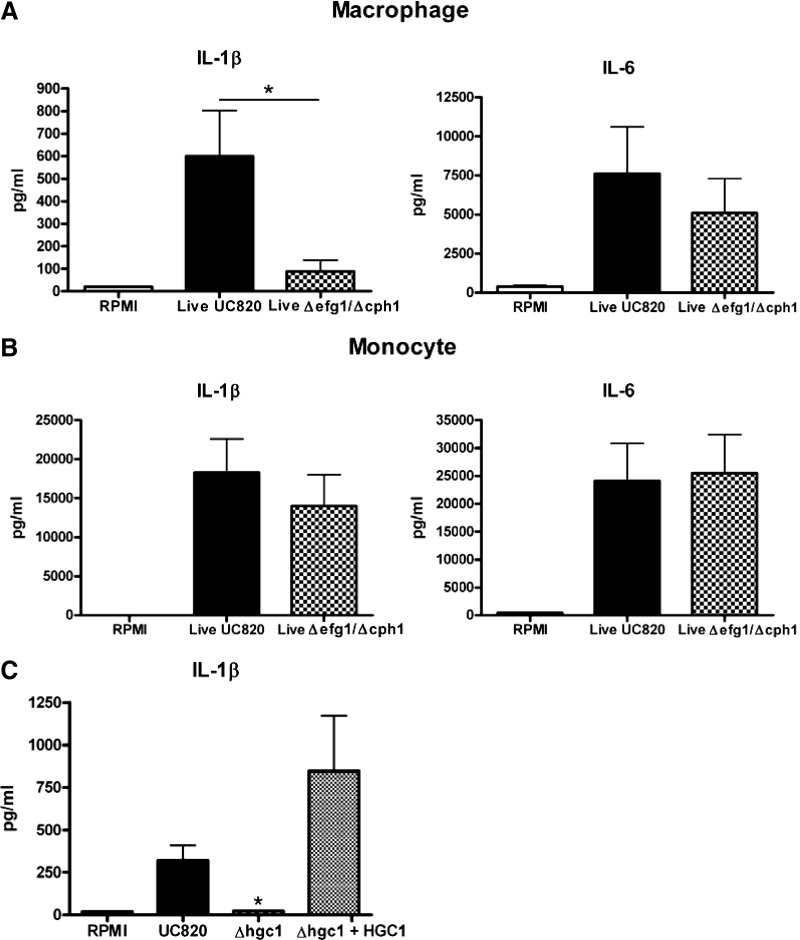
“albicans strain, which is unable to form hyphae [18] (mimicking colonization), and its corresponding WT strain, which forms germ tubes in culture (mimicking tissue invasion).”
BackgroundMoyes, D. L., Runglall, M., Murciano, C., Shen, C., Nayar, D., Thavaraj, S., Kohli, A., Islam, A., Mora-Montes, H., Challacombe, S. J., et al. (2010) · Cell Host & Microbe · doi:10.1016/j.chom.2010.08.002 · Cited by 372 · cited 2×
“A recent study has described colonizing yeasts and invading hyphae, causing differential activation of the c-Jun and c-Fos transcription factors in epithelial cells [2].”
BackgroundA Drug-Sensitive Genetic Network Masks Fungi from the Immune System
Wheeler, R. T., & Fink, G. R. (2006) · PLoS Pathogens · doi:10.1371/journal.ppat.0020035 · Cited by 359 · cited 1×
“albicans hyphae [24].”
Goodridge, H. S., Simmons, R. M., & Underhill, D. M. (2007) · The Journal of Immunology · doi:10.4049/jimmunol.178.5.3107 · Cited by 357 · cited 1×
“albicans -glucans and -mannans, respectively, and both signal through Syk kinase [25, 26].”
BackgroundZheng, X., Wang, Y., & Wang, Y. (2004) · The EMBO Journal · doi:10.1038/sj.emboj.7600195 · Cited by 326 · cited 2×
“albicans strain hgc1 [14], which is also unable to form germ tubes, and the eed1 mutant, which was unable to sustain hyphal growth [19].”
BackgroundImmune Recognition of Candida albicans β‐glucan by Dectin‐1
Gow, N. A. R., Netea, M. G., Munro, C. A., Ferwerda, G., Bates, S., Mora‐Montes, H. M., Walker, L., Jansen, T., Jacobs, L., Tsoni, V., et al. (2007) · The Journal of Infectious Diseases · doi:10.1086/523110 · Cited by 314 · cited 1×
“killing, which is known to expose inner cell-wall components such as -glucans and chitin [23].”
BackgroundSelf-citationCutting Edge: Candida albicans Hyphae Formation Triggers Activation of the Nlrp3 Inflammasome
Joly, S., Ma, N., Sadler, J. J., Soll, D. R., Cassel, S. L., & Sutterwala, F. S. (2009) · The Journal of Immunology · doi:10.4049/jimmunol.0901323 · Cited by 296 · cited 3×
“Mouse macrophages activate the inflammasome in response to hyphal components [32], whereas mice defective in inflammasome components [10, 11] or IL-17Rs [4] are highly susceptible to systemic or oropharyngeal candidiasis.”
BackgroundZakikhany, K., Naglik, J. R., Schmidt-Westhausen, A., Holland, G., Schaller, M., & Hube, B. (2007) · Cellular Microbiology · doi:10.1111/j.1462-5822.2007.01009.x · Cited by 288 · cited 2×
“albicans strain hgc1 [14], which is also unable to form germ tubes, and the eed1 mutant, which was unable to sustain hyphal growth [19].”
Background(1,3)-β-Glucans Activate Both Dectin-1 and NLRP3 Inflammasome in Human Macrophages
Kankkunen, P., Teirilä, L., Rintahaka, J., Alenius, H., Wolff, H., & Matikainen, S. (2010) · The Journal of Immunology · doi:10.4049/jimmunol.0903019 · Cited by 275
Eyerich, K., Foerster, S., Rombold, S., Seidl, H.-P., Behrendt, H., Hofmann, H., Ring, J., & Traidl-Hoffmann, C. (2008) · Journal of Investigative Dermatology · doi:10.1038/jid.2008.139 · Cited by 243 · cited 12×
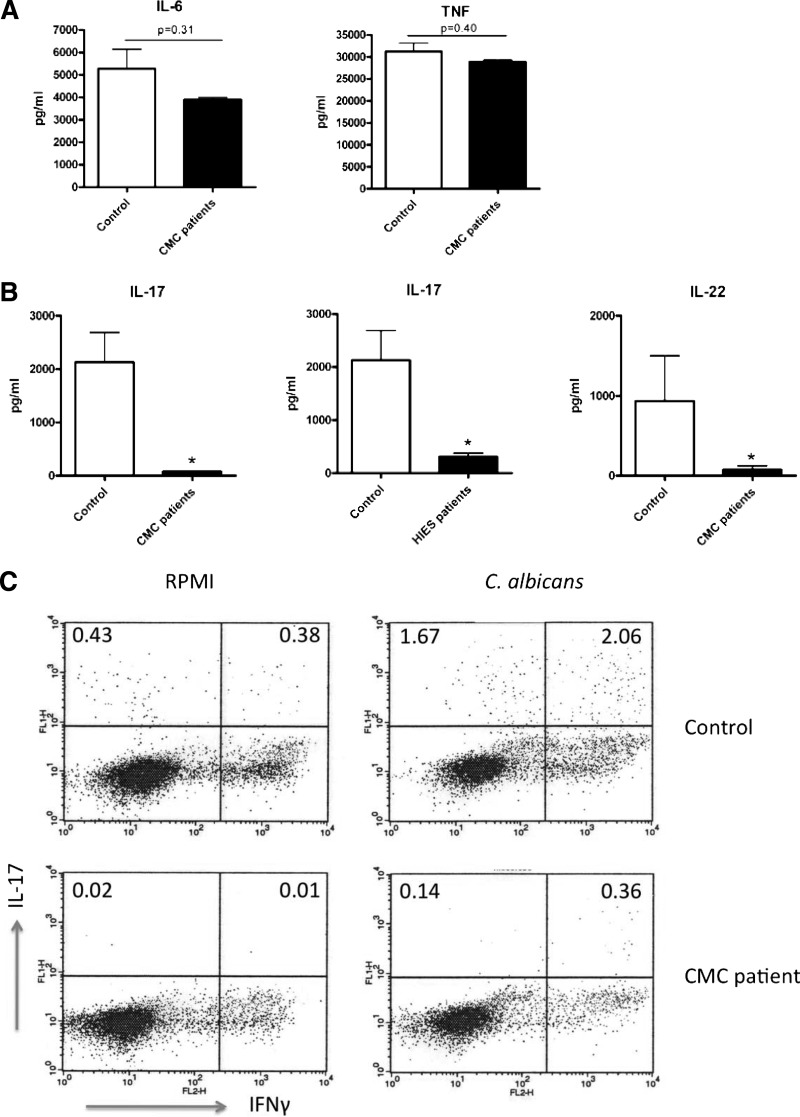
“This is the major immune defect in pa- tients with chronic mucosal fungal infections such as CMC and HIES, which share Th17 defects [5, 6].”
BackgroundResultInfluentialOuter Chain N-Glycans Are Required for Cell Wall Integrity and Virulence of Candida albicans
Bates, S., Hughes, H. B., Munro, C. A., Thomas, W. P. H., MacCallum, D. M., Bertram, G., Atrih, A., Ferguson, M. A. J., Brown, A. J. P., Odds, F. C., et al. (2006) · Journal of Biological Chemistry · doi:10.1074/jbc.m510360200 · Cited by 238 · cited 1×
“OCH1-complemented strains have been characterized previously [13].”
Self-citationCandida albicans Colonization and ASCA in Familial Crohn's Disease
Standaert-Vitse, A., Sendid, B., Joossens, M., François, N., Vandewalle-El Khoury, P., Branche, J., Van Kruiningen, H., Jouault, T., Rutgeerts, P., Gower-Rousseau, C., et al. (2009) · The American Journal of Gastroenterology · doi:10.1038/ajg.2009.225 · Cited by 206 · cited 1×
“albicans antibodies have been described [35]; genetic variants in the inflammasome component NLRP3 predispose to disease [36]; and C.”
BackgroundJawhara, S., Thuru, X., Standaert‐Vitse, A., Jouault, T., Mordon, S., Sendid, B., Desreumaux, P., & Poulain, D. (2008) · The Journal of Infectious Diseases · doi:10.1086/528990 · Cited by 190 · cited 1×
“albicans exacerbates colitis in mice [37].”
New insights into the mechanism of IL-1β maturation
Burns, K., Martinon, F., & Tschopp, J. (2003) · Current Opinion in Immunology · doi:10.1016/s0952-7915(02)00017-1 · Cited by 161
Mencacci, A., Perruccio, K., Bacci, A., Cenci, E., Benedetti, R., Martelli, M. F., Bistoni, F., Coffman, R., Velardi, A., & Romani, L. (2001) · Blood · doi:10.1182/blood.v97.5.1483 · Cited by 78 · cited 1×
“albicans infection [4, 28].”
Cyclic variations in the permeability of the cell wall of Saccharomyces cerevisiae
Nobel, J. G. D., Klis, F. M., Ram, A. F. J., Unen, H. V., Priem, J., Munnik, T., & ENDE, H. V. D. (1991) · Yeast · doi:10.1002/yea.320070606 · Cited by 51 · cited 1×
“nm [16].”
Memory Th-17 cells specific for C. albicans are persistent in human peripheral blood
Zhou, M., Yang, B., Ma, R., & Wu, C. Y. (2008) · Immunology Letters · doi:10.1016/j.imlet.2008.03.004 · Cited by 36 · cited 2×
“The importance of Th17 responses for antifungal host defense is supported by two additional lines of evidence: IL-17 is important for host defense against systemic fungal infection [29, 30], and IL-17 has been shown to be a crucial component of mucosal antifungal defense in a murine experimental model [4].”
Background
Cited by
Interactions between commensal fungi and the C-type lectin receptor Dectin-1 influence colitis
Iliev, I. D., Funari, V. A., Taylor, K. D., Nguyen, Q., Reyes, C. N., Strom, S. P., Brown, J., Becker, C. A., Fleshner, P. R., Dubinsky, M., et al. (2012) · Science · doi:10.1126/science.1221789 · Cited by 1,073
Candida albicans morphogenesis and host defence: discriminating invasion from colonization
Gow, N. A. R., van de Veerdonk, F. L., Brown, A. J. P., & Netea, M. G. (2012) · Nature Reviews Microbiology · doi:10.1038/nrmicro2711 · Cited by 888
Self-citationThe mycobiota: interactions between commensal fungi and the host immune system
Underhill, D. M., & Iliev, I. D. (2014) · Nature Reviews Immunology · doi:10.1038/nri3684 · Cited by 695
Immune defence against Candida fungal infections
Netea, M. G., Joosten, L. A. B., van der Meer, J. W. M., Kullberg, B.-J., & van de Veerdonk, F. L. (2015) · Nature Reviews Immunology · doi:10.1038/nri3897 · Cited by 642
Self-citationInteractions of fungal pathogens with phagocytes
Erwig, L. P., & Gow, N. A. R. (2016) · Nature Reviews Microbiology · doi:10.1038/nrmicro.2015.21 · Cited by 626
Self-citation
Metadata
- Authors
- Cheng, S.-C., van de Veerdonk, F. L., Lenardon, M., Stoffels, M., Plantinga, T., Smeekens, S., Rizzetto, L., Mukaremera, L., Preechasuth, K., Cavalieri, D., Kanneganti, T. D., van der Meer, J. W. M., Kullberg, B. J., Joosten, L. A. B., Gow, N. A. R., & Netea, M. G.
- Affiliations
- Radboud University Nijmegen (NL)
- Department of Medicine and Nijmegen Institute for Infection, Inflammation and Immunity (N4i), Radboud University Nijmegen Medical Center , Nijmegen, The Netherlands
- University of Aberdeen (GB)
- University of Florence (IT)
- St. Jude Children's Research Hospital (US)
- Corresponding author
- Netea, Mihai G
- ORCID
- Venue
- Journal of Leukocyte Biology
- Publisher
- Oxford University Press (OUP)
- Published
- 2011-04-29
- Volume
- 90
- Issue
- 2
- Pages
- 357-366
- ISSN
- 0741-5400 (ISSN-L)
- 1938-3673
- PMC
- PMC3513931
- OpenAlex
- W2162303211
- Cited by
- 191
- References
- 38
- Citations by year
- 2026: 5 · 2025: 5 · 2024: 8 · 2023: 3 · 2022: 10 · 2021: 12 · 2020: 14 · 2019: 10 · 2018: 9 · 2017: 13 · 2016: 16 · 2015: 17 · 2014: 22 · 2013: 15 · 2012: 26
- FWCI
- 14.91
- Type
- journal article
- Language
- en
- Open access
- hybrid
- doi.org
- Licence
- Locations
- Journal of Leukocyte Biology (publishedVersion, cc-by-nc)
- PubMed Central (publishedVersion, cc-by-nc)
- PubMed (publishedVersion)
- Florence Research (University of Florence) (submittedVersion, other-oa)
- Radboud Repository (Radboud University) (submittedVersion)
- Radboud Repository (Radboud University) (submittedVersion, other-oa)
- Funders
- EU-FP7 Marie Curie (PITN-GA-2008-214004)
- Wellcome Trust
- Rwandan Ministry of Education
- Thai Ministry of Sciences and Technology
- Netherlands Organization for Scientific Research
- ALLFUN Marie Curie
- Topics
- Health Sciences › Medicine › Infectious Diseases › Antifungal resistance and susceptibility
- Life Sciences › Biochemistry, Genetics and Molecular Biology › Molecular Biology › Inflammasome and immune disorders
- Life Sciences › Immunology and Microbiology › Immunology › Immune Response and Inflammation
- Keywords
- Dectin-1, inflammasome, Th17 cells, Candida albicans, IL-1β, macrophages, Syk, cell wall architecture, fungal pathogen recognition
- MeSH terms
- Dectin-1, Blood Cells, Candida albicans, Candidiasis, Cells, Cultured, Humans, Macrophages, Membrane Proteins, Nerve Tissue Proteins, Saccharomyces cerevisiae, Hyphae, Lectins, C-Type, Interleukin-1beta, Th17 Cells, Inflammasomes
About these checks
Registry, retraction, Cites and statistics results are computed, not judged, with one exception: a printed reference that no index lists is read once by a model before it counts as a citation error. Claims are extracted by a model and kept only when their quote appears verbatim in the text; each cited source is then checked, with a model’s help, for whether it says what the claim relies on. Those verdicts can be wrong — read the claim’s quote and the cited source before relying on one.
Statistics and arithmetic are recomputed, not judged.
Confidence bands are shown only for fields calibrated on our annotated test set. None is calibrated yet, so no band is shown.
What counts as a claim ›How we measure confidence ›How we check this ›
Are you an author, or do you see a problem with this page? Request a review
Data sources
Bibliographic data: Semantic Scholar, OpenAlex, Crossref.
Contains information from the Semantic Scholar Academic Graph Datasets, made available under the ODC Attribution License (ODC-BY 1.0).
Semantic Scholar’s data is described in: Kinney, R., et al. (2023). The Semantic Scholar Open Data Platform. arXiv:2301.10140.
