

Hepatic triacylglycerol accumulation and insulin resistance
Open accessThe DOI matches its Crossref record; 55 of the 55 references it cites were found in a registry or an index.
Abstract
The association of hepatic steatosis with hepatic insulin resistance and type 2 diabetes has prompted investigators to elucidate the underlying mechanism. In this review we focus on pathways of lipid metabolism, and we review recent data, primarily from mouse models, that link lipid intermediates with insulin resistance. Most of the studies that implicate acyl-CoA, lysophosphatidic acid, phosphatidic acid, diacylglycerol, or ceramide rely on indirect associations. Convincing data to support the hypothesis that specific lipid intermediates initiate pathways that alter insulin signaling will require studies in which the concentration of each purported signaling molecule can be manipulated independently.
Overview
The claims and statistics of this paper haven’t been checked yet.
Free: it reads the open-access text and checks the first 5 claims that cite a source we can check. Create a free account to check every claim.
Integrity signals
Registry
Cites
Statistics
Figures
Verification
Claims the paper makes
The claims and statistics of this paper haven’t been checked yet.
Free: it reads the open-access text and checks the first 5 claims that cite a source we can check. Create a free account to check every claim.
Claims other papers make about this one
Each is checked against this paper’s own text: does it say what the citing paper says it does?
In the citing paper
“This relationship is evident in obese and diabetic humans as well as in several rodent and cell culture models of metabolic disease and/or chronic lipid exposure (An et al., 2004; Hulver et al., 2003; Nagle et al., 2009).”
From Lipid-Induced Mitochondrial Stress and Insulin Action in Muscle (2012) · cites this paper as Nagle et al., 2009
Self-check
Percentages, sums and reported differences re-computed from the paper’s own numbers.
The self-check needs the paper’s full text.
Citations
Cites
Donnelly, K. L., Smith, C. I., Schwarzenberg, S. J., Jessurun, J., Boldt, M. D., & Parks, E. J. (2005) · Journal of Clinical Investigation · doi:10.1172/jci23621 · Cited by 3,604
Local and systemic insulin resistance resulting from hepatic activation of IKK-β and NF-κB
Cai, D., Yuan, M., Frantz, D. F., Melendez, P. A., Hansen, L., Lee, J., & Shoelson, S. E. (2005) · Nature Medicine · doi:10.1038/nm1166 · Cited by 2,245
Nonalcoholic steatohepatitis: association of insulin resistance and mitochondrial abnormalities
Sanyal, A. J., Campbell–Sargent, C., Mirshahi, F., Rizzo, W. B., Contos, M. J., Sterling, R. K., Luketic, V. A., Shiffman, M. L., & Clore, J. N. (2001) · Gastroenterology · doi:10.1053/gast.2001.23256 · Cited by 2,078
Role of Fatty Acids in the Pathogenesis of Insulin Resistance and NIDDM
Boden, G. (1997) · Diabetes · doi:10.2337/diab.46.1.3 · Cited by 1,728
Yu, C., Chen, Y., Cline, G. W., Zhang, D., Zong, H., Wang, Y., Bergeron, R., Kim, J. K., Cushman, S. W., Cooney, G. J., et al. (2002) · Journal of Biological Chemistry · doi:10.1074/jbc.m200958200 · Cited by 1,561
Mechanism of hepatic insulin resistance in non-alcoholic fatty liver disease
Samuel, V. T., Liu, Z.-X., Qu, X., Elder, B. D., Bilz, S., Befroy, D., Romanelli, A. J., & Shulman, G. I. (2004) · Journal of Biological Chemistry · doi:10.1074/jbc.m313478200 · Cited by 1,322 · cited 2×
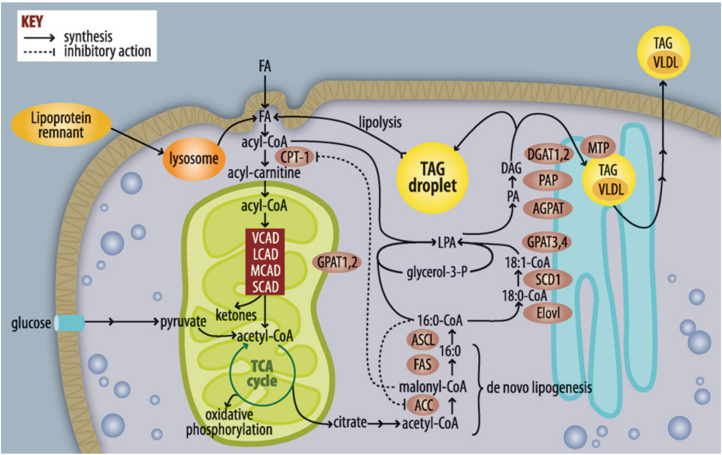
“glycerolipid synthesis; lipid intermediates derived from this pathway and related lipids [acyl-CoAs (9, 10), ceramide”
BackgroundHolland, W. L., Brozinick, J. T., Wang, L.-P., Hawkins, E. D., Sargent, K. M., Liu, Y., Narra, K., Hoehn, K. L., Knotts, T. A., Siesky, A., et al. (2007) · Cell Metabolism · doi:10.1016/j.cmet.2007.01.002 · Cited by 1,232 · cited 3×
“For example, a HFlard diet causes a ceramide-associated hepatic IR that is reversed by inhibiting sphingolipid synthesis, whereas a HF-soy oil diet causes a DAG-associated IR that is not affected by sphingolipid inhibition (11).”
BackgroundThe Metabolic Syndrome as a Predictor of Nonalcoholic Fatty Liver Disease
Hamaguchi, M., Kojima, T., Takeda, N., Nakagawa, T., Taniguchi, H., Fujii, K., Omatsu, T., Nakajima, T., Sarui, H., Shimazaki, M., et al. (2005) · Annals of Internal Medicine · doi:10.7326/0003-4819-143-10-200511150-00009 · Cited by 1,062
Enzymes of triacylglycerol synthesis and their regulation
Coleman, R. (2004) · Progress in Lipid Research · doi:10.1016/s0163-7827(03)00051-1 · Cited by 965 · cited 2×
“leagues (2), occurs on the cytosolic surface of the mitochondrial outer membrane and the endoplasmic reticulum.”
BackgroundSelf-citationLeone, T. C., Weinheimer, C. J., & Kelly, D. P. (1999) · Proceedings of the National Academy of Sciences · doi:10.1073/pnas.96.13.7473 · Cited by 943
Cited by
Items 201–272 of 272
Ghoshal, K., Luther, J. M., Pakala, S., Chetyrkin, S. V., Falck, J. R., Zent, R., Wasserman, D. H., & Pozzi, A. (2024) · Diabetes · doi:10.2337/db23-0493 · Cited by 7
Aralia cordata Inhibits Triacylglycerol Biosynthesis in HepG2 Cells
Kim, M. O., Lee, S. H., Seo, J. H., Kim, I. S., Han, A. R., Moon, D. O., Cho, S., Cui, L., Kim, J.-W., & Lee, H. S. (2013) · Journal of Medicinal Food · doi:10.1089/jmf.2012.2636 · Cited by 6
“In nonadipose tissue, such as the pancreas, skeletal muscle, and liver excessive TAG induces adverse effects, including lipotoxicity, leading to insulin resistance and type 2 diabetes.(1,2) Elevated TAG in the blood stream is a risk factor for cardiovascular disease and coronary artery disease.”
BackgroundYaw, H. P., Ton, S. H., Chin, H.-F., Karim, M. K. A., Fernando, H. A., & Kadir, K. A. (2015) · Europe PMC (PubMed Central) · Cited by 9
Johansen, C. T., Gallinger, Z. R., Wang, J., Ban, M. R., Young, T. K., Bjerregaard, P., & Hegele, R. A. (2010) · International Journal of Circumpolar Health · doi:10.3402/ijch.v69i1.17427 · Cited by 7
“to other disease phenotypes such as obesity, hepatic steatosis and hepatic insulin resistance, all conditions that are exacerbated by continued TG accumulation (5).”
BackgroundHepatic RACK1 deletion disturbs lipid and glucose homeostasis independently of insulin resistance
Qin, W., Zhang, T., Ge, M., Zhou, H., Xu, Y., Mu, R., Huang, C.-G., Liu, D., Huang, B., Wang, Q., et al. (2022) · Journal of Endocrinology · doi:10.1530/joe-22-0076 · Cited by 4
Nonalcoholic Fatty Liver Disease
Cheung, O., & Sanyal, A. J. (2010) · Molecular pathology library · doi:10.1007/978-1-4419-7107-4_34 · Cited by 5
Major role of apolipoprotein B in cycloheximide‐induced acute hepatic steatosis in mice
Murakami, M., Bessho, K., Mushiake, S., Kondou, H., Miyoshi, Y., & Ozono, K. (2011) · Hepatology Research · doi:10.1111/j.1872-034x.2011.00791.x · Cited by 6
Shang, J., Castro‐Perez, J. M., Shen, X., Zhu, Y., Liu, H., Qian, Y., Previs, S. F., Howard, A. D., Erion, M. D., Kelley, D. E., et al. (2016) · Obesity · doi:10.1002/oby.21583 · Cited by 5
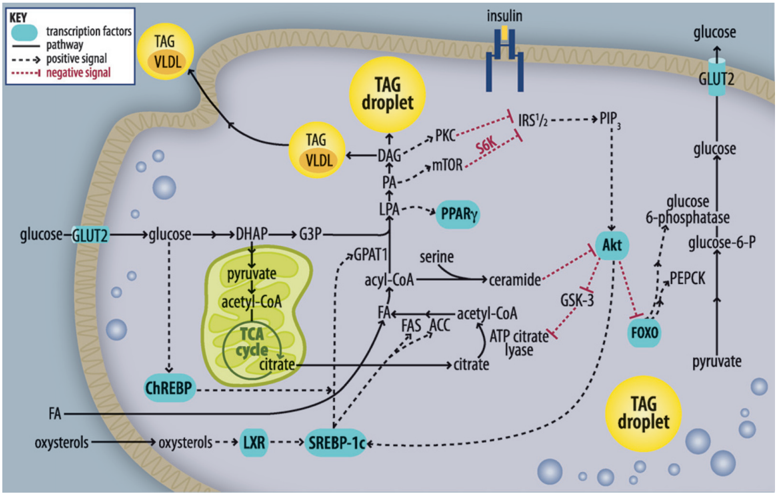
“PA and LPA are known modulators of insulin signaling pathways (3-6), and LPA is an endogenous peroxisome proliferator-activated receptor gamma (PPAR-c) agonist (24).”
BackgroundTriglyceride-Glucose Index as an Alternative Tool for Identifying Prediabetes and Insulin Resistance
Chowdhury, S. R., Siddiki, A. Z., & Kamrul-Hasan, A. B. M. (2023) · Bangladesh Journal of Endocrinology and Metabolism · doi:10.4103/bjem.bjem_4_23 · Cited by 4
Mendez‐Garcia, C., Trini, A., Browne, V., Kochansky, C. J., Pontiggia, L., & D’mello, A. P. (2019) · Canadian Journal of Physiology and Pharmacology · doi:10.1139/cjpp-2018-0646 · Cited by 4
Jagannath, S., & Chilkunda, N. D. (2021) · Nutrition Research · doi:10.1016/j.nutres.2021.07.002 · Cited by 5
Lelis, D. D. F., Baldo, T. D. O. F., Andrade, J. M. O., Griep, R. H., Benseñor, I. M., Lotufo, P. A., Mill, J. G., & Baldo, M. P. (2024) · Clinical Biochemistry · doi:10.1016/j.clinbiochem.2024.110793 · Cited by 8
Lin, Y., Chiu, J.-J., & Tsai, S. (2014) · PLoS ONE · doi:10.1371/journal.pone.0114436 · Cited by 3
“Several studies also indicate that both concentration and composition of HFC are relevant to the progression of insulin resistance [7, 11, 12].”
BackgroundNieminen, P., Rouvinen‐Watt, K., Harris, L., Huitu, O., Henttonen, H. A., & Mustonen, A. (2016) · Experimental Biology and Medicine · doi:10.1177/1535370216633312 · Cited by 3
“Another major difference is insulin sensitivity: when hepatic TAG accumulate in lean fasted animals, they do not cause hepatic insulin resistance that is a characteristic of NAFLD patients.(23) While the vole model is not fully comparable to NAFLD, its benefits are the very rapid accumulation of TAG and the modificati…”
BackgroundKübler, I. C., Kretzschmar, J., Lasso, M. A., Keeley, S. D., Rößler, L. C., Ganß, K., Sandoval‐Guzmán, T., & Brankatschk, M. (2024) · npj Regenerative Medicine · doi:10.1038/s41536-024-00375-x · Cited by 2
RER1 regulates lipid metabolism in monocytes and macrophages
Liu, Y., Theil, S., Yaghmour, M. H., Kerksiek, A., Chen, P., Schmidt‐Wolf, I. G. H., Barker, R., Bartok, E., Lütjohann, D., Thiele, C., et al. (2025) · Cellular and Molecular Life Sciences · doi:10.1007/s00018-025-05817-3 · Cited by 3
Xiao, Y., Wang, R., Zhu, C., Wang, Q., Wang, X., Song, W., Li, S., Jiang, F., 桂定坤, Xu, Y., et al. (2025) · Scientific Reports · doi:10.1038/s41598-025-24864-1 · Cited by 3
“Once activated, SREBP1 translocates to the nucleus and stimulates the transcription of lipogenic genes such as ACC, FASN, and stearoyl-CoA desaturase (SCD1) 22–24 .”
Mo, Y., Xu, H., Hu, Y., Liu, W., Yuan, J., & Wu, H. (2025) · Journal of Affective Disorders · doi:10.1016/j.jad.2025.121001 · Cited by 2
Wang, Y., Liu, H., Ma, S., Qian, T., Sun, H., Xu, Q., Hou, X., Hu, W., Zhang, G. K., Jelinic, M., et al. (2026) · Exploration of Endocrine and Metabolic Diseases · doi:10.37349/eemd.2026.101459 · Cited by 2
Liang, J., Gong, Y., Wang, Y., Qiu, Q., Zou, C., Dou, L., Liu, X., & Song, H. (2014) · Cell Biochemistry and Biophysics · doi:10.1007/s12013-014-0136-9 · Cited by 3
“insulin resistance is associated with the accumulation of TG [19].”
BackgroundNishino, T., Matsunaga, R., Jikihara, H., Uchida, M., Maeda, A., Qi, G., Abe, T., Kiyonari, H., Tashiro, S., Inagaki‐Ohara, K., et al. (2016) · Biochimica et Biophysica Acta (BBA) - Molecular and Cell Biology of Lipids · doi:10.1016/j.bbalip.2016.09.006 · Cited by 2
Cincović, M., Belić, B., Djoković, R., Ježek, J., Petrović, M. D., Božić, A. K., Anderson, R. C., & Starič, J. (2019) · Veterinarski arhiv · doi:10.24099/vet.arhiv.0331 · Cited by 2
“Higher inflow of NEFA blocks the signal for insulin in hepatocytes and interrupted beta oxidation of fatty acids (NAGLE et al., 2009).”
BackgroundLiberty, I. A., & Putri, N. K. (2022) · Epidemiology Biostatistics and Public Health · doi:10.2427/13250 · Cited by 2
“Several studies reported that higher triglyceride levels in muscles and liver can affect glucose metabolism in each target organ [21-24].”
BackgroundRabelo, F. (2018) · Digital Library of Theses and Dissertations (Universidade de São Paulo) · doi:10.11606/t.5.2018.tde-09052018-084037 · Cited by 3
Valdez, I. A., Palavicini, J. P., Bakewell, T. M., Fourcaudot, M. J., Ayala, I., Xu, Z., Khattab, A., Han, X., Shannon, C. E., & Norton, L. (2022) · bioRxiv (Cold Spring Harbor Laboratory) · doi:10.1101/2022.05.31.494168 · Cited by 3
“, adipose tissue [54] or liver [55]), these lipids were generally not as abundant in pancreatic islets (Fig.”
BackgroundAreloegbe, S. E. J., Atuma, C. L., Oyabambi, A. O., & Olaniyi, K. S. (2023) · Nutrire · doi:10.1186/s41110-023-00205-y · Cited by 2
“But IR-associated inflammation and increasing reactive oxygen species (ROS) primarily impair insulin signaling [48, 56], therefore leading to skeletal muscle defects.”
BackgroundNon-linear relationship between lipid accumulation products and risk of diabetes in Japanese adults
Zha, F., Chen, M., Shan, L., Zhao, J., Cao, C., & Wang, Y. (2024) · Scientific Reports · doi:10.1038/s41598-024-78672-0 · Cited by 1
“Much evidence has shown that higher levels of TG in muscle and liver may increase free fatty acids and their flux from adipose to non-adipose tissue, disrupting glucose metabolism 42,43 .”
BackgroundGuo, C. (2013) · The Journal of the American Medical Association (JAMA) Network (American Medical Association) · doi:10.13028/m2vw2m · Cited by 1
“Recent literatures have implicated CD40L as a protective factor against hepatic steatosis [221, , which has a strong association with insulin resistance ([227]).”
BackgroundСтаценко, М. Е., Туркина, С. В., Шилина, Н. Н., Kosivtsova, M. A., & Анатольевич, Б. П. (2018) · Экспериментальная и клиническая гастроэнтерология · doi:10.31146/1682-8658-ecg-157-9-38-44 · Cited by 1
“Формированию НАЖБП у пациента с ожирением способствуют нарушения физиологических взаимосвязей между метаболизмом свободных жирных кислот (СЖК), резистентностью к инсулину, дислипидемия [11,12,13].”
Lipodystrophy - A Rare Condition with Serious Metabolic Abnormalities
Chung, L. H., & Qi, Y. (2020) · IntechOpen eBooks · doi:10.5772/intechopen.88667 · Cited by 2
“AGPAT2 is a member of lysophosphatidic acid acyltransferases (LPAATs) including AGPAT family (AGPAT1–AGPAT11) and others such as CGI-58 and endophilin [17].”
BackgroundZarfeshani, A. (2016) · Journal of Obesity and Bariatrics · doi:10.13188/2377-9284.1000018 · Cited by 1
“05), respectively (Figure 1A); the latter are two key enzymes associated with hepatic FA biosynthesis [31].”
BackgroundOng, K. T. (2013) · University of Minnesota Digital Conservancy (University of Minnesota) · Cited by 2
Mazo, D. F. D. C. (2012) · Digital Library of Theses and Dissertations (Universidade de São Paulo) · doi:10.11606/t.5.2012.tde-05042012-093828
Studies on the mechanisms of action and physiological relevance of SOCS proteins
Zadjali, F. (2011) · Figshare
Ellis, R. J. (2011) · The Scholarship East Carolina University's Institutional Repository (East Carolina University) · Cited by 2
Martins, A. R. (2014) · Digital Library of Theses and Dissertations (Universidade de São Paulo) · doi:10.11606/t.87.2014.tde-05012015-152951
Fiber Treating Metabolic Syndrome
Stamatikos, W. J. B. A. D. (2013) · Journal of Metabolic Syndrome · doi:10.4172/2167-0943.1000130
“pathogenesis of IR [114,115].”
Du, X. (2013) · Kobra (Universitätsbibliothek Kassel) · Cited by 2
The role of ER stress in lipogenesis and insulin resistance in response to over nutrition
Sun, R. (2016) · RMIT Research Repository (RMIT University Library) · doi:10.25439/rmt.27581124
Roles of PI3-kinase and ARAP2 in regulating glucose metabolism
Chaudhari, A. (2016) · Gothenburg University Publications Electronic Archive (Gothenburg University)
Tiburcio, T. (2016) · Digital Library of Theses and Dissertations (Universidade de São Paulo) · doi:10.11606/d.10.2016.tde-11052016-141902
The influence of age and nutrients on insulin sensitivity
Chee, C. (2016) · Nottingham ePrints (University of Nottingham) · Cited by 2
La voie ASP-C5L2 : un pont entre l'homéostasie métabolique et l'inflammation
Fisette, A. (2013) · Corpus Université Laval (Université Laval)
The Role Of Crebh In Hepatic Energy Regulation Under Metabolic Stress
Mendez, R. (2015) · Human Biology
Cellular functional roles of celastrol on mitochondrial dysfunction-induced insulin resistance
Bakar, A., & Bakar, M. H. A. (2015)
Xu, E. (2012) · Corpus Université Laval (Université Laval)
Araujo, L. C. D. C. (2019) · Digital Library of Theses and Dissertations (Universidade de São Paulo) · doi:10.11606/t.42.2019.tde-27052019-120121
Franco, F. N., & Porto, M. A. N. (2019) · Journal of Gastroenterology and Hepatology Research · doi:10.17554/j.issn.2224-3992.2019.08.822
“This pathology has been associated with several factors, such as genetic alteration, excessive consumption of high-fat foods, hormonal and immune dysregulation, as well as being a developmental factor for insulin resistance[19].”
BackgroundRedução da produção de H2S no fígado de camundongos alimentados com dieta hiperlipídica.
Barbosa, B. L. (2019) · Digital Library of Theses and Dissertations (Universidade de São Paulo) · doi:10.11606/d.42.2019.tde-18092019-155851
EVALUATION OF KEY PERFLUOROALKYL SUBSTANCES TO INDUCE LIVER STEATOSIS IN MOUSE AND HUMAN MODELS
Marques, E. (2020) · Digital Commons - URI (University of Rhode Island) · doi:10.23860/diss-marques-emily-2020
LiangYing, J., Wang, G., & QiuCaiyan, Q. (2014)
Mehta, C., R, V. C., & Raveesha, A. (2021) · GLOBAL JOURNAL FOR RESEARCH ANALYSIS · doi:10.36106/2912190
Rahman, M. M., Dutta, R., Patwary, R. I., Ahmad, H. I., Imam, I., Akhtar, K., Islam, F., Hamid, M. A., & Ghose, A. (2022) · Scholars Journal of Applied Medical Sciences · doi:10.36347/sjams.2022.v10i04.009 · Cited by 1
Dried Blood Spot Lipidomics in DiabetesPreprint
Roberts, J. L., Ryan, M., Whiley, L., Gray, N., Gay, M. C. L., Holmes, E. C., Nicholson, J. K., Wist, J., & Lawler, N. G. (2025) · bioRxiv (Cold Spring Harbor Laboratory) · doi:10.1101/2025.05.28.656742
“For instance, alterations in glycerophospholipids (e.g., lysophosphatidylcholines) 4-7 , sphingolipids (e.g., ceramides) 8-11 , and glycerolipids (e.g., triacylglycerols) 12-14 , have been shown to contribute to insulin resistance and cardiovascular risk.”
Pan, X., Munan, S., Zuckerman, A. L., Pon, A., Violante, S. N., Cross, J. R., Shah, H., & Cracan, V. (2025) · bioRxiv (Cold Spring Harbor Laboratory) · doi:10.1101/2025.06.02.657195
Maruyama, T., Matsui, S., Tsuzuki, S., Horie, T., Ono, K., & Sasaki, T. (2025) · American Journal of Physiology-Endocrinology and Metabolism · doi:10.1152/ajpendo.00276.2025 · Cited by 1
Anti-diabetic effects of oleanolic acid and matrine
Zeng, X. (2014) · RMIT Research Repository (RMIT University Library) · doi:10.25439/rmt.27351540
Li, R., Sun, Q., Lam, S. M., Chen, R., Zhu, J., Gu, W., Zhang, L., Tian, H., Zhang, K., Chen, L., et al. (2020) · Figshare · doi:10.6084/m9.figshare.12178023
Chen, W., Ding, S., Tu, J., Xiao, G., Chen, K., Zhang, Y., Huang, R., & Liao, Y. (2023) · Figshare · doi:10.6084/m9.figshare.22949419
Chen, W., Ding, S., Tu, J., Xiao, G., Chen, K., Zhang, Y., Huang, R., & Liao, Y. (2023) · Figshare · doi:10.6084/m9.figshare.22949416
Rouquet, T. (2015) · theses.fr (ABES) · doi:10.70675/680971a6z149ez4296z9c76z5ee9dfd53ce5
New biomarkers and therapeutic targets in left ventricular hypertrophy
Evaristi, M. F. (2017) · theses.fr (ABES) · doi:10.70675/0d048706z75d9z4ea2za46fz8f14c110ade5
Djohan, Y. F. (2017) · theses.fr (ABES) · doi:10.70675/d5731089zdcf9z4aefza338z8affdb118a6f · Cited by 1
The roles of endoplasmic reticulum stress and Bax inhibitor-1 in non-alcoholic fatty liver disease
Lebeaupin, C. (2018) · theses.fr (ABES) · doi:10.70675/de500ab2z3c59z484dz8f58z7c3173626c42
De, A. J., Upadhyaya, B., & Aich, P. (2026) · American Journal of Physiology-Gastrointestinal and Liver Physiology · doi:10.1152/ajpgi.00163.2026
Quynh, D. D., García‐Santillán, J. A., ThuanVăn, N. V., & Bolaños, F. J. (2026) · Nutrition Research · doi:10.1016/j.nutres.2026.08.003
Lee, J., Hur, J., & Choi, H. (2026) · Journal of Medicinal Food · doi:10.1177/1096620x261481638
Metadata
- Authors
- Nagle, C. A., Klett, E. L., & Coleman, R. A.
- Affiliations
- University of North Carolina at Chapel Hill (US)
- Venue
- Journal of Lipid Research
- Publisher
- Elsevier BV
- Published
- 2009-04
- Volume
- 50
- Pages
- S74-S79
- ISSN
- 0022-2275 (ISSN-L)
- PMC
- PMC2674743
- OpenAlex
- W1972050244
- Cited by
- 272
- References
- 55
- Citations by year
- 2026: 6 · 2025: 10 · 2024: 10 · 2023: 7 · 2022: 13 · 2021: 13 · 2020: 13 · 2019: 13 · 2018: 18 · 2017: 13 · 2016: 27 · 2015: 30 · 2014: 20 · 2013: 30 · 2012: 17
- FWCI
- 1.14
- Type
- journal article
- Language
- en
- Open access
- hybrid
- doi.org
- Licence
- cc-by
- www.elsevier.com/tdm/userlicense/1.0/ (tdm)
- creativecommons.org/licenses/by/4.0/ (vor, 4185 d)
- Locations
- Journal of Lipid Research (publishedVersion, cc-by)
- PubMed Central (publishedVersion)
- PubMed (publishedVersion)
- Carolina Digital Repository (University of North Carolina at Chapel Hill) (submittedVersion)
- DOAJ (DOAJ: Directory of Open Access Journals) (submittedVersion, cc-by-sa)
- UNC Libraries
- Funders
- National Institutes of Health (DK56350, DK56598)
- National Institute of Diabetes and Digestive and Kidney Diseases (R01DK059935, DK 56598, DK 59935, DK56350, P30DK056350)
- Topics
- Health Sciences › Medicine › Hepatology › Liver Disease Diagnosis and Treatment
- Life Sciences › Biochemistry, Genetics and Molecular Biology › Biochemistry › Lipid metabolism and biosynthesis
- Health Sciences › Medicine › Endocrinology, Diabetes and Metabolism › Diet, Metabolism, and Disease
- Keywords
- hepatic insulin resistance, hepatic steatosis, type 2 diabetes, lipid metabolism, acyl-CoA, lysophosphatidic acid, phosphatidic acid, diacylglycerol, ceramide, insulin signaling, lipid intermediates
- MeSH terms
- Animals, Fatty Liver, Humans, Insulin, Insulin Resistance, Liver, Transcription, Genetic, Triglycerides
About these checks
Registry, retraction, Cites and statistics results are computed, not judged, with one exception: a printed reference that no index lists is read once by a model before it counts as a citation error. Claims are extracted by a model and kept only when their quote appears verbatim in the text; each cited source is then checked, with a model’s help, for whether it says what the claim relies on. Those verdicts can be wrong — read the claim’s quote and the cited source before relying on one.
Statistics and arithmetic are recomputed, not judged.
Confidence bands are shown only for fields calibrated on our annotated test set. None is calibrated yet, so no band is shown.
What counts as a claim ›How we measure confidence ›How we check this ›
Are you an author, or do you see a problem with this page? Request a review
Data sources
Bibliographic data: Semantic Scholar, OpenAlex, Crossref.
Contains information from the Semantic Scholar Academic Graph Datasets, made available under the ODC Attribution License (ODC-BY 1.0).
Semantic Scholar’s data is described in: Kinney, R., et al. (2023). The Semantic Scholar Open Data Platform. arXiv:2301.10140.
