

Hepatic triacylglycerol accumulation and insulin resistance
Open accessThe DOI matches its Crossref record; 55 of the 55 references it cites were found in a registry or an index.
Abstract
The association of hepatic steatosis with hepatic insulin resistance and type 2 diabetes has prompted investigators to elucidate the underlying mechanism. In this review we focus on pathways of lipid metabolism, and we review recent data, primarily from mouse models, that link lipid intermediates with insulin resistance. Most of the studies that implicate acyl-CoA, lysophosphatidic acid, phosphatidic acid, diacylglycerol, or ceramide rely on indirect associations. Convincing data to support the hypothesis that specific lipid intermediates initiate pathways that alter insulin signaling will require studies in which the concentration of each purported signaling molecule can be manipulated independently.
Overview
The claims and statistics of this paper haven’t been checked yet.
Free: it reads the open-access text and checks the first 5 claims that cite a source we can check. Create a free account to check every claim.
Integrity signals
Registry
Cites
Statistics
Figures
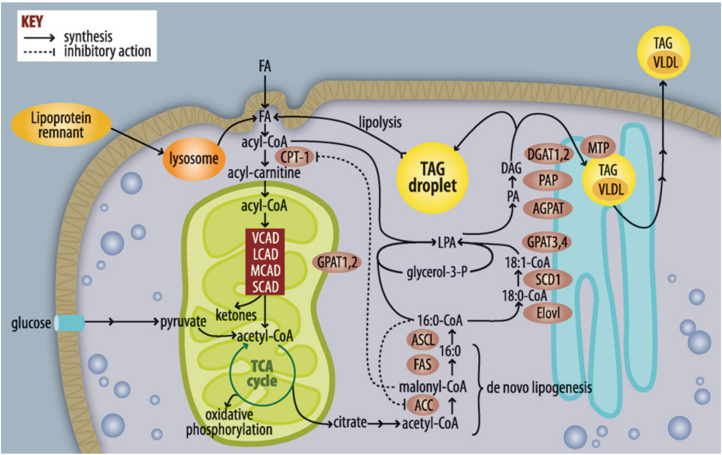
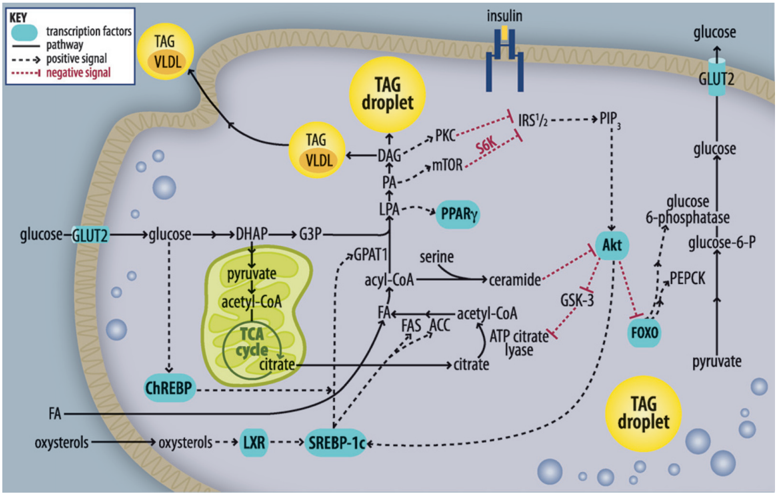
Verification
Claims the paper makes
The claims and statistics of this paper haven’t been checked yet.
Free: it reads the open-access text and checks the first 5 claims that cite a source we can check. Create a free account to check every claim.
Claims other papers make about this one
Each is checked against this paper’s own text: does it say what the citing paper says it does?
In the citing paper
“This relationship is evident in obese and diabetic humans as well as in several rodent and cell culture models of metabolic disease and/or chronic lipid exposure (An et al., 2004; Hulver et al., 2003; Nagle et al., 2009).”
From Lipid-Induced Mitochondrial Stress and Insulin Action in Muscle (2012) · cites this paper as Nagle et al., 2009
Self-check
Percentages, sums and reported differences re-computed from the paper’s own numbers.
The self-check needs the paper’s full text.
Citations
Cites
Donnelly, K. L., Smith, C. I., Schwarzenberg, S. J., Jessurun, J., Boldt, M. D., & Parks, E. J. (2005) · Journal of Clinical Investigation · doi:10.1172/jci23621 · Cited by 3,604
Local and systemic insulin resistance resulting from hepatic activation of IKK-β and NF-κB
Cai, D., Yuan, M., Frantz, D. F., Melendez, P. A., Hansen, L., Lee, J., & Shoelson, S. E. (2005) · Nature Medicine · doi:10.1038/nm1166 · Cited by 2,245
Nonalcoholic steatohepatitis: association of insulin resistance and mitochondrial abnormalities
Sanyal, A. J., Campbell–Sargent, C., Mirshahi, F., Rizzo, W. B., Contos, M. J., Sterling, R. K., Luketic, V. A., Shiffman, M. L., & Clore, J. N. (2001) · Gastroenterology · doi:10.1053/gast.2001.23256 · Cited by 2,078
Role of Fatty Acids in the Pathogenesis of Insulin Resistance and NIDDM
Boden, G. (1997) · Diabetes · doi:10.2337/diab.46.1.3 · Cited by 1,728
Yu, C., Chen, Y., Cline, G. W., Zhang, D., Zong, H., Wang, Y., Bergeron, R., Kim, J. K., Cushman, S. W., Cooney, G. J., et al. (2002) · Journal of Biological Chemistry · doi:10.1074/jbc.m200958200 · Cited by 1,561
Mechanism of hepatic insulin resistance in non-alcoholic fatty liver disease
Samuel, V. T., Liu, Z.-X., Qu, X., Elder, B. D., Bilz, S., Befroy, D., Romanelli, A. J., & Shulman, G. I. (2004) · Journal of Biological Chemistry · doi:10.1074/jbc.m313478200 · Cited by 1,322 · cited 2×
“glycerolipid synthesis; lipid intermediates derived from this pathway and related lipids [acyl-CoAs (9, 10), ceramide”
BackgroundHolland, W. L., Brozinick, J. T., Wang, L.-P., Hawkins, E. D., Sargent, K. M., Liu, Y., Narra, K., Hoehn, K. L., Knotts, T. A., Siesky, A., et al. (2007) · Cell Metabolism · doi:10.1016/j.cmet.2007.01.002 · Cited by 1,232 · cited 3×
“For example, a HFlard diet causes a ceramide-associated hepatic IR that is reversed by inhibiting sphingolipid synthesis, whereas a HF-soy oil diet causes a DAG-associated IR that is not affected by sphingolipid inhibition (11).”
BackgroundThe Metabolic Syndrome as a Predictor of Nonalcoholic Fatty Liver Disease
Hamaguchi, M., Kojima, T., Takeda, N., Nakagawa, T., Taniguchi, H., Fujii, K., Omatsu, T., Nakajima, T., Sarui, H., Shimazaki, M., et al. (2005) · Annals of Internal Medicine · doi:10.7326/0003-4819-143-10-200511150-00009 · Cited by 1,062
Enzymes of triacylglycerol synthesis and their regulation
Coleman, R. (2004) · Progress in Lipid Research · doi:10.1016/s0163-7827(03)00051-1 · Cited by 965 · cited 2×
“leagues (2), occurs on the cytosolic surface of the mitochondrial outer membrane and the endoplasmic reticulum.”
BackgroundSelf-citationLeone, T. C., Weinheimer, C. J., & Kelly, D. P. (1999) · Proceedings of the National Academy of Sciences · doi:10.1073/pnas.96.13.7473 · Cited by 943
Tissue-specific overexpression of lipoprotein lipase causes tissue-specific insulin resistance
Kim, J. K., Fillmore, J. J., Chen, Y., Yu, C., Moore, I. K., Pypaert, M., Lutz, E. P., Kako, Y., Velez-Carrasco, W., Goldberg, I. J., et al. (2001) · Proceedings of the National Academy of Sciences · doi:10.1073/pnas.121164498 · Cited by 753
Shimano, H., Horton, J. D., Shimomura, I., Hammer, R. E., Brown, M. S., & Goldstein, J. L. (1997) · Journal of Clinical Investigation · doi:10.1172/jci119248 · Cited by 730 · cited 9×
“Increased SREBP-1c activity in ob/ob mouse liver increases GPAT1 mRNA expression and hepatic de novo glycerolipid synthesis (29), whereas hepatic GPAT1 knockdown in ob/ob mice lowers hepatic TAG and DAG content and plasma glucose concentrations (30).”
BackgroundInfluentialFree Fatty Acids Induce JNK-dependent Hepatocyte Lipoapoptosis
Malhi, H., Bronk, S. F., Werneburg, N. W., & Gores, G. J. (2006) · Journal of Biological Chemistry · doi:10.1074/jbc.m510660200 · Cited by 722
Defining high-fat-diet rat models: Metabolic and molecular effects of different fat types
Buettner, R., Parhofer, K. G., Woenckhaus, M., Wrede, C. E., Kunz-Schughart, L. A., Schölmerich, J., & Bollheimer, L. C. (2006) · Journal of Molecular Endocrinology · doi:10.1677/jme.1.01909 · Cited by 704 · cited 2×
“(11, 43) suggests that DAG FA composition could be relevant.”
BackgroundChen, G., Liang, G., Ou, J., Goldstein, J. L., & Brown, M. S. (2004) · Proceedings of the National Academy of Sciences · doi:10.1073/pnas.0404297101 · Cited by 551 · cited 1×
“promoter and increase hepatic lipogenesis (6).”
McIntyre, T. M., Pontsler, A. V., Silva, A. R., St. Hilaire, A., Xu, Y., Hinshaw, J. C., Zimmerman, G. A., Hama, K., Aoki, J., Arai, H., et al. (2003) · Proceedings of the National Academy of Sciences · doi:10.1073/pnas.0135855100 · Cited by 550
“New” hepatic fat activates PPARα to maintain glucose, lipid, and cholesterol homeostasis
Chakravarthy, M. V., Pan, Z., Zhu, Y., Tordjman, K., Schneider, J. G., Coleman, T., Turk, J., & Semenkovich, C. F. (2005) · Cell Metabolism · doi:10.1016/j.cmet.2005.04.002 · Cited by 545
Crucial role of a long-chain fatty acid elongase, Elovl6, in obesity-induced insulin resistance
Matsuzaka, T., Shimano, H., Yahagi, N., Kato, T., Atsumi, A., Yamamoto, T., Inoue, N., Ishikawa, M., Okada, S., Ishigaki, N., et al. (2007) · Nature Medicine · doi:10.1038/nm1662 · Cited by 542 · cited 1×
“Other mouse models that support this hypothesis include hepatic over-expression of GPAT1 (13), LCAD KO mice (37), Elovl6 KO mice fed a high fat-high sucrose diet (19), and mouse models fed with the HF-SD including: ACC2 KO (19), ACC1 and 2 knockdown (26), GPAT1 KO (12), and DGAT2 knockdown mice (16).”
BackgroundUyeda, K., & Repa, J. J. (2006) · Cell Metabolism · doi:10.1016/j.cmet.2006.06.008 · Cited by 529
Dissociation of Hepatic Steatosis and Insulin Resistance in Mice Overexpressing DGAT in the Liver
Monetti, M., Levin, M. C., Watt, M. J., Sajan, M. P., Marmor, S., Hubbard, B. K., Stevens, R. D., Bain, J. R., Newgard, C. B., Farese, R. V., et al. (2007) · Cell Metabolism · doi:10.1016/j.cmet.2007.05.005 · Cited by 511 · cited 1×
“Other mouse models that support this hypothesis include hepatic over-expression of GPAT1 (13), LCAD KO mice (37), Elovl6 KO mice fed a high fat-high sucrose diet (19), and mouse models fed with the HF-SD including: ACC2 KO (19), ACC1 and 2 knockdown (26), GPAT1 KO (12), and DGAT2 knockdown mice (16).”
BackgroundGrefhorst, A., Elzinga, B. M., Voshol, P. J., Plo¨sch, T., Kok, T., Bloks, V. W., van der Sluijs, F. H., Havekes, L. M., Romijn, J. A., Verkade, H. J., et al. (2002) · Journal of Biological Chemistry · doi:10.1074/jbc.m204887200 · Cited by 498 · cited 8×
“In mice, oral LXR agonists result in enhanced hepatic FA synthesis, hepatic steatosis, and hypertriglyceridemia, all mediated by increased expression of SREBP-1c (4).”
BackgroundInfluentialSamuel, V. T., Liu, Z.-X., Wang, A., Beddow, S. A., Geisler, J. G., Kahn, M., Zhang, X.-M., Monia, B. P., Bhanot, S., & Shulman, G. I. (2007) · Journal of Clinical Investigation · doi:10.1172/jci30400 · Cited by 497
Insulin resistance associated to obesity: the link TNF-alpha
Nieto-Vazquez, I., Fernández-Veledo, S., Krämer, D. K., Vila-Bedmar, R., Garcia-Guerra, L., & Lorenzo, M. (2008) · Archives of Physiology and Biochemistry · doi:10.1080/13813450802181047 · Cited by 471 · cited 1×
“production of TNFa activates NFkB in hepatocytes and increases ceramide and hepatic IR (8, 42).”
BackgroundAn, J., Muoio, D. M., Shiota, M., Fujimoto, Y., Cline, G. W., Shulman, G. I., Koves, T. R., Stevens, R., Millington, D., & Newgard, C. B. (2004) · Nature Medicine · doi:10.1038/nm995 · Cited by 450 · cited 1×
“proved hepatic insulin sensitivity due to lower DNL and increased b-oxidation (26, 27).”
BackgroundSavage, D. B. (2006) · Journal of Clinical Investigation · doi:10.1172/jci27300 · Cited by 447
Liver-Specific Inhibition of ChREBP Improves Hepatic Steatosis and Insulin Resistance in ob/ob Mice
Dentin, R., Benhamed, F., Hainault, I., Fauveau, V., Foufelle, F., Dyck, J. R. B., Girard, J., & Postic, C. (2006) · Diabetes · doi:10.2337/db06-0200 · Cited by 433 · cited 1×
“or ChREBP are protected from hepatic steatosis and IR (24, 25).”
BackgroundMammalian mitochondrial β-oxidation
EATON, S., BARTLETT, K. B., & POURFARZAM, M. (1996) · Biochemical Journal · doi:10.1042/bj3200345 · Cited by 422
Yahagi, N., Shimano, H., Hasty, A. H., Matsuzaka, T., Ide, T., Yoshikawa, T., Amemiya-Kudo, M., Tomita, S., Okazaki, H., Tamura, Y., et al. (2002) · Journal of Biological Chemistry · doi:10.1074/jbc.m201584200 · Cited by 370
Patsouris, D., Reddy, J. K., Müller, M., & Kersten, S. (2006) · Endocrinology · doi:10.1210/en.2005-1132 · Cited by 340
Pharmacological Inhibition of Glucosylceramide Synthase Enhances Insulin Sensitivity
Aerts, J. M., Ottenhoff, R., Powlson, A. S., Grefhorst, A., van Eijk, M., Dubbelhuis, P. F., Aten, J., Kuipers, F., Serlie, M. J., Wennekes, T., et al. (2007) · Diabetes · doi:10.2337/db06-1619 · Cited by 301
Yu, X. X., Murray, S. F., Pandey, S. K., Booten, S. L., Bao, D., Song, X., Kelly, S., Chen, S., McKay, R., Monia, B. P., et al. (2005) · Hepatology · doi:10.1002/hep.20783 · Cited by 301 · cited 1×
“Similarly, mice treated with DGAT2 ASO are protected from HF-SD IR, but not from IR induced by a HF saturated diet (26, 41).”
BackgroundZhang, D., Liu, Z.-X., Choi, C. S., Tian, L., Kibbey, R., Dong, J., Cline, G. W., Wood, P. A., & Shulman, G. I. (2007) · Proceedings of the National Academy of Sciences · doi:10.1073/pnas.0707060104 · Cited by 291 · cited 2×
“but LCAD KO mice develop hepatic steatosis and reduced FA oxidation without hypoglycemia (37).”
BackgroundNeschen, S., Morino, K., Hammond, L. E., Zhang, D., Liu, Z.-X., Romanelli, A. J., Cline, G. W., Pongratz, R. L., Zhang, X.-M., Choi, C. S., et al. (2005) · Cell Metabolism · doi:10.1016/j.cmet.2005.06.006 · Cited by 261
Self-citationSynthesis and function of hepatic very-low-density lipoprotein
Gibbons, G. F., Wiggins, D., Brown, A.-M., & Hebbachi, A.-M. (2004) · Biochemical Society Transactions · doi:10.1042/bst0320059 · Cited by 254 · cited 1×
“Incorporation of cytosolic TAG into VLDL may require lipolysis and reesterification steps at the ER (3).”
BackgroundPPAR-α–Null Mice Are Protected From High-Fat Diet–Induced Insulin Resistance
Guerre-Millo, M., Rouault, C., Poulain, P., André, J., Poitout, V., Peters, J. M., Gonzalez, F. J., Fruchart, J.-C., Reach, G., & Staels, B. (2001) · Diabetes · doi:10.2337/diabetes.50.12.2809 · Cited by 241
Chou, C. J., Haluzik, M., Gregory, C., Dietz, K. R., Vinson, C., Gavrilova, O., & Reitman, M. L. (2002) · Journal of Biological Chemistry · doi:10.1074/jbc.m202449200 · Cited by 197
Regulation of mTOR by Phosphatidic Acid?
Foster, D. A. (2007) · Cancer Research · doi:10.1158/0008-5472.can-06-3016 · Cited by 190 · cited 1×
“LPA is a ligand for peroxisome proliferator-activated receptor (PPAR) g (14) and might be responsible for the up-regulation of PPARg target genes observed in NAFLD, whereas intracellular PA activates mammalian target of rapamycin (15), which down-regulates the insulin signal by promoting serine phosphorylation of IRS…”
BackgroundEpidemiology of nonalcoholic fatty liver
Ruhl, C. E., & Everhart, J. E. (2004) · Clinics in Liver Disease · doi:10.1016/j.cld.2004.04.008 · Cited by 176 · cited 1×
“In the United States, the prevalence of NAFLD is estimated to be 20% (1); however, the true prevalence of NAFLD is unknown because many individuals in earlier stages of the disease are asymptomatic and remain undiagnosed.”
BackgroundMinehira, K., Young, S. G., Villanueva, C. J., Yetukuri, L., Oresic, M., Hellerstein, M. K., Farese, R. V., Horton, J. D., Preitner, F., Thorens, B., et al. (2008) · Journal of Lipid Research · doi:10.1194/jlr.m800248-jlr200 · Cited by 164
Cao, J., Lockwood, J., Burn, P., & Shi, Y. (2003) · Journal of Biological Chemistry · doi:10.1074/jbc.m300139200 · Cited by 141
Gimeno, R. E., & Cao, J. (2008) · Journal of Lipid Research · doi:10.1194/jlr.r800013-jlr200 · Cited by 137
Nagle, C. A., An, J., Shiota, M., Torres, T. P., Cline, G. W., Liu, Z.-X., Wang, S., Catlin, R. L., Shulman, G. I., Newgard, C. B., et al. (2007) · Journal of Biological Chemistry · doi:10.1074/jbc.m611550200 · Cited by 135 · cited 8×
“Increased SREBP-1c activity in ob/ob mouse liver increases GPAT1 mRNA expression and hepatic de novo glycerolipid synthesis (29), whereas hepatic GPAT1 knockdown in ob/ob mice lowers hepatic TAG and DAG content and plasma glucose concentrations (30).”
BackgroundInfluentialSelf-citationGhosh, A. K., Ramakrishnan, G., Chandramohan, C., & Rajasekharan, R. (2008) · Journal of Biological Chemistry · doi:10.1074/jbc.m801783200 · Cited by 126
Cox, K. B. (2001) · Human Molecular Genetics · doi:10.1093/hmg/10.19.2069 · Cited by 120
Medium-Chain Acyl-CoA Dehydrogenase Deficiency in Gene-Targeted Mice
Tolwani, R. J., Hamm, D. A., Tian, L., Sharer, J. D., Vockley, J., Rinaldo, P., Matern, D., Schoeb, T. R., & Wood, P. A. (2005) · PLoS Genetics · doi:10.1371/journal.pgen.0010023 · Cited by 112
Lindén, D., William-Olsson, L., Rhedin, M., Asztély, A.-K., Clapham, J. C., & Schreyer, S. (2004) · Journal of Lipid Research · doi:10.1194/jlr.m400010-jlr200 · Cited by 107
Sixteen hours of fasting differentially affects hepatic and muscle insulin sensitivity in mice
Heijboer, A. C., Donga, E., Voshol, P. J., Dang, Z.-C., Havekes, L. M., Romijn, J. A., & Corssmit, E. P. M. (2005) · Journal of Lipid Research · doi:10.1194/jlr.m400440-jlr200 · Cited by 104 · cited 1×
“Both prolonged fasting and short-term pharmacological inhibition of CPT-1 cause a fatty liver without IR (18, 21).”
BackgroundHammond, L. E., Neschen, S., Romanelli, A. J., Cline, G. W., Ilkayeva, O. R., Shulman, G. I., Muoio, D. M., & Coleman, R. A. (2005) · Journal of Biological Chemistry · doi:10.1074/jbc.m503181200 · Cited by 102 · cited 1×
“For example, GPAT1 KO mice are protected from hepatic IR when fed the HF-SD, but not when fed a diet high in saturated fat (39, 40).”
BackgroundSelf-citationCatalytic properties of MGAT3, a putative triacylgycerol synthase
Cao, J., Cheng, L., & Shi, Y. (2007) · Journal of Lipid Research · doi:10.1194/jlr.m600331-jlr200 · Cited by 94
Chen, M.-T., Kaufman, L. N., Spennetta, T., & Shrago, E. (1992) · Metabolism · doi:10.1016/0026-0495(92)90221-u · Cited by 83
Endophilin-1: a multifunctional protein
Reutens, A. T., & Begley, C. G. (2002) · The International Journal of Biochemistry & Cell Biology · doi:10.1016/s1357-2725(02)00063-8 · Cited by 83
Hepatic knockdown of mitochondrial GPAT1 in ob/ob mice improves metabolic profile
Xu, H., Wilcox, D. M., Nguyen, P., Voorbach, M. J., Suhar, T., Morgan, S. J., An, W., Ge, L., Green, J., Wu, Z., et al. (2006) · Biochemical and Biophysical Research Communications · doi:10.1016/j.bbrc.2006.08.071 · Cited by 74 · cited 1×
“Increased SREBP-1c activity in ob/ob mouse liver increases GPAT1 mRNA expression and hepatic de novo glycerolipid synthesis (29), whereas hepatic GPAT1 knockdown in ob/ob mice lowers hepatic TAG and DAG content and plasma glucose concentrations (30).”
BackgroundGrefhorst, A., Hoekstra, J., Derks, T. G. J., Ouwens, D. M., Baller, J. F. W., Havinga, R., Havekes, L. M., Romijn, J. A., & Kuipers, F. (2005) · American Journal of Physiology-Gastrointestinal and Liver Physiology · doi:10.1152/ajpgi.00063.2005 · Cited by 67
Ide, T., Tsunoda, M., Mochizuki, T., & Murakami, K. (2004) · PubMed · Cited by 30
Yazdi, M., Ahnmark, A., William‐Olsson, L., Snaith, M. R., Turner, N. A., Osla, F., Wedin, M., Asztély, A.-K., Elmgren, A., Bohlooly‐Y, M., et al. (2008) · Biochemical and Biophysical Research Communications · doi:10.1016/j.bbrc.2008.02.156 · Cited by 22
Cited by
Human Fatty Liver Disease: Old Questions and New Insights
Cohen, J. C., Horton, J. D., & Hobbs, H. H. (2011) · Science · doi:10.1126/science.1204265 · Cited by 2,089
Lipid Droplets and Cellular Lipid Metabolism
Walther, T. C., & Farese, R. V. (2012) · Annual Review of Biochemistry · doi:10.1146/annurev-biochem-061009-102430 · Cited by 1,661
Neuschwander‐Tetri, B. A. (2010) · Hepatology · doi:10.1002/hep.23719 · Cited by 1,077
Endoplasmic reticulum stress signalling and the pathogenesis of non-alcoholic fatty liver disease
Lebeaupin, C., Vallée, D., Hazari, Y., Hetz, C., Chevet, E., & Bailly-Maitre, B. (2018) · Journal of Hepatology · doi:10.1016/j.jhep.2018.06.008 · Cited by 944
“While it remains unclear whether hepatic insulin resistance or steatosis develops first, it is well established that insulin resistance is a risk factor in NAFLD progression (88-90).”
BackgroundLipidomics for studying metabolism
Han, X. (2016) · Nature Reviews Endocrinology · doi:10.1038/nrendo.2016.98 · Cited by 718
Metadata
- Authors
- Nagle, C. A., Klett, E. L., & Coleman, R. A.
- Affiliations
- University of North Carolina at Chapel Hill (US)
- Venue
- Journal of Lipid Research
- Publisher
- Elsevier BV
- Published
- 2009-04
- Volume
- 50
- Pages
- S74-S79
- ISSN
- 0022-2275 (ISSN-L)
- PMC
- PMC2674743
- OpenAlex
- W1972050244
- Cited by
- 272
- References
- 55
- Citations by year
- 2026: 6 · 2025: 10 · 2024: 10 · 2023: 7 · 2022: 13 · 2021: 13 · 2020: 13 · 2019: 13 · 2018: 18 · 2017: 13 · 2016: 27 · 2015: 30 · 2014: 20 · 2013: 30 · 2012: 17
- FWCI
- 1.14
- Type
- journal article
- Language
- en
- Open access
- hybrid
- doi.org
- Licence
- cc-by
- www.elsevier.com/tdm/userlicense/1.0/ (tdm)
- creativecommons.org/licenses/by/4.0/ (vor, 4185 d)
- Locations
- Journal of Lipid Research (publishedVersion, cc-by)
- PubMed Central (publishedVersion)
- PubMed (publishedVersion)
- Carolina Digital Repository (University of North Carolina at Chapel Hill) (submittedVersion)
- DOAJ (DOAJ: Directory of Open Access Journals) (submittedVersion, cc-by-sa)
- UNC Libraries
- Funders
- National Institutes of Health (DK56350, DK56598)
- National Institute of Diabetes and Digestive and Kidney Diseases (R01DK059935, DK 56598, DK 59935, DK56350, P30DK056350)
- Topics
- Health Sciences › Medicine › Hepatology › Liver Disease Diagnosis and Treatment
- Life Sciences › Biochemistry, Genetics and Molecular Biology › Biochemistry › Lipid metabolism and biosynthesis
- Health Sciences › Medicine › Endocrinology, Diabetes and Metabolism › Diet, Metabolism, and Disease
- Keywords
- hepatic insulin resistance, hepatic steatosis, type 2 diabetes, lipid metabolism, acyl-CoA, lysophosphatidic acid, phosphatidic acid, diacylglycerol, ceramide, insulin signaling, lipid intermediates
- MeSH terms
- Animals, Fatty Liver, Humans, Insulin, Insulin Resistance, Liver, Transcription, Genetic, Triglycerides
About these checks
Registry, retraction, Cites and statistics results are computed, not judged, with one exception: a printed reference that no index lists is read once by a model before it counts as a citation error. Claims are extracted by a model and kept only when their quote appears verbatim in the text; each cited source is then checked, with a model’s help, for whether it says what the claim relies on. Those verdicts can be wrong — read the claim’s quote and the cited source before relying on one.
Statistics and arithmetic are recomputed, not judged.
Confidence bands are shown only for fields calibrated on our annotated test set. None is calibrated yet, so no band is shown.
What counts as a claim ›How we measure confidence ›How we check this ›
Are you an author, or do you see a problem with this page? Request a review
Data sources
Bibliographic data: Semantic Scholar, OpenAlex, Crossref.
Contains information from the Semantic Scholar Academic Graph Datasets, made available under the ODC Attribution License (ODC-BY 1.0).
Semantic Scholar’s data is described in: Kinney, R., et al. (2023). The Semantic Scholar Open Data Platform. arXiv:2301.10140.
