

Women With Polycystic Ovary Syndrome Have an Increased Risk of Major Cardiovascular Events: a Population Study
Open accessThe DOI matches its Crossref record; 44 of the 45 references it cites were found in a registry or an index.
Abstract
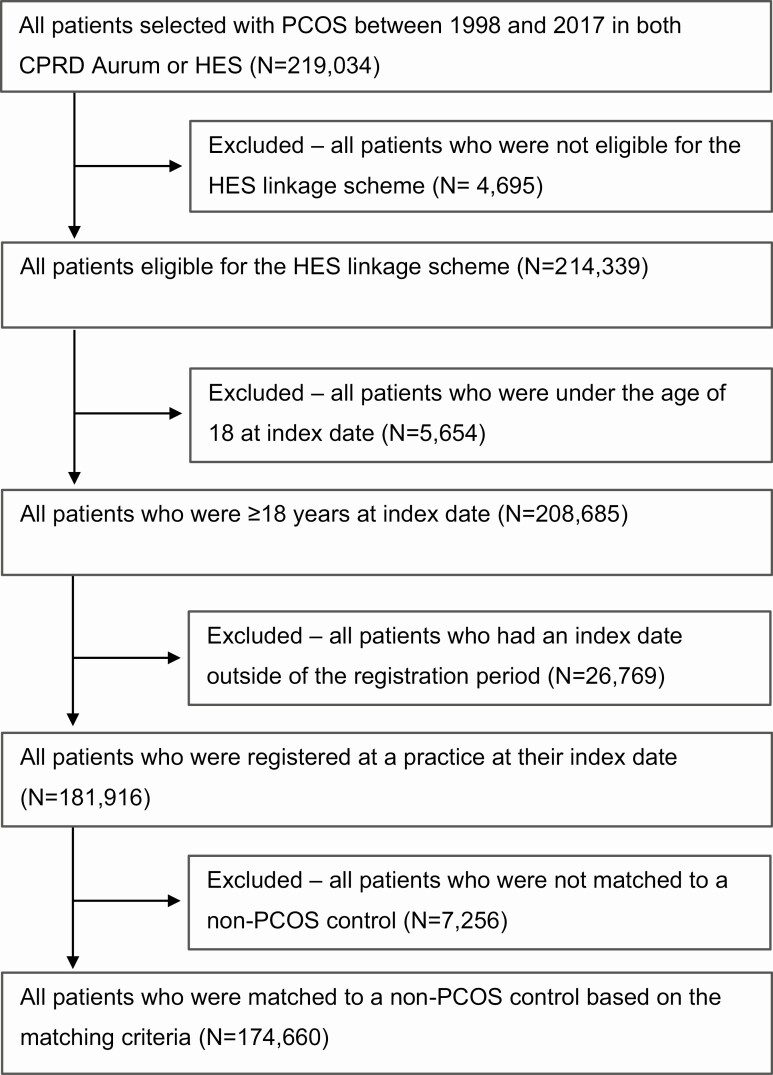
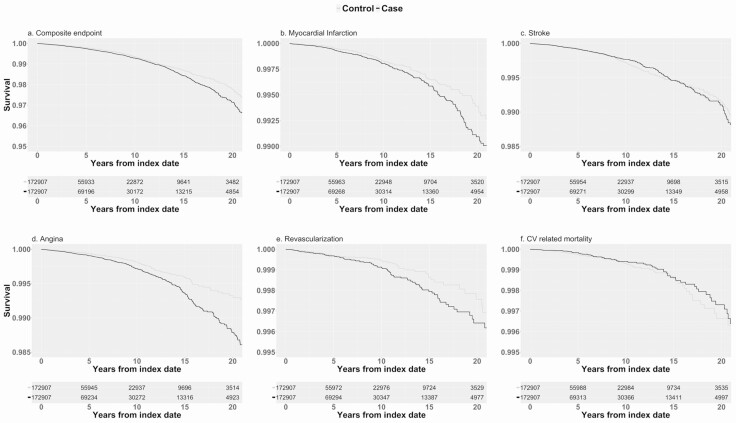
Context: The effects of polycystic ovary syndrome (PCOS) on cardiovascular morbidity and mortality are unclear. Objective: This work aims to establish the relative risk of myocardial infarction (MI), stroke, angina, revascularization, and cardiovascular mortality for women with PCOS. Methods: Data were extracted from the Clinical Practice Research Datalink Aurum database. Patients with PCOS were matched to controls (1:1) by age, body mass index (BMI) category, and primary care practice. The primary outcome was the time to major adverse cardiovascular event (MACE); a composite end point incorporating MI, stroke, angina, revascularization and cardiovascular mortality. Secondary outcomes were the individual MACE end points. Results: Of 219 034 individuals with a diagnosis of PCOS, 174 660 (79.7%) met the eligibility criteria and were matched. Crude rates of the composite end point, MI, stroke, angina, revascularization, and cardiovascular mortality were respectively 82.7, 22.7, 27.4, 32.8, 10.5, and 6.97 per 100 000 patient-years for cases, and 64.3, 15.9, 25.7, 19.8, 7.13, and 7.75 per 100 000 patient-years for controls. In adjusted Cox proportional hazard models (CPHMs), the hazard ratios (HRs) were 1.26 (95% CI, 1.13-1.41), 1.38 (95% CI, 1.11-1.72), 1.60 (95% CI, 1.32-1.94), and 1.50 (95% CI, 1.08-2.07) for the composite outcome, MI, angina, and revascularization, respectively. In a time-dependent CPHM, weight gain (HR 1.01; 1.00-1.01), prior type 2 diabetes mellitus (T2DM) (HR 2.40; 1.76-3.30), and social deprivation (HR 1.53; 1.11-2.11) increased risk of progression to the composite end point. Conclusion: The risk of incident MI, angina, and revascularization is increased in young women with PCOS. Weight and T2DM are potentially modifiable risk factors amenable to intervention.
Overview
The claims and statistics of this paper haven’t been checked yet.
Free: it reads the open-access text and checks the first 5 claims that cite a source we can check. Create a free account to check every claim.
Integrity signals
Registry
Cites
Statistics
Figures
Verification
Claims the paper makes
The claims and statistics of this paper haven’t been checked yet.
Free: it reads the open-access text and checks the first 5 claims that cite a source we can check. Create a free account to check every claim.
Claims other papers make about this one
Each is checked against this paper’s own text: does it say what the citing paper says it does?
The source backs part of the claim, not all of it — or backs it for a different population, condition or comparison.
In the citing paper
“PCOS is associated with increased co-morbidities including obesity, infertility, pregnancy complications, depression and anxiety, metabolic syndrome, diabetes, reproductive cancers and cardiovascular disease [3, 7, 8, 10–13].”
From Challenges in diagnosis and health care in polycystic ovary syndrome in Canada: a patient view to improve health care (2023) · cites this paper as [12]
Experimental — accuracy not yet measuredThe source backs part of the claim, not all of it — or backs it for a different population, condition or comparison.
In the citing paper
“Women with PCOS experience increased cardiometabolic risk—including the metabolic syndrome, hypertension, insulin resistance, obesity and dyslipidemia—predisposing them to increased risk for diabetes and cardiovascular disease (CVD).2,10,17, 18, 19, 20”
From Increased Prevalence of Adverse Health Outcomes Across the Lifespan in Those Affected by Polycystic Ovary Syndrome: A Canadian Population Cohort (2024) · cites this paper as [10]
Experimental — accuracy not yet measuredThe source backs part of the claim, not all of it — or backs it for a different population, condition or comparison.
In the citing paper
“The diagnosis of PCOS included the ICD-9 and ICD-10 codes, and these have been validated and used in previous epidemiologic studies.6,10,17,27,32,55, 56, 57”
From Increased Prevalence of Adverse Health Outcomes Across the Lifespan in Those Affected by Polycystic Ovary Syndrome: A Canadian Population Cohort (2024) · cites this paper as [10]
Experimental — accuracy not yet measured
Self-check
Percentages, sums and reported differences re-computed from the paper’s own numbers.
The self-check needs the paper’s full text.
Citations
Cites
2 retracted
Shaw, L. J., Bairey Merz, C. N., Azziz, R., Stanczyk, F. Z., Sopko, G., Braunstein, G. D., Kelsey, S. F., Kip, K. E., Cooper-DeHoff, R. M., Johnson, B. D., et al. (2008) · The Journal of Clinical Endocrinology & Metabolism · doi:10.1210/jc.2007-0425 · Cited by 427 · cited 1×
“A substudy of the Women’s Ischemia Evaluation Study demonstrated that women with PCOS had a higher prevalence of multivessel cardiovascular disease (CVD), and significantly lower cardiovascular event-free survival, than controls (9), results that were later retracted because of a failure to replicate these findings (1…”
BackgroundRetracted(2015) · The Journal of Clinical Endocrinology & Metabolism · doi:10.1210/jc.2014-4415 · Cited by 6 · cited 1×
“A sub-study of the Women’s Ischemia Evaluation Study demonstrated that women with PCOS had a higher prevalence of multivessel cardiovascular disease, and significantly lower cardiovascular event-free survival, than controls (9), results which were later retracted due to a failure to replicate these findings (10) but w…”
RetractedCharlson, M. E., Pompei, P., Ales, K. L., & MacKenzie, C. R. (1987) · Journal of Chronic Diseases · doi:10.1016/0021-9681(87)90171-8 · Cited by 49,742 · cited 1×
“The CPHM models included the following covariates (all were available and tested for inclusion in each model): age, BMI category, smoking status, alcohol status, type 2 diabetes (T2DM), baseline morbidity represented by the Charlson index (25), systolic and diastolic blood pressure, and relative deprivation based on q…”
MethodReduction in the incidence of type 2 diabetes with lifestyle intervention or metformin
(2002) · New England Journal of Medicine · doi:10.1056/nejmoa012512 · Cited by 19,011
Principles and Practice of Screening for Disease.
(1968) · Annals of Internal Medicine · doi:10.7326/0003-4819-69-5-1085_2 · Cited by 3,066 · cited 1×
“Screening would only be beneficial if it led to earlier identification of risk factors amenable to modification, in turn leading to improved outcomes (40).”
BackgroundTeede, H. J., Misso, M. L., Costello, M. F., Dokras, A., Laven, J., Moran, L., Piltonen, T., Norman, R. J., & the International PCOS Network (2018) · Clinical Endocrinology · doi:10.1111/cen.13795 · Cited by 1,823
Principles and Practice of Screening for Disease.
Zavon, M. R. (1969) · Archives of Internal Medicine · doi:10.1001/archinte.1969.00300130131020 · Cited by 1,356 · cited 1×
“Screening would be beneficial only if it led to the earlier identification of risk factors amenable to modification, in turn leading to improved outcomes (40).”
BackgroundWild, S., Pierpoint, T., McKeigue, P., & Jacobs, H. (2000) · Clinical Endocrinology · doi:10.1046/j.1365-2265.2000.01000.x · Cited by 970 · cited 1×
“We (1) and others (21, 22) have previously failed to show an increased risk of cardiovascular events in women with PCOS, albeit that these studies were likely underpowered since the crude incidence of cardio- and cerebrovascular events in this young female population is low.”
BackgroundCardiovascular Actions of Insulin
Muniyappa, R., Montagnani, M., Koh, K. K., & Quon, M. J. (2007) · Endocrine Reviews · doi:10.1210/er.2007-0006 · Cited by 872 · cited 1×
“Insulin resistance, which is highly prevalent in lean as well as obese women with PCOS, increases adipose tissue lipolysis (26), leading to dyslipidemia, and vasoconstriction, due to reduced endothelial nitric oxide production (27).”
BackgroundData resource profile: Clinical Practice Research Datalink (CPRD) Aurum
Wolf, A., Dedman, D., Campbell, J., Booth, H., Lunn, D., Chapman, J., & Myles, P. (2019) · International Journal of Epidemiology · doi:10.1093/ije/dyz034 · Cited by 861 · cited 1×
“This study included patients identified by CPRD as being of an acceptable research quality (23), who were identified by diagnosis codes from both CPRD Aurum and HES, and who were eligible for linkage to the secondary care data.”
Method
Research works printed but not linked: 1
- Barber TM, Golding SJ, Alvey C, et al. Global adiposity rather than abnormal regional fat distribution characterizes women with polycystic ovary syndrome. J Clin Endocrinol Metab. 2008; 93(3): 999- 1004. 18089693 · DOI · Paper page
Cited by
Joham, A. E., Norman, R. J., Stener-Victorin, E., Legro, R. S., Franks, S., Moran, L. J., Boyle, J., & Teede, H. J. (2022) · The Lancet Diabetes & Endocrinology · doi:10.1016/s2213-8587(22)00163-2 · Cited by 838
Stener-Victorin, E., Teede, H., Norman, R. J., Legro, R., Goodarzi, M. O., Dokras, A., Laven, J., Hoeger, K., & Piltonen, T. T. (2024) · Nature Reviews Disease Primers · doi:10.1038/s41572-024-00511-3 · Cited by 495
“Large data sets now indicate potentially increased risk for major cardiovascular end points 12,35 , including myocardial infarction, stroke, heart failure and cardiovascular mortality 12,35,50 .”
Polycystic Ovary Syndrome: Pathophysiology and Therapeutic Opportunities
Dong, J., & Rees, D. A. (2023) · BMJ Medicine · doi:10.1136/bmjmed-2023-000548 · Cited by 123
“1 These health risks could be associated with an increased risk of cardiovascular events 86 and several adverse pregnancy outcomes.”
Adipose Tissue Dysfunction in Polycystic Ovary Syndrome
Bril, F., Ezeh, U., Amiri, M., Hatoum, S., Pace, L., Chen, Y.-H., Bertrand, F., Gower, B., & Azziz, R. (2023) · The Journal of Clinical Endocrinology & Metabolism · doi:10.1210/clinem/dgad356 · Cited by 123
Ollila, M.-M., Arffman, R. K., Korhonen, E., Morin-Papunen, L., Franks, S., Junttila, J., & Piltonen, T. T. (2023) · European Journal of Endocrinology · doi:10.1093/ejendo/lvad077 · Cited by 108
Polycystic Ovary Syndrome Fuels Cardiovascular Inflammation and Aggravates Ischemic Cardiac Injury
Gao, L., Zhao, Y., Wu, H., Lin, X.-H., Guo, F., Li, J., Long, Y., Zhou, B., She, J., Zhang, C., et al. (2023) · Circulation · doi:10.1161/circulationaha.123.065827 · Cited by 111
“6,7 Moreover, PCOS is associated with more extensive coronary lesions in women with CAD.”
BackgroundInfluentialTay, C. T., Mousa, A., Vyas, A., Pattuwage, L., Tehrani, F. R., & Teede, H. J. (2024) · Journal of the American Heart Association · doi:10.1161/jaha.123.033572 · Cited by 156
“24,26,28,29,31,40,45 Three studies used laparoscopy for PCOS diagnosis, 32,33,44 whereas 1 used self-report 41 and another used Androgen Excess and PCOS Society criteria.”
Samarasinghe, S., Leca, B. M., Alabdulkader, S., Dimitriadis, G. K., Davasgaium, A., Thadani, P., Parry, K., Luli, M., O'Donnell, K., Johnson, B., et al. (2024) · The Lancet · doi:10.1016/s0140-6736(24)00538-5 · Cited by 99
Subclinical cardiovascular disease and polycystic ovary syndrome
Gomez, J. M. D., VanHise, K., Stachenfeld, N. S., Chan, J. L., Merz, C. N. B., & SHUFELT, C. L. (2022) · Fertility and Sterility · doi:10.1016/j.fertnstert.2022.02.028 · Cited by 87
Long‐term health outcomes in young women with polycystic ovary syndrome: A narrative review
Allen, L. A., Shrikrishnapalasuriyar, N., & Rees, D. A. (2022) · Clinical Endocrinology · doi:10.1111/cen.14609 · Cited by 62
“In a large longitudinal, population study of >170,000 women with PCOS, we recently demonstrated a 26% increased risk of major adverse cardiovascular events compared with age‐, BMI category‐ and primary care practice‐matched controls.(33)”
BackgroundSydora, B. C., Wilke, M. S., McPherson, M., Chambers, S., Ghosh, M., & Vine, D. F. (2023) · BMC Women's Health · doi:10.1186/s12905-023-02732-2 · Cited by 60
“” find someone (clinician/support group) who listens 17 [12.5] ◦ “I would tell her to reach out to local groups of women that have PCOS I would ask her to find a proper physician that will recognize PCOS is a problem and knows a little bit about it and is open to working with them they may not know…”
BackgroundInfluentialVine, D., Ghosh, M., Wang, T., & Bakal, J. (2024) · CJC Open · doi:10.1016/j.cjco.2023.12.010 · Cited by 53
Valerio, G., Bonito, P. D., Calcaterra, V., Cherubini, V., Corica, D., SANCTIS, L. D., Sessa, A. D., Faienza, M. F., Fornari, E., Iughetti, L., et al. (2024) · The Italian Journal of Pediatrics/Italian journal of pediatrics · doi:10.1186/s13052-024-01767-x · Cited by 64
“Hyperinsulinemia, low grade inflammation, and dysregulated adipokines typical of PCOS and NAFLD are exacerbated by OB [89, 90].”
BackgroundResultInfluentialPolycystic Ovary Syndrome, Insulin Resistance, and Cardiovascular Disease
Dubey, P., Reddy, S., Sharma, K., Johnson, S., Hardy, G., & Dwivedi, A. K. (2024) · Current Cardiology Reports · doi:10.1007/s11886-024-02050-5 · Cited by 53
The impact of ageing and menopause in women with polycystic ovary syndrome
Helvaci, N., & Yildiz, B. O. (2022) · Clinical Endocrinology · doi:10.1111/cen.14558 · Cited by 32
“8 years).(61) However, there were statistically significant differences between women with PCOS and controls for several baseline parameters including smoking and alcohol status, Charlson comorbidity index and systolic and diastolic blood pressures in this study.”
BackgroundEzeh, U. I., Pisarska, M. D., & Azziz, R. (2022) · Human Reproduction · doi:10.1093/humrep/deac001 · Cited by 40
Copper in Gynecological Diseases
Conforti, R. A., Delsouc, M. B., Zorychta, E., Telleria, C. M., & Casais, M. (2023) · International Journal of Molecular Sciences · doi:10.3390/ijms242417578 · Cited by 32
PCOS — a metabolic condition with health impacts on women and men
Joham, A. E., & Teede, H. J. (2022) · Nature Reviews Endocrinology · doi:10.1038/s41574-022-00636-z · Cited by 28
Current Perspectives on Nonalcoholic Fatty Liver Disease in Women with Polycystic Ovary Syndrome
Wang, D., & He, B. (2022) · Diabetes, Metabolic Syndrome and Obesity: Targets and Therapy · doi:10.2147/dmso.s362424 · Cited by 28
Gao, Y., Liu, H., Qiao, L., Liang, J., Yao, H., Lin, X., & Gao, Y. (2023) · Healthcare · doi:10.3390/healthcare11040562 · Cited by 39
“Compelling evidence suggests that long-term complications of PCOS include endometrial cancer [6], hypertension [7], dyslipidemia [8], possible cardiovascular events [9], obesity [10], glucose intolerance, type 2 diabetes [11], metabolic syndrome [12], obstructive sleep apnea [13], non-alcoholic fatty liver disease [14…”
BackgroundDwivedi, A. K., Vishwakarma, D., Dubey, P., & Reddy, S. (2023) · European Journal of Endocrinology · doi:10.1093/ejendo/lvad067 · Cited by 29
Henney, A. E., Gillespie, C. S., LAI, J., Schofield, P. G., Riley, D. R. J., Caleyachetty, R., Barber, T. M., Miras, A. D., Dobbie, L. J., Hughes, D. M., et al. (2024) · The Journal of Clinical Endocrinology & Metabolism · doi:10.1210/clinem/dgae481 · Cited by 36
“These conclusions are concordant with previous studies suggesting higher rates of incident CVD in people with PCOS are independent of traditional risk factors ( 11, 12).”
Kiconco, S., Tay, C. T., Rassie, K. L., Azziz, R., Teede, H. J., & Joham, A. E. (2022) · Clinical Endocrinology · doi:10.1111/cen.14647 · Cited by 25
Candidate genes for polycystic ovary syndrome are regulated by TGFβ in the bovine foetal ovary
Azumah, R., Liu, M., Hummitzsch, K., Bastian, N. A., Hartanti, M. D., Irving‐Rodgers, H. F., Anderson, R. A., & Rodgers, R. J. (2022) · Human Reproduction · doi:10.1093/humrep/deac049 · Cited by 26
“The syndrome affects around 1 in 10 women, presenting with symptoms associated with excess androgen, reproductive dysfunction and metabolic complications such as insulin resistance, gestational diabetes, central adiposity, obesity, non-alcoholic fatty liver disease, dyslipidaemia and cerebro- and cardiovascular diseas…”
Kiconco, S., Teede, H. J., Earnest, A., Loxton, D. J., & Joham, A. E. (2021) · Clinical Endocrinology · doi:10.1111/cen.14640 · Cited by 29
“First, menstrual irregularity underpins PCOS,(1) which is underpinned by insulin resistance(19) and incurs an increased risk of developing type 2 diabetes (T2DM)(6,20) and cardiovascular risk.(4,5,7,21) This is attributed to the physiological changes that are closely linked to gonadal steroid levels, insulin resistanc…”
BackgroundPossible Effect of Polycystic Ovary Syndrome (PCOS) on Cardiovascular Disease (CVD): An Update
Profili, N. I., Castelli, R., Gidaro, A., Manetti, R., Maioli, M., Petrillo, M., Capobianco, G., & Delitala, A. (2024) · Journal of Clinical Medicine · doi:10.3390/jcm13030698 · Cited by 29
“Among the anti-diabetic drugs, metformin is the most widely used in women with PCOS mainly due to its positive action on insulin resistance.”
BackgroundSociety for Endocrinology Clinical Practice Guideline for the Evaluation of Androgen Excess in Women
Elhassan, Y., Hawley, J. M., Cussen, L., Abbara, A., Clarke, S. A., Kempegowda, P., Dhillon‐Smith, R. K., Thadani, P., Busby, M., Owusu‐Darkwah, L., et al. (2025) · Clinical Endocrinology · doi:10.1111/cen.15265 · Cited by 31
Endocrine and metabolic effects of GLP-1 receptor agonists on women with PCOS, a narrative review
Monney, M., Mavromati, M., Leboulleux, S., & Gariani, K. (2025) · Endocrine Connections · doi:10.1530/ec-24-0529 · Cited by 31
“Cardiovascular risk, although generally low in premenopausal women, is elevated in this population (9).”
Berni, T. R., Morgan, C. L., & Rees, A. (2024) · The Journal of Clinical Endocrinology & Metabolism · doi:10.1210/clinem/dgae518 · Cited by 26
“These include an increased risk of type 2 diabetes (2) and cardiovascular events (3), adverse mental health outcomes (4), and impaired quality of life (5).”
BackgroundResultSelf-citationGurgoglione, F. L., Solinas, E., Pfleiderer, B., Vezzani, A., & Niccoli, G. (2023) · Atherosclerosis · doi:10.1016/j.atherosclerosis.2023.117273 · Cited by 19
Richards, C. T., Meah, V. L., James, P. E., Rees, A., & Lord, R. N. (2021) · Frontiers in Physiology · doi:10.3389/fphys.2021.715881 · Cited by 23
“LDL-C is established as a potent risk factor for the development of CVD (Ference et al., 2017).”
BackgroundInfluentialRoxadustat alleviates metabolic traits in letrozole-induced PCOS mice
Virtanen, N., Saarela, U., Karpale, M., Arffman, R. K., Mäkelä, K. A., Herzig, K., Koivunen, P., & Piltonen, T. (2024) · Biochemical Pharmacology · doi:10.1016/j.bcp.2024.116522 · Cited by 18
Cussen, L., McDonnell, T., Miller, C., McIlroy, M., & O’Reilly, M. (2025) · Reproduction · doi:10.1530/rep-25-0102 · Cited by 23
Liang, X., He, H., Zeng, H., Wei, L., Yang, J., Wen, Y., Fan, S., & Fan, J. (2023) · Frontiers in Endocrinology · doi:10.3389/fendo.2023.1172750 · Cited by 20
Zhang, L., Wang, Z., Kong, L., Liu, H., Ma, Z., Xu, M., Yushanjiang, S., Yuan, D., & Yu, L. (2023) · Reproductive Sciences · doi:10.1007/s43032-023-01415-5 · Cited by 17
“…and diabetes, and their shared characteristics, such as obesity, low-grade inflammation, metabolic abnormalities and increased cardiovascular risks [35, 36], it is reasonable to explore the potential benefits of SGLT2 inhibitors in PCOS patients and investigate any complementary mechanisms beyond…”
Río, J. P. D., Tsompanidis, A., Gaspar, P. A., Maturana, A., Rojas, G., Dagnino‐Subiabre, A., Olea, A., Maliqueo, M. A., Echiburú, B., de Guevara, A. L., et al. (2025) · Frontiers in Neuroendocrinology · doi:10.1016/j.yfrne.2025.101188 · Cited by 15
Pourahmad, B., Majidnia, M., Saniee, N., Riyahifar, S., & Moradi, Y. (2025) · BMC Women s Health · doi:10.1186/s12905-025-03927-5 · Cited by 18
“In contrast, Berni et al. (2021) did not observe a significant stroke association (Hazard Ratio (HR): 1.05; 95% CI: 0.89–1.24) in a large UK cohort, probably due to a shorter follow-up period (median 3.8 years) [50].”
InfluentialMahboobifard, F., Rahmati, M., Niknam, A., Rojhani, E., Momenan, A. A., Azizi, F., & Tehrani, F. R. (2021) · Archives of Medical Research · doi:10.1016/j.arcmed.2021.11.001 · Cited by 19
Brazilian Guideline on Menopausal Cardiovascular Health – 2024
de Oliveira, G. M. M., de Almeida, M. C. C., Artucio, C., Espíndola, L. N., Rivera, M. A. M., Filho, A. L. D. S., Marques-Santos, C., Fernandes, C. E., Albuquerque, C. J. D. M., Freire, C. M. V., et al. (2024) · Arquivos Brasileiros de Cardiologia · doi:10.36660/abc.20240478i · Cited by 29
Population-Based vs Health System and Insurer Records: Significant Underdiagnosis of PCOS
Hatoum, S., Amiri, M., Hopkins, D., Buyalos, R. P., Bril, F., & Azziz, R. (2025) · The Journal of Clinical Endocrinology & Metabolism · doi:10.1210/clinem/dgaf037 · Cited by 19
Joham, A. E., Rees, A., Shinkai, K., Forslund, M., Tay, C. T., & Teede, H. J. (2025) · Reproduction · doi:10.1530/rep-25-0121 · Cited by 21
Female-specific risk factors for cardiovascular disease: an update
Theodorou, A., Karagiannakis, D. S., Stefanaki, K., Kassi, E., Peppa, Μ., Vryonidou, A., & Paschou, S. Α. (2024) · HORMONES · doi:10.1007/s42000-024-00576-5 · Cited by 16
Amiri, M., Mousavi, M., Noroozzadeh, M., Azizi, F., & Tehrani, F. R. (2025) · Reproductive Biology and Endocrinology · doi:10.1186/s12958-025-01346-7 · Cited by 22
“This inconsistency may stem from methodological limitations, such as diverse PCOS phenotypes, variable diagnostic criteria, confounding factors, short follow up periods, and low event rates [12, 20, 51–53].”
Colombo, G. E., Mahamat‐Saleh, Y., Armour, M., Madan, K., Sabag, A., Kvaskoff, M., Missmer, S. A., Condous, G. S., Pathan, F. K., & Leonardi, M. (2025) · Heart · doi:10.1136/heartjnl-2024-324675 · Cited by 12
Gambineri, A., Rosa, S., Pandurevic, S., Cecchetti, C., Rotolo, L., Dionese, P., Belardinelli, E., Solmi, B., Zavatta, G., Fanelli, F., et al. (2025) · European Journal of Endocrinology · doi:10.1093/ejendo/lvaf027 · Cited by 11
Chen, X., Huang, L., Cui, L., Xiao, Z., Xiong, X., & Chen, C. (2022) · The Journal of Physiology · doi:10.1113/jp283259 · Cited by 14
“Considering that the key metabolically disturbed trait of PCOS (defined as insulin resistance) resembles that of diabetes, and there are common accompanying features of the two (including obesity, low grade inflammation, metabolic abnormalities and increased risk of cardiovascular events) (Berni et al., 2021; Wekker e…”
Polyendocrine metabolic ovarian syndrome in pregnancy: pathophysiology and outcomes
Teede, H. J., Vanky, E., Piltonen, T., Stener‐Victorin, E., Moran, L., & Khomami, M. B. (2026) · Nature Reviews Endocrinology · doi:10.1038/s41574-026-01261-w · Cited by 13
Pruett, J. E., Romero, D. G., & Cardozo, L. L. Y. (2023) · Frontiers in Endocrinology · doi:10.3389/fendo.2023.951099 · Cited by 14
Plasma Lipoprotein(a) Levels in Polycystic Ovary Syndrome: A Systematic Review and Meta-analysis
Masson, W. M., Barbagelata, L., Lobo, M., Cobo, A. L., Corral, P., & Nogueira, J. P. (2023) · High Blood Pressure & Cardiovascular Prevention · doi:10.1007/s40292-023-00585-2 · Cited by 12
Wu, X., Wilke, M., Batara, J., Proctor, S. D., Cree‐Green, M., Ghosh, M., Raggi, P., Windram, J. D., Becher, H. H., & Vine, D. F. (2025) · Frontiers in Endocrinology · doi:10.3389/fendo.2025.1520922 · Cited by 10
Glintborg, D., Ollila, M., Koskenkari, N. V. S., Møller, J. K., Calla, D., Gyllenberg, F., Rubin, K. H., Pesonen, P., Andersen, M., Poromaa, I. S., et al. (2025) · European Journal of Endocrinology · doi:10.1093/ejendo/lvaf266 · Cited by 9
Management of cardiometabolic complications in polycystic ovary syndrome: Unmet needs
Cardozo, L. L. Y., & Romero, D. G. (2021) · The FASEB Journal · doi:10.1096/fj.202002526rr · Cited by 11
Lewin, Z., Vitek, W., O’Malley, W., & Astapova, O. (2022) · JCEM Case Reports · doi:10.1210/jcemcr/luac030 · Cited by 8
“PCOS is associated with cardiovascular disease and poor cardiovascular outcomes [9], while bariatric surgery reduces cardiovascular mortality [10].”
BackgroundWang, J., Fiori, P. L., Capobianco, G., Carru, C., & Chen, Z. (2024) · Frontiers in Endocrinology · doi:10.3389/fendo.2024.1275419 · Cited by 11
Adams, Z. H., Berbrier, D. E., Schwende, B. K., Huckins, W., Richards, C. T., Rees, A., Usselman, C. W., & Lord, R. N. (2025) · The Journal of Physiology · doi:10.1113/jp287288 · Cited by 9
Piltonen, T., Kinnunen, J., Komsi, E. K., Kangasniemi, M. H., Luiro, K., Rajecki, M., Jokelainen, J. J., Kiviniemi, E., Allegranza, D., Hund, M., et al. (2025) · Fertility and Sterility · doi:10.1016/j.fertnstert.2025.05.147 · Cited by 9
Polycystic ovarian syndrome and long-term risk of acute myocardial infarction and ischaemic stroke
Havers‐Borgersen, E., Ekelund, C. K., Svendsen, P. F., Reinert, M. S., Vistisen, H. T., Butt, J. H., Østergaard, L., Schou, M., Køber, L., & Fosbøl, E. L. (2025) · European Journal of Preventive Cardiology · doi:10.1093/eurjpc/zwaf351 · Cited by 10
Alur-Gupta, S., DiTosto, J. D., Lewey, J., Soffer, D. E., Liu, Q., Busse, K. R., Brensinger, C. M., Mumford, S. L., & Dokras, A. (2026) · The Lancet Obstetrics Gynaecology & Women s Health · doi:10.1016/s3050-5038(26)00090-7 · Cited by 9
Janež, A., Herman, R., Poredoš, P., Mikhailidis, D. P., Blinc, A., Šabović, M., Studen, K. B., Jezovnik, M. K., Schernthaner, G.-H., Anagnostis, P. G., et al. (2023) · Current Vascular Pharmacology · doi:10.2174/0115701611269146230920073301 · Cited by 11
Diabetic complications in women with type 2 diabetes and polycystic ovary syndrome
Ollila, M., Hautakoski, A., Arffman, M., Morin-Papunen, L. C., Koivikko, M. L., Ebeling, T., Sund, R., & Piltonen, T. (2025) · European Journal of Endocrinology · doi:10.1093/ejendo/lvaf026 · Cited by 10
Das polyzystische Ovarsyndrom als genderspezifischer kardiometabolischer Risikofaktor
van Baal, L., & Tan, S. (2023) · Die Innere Medizin · doi:10.1007/s00108-023-01529-7 · Cited by 8
Tinano, F. R., Machado, I. F. R., Latronico, A. C., & Gomes, L. G. (2025) · Journal of Neuroscience · doi:10.1523/jneurosci.1681-24.2024 · Cited by 9
Soy Isoflavones and PCOS: Role in Hormonal and Metabolic Mechanisms
Dereń, K., Michońska, I., Dymek, A., Zielińska, M., & Łuszczki, E. (2025) · Applied Sciences · doi:10.3390/app15116198 · Cited by 7
Sziva, R. E., Kollarics, R., Pál, É., Bányai, B., Korsós-Novák, Á., Fontányi, Z., Magyar, P., Süli, A., Nádasy, G. L., Ács, N., et al. (2025) · Nutrients · doi:10.3390/nu17020201 · Cited by 7
Paxillin regulates androgen receptor expression associated with granulosa cell focal adhesions
Weidner, A. E., Roy, A., Vann, K., Walczyk, A. C., & Astapova, O. (2024) · Molecular Human Reproduction · doi:10.1093/molehr/gaae018 · Cited by 5
“Furthermore, patients with PCOS are at higher risk for endometrial cancer, Type 2 diabetes mellitus, and major cardiovascular events (Berni et al. , 2021).”
BackgroundThe Development of a Chest-Pain Protocol for Women Presenting to the Emergency Department
Jaffer, S., Noble, M., Pozgay, A., Randhawa, V. K., Gulati, M., Mensour, E., Parast, N., Tegg, N. L., Théberge, E. T., Harchaoui, E.-K., et al. (2023) · CJC Open · doi:10.1016/j.cjco.2023.12.003 · Cited by 7
“33 Menopausal status and estrogen-based therapies.”
Tripathi, A., Arsha, S., Thapa, A., Thapa, S., Chand, S., Frishman, W. H., & Aronow, W. S. (2024) · Cardiology in Review · doi:10.1097/crd.0000000000000759 · Cited by 4
High-sensitivity troponin-T levels and associated health conditions in 3146 women aged 46
Ollila, M., Arffman, R. K., Kaikkonen, K., Morin-Papunen, L. C., Junttila, J. M., & Piltonen, T. (2023) · Annals of Medicine · doi:10.1080/07853890.2023.2264340 · Cited by 4
“this might reflect an increased risk of cVD in women with PcOs, as evidenced by previous studies [4, 15].”
BackgroundResultSu, N., Li, J., Xia, Y., Huang, C., & Chen, L. (2024) · Frontiers in Endocrinology · doi:10.3389/fendo.2024.1393847 · Cited by 6
“Recent studies have highlighted a notably increased risk of cardiovascular conditions such as coronary heart disease and stroke among those with PCOS (6 – 8) and have observed alterations in vascular endothelia associated with the syndrome (9).”
BackgroundAutonomic dysfunction in polycystic ovary syndrome
Adams, Z. H., Simpson, L. L., Hart, E. C., & Lord, R. N. (2025) · Autonomic Neuroscience · doi:10.1016/j.autneu.2025.103357 · Cited by 4
Dominic, N., Sharma, L., Mohindra, N., & Dabadghao, P. (2023) · Endocrine · doi:10.1007/s12020-023-03470-z · Cited by 4
Primary Prevention of Cardiovascular Disease in Women
Shahid, I., Avenatti, E., Titus, A., Al-Kindi, S. G., & Nasir, K. (2024) · Methodist DeBakey Cardiovascular Journal · doi:10.14797/mdcvj.1313 · Cited by 8
Diretriz Brasileira sobre a Saúde Cardiovascular no Climatério e na Menopausa – 2024
de Oliveira, G. M. M., de Almeida, M. C. C., Artucio, C., Espíndola, L. N., Rivera, M. A. M., Filho, A. L. D. S., Marques-Santos, C., Fernandes, C. E., Albuquerque, C. J. D. M., Freire, C. M. V., et al. (2024) · Arquivos Brasileiros de Cardiologia · doi:10.36660/abc.20240478 · Cited by 77
Association of hemoglobin levels with metabolic traits in women with PCOS
Virtanen, N., Pesonen, E., Saarela, U., Hurskainen, E., Arffman, R. K., Koivunen, P., & Piltonen, T. (2024) · Acta Obstetricia Et Gynecologica Scandinavica · doi:10.1111/aogs.15047 · Cited by 4
A Complex Clinical Situation in Polycystic Ovary Syndrome: HAIR‐AN Syndrome ‘‘Case Report’’
Gheshlagh, R. A., & Topsakal, Ş. (2025) · Case Reports in Medicine · doi:10.1155/carm/5825601 · Cited by 4
“Moreover, PCOS is linked to endothelial dysfunction, arterial stifness, and increased carotid intima-media thickness [27–38].”
Berbrier, D. E., Huckins, W., Berkel, E. K. V., Delage, S. I., Hannaian, S. J., Myara, R., Okafor, O. N., Chung, T. H., Tulandi, T., Reinblatt, S. L., et al. (2025) · American Journal of Physiology-Endocrinology and Metabolism · doi:10.1152/ajpendo.00286.2025 · Cited by 3
Polycystic ovary syndrome and its association with reproductive cancers in women
Alur-Gupta, S., DiTosto, J. D., Busse, K. R., Liu, Q., Blackman, A. M., Brensinger, C. M., Mumford, S. L., & Dokras, A. (2026) · Fertility and Sterility · doi:10.1016/j.fertnstert.2026.05.158 · Cited by 3
Brazilian Guideline on Menopausal Cardiovascular Health – 2024
de Oliveira, G. M. M., de Almeida, M. C. C., Artucio, C., Espíndola, L. N., Rivera, M. A. M., Filho, A. L. D. S., Marques-Santos, C., Fernandes, C. E., Albuquerque, C. J. D. M., Freire, C. M. V., et al. (2024) · Revista Brasileira Ginecologia e Obstetrícia · doi:10.61622/rbgo/2024rbgo100 · Cited by 9
Wang, L., Zhang, Y., Ji, F., Si, Z., Liu, C., Wu, X., Wang, C., & Chang, H. (2025) · International Journal of Gynecology & Obstetrics · doi:10.1002/ijgo.70014 · Cited by 6
“11 Therefore, early identification and intervention are essential for the prevention of cardiovascular diseases in individuals with PCOS.”
Richards, C. T., Griffiths, T. D., Adams, Z. H., Wright, M. E., Davies, S., Talbot, J. S., Broad‐Thomas, L., Esteban, D. G., Steventon, J. J., Brassard, P., et al. (2025) · Clinical Endocrinology · doi:10.1111/cen.70061 · Cited by 3
“In addition to its effects on fertility, PCOS is now accepted as a metabolic disorder associated with an increased risk of cardio-vascular disease [2], driven by risk factors that include body weight gain [3], insulin resistance [4], arterial hypertension [5], arterial stiffness [6], and…”
Devi, M. S., Chokkalingam, P., Hari, R., & Muralidharan, P. (2023) · Pharmacological Research - Modern Chinese Medicine · doi:10.1016/j.prmcm.2023.100256 · Cited by 4
Ezeh, U. I., Chen, Y. I., Pall, M., Buyalos, R. P., Chan, J. L., Pisarska, M. D., & Azziz, R. (2024) · Fertility and Sterility · doi:10.1016/j.fertnstert.2024.01.030 · Cited by 6
The hyperemic response to exercise is blunted in females with polycystic ovary syndrome
Huckins, W., Delage, S. I., Berbrier, D. E., Skolnik, D. A., Keightley, H. S. A., & Usselman, C. W. (2025) · American Journal of Physiology-Regulatory, Integrative and Comparative Physiology · doi:10.1152/ajpregu.00263.2024 · Cited by 4
Schäfer-Graf, U. M., & Tan, S. (2022) · Der Gynäkologe · doi:10.1007/s00129-021-04894-2 · Cited by 3
Cardiovascular Events in Polycystic Ovary Syndrome: Is the Debate Settled for Good?
Romero, D. G., & Cardozo, L. L. Y. (2021) · The Journal of Clinical Endocrinology & Metabolism · doi:10.1210/clinem/dgab509 · Cited by 3
Research progress on insulin resistance in polycystic ovary syndrome
Qi, Y.-B., Yi, P., & Fu, X. (2025) · Reproductive and Developmental Medicine · doi:10.1097/rd9.0000000000000131 · Cited by 6
Polycystic Ovary Syndrome – Support and Prevention in Adolescence
Wechsung, K., Neumann, U., Balint, N., & Wiegand, S. (2025) · Geburtshilfe und Frauenheilkunde · doi:10.1055/a-2622-6321 · Cited by 5
da Silva, J. V. M. B., Delgado, J. C. S., Couto, N. M. D. S., Hortúa, A. M. J., Ribeiro, V. B., de Melo, K. Y., Ferreira, L. D., de Macedo, A. B. O. D., & de Souza, H. C. D. (2025) · Clinical Endocrinology · doi:10.1111/cen.70042 · Cited by 3
One-carbon metabolism and risk of PCOS: insights from Mendelian randomization
Zhao, Y., Zhang, G., Pan, J., & Huang, H. (2025) · Journal of Ovarian Research · doi:10.1186/s13048-025-01795-z · Cited by 5
Fauth, J. D. A., Beserra, B. T. S., Garcia, É. C., & Amato, A. A. (2026) · Phytomedicine Plus · doi:10.1016/j.phyplu.2026.100962 · Cited by 4
Evaluation and management of chest pain from cardiovascular causes in female patients
Diercks, D., Cao, M., McHugh, M. C., Kibbey, C., & Farooqi, S. (2026) · BMJ · doi:10.1136/bmj-2025-086177 · Cited by 3
Social deprivation, race, and metabolic syndrome in patients with polycystic ovary syndrome
Lee, I. T., King, S., Sealy, N. R. Z., Rees, J., Mumford, S. L., Hinkle, S. N., & Dokras, A. (2026) · Journal of the Endocrine Society · doi:10.1210/jendso/bvag063 · Cited by 2
“A 2021 study by Berni et al examined women with PCOS in England using the Clinical Practice Research Datalink Aurum database and found that social deprivation increased the risk of progression to the composite endpoint of major adverse cardiovascular events [11].”
de Souza, A. M. A., Kautzky‐Willer, A., Romero, D. G., Cardozo, L. L. Y., Ahmed, S. B., & Rezq, S. (2026) · Biology of Sex Differences · doi:10.1186/s13293-026-00878-w · Cited by 3
Alur-Gupta, S., DiTosto, J. D., Busse, K. R., Lewey, J., Soffer, D. E., Liu, Q., Brensinger, C. M., Mumford, S. L., & Dokras, A. (2026) · The Journal of Clinical Endocrinology & Metabolism · doi:10.1210/clinem/dgag308 · Cited by 1
Sydora, B. C., Wilke, M. S., Ghosh, M., & Vine, D. F. (2025) · International Journal of Women s Health · doi:10.2147/ijwh.s504439 · Cited by 2
Teede, H. J., Garad, R. M., Melder, A., Norman, R. J., & Boyle, J. A. (2021) · The Journal of Clinical Endocrinology & Metabolism · doi:10.1210/clinem/dgab656 · Cited by 3
Ibrahim, E., Burken, M., Lastra, G., & Manrique‐Acevedo, C. (2024) · American Journal of Physiology-Cell Physiology · doi:10.1152/ajpcell.00765.2024 · Cited by 3
Jalilul, C.-I. A. A. M. A. (2025) · SOCIAL PSYCHOLOGY AND HUMAN EXPERIENCE · doi:10.62596/ey5y2f53 · Cited by 2
Ohikhuai, E. E., Akueme, N. T., Olaniyi, S., Iyun, O. B., Thomas, R., Kanu, C. J., Wiredu, B., Narendrula, T., & Okobi, O. E. (2025) · Cureus · doi:10.7759/cureus.85281 · Cited by 1
“Previous studies that have examined the effect of PCOS on vascular diseases like HTN, DVT, and stroke showed increased odds of these diseases in the hypothyroid group compared to the non-hypothyroid group [26].”
Ahmad, R., Frishman, W. H., & Aronow, W. S. (2025) · Cardiology in Review · doi:10.1097/crd.0000000000001054 · Cited by 4
Metadata
- Authors
- Berni, T. R., Morgan, C. L., & Rees, D. A.
- Affiliations
- Pharmatelligence, Cardiff CF24 3FR, UK
- Neuroscience and Mental Health Research Institute, School of Medicine, Cardiff University, Cardiff CF24 4HQ, UK
- Venue
- The Journal of Clinical Endocrinology & Metabolism
- Publisher
- The Endocrine Society
- Published
- 2021-06-01
- Volume
- 106
- Issue
- 9
- Pages
- e3369-e3380
- ISSN
- 0021-972X (ISSN-L)
- 1945-7197
- PMC
- PMC8372630
- OpenAlex
- W3165367402
- Cited by
- 146
- References
- 45
- Citations by year
- 2026: 36 · 2025: 37 · 2024: 26 · 2023: 27 · 2022: 10 · 2021: 10
- FWCI
- 15.73
- Type
- journal article
- Language
- en
- Open access
- hybrid
- doi.org
- Licence
- Locations
- The Journal of Clinical Endocrinology & Metabolism (publishedVersion, cc-by-nc-nd)
- PubMed Central (publishedVersion, cc-by-nc-nd)
- PubMed (publishedVersion)
- ORCA Online Research @Cardiff (Cardiff University) (acceptedVersion)
- Topics
- Health Sciences › Medicine › Reproductive Medicine › Ovarian function and disorders
- Health Sciences › Medicine › Endocrinology, Diabetes and Metabolism › Diabetes, Cardiovascular Risks, and Lipoproteins
- Health Sciences › Medicine › Cardiology and Cardiovascular Medicine › Cardiovascular Function and Risk Factors
- Keywords
- polycystic ovary syndrome, major adverse cardiovascular events, myocardial infarction, stroke, angina pectoris, revascularization, cardiovascular mortality, cardiovascular risk factors, type 2 diabetes, social deprivation, weight gain, women's cardiovascular health, Clinical Practice Research Datalink Aurum, matched cohort comparison, body mass index, hypertriglyceridemia, hyperinsulinemia
- MeSH terms
- Adult, Angina Pectoris, Cardiovascular Diseases, Female, Humans, Myocardial Infarction, Myocardial Revascularization, Polycystic Ovary Syndrome, Population, Primary Health Care, Retrospective Studies, Cohort Studies, Weight Gain, Body Mass Index, Proportional Hazards Models, Risk Assessment, Stroke, Young Adult
About these checks
Registry, retraction, Cites and statistics results are computed, not judged, with one exception: a printed reference that no index lists is read once by a model before it counts as a citation error. Claims are extracted by a model and kept only when their quote appears verbatim in the text; each cited source is then checked, with a model’s help, for whether it says what the claim relies on. Those verdicts can be wrong — read the claim’s quote and the cited source before relying on one.
Statistics and arithmetic are recomputed, not judged.
Confidence bands are shown only for fields calibrated on our annotated test set. None is calibrated yet, so no band is shown.
What counts as a claim ›How we measure confidence ›How we check this ›
Are you an author, or do you see a problem with this page? Request a review
Data sources
Bibliographic data: Semantic Scholar, OpenAlex, Crossref.
Contains information from the Semantic Scholar Academic Graph Datasets, made available under the ODC Attribution License (ODC-BY 1.0).
Semantic Scholar’s data is described in: Kinney, R., et al. (2023). The Semantic Scholar Open Data Platform. arXiv:2301.10140.
