

Approach to the Patient: Diagnosis of Cushing Syndrome
Open accessThe DOI matches its Crossref record; 96 of the 100 references it cites were found in a registry or an index; 50 of the 202 sources its claims cite were checked for support.
Abstract
Cushing syndrome results from supraphysiological exposure to glucocorticoids and is associated with significant morbidity and mortality. The pathogenesis includes administration of corticosteroids (exogenous Cushing syndrome) or autonomous cortisol overproduction, whether or not ACTH-dependent (endogenous Cushing syndrome). An early diagnosis of Cushing syndrome is warranted; however, in clinical practice, it is very challenging partly because of resemblance with other common conditions (ie, pseudo-Cushing syndrome). Initial workup should start with excluding local and systemic corticosteroid use. First-line screening tests including the 1-mg dexamethasone suppression test, 24-hour urinary free cortisol excretion, and late-night salivary cortisol measurement should be performed to screen for endogenous Cushing syndrome. Scalp-hair cortisol/cortisone analysis helps in the assessment of long-term glucocorticoid exposure as well as in detection of transient periods of hypercortisolism as observed in cyclical Cushing syndrome. Interpretation of results can be difficult because of individual patient characteristics and hence requires awareness of test limitations. Once endogenous Cushing syndrome is established, measurement of plasma ACTH concentrations differentiates between ACTH-dependent (80%-85%) or ACTH-independent (15%-20%) causes. Further assessment with different imaging modalities and dynamic biochemical testing including bilateral inferior petrosal sinus sampling helps further pinpoint the cause of Cushing's syndrome. In this issue of "Approach to the patient," the diagnostic workup of Cushing syndrome is discussed with answering the questions when to screen, how to screen, and how to differentiate the different causes. In this respect, the latest developments in biochemical and imaging techniques are discussed as well.
Overview
CoChat Summary
## TL;DR
This article is a clinical review of how to diagnose Cushing syndrome, emphasizing when to screen, how to interpret first-line tests, and how to distinguish pseudo-Cushing, ACTH-dependent, ACTH-independent, and pregnancy-related cases. It uses two cases to illustrate common diagnostic pitfalls, including anticonvulsant interference with dexamethasone testing and intermediate ACTH values that require additional biochemical and imaging workup.
## Key findings
- Cushing syndrome is associated with serious morbidity and mortality; the paper states a 3.5 to 5 times increased mortality risk versus the general population, and the risk of myocardial infarction is about 4.5 times higher.
- Endogenous Cushing syndrome is estimated to have an incidence of 0.2 to 5.0 per million people per year and a prevalence of 39 to 79 per million; 80% to 85% of cases are ACTH-dependent and 15% to 20% are ACTH-independent.
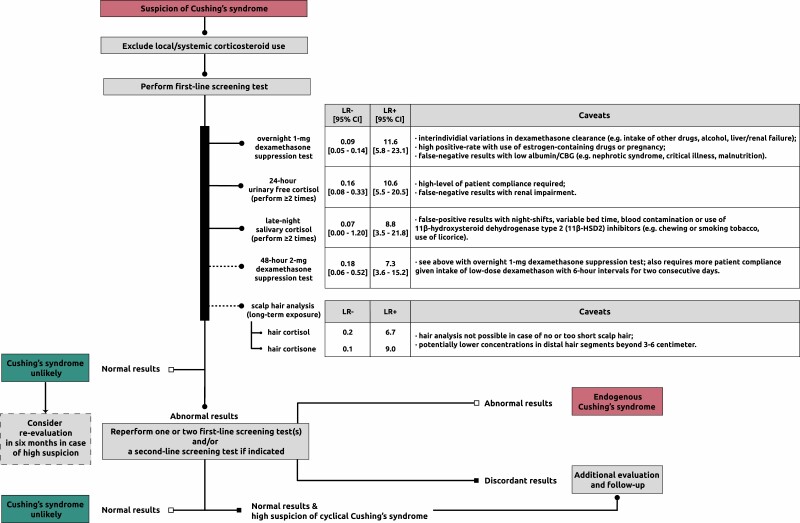
- First-line screening tests recommended are 1-mg dexamethasone suppression test (DST), 24-hour urinary free cortisol (UFC), and late-night salivary cortisol (LNSC); UFC and LNSC should be done at least twice because of day-to-day variation.
- In the hair-cortisol section, the paper reports hair cortisone had 87% sensitivity and 90% specificity, compared with hair cortisol at 81% sensitivity and 88% specificity, for distinguishing Cushing syndrome in the cited studies.
## Methods
- This is an expert clinical review in the “Approach to the Patient” format, organized around diagnostic questions: when to screen, how to screen, and how to differentiate causes of Cushing syndrome.
- The paper draws on two illustrative cases: case 1 involved a 45-year-old woman with suspected pseudo-Cushing syndrome and case 2 a 52-year-old woman with adrenal imaging findings, venous thrombosis, and ultimately pituitary-dependent Cushing syndrome.
- The main analysis is a narrative synthesis of diagnostic strategies using biochemical tests (DST, UFC, LNSC, ACTH, DHEAS, CRH testing, dexamethasone-CRH testing), imaging (pituitary MRI, adrenal CT/MRI, PET), and bilateral inferior petrosal sinus sampling.
## Limitations
- The paper states that all tests have caveats and interpretation requires awareness of individual patient characteristics and test limitations.
- It explicitly notes that the hair cortisol/cortisone method is not yet widely available and is still a relatively novel diagnostic tool.
- Evident from the text: this is a review with illustrative cases, not a primary diagnostic accuracy study of all recommended tests, so some performance figures are drawn from cited prior studies rather than generated directly in this paper.
Model-written summary. Check it against the paper before relying on it.
Integrity signals
Registry
Cites
Statistics
Figures
Verification
Claims the paper makes
39 Valid · 2 Not valid · 70 Not checked · 18 Own results and interpretations
The cited sources support only part of this claim — read each source’s verdict below.
In the paper
“ACTH-dependent CS accounts for 80% to 85% of cases and ACTH-independent accounts for 15% to 20% (2, 4, 5).”
§ Approach to the Patient: Diagnosis of Cushing Syndrome > Learning points
What the sources say
- Not checked — no full text of the sourcecites [2] Lacroix A, Feelders RA, Stratakis CA, Nieman LK. Cushing’s syndrome. Lancet 2015; 386(9996): 913– 927. 26004339 source
- Not checked — no full text of the sourcecites [4] Pivonello R, De Martino MC, De Leo M, Lombardi G, Colao A. Cushing’s syndrome. Endocrinol Metab Clin North Am. 2008; 37(1): 135– 149, ix. 18226734 source
- Partly supportedcites [5] Sharma ST, Nieman LK, Feelders RA. Cushing’s syndrome: epidemiology and developments in disease management. Clin Epidemiol 2015; 7: 281– 293. 25945066 PMC4407747 sourceExperimental — accuracy not yet measured
The Classification of Cushing’s syndrome section states that ACTH-independent disease accounts for 15%–20% of endogenous Cushing’s syndrome in adults. The citing sentence gives the same percentage but does not specify those limits, so the source does not establish it for all Cushing syndrome cases. (LLM, conf=0.83)
plain- Asserted: passes — The authors put it forward as true.
- Checkable: passes — It can be checked against evidence.
- Load-bearing: unclear — It is unclear whether the paper’s conclusions depend on it.
- Based: passes — The paper gives a reason why it holds.
The sources with a verdict support this claim; the rest weren’t checked yet, have no full text we could read, or their verdicts aren’t rated yet.
In the paper
“ACTH-dependent CS accounts for 80% to 85% of cases and ACTH-independent accounts for 15% to 20% (2, 4, 5).”
§ Approach to the Patient: Diagnosis of Cushing Syndrome > Learning points
What the sources say
- Not checked — no full text of the sourcecites [2] Lacroix A, Feelders RA, Stratakis CA, Nieman LK. Cushing’s syndrome. Lancet 2015; 386(9996): 913– 927. 26004339 source
- Not checked — no full text of the sourcecites [4] Pivonello R, De Martino MC, De Leo M, Lombardi G, Colao A. Cushing’s syndrome. Endocrinol Metab Clin North Am. 2008; 37(1): 135– 149, ix. 18226734 source
- Supportedcites [5] Sharma ST, Nieman LK, Feelders RA. Cushing’s syndrome: epidemiology and developments in disease management. Clin Epidemiol 2015; 7: 281– 293. 25945066 PMC4407747 source
The Classification of Cushing’s syndrome section states directly that ACTH-dependent disease accounts for 80%–85% of cases. Its context specifies endogenous Cushing’s syndrome. (LLM, conf=0.95)
plain- Asserted: passes — The authors put it forward as true.
- Checkable: passes — It can be checked against evidence.
- Load-bearing: unclear — It is unclear whether the paper’s conclusions depend on it.
- Based: passes — The paper gives a reason why it holds.
The cited sources support only part of this claim — read each source’s verdict below.
In the paper
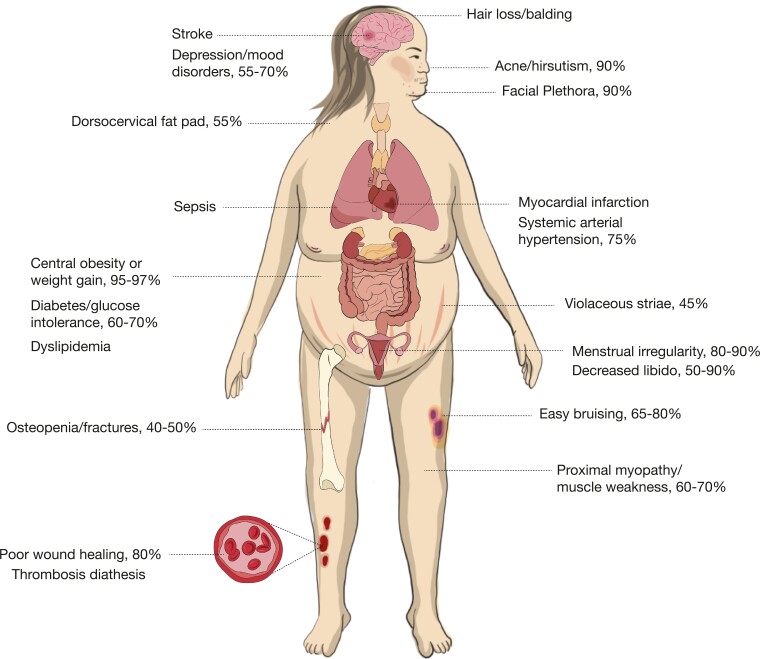
“Patients often present with nonspecific features such as (abdominal) obesity and weight gain, rounded (moon) face, menstrual irregularity, and depression (1, 3, 5) as depicted in Figure 1.”
§ Approach to the Patient: Diagnosis of Cushing Syndrome > When to Screen
What the sources say
- Not matchedcites [1] Agrawal N, Kim H, Wright K, Mehta S. Hormone excess syndromes of the hypothalamic-pituitary axis. In: Uwaifo G, ed. The Human Hypothalamus. Cham, Switzerland: Humana Press; 2021: 185– 193.
We searched by its title and found no matching paper.
- Supportedcites [3] Nieman LK, Biller BM, Findling JW, et al The diagnosis of Cushing’s syndrome: an Endocrine Society Clinical Practice Guideline. J Clin Endocrinol Metab. 2008; 93(5): 1526– 1540. 18334580 PMC2386281 source
Section 1.0 says patients more often have features common in the general population, including obesity, depression, and menstrual irregularity. Table 1 also lists weight gain and facial fullness among common or less discriminatory features of Cushing’s syndrome, supporting the description of nonspecific presentation. Page numbers are not provided in our copy. (LLM, conf=0.89)
- Partly supportedcites [5] Sharma ST, Nieman LK, Feelders RA. Cushing’s syndrome: epidemiology and developments in disease management. Clin Epidemiol 2015; 7: 281– 293. 25945066 PMC4407747 sourceExperimental — accuracy not yet measured
The Clinical features section identifies weight gain as the most common sign, says increased visceral adipose tissue is common, and describes menstrual irregularity and depression in patients with Cushing’s syndrome. It also says no single symptom is pathognomonic, consistent with the claim that these features are nonspecific. The passages from our copy do not mention a rounded or “moon” face. (LLM, conf=0.86)
plainstates an association- Asserted: passes — The authors put it forward as true.
- Checkable: passes — It can be checked against evidence.
- Load-bearing: passes — The paper’s conclusions depend on it.
- Based: passes — The paper gives a reason why it holds.
- Not matched
Every source the paper cites for this claim was checked and supports it.
In the paper
“Regarding the 1-mg DST, it is essential to screen for current drug use, which could alter dexamethasone clearance and/or levels of cortisol-binding globulin.”
§ Approach to the Patient: Diagnosis of Cushing Syndrome > How to Screen/Establishment of Hypercortisolism
What the sources say
- Supportedcites [3] Nieman LK, Biller BM, Findling JW, et al The diagnosis of Cushing’s syndrome: an Endocrine Society Clinical Practice Guideline. J Clin Endocrinol Metab. 2008; 93(5): 1526– 1540. 18334580 PMC2386281 source
The Remarks for dexamethasone tests state that anticonvulsants including phenytoin and carbamazepine increase dexamethasone clearance, affecting the 1-mg DST. The same section says oral contraceptives increase cortisol-binding globulin and can cause false-positive results. Page numbers are not shown in the supplied passages. (LLM, conf=0.94)
hedgedstates a cause- Asserted: passes — The authors put it forward as true.
- Checkable: passes — It can be checked against evidence.
- Load-bearing: passes — The paper’s conclusions depend on it.
- Based: passes — The paper gives a reason why it holds.
- Supported
The cited sources support only part of this claim — read each source’s verdict below.
In the paper
“These relations between corticosteroid use and cardiometabolic sequelae seemed to be related to glucocorticoid receptor gene variants that are associated with increased or normal glucocorticoid sensitivity.”
§ Approach to the Patient: Diagnosis of Cushing Syndrome > Exogenous Steroids
What the sources say
- Could not verifycites [37] Savas M, Muka T, Wester VL, et al Associations between systemic and local corticosteroid use with metabolic syndrome and body mass index. J Clin Endocrinol Metab. 2017; 102(10): 3765– 3774. 28973553 sourceExperimental — accuracy not yet measured
Our copy of Savas et al. (2017) reports the associations between corticosteroid (CS) use and cardiometabolic traits (metabolic syndrome, BMI), especially in women and in systemic/inhaled users (Discussion; Sensitivity analyses), but it nowhere attributes those relations to glucocorticoid receptor gene variants. The mechanisms it does discuss are non-genetic: sex differences in susceptibility, drug absorption/distribution/metabolism/elimination, adherence, CS-induced reductions in estrogen and testosterone, visceral/gynoid fat distribution, and the high receptor affinity and pharmacokinetics of budesonide/fluticasone (Discussion, refs 14-35). Searches for 'glucocorticoid receptor gene variants', 'polymorphism/genetic variation in sensitivity', and 'NR3C1 / individual susceptibility / limitations' returned no passage on genetic glucocorticoid sensitivity; the Study design section mentions the cohort's 'complex genetics' focus only in describing Lifelines, and the Limitations paragraph lists cross-sectional design, confounding by indication and residual confounding, not genotype. (LLM, conf=0.72)
- Partly supportedcites [38] Savas M, Vinkers CH, Rosmalen JGM, et al Systemic and local corticosteroid use is associated with reduced executive cognition, and mood and anxiety disorders. Neuroendocrinology 2020; 110(3-4): 282– 291. 31220843 PMC7114901 sourceExperimental — accuracy not yet measured
The Introduction (page unavailable) reports an association between corticosteroid use and adverse cardiometabolic outcomes. Neither that passage nor the Discussion's account of systemic effects links those outcomes to glucocorticoid receptor gene variants or to increased or normal glucocorticoid sensitivity; searches for those terms found no such passage. (LLM, conf=0.83)
hedgedstates an association- Asserted: passes — The authors put it forward as true.
- Checkable: passes — It can be checked against evidence.
- Load-bearing: unclear — It is unclear whether the paper’s conclusions depend on it.
- Based: passes — The paper gives a reason why it holds.
- Could not verify
76 more claims · 24 with their cited sources checked
Create a free account to see all 129 claims and to verify the 46 references still open.
- It may state two separate claims as one. 39
- Probably not a substantial claim. 10
Citations
Cites
The diagnosis of Cushing's syndrome: an Endocrine Society Clinical Practice Guideline.
Nieman, L. K., Biller, B. M. K., Findling, J. W., Newell-Price, J., Savage, M. O., Stewart, P. M., & Montori, V. M. (2008) · The Journal of Clinical Endocrinology & Metabolism · doi:10.1210/jc.2008-0125 · Cited by 2,718 · cited 10×
“Patients who have multiple symptoms, which are progressive over time, in particular when specific cushingoid features are present (3).”
BackgroundInfluentialMechanisms involved in the side effects of glucocorticoids
SCHACKE, H. (2002) · Pharmacology & Therapeutics · doi:10.1016/s0163-7258(02)00297-8 · Cited by 1,847 · cited 1×
“Serious adverse events are in general more likely to occur in systemic corticosteroid users and especially with longer duration and higher dosage of use (30).”
BackgroundLacroix, A., Feelders, R. A., Stratakis, C. A., & Nieman, L. K. (2015) · The Lancet · doi:10.1016/s0140-6736(14)61375-1 · Cited by 1,777
Self-citationDiagnosis and complications of Cushing’s syndrome: a consensus statement
Arnaldi, G., Angeli, A., Atkinson, A. B., Bertagna, X., Cavagnini, F., Chrousos, G. P., Fava, G. A., Findling, J. W., Gaillard, R. C., Grossman, A. B., et al. (2003) · The Journal of Clinical Endocrinology & Metabolism · doi:10.1210/jc.2003-030871 · Cited by 1,362 · cited 3×
“The prevalence and pathophysiology of comorbidities in CS (5, 10, 14-28) are shown in Table 1.”
BackgroundConsensus on diagnosis and management of Cushing's disease: a guideline update
Fleseriu, M., Auchus, R., Bancos, I., Ben-Shlomo, A., Bertherat, J., Biermasz, N. R., Boguszewski, C. L., Bronstein, M. D., Buchfelder, M., Carmichael, J. D., et al. (2021) · The Lancet Diabetes & Endocrinology · doi:10.1016/s2213-8587(21)00235-7 · Cited by 953
Pharmacokinetics and pharmacodynamics of systemically administered glucocorticoids.
Czock, D., Keller, F., Rasche, F. M., & H??ussler, U. (2005) · Clinical Pharmacokinetics · doi:10.2165/00003088-200544010-00003 · Cited by 886 · cited 1×
“Moreover, it is also important to screen for concomitant use of other drugs such as antifungals, protease inhibitors, or estrogens given the potential drug–drug interaction resulting in increased glucocorticoid effect (32, 33).”
BackgroundChronic stress and comfort foods: Self-medication and abdominal obesity
Dallman, M. F., Pecoraro, N. C., & la Fleur, S. E. (2005) · Brain, Behavior, and Immunity · doi:10.1016/j.bbi.2004.11.004 · Cited by 656 · cited 2×
“The prevalence and pathophysiology of comorbidities in CS (5, 10, 14-28) are shown in Table 1.”
BackgroundComplications of Cushing's syndrome: state of the art
Pivonello, R., Isidori, A. M., De Martino, M. C., Newell-Price, J., Biller, B. M. K., & Colao, A. (2016) · The Lancet Diabetes & Endocrinology · doi:10.1016/s2213-8587(16)00086-3 · Cited by 641
Dose-related patterns of glucocorticoid-induced side effects
Huscher, D., Thiele, K., Gromnica-Ihle, E., Hein, G., Demary, W., Dreher, R., Zink, A., & Buttgereit, F. (2009) · Annals of the Rheumatic Diseases · doi:10.1136/ard.2008.092163 · Cited by 604
Population‐based assessment of adverse events associated with long‐term glucocorticoid use
Curtis, J. R., Westfall, A. O., Allison, J., Bijlsma, J. W., Freeman, A., George, V., Kovac, S. H., Spettell, C. M., & Saag, K. G. (2006) · Arthritis Care & Research · doi:10.1002/art.21984 · Cited by 595
Research works printed but not linked: 1
- Agrawal N, Kim H, Wright K, Mehta S. Hormone excess syndromes of the hypothalamic-pituitary axis. In: Uwaifo G, ed. The Human Hypothalamus. Cham, Switzerland: Humana Press; 2021: 185– 193.
Cited by
Gadelha, M., Gatto, F., Wildemberg, L. E., & Fleseriu, M. (2023) · The Lancet · doi:10.1016/s0140-6736(23)01961-x · Cited by 168
Ceccato, F., Barbot, M., Mondin, A., Boscaro, M., Fleseriu, M., & Scaroni, C. M. (2022) · The Journal of Clinical Endocrinology & Metabolism · doi:10.1210/clinem/dgac686 · Cited by 51
Determination of cortisone and cortisol in human scalp hair using an improved LC-MS/MS-based method
Mirzaian, M., van Zundert, S. K. M., Schilleman, W. F., Mohseni, M., Kuckuck, S., van Rossum, E. F. C., van Schaik, R. H. N., & van den Berg, S. A. A. (2023) · Clinical Chemistry and Laboratory Medicine (CCLM) · doi:10.1515/cclm-2023-0341 · Cited by 41
Self-citationEmerging diagnostic methods and imaging modalities in cushing’s syndrome
Wright, K. E., van Rossum, E. F. C., Zan, E., Werner, N. L., Harris, A. G., Feelders, R. A., & Agrawal, N. (2023) · Frontiers in Endocrinology · doi:10.3389/fendo.2023.1230447 · Cited by 33
“, diltiazem and fluoxetine) can prolong dexamethasone bioavailability, which can suppress ACTH production by adenomas that are sensitive to negative feedback and thus lead to false-negative results (13, 20).”
BackgroundResultInfluentialSelf-citationEpigenetic Mechanisms Modulated by Glucocorticoids With a Focus on Cushing Syndrome
Paes, T., Feelders, R. A., & Hofland, L. J. (2024) · The Journal of Clinical Endocrinology & Metabolism · doi:10.1210/clinem/dgae151 · Cited by 24
Self-citationMohammedi, K., Bertherat, J. Y., Raverot, G., Drui, D., Reznik, Y., Castinetti, F., Chanson, P., Manon, F., Brossaud, J., & Tabarin, A. (2023) · The Journal of Clinical Endocrinology & Metabolism · doi:10.1210/clinem/dgad251 · Cited by 21
Wu, Y., Wu, Y., Yao, B., Ren, S., Wu, S., Rui, W., He, M., Zhang, S., Yu, Y., Ye, H., et al. (2024) · Radiology · doi:10.1148/radiol.233469 · Cited by 24
Flowers, K. C., & Shipman, K. E. (2023) · Diagnostics · doi:10.3390/diagnostics13081415 · Cited by 22
“Neuroendocrine tumours (NETs) are very rare, but related biomarkers may have a limited role in cases of confirmed ACTH-dependent hypercortisolism [130] and have Diagnostics 2023, 13, 1415 15 of 24 therefore been included here for completeness.”
BackgroundInfluentialTrandafir, A.-I., & Carşote, M. (2025) · Biomedicines · doi:10.3390/biomedicines13092169 · Cited by 11
“Saliva contains more cortisone than cortisol due to the cortisol conversion to cortisone by 11 beta-hydroxysteroid dehydrogenase 2 [67].”
Image-Based Face Recognition Techniques Used in Disease Detection Approaches: A Survey
Salman, G. A., Kadhim, I. J., & Al-Badri, A. H. (2024) · Journal of Techniques · doi:10.51173/jt.v6i1.1966 · Cited by 10
Schaduangrat, N., Chuntakaruk, H., Rungrotmongkol, T., Mookdarsanit, P., & Shoombuatong, W. (2025) · BMC Bioinformatics · doi:10.1186/s12859-025-06132-1 · Cited by 5
“It can develop from corticosteroid administration (exogenous) or uncontrolled cortisol hypersecretion, whether ACTH-dependent or independent (endogenous) [3, 4].”
Paragliola, R. M., Marchetti, M., Montagna, C., Corsello, S. M., & Peluso, G. (2025) · International Journal of Molecular Sciences · doi:10.3390/ijms262211230 · Cited by 9
“The physiological HPA axis’ negative feedback induced by GCs is absent in endogenous CS, as shown by its failure to suppress serum cortisol below ~1.8 µ g/dL after the low-dose (e.g., 1 mg overnight) dexamethasone suppression test [87].”
InfluentialYin, X., Adelaars, S., Peri, E., Pelssers, E., den Toonder, J. M. J., Bouwman, R. A., van de Kerkhof, D., & Mischi, M. (2025) · Sensors · doi:10.3390/s25154551 · Cited by 6
“Cortisol measurements in saliva and urine have been suggested as preliminary diagnostic indicators of conditions like Cushing’s syndrome [1,3].”
Shoombuatong, W., Mookdarsanit, P., Schaduangrat, N., & Mookdarsanit, L. (2025) · Scientific Reports · doi:10.1038/s41598-025-05839-8 · Cited by 4
Changes in clinical features of adrenal Cushing syndrome: a national registry study
Katabami, T., Asai, S., Matsuba, R., Sone, M., Izawa, S., Ichijo, T., Tsuiki, M., Okamura, S., Yoshimoto, T., Otsuki, M., et al. (2025) · Endocrine Connections · doi:10.1530/ec-24-0684 · Cited by 7
“Cushingoid features can be categorized as speci fi c or non-speci fi c. Speci fi c features help differentiate patients with severe CS from those without CS or those with cardiometabolic disorders or AIs with mild autonomous cortisol secretion (30).”
Motomura, Y., Urai, S., Bando, H., Yamamoto, M., Suzuki, M., Yamamoto, N., Iguchi, G., Ogawa, W., & Fukuoka, H. (2024) · Endocrine · doi:10.1007/s12020-024-03935-9 · Cited by 5
Moctezuma, S. I., Perez, J. L., Baraban, E. G., Caturegli, P., Morris, L. F., & Salvatori, R. (2024) · AACE Clinical Case Reports · doi:10.1016/j.aace.2024.01.007 · Cited by 4
Factitious cushing’s syndrome with unusual presentation: a case report and literature review
Zeer, A. M. M., Noman, M., Zeer, Z. M. M., Attawneh, A., Bairmani, Z. A., Alfroukh, K. M. A., & Oweina, L. (2023) · Annals of Medicine and Surgery · doi:10.1097/ms9.0000000000001050 · Cited by 4
“However, subsequent testing showed a normal 24 h urinary-free cortisol level (33 mcg/ 24 h), which argued against endogenous CS and suggested the possibility of exogenous glucocorticoid use([8]).”
BackgroundLam-Chung, C., & Ramos, D. C. (2022) · Frontiers in Endocrinology · doi:10.3389/fendo.2022.1075785 · Cited by 4
Deep Learning-based Multiview Facial Identification as a Screening Tool for Cushing Syndrome
Qiang, J., Liu, H., Guo, X., Song, C., Lin, L., Long, X., Pan, H., Zhao, Q. Y., Huang, J., Li, J., et al. (2025) · Endocrine Practice · doi:10.1016/j.eprac.2025.07.016 · Cited by 4
Klinisch aktive Hypophysentumoren
Unger, N., Theodoropoulou, M., & Schilbach, K. (2024) · Die Innere Medizin · doi:10.1007/s00108-024-01729-9 · Cited by 5
Hamidi, O., St-Jean, M., Lacroix, A., & Bancos, I. (2026) · The Journal of Clinical Endocrinology & Metabolism · doi:10.1210/clinem/dgag095 · Cited by 5
Güneş, E., Güneş, M., Kaya, M. İ., Yüksel, M., Memet, S., Kibar, B., Kaya, C., Tufanoğlu, F. H., & Oral, B. (2025) · Endocrine · doi:10.1007/s12020-025-04355-z · Cited by 2
“Considering that clinical fi ndings of CS may not be seen in all patients, being overweight may sometimes be the only fi nding [21].”
Challenges of Cushing's syndrome and bariatric surgery: a case report with literature review
Ahmed, S. F., Mahmood, S., Ismaeil, D. A., et al. (2025) · Journal of Surgical Case Reports · doi:10.1093/jscr/rjaf366 · Cited by 2
“Adrenocorticotropic hormone-dependent CS accounts for 80%– 85% of cases [2].”
Endocrine and metabolic comorbidities in juvenile-onset systemic lupus erythematosus
Park, S. J., Ahn, M. B., & Jeong, D. C. (2025) · Frontiers in Medicine · doi:10.3389/fmed.2025.1429337 · Cited by 5
Dorizzi, R. M., SIPMeL, A. N. D. G.-E. E. E., Brescia, V., Vitillo, M., Porzio, O., & D’Aurizio, F. (2024) · La Rivista Italiana della Medicina di Laboratorio - Italian Journal of Laboratory Medicine · doi:10.23736/s1825-859x.24.00249-4 · Cited by 2
An exploratory study of factors in disordered eating behavior in diabetes self‐management in Japan
Tsukamoto-Kawashima, S., Ikeda, K., Sone, M., Ogura, M., Okamura, E., Kondo, A., Ueba, Y., & Inagaki, N. (2024) · Journal of Diabetes Investigation · doi:10.1111/jdi.14176 · Cited by 4
“In addition, patients with depression can develop pseudo-Cushing ’ s syndrome with elevated daily average of cortisol and fl attened diurnal cortisol rhythm 34,35 .”
BackgroundSawamura, T., Kometani, M., Karashima, S., & Yoneda, T. (2024) · BMJ Case Reports · doi:10.1136/bcr-2024-259687 · Cited by 2
Abreu-Lomba, A., Rojas, W., Perlaza, F. G., Tovar, H., Tovar, A. P., Syro, L. V., Gutiérrez-Restrepo, J., Román-Gonzaléz, A., Melo, L. J. R., & Rodríguez, N. G. (2023) · Revista Colombiana de Endocrinología Diabetes & Metabolismo · doi:10.53853/encr.10.3.823 · Cited by 7
“[32] Savas M, Mehta S, Agrawal N, van Rossum EF, Feelders RA.”
BackgroundLow DHEAS Level: A Surrogate Marker of Adrenal Cushing Syndrome with Grey Zone ACTH Levels
Dhar, A., Banerjee, M., Bhattacharjee, R., & Chowdhury, S. (2023) · Indian Journal of Endocrinology and Metabolism · doi:10.4103/ijem.ijem_161_23 · Cited by 2
“[1] Diagnosing adrenocortical carcinoma (ACC) is often straightforward in the presence of worrisome radiological phenotype, suppressed ACTH and elevated Dehydroepiandrosterone sulphate (DHEAS).”
BackgroundMethodInfluentialAbordagem geral das características da Síndrome de Cushing
Weksler, F. L., Weksler, G. L., Portela, M. V. M., Nobre, C. F. A., & de Siqueira, E. C. (2023) · Revista Eletrônica Acervo Saúde · doi:10.25248/reas.e12852.2023 · Cited by 3
Park, S. S., Kim, Y. H., Kang, H., Ahn, C. H., Byun, D. J., Choi, M. H., & Kim, J. H. (2023) · The Journal of Steroid Biochemistry and Molecular Biology · doi:10.1016/j.jsbmb.2023.106276 · Cited by 2
Anilkumar, A. S., Thomas, S. M., & Veerabathiran, R. (2026) · Journal of Reproductive Immunology · doi:10.1016/j.jri.2026.104870 · Cited by 1
Delayed Dexamethasone Absorption from Gluteal Abscesses: Persistent Iatrogenic Cushing Syndrome
Grigoravičius, D., Laucius, K., Ugenskienė, R., Stankute, V., & Visockienė, Ž. (2025) · Clinical Medicine Insights Endocrinology and Diabetes · doi:10.1177/11795514251376453 · Cited by 1
Clinical management of ectopic Cushing Syndrome in neuroendocrine neoplasms: a national survey
Laffi, A., Prinzi, A., Dato, C. D., Feola, T., Medici, M., Colao, A. A. L., Faggiano, A., & Lania, A. G. (2025) · Frontiers in Endocrinology · doi:10.3389/fendo.2025.1690837 · Cited by 4
Resistant Blood Pressure: New Frontiers in Interventional Hypertension Therapy
Taylor, J., Uche, C., Rowe, V., Hattab, A., Draffen, A., Groo, V. L., & Shroff, A. R. (2025) · Cardiology and Therapy · doi:10.1007/s40119-025-00434-4 · Cited by 1
“Several uncommon but clinically relevant causes of secondary hypertension include Cushing’s syndrome, thyroid dysfunction, and coarctation of the aorta, each accounting for < 1% of cases [17, 18].”
Cătană, R., Nechifor-Boilă, A. C., Moica, S., Chinezu, L., & Borda, A. (2025) · Romanian Journal of Morphology and Embryology · doi:10.47162/rjme.66.2.07 · Cited by 1
“Endogenous Cushing’s syndrome is a rare entity, its incidence ranging from 0.7 to 2.4 cases/1 000 000 inhabitants/year [7]; it is associated with adrenal tumors that secrete excessive amounts of cortisol, leading to multiple comorbidities [8].”
InfluentialSzklarz, M., Gontarz-Nowak, K., Górny, J. M., & Matuszewski, W. (2025) · SN Comprehensive Clinical Medicine · doi:10.1007/s42399-025-01994-1 · Cited by 1
“False elevated cortisol levels after 1 mg of dexamethasone may have resulted from the use of CYP3A4 inhibiting drugs (spironolactone, doxazosin, PPI) [67].”
Cushing’s syndrome in a young woman due to prolonged betamethasone nasal drop use: a case report
Shamohammadi, M., Eskandari, D., Ziaee, A., Samadanifard, S. H., Chehrehgosha, H., & Ghanooni, A. H. (2025) · Journal of Medical Case Reports · doi:10.1186/s13256-025-05428-3 · Cited by 2
“The clinical manifestations in this patient, including central obesity, striae, hirsutism, and mood changes, were classic features of CS and guided the diagnostic process [22].”
Mosquera, J. E., Rahimi, L., & Hamidi, O. (2025) · Current Opinion in Endocrinology Diabetes and Obesity · doi:10.1097/med.0000000000000920 · Cited by 3
Clinical Implications of Molecular and Genetic Biomarkers in Cushing’s Disease: A Literature Review
Chinezu, L., Gliga, M. C., Borz, M. B., Gliga, C. A., & Pascanu, I. M. (2025) · Journal of Clinical Medicine · doi:10.3390/jcm14093000 · Cited by 2
“This results in metabolic abnormalities, including impaired glucose metabolism, a risk of type 2 diabetes, cardiovascular complications, and increased mortality if untreated [1,2].”
Hickey, K. E., Yaremko, H., Orr, C., & Pace, D. (2025) · Current Oncology · doi:10.3390/curroncol32040205
“Endogenous CS is subclassified into adrenocorticotropic hormone (ACTH)-dependent and ACTH-independent causes, which make up 80–85% and 15–20% of cases, respectively [2].”
Bravi, C. A. (2025) · Urologic Clinics of North America · doi:10.1016/j.ucl.2025.01.002 · Cited by 1
Sharon, Y., Shochat, T., Rudman, Y., Kushnir, S., Zahavi, A., Shimon, I., Fleseriu, M., & Akirov, A. (2025) · Graefe s Archive for Clinical and Experimental Ophthalmology · doi:10.1007/s00417-025-06752-6 · Cited by 1
“Diagnosis of CS is often challenging and primarily involves excluding the possibility of exogenous steroid use followed by screening and confirmatory testing [25].”
A case of severe Covid-19 infection as the first manifestation of Cushing’s disease
Lopes, M. L. G., Cidade, J. P., Antunes, C., Limbert, C., & Duarte, J. S. (2024) · Endocrinology Diabetes and Metabolism Case Reports · doi:10.1530/edm-24-0043 · Cited by 1
Haq, K., Hannouneh, Z. A., Cervantes, C. E., & Hanouneh, M. (2024) · Cleveland Clinic Journal of Medicine · doi:10.3949/ccjm.91a.24002 · Cited by 1
“11 Elevated levels of circulating cortisol overpower the activity of 11 β -HSD2, enabling cortisol to exert its mineralocorticoid effect on the collecting ducts.”
Ectopic ACTH Syndrome: Possibilities of Modern Diagnostics
Grineva, E. N., Tsoy, U. A., & Рыжкова, Д. В. (2024) · Annals of the Russian academy of medical sciences · doi:10.15690/vramn12677 · Cited by 2
Borakowska, D. R., Podgórski, R., & Łuszczki, E. (2026) · Frontiers in Endocrinology · doi:10.3389/fendo.2026.1860059 · Cited by 3
ЭНДОГЕННЫЙ СИНДРОМ КУШИНГА. СОВРЕМЕННЫЕ ПОДХОДЫ К ДИАГНОСТИКЕ И ЛЕЧЕНИЮ
Харламов, В. Е. (2026) · Международный студенческий научный вестник (International Student Scientific Herald) · doi:10.17513/msnv.22224
Immunohistochemical evaluation of apelin and VEGF expression in cortisol-producing adrenal adenomas
BURGUCU, H. Ç., Günler, T., Ömeroğlu, E., et al. (2026) · BMC Endocrine Disorders · doi:10.1186/s12902-026-02563-w
“Twenty-four-hour urinary free cortisol was considered as part of the overall biochemical assessment [2].”
Sarmadian, P. J., Baraban, E. G., Lotan, T., Argani, P., Baras, A. S., Mangone, C., Morris, L. F., Cardenas, S. M. C., Hamrahian, A. H., Matoso, A., et al. (2026) · Human Pathology · doi:10.1016/j.humpath.2026.106272
Therapeutic management of different etiologies of cushing syndrome
Wójcik, Z., Siwiec, A., Morawska, M., Ruszkiewicz, A., Ożga, A., Dargacz, A., Drężek, D., Kozikowska, J., Szymczyk, K., Jakubik, M., et al. (2026) · Humanities & Social Sciences Reviews · doi:10.18510/hssr.2026.1427
“While PMOS is more prevalent, making it a more probable cause of hypercortisolemia in women, Cushing's syndrome must be excluded first to avoid a delay with treatment and finding the underlying cause (Savas et al., 2022; Yesiladali et al., 2022).”
InfluentialKawahara, T., Toda, M., Kanagawa, M., Toyama, N., Kawahara, C., & Inazu, T. (2026) · European Journal of Endocrinology · doi:10.1093/ejendo/lvag144
Karatas, I., Koc, E., İşcan, Y., Mutlu, Ü., Hacışahinoğulları, H., Bağbudar, S., Sormaz, İ. C., Aksakal, N., Poyanlı, A., Tunca, F., et al. (2026) · BMC Surgery · doi:10.1186/s12893-026-04015-7 · Cited by 1
“When indicated, second-line tests such as the CRH stimulation test and high-dose dexamethasone suppression test (HDDST) were performed [7].”
The role of glucocorticoids in endocrinology
Cee, P., Drugda, J., & Gabalec, F. (2026) · Klinická farmakologie a farmacie · doi:10.36290/far.2026.007
Xia, X., Paul, A., Zhang, R., Kurlbaum, M., Kiseljak‐Vassiliades, K., Reincke, M., Sbiera, S., Riester, A., & Vetrivel, S. (2026) · European Journal of Endocrinology · doi:10.1093/ejendo/lvag122
Facial Metric Variations in Cushing’s Syndrome: Analysis
Jewusiak, G., Ciszewski, J., & Roszczyk, R. (2026) · Progress in Applied Electrical Engineering (PAEE) · doi:10.1109/paee71887.2026.11660702
“Consequently, patients may present with long-standing facial and body-shape changes that are visually apparent well before definitive hormonal evaluation is initiated [1], [2].”
Is it Possible to Have Coexisting Exogenous and Endogenous Cushing's Syndrome?
Rafi, S., Dfali, N. E. I., ElMghari, G., & Ansari, N. E. (2026) · Cureus · doi:10.7759/cureus.109011
Diagnostic Utility of ACTH, Cortisol, DHEAS, and Their Derived Ratios in Cushing’s Syndrome Subtypes
Köroğlu, E. Y., Tam, A. A., Sevgül, F. A. K. I., Demır, P., Seyrek, F. N. Ç., Özdemir, D., Topaloğlu, O., Ersoy, R., & Çakır, B. (2026) · Journal of Clinical Medicine · doi:10.3390/jcm15072772
“This leads to the need for repeated ACTH measurements, advanced imaging methods, and dynamic tests [6].”
Endocrine hypertension in 2025: how AI and multiomics are revolutionizing detection
Fuentes‐Mendoza, J. M., Concepción‐Zavaleta, M. J., Mendoza-Godoy, J. J., Aldave, J. E. Q., Morón-Siguas, J. C., & Paz‐Ibarra, J. (2026) · Expert Review of Cardiovascular Therapy · doi:10.1080/14779072.2026.2634025
“Patients often present with characteristic physical findings, including a rounded (‘moon’) face (approximately 81–90%), supraclavicular and dorsocervical fat pads (approximately 50%), thin and fragile skin with violaceous striae, easy bruising, and proximal muscle weakness [49].”
InfluentialAlvani, M. S., Mohammadzadeh, I., Hajikarimloo, B., et al. (2026) · Neurosurgical Review · doi:10.1007/s10143-025-04133-5
Pazmiño, C., Baudrand, R., Uslar, T., Guarda, F. J., Xavier, A., Manjarres, L., Vassiliu, M., Besa, C., & Andía, M. E. (2026) · Research Square · doi:10.21203/rs.3.rs-8398852/v1
Lee, J., Fukuoka, H., Park, S. S., Hong, A. R., Kim, J. H., Chin, S. O., Baek, H.-S., Lim, D., Kageyama, K., Nishiyama, M., et al. (2026) · Endocrinology and Metabolism · doi:10.3803/enm.2025.2707
“This response is less pronounced in EAS, making the test useful in differentiating CD from other ACTH-dependent causes of hypercortisolism [51].”
Ectopic ACTH- or CRH-producing tumors and Cushing’s syndrome
Kefeli, M., & Mete, Ö. (2026) · Elsevier eBooks · doi:10.1016/b978-0-323-96100-4.00002-8
All about dexamethasone testing in Cushing's syndrome
Violetis, O., Alexandraki, K., & Grossman, A. B. (2026) · Elsevier eBooks · doi:10.1016/b978-0-323-96100-4.00015-6
New tools for the diagnosis of hypercortisolism
Zhao, Q., Sima, O.-C., Estapé, M., Casals, G., & Hanzu, F. A. (2026) · Vitamins and hormones · doi:10.1016/bs.vh.2026.02.007
Jangamani, R., Subramanian, V. B., Khan, M. F., Siddini, V., Ballal, S. H., & Hegde, A. G. (2026) · Annals of Medical Science and Research · doi:10.4103/amsr.amsr_71_25
Gewichtstoename en overgewicht
Huls, M. H. J., Boon, M. R., & van Rossum, E. F. C. (2026) · doi:10.1007/978-90-368-3158-1_9
Self-citationSun, G. (2026) · Springer eBooks · doi:10.1007/978-3-031-90919-1_33-1
Protein Kinase A Signaling in Cortisol Production and Adrenal Cushing’s Syndrome
Kumar, A., Sharma, A., & Omar, M. H. (2025) · Cells · doi:10.3390/cells15010063
“Women may experience hirsutism, menstrual irregularities, or infertility, while men often develop reduced libido and erectile dysfunction [10].”
Inoue, M., Saito, R., Sonoda, T., Fujita, M., Inamura, S., Kuroda, Y., Kaeriyama, S., Kawamura, H., Orisaka, M., Harada, N., et al. (2025) · Cureus · doi:10.7759/cureus.97934
“Therefore, measuring late-night serum cortisol levels is useful for differentiating between these two states [11].”
Knowledge mapping of Cushing syndrome: A bibliometric analysis from 2000 to 2023
Lu, X., Huang, M., Yang, Y., Chen, D., Qin, F., & Huang, Q. (2025) · Medicine · doi:10.1097/md.0000000000046025
Ectopic Cushing Syndrome Due to a Large Mediastinal Neuroendocrine Tumor
Ramírez-García, J. A., Garza-García, G., Mehta, R., Reza‐Albarrán, A., de la Peña-López, R., & Iñiguez‐Ariza, N. M. (2025) · JCEM Case Reports · doi:10.1210/jcemcr/luaf283
“Imaging studies are useful to differentiate between Cushing disease and ECS [4].”
A Young Woman with Paraneoplastic Cushing’s Syndrome Due to a Pulmonary Carcinoid
Sluys, M., Delannoy, P., Lousberg, L., et al. (2025) · Reports — Medical Cases Images and Videos · doi:10.3390/reports8040226
“Ectopic sources typically do not respond to these stimuli, as seen with the dexamethasone suppression test results in this case [10].”
InfluentialDiabetes mellitus masking an ectopic Cushing syndrome in a young male: a case report
Mohanty, S. R., & Manisha, M. (2025) · International Journal of Research in Medical Sciences · doi:10.18203/2320-6012.ijrms20253640
Kızılgül, M., Diaz‐Gutierrez, I., Mogrovejo, D. O., Ahmed, A., Burmeister, L. A., & Zekarias, K. (2025) · AACE Endocrinology and Diabetes · doi:10.1016/j.aed.2025.10.016
Andereggen, L., & Christ, E. (2025) · Journal für Endokrinologie Diabetologie und Stoffwechsel · doi:10.1007/s41969-025-00276-4
Barnett, M. J. L., & Eidbo, S. (2025) · Cureus · doi:10.7759/cureus.84616
“Overall, however, the most common cause of Cushing’s Syndrome is iatrogenic, from exogenous corticosteroid administration [5].”
De moeilijke diagnostiek van een cyclisch cushingsyndroom
BUYSE, S., & Lapauw, B. (2025) · Tijdschrift voor Geneeskunde · doi:10.47671/tvg.81.24.120
Metabolomics studies in cushing’s syndrome: recent developments and perspectives
Bhat, S., Narayana, V. K., & Prasad, T. S. K. (2025) · Expert Review of Proteomics · doi:10.1080/14789450.2025.2463324
“Other features include purple striae, easy bruisability, osteoporosis, diabetes, hypertension, and proximal muscle weakness [9,11,12].”
Hirsutism in Women: Hairy Harini
Bhat, S. (2025) · Springer eBooks · doi:10.1007/978-981-95-0636-1_22
Castillo, I. M., Aziz, M., Palma, I. D., López, L., Chaparro, A., Ramos, J. G., Mansilla, C., Lubienecki, F., Lamas, G., Rugilo, C., et al. (2024) · Journal of Pediatric Endocrinology and Metabolism · doi:10.1515/jpem-2024-0356 · Cited by 1
Cushing Sendromlu Hasta Bireyde Bütüncül Hemşirelik Bakımı: Derleme
Kaya, Ü., & YILDIZ, F. T. (2024) · Cumhuriyet Üniversitesi Sağlık Bilimleri Enstitüsü Dergisi · doi:10.51754/cusbed.1539499
Endocrinologia e Medicina Estética - Edição I
Freitas, G. B. L. D., & Vascão, E. (2024) · doi:10.59290/978-65-6029-140-9
Cushing Syndrome from Functioning Adrenal Adenoma in A Nigerian Woman: A Case Report
Rasheed, M. W., Ya’u, N. A., Ismail, S. M. S., et al. (2024) · AlQalam Journal of Medical and Applied Sciences · doi:10.54361/ajmas.2472030
“The diagnosis of Cushing syndrome as a cause of hypercortisolism is quite challenging [9].”
Coincidence of liver cirrhosis and Cushing's disease
Krausová, L., Kosák, M., Hříbek, P., Netuka, D., Masopust, V., Tůma, T., Fraňková, S., & Urbánek, P. (2024) · Vnitřní lékařství · doi:10.36290/vnl.2024.010
Diagnostic and therapeutic difficulties in a patient with corticotropic pituitary macroadenoma
Erbert, G., Łomna-Bogdanov, E., & Bolanowski, M. (2023) · Endokrynologia Polska · doi:10.5603/ep.a2023.0044
Screening for Cushing’s syndrome: The ‘CS-Screening’ Shiny app
Choy, K. W., Liwayan, R., & Wijeratne, N. G. (2023) · Annals of Clinical Biochemistry International Journal of Laboratory Medicine · doi:10.1177/00045632221148961
Metadata
- Authors
- Savas, M., Mehta, S., Agrawal, N., van Rossum, E. F. C., & Feelders, R. A.
- Affiliations
- Erasmus MC (NL)
- NYU Langone Health (US)
- Department of Internal Medicine, Division of Endocrinology, Erasmus MC, University Medical Center Rotterdam , Rotterdam , The Netherlands
- Venue
- The Journal of Clinical Endocrinology & Metabolism
- Publisher
- The Endocrine Society
- Published
- 2022-08-29
- Volume
- 107
- Issue
- 11
- Pages
- 3162-3174
- ISSN
- 0021-972X (ISSN-L)
- 1945-7197
- PMC
- PMC9681610
- OpenAlex
- W4293457641
- Cited by
- 91
- References
- 100
- Citations by year
- 2026: 25 · 2025: 35 · 2024: 17 · 2023: 12 · 2022: 2
- FWCI
- 12.22
- Type
- journal article
- Language
- en
- Open access
- hybrid
- doi.org
- Licence
- Locations
- The Journal of Clinical Endocrinology & Metabolism (publishedVersion, cc-by-nc-nd)
- PubMed Central (publishedVersion, cc-by-nc-nd)
- PubMed (publishedVersion)
- EUR Research Repository (Erasmus University Rotterdam) (publishedVersion, cc-by-nc-nd)
- EUR Research Repository (Erasmus University Rotterdam) (submittedVersion, cc-by-nc-nd)
- Topics
- Health Sciences › Medicine › Endocrinology, Diabetes and Metabolism › Pituitary Gland Disorders and Treatments
- Health Sciences › Medicine › Endocrinology, Diabetes and Metabolism › Adrenal Hormones and Disorders
- Health Sciences › Medicine › Surgery › Adrenal and Paraganglionic Tumors
- Keywords
- Cushing's syndrome, endogenous Cushing syndrome, dexamethasone suppression test, 24-hour urinary free cortisol, late-night salivary cortisol, ACTH-dependent Cushing's syndrome, ACTH-independent Cushing's syndrome, plasma ACTH, inferior petrosal sinus sampling, hypercortisolism
- MeSH terms
- Cushing Syndrome, Diagnosis, Differential, Glucocorticoids, Humans, Hydrocortisone, Petrosal Sinus Sampling
About these checks
Registry, retraction, Cites and statistics results are computed, not judged, with one exception: a printed reference that no index lists is read once by a model before it counts as a citation error. Claims are extracted by a model and kept only when their quote appears verbatim in the text; each cited source is then checked, with a model’s help, for whether it says what the claim relies on. Those verdicts can be wrong — read the claim’s quote and the cited source before relying on one.
The claim verdicts this report counts are experimental: their accuracy is not yet measured.
A language model drew the claims from the paper on 2026-10-10, under version 3 of the claim definition (model deepseek-v4.1-flash, prompt extract-v3).
A second model labelled each claim on 2026-10-10 (model jev-1.13-20260917, definition revision gold-guideline-v0.2).
Cited sources are checked with a language model’s help (gpt-6-sol and qwen3.8-omni-flash).
Statistics and arithmetic are recomputed, not judged.
Confidence bands are shown only for fields calibrated on our annotated test set. None is calibrated yet, so no band is shown.
What counts as a claim ›How we measure confidence ›How we check this ›
Are you an author, or do you see a problem with this page? Request a review
Data sources
Bibliographic data: Semantic Scholar, OpenAlex, Crossref.
Contains information from the Semantic Scholar Academic Graph Datasets, made available under the ODC Attribution License (ODC-BY 1.0).
Semantic Scholar’s data is described in: Kinney, R., et al. (2023). The Semantic Scholar Open Data Platform. arXiv:2301.10140.
