

ATN classification and clinical progression in subjective cognitive decline: The SCIENCe project
Open accessThe DOI matches its Crossref record; 55 of the 55 references it cites were found in a registry or an index.
Abstract
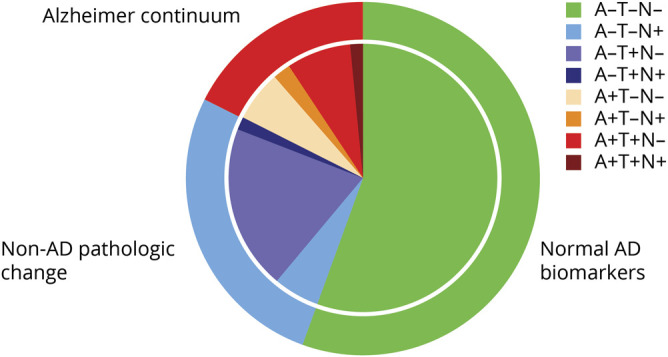
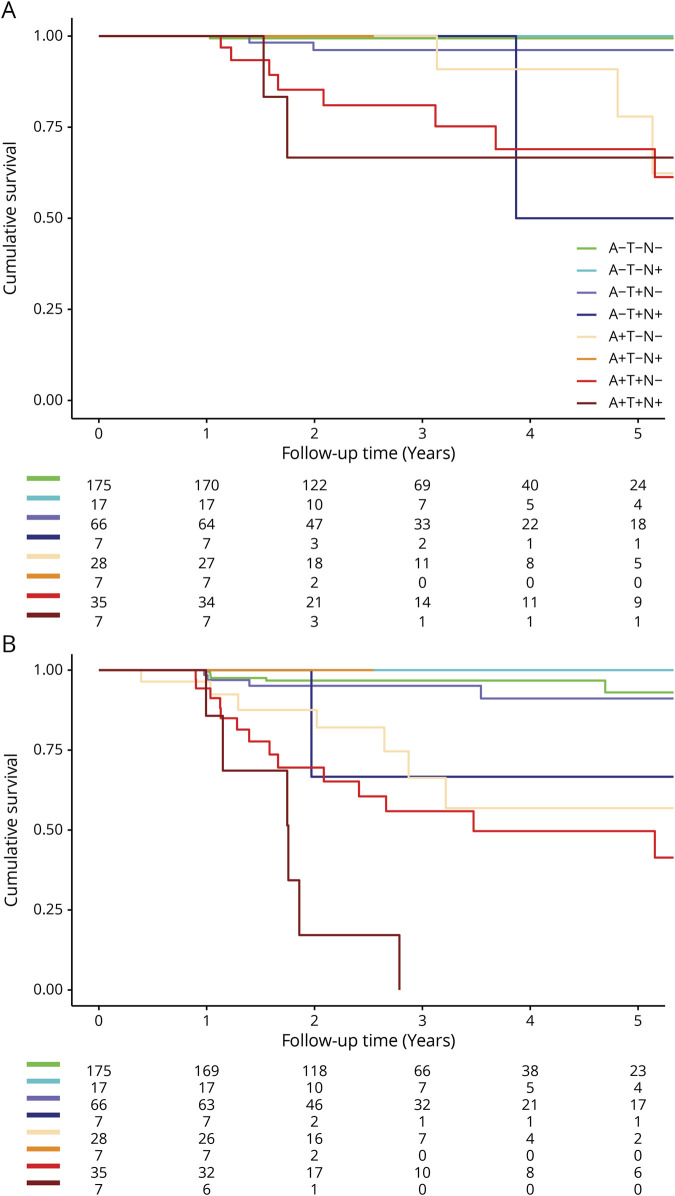
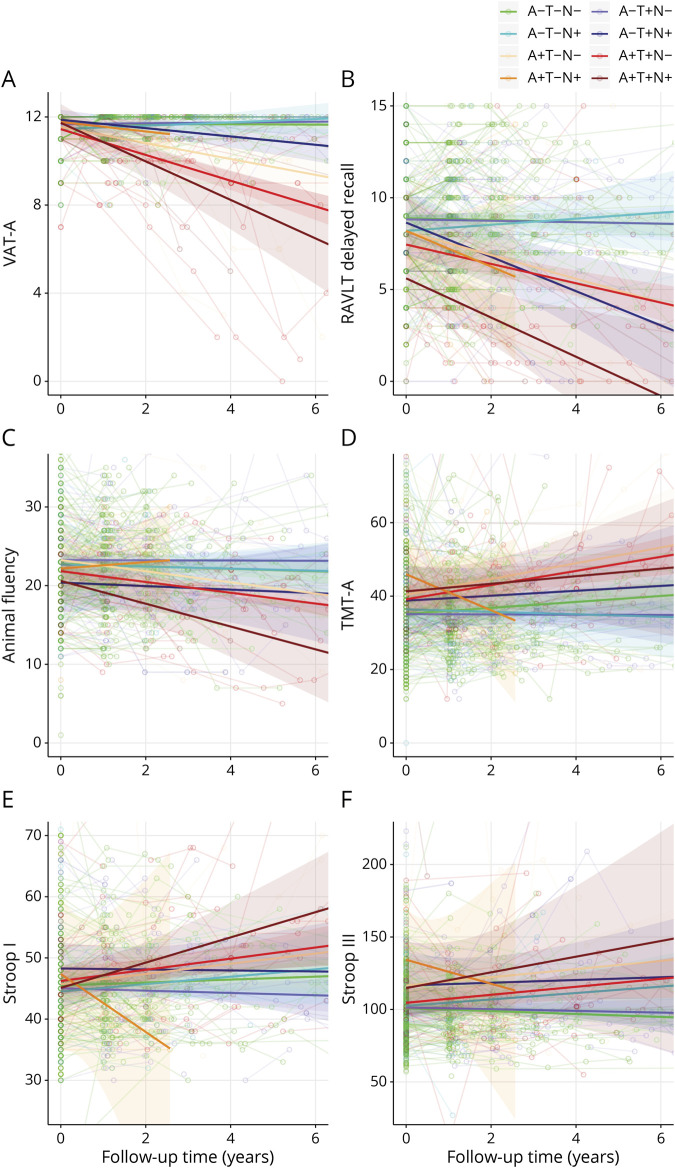
OBJECTIVE: To investigate the relationship between the ATN classification system (amyloid, tau, neurodegeneration) and risk of dementia and cognitive decline in individuals with subjective cognitive decline (SCD). METHODS: We classified 693 participants with SCD (60 ± 9 years, 41% women, Mini-Mental State Examination score 28 ± 2) from the Amsterdam Dementia Cohort and Subjective Cognitive Impairment Cohort (SCIENCe) project according to the ATN model, as determined by amyloid PET or CSF β-amyloid (A), CSF p-tau (T), and MRI-based medial temporal lobe atrophy (N). All underwent extensive neuropsychological assessment. For 342 participants, follow-up was available (3 ± 2 years). As a control population, we included 124 participants without SCD. RESULTS: Fifty-six (n = 385) participants had normal Alzheimer disease (AD) biomarkers (A-T-N-), 27% (n = 186) had non-AD pathologic change (A-T-N+, A-T+N-, A-T+N+), 18% (n = 122) fell within the Alzheimer continuum (A+T-N-, A+T-N+, A+T+N-, A+T+N+). ATN profiles were unevenly distributed, with A-T+N+, A+T-N+, and A+T+N+ containing very few participants. Cox regression showed that compared to A-T-N-, participants in A+ profiles had a higher risk of dementia with a dose-response pattern for number of biomarkers affected. Linear mixed models showed participants in A+ profiles showed a steeper decline on tests addressing memory, attention, language, and executive functions. In the control group, there was no association between ATN and cognition. CONCLUSIONS: Among individuals presenting with SCD at a memory clinic, those with a biomarker profile A-T+N+, A+T-N-, A+T+N-, and A+T+N+ were at increased risk of dementia, and showed steeper cognitive decline compared to A-T-N- individuals. These results suggest a future where biomarker results could be used for individualized risk profiling in cognitively normal individuals presenting at a memory clinic.
Overview
The claims and statistics of this paper haven’t been checked yet.
Free: it reads the open-access text and checks the first 5 claims that cite a source we can check. Create a free account to check every claim.
Integrity signals
Registry
Cites
Statistics
Figures
Verification
Claims the paper makes
The claims and statistics of this paper haven’t been checked yet.
Free: it reads the open-access text and checks the first 5 claims that cite a source we can check. Create a free account to check every claim.
Claims other papers make about this one
Each is checked against this paper’s own text: does it say what the citing paper says it does?
The cited source says what the claim attributes to it.
In the citing paper
“Individuals with SCD with a biomarker-based evidence of AD are at higher risk for developing cognitive decline [5–7].”
From Psychotherapeutic interventions in individuals at risk for Alzheimer’s dementia: a systematic review (2022) · cites this paper as [7]
The check wasn’t confident either way, so it gives no verdict — never disputed.
In the citing paper
“Moreover, while both ciliary elongation and IFT disruption have been reported in HD models, supporting evidence from human post-mortem tissue remains limited [69,175].”
From The Impact of Neurotoxin Proteins Trafficked by Primary Cilia and Extracellular Vesicles in Neurodegenerative Diseases (2025) · cites this paper as [69]
Experimental — accuracy not yet measuredIn the citing paper
“Subjective cognitive decline might be a risk factor of clinical progression,24 but the ability of subjective cognitive decline to predict progression to objective cognitive decline (ie, mild cognitive decline, or dementia, or both) remains low (OR 1·5–3·081).”
From Clinical diagnosis of Alzheimer’s disease: Recommendations of the International Working Group (2021) · cites this paper as [24]
Self-check
Percentages, sums and reported differences re-computed from the paper’s own numbers.
The self-check needs the paper’s full text.
Citations
Cites
Development and validation of a geriatric depression screening scale: a preliminary report
Yesavage, J. A., Brink, T. L., Rose, T. L., Lum, O., Huang, V., Adey, M., & Leirer, V. O. (1982) · Journal of Psychiatric Research · doi:10.1016/0022-3956(82)90033-4 · Cited by 15,025 · cited 1×
“We used the Geriatric Depression Scale (GDS) to assess depressive symptoms.(21,22) Participants were labeled SCD in a multidisciplinary consensus meeting when clinical and cognitive testing was normal and criteria for MCI, dementia, or other neurologic or psychiatric conditions (e.”
MethodNIA‐AA Research Framework: Toward a biological definition of Alzheimer's disease
Jack, C. R., Bennett, D. A., Blennow, K., Carrillo, M. C., Dunn, B., Haeberlein, S. B., Holtzman, D. M., Jagust, W., Jessen, F., Karlawish, J., et al. (2018) · Alzheimer's & Dementia · doi:10.1016/j.jalz.2018.02.018 · Cited by 10,537
Self-citationSheikh (1986) · doi:10.1300/j018v05n01_09 · Cited by 7,236 · cited 1×
“We used the Geriatric Depression Scale (GDS) to assess depressive symptoms.(21,22) Participants were labeled SCD in a multidisciplinary consensus meeting when clinical and cognitive testing was normal and criteria for MCI, dementia, or other neurologic or psychiatric conditions (e.”
MethodSperling, R. A., Aisen, P. S., Beckett, L. A., Bennett, D. A., Craft, S., Fagan, A. M., Iwatsubo, T., Jack, C. R., Kaye, J., Montine, T. J., et al. (2011) · Alzheimer's & Dementia · doi:10.1016/j.jalz.2011.03.003 · Cited by 7,155 · cited 1×
“, major depression, schizophrenia) were not met.(10,23) Follow-up diagnoses were available for 342 participants (3 ± 2 years).”
BackgroundMR signal abnormalities at 1.5 T in Alzheimer's dementia and normal aging
Fazekas, F., Chawluk, J., Alavi, A., Hurtig, H., & Zimmerman, R. (1987) · American Journal of Roentgenology · doi:10.2214/ajr.149.2.351 · Cited by 5,334 · cited 1×
“The severity of white matter hyperintensities was determined on the FLAIR sequence using the Fazekas scale (range 0–3).(31) Lacunes were defined as deep lesions (3–15 mm) with CSF-like signal on all sequences.”
MethodSensitivity of revised diagnostic criteria for the behavioural variant of frontotemporal dementia
Rascovsky, K., Hodges, J. R., Knopman, D., Mendez, M. F., Kramer, J. H., Neuhaus, J., van Swieten, J. C., Seelaar, H., Dopper, E. G. P., Onyike, C. U., et al. (2011) · Brain · doi:10.1093/brain/awr179 · Cited by 5,221
Classification of primary progressive aphasia and its variants
Gorno-Tempini, M. L., Hillis, A. E., Weintraub, S., Kertesz, A., Mendez, M., Cappa, S. F., Ogar, J. M., Rohrer, J. D., Black, S., Boeve, B. F., et al. (2011) · Neurology · doi:10.1212/wnl.0b013e31821103e6 · Cited by 5,141
Diagnosis and management of dementia with Lewy bodies: Fourth consensus report of the DLB Consortium
McKeith, I. G., Boeve, B. F., Dickson, D. W., Halliday, G., Taylor, J.-P., Weintraub, D., Aarsland, D., Galvin, J., Attems, J., Ballard, C. G., et al. (2017) · Neurology · doi:10.1212/wnl.0000000000004058 · Cited by 4,476
Gorelick, P. B., Scuteri, A., Black, S. E., DeCarli, C., Greenberg, S. M., Iadecola, C., Launer, L. J., Laurent, S., Lopez, O. L., Nyenhuis, D., et al. (2011) · Stroke · doi:10.1161/str.0b013e3182299496 · Cited by 3,811
Cognitive Stimulation in Patients with Dementia: Randomized Controlled Trial
Mapelli, D., Di Rosa, E., Nocita, R., & Sava, D. (2013) · Dementia and Geriatric Cognitive Disorders Extra · doi:10.1159/000353457 · Cited by 3,453
Jessen, F., Amariglio, R. E., van Boxtel, M., Breteler, M., Ceccaldi, M., Chételat, G., Dubois, B., Dufouil, C., Ellis, K. A., van der Flier, W. M., et al. (2014) · Alzheimer's & Dementia · doi:10.1016/j.jalz.2014.01.001 · Cited by 3,014 · cited 2×
“, major depression, schizophrenia) were not met.(10,23) Follow-up diagnoses were available for 342 participants (3 ± 2 years).”
BackgroundSelf-citationAppelhof, B., Bakker, C., Van Duinen-van den Ijssel, J. C. L., Zwijsen, S. A., Smalbrugge, M., Verhey, F. R. J., de Vugt, M. E., Zuidema, S. U., & Koopmans, R. T. C. M. (2017) · Dementia and Geriatric Cognitive Disorders · doi:10.1159/000477087 · Cited by 2,760
Qualitative Assessment of Verbal Fluency Performance in Frontotemporal Dementia
van den Berg, E., Jiskoot, L. C., Grosveld, M. J. H., van Swieten, J. C., & Papma, J. M. (2017) · Dementia and Geriatric Cognitive Disorders · doi:10.1159/000477538 · Cited by 2,046
Scheltens, P., Leys, D., Barkhof, F., Huglo, D., Weinstein, H. C., Vermersch, P., Kuiper, M., Steinling, M., Wolters, E. C., & Valk, J. (1992) · Journal of Neurology, Neurosurgery & Psychiatry · doi:10.1136/jnnp.55.10.967 · Cited by 1,784
Self-citationLongitudinal assessment of Aβ and cognition in aging and Alzheimer disease
Villemagne, V. L., Pike, K. E., Chételat, G., Ellis, K. A., Mulligan, R. S., Bourgeat, P., Ackermann, U., Jones, G., Szoeke, C., Salvado, O., et al. (2011) · Annals of Neurology · doi:10.1002/ana.22248 · Cited by 833
Implementation of subjective cognitive decline criteria in research studies
Molinuevo, J. L., Rabin, L. A., Amariglio, R., Buckley, R., Dubois, B., Ellis, K. A., Ewers, M., Hampel, H., Klöppel, S., Rami, L., et al. (2017) · Alzheimer's & Dementia · doi:10.1016/j.jalz.2016.09.012 · Cited by 575 · cited 1×
“Subjective cognitive decline (SCD) is characterized by selfperceived decline in cognition, but comparable cognitive performance to peers.(9,10) In SCD, abnormal amyloid, abnormal tau, and signs of neurodegeneration are associated with an increased risk of cognitive decline.”
BackgroundSelf-citationPreclinical Alzheimer's disease and its outcome: a longitudinal cohort study
Vos, S. J., Xiong, C., Visser, P. J., Jasielec, M. S., Hassenstab, J., Grant, E. A., Cairns, N. J., Morris, J. C., Holtzman, D. M., & Fagan, A. M. (2013) · The Lancet Neurology · doi:10.1016/s1474-4422(13)70194-7 · Cited by 564
Self-citationPasquier, F., Leys, D., Weerts, J. G. E., Mounier-Vehier, F., Barkhof, F., & Scheltens, P. (2008) · European Neurology · doi:10.1159/000117270 · Cited by 525 · cited 1×
“Global cortical atrophy (GCA) was rated using axial FLAIR images (range 0–3).(30) The severity of white matter hyperintensities was determined on the FLAIR sequence using the Fazekas scale (range 0–3).”
MethodSelf-citationMorris, J. C., Roe, C. M., Grant, E. A., Head, D., Storandt, M., Goate, A. M., Fagan, A. M., Holtzman, D. M., & Mintun, M. A. (2009) · Archives of Neurology · doi:10.1001/archneurol.2009.269 · Cited by 476
Slot, R. E. R., Sikkes, S. A. M., Berkhof, J., Brodaty, H., Buckley, R., Cavedo, E., Dardiotis, E., Guillo‐Benarous, F., Hampel, H., Kochan, N. A., et al. (2019) · Alzheimer's & Dementia · doi:10.1016/j.jalz.2018.10.003 · Cited by 428 · cited 1×
“The fact that our SCD sample is 10–15 years younger than other cohorts and was carefully selected to be cognitively normal at baseline probably explains this effect and explains our apparently lower amyloid rate, as age has been shown to play a large role in biomarker positivity.(2,43,44) At the same time, our results…”
ResultSelf-citationVisual assessment of posterior atrophy development of a MRI rating scale
Koedam, E. L. G. E., Lehmann, M., van der Flier, W. M., Scheltens, P., Pijnenburg, Y. A. L., Fox, N., Barkhof, F., & Wattjes, M. P. (2011) · European Radiology · doi:10.1007/s00330-011-2205-4 · Cited by 413
Self-citationOptimizing Patient Care and Research: The Amsterdam Dementia Cohort
van der Flier, W. M., Pijnenburg, Y. A. L., Prins, N., Lemstra, A. W., Bouwman, F. H., Teunissen, C. E., van Berckel, B. N. M., Stam, C. J., Barkhof, F., Visser, P. J., et al. (2014) · Journal of Alzheimer's Disease · doi:10.3233/jad-132306 · Cited by 398 · cited 4×
“Neuropsychological assessment All participants received an extensive standardized neuropsychological assessment.(18) We used the Mini-Mental State Examination (MMSE) for global cognition.”
MethodInfluentialSelf-citationAmsterdam Dementia Cohort: Performing Research to Optimize Care
van der Flier, W. M., & Scheltens, P. (2018) · Journal of Alzheimer’s Disease · doi:10.3233/jad-170850 · Cited by 390 · cited 2×
“We included 693 participants with SCD from the Amsterdam Dementia Cohort and the Subjective Cognitive Impairment Cohort (SCIENCe) project at the Alzheimer Center Amsterdam.18–20 All participants underwent a standardized diagnostic workup, which consisted of a neurologic, physical, and neuropsychological evaluation, an…”
MethodSelf-citationMulder, C., Verwey, N. A., van der Flier, W. M., Bouwman, F. H., Kok, A., van Elk, E. J., Scheltens, P., & Blankenstein, M. A. (2010) · Clinical Chemistry · doi:10.1373/clinchem.2009.130518 · Cited by 335
Self-citationJack, C. R., Wiste, H. J., Weigand, S. D., Therneau, T. M., Knopman, D. S., Lowe, V., Vemuri, P., Mielke, M. M., Roberts, R. O., Machulda, M. M., et al. (2017) · The Lancet Neurology · doi:10.1016/s1474-4422(17)30077-7 · Cited by 333
Mormino, E. C., Betensky, R. A., Hedden, T., Schultz, A. P., Amariglio, R. E., Rentz, D. M., Johnson, K. A., & Sperling, R. A. (2014) · JAMA Neurology · doi:10.1001/jamaneurol.2014.2031 · Cited by 328
Jack, C. R., Wiste, H. J., Therneau, T. M., Weigand, S. D., Knopman, D. S., Mielke, M. M., Lowe, V. J., Vemuri, P., Machulda, M. M., Schwarz, C. G., et al. (2019) · JAMA · doi:10.1001/jama.2019.7437 · Cited by 324 · cited 5×
“On the other end of the profile spectrum, we found a very low prevalence of A+T+N+ in our SCD sample (2%), while other studies found higher percentages (9%–12%).(2,6,7) The fact that our SCD sample is 10–15 years younger than other cohorts and was carefully selected to be cognitively normal at baseline probably explai…”
BackgroundResultInfluentialShort-term clinical outcomes for stages of NIA-AA preclinical Alzheimer disease
Knopman, D. S., Jack, C. R., Wiste, H. J., Weigand, S. D., Vemuri, P., Lowe, V., Kantarci, K., Gunter, J. L., Senjem, M. L., Ivnik, R. J., et al. (2012) · Neurology · doi:10.1212/wnl.0b013e3182563bbe · Cited by 242
Unbiased Approach to Counteract Upward Drift in Cerebrospinal Fluid Amyloid-β 1–42 Analysis Results
Tijms, B. M., Willemse, E. A. J., Zwan, M. D., Mulder, S. D., Visser, P. J., van Berckel, B. N. M., van der Flier, W. M., Scheltens, P., & Teunissen, C. E. (2018) · Clinical Chemistry · doi:10.1373/clinchem.2017.281055 · Cited by 210 · cited 2×
“CSF Aβ levels were adjusted for the drift in CSF biomarker analyses that occurred over the years.(34) For 9 participants, we used Elecsys for analyses of Aβ.”
MethodSelf-citationBurnham, S. C., Bourgeat, P., Doré, V., Savage, G., Brown, B., Laws, S., Maruff, P., Salvado, O., Ames, D., Martins, R. N., et al. (2016) · The Lancet Neurology · doi:10.1016/s1474-4422(16)30125-9 · Cited by 207
Amyloid-first and neurodegeneration-first profiles characterize incident amyloid PET positivity
Jack, C. R., Wiste, H. J., Weigand, S. D., Knopman, D. S., Lowe, V., Vemuri, P., Mielke, M. M., Jones, D. T., Senjem, M. L., Gunter, J. L., et al. (2013) · Neurology · doi:10.1212/01.wnl.0000435556.21319.e4 · Cited by 199 · cited 1×
“This suggests an unusual order of pathologic events, which has been described before.(6,45) In line with the proposedmodel of amyloid changes being among the first changes in the cascade of events eventually leading to AD dementia, earlier studies have also found amyloid positivity to be a strong risk factor for clini…”
Backgroundvan Harten, A. C., Visser, P. J., Pijnenburg, Y. A. L., Teunissen, C. E., Blankenstein, M. A., Scheltens, P., & van der Flier, W. M. (2013) · Alzheimer's & Dementia · doi:10.1016/j.jalz.2012.08.004 · Cited by 197
Self-citationMemory decline accompanies subthreshold amyloid accumulation
Landau, S. M., Horng, A., Jagust, W. J., & Initiative, F. T. A. D. N. (2018) · Neurology · doi:10.1212/wnl.0000000000005354 · Cited by 153 · cited 1×
“As an alternative, it would be worth considering each of the biomarkers as a continuous variable, especially because recent data show that there may be information in subthreshold amyloid deposition.(49)”
BackgroundPreclinical AD predicts decline in memory and executive functions in subjective complaints
van Harten, A. C., Smits, L. L., Teunissen, C. E., Visser, P. J., Koene, T., Blankenstein, M. A., Scheltens, P., & van der Flier, W. M. (2013) · Neurology · doi:10.1212/wnl.0b013e3182a8418b · Cited by 143
Self-citationSnitz, B. E., Wang, T., Cloonan, Y. K., Jacobsen, E., Chang, C. H., Hughes, T. F., Kamboh, M. I., & Ganguli, M. (2018) · Alzheimer's & Dementia · doi:10.1016/j.jalz.2017.12.003 · Cited by 141 · cited 1×
“The fact that our SCD sample is 10–15 years younger than other cohorts and was carefully selected to be cognitively normal at baseline probably explains this effect and explains our apparently lower amyloid rate, as age has been shown to play a large role in biomarker positivity.(2,43,44) At the same time, our results…”
ResultBiobanking of CSF: International standardization to optimize biomarker development
Teunissen, C. E., Tumani, H., Engelborghs, S., & Mollenhauer, B. (2014) · Clinical Biochemistry · doi:10.1016/j.clinbiochem.2013.12.024 · Cited by 137 · cited 1×
“CSF studies CSF was obtained by lumbar puncture between the L3/L4, L4/L5, or L5/S1 intervertebral space by a 25-gauge needle and syringe and collected in polypropylene tubes.(32) Aβ1-42, total tau, and tau phosphorylated threonine 181 (p-tau) were measured using sandwich ELISAs (Innotest β-amyloid1-42, n = 579; Innote…”
MethodSelf-citationSubjective Cognitive Impairment Cohort (SCIENCe): study design and first results
Slot, R. E. R., Verfaillie, S. C. J., Overbeek, J. M., Timmers, T., Wesselman, L. M. P., Teunissen, C. E., Dols, A., Bouwman, F. H., Prins, N. D., Barkhof, F., et al. (2018) · Alzheimer's Research & Therapy · doi:10.1186/s13195-018-0390-y · Cited by 132 · cited 1×
“For [(18)F]Florbetapir imaging, participants were injected with a tracer dose of approximately 370 megabecquerel (MBq) [(18)F]Florbetapir.(20) Ninety-minute dynamic PET emission scans were obtained simultaneously starting with tracer injection.”
MethodSelf-citationAmyloid burden and metabolic function in early-onset Alzheimer’s disease: parietal lobe involvement.
Ossenkoppele, R., Zwan, M. D., Tolboom, N., van Assema, D. M. E., Adriaanse, S. F., Kloet, R. W., Boellaard, R., Windhorst, A. D., Barkhof, F., Lammertsma, A. A., et al. (2012) · Brain · doi:10.1093/brain/aws113 · Cited by 123 · cited 1×
“For [(11)C]PiB imaging, participants were injected with a tracer dose of approximately 365 MBq [(11)C]PiB in younger participants and approximately 382 MBq [(11)C]PiB in older participants.(38,39) Ninety-minute dynamic PET emission scans were obtained immediately starting with tracer injection.”
MethodSelf-citationPrevalence of preclinical Alzheimer disease: Comparison of current classification systems
Kern, S., Zetterberg, H., Kern, J., Zettergren, A., Waern, M., Höglund, K., Andreasson, U., Wetterberg, H., Börjesson-Hanson, A., Blennow, K., et al. (2018) · Neurology · doi:10.1212/wnl.0000000000005476 · Cited by 120
Diagnostic impact of [18F]flutemetamol PET in early-onset dementia
Zwan, M. D., Bouwman, F. H., Konijnenberg, E., van der Flier, W. M., Lammertsma, A. A., Verhey, F. R. J., Aalten, P., van Berckel, B. N. M., & Scheltens, P. (2017) · Alzheimer's Research & Therapy · doi:10.1186/s13195-016-0228-4 · Cited by 118
Self-citationRhodius-Meester, H. F. M., Benedictus, M. R., Wattjes, M. P., Barkhof, F., Scheltens, P., Muller, M., & van der Flier, W. M. (2017) · Frontiers in Aging Neuroscience · doi:10.3389/fnagi.2017.00117 · Cited by 107 · cited 1×
“5 was considered positive.(41) Because a number of ATN profiles contained very few participants, we also clustered the 8 biomarker profiles into 3 categories.”
BackgroundSelf-citationWillemse, E. A. J., van Maurik, I. S., Tijms, B. M., Bouwman, F. H., Franke, A., Hubeek, I., Boelaarts, L., Claus, J. J., Korf, E. S. C., van Marum, R. J., et al. (2018) · Alzheimer's & Dementia: Diagnosis, Assessment & Disease Monitoring · doi:10.1016/j.dadm.2018.08.006 · Cited by 106
Self-citationATN profiles among cognitively normal individuals and longitudinal cognitive outcomes
Soldan, A., Pettigrew, C., Fagan, A. M., Schindler, S. E., Moghekar, A., Fowler, C., Li, Q.-X., Collins, S. J., Carlsson, C., Asthana, S., et al. (2019) · Neurology · doi:10.1212/wnl.0000000000007248 · Cited by 104 · cited 4×
“Compared to earlier studies, most noteworthy is that more than half of our participants in both the SCD and control group were negative for all biomarkers (56% and 57%, respectively), while other studies found a much lower prevalence (29%–39%).(2,6,7) On the other end of the profile spectrum, we found a very low preva…”
BackgroundResultInfluentialDiagnostic impact of CSF biomarkers for Alzheimer's disease in a tertiary memory clinic
Duits, F. H., Prins, N. D., Lemstra, A. W., Pijnenburg, Y. A. L., Bouwman, F. H., Teunissen, C. E., Scheltens, P., & van der Flier, W. M. (2015) · Alzheimer's & Dementia · doi:10.1016/j.jalz.2014.05.1753 · Cited by 82
Self-citationApplying the ATN scheme in a memory clinic population: The ABIDE project
Altomare, D., de Wilde, A., Ossenkoppele, R., Pelkmans, W., Bouwman, F., Groot, C., van Maurik, I., Zwan, M., Yaqub, M., Barkhof, F., et al. (2019) · Neurology · doi:10.1212/wnl.0000000000008361 · Cited by 79
Self-citationThe A/T/N biomarker scheme and patterns of brain atrophy assessed in mild cognitive impairment
Ekman, U., Ferreira, D., & Westman, E. (2018) · Scientific Reports · doi:10.1038/s41598-018-26151-8 · Cited by 78 · cited 1×
“MCI sample, that found amyloid positivity was associated with a higher risk of dementia.(5) In addition, we found a higher risk of dementia in A–T+N+.”
ResultThe EMIF-AD PreclinAD study: study design and baseline cohort overview
Konijnenberg, E., Carter, S. F., ten Kate, M., den Braber, A., Tomassen, J., Amadi, C., Wesselman, L., Nguyen, H.-T., van de Kreeke, J. A., Yaqub, M., et al. (2018) · Alzheimer's Research & Therapy · doi:10.1186/s13195-018-0406-7 · Cited by 75 · cited 1×
“Control group For comparison, we also included a control group without subjective cognitive decline, recruited from the EMIF-AD PreclinAD study.(42) We included 124 participants, including 53 monozygotic twin pairs and 18 singletons.”
MethodSelf-citationAlzheimer's biomarkers in daily practice (ABIDE) project: Rationale and design
de Wilde, A., van Maurik, I. S., Kunneman, M., Bouwman, F., Zwan, M., Willemse, E. A. J., Biessels, G. J., Minkman, M., Pel, R., Schoonenboom, N. S. M., et al. (2017) · Alzheimer's & Dementia: Diagnosis, Assessment & Disease Monitoring · doi:10.1016/j.dadm.2017.01.003 · Cited by 70 · cited 1×
“For [(18)F]Florbetaben imaging, participants were injected with a tracer dose of approximately 300 MBq [(18)F]Florbetaben.(36) The image acquisition window extended from 90 to 110 minutes (4 × 5 minutes frames) after dose injection.”
MethodSelf-citationVerfaillie, S. C. J., Tijms, B., Versteeg, A., Benedictus, M. R., Bouwman, F. H., Scheltens, P., Barkhof, F., Vrenken, H., & van der Flier, W. M. (2016) · Alzheimer's & Dementia: Diagnosis, Assessment & Disease Monitoring · doi:10.1016/j.dadm.2016.10.007 · Cited by 68
Self-citationLong-term effects of amyloid, hypometabolism, and atrophy on neuropsychological functions
Ossenkoppele, R., van der Flier, W. M., Verfaillie, S. C. J., Vrenken, H., Versteeg, A., van Schijndel, R. A., Sikkes, S. A., Twisk, J., Adriaanse, S. M., Zwan, M. D., et al. (2014) · Neurology · doi:10.1212/wnl.0000000000000432 · Cited by 64 · cited 1×
“For [(11)C]PiB imaging, participants were injected with a tracer dose of approximately 365 MBq [(11)C]PiB in younger participants and approximately 382 MBq [(11)C]PiB in older participants.(38,39) Ninety-minute dynamic PET emission scans were obtained immediately starting with tracer injection.”
MethodSelf-citationChallenges associated with biomarker‐based classification systems for Alzheimer's disease
Illán‐Gala, I., Pegueroles, J., Montal, V., Vilaplana, E., Carmona‐Iragui, M., Alcolea, D., Dickerson, B. C., Sánchez‐Valle, R., de Leon, M. J., Blesa, R., et al. (2018) · Alzheimer's & Dementia: Diagnosis, Assessment & Disease Monitoring · doi:10.1016/j.dadm.2018.03.004 · Cited by 62 · cited 1×
“Of these, 2 have used a cross-sectional design in cognitively unimpaired participants,(2,3) and one focused on biomarker inconsistencies in healthy controls, patients with mild cognitive impairment (MCI), and patients with dementia.(4) Three former studies had a longitudinal design, evaluating the association between…”
BackgroundEvaluating combinations of diagnostic tests to discriminate different dementia types
Bruun, M., Rhodius‐Meester, H. F. M., Koikkalainen, J. R., Baroni, M., Gjerum, L., Lemstra, A. W., Barkhof, F., Remes, A. M., Urhemaa, T., Tolonen, A. J., et al. (2018) · Alzheimer s & Dementia Diagnosis Assessment & Disease Monitoring · doi:10.1016/j.dadm.2018.07.003 · Cited by 48
Self-citation[AN ANALYSIS OF VARIANCE BASED ON THE GRONINGER INTELLIGENCE TEST SCORES].
Verhage, F., & Jj, V. D. W. T. B. (1964) · PubMed · Cited by 17
P1‐126: L‐NAME REVERSES MORPHINE‐INDUCED SPATIAL MEMORY CONSOLIDATION IMPAIRMENT
Khales, G. Y., Alipoor, A., & Moosavi, M. (2014) · Alzheimer s & Dementia · doi:10.1016/j.jalz.2014.05.363 · Cited by 3
Russell, C., Heslegrave, A., Pocock, J. M., Mitra, V., Pike, I., Zetterberg, H., & Ward, M. A. (2014) · Alzheimer s & Dementia · doi:10.1016/j.jalz.2014.05.780 · Cited by 1
Cited by
Scheltens, P., De Strooper, B., Kivipelto, M., Holstege, H., Chételat, G., Teunissen, C. E., Cummings, J., & van der Flier, W. M. (2021) · The Lancet · doi:10.1016/s0140-6736(20)32205-4 · Cited by 5,465
Self-citationRevised criteria for diagnosis and staging of Alzheimer's disease: Alzheimer's Association Workgroup
Jack, C. R., Andrews, J. S., Beach, T. G., Buracchio, T., Dunn, B., Graf, A., Hansson, O., Ho, C., Jagust, W., McDade, E., et al. (2024) · Alzheimer's & Dementia · doi:10.1002/alz.13859 · Cited by 2,803
Self-citationClinical diagnosis of Alzheimer’s disease: Recommendations of the International Working Group
Dubois, B., Villain, N., Frisoni, G. B., Rabinovici, G. D., Sabbagh, M., Cappa, S., Bejanin, A., Bombois, S., Epelbaum, S., Teichmann, M., et al. (2021) · The Lancet Neurology · doi:10.1016/s1474-4422(21)00066-1 · Cited by 1,051
“SMC and SCD, when isolated and not supported by objective cognitive impairment, are not specific enough to be considered as part of the AD phenotype 85 .”
BackgroundInfluentialThe probabilistic model of Alzheimer disease: the amyloid hypothesis revised
Frisoni, G. B., Altomare, D., Thal, D. R., Ribaldi, F., van der Kant, R., Ossenkoppele, R., Blennow, K., Cummings, J., van Duijn, C., Nilsson, P. M., et al. (2022) · Nature Reviews Neuroscience · doi:10.1038/s41583-021-00533-w · Cited by 513
Self-citationDeveloping the ATX(N) classification for use across the Alzheimer disease continuum
Hampel, H., Cummings, J., Blennow, K., Gao, P., Jack, C. R., & Vergallo, A. (2021) · Nature Reviews Neurology · doi:10.1038/s41582-021-00520-w · Cited by 327
Metadata
- Authors
- Ebenau, J. L., Timmers, T., Wesselman, L. M. P., Verberk, I. M. W., Verfaillie, S. C. J., Slot, R. E. R., van Harten, A. C., Teunissen, C. E., Barkhof, F., van den Bosch, K. A., van Leeuwenstijn, M., Tomassen, J., Braber, A. D., Visser, P. J., Prins, N. D., Sikkes, S. A. M., Scheltens, P., van Berckel, B. N. M., & van der Flier, W. M.
- Affiliations
- Karolinska Institutet (SE)
- From the Alzheimer Center, Department of Neurology (J.L.E., T.T., L.M.P.W., I.M.W.V., R.E.R.S., A.C.v.H., K.A.v.d.B., M.v.L., J.T., A.d.B., P.J.V., N.D.P., S.A.M.S., P.S., B.N.M.v.B., W.M.v.d.F.), and Department of Radiology & Nuclear Medicine (S.C.J.V., F.B., B.N.v.B.), Amsterdam Neuroscience, Neurochemistry Laboratory, Department of Clinical Chemistry (I.M.W.V., C.E.T.), and Department of Epidemiology & Biostatistics (W.M.v.d.F.), Vrije Universiteit Amsterdam, Amsterdam UMC, the...
- Corresponding author
- Ebenau, Jarith L.
- ORCID
- Venue
- Neurology
- Published
- 2020-07-07
- Volume
- 95
- Issue
- 1
- Pages
- e46-e58
- ISSN
- 0028-3878 (ISSN-L)
- 1526-632X
- PMC
- PMC7371376
- OpenAlex
- W3033804370
- Semantic Scholar
- dad65ad2c691a8d68d67d337b27776e18449b81e
- Cited by
- 191
- References
- 55
- Citations by year
- 2026: 7 · 2025: 43 · 2024: 42 · 2023: 40 · 2022: 33 · 2021: 24 · 2020: 1
- FWCI
- 17.88
- Type
- journal article
- Language
- en
- Open access
- hybrid
- doi.org
- Licence
- cc-by-nc-nd
- Locations
- Neurology (publishedVersion, cc-by-nc-nd)
- PubMed Central (publishedVersion, cc-by-nc-nd)
- PubMed (publishedVersion)
- Research Publications (Maastricht University) (publishedVersion, cc-by-nc-nd)
- VU Research Portal (publishedVersion, other-oa)
- Pure Amsterdam UMC (submittedVersion, other-oa)
- UCL Discovery (University College London) (submittedVersion)
- Amsterdam UMC (VU Amsterdam) - Institutional Repository (submittedVersion)
- Research Publications (Maastricht University) (submittedVersion, other-oa)
- Data Archiving and Networked Services (DANS) (submittedVersion, other-oa)
- Data Archiving and Networked Services (DANS) (submittedVersion)
- Funders
- ZonMw (73305095005)
- Topics
- Health Sciences › Medicine › Psychiatry and Mental health › Dementia and Cognitive Impairment Research
- Life Sciences › Neuroscience › Cellular and Molecular Neuroscience › Alzheimer's disease research and treatments
- Health Sciences › Medicine › Oncology › Cancer-related cognitive impairment studies
- Keywords
- subjective cognitive decline, Alzheimer's disease, amyloid PET, medial temporal lobe atrophy, dementia risk, cognitive decline, biomarker profiles, memory clinics
- MeSH terms
- Aged, Alzheimer Disease, Female, Humans, Male, Middle Aged, Nerve Degeneration, Biomarkers, Amyloid beta-Peptides, tau Proteins, Disease Progression, Cognitive Dysfunction
About these checks
Registry, retraction, Cites and statistics results are computed, not judged, with one exception: a printed reference that no index lists is read once by a model before it counts as a citation error. Claims are extracted by a model and kept only when their quote appears verbatim in the text; each cited source is then checked, with a model’s help, for whether it says what the claim relies on. Those verdicts can be wrong — read the claim’s quote and the cited source before relying on one.
Statistics and arithmetic are recomputed, not judged.
Confidence bands are shown only for fields calibrated on our annotated test set. None is calibrated yet, so no band is shown.
What counts as a claim ›How we measure confidence ›How we check this ›
Are you an author, or do you see a problem with this page? Request a review
Data sources
Bibliographic data: Semantic Scholar, OpenAlex, Crossref.
Contains information from the Semantic Scholar Academic Graph Datasets, made available under the ODC Attribution License (ODC-BY 1.0).
Semantic Scholar’s data is described in: Kinney, R., et al. (2023). The Semantic Scholar Open Data Platform. arXiv:2301.10140.
