

ATN classification and clinical progression in subjective cognitive decline: The SCIENCe project
Open accessThe DOI matches its Crossref record; 55 of the 55 references it cites were found in a registry or an index.
Abstract
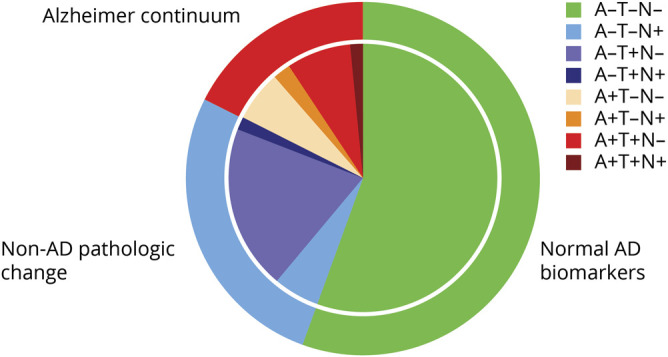
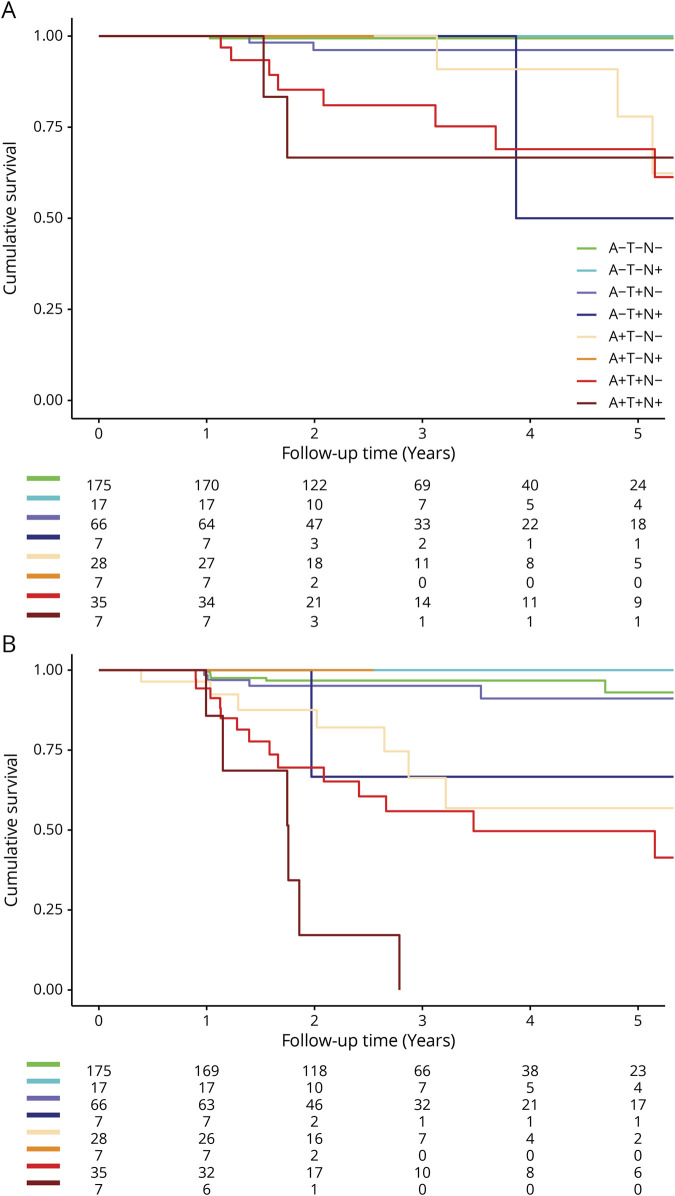
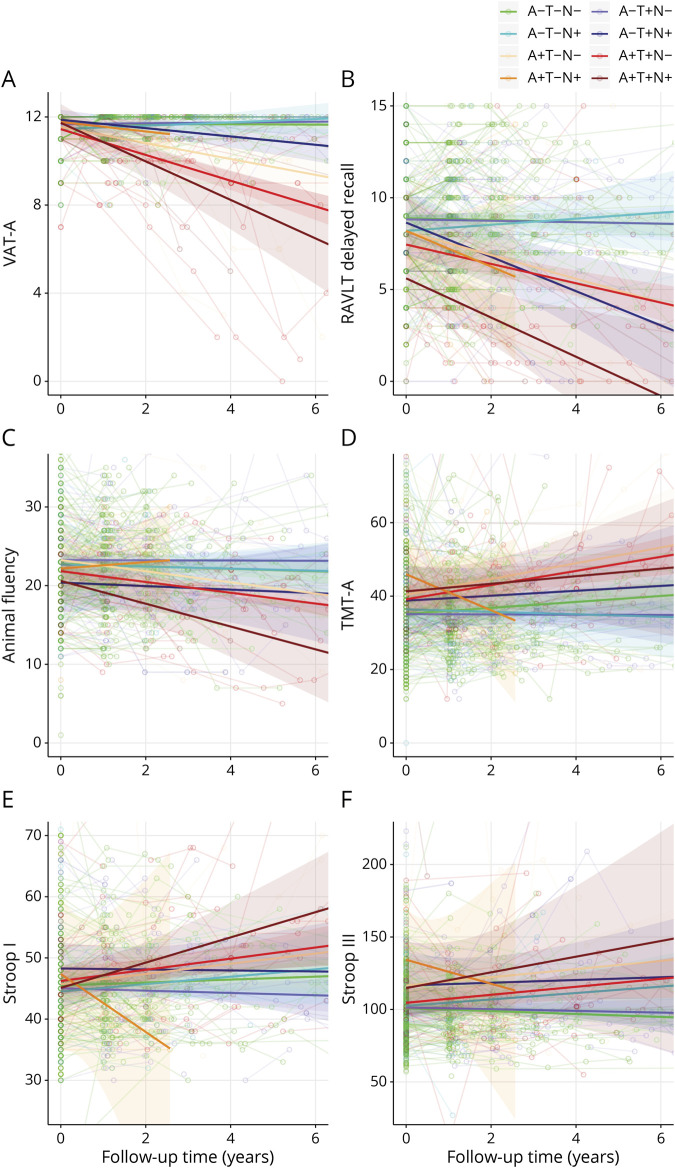
OBJECTIVE: To investigate the relationship between the ATN classification system (amyloid, tau, neurodegeneration) and risk of dementia and cognitive decline in individuals with subjective cognitive decline (SCD). METHODS: We classified 693 participants with SCD (60 ± 9 years, 41% women, Mini-Mental State Examination score 28 ± 2) from the Amsterdam Dementia Cohort and Subjective Cognitive Impairment Cohort (SCIENCe) project according to the ATN model, as determined by amyloid PET or CSF β-amyloid (A), CSF p-tau (T), and MRI-based medial temporal lobe atrophy (N). All underwent extensive neuropsychological assessment. For 342 participants, follow-up was available (3 ± 2 years). As a control population, we included 124 participants without SCD. RESULTS: Fifty-six (n = 385) participants had normal Alzheimer disease (AD) biomarkers (A-T-N-), 27% (n = 186) had non-AD pathologic change (A-T-N+, A-T+N-, A-T+N+), 18% (n = 122) fell within the Alzheimer continuum (A+T-N-, A+T-N+, A+T+N-, A+T+N+). ATN profiles were unevenly distributed, with A-T+N+, A+T-N+, and A+T+N+ containing very few participants. Cox regression showed that compared to A-T-N-, participants in A+ profiles had a higher risk of dementia with a dose-response pattern for number of biomarkers affected. Linear mixed models showed participants in A+ profiles showed a steeper decline on tests addressing memory, attention, language, and executive functions. In the control group, there was no association between ATN and cognition. CONCLUSIONS: Among individuals presenting with SCD at a memory clinic, those with a biomarker profile A-T+N+, A+T-N-, A+T+N-, and A+T+N+ were at increased risk of dementia, and showed steeper cognitive decline compared to A-T-N- individuals. These results suggest a future where biomarker results could be used for individualized risk profiling in cognitively normal individuals presenting at a memory clinic.
Overview
The claims and statistics of this paper haven’t been checked yet.
Free: it reads the open-access text and checks the first 5 claims that cite a source we can check. Create a free account to check every claim.
Integrity signals
Registry
Cites
Statistics
Figures
Verification
Claims the paper makes
The claims and statistics of this paper haven’t been checked yet.
Free: it reads the open-access text and checks the first 5 claims that cite a source we can check. Create a free account to check every claim.
Claims other papers make about this one
Each is checked against this paper’s own text: does it say what the citing paper says it does?
The cited source says what the claim attributes to it.
In the citing paper
“Individuals with SCD with a biomarker-based evidence of AD are at higher risk for developing cognitive decline [5–7].”
From Psychotherapeutic interventions in individuals at risk for Alzheimer’s dementia: a systematic review (2022) · cites this paper as [7]
The check wasn’t confident either way, so it gives no verdict — never disputed.
In the citing paper
“Moreover, while both ciliary elongation and IFT disruption have been reported in HD models, supporting evidence from human post-mortem tissue remains limited [69,175].”
From The Impact of Neurotoxin Proteins Trafficked by Primary Cilia and Extracellular Vesicles in Neurodegenerative Diseases (2025) · cites this paper as [69]
Experimental — accuracy not yet measuredIn the citing paper
“Subjective cognitive decline might be a risk factor of clinical progression,24 but the ability of subjective cognitive decline to predict progression to objective cognitive decline (ie, mild cognitive decline, or dementia, or both) remains low (OR 1·5–3·081).”
From Clinical diagnosis of Alzheimer’s disease: Recommendations of the International Working Group (2021) · cites this paper as [24]
Self-check
Percentages, sums and reported differences re-computed from the paper’s own numbers.
The self-check needs the paper’s full text.
Citations
Cites
Development and validation of a geriatric depression screening scale: a preliminary report
Yesavage, J. A., Brink, T. L., Rose, T. L., Lum, O., Huang, V., Adey, M., & Leirer, V. O. (1982) · Journal of Psychiatric Research · doi:10.1016/0022-3956(82)90033-4 · Cited by 15,025 · cited 1×
“We used the Geriatric Depression Scale (GDS) to assess depressive symptoms.(21,22) Participants were labeled SCD in a multidisciplinary consensus meeting when clinical and cognitive testing was normal and criteria for MCI, dementia, or other neurologic or psychiatric conditions (e.”
MethodNIA‐AA Research Framework: Toward a biological definition of Alzheimer's disease
Jack, C. R., Bennett, D. A., Blennow, K., Carrillo, M. C., Dunn, B., Haeberlein, S. B., Holtzman, D. M., Jagust, W., Jessen, F., Karlawish, J., et al. (2018) · Alzheimer's & Dementia · doi:10.1016/j.jalz.2018.02.018 · Cited by 10,537
Self-citationSheikh (1986) · doi:10.1300/j018v05n01_09 · Cited by 7,236 · cited 1×
“We used the Geriatric Depression Scale (GDS) to assess depressive symptoms.(21,22) Participants were labeled SCD in a multidisciplinary consensus meeting when clinical and cognitive testing was normal and criteria for MCI, dementia, or other neurologic or psychiatric conditions (e.”
MethodSperling, R. A., Aisen, P. S., Beckett, L. A., Bennett, D. A., Craft, S., Fagan, A. M., Iwatsubo, T., Jack, C. R., Kaye, J., Montine, T. J., et al. (2011) · Alzheimer's & Dementia · doi:10.1016/j.jalz.2011.03.003 · Cited by 7,155 · cited 1×
“, major depression, schizophrenia) were not met.(10,23) Follow-up diagnoses were available for 342 participants (3 ± 2 years).”
BackgroundMR signal abnormalities at 1.5 T in Alzheimer's dementia and normal aging
Fazekas, F., Chawluk, J., Alavi, A., Hurtig, H., & Zimmerman, R. (1987) · American Journal of Roentgenology · doi:10.2214/ajr.149.2.351 · Cited by 5,334 · cited 1×
“The severity of white matter hyperintensities was determined on the FLAIR sequence using the Fazekas scale (range 0–3).(31) Lacunes were defined as deep lesions (3–15 mm) with CSF-like signal on all sequences.”
MethodSensitivity of revised diagnostic criteria for the behavioural variant of frontotemporal dementia
Rascovsky, K., Hodges, J. R., Knopman, D., Mendez, M. F., Kramer, J. H., Neuhaus, J., van Swieten, J. C., Seelaar, H., Dopper, E. G. P., Onyike, C. U., et al. (2011) · Brain · doi:10.1093/brain/awr179 · Cited by 5,221
Classification of primary progressive aphasia and its variants
Gorno-Tempini, M. L., Hillis, A. E., Weintraub, S., Kertesz, A., Mendez, M., Cappa, S. F., Ogar, J. M., Rohrer, J. D., Black, S., Boeve, B. F., et al. (2011) · Neurology · doi:10.1212/wnl.0b013e31821103e6 · Cited by 5,141
Diagnosis and management of dementia with Lewy bodies: Fourth consensus report of the DLB Consortium
McKeith, I. G., Boeve, B. F., Dickson, D. W., Halliday, G., Taylor, J.-P., Weintraub, D., Aarsland, D., Galvin, J., Attems, J., Ballard, C. G., et al. (2017) · Neurology · doi:10.1212/wnl.0000000000004058 · Cited by 4,476
Gorelick, P. B., Scuteri, A., Black, S. E., DeCarli, C., Greenberg, S. M., Iadecola, C., Launer, L. J., Laurent, S., Lopez, O. L., Nyenhuis, D., et al. (2011) · Stroke · doi:10.1161/str.0b013e3182299496 · Cited by 3,811
Cognitive Stimulation in Patients with Dementia: Randomized Controlled Trial
Mapelli, D., Di Rosa, E., Nocita, R., & Sava, D. (2013) · Dementia and Geriatric Cognitive Disorders Extra · doi:10.1159/000353457 · Cited by 3,453
Cited by
Scheltens, P., De Strooper, B., Kivipelto, M., Holstege, H., Chételat, G., Teunissen, C. E., Cummings, J., & van der Flier, W. M. (2021) · The Lancet · doi:10.1016/s0140-6736(20)32205-4 · Cited by 5,465
Self-citationRevised criteria for diagnosis and staging of Alzheimer's disease: Alzheimer's Association Workgroup
Jack, C. R., Andrews, J. S., Beach, T. G., Buracchio, T., Dunn, B., Graf, A., Hansson, O., Ho, C., Jagust, W., McDade, E., et al. (2024) · Alzheimer's & Dementia · doi:10.1002/alz.13859 · Cited by 2,803
Self-citationClinical diagnosis of Alzheimer’s disease: Recommendations of the International Working Group
Dubois, B., Villain, N., Frisoni, G. B., Rabinovici, G. D., Sabbagh, M., Cappa, S., Bejanin, A., Bombois, S., Epelbaum, S., Teichmann, M., et al. (2021) · The Lancet Neurology · doi:10.1016/s1474-4422(21)00066-1 · Cited by 1,051
“SMC and SCD, when isolated and not supported by objective cognitive impairment, are not specific enough to be considered as part of the AD phenotype 85 .”
BackgroundInfluentialThe probabilistic model of Alzheimer disease: the amyloid hypothesis revised
Frisoni, G. B., Altomare, D., Thal, D. R., Ribaldi, F., van der Kant, R., Ossenkoppele, R., Blennow, K., Cummings, J., van Duijn, C., Nilsson, P. M., et al. (2022) · Nature Reviews Neuroscience · doi:10.1038/s41583-021-00533-w · Cited by 513
Self-citationDeveloping the ATX(N) classification for use across the Alzheimer disease continuum
Hampel, H., Cummings, J., Blennow, K., Gao, P., Jack, C. R., & Vergallo, A. (2021) · Nature Reviews Neurology · doi:10.1038/s41582-021-00520-w · Cited by 327
The human connectome in Alzheimer disease — relationship to biomarkers and genetics
Yu, M., Sporns, O., & Saykin, A. J. (2021) · Nature Reviews Neurology · doi:10.1038/s41582-021-00529-1 · Cited by 265
Pike, K. E., Cavuoto, M. G., Li, L., Wright, B. J., & Kinsella, G. J. (2022) · Neuropsychology Review · doi:10.1007/s11065-021-09522-3 · Cited by 259
“Brodaty (2017) Scale MAC-Q Episodic memory No Yes No Devanand (2005) Presented to memory clinic Episodic memory Yes Yes Yesa Ebenau (2020) Presented to memory clinic Any cognitive change Yes No Yesa Gruters (2019) Scale SCFQ Episodic memory No Yes Yesa,e Heser (2019) Single question Episodic memory No Yes Yese Huen (2…”
MethodInfluentialVerberk, I. M. W., Thijssen, E., Koelewijn, J., Mauroo, K., Vanbrabant, J., de Wilde, A., Zwan, M. D., Verfaillie, S. C. J., Ossenkoppele, R., Barkhof, F., et al. (2020) · Alzheimer's Research & Therapy · doi:10.1186/s13195-020-00682-7 · Cited by 258
Self-citationKumar, V., Kim, S.-H., & Bishayee, K. (2022) · International Journal of Molecular Sciences · doi:10.3390/ijms23179540 · Cited by 124
Heneka, M. T., Gauthier, S. G., Chandekar, S. A., Hahn‐Pedersen, J. H., Bentsen, M. A., & Zetterberg, H. (2025) · Molecular Psychiatry · doi:10.1038/s41380-025-02939-9 · Cited by 110
Thijssen, E. H., Verberk, I. M. W., Vanbrabant, J., Koelewijn, A., Heijst, H., Scheltens, P., van der Flier, W., Vanderstichele, H., Stoops, E., & Teunissen, C. E. (2021) · Scientific Reports · doi:10.1038/s41598-021-89004-x · Cited by 86
Self-citationTosun, D., Veitch, D., Aisen, P., Jack, C. R., Jagust, W. J., Petersen, R. C., Saykin, A. J., Bollinger, J., Ovod, V., Mawuenyega, K. G., et al. (2021) · Brain Communications · doi:10.1093/braincomms/fcab008 · Cited by 79
Emergence of Extracellular Vesicles as “Liquid Biopsy” for Neurological Disorders: Boom or Bust
Kumar, A., Nader, M. A., & Deep, G. (2024) · Pharmacological Reviews · doi:10.1124/pharmrev.122.000788 · Cited by 79
Ebenau, J. L., Pelkmans, W., Verberk, I. M. W., Verfaillie, S. C. J., van den Bosch, K. A., van Leeuwenstijn, M., Collij, L. E., Scheltens, P., Prins, N. D., Barkhof, F., et al. (2022) · Neurology · doi:10.1212/wnl.0000000000200035 · Cited by 75
“Hypertension 401 78 (19) 67 (20) 11 (17)”
BackgroundSelf-citationRosenberg, A., Öhlund-Wistbacka, U., Hall, A., Bonnard, A., Hagman, G., Rydén, M., Thunborg, C., Wiggenraad, F., Sandebring-Matton, A., Solomon, A., et al. (2022) · Neurology · doi:10.1212/wnl.0000000000201043 · Cited by 70
Rostamzadeh, A., Bohr, L., Wagner, M., Baethge, C., & Jessen, F. (2022) · Neurology · doi:10.1212/wnl.0000000000201072 · Cited by 74
“The following samples were reported in these studies: DESCRIPA,16 German Dementia Competence Network,17 Gothenburg-Oslo MCI Study,18 INSIGHT-preAD,13,19 ADNI-2,19 Amsterdam VU Medical Center,9 Amsterdam Dementia Cohort,20,21 and SCIENCe Cohort.21 Note that the latter 3 study samples overlap and the studies conducted b…”
BackgroundMethodCryo-EM structure of Alzheimer’s disease tau filaments with PET ligand MK-6240
Kunach, P., Vaquer‐Alicea, J., Smith, M. S., Monistrol, J., Hopewell, R., Moquin, L., Therriault, J., Tissot, C., Rahmouni, N., Massarweh, G., et al. (2024) · Nature Communications · doi:10.1038/s41467-024-52265-x · Cited by 69
Dementia risk communication. A user manual for Brain Health Services—part 3 of 6
Visser, L. N. C., Minguillón, C., Sánchez‐Benavides, G., Abramowicz, M., Altomare, D., Fauria, K., Frisoni, G. B., Georges, J., Ribaldi, F., Scheltens, P., et al. (2021) · Alzheimer s Research & Therapy · doi:10.1186/s13195-021-00840-5 · Cited by 64
“On a group level, biomarkers are also predictive of incident dementia in cognitively unimpaired individuals who present with subjective cognitive decline (SCD) at the memory clinic, although it should be noted that at least half of biomarker positive individuals with SCD does not progress to dementia within 5 years [5…”
BackgroundSelf-citationLassi, M., Fabbiani, C., Mazzeo, S., Burali, R., Vergani, A. A., Giacomucci, G., Moschini, V., Morinelli, C., Emiliani, F., Scarpino, M., et al. (2023) · NeuroImage Clinical · doi:10.1016/j.nicl.2023.103407 · Cited by 72
Characteristics of subjective cognitive decline associated with amyloid positivity
Janssen, O., Jansen, W. J., Vos, S. J. B., Boada, M., Parnetti, L., Gabryelewicz, T., Fladby, T., Molinuevo, J. L., Villeneuve, S., Hort, J., et al. (2021) · Alzheimer s & Dementia · doi:10.1002/alz.12512 · Cited by 62
Self-citationJack, C. R., Therneau, T. M., Lundt, E. S., Wiste, H. J., Mielke, M. M., Knopman, D. S., Graff-Radford, J., Lowe, V. J., Vemuri, P., Schwarz, C. G., et al. (2022) · Brain Communications · doi:10.1093/braincomms/fcac017 · Cited by 56
Mazzeo, S., Ingannato, A., Giacomucci, G., Manganelli, A., Moschini, V., Balestrini, J., Cavaliere, A., Morinelli, C., Galdo, G., Emiliani, F., et al. (2023) · European Journal of Neurology · doi:10.1111/ene.16089 · Cited by 56
“The effect of ATN status on NfL change did not reach significance ( F [1, 31] = 2.80, p = 0.056, η 2 = 0.023).”
BackgroundInfluentialThe ATN Framework—Moving Preclinical Alzheimer Disease to Clinical Relevance
van der Flier, W. M., & Scheltens, P. (2022) · JAMA Neurology · doi:10.1001/jamaneurol.2022.2967 · Cited by 54
Self-citationDelmotte, K., Schaeverbeke, J. M., Poesen, K., & Vandenberghe, R. R. (2021) · Alzheimer s Research & Therapy · doi:10.1186/s13195-021-00817-4 · Cited by 54
“[32] classified 693 participants with subjective cognitive decline (SCD) from the Amsterdam Dementia Cohort and Subjective Cognitive Impairment Cohort according to the ATN class.”
MethodErickson, P., Simrén, J., Brum, W. S., Ennis, G. E., Kollmorgen, G., Suridjan, I., Langhough, R. E., Jonaitis, E. M., Hulle, C. A. V., Betthauser, T. J., et al. (2023) · JAMA Neurology · doi:10.1001/jamaneurol.2023.2338 · Cited by 53
Mirkin, S., & Albensi, B. C. (2023) · Frontiers in Aging Neuroscience · doi:10.3389/fnagi.2023.1094233 · Cited by 46
Jack, C. R., Wiste, H. J., Algeciras‐Schimnich, A., Weigand, S. D., Figdore, D. J., Lowe, V. J., Vemuri, P., Graff‐Radford, J., Ramanan, V. K., Knopman, D. S., et al. (2024) · Alzheimer s & Dementia · doi:10.1002/alz.13651 · Cited by 46
Li, H., Tan, C., Tan, L., & Xu, W. (2023) · Journal of Neurology Neurosurgery & Psychiatry · doi:10.1136/jnnp-2022-330246 · Cited by 47
Association of Presynaptic Loss with Alzheimer's Disease and Cognitive Decline
Lan, G., Cai, Y. Q., Li, A., Liu, Z., Ma, S., Guo, T., & Initiative, A. D. N. (2022) · Annals of Neurology · doi:10.1002/ana.26492 · Cited by 43
“According to the biological definition of AD 6 and recent reports 7–10 , Aβ (A) pathology presents initially in disease onset, followed by tau (T) aggregation, which subsequently results in neurodegeneration (N) and cognitive decline.”
Dulewicz, M., Kulczyńska‐Przybik, A., Mroczko, P., Kornhuber, J., Lewczuk, P., & Mroczko, B. (2022) · International Journal of Molecular Sciences · doi:10.3390/ijms23158598 · Cited by 46
“Amyloid pTau181/tTau Erlangen Score [63] AT(N) [62] Harmonized Report [20]”
BackgroundInfluentialCaprioglio, C., Ribaldi, F., Visser, L. N. C., Minguillón, C., Collij, L. E., Grau‐Rivera, O., Zeyen, P., Molinuevo, J. L., Gispert, J. D., Garibotto, V., et al. (2023) · JAMA Network Open · doi:10.1001/jamanetworkopen.2022.50921 · Cited by 43
Self-citationHabuza, T., Zaki, N., Mohamed, E. A., & Statsenko, Y. A. (2022) · IEEE Access · doi:10.1109/access.2022.3174601 · Cited by 42
“beta-amyloid was higher than 81/ml [66], [67], T- if the level of p-tau was less than 56 pg/ml [66], [68], andN- if FDG-PET uptake was larger than 1.”
BackgroundNosheny, R. L., Amariglio, R. E., Sikkes, S. A. M., Hulle, C. V., Bicalho, M. A. C., Dowling, N. M., Brucki, S. M. D., Ismail, Z., Kasuga, K., Kuhn, E., et al. (2022) · Alzheimer s & Dementia Translational Research & Clinical Interventions · doi:10.1002/trc2.12357 · Cited by 41
“receives research support in the form of grants to the institution from the NIH (K01 AG055692, 1RF1AG059009, 1R33AG062867), California Department of Public Health (19-10616), and Genentech, Inc.”
BackgroundSelf-citationWoo, M. S., Tissot, C., Lantero‐Rodriguez, J., Snellman, A., Therriault, J., Rahmouni, N., Macedo, A. C., Servaes, S., Wang, Y., Arias, J. F., et al. (2023) · Alzheimer s & Dementia · doi:10.1002/alz.13528 · Cited by 38
van de Beek, M., Ooms, F. A. H., Ebenau, J. L., Barkhof, F., Scheltens, P., Teunissen, C. E., van Harten, A. C., van der Flier, W. M., & Lemstra, A. W. (2022) · Neurology · doi:10.1212/wnl.0000000000200048 · Cited by 37
“This underlines that amyloid pathology, more than tau or neurodegeneration, is associated to (longitudinal) memory functioning, consistent with previous work in DLB(9) and studies investigating the prognostic properties of the ATN framework in cognitively normal populations.(26,27) Patients in the AD continuum more of…”
ResultSelf-citationGiangrande, C., Delatour, V., Andréasson, U., Blennow, K., Gobom, J., & Zetterberg, H. (2023) · Alzheimer s & Dementia Diagnosis Assessment & Disease Monitoring · doi:10.1002/dad2.12465 · Cited by 48
“quadrupole equipment) were also compared to the results obtained by enzyme-linked immunosorbent assay (ELISA) (INNOTEST β-amyloid [1-42] from Fujirebio) and presented a quite high correlation with the ELISA results (r2 > 0.”
Secondary neurodegeneration following Stroke: what can blood biomarkers tell us?
Brunelli, S., Giannella, E., Bizzaglia, M., Angelis, D. D., & Sancesario, G. M. (2023) · Frontiers in Neurology · doi:10.3389/fneur.2023.1198216 · Cited by 33
Plasma miRNAs across the Alzheimer's disease continuum: Relationship to central biomarkers
Liu, S., Park, T., Krüger, D. M., Centeno, T. P., Burkhardt, S., Schütz, A., Huang, Y.-N., Rosewood, T. J., Chaudhuri, S., Cho, M., et al. (2024) · Alzheimer s & Dementia · doi:10.1002/alz.14230 · Cited by 33
Mengel, D., Soter, E., Ott, J. M., Wacker, M., Leyva, A., Peters, O., Hellmann‐Regen, J., Schneider, L., Wang, X., Priller, J., et al. (2025) · Molecular Psychiatry · doi:10.1038/s41380-025-03021-0 · Cited by 34
Beyond the amyloid cascade: An update of Alzheimer's disease pathophysiology
Gouilly, D., Rafiq, M., Nogueira, L., Salabert, A., Payoux, P., Péran, P., & Pariente, J. (2023) · Revue Neurologique · doi:10.1016/j.neurol.2022.12.006 · Cited by 35
Incidence of dementia in a Brazilian population: The Tremembé Epidemiologic Study
César‐Freitas, K. G., Suemoto, C. K., Power, M. C., Brucki, S. M. D., & Nitríni, R. (2021) · Alzheimer s & Dementia · doi:10.1002/alz.12423 · Cited by 39
Inglese, M., Patel, N., Linton‐Reid, K., Loreto, F., Win, Z., Perry, R. J., Carswell, C. J., Grech‐Sollars, M., Crum, W. R., Lu, H., et al. (2022) · Communications Medicine · doi:10.1038/s43856-022-00133-4 · Cited by 33
Huszár, Z., Engh, M. A., Pavlekovics, M., Sato, T., Steenkamp, Y., Hanseeuw, B. J., Terebessy, T., Molnár, Z., Hegyi, P., & Csukly, G. (2024) · Alzheimer s Research & Therapy · doi:10.1186/s13195-024-01455-2 · Cited by 33
Tondo, G., Boccalini, C., Vanoli, E. G., Presotto, L., Muscio, C., Ciullo, V., Banaj, N., Piras, F., Filippini, G., Tiraboschi, P., et al. (2022) · Neurology · doi:10.1212/wnl.0000000000200351 · Cited by 29
“As confirmation, a recent longitudinal study investigating CSF biomarker positivity in SCD showed a favorable prognosis associated with the absence of biomarkers of pathology and neurodegeneration.(38)”
BackgroundGustavson, D. E., Jak, A. J., Elman, J. A., Panizzon, M. S., Franz, C. E., Gifford, K. A., Reynolds, C. A., Toomey, R., Lyons, M. J., & Kremen, W. S. (2021) · Journal of Alzheimer s Disease · doi:10.3233/jad-210123 · Cited by 28
Psychotherapeutic interventions in individuals at risk for Alzheimer’s dementia: a systematic review
Rostamzadeh, A., Kahlert, A., Kalthegener, F., & Jessen, F. (2022) · Alzheimer's Research & Therapy · doi:10.1186/s13195-021-00956-8 · Cited by 26
Risk of dementia in APOE ε4 carriers is mitigated by a polygenic risk score
Ebenau, J. L., van der Lee, S. J., Hulsman, M., Tesi, N., Jansen, I. E., Verberk, I. M. W., van Leeuwenstijn, M., Teunissen, C. E., Barkhof, F., Prins, N. D., et al. (2021) · Alzheimer's & Dementia: Diagnosis, Assessment & Disease Monitoring · doi:10.1002/dad2.12229 · Cited by 26
“Notes: Values are obtained by Cox proportional hazard models, adjusted for age, sex, population substructure, and MMSE (predictor: four-level variable [1] APOE ɛ4 non-carrier and low PRS, [2] APOE ɛ4 non-carrier and high PRS, [3] APOE ɛ4 carrier and low PRS, and [4] APOE ɛ4 carrier and high PRS; outcome: clinical prog…”
MethodSelf-citationOberstein, T. J., Schmidt, M. A., Florvaag, A., Haas, A.-L., Siegmann, E.-M., Olm, P., Utz, J., Spitzer, P., Doerfler, A., Lewczuk, P., et al. (2022) · Brain · doi:10.1093/brain/awac297 · Cited by 26
“8,11,28 The survival models suggested that A+ individuals progressed more frequently to dementia than A– individuals in this study, which is in accordance with previous reports.”
Mondragón, J. D., Maurits, N. M., & Deyn, P. P. D. (2021) · Neurobiology of Aging · doi:10.1016/j.neurobiolaging.2020.12.021 · Cited by 29
“, Aþ profile) was associated with steeper memory, attention, language, and executive function decline (Ebenau et al., 2020).”
Jin, Z., Lu, Y., Tang, H., & Cui, H. (2025) · Alzheimer s & Dementia · doi:10.1002/alz.70472 · Cited by 27
Bryant, A. M., Kerr, Z. Y., Walton, S. R., Barr, W., Guskiewicz, K. M., McCrea, M., & Brett, B. L. (2022) · The Clinical Neuropsychologist · doi:10.1080/13854046.2022.2083021 · Cited by 26
“…has been correlated with neurobiological markers of neurodegeneration (e.g., hippocampal volume, amyloid burden; (Dauphinot et al., 2020; Ebenau et al., 2020) and risk factors for neurodegenerative changes (e.g., decreased white matter integrity; (Ohlhauser et al., 2019; van Rooden…”
BackgroundArnoldy, L., Gauci, S., Young, L. M., Marx, W., Macpherson, H., Pipingas, A., Civier, O., & White, D. (2023) · Ageing Research Reviews · doi:10.1016/j.arr.2023.101892 · Cited by 27
Hendriksen, H. M. A., van Gils, A. M., van Harten, A. C., Hartmann, T., Mangialasche, F., Kamondi, A., Kivipelto, M., Rhodius‐Meester, H. F. M., Smets, E. M. A., van der Flier, W. M., et al. (2023) · Alzheimer s Research & Therapy · doi:10.1186/s13195-023-01276-9 · Cited by 28
The clinical importance of suspected non-Alzheimer disease pathophysiology
Vos, S. J. B., Delvenne, A., Jack, C. R., Thal, D. R., & Visser, P. J. (2024) · Nature Reviews Neurology · doi:10.1038/s41582-024-00962-y · Cited by 25
“There is considerable variation in prevalence patterns of these SNAP subgroups between studies, but overall, A − T + N − was more common than A − T − N + and A − T + N + in this population 19,20 .”
Self-citationJain, L., Khrestian, M., Formica, S. V., Tuason, E. D., Pillai, J. A., Rao, S. M., Oguh, O., Lippa, C. F., López, O. L., Berman, S., et al. (2023) · Alzheimer s & Dementia · doi:10.1002/alz.13398 · Cited by 22
“11 Together, this supports the idea that AD-related biomarkers may behave differently over time in CN controls or AD, compared to DLB.”
BackgroundLongitudinal Blood-Based Biomarkers and Clinical Progression in Subjective Cognitive Decline
Trieu, C., van Harten, A. C., van Leeuwenstijn, M. S. S. A., Schlüter, L., Boonkamp, L., Aladdin, A., Sikkes, S. A. M., van de Giessen, E., Verberk, I. M. W., Teunissen, C. E., et al. (2025) · JAMA Network Open · doi:10.1001/jamanetworkopen.2025.45862 · Cited by 24
Self-citationKikuchi, M., Kobayashi, K., Itoh, S., Kasuga, K., Miyashita, A., Ikeuchi, T., Yumoto, E., Kosaka, Y., Fushimi, Y., Takeda, T., et al. (2022) · Computational and Structural Biotechnology Journal · doi:10.1016/j.csbj.2022.08.007 · Cited by 24
“A cohort study in Amsterdam showed that cognitive function varied across different AT(N) profiles [30].”
BackgroundChiu, P., Yang, F., Chiu, M., Lin, W.-C., Lu, C., & Yang, S. (2022) · Scientific Reports · doi:10.1038/s41598-022-22647-6 · Cited by 22
Li, S., Wang, C., Wang, Z., & Tan, J. (2021) · Aging · doi:10.18632/aging.203482 · Cited by 22
“composed of Aβ [A] and tau [T] pathologies as well as neurodegeneration [N] have been established [9, 10], this system fails to present a clear causality and acknowledges an uncertain relationship between AD”
BackgroundKumar, S., Earnest, T., Yang, B., Kothapalli, D., Aschenbrenner, A. J., Hassenstab, J. J., Xiong, C., Ances, B. M., Morris, J. C., Benzinger, T. L. S., et al. (2025) · Alzheimer s & Dementia · doi:10.1002/alz.70143 · Cited by 23
Wu, C., Liu, C., Fatima, H. A., Gatchel, J. R., Das, S., Kivisäkk, P., Arnold, S. E., & Dodge, H. H. (2025) · Alzheimer s & Dementia · doi:10.1002/alz.70934 · Cited by 23
“Cognitive decline appears steepest when all ATN biomarkers are elevated (A + T + N + ), 8,19 slowest in biomarker-negative individuals (A–”
Perna, L., Stocker, H. R., Burow, L., Beyer, L., Trares, K., Kurz, C., Guersel, S., Holleczek, B., Tatò, M., Beyreuther, K. T., et al. (2023) · Alzheimer s Research & Therapy · doi:10.1186/s13195-023-01341-3 · Cited by 20
“In memory clinic cohorts, patients with SCD and evidence of biomarker pathology according to the ATN classification system [10] show an accelerated longitudinal cognitive decline and an increased risk of developing dementia [7, 11].”
BackgroundMethodCurrent status of PET tracers for the early diagnosis of Alzheimer's disease
Li, Y., Liu, T., Zeng, Q., & Cui, M. (2024) · TrAC Trends in Analytical Chemistry · doi:10.1016/j.trac.2024.117546 · Cited by 20
Noroozi, M., Gholami, M., Sadeghsalehi, H., Behzadi, S., Habibzadeh, A., Erabi, G., Sadatmadani, S.-F., Diyanati, M., Rezaee, A., Dianati, M., et al. (2024) · Applied Neuropsychology Adult · doi:10.1080/23279095.2024.2382823 · Cited by 21
Counseling and disclosure practices in predictive Alzheimer's disease diagnostics: A scoping review
Perry, J., Radenbach, K., Geschke, K., & Rostamzadeh, A. (2024) · Alzheimer s & Dementia · doi:10.1002/alz.14365 · Cited by 19
Triaca, V., Ruberti, F., & Canu, N. (2021) · Advances in experimental medicine and biology · doi:10.1007/978-3-030-74046-7_10 · Cited by 20
Ho, S. H., Hong, Y. J., Jeong, J. H., Park, K. H., Kim, S., Wang, M. J., Choi, S. H., Han, S., & Yang, D. W. (2022) · Dementia and Neurocognitive Disorders · doi:10.12779/dnd.2022.21.4.147 · Cited by 20
Towards cascading genetic risk in Alzheimer’s disease
Altmann, A., Aksman, L. M., Oxtoby, N. P., Young, A. L., ADNI, Weiner, M., Aisen, P., Petersen, R., Weiner, M., Aisen, P., et al. (2024) · Brain · doi:10.1093/brain/awae176 · Cited by 18
“13,14 Genome-wide association studies (GWASs) have broadened the understanding of the genetic basis of late-onset Alzheimer’s disease over the last decades.”
BackgroundSelf-citationLiampas, I., Dimitriou, N., Siokas, V., Messinis, L., Nasios, G., & Dardiotis, E. (2024) · Aging Clinical and Experimental Research · doi:10.1007/s40520-024-02769-9 · Cited by 18
“…evaluations, namely imaging (from simple structural magnetic resonance imaging and single-photon emission computed tomography, to dopamine transporter scan and positron emission tomography) and cerebrospinal fluid biomarkers (β-amyloid, tau and phospho-tau; and potentially α-synuclein) [56, 57].”
BackgroundAmyloid PET disclosure in subjective cognitive decline: Patient experiences over time
Hendriksen, H. M. A., de Rijke, T. J., Fruijtier, A. D., van de Giessen, E., van Harten, A. C., van Leeuwenstijn‐Koopman, M. S. S. A., van der Schaar, J., Trieu, C., Visser, D., Smets, E. M. A., et al. (2024) · Alzheimer s & Dementia · doi:10.1002/alz.14148 · Cited by 18
“25,26 We collected experiences and outcomes with validated questionnaires and open-ended questions at three time points (see Figure 1).”
Kuhn, E., Klinger, H. M., Amariglio, R. E., Wagner, M., Jessen, F., Düzel, E., Heneka, M. T., Chételat, G., Rentz, D. M., Sperling, R. A., et al. (2025) · Alzheimer s & Dementia · doi:10.1002/alz.14307 · Cited by 17
Self-citationJester, D. J., Vyhnálek, M., Andel, R., Marková, H., Nikolai, T., Laczó, J., Matušková, V., Čechová, K., Sheardová, K., & Hort, J. (2022) · Journal of Alzheimer s Disease · doi:10.3233/jad-215291 · Cited by 18
Amyloid‐β, cortical thickness, and subsequent cognitive decline in cognitively normal oldest‐old
Pelkmans, W., Legdeur, N., ten Kate, M., Barkhof, F., Yaqub, M. M., Holstege, H. H., van Berckel, B. N. M., Scheltens, P., van der Flier, W. M., Visser, P. J., et al. (2021) · Annals of Clinical and Translational Neurology · doi:10.1002/acn3.51273 · Cited by 18
Self-citationMorgado, B., Klafki, H., Bauer, C., Waniek, K., Esselmann, H., Wirths, O., Hansen, N., Lachmann, I., Osterloh, D., Schuchhardt, J., et al. (2024) · European Archives of Psychiatry and Clinical Neuroscience · doi:10.1007/s00406-023-01751-2 · Cited by 17
“…classification of study participants according to the AT(N) scheme can be made on the basis of biomarker measurements in cerebrospinal fluid (CSF (CSF Aβ42, CSF Aβ42/40, phospho-Tau, total Tau) and/or imaging (amyloid positron emission tomography (PET), Tau-PET, structural MRI and FDG-PET) [6, 7].”
Giacomucci, G., Mazzeo, S., Ingannato, A., Crucitti, C., Bagnoli, S., Padiglioni, S., Romano, L., Galdo, G., Emiliani, F., Frigerio, D., et al. (2024) · Scientific Reports · doi:10.1038/s41598-024-61655-6 · Cited by 17
Kang, Y., Feng, Z., Zhang, Q., Liu, M., Li, Y., Yang, H., Zheng, L., Cheng, C., Zhou, W., Lou, D., et al. (2024) · Alzheimer s & Dementia · doi:10.1002/alz.14443 · Cited by 16
Deatsch, A. E., Perovnik, M., Namías, M., Trošt, M., Jeraj, R., & Initiative, A. D. N. (2022) · Physics in Medicine and Biology · doi:10.1088/1361-6560/ac8f10 · Cited by 15
“One, studies have shown that even cognitively unimpaired subjects with positive amyloid biomarkers are at greater risk of subsequent development of cognitive impairment (Ebenau et al 2020).”
BackgroundContributions of amyloid beta and cerebral small vessel disease in clinical decline
Moonen, J. E. F., Haan, R., Bos, I., Teunissen, C. E., van de Giessen, E., Tomassen, J., den Braber, A., van der Landen, S. M., de Geus, E. J. C., Legdeur, N., et al. (2023) · Alzheimer s & Dementia · doi:10.1002/alz.13607 · Cited by 16
“1,2 A β positivityinnon-dementedpersons hasbeenshowntoincreasetheriskofcognitivedecline,progressionto Alzheimer’s disease (AD) dementia, 3–5 and mortality.”
Self-citationBrett, B. L., Kerr, Z. Y., Chandran, A. S., Walton, S. R., Aggarwal, N. T., Gifford, K. A., Mannix, R., DeFreese, J. D., Echemendía, R. J., Guskiewicz, K. M., et al. (2022) · Journal of the International Neuropsychological Society · doi:10.1017/s135561772200056x · Cited by 15
Cell-free RNA signatures predict Alzheimer’s disease
Cisterna‐García, A., Beric, A., Ali, M., Pardo, J. A., Chen, H., Fernández, M. V., Norton, J. B., Gentsch, J., Bergmann, K., Budde, J., et al. (2023) · iScience · doi:10.1016/j.isci.2023.108534 · Cited by 14
Longitudinal change in ATN biomarkers in cognitively normal individuals
Ebenau, J. L., Visser, D., Kroeze, L. A., van Leeuwenstijn, M. S. S. A., van Harten, A. C., Windhorst, A. D., Golla, S. S. V., Boellaard, R., Scheltens, P., Barkhof, F., et al. (2022) · Alzheimer s Research & Therapy · doi:10.1186/s13195-022-01069-6 · Cited by 16
“We previously showed that in cognitively normal individuals with subjective cognitive decline (SCD), A+ was associated with a higher risk of dementia [3].”
BackgroundSelf-citationPrognostic value of imaging-based ATN profiles in a memory clinic cohort
Peretti, D. E., Ribaldi, F., Scheffler, M., Chicherio, C., Frisoni, G. B., & Garibotto, V. (2023) · European Journal of Nuclear Medicine and Molecular Imaging · doi:10.1007/s00259-023-06311-3 · Cited by 14
de Kort, A. M., Kaushik, K., Kuiperij, H. B., Jäkel, L., Li, H., Tuladhar, A. M., Terwindt, G. M., Wermer, M. J. H., Claassen, J. A. H. R., Klijn, C. J. M., et al. (2024) · Alzheimer s Research & Therapy · doi:10.1186/s13195-024-01454-3 · Cited by 15
“Other studies have demonstrated that a CSF profile indicative of AD pathology was associated with accelerated cognitive decline in memory clinic patients [35], in individuals with subjective memory decline or MCI [36, 37] and in cognitively unimpaired individuals [38].”
ResultWei, Y., Kung, Y., Lin, C., Yeh, C., Chen, P., Huang, W., Shyu, Y., Lin, C., & Chen, C. (2024) · Translational Psychiatry · doi:10.1038/s41398-024-03049-w · Cited by 13
Menon, J., Kantipudi, S. J., Vinoth, S., & Kuchipudi, J. D. (2025) · Alzheimer s & Dementia · doi:10.1002/alz.14505 · Cited by 14
“12,9 However, the findings from our community screening were concerning, as none of older adults participants had undergone cognitive screening,despitesubjectivelyexperiencingandlikelyreportingcogni-tivedifficultiesduringmultiplephysicianvisits.”
Cognition and brain iron deposition in whole grey matter regions and hippocampal subfields
Spence, H., McNeil, C. J., & Waiter, G. D. (2022) · European Journal of Neuroscience · doi:10.1111/ejn.15838 · Cited by 14
PET/CT/MRI in Clinical Trials of Alzheimer’s Disease
Høilund‐Carlsen, P. F., Alavi, A. A., & Barrio, J. R. (2024) · Journal of Alzheimer s Disease · doi:10.3233/jad-240206 · Cited by 13
Radiomics across modalities: a comprehensive review of neurodegenerative diseases
Inglese, M., Conti, A., & Toschi, N. (2025) · Clinical Radiology · doi:10.1016/j.crad.2025.106921 · Cited by 13
White Matter Hyperintensity as a Vascular Contribution to the AT(N) Framework
Ng, K. P., shen, J., Chiew, H. J., Ng, A., Kandiah, N., Rosa‐Neto, P., & Gauthier, S. G. (2023) · The Journal of Prevention of Alzheimer s Disease · doi:10.14283/jpad.2023.53 · Cited by 12
Khosroazad, S., Gilbert, C. F., Aronis, J., Daigle, K. M., Esfahani, M., Almaghasilah, A., Ahmed, F. S., Elias, M. F., Meuser, T. M., Kaye, L. W., et al. (2023) · BMC Geriatrics · doi:10.1186/s12877-023-03983-2 · Cited by 11
“The understanding of beta amyloid (Aβ) and tau peptides as biomarkers in the CSF (Aβ42, Aβ40, t-tau, p-tau) in AD development has led to the AT(N) scoring system for neuroimaging assessment of AD and other neurological disease: A indicates PET ligand binding of Aβ plaques or low CSFAb42, T, CSF phosphorylated tau, N,…”
BackgroundLiu, Z., Guan, R., Bu, F., & Pan, L. (2022) · Medicine · doi:10.1097/md.0000000000032218 · Cited by 11
“Some studies have shown[57] that the presence of tau and amyloid beta positivity is insufficient to unambiguously predict the occurrence of symptoms (MCI or dementia) in individuals without clinical impairment.”
BackgroundModifiable dementia risk factors and AT(N) biomarkers: findings from the EPAD cohort
Roccati, E., Bindoff, A. D., Collins, J. M., Eastgate, J., Borchard, J., Alty, J., King, A. E., Vickers, J. C., Carboni, M., & Logan, C. A. (2024) · Frontiers in Aging Neuroscience · doi:10.3389/fnagi.2024.1346214 · Cited by 11
Associations of Polygenic Risk Score for Late-Onset Alzheimer's Disease With Biomarkers
Li, Q., Lv, X., Jin, F., Liao, K., Gao, L., & Xu, J. (2022) · Frontiers in Aging Neuroscience · doi:10.3389/fnagi.2022.849443 · Cited by 13
Pozzi, F. E., Remoli, G., Tremolizzo, L., Appollonio, I. M., Ferrarese, C., & Cuffaro, L. (2024) · Brain Sciences · doi:10.3390/brainsci14010055 · Cited by 14
“In particular, SCD subjects with positive amyloid biomarkers show a steeper decline in cognition compared to patient with negative CSF biomarkers [20].”
Backgroundde Rijke, T. J., Hendriksen, H. M. A., Fruijtier, A. D., van Harten, A. C., van Leeuwenstijn‐Koopman, M. S. S. A., van de Giessen, E., Trieu, C., Visser, D., Street, R. L., van der Flier, W. M., et al. (2025) · Patient Education and Counseling · doi:10.1016/j.pec.2025.108668 · Cited by 10
Cognitive Performance Among Older Adults with Subjective Cognitive Decline
López-Higes, R., Rubio-Valdehita, S., López‐Sanz, D., Fernandes, S. M. S. R., Rodrigues, P. F. S., & Delgado‐Losada, M. L. (2025) · Geriatrics · doi:10.3390/geriatrics10020039 · Cited by 11
“Ebenau et al. [39] classified 693 participants with SCD (60 ± 9 years) according to the ATN classification system (amyloid, tau, neurodegeneration); a follow-up (3 ± 2 years) was performed for 342 participants.”
Lower odor identification in subjective cognitive decline: a meta‐analysis
Jobin, B., Zigrand, C., Frasnelli, J., Boller, B., & Albers, M. W. (2025) · Alzheimer s & Dementia Diagnosis Assessment & Disease Monitoring · doi:10.1002/dad2.70168 · Cited by 14
“7,9,10 This broadvariabilityhighlightstheheterogeneityofSCDasaclinicalentity.”
Baldeiras, I., Silva‐Spínola, A., Lima, M., Leitão, M. J., Durães, J., Vieira, D., Tábuas‐Pereira, M., Cruz, V. T., da Rocha, R. P., Alves, L., et al. (2022) · Journal of Alzheimer s Disease · doi:10.3233/jad-220587 · Cited by 11
ALLEN, A. T., Cole, W. R., Walton, S. R., Kerr, Z. Y., Chandran, A. S., Mannix, R., Guskiewicz, K. M., Meehan, W. P., III, Echemendía, R. J., McCrea, M., et al. (2023) · Medicine & Science in Sports & Exercise · doi:10.1249/mss.0000000000003256 · Cited by 10
Rodriguez‐Hernandez, M. A., Alemany, I., Olofsson, J., Diaz‐Galvan, P., Němý, M., Westman, E., Barroso, J., Ferreira, D., & Cedrés, N. (2024) · Neuroscience & Biobehavioral Reviews · doi:10.1016/j.neubiorev.2024.105534 · Cited by 11
“A recent systematic review and meta-analysis showed that between 10% and 76% of 70-year--old individuals with SCD showed positive amyloid levels (Janssen et al., 2022); Tau-positive levels have also been reported in up to 20% of SCD individuals (Altomare et al., 2019; Ebenau et al., 2020).”
Background
Metadata
- Authors
- Ebenau, J. L., Timmers, T., Wesselman, L. M. P., Verberk, I. M. W., Verfaillie, S. C. J., Slot, R. E. R., van Harten, A. C., Teunissen, C. E., Barkhof, F., van den Bosch, K. A., van Leeuwenstijn, M., Tomassen, J., Braber, A. D., Visser, P. J., Prins, N. D., Sikkes, S. A. M., Scheltens, P., van Berckel, B. N. M., & van der Flier, W. M.
- Affiliations
- Karolinska Institutet (SE)
- From the Alzheimer Center, Department of Neurology (J.L.E., T.T., L.M.P.W., I.M.W.V., R.E.R.S., A.C.v.H., K.A.v.d.B., M.v.L., J.T., A.d.B., P.J.V., N.D.P., S.A.M.S., P.S., B.N.M.v.B., W.M.v.d.F.), and Department of Radiology & Nuclear Medicine (S.C.J.V., F.B., B.N.v.B.), Amsterdam Neuroscience, Neurochemistry Laboratory, Department of Clinical Chemistry (I.M.W.V., C.E.T.), and Department of Epidemiology & Biostatistics (W.M.v.d.F.), Vrije Universiteit Amsterdam, Amsterdam UMC, the...
- Corresponding author
- Ebenau, Jarith L.
- ORCID
- Venue
- Neurology
- Published
- 2020-07-07
- Volume
- 95
- Issue
- 1
- Pages
- e46-e58
- ISSN
- 0028-3878 (ISSN-L)
- 1526-632X
- PMC
- PMC7371376
- OpenAlex
- W3033804370
- Semantic Scholar
- dad65ad2c691a8d68d67d337b27776e18449b81e
- Cited by
- 191
- References
- 55
- Citations by year
- 2026: 7 · 2025: 43 · 2024: 42 · 2023: 40 · 2022: 33 · 2021: 24 · 2020: 1
- FWCI
- 17.88
- Type
- journal article
- Language
- en
- Open access
- hybrid
- doi.org
- Licence
- cc-by-nc-nd
- Locations
- Neurology (publishedVersion, cc-by-nc-nd)
- PubMed Central (publishedVersion, cc-by-nc-nd)
- PubMed (publishedVersion)
- Research Publications (Maastricht University) (publishedVersion, cc-by-nc-nd)
- VU Research Portal (publishedVersion, other-oa)
- Pure Amsterdam UMC (submittedVersion, other-oa)
- UCL Discovery (University College London) (submittedVersion)
- Amsterdam UMC (VU Amsterdam) - Institutional Repository (submittedVersion)
- Research Publications (Maastricht University) (submittedVersion, other-oa)
- Data Archiving and Networked Services (DANS) (submittedVersion, other-oa)
- Data Archiving and Networked Services (DANS) (submittedVersion)
- Funders
- ZonMw (73305095005)
- Topics
- Health Sciences › Medicine › Psychiatry and Mental health › Dementia and Cognitive Impairment Research
- Life Sciences › Neuroscience › Cellular and Molecular Neuroscience › Alzheimer's disease research and treatments
- Health Sciences › Medicine › Oncology › Cancer-related cognitive impairment studies
- Keywords
- subjective cognitive decline, Alzheimer's disease, amyloid PET, medial temporal lobe atrophy, dementia risk, cognitive decline, biomarker profiles, memory clinics
- MeSH terms
- Aged, Alzheimer Disease, Female, Humans, Male, Middle Aged, Nerve Degeneration, Biomarkers, Amyloid beta-Peptides, tau Proteins, Disease Progression, Cognitive Dysfunction
About these checks
Registry, retraction, Cites and statistics results are computed, not judged, with one exception: a printed reference that no index lists is read once by a model before it counts as a citation error. Claims are extracted by a model and kept only when their quote appears verbatim in the text; each cited source is then checked, with a model’s help, for whether it says what the claim relies on. Those verdicts can be wrong — read the claim’s quote and the cited source before relying on one.
Statistics and arithmetic are recomputed, not judged.
Confidence bands are shown only for fields calibrated on our annotated test set. None is calibrated yet, so no band is shown.
What counts as a claim ›How we measure confidence ›How we check this ›
Are you an author, or do you see a problem with this page? Request a review
Data sources
Bibliographic data: Semantic Scholar, OpenAlex, Crossref.
Contains information from the Semantic Scholar Academic Graph Datasets, made available under the ODC Attribution License (ODC-BY 1.0).
Semantic Scholar’s data is described in: Kinney, R., et al. (2023). The Semantic Scholar Open Data Platform. arXiv:2301.10140.
