

Association of APOE Genotype With Heterogeneity of Cognitive Decline Rate in Alzheimer Disease
Open accessThe DOI matches its Crossref record; 53 of the 53 references it cites were found in a registry or an index.
Abstract
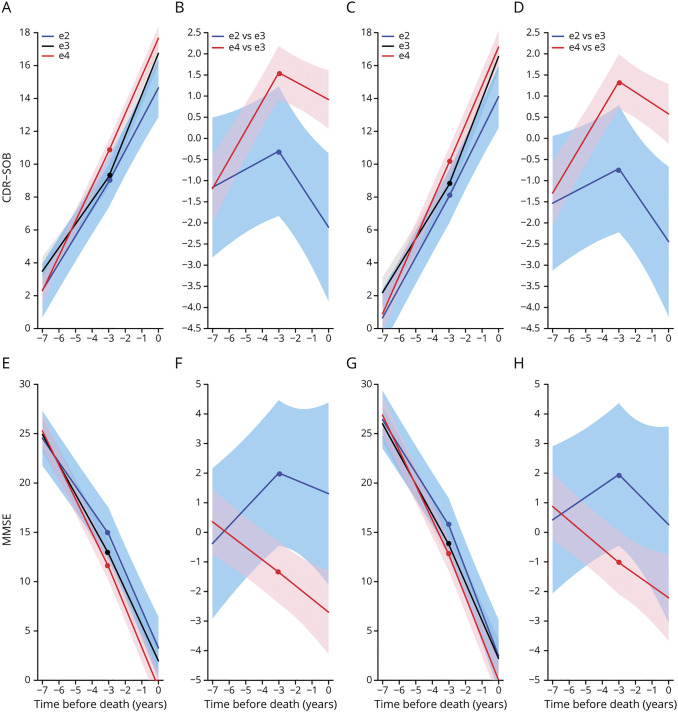
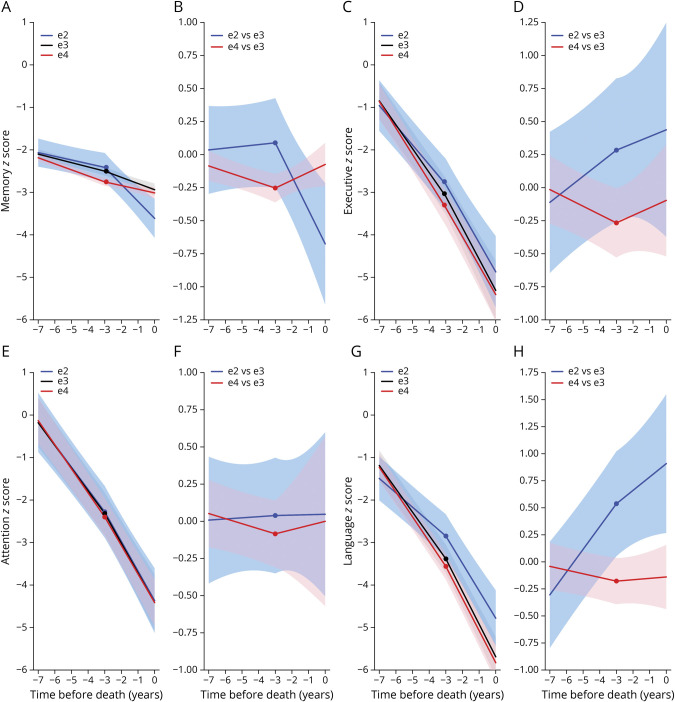
OBJECTIVE: genotype is a significant driver of heterogeneity in Alzheimer disease (AD) clinical progression, which could have important implications for clinical trial design and interpretation. METHODS: We applied novel reverse-time longitudinal models to analyze the trajectories of Clinical Dementia Rating Sum of Boxes (CDR-SOB) and Mini-Mental State Examination (MMSE) scores-2 common outcome measures in AD clinical trials-in 1,102 autopsy-proven AD cases (moderate/frequent neuritic plaques and Braak tangle stage III or greater) from the National Alzheimer's Coordinating Center Neuropathology database resembling participants with mild to moderate AD in therapeutic clinical trials. RESULTS: ε3/ε3 carriers (-2.43 vs -3.03 points per year). These findings remained largely unchanged after controlling for the effect of AD neuropathologic changes on the rate of cognitive decline and for the presence and severity of comorbid pathologies. CONCLUSION: genotype contributes to the heterogeneity in rate of clinical progression in AD.
Overview
The claims and statistics of this paper haven’t been checked yet.
Free: it reads the open-access text and checks the first 5 claims that cite a source we can check. Create a free account to check every claim.
Integrity signals
Registry
Cites
Statistics
Figures
Verification
Claims the paper makes
The claims and statistics of this paper haven’t been checked yet.
Free: it reads the open-access text and checks the first 5 claims that cite a source we can check. Create a free account to check every claim.
Claims other papers make about this one
Each is checked against this paper’s own text: does it say what the citing paper says it does?
The source backs part of the claim, not all of it — or backs it for a different population, condition or comparison.
In the citing paper
“A post-mortem study (N= 1109) found a 10% faster rate of cognitive decline yearly in APOE ε4 carriers (-3.45 vs -3.03 MMSE points per year) and a 20% lower rate of decline in e2 carriers (-2.43 vs -3.03 points per year) compared to APOE ε 3/ ε 3 carriers.(468)”
From Dementia prevention, intervention, and care: 2024 report of the Lancet standing Commission (2024) · cites this paper as [468]
Experimental — accuracy not yet measuredThe source backs part of the claim, not all of it — or backs it for a different population, condition or comparison.
In the citing paper
“However, after controlling for the presence and severity of AD neuropathology and comorbid pathologies, carrying the APOEε4 allele might still accelerate the rate of cognitive decline in the normal ageing-sporadic AD continuum, whereas carrying the APOEε2 allele might slow down cognitive decline47,77,80,81.”
From Multifaceted roles of APOE in Alzheimer disease (2024) · cites this paper as [80]
Experimental — accuracy not yet measured
Self-check
Percentages, sums and reported differences re-computed from the paper’s own numbers.
The self-check needs the paper’s full text.
Citations
Cites
Corder, E. H., Saunders, A. M., Strittmatter, W. J., Schmechel, D. E., Gaskell, P. C., Small, G. W., Roses, A. D., Haines, J. L., & Pericak-Vance, M. A. (1993) · Science · doi:10.1126/science.8346443 · Cited by 9,429
The antibody aducanumab reduces Aβ plaques in Alzheimer’s disease
Sevigny, J., Chiao, P., Bussière, T., Weinreb, P. H., Williams, L., Maier, M., Dunstan, R., Salloway, S., Chen, T., Ling, Y., et al. (2016) · Nature · doi:10.1038/nature19323 · Cited by 3,059
Montine, T. J., Phelps, C. H., Beach, T. G., Bigio, E. H., Cairns, N. J., Dickson, D. W., Duyckaerts, C., Frosch, M. P., Masliah, E., Mirra, S. S., et al. (2012) · Acta Neuropathologica · doi:10.1007/s00401-011-0910-3 · Cited by 2,894 · cited 1×
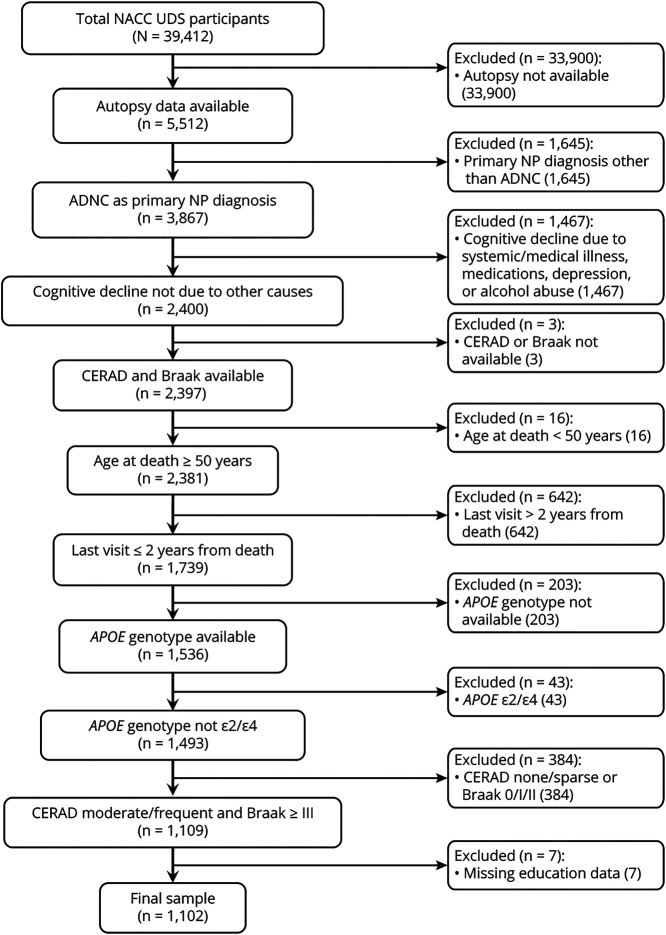
“Participants can donate their brain on death for research purposes, including a standardized neuropathologic evaluation.(27) The NACCNeuropathology database was interrogated for UDS visits conducted between September 2005 and November 2018.”
Self-citationTwo Phase 3 Trials of Bapineuzumab in Mild-to-Moderate Alzheimer's Disease
Salloway, S., Sperling, R., Fox, N. C., Blennow, K., Klunk, W., Raskind, M., Sabbagh, M., Honig, L. S., Porsteinsson, A. P., Ferris, S., et al. (2014) · New England Journal of Medicine · doi:10.1056/nejmoa1304839 · Cited by 1,960
Protective effect of apolipoprotein E type 2 allele for late onset Alzheimer disease
Corder, E. H., Saunders, A. M., Risch, N. J., Strittmatter, W. J., Schmechel, D. E., Gaskell, P. C., Rimmler, J. B., Locke, P. A., Conneally, P. M., Schmader, K. E., et al. (1994) · Nature Genetics · doi:10.1038/ng0694-180 · Cited by 1,920
APOE4 leads to blood–brain barrier dysfunction predicting cognitive decline
Montagne, A., Nation, D. A., Sagare, A. P., Barisano, G., Sweeney, M. D., Chakhoyan, A., Pachicano, M., Joe, E., Nelson, A. R., D’Orazio, L. M., et al. (2020) · Nature · doi:10.1038/s41586-020-2247-3 · Cited by 1,281
ApoE4 markedly exacerbates tau-mediated neurodegeneration in a mouse model of tauopathy
Initiative, A. D. N., Shi, Y., Yamada, K., Liddelow, S. A., Smith, S. T., Zhao, L., Luo, W., Tsai, R. M., Spina, S., Grinberg, L. T., et al. (2017) · Nature · doi:10.1038/nature24016 · Cited by 1,220
PET Imaging of Tau Deposition in the Aging Human Brain
Schöll, M., Lockhart, S. N., Schonhaut, D. R., O’Neil, J. P., Janabi, M., Ossenkoppele, R., Baker, S. L., Vogel, J. W., Faria, J., Schwimmer, H. D., et al. (2016) · Neuron · doi:10.1016/j.neuron.2016.01.028 · Cited by 1,214
Lin, Y.-T., Seo, J., Gao, F., Feldman, H. M., Wen, H.-L., Penney, J., Cam, H. P., Gjoneska, E., Raja, W. K., Cheng, J., et al. (2018) · Neuron · doi:10.1016/j.neuron.2018.05.008 · Cited by 1,125
Estimation of Extended Mixed Models Using Latent Classes and Latent Processes: The R Package lcmm
Proust-Lima, C., Philipps, V., & Liquet, B. (2017) · Journal of Statistical Software · doi:10.18637/jss.v078.i02 · Cited by 1,106
Cited by
Dementia prevention, intervention, and care: 2024 report of the Lancet standing Commission
Livingston, G., Huntley, J., Liu, K. Y., Costafreda, S. G., Selbæk, G., Alladi, S., Ames, D., Banerjee, S., Burns, A., Brayne, C., et al. (2024) · The Lancet · doi:10.1016/s0140-6736(24)01296-0 · Cited by 3,860
The amyloid hypothesis in Alzheimer disease: new insights from new therapeutics
Karran, E., & De Strooper, B. (2022) · Nature Reviews Drug Discovery · doi:10.1038/s41573-022-00391-w · Cited by 742
“Whether APOE4 genotype affects disease progression is still a matter of debate, but it will be important in future trials to address this aspect 69,70 .”
APOE Genotype and Alzheimer Disease Risk Across Age, Sex, and Population Ancestry
Belloy, M. E., Andrews, S. J., Le Guen, Y., Cuccaro, M., Farrer, L. A., Napolioni, V., & Greicius, M. D. (2023) · JAMA Neurology · doi:10.1001/jamaneurol.2023.3599 · Cited by 320
Multifaceted roles of APOE in Alzheimer disease
Jackson, R. J., Hyman, B. T., & Serrano-Pozo, A. (2024) · Nature Reviews Neurology · doi:10.1038/s41582-024-00988-2 · Cited by 193
Self-citationDuara, R., & Barker, W. (2022) · Neurotherapeutics · doi:10.1007/s13311-022-01185-z · Cited by 187
“[147] evaluated longitudinal neuropsychological data from patients with mild to moderate Alzheimer’s disease, with typical versus atypical cognitive profiles, in the US National Alzheimer’s Coordinating Center (NACC) database.”
BackgroundRecent update on the heterogeneity of the Alzheimer’s disease spectrum
Jellinger, K. A. (2021) · Journal of Neural Transmission · doi:10.1007/s00702-021-02449-2 · Cited by 172
Central nervous system cholesterol metabolism in health and disease
Ho, W. Y., Hartmann, H., & Ling, S. (2022) · IUBMB Life · doi:10.1002/iub.2662 · Cited by 62
Effect of APOE alleles on the glial transcriptome in normal aging and Alzheimer’s disease
Serrano-Pozo, A., Li, Z., Noori, A., Nguyen, H. N., Mezlini, A., Li, L., Hudry, E., Jackson, R. J., Hyman, B. T., & Das, S. (2021) · Nature Aging · doi:10.1038/s43587-021-00123-6 · Cited by 49
Self-citationDas, S., Li, Z., Wachter, A., Alla, S., Noori, A., Abdourahman, A., Tamm, J. A., Woodbury, M. E., Talanian, R. V., Biber, K., et al. (2024) · Alzheimer's & Dementia · doi:10.1002/alz.13387 · Cited by 46
Self-citationPolsinelli, A. J., Logan, P. E., Lane, K. A., Manchella, M. K., Nemes, S., Sanjay, A. B., Gao, S., & Apostolova, L. G. (2022) · Alzheimer s & Dementia · doi:10.1002/alz.12831 · Cited by 44
More than just risk for Alzheimer’s disease: APOE ε4's impact on the aging brain
Palmer, J. M., Huentelman, M. J., & Ryan, L. (2023) · Trends in Neurosciences · doi:10.1016/j.tins.2023.06.003 · Cited by 40
APOE genotype determines cell-type-specific pathological landscape of Alzheimer’s disease
Li, Z., Martens, Y. A., Ren, Y., Jin, Y., Sekiya, H., Doss, S. V., Kouri, N., Castanedes-Casey, M., Christensen, T. A., Miller Nevalainen, L. B., et al. (2025) · Neuron · doi:10.1016/j.neuron.2025.02.017 · Cited by 39
Samat, H. N. A., Razali, N. N., Mahadzir, H., Muhammad, T. S. T., Ling, K., Mansor, N. I., & Abidin, S. Z. (2025) · International Journal of Molecular Sciences · doi:10.3390/ijms26188905 · Cited by 39
Apolipoprotein E Genetic Testing in a New Age of Alzheimer Disease Clinical Practice
Ritchie, M., Sajjadi, S. A., & Grill, J. D. (2024) · Neurology Clinical Practice · doi:10.1212/cpj.0000000000200230 · Cited by 38
Clinical and neurochemical correlates of the APOE genotype in early-stage Parkinson’s disease
Zenuni, H., Bovenzi, R., Bissacco, J., Grillo, P., Simonetta, C., Mascioli, D., Pieri, M., Bernardini, S., Sancesario, G. M., Stefani, A., et al. (2023) · Neurobiology of Aging · doi:10.1016/j.neurobiolaging.2023.07.011 · Cited by 33
DNA methylation in genes associated with the evolution of ageing and disease: A critical review
Auley, M. T. M. (2021) · Ageing Research Reviews · doi:10.1016/j.arr.2021.101488 · Cited by 30
Naseri, A., Baghernezhad, K., Sahebari, S. S., Alhoseini, S. A., Gholipour-khalili, E., Zafarani, F., & Talebi, M. (2022) · Multiple Sclerosis and Related Disorders · doi:10.1016/j.msard.2022.104011 · Cited by 29
What have we learned from past failures of investigational drugs for Alzheimer’s disease?
Imbimbo, B. P., & Watling, M. I. L. (2021) · Expert Opinion on Investigational Drugs · doi:10.1080/13543784.2021.2017881 · Cited by 26
APOE ε4 influences medial temporal atrophy and tau deposition in atypical Alzheimer's disease
Singh, N. A., Tosakulwong, N., Graff‐Radford, J., Machulda, M. M., Pham, N. T. T., Sintini, I., Weigand, S. D., Schwarz, C. G., Senjem, M. L., Carrasquillo, M. M., et al. (2022) · Alzheimer s & Dementia · doi:10.1002/alz.12711 · Cited by 24
APOE genotype and sex modulate Alzheimer’s disease pathology in aged EFAD transgenic mice
Balu, D., Valencia‐Olvera, A. C., Islam, Z., Mielczarek, C., Hansen, A. L., Ramos, T. M. P., York, J. M., LaDu, M. J., & Tai, L. M. (2023) · Frontiers in Aging Neuroscience · doi:10.3389/fnagi.2023.1279343 · Cited by 23
Proteomic signatures of Alzheimer's disease and Lewy body dementias: A comparative analysis
Canal-García, A., Branca, R. M., Francis, P. T., Ballard, C. G., Winblad, B. G., Lehtiö, J., Nilsson, P., Aarsland, D., Pereira, J. B., & Bereczki, E. (2024) · Alzheimer s & Dementia · doi:10.1002/alz.14375 · Cited by 23
Qian, J., Zhang, Y., Betensky, R. A., Hyman, B. T., & Serrano‐Pozo, A. (2023) · Neurology Genetics · doi:10.1212/nxg.0000000000200055 · Cited by 23
Self-citationSerrano‐Pozo, A., Escott‐Price, V., Grinberg, L. T., Pascoal, T. A., Suárez‐Calvet, M., Dubois, B., & Sperling, R. A. (2026) · The Lancet · doi:10.1016/s0140-6736(26)00198-4 · Cited by 23
Self-citationGuo, Q., Wang, C., Xue, X., Hu, B., & Bao, H. (2021) · BioMed Research International · doi:10.1155/2021/9311855 · Cited by 21
Goikolea, J., Gereñu, G., Daniilidou, M., Mangialasche, F., Mecocci, P., Ngandu, T., Rinne, J. O., Solomon, A., Kivipelto, M., Cedazo-Mínguez, Á., et al. (2022) · Alzheimer s Research & Therapy · doi:10.1186/s13195-022-00979-9 · Cited by 21
Pecher, H., Storch, M., Beyer, F., Witte, A. V., Baasner, C.-F., Schönknecht, P. O. D., & Weise, C. M. (2024) · NeuroImage Clinical · doi:10.1016/j.nicl.2024.103687 · Cited by 19
Wang, Y., Hao, L., Wang, T., Liu, W., Wang, L., Ju, M., Feng, W., & Xiao, R. (2022) · International Journal of Molecular Sciences · doi:10.3390/ijms231911639 · Cited by 19
Piccoli, T., Blandino, V., Maniscalco, L., Matranga, D., Graziano, F., Guajana, F., Agnello, L., Sasso, B. L., Gambino, C. M., Giglio, R. V., et al. (2022) · International Journal of Molecular Sciences · doi:10.3390/ijms231810831 · Cited by 17
Xue, Y., & Xie, X. (2023) · Biomedicines · doi:10.3390/biomedicines11112935 · Cited by 17
Alzheimer’s drugs: Does reducing amyloid work?
Thambisetty, M., Howard, R. J., Glymour, M. M., & Schneider, L. S. (2021) · Science · doi:10.1126/science.abl8366 · Cited by 16
Ren, L., Hu, F., Walsh, S., Jin, X., Hu, Y., Li, S., Jiang, Y., Yu, M., Wu, Y., Zang, G. Y., et al. (2025) · Alzheimer s & Dementia · doi:10.1002/alz.70090 · Cited by 13
He, M., Liu, Z., Lian, T., Guo, P. F., Zhang, W., Huang, Y. M., Zhang, Y., Liu, G., Zhang, W., Li, J., et al. (2023) · CNS Neuroscience & Therapeutics · doi:10.1111/cns.14560 · Cited by 13
Biofilm-Associated Amyloid Proteins Linked with the Progression of Neurodegenerative Diseases
Singh, A. A., Khan, F., & Song, M. (2025) · International Journal of Molecular Sciences · doi:10.3390/ijms26062695 · Cited by 12
Cognitive trajectories diverge by genetic risk in a preclinical longitudinal cohort
Vasiljevic, E., Koscik, R. L., Jonaitis, E. M., Betthauser, T. J., Johnson, S. C., & Engelman, C. D. (2023) · Alzheimer s & Dementia · doi:10.1002/alz.12920 · Cited by 12
Tau propagation is dependent on the genetic background of mouse strains
Dujardin, S., Fernandes, A., Bannon, R., Commins, C., De Los Santos, M., Kamath, T. V., Hayashi, M., & Hyman, B. T. (2022) · Brain Communications · doi:10.1093/braincomms/fcac048 · Cited by 11
“The most common genetic risk factor for nonautosomal dominant Alzheimer’s disease, the APOE e4 gene, has been associated with more severe tau-related neurodegeneration(22) and clinical rates of progression.(23) BIN1, which is one of the most significant genetic risk factors for Alzheimer’s disease, has also been clear…”
BackgroundSelf-citationJiang, J., Hong, Y., Li, W., Wang, A., Jiang, S., Jiang, T., Wang, Y., Wang, L., Yang, S., Ren, Q., et al. (2023) · Journal of Alzheimer s Disease · doi:10.3233/jad-230577 · Cited by 11
Wefel, J. S., Deshmukh, S., Brown, P. D., Grosshans, D. R., Sulman, E. P., Cerhan, J. H., Mehta, M. P., Khuntia, D., Shi, W., Mishra, M. V., et al. (2023) · International Journal of Radiation Oncology*Biology*Physics · doi:10.1016/j.ijrobp.2023.12.004 · Cited by 10
Sex Differences in Metabolite–Immune Circuits of Neuroinflammation
Saminathan, P., Corey, M., Gibbons, A., Rayadurgam, M., Reddy, N., Ramesh, P., & Sharma, S. (2026) · Immunological Reviews · doi:10.1111/imr.70114 · Cited by 11
Nsor, N., Bourassa, K. J., Barnes, L. L., & Brown, C. K. (2024) · The Journals of Gerontology Series B · doi:10.1093/geronb/gbae172 · Cited by 8
Nakamura, T., Kawarabayashi, T., Ueda, T., Shimomura, S., Hoshino, M., Itoh, K., Ihara, K., Nakaji, S., Takatama, M., Ikeda, Y., et al. (2023) · Journal of Alzheimer s Disease · doi:10.3233/jad-220996 · Cited by 9
Borkowski, K., Liang, N., Zhao, N., Arnold, M., Huynh, K., Karu, N., Mahmoudiandehkordi, S., Kueider-Paisley, A., Kanekiyo, T., Bu, G., et al. (2025) · Molecular Neurodegeneration · doi:10.1186/s13024-025-00888-z · Cited by 7
APOE ε4 and Accelerated Cognitive Decline Among Cognitively Healthy Middle-Aged and Older Adults
Chung, Y.-C. E., Chung, R.-H., Hsu, C.-C., Liu, Y.-L., Lai, R.-H., Hung, W.-J., Wu, R., Jiang, Y., Chuang, S., Tsai, S. F., et al. (2026) · JAMA Network Open · doi:10.1001/jamanetworkopen.2026.0853 · Cited by 8
Hayes, C. A., Thorpe, R. J., & Odden, M. C. (2025) · Acta Neuropathologica Communications · doi:10.1186/s40478-025-02012-0 · Cited by 7
Rate of tau propagation is a heritable disease trait in genetically diverse mouse strains
Welikovitch, L. A., Dujardin, S., Dunn, A. R., Fernandes, A. R., Khasnavis, A., Chibnik, L. B., Kaczorowski, C. C., & Hyman, B. T. (2023) · iScience · doi:10.1016/j.isci.2023.105983 · Cited by 7
Self-citationRai, P., Sundarakumar, J. S., Basavaraju, N., Kommaddi, R. P., & Issac, T. G. (2024) · Journal of Neurosciences in Rural Practice · doi:10.25259/jnrp_272_2023 · Cited by 6
Chen, X.-Y., Lin, K., Ye, Z., Qiu, L., Qiu, Y., Yuan, R., Yu, X., Huang, C., Bi, C., Lin, W. C., et al. (2024) · European Journal of Neurology · doi:10.1111/ene.70017 · Cited by 6
Nguyen, H. D. (2025) · Acta Neurologica Belgica · doi:10.1007/s13760-025-02897-7 · Cited by 6
Eshghi, M., Rong, P., Dadgostar, M., Shin, H., Richburg, B. D., Barnett, N. V., Salat, D. H., Arnold, S. E., & Green, J. R. (2026) · Frontiers in Neurology · doi:10.3389/fneur.2026.1740391 · Cited by 5
Brown, C., Cousins, K. A. Q., Korecka, M., McGrew, E., Chen‐Plotkin, A. S., Detre, J. A., McMillan, C. T., Lee, E. B., Das, S. R., Mechanic-Hamilton, D. J., et al. (2026) · Annals of Neurology · doi:10.1002/ana.78194 · Cited by 5
Sharma, P., Subhan, A., Saklania, S., & Thareja, S. (2026) · Phytochemistry Reviews · doi:10.1007/s11101-026-10251-9 · Cited by 4
Towards multimodal longitudinal analysis for predicting cognitive decline
Ashish, R. M., & Turner, J. A. (2026) · Journal of Emerging Investigators · doi:10.59720/24-371 · Cited by 3
Dadgostar, M., Hanford, L. C., Green, J. R., Richburg, B. D., Cannon, A. T., Barnett, N. V., Salat, D. H., Arnold, S. E., & Eshghi, M. (2025) · Frontiers in Neurology · doi:10.3389/fneur.2025.1649729 · Cited by 2
Cui, C., Yu, T., Zhai, Y., Zhang, S., & Su, Z. (2024) · Medicine · doi:10.1097/md.0000000000039587 · Cited by 2
He, M., Lian, T., Guo, P. F., Zhang, W., Zhang, Y., Huang, Y. M., Liu, G., Guan, H., Li, J., Luo, D., et al. (2023) · CNS Neuroscience & Therapeutics · doi:10.1111/cns.14440 · Cited by 2
Wang, M., Wu, H., Bonner‐Jackson, A., Chen, Y., Tang, W., Feng, H., Zhang, L., Chen, C., Leverenz, J. B., & Pillai, J. A. (2026) · Neurology Open Access · doi:10.1212/wn9.0000000000000055 · Cited by 1
Oncology drug repurposing as a blueprint for Alzheimer's therapy
Das, V., & Hajdúch, M. (2026) · Alzheimer s & Dementia Translational Research & Clinical Interventions · doi:10.1002/trc2.70231 · Cited by 2
Cell-type-specific APOE4 cascade across the Alzheimer’s disease continuum
Shostak, D. M., Liang, Z., & Huang, Y. (2026) · Neuron · doi:10.1016/j.neuron.2026.04.024 · Cited by 1
Sequence Analysis of APOE Gene Across Mammalian Species in Thailand
Bunyaluk, D. (2021) · Food Agricultural Sciences and Technology (FAST) · doi:10.14456/stej.2021.14 · Cited by 1
Mehrabadi, S., & Barati, S. (2025) · Current Alzheimer Research · doi:10.2174/0115672050393583250718145103 · Cited by 1
Trigiani, L. J., Chernavsky, N. E., Kim, R., Hong, N., Hawkins, R. D., Le, E., Bahninameh, Z., Yamaguchi, K., Bernard, J., Huang, A., et al. (2025) · Research Square · doi:10.21203/rs.3.rs-7643285/v1 · Cited by 1
Examining the Association Between an Endolysosomal Polygenic Risk Score and Alzheimer's Disease
Strohbehn, S. D. (2023) · ResearchWorks at the University of Washington (University of Washington) · Cited by 1
Malarte, M.-L. (2023) · Open Archive (Karolinska Institutet) · Cited by 1
Novel perspectives from existing data on early Alzheimer’s disease pathology and dementia care use
Janssen, O. (2022) · Research Publications (Maastricht University) · doi:10.26481/dis.20220617oj
Avaliação do efeito protetor do genótipo da apolipoproteína E2 na doença de Alzheimer
Costa, S. D. S. L., da Cruz, A. C. C., Santo, D. F., da Cruz, J. P. S., de Azevedo, J. P. C. S., Resplandes, R. D., Verçosa, B. L. A., Nunes, B. D. A., Neto, P. A. D. M., & Farah, E. I. (2024) · Contribuciones a las Ciencias Sociales · doi:10.55905/revconv.17n.7-187
Double Soft-Thresholded Model for Multi-Group Scalar on Vector-Valued Image Regression
Roy, A., & Lan, Z. (2024) · Bayesian Analysis · doi:10.1214/24-ba1483
Villarreal, A. E., Rangel, G. A., Tratner, A. E., Oviedo, D. C., Carreira, M. B., Bryant, S. O., Castillo, E. C. S., Rodríguez, C. E., & Britton, G. B. (2025) · Dementia and Geriatric Cognitive Disorders · doi:10.1159/000546741
Estimation of events in cohort studies based on probability of cognitive impairment
Park, J., Abner, E. L., Wang, P., Liu, C., Jicha, G. A., Harp, J. P., Schmitt, F. A., & Kryscio, R. J. (2025) · Journal of Alzheimer s Disease · doi:10.1177/13872877251351337
Jagait, A. (2023) · HARVEST (University of Saskatchewan)
Imaging Genetics Analysis of Alzheimer's DiseasePreprint
Basu, R., & Roy, A. (2025) · arXiv (Cornell University) · doi:10.48550/arxiv.2510.22723
Yang, H.-C., Ni, Y.-C., Chien, C., Huang, L., & Yang, Y. (2025) · Research Square · doi:10.21203/rs.3.rs-8420626/v1
Lee, H.-J., Im, H., Yoon, B., Shim, Y., Won, D., & Lee, J. H. (2026) · Journal of Alzheimer s Disease Reports · doi:10.1177/25424823261419068
A critical appraisal of the link between apolipoprotein E and Tau
Das, S., Hyman, B. T., & Serrano‐Pozo, A. (2026) · Current Opinion in Neurology · doi:10.1097/wco.0000000000001459
Self-citationAPOE ε4 and Cognition Among Middle-Aged and Older East Asian Adults
Qian, J., & Serrano‐Pozo, A. (2026) · JAMA Network Open · doi:10.1001/jamanetworkopen.2026.0860
Self-citationDissecting Alzheimer’s disease heterogeneity by cross-trait polygenic predictionPreprint
Li, W. F., Mohammed, N., Bennett, D. A. A., Kellis, M., & Tanigawa, Y. (2026) · bioRxiv (Cold Spring Harbor Laboratory) · doi:10.64898/2026.05.15.725551
Calm, B., Hinojosa-Calleja, A., García‐Gutiérrez, F., Blázquez-Folch, J., Alegret, M., Fernández, M. V., de Rojas, I., García‐González, P., Olivé, C., Valenzuela, A., et al. (2026) · The Journal of Prevention of Alzheimer s Disease · doi:10.1016/j.tjpad.2026.100658
Perezcano, C., Pérez-Coria, M., & Ricardi-Mendoza, Á. (2026) · Life · doi:10.3390/life16091410
Wang, X., Liu, X., Wang, Z., & Jia, C. (2026) · Frontiers in Aging Neuroscience · doi:10.3389/fnagi.2026.1872617
Heidari, A., & Aghajani, M. (2026) · medRxiv · doi:10.64898/2026.09.27.26364131
Toopchiani, S. T., Sindi, S., Janani, L., & Robinson, O. (2026) · Journal of Aging Research · doi:10.1155/jare/1953393
Balu, D., Valencia-Olvera, A. C., Islam, Z., Mielczarek, C., Hansen, A., Ramos, T. M. P., York, J., LaDu, M. J., & Tai, L. M. (2023) · doi:10.3389/fnagi.2023.1279343.s002
Metadata
- Authors
- Qian, J., Betensky, R. A., Hyman, B. T., & Serrano-Pozo, A.
- Affiliations
- Harvard University (US)
- From the Department of Biostatistics and Epidemiology (J.Q.), University of Massachusetts, Amherst; New York University College of Global Public Health (R.A.B.), New York City; Department of Neurology (B.T.H., A.S.-P.), Massachusetts General Hospital, Boston; Massachusetts Alzheimer's Disease Research Center (B.T.H., A.S.-P.), Charlestown; and Harvard Medical School (B.T.H., A.S.-P.), Boston, MA.
- Venue
- Neurology
- Published
- 2021-05-11
- Volume
- 96
- Issue
- 19
- Pages
- e2414-e2428
- ISSN
- 0028-3878 (ISSN-L)
- 1526-632X
- PMC
- PMC8166439
- OpenAlex
- W3136651487
- Semantic Scholar
- 17a28bbc83cffb55d132bb7faac8c4a4f2b6d3d9
- Cited by
- 71
- References
- 53
- Citations by year
- 2026: 16 · 2025: 14 · 2024: 10 · 2023: 15 · 2022: 10 · 2021: 6
- FWCI
- 7.35
- Type
- journal article
- Language
- en
- Open access
- hybrid
- doi.org
- Licence
- cc-by-nc-nd
- Locations
- Neurology (publishedVersion, cc-by-nc-nd)
- PubMed Central (publishedVersion, cc-by-nc-nd)
- PubMed (publishedVersion)
- Funders
- Alzheimer's Association (U01 AG016976, P50 AG025688, AACF-17-524184, P30 AG062421, P50 AG008702, P30 AG010133, P50 AG005146)
- National Institutes of Health (5p30ag062428-02, AG062421, AG016976, P30 AG062428–01, AG019610, AG025688, R25-NS065743, AG013846, AG047266, AG008702)
- National Institute on Aging (AG010133, AG 016976, P30AG053760, P30AG010129, P30AG010133, P30AG066512, AG062421, P30-AG062428, P30AG049638, P30AG028383, P30AG012300, AG 025688, P50AG005133, U01AG016976, P50AG005138, AG019610, P30AG010124, AG047266, P50AG016573, P50AG047366, P30AG008017, P30 AG062428‐01, P30AG010161, P30AG008051, R21AG053695, P50AG008702, K08AG064039, P30AG035982, AG013846, P50AG005681, P50AG005142, P50AG047270, P30AG019610, P50AG005146, P30AG013846, P50AG005136, P30AG013854, P50AG025688, P50AG047266, P30AG062429, P30AG066444, P30AG062422, P30AG062421, P50AG023501)
- National Institute of Neurological Disorders and Stroke (R01NS094610, R25NS065743)
- Topics
- Health Sciences › Medicine › Psychiatry and Mental health › Dementia and Cognitive Impairment Research
- Life Sciences › Neuroscience › Cellular and Molecular Neuroscience › Alzheimer's disease research and treatments
- Health Sciences › Medicine › Clinical Neurology › Amyotrophic Lateral Sclerosis Research
- Keywords
- Alzheimer's disease, APOE genotype, APOE ε4, Mini-Mental State Examination, neuropathology, comorbid pathology, clinical trial design
- MeSH terms
- Aged, Aged, 80 and over, Alzheimer Disease, Female, Genotype, Humans, Longitudinal Studies, Male, Cohort Studies, Disease Progression, Apolipoprotein E3, Apolipoprotein E4, Apolipoprotein E2, Cognitive Dysfunction
About these checks
Registry, retraction, Cites and statistics results are computed, not judged, with one exception: a printed reference that no index lists is read once by a model before it counts as a citation error. Claims are extracted by a model and kept only when their quote appears verbatim in the text; each cited source is then checked, with a model’s help, for whether it says what the claim relies on. Those verdicts can be wrong — read the claim’s quote and the cited source before relying on one.
Statistics and arithmetic are recomputed, not judged.
Confidence bands are shown only for fields calibrated on our annotated test set. None is calibrated yet, so no band is shown.
What counts as a claim ›How we measure confidence ›How we check this ›
Are you an author, or do you see a problem with this page? Request a review
Data sources
Bibliographic data: Semantic Scholar, OpenAlex, Crossref.
Contains information from the Semantic Scholar Academic Graph Datasets, made available under the ODC Attribution License (ODC-BY 1.0).
Semantic Scholar’s data is described in: Kinney, R., et al. (2023). The Semantic Scholar Open Data Platform. arXiv:2301.10140.
