

Acute Ketogenic Diet and Ketone Ester Supplementation Impairs Race Walk Performance
Open accessThe DOI matches its Crossref record; 41 of the 41 references it cites were found in a registry or an index.
Abstract
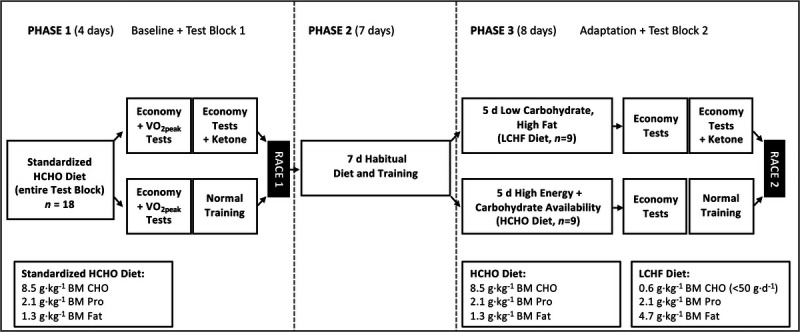
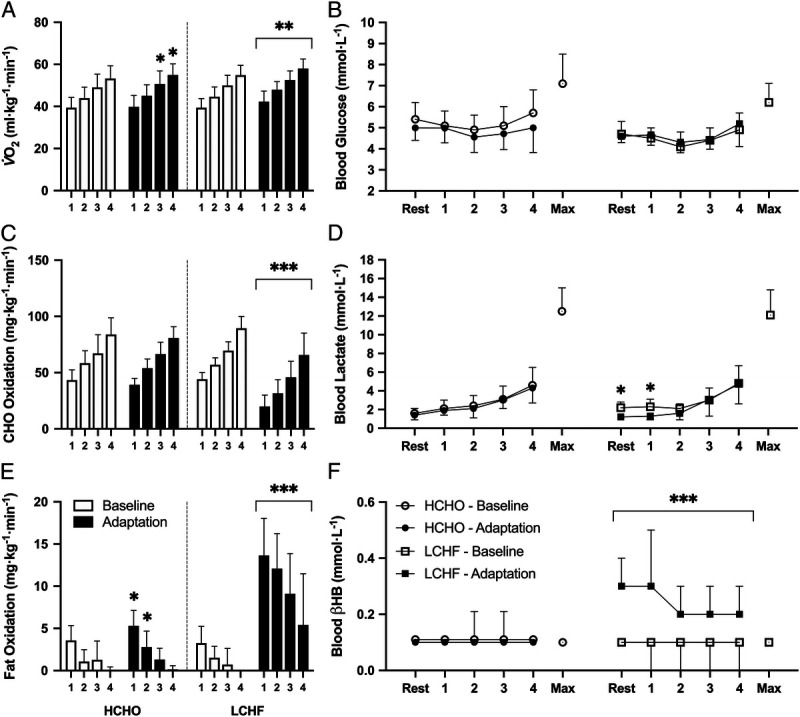
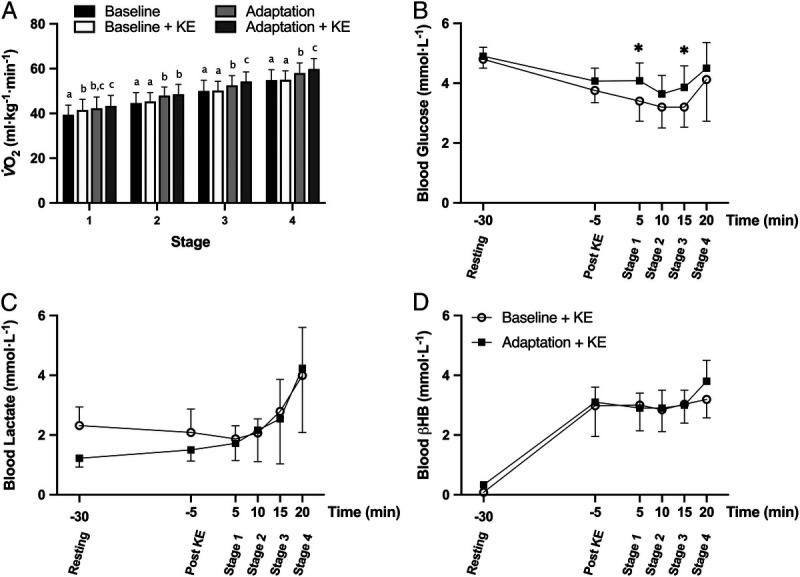
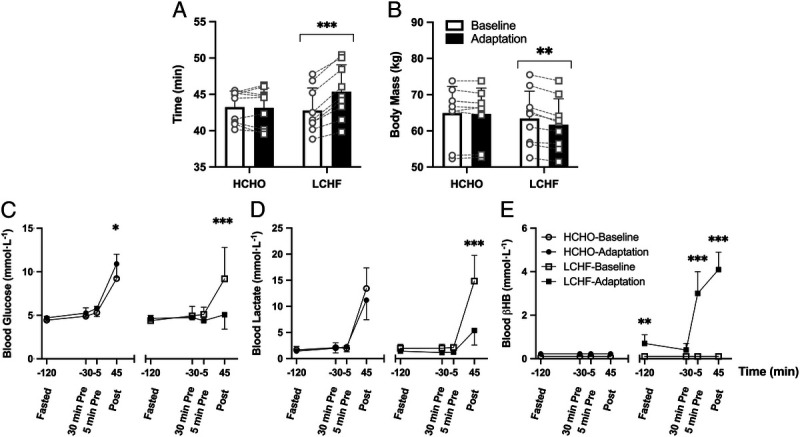
The consumption of a ketogenic low-carbohydrate (CHO), high-fat (LCHF) diet increases skeletal muscle fat utilization but impairs exercise economy. Whether the concomitant increase in circulating endogenous ketone bodies (KB) alters the capacity to metabolize exogenous ketone supplements such as the popular ketone monoester is unknown. Purpose: This study aimed to determine if LCHF and ketone ester (KE) supplementation can synergistically alter exercise metabolism and improve performance. Methods: Elite race walkers ( n = 18, 15 males and 3 females; V˙O 2peak , 62 ± 6 mL·min −1 ·kg −1 ) undertook a four-stage exercise economy test and real-life 10,000-m race before and after a 5-d isoenergetic high-CHO (HCHO, ~60%–65% fat; CHO, 20% fat; n = 9) or LCHF (75%–80% fat, <50 g·d −1 CHO, n = 9) diet. The LCHF group performed additional economy tests before and after diet after supplementation with 573 mg·kg −1 body mass KE (HVMN; HVMN Inc., San Francisco, CA), which was also consumed for race 2. Results: The oxygen cost of exercise (relative V˙O 2 , mL·min −1 ·kg −1 ) increased across all four stages after LCHF ( P < 0.005). This occurred in association with increased fat oxidation rates, with a reciprocal decrease in CHO oxidation ( P < 0.001). Substrate utilization in the HCHO group remained unaltered. The consumption of KE before the LCHF diet increased circulating KB ( P < 0.05), peaking at 3.2 ± 0.6 mM, but did not alter V˙O 2 or RER. LCHF diet elevated resting circulating KB (0.3 ± 0.1 vs 0.1 ± 0.1 mM), but concentrations after supplementation did not differ from the earlier ketone trial. Critically, race performance was impaired by ~6% ( P < 0.0001) relative to baseline in the LCHF group but was unaltered in HCHO. Conclusion: Despite elevating endogenous KB production, an LCHF diet does not augment the metabolic responses to KE supplementation and negatively affects race performance.
Overview
The claims and statistics of this paper haven’t been checked yet.
Free: it reads the open-access text and checks the first 5 claims that cite a source we can check. Create a free account to check every claim.
Integrity signals
Registry
Cites
Statistics
Figures
Verification
Claims the paper makes
The claims and statistics of this paper haven’t been checked yet.
Free: it reads the open-access text and checks the first 5 claims that cite a source we can check. Create a free account to check every claim.
Claims other papers make about this one
Each is checked against this paper’s own text: does it say what the citing paper says it does?
The cited source says what the claim attributes to it.
In the citing paper
“consistent findings from studies from our group [24,25,26,27] and others [28] that the substantial increase in muscle fat oxidation achieved by adaptation to a ketogenic low-carbohydrate (CHO), high-fat diet is associated with an increase in the oxygen cost of exercise at speeds which are relevant to the race performance of elite endurance athletes [29].”
From Neither beetroot juice supplementation nor increased carbohydrate oxidation enhance economy of prolonged exercise in elite race walkers (2021) · cites this paper as [27]
The cited source says what the claim attributes to it.
In the citing paper
“However, recent evidence questions the potential ergogenic benefits of low carbohydrate ketogenic diets and exogenous ketone supplementation on endurance-type exercise [193,195]”
From Regulation of Energy Substrate Metabolism in Endurance Exercise (2021) · cites this paper as [195]
Self-check
Percentages, sums and reported differences re-computed from the paper’s own numbers.
The self-check needs the paper’s full text.
Citations
Cites
Calculation of substrate oxidation rates in vivo from gaseous exchange.
Frayn, K. N. (1983) · Journal of Applied Physiology · doi:10.1152/jappl.1983.55.2.628 · Cited by 2,365 · cited 1×
“However, we acknowledge that there may be a small (but systematic) error in the use of conventional equations to calculate fat and CHO oxidation from gas exchange information (25).”
BackgroundThe effects of increasing exercise intensity on muscle fuel utilisation in humans
van Loon, L. J. C., Greenhaff, P. L., Constantin‐Teodosiu, D., Saris, W. H. M., & Wagenmakers, A. J. M. (2001) · The Journal of Physiology · doi:10.1111/j.1469-7793.2001.00295.x · Cited by 897 · cited 1×
“Most Olympic middle- and long-distance events are performed at intensities greater than 75% of V̇O2max (2,3) and are therefore heavily reliant on CHOmetabolism asmaximal rates of lipid oxidation occur at ~60%–65% V̇O2max (4) and decline as exercise intensity increases.”
BackgroundNutritional Ketosis Alters Fuel Preference and Thereby Endurance Performance in Athletes
Cox, P. J., Kirk, T., Ashmore, T., Willerton, K., Evans, R., Smith, A., Murray, A. J., Stubbs, B., West, J., McLure, S. W., et al. (2016) · Cell Metabolism · doi:10.1016/j.cmet.2016.07.010 · Cited by 530 · cited 7×
“Supplementation with 573mg·kg−1 of this KE increased circulating ketone concentrations to ~3 mmol·L−1 after 10 min, peaking at ~6 mmol·L−1 after 20 min (16).”
BackgroundMethodInfluentialInsulin, ketone bodies, and mitochondrial energy transduction
Sato, K., Kashiwaya, Y., Keon, C. A., Tsuchiya, N., King, M. T., Radda, G. K., Chance, B., Clarke, K., & Veech, R. L. (1995) · The FASEB Journal · doi:10.1096/fasebj.9.8.7768357 · Cited by 454 · cited 1×
“Ketone supplementation has been suggested to improve performance because of the proposed thermodynamic advantages of ketone oxidation (26,33,34).”
BackgroundBurke, L. M., Ross, M. L., Garvican‐Lewis, L. A., Welvaert, M., Heikura, I. A., Forbes, S. G., Mirtschin, J. G., Cato, L. E., Strobel, N., Sharma, A. P., et al. (2017) · The Journal of Physiology · doi:10.1113/jp273230 · Cited by 407 · cited 9×
“5 wk) adaptation to LCHF alone (8,12), suggesting that acute KE supplementation does not have an individual or additive effect on exercise economy or performance.”
BackgroundMethodResultSelf-citationOn the Metabolism of Exogenous Ketones in Humans
Stubbs, B. J., Cox, P. J., Evans, R. D., Santer, P., Miller, J. J., Faull, O. K., Magor-Elliott, S., Hiyama, S., Stirling, M., & Clarke, K. (2017) · Frontiers in Physiology · doi:10.3389/fphys.2017.00848 · Cited by 392
Clarke, K., Tchabanenko, K., Pawlosky, R., Carter, E., Todd King, M., Musa-Veloso, K., Ho, M., Roberts, A., Robertson, J., VanItallie, T. B., et al. (2012) · Regulatory Toxicology and Pharmacology · doi:10.1016/j.yrtph.2012.04.008 · Cited by 332 · cited 1×
“Recently, Clarke and colleagues (15) developed a method for inducing acute nutritional ketosis in the absence of CHO or energy restriction, through the consumption of the synthetic ketone ester ethyl (R)-3-hydroxybutyrate and (R)-1,3-butanediol.”
BackgroundMetabolic characteristics of keto-adapted ultra-endurance runners
Volek, J. S., Freidenreich, D. J., Saenz, C., Kunces, L. J., Creighton, B. C., Bartley, J. M., Davitt, P. M., Munoz, C. X., Anderson, J. M., Maresh, C. M., et al. (2016) · Metabolism · doi:10.1016/j.metabol.2015.10.028 · Cited by 311
Rethinking fat as a fuel for endurance exercise
Volek, J. S., Noakes, T., & Phinney, S. D. (2015) · European Journal of Sport Science · doi:10.1080/17461391.2014.959564 · Cited by 261 · cited 2×
“There is now a growing body of evidence demonstrating that LCHF diets impair the performance of endurance exercise at high relative and absolute intensities (13), with at least part of the mechanism being an increase in the oxygen cost of exercise at the same absolute speed (9,12,13,20).”
BackgroundPhinney, S. D., Bistrian, B. R., Wolfe, R. R., & Blackburn, G. L. (1983) · Metabolism · doi:10.1016/0026-0495(83)90105-1 · Cited by 172
Cited by
Paoli, A., Cenci, L., Pompei, P., Sahin, N., Bianco, A., Neri, M., Caprio, M., & Moro, T. (2021) · Nutrients · doi:10.3390/nu13020374 · Cited by 133
Smith, E. S., McKay, A. K. A., Ackerman, K. E., Harris, R., Elliott-Sale, K. J., Stellingwerff, T., & Burke, L. M. (2022) · International Journal of Sport Nutrition and Exercise Metabolism · doi:10.1123/ijsnem.2021-0257 · Cited by 107
Self-citationMetabolic Messengers: ketone bodies
Nelson, A. B., Queathem, E. D., Puchalska, P., & Crawford, P. A. (2023) · Nature Metabolism · doi:10.1038/s42255-023-00935-3 · Cited by 125
“Furthermore, supportive evidence for the unique advantage of exogenously administered ketone esters to augment athletic performance has also been inconsistent in studies of burst exercise 68–71 .”
Regulation of Energy Substrate Metabolism in Endurance Exercise
Alghannam, A. F., Ghaith, M. M., & Alhussain, M. H. (2021) · International Journal of Environmental Research and Public Health · doi:10.3390/ijerph18094963 · Cited by 104
Exogenous Ketone Supplements in Athletic Contexts: Past, Present, and Future
Evans, M., McClure, T. S., Koutnik, A. P., & Egan, B. (2022) · Sports Medicine · doi:10.1007/s40279-022-01756-2 · Cited by 93
“However, there are also several studies where greater incidences of the GI symptoms are not observed [42, 54, 59, 62, 70, 78, 81].”
BackgroundEffects of Exogenous Ketone Supplementation on Blood Glucose: A Systematic Review and Meta-analysis
Falkenhain, K., Daraei, A., Forbes, S. C., & Little, J. P. (2022) · Advances in Nutrition · doi:10.1093/advances/nmac036 · Cited by 90
MCKAY, A. K. A., PEELING, P., PYNE, D. B., TEE, N., WHITFIELD, J., SHARMA, A. P., HEIKURA, I. A., & BURKE, L. M. (2022) · Medicine & Science in Sports & Exercise · doi:10.1249/mss.0000000000002819 · Cited by 80
“Therefore, in the current study we used a 6-d intervention to induce the desired physiological training Adaptations relevant to the LCHF diet (shifts in fuel utilization and ketone concentrations (22,23)) to assess the impact of the diet on iron regulation without confounding changes in serum ferritin manifesting.”
MethodSelf-citationPopular Dietary Trends’ Impact on Athletic Performance: A Critical Analysis Review
Kaufman, M., Nguyen, C., Shetty, M., Oppezzo, M., Barrack, M., & Fredericson, M. (2023) · Nutrients · doi:10.3390/nu15163511 · Cited by 51
“The subcellular physiologic changes that occur with severe carbohydrate restriction manifest not only through deleterious effects in muscle strength, but also increase the general oxygen cost of exercise, which can negatively impact athletic performance in the acute phase as well as longitudinally [54,55].”
BackgroundNutritional approaches to counter performance constraints in high‐level sports competition
Burke, L. M. (2021) · Experimental Physiology · doi:10.1113/ep088188 · Cited by 51
“…ester supplement in elite race walkers who had undertaken short-term adaptation to an LCHF diet failed to alter gross measurements of substrate utilization during exercise or attenuate the decline in high-intensity endurance race performance associated with the LCHF diet (Whitfield et al., 2021).”
BackgroundSelf-citationIron Metabolism: Interactions with Energy and Carbohydrate Availability
McKay, A. K. A., Pyne, D. B., Burke, L. M., & Peeling, P. (2020) · Nutrients · doi:10.3390/nu12123692 · Cited by 51
Self-citationMcKay, A. K. A., MINAHAN, C. L., Harris, R., McCormick, R., Skinner, J., Ackerman, K. E., & Burke, L. M. (2023) · Medicine & Science in Sports & Exercise · doi:10.1249/mss.0000000000003354 · Cited by 26
“…research with high-performance athletes, and in numerous scenarios have collaborated with sporting organizations to create projects with a “ win-win ” scenario, in which relevant research questions are answered while athletes gain direct benefits from a high-quality training environment (4 – 6).”
BackgroundSelf-citationInternational society of sports nutrition position stand: ketogenic diets
Leaf, A., Rothschild, J. A., Sharpe, T. M., Sims, S. T., Macias, C. J., Futch, G. G., Roberts, M. D., Stout, J. R., Ormsbee, M. J., Aragon, A. A., et al. (2024) · Journal of the International Society of Sports Nutrition · doi:10.1080/15502783.2024.2368167 · Cited by 23
“The ketogenic diet groups in these studies had significantly worse performance on a 10-km time trial [21,37–39] and an incremental test to fatigue [40,41]; less work output on a 45-minute time trial [44]; lower Wingate peak and average power [47]; and less distance covered in a yo-yo intermittent…”
BackgroundMethodInfluentialMCCARTHY, D. G., BOSTAD, W., BONE, J., POWLEY, F. J., RICHARDS, D. L., & GIBALA, M. J. (2023) · Medicine & Science in Sports & Exercise · doi:10.1249/mss.0000000000003141 · Cited by 23
Food for thought: Physiological considerations for nutritional ergogenic efficacy
Wickham, K. A., & Spriet, L. L. (2023) · Scandinavian Journal of Medicine and Science in Sports · doi:10.1111/sms.14307 · Cited by 21
Effect of low- and high-carbohydrate diets on swimming economy: a crossover study
Bestard, M. A., Rothschild, J. A., & Crocker, G. H. (2020) · Journal of the International Society of Sports Nutrition · doi:10.1186/s12970-020-00392-3 · Cited by 18
“, higher rate of energy expenditure at the same velocity) in runners and race walkers following 5 days [7, 8] and 3–4 weeks [13–15] of ketogenic LCHF dietary interventions.”
BackgroundMethodResultInfluentialLowder, J. N., Fallah, S., Venditti, C. C., Musa‐Veloso, K., & Kotlov, V. (2023) · Frontiers in Physiology · doi:10.3389/fphys.2023.1195702 · Cited by 18
Revista Mexicana de Neurociencia
(2021) · Revista de Fomento Social · doi:10.31190/rmn · Cited by 18
Burke, L. M., Hall, R., Heikura, I. A., Ross, M. L., Tee, N., Kent, G. L., Whitfield, J., Forbes, S. F., Sharma, A. P., Jones, A. M., et al. (2021) · Nutrients · doi:10.3390/nu13082767 · Cited by 15
Self-citationBrady, A. J., & Egan, B. (2023) · Medicine & Science in Sports & Exercise · doi:10.1249/mss.0000000000003278 · Cited by 15
“…ingestion of exogenous ketone supplements (15,19,20,30), but methodological differences including the absence of a condition providing R-BD R-β HB KME alone (15,19,20), use of ketone salts (30), cycling rather than running (19,20,30), and absence of a control group (15) limit direct comparison.”
BackgroundMethodInfluentialMcKay, A. K. A., ROSS, M. L. R., Tee, N., Sharma, A. P., Leckey, J. J., & Burke, L. M. (2023) · International Journal of Sports Physiology and Performance · doi:10.1123/ijspp.2022-0351 · Cited by 14
Self-citationColeman, J. L., Carrigan, C. T., & Margolis, L. M. (2021) · Journal of the International Society of Sports Nutrition · doi:10.1186/s12970-021-00440-6 · Cited by 13
Sun, K., Choi, Y. T., Yu, C. C.-W., Nelson, E. A. S., Goh, J., Dai, S., & Hui, L. L. (2024) · Sports Health A Multidisciplinary Approach · doi:10.1177/19417381241271547 · Cited by 13
“…a reduction in exercise economy, i.e., more oxygen requirement at a given speed due to increased fat oxidation and thus more utilization of aerobic capacity, after 3 weeks of ketogenic diets in elite race walkers, 11,64 may need further controlled trials of longer ketogenic diet duration to verify.”
Carbohydrate Ingestion on Exercise Metabolism and Physical Performance
Noakes, T. D., Prins, P., Buga, A., D'Agostino, D. P., Volek, J. S., & Koutnik, A. P. (2026) · Endocrine Reviews · doi:10.1210/endrev/bnaf038 · Cited by 14
Ketogenic Diets Are Not Beneficial for Athletic Performance
Burke, L. M., & Whitfield, J. (2023) · Medicine & Science in Sports & Exercise · doi:10.1249/mss.0000000000003344 · Cited by 13
Self-citationBridging the gap: evidence-based practice guidelines for sports nutritionists
Ritson, A. J., Hearris, M. A., & Bannock, L. G. (2023) · Frontiers in Nutrition · doi:10.3389/fnut.2023.1118547 · Cited by 12
Omori, N. E., Malys, M. K., Woo, G. H., & Mansor, L. S. (2024) · Frontiers in Nutrition · doi:10.3389/fnut.2024.1485280 · Cited by 11
Stavitzski, N. M., Landon, C. S., Hinojo, C. M., Poff, A. M., Rogers, C. Q., D’Agostino, D. P., & Dean, J. B. (2021) · American Journal of Physiology-Regulatory, Integrative and Comparative Physiology · doi:10.1152/ajpregu.00088.2021 · Cited by 10
Ketogenic Diets Are Not Beneficial for Athletic Performance: Response to Noakes
BURKE, L. M., & Whitfield, J. (2024) · Medicine & Science in Sports & Exercise · doi:10.1249/mss.0000000000003346 · Cited by 8
Self-citationCrabtree, C. D., Stoner, J., Buga, A., Robinson, B., Decker, D. D., Chebbi, A., El‐Shazly, X., Murphy, E., Jordan, A., Bedell, T., et al. (2025) · Physiological Reports · doi:10.14814/phy2.70397 · Cited by 7
“…exercise economy has been observed previously in individuals following a low-carbohydrate, high-fat diet who are in a state of nutritional ketosis (Burke et al., 2017) including submaximal exercise protocols combining exogenous ketones with very short-term (5 day) KDs (Whitfield et al., 2021).”
InfluentialKetogenic Diets Are Beneficial for Athletic Performance: Response to Burke and Whitfield
Noakes, T. D. (2023) · Medicine & Science in Sports & Exercise · doi:10.1249/mss.0000000000003345 · Cited by 6
Burke, L. M., Merrell, L. H., Heikura, I. A., Civil, R., Sharma, A. P., Leckey, J. J., & McKay, A. K. A. (2025) · British Journal Of Nutrition · doi:10.1017/s0007114525105084 · Cited by 3
“However, because of the reduced economy associated with increased use of fat as an exercise substrate (4,5,14,15,28) , the effective speed was reduced to a level associated with a lower percentage of maximal capacity.”
Self-citationVarious pharmacological agents in the pipeline against intractable epilepsy
Waris, A., Asim, M., Ullah, A., & Alhumaydhi, F. A. (2024) · Archiv der Pharmazie · doi:10.1002/ardp.202400229 · Cited by 3
Tarry, E. K., Vestergaard, S., Petersen, E. A., Olsen, M. C., Hansen, M., Ingersen, A., Connor, T., Pilegaard, H., Dela, F., Larsen, S., et al. (2025) · Scandinavian Journal of Medicine and Science in Sports · doi:10.1111/sms.70132 · Cited by 2
“Previous studies implementing diet regimes of 5–6 days elevating fat content to between 65%–68% E have identified changes in lipid transporter abundance [47], enzymatic expression [32] and activity [57] within skeletal muscle, and alterations in IMTG studies [26, 49, 81, 82].”
Does a low-carbohydrate diet impede endurance sports performance? Yes
Burke, L. M., & Noakes, T. D. (2026) · American Journal of Clinical Nutrition · doi:10.1016/j.ajcnut.2026.101268 · Cited by 2
“Attempts to provide an alternative/additional fuel source for such bottlenecks, by acutely restoring muscle/liver glycogen [30], or consuming ketone ester supplements [32], are unsuccessful in fully restoring performance.”
InfluentialSelf-citationEvolution of the Australian Institute of Sport Supplement Program over the last 25 Years
Burke, L. M., Cox, G. R., Desbrow, B., Minehan, M., Morabito, A., Shaw, G., & Slater, G. (2026) · International Journal of Sports Medicine · doi:10.1055/a-2891-6315 · Cited by 2
Self-citationSIEKIERKO, N., Lewandowski, M. M., ŻOŁNIEREK, M., KOTUSIEWICZ, W., Gacoń, E., Zembala, J., Kucharski, J. M., Zapała, B., Ząber, A., & ŚWIĘTOCHOWSKI, J. (2023) · Journal of Education Health and Sport · doi:10.12775/jehs.2023.28.01.011 · Cited by 2
Impact of Alternative Diets on Athletes: Analyzing Influence on Athletic Performance
Mędyk, J., Rogulski, M., Patarocha, Y., Ślusarska, A., Błasiak, P., Wirkijowska, M., Mikołajec, P., Huk, R., Bilecka, B., & Wirkijowski, J. (2025) · Journal of Education Health and Sport · doi:10.12775/jehs.2025.78.57500 · Cited by 1
Sports nutrition decoded: mechanistic perspectives on dietary components and athletic performance
Kumar, M., Kaushik, D., Kaur, H., Öz, E., Kumar, V., Proestos, C., Sharma, A., Özmen, H. K., Brennan, C. S., & Öz, F. (2025) · International Journal of Food Science & Technology · doi:10.1093/ijfood/vvaf208 · Cited by 1
Self-citationKetone bodies as treatments for neurological illnesses
Arango-Morales, D., & Arango, N. (2023) · Revista de Fomento Social · doi:10.24875/rmn.22000062 · Cited by 1
“…21,22 , with the advantage that the ester can elevate the ketones level in a short period 21 , for example, it was observed that a single dose of 573 mg/kg of this mon-oester induces an increase in of ketone bodies around 3 mM after 10 min, reaching a maximum concentration of 6 mM after 20 min 21 .”
BackgroundInfluentialThe effect of dietary manipulation on iron metabolism and the immune system in elite athletes
McKay, A. K. A. (2020) · UWA Profiles and Research Repository (UWA) · doi:10.26182/0c78-pd14
Self-citationModifying Acetylation in Skeletal Muscle to Improve Health- and Life- Span
Pathak, S. J. (2023) · eScholarship (California Digital Library)
Bone, J. (2023) · MacSphere (McMaster University) · doi:10.71548/11821
Exogenous ketosis as a countermeasure for acute hypoxic exposure
McClure, T. S. (2024) · Dublin City University Open Access Institutional Repository (Dublin City University)
Stavitzski, N. M. (2021) · Digital Commons - University of South Florida (University of South Florida)
McCarthy, D. (2023) · MacSphere (McMaster University) · doi:10.71548/24902
The effects of exogenous ketosis on human metabolism, physiology, and endurance exercise performance
Isherwood, A. (2025) · Oxford University Research Archive (ORA) (University of Oxford) · doi:10.5287/ora-o0akn6pvr
Carpenter, M., Brouner, J., & Spendiff, O. (2026) · Nutrients · doi:10.3390/nu18142388
“Previous research has found no benefit to exogenous ketone ingestion following five days of a ketogenic diet [22].”
InfluentialEastham, I. G. (2026) · Durham e-Theses (Durham University)
Ritson, A. J., Hearris, M. A., & Bannock, L. G. (2023) · doi:10.3389/fnut.2023.1118547.s001
Metadata
- Authors
- WHITFIELD, J., BURKE, L. M., MCKAY, A. K. A., HEIKURA, I. A., HALL, R., FENSHAM, N., & SHARMA, A. P.
- Affiliations
- Australian Catholic University (AU)
- The University of Western Australia (AU)
- Griffith University (AU)
- ORCID
- Venue
- Medicine & Science in Sports & Exercise
- Published
- 2020-10-05
- Volume
- 53
- Issue
- 4
- Pages
- 776-784
- ISSN
- 0195-9131 (ISSN-L)
- 1530-0315
- PMC
- PMC7969177
- OpenAlex
- W3092173311
- Semantic Scholar
- 2a16a8cfe05d7d9e3ae812ba92790fc6d6d747e3
- Cited by
- 39
- References
- 41
- Citations by year
- 2026: 3 · 2025: 5 · 2024: 5 · 2023: 13 · 2022: 3 · 2021: 8 · 2020: 2
- FWCI
- 3.91
- Type
- journal article
- Language
- en
- Open access
- hybrid
- doi.org
- Licence
- Locations
- Medicine & Science in Sports & Exercise (publishedVersion, cc-by-nc-nd)
- PubMed Central (publishedVersion, cc-by-nc-nd)
- PubMed (publishedVersion)
- UWA Profiles and Research Repository (UWA) (acceptedVersion, other-oa)
- Griffith Research Online (submittedVersion, cc-by-nc-nd)
- Topics
- Health Sciences › Medicine › Physiology (medical) › Diet and metabolism studies
- Health Sciences › Nursing › Nutrition and Dietetics › Muscle metabolism and nutrition
- Health Sciences › Medicine › Orthopedics and Sports Medicine › Sports Performance and Training
- Keywords
- ketogenic diet, low-carbohydrate high-fat diet, exercise economy, oxygen cost of exercise, substrate oxidation, fat oxidation, carbohydrate oxidation, exercise metabolism, endurance performance, elite athletes, respiratory exchange ratio, dietary fat intake, carbohydrate intake
- MeSH terms
- Adult, Esters, Female, Humans, Ketones, Male, Oxygen Consumption, Physical Endurance, Walking, Dietary Supplements, Athletic Performance, Diet, Ketogenic
About these checks
Registry, retraction, Cites and statistics results are computed, not judged, with one exception: a printed reference that no index lists is read once by a model before it counts as a citation error. Claims are extracted by a model and kept only when their quote appears verbatim in the text; each cited source is then checked, with a model’s help, for whether it says what the claim relies on. Those verdicts can be wrong — read the claim’s quote and the cited source before relying on one.
Statistics and arithmetic are recomputed, not judged.
Confidence bands are shown only for fields calibrated on our annotated test set. None is calibrated yet, so no band is shown.
What counts as a claim ›How we measure confidence ›How we check this ›
Are you an author, or do you see a problem with this page? Request a review
Data sources
Bibliographic data: Semantic Scholar, OpenAlex, Crossref.
Contains information from the Semantic Scholar Academic Graph Datasets, made available under the ODC Attribution License (ODC-BY 1.0).
Semantic Scholar’s data is described in: Kinney, R., et al. (2023). The Semantic Scholar Open Data Platform. arXiv:2301.10140.
