

American College of Sports Medicine Position Stand. Resistance Training Prescription for Muscle Function, Hypertrophy, and Physical Performance in Healthy Adults: An Overview of Reviews
Open accessThe DOI matches its Crossref record; 185 of the 202 references it cites were found in a registry or an index, and 7 are not checked yet; 147 of the 303 sources its claims cite were checked for support.
Abstract
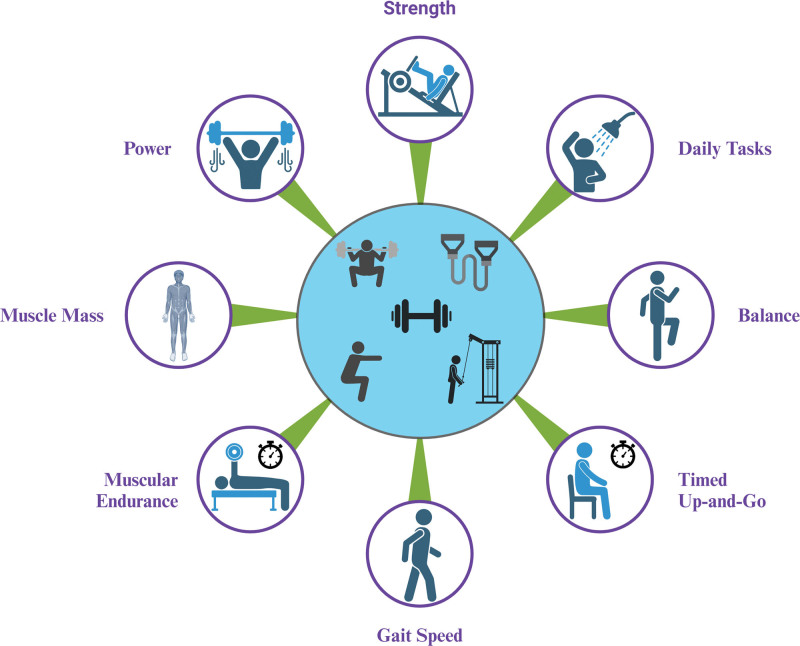
Purpose: The aim of this overview of reviews was to determine the impact of resistance training (RT) prescription on muscle function and hypertrophy, utilizing evidence synthesis methods. It updates the American College of Sports Medicine 2009 Position Stand, “Progression models in resistance training for healthy adults.” Data sources: Ovid MEDLINE(R) ALL, Ovid Emcare, Ovid Embase, Cochrane Database of Systematic Reviews, EBSCOhost SPORTDiscus, and Web of Science Core Collection current to October 2024. Eligibility criteria: Eligible systematic reviews synthesized randomized trials of healthy adults (≥18 yr) who completed RT (≥6 wk; range: 6–52 wk), compared with a group that completed no exercise or an alternative RT program, and reported the change in muscle function, size, or physical performance. Results: We synthesized data from 137 systematic reviews (>30,000 participants). Compared with no exercise (control), RT significantly improved muscle strength, size (hypertrophy), power, endurance, contraction velocity, gait speed, balance, and multiple physical function outcomes. Few RT prescription (RTx) variables affected primary adaptations. However, voluntary strength was enhanced by lifting heavier loads (≥80% one-repetition maximum), through a complete range of motion, for 2–3 sets, at the beginning of training sessions, and ≥2 sessions/wk. Muscle hypertrophy was enhanced by higher volumes (≥10 sets/wk) and eccentric overload. Power was enhanced by moderate loads (30%–70% one-repetition maximum), low-to-moderate volume (≤24 repetitions⋅sets), Olympic-style weightlifting, and power RT (fast concentric phase). Power RT enhanced physical function. Training to momentary muscle fatigue, equipment type, exercise complexity, set structure, time under tension, blood flow restriction, and periodization did not consistently impact training outcomes. Conclusions: Healthy adults should perform progressive RT, with variable prescription consistent with our findings, to improve muscle function, size, and physical performance. Muscle strength, hypertrophy, power, and certain components of physical function can be enhanced by manipulating the RT variables highlighted.
Verified 2026-11-25 · 7 references not checked yet
Overview
CoChat Summary
TL;DR
This ACSM position stand is an overview of 137 systematic reviews (>30,000 participants) updating the 2009 resistance training progression guidance for healthy adults. It concludes that many forms of resistance training improve strength, hypertrophy, power, endurance, contraction velocity, and physical function versus no exercise, while only selected prescription variables consistently enhance specific adaptations.
Key findings
- Compared with no exercise, resistance training significantly improved muscle strength, size (hypertrophy), power, endurance, contraction velocity, gait speed, balance, and multiple physical function outcomes; evidence came from 137 systematic reviews with >30,000 participants.
- Strength was enhanced by heavier loads (≥80% one-repetition maximum), complete range of motion, 2–3 sets, performing resistance training at the beginning of sessions, and ≥2 sessions/wk.
- Hypertrophy was enhanced by higher volumes (≥10 sets/wk) and eccentric overload; power was enhanced by moderate loads (30%–70% one-repetition maximum), low-to-moderate volume (≤24 repetitions⋅sets), Olympic-style weightlifting, and power resistance training with a fast concentric phase.
- Training to momentary muscle fatigue, equipment type, exercise complexity, set structure, time under tension, blood flow restriction, and periodization did not consistently impact training outcomes.
Methods
- Design: overview of reviews (umbrella review), prospectively registered (INPLASY202360071) and reported per PRIOR, updating the ACSM 2009 Position Stand.
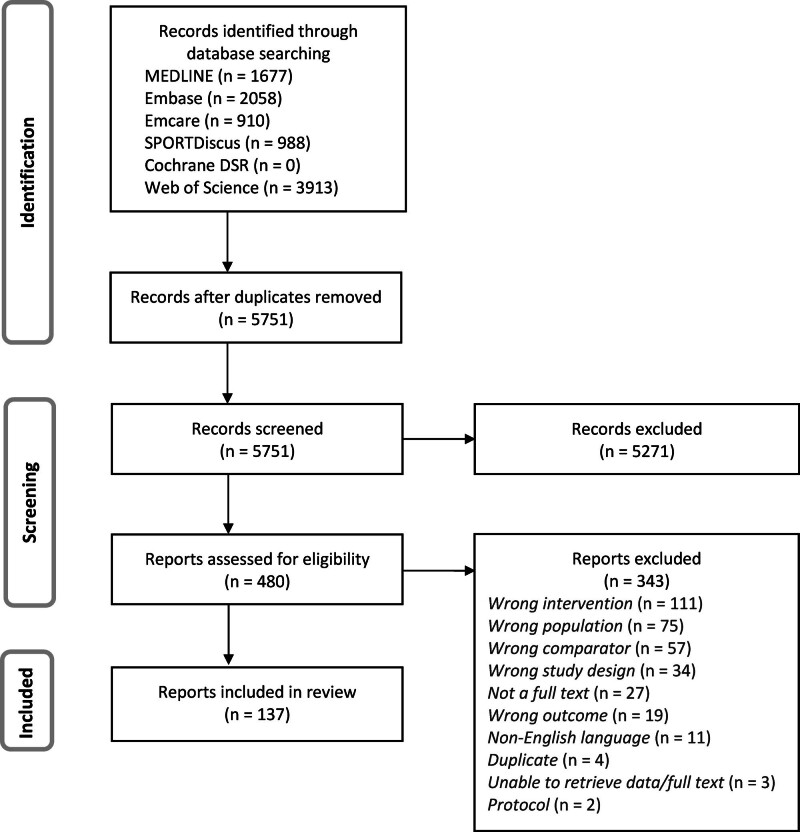
- Data/sample: searches in Ovid MEDLINE, Ovid Emcare, Ovid Embase, Cochrane Database of Systematic Reviews, EBSCOhost SPORTDiscus, and Web of Science Core Collection current to October 2024; eligible reviews synthesized randomized trials of healthy adults ≥18 yr completing resistance training ≥6 wk versus no exercise or an alternative resistance training program; 137 systematic reviews were included.
- Analysis: data extracted in duplicate; methodological quality assessed with AMSTAR (scores ranged from 1 to 9 out of 11); outcome-level quality of evidence calculated using a GRADE-based approach; heterogeneity reported as I² or fraction of reviews showing significant effect; corrected covered area used to quantify overlap for strength only; no sensitivity analyses were conducted.
Limitations
- The paper states that overviews of reviews are limited to interventions and outcomes summarized by systematic reviews; for example, only two eligible reviews synthesized Short Physical Performance Battery results, so the null conclusion likely reflects sparse evidence rather than a true null effect.
- The paper states that overlap was estimated with corrected covered area only for strength, not other variables; overviews of reviews do not permit inferences about comparative effectiveness of different interventions, and evidence was limited to healthy adults, with insufficient evidence for emerging strategies such as minimal-dose resistance training.
- The paper also notes that randomized trials in sports and exercise medicine are often poor quality with small samples, poor randomization, lack of preregistration, and poor adverse-event reporting; evident from the text, included reviews had AMSTAR scores as low as 1, no sensitivity analyses were conducted, and no standardized method exists to evaluate certainty of evidence in overviews of reviews.
Model-written summary. Check it against the paper before relying on it.
Integrity signals
Registry
Cites
Statistics
Figures
Verification
Claims the paper makes
60 Valid · 15 Not valid · 41 Not checked · 56 Own results and interpretations
At least one cited source doesn’t support this claim or points to a different paper, and none confirmed it — see the verdicts below.
In the paper
“There were insufficient data to determine if eccentric flywheel RT (67), Nordic hamstring RT (68), Olympic-style weightlifting (69), and unstable surface RT (70) impacted strength compared with CTRL.”
§ American College of Sports Medicine Position Stand. Resistance Training Prescription for Muscle Function, Hypertrophy, and Physical Performance in Healthy Adults: An Overview of Reviews > RESULTS > Strength
What the sources say
- Disputedcites [70] Behm DG Muehlbauer T Kibele A Granacher U. Effects of strength training using unstable surfaces on strength, power and balance performance across the lifespan: a systematic review and meta-analysis. Sports Med. 2015; 45(12): 1645– 69. 26359066 PMC4656700 sourceExperimental — accuracy not yet measured
The Results section reports five studies comparing unstable-surface training with control and finds a large overall effect on muscle strength, including a medium effect on maximal strength in young adults. The Discussion calls the evidence preliminary for adolescents and older adults because few studies were available, but it does not say the data were insufficient to determine an effect on strength compared with control. Page numbers are unavailable in our copy. (LLM, conf=0.88)
Checked by a reasoning model — may be wrong.
plain- Asserted: passes — The authors put it forward as true.
- Checkable: passes — It can be checked against evidence.
- Load-bearing: passes — The paper’s conclusions depend on it.
- Based: passes — The paper gives a reason why it holds.
- Disputed
At least one cited source doesn’t support this claim or points to a different paper, and none confirmed it — see the verdicts below.
In the paper
“In comparisons between distinct RTx, walking performance was positively affected by power training (106,157).”
§ American College of Sports Medicine Position Stand. Resistance Training Prescription for Muscle Function, Hypertrophy, and Physical Performance in Healthy Adults: An Overview of Reviews > RESULTS > Walking Performance
What the sources say
- Disputedcites [106] Pearson LT Behm DG Goodall S Mason R Stuart S Barry G. Effects of maximal-versus submaximal-intent resistance training on functional capacity and strength in community-dwelling older adults: a systematic review and meta-analysis. BMC Sports Sci Med Rehabil. 2022; 14(1): 129. 35842655 PMC9287903 sourceExperimental — accuracy not yet measured
Pearson et al. (2022) is a meta-analysis comparing maximal-intent (MIRT) versus traditional strength training (T-STR) in community-dwelling older adults, and its Discussion > Clinical interpretations states plainly that 'No statistically significant improvements were found for SPPB, 6MWT, 400 m walk or leg press 1RM.' The Results > Functional capacity outcomes give the numbers: 400 m walk p = 0.19 (SMD −20.84 [−52.29, 10.60], I² = 98%) and 6MWT p = 0.96 (SMD 0.06 [−2.37, 2.50]), i.e. no significant benefit for walking performance from the power/maximal-intent condition; the only walking-related nuance is that MIRT 'fell short of clinically meaningful difference by 0.6 s, with T-STR being over 10 s adrift,' which the authors still treat as non-significant and urge interpreting with caution. Thus the source does not support, and in fact contradicts, the assertion that walking performance was positively affected by power training relative to other RT prescriptions. (LLM, conf=0.72)
Checked by a reasoning model — may be wrong.
- Disputedcites [157] da Rosa Orssatto LB de la Rocha Freitas C Shield AJ Silveira Pinto R Trajano GS. Effects of resistance training concentric velocity on older adults’ functional capacity: a systematic review and meta-analysis of randomised trials. Exp Gerontol. 2019; 127: 110731. 31505227 sourceExperimental — accuracy not yet measured
The Results (§3.6; page unavailable) found no statistically significant difference between fast-intended-velocity and moderate-velocity resistance training for short walks (p = 0.952) or long walks (p = 0.243). The Summary of main results (§4.1; page unavailable) says the two approaches produced similar improvements in both walking tests, contrary to the claimed comparative advantage for power training. (LLM, conf=0.89)
Checked by a reasoning model — may be wrong.
plainstates a cause- Asserted: passes — The authors put it forward as true.
- Checkable: passes — It can be checked against evidence.
- Load-bearing: passes — The paper’s conclusions depend on it.
- Based: passes — The paper gives a reason why it holds.
- Disputed
At least one cited source doesn’t support this claim or points to a different paper, and none confirmed it — see the verdicts below.
In the paper
“There were insufficient data to determine if muscular endurance was affected by load (82), unstable surfaces (70), power training (82), volume (82), or set structure (107,108).”
§ American College of Sports Medicine Position Stand. Resistance Training Prescription for Muscle Function, Hypertrophy, and Physical Performance in Healthy Adults: An Overview of Reviews > RESULTS > Muscular Endurance
What the sources say
- Not checked — no full text of the sourcecites [82] Steib S Schoene D Pfeifer K. Dose-response relationship of resistance training in older adults: a meta-analysis. Med Sci Sports Exerc. 2010; 42(5): 902– 14. 19996996 source
- Disputedcites [70] Behm DG Muehlbauer T Kibele A Granacher U. Effects of strength training using unstable surfaces on strength, power and balance performance across the lifespan: a systematic review and meta-analysis. Sports Med. 2015; 45(12): 1645– 69. 26359066 PMC4656700 sourceExperimental — accuracy not yet measured
The citation to this paper is attached to “unstable surfaces.” In Results (Effectiveness of Strength Training on Unstable Versus Stable Surfaces; page unavailable), the review reports a quantified strength-endurance effect in young adults, rather than saying data were insufficient to assess it. Its Conclusions (page unavailable) describe the comparisons as inconsistent and call for more research in other age groups, but that is narrower than the attributed claim. (LLM, conf=0.78)
Checked by a reasoning model — may be wrong.
- Not checked — no full text of the sourcecites [107] Davies TB Tran DL Hogan CM Haff GG Latella C. Chronic effects of altering resistance training set configurations using cluster sets: a systematic review and meta-analysis. Sports Med. 2021; 51(4): 707– 36. 33475986 source
- Not checked — no full text of the sourcecites [108] Jukic I Van Hooren B Ramos AG Helms ER McGuigan MR Tufano JJ. The effects of set structure manipulation on chronic adaptations to resistance training: a systematic review and meta-analysis. Sports Med. 2021; 51(5): 1061– 86. 33417154 source
plain- Asserted: passes — The authors put it forward as true.
- Checkable: passes — It can be checked against evidence.
- Load-bearing: passes — The paper’s conclusions depend on it.
- Based: passes — The paper gives a reason why it holds.
At least one cited source doesn’t support this claim or points to a different paper, and none confirmed it — see the verdicts below.
In the paper
“Compared with CTRL, there were insufficient data to determine whether standard RT (154) impacted functional reach performance.”
§ American College of Sports Medicine Position Stand. Resistance Training Prescription for Muscle Function, Hypertrophy, and Physical Performance in Healthy Adults: An Overview of Reviews > RESULTS > Functional Reach Test
What the sources say
- Disputedcites [154] Howe TE Rochester L Neil F Skelton DA Ballinger C. Exercise for improving balance in older people. Cochrane Database Syst Rev. 2011; 2011(11): CD004963. 22071817 PMC11493176 sourceExperimental — accuracy not yet measured
In “2. Strengthening exercise versus control” (page unavailable), the review reports a statistically significant improvement in functional reach compared with controls (MD 3.27 cm; 95% CI 1.39–5.15), rather than insufficient data to determine an effect. The Discussion (page unavailable) likewise identifies functional reach as an outcome with enough data for meta-analysis of strengthening exercise. (LLM, conf=0.88)
Checked by a reasoning model — may be wrong.
plain- Asserted: passes — The authors put it forward as true.
- Checkable: passes — It can be checked against evidence.
- Load-bearing: unclear — It is unclear whether the paper’s conclusions depend on it.
- Based: passes — The paper gives a reason why it holds.
- Disputed
At least one cited source doesn’t support this claim or points to a different paper, and none confirmed it — see the verdicts below.
In the paper
“Compared with CTRL, there were insufficient data to determine whether standard RT (69) or eccentric flywheel RT (162) impacted the ability to change direction.”
§ American College of Sports Medicine Position Stand. Resistance Training Prescription for Muscle Function, Hypertrophy, and Physical Performance in Healthy Adults: An Overview of Reviews > RESULTS > Change of Direction (Agility)
What the sources say
- Could not verifycites [69] Morris SJ Oliver JL Pedley JS Haff GG Lloyd RS. Comparison of weightlifting, traditional resistance training and plyometrics on strength, power and speed: a systematic review with meta-analysis. Sports Med. 2022; 52(7): 1533– 54. 35025093 PMC9213388 sourceExperimental — accuracy not yet measured
Our copy of Morris et al. (2022) only meta-analyses weightlifting training against traditional resistance training (TRT), plyometrics and a control group (Results sections 'Weightlifting Training Versus Control Group', 'Versus Traditional Resistance Training', 'Versus Plyometric Training'); it contains no TRT-versus-control comparison of change of direction speed (CODS), so it neither supports nor contradicts the assertion that data were insufficient for standard RT vs CTRL. Eccentric flywheel resistance training is entirely outside this review's scope — searches for 'flywheel' and 'eccentric' returned no such intervention (Methods 'Eligibility Criteria' defines TRT as free-weight barbells, dumbbells and kettlebells, and PLYO as jumps/hops/bounds/skips). The only related statement is the generic Data Synthesis rule that 'if there were found to be less than two studies reporting a strength, power, speed or CODS test within the comparison groups, the data were not reported in the meta-analysis', which does not identify the specific TRT-vs-CTRL or flywheel-vs-CTRL CODS gap the citing sentence attributes. (LLM, conf=0.70)
- Disputedcites [162] Raya-Gonzalez J Prat-Luri A Lopez-Valenciano A Sabido R Hernández-Davó JL. Effects of flywheel resistance training on sport actions. A systematic review and meta-analysis. J Hum Kinet. 2021; 77(1): 191– 204. 34168704 PMC8008299 sourceExperimental — accuracy not yet measured
The Results (Change of direction; page not provided) pool three flywheel-training studies and report a large, statistically significant effect on change-of-direction ability, contrary to the claim that data were insufficient to determine an effect. The paper does note a small evidence base in its Limitations, but says positive effects were found. This source does not establish the claim's separate point about standard resistance training. (LLM, conf=0.82)
Checked by a reasoning model — may be wrong.
plain- Asserted: passes — The authors put it forward as true.
- Checkable: passes — It can be checked against evidence.
- Load-bearing: passes — The paper’s conclusions depend on it.
- Based: passes — The paper gives a reason why it holds.
- Could not verify
120 more claims · 46 with their cited sources checked
Create a free account to see all 172 claims and to verify the 54 references still open.
- The quote only partly states this claim. 4
- It may state two separate claims as one. 22
- Probably not a substantial claim. 24
Self-check
Percentages, sums and reported differences re-computed from the paper’s own numbers.
Each contradiction between two passages listed here was confirmed by an independent check.
Rated major: it would touch a result — a value a result rests on, reported and recomputed p-values on opposite sides of the significance level, two passages that conflict with no sign which is right, or a cited work retracted before this paper was published.
In the paper
§ American College of Sports Medicine Position Stand. Resistance Training Prescription for Muscle Function, Hypertrophy, and Physical Performance in Healthy Adults: An Overview of Reviews > DISCUSSION
“Completing sets to fatigue (momentary muscular failure) does not enhance gains in strength, hypertrophy, and power, and so is not necessary for benefits to occur.”
§ American College of Sports Medicine Position Stand. Resistance Training Prescription for Muscle Function, Hypertrophy, and Physical Performance in Healthy Adults: An Overview of Reviews > RESULTS > Power
“There were insufficient data to determine if power was affected by fatigue/failure (99), unstable surfaces (70), or concurrent training (123,124,151).”
Rated minor: it would not touch a result — a value no result rests on, a p-value that stays on the same side of the significance level, or a conflict that is clerical, resolved elsewhere in the paper, or outside its own findings.
In the paper
§ American College of Sports Medicine Position Stand. Resistance Training Prescription for Muscle Function, Hypertrophy, and Physical Performance in Healthy Adults: An Overview of Reviews > RESULTS > Power
“low-to-moderate volume (repetitions⋅set < 24).”
§ American College of Sports Medicine Position Stand. Resistance Training Prescription for Muscle Function, Hypertrophy, and Physical Performance in Healthy Adults: An Overview of Reviews > RESULTS > Hypertrophy
“Volume: Low-moderate (repetitions ⋅ sets ≤24)”
Citations
Cites
Garber, C. E., Blissmer, B., Deschenes, M. R., Franklin, B. A., Lamonte, M. J., Lee, I.-M., Nieman, D. C., & Swain, D. P. (2011) · Medicine & Science in Sports & Exercise · doi:10.1249/mss.0b013e318213fefb · Cited by 9,319 · cited 13×
“Exercise programs are generally constructed by manipulating six factors comprising the framework FITT-VP: Frequency, Intensity, Time, Type, Volume, Pattern, and Progression (10).”
InfluentialDevelopment of AMSTAR: A measurement tool to assess the methodological quality of systematic reviews
Shea, B. J., Grimshaw, J. M., Wells, G. A., Boers, M., Andersson, N., Hamel, C., Porter, A. C., Tugwell, P., Moher, D., & Bouter, L. M. (2007) · BMC Medical Research Methodology · doi:10.1186/1471-2288-7-10 · Cited by 4,374
Progression Models in Resistance Training for Healthy Adults
(2009) · Medicine & Science in Sports & Exercise · doi:10.1249/mss.0b013e3181915670 · Cited by 4,332 · cited 11×
“The current document updates the ACSM 2009 Position Stand entitled “Progression Models in Resistance Training for Healthy Adults” (11).”
InfluentialProgression Models in Resistance Training for Healthy Adults
(2002) · Medicine and Science in Sports and Exercise · doi:10.1097/00005768-200202000-00027 · Cited by 2,979 · cited 2×
“Individualized programs can increase exercise adoption and adherence (10), but individualization has been scarcely discussed in previous Position Stands (11,12).”
Systematic review finds overlapping reviews were not mentioned in every other overview
Pieper, D., Antoine, S.-L., Mathes, T., Neugebauer, E. A. M., & Eikermann, M. (2014) · Journal of Clinical Epidemiology · doi:10.1016/j.jclinepi.2013.11.007 · Cited by 1,318
Consensus on Exercise Reporting Template (CERT): Explanation and elaboration statement
Slade, S. C., Dionne, C. E., Underwood, M., & Buchbinder, R. (2016) · British Journal of Sports Medicine · doi:10.1136/bjsports-2016-096651 · Cited by 961 · cited 1×
“Guidelines have been developed to improve the reporting of exercise trials, and we would encourage their adoption (202).”
Gates, M., Gates, A., Pieper, D., Fernandes, R. M., Tricco, A. C., Moher, D., Brennan, S. E., Li, T., Pollock, M., Lunny, C., et al. (2022) · BMJ · doi:10.1136/bmj-2022-070849 · Cited by 856 · cited 2×
“This review was prospectively registered on the International Platform of Registered Systematic Review and Meta-analysis Protocols (INPLASY202360071; https://inplasy.com/inplasy-2023-6-0071/) and conducted in alignment with the Preferred Reporting Items for Overviews of Reviews (PRIOR) (16).”
Schoenfeld, B. J., Grgic, J., Ogborn, D., & Krieger, J. W. (2017) · Journal of Strength and Conditioning Research · doi:10.1519/jsc.0000000000002200 · Cited by 851 · cited 2×
“In comparisons between distinct RTx, muscle hypertrophy was positively affected by contraction type (24,104,128,129) and volume (24,91,128,130–133), but muscle hypertrophy was not affected by frequency (24,73,74,128,131,134,135), load (24,78–81, 83, Improving hypertrophy.”
Self-citationExercise for improving balance in older people
Howe, T. E., Rochester, L., Neil, F., Skelton, D. A., & Ballinger, C. (2011) · Cochrane Database of Systematic Reviews · doi:10.1002/14651858.cd004963.pub3 · Cited by 809
Borde, R., Hortobágyi, T., & Granacher, U. (2015) · Sports Medicine · doi:10.1007/s40279-015-0385-9 · Cited by 737
Research works printed but not linked: 2
- World Health Organization. WHO Guidelines on Physical Activity and Sedentary Behaviour. World Health Organization; 2020. 33369898
- Pollock M Fernandes RM Becker LA Pieper D Hartling L. Chapter V: overviews of reviews. In: Higgins J Chandler J Cumpston M Li T Page MJ Welch VA, editors. Cochrane Handbook for Systematic Reviews of Interventions Version 6.4 (Updated August 2023): Cochrane Publishing; 2023.
Cited by
Martins, A. D., Fernandes, O., Brito, J. P., Gonçalves, B., Oliveira, R. F. S., & Batalha, N. M. P. (2026) · Research Quarterly for Exercise and Sport · doi:10.1080/02701367.2026.2661889 · Cited by 1
Rocco, F. D., Perazzetti, A., Festino, E., Papale, O., Ciaccioni, S., Fuchs, P. X., Duca, V. D., Chiodo, S., Capranica, L., Cortis, C., et al. (2026) · Frontiers in Aging · doi:10.3389/fragi.2026.1849400 · Cited by 2
“…and management of low-back pain, musculoskeletal injuries, and gait impairments, to maintaining mobility, balance, and overall physical function, to reduced risks of falls, and to an independent lifestyle (Rikli and Jones, 2013; Seco et al., 2013; Chodzko-Zajko et al., 2009; Currier et al., 2026).”
Lee, K. (2026) · International Journal of Medical Informatics · doi:10.1016/j.ijmedinf.2026.106594 · Cited by 1
Wen, H., Liu, Y., Huang, W., Ma, Z., & Zhao, H. (2026) · Frontiers in Cardiovascular Medicine · doi:10.3389/fcvm.2026.1815768 · Cited by 1
A Practical Guide to the Safe and Effective Use of Blood Flow Restriction During Resistance Training
Vehrs, P. R. (2026) · Strength and conditioning journal · doi:10.1519/ssc.0000000000000989 · Cited by 1
Baccaro, V. K., Hvid, L. G., Jungersen, R. C., & Langeskov‐Christensen, M. (2026) · Sports Medicine · doi:10.1007/s40279-026-02490-9 · Cited by 2
Deboutte, J., Alcázar, J., Riesbeck, M., Walker, S., Delecluse, C., & Roie, E. V. (2026) · Experimental Gerontology · doi:10.1016/j.exger.2026.113174
La insoportable levedad de la sarcopenia
Supervía, M., de Murieta, E. S., & Marco, E. (2026) · Rehabilitación · doi:10.1016/j.rh.2026.100986
Munteanu, G., Halson, S. L., Huynh, M., Jukić, I., García‐Ramos, A., Fernandez, F., Cowley, N., & Weakley, J. J. S. (2026) · Sports Medicine · doi:10.1007/s40279-026-02459-8 · Cited by 2
“It involves muscular exertion against an external mass and is strongly recommended by the American College of Sports Medicine as a form of exercise for females that has demonstrable effects on health, wellbeing, and longevity [15].”
Rééducation sous haute intensité : le CrossFit® au service des enfants avec paralysie cérébrale
Guedin, D. (2026) · Motricité Cérébrale · doi:10.1016/j.motcer.2026.04.003
There are different types of fitness. An exercise expert explains
Bennett, H. (2026) · The Conversation · doi:10.64628/aa.hwmp4vhe9
He, J., Su, X., Wang, L., Men, J., & Yu, Q. (2026) · Frontiers in Public Health · doi:10.3389/fpubh.2026.1868830
Effects of prolonged physical training on skeletal muscle mass accrual throughout the life span
Ledergerber, R., Kotikangas, J., Cadore, E. L., Feuerbacher, J. F., & Schumann, M. (2026) · Best Practice & Research Clinical Endocrinology & Metabolism · doi:10.1016/j.beem.2026.102132
Har-Nir, I., Manor, N., & Pelclová, J. (2026) · Frontiers in Aging · doi:10.3389/fragi.2026.1844227
“Training followed ACSM resistance-training progression principles for healthy adults (Currier et al., 2026; American College of Sports Medicine, 2025), with exercises performed at high effort (typically close to muscular fatigue or momentary failure) and loads progressed gradually over time while…”
Iacono, A. D., Jukić, I., & Swinton, P. A. (2026) · Research Square · doi:10.21203/rs.3.rs-9970394/v1 · Cited by 1
The Perfect Consistency Trap: Why “All-or-Nothing” Thinking Undermines Exercise Adherence
Hathaway, L., & Greenspoon, L. A. (2026) · ACSMʼs Health & Fitness Journal · doi:10.1249/fit.0000000000001166
Water Aerobics: An All‑Encompassing Fitness Experience
Boyer, C. M. (2026) · ACSMʼs Health & Fitness Journal · doi:10.1249/fit.0000000000001173
Cakirᵃ, F. F., Lohman, E., Lohmanᵇ, T., Deleonᵃ, M., & Jiᵃ, L. (2026) · Research Square · doi:10.21203/rs.3.rs-9440779/v1
Bridging assessment, biomarkers, and interventions: progress in muscle health research
Oranchuk, D. J., DeFreitas, J. M., Nelson, A. R., & Harris‐Love, M. O. (2026) · Frontiers in Rehabilitation Sciences · doi:10.3389/fresc.2026.1874273
“…demonstrating the importance of progressive overload for hypertrophic adaptations (41), and the latest American College of Sports Medicine position stand, which reinforces resistance training as foundational for muscle function and performance, while also focusing on adherence strategies (42).”
Approach to personalizing the treatment of osteoporosis
Woods, G. N., Wooldridge, J. S., Weaver, C. M., & Giangregorio, L. (2026) · The Journal of Clinical Endocrinology & Metabolism · doi:10.1210/clinem/dgag257
Sugano, T., Nomura, T., Yoshie, Y., Fujita, K., Hayashi, K., & Hayashi, S. (2026) · European Journal of Applied Physiology · doi:10.1007/s00421-026-06302-w
“Resistance training is a key intervention for preventing sar-copenia, reducing fall risk, and preserving physical function (Rodrigues et al. 2022; Currier et al. 2026).”
Sutoro, S., Nurhidayah, D., Asri, A., et al. (2026) · Sriwijaya Journal of Sport · doi:10.55379/sjs.v5i3.262
TURGUT, T., Kaçay, Z., MURATHAN, G., Talaghir, L.-G., Olaru, B. S., & Coja, D. M. (2026) · Frontiers in Physiology · doi:10.3389/fphys.2026.1891546
Body Composition Optimization in the Era of GLP‐1‐Based Pharmacotherapy for Obesity Management
Tinsley, G. M., Nadolsky, S., & Nadolsky, K. (2026) · Lifestyle Medicine · doi:10.1002/lim2.70067
Guaigua-Moyolema, S. P., Herrero-Molleda, A., & García-López, J. (2026) · Sensors · doi:10.3390/s26134283
“Strength training is a widely used tool for improving physical performance and promoting health, which has led to a marked increase in scientific interest over recent decades [1,2].”
Brummer, J., Herbolsheimer, F., Fyfe, J. J., & Steindorf, K. (2026) · Frontiers in Public Health · doi:10.3389/fpubh.2026.1872337 · Cited by 1
“While there is overlap in the program design for these different outcomes, variables like the loading schemes or the set structure (8, 61, 62) may vary in RT programs that prioritize one outcome over the others.”
Generational and gendered perceptions of weightlifting: a cross-sectional survey
Butler, L., Cayo, C., Thomas, A., Fernandez, J., Rossi, M. D., Capote, D., Bushman, H., Sylvestre, F., Gonzalez, G. H. A., & Ulman, S. M. (2026) · Frontiers in Sports and Active Living · doi:10.3389/fspor.2026.1829361
“Although the benefits of weightlifting are well established, participation rates remain below the recommendations set by the American College of Sports Medicine, which states strength training should be done at least twice weekly (23).”
Tons of Resistance Exercise Research, But Does it Apply to Highly Trained Athletes?
Fry, A. C., Schechter, E. G. K., Johnson, Q. R., & Cabarkapa, D. (2026) · The Journal of Strength and Conditioning Research · doi:10.1519/jsc.0000000000005603 · Cited by 1
Sharp, T., Wallace, D. L., Marques, C. D., Higham, S. M., Coutts, A. J., & Slattery, K. (2026) · Journal of science and medicine in sport · doi:10.1016/j.jsams.2026.07.005
A Critical Review of the Limited Use of Creativity in Health and Fitness Training
Torrents, C., Calvo-Estelrich, C., & Almarcha, M. (2026) · Quest · doi:10.1080/00336297.2026.2707157
Barnes, M. J., Fraser, J., Pritchard, H., & Cochrane, D. J. (2026) · The Journal of Strength and Conditioning Research · doi:10.1519/jsc.0000000000005617
Fernández-Escabías, M., Carrilho-Candeias, S., Garcia-Sanchez, C., Orellana-Jaen, A., Millan-Martin, A., Carneiro‐Barrera, A., Ruiz, J. R., & Amaro‐Gahete, F. J. (2026) · European Journal of Internal Medicine · doi:10.1016/j.ejim.2026.107104 · Cited by 3
Mounter, D., Rogerson, D., VIVO, M. D., & Thompson, S. W. (2026) · BMJ Open · doi:10.1136/bmjopen-2026-116789
“…no comprehensive synthesis exists to describe the evidence base of fitness components in adults with FMS. Muscle strength is an essential component of physical fitness 23 and is the ability to exert maximal force generated by a muscle or muscle group in response to an internal or external demand.”
Exercise prescription: Physiotherapy's most important and least standardized skill
Hinrichs‐Kinney, L., Mintken, P. E., & Zaffarano, B. (2026) · Musculoskeletal Science and Practice · doi:10.1016/j.msksp.2026.103631
A peripheral perspective on brain health: vascular and skeletal muscle contributions
Keller, J. L., Pennartz, K. J., Sprick, J. D., Hein, E. J., Irving, B. A., Vann, C. G., Butlig, E.-A. R., Al-Masri, S., & Nelson, A. R. (2026) · American Journal of Physiology-Heart and Circulatory Physiology · doi:10.1152/ajpheart.00462.2026 · Cited by 1
Ra, S., Miura, H., & Iwata, T. (2026) · The Journal of Nutritional Physiology · doi:10.1016/j.jnphys.2026.100042
Training competence questionnaire for endurance and strength training: development and validation
Siemer, J. G., Braksiek, M., Below, T., & Thienes, G. (2026) · Frontiers in Sports and Active Living · doi:10.3389/fspor.2026.1909973
“In strength training, it depends more strongly on manipulating load and volume variables, exercise selection and order, and rest intervals (34), implying partly distinct knowledge and skill requirements.”
Methods and Systems of Resistance Training: A Narrative Review Based on Contemporary Recommendations
Rios, M. J., Ferreira, F. A., Chapman, D. W., Fernandes, R. J., & Reis, V. M. (2026) · Sports · doi:10.3390/sports14080348
“At a fundamental level, these processes are governed by the manipulation of key training variables, particularly load (intensity [5,6]), volume, frequency, density, and exercise selection.”
Williams, A., Wadsworth, D. D., & Geetha, T. (2026) · Frontiers in Public Health · doi:10.3389/fpubh.2026.1881720
“Similar conclusions have been reported in exergaming studies showing limited or inconsistent improvements in muscular strength unless intervention incorporates structured resistance components (45, 46).”
Devorski, L., Skibski, A., Brignola, G., & VanWert, E. (2026) · Journal of Bodywork and Movement Therapies · doi:10.1016/j.jbmt.2026.08.028
Triplett, N. T. (2026) · ACSMʼs Health & Fitness Journal · doi:10.1249/fit.0000000000001191
Self-citationBlasco‐Alonso, J., Ramírez, M. G., & Gil-Gómez, R. (2026) · Medicina Clínica · doi:10.1016/j.medcli.2026.107568
Räisänen, A. M. (2026) · Clinics and Practice · doi:10.3390/clinpract16080157
“Resistance training is defined as a method of physical conditioning in which muscle contractions are used against external resistance [12].”
Fuentes-Barría, H., Aguilera-Eguía, R. A., Alarcón-Rivera, M., & Flores-Fernández, C. (2026) · Current Issues in Molecular Biology · doi:10.3390/cimb48080850 · Cited by 1
“Although traditionally associated with musculoskeletal adaptations, resistance training has emerged as a potent metabolic intervention capable of improving several components of MetS independently of substantial weight loss [178,179].”
Sorić, T., Sarić, A., Ivanišin, A., Lovrić, M., Milić, M., Matovinović, M., & Sarić, M. M. (2026) · Nutrients · doi:10.3390/nu18172757 · Cited by 2
“For individuals with sarcopenic obesity or substantial functional impairment, supervised resistance training may offer greater benefit than generalized exercise advice alone, although direct evidence in GLP-1-treated populations remains limited [116–118].”
Abramik, J., Murphy, D., Graby, J., Lacey, A., Smith, T., Lawton, C., Martin, F., Gillison, F., Friedrich, M. G., Chiribiri, A., et al. (2026) · Frontiers in Cardiovascular Medicine · doi:10.3389/fcvm.2026.1909948
“The programme will follow a progressive circuit training model, rotating muscle groups between sessions to allow adequate recovery and optimize strength and functional adaptations (55).”
Roenker, B., DuBose, K. D., Moore, E. W. G., Broskey, N. T., Whiteside, J. L., & May, L. E. (2026) · Advanced Exercise and Health Science · doi:10.1016/j.aehs.2026.09.001
Ho, J., Chen, Y., Liu, K., Kuo, T.-Y., & Tsai, C.-L. (2026) · European Journal of Applied Physiology · doi:10.1007/s00421-026-06417-0
High-load resistance training and FSHD: harmful mixture or a silver bullet combination?
Meinhold, M., & Hornberger, T. A. (2026) · Journal of Neurology · doi:10.1007/s00415-026-14148-7
“This is considerably more than the 2–3 sets/exercise that seems sufficient to maximize strength responses [22, 113].”
InfluentialNoguchi, K. S., Sakakibara, B. M., Phillips, S. M., Ginis, K. A. M., Beauchamp, M., Thabane, L., McBurney, P., McQuarrie, A. M., Elliott, B., Pinili, K., et al. (2026) · BMJ Open · doi:10.1136/bmjopen-2026-126255
“Given its superiority over traditional RT in older adults, 13 power training is now supported in position statements 14 15 and exercise guidelines.”
Self-citationYang, Y.-J., Goh, C.-M., Lin, C.-Y., Chen, C., Pan, C.-H., & Cheng, C.-F. (2026) · Journal of Exercise Science & Fitness · doi:10.1016/j.jesf.2026.200525
“13 To address this limitation, strategies aimed at augmenting the training stimulus, such as the incorporation of external loading, may be considered for active adults performing the 7 MW. 12,17 Blood flow restriction (BFR) training utilizes an inflated cuff to partially occlude blood flow to…”
Berg, J., Tømmerdal, K. H., Coombes, J. S., Follestad, T., Salvesen, Ø. O., Madssen, E., Selbæk, G., Dalen, H., Bjørnelv, G. M. W., Devlin, B. L., et al. (2026) · medRxiv · doi:10.64898/2026.09.23.26363212
Self-citationFlores-Tola, C. B., Condori-Callizaya, F. G., Sosa, J. M. L., et al. (2026) · RESPYN Revista de Salud Pública y Nutrición · doi:10.29105/respyn25.3-909
Johnson, C., Haworth, J., & Brown, E. (2026) · Frontiers in Sports and Active Living · doi:10.3389/fspor.2026.1864851
Komm, Y., Held, S., Gavanda, S., Comfort, P., Faigenbaum, A. D., Geisler, S., & Augste, C. (2026) · The Journal of Strength and Conditioning Research · doi:10.1519/jsc.0000000000005680
Santiago, M. P., Miranda, R. C. B., Mercedes, F. J. S., Gomez, R. M., & Rosabales, N. R. (2026) · Cureus · doi:10.7759/cureus.117480
Metadata
- Authors
- CURRIER, B. S., D’SOUZA, A. C., SINGH, M. A. F., LOWISZ, C. V., RAWSON, E. S., SCHOENFELD, B. J., SMITH-RYAN, A. E., STEEN, J. P., THOMAS, G. A., TRIPLETT, N. T., WASHINGTON, T. A., WERNER, T. J., & PHILLIPS, S. M.
- Affiliations
- McMaster University (CA)
- School of Health Sciences and Sydney Medical School, Faculty of Medicine and Health, University of Sydney, Sydney, NSW, AUSTRALIA
- Messiah University (US)
- Lehman College (US)
- Department of Exercise and Sport Science, University of North Carolina, Chapel Hill, NC
- University of Toronto (CA)
- Pennsylvania State University (US)
- Appalachian State University (US)
- University of Arkansas at Fayetteville (US)
- Salisbury University (US)
- Corresponding author
- PHILLIPS, STUART M.
- ORCID
- Venue
- Medicine & Science in Sports & Exercise
- Published
- 2026-03-05
- Volume
- 58
- Issue
- 4
- Pages
- 851-872
- ISSN
- 0195-9131 (ISSN-L)
- 1530-0315
- PMC
- PMC12965823
- OpenAlex
- W7134130569
- Semantic Scholar
- 31adc2c65e28294b496a87121036381b91e9016b
- Cited by
- 105
- References
- 200
- Citations by year
- 2026: 105
- FWCI
- 128.25
- Type
- journal article
- Language
- en
- Open access
- hybrid
- doi.org
- Licence
- Locations
- Medicine & Science in Sports & Exercise (publishedVersion, cc-by-nc-nd)
- PubMed Central (publishedVersion, cc-by-nc-nd)
- PubMed (publishedVersion)
- Carolina Digital Repository (University of North Carolina at Chapel Hill) (submittedVersion, cc-by-nc-nd)
- UNC Libraries
- Funders
- U.S. Environmental Protection Agency
- Belgian American Educational Foundation
- Pennsylvania Department of Health
- Velux Stiftung
- National Foundation for Science and Technology Development
- Wenzhou Medical University
- Wellcome Trust
- POSCO TJ Park Foundation
- Key Research and Development Program of Heilongjiang
- Jiangsu Commission of Health
- Badan Riset dan Inovasi Nasional
- Royal College of Surgeons of England
- University of Cambridge
- Healthway
- National Research Foundation
- University of Capetown
- Department of Science and Technology, Ministry of Science and Technology, India
- Council of Scientific and Industrial Research, India
- Deutsche Forschungsgemeinschaft
- Institut National de la Santé et de la Recherche Médicale
- Schweizerischer Nationalfonds zur Förderung der Wissenschaftlichen Forschung
- Canada Research Chairs
- National Natural Science Foundation of China
- King Saud University
- China Postdoctoral Science Foundation
- Research Grants Council, University Grants Committee
- Nederlandse Organisatie voor Wetenschappelijk Onderzoek
- Innovation and Technology Commission
- National Research Foundation of Korea
- Ligue Contre le Cancer
- Vetenskapsrådet
- Türkiye Bilimsel ve Teknolojik Araştırma Kurumu
- Inyuvesi Yakwazulu-Natali
- Natural Science Foundation of Heilongjiang Province
- Bộ Giáo dục và Ðào tạo
- National Taiwan University Hospital
- Buddhist Tzu Chi Medical Foundation
- Natural Science Foundation of Henan Province
- Western Indian Ocean Marine Science Association
- Chengdu Science and Technology Bureau
- Science, Technology and Innovation Commission of Shenzhen Municipality
- Korea Institute of Marine Science and Technology promotion
- Fédération Enfants Cancers Santé
- Les 111 des Arts
- Ministry of SMEs and Startups
- Ministry of Science and ICT, South Korea
- Lembaga Pengelola Dana Pendidikan
- Jiaxing University
- Réseau Provincial de Recherche en Adaptation-Réadaptation
- Ministerie van Economische Zaken en Klimaat
- State Key Laboratory of Ophthalmology
- Schulich School of Medicine and Dentistry, Western University
- Max Planck School of Photonics
- National Institutes of Health
- U.S. Geological Survey
- National Institute of Food and Agriculture
- Wu Jieping Medical Foundation
- Smith and Nephew Orthopaedics
- Canadian Institutes of Health Research
- Natural Sciences and Engineering Research Council of Canada
- Engineering and Physical Sciences Research Council
- Biotechnology and Biological Sciences Research Council
- Science and Engineering Research Board
- National Key Research and Development Program of China
- NIHR Newcastle Biomedical Research Centre
- National College Students Innovation and Entrepreneurship Training Program
- Shenzhen Science and Technology Innovation Program
- Guangxi Innovation-Driven Development Project
- NIHR Cambridge Biomedical Research Centre
- National Institute on Aging
- National Institute of Mental Health
- National Institute on Drug Abuse
- National Institute of General Medical Sciences
- National Institute of Neurological Disorders and Stroke
- National Center for Complementary and Integrative Health
- Central Public-interest Scientific Institution Basal Research Fund, Chinese Academy of Fishery Sciences
- Natural Science Foundation of Zhejiang Province
- British Elbow and Shoulder Society
- Topics
- Health Sciences › Medicine › Orthopedics and Sports Medicine › Sports Performance and Training
- Health Sciences › Medicine › Physiology (medical) › Cardiovascular and exercise physiology
- Health Sciences › Nursing › Nutrition and Dietetics › Muscle metabolism and nutrition
- Keywords
- resistance training prescription, muscle hypertrophy, muscle strength, muscle power, physical performance, healthy adults, training load, training volume, eccentric overload, power training, blood flow restriction, periodization, progression model
- MeSH terms
- Physical Functional Performance, Skeletal Muscle Enlargement, Adaptation, Physiological, Adult, Humans, Hypertrophy, Physical Endurance, Muscle, Skeletal, Muscle Strength, Resistance Training
About these checks
Registry, retraction, Cites and statistics results are computed, not judged, with one exception: a printed reference that no index lists is read once by a model before it counts as a citation error. Claims are extracted by a model and kept only when their quote appears verbatim in the text; each cited source is then checked, with a model’s help, for whether it says what the claim relies on. Those verdicts can be wrong — read the claim’s quote and the cited source before relying on one.
The claim verdicts this report counts are experimental: their accuracy is not yet measured.
A language model drew the claims from the paper on 2026-10-05, under version 3 of the claim definition (model deepseek-v4.1-flash, prompt extract-v3).
A second model labelled each claim on 2026-10-05 (model jev-1.13-20260917, definition revision gold-guideline-v0.2).
Cited sources are checked with a language model’s help (gpt-6-sol and qwen3.8-omni-flash).
Statistics and arithmetic are recomputed, not judged.
Confidence bands are shown only for fields calibrated on our annotated test set. None is calibrated yet, so no band is shown.
What counts as a claim ›How we measure confidence ›How we check this ›
Are you an author, or do you see a problem with this page? Request a review
Data sources
Bibliographic data: Semantic Scholar, OpenAlex, Crossref.
Contains information from the Semantic Scholar Academic Graph Datasets, made available under the ODC Attribution License (ODC-BY 1.0).
Semantic Scholar’s data is described in: Kinney, R., et al. (2023). The Semantic Scholar Open Data Platform. arXiv:2301.10140.
