

The DOI matches its Crossref record; 44 of the 44 references it cites were found in a registry or an index.
Segmented poly(A) tails significantly reduce recombination of plasmid DNA without affecting mRNA translation efficiency or half-life
Open accessAbstract
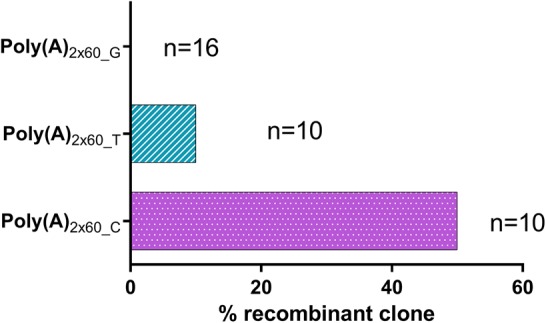
Extensive research in the past decade has brought mRNA closer to the clinical realization of its therapeutic potential. One common structural feature for all cellular messenger RNAs is a poly(A) tail, which can either be brought in cotranscriptionally via the DNA template (plasmid- or PCR-based) or added to the mRNA in a post-transcriptional enzymatic process. Plasmids containing poly(A) regions recombine in E. coli, resulting in extensive shortening of the poly(A) tail. Using a segmented poly(A) approach, we could significantly reduce recombination of plasmids in E. coli without any negative effect on mRNA half-life and protein expression. This effect was independent of the coding sequence. A segmented poly(A) tail is characterized in that it consists of at least two A-containing elements, each defined as a nucleotide sequence consisting of 40–60 adenosines, separated by a spacer element of different length. Furthermore, reducing the spacer length between the poly(A) segments resulted in higher translation efficiencies compared to homogeneous poly(A) tail and reduced recombination (depending upon the choice of spacer nucleotide). Our results demonstrate the superior potential of segmented poly(A) tails compared to the conventionally used homogeneous poly(A) tails with respect to recombination of the plasmids and the resulting mRNA performance (half-life and translational efficiency).
Overview
The claims and statistics of this paper haven’t been checked yet.
Run the check — free, no account needed. It reads the open-access text and checks the sources it cites.
Integrity signals
Registry
Cites
Statistics
Figures
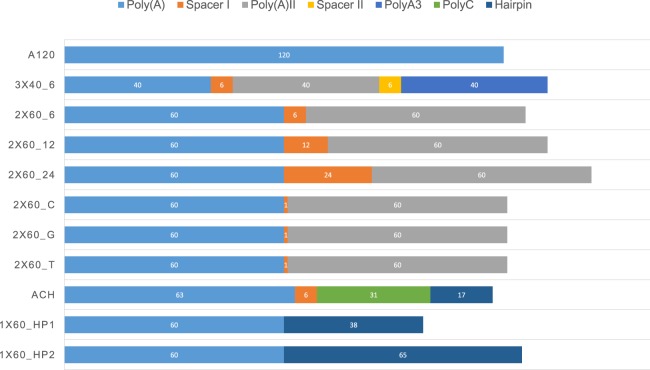
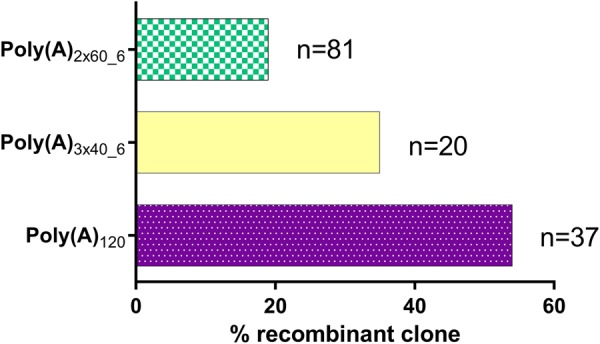
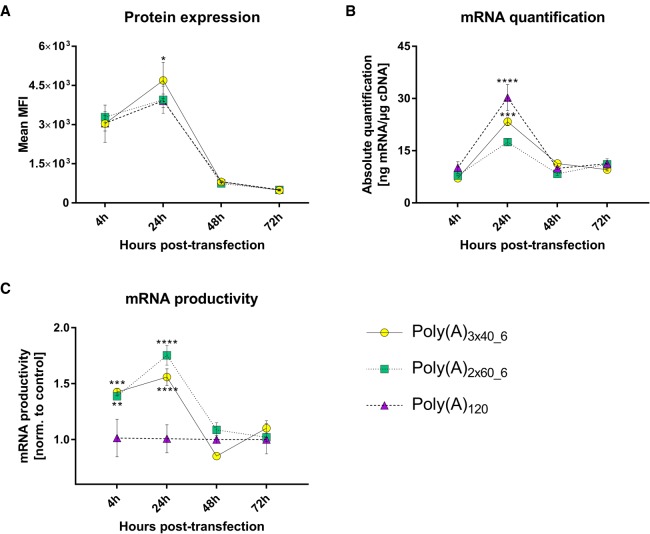
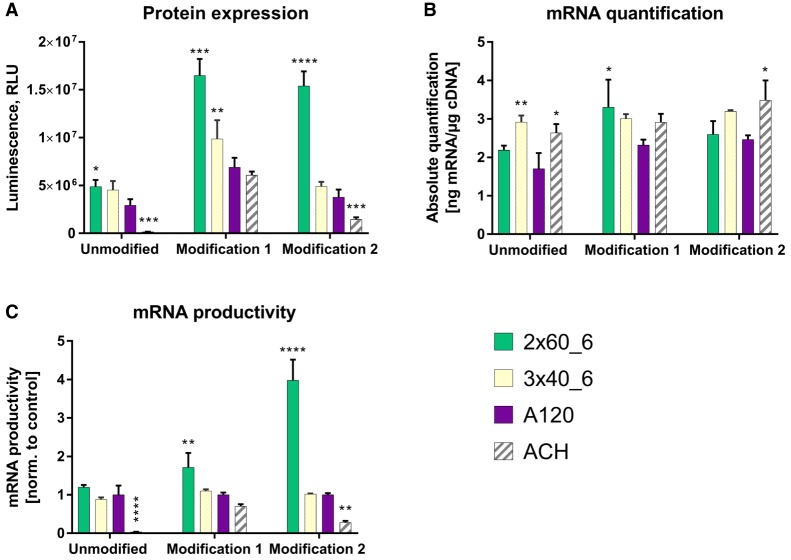
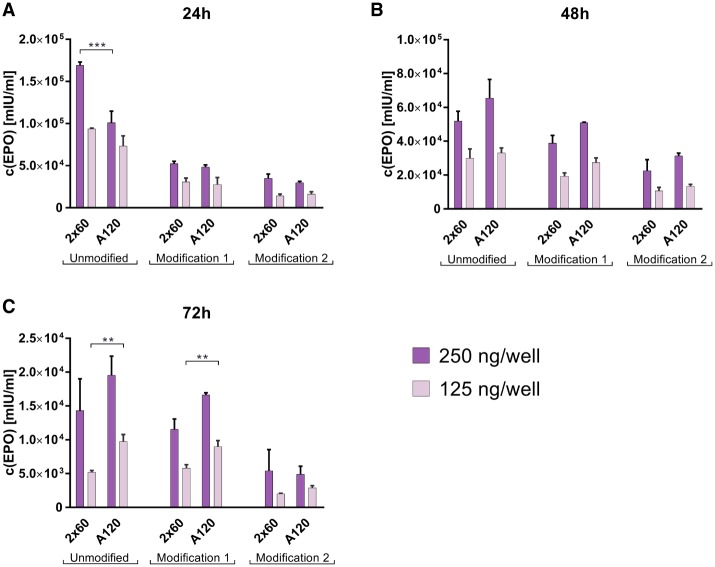
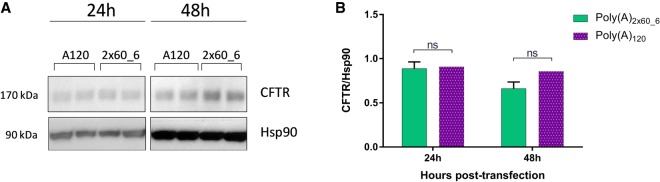
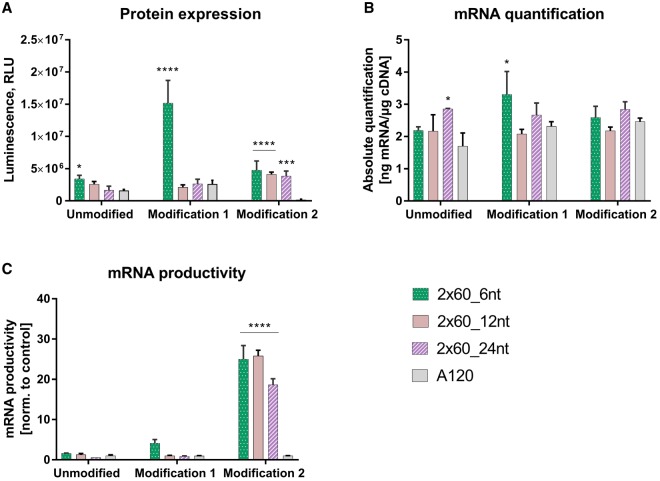
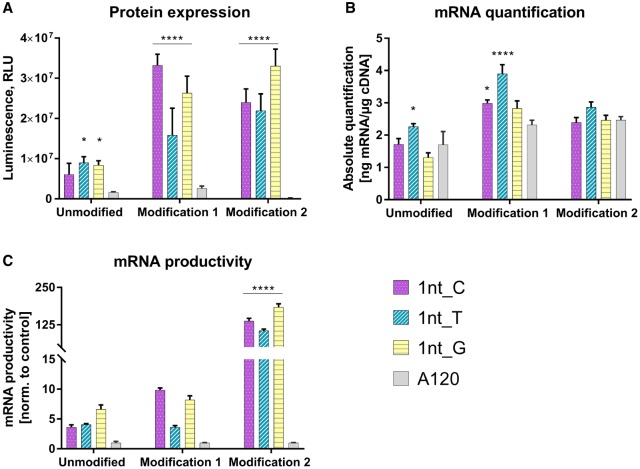
Verification
Claims the paper makes
The claims and statistics of this paper haven’t been checked yet.
Run the check — free, no account needed. It reads the open-access text and checks the sources it cites.
Claims other papers make about this one
Each is checked against this paper’s own text: does it say what the citing paper says it does?
The source backs part of the claim, not all of it — or backs it for a different population, condition or comparison.
In the citing paper
“An alternative strategy has been developed to avoid this instability, consisting of including an internal 10-nucleotide linker into the poly(A) stretch.25,26”
From Combining an optimized mRNA template with a double purification process allows strong expression of in vitro transcribed mRNA (2021) · cites this paper as [26]
Experimental — accuracy not yet measuredIn the citing paper
“Current studies have shown that the segmented poly(A) tail extends mRNA half-life and improves translation efficiency compared to the long-chain poly(A) tail.154”
From Advances in COVID-19 mRNA vaccine development (2022) · cites this paper as [154]
Self-check
Percentages, sums and reported differences re-computed from the paper’s own numbers.
The self-check needs the paper’s full text.
Citations
Cites
Direct Gene Transfer into Mouse Muscle in Vivo
Wolff, J. A., Malone, R. W., Williams, P., Chong, W., Acsadi, G., Jani, A., & Felgner, P. L. (1990) · Science · doi:10.1126/science.1690918 · Cited by 4,173 · cited 1×
“Increasing its stability and translational yields has led to a progress from the first use of encoding a potentially therapeutic protein (Wolff et al. 1990) to preclinical (Bahl et al. 2017; Richner et al. 2017) and clinical applications (Mullard 2016).”
BackgroundKarikó, K., Buckstein, M., Ni, H., & Weissman, D. (2005) · Immunity · doi:10.1016/j.immuni.2005.06.008 · Cited by 2,728
Karikó, K., Muramatsu, H., Welsh, F. A., Ludwig, J., Kato, H., Akira, S., & Weissman, D. (2008) · Molecular Therapy · doi:10.1038/mt.2008.200 · Cited by 1,930
A serious adverse event after successful gene therapy for X-linked severe combined immunodeficiency
Hacein-Bey-Abina, S., von Kalle, C., Schmidt, M., Le Deist, F., Wulffraat, N., McIntyre, E., Radford, I., Villeval, J.-L., Fraser, C. C., Cavazzana-Calvo, M., et al. (2003) · New England Journal of Medicine · doi:10.1056/nejm200301163480314 · Cited by 1,867 · cited 2×
“…gene therapy with DNA-based vectors, use of mRNA offers several advantages, such as transient expression (Kapeli and Yeo 2012; Lodish 2012), lack of necessity to enter the nucleus, and no risk of chromosomal integration (Cannon and Weissman 2002; Hacein-Bey-Abina et al. 2003; Bernal 2013).”
BackgroundCircularization of mRNA by Eukaryotic Translation Initiation Factors
Wells, S. E., Hillner, P. E., Vale, R. D., & Sachs, A. B. (1998) · Molecular Cell · doi:10.1016/s1097-2765(00)80122-7 · Cited by 968
Modified mRNA vaccines protect against zika virus infection
Richner, J. M., Himansu, S., Dowd, K. A., Butler, S. L., Salazar, V., Fox, J. M., Julander, J. G., Tang, W. W., Shresta, S., Pierson, T. C., et al. (2017) · Cell · doi:10.1016/j.cell.2017.02.017 · Cited by 909
Expression of therapeutic proteins after delivery of chemically modified mRNA in mice
Kormann, M. S. D., Hasenpusch, G., Aneja, M. K., Nica, G., Flemmer, A. W., Herber-Jonat, S., Huppmann, M., Mays, L. E., Illenyi, M., Schams, A., et al. (2011) · Nature Biotechnology · doi:10.1038/nbt.1733 · Cited by 733
Self-citationZhang, H., & Maloney, L. T. (2012) · Frontiers in Neuroscience · doi:10.3389/fnins.2012.00001 · Cited by 679
Bahl, K., Senn, J. J., Yuzhakov, O., Bulychev, A., Brito, L. A., Hassett, K. J., Laska, M. E., Smith, M., Almarsson, Ö., Thompson, J., et al. (2017) · Molecular Therapy · doi:10.1016/j.ymthe.2017.03.035 · Cited by 642
Mangus, D. A., Evans, M. C., & Jacobson, A. (2003) · Genome biology · doi:10.1186/gb-2003-4-7-223 · Cited by 629
Research works printed but not linked: 1
- Voet D , Voet JG . 2011. Biochemistry. 4th ed. John Wiley & Sons, New York.
Cited by
Sorted by citations
Advances in COVID-19 mRNA vaccine development
Fang, E., Liu, X., Li, M., Zhang, Z., Song, L., Zhu, B., Wu, X., Liu, J., Zhao, D., & Li, Y. (2022) · Signal Transduction and Targeted Therapy · doi:10.1038/s41392-022-00950-y · Cited by 601
Modifications in an Emergency: The Role of N1-Methylpseudouridine in COVID-19 Vaccines
Nance, K. D., & Meier, J. L. (2021) · ACS Central Science · doi:10.1021/acscentsci.1c00197 · Cited by 466
From influenza to COVID-19: Lipid nanoparticle mRNA vaccines at the frontiers of infectious diseases
Pilkington, E. H., Suys, E. J. A., Trevaskis, N. L., Wheatley, A. K., Zukancic, D., Algarni, A., Al-Wassiti, H. A., Davis, T. P., Pouton, C. W., Kent, S. J., et al. (2021) · Acta Biomaterialia · doi:10.1016/j.actbio.2021.06.023 · Cited by 271
A trans-amplifying RNA vaccine strategy for induction of potent protective immunity
Beissert, T., Perkovic, M., Vogel, A., Erbar, S., Walzer, K. C., Hempel, T., Brill, S., Haefner, E., Becker, R., Türeci, Ö., et al. (2020) · Molecular Therapy · doi:10.1016/j.ymthe.2019.09.009 · Cited by 212
Recent Advances in Lipid Nanoparticles for Delivery of mRNA
Yang, L., Gong, L., Wang, P., Zhao, X., Zhao, F. H., Zhang, Z., Li, Y., & Huang, W. (2022) · Pharmaceutics · doi:10.3390/pharmaceutics14122682 · Cited by 190
Metadata
- Authors
- Trepotec, Z., Geiger, J., Plank, C., Aneja, M. K., & Rudolph, C.
- Affiliations
- Ethris (Germany) (DE)
- TUM Klinikum (DE)
- Venue
- RNA
- Publisher
- Cold Spring Harbor Laboratory
- Published
- 2019-01-15
- Volume
- 25
- Issue
- 4
- Pages
- 507-518
- ISSN
- 1355-8382 (ISSN-L)
- 1469-9001
- PMC
- PMC6426288
- OpenAlex
- W2910680408
- Cited by
- 129
- References
- 44
- Citations by year
- 2026: 20 · 2025: 29 · 2024: 25 · 2023: 22 · 2022: 20 · 2021: 10 · 2020: 2 · 2019: 1
- FWCI
- 2.73
- Type
- journal article
- Language
- en
- Open access
- bronze
- doi.org
- Locations
- RNA (publishedVersion)
- Europe PMC (PubMed Central) (publishedVersion, cc-by-nc)
- PubMed Central (publishedVersion, cc-by-nc)
- PubMed (publishedVersion)
- mediaTUM (Technical University of Munich) (submittedVersion, other-oa)
- mediaTUM – the media and publications repository of the Technical University Munich (Technical University Munich) (submittedVersion)
- Funders
- NIM Excellence Cluster
- Topics
- Life Sciences › Biochemistry, Genetics and Molecular Biology › Molecular Biology › RNA and protein synthesis mechanisms
- Life Sciences › Biochemistry, Genetics and Molecular Biology › Molecular Biology › RNA Research and Splicing
- Life Sciences › Biochemistry, Genetics and Molecular Biology › Molecular Biology › RNA Interference and Gene Delivery
- Keywords
- poly(A) tail, plasmid recombination, Escherichia coli, mRNA half-life, translation efficiency, spacer length, mRNA therapeutics, plasmid DNA
- MeSH terms
- A549 Cells, Animals, Base Sequence, Escherichia coli, Genetic Engineering, Half-Life, Humans, Plasmids, Poly A, Recombination, Genetic, RNA, Messenger, Transfection, Protein Biosynthesis, HEK293 Cells
About these checks
Registry, retraction, Cites and statistics results are computed, not judged, with one exception: a printed reference that no index lists is read once by a model before it counts as a citation error. Claims are extracted by a model and kept only when their quote appears verbatim in the text; each cited source is then checked, with a model’s help, for whether it says what the claim relies on. Those verdicts can be wrong — read the claim’s quote and the cited source before relying on one.
Statistics and arithmetic are recomputed, not judged.
Confidence bands are shown only for fields calibrated on our annotated test set. None is calibrated yet, so no band is shown.
What counts as a claim ›How we measure confidence ›How we check this ›
Are you an author, or do you see a problem with this page? Request a review
