

The DOI matches its Crossref record; 64 of the 82 references it cites were found in a registry or an index.
What is open peer review? A systematic review
Open accessAbstract
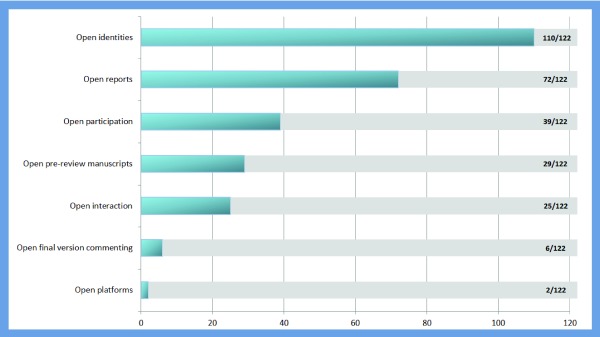
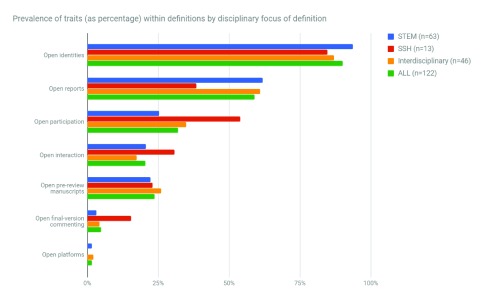
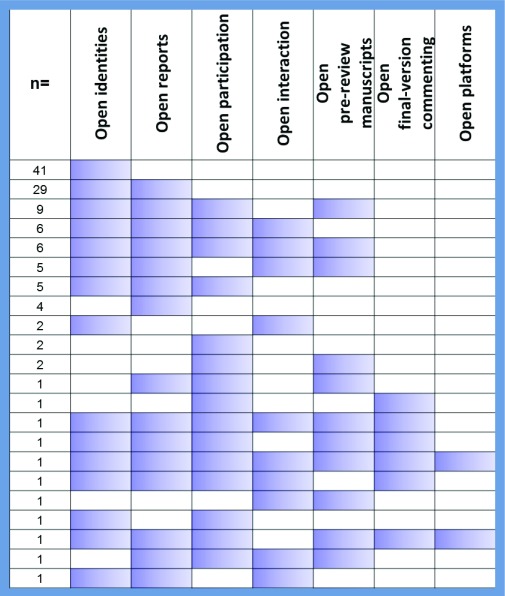
Background: “Open peer review” (OPR), despite being a major pillar of Open Science, has neither a standardized definition nor an agreed schema of its features and implementations. The literature reflects this, with a myriad of overlapping and often contradictory definitions. While the term is used by some to refer to peer review where the identities of both author and reviewer are disclosed to each other, for others it signifies systems where reviewer reports are published alongside articles. For others it signifies both of these conditions, and for yet others it describes systems where not only “invited experts” are able to comment. For still others, it includes a variety of combinations of these and other novel methods. Methods: Recognising the absence of a consensus view on what open peer review is, this article undertakes a systematic review of definitions of “open peer review” or “open review”, to create a corpus of 122 definitions. These definitions are then systematically analysed to build a coherent typology of the many different innovations in peer review signified by the term, and hence provide the precise technical definition currently lacking. Results: This quantifiable data yields rich information on the range and extent of differing definitions over time and by broad subject area. Quantifying definitions in this way allows us to accurately portray exactly how ambiguously the phrase “open peer review” has been used thus far, for the literature offers a total of 22 distinct configurations of seven traits, effectively meaning that there are 22 different definitions of OPR in the literature. Conclusions: Based on this work, I propose a pragmatic definition of open peer review as an umbrella term for a number of overlapping ways that peer review models can be adapted in line with the ethos of Open Science, including making reviewer and author identities open, publishing review reports and enabling greater participation in the peer review process.
Overview
The claims and statistics of this paper haven’t been checked yet.
Run the check — free, no account needed. It reads the open-access text and checks the sources it cites.
Integrity signals
Registry
Cites
Statistics
Figures
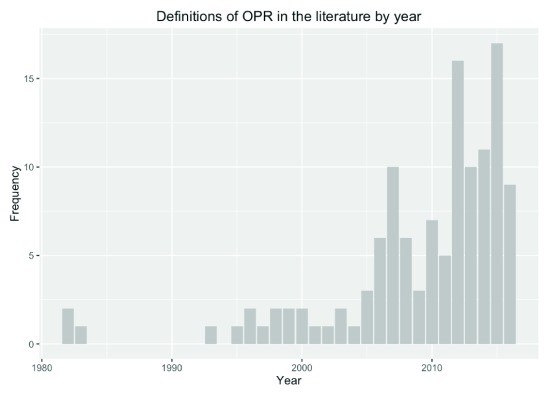
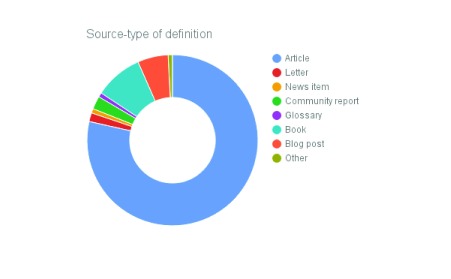
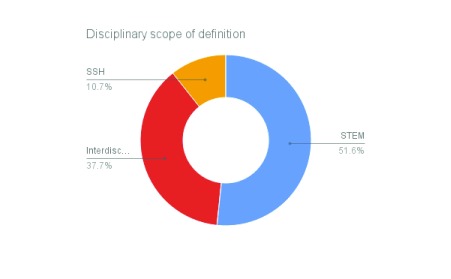
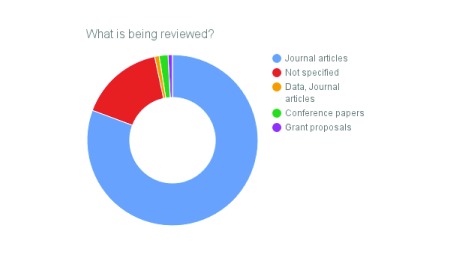
Verification
Claims the paper makes
The claims and statistics of this paper haven’t been checked yet.
Run the check — free, no account needed. It reads the open-access text and checks the sources it cites.
Claims other papers make about this one
Each is checked against this paper’s own text: does it say what the citing paper says it does?
The source backs part of the claim, not all of it — or backs it for a different population, condition or comparison.
In the citing paper
“Besides serving as a high-quality filter, it provides explanations and constructive feedback to authors to improve their scientific contribution (Jefferson et al., 2002; Ross-Hellauer, 2017).”
From The Good, the Bad and the Constructive: Automatically Measuring Peer Review's Utility for Authors (2025) · cites this paper as Ross-Hellauer, 2017
Experimental — accuracy not yet measured
Self-check
Percentages, sums and reported differences re-computed from the paper’s own numbers.
The self-check needs the paper’s full text.
Citations
Cites
1 retracted
Retracted Science and the Retraction Index
Fang, F. C., & Casadevall, A. (2011) · Infection and Immunity · doi:10.1128/iai.05661-11 · Cited by 405 · cited 1×
“Page 3 of 32 (Fang & Casadevall, 2011).”
RetractedFranck, G. (2012) · Cell Cycle · doi:10.4161/cc.22151 · Cited by 1,329 · cited 1×
“” (Suber, 2012) Page 4 of 32 Within just these two examples, there are already a multitude of factors at play, including the removal of anonymity, the publishing of review reports, interaction between participants, crowdsourcing of reviews, and making manuscripts public pre-review, amongst others.”
BackgroundMisconduct accounts for the majority of retracted scientific publications
Fang, F. C., Steen, R. G., & Casadevall, A. (2012) · Proceedings of the National Academy of Sciences · doi:10.1073/pnas.1212247109 · Cited by 1,232 · cited 1×
“Reviewers often fail to detect major methodological failings (Schroter et al., 2004), with eminent journals (whose higher rejection rates might suggest more stringent peer review processes) seeming to perform no better than others (Fang et al., 2012).”
BackgroundA method for taxonomy development and its application in information systems
Nickerson, R. C., Varshney, U., & Muntermann, J. (2013) · European Journal of Information Systems · doi:10.1057/ejis.2012.26 · Cited by 1,143 · cited 1×
“Nickerson et al. (2013) advise that the development of a taxonomy should begin by identifying the appropriate meta-characteristic – in this case distinct individual innovations to the traditional peer review system.”
BackgroundPeer-review practices of psychological journals: The fate of published articles, submitted again
Peters, D. P., & Ceci, S. J. (1982) · Behavioral and Brain Sciences · doi:10.1017/s0140525x00011183 · Cited by 1,079 · cited 3×
“Published reports can enable readers to consider these criticisms themselves, and “have a chance to examine and appraise this process of ”creative disagreement” and form their own opinions” (Peters & Ceci, 1982).”
BackgroundPublication prejudices: An experimental study of confirmatory bias in the peer review system
Mahoney, M. J. (1977) · Cognitive Therapy and Research · doi:10.1007/bf01173636 · Cited by 1,013 · cited 2×
“Next, “confirmatory bias” is theorized to lead to conservatism, biasing reviewers against innovative methods or results contrary to dominant theoretical perspectives (Chubin & Hackett, 1990; Garcia et al., 2016; Mahoney, 1977).”
BackgroundFactors Influencing Publication of Research Results
Dickersin, K. (1992) · JAMA · doi:10.1001/jama.1992.03480030052036 · Cited by 931 · cited 1×
“, 2017) mean that editors and reviewers seem primed to prefer positive results over negative or neutral ones (Bardy, 1998; Dickersin et al., 1992; Fanelli, 2010; Ioannidis, 1998), and to disfavour replication studies (Campanario, 1998; Kerr et al.”
BackgroundPeer Review: A Flawed Process at the Heart of Science and Journals
Smith, R. (2006) · Journal of the Royal Society of Medicine · doi:10.1177/014107680609900414 · Cited by 880 · cited 3×
“Smith, an experienced editor, for example, reports reviewers stealing ideas and passing them off as their own, or intentional blocking or delaying publication of competitors’ ideas through harsh reviews (Smith, 2006).”
BackgroundDo Pressures to Publish Increase Scientists' Bias? An Empirical Support from US States Data
Fanelli, D. (2010) · PLoS ONE · doi:10.1371/journal.pone.0010271 · Cited by 805 · cited 2×
“, 2017) mean that editors and reviewers seem primed to prefer positive results over negative or neutral ones (Bardy, 1998; Dickersin et al., 1992; Fanelli, 2010; Ioannidis, 1998), and to disfavour replication studies (Campanario, 1998; Kerr et al.”
Ioannidis, J. P. A. (1998) · JAMA · doi:10.1001/jama.279.4.281 · Cited by 632 · cited 1×
“…of “impact” and “excellence” (Moore et al., 2017) mean that editors and reviewers seem primed to prefer positive results over negative or neutral ones (Bardy, 1998; Dickersin et al., 1992; Fanelli, 2010; Ioannidis, 1998), and to disfavour replication studies (Campanario, 1998; Kerr et al., 1977).”
Background
Research works printed but not linked: 7
- D Chubin, 1990, Peerless Science: Peer Review and US Science Policy.
- 2016, About | The EMBO Journal [WWW Document]
- S Harnad, 2000, The Invisible Hand of Peer Review.
- S Kaplan, 2015, Major Publisher Retracts 64 Scientific Papers in Fake Peer Review Outbreak.
- J Nicholson, 2016, A Brief Survey on Peer Review in Scholarly Communication
- M Ware, Peer Review: Benefits, Perceptions and Alternatives, 2008
- M Ware, 2016, Peer Review Survey 2015
Cited by
Sorted by citations
Items 201–300 of 394
Opening and Reusing Transparent Peer Reviews with Automatic Article Annotation
Sadeghi, A., Capadisli, S., Wilm, J., Lange, C., & Mayr, P. (2019) · Publications · doi:10.3390/publications7010013 · Cited by 7
Peer-reviews on the blockchain
Jan, Z., Third, A., Bachler, M., & Domingue, J. (2018) · doi:10.5281/zenodo.3266177 · Cited by 4
“Some venues (e.g., the Semantic Web Journal, ESWC [3]) use Open Review [10] in order to improve quality and reduce bias through transparency.”
BackgroundTektonika: The Community-Led Diamond Open-Access Journal for Tectonics and Structural Geology
Fernandez-Blanco, D., Lacassin, R., Gouiza, M., Pérez-Díaz, L., Magee, C., McCarthy, D., Doré, T., Péron-Pinvidic, G., Kavanagh, J., Bond, C., et al. (2023) · Tektonika · doi:10.55575/tektonika2023.1.1.56 · Cited by 4
“Among these, ”Open peer review” (OPR) is often presented as a more transparent, constructive, and trackable option, although OPR is a generic term and can be implemented in many various ways ( Ross-Hellauer , 2017; Schmidt et al. , 2018).”
BackgroundSafeguarding science: The centrality of publication ethics
Willmott, H. (2026) · Organization · doi:10.1177/13505084261427514 · Cited by 3
Published peer review reports have higher informative content than unpublished reports
Álvarez-García, E., García-Costa, D., Squazzoni, F., Malički, M., Mehmani, B., & Grimaldo, F. (2025) · Journal of Informetrics · doi:10.1016/j.joi.2025.101760 · Cited by 5
Error needs culture! Exploring the relationship between error culture and openness
Frank, M., Miller, B., Vosskuhl, J., Zänkert, S., Heßelmann, F., & Jolliffe, J. D. (2026) · Royal Society Open Science · doi:10.1098/rsos.242233 · Cited by 6
Fostering trustworthy information: countering disinformation when there are no bare facts
Boumans, M., Ferwerda, J., Goldenberg, M. J., Leonelli, S., Russo, F., Traag, V., & Wardekker, A. (2025) · Royal Society Open Science · doi:10.1098/rsos.250654 · Cited by 3
“In addition, preprints may be openly discussed in open peer-review procedures [56].”
Reviewing manuscripts for scientific journals: recommendations for early career scientists
Forero, D. A., Glatt, S., & Oermann, M. (2025) · BMC Research Notes · doi:10.1186/s13104-024-07060-8 · Cited by 3
Quality indicators for academic journals: What makes a journal trustworthy?
Paliya, N., & Jha, S. S. (2025) · IP Indian Journal of Anatomy and Surgery of Head Neck and Brain · doi:10.18231/j.ijashnb.2024.019 · Cited by 3
Is Peer-Reviewing Worth the Effort?
Church, K., Chandrasekar, R., Ortega, J. E., & Ahmad, I. S. (2024) · International Conference on Computational Linguistics · doi:10.48550/arxiv.2412.14351 · Cited by 3
Du, D., Ding, J., Chen, Y.-F., & Liu, C. (2023) · Journal of Library and Information Sciences · doi:10.1177/09610006231196336 · Cited by 3
“Open access resources provide free, online, and unrestricted access to knowledge, with minimal copyright restrictions and licensing limitations for sustainable preservation and reuse (Ross-Hellauer, 2017; Wicherts, 2016).”
Blockchain solutions for scientific paper peer review: a systematic mapping of the literature
Favarò, A., Marcelino, R., & Cechinel, C. (2023) · Data Technologies and Applications · doi:10.1108/dta-01-2022-0010 · Cited by 3
Prospects of digital scientific publishing on blockchain: The concept of DAP
Skala, K., Sojat, Z., Maričević, J., Davidović, D., Bojović, V., Zubčić, T., Kolarek, B., Pažin, D., Tomić, D., Slapnik, T., et al. (2023) · Open Research Europe · doi:10.12688/openreseurope.15771.2 · Cited by 3
Banerjee, A. (2022) · The Qualitative Report · doi:10.46743/2160-3715/2022.5470 · Cited by 3
“It’s true that much ink has been spent discussing the functionality of peer reviewing (Ross-Hellauer, 2017; Ross-Hellauer et al., 2017; Tennant et al., 2017).”
BackgroundEmile, S. H., Hamid, H. K. S., Atıcı, S. D., Kosker, D. N., Papa, M. V., Elfeki, H. A., Tan, C. Y., El‐Hussuna, A., & Wexner, S. D. (2022) · Science Editing · doi:10.6087/kcse.257 · Cited by 3
Silva, K. L. N., Garcia, J., & Targino, M. D. G. (2021) · Revista Brasileira de Educação em Ciência da Informação · doi:10.24208/rebecin.v8i.252 · Cited by 3
Advances in Electron Microscopy with Deep Learning
Ede, J. M. (2020) · Warwick Research Archive Portal (University of Warwick) · doi:10.48550/arxiv.2101.01178 · Cited by 4
Collareta, A., Perreault, R. T., Buckeridge, J., Coletti, G., Kočí, T., Jones, D. S., Bosselaers, M., & Newman, W. (2020) · Integrative Zoology · doi:10.1111/1749-4877.12472 · Cited by 3
Open Science in the Field of Emotional and Behavioral DisordersPreprint
Cook, B. G., Lloyd, J. W., & Therrien, W. J. (2019) · EdArXiv (OSF Preprints) · doi:10.35542/osf.io/duvf8 · Cited by 1
Die Offenheit der wissenschaftlichen Ausbildung:
Heck, T., & Heudorfer, A. (2018) · MedienPädagogik Zeitschrift für Theorie und Praxis der Medienbildung · doi:10.21240/mpaed/32/2018.10.25.x · Cited by 6
A spatialised bibliometrics approach of a scientific journal production
Banos, A., Chasset, P.-O., Commenges, H., Cottineau, C., Pumain, D., & Raimbault, J. (2018) · arXiv.org · doi:10.48550/arxiv.1808.07282 · Cited by 3
A peer review card exchange game
Токалич, Р., & Marušić, A. (2018) · European Science Editing · doi:10.20316/ese.2018.44.18007 · Cited by 5
“серверах для их обсуждения всеми желающими; неселективные рецензии (non-selective reviews), предполагающие оценку лишь вопросов методологии, а не научной новизны исследования и его актуальности; феномен «открытого рецензирования» (open peer review), при котором имена и автора, и рецензента известны друг другу, а текст…”
Bae, A. J. (2026) · Transportation Research Interdisciplinary Perspectives · doi:10.1016/j.trip.2026.102058
Cuevas, C. D. L. (2026) · Research Integrity and Peer Review · doi:10.1186/s41073-026-00200-7 · Cited by 2
“Recognizing this may help recalibrate expectations of peer review and underscore the importance of editorial responsibility in mediating between competing assessments [7, 8, 13, 14].”
No calm before the storm: insights on editorial discrimination against Global South scholars
Khundrakpam, P., & Sarmah, J. (2026) · Qualitative Research Journal · doi:10.1108/qrj-03-2025-0128 · Cited by 2
Pérez-Llantada, C. (2025) · Journal of English for Research Publication Purposes · doi:10.1075/jerpp.25019.per · Cited by 2
Zong, Q., Huang, Z., Huang, Y., Yu, X., Wu, J., & Li, C. (2025) · Journal of Information Science · doi:10.1177/01655515251388022 · Cited by 2
The Past and Present of Peer Review in the Humanities: An Introduction
Verbergt, M.-G., & ten Hagen, S. (2025) · Minerva · doi:10.1007/s11024-025-09615-w · Cited by 2
“In the literature on open peer review, this distinction has been framed as the difference between ‘open identities’ of review - ers and ‘open reports’ (Ross-Hellauer 2017).”
Wei, H., Liu, X., Ding, J., & Qu, Z. (2025) · Journal of Informetrics · doi:10.1016/j.joi.2025.101742 · Cited by 2
Between Gift-Giving and Accumulation: Peer Review Economies in Psychology
Kaltenbrunner, W. (2025) · Minerva · doi:10.1007/s11024-025-09582-2 · Cited by 2
“Open peer review is associated with many different benefits and downsides (Ross-Hellauer 2017; Wolfram et al. 2020; Collabra: Psychology, n.d.), but in particular with Wolf-ram et al. additional accountability in peer review and ensuring careful reviews.”
What has been Missing in Leader Emergence? A Systematic Exploration and Future Research Directions
Sholikhah, Z., Nastiti, T., & Kismono, G. (2024) · Revista de Gestão Social e Ambiental · doi:10.24857/rgsa.v18n8-118 · Cited by 2
“It involves establishing inclusion and exclusion criteria, evaluating the relevance of articles on LE through peer-reviewed journal publications, and excluding those not pertinent to the topic (Meline, 2006; Podsakoff et al., 2005; Ross-Hellauer, 2017).”
Is Living Easier With Eyes Closed?
Wien, C. N. (2024) · European Review · doi:10.1017/s1062798723000558 · Cited by 2
“A study from 2017 identified 122 different definitions of open peer review from a systematic review of 137 articles (Ross-Hellauer 2017).”
Open peer review: the point of view of scientific journal editors
Abadal, E., & Melero, R. (2022) · JLIS.it · doi:10.36253/jlis.it-507 · Cited by 2
“En diversos textos (Ross-Hellauer 2017; Abadal and Da Silveira 2020) se han destacado las princi-pales ventajas de la utilización del OPR, en especial, la transparencia que permite del proceso de evaluación, el hecho de facilitar la auditoría del proceso editorial y también que permite el…”
BackgroundConcepción, A. A. R., González, W. C., Lepez, C. O., Bonardi, M. C., Castillo, A. A. V., Alonso-Galbán, P., Barrios, C. C. C., Machuca-Contreras, F., & González-Argote, J. (2022) · Salud, Ciencia y Tecnología · doi:10.56294/saludcyt2023158 · Cited by 2
Calling Nurses to Move Forward Together in Truth and Love
Bearskin, L. B., Phillips-Beck, W., Kennedy, A., Pepin, J., Myrick, F., Lamothe, J. P., & Khazal, S. (2022) · Quality Advancement in Nursing Education - Avancées en formation infirmière · doi:10.17483/2368-6669.1388 · Cited by 2
“This was carried out by invitation to contributing authors to engage in an open review process, with authors and reviewers being aware of each other’s identity with direct reciprocal discussion (Ross-Hellauer, 2017).”
Peer Feedback in Linked Courses: Perceptions of Benefits and Problems
Menagarishvili, O., Frazee, A., & Burnett, R. (2022) · 2022 IEEE International Professional Communication Conference (ProComm) · doi:10.1109/procomm53155.2022.00065 · Cited by 2
“Peer review is a familiar process in composing and in publishing [1]–[3], relevant to both CS and TC.”
BackgroundSharing and Caring: Creating a Culture of Constructive Criticism in Computational Legal Studies
Coupette, C., & Hartung, D. (2022) · arXiv.org · doi:10.48550/arxiv.2205.01071 · Cited by 2
“At least for reviews of publications that are eventual accepts, the solution is relatively straightforward: All communications between authors and (identified) reviewers are published alongside the work in question, adopting an open review approach in the broadest possible sense [25].”
BackgroundThe IPSERA 2021 special issue. From judge to jury: the potential for crowd reviewing
Ateş, M. A., Luzzini, D., Meehan, J., & Suurmond, R. (2022) · Journal of Purchasing and Supply Management · doi:10.1016/j.pursup.2022.100770 · Cited by 2
A pandemia e a emergência da Ciência Aberta
Rodrigues, E. (2020) · UMinho Editora eBooks · doi:10.21814/uminho.ed.24.12 · Cited by 2
“O crescimento da publicação de preprints durante a pandemia, foi também acompanhado pelo desenvolvimento ou utilização de práticas, modelos e serviços inovadores, nomeadamente de revisão por pares aberta (Ross-Hellauer, 2017) (Johansson e Saderi, 2020) (Fox, 2020) ou de overlay publishing22.”
BackgroundŠevkušić, M., Kosanović, B., & Šipka, P. (2020) · International Conference on Electronic Publishing · doi:10.4000/proceedings.elpub.2020.16 · Cited by 2
Funktionen und Folgen von Transparenz: Zum Fall Open Science
Franzen, M. (2019) · Springer eBooks · doi:10.1007/978-3-658-22294-9_11 · Cited by 4
Díez-Pascual, A., García-Díaz, P., & Peña-Capilla, R. (2018) · Education sciences · doi:10.3390/educsci9010005 · Cited by 2
Choosing and communicating with journals
Lang, T. A. (2018) · Journal of Public Health and Emergency · doi:10.21037/jphe.2018.01.02 · Cited by 1
“In open review, both reviewers and authors know each other’s identities, and the reviews may be published with the article (48).”
BackgroundEditorial decisions with informed and uninformed reviewers
Rodríguez-Sánchez, R., García, J. A., & Fdez-Valdivia, J. (2018) · Scientometrics · doi:10.1007/s11192-018-2875-7 · Cited by 2
“Following Ross-Hellauer (2017), the open interaction in peer review allows and encourages reciprocal discussion among reviewers.”
BackgroundInfluentialProblems with open participation in peer review
García, J. A., Rodríguez-Sánchez, R., & Fdez-Valdivia, J. (2017) · Scientometrics · doi:10.1007/s11192-017-2445-4 · Cited by 2
Szumega, J., Bougueroua, L., Gkotse, B., Jouvelot, P., & Ravotti, F. (2023) · arXiv · doi:10.48550/arxiv.2312.04576 · Cited by 8
“This is to alleviate the scarcity of training data for our project that we envisioned taking advantage of the budding Open Peer Review (OPR) movement ([Ross-Hellauer, 2017]).”
BackgroundErvens, B., Carslaw, K. S., Koop, T., & Pöschl, U. (2025) · EGUsphere · doi:10.5194/egusphere-2025-419 · Cited by 1
“…for tracking the rigor of the peer review nor leads to quick, efficient communication of scientific knowledge (Tennant et al., 2017; Tennant, 2018; Ross-Hellauer, 2017; Borrego et al., 2021; Aczel et al., 2025; Pattinson and Cur-rie, 2025), which may inherently bias scientific assessment and…”
Peer review and exclusionary practices: a critique from the Global South
Sanaullah (2026) · Qualitative Research Journal · doi:10.1108/qrj-01-2025-0006 · Cited by 1
Open Science in den Wirtschaftswissenschaften: Transparenz, Reproduzierbarkeit und Zugang
Schmidt, K. M., Neyse, L., Saam, M., Siegfried, D., Vilhuber, L., & Winter, J. (2026) · Perspektiven der Wirtschaftspolitik · doi:10.1515/pwp-2026-0019 · Cited by 1
Peer review: historical evolution and reviewers’ learning
Gómez, M. P. A., & Sardanelli, F. (2026) · Insights into Imaging · doi:10.1186/s13244-026-02302-8 · Cited by 1
“The late twentieth and early twenty-fi rst centuries introduced further adaptations: focused statistical reviewers, reporting checklists, con fl ict-of-interest disclosures, and, more recently, open peer review and post-publication commentary enabled by digital platforms [23, 24].”
Transparent Journal Review of Dual Use Research of Concern
Resnik, D. B. (2026) · Health Security · doi:10.1177/23265094261428672 · Cited by 1
“19 Although I am not advocating for completely transparent journal review, I believe that more transparency is needed for review of DURC.”
Decolonizing peer review: disrupting academic gatekeeping and reclaiming knowledge production
Iheduru-Anderson, K. C. (2026) · Qualitative Research Journal · doi:10.1108/qrj-03-2025-0114 · Cited by 1
Open science indicator compliance by Spanish scientific journals
Coslado, M. A., Filippo, D. D., & Sanz-Casado, E. (2025) · Journal of Data and Information Science · doi:10.2478/jdis-2025-0042 · Cited by 1
Integrating Open Science Principles into Quasi-Experimental Social Science Research
Heller, B., & Robinson, C. D. (2025) · Social Sciences · doi:10.3390/socsci14080499 · Cited by 2
The SPR-Index: A Novel Metric Integrating the H-Index with Verified Peer Review Scores
de Souza, U. J. B., Chaúque, B. J. M., Gabev, E. E., Spilki, F. R., & Campos, F. S. (2025) · Publications · doi:10.3390/publications13020022 · Cited by 2
Tunger, D., & Schaer, P. (2025) · Scolia · doi:10.48550/arxiv.2503.22594 · Cited by 1
“Although the current peer-review system is not without critique and alternatives like open peer reviews have been discussed [2], it is one of the cornerstones of modern science.”
Purnama, A., Riyanto, S., Siswanti, I., & Nawangsari, L. (2024) · Social and Economic Bulletin · doi:10.70550/sebi.v1i3.73 · Cited by 1
“ Innovations in Journal Management Systems: Open peer review can increase transparency and distinguish reputable and predatory journals (Ross-Hellauer, 2017).”
Failure to deanonymize information in biomedical academic papers
da Silva, J. A. T. (2024) · Nurse Author & Editor · doi:10.1111/nae2.12064 · Cited by 1
Design and Implementation of a Blockchain-Based Open Peer Review System Using Hyperledger Fabric
Ji, S., Kim, S.-U., Kim, D., & Im, H. (2024) · Journal of Electrical Engineering and Technology · doi:10.1007/s42835-024-01922-8 · Cited by 1
Does open identity of peer reviewers positively relate to citations?
Hou, L., Wu, Q., & Xie, Y. (2024) · Journal of Informetrics · doi:10.1016/j.joi.2024.101489 · Cited by 3
¿El futuro de la revisión por pares es la revisión abierta?
Castillo, J. A. S. (2023) · Revista de la Facultad de Ciencias Económicas · doi:10.18359/rfce.7092 · Cited by 1
Uncovering the Malpractices in Publishing: A Global Review System Using Disruptive Technologies
Perera, P. (2023) · International Conference on Interaction Sciences · doi:10.1109/icis57766.2023.10210243 · Cited by 1
“Ross-Hellauer (2017) also highlights the need for a standardized definition of "open peer review" (OPR) and conducts a systematic review of 122 definitions to create a typology of innovations in peer review.”
BackgroundLectura de informes de arbitraje y cómo responder en una comunicación científica
Rodríguez, A. R. R. (2023) · Fides et ratio · doi:10.55739/fer.v25i25.129 · Cited by 1
Open peer review: some considerations on the selection and management of reviewers
Capaccioni, A. (2022) · JLIS.it · doi:10.36253/jlis.it-508 · Cited by 1
Regression towards the mean—a plea for civility in peer review
Rao, R. T., & Bareham, B. K. (2022) · BMJ · doi:10.1136/bmj.o2886 · Cited by 1
Quantinar: a blockchain peer-to-peer ecosystem for modern data analytics
Bâg, R., Spilak, B., Winkel, J., & Härdle, W. (2022) · Computational statistics (Zeitschrift) · doi:10.1007/s00180-024-01529-7 · Cited by 1
“Such a process ensures the seven traits of the open peer-review process identified by Ross-Hellauer (2017): • Open identities : Authors and reviewers are aware of each other’s identities.”
Kazi, S., Frank, R. A., Salameh, J., Fabiano, N., Absi, M., Pozdnyakov, A., Islam, N., Korevaar, D. A., Cohen, J. F., Bossuyt, P. M., et al. (2022) · Journal of Magnetic Resonance Imaging · doi:10.1002/jmri.28116 · Cited by 5
Perception of knowledge sharing among reviewers from the perspective of scientific editors
Maia, F., Farias, G., & Farias, M. (2022) · RDBCI: Revista Digital de Biblioteconomia e Ciência da Informação · doi:10.20396/rdbci.v20i00.8667456/27887 · Cited by 1
Game theory and scholarly publishing: premises for an agreement around open access
Maddi, A. (2021) · arXiv.org · doi:10.48550/arxiv.2106.13321 · Cited by 1
“The scientific community is becoming more and more organized and can integrate the evaluation of its own production (open peer review) (Kriegeskorte, 2012; Pöschl, 2012; Ross-Hellauer, 2017).”
BackgroundReview of: "Investigating Invalid DOIs in COCI v1 (protocols.io.bt5xnq7n)"
Tural, D. (2021) · Qeios · doi:10.32388/whwoi8 · Cited by 1
Barbaro, M., Napolitani, F., & Barbaro, A. (2021) · doi:10.32384/jeahil17455 · Cited by 1
“contribute to the review process; the reviewers may be algorithmically determined and requests sent out automatically and so on (3).”
BackgroundAnts-Review: a Protocol for Incentivized Open Peer-Reviews on Ethereum
Trovò, B., & Massari, N. (2021) · arXiv.org · doi:10.48550/arxiv.2101.09378 · Cited by 1
Interactive articles: a case study in the ‘Ciência Hoje’ magazine
Souza, N., & Bevilaqua, D. (2020) · doi:10.22323/2.19060201 · Cited by 1
“In science publications, the authorship is an important feature; most of the collaboration is related to an open-peer review of the paper and post-publication improvements [Ross-Hellauer, 2017].”
BackgroundDoes opening up peer review benefit science in terms of citations?
Ni, J., Zhao, Z.-Y., Shao, Y., Liu, S., Li, W., & Li, J. (2020) · ASIS&T Annual Meeting · doi:10.1002/pra2.258 · Cited by 1
“Sienkiewicz and Altmann (2016) found that, in most journals, short titles are positively correlated with citations only in the most cited papers, while in normal papers, short titles are negatively correlated with citations.”
BackgroundResultPeer Review: Objectivity, Anonymity, TrustPreprint
Ucko, D. (2020) · arXiv (Cornell University) · doi:10.48550/arxiv.2005.04702 · Cited by 1
Chapter 1. Connecting traditional and new genres
Luzón, M., & Pérez-Llantada, C. (2019) · doi:10.1075/pbns.308.01luz · Cited by 1
Ross-Hellauer, T. (2019) · Definitions · doi:10.32388/002217 · Cited by 1
Self-citationAutomatically Annotating Articles Towards Opening and Reusing Transparent Peer Reviews
Sadeghi, A., Capadisli, S., Wilm, J., Lange, C., & Mayr, P. (2018) · arXiv.org · doi:10.48550/arxiv.1812.01027 · Cited by 1
Developing sustainable Open Science solutions in the frame of EU funded research: the OpenUP case
Toli, E., Sifacaki, E., Manola, N., Ioannidis, Y., Ross-Hellauer, T., Görögh, E., Vignoli, M., Banelyte, V., Manghi, P., & Woutersen-Windhouwer, S. (2018) · International Symposium on Open Collaboration · doi:10.1145/3233391.3233528 · Cited by 1
Self-citationEditorial-Transitioning Publications to Open Peer Review
Ross-Hellauer, T. (2018) · Publ. · doi:10.3390/publications6020028 · Cited by 1
Self-citationOpen Science e valutazione: non solo una questione di “alternative”
Giglia, E. (2024) · Quaderni di Sociologia · doi:10.4000/13k0j · Cited by 4
Quantinar: a blockchain p2p ecosystem for honest scientific research
Bâg, R., Spilak, B., Winkel, J., & Härdle, W. (2022) · Social Science Research Network · doi:10.48550/arxiv.2211.11525 · Cited by 1
“Such a process ensures the seven traits of the open peer-review process identified by Ross-Hellauer (2017): • Open identities : Authors and reviewers are aware of each other’s identities.”
The Good, the Bad and the Constructive: Automatically Measuring Peer Review's Utility for Authors
Sadallah, A., Baumgärtner, T., Gurevych, I., & Briscoe, T. (2025) · arXiv · doi:10.48550/arxiv.2509.04484
“Besides serving as a high-quality filter, it provides explanations and constructive feedback to authors to improve their scientific contribution (Jefferson et al., 2002; Ross-Hellauer, 2017).”
Academics and the Field of Academic Publishing: Challenges and Approaches
Padmalochanan, P. (2019) · Publishing Research Quarterly · doi:10.1007/s12109-018-09628-2 · Cited by 22
Cai, S., & Wang, X. (2026) · Journal of Informetrics · doi:10.1016/j.joi.2026.101878
Wei, H., Ding, J., Liu, X., & Qu, Z. (2026) · Scientometrics · doi:10.1007/s11192-026-05869-7
How to Practice Open Science: A Cookbook for Clinical Psychology and Psychotherapy Research
Kämpf, M. S., Riehle, M., Ehrenthal, J. C., Blackwell, S. E., Möllmann, A., Cwik, J. C., Feneberg, A. C., Kräplin, A., Bentz, D., Burghardt, J., et al. (2026) · Journal of Clinical Psychology · doi:10.1002/jclp.70218 · Cited by 3
Governing Generative AI in Peer Review: An Author-Authorised, Version-Synchronised Preprint Pathway
Shiraishi, K. (2026) · Metrics · doi:10.3390/metrics3040027
Peer review for clinicians and researchers: A practical guide
Al‐Hussaini, A. A., & Sanai, F. M. (2026) · Saudi Journal of Gastroenterology · doi:10.4103/sjg.sjg_247_26
Albert, O. M., & Arthur, A. (2026) · Research Ethics · doi:10.1177/17470161261492136
Solidarity with Ira Bogotch: peering at peer review
Gunter, H. M. (2026) · Journal of Educational Administration & History · doi:10.1080/00220620.2026.2746701
Kharlamova, G., Naumova, M., Matsiuk, O., & Наумова, О. (2026) · Publications · doi:10.3390/publications14040069
Does Discussion Matter? Interaction Dynamics in Open Peer Review
Wei, S., & Bi, R. (2026) · ACM Conference on Computer Supported Cooperative Work (CSCW) · doi:10.1145/3785651.3831562
Mitsch, C. (2026) · European Journal for Philosophy of Science · doi:10.1007/s13194-026-00785-2
Fankhauser, S. C., McDowell, G. S., Balgopal, M., & Lijek, R. S. (2026) · Journal of Microbiology & Biology Education · doi:10.1128/jmbe.00172-26
“Peer review is often lauded as the backbone of science and what differentiates science from pseudoscience (24, 25).”
Müller, S., Okasa, G., Strinzel, M., Jorstad, A., Milzow, K., & Egger, M. (2026) · PLoS ONE · doi:10.1371/journal.pone.0352900
“Journals have moved toward more open processes, with peer reviews often published and reviewer activity recognized as contributions to science, thus facilitating research on journal peer review [51,52].”
The Politics and the Possibilities of Open Access in India: A Five-point Framework
Wadhwa, S., Hasan, T., & Sneha, P. P. (2026) · Studies in Indian Politics · doi:10.1177/23210230261483347
“…review system is not just about identities of authors and reviewers, but practices such as availability of reviewers’ reports and responses to peer reviewers (Ross-Hellauer, 2017) to which communities can respond, and in which reviews can take place even outside the journals they are submitted to.”
Choi, J., Zhao, Y., & Zhu, Y. (2026) · Journal of Informetrics · doi:10.1016/j.joi.2026.101849
What Reviewers Mean by “Writing Quality”: An Analysis of Published Peer Review Reports in BMJ Open
Fiammenghi, C. (2026) · International Journal of English Linguistics · doi:10.5539/ijel.v16n5p1
“…of reviewer and/or author identities (“open identities”), the publication of peer review reports (“open reports”), and sometimes broader participation extending beyond invited experts (“open participation”, including, for example, patients’ review of clinical research) (Ross-Hellauer, 2017).”
Metadata
- Authors
- Ross-Hellauer, T.
- ORCID
- Ross-Hellauer, Tony
- Venue
- F1000Research
- Publisher
- F1000 Research Ltd
- Published
- 2017-04-27
- Volume
- 6
- Pages
- 588
- ISSN
- 2046-1402 (ISSN-L)
- PMC
- PMC5437951
- OpenAlex
- W4235332646
- Cited by
- 232
- References
- 82
- Citations by year
- 2026: 8 · 2025: 9 · 2024: 36 · 2023: 21 · 2022: 25 · 2021: 30 · 2020: 43 · 2019: 35 · 2018: 15 · 2017: 10
- FWCI
- 7.46
- Type
- journal article
- Language
- en
- Update notices
- new_version (2017-08-31)
- Open access
- gold
- doi.org
- Locations
- F1000Research (publishedVersion, cc-by)
- DOAJ (DOAJ: Directory of Open Access Journals) (submittedVersion, cc-by-sa)
- Funders
- European Commission (643410)
- Topics
- Social Sciences › Library and Information Sciences › Academic Publishing and Open Access
- Social Sciences › Library and Information Sciences › Publishing and Scholarly Communication
- Social Sciences › Library and Information Sciences › scientometrics and bibliometrics research
- Keywords
- open peer review, peer review models, open science, author identity disclosure
About these checks
Registry, retraction, Cites and statistics results are computed, not judged, with one exception: a printed reference that no index lists is read once by a model before it counts as a citation error. Claims are extracted by a model and kept only when their quote appears verbatim in the text; each cited source is then checked, with a model’s help, for whether it says what the claim relies on. Those verdicts can be wrong — read the claim’s quote and the cited source before relying on one.
Statistics and arithmetic are recomputed, not judged.
Confidence bands are shown only for fields calibrated on our annotated test set. None is calibrated yet, so no band is shown.
What counts as a claim ›How we measure confidence ›How we check this ›
Are you an author, or do you see a problem with this page? Request a review
