

The DOI matches its Crossref record; 64 of the 82 references it cites were found in a registry or an index.
What is open peer review? A systematic review
Open accessAbstract
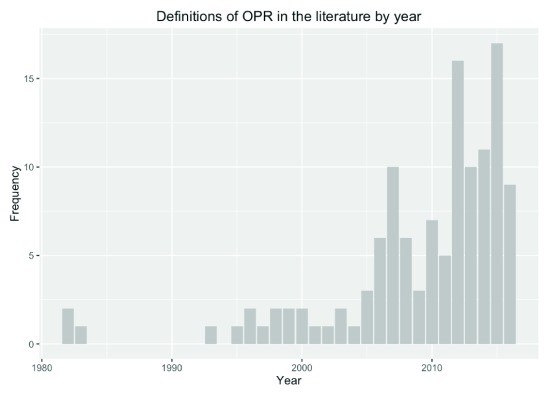
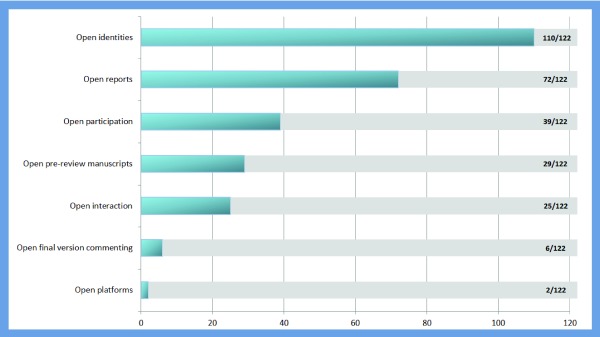
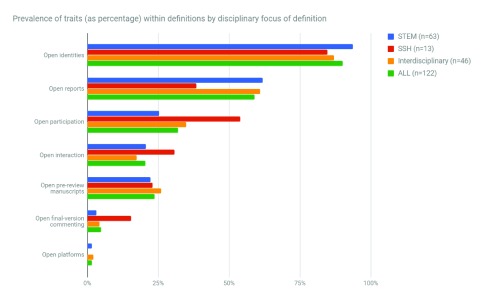
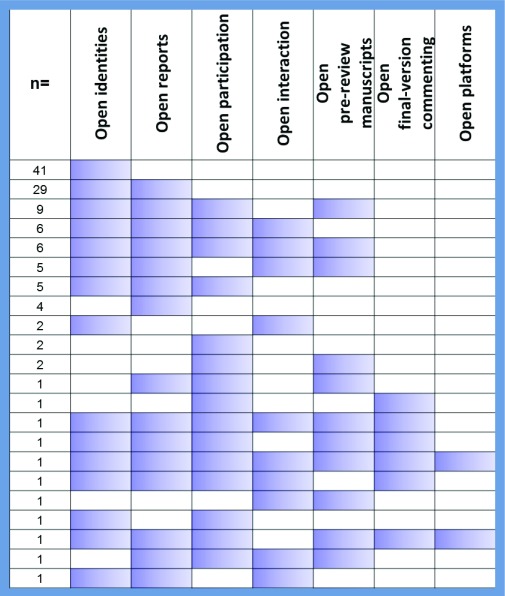
Background: “Open peer review” (OPR), despite being a major pillar of Open Science, has neither a standardized definition nor an agreed schema of its features and implementations. The literature reflects this, with a myriad of overlapping and often contradictory definitions. While the term is used by some to refer to peer review where the identities of both author and reviewer are disclosed to each other, for others it signifies systems where reviewer reports are published alongside articles. For others it signifies both of these conditions, and for yet others it describes systems where not only “invited experts” are able to comment. For still others, it includes a variety of combinations of these and other novel methods. Methods: Recognising the absence of a consensus view on what open peer review is, this article undertakes a systematic review of definitions of “open peer review” or “open review”, to create a corpus of 122 definitions. These definitions are then systematically analysed to build a coherent typology of the many different innovations in peer review signified by the term, and hence provide the precise technical definition currently lacking. Results: This quantifiable data yields rich information on the range and extent of differing definitions over time and by broad subject area. Quantifying definitions in this way allows us to accurately portray exactly how ambiguously the phrase “open peer review” has been used thus far, for the literature offers a total of 22 distinct configurations of seven traits, effectively meaning that there are 22 different definitions of OPR in the literature. Conclusions: Based on this work, I propose a pragmatic definition of open peer review as an umbrella term for a number of overlapping ways that peer review models can be adapted in line with the ethos of Open Science, including making reviewer and author identities open, publishing review reports and enabling greater participation in the peer review process.
Overview
The claims and statistics of this paper haven’t been checked yet.
Run the check — free, no account needed. It reads the open-access text and checks the sources it cites.
Integrity signals
Registry
Cites
Statistics
Figures
Verification
Claims the paper makes
The claims and statistics of this paper haven’t been checked yet.
Run the check — free, no account needed. It reads the open-access text and checks the sources it cites.
Claims other papers make about this one
Each is checked against this paper’s own text: does it say what the citing paper says it does?
The source backs part of the claim, not all of it — or backs it for a different population, condition or comparison.
In the citing paper
“Besides serving as a high-quality filter, it provides explanations and constructive feedback to authors to improve their scientific contribution (Jefferson et al., 2002; Ross-Hellauer, 2017).”
From The Good, the Bad and the Constructive: Automatically Measuring Peer Review's Utility for Authors (2025) · cites this paper as Ross-Hellauer, 2017
Experimental — accuracy not yet measured
Self-check
Percentages, sums and reported differences re-computed from the paper’s own numbers.
The self-check needs the paper’s full text.
Citations
Cites
1 retracted
Retracted Science and the Retraction Index
Fang, F. C., & Casadevall, A. (2011) · Infection and Immunity · doi:10.1128/iai.05661-11 · Cited by 405 · cited 1×
“Page 3 of 32 (Fang & Casadevall, 2011).”
RetractedFranck, G. (2012) · Cell Cycle · doi:10.4161/cc.22151 · Cited by 1,329 · cited 1×
“” (Suber, 2012) Page 4 of 32 Within just these two examples, there are already a multitude of factors at play, including the removal of anonymity, the publishing of review reports, interaction between participants, crowdsourcing of reviews, and making manuscripts public pre-review, amongst others.”
BackgroundMisconduct accounts for the majority of retracted scientific publications
Fang, F. C., Steen, R. G., & Casadevall, A. (2012) · Proceedings of the National Academy of Sciences · doi:10.1073/pnas.1212247109 · Cited by 1,232 · cited 1×
“Reviewers often fail to detect major methodological failings (Schroter et al., 2004), with eminent journals (whose higher rejection rates might suggest more stringent peer review processes) seeming to perform no better than others (Fang et al., 2012).”
BackgroundA method for taxonomy development and its application in information systems
Nickerson, R. C., Varshney, U., & Muntermann, J. (2013) · European Journal of Information Systems · doi:10.1057/ejis.2012.26 · Cited by 1,143 · cited 1×
“Nickerson et al. (2013) advise that the development of a taxonomy should begin by identifying the appropriate meta-characteristic – in this case distinct individual innovations to the traditional peer review system.”
BackgroundPeer-review practices of psychological journals: The fate of published articles, submitted again
Peters, D. P., & Ceci, S. J. (1982) · Behavioral and Brain Sciences · doi:10.1017/s0140525x00011183 · Cited by 1,079 · cited 3×
“Published reports can enable readers to consider these criticisms themselves, and “have a chance to examine and appraise this process of ”creative disagreement” and form their own opinions” (Peters & Ceci, 1982).”
BackgroundPublication prejudices: An experimental study of confirmatory bias in the peer review system
Mahoney, M. J. (1977) · Cognitive Therapy and Research · doi:10.1007/bf01173636 · Cited by 1,013 · cited 2×
“Next, “confirmatory bias” is theorized to lead to conservatism, biasing reviewers against innovative methods or results contrary to dominant theoretical perspectives (Chubin & Hackett, 1990; Garcia et al., 2016; Mahoney, 1977).”
BackgroundFactors Influencing Publication of Research Results
Dickersin, K. (1992) · JAMA · doi:10.1001/jama.1992.03480030052036 · Cited by 931 · cited 1×
“, 2017) mean that editors and reviewers seem primed to prefer positive results over negative or neutral ones (Bardy, 1998; Dickersin et al., 1992; Fanelli, 2010; Ioannidis, 1998), and to disfavour replication studies (Campanario, 1998; Kerr et al.”
BackgroundPeer Review: A Flawed Process at the Heart of Science and Journals
Smith, R. (2006) · Journal of the Royal Society of Medicine · doi:10.1177/014107680609900414 · Cited by 880 · cited 3×
“Smith, an experienced editor, for example, reports reviewers stealing ideas and passing them off as their own, or intentional blocking or delaying publication of competitors’ ideas through harsh reviews (Smith, 2006).”
BackgroundDo Pressures to Publish Increase Scientists' Bias? An Empirical Support from US States Data
Fanelli, D. (2010) · PLoS ONE · doi:10.1371/journal.pone.0010271 · Cited by 805 · cited 2×
“, 2017) mean that editors and reviewers seem primed to prefer positive results over negative or neutral ones (Bardy, 1998; Dickersin et al., 1992; Fanelli, 2010; Ioannidis, 1998), and to disfavour replication studies (Campanario, 1998; Kerr et al.”
Ioannidis, J. P. A. (1998) · JAMA · doi:10.1001/jama.279.4.281 · Cited by 632 · cited 1×
“…of “impact” and “excellence” (Moore et al., 2017) mean that editors and reviewers seem primed to prefer positive results over negative or neutral ones (Bardy, 1998; Dickersin et al., 1992; Fanelli, 2010; Ioannidis, 1998), and to disfavour replication studies (Campanario, 1998; Kerr et al., 1977).”
Background
Research works printed but not linked: 7
- D Chubin, 1990, Peerless Science: Peer Review and US Science Policy.
- 2016, About | The EMBO Journal [WWW Document]
- S Harnad, 2000, The Invisible Hand of Peer Review.
- S Kaplan, 2015, Major Publisher Retracts 64 Scientific Papers in Fake Peer Review Outbreak.
- J Nicholson, 2016, A Brief Survey on Peer Review in Scholarly Communication
- M Ware, Peer Review: Benefits, Perceptions and Alternatives, 2008
- M Ware, 2016, Peer Review Survey 2015
Cited by
Sorted by citations
Items 101–200 of 394
Research misconduct as a challenge for academic institutions and scientific journals
Candal-Pedreira, C., Ross, J. S., Marušić, A., & Ruano-Raviña, A. (2023) · Journal of Epidemiology and Community Health · doi:10.1136/jech-2023-220554 · Cited by 13
Author Guide for Addressing Animal Methods Bias in Publishing
Krebs, C. E., Camp, C., Constantino, H., Courtot, L., Kavanagh, O. V., McCarthy, J., Ort, M., Sarasija, S., & Trunnell, E. R. (2023) · Advanced Science · doi:10.1002/advs.202303226 · Cited by 18
Directional is the new null? A comment on Bushman and Anderson (2021).
Devilly, G., Drummond, A., Sauer, J., Copenhaver, A., Kneer, J., & Ferguson, C. (2023) · Psychology of Popular Media · doi:10.1037/ppm0000447 · Cited by 13
“Indeed, open peer review is now predominantlyseen by researchers as an umbrella term that may encompass many different approaches to the review process, such as named reviewers, published reviews, and representative reviews (see Ross-Hellauer, 2017).”
BackgroundUse of preprint peer review to educate and enculturate science undergraduates
McDowell, G. S., Fankhauser, S. C., Saderi, D., Balgopal, M. M., & Lijek, R. S. (2022) · Learned Publishing · doi:10.1002/leap.1472 · Cited by 12
“At the same time, experiments in open and pre- and post-publication peer review (Ross-Hellauer, 2017; Ross-Hellauer et al., 2017; Teixeira da Silva et al., 2016) have created preprint review platforms such as Review Commons (ASAPbio & EMBO, n. d.), Early Evidence Base (EMBO Press, n.d.), Society…”
BackgroundOpen science as a path to education of new psychophysiologists
Bukach, C. M., Bukach, N., Reed, C. L., & Couperus, J. W. (2021) · International Journal of Psychophysiology · doi:10.1016/j.ijpsycho.2021.04.001 · Cited by 14
The current phase of social sciences research: A thematic overview of the literature
Babalola, S. S., & Nwanzu, C. L. (2021) · Cogent Social Sciences · doi:10.1080/23311886.2021.1892263 · Cited by 16
“Its other features include reviewer’s reports being published alongside articles, manuscript being made available to the public for comments (Ross-Hellauer, 2017), and publication of data with the research”
BackgroundFallacies in World City Network Measurement*
Neal, Z. (2020) · doi:10.1111/gean.12230 · Cited by 13
Double-blind peer review of manuscripts: opportunities, challenges, and way forward
Arumugam, A., Mehta, P., & Baxter, G. D. (2020) · Physical Therapy Reviews · doi:10.1080/10833196.2019.1698161 · Cited by 13
Ten myths around open scholarly publishingPreprint
Tennant, J., Crane, H., Crick, T., Dávila, J. A., Enkhbayar, A., Havemann, J., Kramer, B., Martin, R., Masuzzo, P., Nobes, A., et al. (2019) · doi:10.7287/peerj.preprints.27580v1 · Cited by 13
Self-citationHaim, A., Shaw, S. T., & Heffernan, N. T. (2023) · International Conference on Learning Analytics and Knowledge (LAK) · doi:10.1145/3576050.3576071 · Cited by 10
Peer review: the case for neutral language.
Parsons, C., & Baglini, R. (2021) · Trends in Cognitive Sciences · doi:10.1016/j.tics.2021.05.003 · Cited by 12
Development of an open peer review system using blockchain and reviewer recommendation technologies
Choi, D., & Seo, T. (2021) · doi:10.6087/kcse.237 · Cited by 12
Delikoura, E., & Kouis, D. (2020) · Publ. · doi:10.20944/preprints202011.0282.v1 · Cited by 12
How to Protect the Credibility of Articles Published in Predatory Journals
Yamada, Y. (2020) · Publ. · doi:10.31234/osf.io/xaj46 · Cited by 12
Reassembling Scholarly Communications
Eve, M., & Gray, J. (2020) · doi:10.7551/mitpress/11885.001.0001 · Cited by 12
On Peer Review as the ‘Gold Standard’ in Measuring Research Excellence: From Secrecy to Openness?
Enslin, P., & Hedge, N. (2018) · Journal of Philosophy of Education · doi:10.1111/1467-9752.12312 · Cited by 13
“22 Criticising the ‘blackbox’ of traditional peer review for allowing reviewers, editors and authors 23 significant power to subvert the process, Ross-Hellauer (2017) offers a schema of seven OPR traits including ‘open identities’ (p.7), alternatively termed signed or unblinded review.”
BackgroundAre reviewer scores consistent with citations?
Xie, W., Jia, P., Zhang, G., & Wang, X. (2024) · Scientometrics · doi:10.1007/s11192-024-05103-2 · Cited by 3
“A systematic review has been conducted to define "open peer review," leading to the proposal of a practical definition (Ross-Hellauer, 2017).”
Nine quick tips for open meta-analyses
Moreau, D., & Wiebels, K. (2024) · PLoS Computational Biology · doi:10.1371/journal.pcbi.1012252 · Cited by 11
“Authors can also leverage institutional or subject repositories to deposit post-peer-reviewed versions of their work [69], or use open preprint servers such as arXiv (https://arxiv.org), bioR-xiv (https://www.biorxiv.org), EcoEvoRxiv (https://ecoevorxiv.org), medRxiv (https://www. medrxiv.org),…”
BackgroundA Targeted Review of Open Practices in Special Education Publications
Cook, B. G., van Dijk, W., Vargas, I., Aigotti, S. M., Fleming, J. I., McDonald, S. D., Richmond, C. L., Griendling, L. M., McLucas, A. S., & Johnson, R. M. (2023) · Exceptional Children · doi:10.1177/00144029221145195 · Cited by 18
Alwreikat, A., Shehata, A. M. K., & Zaid, M. (2021) · Global Knowledge, Memory and Communication · doi:10.1108/gkmc-04-2021-0070 · Cited by 17
Ants-Review: A Privacy-Oriented Protocol for Incentivized Open Peer Reviews on Ethereum
Trovò, B., & Massari, N. (2021) · Euro-Par Workshops · doi:10.1007/978-3-030-71593-9_2 · Cited by 11
“As a final step we propose that all the community is involved in the process of peer reviewing by abolishing the editorial selection process through ‘open participation’ (or ‘open interaction’, ‘open platform’ [22,23]).”
BackgroundEve, M. P., Neylon, C., O’Donnell, D. P., Moore, S., Gadie, R., Odeniyi, V., & Parvin, S. (2020) · Cambridge University Press eBooks · doi:10.1017/9781108783521 · Cited by 16
Rethinking the Dual Nature of Science
Chan, H.-Y. (2025) · Science Education · doi:10.1007/s11191-025-00634-3 · Cited by 10
“Open peer review, intended to foster transparency (Tennant et al., 2017), may instead reinforce hierarchies, as elite affiliations confer implicit legitimacy, leading to preferential treatment (Ross-Hellauer, 2017), while less prestigious institutions face greater scrutiny (Bravo et al., 2019).”
Cheng, X., Wang, H., Tang, L., Jiang, W., Zhou, M., & Wang, G. (2024) · Journal of Informetrics · doi:10.1016/j.joi.2024.101540 · Cited by 12
Cuff, J. P., Barrett, M., Gray, H., Fox, C. W., Watt, A. D., & Aimé, E. (2024) · Agricultural and Forest Entomology · doi:10.1111/afe.12617 · Cited by 14
“Journals can encourage pre-printing by integrating preprinting into the submission process, but also promoting preprints and openly inviting review of them from the scientific community, as described below (Ross-Hellauer, 2017).”
A harm reduction approach to improving peer review by acknowledging its imperfections
Cooke, S. J., Young, N., Peiman, K. S., Roche, D. G., Clements, J. C., Kadykalo, A. N., Provencher, J. F., Raghavan, R., DeRosa, M. C., Lennox, R. J., et al. (2024) · FACETS · doi:10.1139/facets-2024-0102 · Cited by 10
“Open identities (Ross-Hellauer 2017), where author and reviewer identities are known but reviews are closed to the public, are meant to improve review quality and accountability and lead to reviews that are more constructive and thoughtfully worded, albeit evidence for those outcomes remains sparse.”
Bolek, M., Bolek, C., Shopovski, J., & Marolov, D. (2022) · Accountability in Research · doi:10.1080/08989621.2022.2030719 · Cited by 15
Ensuring effective scholarly communication: traditions and innovations of peer review
Тихонова, Е. В., & Raitskaya, L. (2021) · Science Editor and Publisher · doi:10.24069/2542-0267-2021-1-6-17 · Cited by 14
Empowering open science with reflexive and spatialised indicators
Raimbault, J., Chasset, P.-O., Cottineau, C., Commenges, H., Pumain, D., Kosmopoulos, C., & Banos, A. (2018) · Environment and Planning B Urban Analytics and City Science · doi:10.1177/2399808319870816 · Cited by 10
“For example, open peer review is progressively emerging as an alternative way to the rigid and slow classical canons of scientific communication (Ross-Hellauer, 2017).”
BackgroundOpen Science Practices Adopted by Latin American & Caribbean Open Access Journals
Appel, A., Lujano, I., & Albagli, S. (2018) · International Conference on Electronic Publishing · doi:10.4000/proceedings.elpub.2018.29 · Cited by 10
“One of these practices regards the use of alternative metrics, a.k.a. altmetrics (Priem, Taraborelli, Groth, & Neylon, 2010 Ross-Hellauer, 2017; Ross-Hellauer, Deppe, & Schmidt, 2017).”
BackgroundOpen peer review, pros and cons from the perspective of an early career researcher
Henriquez, T. (2023) · mBio · doi:10.1128/mbio.01948-23 · Cited by 9
“In this line, Ross-Hellauer reported that there are at least 22 different combinations or definitions for OPR in the literature (3).”
BackgroundMunasinghe, B. M., Chapman, C., Hewavitharane, C., Hewawasam, G., & Dissanayakege, T. G. (2022) · Cureus · doi:10.7759/cureus.30341 · Cited by 9
“It is pointed out that by open peer review, such valuable "discussions among authors and peer reviewers do not go wasted" [9], which is beneficial for potential future reviewers as reviewer reports themselves can be educational not only by 1 1 1 1”
BackgroundThe Cultivation of Social Work Knowledge: Toward a More Robust System of Peer Review
Dunleavy, D. J. (2021) · Families in Society The Journal of Contemporary Social Services · doi:10.1177/10443894211012243 · Cited by 11
“These forms of peer review can be contrasted with unblinded review where “authors and reviewers are aware of each other’s identities” (Ross-Hellauer, 2017, p. 9).”
BackgroundKäsmann, L., Schröder, A., Frey, B., Fleischmann, D. F., Gauer, T., Ebert, N., Hecht, M., Krug, D. A., Niyazi, M., Mäurer, M. A., et al. (2020) · Strahlentherapie und Onkologie · doi:10.1007/s00066-020-01729-2 · Cited by 11
Gomez-Diaz, T., & Recio, T. (2020) · POLIS · doi:10.58944/yuro5734 · Cited by 9
Mandatory disclosure of financial interests of journals and editors
Dal-Ré, R., Bouter, L., Moher, D., & Marušić, A. (2020) · British medical journal · doi:10.1136/bmj.m2872 · Cited by 9
Accountability by design in technology research
Wagner, B. (2020) · Computer law & security review · doi:10.1016/j.clsr.2020.105398 · Cited by 13
“Thus, in areas such as medicine the practice of not just conducing peer review but ‘Open Peer Review’ has become increasingly common ( Haffar et al., 2019 ; Ross-Hellauer, 2017 ).”
BackgroundRevisão pelos Pares Aberta e Ciência Aberta na Comunidade de Pesquisa em Negócios
Mendes-da-Silva, W. (2019) · Revista de Administração Contemporânea · doi:10.1590/1982-7849rac2019190278 · Cited by 9
Rodgers, P. (2017) · eLife · doi:10.7554/elife.32011 · Cited by 9
“Indeed, in a recent review article in F1000Research, Tony Ross-Hellauer of Göttingen State and University Library reported how he had identified 22 distinct forms of ’open peer review’ among scientific journals (Ross-Hellauer, 2017).”
No reward without responsibility: Focus on peer review reports
da Silva, J. A. T., & Daly, T. P. (2024) · Ethics Medicine and Public Health · doi:10.1016/j.jemep.2024.101033 · Cited by 10
Toward openness and transparency to better facilitate knowledge creation
Mahony, S. (2022) · Journal of the Association for Information Science and Technology · doi:10.1002/asi.24652 · Cited by 9
Cross-Sectional Evaluation of Open Science Practices at Imaging Journals: A Meta-Research Study
Kashif Al-Ghita, M., Cobey, K., Moher, D., Leeflang, M. M. G., Ebrahimzadeh, S., Lam, E., Rooprai, P., Khalil, A. A., Islam, N., Algodi, H., et al. (2024) · Canadian Association of Radiologists Journal · doi:10.1177/08465371231211290 · Cited by 8
Otto, J. L., McDowell, G. S., Balgopal, M. M., & Lijek, R. S. (2023) · Journal of Microbiology and Biology Education · doi:10.1128/jmbe.00053-23 · Cited by 14
Open Science for Non-Specialists: Making Open Science Meaningful Beyond the Scientific Community
Elliott, K. C. (2022) · Philosophy of Science · doi:10.1017/psa.2022.36 · Cited by 30
The open peer review experiment in Educational Philosophy and Theory (EPAT)
Peters, M., Brighouse, S., Tesar, M., Sturm, S., & Jackson, L. (2020) · Educational Philosophy and Theory · doi:10.1080/00131857.2020.1846519 · Cited by 8
Marcotte, P., Khomsi, M. R., Falardeau, I., Roult, R., & Lapointe, D. (2020) · doi:10.7202/1074896ar · Cited by 8
Journal Publishing: A Review of the Basics
Kennedy, M. S. (2018) · Seminars in Oncology Nursing · doi:10.1016/j.soncn.2018.09.004 · Cited by 9
Eneh, S. C., Onukansi, F. O., Obi, C. G., Anokwuru, C. C., Ikhuoria, O. V., Nwalieji, C. A., Nwuzoh, M. I., Ekwebene, O. C., Udokang, E. I., Okoli, C. C., et al. (2025) · Frontiers in Health Services · doi:10.3389/frhs.2025.1686682 · Cited by 10
“Top publishers often use waiver policies to promote open-access publishing (45).”
A Tale of Open Science: Emergence of a New Normal
Soliman, M., Sarstedt, M., Adler, S. J., Siegfried, D., Genschow, O., & Imschloß, M. (2025) · Schmalenbach Journal of Business Research · doi:10.1007/s41471-025-00218-5 · Cited by 8
“This fear can reduce the willingness of qualified experts to review or may lead to overly cautious feedback (Ross-Hellauer 2017; Tennant et al. 2016).”
Sedaghat, A. R., Bernal‐Sprekelsen, M. S., Fokkens, W. J., Smith, T. L., Stewart, M. G., & Johnson, R. F. (2024) · Laryngoscope Investigative Otolaryngology · doi:10.1002/lio2.1266 · Cited by 7
“21,22 Although each of these systems has advantages and disadvantages, each system has the potential for introduction of reviewer bias.”
Backgroundda Silva, J. A. T., & Yamada, Y. (2023) · Accountability in Research · doi:10.1080/08989621.2023.2258625 · Cited by 7
“AEOCs and LTAs, alongside OPR, would further diversify manuscript types offered by the journal, democratize the system of academic debate, offer stronger protection of authors’ rights from potential editorial inequalities, and ultimately provide a formal mechanism that allows for the transparent expression of concern…”
InfluentialPeer review: the attitudes and behaviours of Covid-19 pandemic-era early career researchers
Nicholas, D., Herman, E., Bravo, B. R., Watkinson, A., Boukacem‐Zeghmouri, C., Świgoń, M., Abrizah, A., Sims, D., Xu, J., Clark, D., et al. (2023) · El Profesional de la Informacion · doi:10.3145/epi.2023.may.06 · Cited by 8
“Peer review is definable, as Ross-Hellauer (2017) suggests, as the formal quality assurance mechanism whereby scholarly manuscripts (e.g., journal articles, books, grant applications and conference papers) are made subject to the scrutiny of others, whose feedback and judgements are then used to…”
InfluentialProchnow, T. M., Valdez, D., Curran, L. S., Brown, C. T., Hackett, D. S., & Auld, M. E. (2022) · Health Promotion Practice · doi:10.1177/15248399221133725 · Cited by 4
“First, peer-reviewed articles represent the intersection of current events and cutting-edge science; these papers have undergone extensive review by a committee of peers to evaluate the scientific rigor and accuracy of arguments made therein (Ross-Hellauer, 2017).”
BackgroundPublishing peer review materials
Beck, J., Funk, K., Harrison, M., Mcentyre, J., Breen, J., Collings, A. M., Donohoe, P., Evans, M., Flintoft, L., Hamelers, A., et al. (2018) · F1000Research · doi:10.12688/f1000research.16460.1 · Cited by 7
Editorial challenges in a small scientific community: Study of Croatian editors
Vrana, R. (2018) · Learned Publishing · doi:10.1002/leap.1188 · Cited by 7
“Open peer review has neither a standardized definition nor an agreed schema of its features and implementations (Ross-Hellauer, 2017). Ross-Hellauer (2017) collected the corpus of 122 definitions and analysed them for their content and proposed the following definition: ‘Open peer review is an umbrella term for a numb…”
BackgroundTeasdale, R. M., & Fruin, C. (2017) · Curator The Museum Journal · doi:10.1111/cura.12247 · Cited by 6
Forsberg, E., Geschwind, L., Levander, S., & Wermke, W. (2022) · Peer review in an Era of Evaluation · doi:10.1007/978-3-030-75263-7_1 · Cited by 7
Kochetkov, D. (2026) · Learned Publishing · doi:10.1002/leap.2046 · Cited by 9
“They add a layer of scrutiny, potentially improving the quality of reviews as they are subject to public examination (Fox 2021; Ross-Hellauer 2017).”
Early Career Researchers on all Aspects of Peer Review: A Deep Dive Into the Data
Nicholas, D., Bravo, B. R., Abrizah, A., Herman, E., Revez, J. M. R., Świgoń, M., Clark, D., Xu, J., & Watkinson, A. (2025) · Learned Publishing · doi:10.1002/leap.2002 · Cited by 6
“…initiatives aimed at making the peer review and quality assurance processes better quality and reproducible, more democratic and transparent, more equitable and inclusive, and more efficient and incentivising (Ross-Hellauer 2017; Tennant et al. 2017; Waltman et al. 2023; Woods et al. 2023).”
Yang, J. (2025) · International Conference on Machine Learning · doi:10.48550/arxiv.2502.00874 · Cited by 6
“Open peer review (OPR) enhances transparency by publishing reviews, revealing reviewer identities, or enabling public discussions (Ross-Hellauer, 2017; Henriquez, 2023; Wolfram et al., 2020).”
da Silva, J. A. T., & Tsigaris, P. (2025) · Journal of Scholarly Publishing · doi:10.3138/jsp-2024-0001 · Cited by 7
Romano, C. P. R., & Boggio, A. (2024) · Oxford University Press eBooks · doi:10.1093/law/9780197768990.001.0001 · Cited by 9
Can open peer review improve uptake of preprints into policies? Evidence from a causal inference
Xu, C., & Zong, Q. (2023) · Science and Public Policy · doi:10.1093/scipol/scad083 · Cited by 7
Judging Importance before Checking Correctness: Quick Opinions in Mathematical Peer Review
Greiffenhagen, C. (2023) · Science Technology & Human Values · doi:10.1177/01622439231203445 · Cited by 5
“Other journals, particularly in medicine, developed various forms of “open peer review” (Ross-Hellauer 2017), where reviewers’ names and reports are published as part of the article.”
A Manifesto for Rewarding and Recognizing Team Infrastructure Roles
Bennett, A., Garside, D., van Praag, C. D. G., Hostler, T., Garcia, I. K., Plomp, E., Schettino, A., Teplitzky, S., & Ye, H. (2023) · Journal of Trial and Error · doi:10.36850/mr8 · Cited by 6
The Journal of Visualization and Interaction
Besançon, L., Echtler, F., Kay, M., & Wacharamanotham, C. (2023) · Journal of Visualization and Interaction · doi:10.54337/jovi.v1i1.7782 · Cited by 6
“To encourage accountability, editors’ names are listed on the articles they accept, and reviewers may choose to be named or anonymous (cf. Ross-Hellauer 2017).”
Concepción, A. A. R., Castillo, A. A. V., Cano, C. A. G., Barrios, C. C. C., Lepez, C. O., Machuca-Contreras, F., González-Argote, J., Bonardi, M. C., Alonso-Galbán, P., & Castillo-González, W. (2023) · Salud, Ciencia y Tecnología · doi:10.56294/saludcyt2023213 · Cited by 6
Rashidi, K., Sotudeh, H., Mirzabeigi, M., & Nikseresht, A. (2020) · Online information review (Print) · doi:10.1108/oir-02-2020-0073 · Cited by 6
‘At-risk articles’: the imperative to recover lost science
Hatherill, J. (2020) · Insights the UKSG journal · doi:10.1629/uksg.514 · Cited by 6
Graminius, C. (2020) · J. Documentation · doi:10.1108/jd-01-2020-0015 · Cited by 6
Bearing Witness to Indigenous Health Nursing
Bearskin, R. L. B., Kennedy, A. P., & Joseph, C. (2020) · Witness The Canadian Journal of Critical Nursing Discourse · doi:10.25071/2291-5796.70 · Cited by 6
“A more fitting approach would have been an “open peer review process” with known author/reviewer identities and interaction (Ford, 2013; Ross-Hellauer, 2017).”
BackgroundRevealing Reviewers’ Identities as Part of Open Peer Review and Analysis of the Review Reports
Bolek, C., Marolov, D., Bolek, M., & Shopovski, J. (2020) · The Liber Quarterly · doi:10.31235/osf.io/9pgm2 · Cited by 6
What Can Natural Language Processing Do for Peer Review?
Kuznetsov, I., Afzal, O. M., Dercksen, K., Dycke, N., Goldberg, A., Hope, T., Hovy, D., Kummerfeld, J. K., Lauscher, A., Leyton-Brown, K., et al. (2024) · arXiv · doi:10.48550/arxiv.2405.06563 · Cited by 6
Beyond the Review: The Editorial Duty to Uphold Professional Conduct
Bustin, S. A. (2025) · Publications · doi:10.3390/publications13040048 · Cited by 5
“…and structured checklists (Bruce et al., 2016), the use of large language models (Doskaliuk et al., 2025; Lee et al., 2025), open review models (Ross-Hellauer, 2017), and technical innovations such as blockchain-based systems designed to enhance transparency and trust (Morales-Alarcón et al.,…”
da Silva, J. A. T. (2025) · Naunyn-Schmiedeberg s Archives of Pharmacology · doi:10.1007/s00210-025-04486-0 · Cited by 5
“Just 4 years later, Ross-Hellauer (2017), completing a systematic review of indexed articles until 2016 on OPR, identified 122 definitions that could be simplified into seven traits, simplified as six: (1) open identities, allowing for better reviews due to greater scrutiny and thus greater…”
Reputation shortcoming in academic publishing
Neveu, R., & Neveu, A. (2025) · PLoS ONE · doi:10.1371/journal.pone.0322012 · Cited by 5
“This disclosure may be set within the framework of an open peer review model of publication in which reviewers, editors and authors’ names are disclosed to one another [51,52].”
Research Note—Making Peer Review Evidence-Based: It’s Time to Open the “Black Box”
Dunleavy, D. J. (2024) · Journal of Social Work Education · doi:10.1080/10437797.2024.2378685 · Cited by 3
“…solution that has been rarely discussed in the social work literature, 1 but which has been increasingly advocated for (e.g., Godlee, 2002; Ross-Hellauer, 2017a) and adopted (e.g., Association for Psychological Science, 2022; “Infant and Child Development,” 2020; “Transparent Peer…”
InfluentialTools for Organizing an Effective Virtual Academic Conference
Oruc, A. (2021) · Serials review · doi:10.1080/00987913.2022.2050615 · Cited by 5
“In contrast, the reviewer ’ s and author ’ s identities are disclosed in an open peer review (Ross-Hellauer, 2017).”
BackgroundSeverin, A., & Chataway, J. (2021) · bioRxiv · doi:10.1101/2021.01.14.426539 · Cited by 5
Publicar en el ecosistema de la ciencia abierta
Antunes, M. L., Sanches, T., Lopes, C., & Alonso-Arévalo, J. (2020) · Cuadernos de Documentación Multimedia · doi:10.5209/cdmu.71449 · Cited by 5
Special Issue: Engaging with Open Science in Learning and Teaching
Bossu, C., & Heck, T. (2020) · Education for Information · doi:10.3233/efi-200386 · Cited by 5
“The more prominent and represented claims are to make research publications and research data openly accessible and retrievable, followed by debates on openness in diverse research-related processes like peer review (Ross-Hellauer, 2017) or research software (Jiménez et al., 2017).”
BackgroundHorbach, S., Hepkema, W. M., & Halffman, W. (2020) · Learned Publishing · doi:10.1002/leap.1312 · Cited by 5
“The editorial assessment of journal submissions and the embedding of peer review in this assessment is becoming increasingly complex and diverse (Ross-Hellauer, 2017; Siler & Strang, 2017).”
BackgroundLevkoe, C. Z., Schembri, V., & Wilson, A. D. (2019) · Engaged Scholar Journal Community-Engaged Research Teaching and Learning · doi:10.15402/esj.v4i2.61745 · Cited by 5
“…a number of different features: disclosing the author’s identity to reviewers (single-blind), vice versa (unmasking), or both; documenting the pre-publication history alongside articles; and/or, inviting experts beyond those conducting the initial review to provide feedback (Ross-Hellauer, 2017).”
BackgroundFostering Open Data Using Blockchain Technology
Tschirner, S., Röper, M., Zeuch, K., Becker, M. M., Scholten, L., & Skwarek, V. (2021) · DIONE · doi:10.1007/978-3-030-77417-2_16 · Cited by 5
Attitudes toward open peer review among stakeholders of a scholar-led journal in Brazil
Fontenelle, L. F., & Sarti, T. D. (2021) · Transinformação · doi:10.1590/2318-0889202133e200072 · Cited by 12
O PARECERISTA: PROTAGONISTA ANÔNIMO DA QUALIDADE
Gross, C. P. (2020) · doi:10.1590/2317-6172201957 · Cited by 5
“2 Ross-Hellauer (2017) realizou estudo de investigação das diversas acepções de avaliação aberta por pares (open peer review).”
BackgroundJournal Peer Review and Editorial Evaluation: Cautious Innovator or Sleepy Giant?
Horbach, S., & Halffman, W. (2019) · Minerva · doi:10.1007/s11024-019-09388-z · Cited by 4
“In fact, Ross-Hellauer (2017) found at least 22 different definitions of ‘open peer review’, showing that the phrase is currently highly ambiguous and has not yet settled into a single set of features or schema for implementation.”
BackgroundMutz, R., Bornmann, L., & Daniel, H.-D. (2025) · Scientometrics · doi:10.1007/s11192-025-05422-y · Cited by 4
“Open peer review, “despite being a major pillar of Open Science, has neither a standardized definition nor an agreed schema of its features and implementations” (Ross-Hellauer, 2017, p. 1).”
Nopas, D.-S. (2025) · Qualitative Research Journal · doi:10.1108/qrj-12-2024-0307 · Cited by 8
Maximizing the Reach and Impact of Scholarly Research Beyond Publication
Noori, A. (2024) · Journal of Social Science · doi:10.62810/jss.v7i2.54 · Cited by 4
Viewpoint: the evolving landscape of peer review
Mogaji, E. (2024) · Journal of Services Marketing · doi:10.1108/jsm-09-2023-0325 · Cited by 4
da Silveira, L., Melero, R., Caregnato, S. E., & Abadal, E. (2023) · El Profesional de la Informacion · doi:10.3145/epi.2023.nov.20 · Cited by 4
Advantages and challenges to open science practices
Геннадиевна, Д. И. (2023) · Terra Economicus · doi:10.18522/2073-6606-2023-21-3-70-87 · Cited by 7
“Пока эмпирические исследования не смогли однозначно поддержать или опровер-гнуть позиции сторон (van Rooyen et al., 2010; Ross-Hellauer, 2017).”
Paloš, A. P., Mijatović, A., Buljan, I., García-Costa, D., Álvarez-García, E., Grimaldo, F., & Marušić, A. (2023) · Scientometrics · doi:10.1007/s11192-023-04771-w · Cited by 4
“In open peer review, authors and reviewers know each other’s identity and sometimes reviewer reports are published next to the articles (Ross-Hellauer, 2017), whereas in post-publication peer review, articles are reviewed after publication in an open review process (Ford, 2015).”
Background[Open Science: Emergency Response or the New Normal?]
Rodrigues, E. (2022) · Acta Médica Portuguesa · doi:10.20344/amp.19200 · Cited by 4
Peer Review, Confidential Comments to the Editor, and the Golden Rule
Swanson, E. (2022) · Annals of Plastic Surgery · doi:10.1097/sap.0000000000003320 · Cited by 4
“A goal of open peer review is to improve the quality of reviews and eliminate problems caused by nontransparency.(25) Some journals either require reviewers to share their identity or give them that option.”
BackgroundOtto, J. L., Mcdowell, G., Balgopal, M., & Lijek, R. S. (2022) · bioRxiv · doi:10.1101/2022.10.06.511170 · Cited by 4
Where is the evidence in evidence-based law reform?Preprint
Chin, J., Lagisz, M., & Nakagawa, S. (2021) · University of New South Wales Law Journal · doi:10.31222/osf.io/698ze · Cited by 4
Peer Review in Scholarly Journal Publishing
Roberts, J., Overstreet, K., Hendrick, R., & Mahar, J. (2019) · Springer eBooks · doi:10.1007/978-3-319-76040-7_5-1
Una geopolítica del acceso abierto: información, software y lectura
Rodriguez-Medina, L. (2019) · Estudios Sociológicos de El Colegio de México · doi:10.24201/es.2019v37n111.1708 · Cited by 4
Metadata
- Authors
- Ross-Hellauer, T.
- ORCID
- Ross-Hellauer, Tony
- Venue
- F1000Research
- Publisher
- F1000 Research Ltd
- Published
- 2017-04-27
- Volume
- 6
- Pages
- 588
- ISSN
- 2046-1402 (ISSN-L)
- PMC
- PMC5437951
- OpenAlex
- W4235332646
- Cited by
- 232
- References
- 82
- Citations by year
- 2026: 8 · 2025: 9 · 2024: 36 · 2023: 21 · 2022: 25 · 2021: 30 · 2020: 43 · 2019: 35 · 2018: 15 · 2017: 10
- FWCI
- 7.46
- Type
- journal article
- Language
- en
- Update notices
- new_version (2017-08-31)
- Open access
- gold
- doi.org
- Locations
- F1000Research (publishedVersion, cc-by)
- DOAJ (DOAJ: Directory of Open Access Journals) (submittedVersion, cc-by-sa)
- Funders
- European Commission (643410)
- Topics
- Social Sciences › Library and Information Sciences › Academic Publishing and Open Access
- Social Sciences › Library and Information Sciences › Publishing and Scholarly Communication
- Social Sciences › Library and Information Sciences › scientometrics and bibliometrics research
- Keywords
- open peer review, peer review models, open science, author identity disclosure
About these checks
Registry, retraction, Cites and statistics results are computed, not judged, with one exception: a printed reference that no index lists is read once by a model before it counts as a citation error. Claims are extracted by a model and kept only when their quote appears verbatim in the text; each cited source is then checked, with a model’s help, for whether it says what the claim relies on. Those verdicts can be wrong — read the claim’s quote and the cited source before relying on one.
Statistics and arithmetic are recomputed, not judged.
Confidence bands are shown only for fields calibrated on our annotated test set. None is calibrated yet, so no band is shown.
What counts as a claim ›How we measure confidence ›How we check this ›
Are you an author, or do you see a problem with this page? Request a review
