

The DOI matches its Crossref record; 64 of the 82 references it cites were found in a registry or an index.
What is open peer review? A systematic review
Open accessAbstract
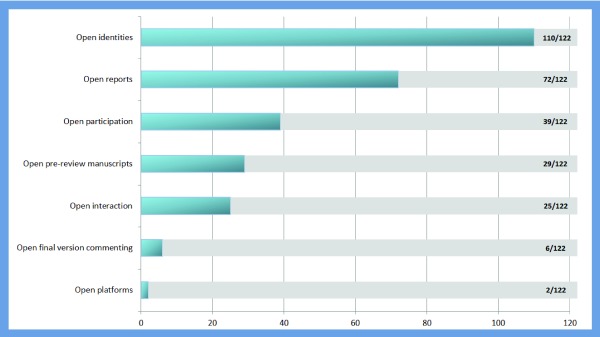
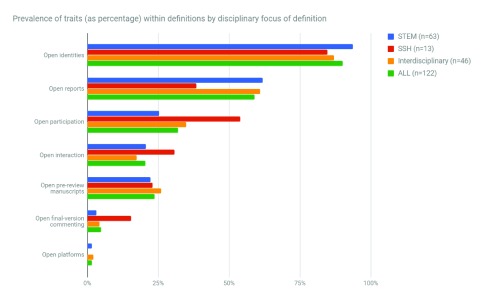
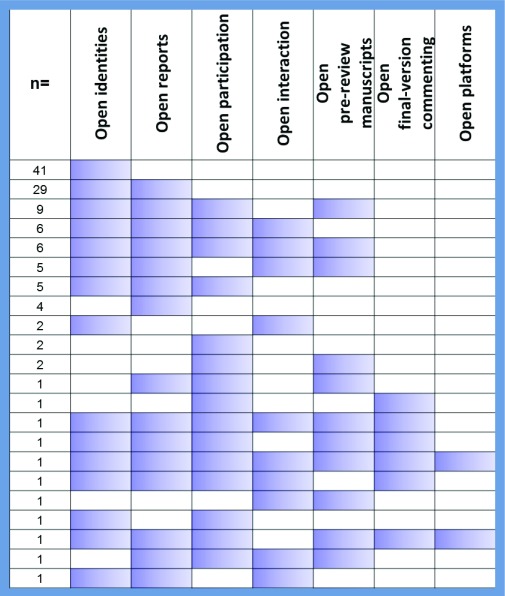
Background: “Open peer review” (OPR), despite being a major pillar of Open Science, has neither a standardized definition nor an agreed schema of its features and implementations. The literature reflects this, with a myriad of overlapping and often contradictory definitions. While the term is used by some to refer to peer review where the identities of both author and reviewer are disclosed to each other, for others it signifies systems where reviewer reports are published alongside articles. For others it signifies both of these conditions, and for yet others it describes systems where not only “invited experts” are able to comment. For still others, it includes a variety of combinations of these and other novel methods. Methods: Recognising the absence of a consensus view on what open peer review is, this article undertakes a systematic review of definitions of “open peer review” or “open review”, to create a corpus of 122 definitions. These definitions are then systematically analysed to build a coherent typology of the many different innovations in peer review signified by the term, and hence provide the precise technical definition currently lacking. Results: This quantifiable data yields rich information on the range and extent of differing definitions over time and by broad subject area. Quantifying definitions in this way allows us to accurately portray exactly how ambiguously the phrase “open peer review” has been used thus far, for the literature offers a total of 22 distinct configurations of seven traits, effectively meaning that there are 22 different definitions of OPR in the literature. Conclusions: Based on this work, I propose a pragmatic definition of open peer review as an umbrella term for a number of overlapping ways that peer review models can be adapted in line with the ethos of Open Science, including making reviewer and author identities open, publishing review reports and enabling greater participation in the peer review process.
Overview
The claims and statistics of this paper haven’t been checked yet.
Run the check — free, no account needed. It reads the open-access text and checks the sources it cites.
Integrity signals
Registry
Cites
Statistics
Figures
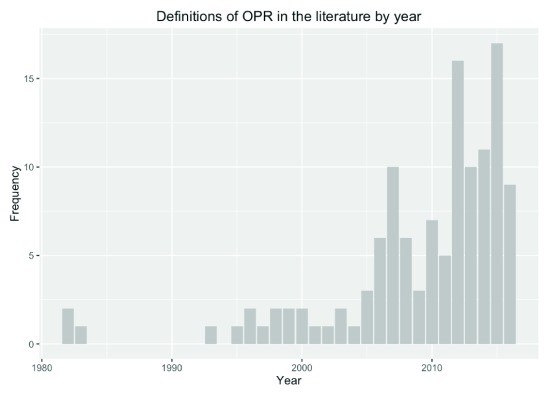
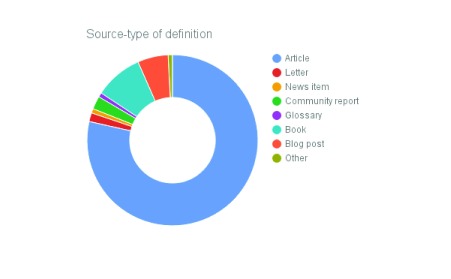
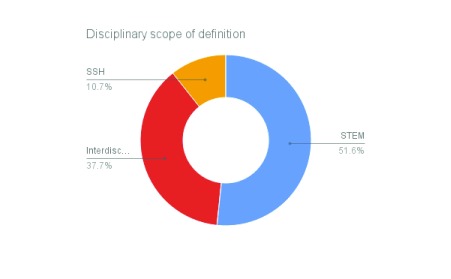
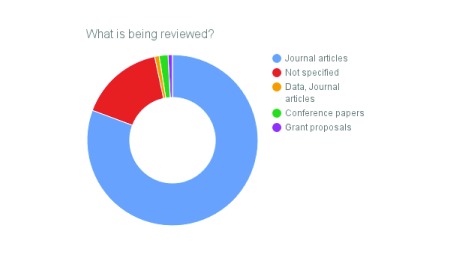
Verification
Claims the paper makes
The claims and statistics of this paper haven’t been checked yet.
Run the check — free, no account needed. It reads the open-access text and checks the sources it cites.
Claims other papers make about this one
Each is checked against this paper’s own text: does it say what the citing paper says it does?
The source backs part of the claim, not all of it — or backs it for a different population, condition or comparison.
In the citing paper
“Besides serving as a high-quality filter, it provides explanations and constructive feedback to authors to improve their scientific contribution (Jefferson et al., 2002; Ross-Hellauer, 2017).”
From The Good, the Bad and the Constructive: Automatically Measuring Peer Review's Utility for Authors (2025) · cites this paper as Ross-Hellauer, 2017
Experimental — accuracy not yet measured
Self-check
Percentages, sums and reported differences re-computed from the paper’s own numbers.
The self-check needs the paper’s full text.
Citations
Cites
1 retracted
Retracted Science and the Retraction Index
Fang, F. C., & Casadevall, A. (2011) · Infection and Immunity · doi:10.1128/iai.05661-11 · Cited by 405 · cited 1×
“Page 3 of 32 (Fang & Casadevall, 2011).”
RetractedFranck, G. (2012) · Cell Cycle · doi:10.4161/cc.22151 · Cited by 1,329 · cited 1×
“” (Suber, 2012) Page 4 of 32 Within just these two examples, there are already a multitude of factors at play, including the removal of anonymity, the publishing of review reports, interaction between participants, crowdsourcing of reviews, and making manuscripts public pre-review, amongst others.”
BackgroundMisconduct accounts for the majority of retracted scientific publications
Fang, F. C., Steen, R. G., & Casadevall, A. (2012) · Proceedings of the National Academy of Sciences · doi:10.1073/pnas.1212247109 · Cited by 1,232 · cited 1×
“Reviewers often fail to detect major methodological failings (Schroter et al., 2004), with eminent journals (whose higher rejection rates might suggest more stringent peer review processes) seeming to perform no better than others (Fang et al., 2012).”
BackgroundA method for taxonomy development and its application in information systems
Nickerson, R. C., Varshney, U., & Muntermann, J. (2013) · European Journal of Information Systems · doi:10.1057/ejis.2012.26 · Cited by 1,143 · cited 1×
“Nickerson et al. (2013) advise that the development of a taxonomy should begin by identifying the appropriate meta-characteristic – in this case distinct individual innovations to the traditional peer review system.”
BackgroundPeer-review practices of psychological journals: The fate of published articles, submitted again
Peters, D. P., & Ceci, S. J. (1982) · Behavioral and Brain Sciences · doi:10.1017/s0140525x00011183 · Cited by 1,079 · cited 3×
“Published reports can enable readers to consider these criticisms themselves, and “have a chance to examine and appraise this process of ”creative disagreement” and form their own opinions” (Peters & Ceci, 1982).”
BackgroundPublication prejudices: An experimental study of confirmatory bias in the peer review system
Mahoney, M. J. (1977) · Cognitive Therapy and Research · doi:10.1007/bf01173636 · Cited by 1,013 · cited 2×
“Next, “confirmatory bias” is theorized to lead to conservatism, biasing reviewers against innovative methods or results contrary to dominant theoretical perspectives (Chubin & Hackett, 1990; Garcia et al., 2016; Mahoney, 1977).”
BackgroundFactors Influencing Publication of Research Results
Dickersin, K. (1992) · JAMA · doi:10.1001/jama.1992.03480030052036 · Cited by 931 · cited 1×
“, 2017) mean that editors and reviewers seem primed to prefer positive results over negative or neutral ones (Bardy, 1998; Dickersin et al., 1992; Fanelli, 2010; Ioannidis, 1998), and to disfavour replication studies (Campanario, 1998; Kerr et al.”
BackgroundPeer Review: A Flawed Process at the Heart of Science and Journals
Smith, R. (2006) · Journal of the Royal Society of Medicine · doi:10.1177/014107680609900414 · Cited by 880 · cited 3×
“Smith, an experienced editor, for example, reports reviewers stealing ideas and passing them off as their own, or intentional blocking or delaying publication of competitors’ ideas through harsh reviews (Smith, 2006).”
BackgroundDo Pressures to Publish Increase Scientists' Bias? An Empirical Support from US States Data
Fanelli, D. (2010) · PLoS ONE · doi:10.1371/journal.pone.0010271 · Cited by 805 · cited 2×
“, 2017) mean that editors and reviewers seem primed to prefer positive results over negative or neutral ones (Bardy, 1998; Dickersin et al., 1992; Fanelli, 2010; Ioannidis, 1998), and to disfavour replication studies (Campanario, 1998; Kerr et al.”
Ioannidis, J. P. A. (1998) · JAMA · doi:10.1001/jama.279.4.281 · Cited by 632 · cited 1×
“…of “impact” and “excellence” (Moore et al., 2017) mean that editors and reviewers seem primed to prefer positive results over negative or neutral ones (Bardy, 1998; Dickersin et al., 1992; Fanelli, 2010; Ioannidis, 1998), and to disfavour replication studies (Campanario, 1998; Kerr et al., 1977).”
Background
Research works printed but not linked: 7
- D Chubin, 1990, Peerless Science: Peer Review and US Science Policy.
- 2016, About | The EMBO Journal [WWW Document]
- S Harnad, 2000, The Invisible Hand of Peer Review.
- S Kaplan, 2015, Major Publisher Retracts 64 Scientific Papers in Fake Peer Review Outbreak.
- J Nicholson, 2016, A Brief Survey on Peer Review in Scholarly Communication
- M Ware, Peer Review: Benefits, Perceptions and Alternatives, 2008
- M Ware, 2016, Peer Review Survey 2015
Cited by
Sorted by citations
Items 301–394 of 394
Aliaga, F. (2026) · Frontiers in Research Metrics and Analytics · doi:10.3389/frma.2026.1850943
“Within this framework, open peer review models can be understood as a set of practices aimed at making a journal’s evaluative system visible and expanding the available information on their reviews, arguments, and decisions (Ross-Hellauer, 2017; Tennant et al., 2017).”
Influential¿Quién controla el conocimiento? IA y acceso abierto en la comunicación científica?
Ortiz, O. L. O. (2026) · Biociências · doi:10.22490/26194759.11948
Alawami, S., & Hemingway, P. (2026) · Journal of Clinical Nursing · doi:10.1111/jocn.70506
A Vision for the Future of an AI-Integrated Research Ecosystem
Dougherty, R. E., & Kiesler, N. (2026) · doi:10.48550/arxiv.2608.05438
“Open-review models have been tried and tested [26], with varying levels of disclosure.”
Fairness trade-offs in expert evaluation: information, judgment, and procedural design
Borowiecki, K. J., & Law, M. T. (2026) · Public Choice · doi:10.1007/s11127-026-01444-z · Cited by 1
Does Discussion Matter? Interaction Dynamics in Transparent Peer Review
Wei, S.-Y., & Bi, R. (2026) · doi:10.48550/arxiv.2609.13181
“Open interaction, the facilitation of direct, reciprocal exchange among authors, editors, and reviewers, is positioned as a mechanism for moving peer review beyond isolated, one-directional evaluation toward a multi-party conversation in which knowledge is collectively negotiated [15].”
What Happens After Rejection? Making Invisible Peer Review Visible
Faggion, C. M. (2026) · Learned Publishing · doi:10.1002/leap.2087
“The progress of transparency initiatives in areas such as data sharing and open peer review (Ross-Hellauer 2017; Nature Communications 2022; Knoepfler 2015; Taichman et al. 2017; Zarin et al. 2011; Pulverer and Lemberger 2019) illustrates the broader commitment to openness in publishing.”
Setting ethical boundaries for AI in peer review
Nguyen, N. P. (2026) · JME Practical Bioethics · doi:10.1136/jmepb-2025-000056
Integrating community Live Reviews into academic publishing: an exploratory study
Petkov, C. I., Fairhurst, V., Granados, M., Chudasama, Y., Rodney, G. M., Jabeen, S. A., David, S. V., Mitchell, A. S., Klink, P., Mehmani, B., et al. (2026) · Research Integrity and Peer Review · doi:10.1186/s41073-026-00210-5
“To address these concerns, various peer review models that fall under the label of ‘open peer review’ have emerged [10], aiming to introduce greater transparency by making review reports publicly available [11–15].”
Motivations and barriers to engaging in peer review: a qualitative study
Fernandes, J. B., Almeida, A. S., Magsi, F., Maia, A. C., & Fernandes, S. (2026) · Research Integrity and Peer Review · doi:10.1186/s41073-026-00208-z
Possibilities for the peer review of interdisciplinary research: a small-scale qualitative study
Vesma, G. (2026) · Research Integrity and Peer Review · doi:10.1186/s41073-026-00204-3
“…thus far been only limited enquiry into how traditional peer-review practices for scholarly applications might interact with a growing body of interdisciplinary research [11, 12] and systematic reviews of open peer review practices have not ventured outside of disciplinary categories [10, 13, 14].”
InfluentialHosain, S., & Chowdhury, R. (2026) · Beijing international review of education · doi:10.1177/25902547261453178
“In parallel, measures such as reviewer name disclosure, post-publication peer review, and formal recognition of reviewer contributions are increasingly seen as effective ways to enhance transparency in the peer review process (Ross-Hellauer, 2017).”
Review the Code, Not the Story: A Vision and Protocol for Code-First Peer ReviewPreprint
Chen, J. (2026) · arXiv (Cornell University) · doi:10.48550/arxiv.2606.07683
“Open review, preregistration, reproducibility checklists, and artifact badges all try to reduce information asymmetry between authors, reviewers, and readers [8, 10, 14].”
AlAhmad, H. (2026) · AI & Society · doi:10.1007/s00146-026-03126-2
“Structured review templates, visible rationale histories, and recognition of substantive review labour would reduce redundancy, lower reviewer fatigue, and make revision pathways more legible across iterations (Ross-Hellauer 2017).”
Evolution of manuscript peer review: expanding roles in exercise rehabilitation research
Jee, Y. (2026) · Journal of Exercise Rehabilitation · doi:10.12965/jer.2652392.196
“Emerging models such as open peer review and postpublication commentary reflect this shift toward a more transparent and interactive evaluation system (Ross-Hellauer, 2017).”
Alves, J., Kučinskas, A., Rooyen, C. V., Audard, M., Duc, P.-A., Elbaz, D., Forveille, T., Kiss, L. L., Pereira, T., & Villaver, E. (2026) · Astronomy & Astrophysics · doi:10.1051/0004-6361/202661365
Rohmann, J. L., Wülk, N., Rubarth, K., Grillmaier, H., Abdikarim, I. A., Simões, M. L., Schroter, S., Piccininni, M., Kurth, T., & Glatz, T. (2026) · Research Integrity and Peer Review · doi:10.1186/s41073-026-00220-3 · Cited by 4
“Peer review remains a backbone of scholarly publishing, though often criticized for being ineffective, unfair, and unreliable [1–6].”
Відкрите рецензування як інструмент підвищення прозорості та якості наукового оцінювання
Живага, О. В. (2026) · Nauka ta naukoznavstvo · doi:10.15407/sofs2026.02.101
A New Paradigm for Scientific Publishing, Peer Review, and Impact Assessment
Argibay, N., Rowland, L., Rock, J., & McDermott, E. (2026) · The Scientific Review · doi:10.67486/tsr.2026.1
Gatekeepers or Nightmares? Exploring Academics' Experiences With the Reviewer 2 Phenomenon
Caner, M., & Asma, B. (2026) · Learned Publishing · doi:10.1002/leap.2075
Implementing is necessary: the gap between discourse and practice in global open science
Garcia, M. T., Silva, F. A. D. S., Costa, M. E. D. S., Carmo, P. H. F. D., de Lima, P. M. N., Pedroso, L. L. C., Feitosa, F., & Rode, S. D. M. (2026) · Brazilian Oral Research · doi:10.1590/1807-3107bor-2026.vol40.013
“15 Regardless of the specific definition, the central objective of open peer review is to strengthen the evaluation process by improving integrity, trust, and the quality of scientific communication while facilitating constructive dialogue among researchers and reviewers and promoting more…”
PEDAL: Open Infrastructure for Citable AI Prompts in STEM Education and Research
Kahveci, M. (2026) · doi:10.48550/arxiv.2610.00001
“Open peer review initiatives—such as those at eLife (Eisen et al., 2022) and journals adopting the Publons framework—have demonstrated that publishing reviewer reports alongside articles can improve review quality and accountability (Ross-Hellauer, 2017).”
Gestão editorial baseada em dados: um modelo de indicadores aplicado à revisão por pares
Rocha, D., & Teles, G. (2026) · Encontros Bibli · doi:10.5007/1518-2924.2026.e107950
سليمان, ع. س. ع. (2026) · Rawafed Journal for Social and Human Studies · doi:10.64548/hhhzm757
Peroni, S. (2026) · arXiv.org · doi:10.48550/arxiv.2604.23827
“While there have been ongoing discussions for years on the pros and cons of such a new peer review dynamics (Ross-Hellauer, 2017), all Open Science practices and norms released in the past years strongly support the open peer review process as the primary alternative to enable a broader setting of…”
InfluentialKazakov, P., Atanasov, D., Beluhova, R., Mircheva-Topalova, M., Ivanova, A., Kazashka, V., & Gechev, T. (2026) · Frontiers in Research Metrics and Analytics · doi:10.3389/frma.2026.1770226
“Scopus publication data shows that 900 out of 1,136 publications (79 Another trend in recent years is open peer review, in which the identities of both reviewers and authors are disclosed and greater participation in the peer review process is enabled (Ross-Hellauer, 2017; Tennant et al., 2017).”
Opening the review: perceptions and challenges of Open Science at CSP
de Lima, L. D., Osorio-de-Castro, C. G. S., Alves, L. C., & Carvalho, M. S. (2026) · Cadernos de Saúde Pública · doi:10.1590/0102-311xen273825
“Studies highlight that, while open review can increase accountability and the argumentative quality of opinions, it can also inhibit more forceful criticism, especially when power imbalances, hierarchical relationships, or prior institutional ties exist 7,19 .”
Bornman, J., Bortz, M., Edwards, A., Louw, B., & van der Linde, J. (2026) · South African Journal of Communication Disorders · doi:10.4102/sajcd.v73i1.1150
“Another concern is the rise of predatory OA journals that exploit authors through fees without legitimate peer review (Frank et al., 2023; Ross-Hellauer, 2017).”
Unveiling the potential of peer review information in predicting citation impact
Chung, J., Lee, S., Yoon, J., & Kim, W. J. (2026) · Scientometrics · doi:10.1007/s11192-026-05559-4
Reimagining Peer Review in Scholarly Publishing: From Blind to Open in the Digital Age
Şenel, E. (2026) · Trends in Scholarly Publishing · doi:10.21124/tsp.2026.43.48
Trends in scientific output on open science and open access (2015–2024): a bibliometric study
Castro-Arellano, M. D. P., & Castro, J. E. Q. (2026) · Science Editing · doi:10.6087/kcse.398
“Transparency represents a core element of open science and supports open access to publications, research data, open-source software, peer review processes, and related practices [2,3].”
Oettl, F. C., Mudford, M., Fendrich, D., Giannakidis, A., Pruneski, J. A., Hirschmann, M. T., Samuelsson, K., & ESSKA Artificial Intelligence Working Group (2026) · Knee Surgery Sports Traumatology Arthroscopy · doi:10.1002/ksa.70286
“Contrary to initial concerns, studies indicate that transparency does not compromise review quality, and may actually enhance accountability and constructive feedback [17].”
Governing the Game-Changer: Reimagining Peer Review in the Age of AI
Threadgold, L., Zhou, H.-R., Ragavooloo, S., Stuckey, D., & Sayab, M. (2025) · Trends in Scholarly Publishing · doi:10.21124/tsp.2025.109.116
Nguyen, P. D. (2025) · Veredas do Direito · doi:10.18623/rvd.v22.n7.3978
“Protocol publishing can therefore be interpreted as an infrastructural response to a governance challenge: accelerating knowledge circulation while maintaining trust through clearer methods, stronger quality controls, and more transparent evaluation (Ross-Hellauer, 2017; Wang et al ., 2025).”
Special Series: Registered Reports of Systematic Reviews and Meta-Analyses
Peltier, C., Pulos, J. M., & Riden, B. S. (2025) · Behavioral disorders · doi:10.1177/01987429251400215
Weerakoon, K., & Silva, A. (2025) · Journal of Tropical Health · doi:10.4038/joth.v1i3.39
“Conference organisers should adopt transparent peer-review systems where abstracts are evaluated by at least two independent reviewers using clear criteria such as originality, methodological soundness, ethical concerns and relevance [12,13].”
Bello, S., Ajuwon, G., Azubuike, F. C., & Hameed, S. G. (2025) · Journal of Hospital Librarianship · doi:10.1080/15323269.2025.2569307
Double anonymous peer review in JVSCIT—lessons from our pilot trial and next steps
Smeds, M. R., Cosgrove, T., & Dalman, R. L. (2025) · Journal of Vascular Surgery Cases and Innovative Techniques · doi:10.1016/j.jvscit.2025.102028
From Altruism to Economics: Restructuring Peer Review Incentives
Kumar, K. K., Shiva, L., & Harbishettar, V. (2025) · Journal of Psychiatry Spectrum · doi:10.4103/jopsys.jopsys_125_25
Publish‐Review‐Curate Modelling for Data Paper and Dataset: A Collaborative Approach
Jung, Y., & Ahn, R. (2025) · Learned Publishing · doi:10.1002/leap.2024
“Ross-Hellauer (2017) argues that open peer review reduces bias; Bender and Friedman (2018) note that post-publication feedback enhances rigour.”
Dynamic optimization of peer review length using information density analysis
Bharti, P. K., & Bhathawala, T. (2025) · Scientometrics · doi:10.1007/s11192-025-05416-w
“Another limitation lies in the absence of large-scale empirical validation across diverse datasets, which would provide stronger evidence of the framework’s generalizability and effectiveness (Ross-Hellauer, 2017).”
Scientific criticism. A plea for continuous and open peer review
Vigmond, E., & Coronel, R. (2025) · Frontiers in Physiology · doi:10.3389/fphys.2025.1661509
Rethinking peer review in medicine: From trust to transformation
Longrois, D., Rozencwaig, S., & Guinot, P. (2025) · The Journal of Critical Care Medicine · doi:10.2478/jccm-2025-0035
“The essence of peer review is judgment—a blend of experience, context, ethics, and clinical insight (5).”
Gender and Discipline Shape Length, Content and Tone of Grant Peer Review Reports
Müller, S., Okasa, G., Strinzel, M., Jorstad, A., Milzow, K., & Egger, M. (2025) · arXiv.org · doi:10.48550/arxiv.2507.00103
“Many journals now publish re-viewers’ comments and authors’ responses alongside articles, and platforms have emerged that enable scholars to track their peer review activities and receive recognition for their contributions [26, 27].”
Konsep Open Science dan Perubahan Paradigma dalam Publikasi Ilmiah
Puspita, A. G. (2025) · LibTech: Library and Information Science Journal · doi:10.18860/libtech.v6i1.35103
“Lebih jauh lagi, proses peer review dapat ditelusuri yang memungkinkan pembaca melihat jejak perkembangan artikel mulai dari awal hingga versi akhir (Ross-Hellauer, 2017).”
Mughal, A. S., & Zahoor, H. (2025) · Pathogens and Immunity · doi:10.20411/pai.v10i2.833
Expertise in Science: Cognitivist and Managerialist Approaches
Ryzhko, L., Shapoval, A., & Zhyvaha, O. (2025) · Science and innovation · doi:10.15407/scine21.03.053
Ammor, B., Masse, M., Toulemonde, A.-C., Cadart, L., Beuscart, J., Lambert, M., Odou, P., & Décaudin, B. (2025) · JMIR Human Factors · doi:10.2196/77486
“We hypothesized that incorporating peer review, a process commonly used in scientific research for critical evaluation [13], into medication reconciliation could both optimize pharmacist time and maintain high-quality practices.”
Detrás de las respuestas a revisores: recomendaciones
Saladino, A., Ortiz, J., Posadas-Martínez, M. L., & Carretero, M. (2025) · Revista del Hospital Italiano de Buenos Aires · doi:10.51987/rev.hosp.ital.b.aires.v45i2.398
'A pause, and we continue': reflection on the roadmap for the development of Veterinary Record Open.
Durán, S. M. (2025) · The Veterinary Record · doi:10.1002/vetr.5463
Amaral, J. C. D., Sarich, N., Hensley, M., & Machado, M. (2025) · Learned Publishing · doi:10.1002/leap.1657
“(Ross-Hellauer 2017, n.p.).”
Development of Open Reviewing in the Paradigm of Open Science
Chmyr, O. (2024) · University Scientific Notes · doi:10.37491/unz.101.7
Percepções de editores quanto à implantação da revisão aberta em periódicos científicos
Maia, F. C. D. A., & Farias, M. G. G. (2024) · Encontros Bibli · doi:10.5007/1518-2924.2025.e99922
Transparencia científica: hacia un paradigma relacional en la antropología forense.
Farrera, A. (2024) · Revista uruguaya de Antropología y Etnografía · doi:10.29112/ruae.v9i2.2308
“En cualquier caso, antes de hacer pública esta información, es útil evaluar si alguien que no conoce los detalles del procedi-miento analítico puede entenderlo y seguirlo sin dificultades. d. Revisión por pares abierta (Ross-Hellauer, 2017).”
Trust in open publishing practices
Kalmár, É., Elzer, T., Nastase, N., Bolhuis, T., Germain, N., Rietveld, M., Tao, Y.-W., & de Wolff, S. (2024) · F1000Research · doi:10.12688/f1000research.152168.1
“…inviting a broader group from the scientific community to provide feedback to the authors (participatory review or open participation peer review) (Ross-Hellauer, 2017; Walker & Rocha da Silva, 2015), using random gatekeepers instead of editors (Tennant et al., 2017), or trying out shared…”
Experimenting with new review methods, open practices, and interactive publications in HCI
Besançon, L., Echtler, F., Kay, M., & Wacharamanotham, C. (2024) · CHI Conference Extended Abstracts on Human Factors in Computing Systems (CHI EA) · doi:10.1145/3613905.3643987
“JoVI also has open reviews [27, 31] which are published along with the article and can optionally be signed by reviewers.”
BackgroundPreclinical Evidence Synthesis Facilitates Open Science
Bilynsky, C. (2024) · Journal of Science Policy & Governance · doi:10.38126/jspg230202 · Cited by 1
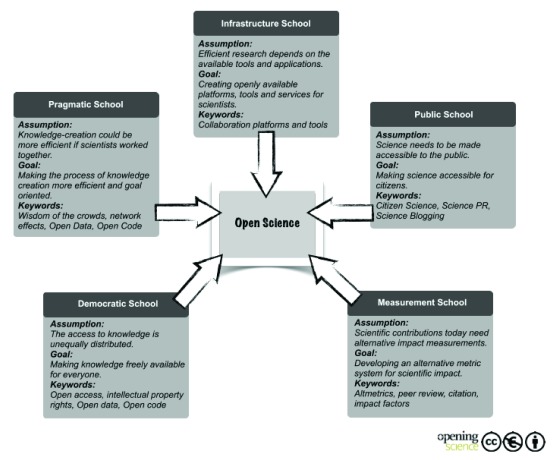
“This school of thought assumes that science must be made accessible to the public, engaging them in research through collaborative efforts (i.e., citizen science) and promoting understanding through lay summaries and less formal science communication (Ross-Hellauer 2017) .”
BackgroundRhodes, D., & Krenzer, W. (2024) · The Cognitive Psychology Bulletin · doi:10.53841/bpscog.2024.1.9.45
How to Peer Review for Scientific Journals?
Wyawahare, M. (2024) · International Journal of Advanced Medical and Health Research · doi:10.4103/ijamr.ijamr_77_24
Projeto e Desenvolvimento de um Software de Apoio à Revisão Aberta por Pares
Pereira, M. A., Tenório, N., & OliveiraJr, E. (2023) · Anais da VII Escola Regional de Engenharia de Software (ERES 2023) · doi:10.5753/eres.2023.237792
“Um dos pila-res da CA ´e o processo de Open Peer Review (OPR), derivado do Peer Review (PR) [Ross-Hellauer 2017].”
BackgroundOpen Science in der deutschsprachigen Sportpsychologie
Englert, C., & Klatt, S. (2023) · Zeitschrift für Sportpsychologie · doi:10.1026/1612-5010/a000404
Garcia, J. C. R., Silva, F. M. D. A., & da Silva, K. L. N. (2023) · Informação & Informação · doi:10.5433/1981-8920.2022v27n4p204
CMMI-DEV Industrial Maturity Assessment Model Adaptation for Tangible Products Industries
Fernandes, E., Estorilio, C., & Hatakeyama, K. (2023) · Portland International Conference on Management of Engineering and Technology · doi:10.23919/picmet59654.2023.10216788
“According to [53], this is a quality control system.”
BackgroundARTIGO-PARECER: VALIDAÇÃO DE TESTE EM TRÊS CAMADAS PARA MAPEAR PERFIS EPISTEMOLÓGICOS DE DENSIDADE
Cavalcanti, C. J. D. H. (2023) · Ensaio · doi:10.1590/1983-21172022240142
“Examinando a literatura em detalhe, o Ross-Hellauer (2017) encontra 22 configurações distintas dessas sete características, concluindo que efetivamente há 22 diferentes definições sobre esse tema na literatura.”
BackgroundInnovating the scenario of scientific publishing in design: designing “living publications”
Lupo, E. (2023) · Strategic Design Research Journal · doi:10.4013/sdrj.2022.152.09
Fernandes, J. B., Domingos, J., Dean, J. M., Fernandes, S., Ferreira, R., Baixinho, C. L., de Castro, C. M. D. C. S. P., Simões, A. D. J. C., Bernardes, C., Almeida, A. S., et al. (2023) · Nursing Reports · doi:10.3390/nursrep13010029 · Cited by 2
role of peer review in the evaluation of research in Italy. Some remarks on the evaluation of PRINs
Vivarelli, M. (2022) · JLIS it · doi:10.36253/jlis.it-500 · Cited by 1
Fattahi, R., Beglou, R. R., & Akhshik, S. S. (2022) · JLIS it · doi:10.36253/jlis.it-504
A manifesto for rewarding and recognising Team Infrastructure Roles
Bennett, A., Garside, D., van Praag, C. D. G., Hostler, T., Garcia, I. K., Plomp, E., Schettino, A., Teplitzky, S., & Ye, H. (2022) · ResearchEquals · doi:10.53962/ze25-r1r8
Soler, E. M. T. (2022) · Cirugia Española · doi:10.1016/j.cireng.2021.11.022
REVISÃO POR PARES ABERTA: PRÁTICAS E DEFINIÇÕES
Campos, A. F. D., Gosling, M. D. S., & Lima, L. C. (2022) · Anais do Congresso Internacional de Conhecimento e Inovação – ciki · doi:10.48090/ciki.v1i1.1087
“O termo Open Peer Review (OPR) ainda é incipiente, não tem uma definição consensual ou cabal, pois se dá, de maneira sobreposta como um “guarda-chuva” que pode ser adaptado conforme os atores ou objetivos da Ciência Aberta (Ross-Hellauer, 2017).”
BackgroundInfluentialLa revisión por pares: ¿es importante?
Soler, E. M. T. (2021) · Cirugia Española · doi:10.1016/j.ciresp.2021.11.020
Direct and conceptual replication in numerical cognition
Cipora, K., & Soltanlou, M. (2021) · Journal of Numerical Cognition · doi:10.5964/jnc.7799 · Cited by 1
“In this Special Issue, the Open Review Reports were optional.”
BackgroundMethodInfluentialDuBroy, M. (2021) · Evidence Based Library and Information Practice · doi:10.18438/eblip29936
“Despite its importance, traditional peer review is said to lack sufficient transparency, accountability, and consistency (Ross-Hellauer, 2017).”
Open Science and Special Education Research
Cook, B. G., Beahm, L. A., Myers, A. M., VanUitert, V. J., & Wilson, S. E. (2021) · Emerald Group Publishing Limited eBooks · doi:10.1108/s0735-004x20210000031005 · Cited by 2
Review of: "Investigating DOIs' Classes of Errors"
Moretti, A. (2021) · Qeios · doi:10.32388/rwnsqc
NIST Scientific Foundation Reviews
Butler, J., Iyer, H., Press, R., Taylor, M. K., Vallone, P., & Willis, S. M. (2020) · doi:10.6028/nist.ir.8225
Peer-Reviewed Blog Post vs. Journal Article - What is the difference?
DeCarlo, M. (2020) · Social Work with Digital Technology · doi:10.21428/900c7f10.64f8dc57
“As synthesized by Ross-Hellauer (2017), some critiques of the current peer review system include unreliable feedback across reviewers; inconsistent error and fraud detection; prolonged evaluation periods; and biases against non-dominant identities, perspectives, and methods.”
BackgroundPeer Review: Readers in the Making of Scholarly Knowledge
Pontille, D., & Torny, D. (2020) · Reassembling Scholarly Communications · doi:10.7551/mitpress/11885.003.0013
“This is particularly the case through citation, commenting, sharing, and examining, which have existed for a long time but are now being more and more treated as integral technologies of open peer review, through new arrangements between dissemination and validation.(13)”
BackgroundDeinzer, G., & Herb, U. (2020) · ZfBB · doi:10.3196/186429502067147
Transparency, accountability, reward and recognition.
Marr, C. (2020) · Equine Veterinary Journal · doi:10.1111/evj.13202
Introduction to the Open Peer-Reviewed Section on DR2 Methodology Examples
Bonino, G., Pasini, E., & Tripodi, P. (2019) · doi:10.13135/2280-8574/4301
Chapter 6. Continuity and change
Breeze, R. (2019) · Pragmatics & beyond. New series · doi:10.1075/pbns.308.06bre
Yasri, S., & Wiwanitkit, V. (2019) · Journal of dental research and reviews · doi:10.4103/jdrr.jdrr_48_19 · Cited by 1
“[2] The open peer‐reviewing system is also an interesting new idea for transparent peer‐reviewing process.[3]”
Broudoux, E. (2018) · Revue Française des Sciences de l'Information et de la Communication · doi:10.4000/rfsic.4738
Alessandroni, N. (2017) · doi:10.24215/2422572xe001
“Por último, hemos establecido contacto con referentes del movimiento de la Ciencia Abierta para gestionar adecuadamente la transición hacia un modelo voluntario de revisión por pares abierta [open peer-review] (Ross-Hellauer, 2017; Ross-Hellauer, Deppe y Schmidt, 2017).”
BackgroundAbrindo a revisão: percepções e desafios da Ciência Aberta em CSP
de Lima, L. D., Osorio-de-Castro, C. G. S., Alves, L. C., & Carvalho, M. S. (2026) · Cadernos de Saúde Pública · doi:10.1590/0102-311xpt273825
Yomoda, K. (2026) · Japanese Journal of Sport Education Studies · doi:10.7219/jjses.2509
Krebs, C. E., Tripodi, I. J., Pound, P., Baron, R., Pistollato, F., & Constantino, H. (2026) · Research Evaluation · doi:10.1093/reseval/rvag063
Eliminating the Dark Side of Blind Peer Review—A Change Management Perspective
Levasseur, R. E. (2025) · Open Journal of Business and Management · doi:10.4236/ojbm.2025.131005
A tudományos szakkönyvtárak és a nyílt tudomány (Open Science)
Holl, A. (2021) · A Magyar Tudományos Akadémia Könyvtárának közleményei. Új sorozat · doi:10.36820/mtakik.kozl.2021.opens.2
Специфика открытого рецензирования и его влияние на редакционный процесс в научных изданиях
Струкова, Т. В., Trishchenko, N. D., Иванович, З. И., & Zassoursky, I. I. (2020) · Научно- техническая информация Серия 1 Организация и методика информационной работы · doi:10.36535/0548-0019-2020-10-5
Biological Psychiatry: Table of Contents
600TSP, T. (2020) · Biological Psychiatry · doi:10.1016/s0006-3223(20)31929-6
“(Ross-Hellauer, 2017).”
Metadata
- Authors
- Ross-Hellauer, T.
- ORCID
- Ross-Hellauer, Tony
- Venue
- F1000Research
- Publisher
- F1000 Research Ltd
- Published
- 2017-04-27
- Volume
- 6
- Pages
- 588
- ISSN
- 2046-1402 (ISSN-L)
- PMC
- PMC5437951
- OpenAlex
- W4235332646
- Cited by
- 232
- References
- 82
- Citations by year
- 2026: 8 · 2025: 9 · 2024: 36 · 2023: 21 · 2022: 25 · 2021: 30 · 2020: 43 · 2019: 35 · 2018: 15 · 2017: 10
- FWCI
- 7.46
- Type
- journal article
- Language
- en
- Update notices
- new_version (2017-08-31)
- Open access
- gold
- doi.org
- Locations
- F1000Research (publishedVersion, cc-by)
- DOAJ (DOAJ: Directory of Open Access Journals) (submittedVersion, cc-by-sa)
- Funders
- European Commission (643410)
- Topics
- Social Sciences › Library and Information Sciences › Academic Publishing and Open Access
- Social Sciences › Library and Information Sciences › Publishing and Scholarly Communication
- Social Sciences › Library and Information Sciences › scientometrics and bibliometrics research
- Keywords
- open peer review, peer review models, open science, author identity disclosure
About these checks
Registry, retraction, Cites and statistics results are computed, not judged, with one exception: a printed reference that no index lists is read once by a model before it counts as a citation error. Claims are extracted by a model and kept only when their quote appears verbatim in the text; each cited source is then checked, with a model’s help, for whether it says what the claim relies on. Those verdicts can be wrong — read the claim’s quote and the cited source before relying on one.
Statistics and arithmetic are recomputed, not judged.
Confidence bands are shown only for fields calibrated on our annotated test set. None is calibrated yet, so no band is shown.
What counts as a claim ›How we measure confidence ›How we check this ›
Are you an author, or do you see a problem with this page? Request a review
