

The DOI matches its Crossref record; 70 of the 71 references it cites were found in a registry or an index.
Pit Latrines and Their Impacts on Groundwater Quality: A Systematic Review
Open accessAbstract
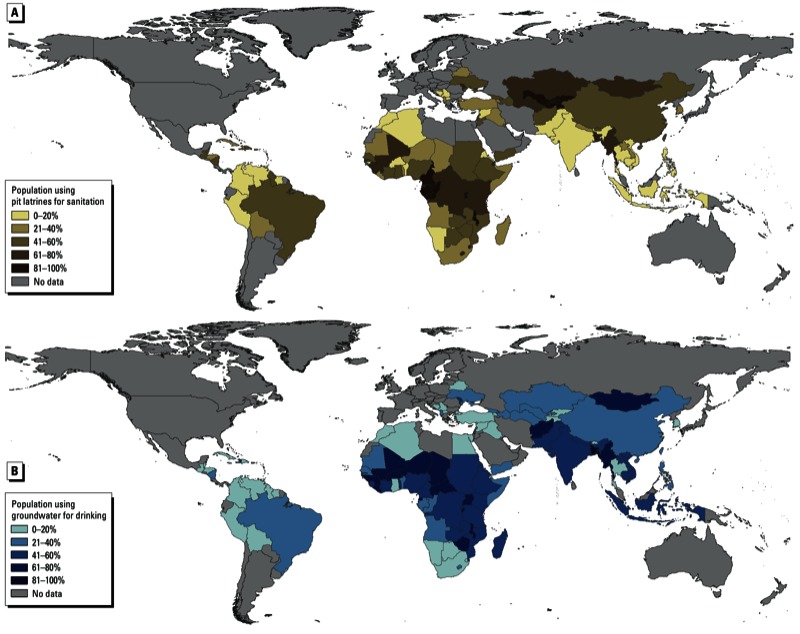
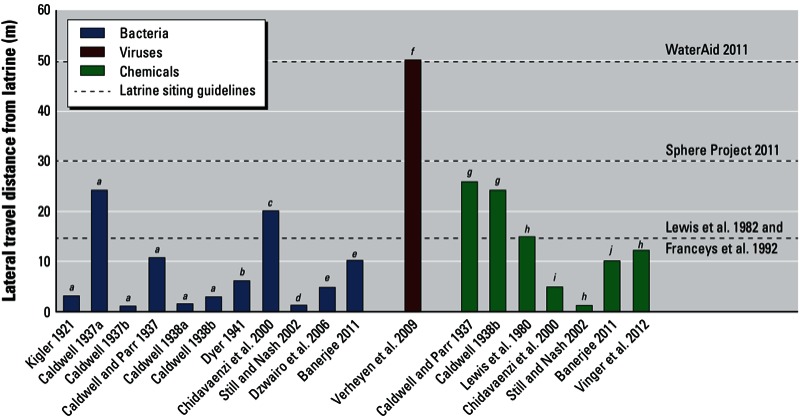
Background: Pit latrines are one of the most common human excreta disposal systems in low-income countries, and their use is on the rise as countries aim to meet the sanitation-related target of the Millennium Development Goals. There is concern, however, that discharges of chemical and microbial contaminants from pit latrines to groundwater may negatively affect human health. Objectives: Our goals were to a) calculate global pit latrine coverage, b) systematically review empirical studies of the impacts of pit latrines on groundwater quality, c) evaluate latrine siting standards, and d) identify knowledge gaps regarding the potential for and consequences of groundwater contamination by latrines. Methods: We used existing survey and population data to calculate global pit latrine coverage. We reviewed the scientific literature on the occurrence of contaminants originating from pit latrines and considered the factors affecting transport of these contaminants. Data were extracted from peer-reviewed articles, books, and reports identified using Web of ScienceSM, PubMed, Google, and document reference lists. Discussion: We estimated that approximately 1.77 billion people use pit latrines as their primary means of sanitation. Studies of pit latrines and groundwater are limited and have generally focused on only a few indicator contaminants. Although groundwater contamination is frequently observed downstream of latrines, contaminant transport distances, recommendations based on empirical studies, and siting guidelines are variable and not well aligned with one another. Conclusions: In order to improve environmental and human health, future research should examine a larger set of contextual variables, improve measurement approaches, and develop better criteria for siting pit latrines.
Overview
The claims and statistics of this paper haven’t been checked yet.
Run the check — free, no account needed. It reads the open-access text and checks the sources it cites.
Integrity signals
Registry
Cites
Statistics
Figures
Verification
Claims the paper makes
The claims and statistics of this paper haven’t been checked yet.
Run the check — free, no account needed. It reads the open-access text and checks the sources it cites.
Claims other papers make about this one
Each is checked against this paper’s own text: does it say what the citing paper says it does?
The source backs part of the claim, not all of it — or backs it for a different population, condition or comparison.
In the citing paper
“Some field studies suggest that pit latrines, which are the most typical type of sanitation infrastructure in urban informal settlements, may be less likely to contaminate underlying groundwater when they are lined, particularly in rainy conditions 105 .”
From Urban informal settlements as hotspots of antimicrobial resistance and the need to curb environmental transmission. (2020) · cites this paper as [105]
Experimental — accuracy not yet measuredThe cited source says what the claim attributes to it.
In the citing paper
“Of the 2.7 billion people using on-site sanitation worldwide [6], an estimated 1.77 billion use some form of pit latrine as their primary means of excreta disposal [12].”
From Are pit latrines in urban areas of Sub-Saharan Africa performing? A review of usage, filling, insects and odour nuisances (2015) · cites this paper as [12]
Self-check
Percentages, sums and reported differences re-computed from the paper’s own numbers.
The self-check needs the paper’s full text.
Citations
Cites
Ecological and Evolutionary Forces Shaping Microbial Diversity in the Human Intestine
Ley, R. E., Peterson, D. A., & Gordon, J. I. (2006) · Cell · doi:10.1016/j.cell.2006.02.017 · Cited by 3,358
How long do nosocomial pathogens persist on inanimate surfaces? A systematic review
Krämer, A., Schwebke, I., & Kampf, G. (2006) · BMC Infectious Diseases · doi:10.1186/1471-2334-6-130 · Cited by 2,508
Arsenic mobility and groundwater extraction in Bangladesh
Harvey, C. F., Swartz, C. H., Badruzzaman, A. B. M., Keon-Blute, N., Yu, W., Ali, M. A., Jay, J., Beckie, R., Niedan, V., Brabander, D., et al. (2002) · Science · doi:10.1126/science.1076978 · Cited by 1,234 · cited 2×
“…of studies that detected total or fecal coliforms did not detect elevated nitrate concentrations in wells (Ahmed et al. 2002; Dzwairo et al. 2006; Howard et al. 2002; Padmasiri et al. 1992; Still and Nash 2002), other studies have reported nitrate concentrations > 100 mg/L (Banks et al. 2002;…”
BackgroundProgress on sanitation and drinking-water 2010 update
worl (2010) · Cited by 831
RNA Viral Community in Human Feces: Prevalence of Plant Pathogenic Viruses
Zhang, T., Breitbart, M., Lee, W. H., Run, J., Wei, C. L., Soh, S. W., Hibberd, M. L., Liu, E. T., Rohwer, F. L., & Ruan, Y. (2005) · PLoS Biology · doi:10.1371/journal.pbio.0040003 · Cited by 827
Water, sanitation and hygiene for the prevention of diarrhoea
Cairncross, S., Hunt, C., Boisson, S., Bostoen, K., Curtis, V., Fung, I. C., & Schmidt, W.-P. (2010) · International Journal of Epidemiology · doi:10.1093/ije/dyq035 · Cited by 667
Sanitation and disease: health aspects of excreta and wastewater management.
Feachem, R. G., Bradley, D. J., Garelick, H., & Mara, D. D. (1983) · Cited by 657
Drinking-Water Nitrate, Methemoglobinemia, and Global Burden of Disease: A Discussion
Fewtrell, L. (2004) · Environmental Health Perspectives · doi:10.1289/ehp.7216 · Cited by 653
Removal of Viruses by Soil Passage: Overview of Modeling, Processes, and Parameters
Schijven, J. F., & Hassanizadeh, S. M. (2000) · Critical Reviews in Environmental Science and Technology · doi:10.1080/10643380091184174 · Cited by 588 · cited 1×
“…contaminants in the sub surface have been the subject of several reviews (BGS 2002; Dillon 1997; Gerba et al. 1975; Lewis et al. 1982; WHO 2006), and there is extensive literature that more broadly quantifies contaminant transport processes in groundwater (e.g., Schijven and Hassanizadeh 2000).”
BackgroundHumanitarian Charter and Minimum Standards in Humanitarian Response
The Sphere Project (2011) · The Sphere Project eBooks · doi:10.3362/9781908176202 · Cited by 568
Research works printed but not linked: 2
- Padmasiri JP, Jayatilake GM, Kotuwegedara JPK, 1992, Groundwater pollution from double pit latrines. In: Water, Environment and Management: Proceedings of the 18th WEDC Conference, 30 August–3 September 1992, Kathmandu, Nepal. 239–241
- Still DA, Nash SR . 2002. Groundwater contamination due to pit latrines located in a sandy aquifer: a case study from Maputaland. In: Water Institute of Southern Africa Biennial Conference. Durban, South Africa:Water Institute of Southern Africa, 1–6.Available: http://www.sswm.info/sites/default/files/reference_attachments/STILL%20and%20NASH%202002%20Groundwater%20contamination%20due%20to%20pit%20latrines%20located%20in%20a%20sandy%20aquifer.pdf [accessed 29 March 2013].
Cited by
Sorted by citations
Items 201–300 of 430
Naser, A. M., Doza, S., Rahman, M. M., Ahmed, K. M., Gazi, M. S., Alam, G. R., Karim, M. R., Khan, G. K., Uddin, M. N., Mahmud, M. I., et al. (2019) · Environmental Science & Technology · doi:10.1021/acs.est.8b04950 · Cited by 11
Orner, K. D., Naughton, C. C., & Stenström, T. (2019) · Michigan State University eBooks · doi:10.14321/waterpathogens.56 · Cited by 11
“Figure 7 summarizes a review of 24 studies that identified the microbial water quality of groundwater that was impacted by pit toilets (Graham & Polizzotto, 2013).”
James, M. T., Richard, M., Banda, I. N., Mwanaumo, E., Nyirenda, E., Mambwe, M., & Imasiku, A. N. (2019) · African Journal of Environmental Science and Technology · doi:10.5897/ajest2019.2694 · Cited by 14
“and provide the most inexpensive means of improving sanitation coverage especially in developing countries (Graham and Polizzotto, 2013).”
BackgroundDevelopment of trash exclusion for mechanized pit latrine emptying
Portiolli, G. F., Rogers, T. W., Beckwith, W. J., Tsai, J., ole-MoiYoi, P., Wilson, N., & Reyes, F. L. D. L. (2021) · Environmental Science Water Research & Technology · doi:10.1039/d1ew00383f · Cited by 10
Halder, S., Roy, M. B., Roy, P. K., & Sedighi, M. (2023) · CATENA · doi:10.1016/j.catena.2023.107206 · Cited by 10
Maruta, E., Matsa, M. M., Mupepi, O., & Dzawanda, B. (2023) · Sustainable Water Resources Management · doi:10.1007/s40899-023-00921-3 · Cited by 10
“This analysis corrobo-rates the submissions by Graham and Polizzotto (2013) who claimed that ammonia, obtained either directly from latrine waste or as a result of denitrification of nitrate emitted from latrines, can seep into ground water.”
BackgroundTrimmer, J. T., Nakyanjo, N., Ssekubugu, R., Sklar, M., Mihelcic, J. R., & Ergas, S. J. (2016) · Journal of Water Sanitation and Hygiene for Development · doi:10.2166/washdev.2016.045 · Cited by 11
Hammoud, A. S., Leung, J., Tripathi, S., Butler, A. P., Sule, M. N., & Templeton, M. R. (2018) · AIMS environmental science · doi:10.3934/environsci.2018.3.143 · Cited by 10
“A systematic review [1] of multiple empirical studies on the effect of pit latrines on groundwater quality suggests that, regardless of observed correlations between latrines and contamination of groundwater, the existing recommendations and practices regarding safe latrine siting are not well aligned.”
BackgroundPenetrometer tests on 109 pit latrines in Kibera, Nairobi, Kenya
Seal, D., Bown, R., & Parker, A. (2018) · Water SA · doi:10.4314/wsa.v44i3.13 · Cited by 10
“Globally, 1.77 billion people use pit latrines as their primary means of sanitation (Graham and Polizzotto, 2013).”
BackgroundInfluentialEstado nutricional y condiciones de vida de niños y jóvenes rurales de Tucumán, Argentina
Salazar-Burgos, R. J., & Oyhenart, E. E. (2021) · Revista Española de Nutrición Humana y Dietética · doi:10.14306/renhyd.25.1.1162 · Cited by 10
Chhajed-Picha, P., & Narayanan, N. C. (2021) · Journal of Environmental Management · doi:10.1016/j.jenvman.2021.112971 · Cited by 13
“For an OSS to not pollute groundwater, vertical separation between the bottom of the OSS and the water table is needed; the minimum separation required depends on soil and hydrological conditions (Banerjee, 2011; Kliger, 1921 cited in Graham and Polizzotto, 2013).”
A historical and critical review of latrine-siting guidelines
Nenninger, C., Cunningham, J. A., & Mihelcic, J. R. (2023) · Journal of Water Sanitation and Hygiene for Development · doi:10.2166/washdev.2023.140 · Cited by 9
A spatial framework for improved sanitation to support coral reef conservation
Kuempel, C. D., Thomas, J., Wenger, A. S., Jupiter, S. D., Suárez‐Castro, A. F., Nasim, N., Klein, C. J., & Hoegh‐Guldberg, O. (2023) · Environmental Pollution · doi:10.1016/j.envpol.2023.123003 · Cited by 9
Mamera, M., & van Tol, J. J. (2018) · Air Soil and Water Research · doi:10.1177/1178622118795485 · Cited by 9
Wedajo, T. G., Mekonnen, A., & Alemu, T. (2023) · Journal of Environmental Health Science and Engineering · doi:10.1007/s40201-023-00860-3 · Cited by 9
“One of such studies has reported that nitrate concentrations are high in groundwater from several urban areas such as Dire Dawa and Addis Ababa, where the water tables are close to the ground surface due to leaking effluent from septic tanks system [7].”
BackgroundEffects of Pit Latrines on Borehole and Well Water in Maryland, Lagos, Nigeria
Yahaya, T., Bashar, D. M., Liman, U. U., Umar, J., Abdulrahim, A., & Gomo, C. B. (2023) · Journal of Advances in Environmental Health Research · doi:10.34172/jaehr.2023.03 · Cited by 9
“A systematic review conducted by Graham and Polizzotto 47 compromising 24 articles on the effects of pit latrines on ground water quality in low-income countries, including Africa, detected abnormal microorganisms in all the water.”
BackgroundAlemu, C. M., Aycheh, Y. F., Angualie, G. S., & Engidayehu, S. S. (2024) · Water Practice & Technology · doi:10.2166/wpt.2024.076 · Cited by 9
Pitfalls and progress: a perspective on achieving sustainable sanitation for all
Templeton, M. R. (2014) · Environmental Science Water Research & Technology · doi:10.1039/c4ew00087k · Cited by 9
Amegah, A. K., Näyhä, S., & Jaakkola, J. J. K. (2017) · BMJ Open · doi:10.1136/bmjopen-2016-012348 · Cited by 9
“Pit latrines have also been widely documented to leach microbial and chemical contaminants including coliforms, Escherichia coli, faecal streptococci, ammonia, nitrates and nitrites into groundwater resources.(8) Poverty further hampers many households from treating these unwholesome water resources before usage.”
BackgroundCharacterisation of pit latrine sludge from shackleton, a peri-urban residential area of Zimbabwe
Changara, M. C., Bangira, C., Sanyika, W., & Misi, S. N. (2018) · Journal of Water Sanitation and Hygiene for Development · doi:10.2166/washdev.2018.041 · Cited by 9
Fecal indicator and Ascaris removal from double pit latrine content
Dey, D., Haque, A., Kabir, B., & Ubaid, S. F. (2016) · Journal of Water and Health · doi:10.2166/wh.2016.214 · Cited by 9
Novel molecular tracers for the assessment of groundwater pollution
Currell, M., McCance, W., & Jones, O. A. H. (2022) · Current Opinion in Environmental Science & Health · doi:10.1016/j.coesh.2022.100331 · Cited by 13
Bhatkal, T., Mehta, L., & Sumitra, R. (2024) · PLOS Water · doi:10.1371/journal.pwat.0000252 · Cited by 12
William, M., & Katambara, Z. (2025) · Journal of Water Resource and Protection · doi:10.4236/jwarp.2025.172007 · Cited by 8
Nath, B., Das, A., Majumder, S., Roychowdhury, T., Ni‐Meister, W., & Rahman, M. M. (2022) · ACS ES&T Water · doi:10.1021/acsestwater.2c00263 · Cited by 9
Simaubi, M., Banda, K. E., Levy, J., Meiman, J., & Nyambe, I. A. (2023) · Environmental Monitoring and Assessment · doi:10.1007/s10661-023-11272-z · Cited by 8
“However, there is no international consensus on the stand-off distance (Graham & Polizzotto, 2013; Rivett et al., 2022); furthermore, uncertainties arise from the hydrogeological circumstance and the type of pathogen (bacteria, virus, and protozoa) compounded with climate change.”
BackgroundOthoo, C. O., Dulo, S., Olago, D. O., & Ayah, R. (2020) · Journal of UOEH · doi:10.7888/juoeh.42.237 · Cited by 8
Matlakala, M. E., Kallon, D. V. V., & Ncube, E. J. (2023) · Procedia CIRP · doi:10.1016/j.procir.2023.03.110 · Cited by 8
Moslen, M., Miebaka, C. A., & Izah, S. C. (2023) · Elsevier eBooks · doi:10.1016/b978-0-443-18778-0.00009-x · Cited by 8
Surveillance of SARS-CoV-2 RNA in wastewater matrix: a review
Mogili, N. V., Mallu, M. R., Kodavaty, J., & Erva, R. R. (2023) · Environmental Monitoring and Assessment · doi:10.1007/s10661-023-12178-6 · Cited by 8
“Pit toilets are used by approximately 1.77 billion people worldwide for defecation (Graham & Polizzotto, 2013) .”
InfluentialRepresentações sociais sobre saúde e meio ambiente para equipes de Estratégia Saúde da Família
Dias, G. L., Camponogara, S., da Costa, V. Z., Cezár-Vaz, M. R., Weiller, T. H., & Cardoso, L. S. (2018) · Saúde e Sociedade · doi:10.1590/s0104-12902018170658 · Cited by 8
Adegoke, A. A., & Stenström, T. (2019) · Michigan State University eBooks · doi:10.14321/waterpathogens.58 · Cited by 8
Usman, M. A., Gerber, N., & von Braun, J. (2016) · SSRN Electronic Journal · doi:10.2139/ssrn.2809568 · Cited by 8
Spatial model of groundwater contamination risks from pit-latrines in a low-income country
Hinton, R. G. K., Kalin, R. M., Kanjaye, M. B., Mleta, P., Macleod, C. J. A., & Troldborg, M. (2024) · Water Research · doi:10.1016/j.watres.2024.122734 · Cited by 7
Putri, G. L., Ilmi, A. M., Handayani, R., Iskandar, D. I., Priadi, C. R., Willetts, J., & Foster, T. (2025) · Water Research · doi:10.1016/j.watres.2025.124431 · Cited by 7
Quamar, R., Janipella, R., Jangam, C., Balwant, P., Veligeti, J., Chintalapudi, P., & Pujari, P. R. (2018) · Environment Development and Sustainability · doi:10.1007/s10668-018-0116-0 · Cited by 7
Monitoring schistosomiasis and sanitation interventions—The potential of environmental DNA
Champion, T. S., Connelly, S., Smith, C. J., & Lamberton, P. H. L. (2020) · Wiley Interdisciplinary Reviews Water · doi:10.1002/wat2.1491 · Cited by 7
“Hydroecological factors such as rock strata, soil characteristics, and water table depth can affect the functionality of pit latrines, resulting in containment failure and water flowing freely in and out of the latrines (Graham & Polizzotto, 2013).”
BackgroundInfluentialMicrobial community analysis of wastewater during blackwater treatment
Mogili, N. V., & Mohapatra, S. (2021) · Elsevier eBooks · doi:10.1016/b978-0-12-823991-9.00024-1 · Cited by 7
An overview of groundwater and sanitation challenges in Kisumu City, Kenya
Kanoti, J. R., Olago, D. O., Opiyo, N., & Nyamai, C. M. (2019) · International Journal of Innovative Research and Development · doi:10.24940/ijird/2019/v8/i4/143592-347932- · Cited by 7
Pangestuti, D. R., Putranto, T. T., & Susanto, N. (2020) · E3S Web of Conferences · doi:10.1051/e3sconf/202020212020 · Cited by 7
Alshalati, L. M. J. (2021) · IntechOpen eBooks · doi:10.5772/intechopen.96093 · Cited by 7
Levira, B., Bright-Davies, L. B.-D. L., Carmargo, J., Duma, L., Fettback, T., Lazaro, A. B., Mahundo, C., Matwewe, F., Mrimi, E. C., Schmidt, A., et al. (2022) · Environmental Science Water Research & Technology · doi:10.1039/d2ew00718e · Cited by 10
Njalam’mano, J. B. J., & Chirwa, E. M. N. (2018) · Annals of Microbiology · doi:10.1007/s13213-018-1408-1 · Cited by 7
Role of evaporation in NH4-N transformations in soils artificially contaminated with blackwater
Rao, S. M., Mogili, N. V., & Arkenadan, L. (2019) · Water Science & Technology Water Supply · doi:10.2166/ws.2019.145 · Cited by 7
Reid, M. C. (2020) · Nature Climate Change · doi:10.1038/s41558-020-0787-z · Cited by 8
Rahim, F. B., Swarnokar, S. C., Roy, S., Rahman, M. M., & Das, T. K. (2025) · Cleaner Water · doi:10.1016/j.clwat.2025.100154 · Cited by 6
Water Resource Management, Quality and Climate Change in Nigeria
Nouban, F., John, S. O., Yunusa, N., Aminu, A., & Madaki, Z. (2020) · International Journal of Innovative Science and Research Technology (IJISRT) · doi:10.38124/ijisrt20jun616 · Cited by 6
Obeng, P. A., Donkor, E. A., Awere, E., Obeng, P. A., Oduro-Kwarteng, S., & Awuah, E. (2023) · Journal of the Ghana Institution of Engineering (JGhIE) · doi:10.56049/jghie.v23i1.48 · Cited by 6
Mills, F., Foster, T., Kome, A., Munankami, R., Halcrow, G., Ndungu, A., Evans, B., & Willetts, J. (2024) · npj Clean Water · doi:10.1038/s41545-024-00353-2 · Cited by 6
“Although the mechanism of contamination cannot always solely be attributed to sanitation due to numerous potential local or other contamination pathways 27,57 .”
BackgroundInfluentialSinha, S., Ahmad, R., Chowdhury, K., Ferdaus, F., Banik, S., Mehta, M., Kumar, S., Haq, M. A., & Haque, M. (2024) · Cureus · doi:10.7759/cureus.67032 · Cited by 6
“Nevertheless, these microbes frequently impair groundwater quality [33-38].”
BackgroundLi, Z., Zhang, Q., Jing, X., Hussain, H. A., Shi, Y., & Liu, Y. (2024) · Process Safety and Environmental Protection · doi:10.1016/j.psep.2024.09.085 · Cited by 6
Odirile, P., Obuseng, V. C., Moshoeshoe, M. N., Tshenyego, L. D., & Mbongwe, B. (2024) · Environmental Monitoring and Assessment · doi:10.1007/s10661-024-13385-5 · Cited by 6
Salh, Y. H. M., Su, C., Iqbal, J., Usman, U. S., Yousif, M. H., & Ismail, O. (2025) · Environmental Geochemistry and Health · doi:10.1007/s10653-025-02409-9 · Cited by 6
“Groundwater quality has degraded in these areas, leading to increased salinity and contamination, which pose significant challenges to both public health and agricultural productivity (Ascott et al., 2017; Graham & Polizzotto, 2013).”
Tomoi, H., Ingumba, B. B., Simiyu, S. N., Otteng, E., Osewe, J., Majiwa, H., Braun, L., Cumming, O., & Moriyasu, T. (2025) · International Journal of Hygiene and Environmental Health · doi:10.1016/j.ijheh.2025.114595 · Cited by 6
“Poor management of sanitation facilities poses health risks to local communities and causes environmental problems (Graham and Polizzotto, 2013; Wolf et al., 2023).”
Time and motion assessment of pit-emptying operations in Kigali, Rwanda
Rutayisire, B., Wolter, D., Kuria, N., & Sklar, R. S. (2021) · Journal of Water Sanitation and Hygiene for Development · doi:10.2166/washdev.2021.079 · Cited by 6
Rahman, M. M., Islam, M., Doza, S., Naser, A. M., Shoab, A. K., Rosenbaum, J., Islam, M. S., UNICOMB, L. E., Clasen, T., & Ercümen, A. (2022) · PLoS neglected tropical diseases · doi:10.1371/journal.pntd.0010495 · Cited by 6
“Viruses and bacteria, and to a smaller extent protozoa, can infiltrate from pit latrines into surrounding soils and aquifers [2, 4, 5].”
BackgroundScott, L. C., Esser, S. M., Aubee, A., Lee, N., Flood, M., & Aw, T. G. (2022) · Environmental Challenges · doi:10.1016/j.envc.2022.100583 · Cited by 6
Khare, K., & Suresh, L. (2023) · Water Policy · doi:10.2166/wp.2023.187 · Cited by 7
Burbery, L., Weaver, L., Humphries, B., & Gregor, J. (2015) · Journal of Environmental Quality · doi:10.2134/jeq2015.01.0044 · Cited by 6
Mapping Ground Water Access in Two Rural Communes of Burkina Faso
Díaz-Alcaide, S., Sandwidi, W. J. P., Martínez‐Santos, P., Martín-Loeches, M., Cáceres, J. L., & Seijas, N. (2021) · Water · doi:10.3390/w13101356 · Cited by 6
Infiltrated Pits: Using Regional Groundwater Data to Estimate Methane Emissions from Pit Latrines
Reddy, O., Rahman, M., Nijhawan, A., Pregnolato, M., & Howard, G. (2023) · Hydrology · doi:10.3390/hydrology10050114 · Cited by 6
Reservoirs of faecal indicator bacteria in well-head hand pumps in Bangladesh
Osborne, T. H., Ward, S. A., Ahmed, K. M., & Santini, J. M. (2018) · Journal of Water and Health · doi:10.2166/wh.2018.042 · Cited by 6
Study of Community Perception on Drinking Water Quality in Mogadishu, Somalia
Abdi-Soojeede, M. I., & Kullane, M. A. (2019) · Open Journal of Applied Sciences · doi:10.4236/ojapps.2019.95030 · Cited by 6
“(2013), found groundwater contamination is frequently observed downstream of latrines, contaminant transport distances, recommendations based on empirical studies, and sitting guidelines are variable and not well aligned with one another [3].”
BackgroundThe rate of vermi-compost accumulation within ‘Tiger Toilets’ in India
Hylton, E., Noad, L., Templeton, M. R., & Sule, M. N. (2020) · Environmental Technology · doi:10.1080/09593330.2020.1789750 · Cited by 6
Lozano‐Gracia, N., & Lozano, M. G. (2017) · World Bank, Washington, DC eBooks · doi:10.1596/29202 · Cited by 6
The Impacts of Septic Tanks and Pits Latrines on Soil and Water in Peri-Urban Areas of Africa
Otunola, B. O., & Zhou, L. (2024) · International Journal of Sustainable Development and Planning · doi:10.18280/ijsdp.190735 · Cited by 7
“Sanitation can also be defined as facilities that hygienically separate human excreta from human contact [3].”
InfluentialAmihere-Ackah, P., Monney, I., Okyere, D. C., Adjei, K. A., & Appiah-Adjei, E. K. (2025) · Discover Water · doi:10.1007/s43832-025-00245-7 · Cited by 5
“…of pit latrines effect on groundwater quality globally, it was noted that groundwater abstraction systems close to septic systems increased the risk of contamination and hence requires effort through technology design, regular monitoring, risk assessment and protection zones development [31].”
Influential3. Hand-dug Well Water Quality: The Case of Two Peri-Urban Communities in Ghana
Braimah, J. A., Yirenya-Tawiah, D. R., & Gordon, C. J. (2021) · West African Journal of Applied Ecology · Cited by 5
Rao, S. M. (2022) · Sustainable Water Resources Management · doi:10.1007/s40899-022-00782-2 · Cited by 5
“2003; Graham and Polizzotto 2013).”
BackgroundUsing illustrated system analysis for qualitative risk assessment of emptying of pit latrines
Tsai, J., Wilson, N., & Reyes, F. L. D. L. (2022) · Frontiers in Environmental Science · doi:10.3389/fenvs.2022.1033877 · Cited by 5
“8 billion people around the world depend on pit latrines as the primary means of sanitation (Graham and Polizzotto, 2013).”
BackgroundFreeman, A. Y. S., Ganizani, A., Mwale, A. C., Manda, I., Chitete, J., Phiri, G., Stambuli, B., Chimulambe, E., Koslengar, M., Rusibamayila, N. K., et al. (2024) · Journal of Water and Health · doi:10.2166/wh.2024.283 · Cited by 5
Pandey, S., Bhushan, K., Kocher, G. S., & Sahota, P. P. (2024) · Environmental Monitoring and Assessment · doi:10.1007/s10661-024-12704-0 · Cited by 5
“Such gross microbiological pollution of fresh aquifers is associated with anthropogenic activities and seepage from the underground septic tanks (Graham & Polizzotto, 2013).”
Performance of modified twin pit toilet in Mulbagal town, Karnataka, India
Rao, S. M., Arkenadan, L., & Mogili, N. V. (2018) · Journal of Water Sanitation and Hygiene for Development · doi:10.2166/washdev.2018.159 · Cited by 5
Smith, D. (2020) · Journal of Archaeological Method and Theory · doi:10.1007/s10816-020-09459-6 · Cited by 6
“Testing of groundwater quality has shown that it declines within 10–20 m of a latrine (Graham and Polizzotto 2013).”
BackgroundNjalam’mano, J. B. J., Chirwa, E. M. N., & Seabi, R. L. (2020) · Sustainability · doi:10.3390/su12125156 · Cited by 7
Othoo, C. O., Dulo, S., Olago, D. O., & Ayah, R. (2020) · Repository of Integrated Global Environment Research Institute (Research Institute for Humanity and Nature [RIHN]) · doi:10.34416/svc.00020 · Cited by 5
Improving management of manually emptied pit latrine waste in Nairobi’s urban informal settlements
Brands, J. B. J., Rhodes-Dicker, L., Mwalugongo, W., Rosenberg, R., Stradley, L. S. L., & Auerbach, D. A. D. (2021) · Waterlines · doi:10.3362/1756-3488.20-00003 · Cited by 6
“Though many types of pit latrines are considered improved sanitation services, poor management and inadequate faecal sludge disposal may result in the reclassification of many pits as unimproved (UNICEF and WHO, 2008; Graham and Polizzotto, 2013).”
BackgroundEffects of seasonality on access to improved water in Benue State, Nigeria
Aondoakaa, S. C., & Jewitt, S. (2021) · Environmental Monitoring and Assessment · doi:10.1007/s10661-021-09454-8 · Cited by 5
“Graham and Polizzotto (2013) reported nitrate contamination to be active in rainy and sandy soil conditions.”
BackgroundInfluentialHastuti, E., & Nuraeni, R. (2017) · Jurnal Teknologi Lingkungan · doi:10.29122/jtl.v18i1.1664 · Cited by 5
Busingye, D., Evans, R. G., Arabshahi, S., Riddell, M. A., Srikanth, V. K., Kartik, K., Kalyanram, K., Zhu, X., Suresh, O., & Thrift, A. G. (2021) · Journal of Human Hypertension · doi:10.1038/s41371-021-00609-1 · Cited by 5
Torres, M. F., Luis, M. A., Garraza, M., & Oyhenart, E. E. (2017) · Revista del Museo de Antropología · doi:10.31048/1852.4826.v10.n1.16565 · Cited by 5
Estimating the potential for resource recovery from productive sanitation in urban areas
Ddiba, D. (2016) · KTH Publication Database DiVA (KTH Royal Institute of Technology) · doi:10.13140/rg.2.1.4987.2881 · Cited by 5
Bahago, N. I., & Oyewole, E. O. (2022) · SSRN Electronic Journal · doi:10.2139/ssrn.4202185 · Cited by 5
Kohlitz, J., Geremew, A., Okurut, K., Poudel, P., Ghimire, A., Nijhawan, A., valenzuela, A. M., Falletta, J., Sherpa, A. M., Willetts, J., et al. (2026) · ACS ES&T Water · doi:10.1021/acsestwater.5c01055 · Cited by 6
Mohiuddin, M., & Hossain, M. A. (2023) · GeoJournal of Tourism and Geosites · doi:10.30892/gtg.50430-1148 · Cited by 4
Motohashi, K. (2026) · Journal of Development Economics · doi:10.1016/j.jdeveco.2026.103793 · Cited by 4
Mooney, S., Lavallee, S., O’Dwyer, J., Majury, A. L., O’Neill, E., & Hynds, P. D. (2024) · The Science of The Total Environment · doi:10.1016/j.scitotenv.2024.171112 · Cited by 4
Djourdebbé, F. B., Santos, S. D., Legrand, T., & Soura, A. (2018) · European Scientific Journal ESJ · doi:10.19044/esj.2018.v14n11p163 · Cited by 4
“D’autres variables, telles que la proximité des latrines, constitueraient de grands dangers environnementaux (Graham & Polizzotto, 2013), mais n’ont pas été considérées, parce qu’elles n’ont pas été géo-localisées.”
Bats in Kenyan pit latrines: Non‐invasive sampling by photography
Webala, P. W., Musila, S., Syingi, R., & Okwany, Z. A. (2022) · African Journal of Ecology · doi:10.1111/aje.12998 · Cited by 4
Bank, W. (2019) · World Bank, Washington, DC eBooks · doi:10.1596/31162 · Cited by 4
Bank, W. (2018) · World Bank, Washington, DC eBooks · doi:10.1596/30799 · Cited by 4
Islam, M. M., Marandi, A., Zahid, A., Rabeya, I., & Fatema, S. (2023) · Environmental Monitoring and Assessment · doi:10.1007/s10661-022-10854-7 · Cited by 4
“Besides the leaching of organic waste from unsanitary pit latrines, septic tanks or municipal wastewater collection systems could also contribute to the NO3− enrichment in the upper aquifers (Akber et al., 2020; Graham & Polizzotto, 2013; Islam et al., 2019; Swapan & Gavin, 2011).”
BackgroundAn assessment of fecal contamination of groundwater in Bangladesh
Hossain, M. M., Ahmed, A., & Ali, M. A. (2023) · AIP conference proceedings · doi:10.1063/5.0129822 · Cited by 4
Understanding on-site sanitation in rural Fiji: where definitions of sanitation back-ends differ
Nasim, N., Anthony, S., Daurewa, T., Gavidi, S., Horwitz, P., Jenkins, A., Jupiter, S. D., Liu, S., Mailautoka, K., Mangubhai, S., et al. (2023) · Environmental Science Water Research & Technology · doi:10.1039/d2ew00685e · Cited by 5
Chase, C., Bahuguna, A., Chen, Y., Haque, S. S., & Schulte, M. (2019) · World Bank, Washington, DC eBooks · doi:10.1596/32303 · Cited by 4
Ruiz, A. S., Eras-Almeida, A. A., Rodríguez‐Rivero, R., Sanz-Cobeña, A., Muñoz-Hernández, S., Canet, J., Losada, A. R., & Barroso, B. G. (2021) · Journal of Refugee Studies · doi:10.1093/jrs/feab027 · Cited by 4
Mbae, M., Hansen, P., Way, C., Mills, F., Willetts, J., Foster, T., & Evans, B. (2023) · doi:10.31223/x5h09g · Cited by 4
Bera, S., Justina, D. E.-A., Chatterjee, S., Vairale, M. G., Devi, R. R., Acharya, S., Pal, V., Gupta, R., & Kamboj, D. V. (2024) · Journal of the Indian Chemical Society · doi:10.1016/j.jics.2024.101426 · Cited by 3
Masumbuko, D. R., Mubalama, L., Kalungwe, B. S., Desire, R. M., Zamukulu, P. M., & Mushagalusa, G. N. (2025) · Discover Environment · doi:10.1007/s44274-025-00279-7 · Cited by 3
“, [52] show that poorly managed septic tanks harm human health.”
Transformation and fate of urea in pit-toilet blackwater after discharge to environment
Rao, S. M., & Mogili, N. V. (2021) · Environmental Science and Pollution Research · doi:10.1007/s11356-020-11991-7 · Cited by 3
Metadata
- Authors
- Graham, J. P., & Polizzotto, M. L.
- Affiliations
- George Washington University (US)
- North Carolina State University (US)
- Corresponding author
- Graham, Jay P.
- Venue
- Environmental Health Perspectives
- Publisher
- American Chemical Society (ACS)
- Published
- 2013-03-22
- Volume
- 121
- Issue
- 5
- Pages
- 521-530
- ISSN
- 0091-6765 (ISSN-L)
- 1552-9924
- PMC
- PMC3673197
- OpenAlex
- W2084155931
- Cited by
- 431
- References
- 71
- Citations by year
- 2026: 41 · 2025: 20 · 2024: 36 · 2023: 44 · 2022: 37 · 2021: 49 · 2020: 42 · 2019: 34 · 2018: 35 · 2017: 44 · 2016: 20 · 2015: 15 · 2014: 11 · 2013: 3
- FWCI
- 1.60
- Type
- journal article
- Language
- en
- Open access
- gold
- doi.org
- Licence
- public-domain
- creativecommons.org/licenses/by/4.0/ (vor, 1743 d)
- Locations
- Environmental Health Perspectives (publishedVersion, public-domain)
- Europe PMC (PubMed Central) (publishedVersion, public-domain)
- PubMed Central (publishedVersion, public-domain)
- PubMed (publishedVersion)
- eScholarship (California Digital Library) (acceptedVersion)
- eScholarship (California Digital Library) (submittedVersion, public-domain)
- Topics
- Physical Sciences › Environmental Science › Water Science and Technology › Fecal contamination and water quality
- Physical Sciences › Environmental Science › Waste Management and Disposal › Wastewater Treatment and Reuse
- Physical Sciences › Environmental Science › Water Science and Technology › Water Quality and Pollution Assessment
- Keywords
- pit latrines, groundwater contamination, sanitation, microbial contaminants, chemical contaminants, contaminant transport, latrine coverage, low-income countries
- MeSH terms
- Ammonia, Chlorides, Humans, Nitrates, Sanitation, Toilet Facilities, Water Microbiology, Water Pollutants, Chemical, Water Pollution, Groundwater
About these checks
Registry, retraction, Cites and statistics results are computed, not judged, with one exception: a printed reference that no index lists is read once by a model before it counts as a citation error. Claims are extracted by a model and kept only when their quote appears verbatim in the text; each cited source is then checked, with a model’s help, for whether it says what the claim relies on. Those verdicts can be wrong — read the claim’s quote and the cited source before relying on one.
Statistics and arithmetic are recomputed, not judged.
Confidence bands are shown only for fields calibrated on our annotated test set. None is calibrated yet, so no band is shown.
What counts as a claim ›How we measure confidence ›How we check this ›
Are you an author, or do you see a problem with this page? Request a review
