

The DOI matches its Crossref record; 70 of the 71 references it cites were found in a registry or an index.
Pit Latrines and Their Impacts on Groundwater Quality: A Systematic Review
Open accessAbstract
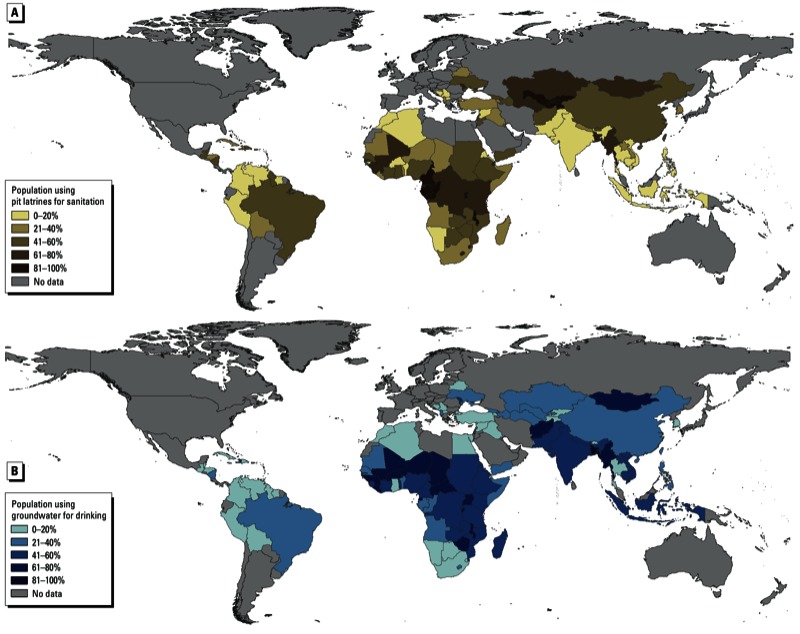
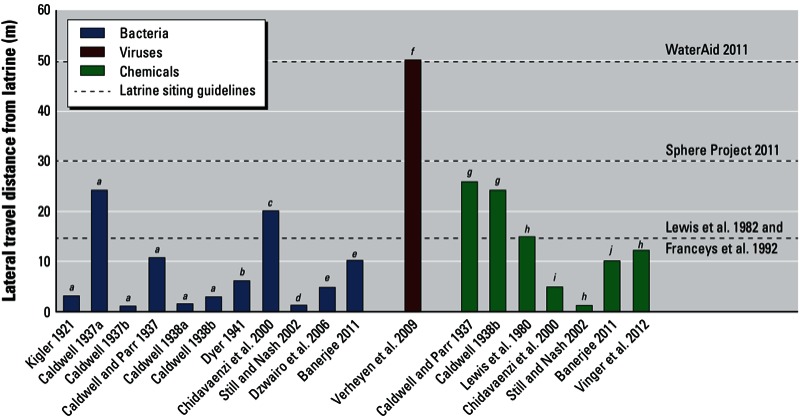
Background: Pit latrines are one of the most common human excreta disposal systems in low-income countries, and their use is on the rise as countries aim to meet the sanitation-related target of the Millennium Development Goals. There is concern, however, that discharges of chemical and microbial contaminants from pit latrines to groundwater may negatively affect human health. Objectives: Our goals were to a) calculate global pit latrine coverage, b) systematically review empirical studies of the impacts of pit latrines on groundwater quality, c) evaluate latrine siting standards, and d) identify knowledge gaps regarding the potential for and consequences of groundwater contamination by latrines. Methods: We used existing survey and population data to calculate global pit latrine coverage. We reviewed the scientific literature on the occurrence of contaminants originating from pit latrines and considered the factors affecting transport of these contaminants. Data were extracted from peer-reviewed articles, books, and reports identified using Web of ScienceSM, PubMed, Google, and document reference lists. Discussion: We estimated that approximately 1.77 billion people use pit latrines as their primary means of sanitation. Studies of pit latrines and groundwater are limited and have generally focused on only a few indicator contaminants. Although groundwater contamination is frequently observed downstream of latrines, contaminant transport distances, recommendations based on empirical studies, and siting guidelines are variable and not well aligned with one another. Conclusions: In order to improve environmental and human health, future research should examine a larger set of contextual variables, improve measurement approaches, and develop better criteria for siting pit latrines.
Overview
The claims and statistics of this paper haven’t been checked yet.
Run the check — free, no account needed. It reads the open-access text and checks the sources it cites.
Integrity signals
Registry
Cites
Statistics
Figures
Verification
Claims the paper makes
The claims and statistics of this paper haven’t been checked yet.
Run the check — free, no account needed. It reads the open-access text and checks the sources it cites.
Claims other papers make about this one
Each is checked against this paper’s own text: does it say what the citing paper says it does?
The source backs part of the claim, not all of it — or backs it for a different population, condition or comparison.
In the citing paper
“Some field studies suggest that pit latrines, which are the most typical type of sanitation infrastructure in urban informal settlements, may be less likely to contaminate underlying groundwater when they are lined, particularly in rainy conditions 105 .”
From Urban informal settlements as hotspots of antimicrobial resistance and the need to curb environmental transmission. (2020) · cites this paper as [105]
Experimental — accuracy not yet measuredThe cited source says what the claim attributes to it.
In the citing paper
“Of the 2.7 billion people using on-site sanitation worldwide [6], an estimated 1.77 billion use some form of pit latrine as their primary means of excreta disposal [12].”
From Are pit latrines in urban areas of Sub-Saharan Africa performing? A review of usage, filling, insects and odour nuisances (2015) · cites this paper as [12]
Self-check
Percentages, sums and reported differences re-computed from the paper’s own numbers.
The self-check needs the paper’s full text.
Citations
Cites
Ecological and Evolutionary Forces Shaping Microbial Diversity in the Human Intestine
Ley, R. E., Peterson, D. A., & Gordon, J. I. (2006) · Cell · doi:10.1016/j.cell.2006.02.017 · Cited by 3,358
How long do nosocomial pathogens persist on inanimate surfaces? A systematic review
Krämer, A., Schwebke, I., & Kampf, G. (2006) · BMC Infectious Diseases · doi:10.1186/1471-2334-6-130 · Cited by 2,508
Arsenic mobility and groundwater extraction in Bangladesh
Harvey, C. F., Swartz, C. H., Badruzzaman, A. B. M., Keon-Blute, N., Yu, W., Ali, M. A., Jay, J., Beckie, R., Niedan, V., Brabander, D., et al. (2002) · Science · doi:10.1126/science.1076978 · Cited by 1,234 · cited 2×
“…of studies that detected total or fecal coliforms did not detect elevated nitrate concentrations in wells (Ahmed et al. 2002; Dzwairo et al. 2006; Howard et al. 2002; Padmasiri et al. 1992; Still and Nash 2002), other studies have reported nitrate concentrations > 100 mg/L (Banks et al. 2002;…”
BackgroundProgress on sanitation and drinking-water 2010 update
worl (2010) · Cited by 831
RNA Viral Community in Human Feces: Prevalence of Plant Pathogenic Viruses
Zhang, T., Breitbart, M., Lee, W. H., Run, J., Wei, C. L., Soh, S. W., Hibberd, M. L., Liu, E. T., Rohwer, F. L., & Ruan, Y. (2005) · PLoS Biology · doi:10.1371/journal.pbio.0040003 · Cited by 827
Water, sanitation and hygiene for the prevention of diarrhoea
Cairncross, S., Hunt, C., Boisson, S., Bostoen, K., Curtis, V., Fung, I. C., & Schmidt, W.-P. (2010) · International Journal of Epidemiology · doi:10.1093/ije/dyq035 · Cited by 667
Sanitation and disease: health aspects of excreta and wastewater management.
Feachem, R. G., Bradley, D. J., Garelick, H., & Mara, D. D. (1983) · Cited by 657
Drinking-Water Nitrate, Methemoglobinemia, and Global Burden of Disease: A Discussion
Fewtrell, L. (2004) · Environmental Health Perspectives · doi:10.1289/ehp.7216 · Cited by 653
Removal of Viruses by Soil Passage: Overview of Modeling, Processes, and Parameters
Schijven, J. F., & Hassanizadeh, S. M. (2000) · Critical Reviews in Environmental Science and Technology · doi:10.1080/10643380091184174 · Cited by 588 · cited 1×
“…contaminants in the sub surface have been the subject of several reviews (BGS 2002; Dillon 1997; Gerba et al. 1975; Lewis et al. 1982; WHO 2006), and there is extensive literature that more broadly quantifies contaminant transport processes in groundwater (e.g., Schijven and Hassanizadeh 2000).”
BackgroundHumanitarian Charter and Minimum Standards in Humanitarian Response
The Sphere Project (2011) · The Sphere Project eBooks · doi:10.3362/9781908176202 · Cited by 568
Research works printed but not linked: 2
- Padmasiri JP, Jayatilake GM, Kotuwegedara JPK, 1992, Groundwater pollution from double pit latrines. In: Water, Environment and Management: Proceedings of the 18th WEDC Conference, 30 August–3 September 1992, Kathmandu, Nepal. 239–241
- Still DA, Nash SR . 2002. Groundwater contamination due to pit latrines located in a sandy aquifer: a case study from Maputaland. In: Water Institute of Southern Africa Biennial Conference. Durban, South Africa:Water Institute of Southern Africa, 1–6.Available: http://www.sswm.info/sites/default/files/reference_attachments/STILL%20and%20NASH%202002%20Groundwater%20contamination%20due%20to%20pit%20latrines%20located%20in%20a%20sandy%20aquifer.pdf [accessed 29 March 2013].
Cited by
Sorted by citations
Pickering, A. J., Djebbari, H., López, C., Coulibaly, M., & Alzúa, M. L. (2015) · The Lancet Global Health · doi:10.1016/s2214-109x(15)00144-8 · Cited by 416
Global aquifers dominated by fossil groundwaters but wells vulnerable to modern contamination
Jasechko, S., Perrone, D., Befus, K. M., Cardenas, M. B., Ferguson, G., Gleeson, T., Luijendijk, E., McDonnell, J. J., Taylor, R. G., Wada, Y., et al. (2017) · Nature Geoscience · doi:10.1038/ngeo2943 · Cited by 363
Emerging contaminants in urban groundwater sources in Africa
Sorensen, J., Lapworth, D. J., Nkhuwa, D. C. W., Stuart, M. E., Gooddy, D. C., Bell, R. A., Chirwa, M., Kabika, J., Liemisa, M., Chibesa, M., et al. (2014) · Water Research · doi:10.1016/j.watres.2014.08.002 · Cited by 348
“…that the level of consumption of these products must be low, due to both low levels of income and poorer accessibility. wInsecticides and herbicides are common groundwater contaminants in the developed world (Hallberg, 1989; Stuart et al., 2012) as farmers strive to optimise crop yields and profits.”
Lapworth, D. J., Nkhuwa, D. C. W., Okotto-Okotto, J., Pedley, S., Stuart, M. E., Tijani, M. N., & Wright, J. (2017) · Hydrogeology Journal · doi:10.1007/s10040-016-1516-6 · Cited by 331
“Human faeces harbour a large number of microbes, including bacteria, archaea, microbial eukarya, viruses, protozoa, and helminths (Graham and Polizzotto 2013).”
BackgroundInfluentialOmarova, A. O., Tussupova, K., Berndtsson, R., Kalishev, M., & Sharapatova, K. (2018) · International Journal of Environmental Research and Public Health · doi:10.3390/ijerph15030495 · Cited by 252
“In some countries where pit latrines are common, greater than two billion people use groundwater as a source of drinking water [68].”
BackgroundInfluentialNadimpalli, M. L., Marks, S. J., Montealegre, M. C., Gilman, R. H., Pajuelo, M. J., Saito, M., Tsukayama, P., Njenga, S. M., Kiiru, J., Swarthout, J., et al. (2020) · Nature microbiology · doi:10.1038/s41564-020-0722-0 · Cited by 223
Andrade, L., O’Dwyer, J., O’Neill, E., & Hynds, P. D. (2018) · Environmental Pollution · doi:10.1016/j.envpol.2018.01.104 · Cited by 231
“The overarching review protocol has been adapted from several previous studies (Sargeant et al., 2006; Graham and Polizzotto, 2013; Hynds et al., 2014a).”
MethodThe occurrence of anti-retroviral compounds used for HIV treatment in South African surface water
Wood, T. P., Duvenage, C. S. J., & Rohwer, E. R. (2015) · Environmental Pollution · doi:10.1016/j.envpol.2015.01.030 · Cited by 193
“…treatment plants (WWTPs) one should also consider alternative sources of contamination such as improper destruction of expired pharmaceutical stocks e.g. leachate from pharmaceutical landfilling (Peng, Ou, et al., 2014) or pit latrines (Graham and Polizzotto, 2013) in developing countries.”
BackgroundDeshpande, A., Miller-Petrie, M. K., Lindstedt, P. A., Baumann, M. M., Johnson, K. B., Blacker, B. F., Abbastabar, H., Abd-Allah, F., Abdelalim, A., Abdollahpour, I., et al. (2020) · The Lancet Global Health · doi:10.1016/s2214-109x(20)30278-3 · Cited by 187
Gwenzi, W., & Chaukura, N. (2017) · The Science of The Total Environment · doi:10.1016/j.scitotenv.2017.11.121 · Cited by 179
Kumar, P., Bansod, B. K. S., Debnath, S. K., Thakur, P. K., & Ghanshyam, C. (2015) · Environmental Impact Assessment Review · doi:10.1016/j.eiar.2015.02.001 · Cited by 170
Hand, S. M., & Cusick, R. D. (2021) · Environmental Science & Technology · doi:10.1021/acs.est.0c06254 · Cited by 166
Groundwater quality: Global threats, opportunities and realising the potential of groundwater
Lapworth, D. J., Boving, T. B., Kreamer, D. K., Kebede, S., & Smedley, P. L. (2021) · The Science of The Total Environment · doi:10.1016/j.scitotenv.2021.152471 · Cited by 175
K'oreje, K. O., Okoth, M. O., Langenhove, H. R. V., & Demeestere, K. (2019) · Journal of Environmental Management · doi:10.1016/j.jenvman.2019.109752 · Cited by 154
Are we underestimating urban poverty?
Lucci, P., Bhatkal, T., & Хан, А. (2017) · World Development · doi:10.1016/j.worlddev.2017.10.022 · Cited by 152
Laffite, A., Kilunga, P. I., Kayembe, J. M., Devarajan, N., Mulaji, C. K., Giuliani, G., Slaveykova, V. I., & Poté, J. W. (2016) · Frontiers in Microbiology · doi:10.3389/fmicb.2016.01128 · Cited by 144
“The cumulative effect of no drainage system and the presence of wild discharge next to the US sampling point may explain why hospital effluents discharge showed no significant increase in FIB abundance in the receiving system (Orsi et al., 2007; Graham and Polizzotto, 2013).”
BackgroundThe impacts of climate change on coastal groundwater
Richardson, C., Davis, K. L., Ruiz‐González, C., Guimond, J., Michael, H. A., Paldor, A., Moosdorf, N., & Paytan, A. (2024) · Nature Reviews Earth & Environment · doi:10.1038/s43017-023-00500-2 · Cited by 144
Hynds, P. D., Thomas, M. K., & Pintar, K. D. M. (2014) · PLoS ONE · doi:10.1371/journal.pone.0093301 · Cited by 140
“The review protocol was adapted from previous studies [35–37].”
MethodHow Do Households Respond to Unreliable Water Supplies? A Systematic Review
Majuru, B., Suhrcke, M., & Hunter, P. R. (2016) · International Journal of Environmental Research and Public Health · doi:10.3390/ijerph13121222 · Cited by 139
Nakagiri, A., Niwagaba, C. B., Nyenje, P. M., Kulabako, R. N., Tumuhairwe, J. B., & Kansiime, F. (2015) · BMC Public Health · doi:10.1186/s12889-016-2772-z · Cited by 133
“77 billion use some form of pit latrine as their primary means of excreta disposal [12].”
BackgroundWorlding Water Supply: Thinking Beyond the Network in Jakarta
Furlong, K., & Kooy, M. (2017) · International Journal of Urban and Regional Research · doi:10.1111/1468-2427.12582 · Cited by 133
Rural:urban inequalities in post 2015 targets and indicators for drinking-water
Bain, R., Wright, J., Christenson, E., & Bartram, J. (2014) · The Science of The Total Environment · doi:10.1016/j.scitotenv.2014.05.007 · Cited by 137
“For example, it is well established that the use of pit latrines, which are more common in rural areas, can negatively influence ground water quality (Graham and Polizzotto, 2013).”
BackgroundSchriewer, A., Odagiri, M., Wuertz, S., Misra, P. R., Panigrahi, P., Clasen, T., & Jenkins, M. W. (2015) · American Journal of Tropical Medicine and Hygiene · doi:10.4269/ajtmh.14-0824 · Cited by 119
“tables and extended periods of inundation associated with the monsoon season in the study area.(17) Total Bacteroidales markers were detected on a mother’s”
BackgroundDoes 91% of the world’s population really have “sustainable access to safe drinking water”?
Martínez‐Santos, P. (2017) · International Journal of Water Resources Development · doi:10.1080/07900627.2017.1298517 · Cited by 117
“Shallow unprotected wells, uncontrolled waste disposal, intermittent water supplies and free-roaming livestock are frequent causes of microbial contamination in drinking water supplies (Graham & Polizzotto, 2013; Kumpel & Nelson, 2013).”
BackgroundSclar, G. D., Penakalapati, G., Amato, H. K., Garn, J. V., Alexander, K., Freeman, M. C., Boisson, S., Medlicott, K. O., & Clasen, T. (2016) · International Journal of Hygiene and Environmental Health · doi:10.1016/j.ijheh.2016.09.021 · Cited by 108
“Given the effects of hydrology, gradients, soil conditions, seasons, fecal load, pathogens present and other factors on the migration of pathogens in the soil (Graham and Polizzotto, 2013), it is not clear from current evidence whether these results can be generalized to other settings.”
BackgroundToward operational methods for the assessment of intrinsic groundwater vulnerability: A review
Wachniew, P., Żurek, A. J., Stumpp, C., Gemitzi, A., Gargini, A., Filippini, M., Różański, K., Meeks, J., Kværner, J., & Witczak, S. (2016) · Critical Reviews in Environmental Science and Technology · doi:10.1080/10643389.2016.1160816 · Cited by 98
Wang, X., Daigger, G. T., VRIES, W. D., Kroeze, C., Yang, M., Ren, N., Liu, J., & Butler, D. (2019) · Nature Communications · doi:10.1038/s41467-019-10445-0 · Cited by 96
Orner, K. D., & Mihelcic, J. R. (2017) · Environmental Science Water Research & Technology · doi:10.1039/c7ew00195a · Cited by 93
Gwenzi, W., & Nyamadzawo, G. (2014) · Environmental Processes · doi:10.1007/s40710-014-0037-3 · Cited by 92
“Other case studies documenting the impacts of pit latrines on chemical and bacteriological quality of groundwater in urban and peri-urban areas are presented in a recent synthesis of global literature (Graham and Polizzotto 2013).”
BackgroundSustainable sanitation and gaps in global climate policy and financing
Dickin, S., Bayoumi, M., Garriga, R. G., Andersson, K., & Jiménez, A. (2020) · npj Clean Water · doi:10.1038/s41545-020-0072-8 · Cited by 85
Occurrence of Human Enteric Viruses in Water Sources and Shellfish: A Focus on Africa
Upfold, N., Luke, G. A., & Knox, C. M. (2021) · Food and Environmental Virology · doi:10.1007/s12560-020-09456-8 · Cited by 81
Sorensen, J., Sadhu, A., Sampath, G., Sugden, S., Duttagupta, S., Lapworth, D. J., Marchant, B. P., & Pedley, S. (2015) · Water Research · doi:10.1016/j.watres.2015.11.006 · Cited by 75
“77 billion people worldwide use pit latrines as their principal means of sanitation (Graham and Polizzotto, 2013).”
BackgroundInfluentialMasindi, V., & Foteinis, S. (2020) · Cleaner Engineering and Technology · doi:10.1016/j.clet.2020.100038 · Cited by 70
Risk assessment to groundwater of pit latrine rural sanitation policy in developing country settings
Back, J. O., Rivett, M. O., Hinz, L. B., Mackay, N., Wanangwa, G. J., Phiri, O. L., Songola, C. E., Thomas, M. A. S., Kumwenda, S., Nhlema, M., et al. (2017) · The Science of The Total Environment · doi:10.1016/j.scitotenv.2017.09.071 · Cited by 71
“…confident assessment of distances and discernment of attenuation processes that may limit migration (Banks et al., 2002; Escamilla et al., 2013; Graham and Polizzotto, 2013; Howard et al., 2003; Nichols et al., 1983; Nyenje et al., 2014; Schijven and Hassanizadeh, 2000; Tandia et al., 1999;…”
BackgroundInfluentialMcGill, B. M., Altchenko, Y., Hamilton, S. K., Kenabatho, P. K., Sylvester, S. R., & Villholth, K. G. (2019) · Hydrogeology Journal · doi:10.1007/s10040-018-1901-4 · Cited by 68
“Unlined pit latrines leach to the groundwater, threatening groundwater quality and human health with pollutants like nitrate (NO3 −) and pathogens (Cronin et al. 2007; Graham and Polizzotto 2013).”
BackgroundClimate change mitigation potential in sanitation via off-site composting of human waste
McNicol, G., Jeliazovski, J., François, J. J., Kramer, S. B., & Ryals, R. A. (2020) · Nature Climate Change · doi:10.1038/s41558-020-0782-4 · Cited by 66
Drinking Water Security Challenges in Rohingya Refugee Camps of Cox’s Bazar, Bangladesh
Akhter, M., Uddin, S. M. N., Rafa, N., Hridi, S. M., Staddon, C., & Powell, W. (2020) · Sustainability · doi:10.3390/su12187325 · Cited by 68
“source through overflowing, leaching, or due to a lack of sewage treatment facilities [37].”
BackgroundCid, C., Qu, Y., & Hoffmann, M. R. (2018) · Environmental Science Water Research & Technology · doi:10.1039/c8ew00209f · Cited by 64
Mukherjee, A., Duttagupta, S., Chattopadhyay, S., Bhanja, S. N., Bhattacharya, A., Chakraborty, S., Sarkar, S., Ghosh, T., Bhattacharya, J., & Sahu, S. (2019) · Scientific Reports · doi:10.1038/s41598-019-50875-w · Cited by 66
Seasonal Variation in Drinking and Domestic Water Sources and Quality in Port Harcourt, Nigeria
Kumpel, E., Cock-Esteb, A., Duret, M., de Waal, D., & Khush, R. S. (2016) · American Journal of Tropical Medicine and Hygiene · doi:10.4269/ajtmh.16-0175 · Cited by 60
Wood, T. P., Preez, C. D., Steenkamp, A., Duvenage, C. S. J., & Rohwer, E. R. (2017) · Environmental Pollution · doi:10.1016/j.envpol.2017.06.043 · Cited by 60
Mass balance of nitrogen and potassium in urban groundwater in Central Africa, Yaounde/Cameroon
Kringel, R., Rechenburg, A., Kuitcha, D., Fouepe, A. T., Bellenberg, S., Kengne, I. M., & Fomo, M. A. (2016) · The Science of The Total Environment · doi:10.1016/j.scitotenv.2015.12.090 · Cited by 59
The Impact of Drinking Water Quality and Sanitation on Child Health: Evidence from Rural Ethiopia
Usman, M. A., Gerber, N., & von Braun, J. (2018) · The Journal of Development Studies · doi:10.1080/00220388.2018.1493193 · Cited by 66
“Other studies have also shown that latrines can be a source of ground water pollution (Banks, Karnachuk, Parnachev, Holden, & Frengstad, 2002; Graham & Polizzotto, 2013).”
Global Methane Emissions from Pit Latrines
Reid, M. C., Guan, K., Wagner, F., & Mauzerall, D. L. (2014) · Environmental Science & Technology · doi:10.1021/es501549h · Cited by 60
Ferrer, N., Folch, A., Masó, G., Sanchez, S. C., & Sánchez‐Vila, X. (2019) · Journal of Contaminant Hydrology · doi:10.1016/j.jconhyd.2019.103556 · Cited by 58
Co-composting of solid waste and fecal sludge for nutrient and organic matter recovery
Cofie, O., Nikiema, J., Impraim, R., Adamtey, A., Paul, J., & Kone, D. (2016) · doi:10.5337/2016.204 · Cited by 58
“Graham and Polizzotto (2013) estimate that around 1.77 billion people in developing countries depend on pit latrines as their primary means of sanitation.”
BackgroundInfluentialMarques, R. C., Bernardi, J. V. E., Dorea, C. C., & Dórea, J. G. (2020) · International Journal of Environmental Research and Public Health · doi:10.3390/ijerph17020577 · Cited by 57
“The co-existence of poor sanitation and unclean water is a com on finding among poor Amazonians; indeed, the lack of hygienic facilities to separate fecal material from ground water contamination is a problem that affects the poor around the world [28].”
BackgroundInfluentialMariki, E. E., & Muzuka, A. N. N. (2016) · Environmental Monitoring and Assessment · doi:10.1007/s10661-016-5384-2 · Cited by 57
Chique, C., Hynds, P. D., Andrade, L., Burke, L. P., Morris, D., Ryan, M. P., & O’Dwyer, J. (2020) · Water Research · doi:10.1016/j.watres.2020.115726 · Cited by 60
Gwenzi, W., Marumure, J., Makuvara, Z., Simbanegavi, T. T., Njomou-Ngounou, E. L., Nya, E. L., Kaetzl, K., Noubactep, C., & Rzymski, P. (2023) · The Science of The Total Environment · doi:10.1016/j.scitotenv.2023.163179 · Cited by 64
Martínez‐Santos, P., Martín-Loeches, M., García-Castro, N., Solera, D., Díaz-Alcaide, S., Montero, E., & García-Rincón, J. (2017) · International Journal of Hygiene and Environmental Health · doi:10.1016/j.ijheh.2017.08.001 · Cited by 55
Kormoker, T., Idris, A. M., Khan, M. M., Tusher, T. R., Proshad, R., Islam, M. S., Khadka, S., Rahman, S., Kabir, M. H., & Kundu, S. (2021) · Toxin Reviews · doi:10.1080/15569543.2020.1866012 · Cited by 55
“It is also reported that the extent of bacterial contamination of groundwater largely depends on the hydrological and soil conditions of the area (Graham and Polizzotto 2013).”
BackgroundErcümen, A., Naser, A. M., Arnold, B. F., UNICOMB, L. E., Colford, J. M., & Luby, S. P. (2017) · American Journal of Tropical Medicine and Hygiene · doi:10.4269/ajtmh.16-0489 · Cited by 58
“and a range of latrine siting guidelines with respect to proximity to drinking water sources have been recommended in different settings.(38) Augmenting sanitary inspections with an assessment of the groundwater table and characterization of local soil type could help elucidate the relationships between sanitary risk…”
BackgroundThe public health significance of latrines discharging to groundwater used for drinking
Ravenscroft, P., Mahmud, Z. H., Islam, M. S., Hossain, A. H. M. K., Zahid, A., Saha, G. C., Ali, A. H. M. Z., Islam, K., Cairncross, S., Clemens, J. D., et al. (2017) · Water Research · doi:10.1016/j.watres.2017.07.049 · Cited by 55
“The conventional wisdom that inadequate spacing of pit latrines and wells is a major contributor to faecal contamination of drinking water has long directed public health authorities to mandating spacing criteria, typically 10e50m, although the scientific basis and efficacy of these rules are often open to question (G…”
BackgroundSlum decay in Sub-Saharan Africa
Amegah, A. K. (2021) · Environmental Epidemiology · doi:10.1097/ee9.0000000000000158 · Cited by 52
Lourenço, N., & Nunes, L. M. (2020) · Environmental Management · doi:10.1007/s00267-020-01268-7 · Cited by 54
“2011) being, therefore, a potential source of contamination to groundwater with nitrates, phosphates, and pathogens (Graham and Polizzotto 2013).”
BackgroundDey, N. C., Parvez, M., Dey, D., Saha, R., Ghose, L., Barua, M. K., Islam, A., & Chowdhury, M. (2016) · International Journal of Hygiene and Environmental Health · doi:10.1016/j.ijheh.2016.12.007 · Cited by 51
A global perspective on assessing groundwater quality
Misstear, B. D. R., Vargas, C. R., Lapworth, D. J., Ouédraogo, I., & Podgorski, J. E. (2022) · Hydrogeology Journal · doi:10.1007/s10040-022-02461-0 · Cited by 51
“This is a particular threat to groundwater quality where wastewater systems such as pit latrines and septic tanks are used near supply wells that access shallow groundwater (Graham and Polizzotto 2013).”
BackgroundLebu, S., Gyimah, R. A. A., Nandoya, E., Brown, J. M., Salzberg, A. A., & Manga, M. (2024) · Journal of Environmental Management · doi:10.1016/j.jenvman.2024.120264 · Cited by 58
Ndoziya, A. T., Hoko, Z., & Gumindoga, W. (2019) · Journal of Water Sanitation and Hygiene for Development · doi:10.2166/washdev.2019.179 · Cited by 51
Review: Indicator bacteriophages in sludge, biosolids, sediments and soils
Martín-Díaz, J., Lucena, F., Blanch, A. R., & Jofre, J. T. (2020) · Environmental Research · doi:10.1016/j.envres.2020.109133 · Cited by 51
The Dilemmas of Water Quality and Food Security Interactions in Low- and Middle-Income Countries
Linderhof, V. G. M., de Lange, T., & Reinhard, S. (2021) · Frontiers in Water · doi:10.3389/frwa.2021.736760 · Cited by 53
“Increasing the amount of pit latrines and increasing the amount of boreholes for drinking water nearby lead to water pollution by latrines which affects drinking water quality (Graham and Polizzotto, 2013), where children but also adults are affected.”
BackgroundInfluentialShivendra, B. T., & Ramaraju, H. K. (2015) · Aquatic Procedia · doi:10.1016/j.aqpro.2015.02.148 · Cited by 47
Iqbal, M. S., Islam, M. M. M., & Hofstra, N. (2018) · The Science of The Total Environment · doi:10.1016/j.scitotenv.2018.09.347 · Cited by 47
Gwenzi, W., Simbanegavi, T. T., & Rzymski, P. (2023) · Water · doi:10.3390/w15030476 · Cited by 43
Daniels, M. E., Smith, W. A., Schmidt, W., Clasen, T., & Jenkins, M. W. (2016) · Environmental Science & Technology · doi:10.1021/acs.est.5b05797 · Cited by 43
Ward, J., Lapworth, D. J., Read, D. S., Pedley, S., Banda, S. T., Monjerezi, M., Gwengweya, G., & MacDonald, A. (2020) · The Science of The Total Environment · doi:10.1016/j.scitotenv.2020.141284 · Cited by 42
Impact of sampling depth on pathogen detection in pit latrines
Capone, D., Chigwechokha, P. K., Reyes, F. L. D. L., Holm, R. H., Risk, B. B., Tilley, E., & Brown, J. M. (2021) · PLoS neglected tropical diseases · doi:10.1371/journal.pntd.0009176 · Cited by 43
“The subsurface transport of pathogens from fecal sludges in latrines to groundwater has been demonstrated under certain hydrological and soil conditions [20].”
BackgroundNgasala, T. M., Masten, S. J., & Phanikumar, M. S. (2019) · The Science of The Total Environment · doi:10.1016/j.scitotenv.2019.05.202 · Cited by 41
Anastasopoulou, A., Kolios, A., Somorin, T. O., Sowale, A., Jiang, Y., Fidalgo, B., Parker, A., Williams, L., Collins, M., McAdam, E. J., et al. (2018) · The Science of The Total Environment · doi:10.1016/j.scitotenv.2018.05.062 · Cited by 40
Guo, S., Zhou, X., Simha, P., Perez-Mercado, L. F., Lv, Y., & Li, Z. (2021) · The Science of The Total Environment · doi:10.1016/j.scitotenv.2021.148660 · Cited by 39
Impact of Land Management on Water Resources, a South African Context
Nkosi, M., Mathivha, F. I., & Odiyo, J. O. (2021) · Sustainability · doi:10.3390/su13020701 · Cited by 40
“Author Landuse Aspect Impact Location Saraiva Okello et al. [103] Forestry, irrigated agriculture, urbanisation Surface water quantity Changes in streamflow Inkomati RiverCatchmnet Hobbs et al. [62] Groundwater quality Crocodile RiverCatchment Parsons [63] Invasive plants Groundwater resources Reduced flow South Afric…”
BackgroundInfluentialEarly testing of new sanitation technology for urban slums: The case of the Blue Diversion Toilet
Tobias, R., O'Keefe, M., Künzle, R., Gebauer, H., Gründl, H., Morgenroth, E., Pronk, W., & Larsen, T. A. (2017) · Science of The Total Environment · doi:10.1016/j.scitotenv.2016.10.057 · Cited by 38
“However, with close to two billion people relying on this technology (Graham and Polizzotto, 2013), methane emissions could be substantial.”
BackgroundHussain, F., Clasen, T., Akter, S., Bawel, V., Luby, S. P., Leontsini, E., UNICOMB, L. E., Barua, M. K., Thomas, B., & WINCH, P. J. (2017) · BMC Public Health · doi:10.1186/s12889-017-4412-7 · Cited by 40
“8 billion people from low-income countries use pit latrines as their usual form of sanitation [11].”
BackgroundEekert, M. H. A. V., Gibson, W., Torondel, B., Abilahi, F., Liseki, B., Schuman, E., Sumpter, C., & Ensink, J. H. J. (2019) · Water Science & Technology · doi:10.2166/wst.2019.220 · Cited by 37
Díaz-Alcaide, S., & Martínez‐Santos, P. (2019) · Journal of Hydrology · doi:10.1016/j.jhydrol.2019.124006 · Cited by 37
Klaas, D. K. S. Y., Imteaz, M. A., & Arulrajah, A. (2017) · Water Research · doi:10.1016/j.watres.2017.05.056 · Cited by 36
“Environmental hazard from faecal traces leached from unlined septic tank or pit latrines 369 (Graham and Polizzotto, 2013; Nelson et al., 2014) in most of the houses in the study area could 370 occur in areas nearby the spring.”
BackgroundWong, L. W., Ong, K. S., Khoo, J. R., Goh, C. B. S., Hor, J. W., & Lee, S. M. (2020) · Expert Review of Gastroenterology & Hepatology · doi:10.1080/17474124.2020.1806711 · Cited by 36
Chique, C., Hynds, P. D., Burke, L. P., Morris, D., Ryan, M. P., & O’Dwyer, J. (2020) · Water Research · doi:10.1016/j.watres.2020.116496 · Cited by 37
Evolution of groundwater quality assessment on urban area- a bibliometric analysis
Bose, S., Mazumdar, A., & Basu, S. (2023) · Groundwater for Sustainable Development · doi:10.1016/j.gsd.2022.100894 · Cited by 37
Polioviruses and other Enteroviruses
Betancourt, W. Q., & Shulman, L. M. (2018) · Michigan State University eBooks · doi:10.14321/waterpathogens.15 · Cited by 37
“…that was associated with pit latrines was reported within 50 meters downstream of the latrines (Tillett, 2013; Verheyen et al., 2009) especially in freshly dug latrines where establishment of biofilm and maximum soil-filtering may take months to establish (Graham and Polizzotto, 2013).”
BackgroundMethodInfluentialWater Resources Sustainability of Ulaanbaatar City, Mongolia
Batsaikhan, N., Lee, J. M., Nemer, B., & Woo, N. C. (2018) · Water · doi:10.3390/w10060750 · Cited by 34
Mittal, A., Singh, R., Chakma, S., & Goel, G. (2020) · Journal of Water Process Engineering · doi:10.1016/j.jwpe.2020.101471 · Cited by 34
Impact of an Urban Sanitation Intervention on Enteric Pathogen Detection in Soils
Capone, D., Berendes, D. M., Cumming, O., Holcomb, D., Knee, J., Konstantinidis, K. T., Lévy, K., Nalá, R., Risk, B. B., Stewart, J. R., et al. (2021) · Environmental Science & Technology · doi:10.1021/acs.est.1c02168 · Cited by 30
Gwenzi, W. (2021) · The Science of The Total Environment · doi:10.1016/j.scitotenv.2021.150680 · Cited by 35
“coli indicator bacteria, and viruses including human pathogens have been widely detected in faecal sludge and boreholes located close to pit latrines (Graham and Polizzotto, 2013; Capone et al., 2021; Liu et al., 2021; Otaki et al., 2021).”
BackgroundBioaerosol emissions associated with pit latrine emptying operations
Farling, S., Rogers, T. W., Knee, J., Tilley, E., Brown, J. M., & Deshusses, M. A. (2018) · The Science of The Total Environment · doi:10.1016/j.scitotenv.2018.08.147 · Cited by 36
“8 billion people use pit latrines as a main means of sanitation (Berendes et al., 2017; Graham and Polizzotto, 2013; Jenkins et al., 2015).”
BackgroundSorensen, J., Carr, A. F., Nayebare, J. G., Diongue, D. M. L., Pouye, A., Roffo, R., Gwengweya, G., Ward, J., Kanoti, J. R., Okotto-Okotto, J., et al. (2020) · Scientific Reports · doi:10.1038/s41598-020-72258-2 · Cited by 33
K'oreje, K. O., Okoth, M. O., Langenhove, H. R. V., & Demeestere, K. (2021) · Environmental Pollution · doi:10.1016/j.envpol.2021.118725 · Cited by 33
Manda, A. K., Sisco, M. S., Mallinson, D. J., & Griffin, M. T. (2014) · Hydrological Processes · doi:10.1002/hyp.10303 · Cited by 33
“Many communities across the world rely on pit latrines and onsite wastewater treatment systems (OWTS) – also known as septic systems – for disposing wastewater (e.g. Hanchar, 1991; Humphrey et al., 2012; Graham and Polizzotto, 2013).”
BackgroundOdiyo, J. O., & Makungo, R. (2018) · International Journal of Environmental Research and Public Health · doi:10.3390/ijerph15020317 · Cited by 33
“Faecal matter from pit latrines also has potential to contaminate groundwater, thereby threatening human health [8].”
BackgroundBeukes, L. S., King, T. L. B., & Schmidt, Š. (2017) · International Journal of Hygiene and Environmental Health · doi:10.1016/j.ijheh.2017.08.002 · Cited by 31
Engström, E., Balfors, B., Mörtberg, U. M., Thunvik, R., Gaily, T., & Mangold, M. (2015) · The Science of The Total Environment · doi:10.1016/j.scitotenv.2015.02.023 · Cited by 31
“Graham and Polizzotto (2013) argued that the ability tomake informed decisions about water and sanitation is largely limited by a scarcity of data, especially regarding the effects of environmental conditions on contamination.”
BackgroundInfluentialKumpel, E., Albert, J., Peletz, R., de Waal, D., Hirn, M., Danilenko, A. V., Uhl, V. W., Daw, A., & Khush, R. S. (2016) · American Journal of Tropical Medicine and Hygiene · doi:10.4269/ajtmh.15-0766 · Cited by 30
“are in close proximity to water points can contribute to both microbiological and nitrate contamination.(45,46) In both Port Harcourt and Monrovia, sanitation services are inadequate:”
BackgroundAlemayehu, T. A., Weldetinsae, A., Dinssa, D. A., Derra, F. A., Bedada, T. L., Asefa, Y. B., Mengesha, S. D., Alemu, Z. A., Serte, M. G., Teklu, K. T., et al. (2020) · Environmental Monitoring and Assessment · doi:10.1007/s10661-020-08297-z · Cited by 31
Contreras, J. D., Islam, M., Mertens, A., Pickering, A. J., Kwong, L. H., Arnold, B. F., Benjamin‐Chung, J., Hubbard, A., Alam, M., Sen, D., et al. (2022) · International Journal of Hygiene and Environmental Health · doi:10.1016/j.ijheh.2022.114031 · Cited by 36
Monney, I., & Antwi-Agyei, P. (2018) · Journal of Water, Sanitation and Hygiene for Development · doi:10.2166/washdev.2018.176 · Cited by 31
Nguyen, A., Grembi, J. A., Riviere, M., Heitmann, G. B., Hutson, W. D., Athni, T. S., Patil, A., Ercümen, A., Lin, A., Crider, Y. S., et al. (2024) · Environmental Health Perspectives · doi:10.1289/ehp13807 · Cited by 34
“10,12,53,54 Compared with other regions, the presence of alluvial soil (consisting of loose silt, clay, and sand) in Bangladesh ’ s fl ood plains may prevent the transport of pathogens from latrines into groundwater supplies.”
A localized sanitation status index as a proxy for fecal contamination in urban Maputo, Mozambique
Capone, D., Adriano, Z., Berendes, D. M., Cumming, O., Dreibelbis, R., Holcomb, D., Knee, J., Ross, I., & Brown, J. M. (2019) · PLoS ONE · doi:10.1371/journal.pone.0224333 · Cited by 31
“Groundwater level Community block leader survey � [3,9,45,46]”
BackgroundMutemi, S., Hoko, Z., & Makurira, H. (2020) · Physics and Chemistry of the Earth Parts A/B/C · doi:10.1016/j.pce.2020.102864 · Cited by 33
Trimmer, J. T., Lohman, H. A. C., Byrne, D. M., Houser, S. A., Jjuuko, F., Katende, D., Banadda, N., Zerai, A., Miller, D. C., & Guest, J. S. (2020) · Environmental Science & Technology · doi:10.1021/acs.est.0c03296 · Cited by 30
Metadata
- Authors
- Graham, J. P., & Polizzotto, M. L.
- Affiliations
- George Washington University (US)
- North Carolina State University (US)
- Corresponding author
- Graham, Jay P.
- Venue
- Environmental Health Perspectives
- Publisher
- American Chemical Society (ACS)
- Published
- 2013-03-22
- Volume
- 121
- Issue
- 5
- Pages
- 521-530
- ISSN
- 0091-6765 (ISSN-L)
- 1552-9924
- PMC
- PMC3673197
- OpenAlex
- W2084155931
- Cited by
- 431
- References
- 71
- Citations by year
- 2026: 41 · 2025: 20 · 2024: 36 · 2023: 44 · 2022: 37 · 2021: 49 · 2020: 42 · 2019: 34 · 2018: 35 · 2017: 44 · 2016: 20 · 2015: 15 · 2014: 11 · 2013: 3
- FWCI
- 1.60
- Type
- journal article
- Language
- en
- Open access
- gold
- doi.org
- Licence
- public-domain
- creativecommons.org/licenses/by/4.0/ (vor, 1743 d)
- Locations
- Environmental Health Perspectives (publishedVersion, public-domain)
- Europe PMC (PubMed Central) (publishedVersion, public-domain)
- PubMed Central (publishedVersion, public-domain)
- PubMed (publishedVersion)
- eScholarship (California Digital Library) (acceptedVersion)
- eScholarship (California Digital Library) (submittedVersion, public-domain)
- Topics
- Physical Sciences › Environmental Science › Water Science and Technology › Fecal contamination and water quality
- Physical Sciences › Environmental Science › Waste Management and Disposal › Wastewater Treatment and Reuse
- Physical Sciences › Environmental Science › Water Science and Technology › Water Quality and Pollution Assessment
- Keywords
- pit latrines, groundwater contamination, sanitation, microbial contaminants, chemical contaminants, contaminant transport, latrine coverage, low-income countries
- MeSH terms
- Ammonia, Chlorides, Humans, Nitrates, Sanitation, Toilet Facilities, Water Microbiology, Water Pollutants, Chemical, Water Pollution, Groundwater
About these checks
Registry, retraction, Cites and statistics results are computed, not judged, with one exception: a printed reference that no index lists is read once by a model before it counts as a citation error. Claims are extracted by a model and kept only when their quote appears verbatim in the text; each cited source is then checked, with a model’s help, for whether it says what the claim relies on. Those verdicts can be wrong — read the claim’s quote and the cited source before relying on one.
Statistics and arithmetic are recomputed, not judged.
Confidence bands are shown only for fields calibrated on our annotated test set. None is calibrated yet, so no band is shown.
What counts as a claim ›How we measure confidence ›How we check this ›
Are you an author, or do you see a problem with this page? Request a review
