

The DOI matches its Crossref record; 53 of the 54 references it cites were found in a registry or an index.
Low-Level Environmental Lead Exposure and Children’s Intellectual Function: An International Pooled Analysis
Open accessAbstract
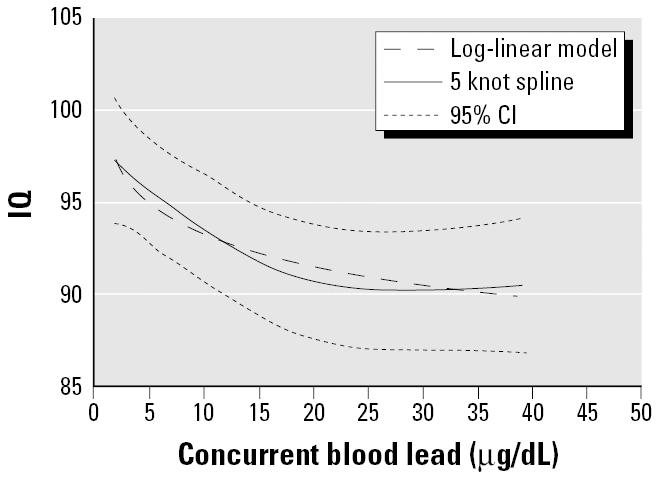
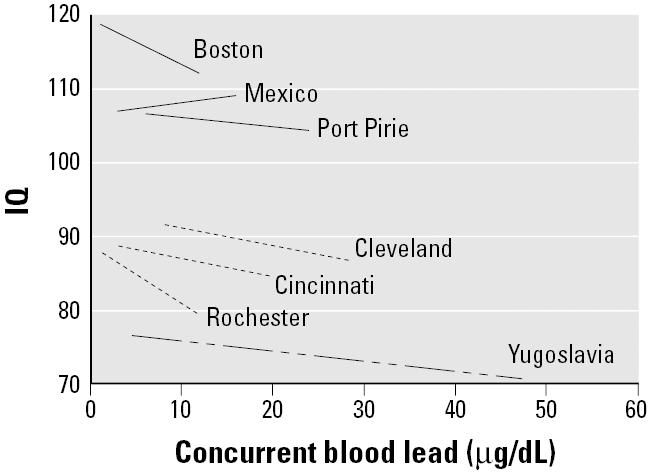
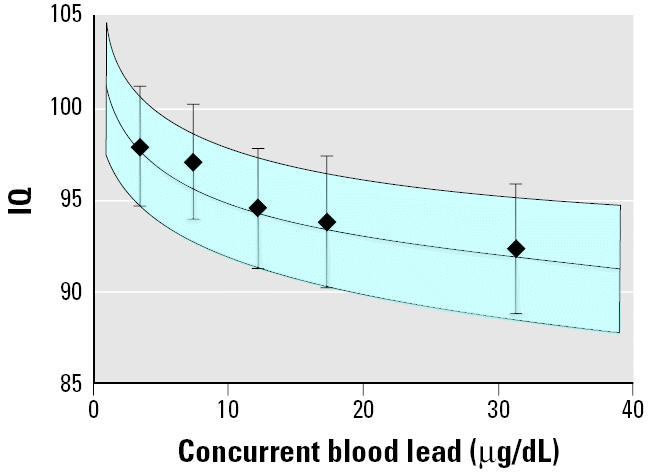
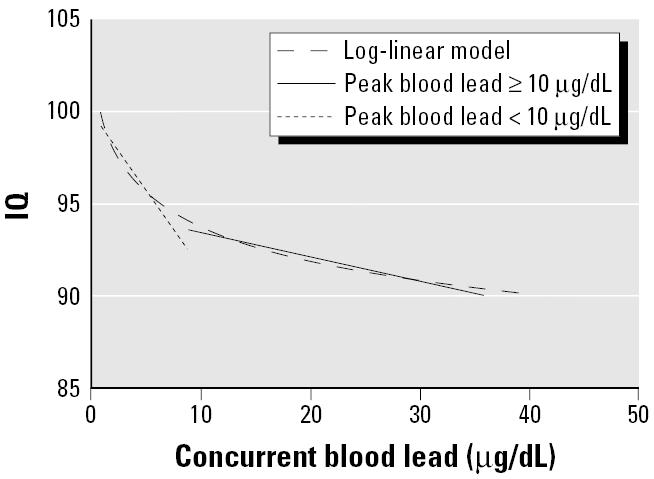
Lead is a confirmed neurotoxin, but questions remain about lead-associated intellectual deficits at blood lead levels < 10 μg/dL and whether lower exposures are, for a given change in exposure, associated with greater deficits. The objective of this study was to examine the association of intelligence test scores and blood lead concentration, especially for children who had maximal measured blood lead levels < 10 μg/dL. We examined data collected from 1,333 children who participated in seven international population-based longitudinal cohort studies, followed from birth or infancy until 5–10 years of age. The full-scale IQ score was the primary outcome measure. The geometric mean blood lead concentration of the children peaked at 17.8 μg/dL and declined to 9.4 μg/dL by 5–7 years of age; 244 (18%) children had a maximal blood lead concentration < 10 μg/dL, and 103 (8%) had a maximal blood lead concentration < 7.5 μg/dL. After adjustment for covariates, we found an inverse relationship between blood lead concentration and IQ score. Using a log-linear model, we found a 6.9 IQ point decrement [95% confidence interval (CI), 4.2–9.4] associated with an increase in concurrent blood lead levels from 2.4 to 30 μg/dL. The estimated IQ point decrements associated with an increase in blood lead from 2.4 to 10 μg/dL, 10 to 20 μg/dL, and 20 to 30 μg/dL were 3.9 (95% CI, 2.4–5.3), 1.9 (95% CI, 1.2–2.6), and 1.1 (95% CI, 0.7–1.5), respectively. For a given increase in blood lead, the lead-associated intellectual decrement for children with a maximal blood lead level < 7.5 μg/dL was significantly greater than that observed for those with a maximal blood lead level ≥7.5 μg/dL (p = 0.015). We conclude that environmental lead exposure in children who have maximal blood lead levels < 7.5 μg/dL is associated with intellectual deficits.
Overview
The claims and statistics of this paper haven’t been checked yet.
Run the check — free, no account needed. It reads the open-access text and checks the sources it cites.
Integrity signals
Registry
Cites
Statistics
Figures
Verification
Claims the paper makes
The claims and statistics of this paper haven’t been checked yet.
Run the check — free, no account needed. It reads the open-access text and checks the sources it cites.
Claims other papers make about this one
Each is checked against this paper’s own text: does it say what the citing paper says it does?
The source backs part of the claim, not all of it — or backs it for a different population, condition or comparison.
In the citing paper
“Chandramouli, Ellis, and Emond (2009); Canfield et al. (2003); Lanphear et al. (2005); Nigg et al. (2010); and Wasserman et al. (1997) all document a significant correlation between lead levels less than 10 milograms per deciliter (ug/ml) during childhood and cognitive and behavioral outcomes including ADHD and hyperactivity.”
From Do Low Levels of Blood Lead Reduce Children's Future Test Scores? (2018) · cites this paper as Lanphear et al. (2005)
Experimental — accuracy not yet measured
Self-check
Percentages, sums and reported differences re-computed from the paper’s own numbers.
The self-check needs the paper’s full text.
Citations
Cites
An Introduction to the Bootstrap
Efron, B., & Tibshirani, R. J. (1994) · doi:10.1201/9780429246593 · Cited by 40,500
An Introduction to the Bootstrap
Efron, B., & Tibshirani, R. J. (1993) · doi:10.1007/978-1-4899-4541-9 · Cited by 21,230
Littell, R. C. (1996) · Medical Entomology and Zoology · Cited by 10,345
Regression Modeling Strategies
Harrell, F. E. (2001) · Springer series in statistics · doi:10.1007/978-1-4757-3462-1 · Cited by 9,270
Regression Diagnostics: Identifying Influential Data and Sources of Collinearity
Belsley, D. A., Kuh, E., & Welsch, R. E. (1980) · Wiley Series in Probability and Statistics · doi:10.1002/0471725153 · Cited by 7,297
Harrell (2015) · Springer Series in Statistics · doi:10.1007/978-3-319-19425-7 · Cited by 6,878
Home Observation for Measurement of the Environment-21
Lansford, J. E., Odgers, C. L., Bradley, R. H., Godwin, J. W., Copeland, W., Rothenberg, W. A., & Dodge, K. A. (2022) · PsycTESTS Dataset · doi:10.1037/t86918-000 · Cited by 2,249
Intellectual Impairment in Children with Blood Lead Concentrations below 10 μg per Deciliter
Canfield, R. L., Henderson, C. R., Cory-Slechta, D. A., Cox, C., Jusko, T. A., & Lanphear, B. P. (2003) · New England Journal of Medicine · doi:10.1056/nejmoa022848 · Cited by 2,081
Self-citationLead neurotoxicity in children: basic mechanisms and clinical correlates
Lidsky, T. I., & Schneider, J. S. (2002) · Brain · doi:10.1093/brain/awg014 · Cited by 1,169
The Long-Term Effects of Exposure to Low Doses of Lead in Childhood
Needleman, H. L., Schell, A., Bellinger, D. C., Leviton, A., & Allred, E. N. (1990) · New England Journal of Medicine · doi:10.1056/nejm199001113220203 · Cited by 1,156
Self-citation
Cited by
Sorted by citations
Items 201–300 of 1,001
Association between lead exposure from electronic waste recycling and child temperament alterations
Liu, J., Xu, X., Wu, K., Piao, Z.-X., Huang, J., Guo, Y., Li, W., Zhang, Y., Chen, A., & Huo, X. (2011) · NeuroToxicology · doi:10.1016/j.neuro.2011.03.012 · Cited by 113
Hong, S.-B., Im, M.-H., Kim, J.-W., Park, E. J., Shin, M., Kim, B., Yoo, H., Cho, I.-H., Bhang, S., Hong, Y., et al. (2014) · Environmental Health Perspectives · doi:10.1289/ehp.1307420 · Cited by 117
Were, F. H., Njue, W., Murungi, J. I., & WANJAU, R. N. (2008) · The Science of The Total Environment · doi:10.1016/j.scitotenv.2007.12.035 · Cited by 112
Developmental Neurotoxicity: Some Old and New Issues
Giordano, G., & Costa, L. G. (2012) · ISRN Toxicology · doi:10.5402/2012/814795 · Cited by 117
The Global Burden of Lead Toxicity Attributable to Informal Used Lead-Acid Battery Sites
Ericson, B., Landrigan, P. J., Taylor, M. P., Frostad, J. J., & Caravanos, J. (2017) · Annals of Global Health · doi:10.1016/j.aogh.2016.10.015 · Cited by 111
Doyi, I. N. Y., Isley, C. F., Soltani, N. S., & Taylor, M. P. (2019) · Environment International · doi:10.1016/j.envint.2019.105125 · Cited by 114
Health and Environmental Risks from Lead-based Ammunition: Science Versus Socio-Politics
Arnemo, J. M., Andersen, O., Stokke, S., Thomas, V. G., Krone, O., Pain, D. J., & Mateo, R. (2016) · EcoHealth · doi:10.1007/s10393-016-1177-x · Cited by 110
Neurometabolic disorders and dysfunction in autism spectrum disorders
Zecavati, N., & Spence, S. J. (2009) · Current Neurology and Neuroscience Reports · doi:10.1007/s11910-009-0021-x · Cited by 110
Exposure assessment of persistent organic pollutants and metals in Mexican children
Trejo-Acevedo, A., Díaz‐Barriga, F., Carrizales, L., Domínguez, G., Salazar, R. C., Lema, I. I., Yarto-Ramírez, M., Gavilán-García, A., Mejía‐Saavedra, J., & Pérez‐Maldonado, I. N. (2008) · Chemosphere · doi:10.1016/j.chemosphere.2008.10.030 · Cited by 108
Metal exposures from aluminum cookware: An unrecognized public health risk in developing countries
Weidenhamer, J. D., Fitzpatrick, M. P., Biro, A. M., Kobunski, P. A., Hudson, M. R., Corbin, R. W., & Gottesfeld, P. (2016) · The Science of The Total Environment · doi:10.1016/j.scitotenv.2016.11.023 · Cited by 111
Forsyth, J. E., Nurunnahar, S., Islam, S. S., Baker, M., Yeasmin, D., Islam, M. S., Rahman, M. M., Fendorf, S. E., Ardoin, N. M., WINCH, P. J., et al. (2019) · Environmental Research · doi:10.1016/j.envres.2019.108722 · Cited by 111
Volk, H. E., Perera, F. P., Braun, J. M., Kingsley, S. L., Gray, K., Buckley, J. P., Clougherty, J. E., Croen, L., Eskenazi, B., Herting, M. M., et al. (2020) · Environmental Research · doi:10.1016/j.envres.2020.110320 · Cited by 113
More, A., Spaulding, N. E., Bohleber, P., Handley, M., Hoffmann, H., Korotkikh, E., Kurbatov, A. V., Loveluck, C. P., Sneed, S. B., McCormick, M., et al. (2017) · GeoHealth · doi:10.1002/2017gh000064 · Cited by 108
Low-level toxicity of chemicals: No acceptable levels?
Lanphear, B. P. (2017) · PLoS Biology · doi:10.1371/journal.pbio.2003066 · Cited by 114
Self-citationNicolescu, R., Petcu, C., Cordeanu, A., Fabritius, K., Schlumpf, M., Krebs, R., Krämer, U., & Winneke, G. (2010) · Environmental Research · doi:10.1016/j.envres.2010.04.002 · Cited by 109
Perera, F., Wheelock, K., Wang, Y., Tang, D., Margolis, A., Badia, G., Cowell, W., Miller, R. L., Rauh, V., Wang, S., et al. (2017) · Environmental Research · doi:10.1016/j.envres.2017.09.002 · Cited by 102
Arsenic, Cadmium, Lead, and Aluminium Concentrations in Human Milk at Early Stages of Lactation
Chao, H.-H., Guo, C.-H., Huang, C.-B., Chen, P., Li, H.-C., Hsiung, D.-Y., & Chou, Y.-K. (2013) · Pediatrics & Neonatology · doi:10.1016/j.pedneo.2013.08.005 · Cited by 112
Relation of blood lead levels and lead in gasoline: an updated systematic review
Angrand, R. C., Collins, G., Landrigan, P. J., & Thomas, V. M. (2022) · Environmental Health · doi:10.1186/s12940-022-00936-x · Cited by 123
Blood lead levels and risk factors in young children in France, 2008–2009
Etchevers, A., Bretin, P., Lecoffre, C., Bidondo, M., Strat, Y. L., Glorennec, P., & Tertre, A. L. (2013) · International Journal of Hygiene and Environmental Health · doi:10.1016/j.ijheh.2013.10.002 · Cited by 113
Huang, P., Su, P., Chen, H., Huang, H.-B., Tsai, J., Huang, H.-I., & Wang, S. (2012) · Environment International · doi:10.1016/j.envint.2011.10.011 · Cited by 108
A lead isotopic study of the human bioaccessibility of lead in urban soils from Glasgow, Scotland
Farmer, J. G., Broadway, A., Cave, M. R., Wragg, J., Fordyce, F. M., Graham, M. C., Ngwenya, B. T., & Bewley, R. J. F. (2011) · The Science of The Total Environment · doi:10.1016/j.scitotenv.2011.08.061 · Cited by 107
Murata, K., Iwata, T., Dakeishi, M., & Karita, K. (2009) · Journal of Occupational Health · doi:10.1539/joh.k8003 · Cited by 108
Secondhand Tobacco Smoke: A Source of Lead Exposure in US Children and Adolescents
Apostolou, A., García‐Esquinas, E., Fadrowski, J. J., McLain, P., Weaver, V. M., & Navas‐Acién, A. (2011) · American Journal of Public Health · doi:10.2105/ajph.2011.300161 · Cited by 105
Stansfield, K. H., Pilsner, J. R., Lu, Q., Wright, R. O., & Guilarte, T. R. (2012) · Toxicological Sciences · doi:10.1093/toxsci/kfs090 · Cited by 108
Weaver, V. M., Kotchmar, D. J., Fadrowski, J. J., & Silbergeld, E. K. (2015) · Journal of Exposure Science & Environmental Epidemiology · doi:10.1038/jes.2015.8 · Cited by 104
Levallois, P., St‐Laurent, J., Gauvin, D., Courteau, M., Prévost, M., Campagna, C., Lemieux, F., Nour, S., D’Amour, M., & Rasmussen, P. E. (2013) · Journal of Exposure Science & Environmental Epidemiology · doi:10.1038/jes.2012.129 · Cited by 104
Prenatal Exposure to Lead, δ-Aminolevulinic Acid, and Schizophrenia: Further Evidence
Opler, M. G. A., Buka, S. L., Groeger, J. L., McKeague, I. W., Wei, C., Factor-Litvak, P. R., Bresnahan, M. A., Graziano, J. H., Goldstein, J. M., Seidman, L. J., et al. (2008) · Environmental Health Perspectives · doi:10.1289/ehp.10464 · Cited by 104
Self-citationSafer food through plant science: reducing toxic element accumulation in crops
Clemens, S. (2019) · Journal of Experimental Botany · doi:10.1093/jxb/erz366 · Cited by 109
A Case Study of Environmental Injustice: The Failure in Flint
Campbell, C. C., Greenberg, R., Mankikar, D., & Ross, R. (2016) · International Journal of Environmental Research and Public Health · doi:10.3390/ijerph13100951 · Cited by 102
Skerfving, S., Löfmark, L., Lundh, T., Mikoczy, Z., & Strömberg, U. (2015) · NeuroToxicology · doi:10.1016/j.neuro.2015.05.009 · Cited by 104
Högberg, H. T., Kinsner‐Ovaskainen, A., Coecke, S., Härtung, T., & Bal‐Price, A. (2009) · Toxicological Sciences · doi:10.1093/toxsci/kfp175 · Cited by 101
Nanomaterials for remediation of contaminants: a review
Kumar, L., Ragunathan, V., Chugh, M., & Bharadvaja, N. (2021) · Environmental Chemistry Letters · doi:10.1007/s10311-021-01212-z · Cited by 106
Parajuli, R. P., Fujiwara, T., Umezaki, M., & Watanabe, C. (2012) · Environmental Research · doi:10.1016/j.envres.2012.10.010 · Cited by 102
Horton, M. K., Kahn, L. G., Perera, F. P., Barr, D. B., & Rauh, V. (2012) · Neurotoxicology and Teratology · doi:10.1016/j.ntt.2012.07.004 · Cited by 99
Exposure to metals during pregnancy and neuropsychological development at the age of 4 years.
Forns, J., Fort, M., Casas, M., Cáceres, A., Guxens, M., Gascon, M., Garcia-Esteban, R., Júlvez, J., Grimalt, J., & Sunyer, J. (2014) · Neurotoxicology · doi:10.1016/j.neuro.2013.10.006 · Cited by 87
Carpenter, W. T., Bustillo, J. R., Thaker, G. K., van Os, J., Krueger, R. F., & Green, M. J. (2009) · Psychological Medicine · doi:10.1017/s0033291709990286 · Cited by 99
Pan, S., Lin, L., Fan, Z., Zhang, J., Dong, G., Yang, B., You, J., Chen, S.-J., Zhang, G., Yu, Z., et al. (2017) · Environmental Pollution · doi:10.1016/j.envpol.2017.12.044 · Cited by 102
Guo, J., Wu, C., Zhang, J., Qi, X., Lv, S., Jiang, S., Zhou, T., Lu, D., Feng, C., Zhang, Y., et al. (2020) · Environment International · doi:10.1016/j.envint.2020.105692 · Cited by 99
Flora, S. J. S., & Agrawal, S. (2017) · Elsevier eBooks · doi:10.1016/b978-0-12-804239-7.00031-7 · Cited by 97
Zota, A. R., Schaider, L. A., Ettinger, A. S., Wright, R. O., Shine, J. P., & Spengler, J. D. (2011) · Journal of Exposure Science & Environmental Epidemiology · doi:10.1038/jes.2011.21 · Cited by 97
Andrews, G., Pine, D. S., Hobbs, M. J., Anderson, T. M., & Sunderland, M. (2009) · Psychological Medicine · doi:10.1017/s0033291709990274 · Cited by 94
“For instance, toxic exposures to mercury and lead have been associated with isolated cases of autism and intellectual deficits respectively (e.g. Lanphear et al. 2005 ; DeSoto & Hitlan, 2007).”
BackgroundThe Lead Industry and Lead Water Pipes “A MODEST CAMPAIGN”
Rabin, R. (2008) · American Journal of Public Health · doi:10.2105/ajph.2007.113555 · Cited by 106
Baj, J., Flieger, W., Flieger, M., Forma, A., Sitarz, R., Skórzyńska-Dziduszko, K., Grochowski, C., Maciejewski, R., & Karakuła‐Juchnowicz, H. (2021) · Neuroscience & Biobehavioral Reviews · doi:10.1016/j.neubiorev.2021.07.029 · Cited by 100
Wilhelm, M., Heinzow, B., Angerer, J., & Schulz, C. (2010) · International Journal of Hygiene and Environmental Health · doi:10.1016/j.ijheh.2010.04.002 · Cited by 102
Weitzman, M. L., Baten, A., Rosenthal, D. G., Hoshino, R., Tohn, E., & Jacobs, D. E. (2013) · Current problems in pediatric and adolescent health care · doi:10.1016/j.cppeds.2013.06.001 · Cited by 104
Environmental contributors to the achievement gap
Miranda, M. L., Kim, D., Reiter, J. P., Galeano, M. A. O., & Maxson, P. J. (2009) · NeuroToxicology · doi:10.1016/j.neuro.2009.07.012 · Cited by 100
Lead exposure and violent crime in the early twentieth century
Feigenbaum, J., & Muller, C. D. (2016) · Explorations in Economic History · doi:10.1016/j.eeh.2016.03.002 · Cited by 96
Huang, S., Hu, H., Sánchez, B. N., Peterson, K. E., Ettinger, A. S., Lamadrid‐Figueroa, H., Schnaas, L., Mercado‐García, A., Wright, R. O., Basu, N., et al. (2015) · Environmental Health Perspectives · doi:10.1289/ehp.1510067 · Cited by 100
Self-citation‘Away’ is a place: The impact of electronic waste recycling on blood lead levels in Ghana
Amankwaa, E. F., Tsikudo, K. A., & Bowman, J. A. (2017) · The Science of The Total Environment · doi:10.1016/j.scitotenv.2017.05.283 · Cited by 99
Pellizzari, E. D., Woodruff, T. J., Boyles, R., Kannan, K., Beamer, P. I., Buckley, J. P., Wang, A., Zhu, Y., Bennett, D. H., & Outcomes), (. I. O. C. H. (2019) · Environmental Health Perspectives · doi:10.1289/ehp5133 · Cited by 91
Lanphear, B. P., Navas‐Acién, A., & Bellinger, D. C. (2024) · New England Journal of Medicine · doi:10.1056/nejmra2402527 · Cited by 99
Self-citationStable lead isotopes in environmental health with emphasis on human investigations
Gulson, B. L. (2008) · The Science of The Total Environment · doi:10.1016/j.scitotenv.2008.06.059 · Cited by 93
Agyabeng‐Mensah, Y., Ahenkorah, E., Afum, E., & Owusu, D. (2020) · Journal of Manufacturing Technology Management · doi:10.1108/jmtm-12-2019-0443 · Cited by 106
Lead and Conduct Problems: A Meta-Analysis
Marcus, D. K., Fulton, J. J., & Clarke, E. J. (2010) · Journal of Clinical Child & Adolescent Psychology · doi:10.1080/15374411003591455 · Cited by 98
Zhou, T., Guo, J., Zhang, J., Xiao, H., Qi, X., Wu, C., Chang, X., Zhang, Y., Liu, Q., & Zhou, Z. (2019) · Biological Trace Element Research · doi:10.1007/s12011-019-01703-9 · Cited by 91
Children drinking private well water have higher blood lead than those with city water
Gibson, J. M., Fisher, M. B., Clonch, A., MacDonald, J. M., & Cook, P. J. (2020) · Proceedings of the National Academy of Sciences · doi:10.1073/pnas.2002729117 · Cited by 98
Zeolite for Potential Toxic Metal Uptake from Contaminated Soil: A Brief Review
Belviso, C. (2020) · Processes · doi:10.3390/pr8070820 · Cited by 95
Sampson, R. J., & Winter, A. S. (2018) · Criminology · doi:10.1111/1745-9125.12171 · Cited by 93
Han, Z., Guo, X., Zhang, B., Liao, J., & Nie, L. (2018) · The Science of The Total Environment · doi:10.1016/j.scitotenv.2017.12.315 · Cited by 90
Yeter, D., Banks, E. C., & Aschner, M. (2020) · International Journal of Environmental Research and Public Health · doi:10.3390/ijerph17051552 · Cited by 93
Combined effects of prenatal polycyclic aromatic hydrocarbons and material hardship on child IQ
Vishnevetsky, J., Tang, D. L., Chang, H.-W., Roen, E. L., Wang, Y., Rauh, V., Wang, S., Miller, R. L., Herbstman, J. B., & Perera, F. P. (2015) · Neurotoxicology and Teratology · doi:10.1016/j.ntt.2015.04.002 · Cited by 89
Blood Lead Levels in Mexico and Pediatric Burden of Disease Implications
Caravanos, J., Dowling, R., Dra, M. M. T.-R., Cantoral, A., Kobrosly, R. W., Estrada, D., Orjuela, M. A., Gualtero, S., Ericson, B., Rivera, A., et al. (2014) · Annals of Global Health · doi:10.1016/j.aogh.2014.08.002 · Cited by 89
Rouillon, M., Harvey, P. J., Kristensen, L. J., George, S. G., & Taylor, M. P. (2016) · Environmental Pollution · doi:10.1016/j.envpol.2016.11.024 · Cited by 88
Li, B., Zhou, F., Huang, K. J., Wang, Y., Mei, S., Zhou, Y., & Jing, T. (2017) · Scientific Reports · doi:10.1038/srep43082 · Cited by 88
Sakamoto, M., Chan, H. M., Domingo, J. L., Kubota, M., & Murata, K. (2012) · Ecotoxicology and Environmental Safety · doi:10.1016/j.ecoenv.2012.07.014 · Cited by 89
Solon, O., Riddell, T. J., Quimbo, S. L., Butrick, E. A., Aylward, G. P., Bacate, M. L., & Peabody, J. W. (2007) · The Journal of Pediatrics · doi:10.1016/j.jpeds.2007.09.008 · Cited by 89
Strömberg, U., Lundh, T., & Skerfving, S. (2008) · Environmental Research · doi:10.1016/j.envres.2008.03.007 · Cited by 87
The influence of age of lead exposure on adult gray matter volume
Brubaker, C. J., Dietrich, K. N., Lanphear, B. P., & Cecil, K. M. (2010) · NeuroToxicology · doi:10.1016/j.neuro.2010.03.004 · Cited by 95
Self-citationImpact of Low Blood Lead Concentrations on IQ and School Performance in Chinese Children
Liu, J., Li, L., Wang, Y., Yan, C., & Liu, X. (2013) · PLoS ONE · doi:10.1371/journal.pone.0065230 · Cited by 88
Nasab, H., Rajabi, S., Eghbalian, M., Malakootian, M., Hashemi, M., & Mahmoudi‐Moghaddam, H. (2022) · Chemosphere · doi:10.1016/j.chemosphere.2022.133664 · Cited by 85
Experimental determination of the oral bioavailability and bioaccessibility of lead particles
Deshommes, E., Tardif, R., Edwards, M. A., Sauvé, S., & Prévost, M. (2012) · Chemistry Central Journal · doi:10.1186/1752-153x-6-138 · Cited by 87
Relationship between selenium, lead, and mercury in red blood cells of Saudi autistic children
El-Ansary, A. K., Bjørklund, G., Tinkov, A. A., Skalny, A. V., & Dera, H. S. A. (2017) · Metabolic Brain Disease · doi:10.1007/s11011-017-9996-1 · Cited by 85
Life after Lead: Effects of Early Interventions for Children Exposed to Lead
Billings, S. B., & Schnepel, K. (2018) · American Economic Journal Applied Economics · doi:10.1257/app.20160056 · Cited by 85
Four phases of the Flint Water Crisis: Evidence from blood lead levels in children
Zahran, S., McElmurry, S. P., & Sadler, R. C. (2017) · Environmental Research · doi:10.1016/j.envres.2017.05.028 · Cited by 84
Gafner, S., Blumenthal, M., Foster, S., Cardellina, J. H., Khan, I. A., & Upton, R. (2023) · Journal of Natural Products · doi:10.1021/acs.jnatprod.2c00929 · Cited by 84
Harvey, P. J., Handley, H., & Taylor, M. P. (2015) · Environmental Science and Pollution Research · doi:10.1007/s11356-015-4349-2 · Cited by 84
Cohort Profile: The China Jintan Child Cohort Study
Liu, J., McCauley, L., Zhao, Y., Zhang, H., Pinto‐Martin, J. A., & Jintan Cohort Study Group (2009) · International Journal of Epidemiology · doi:10.1093/ije/dyp205 · Cited by 83
Chen, K., Huang, L., Yan, B., Li, H., Sun, H. W., & Bi, J. (2014) · Environmental Science & Technology · doi:10.1021/es502994j · Cited by 84
Neurotoxicity and Biomarkers of Lead Exposure: a Review
Liu, K., Hao, J., Zeng, Y., Dai, F.-C., & Gu, P. (2013) · Chinese Medical Sciences Journal · doi:10.1016/s1001-9294(13)60045-0 · Cited by 86
Developmental Neurotoxicity of Lead
Caito, S. W., & Aschner, M. (2017) · Advances in neurobiology · doi:10.1007/978-3-319-60189-2_1 · Cited by 83
Environmental Co-Exposure to Lead and Manganese and Intellectual Deficit in School-Aged Children
Menezes‐Filho, J. A., de Carvalho, C. F., Rodrigues, J. L. G., Araújo, C. F. D. S., dos Santos, N. R., Santos‐Lima, C., Bandeira, M. J., Souza‐Marques, B., Anjos, A. L. S., Bah, H. A. F., et al. (2018) · International Journal of Environmental Research and Public Health · doi:10.3390/ijerph15112418 · Cited by 82
Biomonitoring of metal in children living in a mine tailings zone in Southern Mexico: A pilot study
Moreno, M. E., Acosta‐Saavedra, L. C., Meza‐Figueroa, D., Vera, E., Cebrián, M. E., Ostrosky‐Wegman, P., & Calderon-Aranda, E. S. (2010) · International Journal of Hygiene and Environmental Health · doi:10.1016/j.ijheh.2010.03.005 · Cited by 82
Tirima, S., Bartrem, C. L., von Lindern, I., von Braun, M., Lind, D., Anka, S. M., & Abdullahi, A. (2016) · Environmental Health Perspectives · doi:10.1289/ehp.1510145 · Cited by 81
Knott, J. S., Gilbert, J., Hoccom, D. G., & Green, R. E. (2010) · The Science of The Total Environment · doi:10.1016/j.scitotenv.2010.08.053 · Cited by 82
Exposure of U.S. Children to Residential Dust Lead, 1999–2004: I. Housing and Demographic Factors
Gaitens, J. M., Dixon, S. L., Jacobs, D. E., Nagaraja, J., Strauss, W. J., Wilson, J., & Ashley, P. J. (2008) · Environmental Health Perspectives · doi:10.1289/ehp.11917 · Cited by 83
Biomonitoring of Lead Exposure—Alternatives to Blood
Bergdahl, I. A., & Skerfving, S. (2008) · Journal of Toxicology and Environmental Health · doi:10.1080/15287390802209525 · Cited by 81
Vogt, R. A., Bennett, D. H., Cassady, D. L., Frost, J., Ritz, B. R., & Hertz‐Picciotto, I. (2012) · Environmental Health · doi:10.1186/1476-069x-11-83 · Cited by 84
Zhao, Z. Y., Liang, L., Fan, X., Yu, Z., Hotchkiss, A. T., Wilk, B. J., & Eliaz, I. (2008) · PubMed · Cited by 81
Neurocognitive impact of metal exposure and social stressors among schoolchildren in Taranto, Italy
Lucchini, R. G., Guazzetti, S., Renzetti, S., Conversano, M., Cagna, G., Fedrighi, C., Giorgino, A., Peli, M., Placidi, D., Zoni, S., et al. (2019) · Environmental Health · doi:10.1186/s12940-019-0505-3 · Cited by 88
The neurological effects of air pollution in children
Sunyer, J. (2008) · European Respiratory Journal · doi:10.1183/09031936.00073708 · Cited by 80
Quantitative assessment of Pb sources in isotopic mixtures using a Bayesian mixing model
Longman, J., Vereş, D., Ersek, V., Phillips, D. L., Chauvel, C., & Tămaş, C. G. (2018) · Scientific Reports · doi:10.1038/s41598-018-24474-0 · Cited by 80
Neurotoxicity of lead. Hypothetical molecular mechanisms of synaptic function disorders
Baranowska‐Bosiacka, I., Gutowska, I., Rybicka, M., Nowacki, P., & Chlubek, D. (2012) · Neurologia i Neurochirurgia Polska · doi:10.5114/ninp.2012.31607 · Cited by 80
Household interventions for preventing domestic lead exposure in children
Nußbaumer-Streit, B., Yeoh, B., Griebler, U., Pfadenhauer, L. M., Busert, L. K., Lhachimi, S. K., Lohner, S., & Gartlehner, G. (2016) · Cochrane Database of Systematic Reviews · doi:10.1002/14651858.cd006047.pub5 · Cited by 81
Dietary calcium supplementation to lower blood lead levels in pregnancy and lactation
Ettinger, A. S., Hu, H., & Hernández‐Ávila, M. (2007) · The Journal of Nutritional Biochemistry · doi:10.1016/j.jnutbio.2006.12.007 · Cited by 80
Even low-dose lead exposure is hazardous
Grandjean, P. (2010) · The Lancet · doi:10.1016/s0140-6736(10)60745-3 · Cited by 79
Lee, D.-H., Jacobs, D. R., & Porta, M. S. (2007) · Journal of Epidemiology & Community Health · doi:10.1136/jech.2006.054700 · Cited by 80
Neurodevelopment in Early Childhood Affected by Prenatal Lead Exposure and Iron Intake
Shah, S., Ha, M., Kim, B.-M., Kim, E., Hong, Y., Park, H., Kim, Y., Kim, B.-N., Chang, N., Oh, S., et al. (2016) · Medicine · doi:10.1097/md.0000000000002508 · Cited by 83
Children’s low-level pesticide exposure and associations with autism and ADHD: a review
Roberts, J. R., Dawley, E. H., & Reigart, J. R. (2018) · Pediatric Research · doi:10.1038/s41390-018-0200-z · Cited by 84
Eskola, M. K., Elliott, C. T., Hajšlová, J., Steiner, D. J., & Krska, R. (2019) · Critical Reviews in Food Science and Nutrition · doi:10.1080/10408398.2019.1612320 · Cited by 87
Pediatric Lead Exposure From Imported Indian Spices and Cultural Powders
Lin, C. G., Schaider, L. A., Brabander, D. J., & Woolf, A. D. (2010) · PEDIATRICS · doi:10.1542/peds.2009-1396 · Cited by 80
Metadata
- Authors
- Lanphear, B. P., Hornung, R., Khoury, J., Yolton, K., Baghurst, P., Bellinger, D. C., Canfield, R. L., Dietrich, K. N., Bornschein, R., Greene, T., Rothenberg, S. J., Needleman, H. L., Schnaas, L., Wasserman, G., Graziano, J., & Roberts, R.
- Affiliations
- Cincinnati Children's Hospital Medical Center (US)
- Women's and Children's Hospital (AU)
- Boston Children's Hospital (US)
- Cornell University (US)
- University of Cincinnati (US)
- Cleveland Clinic (US)
- Instituto Nacional de Salud Pública (MX)
- University of Pittsburgh (US)
- Instituto Nacional de Perinatología (MX)
- Columbia University (US)
- Griffith University (AU)
- ORCID
- Venue
- Environmental Health Perspectives
- Publisher
- American Chemical Society (ACS)
- Published
- 2005-03-18
- Volume
- 113
- Issue
- 7
- Pages
- 894-899
- ISSN
- 0091-6765 (ISSN-L)
- 1552-9924
- PMC
- PMC1257652
- OpenAlex
- W2126489758
- Cited by
- 2,205
- References
- 54
- Citations by year
- 2026: 112 · 2025: 83 · 2024: 95 · 2023: 77 · 2022: 131 · 2021: 112 · 2020: 125 · 2019: 132 · 2018: 114 · 2017: 128 · 2016: 108 · 2015: 110 · 2014: 131 · 2013: 133 · 2012: 111
- FWCI
- 49.30
- Type
- journal article
- Language
- en
- Open access
- gold
- doi.org
- Locations
- Environmental Health Perspectives (publishedVersion, cc-by)
- Europe PMC (PubMed Central) (publishedVersion, public-domain)
- Europe PMC (PubMed Central) (publishedVersion)
- PubMed Central (publishedVersion, public-domain)
- PubMed Central (publishedVersion)
- PubMed (publishedVersion)
- Digital Access to Scholarship at Harvard (DASH) (Harvard University) (submittedVersion, cc-by)
- Adelaide Research & Scholarship (AR&S) (University of Adelaide) (submittedVersion, other-oa)
- Griffith Research Online (submittedVersion)
- Topics
- Physical Sciences › Environmental Science › Health, Toxicology and Mutagenesis › Heavy Metal Exposure and Toxicity
- Physical Sciences › Environmental Science › Pollution › Heavy metals in environment
- Physical Sciences › Environmental Science › Health, Toxicology and Mutagenesis › Mercury impact and mitigation studies
- Keywords
- lead exposure, blood lead levels, child intelligence, IQ, neurotoxicity, low-level lead exposure, dose-response relationship, children, environmental lead
- MeSH terms
- Child, Child, Preschool, Environmental Exposure, Female, Humans, Infant, Infant, Newborn, Intelligence, Intelligence Tests, Lead, Longitudinal Studies, Male, Cohort Studies
About these checks
Registry, retraction, Cites and statistics results are computed, not judged, with one exception: a printed reference that no index lists is read once by a model before it counts as a citation error. Claims are extracted by a model and kept only when their quote appears verbatim in the text; each cited source is then checked, with a model’s help, for whether it says what the claim relies on. Those verdicts can be wrong — read the claim’s quote and the cited source before relying on one.
Statistics and arithmetic are recomputed, not judged.
Confidence bands are shown only for fields calibrated on our annotated test set. None is calibrated yet, so no band is shown.
What counts as a claim ›How we measure confidence ›How we check this ›
Are you an author, or do you see a problem with this page? Request a review
