

Mathematics Teachers’ Subject Matter Knowledge and Pedagogical Content Knowledge in Problem Posing
Open accessThe DOI matches its Crossref record; 44 of the 45 references it cites were found in a registry or an index; none of the 29 sources its claims cite is checked for support yet.
Abstract
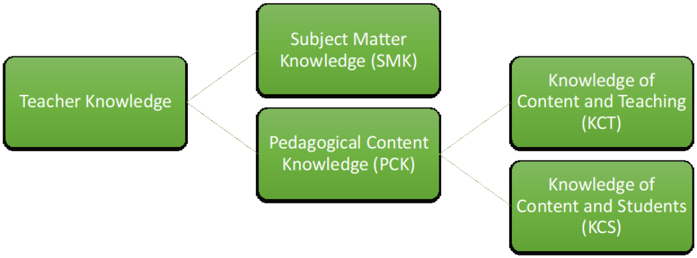
Since the National Council of Teachers of Mathematics ([NCTM], 2000) and the National Research Council ([NRC], 2005) revealed that problem posing needed to be incorporated into mathematics classrooms, the importance of teachers’ roles in problem posing has been emphasized in K-12 mathematics curriculum because of instructors’ impact on students’ mathematical performance. In the present study, researchers investigated teachers’ subject matter knowledge (SMK), knowledge of content and teaching (KCT), and knowledge of content and students (KCS) in terms of problem-posing. A qualitative study design and inductive analysis were used to gather and interpret data from interviews conducted with four mathematics teachers. Results indicated that participants had SMK of problem posing, but their actual problem-posing results did not reflect their SMK well. In terms of KCS and KCT, teachers were aware of the importance of problem posing for students’ mathematical development but felt that there were several significant factors impeding the effective incorporation of problem posing within their classes. These findings underscore the importance of professional development for teacher pedagogical knowledge in problem posing.
Overview
CoChat Summary
TL;DR
This qualitative study of four Korean middle/high school mathematics teachers found that although they could define problem posing and distinguish problem generation from reformulation, their actual posed problems often did not reflect that subject matter knowledge and were less varied or lower-level than expected. Teachers valued problem posing but reported barriers to classroom implementation, and they differed in how they assessed students’ incorrect posed problems, pointing to professional development needs.
Key findings
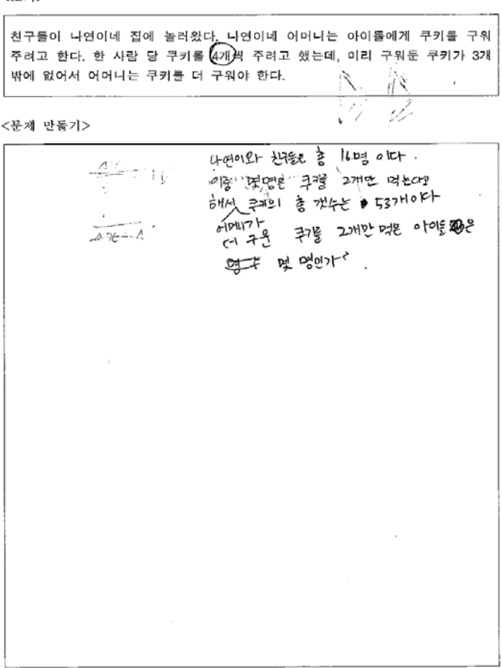
- All four teachers defined problem posing and identified problem generation and problem reformulation as types, but their actual problem-posing results did not match their stated SMK; three of the four posed problems requiring a low level of cognitive demand, and Table 4 shows fewer problem-posing types in reality than in their expectations.
- For KCT, teachers viewed problem posing as important but cited barriers including insufficient class time and limited textbook examples; all except Yoon expressed positive perspectives, while Yoon said problem posing was important but “not easy to apply” and lacked usable assessment standards.
- For KCS, teachers linked problem-posing proficiency to mathematical proficiency and stressed students’ prior concept knowledge, but they disagreed about the role of problem solving in problem posing and about evaluating incorrect posed problems: Kim and Yoon evaluated the student’s posed problems negatively, whereas Seo and Hyun inferred conceptual understanding even when the answer was incorrect.
- The authors conclude that professional development is needed for teachers’ pedagogical knowledge in problem posing.
Methods
- Qualitative interview design with four Korean intermediate-level middle/high school mathematics teachers; each participated in one semi-structured, open-ended interview of approximately one hour, with two mathematics questionnaires—one for problem generation and one for problem reformulation—and 10 minutes to pose problems.
- Interviews were audio recorded, transcribed, supplemented with researchers’ observation notes, and analyzed with inductive analysis and open coding using problem-posing codes and teacher-knowledge codes.
- Data were triangulated for internal validity; researchers coded independently, resolved disagreements, and reported an inter-rater agreement of 0.95.
Limitations
- The paper states that the participants each had no more than five years of teaching experience, that the limited number of posed problems may have constrained the variety of problems observed, and that the study is a preliminary analysis requiring follow-up research.
- The paper also notes that teachers’ practices did not fully reflect their KCT and KCS because of educational-setting constraints such as limited time and textbook content.
- Evident from the design: the sample is only four volunteer teachers in Korea, so findings are not presented as broadly generalizable, and the data rely on interviews, questionnaires, and observation notes rather than extended classroom observation.
Model-written summary. Check it against the paper before relying on it.
Integrity signals
Registry
Cites
Statistics
Figures
Verification
Claims the paper makes
0 Valid · 0 Not valid · 20 Not checked · 88 Own results and interpretations
A result the paper reports from its own data — it cites no other source for it, so there is none to check. The quote shows it is in the paper.
In the paper
“In general, the teachers were divided in their preference and reasons for the use of mathematical situations versus real-world situations in their problem posing instruction.”
§ Mathematics Teachers' Subject Matter Knowledge and Pedagogical Content Knowledge in Problem Posing > Yoon: I know it (problem posing) is important. But it's not easy to apply. If I use problem posing, I need assessment standards, but, I don't know what they are, and I don't think it is usable.
plain- Asserted: passes — The authors put it forward as true.
- Checkable: passes — It can be checked against evidence.
- Load-bearing: unclear — It is unclear whether the paper’s conclusions depend on it.
- Based: passes — The paper gives a reason why it holds.
A result the paper reports from its own data — it cites no other source for it, so there is none to check. The quote shows it is in the paper.
In the paper
“Results indicated that participants had SMK of problem posing, but their actual problem-posing results did not reflect their SMK well.”
- Also stated in: § Teachers' SMK in Problem Posing · plain
“their actual problemposing activity results did not match with the SMK they demonstrated in their responses”
§ Mathematics Teachers' Subject Matter Knowledge and Pedagogical Content Knowledge in Problem Posing > Abstract
plain- Asserted: passes — The authors put it forward as true.
- Checkable: passes — It can be checked against evidence.
- Load-bearing: passes — The paper’s conclusions depend on it.
- Based: passes — The paper gives a reason why it holds.
- Rests on an assumption not shown here.
- Also stated in: § Teachers' SMK in Problem Posing · plain
A result the paper reports from its own data — it cites no other source for it, so there is none to check. The quote shows it is in the paper.
In the paper
“the diversity of problem-posing types actually included in the problems they posed was less than the amount the teachers thought they would include”
§ Mathematics Teachers' Subject Matter Knowledge and Pedagogical Content Knowledge in Problem Posing > Teachers' SMK in Problem Posing
plain- Asserted: passes — The authors put it forward as true.
- Checkable: passes — It can be checked against evidence.
- Load-bearing: passes — The paper’s conclusions depend on it.
- Based: passes — The paper gives a reason why it holds.
- Rests on an assumption not shown here.
A result the paper reports from its own data — it cites no other source for it, so there is none to check. The quote shows it is in the paper.
In the paper
“Differences between teachers emerged concerning the awareness of constructing problem-posing instructions.”
§ Mathematics Teachers' Subject Matter Knowledge and Pedagogical Content Knowledge in Problem Posing > Yoon: I know it (problem posing) is important. But it's not easy to apply. If I use problem posing, I need assessment standards, but, I don't know what they are, and I don't think it is usable.
plainstates an associationSingle case- Asserted: passes — The authors put it forward as true.
- Checkable: passes — It can be checked against evidence.
- Load-bearing: passes — The paper’s conclusions depend on it.
- Based: passes — The paper gives a reason why it holds.
A result the paper reports from its own data — it cites no other source for it, so there is none to check. The quote shows it is in the paper.
In the paper
“However, there was a difference between the teachers in terms of how they perceived the importance of problem solving in problem posing, and this difference impacted their assessment of problem posing.”
§ Mathematics Teachers' Subject Matter Knowledge and Pedagogical Content Knowledge in Problem Posing > DISCUSSION
plain- Asserted: passes — The authors put it forward as true.
- Checkable: passes — It can be checked against evidence.
- Load-bearing: unclear — It is unclear whether the paper’s conclusions depend on it.
- Based: passes — The paper gives a reason why it holds.
46 more claims
Create a free account to see all 108 claims and to verify the 22 references still open.
- Probably not a substantial claim. 50
- It may state two separate claims as one. 24
Self-check
Percentages, sums and reported differences re-computed from the paper’s own numbers.
Each contradiction between two passages listed here was confirmed by an independent check.
Rated minor: it would not touch a result — a value no result rests on, a p-value that stays on the same side of the significance level, or a conflict that is clerical, resolved elsewhere in the paper, or outside its own findings.
In the paper
§ Mathematics Teachers' Subject Matter Knowledge and Pedagogical Content Knowledge in Problem Posing > Participants
“Hyun had teaching experience at both levels, teaching at a private middle school for two years before she began teaching at a private high school, which she had taught at for four years.”
§ Mathematics Teachers' Subject Matter Knowledge and Pedagogical Content Knowledge in Problem Posing > DISCUSSION
“Because the participants in the current study each had no more than five years of teaching experience, this experiential prerequisite may have been a significant factor impacting their problem-posing teaching practices.”
Rated minor: it would not touch a result — a value no result rests on, a p-value that stays on the same side of the significance level, or a conflict that is clerical, resolved elsewhere in the paper, or outside its own findings.
In the paper
§ Mathematics Teachers' Subject Matter Knowledge and Pedagogical Content Knowledge in Problem Posing > Teachers' SMK in Problem Posing
“The following was Hyun's posed problem for Questionnaire 2: Eugene and 5 friends decided to go to the amusement park the day the midterm exam finished.”
§ Mathematics Teachers' Subject Matter Knowledge and Pedagogical Content Knowledge in Problem Posing > Teachers' SMK in Problem Posing
“Seo changed the original scenarios of the questionnaire from a buffet situation to an amusement park situation and also changed the assumptions from the question about number of people to the full price of a ticket.”
Citations
Cites
Those Who Understand: Knowledge Growth in Teaching
SHULMAN, L. S. (1986) · Educational Researcher · doi:10.3102/0013189x015002004 · Cited by 18,546 · cited 1×
“In particular, since Shulman (1986) introduced PCK, many researchers in mathematics education have described the subscales of PCK by extending Shulman’s (1986) concept.”
BackgroundBasics of Qualitative Research: Grounded Theory Procedures and Techniques
Long, D. R., Strauss, A., & Corbin, J. (1993) · The Modern Language Journal · doi:10.2307/328955 · Cited by 17,576
Content Knowledge for Teaching: What Makes It Special?
Loewenberg Ball, D., Thames, M. H., & Phelps, G. (2008) · Journal of Teacher Education · doi:10.1177/0022487108324554 · Cited by 5,388
(1990) · Cited by 5,210
Teacher Quality and Student Achievement
Darling-Hammond, L. (2000) · Education Policy Analysis Archives · doi:10.14507/epaa.v8n1.2000 · Cited by 2,262
Schmidt, D. A., Baran, E., Thompson, A. D., Mishra, P., Koehler, M. J., & Shin, T. S. (2009) · Journal of Research on Technology in Education · doi:10.1080/15391523.2009.10782544 · Cited by 1,853
Qualitative Interview Design: A Practical Guide for Novice Investigators
Turner, D. (2014) · The Qualitative Report · doi:10.46743/2160-3715/2010.1178 · Cited by 1,697
Hill, H. C., Ball, D. L., & Schilling, S. G. (2008) · Journal for Research in Mathematics Education · doi:10.5951/jresematheduc.39.4.0372 · Cited by 1,679
Qualitative Analysis on Stage: Making the Research Process More Public
Anfara, V. A., Brown, K. M., & Mangione, T. L. (2002) · Educational Researcher · doi:10.3102/0013189x031007028 · Cited by 1,362
The Mathematical Understandings That Prospective Teachers Bring to Teacher Education
Ball, D. L. (1990) · The Elementary School Journal · doi:10.1086/461626 · Cited by 911 · cited 1×
“Since many teachers have not experienced problem posing when they were students or pre-service teachers, they tended to avoid problem posing or provide routinized exercises (Ball, 1990).”
Background
Research works printed but not linked: 5
- Brown, S. I., & Walter, M. I. (1990). The art of problem posing (2nd ed.). Hillsdale, NJ: Erlbaum.
- Lee, Y. (2012). An analysis of students' mathematical problem posing (Unpublished master's thesis). Ewha Womans University, Seoul, Korea.
- Pelczer, I., & Rodríguez, F. G. (2011). Creativity assessment in school settings through problem posing tasks. The Mathematics Enthusiast, 8(1), 383-398.
- Rowland, T., Huckstep, P., & Thwaites, A. (2003). The knowledge quartet. In J. Williams (Ed.), Proceedings of the British society for research into learning mathematics, 23(3), 97-103.
- Stickles, P. (2006). An analysis of secondary and middle school teacher's mathematical problem posing (Unpublished doctoral dissertation). Indiana University.
Cited by
Hu, B., Zheng, L., Zhu, J., Ding, L., Wang, Y., & Gu, X. (2024) · IEEE Transactions on Learning Technologies · doi:10.1109/tlt.2024.3384765 · Cited by 109
Can ChatGPT support prospective teachers in physics task development?
Küchemann, S., Steinert, S., Revenga, N., Schweinberger, M., Dinc, Y., Avila, K. E., & Kuhn, J. (2023) · Physical Review Physics Education Research · doi:10.1103/physrevphyseducres.19.020128 · Cited by 132
Young students posing problem-solving tasks: what does posing a similar task imply to students?
Palmér, H., & van Bommel, J. (2020) · ZDM · doi:10.1007/s11858-020-01129-x · Cited by 21
Sevinç, Ş., & Lesh, R. (2021) · Journal of Mathematics Teacher Education · doi:10.1007/s10857-021-09512-5 · Cited by 56
Zayyadi, M., Nusantara, T., Hidayanto, E., Sulandra, I. M., & Sa’dijah, C. (2020) · Journal for the Education of Gifted Young Scientists · doi:10.17478/jegys.642131 · Cited by 56
Galimova, E. G., Zakharishcheva, M. A., Kolomoets, E. N., Chistyakov, A. A., Prokopyev, A. I., Beloborodova, A. V., & Ilaeva, R. A. (2023) · Eurasia Journal of Mathematics Science and Technology Education · doi:10.29333/ejmste/12837 · Cited by 39
Factors influencing mathematics teachers’ pedagogical content knowledge: A systematic review
Sakaria, D., Maat, S. M., & Effendi, M. (2023) · Pegem Journal of Education and Instruction · doi:10.47750/pegegog.13.02.01 · Cited by 37
Problem Posing in Mathematics Education Research: A Systematic Review
Kaur, A., & Rosli, R. (2021) · International Journal of Academic Research in Progressive Education and Development · doi:10.6007/ijarped/v10-i1/8641 · Cited by 15
A model for problem creation: implications for teacher training
Burgos, M., Tizón-Escamilla, N., & Chaverri, J. (2024) · Mathematics Education Research Journal · doi:10.1007/s13394-023-00482-w · Cited by 24
Yusoff, S. M., Hao, L., & Basal, M. H. (2025) · International Journal of Asia Pacific Studies · doi:10.21315/ijaps2025.21.2.5 · Cited by 20
Effect of Teaching Mathematics Supported by Problem-posing Strategies on Problem-posing Skills
Divrik, R. (2023) · International Journal of Modern Education Studies · doi:10.51383/ijonmes.2023.308 · Cited by 19
Sintema, E. J., & Prieto, J. M. M. (2020) · International Electronic Journal of Mathematics Education · doi:10.29333/iejme/8327 · Cited by 20
Refugio, C. N., Galleto, P. G., Noblefranca, C. D., Inoferio, H. V., Macias, A. O., Colina, D. G., & Dimalig, C. Y. (2020) · Cypriot Journal of Educational Sciences · doi:10.18844/cjes.v15i3.4551 · Cited by 17
Yunianto, W., Prahmana, R. C. I., & Crisan, C. (2021) · Journal on Mathematics Education · doi:10.22342/jme.12.2.13537.223-238 · Cited by 18
STEM Education in the Primary School: A Teacher's Toolkit
Forbes, A., Chandra, V., Pfeiffer, L., & Sheffield, R. S. (2021) · Cambridge University Press eBooks · doi:10.1017/9781108868488 · Cited by 18
Passarella, S. (2021) · European Journal of Science and Mathematics Education · doi:10.30935/scimath/10773 · Cited by 18
Shi, L., & Baker, A. (2022) · System · doi:10.1016/j.system.2022.102788 · Cited by 17
Chen, Z. (2022) · Mobile Information Systems · doi:10.1155/2022/3201004 · Cited by 19
Effectiveness of ICT-integrated pedagogy on pre-service teachers’ teaching competence in mathematics
Samantray, A., Behera, R. R., & Acharya, A. K. (2024) · Frontiers in Education · doi:10.3389/feduc.2024.1401188 · Cited by 15
Christou, C., Pitta‐Pantazi, D., & Chimoni, M. (2024) · The Journal of Mathematical Behavior · doi:10.1016/j.jmathb.2024.101134 · Cited by 14
How Difficult is 1+1? A Phenomenological Study of High School Students Struggling in Mathematics
Camenda, D. Y., Gaba, C. A., Lacord, N., Natango, D., Pabl, A., & Abusam, H. (2021) · ASEAN Journal of Science and Engineering Education · doi:10.17509/ajsee.v1i2.33403 · Cited by 12
Integration Of Digital Technology In Mathematics Learning
Wahyuni, Y., Jamaris, J., & Solfema (2021) · International Journal Of Humanities Education and Social Sciences (IJHESS) · doi:10.55227/ijhess.v1i3.60 · Cited by 16
Variables in planning and carrying out a problem-posing task in early childhood education
Medeiro, E. C., Martín-Díaz, J. P., & Climent, N. (2024) · The Journal of Mathematical Behavior · doi:10.1016/j.jmathb.2024.101131 · Cited by 13
Ran, H., Cai, J., Hwang, S., Han, J., Ma, Y., & Muirhead, F. (2025) · Journal for Research in Mathematics Education · doi:10.5951/jresematheduc-2024-0105 · Cited by 10
Prospective teachers’ design of numeracy tasks using a physical distancing context
Kohar, A. W., Rahaju, E. B., & Rohim, A. (2022) · Journal on Mathematics Education · doi:10.22342/jme.v13i2.pp191-210 · Cited by 13
Awaludin, A. A. R., Selvia, N., & Andrari, F. R. (2021) · International Journal of Elementary Education · doi:10.23887/ijee.v5i2.33206 · Cited by 10
Alenezi, A. (2023) · International Journal of Information and Communication Technology Education · doi:10.4018/ijicte.332372 · Cited by 9
“For example, Lee et al. (2018) found a smaller improvement in mathematical achievement scores following the implementation of PBL in a high school mathematics class.”
BackgroundResultÇomarlı, S. K., & Özdemir, B. G. (2019) · Van Yüzüncü Yıl Üniversitesi Eğitim Fakültesi dergisi/Yüzüncü Yıl Üniversitesi Eğitim Fakültesi dergisi · doi:10.23891/efdyyu.2019.174 · Cited by 11
O’Meara, N., & Fitzmaurice, O. (2025) · Journal of Mathematics Teacher Education · doi:10.1007/s10857-025-09732-z · Cited by 8
Exploring high school teacher’s design of rich algebra tasks
Mastuti, A. G., & Prayitno, L. L. (2023) · Jurnal Elemen · doi:10.29408/jel.v9i1.5851 · Cited by 8
Moila, M. M. (2024) · Pythagoras · doi:10.4102/pythagoras.v45i1.754 · Cited by 7
Ulusoy, F. (2025) · Journal of Mathematics Teacher Education · doi:10.1007/s10857-025-09697-z · Cited by 9
Young students’ views on problem solving versus problem posing
van Bommel, J., & Palmér, H. (2021) · Journal of Childhood Education & Society · doi:10.37291/2717638x.20212165 · Cited by 8
Tizón-Escamilla, N., & Burgos, M. (2023) · Education Sciences · doi:10.3390/educsci13121186 · Cited by 10
LEGAL CULTURE FORMATION OF A FUTURE SPECIALIST
Sergeeva, M. G., Bondarenko, N. G., Shebzukhova, T. A., Vartumyan, A. A., Shuisky, A., & Mazurenko, A. P. (2019) · Humanities & Social Sciences Reviews · doi:10.18510/hssr.2019.742 · Cited by 6
Ovadiya, T. (2021) · Action Research and Innovation in Science Education · doi:10.51724/arise.42 · Cited by 6
Exploring Accounting Teachers’ Effective Implementation of Assessment for Learning in the Classroom
Motsoeneng, T. J., & Moreeng, B. B. (2023) · Research in Social Sciences and Technology · doi:10.46303/ressat.2023.42 · Cited by 7
Julie, L. J. H., & Maat, S. M. (2022) · Malaysian Journal of Social Sciences and Humanities (MJSSH) · doi:10.47405/mjssh.v7i3.1380 · Cited by 5
Sevinç, Ş., & Lesh, R. (2022) · European Journal of Science and Mathematics Education · doi:10.30935/scimath/12250 · Cited by 5
Yasin, B., & Mustafa, F. (2022) · South African Journal of Education · doi:10.15700/saje.v42n2a1949 · Cited by 8
Denbel, D. G. (2023) · Education Research International · doi:10.1155/2023/8287791 · Cited by 5
Assessing Student Teachers’ Ability in Posing Mathematical Reasoning Problems
Masriyah, M., Kohar, A. W., Rahaju, E. B., Fardah, D. K., & Hanifah, U. (2024) · Center for Educational Policy Studies Journal · doi:10.26529/cepsj.1368 · Cited by 8
Professional Content Knowledge: Increasing Instructional Quality
McGaw, M. A. D. (2023) · Advances in educational technologies and instructional design book series · doi:10.4018/978-1-6684-7583-6.ch005 · Cited by 6
DRIVERS OF EMPLOYEE ENGAGEMENT AND ROLE OF TRANSACTIONAL LEADERSHIP-CASE OF PAKISTANI BANKING SECTOR
Saâd, G. B., & Abbas, M. (2019) · Humanities & Social Sciences Reviews · doi:10.18510/hssr.2019.7643 · Cited by 5
Özdemir, E., Kar, T., & Öçal, T. (2022) · Acta Educationis Generalis · doi:10.2478/atd-2022-0017 · Cited by 5
Özel, Z., Yılmaz, A., Işıksal-Bostan, M., & Özkan, B. C. (2022) · International Journal for Mathematics Teaching and Learning · doi:10.4256/ijmtl.v23i2.464 · Cited by 6
Unleashing Adult Learners’ Numeracy Agency Through Self-Determined Online Professional Development
Walsh, C. S., Bragg, L. A., Muir, T., & Oates, G. (2022) · The International Review of Research in Open and Distributed Learning · doi:10.19173/irrodl.v23i3.6046 · Cited by 6
Bhagwonparsadh, Y., & Pule, K. G. (2024) · Journal of Culture and Values in Education · doi:10.46303/jcve.2024.7 · Cited by 4
Gaganao, R. D., & Odon, M. G. B. (2024) · Journal of Education and Learning (EduLearn) · doi:10.11591/edulearn.v18i3.21070 · Cited by 4
Prieto, J. M. M., & Sintema, E. J. (2023) · Research in Mathematics Education · doi:10.1080/14794802.2023.2281942 · Cited by 3
Characteristics of Mathematical Problems Posed by Teachers
Agranionih, N. T., Spinillo, A. G., & Lautert, S. L. (2021) · Acta Scientiae · doi:10.17648/acta.scientiae.6183 · Cited by 4
Moon, K. (2023) · International Journal for Mathematics Teaching and Learning · doi:10.4256/ijmtl.v24i1.439 · Cited by 3
Yasmansyah, Lainah, & Aprison, W. (2021) · International Journal Of Humanities Education and Social Sciences (IJHESS) · doi:10.55227/ijhess.v1i3.62 · Cited by 5
Nuryadi, Zaenuri, Z., Waluya, S. B., & Kharisudin, I. (2023) · AIP conference proceedings · doi:10.1063/5.0127884 · Cited by 2
Burgos, M., & Chaverri, J. (2024) · Educación matemática · doi:10.24844/em3602.04 · Cited by 2
Improving primary school teachers’ problem-posing skills by using narrative texts
Yurtbakan, E., İskenderoğlu, T. A., & Güneş, G. (2025) · Thinking Skills and Creativity · doi:10.1016/j.tsc.2025.101956 · Cited by 2
Pedagogical Framework for Teaching Quantitative Problem Solving on Gas Laws for Novice Learners
Beldineza, J. (2025) · Universal Journal of Educational Research · doi:10.64637/632595 · Cited by 2
Susila, I., & Nugroho, S. P. (2019) · Humanities & Social Sciences Reviews · doi:10.18510/hssr.2019.74177 · Cited by 2
Magiera, M. T. (2020) · Mathematics Education Across Cultures: Proceedings of the 42nd Meeting of the North American Chapter of the International Group for the Psychology of Mathematics Education · doi:10.51272/pmena.42.2020-143 · Cited by 2
Bot, T. D. (2021) · European Journal of Mathematics and Science Education · doi:10.12973/ejmse.2.1.35 · Cited by 2
Berpikir Kreatif dalam Pengajuan Masalah Matematis
Aba, M. M., & Nusantara, T. (2021) · Jurnal Pendidikan Matematika dan Sains · doi:10.21831/jpms.v8i1.19637 · Cited by 2
IMPACT OF PROFESSIONAL DEVELOPMENT ON SELF EFFICACY OF MATHEMATICS TEACHERS
ALI, T. M. (2023) · Russian Law Journal · doi:10.52783/rlj.v11i8s.1251 · Cited by 4
The Effect of Lesson Study on Pre-service Teachers' Noticing Skills Towards Misconceptions
Türk, Y., & Bakı, A. (2024) · Kuramsal Eğitimbilim · doi:10.30831/akukeg.1365907 · Cited by 2
Students’ Difficulties with Problem Posing in Early Childhood Education
Medeiro, E. C., & Climent, N. (2025) · Education Sciences · doi:10.3390/educsci15050630 · Cited by 3
Impact of Self-Regulation Methods on the Psycho-Emotional State of Future Teachers
Voloshina, L. N., Arseenko, E. A., Panasenko, K. E., Stebunova, K. K., & Tretyakov, A. A. (2019) · Universal Journal of Educational Research · doi:10.13189/ujer.2019.071807 · Cited by 2
Amir, A. (2020) · Logaritma Jurnal Ilmu-ilmu Pendidikan dan Sains · doi:10.24952/logaritma.v8i01.2356 · Cited by 3
Raciocínio multiplicativo discutido a partir da resolução e formulacão de problemas
Magina, S. M. P., Spinillo, A. G., & Lautert, S. L. (2020) · Rematec · doi:10.37084/rematec.1980-3141.2020.n16.p78-94.id301 · Cited by 2
Prospective mathematics teachers making sense of multiplication algorithm
Apsari, R. A., Sariyasa, Wulandari, N. P., Novitasari, D., & Hamdani, D. (2021) · Journal of Physics Conference Series · doi:10.1088/1742-6596/1778/1/012023 · Cited by 2
Identifying Concepts Created for Geometric Objects: Mind Map
Yorulmaz, A., & Uysal, H. (2021) · Shanlax International Journal of Education · doi:10.34293/education.v9i4.4179 · Cited by 2
Banawi, A., Syafit, M. , Basta, I., Ridwan, M. H., & Sulaeman, S. (2022) · Jurnal Pendidikan Progresif · doi:10.23960/jpp.v12.i2.202217 · Cited by 2
Five minutes : Young students' understanding of time
van Bommel, J., Palmér, H., & Ebbelind, A. (2023) · DiVA (Linnaeus University) · Cited by 2
Exploring mathematical pedagogical content knowledge of pre-service teachers
Sintema, E. J., Mosimege, M. D., & Heris, A. (2023) · Prometeica - Revista de Filosofía y Ciencias · doi:10.34024/prometeica.2023.27.15318 · Cited by 1
Spinillo, A. G., Lautert, S. L., Agranionih, N. T., Borba, R. E. D. S. R., dos Santos, E. M., & da Silva, J. F. G. (2023) · Springer eBooks · doi:10.1007/978-981-99-7205-0_9 · Cited by 4
Bosra, N., Naufal, M. A., Ja’faruddin, J., & Johnny, J. (2025) · Venn Journal of Sustainable Innovation on Education Mathematics and Natural Sciences · doi:10.53696/venn.v4i2.293 · Cited by 2
Non-specialist primary school mathematics teachers’ beliefs
Dibane, Z., van Putten, S., & Botha, H. (2026) · ZDM · doi:10.1007/s11858-026-01823-2 · Cited by 1
PECULIAR FEATURES OF TEACHING HISTORY TO ECONOMIST STUDENTS IN RUSSIAN UNIVERSITIES
Дорожкин, Е. М., Moskalenko, M. R., Larionova, M. B., Kazantseva, E. A., & Loginova, N. E. (2019) · Humanities & Social Sciences Reviews · doi:10.18510/hssr.2019.74190 · Cited by 1
CRIMINAL PROSECUTION OF TERRORIST CRIMES IN JURY TRIAL: LEGALITY AND APPROPRIATENESS
Шакирович, Г. З., Epikhin, A. Y., Зайцев, О., Grishina, E. P., & Викторович, М. А. (2019) · Humanities & Social Sciences Reviews · doi:10.18510/hssr.2019.7580 · Cited by 1
Sumartini, T. S. (2021) · Jurnal Pendidikan dan Pengajaran · doi:10.23887/jpp.v54i1.32195 · Cited by 1
Investigation of a Middle School Preservice Teacher’s Knowledge of Content and Students
Ersari, E. (2021) · International Journal of Assessment Tools in Education · doi:10.21449/ijate.946573 · Cited by 1
Mwambazi, C. M., Mubanga, L., & Simui, F. (2023) · American Journal of Multidisciplinary Research and Innovation · doi:10.54536/ajmri.v2i3.1454 · Cited by 1
Yurniwati, & Kustandi, C. (2023) · International Journal on Advanced Science Engineering and Information Technology · doi:10.18517/ijaseit.13.2.16676 · Cited by 1
Preparing Elementary Pre-Service Teachers to Be Effective STEM Teachers
Ceglie, R. J. (2024) · Advances in early childhood and K-12 education · doi:10.4018/978-1-6684-5939-3.ch001 · Cited by 1
Ilmi, S. A. N. T., Ismunandar, D., & Sudirman, S. (2024) · Mathline Jurnal Matematika dan Pendidikan Matematika · doi:10.31943/mathline.v9i2.522 · Cited by 1
Demandas matemáticas para el desarrollo de la formulación de problemas en Educación Infantil
Medeiro, E. C., & Climent, N. (2024) · PNA · doi:10.30827/pna.v19i1.28408 · Cited by 1
Demirci, N., & Arslan, Ç. (2025) · Necatibey Eğitim Fakültesi Elektronik Fen ve Matematik Eğitimi Dergisi · doi:10.17522/balikesirnef.1569647 · Cited by 1
Problem Posing in Mathematics Teacher Training: Developing Proportional Reasoning
Burgos, M., Chaverri, J., & Escolano, J. M. M. (2024) · Zaguan (Universidad de Zaragoza) · Cited by 4
STEM Education in the Primary School: A Teacher's Toolkit
Forbes, A., Chandra, V., Pfeiffer, L., & Sheffield, R. S. (2021) · QUT ePrints (Queensland University of Technology) · Cited by 1
Teacher Perceptions on the Implementation of a New Reading Curriculum in Third Grade
Hill, O. (2023) · ScholarWorks (Walden University) · Cited by 2
Rysaeva, I. A. (2019) · Revista San Gregorio · doi:10.36097/rsan.v1i32.999
Веденина, О. А., Chupina, V. A., Миронова, С. П., Kuznetsova, A. D., & Valyakina, T. S. (2019) · Humanities & Social Sciences Reviews · doi:10.18510/hssr.2019.74149
عويضة, ا. ع. (2020) · المجلة التربوية لکلية التربية بسوهاج · doi:10.21608/edusohag.2020.120271
Jenkins, S. (2020) · NWCommons (Northwestern College - Iowa)
Sintema, E. J. (2020) · UVaDOC UVaDOC University of Valladolid Documentary Repository (University of Valladolid) · doi:10.35376/10324/46450
Forbes, A., Chandra, V., Pfeiffer, L., & Sheffield, R. S. (2021) · Cambridge University Press eBooks · doi:10.1017/9781108868488.006
Forbes, A., Chandra, V., Pfeiffer, L., & Sheffield, R. S. (2021) · Cambridge University Press eBooks · doi:10.1017/9781108868488.003
Theoretical foundations of STEM education
Forbes, A., Chandra, V., Pfeiffer, L., & Sheffield, R. S. (2021) · Cambridge University Press eBooks · doi:10.1017/9781108868488.013
Forbes, A., Chandra, V., Pfeiffer, L., & Sheffield, R. S. (2021) · Cambridge University Press eBooks · doi:10.1017/9781108868488.011
Forbes, A., Chandra, V., Pfeiffer, L., & Sheffield, R. S. (2021) · Cambridge University Press eBooks · doi:10.1017/9781108868488.005
Forbes, A., Chandra, V., Pfeiffer, L., & Sheffield, R. S. (2021) · Cambridge University Press eBooks · doi:10.1017/9781108868488.008
Forbes, A., Chandra, V., Pfeiffer, L., & Sheffield, R. S. (2021) · Cambridge University Press eBooks · doi:10.1017/9781108868488.012
Metadata
- Authors
- Lee, Y., Capraro, R. M., & Capraro, M. M.
- Affiliations
- Texas A&M University (US)
- Corresponding author
- Lee, Yujin
- Venue
- International Electronic Journal of Mathematics Education
- Publisher
- Modestum Ltd
- Published
- 2018-06-10
- Volume
- 13
- Issue
- 2
- ISSN
- 1306-3030 (ISSN-L)
- OpenAlex
- W2806351672
- Semantic Scholar
- 5b8bf97056df2df7f261d4c600705355957c9c0f
- Cited by
- 142
- References
- 45
- Citations by year
- 2026: 11 · 2025: 14 · 2024: 23 · 2023: 27 · 2022: 12 · 2021: 36 · 2020: 10 · 2019: 9
- FWCI
- 35.55
- Type
- journal article
- Language
- en
- Open access
- diamond
- doi.org
- Licence
- cc-by
- Locations
- International Electronic Journal of Mathematics Education (publishedVersion, cc-by)
- Topics
- Social Sciences › Education › Mathematics Education and Teaching Techniques
- Social Sciences › Education › Mathematics Education and Pedagogy
- Social Sciences › Education › Teacher Education and Leadership Studies
- Keywords
- problem posing, mathematics teachers, content knowledge, pedagogical content knowledge, teacher professional development, K-12 mathematics curriculum
About these checks
Registry, retraction, Cites and statistics results are computed, not judged, with one exception: a printed reference that no index lists is read once by a model before it counts as a citation error. Claims are extracted by a model and kept only when their quote appears verbatim in the text; each cited source is then checked, with a model’s help, for whether it says what the claim relies on. Those verdicts can be wrong — read the claim’s quote and the cited source before relying on one.
A language model drew the claims from the paper on 2026-11-15, under version 3 of the claim definition (model deepseek-v4.1-flash, prompt extract-v3).
A second model labelled each claim on 2026-11-15 (model jev-1.13-20260917, definition revision gold-guideline-v0.2).
Statistics and arithmetic are recomputed, not judged.
Confidence bands are shown only for fields calibrated on our annotated test set. None is calibrated yet, so no band is shown.
What counts as a claim ›How we measure confidence ›How we check this ›
Are you an author, or do you see a problem with this page? Request a review
Data sources
Bibliographic data: Semantic Scholar, OpenAlex, Crossref.
Contains information from the Semantic Scholar Academic Graph Datasets, made available under the ODC Attribution License (ODC-BY 1.0).
Semantic Scholar’s data is described in: Kinney, R., et al. (2023). The Semantic Scholar Open Data Platform. arXiv:2301.10140.
