

The DOI matches its Crossref record; 53 of the 54 references it cites were found in a registry or an index.
Advances in Patient Reported Outcomes: The NIH PROMIS Measures
Open accessAbstract
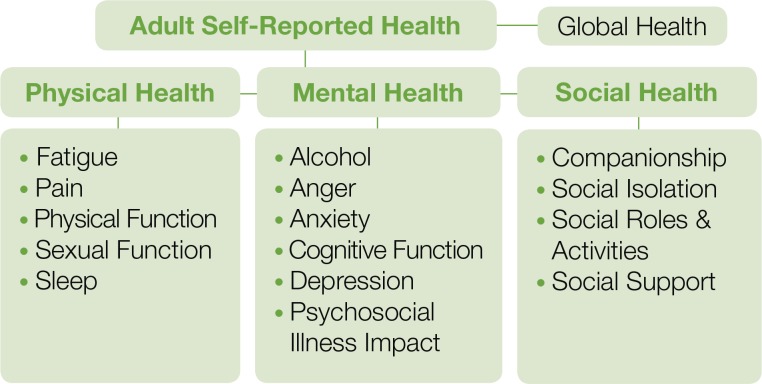
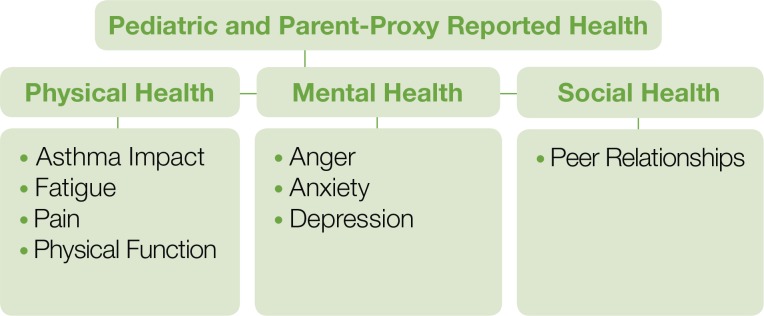
Patient reported outcomes (PROs) are questionnaire measures of patients’ symptoms, functioning, and health-related quality of life. They are designed to provide important clinical information that generally cannot be captured with objective medical testing. Recent legislative developments in the United States support greater efforts to include patients’ reports of health experience to evaluate treatment outcomes, engage in shared decision-making, and prioritize the focus of treatment. PROs have garnered increased attention by the Food and Drug Administration (FDA) for evaluating drugs and medical devices. Recent calls for comparative effectiveness research favor inclusion of PROs. In 2004, the National Institutes of Health launched a research initiative to improve the clinical research enterprise by developing state-of-the-art PROs. The NIH Patient Reported Outcomes Measurement System (PROMIS) and Assessment Center are the products of that initiative. Adult, pediatric, and parent-proxy item banks have been developed using contemporary psychometric methods, yielding rapid, accurate measurement. PROMIS currently provides tools for assessing physical, mental, and social health using short-form and computer adaptive testing methods. The PROMIS tools are being adopted for use in clinical trials and translational research. They are also being introduced in clinical medicine to assess a broad range of disease outcomes. There is potential for use of PROs to improve quality of care and disease outcomes, to provide patient-centered assessment for comparative effectiveness research, and to enable a common metric for tracking outcomes across providers and medical systems.
Overview
The claims and statistics of this paper haven’t been checked yet.
Run the check — free, no account needed. It reads the open-access text and checks the sources it cites.
Integrity signals
Registry
Cites
Statistics
Figures
Verification
Claims the paper makes
The claims and statistics of this paper haven’t been checked yet.
Run the check — free, no account needed. It reads the open-access text and checks the sources it cites.
Self-check
Percentages, sums and reported differences re-computed from the paper’s own numbers.
The self-check needs the paper’s full text.
Citations
Cites
Cella, D., Yount, S., Rothrock, N., Gershon, R., Cook, K., Reeve, B., Ader, D., Fries, J. F., Bruce, B., & Rose, M. (2007) · Medical Care · doi:10.1097/01.mlr.0000258615.42478.55 · Cited by 3,118
Self-citationU.S. Department of Health and Human Services FDA Center for Drug Evaluation and Research, U.S. Department of Health and Human Services FDA Center for Biologics Evaluation and Research, & U.S. Department of Health and Human Services FDA Center for Devices and Radiological Health (2006) · Health and Quality of Life Outcomes · doi:10.1186/1477-7525-4-79 · Cited by 2,856
Psychometric Evaluation and Calibration of Health-Related Quality of Life Item Banks
Reeve, B. B., Hays, R. D., Bjørner, J. B., Cook, K. F., Crane, P. K., Teresi, J. A., Thissen, D., Revicki, D. A., Weiss, D. J., Hambleton, R. K., et al. (2007) · Medical Care · doi:10.1097/01.mlr.0000250483.85507.04 · Cited by 1,491
Self-citationTowards a global definition of patient centred care
Stewart, M. (2001) · BMJ · doi:10.1136/bmj.322.7284.444 · Cited by 1,114
Using quality of life measures in the clinical setting
Higginson, I. J., & Carr, A. J. (2001) · BMJ · doi:10.1136/bmj.322.7297.1297 · Cited by 982
Why the nation needs a policy push on patient-centered health care
Epstein, R. M., Fiscella, K., Lesser, C. S., & Stange, K. C. (2010) · Health Affairs · doi:10.1377/hlthaff.2009.0888 · Cited by 866
Valderas, J. M., Kotzeva, A., Espallargues, M., Guyatt, G., Ferrans, C. E., Halyard, M. Y., Revicki, D. A., Symonds, T., Parada, A., & Alonso, J. (2008) · Quality of Life Research · doi:10.1007/s11136-007-9295-0 · Cited by 775
Gravel, K., Légaré, F., & Graham, I. D. (2006) · Implementation Science · doi:10.1186/1748-5908-1-16 · Cited by 755
Evaluation of Item Candidates: The PROMIS Qualitative Item Review
DeWalt, D. A., Rothrock, N., Yount, S., & Stone, A. A. (2007) · Medical Care · doi:10.1097/01.mlr.0000254567.79743.e2 · Cited by 719
Self-citationEllwood, P. M. (1988) · New England Journal of Medicine · doi:10.1056/nejm198806093182327 · Cited by 698
Cited by
Sorted by citations
Items 201–244 of 244
Salsbury, S. A., Twist, E. J., Wallace, R. B., Vining, R. D., Goertz, C., & Long, C. R. (2022) · Pilot and Feasibility Studies · doi:10.1186/s40814-021-00962-5 · Cited by 2
“Abbreviations CIH: Complementary and integrative health; COCOV: Care Outcomes for Chiropractic Outpatient Veterans (NCT03254719); COREQ: Consolidated Criteria for Reporting Qualitative Studies; DC: Doctor of chiropractic; DSMC: Data and Safety Monitoring Committee; HEAL: Healing Encounters and Attitudes List; IRB: Ins…”
MethodInfluentialThe Reliability and Validity of the Manual Ability Measure-36 in Patients with Parkinson’s Disease
Söke, F., Gülşen, E. Ö., Ataoğlu, E. E., Gülşen, Ç., Koçer, B., & Tokçaer, A. B. (2022) · Turkish Journal Of Neurology · doi:10.4274/tnd.2022.99836 · Cited by 2
Condon, E. M., Scheibner, H. R., Kuzel, M., Howard, M., Cisse, M., O'Connell, M., Conley, Y. P., Jeon, S., Sadler, L. S., & Redeker, N. S. (2024) · Research in Nursing & Health · doi:10.1002/nur.22400 · Cited by 2
Social Buffering of Posttraumatic Stress Disorder: Longitudinal Effects and Neural Mediators
Santos, J. L. C., Harnett, N. G., van Rooij, S. J. H., Ely, T. D., Jovanović, T., Lebois, L. A. M., Beaudoin, F. L., An, X., Neylan, T. C., Linnstaedt, S. D., et al. (2024) · Biological Psychiatry Cognitive Neuroscience and Neuroimaging · doi:10.1016/j.bpsc.2024.11.011 · Cited by 4
Patient-Reported Outcome Measures Available for Adult Lumbar Scoliosis
Goz, V., Baker, J. F., & Brodke, D. S. (2017) · Springer eBooks · doi:10.1007/978-3-319-47709-1_4 · Cited by 1
Chronic Condition Measurement Requires Engagement, Not Measurement Alone
Austin, A. M., Carmichael, D. Q., Berry, S. A., Gozansky, W. S., Nelson, E. C., Skinner, J., & Barr, P. J. (2019) · Journal of Ambulatory Care Management · doi:10.1097/jac.0000000000000300 · Cited by 2
“One of the main goals in the use of PROMs, and the PROMIS scores in particular, is to create an instrument whose application in various contexts, providers, and health systems allows for a common, objective measure for tracking outcomes (Broderick et al., 2013).”
BackgroundPrusaczyk, B., Carpenter, B. D., & Morrow-Howell, N. L. (2022) · Journal of Gerontological Social Work · doi:10.1080/01634372.2022.2135659 · Cited by 2
“In addition to demographic and COVID-related (e.g., history of diagnosis, self-perceived risk) data, some existing measures such as the Patient-Reported Outcomes Measurement Information System (PROMIS) measures were included in the survey (Broderick et al., 2013).”
MethodStoney, C. M. (2011) · Springer eBooks · doi:10.1007/978-1-4419-1651-8_22 · Cited by 2
Mindfulness Facets Associated with Orofacial Pain Outcomes.
Greenberg, J., Spyropoulos, D. C., Bakhshaie, J., & Vranceanu, A.-M. (2022) · Journal of Integrative and Complementary Medicine · doi:10.1089/jicm.2022.0479 · Cited by 1
Smith, P. C., Snyder, B., McDaniel, M., Ville, M. S., Cull, E. H., Siembida, E. J., & Saha, A. (2024) · Journal of Adolescent and Young Adult Oncology · doi:10.1089/jayao.2023.0136 · Cited by 1
Mei, X., Cappelleri, J. C., & Hu, J. (2025) · Quality of Life Research · doi:10.1007/s11136-024-03874-y · Cited by 1
Nelson, B., Warren, S. M., Xeroegeanes, T., Zuleger, T. M., Premkumar, A., Myer, G. D., Kashikar‐Zuck, S., & Diekfuss, J. A. (2025) · Journal of Experimental Orthopaedics · doi:10.1002/jeo2.70352 · Cited by 1
“PROMIS employs psychometric methods to develop industry ‐ standard patient ‐ reported outcome measures that are valid, reliable, and capable of distinguishing between individuals who score high versus low on speci fi c traits [7].”
Distinct multidimensional anger profiles predict current and long-term chronic pain outcomes
Granjon, M., Vest, N. A., Mackey, S., & Gilam, G. (2025) · Journal of Pain · doi:10.1016/j.jpain.2025.105611 · Cited by 1
“21,22 Using computerized adaptive testing allows for automatically selecting only a subset of items from each PROMIS item bank until resulting measurements meet preset criteria for standard errors.”
Weitzman, E. R., Minegishi, M., Cox, R., & Wisk, L. E. (2023) · JMIR Pediatrics and Parenting · doi:10.2196/46555 · Cited by 1
“PROMIS Pediatric measures [50,51] included short-form measures of fatigue, mobility, pain interference, depressive symptoms, anxiety, and meaning and purpose, which were administered by using computer-assisted technology [10,33].”
MethodNguyen, N. H., Taylor, J. M., Huang, K. X., & Lee, J. C. (2024) · Journal of Plastic Reconstructive & Aesthetic Surgery · doi:10.1016/j.bjps.2024.07.044 · Cited by 1
Lee, M. J., Ratcliff, K., Hilton, C. L., & Hong, I. (2019) · The Journal of Korean Society of Occupational Therapy · doi:10.14519/kjot.2019.27.4.13 · Cited by 1
Poorly Controlled Pediatric Fracture Pain Requiring Unplanned Medical Assistance or Advice
Kopp, T. M., Frey, T. M., Zakrajsek, M., Nystrom, J., Koutsounadis, G. N., Falcone, K. S., Zhang, Y., Wall, E., Byczkowski, T., & Mittiga, M. R. (2021) · Pediatric Emergency Care · doi:10.1097/pec.0000000000002304 · Cited by 1
Controversies in Abdominal Wall Reconstruction
Baier, K. F., & Rosen, M. J. (2021) · Surgical Clinics of North America · doi:10.1016/j.suc.2021.08.002 · Cited by 1
Learning Individuals’ Patterns and Contextual Events with Mobile Data Streams
Longstaff, B. (2015) · eScholarship (California Digital Library)
eGEMs’ Early Adventures in Open Access Publishing
Holve, E. (2014) · eGEMs (Generating Evidence & Methods to improve patient outcomes) · doi:10.13063/2327-9214.1157
Boye, G. N. (2016) · OpenBU (Boston University)
Piech, C. T., Lefèbvre, P., & Pike, C. T. (2017) · Springer eBooks · doi:10.1007/978-981-10-3262-2_5
Tennekoon, R., Smith-Forbes, E. V., & Woods, Y. (2019) · Military Medicine · doi:10.1093/milmed/usz396
Ribeiro, U., Kobayashi, S. T., & Campolina, A. G. (2017) · Springer eBooks · doi:10.1007/978-3-319-55527-0_9
Stoney, C. M. (2018) · Springer eBooks · doi:10.1007/978-3-319-95369-4_19
Moallef, S., DeBeck, K., Fairbairn, N. S., Cui, Z., Brar, R., Wilson, D., Johnson, C., Milloy, M., & Hayashi, K. (2022) · Addiction Science & Clinical Practice · doi:10.1186/s13722-022-00354-x
Child and family factors associated with positive outcomes among youth born extremely preterm
Emmanuel, C. J., Yi, J., Joseph, R. M., Kuban, K., Knafl, K. A., Docherty, S. L., Hodges, E. A., Fry, R. C., O’Shea, T. M., & Junior, H. P. D. O. S. (2023) · Pediatric Research · doi:10.1038/s41390-022-02424-x
“To characterize global health outcomes, continuous global health T-scores were analyzed, with higher scores indicating better health.(29,32)”
MethodThe Relationship of the PROMIS® Pediatric Physical Activity Measure with Cardiorespiratory Fitness
Tucker, C. A., Lawrence, H. S., & Hooke, M. C. (2023) · Children · doi:10.3390/children11010022 · Cited by 1
“The Patient-Reported Outcomes Measurement Information System (PROMIS ® ) is the product of a cooperative research initiative launched by the National Institute of Health (NIH) to develop a large set of PROMs based on a rigorous measure development process [10–12].”
MethodSchrager, S. M., Mamey, M. R., Rusow, J. A., & Goldbach, J. T. (2024) · Psychology of Sexual Orientation and Gender Diversity · doi:10.1037/sgd0000706
May, C. J., Nguyen, H. B., Miller, P. E., Klajn, J., Rademacher, E. S., O’Connor, M., Hedequist, D., & Shore, B. J. (2024) · Journal of Orthopaedic Trauma · doi:10.1097/bot.0000000000002842
Hayashi, K., Rabu, G. M., Cui, Z., Klaire, S. S., Homayra, F., Milloy, M., & Nosyk, B. (2024) · Substance Use & Addiction Journal · doi:10.1177/29767342241249870
Yang, B., Suresh, R., Nam, J., Mayo, A. L., Hitzig, S. L., & Wong, A. L. (2024) · Muscle & Nerve · doi:10.1002/mus.28231
“60 It is domain-specific and focuses on assessing the overall health condition.”
InfluentialValue-based pharmaceutical care at population, hospital and patient level
Eijsink, J. F. H. (2024) · University of Groningen research database (University of Groningen / Centre for Information Technology) · doi:10.33612/diss.1153071570
Henderson, A. W., Williams, S. L., Crary, J. L., Sangeorzan, B. J., Ledoux, W. R., Fairchild, P., & Norvell, D. C. (2025) · PLoS ONE · doi:10.1371/journal.pone.0332385
“The development and use of PROMs has increased in recent years, particularly with the development of the PROMIS tools [18].”
Mercedes, L., Buczek, M. J., Kafadar, E., DiDomenico, G. E., Jung, B., Zimmerman, D., Schabdach, J., Himes, M. M., Sotardi, S. T., Vossough, A., et al. (2025) · BMJ Open · doi:10.1136/bmjopen-2025-106431 · Cited by 1
“…14 ; (5) the Patient-Reported Measurement Information System Polysymptomatic Distress Sleep Disturbances Scale is a 4-item subscale used to measure sleep problems in adolescents 15 ; (6) the Tanner Pubertal Scale is a 15-item scale used to assess the progression of adolescent pubertal development.”
Establishing Normative Anxiety and Depression Levels With PROMIS Parent Proxy Measures
Mermin, Z., Olson, K. R., & Gallagher, N. M. (2025) · Assessment · doi:10.1177/10731911251385766
“…patient outcome measures, the National Institute of Health (NIH) funded the development of the Patient-Reported Outcomes Measurement Information System starting in 2005 (PROMIS; Ader, 2007; Broderick et al., 2013; Freitag et al., 2023; Irwin et al., 2012; Klaufus et al., 2021; Varni et al., 2012).”
Kroll, E., Hessdorf, S., Brandis, A., Kanopka, K., Kohlmeier, J., Heard, H., Zant, I., Stolzenbach, S., & Fenkel, C. (2025) · Frontiers in Psychology · doi:10.3389/fpsyg.2025.1676629
Wong, L. H., & Meeker, J. E. (2022) · Figshare · doi:10.6084/m9.figshare.17870337
Factors Associated With Physical Function in Adults With Fibromyalgia
Lashley, H., Holmes, S., Klinedinst, N. J., & Resnick, B. (2026) · Nursing Research · doi:10.1097/nnr.0000000000000901
Impulsivity and pain attentional bias in veterans receiving care for chronic non-malignant pain
Bjork, J. M., Norris, P. J., & Trost, Z. (2026) · Frontiers in Pain Research · doi:10.3389/fpain.2026.1652567
“2 ) PROMIS Pain Interference 1.1 (PPI) (57): This 40-item assessment specifically probes past-week interference in life functions and activities due to experiencing pain.”
InfluentialSantos, J. L., van Rooij, S. J. H., House, S. L., Beaudoin, F. L., An, X., Neylan, T. C., Clifford, G. D., Jovanović, T., Linnstaedt, S. D., Rauch, S. L., et al. (2026) · Journal of Mood and Anxiety Disorders · doi:10.1016/j.xjmad.2026.100180 · Cited by 1
“Altogether, the NIH PROMIS measures are widely utilized and show high inter-rater reliability in measuring social health [34].”
Lisano, J. K., Rosa, L., Skrzynski, C. J., Bryan, A. D., & Bidwell, L. C. (2026) · Biomedicines · doi:10.3390/biomedicines14071642
Martin‐Willett, R., Melendez, S. N., Hutchison, K. E., Bryan, A. D., & Bidwell, L. C. (2026) · Psychopharmacology · doi:10.1007/s00213-026-07157-x
Metadata
- Authors
- Broderick, J., DeWit, E. M., Rothrock, N., Crane, P., & Forrest, C. B.
- Affiliations
- Stony Brook University (US)
- Northwestern University (US)
- University of Washington (US)
- University of Pennsylvania (US)
- Venue
- eGEMs (Generating Evidence & Methods to improve patient outcomes)
- Publisher
- Ubiquity Press, Ltd.
- Published
- 2013-02-08
- Volume
- 1
- Issue
- 1
- Pages
- 12
- ISSN
- 2327-9214 (ISSN-L)
- PMC
- PMC4371419
- OpenAlex
- W1908118904
- Cited by
- 244
- References
- 54
- Citations by year
- 2026: 6 · 2025: 13 · 2024: 25 · 2023: 23 · 2022: 34 · 2021: 31 · 2020: 26 · 2019: 21 · 2018: 25 · 2017: 14 · 2016: 10 · 2015: 5 · 2014: 10
- FWCI
- 11.40
- Type
- journal article
- Language
- en
- Open access
- diamond
- doi.org
- Licence
- cc-by-nc-nd
- Locations
- eGEMs (Generating Evidence & Methods to improve patient outcomes) (publishedVersion, cc-by-nc-nd)
- Europe PMC (PubMed Central) (publishedVersion, cc-by-nc-nd)
- PubMed Central (publishedVersion, cc-by-nc-nd)
- PubMed (publishedVersion)
- DOAJ (DOAJ: Directory of Open Access Journals) (submittedVersion)
- Funders
- Children's Hospital of Philadelphia (U01AR057956)
- Northwestern University (U54AR057951, U54AR057943, U01AR052177)
- University of Washington (U01AR052171, U01AR057954)
- University of Pittsburgh (U01AR052155)
- Georgetown University (U01AR057971)
- Australian Government
- National Institutes of Health (5u01ar057940-04, U01AR057940)
- University of California, Los Angeles (U01AR057936)
- University of North Carolina at Chapel Hill (U01AR052181)
- National Institute of Arthritis and Musculoskeletal and Skin Diseases (U01AR052171, U01AR057956, U01AR057967, U01AR052186, U01-AR-057940, U01AR057936, U54AR057943, U01AR057929, U01AR052170, U01AR052158, U01AR052155, U01AR052177, U01AR052181, U01AR057971, U01AR057954, U01AR057948, U54AR057926, U54AR057951)
- Common Fund
- Topics
- Social Sciences › Decision Sciences › Management Science and Operations Research › Psychometric Methodologies and Testing
- Social Sciences › Economics, Econometrics and Finance › Economics and Econometrics › Health Systems, Economic Evaluations, Quality of Life
- Health Sciences › Nursing › Research and Theory › Health Education and Validation
- Keywords
- patient-reported outcomes, PROMIS, item bank, computerized adaptive testing, health-related quality of life, physical function, mental health, social health, shared decision-making, comparative effectiveness research, patient-centered outcomes, outcome measurement
About these checks
Registry, retraction, Cites and statistics results are computed, not judged, with one exception: a printed reference that no index lists is read once by a model before it counts as a citation error. Claims are extracted by a model and kept only when their quote appears verbatim in the text; each cited source is then checked, with a model’s help, for whether it says what the claim relies on. Those verdicts can be wrong — read the claim’s quote and the cited source before relying on one.
Statistics and arithmetic are recomputed, not judged.
Confidence bands are shown only for fields calibrated on our annotated test set. None is calibrated yet, so no band is shown.
What counts as a claim ›How we measure confidence ›How we check this ›
Are you an author, or do you see a problem with this page? Request a review
