

The DOI matches its Crossref record; 44 of the 45 references it cites were found in a registry or an index.
Grasping the Intentions of Others with One's Own Mirror Neuron System
Open accessAbstract
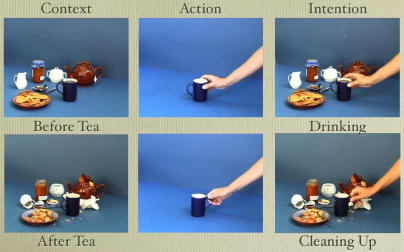
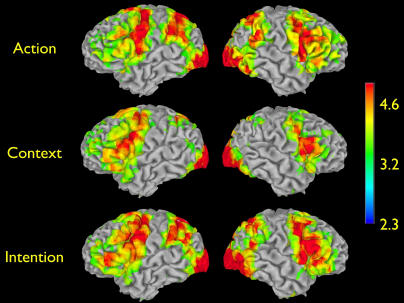
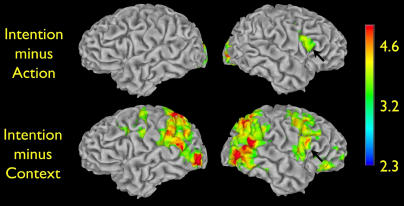
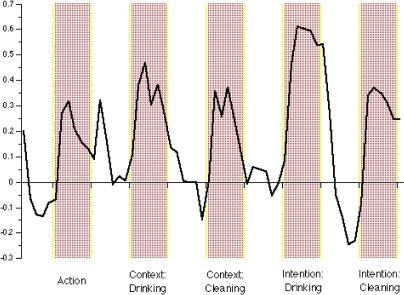
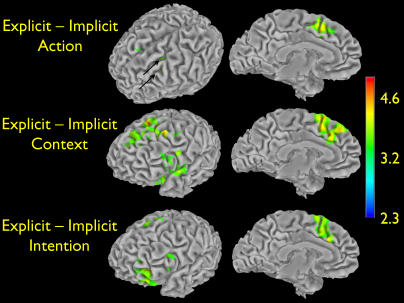
Understanding the intentions of others while watching their actions is a fundamental building block of social behavior. The neural and functional mechanisms underlying this ability are still poorly understood. To investigate these mechanisms we used functional magnetic resonance imaging. Twenty-three subjects watched three kinds of stimuli: grasping hand actions without a context, context only (scenes containing objects), and grasping hand actions performed in two different contexts. In the latter condition the context suggested the intention associated with the grasping action (either drinking or cleaning). Actions embedded in contexts, compared with the other two conditions, yielded a significant signal increase in the posterior part of the inferior frontal gyrus and the adjacent sector of the ventral premotor cortex where hand actions are represented. Thus, premotor mirror neuron areas-areas active during the execution and the observation of an action-previously thought to be involved only in action recognition are actually also involved in understanding the intentions of others. To ascribe an intention is to infer a forthcoming new goal, and this is an operation that the motor system does automatically.
Overview
The claims and statistics of this paper haven’t been checked yet.
Run the check — free, no account needed. It reads the open-access text and checks the sources it cites.
Integrity signals
Registry
Cites
Statistics
Figures
Verification
Claims the paper makes
The claims and statistics of this paper haven’t been checked yet.
Run the check — free, no account needed. It reads the open-access text and checks the sources it cites.
Claims other papers make about this one
Each is checked against this paper’s own text: does it say what the citing paper says it does?
The cited source says what the claim attributes to it.
In the citing paper
“Two recent studies also identified the IFG (an inferior part of the PMC) as an area involved in identifying the goals of hand movements (e.g., during behaviors like drinking and cleaning) as opposed to action execution alone [Iacoboni et al., 2005; Molnar-Szakacs et al., 2005].”
From Social cognition and the brain: A meta-analysis (2009) · cites this paper as Iacoboni et al., 2005
The cited source says what the claim attributes to it.
In the citing paper
“Similar goal identifying brain regions have been documented in the IFG of the human brain [Iacoboni et al., 2005].”
From Social cognition and the brain: A meta-analysis (2009) · cites this paper as Iacoboni et al., 2005
In the citing paper
“Evidence now suggests that this bodily resonance (see Glossary) can afford us a unique, first-person understanding of the experiences of others and is central to a number of social processes [7] including intention understanding [19], empathy [20], and emotion recognition [21].”
From Changing bodies changes minds: Owning another body affects social cognition (2015) · cites this paper as [19]
Self-check
Percentages, sums and reported differences re-computed from the paper’s own numbers.
The self-check needs the paper’s full text.
Citations
Cites
The assessment and analysis of handedness: The Edinburgh inventory
Oldfield, R. C. (1971) · Neuropsychologia · doi:10.1016/0028-3932(71)90067-4 · Cited by 35,900 · cited 1×
“questionnaire adapted from the Edinburgh Handedness Inventory [ 36 ].”
MethodJenkinson, M., Bannister, P., Brady, M., & Smith, S. (2002) · NeuroImage · doi:10.1006/nimg.2002.1132 · Cited by 11,888 · cited 2×
“The co-planar highresolution structural T2-weighted EPI volume was subsequently registered to the Montreal Neurological Institute Talairach-compatible MR atlas averaging 152 normal subjects using FMRIB’s Linear Image Registration Tool (FLIRT) [37].”
MethodFast robust automated brain extraction
Smith, S. M. (2002) · Human Brain Mapping · doi:10.1002/hbm.10062 · Cited by 10,496 · cited 1×
“Functional images were first registered to the co-planar high-resolution structural T2weighted EPI volume after non-brain structures had been removed with FMRIB’s Brain Extraction Tool (BET) from the co-planar highresolution T2-weighted EPI volume [38].”
MethodAction recognition in the premotor cortex
Gallese, V., Fadiga, L., Fogassi, L., & Rizzolatti, G. (1996) · Brain · doi:10.1093/brain/119.2.593 · Cited by 4,968 · cited 1×
“In the monkey brain, ventral premotor area F5 contains, in addition to mirror neurons, a population of cells called canonical neurons [4].”
BackgroundPremotor cortex and the recognition of motor actions
Rizzolatti, G., Fadiga, L., Gallese, V., & Fogassi, L. (1996) · Cognitive Brain Research · doi:10.1016/0926-6410(95)00038-0 · Cited by 4,870 · cited 1×
“Mirror neurons are premotor neurons that fire when the monkey performs object-directed actions such as grasping, tearing, manipulating, holding, but also when the animal observes somebody else, either a conspecific or a human experimenter, performing the same class of actions [3,4,5].”
BackgroundUnderstanding motor events: a neurophysiological study
di Pellegrino, G., Fadiga, L., Fogassi, L., Gallese, V., & Rizzolatti, G. (1992) · Experimental Brain Research · doi:10.1007/bf00230027 · Cited by 3,539 · cited 1×
“Neurons of this type have indeed been previously reported in F5 and referred to as ‘‘logically related’’ neurons [34].”
BackgroundSelf-citationNeurophysiological mechanisms underlying the understanding and imitation of action
Rizzolatti, G., Fogassi, L., & Gallese, V. (2001) · Nature Reviews Neuroscience · doi:10.1038/35090060 · Cited by 3,302
Forman, S. D., Cohen, J. D., Fitzgerald, M., Eddy, W. F., Mintun, M. A., & Noll, D. C. (1995) · Magnetic Resonance in Medicine · doi:10.1002/mrm.1910330508 · Cited by 3,202 · cited 1×
“Z image statistics were performed with a threshold of Z = 2.3 at voxel level and a cluster level corrected for the whole brain at p , 0.05 [41, 42 ].”
MethodInfluentialMirror neurons and the simulation theory of mind-reading
Gallese, V (1998) · Trends in Cognitive Sciences · doi:10.1016/s1364-6613(98)01262-5 · Cited by 3,201
Temporal Autocorrelation in Univariate Linear Modeling of FMRI Data
Woolrich, M. W., Ripley, B. D., Brady, M., & Smith, S. M. (2001) · NeuroImage · doi:10.1006/nimg.2001.0931 · Cited by 2,859 · cited 1×
“Time-series statistical analyses were carried out using FMRIB’s Improved Linear model (FILM) with local autocorrelation correction [39].”
Method
Cited by
Sorted by citations
Items 501–600 of 1,000
Auditory prediction cues motor preparation in the absence of movements
Stephan, M. A., Lega, C., & Penhune, V. B. (2018) · NeuroImage · doi:10.1016/j.neuroimage.2018.03.044 · Cited by 53
Meaning-Making as a Socially Distributed and Embodied Practice
Lindblom, J. (2014) · Contributions to phenomenology · doi:10.1007/978-94-017-9379-7_1 · Cited by 46
Rosén, B., & Lundborg, G. (2006) · Journal of Hand Surgery (European Volume) · doi:10.1016/j.jhsb.2006.08.019 · Cited by 48
“Mirror neuron areas have also been shown to be involved in understanding the intention of others (Iacoboni et al., 2005).”
BackgroundApps, M. A. J., Tajadura‐Jiménez, A., Turley, G., & Manos Tsakiris, A. (2012) · NeuroImage · doi:10.1016/j.neuroimage.2012.08.053 · Cited by 47
Subjective vividness of motor imagery has a neural signature in human premotor and parietal cortex
Zabicki, A., de Haas, B., Zentgraf, K., Stark, R. M., Munzert, J., & Krüger, B. (2019) · NeuroImage · doi:10.1016/j.neuroimage.2019.04.073 · Cited by 50
Brain correlates of motor complexity during observed and executed actions
Li, X., Krol, M. A., Jahani, S., Boas, D. A., Tager-Flusberg, H. B., & Yücel, M. A. (2020) · Scientific Reports · doi:10.1038/s41598-020-67327-5 · Cited by 49
Cure Violence: Treating Violence As a Contagious Disease
Slutkin, G., Ransford, C., & Decker, R. B. (2015) · Springer eBooks · doi:10.1007/978-3-319-15868-6_5 · Cited by 46
Lewis, J. W., Talkington, W. J., Puce, A., Engel, L. R., & Frum, C. (2010) · Journal of Cognitive Neuroscience · doi:10.1162/jocn.2010.21570 · Cited by 50
“heard sound to oneʼs own repertoire of meaningful soundproducing motor actions (Engel et al., 2009; Aglioti, Cesari, Romani, & Urgesi, 2008; Galati et al., 2008; McNamara et al., 2008; Pazzaglia, Pizzamiglio, Pes, & Aglioti, 2008; Lahav et al., 2007; Gazzola et al., 2006; Lewis et al., 2005, 2006; Bidet-Caulet et al.,…”
BackgroundTranstheoretic transdiagnostic psychotherapy.
Tryon, W. W. (2016) · Journal of Psychotherapy Integration · doi:10.1037/a0040041 · Cited by 48
The mirror neuron system: How cognitive functions emerge from motor organization
Fogassi, L. (2010) · Journal of Economic Behavior & Organization · doi:10.1016/j.jebo.2010.04.009 · Cited by 45
“…in inferior frontal gyrus and premotor cortex, posteriorly in the inferior parietal lobule) that are considered homologous to the areas forming the mirror neuron system in monkeys (see for example Grafton et al. 1996; Iacoboni et al. 1999; Buccino et al. 2001; Iacoboni et al. 2005).”
BackgroundOHAERI, J. U., Awadalla, A. W., & Farah, A. A. (2009) · Saudi Medical Journal · doi:10.15537/1658-3175.4857 · Cited by 45
Schulte‐Rüther, M., Otte, E., Adigüzel, K., Firk, C., Herpertz‐Dahlmann, B., Koch, I., & Konrad, K. (2016) · Autism Research · doi:10.1002/aur.1654 · Cited by 50
“…social-cognitive abilities [Gallese, Keysers, & Rizzolatti, 2004] such as action understanding, perspective taking, theory of mind, and empathizing [Iacoboni et al., 2005; Rizzolatti & Craighero, 2004; SchulteR€uther, Markowitsch, Fink, & Piefke, 2007, but see Cook, Bird, Catmur, Press, & Heyes,…”
Neural correlates of empathic accuracy in adolescence
Kral, T. R. A., Solis, E., Mumford, J. A., Schuyler, B. S., Flook, L., Rifken, K. M., Patsenko, E. G., & Davidson, R. J. (2017) · Social Cognitive and Affective Neuroscience · doi:10.1093/scan/nsx099 · Cited by 49
“, 2008), particularly when intention can be inferred (Iacoboni et al., 2005).”
Felt presence: Paranoid delusion or hallucinatory social imagery?
Nielsen, T. (2007) · Consciousness and Cognition · doi:10.1016/j.concog.2007.02.002 · Cited by 45
Animated Pose Templates for Modeling and Detecting Human Actions
Yao, B., Nie, B. X., Liu, Z., & Zhu, S. C. (2013) · IEEE Transactions on Pattern Analysis and Machine Intelligence · doi:10.1109/tpami.2013.144 · Cited by 44
Epistemological Reflections on the Art of Medicine and Narrative Medicine
Solomon, M. (2008) · Perspectives in biology and medicine · doi:10.1353/pbm.0.0038 · Cited by 44
I give you a cup, I get a cup: A kinematic study on social intention
Scorolli, C., Miatton, M., Wheaton, L. A., & Borghi, A. M. (2014) · Neuropsychologia · doi:10.1016/j.neuropsychologia.2014.03.006 · Cited by 44
“We selected a manipulative and a functional grip on the basis of previous work (see for example Borghi et al., 2012; Iacoboni et al., 2005): the functional grip is aimed at grasping the object to use it, the manipulative grip is similar in terms of fingers configuration (both grips are power grips) but the object is h…”
BackgroundMethodInfluentialAuditory signal processing in communication: Perception and performance of vocal sounds
Prather, J. F. (2013) · Hearing Research · doi:10.1016/j.heares.2013.06.007 · Cited by 45
“…heard and when they are spoken, and it is through that sensorimotor correspondence that auditory perception may be translated into vocal motor performance (Arbib, 2005; Ferrari et al., 2003; Gallese et al., 1996; Iacoboni et al., 1999, 2005; Rizzolatti and Craighero, 2004; Rizzolatti et al., 2001).”
Hoeren, M., Kaller, C. P., Glauche, V., Vry, M., Rijntjes, M., Hamzei, F., & Weiller, C. (2013) · Experimental Brain Research · doi:10.1007/s00221-013-3610-5 · Cited by 47
“, he is grasping the cup to clear the table) (Iacoboni et al. 2005), the inference of higher motives (e.”
InfluentialFrom actions to empathy and morality – A neural perspective
Molnar-Szakacs, I. (2010) · Journal of Economic Behavior & Organization · doi:10.1016/j.jebo.2010.02.019 · Cited by 45
“This finding showed that the representation of intentions and actions is automatic and pre-cognitive – the MNS is activated without conscious effort (Iacoboni et al., 2005).”
BackgroundMethodResultInfluentialEriksson, K. E. L., & Englander, M. (2017) · Journal of Social Work Education · doi:10.1080/10437797.2017.1284629 · Cited by 44
“According to Iacoboni et al. (2005), Mirror neurons are thought to recognize the actions of others, by matching the observed action onto its motor counterpart coded by the same neurons.”
BackgroundFarina, E., Baglio, F., Pomati, S., D'Amico, A., Campini, I., Tella, S. D., Belloni, G., & Pozzo, T. (2017) · Frontiers in Aging Neuroscience · doi:10.3389/fnagi.2017.00371 · Cited by 45
“The decision to use different types of grasp (both observed and executed) was driven by the need to recruit the highest percentage of mirror neurons and thus increment the BOLD signal (Ehrsson et al., 2000; Iacoboni et al., 2005; Cabinio et al., 2010; Marino and Ricciardelli, 2017).”
MethodFailure to read motor intentions from gaze in children with autism
Pierno, A. C., MARI, M., Glover, S., Georgiou, I. A., & Castiello, U. (2005) · Neuropsychologia · doi:10.1016/j.neuropsychologia.2005.11.013 · Cited by 42
Introduction to conceptual explorations on person-centered medicine
Mezzich, J. E., Snædal, J., van Weel, C., & Heath, I. (2010) · International Journal of Integrated Care · doi:10.5334/ijic.472 · Cited by 45
Dancing in Your Head: An Interdisciplinary Review
Zardi, A., Carlotti, E. G., Pontremoli, A. P. M., & Morese, R. (2021) · Frontiers in Psychology · doi:10.3389/fpsyg.2021.649121 · Cited by 52
“In a previous review, Kirsch et al. (2016) also focused on the complexity of the aesthetic experience, and approached the topic by highlighting the activation of a network of cerebral areas involving reward and motor processing.”
BackgroundBridging the gap between emotion and joint action
Bieńkiewicz, M. M. N., Smykovskyi, A., Olugbade, T., Janaqi, S., Camurri, A., Bianchi‐Berthouze, N., Björkman, M., & Bardy, B. G. (2021) · Neuroscience & Biobehavioral Reviews · doi:10.1016/j.neubiorev.2021.08.014 · Cited by 50
The left inferior parietal lobe represents stored hand-postures for object use and action prediction
van Elk, M. (2014) · Frontiers in Psychology · doi:10.3389/fpsyg.2014.00333 · Cited by 45
“Based on these findings it has been suggested that within the AON actions are represented primarily in terms of the goal or outcome of the observed action (Iacoboni et al., 2005; van Elk et al., 2008; Newman-Norlund et al., 2010).”
BackgroundAutism, Emotion Recognition and the Mirror Neuron System: The Case of Music
Molnar-Szakacs, I., Wang, M. J., Laugeson, E. A., Overy, K., Wu, W., & Piggot, J. (2020) · McGill Journal of Medicine · doi:10.26443/mjm.v12i2.273 · Cited by 44
“How does the brain perceive music? How does emotional music affect the brain of individuals with ASD? Bridging recent neuroimaging findings on the neural bases of intention understanding, action perception and social communication (90, 93, 138, 139) with findings on the neural bases of music perception, it has been pr…”
BackgroundMirror neurons and their relationship with neurodegenerative disorders
Farina, E., Borgnis, F., & Pozzo, T. (2020) · Journal of Neuroscience Research · doi:10.1002/jnr.24579 · Cited by 44
“Iacoboni et al. (2005) performed a fMRI study where participants observed three types of stimuli: grasping hand actions without a context, context only (scenes containing objects), and grasping hand actions performed in two different contexts.”
BackgroundSuga, M., Yamasue, H., Abe, O., Yamasaki, S., Yamada, H., Inoue, H., Takei, K., Aoki, S., & Kasai, K. (2009) · European Archives of Psychiatry and Clinical Neuroscience · doi:10.1007/s00406-009-0094-1 · Cited by 43
“F-MRI studies revealed that understanding another person’s intention is associated with right inferior frontal gyrus, although the area mainly consists of right pars opercularis [16].”
BackgroundMorphological differences in the mirror neuron system in Williams syndrome
Ng, R., Brown, T. T., Erhart, M. J., Järvinen, A. M., Korenberg, J. R., Bellugi, U., & Halgren, E. (2015) · Social Neuroscience · doi:10.1080/17470919.2015.1070746 · Cited by 42
“…system (MNS), a set of neural substrates dedicated to the observation, imitation, decoding, and implementation of actions (Rizzolatti & Craighero, 2004) and inferring mental states (Iacoboni et al., 2005), has been extensively studied in ASD population and is implicated in their social deficits.”
BackgroundReiterer, S., Erb, M., Grodd, W., & Wildgruber, D. (2007) · Brain Imaging and Behavior · doi:10.1007/s11682-007-9010-3 · Cited by 44
Perceiving performer identity and intended expression intensity in point-light displays of dance
Sevdalis, V., & Keller, P. E. (2010) · Psychological Research · doi:10.1007/s00426-010-0312-5 · Cited by 42
“In various situations, it has been shown that contextual cues, such as scenes surrounding the action (Iacoboni et al., 2005), presence of another agent (Sebanz, Knoblich, & Prinz, 2005) or relation to another agent (Loula et al.”
BackgroundBidet-Ildei, C., Chauvin, A., & Coello, Y. (2010) · Acta Psychologica · doi:10.1016/j.actpsy.2010.02.002 · Cited by 44
BORRONI, P. F., Montagna, M., Cerri, G., & Baldissera, F. G. (2008) · European Journal of Neuroscience · doi:10.1111/j.1460-9568.2008.06458.x · Cited by 44
“Some studies show an almost equal bilateral activation of the ventral premotor cortices (Buccino et al., 2001, 2004; Iacoboni et al., 2005), whereas others report a stronger or even exclusive activation in the left hemisphere (Iacoboni et al.”
BackgroundIkegami, T., & Ganesh, G. (2014) · Scientific Reports · doi:10.1038/srep06989 · Cited by 42
Perception and Understanding of Others' Actions and Brain Connectivity
Pavlova, M. A., Sokolov, A. N., Birbaumer, N., & Krägeloh‐Mann, I. (2007) · Journal of Cognitive Neuroscience · doi:10.1162/jocn.2008.20034 · Cited by 46
Reading sheet music facilitates sensorimotor mu-desynchronization in musicians
Behmer, L. P., & Jantzen, K. J. (2011) · Clinical Neurophysiology · doi:10.1016/j.clinph.2010.12.035 · Cited by 47
“…strongly supports the role of this ''human mirror system'' in understanding the intention of the actions of others by mapping an observed act onto the motor program for the same or similar act (Nishitani and Hari, 2000; Umiltà et al., 2001; Rizzolatti and Craighero, 2004; Iacoboni et al., 2005).”
A neural network underlying intentional emotional facial expression in neurodegenerative disease
Gola, K. A., Shany‐Ur, T., Pressman, P., Sulman, I., Galeana, E., Paulsen, H., Nguyen, L. A., Wu, T. Q., Adhimoolam, B., Poorzand, P., et al. (2017) · NeuroImage Clinical · doi:10.1016/j.nicl.2017.01.016 · Cited by 42
“These are also key regions that comprise the purported “mirror neuron system” (MNS), responsible for the embodied expression of others' goal-directed actions (Iacoboni et al., 2005).”
BackgroundActivity, Plan, and Goal Recognition: A Review
Van-Horenbeke, F. A., & Peer, A. (2021) · Frontiers in Robotics and AI · doi:10.3389/frobt.2021.643010 · Cited by 42
“…is also evidence that mirror neurons take part in intention understanding: Research has shown that observing an action in a context that allows us to understand the intention of the action activates mirror neuron areas that observing the action without the context does not (Iacoboni et al., 2005).”
BackgroundGinot, E. R. (2007) · Psychoanalytic Psychology · doi:10.1037/0736-9735.24.2.317 · Cited by 40
“This new finding broadens their perceived function from mere imitation and recognition to instantaneous understanding of goal and intent (Iacoboni et al., 2005).”
BackgroundAnatomical and temporal architecture of theory of mind: A MEG insight into the early stages
Vistoli, D., Brunet-Gouet, É., Baup-Bobin, E., Hardy-Baylé, M. C., & Passerieux, C. (2010) · NeuroImage · doi:10.1016/j.neuroimage.2010.09.015 · Cited by 42
“TheMNS has been shown to respond to human agents in action (Montgomery et al., 2007) and to the intention of an observed action (Iacoboni et al., 2005).”
BackgroundMethodResultInfluentialPernigo, S., Moro, V., Avesani, R., Miatello, C., Urgesi, C., & Aglioti, S. M. (2012) · European Journal of Neuroscience · doi:10.1111/j.1460-9568.2012.08266.x · Cited by 40
“…mere observation of body actions activates fronto-parietal somatosensory and motor cortices (Buccino et al., 2001; Avikainen et al., 2002; Rossi et al., 2002; Raos et al., 2004; Costantini et al., 2005; Iacoboni et al., 2005; Avenanti et al., 2007; Christensen et al., 2007; Sakamoto et al., 2009).”
BackgroundInterpreting actions: The goal behind mirror neuron function
Ocampo, B., & Kritikos, A. (2011) · Brain Research Reviews · doi:10.1016/j.brainresrev.2011.03.001 · Cited by 40
“In humans, observing actions embedded in a meaningful context which implies an intention results in increased activation of mirror neuron regions (Iacoboni et al., 2005).”
BackgroundRiess, H. (2011) · Harvard Review of Psychiatry · doi:10.3109/08941939.2011.581915 · Cited by 44
In the presence of others: Self-location, balance control and vestibular processing
Lopez, C., Falconer, C. J., Deroualle, D., & Mast, F. W. (2015) · Neurophysiologie Clinique · doi:10.1016/j.neucli.2015.09.001 · Cited by 44
“The mirror neuron system in the frontoarietal cortex [102,103,101,50] was proposed as the main eural basis of sensorimotor resonance between the self and thers.”
Humanoid Cognitive Robots That Learn by Imitating: Implications for Consciousness Studies
Reggia, J. A., Katz, G. E., & Davis, G. P. (2018) · Frontiers in Robotics and AI · doi:10.3389/frobt.2018.00001 · Cited by 41
“…learning specifically (Kassirer and Gorry, 1978; Peng and Reggia, 1990; Josephson and Josephson, 1994; Meltzoff, 1995; Baldwin and Baird, 2001; Bekkering and Prinz, 2002; Haikonen, 2003; Fuster, 2004; Fogassi et al., 2005; Iacoboni et al., 2005; Walton, 2005; Botvinick, 2008; Katz et al., 2017a).”
Twenty years of PETTLEP imagery: An update and new direction for simulation-based training
Scott, M. W., Wright, D. J., Smith, D., & Holmes, P. S. (2022) · Asian Journal of Sport and Exercise Psychology · doi:10.1016/j.ajsep.2022.07.002 · Cited by 46
Body language in the brain: constructing meaning from expressive movement
Tipper, C. M., Signorini, G., & Grafton, S. T. (2015) · Frontiers in Human Neuroscience · doi:10.3389/fnhum.2015.00450 · Cited by 51
On-line social interactions and executive functions
Ybarra, O., & Winkielman, P. (2012) · Frontiers in Human Neuroscience · doi:10.3389/fnhum.2012.00075 · Cited by 40
Al-Shubaili, A., Awadalla, A. W., OHAERI, J. U., & Mabrouk, A. A. (2007) · BMC Neurology · doi:10.1186/1471-2377-7-31 · Cited by 40
“We suggest that recent brain -behavior findings about "mirror neurons"[53] and the phenomenon of "social intelligence"[54] indicate that the patient- caregiver dyad interaction and its association with QOL has roots in the neurology of human behaviour [52-54].”
BackgroundRicciardelli, P., Carcagno, S., Vallar, G., & Bricolo, E. (2012) · Experimental Brain Research · doi:10.1007/s00221-012-3291-5 · Cited by 40
“in humans (Iacoboni et al. 2005).”
BackgroundResultInfluentialCooper, N. R., Simpson, A., Till, A., Simmons, K. A., & Puzzo, I. (2013) · Frontiers in Human Neuroscience · doi:10.3389/fnhum.2013.00159 · Cited by 47
“Work in humans using fMRI (e.g., Iacoboni et al., 1999, 2005; Molnar-Szakacs et al., 2006), transcranial magnetic stimulation (TMS; Fadiga et al., 1995; Enticott et al., 2010; Sartori et al., 2012), depth electrode recording (Mukamel et al., 2010), and EEG/MEG (e.g., Hari et al., 1998; Nishitani…”
Guzzetta, A., Boyd, R. N., Perez, M., Ziviani, J. M., Burzi, V., Slaughter, V. P., Rose, S., Provan, K., Findlay, L., Fisher, I., et al. (2013) · BMJ Open · doi:10.1136/bmjopen-2012-002512 · Cited by 40
Falcone, R., Brunamonti, E., Ferraina, S., & Genovesio, A. (2015) · Cerebral Cortex · doi:10.1093/cercor/bhv224 · Cited by 40
“Numerous studies have investigated the role of mirror neurons in parieto-frontal circuits in monkeys (Di Pellegrino et al. 1992; Gallese et al. 1996; Caggiano et al. 2009; Bonini et al. 2010; Rizzolatti and Sinigaglia 2010) and humans (Iacoboni et al. 2005; Mukamel et al. 2010).”
BackgroundNeural dissociations between meaningful and mere inconsistency in impression updating
Mende‐Siedlecki, P., & Todorov, A. T. (2016) · Social Cognitive and Affective Neuroscience · doi:10.1093/scan/nsw058 · Cited by 44
From Affordances to Abstract Words: The Flexibility of Sensorimotor Grounding
Mazzuca, C., Fini, C., Michalland, A. H., Falcinelli, I., Rold, F. D., Tummolini, L., & Borghi, A. M. (2021) · Brain Sciences · doi:10.3390/brainsci11101304 · Cited by 46
“For example, a seminal fMRI study demonstrated that context affects how we code high-level components of motor behavior [14].”
BackgroundContagious depression: Automatic mimicry and the mirror neuron system - A review
Paz, L. V., Viola, T. W., Milanesi, B. B., Sulzbach, J. H., Mestriner, R. G., Wieck, A., & Xavier, L. L. (2021) · Neuroscience & Biobehavioral Reviews · doi:10.1016/j.neubiorev.2021.12.032 · Cited by 51
Quick and Smart? Modularity and the Pro-Emotion Consensus
Jones, K. (2006) · Canadian Journal of Philosophy Supplementary Volume · doi:10.1353/cjp.2007.0031 · Cited by 43
“There are very good reasons for thinking that human beings employ sub-conscious and automatic internal forward models of other people rather than updating beliefs by continuously checking on the others (Gallese 2004; Iacoboni et al. 2005).”
BackgroundMiura, N., Sugiura, M., Takahashi, M. K., Sassa, Y., Miyamoto, A., Sato, S., Horie, K., Nakamura, K., & Kawashima, R. (2009) · Social Neuroscience · doi:10.1080/17470910903083256 · Cited by 39
“Furthermore, its activation is increased particularly in goal-directed actions (Buccino et al, 2001 ; Iacoboni et al, 2005 ).”
BackgroundNeural Correlates of Receiving an Apology and Active Forgiveness: An fMRI Study
Strang, S., Utikal, V., Fischbacher, U., Weber, B., & Falk, A. (2014) · PLoS ONE · doi:10.1371/journal.pone.0087654 · Cited by 39
“The human mirror neuron system, encompassing the inferior frontal gyrus (IFG), temporal lobes and inferior parietal cortex (IPC), was shown to be involved in this simulation process [19,22].”
BackgroundWhy the confusion around neonatal imitation? A review
Oostenbroek, J., Slaughter, V. P., Nielsen, M., & Suddendorf, T. (2013) · Journal of Reproductive and Infant Psychology · doi:10.1080/02646838.2013.832180 · Cited by 48
“The importance afforded to these neurons is such that they are purported to be the building blocks of a host of core human traits, including but not limited to an understanding of others’ intentions (Iacoboni et al., 2005), language (D’Ausilio et al.”
BackgroundThe anterior cingulate cortex: Monitoring the outcomes of others' decisions
Apps, M. A. J., Balsters, J. H., & Ramnani, N. (2011) · Social Neuroscience · doi:10.1080/17470919.2011.638799 · Cited by 41
“For example, observing others' goal-directed actions activates areas of the premotor cortex and posterior parietal cortex that are engaged when one performs the same actions (Iacoboni et al, 2005 ; Kilner, Neal, Weiskopf, Friston, & Frith, 2009 ).”
BackgroundBoth novelty and expertise increase action observation network activity
Liew, S., Sheng, T., Margetis, J. L., & Aziz‐Zadeh, L. (2013) · Frontiers in Human Neuroscience · doi:10.3389/fnhum.2013.00541 · Cited by 40
Sahaï, A., Pacherie, É., Grynszpan, O., & Berberian, B. (2017) · Frontiers in Neurorobotics · doi:10.3389/fnbot.2017.00052 · Cited by 45
“Indeed, as prior intentions are embodied in kinematics, by simulating observed other-generated actions, one can understand what the observed agent’s intention with the help of one’s own motor experience (Iacoboni et al., 2005; Georgiou et al., 2007).”
BackgroundAmoruso, L., Finisguerra, A., & Urgesi, C. (2018) · NeuroImage · doi:10.1016/j.neuroimage.2018.05.020 · Cited by 42
Opening the “Black Box”: Functions of the Frontal Lobes and Their Implications for Sociology
Firat, R. B. (2019) · Frontiers in Sociology · doi:10.3389/fsoc.2019.00003 · Cited by 45
“While initially considered as an action recognition mechanism, later studies have expanded the role of mirror neurons to intention recognition (Iacoboni et al., 2005; Kaplan and Iacoboni, 2006).”
BackgroundIncreased executive functioning, attention, and cortical thickness in white‐collar criminals
Raine, A., Laufer, W. S., Yang, Y., Narr, K. L., Thompson, P. M., & Toga, A. W. (2011) · Human Brain Mapping · doi:10.1002/hbm.21415 · Cited by 40
“In addition to these motor control functions, the premotor area has also been implicated in the ability to understand the intentions of others’ actions [Iacoboni et al., 2005] and social perception [Lawrence et al.”
BackgroundBrunet-Gouet, É., Achim, A. M., Vistoli, D., Passerieux, C., Hardy-Baylé, M. C., & Jackson, P. L. (2010) · Psychiatry Research · doi:10.1016/j.psychres.2010.11.029 · Cited by 38
Action observation with kinesthetic illusion can produce human motor plasticity
Nojima, I., Koganemaru, S., Kawamata, T., Fukuyama, H., & Mima, T. (2015) · European Journal of Neuroscience · doi:10.1111/ejn.12921 · Cited by 39
“vation of skill training can lead to a performance gain in the motor domain (Brass et al., 2001; Iacoboni et al., 2005; Mattar & Gribble, 2005).”
BackgroundContext and hand posture modulate the neural dynamics of tool–object perception
Natraj, N., Poole, V. N., Mizelle, J. C., Flumini, A., Borghi, A. M., & Wheaton, L. A. (2012) · Neuropsychologia · doi:10.1016/j.neuropsychologia.2012.12.003 · Cited by 39
“The authors demonstrated that the posterior right inferior frontal gyrus was significantly active in deciphering goal or intent when subjects viewed the same grasping action embedded in two different contexts (pick up to drink vs. pick up to clean) (M Iacoboni et al., 2005).”
InfluentialTramacere, A., Pievani, T., & Ferrari, P. F. (2016) · Biological reviews/Biological reviews of the Cambridge Philosophical Society · doi:10.1111/brv.12310 · Cited by 42
“The ensemble of neurons that form the MNS are deeply dependent on the intrinsic (between neurons located in the same anatomical sector) and extrinsic (between neurons having the same properties but located in different sectors of the cerebral cortex) connections in which they are embedded and work, as a whole, at a po…”
BackgroundVitality Affects in Daniel Stern's Thinking—A Psychological and Neurobiological Perspective
Ammaniti, M., & Ferrari, P. (2013) · Infant Mental Health Journal · doi:10.1002/imhj.21405 · Cited by 39
“Using similar paradigms in humans, Iacoboni et al. (2005) explored how intention is decoded in the brain.”
BackgroundMirror Neurons and Intentional Attunement: Commentary On Olds
D, V. G. M. (2006) · Journal of the American Psychoanalytic Association · doi:10.1177/00030651060540011101 · Cited by 38
“…involved in the perception of communicative actions (Buccino, Lui, et al. 2004), in processing action-related sentences (Tettamanti et al. 2005), in imitation (Iacoboni et al. 1999; Buccino, Vogt, et al. 2004), and in basic forms of mind reading (Gallese and Goldman 1998; Iacoboni et al. 2005).”
BackgroundGinot, E. R. (2009) · Psychoanalytic Psychology · doi:10.1037/a0016449 · Cited by 38
The Human Mirror Neuron System and Embodied Representations
Aziz‐Zadeh, L., & Ivry, R. B. (2008) · Advances in experimental medicine and biology · doi:10.1007/978-0-387-77064-2_18 · Cited by 38
“The mirror network has also been shown to be modulated by contextual/ intentional differences between stimuli (Iacoboni et al., 2005).”
BackgroundCues for self-recognition in point-light displays of actions performed in synchrony with music
Sevdalis, V., & Keller, P. E. (2010) · Consciousness and Cognition · doi:10.1016/j.concog.2010.03.017 · Cited by 38
“In research conducted outside the music domain, contextual cues (e.g., scenes surrounding the action, presence of another agent) have been previously shown to have an impact on the way actions are both perceived and performed (Iacoboni et al., 2005; Sebanz, Knoblich, & Prinz, 2005).”
Agnew, Z. K., Wise, R. G., & Leech, R. (2012) · PLoS ONE · doi:10.1371/journal.pone.0032517 · Cited by 37
“These peaks lay in BA6 and both superior and inferior parietal regions supporting previous data [3,27].”
BackgroundResultWhat do mirror neurons mirror?
Uithol, S., van Rooij, I., Harold Bekkering, A., & Haselager, P. (2011) · Philosophical Psychology · doi:10.1080/09515089.2011.562604 · Cited by 41
“…actions found in imaging studies, such as occipital, posterior parietal, parietofrontal, and prefrontal areas (Calvo-Merino, Glaser, Grezes, Passingham, & Haggard, 2005; Evangeliou et al., 2009; Grèzes & Decety, 2001; Iacoboni et al., 2005) hints to a modulating role of these brain systems.”
BackgroundMethodInfluentialThe quick and the dead: when reaction beats intention
Welchman, A. E., Stanley, J., Henningsen‐Schomers, M. R., Miall, R. C., & Bülthoff, H. (2010) · Proceedings of the Royal Society B Biological Sciences · doi:10.1098/rspb.2009.2123 · Cited by 38
“activated similarly when a participant performs an action or observes the same movement performed by another actor (Gallese et al. 1996; Iacoboni et al. 2005), potentially priming movement production circuits and facilitating the participant’s own actions.”
BackgroundEchopraxia in Schizophrenia: Possible Mechanisms
PRIDMORE, S. A., Brüne, M., Ahmadi, J., & Dale, J. (2008) · Australian & New Zealand Journal of Psychiatry · doi:10.1080/00048670802119747 · Cited by 38
“It has been conceptualized as central to empathy [68,69].”
BackgroundOverwalle, F. V., den Eede, S. V., Baetens, K., & Vandekerckhove, M. M. P. (2009) · Social Cognitive and Affective Neuroscience · doi:10.1093/scan/nsp003 · Cited by 37
Simon, S., & Mukamel, R. (2016) · Brain and Behavior · doi:10.1002/brb3.494 · Cited by 35
“neurons in inferior parietal lobe (IPL), inferior frontal gyrus (IFG), and ventral premotor cortex, have been shown to respond differentially depending solely on the goal of the action (Fogassi et al. 2005; Iacoboni et al. 2005).”
BackgroundAction observation for sensorimotor learning in surgery
Harris, D., Vine, S. J., Wilson, M., McGrath, J. S., LeBel, M., & Buckingham, G. (2018) · British journal of surgery · doi:10.1002/bjs.10991 · Cited by 37
Robot-Based Motor Rehabilitation in Autism: A Systematic Review
Jouaiti, M., & Hénaff, P. (2019) · International Journal of Social Robotics · doi:10.1007/s12369-019-00598-9 · Cited by 39
Theta- and Gamma-Band Activity Discriminates Face, Body and Object Perception
Bossi, F., Premoli, I., Pizzamiglio, S., Balaban, S., Ricciardelli, P., & Rivolta, D. (2020) · Frontiers in Human Neuroscience · doi:10.3389/fnhum.2020.00074 · Cited by 37
Engel, A., Burke, M., Fiehler, K., Bien, S., & Rösler, F. (2008) · Neuropsychologia · doi:10.1016/j.neuropsychologia.2008.01.025 · Cited by 37
“…1999; Fadiga, Fogassi, Pavesi, & Rizzolatti, 1995; azzola, Aziz-Zadeh, & Keysers, 2006; Grezes, Armony, Rowe, Passingham, 2003; Hari et al., 1998; Iacoboni et al., 2005; ossi et al., 2002; for review see Grezes & Decety, 2001; izzolatti & Craighero, 2004; Rizzolatti, Fogassi, & Gallese, 2…”
Distinct brain signatures of content and structure violation during action observation
Maffongelli, L., Bartoli, E., Sammler, D., Koelsch, S., Campus, C., Olivier, E., Fadiga, L., & D’Ausilio, A. (2015) · Neuropsychologia · doi:10.1016/j.neuropsychologia.2015.05.020 · Cited by 35
Facilitating reflective supervision in an early child development center
Emde, R. N. (2009) · Infant Mental Health Journal · doi:10.1002/imhj.20235 · Cited by 36
Overview of Social Cognitive Dysfunctions in Rare Developmental Syndromes With Psychiatric Phenotype
Morel, A., Peyroux, É., Leleu, A., Favre, É., Franck, N., & Demily, C. (2018) · Frontiers in Pediatrics · doi:10.3389/fped.2018.00102 · Cited by 36
“The ability to observe and recognize other people’s actions contributes to understand goals and intentions (127) and may help people with WS improve their recognition of action process (113).”
BackgroundHuman Movement Datasets: An Interdisciplinary Scoping Review
Olugbade, T., Bieńkiewicz, M. M. N., Barbareschi, G., D’Amato, V., Oneto, L., Camurri, A., Holloway, C., Björkman, M., Keller, P. E., Clayton, M. R. L., et al. (2022) · ACM Computing Surveys · doi:10.1145/3534970 · Cited by 39
“Meanwhile, both behaviour categorization (the what) and semantic interpretation (the why) are encoded in human action perception, with each playing a role in interpretation of observed behaviour as well as in responding appropriately based on previous experiences [34, 47].”
BackgroundHuman biochronology: on the source and functions of ‘musicality’
Trevarthen, C. (2009) · Springer eBooks · doi:10.1007/978-3-211-75121-3_16 · Cited by 35
Emotions, narratives and empathy in clinical communication
Finset, A. (2010) · International Journal of Integrated Care · doi:10.5334/ijic.490 · Cited by 37
“Mirror neurons were first described by Giacomo Rizzolatti and his group in Parma, Italy, and refer to neurons that fire when you observe an action, mirroring the neurons that are engaged in the same action in the person who acts [20].”
BackgroundLinking mechanisms: Emotional contagion, empathy, and imagery.
Arizmendi, T. G. (2011) · Psychoanalytic Psychology · doi:10.1037/a0024176 · Cited by 36
A grammar of action generates predictions in skilled musicians
Novembre, G., & Keller, P. E. (2011) · Consciousness and Cognition · doi:10.1016/j.concog.2011.03.009 · Cited by 36
Jelsone-Swain, L. M., Persad, C. C., Burkard, D. J., & Welsh, R. C. (2015) · PLoS ONE · doi:10.1371/journal.pone.0119862 · Cited by 38
Coello, Y., Quesque, F., Gigliotti, M.-F., Ott, L., & Bruyelle, J.-L. (2018) · PLOS ONE · doi:10.1371/journal.pone.0196874 · Cited by 35
How the Context Matters. Literal and Figurative Meaning in the Embodied Language Paradigm
Cuccio, V., Ambrosecchia, M., Ferri, F., Carapezza, M., Piparo, F. L., Fogassi, L., & D, V. G. M. (2014) · PLoS ONE · doi:10.1371/journal.pone.0115381 · Cited by 35
“While the role of context in modulating embodied simulation during action recognition has already been demonstrated and widely discussed [38–41], only recently has this issue been addressed in embodied language research [25, 42–45].”
BackgroundYaniv, D. (2010) · The Arts in Psychotherapy · doi:10.1016/j.aip.2010.12.001 · Cited by 36
Nonvisual Motor Learning Influences Abstract Action Observation
Reithler, J., Mier, H. I. V., Peters, J. C., & Goebel, R. (2007) · Current Biology · doi:10.1016/j.cub.2007.06.019 · Cited by 35
Metadata
- Authors
- Iacoboni, M., Molnar-Szakacs, I., Gallese, V., Buccino, G., Mazziotta, J. C., & Rizzolatti, G.
- Affiliations
- University of California, Los Angeles (US)
- University of Parma (IT)
- Corresponding author
- Iacoboni, Marco
- Venue
- PLoS Biology
- Publisher
- Public Library of Science (PLoS)
- Published
- 2005-02-22
- Volume
- 3
- Issue
- 3
- Pages
- e79
- ISSN
- 1544-9173 (ISSN-L)
- 1545-7885
- PMC
- PMC1044835
- OpenAlex
- W2042526117
- Cited by
- 2,044
- References
- 45
- Citations by year
- 2026: 45 · 2025: 41 · 2024: 54 · 2023: 68 · 2022: 45 · 2021: 63 · 2020: 85 · 2019: 96 · 2018: 88 · 2017: 95 · 2016: 93 · 2015: 134 · 2014: 113 · 2013: 134 · 2012: 123
- FWCI
- 153.01
- Type
- journal article
- Language
- en
- Open access
- gold
- doi.org
- Locations
- PLoS Biology (publishedVersion, cc-by)
- Europe PMC (PubMed Central) (publishedVersion, cc-by)
- PubMed Central (publishedVersion, cc-by)
- PubMed (publishedVersion)
- DOAJ (DOAJ: Directory of Open Access Journals) (submittedVersion, cc-by-sa)
- eScholarship (California Digital Library) (submittedVersion)
- eScholarship (California Digital Library) (submittedVersion, cc-by)
- Figshare (submittedVersion, cc-by)
- Funders
- National Science Foundation (0107077)
- Ahmanson Foundation
- Brain Mapping Support Foundation
- European Commission
- European Science Foundation
- National Institute of Mental Health (MH63680)
- National Center for Research Resources (RR08655, P41RR013642, RR12169, RR 13642, C06RR012169)
- Topics
- Social Sciences › Psychology › Social Psychology › Action Observation and Synchronization
- Social Sciences › Psychology › Developmental and Educational Psychology › Child and Animal Learning Development
- Life Sciences › Neuroscience › Cognitive Neuroscience › Face Recognition and Perception
- Keywords
- intention understanding, mirror neuron system, action observation, grasping, ventral premotor cortex, inferior frontal gyrus, social cognition, action context, goal inference, motor system
- MeSH terms
- Adult, Brain, Brain Mapping, Empathy, Female, Humans, Functional Laterality, Male, Motor Neurons, Nerve Net, Neurons, Reference Values, Video Recording, Hand Strength, Comprehension
About these checks
Registry, retraction, Cites and statistics results are computed, not judged, with one exception: a printed reference that no index lists is read once by a model before it counts as a citation error. Claims are extracted by a model and kept only when their quote appears verbatim in the text; each cited source is then checked, with a model’s help, for whether it says what the claim relies on. Those verdicts can be wrong — read the claim’s quote and the cited source before relying on one.
Statistics and arithmetic are recomputed, not judged.
Confidence bands are shown only for fields calibrated on our annotated test set. None is calibrated yet, so no band is shown.
What counts as a claim ›How we measure confidence ›How we check this ›
Are you an author, or do you see a problem with this page? Request a review
