

Disruption of State Estimation in the Human Lateral Cerebellum
Open accessThe DOI matches its Crossref record; 69 of the 69 references it cites were found in a registry or an index.
Abstract
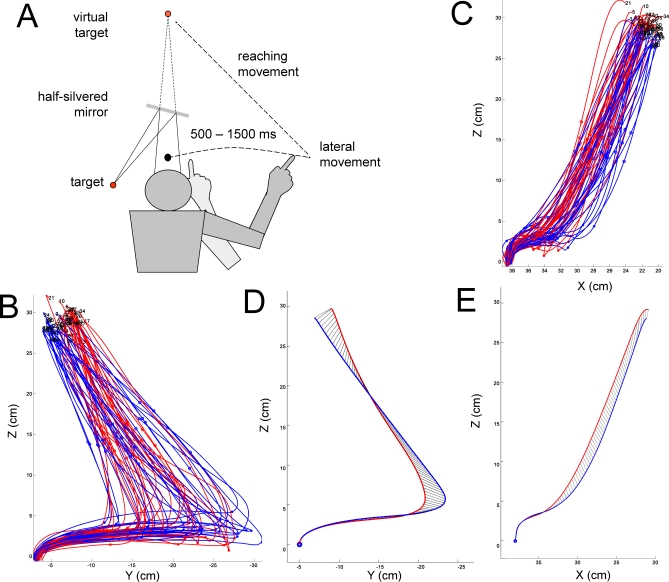
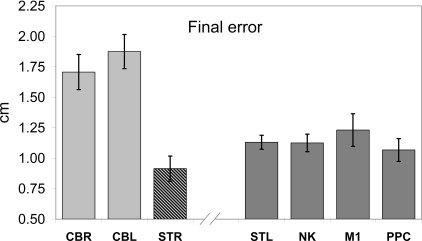
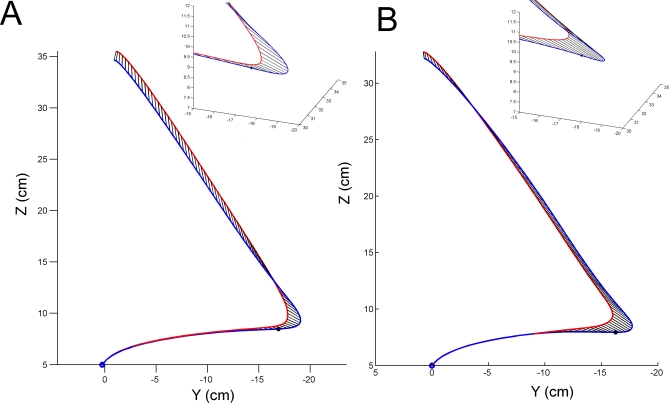
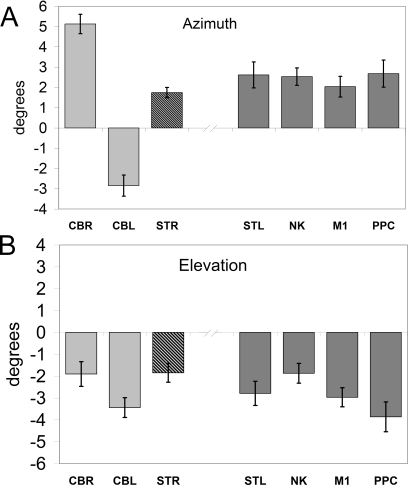
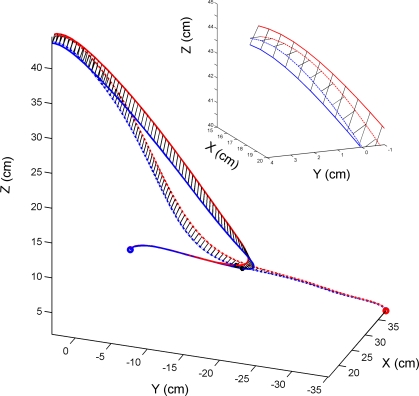
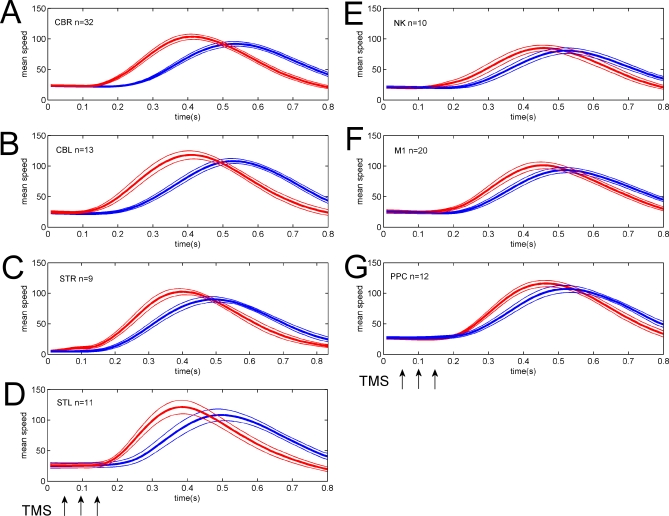
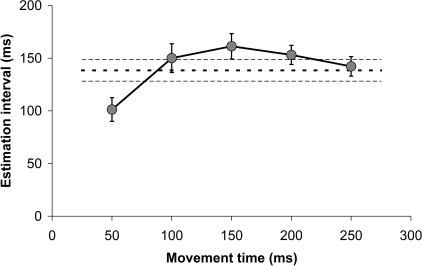
The cerebellum has been proposed to be a crucial component in the state estimation process that combines information from motor efferent and sensory afferent signals to produce a representation of the current state of the motor system. Such a state estimate of the moving human arm would be expected to be used when the arm is rapidly and skillfully reaching to a target. We now report the effects of transcranial magnetic stimulation (TMS) over the ipsilateral cerebellum as healthy humans were made to interrupt a slow voluntary movement to rapidly reach towards a visually defined target. Errors in the initial direction and in the final finger position of this reach-to-target movement were significantly higher for cerebellar stimulation than they were in control conditions. The average directional errors in the cerebellar TMS condition were consistent with the reaching movements being planned and initiated from an estimated hand position that was 138 ms out of date. We suggest that these results demonstrate that the cerebellum is responsible for estimating the hand position over this time interval and that TMS disrupts this state estimate.
Overview
The claims and statistics of this paper haven’t been checked yet.
Free: it reads the open-access text and checks the first 5 claims that cite a source we can check. Create a free account to check every claim.
Integrity signals
Registry
Cites
Statistics
Figures
Verification
Claims the paper makes
The claims and statistics of this paper haven’t been checked yet.
Free: it reads the open-access text and checks the first 5 claims that cite a source we can check. Create a free account to check every claim.
Claims other papers make about this one
Each is checked against this paper’s own text: does it say what the citing paper says it does?
The cited source says what the claim attributes to it.
In the citing paper
“The cerebellum has been proposed to be a crucial component in the state estimation process that combines information from motor efferent and sensory afferent signals to produce a representation of the current state of the motor system (Kawato, 1999; Miall et al., 2007).”
From Impulsive action: emotional impulses and their control (2014) · cites this paper as Miall et al., 2007
The cited source says what the claim attributes to it.
In the citing paper
“Finally, transient cerebellar disruption using transcranial magnetic stimulation induces movement perturbations that can be accounted for by the cerebellum making a prediction of the kinematic state of the arm at a lead time of 130 ms (Miall et al., 2007), as expected if the cerebellum implements a forward internal model.”
From Cerebellum, Predictions and Errors (2019) · cites this paper as Miall et al., 2007
The cited source says what the claim attributes to it.
In the citing paper
“Disrupting the lateral cerebellum with transcranial magnetic stimulation in healthy subjects alters on-line control of the ongoing movement (Miall et al., 2007).”
From The Forward Model: A Unifying Theory for the Role of the Cerebellum in Motor Control and Sense of Agency (2021) · cites this paper as Miall et al., 2007
Self-check
Percentages, sums and reported differences re-computed from the paper’s own numbers.
The self-check needs the paper’s full text.
Citations
Cites
An internal model for sensorimotor integration
Wolpert, D. M., Ghahramani, Z., & Jordan, M. I. (1995) · Science · doi:10.1126/science.7569931 · Cited by 3,553
Internal models for motor control and trajectory planning.
Kawato, M. (1999) · Current Opinion in Neurobiology · doi:10.1016/s0959-4388(99)00028-8 · Cited by 2,685 · cited 1×
“Another important postulated function is in inverse dynamic modelling, with a functional role for the cerebellum in generating motor commands rather than in predicting their outcome [7,33,40].”
Internal models in the cerebellum
Wolpert, D. M., Miall, R. C., & Kawato, M. (1998) · Trends in Cognitive Sciences · doi:10.1016/s1364-6613(98)01221-2 · Cited by 2,469 · cited 3×
“of the cerebellum [7,12,13], and the cerebellum has been specifically linked to state estimation [14,15], possibly in conjunction with the superior parietal cortex [4,16–18].”
Self-citationForward Models for Physiological Motor Control
Miall, R. C., & Wolpert, D. M. (1996) · Neural Networks · doi:10.1016/s0893-6080(96)00035-4 · Cited by 2,260 · cited 2×
“The process of translating an efferent copy of a motor command into predicted sensory reafference is encapsulated by the idea of a forward model [7,11].”
Self-citationComputational principles of movement neuroscience
Wolpert, D. M., & Ghahramani, Z. (2000) · Nature Neuroscience · doi:10.1038/81497 · Cited by 2,122 · cited 1×
“The state estimation process is likely to be iterative [8], with the current state being updated by an optimised weighting of afferent proprioceptive and visual information and by efferent motor commands.”
SPACE AND ATTENTION IN PARIETAL CORTEX
Colby, C. L., & Goldberg, M. E. (1999) · Annual Review of Neuroscience · doi:10.1146/annurev.neuro.22.1.319 · Cited by 1,710 · cited 1×
“The PPC also contributes to the representation of target positions [61], and hence it is important to distinguish loss-ofstate estimation from errors in localizing the remembered target.”
Cerebellar loops with motor cortex and prefrontal cortex of a nonhuman primate
Kelly, R. M., & Strick, P. L. (2003) · The Journal of Neuroscience · doi:10.1523/jneurosci.23-23-08432.2003 · Cited by 1,595 · cited 2×
“parietal cortex [55], which may hold a representation of the current state estimate [16], as well as from cortical motor areas, sending an efferent copy of descending commands [56].”
Forward modeling allows feedback control for fast reaching movements
Desmurget, M., & Grafton, S. (2000) · Trends in Cognitive Sciences · doi:10.1016/s1364-6613(00)01537-0 · Cited by 1,300 · cited 2×
“of the cerebellum [7,12,13], and the cerebellum has been specifically linked to state estimation [14,15], possibly in conjunction with the superior parietal cortex [4,16–18].”
Wolpert, D. M., & Flanagan, J. R. (2001) · Current Biology · doi:10.1016/s0960-9822(01)00432-8 · Cited by 1,257
Abnormalities in the awareness and control of action
Frith, C. D., Blakemore, S.-J., & Wolpert, D. M. (2000) · Philosophical Transactions of the Royal Society of London. Series B: Biological Sciences · doi:10.1098/rstb.2000.0734 · Cited by 1,200 · cited 1×
“It has also been proposed as a locus of the state estimate [16,17,50] and has been recently implicated in the sense of agency and the mental representation of [51,52]; agency is also dependent on forward modelling [53].”
Using the International 10-20 EEG System for Positioning of Transcranial Magnetic Stimulation
Herwig, U., Satrapi, P., & Schönfeldt-Lecuona, C. (2003) · Brain Topography · doi:10.1023/b:brat.0000006333.93597.9d · Cited by 1,098 · cited 1×
“07 cm, n1⁄4 12), which was targeted using the coordinates of the P3 electrode in the 10–20 electroencephalogram (EEG) electrode positioning scheme [28].”
Is the cerebellum a Smith predictor?
Miall, R. C., Weir, D. J., Wolpert, D. M., & Stein, J. F. (1993) · Journal of Motor Behavior · doi:10.1080/00222895.1993.9942050 · Cited by 1,071 · cited 5×
“inputs and the efferent copies of descending motor commands, and it outputs to cortical and brain stem motor nuclei [12].”
InfluentialSelf-citationHOLMES, G. (1939) · Brain · doi:10.1093/brain/62.1.1 · Cited by 1,071 · cited 1×
“Loss of coordination is one of the cardinal symptoms of cerebellar dysfunction [ 43 ] and is evident as gross ataxia as well as in more subtle measures such as the failure to coordinate grip and lift forces during object manipulation [23,24,44].”
The mental representation of hand movements after parietal cortex damage
Sirigu, A., Duhamel, J.-R., Cohen, L., Pillon, B., Dubois, B., & Agid, Y. (1996) · Science · doi:10.1126/science.273.5281.1564 · Cited by 836 · cited 2×
“It has also been proposed as a locus of the state estimate [16,17, 50 ] and has been recently implicated in the sense of agency and the mental representation of [51,52]; agency is also dependent on forward modelling [53].”
Role of the posterior parietal cortex in updating reaching movements to a visual target
Desmurget, M., Epstein, C. M., Turner, R. S., Prablanc, C., Alexander, G. E., & Grafton, S. T. (1999) · Nature Neuroscience · doi:10.1038/9219 · Cited by 831 · cited 1×
“It has also been proposed as a locus of the state estimate [16,17,50] and has been recently implicated in the sense of agency and the mental representation of [51,52]; agency is also dependent on forward modelling [53].”
Maintaining internal representations: the role of the human superior parietal lobe
Wolpert, D. M., Goodbody, S. J., & Husain, M. (1998) · Nature Neuroscience · doi:10.1038/2245 · Cited by 745 · cited 3×
“One possibility is that the parietal cortex maintains a body representation or body schema [50,54] that is updated during movements [16].”
Learning to predict the future: the cerebellum adapts feedforward movement control
Bastian, A. J. (2006) · Current Opinion in Neurobiology · doi:10.1016/j.conb.2006.08.016 · Cited by 678 · cited 1×
“First, predictive control [36,37] is very closely related to state estimation, because the consequences of motor commands must be predicted in order to update and control subsequent actions.”
The representation of temporal information in perception and motor control
Ivry, R. B. (1996) · Current Opinion in Neurobiology · doi:10.1016/s0959-4388(96)80037-7 · Cited by 635 · cited 1×
“Next, the cerebellum appears important in timing, especially during discrete motor tasks [38,39].”
A computational model of four regions of the cerebellum based on feedback-error learning
Kawato, M., & Gomi, H. (1992) · Biological Cybernetics · doi:10.1007/bf00201431 · Cited by 626 · cited 2×
“Another important postulated function is in inverse dynamic modelling, with a functional role for the cerebellum in generating motor commands rather than in predicting their outcome [7,33,40].”
Neural correlates of reach errors
Diedrichsen, J., Hashambhoy, Y., Rane, T., & Shadmehr, R. (2005) · The Journal of Neuroscience · doi:10.1523/jneurosci.1874-05.2005 · Cited by 622 · cited 1×
“There is limited published evidence of a role for the cerebellum in localization of a visual target [62], and several opposing results [63–65].”
Buneo, C. A., & Andersen, R. A. (2006) · Neuropsychologia · doi:10.1016/j.neuropsychologia.2005.10.011 · Cited by 598
The cerebellum is involved in predicting the sensory consequences of action
Blakemore, S.-J., Frith, C. D., & Wolpert, D. M. (2001) · Neuroreport · doi:10.1097/00001756-200107030-00023 · Cited by 587 · cited 1×
“Our results therefore provide further evidence for a contribution by the cerebellum to state estimation and, by inference, to forward modelling the sensory consequences of action [12,22,32,33].”
Cerebellar ataxia: abnormal control of interaction torques across multiple joints
Bastian, A. J., Martin, T. A., Keating, J. G., & Thach, W. T. (1996) · Journal of Neurophysiology · doi:10.1152/jn.1996.76.1.492 · Cited by 569 · cited 2×
“The loss of coordination and asynchrony of joint actions that would be expected from a failure of state estimation are again similar to the poorly coordinated and ataxic movements of cerebellar subjects [12,26,27].”
Clower, D. M., West, R. A., Lynch, J. C., & Strick, P. L. (2001) · The Journal of Neuroscience · doi:10.1523/jneurosci.21-16-06283.2001 · Cited by 549 · cited 1×
“The output of the cerebellar processing, which we propose constitutes an estimation of the change in the motor state caused by the efferent signals, may then return to posterior parietal cortex [57–60] to update its representation, or be directed to motor areas to contribute to the control of the actions [56].”
Role of the cerebellum in visual guidance of movement
Stein, J. F., & Glickstein, M. (1992) · Physiological Reviews · doi:10.1152/physrev.1992.72.4.967 · Cited by 528
Neurophysiological aspects of the cerebellar motor control system.
Ito, M. (1970) · PubMed · Cited by 468
Cerebellar complex spikes encode both destinations and errors in arm movements
Kitazawa, S., Kimura, T., & Yin, P.-B. (1998) · Nature · doi:10.1038/33141 · Cited by 401 · cited 1×
“], and hence it is important to distinguish loss-of-state estimation from errors in localizing the remembered target. This might be a result of TMS-perturbed input to the PPC, or it may be possibly due to a cerebellar role in target localization. However, we saw no evidence for mislocalization of the target in any of…”
Leocani, L., Cohen, L. G., Wassermann, E. M., Ikoma, K., & Hallett, M. (2000) · Brain · doi:10.1093/brain/123.6.1161 · Cited by 396 · cited 1×
“TMS-induced startle effects have been reported previously [29] because of the noise and cutaneous stimulation.”
Action prediction in the cerebellum and in the parietal lobe
Blakemore, S.-J., & Sirigu, A. (2003) · Experimental Brain Research · doi:10.1007/s00221-003-1597-z · Cited by 381 · cited 1×
“One obvious candidate, given its well-documented role in spatial representations, is the posterior parietal cortex [47–49].”
Humans use continuous visual feedback from the hand to control fast reaching movements
Saunders, J. A., & Knill, D. C. (2003) · Experimental Brain Research · doi:10.1007/s00221-003-1525-2 · Cited by 330 · cited 1×
“Our estimates of the angular deviations imply that the rapid reaching movements were planned on information that is about 138 ms out of date, an interval that is in the appropriate order of magnitude of sensory reafference [2,3,5].”
ITO, M. (2002) · Annals of the New York Academy of Sciences · doi:10.1111/j.1749-6632.2002.tb07574.x · Cited by 312 · cited 1×
“However, there is considerable debate about the role of the cerebellum in motor control [14,20,34,35] and other functions, such as timing, motor learning, predictive control, and inverse dynamic modelling, have all been proposed.”
Schmahmann, J. D., & Pandya, D. N. (1990) · Journal of Comparative Neurology · doi:10.1002/cne.902950212 · Cited by 282 · cited 1×
“The output of the cerebellar processing, which we propose constitutes an estimation of the change in the motor state caused by the efferent signals, may then return to posterior parietal cortex [57–60] to update its representation, or be directed to motor areas to contribute to the control of the actions [56].”
Perception of self-generated movement following left parietal lesion
Sirigu, A. (1999) · Brain · doi:10.1093/brain/122.10.1867 · Cited by 267 · cited 1×
“It has also been proposed as a locus of the state estimate [16,17,50] and has been recently implicated in the sense of agency and the mental representation of [51,52]; agency is also dependent on forward modelling [53].”
The cerebellum coordinates eye and hand tracking movements
Miall, R. C., Reckess, G. Z., & Imamizu, H. (2001) · Nature Neuroscience · doi:10.1038/88465 · Cited by 259 · cited 1×
“It is also thought that state estimation is required to minimize timing differences between effectors during coordinated actions [41,42].”
Self-citationOhyama, T., Nores, W. L., Murphy, M., & Mauk, M. D. (2003) · Trends in Neurosciences · doi:10.1016/s0166-2236(03)00054-7 · Cited by 244 · cited 1×
“However, there is considerable debate about the role of the cerebellum in motor control [14,20,34,35] and other functions, such as timing, motor learning, predictive control, and inverse dynamic modelling, have all been proposed.”
Basal Ganglia and Cerebellar Inputs to ‘AIP’
Clower, D. M., Dum, R. P., & Strick, P. L. (2005) · Cerebral Cortex · doi:10.1093/cercor/bhh190 · Cited by 242 · cited 1×
“The output of the cerebellar processing, which we propose constitutes an estimation of the change in the motor state caused by the efferent signals, may then return to posterior parietal cortex [57–60] to update its representation, or be directed to motor areas to contribute to the control of the actions [56].”
Vaillancourt, D. E., Thulborn, K. R., & Corcos, D. M. (2003) · Journal of Neurophysiology · doi:10.1152/jn.00394.2003 · Cited by 236 · cited 1×
“We did not test thresholds for activation over the cerebellum; however, we note that the arm was not at rest in this static position but was actively held in the air just above the start key; this is a motor task in which the cerebellum is actively engaged [66–68].”
Functional Anatomy of Nonvisual Feedback Loops during Reaching: A Positron Emission Tomography Study
Desmurget, M., Gréa, H., Grethe, J. S., Prablanc, C., Alexander, G. E., & Grafton, S. T. (2001) · The Journal of Neuroscience · doi:10.1523/jneurosci.21-08-02919.2001 · Cited by 211 · cited 1×
“]. However, to date, there has been no direct experimental evidence of this cerebellar contribution to state estimation; indirect evidence has been derived from brain imaging [”
PASCUAL-LEONE, A., VALLS-SOLÉ, J., WASSERMANN, E. M., BRASIL-NETO, J., COHEN, L. G., & HALLETT, M. (1992) · Brain · doi:10.1093/brain/115.4.1045 · Cited by 182 · cited 1×
“ments [30,31] and is attributed to an alerting but nonstartling”
Visuomotor tracking with delayed visual feedback
Miall, R. C., Weir, D. J., & Stein, J. F. (1985) · Neuroscience · doi:10.1016/0306-4522(85)90189-7 · Cited by 163 · cited 2×
“Our estimates of the angular deviations imply that the rapid reaching movements were planned on information that is about 138 ms out of date, an interval that is in the appropriate order of magnitude of sensory reafference [ 2 ,3,5].”
Self-citationVaziri, S., Diedrichsen, J., & Shadmehr, R. (2006) · The Journal of Neuroscience · doi:10.1523/jneurosci.4747-05.2006 · Cited by 159 · cited 1×
“of its state can provide an estimate that is more accurate than that of either predictor or sensors alone [6].”
Parietal updating of limb posture: An event-related fMRI study
Pellijeff, A., Bonilha, L., Morgan, P. S., McKenzie, K., & Jackson, S. R. (2006) · Neuropsychologia · doi:10.1016/j.neuropsychologia.2006.01.009 · Cited by 157 · cited 1×
“One obvious candidate, given its well-documented role in spatial representations, is the posterior parietal cortex [47–49].”
Visuo-motor tracking during reversible inactivation of the cerebellum
Miall, R. C., Weir, D. J., & Stein, J. F. (1987) · Experimental Brain Research · doi:10.1007/bf00236319 · Cited by 154 · cited 1×
“The consequences of experimentally delaying visual feedback, which effectively makes the state estimate inaccurate with respect to actual feedback, are similar to that of cerebellar inactivation [2,46].”
Self-citationSaunders, J. A., & Knill, D. C. (2005) · Experimental Brain Research · doi:10.1007/s00221-004-2064-1 · Cited by 152 · cited 1×
“Our estimates of the angular deviations imply that the rapid reaching movements were planned on information that is about 138 ms out of date, an interval that is in the appropriate order of magnitude of sensory reafference [2,3,5].”
Central neural mechanisms contributing to cerebellar tremor produced by limb perturbations
Vilis, T., & Hore, J. (1980) · Journal of Neurophysiology · doi:10.1152/jn.1980.43.2.279 · Cited by 150
The Cerebellum, Predictive Control and Motor Coordination
Miall, R. C. (2007) · Novartis Foundation Symposia · doi:10.1002/9780470515563.ch15 · Cited by 140 · cited 1×
“It is also thought that state estimation is required to minimize timing differences between effectors during coordinated actions [41,42].”
Self-citationWerhahn, K., Taylor, J. L., Ridding, M., Meyer, B.-U., & Rothwell, J. (1996) · Electroencephalography and Clinical Neurophysiology · doi:10.1016/0013-4694(95)00213-8 · Cited by 139 · cited 5×
“For stimulation of the lateral cerebellum (n1⁄432), a 90-mm radius doublecone coil was centred 3 cm lateral and 1 cm below the inion [69,70].”
InfluentialAriff, G., Donchin, O., Nanayakkara, T., & Shadmehr, R. (2002) · The Journal of Neuroscience · doi:10.1523/jneurosci.22-17-07721.2002 · Cited by 134 · cited 1×
“sensory reafference [7–10].”
Dissociating timing and coordination as functions of the cerebellum
Diedrichsen, J., Criscimagna-Hemminger, S. E., & Shadmehr, R. (2007) · Journal of Neuroscience · doi:10.1523/jneurosci.0061-07.2007 · Cited by 127 · cited 1×
“They found that functional activation changes in the lateral cerebellum were better explained by state estimation than by timing [45], consistent with the present results.”
Dyscoordination of pinch and lift forces during grasp in patients with cerebellar lesions
Mller, F., & DICHGANS, J. (1994) · Experimental Brain Research · doi:10.1007/bf00227341 · Cited by 126 · cited 2×
“Without these predictions, the two effectors could only be controlled reactively [23,24], after measurement of the outcome of each command.”
Nowak, D. A., Hermsdörfer, J., Marquardt, C., & Fuchs, H.-H. (2002) · Experimental Brain Research · doi:10.1007/s00221-002-1079-8 · Cited by 126 · cited 2×
“Without these predictions, the two effectors could only be controlled reactively [23,24], after measurement of the outcome of each command.”
MacDonald, P. A. (2003) · Cerebral Cortex · doi:10.1093/cercor/13.9.962 · Cited by 123 · cited 1×
“It has also been proposed as a locus of the state estimate [16,17,50] and has been recently implicated in the sense of agency and the mental representation of [51,52]; agency is also dependent on forward modelling [53].”
Evolution of the cerebellum as a neuronal machine for Bayesian state estimation
Paulin, M. G. (2005) · Journal of Neural Engineering · doi:10.1088/1741-2560/2/3/s06 · Cited by 89 · cited 2×
“of the cerebellum [7,12,13], and the cerebellum has been specifically linked to state estimation [14,15], possibly in conjunction with the superior parietal cortex [4,16–18].”
The role of the cerebellum in preparing responses to predictable sensory events
Nixon, P. D. (2003) · The Cerebellum · doi:10.1080/14734220309410 · Cited by 86 · cited 1×
“However, there is considerable debate about the role of the cerebellum in motor control [14,20, 34 ,35] and other functions, such as timing, motor learning, predictive control, and inverse dynamic modelling, have all been proposed.”
Role of the cerebellum in movements: control of timing or movement transitions?
Spencer, R. M. C., Ivry, R. B., & Zelaznik, H. N. (2004) · Experimental Brain Research · doi:10.1007/s00221-004-2088-6 · Cited by 80 · cited 1×
“Next, the cerebellum appears important in timing, especially during discrete motor tasks [38,39].”
Miall, R. C., & Jenkinson, N. (2005) · Experimental Brain Research · doi:10.1007/s00221-005-2351-5 · Cited by 80 · cited 1×
“However, to date, there has been no direct experimental evidence of this cerebellar contribution to state estimation; indirect evidence has been derived from brain imaging [19–22] and from studies of cerebellar patients with chronic lesions [23–25].”
Self-citationDexterity in cerebellar agenesis
Nowak, D. A., Timmann, D., & Hermsdörfer, J. (2007) · Neuropsychologia · doi:10.1016/j.neuropsychologia.2006.08.011 · Cited by 80 · cited 1×
“However, to date, there has been no direct experimental evidence of this cerebellar contribution to state estimation; indirect evidence has been derived from brain imaging [19–22] and from studies of cerebellar patients with chronic lesions [23–25].”
Nixon, P. D., & Passingham, R. E. (1999) · European Journal of Neuroscience · doi:10.1046/j.1460-9568.1999.00825.x · Cited by 71 · cited 1×
“There is limited published evidence of a role for the cerebellum in localization of a visual target [62], and several opposing results [63–65].”
A Kalman Filter Theory of the Cerebellum
Paulin, M. G. (1989) · Research notes in neural computing · doi:10.1007/978-1-4612-4536-0_15 · Cited by 70
Cerebello–thalamo–cortical projections to the posterior parietal cortex in the macaque monkey
Amino, Y., Kyuhou, S.-I., Matsuzaki, R., & Gemba, H. (2001) · Neuroscience Letters · doi:10.1016/s0304-3940(01)02018-3 · Cited by 67 · cited 1×
“]. It also receives visual and proprioceptive afferents, although in our task, visual feedback was blocked during the action. The output of the cerebellar processing, which we propose constitutes an estimation of the change in the motor state caused by the efferent signals, may then return to posterior parietal cortex…”
The effect of rTMS over the cerebellum in normal human volunteers on peg-board movement performance
Miall, R. C., & Christensen, L. O. D. (2004) · Neuroscience Letters · doi:10.1016/j.neulet.2004.08.067 · Cited by 65 · cited 2×
“We targeted the hand area of the ipsilateral cerebellar cortex at a site at which we have previously caused disruption of visually guided action [70], and at which TMS is known to affect cerebellar–cerebral projections leading to measurable changes in motor cortical excitation in the contralateral hand area [69].”
Self-citationNeural and Electromyographic Correlates of Wrist Posture Control
Suminski, A. J., Rao, S. M., Mosier, K. M., & Scheidt, R. A. (2006) · Journal of Neurophysiology · doi:10.1152/jn.01160.2006 · Cited by 61 · cited 1×
“We did not test thresholds for activation over the cerebellum; however, we note that the arm was not at rest in this static position but was actively held in the air just above the start key; this is a motor task in which the cerebellum is actively engaged [66–68].”
Disturbed overt but normal covert shifts of attention in adult cerebellar patients
Golla, H., Thier, P., & Haarmeier, T. (2005) · Brain · doi:10.1093/brain/awh523 · Cited by 58 · cited 1×
“There is limited published evidence of a role for the cerebellum in localization of a visual target [62], and several opposing results [63–65].”
Monzée, J., & Smith, A. M. (2004) · Journal of Neurophysiology · doi:10.1152/jn.01120.2002 · Cited by 51 · cited 1×
“We did not test thresholds for activation over the cerebellum; however, we note that the arm was not at rest in this static position but was actively held in the air just above the start key; this is a motor task in which the cerebellum is actively engaged [66–68].”
Sawaki, L. A., Okita, T., Fujiwara, M., & Mizuno, K. (1999) · Experimental Brain Research · doi:10.1007/s002210050808 · Cited by 45 · cited 1×
“ments [30,31] and is attributed to an alerting but nonstartling”
Effects of Muscimol Inactivation of the Cerebellar Nuclei on Precision Grip
Monzée, J., Drew, T., & Smith, A. M. (2004) · Journal of Neurophysiology · doi:10.1152/jn.01124.2002 · Cited by 45 · cited 1×
“Loss of coordination is one of the cardinal symptoms of cerebellar dysfunction [43] and is evident as gross ataxia as well as in more subtle measures such as the failure to coordinate grip and lift forces during object manipulation [23,24,44].”
Cerebellar ataxia: Quantitative assessment and cybernetic interpretation
Sanguineti, V., Morasso, P., Baratto, L., Brichetto, G., Mancardi, G., & Solaro, C. M. (2003) · Human Movement Science · doi:10.1016/s0167-9457(02)00159-8 · Cited by 43
THE ROLE OF THE CEREBELLUM IN THE VISUAL GUIDANCE OF MOVEMENT
Miall, J. F. (1987) · Cited by 39
A Model of Cerebellar Computations for Dynamical State Estimation
Paulin, M. G., Hoffman, L. F., & Assad, C. (2001) · Autonomous Robots · doi:10.1023/a:1012499209312 · Cited by 14 · cited 1×
“of the cerebellum [7,12,13], and the cerebellum has been specifically linked to state estimation [14,15], possibly in conjunction with the superior parietal cortex [4,16–18].”
Research works printed but not linked: 2
- Buneo CA Andersen RA 2006 The posterior parietal cortex: sensorimotor interface for the planning and online control of visually guided movements Neuropsychologia 44 2594 2606 16300804 · DOI · Paper page
- Critchley M 1953 Disorders of the body image Critchley M The parietal lobe New York Hafner Press 225 255
Cited by
Error Correction, Sensory Prediction, and Adaptation in Motor Control
Shadmehr, R., Smith, M. A., & Krakauer, J. W. (2010) · Annual Review of Neuroscience · doi:10.1146/annurev-neuro-060909-153135 · Cited by 1,869
A computational neuroanatomy for motor control
Shadmehr, R., & Krakauer, J. W. (2008) · Experimental Brain Research · doi:10.1007/s00221-008-1280-5 · Cited by 1,187
Manto, M., Bower, J. M., Conforto, A. B., Delgado-García, J. M., da Guarda, S. N. F., Gerwig, M., Habas, C., Hagura, N., Ivry, R. B., Mariën, P., et al. (2012) · The Cerebellum · doi:10.1007/s12311-011-0331-9 · Cited by 1,002
Krakauer, J. W., Hadjiosif, A. M., Xu, J., Wong, A. L., & Haith, A. M. (2019) · Comprehensive Physiology · doi:10.1002/cphy.c170043 · Cited by 635
Computational Mechanisms of Sensorimotor Control
Franklin, D. W., & Wolpert, D. M. (2011) · Neuron · doi:10.1016/j.neuron.2011.10.006 · Cited by 725
Metadata
- Authors
- Miall, R. C., Christensen, L. O. D., Cain, O., & Stanley, J.
- Affiliations
- University of Birmingham (GB)
- University of Oxford (GB)
- Corresponding author
- Miall, R. Chris
- Venue
- PLoS Biology
- Publisher
- Public Library of Science (PLoS)
- Published
- 2007-11-27
- Volume
- 5
- Issue
- 11
- Pages
- e316
- ISSN
- 1544-9173 (ISSN-L)
- 1545-7885
- PMC
- PMC2229864
- OpenAlex
- W2109582716
- Semantic Scholar
- 666d1b4752909424427a5a0cea64d3572d83c30d
- Cited by
- 338
- References
- 69
- Citations by year
- 2026: 10 · 2025: 20 · 2024: 26 · 2023: 20 · 2022: 13 · 2021: 21 · 2020: 15 · 2019: 22 · 2018: 20 · 2017: 15 · 2016: 17 · 2015: 17 · 2014: 17 · 2013: 28 · 2012: 20
- FWCI
- 5.68
- Type
- journal article
- Language
- en
- Open access
- gold
- doi.org
- Locations
- PLoS Biology (publishedVersion, cc-by)
- PubMed Central (publishedVersion, cc-by)
- PubMed (publishedVersion)
- University of Birmingham Institutional Research Archive (University of Birmingham) (acceptedVersion)
- DOAJ (DOAJ: Directory of Open Access Journals) (submittedVersion)
- University of Birmingham Research Portal (University of Birmingham) (submittedVersion, other-oa)
- Funders
- Wellcome Trust
- Topics
- Life Sciences › Neuroscience › Cognitive Neuroscience › Motor Control and Adaptation
- Life Sciences › Neuroscience › Neurology › Transcranial Magnetic Stimulation Studies
- Life Sciences › Neuroscience › Neurology › Vestibular and auditory disorders
- Keywords
- cerebellum, state estimation, reaching movements, transcranial magnetic stimulation, hand position estimation, motor control, motor planning, arm movement, sensory feedback
- MeSH terms
- Adult, Arm, Cerebellum, Female, Humans, Magnetics, Male, Middle Aged, Movement, Psychomotor Performance, Space Perception, Evoked Potentials, Motor, Transcranial Magnetic Stimulation
About these checks
Registry, retraction, Cites and statistics results are computed, not judged, with one exception: a printed reference that no index lists is read once by a model before it counts as a citation error. Claims are extracted by a model and kept only when their quote appears verbatim in the text; each cited source is then checked, with a model’s help, for whether it says what the claim relies on. Those verdicts can be wrong — read the claim’s quote and the cited source before relying on one.
Statistics and arithmetic are recomputed, not judged.
Confidence bands are shown only for fields calibrated on our annotated test set. None is calibrated yet, so no band is shown.
What counts as a claim ›How we measure confidence ›How we check this ›
Are you an author, or do you see a problem with this page? Request a review
Data sources
Bibliographic data: Semantic Scholar, OpenAlex, Crossref.
Contains information from the Semantic Scholar Academic Graph Datasets, made available under the ODC Attribution License (ODC-BY 1.0).
Semantic Scholar’s data is described in: Kinney, R., et al. (2023). The Semantic Scholar Open Data Platform. arXiv:2301.10140.
