

Biofilm Matrix Regulation by Candida albicans Zap1
Open accessThe DOI matches its Crossref record; 54 of the 54 references it cites were found in a registry or an index.
Abstract
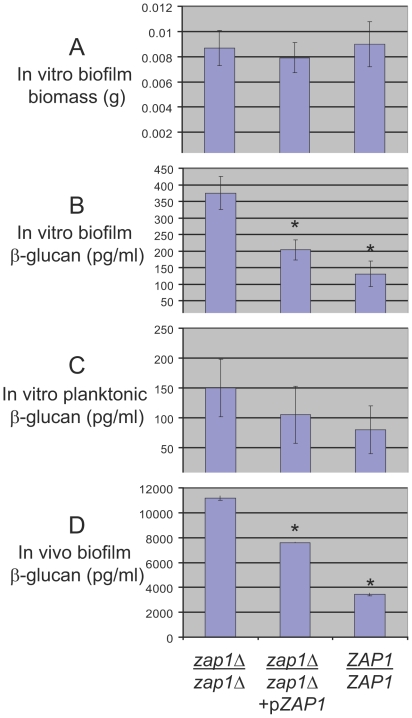
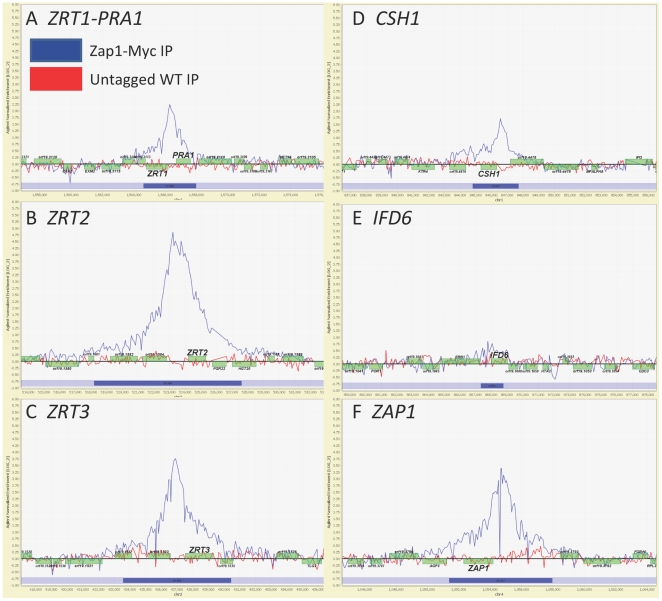
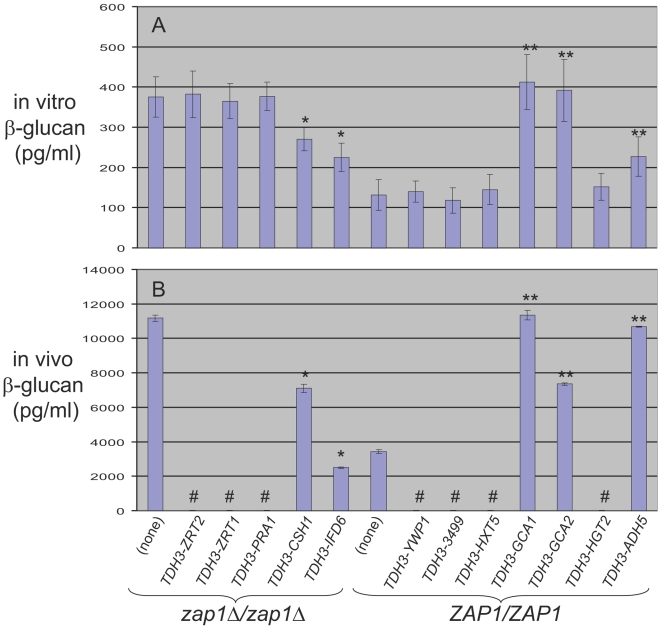
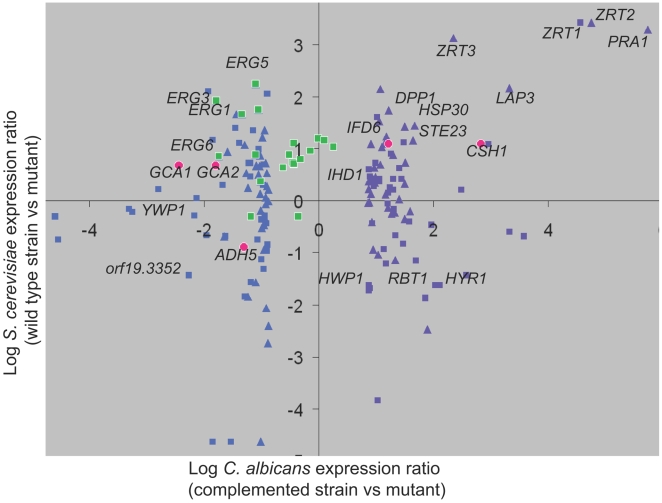
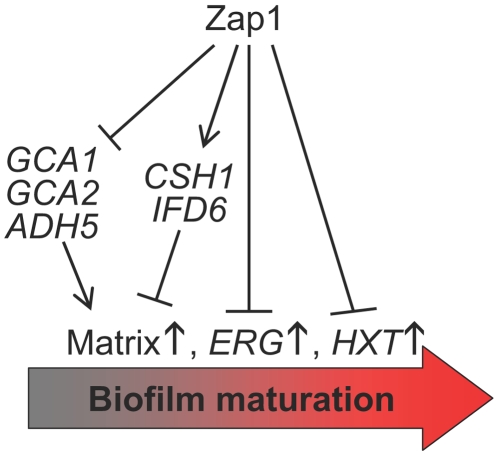
A biofilm is a surface-associated population of microorganisms embedded in a matrix of extracellular polymeric substances. Biofilms are a major natural growth form of microorganisms and the cause of pervasive device-associated infection. This report focuses on the biofilm matrix of Candida albicans, the major fungal pathogen of humans. We report here that the C. albicans zinc-response transcription factor Zap1 is a negative regulator of a major matrix component, soluble beta-1,3 glucan, in both in vitro and in vivo biofilm models. To understand the mechanistic relationship between Zap1 and matrix, we identified Zap1 target genes through expression profiling and full genome chromatin immunoprecipitation. On the basis of these results, we designed additional experiments showing that two glucoamylases, Gca1 and Gca2, have positive roles in matrix production and may function through hydrolysis of insoluble beta-1,3 glucan chains. We also show that a group of alcohol dehydrogenases Adh5, Csh1, and Ifd6 have roles in matrix production: Adh5 acts positively, and Csh1 and Ifd6, negatively. We propose that these alcohol dehydrogenases generate quorum-sensing aryl and acyl alcohols that in turn govern multiple events in biofilm maturation. Our findings define a novel regulatory circuit and its mechanism of control of a process central to infection.
Overview
The claims and statistics of this paper haven’t been checked yet.
Free: it reads the open-access text and checks the first 5 claims that cite a source we can check. Create a free account to check every claim.
Integrity signals
Registry
Cites
Statistics
Figures
Verification
Claims the paper makes
The claims and statistics of this paper haven’t been checked yet.
Free: it reads the open-access text and checks the first 5 claims that cite a source we can check. Create a free account to check every claim.
Claims other papers make about this one
Each is checked against this paper’s own text: does it say what the citing paper says it does?
The source backs part of the claim, not all of it — or backs it for a different population, condition or comparison.
In the citing paper
“Two known transcriptional regulators of biofilm matrix production in C. albicans are Rlm1 and Zap1.”
From Candida albicans Biofilms and Human Disease (2015) · cites this paper as [144]
Experimental — accuracy not yet measuredThe check wasn’t confident either way, so it gives no verdict — never disputed.
In the citing paper
“GCA1 is transcribed during rat oral infection and its transcription is regulated by carbohydrates [67,70].”
From Carbon source‐induced reprogramming of the cell wall proteome and secretome modulates the adherence and drug resistance of the fungal pathogen C andida albicans (2012) · cites this paper as [67]
Experimental — accuracy not yet measuredIn the citing paper
“Deletion of RLM1 causes a reduction in matrix levels (136), whereas deletion of ZAP1 leads to an increase in the accumulation of extracellular matrix material, probably by upregulating the glucoamylases Gca1 and Gca2 (144).”
From Candida albicans Biofilms and Human Disease (2015) · cites this paper as [144]
Self-check
Percentages, sums and reported differences re-computed from the paper’s own numbers.
The self-check needs the paper’s full text.
Citations
Cites
Biofilms: Survival Mechanisms of Clinically Relevant Microorganisms
Donlan, R. M., & Costerton, J. W. (2002) · Clinical Microbiology Reviews · doi:10.1128/cmr.15.2.167-193.2002 · Cited by 6,644 · cited 1×
“intravascular catheters [2].”
Fitting a mixture model by expectation maximization to discover motifs in biopolymers.
Bailey, T. L., & Elkan, C. (1994) · PubMed · Cited by 5,806
Longtine, M. S., Mckenzie III, A., Demarini, D. J., Shah, N. G., Wach, A., Brachat, A., Philippsen, P., & Pringle, J. R. (1998) · Yeast · doi:10.1002/(sici)1097-0061(199807)14:10<953::aid-yea293>3.0.co;2-u · Cited by 5,345 · cited 1×
“PCR was done using template pFA6a13myc-kanMX6 [47] and primers AHO276 and AHO277 to generate a 568-bp product containing a 13myc epitope tag and linker sequences with flanking XhoI sites.”
MethodPhysiological heterogeneity in biofilms
Stewart, P. S., & Franklin, M. J. (2008) · Nature Reviews Microbiology · doi:10.1038/nrmicro1838 · Cited by 2,327 · cited 1×
“albicans cells were grown in biofilms, which are substantially anaerobic [27].”
BackgroundTranscriptional regulatory code of a eukaryotic genome
Harbison, C. T., Gordon, D. B., Lee, T. I., Rinaldi, N. J., Macisaac, K. D., Danford, T. W., Hannett, N. M., Tagne, J.-B., Reynolds, D. B., Yoo, J., et al. (2004) · Nature · doi:10.1038/nature02800 · Cited by 2,143
Biofilms: the matrix revisited
Branda, S. S., Vik, Å., Friedman, L., & Kolter, R. (2005) · Trends in Microbiology · doi:10.1016/j.tim.2004.11.006 · Cited by 1,791 · cited 1×
“Other matrix components include proteins, fatty acids, and nucleic acids [6,7].”
BackgroundHazelwood, L. A., Daran, J.-M., van Maris, A. J. A., Pronk, J. T., & Dickinson, J. R. (2008) · Applied and Environmental Microbiology · doi:10.1128/aem.02625-07 · Cited by 1,547
Biofilm Formation: A Clinically Relevant Microbiological Process
Donlan, R. M. (2001) · Clinical Infectious Diseases · doi:10.1086/322972 · Cited by 1,343 · cited 1×
“Biofilms are common microbial growth forms in nature and are a leading cause of human infection [1].”
BackgroundThe biofilm matrix – an immobilized but dynamic microbial environment
Sutherland, I. (2001) · Trends in Microbiology · doi:10.1016/s0966-842x(01)02012-1 · Cited by 1,265 · cited 2×
“Matrix is a defining characteristic of biofilms [3–6], and has”
BackgroundGötz, F. (2002) · Molecular Microbiology · doi:10.1046/j.1365-2958.2002.02827.x · Cited by 1,178 · cited 1×
“A glistening appearance can be associated with accumulation of extracellular polymers, as in the case of Staphylococcus biofilms [13].”
Background
Cited by
Items 301–340 of 340
Candida albicans Biofilm: Risks, Complications and Preventive Strategies
Pathak, P. (2019) · Springer eBooks · doi:10.1007/978-981-32-9409-7_9 · Cited by 2
Tackling drug resistant pathogenic fungi through antimicrobial nanostructured surfaces
Kollu, N. V. (2020) · NC Digital Online Collection of Knowledge and Scholarship (The University of North Carolina at Greensboro) · Cited by 1
(2009) · Yeast · doi:10.1002/yea.1627
Candida Biofilms: Properties, Antifungal Resistance and Novel Therapeutic Options
Seneviratne, C. J., Truong, T., & Wang, Y. (2017) · Routledge eBooks · doi:10.1201/9781315120119-6 · Cited by 1
(2021) · Elsevier eBooks · doi:10.1016/b978-0-12-816983-4.00003-1
Fungal genomics and transcriptomics
Munro, C. A., & Wilson, D. (2017) · Oxford University Press eBooks · doi:10.1093/med/9780198755388.003.0006
Vila, T. V. M., Montelongo‐Jauregui, D., Romo, J. A., Wall, G., Pierce, C. G., & Lopez-Ribot, J. L. (2016) · Elsevier eBooks · doi:10.1016/b978-0-12-809633-8.12092-8
Álvarez, M. X. C. (2020) · Repositorio Institucional (Pontificia Universidad Javeriana) · doi:10.11144/javeriana.10554.1565
Serena Ngiimei, D., & Tamuli, R. (2024) · Journal of Biosciences · doi:10.1007/s12038-023-00398-4
“2008; Nobile et al .”
Management of Candida albicans infections by lactic acid bacteria
Vikrant, V., Sharma, A., Priyanka, P., & Azmi, W. (2023) · Annals of Phytomedicine An International Journal · doi:10.54085/ap.2023.12.2.8
Candida albicans - Epidemiology and Treatment
Behzadi, P. (2024) · IntechOpen eBooks · doi:10.5772/intechopen.1001505
Wang, Y., Ye, S., Deng, Y., Huang, Y., & Zhu, X. (2025) · Research Square · doi:10.21203/rs.3.rs-5862334/v1
RetractedWang, Y., Ye, S., Deng, Y., Huang, Y., & Zhu, X. (2025) · Research Square · doi:10.21203/rs.3.rs-5862334/v2
RetractedLi, N., Li, J., Chen, Y., Shen, Y., Wei, D., & Wang, W. (2023) · Figshare · doi:10.6084/m9.figshare.22721290
Li, N., Li, J., Chen, Y., Shen, Y., Wei, D., & Wang, W. (2023) · Figshare · doi:10.6084/m9.figshare.22721275
Li, N., Li, J., Chen, Y., Shen, Y., Wei, D., & Wang, W. (2023) · Figshare · doi:10.6084/m9.figshare.22721287
Li, N., Li, J., Chen, Y., Shen, Y., Wei, D., & Wang, W. (2023) · Figshare · doi:10.6084/m9.figshare.22721284
Li, N., Li, J., Chen, Y., Shen, Y., Wei, D., & Wang, W. (2023) · Figshare · doi:10.6084/m9.figshare.22721296
Li, N., Li, J., Chen, Y., Shen, Y., Wei, D., & Wang, W. (2023) · Figshare · doi:10.6084/m9.figshare.22721302
Li, N., Li, J., Chen, Y., Shen, Y., Wei, D., & Wang, W. (2023) · Figshare · doi:10.6084/m9.figshare.22721281
Li, N., Li, J., Chen, Y., Shen, Y., Wei, D., & Wang, W. (2023) · Figshare · doi:10.6084/m9.figshare.22721293
Li, N., Li, J., Chen, Y., Shen, Y., Wei, D., & Wang, W. (2023) · Figshare · doi:10.6084/m9.figshare.22721278
Li, N., Li, J., Chen, Y., Shen, Y., Wei, D., & Wang, W. (2023) · Figshare · doi:10.6084/m9.figshare.22721299
Li, N., Li, J., Chen, Y., Shen, Y., Wei, D., & Wang, W. (2023) · Figshare · doi:10.6084/m9.figshare.22721272
da Rosa, C. D. (2022) · LA Referencia (Red Federada de Repositorios Institucionales de Publicaciones Científicas)
Iwuchukwu, N. C. (2024) · Spectrum Research Repository (Concordia University)
Eco-friendly biofilm disruption: rhamnolipids as a novel antifungal agent
Rao, P., Rajan, R., Raghavendra, V., & Bhuyan, A. D. (2026) · Proceedings of the Indian National Science Academy · doi:10.1007/s43538-026-00698-x
Bezrodny, S. L. (2026) · Medical alphabet · doi:10.33667/2078-5631-2025-34-7-14
Cai, R., & Gu, J. (2026) · Journal of Fungi · doi:10.3390/jof12030174
Loiselet, A. (2019) · theses.fr (ABES) · doi:10.70675/8960b3ecz4598z4c60za01cz9399c6404ab8
Caractérisation du mode de vie biofilm chez la levure d’altération Brettanomyces bruxellensis
Lebleux, M. (2022) · theses.fr (ABES) · doi:10.70675/1d6f1ef3z7c31z488dza4cbzfa6befcd9dba · Cited by 1
Antifungal peptides for biofilm disruption: Mechanisms, design strategies, and translational outlook
Saini, Y., Wani, M. Y., & Hameed, S. (2026) · Microbial Pathogenesis · doi:10.1016/j.micpath.2026.108601 · Cited by 1
Yao, J. L., Yang, Z., Hang, X., Chen, T., Li, B., Shi, T., Quan, K., Xu, J., Zeng, L., Feng, G., et al. (2026) · Virulence · doi:10.1080/21505594.2026.2682573
“The exception was ifd6 , a negative regulator of biofilm formation [35], which was upregulated.”
Hamarsha, A. M., Atatra, M., Watted, N., Irekeola, A. A., Sulaiman, M. M., & Hasbullah, N. (2026) · International Journal of Molecular Sciences · doi:10.3390/ijms27209031
“…matrix assembly or biofilm-phase tolerance, notwithstanding that the β -1,3-glucan matrix is the important determinant of antifungal tolerance in Candida biofilms [50,51,54], and that tolerance mechanisms themselves shift from efflux-mediated to sterol-mediated with biofilm maturation [53,54].”
Olivier, F. A. B., Renshaw, J. L., Kraupner-Taylor, C. A., Swaminathan, A., Harrison, P. F., Beilharz, T. H., & Traven, A. (2026) · Research Square · doi:10.21203/rs.3.rs-11227287/v1
Bezrodny, S. L. (2025) · Medical alphabet
Shen, Q., Nong, Y., Miao, Z., Ma, J., Peng, L., Chen, S., & Wang, F. (2026) · Virulence · doi:10.1080/21505594.2026.2753296
Metadata
- Authors
- Nobile, C. J., Nett, J. E., Hernday, A. D., Homann, O. R., Deneault, J.-S., Nantel, A., Andes, D. R., Johnson, A. D., & Mitchell, A. P.
- Affiliations
- University of California, San Francisco (US)
- University of Wisconsin–Madison (US)
- Carnegie Mellon University (US)
- Corresponding author
- Mitchell, Aaron P.
- ORCID
- Venue
- PLoS Biology
- Publisher
- Public Library of Science (PLoS)
- Published
- 2009-06-16
- Volume
- 7
- Issue
- 6
- Pages
- e1000133
- ISSN
- 1544-9173 (ISSN-L)
- 1545-7885
- PMC
- PMC2688839
- OpenAlex
- W2106769310
- Cited by
- 337
- References
- 54
- Citations by year
- 2026: 11 · 2025: 7 · 2024: 22 · 2023: 35 · 2022: 14 · 2021: 13 · 2020: 26 · 2019: 16 · 2018: 12 · 2017: 26 · 2016: 23 · 2015: 26 · 2014: 23 · 2013: 17 · 2012: 30
- FWCI
- 15.18
- Type
- journal article
- Language
- en
- Open access
- gold
- doi.org
- Locations
- PLoS Biology (publishedVersion, cc-by)
- Europe PMC (PubMed Central) (publishedVersion, cc-by)
- PubMed Central (publishedVersion, cc-by)
- PubMed (publishedVersion)
- NPARC (submittedVersion)
- DOAJ (DOAJ: Directory of Open Access Journals) (submittedVersion)
- eScholarship (California Digital Library) (submittedVersion)
- Figshare (submittedVersion, cc-by)
- Funders
- National Institutes of Health
- National Heart, Lung, and Blood Institute (T32HL007899)
- National Institute of Allergy and Infectious Diseases (R01AI049187, K08 AI01767, R01AI067703, K08AI001767, R01 AI 49187, R01AI073289)
- Topics
- Health Sciences › Medicine › Infectious Diseases › Antifungal resistance and susceptibility
- Life Sciences › Biochemistry, Genetics and Molecular Biology › Molecular Biology › Fungal and yeast genetics research
- Life Sciences › Biochemistry, Genetics and Molecular Biology › Molecular Biology › Bacterial biofilms and quorum sensing
- Keywords
- Candida albicans, biofilm matrix, Zap1, β-1,3-glucan, glucoamylase, alcohol dehydrogenase, ADH5, quorum sensing, transcriptional regulation, biofilm maturation, fungal virulence
- MeSH terms
- Binding Sites, Candida albicans, Fungal Proteins, Genes, Fungal, Microscopy, Electron, Scanning, Saccharomyces cerevisiae, Gene Expression Regulation, Fungal, Regulon, Biofilms, Microscopy, Confocal, Chromatin Immunoprecipitation
About these checks
Registry, retraction, Cites and statistics results are computed, not judged, with one exception: a printed reference that no index lists is read once by a model before it counts as a citation error. Claims are extracted by a model and kept only when their quote appears verbatim in the text; each cited source is then checked, with a model’s help, for whether it says what the claim relies on. Those verdicts can be wrong — read the claim’s quote and the cited source before relying on one.
Statistics and arithmetic are recomputed, not judged.
Confidence bands are shown only for fields calibrated on our annotated test set. None is calibrated yet, so no band is shown.
What counts as a claim ›How we measure confidence ›How we check this ›
Are you an author, or do you see a problem with this page? Request a review
Data sources
Bibliographic data: Semantic Scholar, OpenAlex, Crossref.
Contains information from the Semantic Scholar Academic Graph Datasets, made available under the ODC Attribution License (ODC-BY 1.0).
Semantic Scholar’s data is described in: Kinney, R., et al. (2023). The Semantic Scholar Open Data Platform. arXiv:2301.10140.
