

Biofilm Matrix Regulation by Candida albicans Zap1
Open accessThe DOI matches its Crossref record; 54 of the 54 references it cites were found in a registry or an index.
Abstract
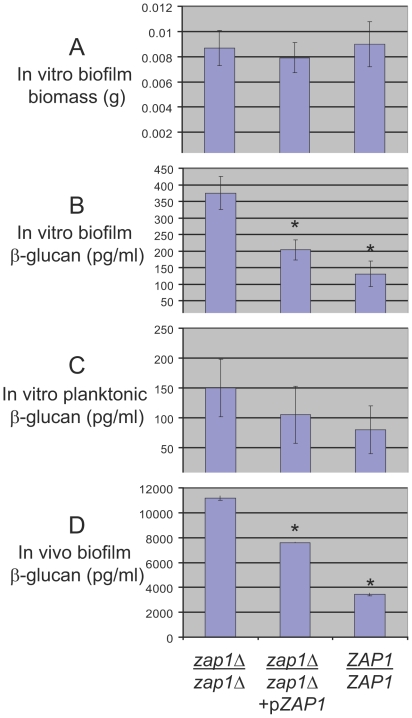
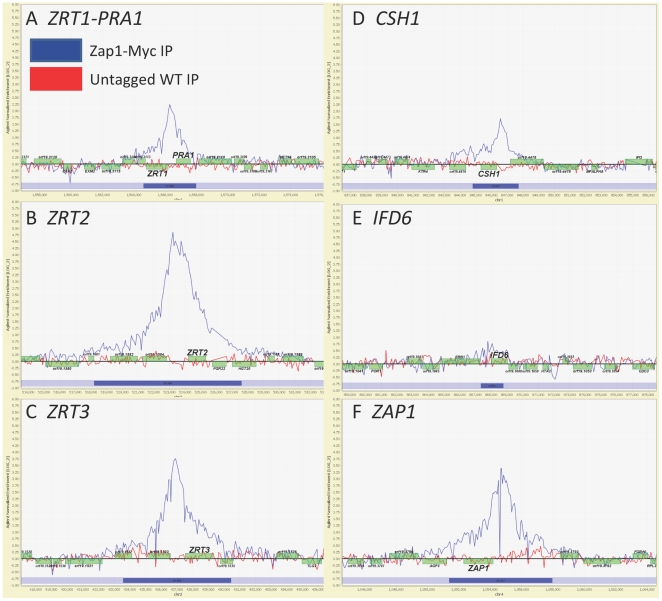
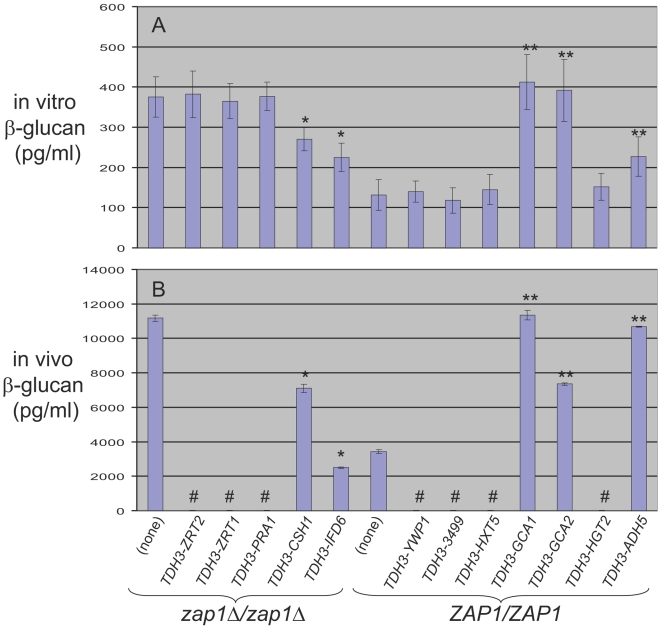
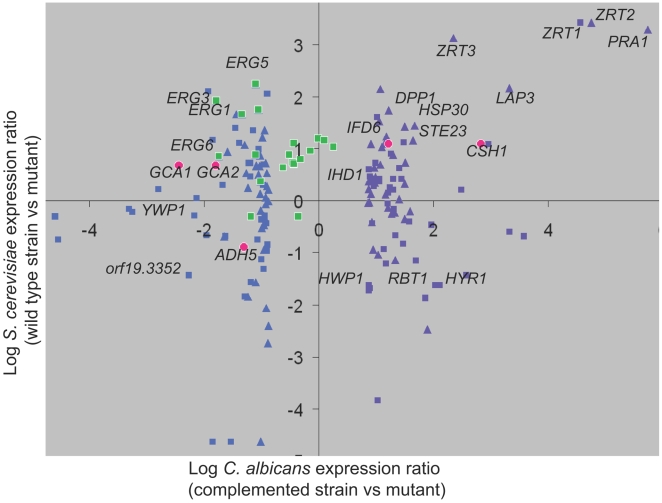
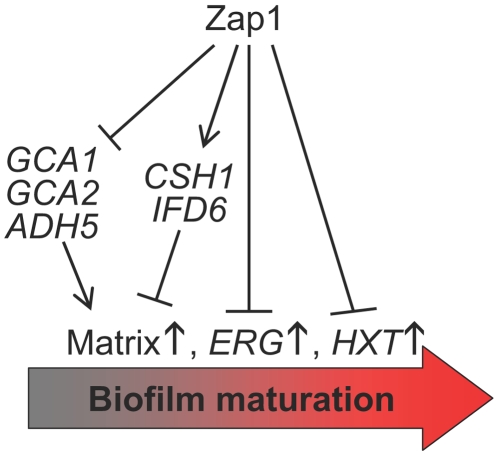
A biofilm is a surface-associated population of microorganisms embedded in a matrix of extracellular polymeric substances. Biofilms are a major natural growth form of microorganisms and the cause of pervasive device-associated infection. This report focuses on the biofilm matrix of Candida albicans, the major fungal pathogen of humans. We report here that the C. albicans zinc-response transcription factor Zap1 is a negative regulator of a major matrix component, soluble beta-1,3 glucan, in both in vitro and in vivo biofilm models. To understand the mechanistic relationship between Zap1 and matrix, we identified Zap1 target genes through expression profiling and full genome chromatin immunoprecipitation. On the basis of these results, we designed additional experiments showing that two glucoamylases, Gca1 and Gca2, have positive roles in matrix production and may function through hydrolysis of insoluble beta-1,3 glucan chains. We also show that a group of alcohol dehydrogenases Adh5, Csh1, and Ifd6 have roles in matrix production: Adh5 acts positively, and Csh1 and Ifd6, negatively. We propose that these alcohol dehydrogenases generate quorum-sensing aryl and acyl alcohols that in turn govern multiple events in biofilm maturation. Our findings define a novel regulatory circuit and its mechanism of control of a process central to infection.
Overview
The claims and statistics of this paper haven’t been checked yet.
Free: it reads the open-access text and checks the first 5 claims that cite a source we can check. Create a free account to check every claim.
Integrity signals
Registry
Cites
Statistics
Figures
Verification
Claims the paper makes
The claims and statistics of this paper haven’t been checked yet.
Free: it reads the open-access text and checks the first 5 claims that cite a source we can check. Create a free account to check every claim.
Claims other papers make about this one
Each is checked against this paper’s own text: does it say what the citing paper says it does?
The source backs part of the claim, not all of it — or backs it for a different population, condition or comparison.
In the citing paper
“Two known transcriptional regulators of biofilm matrix production in C. albicans are Rlm1 and Zap1.”
From Candida albicans Biofilms and Human Disease (2015) · cites this paper as [144]
Experimental — accuracy not yet measuredThe check wasn’t confident either way, so it gives no verdict — never disputed.
In the citing paper
“GCA1 is transcribed during rat oral infection and its transcription is regulated by carbohydrates [67,70].”
From Carbon source‐induced reprogramming of the cell wall proteome and secretome modulates the adherence and drug resistance of the fungal pathogen C andida albicans (2012) · cites this paper as [67]
Experimental — accuracy not yet measuredIn the citing paper
“Deletion of RLM1 causes a reduction in matrix levels (136), whereas deletion of ZAP1 leads to an increase in the accumulation of extracellular matrix material, probably by upregulating the glucoamylases Gca1 and Gca2 (144).”
From Candida albicans Biofilms and Human Disease (2015) · cites this paper as [144]
Self-check
Percentages, sums and reported differences re-computed from the paper’s own numbers.
The self-check needs the paper’s full text.
Citations
Cites
Biofilms: Survival Mechanisms of Clinically Relevant Microorganisms
Donlan, R. M., & Costerton, J. W. (2002) · Clinical Microbiology Reviews · doi:10.1128/cmr.15.2.167-193.2002 · Cited by 6,644 · cited 1×
“intravascular catheters [2].”
Fitting a mixture model by expectation maximization to discover motifs in biopolymers.
Bailey, T. L., & Elkan, C. (1994) · PubMed · Cited by 5,806
Longtine, M. S., Mckenzie III, A., Demarini, D. J., Shah, N. G., Wach, A., Brachat, A., Philippsen, P., & Pringle, J. R. (1998) · Yeast · doi:10.1002/(sici)1097-0061(199807)14:10<953::aid-yea293>3.0.co;2-u · Cited by 5,345 · cited 1×
“PCR was done using template pFA6a13myc-kanMX6 [47] and primers AHO276 and AHO277 to generate a 568-bp product containing a 13myc epitope tag and linker sequences with flanking XhoI sites.”
MethodPhysiological heterogeneity in biofilms
Stewart, P. S., & Franklin, M. J. (2008) · Nature Reviews Microbiology · doi:10.1038/nrmicro1838 · Cited by 2,327 · cited 1×
“albicans cells were grown in biofilms, which are substantially anaerobic [27].”
BackgroundTranscriptional regulatory code of a eukaryotic genome
Harbison, C. T., Gordon, D. B., Lee, T. I., Rinaldi, N. J., Macisaac, K. D., Danford, T. W., Hannett, N. M., Tagne, J.-B., Reynolds, D. B., Yoo, J., et al. (2004) · Nature · doi:10.1038/nature02800 · Cited by 2,143
Biofilms: the matrix revisited
Branda, S. S., Vik, Å., Friedman, L., & Kolter, R. (2005) · Trends in Microbiology · doi:10.1016/j.tim.2004.11.006 · Cited by 1,791 · cited 1×
“Other matrix components include proteins, fatty acids, and nucleic acids [6,7].”
BackgroundHazelwood, L. A., Daran, J.-M., van Maris, A. J. A., Pronk, J. T., & Dickinson, J. R. (2008) · Applied and Environmental Microbiology · doi:10.1128/aem.02625-07 · Cited by 1,547
Biofilm Formation: A Clinically Relevant Microbiological Process
Donlan, R. M. (2001) · Clinical Infectious Diseases · doi:10.1086/322972 · Cited by 1,343 · cited 1×
“Biofilms are common microbial growth forms in nature and are a leading cause of human infection [1].”
BackgroundThe biofilm matrix – an immobilized but dynamic microbial environment
Sutherland, I. (2001) · Trends in Microbiology · doi:10.1016/s0966-842x(01)02012-1 · Cited by 1,265 · cited 2×
“Matrix is a defining characteristic of biofilms [3–6], and has”
BackgroundGötz, F. (2002) · Molecular Microbiology · doi:10.1046/j.1365-2958.2002.02827.x · Cited by 1,178 · cited 1×
“A glistening appearance can be associated with accumulation of extracellular polymers, as in the case of Staphylococcus biofilms [13].”
BackgroundCandida biofilms and their role in infection
Douglas, L. J. (2003) · Trends in Microbiology · doi:10.1016/s0966-842x(02)00002-1 · Cited by 1,150 · cited 2×
“albicans biofilm growth is associated with overall upregulation of ergosterol biosynthesis [24] as well as increased resistance to antifungals that target ergosterol [7,25].”
BackgroundThe Chemical Genomic Portrait of Yeast: Uncovering a Phenotype for All Genes
Hillenmeyer, M. E., Fung, E., Wildenhain, J., Pierce, S. E., Hoon, S., Lee, W., Proctor, M., St.Onge, R. P., Tyers, M., Koller, D., et al. (2008) · Science · doi:10.1126/science.1150021 · Cited by 1,003 · cited 1×
“cerevisiae zap1D/ZAP1 heterozygous diploid is hypersensitive to ergosterol biosynthetic inhibitors [26].”
BackgroundQuorum Sensing in the Dimorphic Fungus Candida albicans Is Mediated by Farnesol
Hornby, J. M., Jensen, E. C., Lisec, A. D., Tasto, J. J., Jahnke, B., Shoemaker, R., Dussault, P., & Nickerson, K. W. (2001) · Applied and Environmental Microbiology · doi:10.1128/aem.67.7.2982-2992.2001 · Cited by 983 · cited 1×
“Growth of yeast-form cells and chlamydospores is promoted by the quorum-sensing molecule farnesol [35,38,39].”
BackgroundSuppression of Hyphal Formation in Candida albicans by Mutation of a STE12 Homolog
Liu, H., Köhler, J., & Fink, G. R. (1994) · Science · doi:10.1126/science.7992058 · Cited by 786 · cited 1×
“Biofilms for visualization were grown using Spider medium [41].”
MethodRapid Hypothesis Testing with Candida albicans through Gene Disruption with Short Homology Regions
Wilson, R. B., Davis, D., & Mitchell, A. P. (1999) · Journal of Bacteriology · doi:10.1128/jb.181.6.1868-1874.1999 · Cited by 762 · cited 3×
“Construction of CJN1091 (zap1/zap1) was made by PCR product-directed gene deletion [43] with 120-mer oligonucleotides CSR1null-5DR and CSR1null-3DR via consecutive rounds of transformation into BWP17.”
MethodInfluentialSelf-citationThe SAT1 flipper, an optimized tool for gene disruption in Candida albicans
Reuß, O., Vik, Å., Kolter, R., & Morschhäuser, J. (2004) · Gene · doi:10.1016/j.gene.2004.06.021 · Cited by 742
van Helden, J., André, B., & Collado-Vides, J. (1998) · Journal of Molecular Biology · doi:10.1006/jmbi.1998.1947 · Cited by 741
Inhibition of Candida albicans Biofilm Formation by Farnesol, a Quorum-Sensing Molecule
Ramage, G., Saville, S. P., Wickes, B. L., & López-Ribot, J. L. (2002) · Applied and Environmental Microbiology · doi:10.1128/aem.68.11.5459-5463.2002 · Cited by 701 · cited 1×
“The acyl alcohol farnesol also accumulates during biofilm maturation [34] and inhibits hyphal growth and biofilm formation [35–37].”
BackgroundAl-Fattani, M. A., & Douglas, L. J. (2006) · Journal of Medical Microbiology · doi:10.1099/jmm.0.46569-0 · Cited by 548 · cited 3×
“biochemically [8,17], but its biogenesis and regulation have remained elusive.”
BackgroundHow to build a biofilm: a fungal perspective
Blankenship, J. R., & Mitchell, A. P. (2006) · Current Opinion in Microbiology · doi:10.1016/j.mib.2006.10.003 · Cited by 530 · cited 1×
“mature biofilms by accumulation of quorum-sensing molecules [4,32,34] to facilitate biofilm dispersal.”
BackgroundSelf-citationCritical Role of Bcr1-Dependent Adhesins in C. albicans Biofilm Formation In Vitro and In Vivo
Nobile, C. J., Andes, D. R., Nett, J. E., Smith, F. J., Yue, F., Phan, Q.-T., Edwards, J. E., Filler, S. G., & Mitchell, A. P. (2006) · PLoS Pathogens · doi:10.1371/journal.ppat.0020063 · Cited by 507 · cited 2×
“albicans strains and selection on YPD+clonNAT400 plates has been described [46].”
BackgroundMethodSelf-citationTyrosol is a quorum-sensing molecule in Candida albicans
Chen, H., Fujita, M., Feng, Q., Clardy, J., & Fink, G. R. (2004) · Proceedings of the National Academy of Sciences · doi:10.1073/pnas.0401416101 · Cited by 498
Regulation of Cell-Surface Genes and Biofilm Formation by the C. albicans Transcription Factor Bcr1p
Nobile, C. J., & Mitchell, A. P. (2005) · Current Biology · doi:10.1016/j.cub.2005.05.047 · Cited by 464 · cited 5×
“albicans transcription factor gene insertion mutants for defects in biofilm formation [12].”
BackgroundMethodInfluentialSelf-citationPutative Role of β-1,3 Glucans in Candida albicans Biofilm Resistance
Nett, J., Lincoln, L., Marchillo, K., Massey, R., Holoyda, K., Hoff, B., VanHandel, M., & Andes, D. (2007) · Antimicrobial Agents and Chemotherapy · doi:10.1128/aac.01056-06 · Cited by 407 · cited 3×
“The distal 2 cm of the catheter was cut from the entire catheter length, and biofilms were imaged by SEM at 506 and 1,0006magnification, as described previously [9].”
BackgroundMethodSelf-citationBaillie, G. S. (2000) · Journal of Antimicrobial Chemotherapy · doi:10.1093/jac/46.3.397 · Cited by 389 · cited 1×
“biochemically [8,17], but its biogenesis and regulation have remained elusive.”
BackgroundAndes, D., Nett, J., Oschel, P., Albrecht, R., Marchillo, K., & Pitula, A. (2004) · Infection and Immunity · doi:10.1128/iai.72.10.6023-6031.2004 · Cited by 389 · cited 2×
“In order to determine whether Zap1 may play a role in biofilm formation in vivo, we turned to a rat model for catheter-associated infection [14].”
BackgroundMethodSelf-citationGarcía-Sánchez, S., Aubert, S., Iraqui, I., Janbon, G., Ghigo, J.-M., & d'Enfert, C. (2004) · Eukaryotic Cell · doi:10.1128/ec.3.2.536-545.2004 · Cited by 353 · cited 3×
“Zap1 is a negative regulator of two gene classes—ERG genes and HXT genes—that that are upregulated during biofilm development [24].”
BackgroundGenome-wide characterization of the Zap1p zinc-responsive regulon in yeast
Lyons, T. J., Gasch, A. P., Gaither, L. A., Botstein, D., Brown, P. O., & Eide, D. J. (2000) · Proceedings of the National Academy of Sciences · doi:10.1073/pnas.97.14.7957 · Cited by 300
Interlocking Transcriptional Feedback Loops Control White-Opaque Switching in Candida albicans
Zordan, R. E., Miller, M. G., Galgoczy, D. J., Tuch, B. B., & Johnson, A. D. (2007) · PLoS Biology · doi:10.1371/journal.pbio.0050256 · Cited by 292 · cited 1×
“The following cell lysis and ChIP–chip methods were adapted from previously described protocols [49,50].”
MethodSelf-citationZhao, H., & Eide, D. J. (1997) · Molecular and Cellular Biology · doi:10.1128/mcb.17.9.5044 · Cited by 276
Candida albicans RIM101 pH Response Pathway Is Required for Host-Pathogen Interactions
Davis, D., Edwards, J. E., Mitchell, A. P., & Ibrahim, A. S. (2000) · Infection and Immunity · doi:10.1128/iai.68.10.5953-5959.2000 · Cited by 274 · cited 1×
“Reference strain DAY185 has been described [42].”
Self-citationAlem, M. A. S., Oteef, M. D. Y., Flowers, T. H., & Douglas, L. J. (2006) · Eukaryotic Cell · doi:10.1128/ec.00219-06 · Cited by 254 · cited 2×
“mature biofilms by accumulation of quorum-sensing molecules [4,32,34] to facilitate biofilm dispersal.”
BackgroundALTERNATIVE CANDIDA ALBICANS LIFESTYLES: Growth on Surfaces
Kumamoto, C. A., & Vinces, M. D. (2005) · Annual Review of Microbiology · doi:10.1146/annurev.micro.59.030804.121034 · Cited by 237 · cited 1×
“albicans biofilm growth is associated with overall upregulation of ergosterol biosynthesis [24] as well as increased resistance to antifungals that target ergosterol [7,25].”
BackgroundThe evolution of combinatorial gene regulation in fungi
Tuch, B. B., Galgoczy, D. J., Hernday, A. D., Li, H., & Johnson, A. D. (2008) · PLoS Biology · doi:10.1371/journal.pbio.0060038 · Cited by 228 · cited 2×
“Analysis and identification of the binding events in the ChIP–chip data were determined as previously described [49] using Agilent Chip Analytics software v1.”
MethodSelf-citationCao, Y.-Y., Cao, Y.-B., Xu, Z., Ying, K., Li, Y., Xie, Y., Zhu, Z.-Y., Chen, W.-S., & Jiang, Y.-Y. (2005) · Antimicrobial Agents and Chemotherapy · doi:10.1128/aac.49.2.584-589.2005 · Cited by 222 · cited 1×
“Growth of yeast-form cells and chlamydospores is promoted by the quorum-sensing molecule farnesol [35,38,39].”
BackgroundZhao, H., Butler, E., Rodgers, J., Spizzo, T., Duesterhoeft, S., & Eide, D. (1998) · Journal of Biological Chemistry · doi:10.1074/jbc.273.44.28713 · Cited by 180 · cited 2×
“All are similar to the known S. cerevisiae Zap1 binding motif, ACCTTNAAGGT [21,22], particularly because the greatest specificity is for the motif ends ACC and GGT [23].”
BackgroundOh, K.-B., Miyazawa, H., Naito, T., & Matsuoka, H. (2001) · Proceedings of the National Academy of Sciences · doi:10.1073/pnas.071404698 · Cited by 160 · cited 1×
“The acyl alcohol farnesol also accumulates during biofilm maturation [34] and inhibits hyphal growth and biofilm formation [35–37].”
BackgroundNobile, C. J., Solis, N., Myers, C. L., Fay, A. J., Deneault, J.-S., Nantel, A., Mitchell, A. P., & Filler, S. G. (2008) · Cellular Microbiology · doi:10.1111/j.1462-5822.2008.01198.x · Cited by 150
Self-citationMukherjee, P. K., Mohamed, S., Chandra, J., Kuhn, D., Liu, S., Antar, O. S., Munyon, R., Mitchell, A. P., Andes, D., Chance, M. R., et al. (2006) · Infection and Immunity · doi:10.1128/iai.00161-06 · Cited by 143 · cited 1×
“Ethanol is known to accumulate in mature biofilms [30] and thus may serve as a potential source of carbon.”
BackgroundSelf-citationMartins, M., Henriques, M., Azeredo, J., Rocha, S. M., Coimbra, M. A., & Oliveira, R. (2007) · Eukaryotic Cell · doi:10.1128/ec.00252-07 · Cited by 126 · cited 3×
“mature biofilms by accumulation of quorum-sensing molecules [4,32,34] to facilitate biofilm dispersal.”
BackgroundRoles of Candida albicans Dfg5p and Dcw1p Cell Surface Proteins in Growth and Hypha Formation
Spreghini, E., Davis, D. A., Subaran, R., Kim, M., & Mitchell, A. P. (2003) · Eukaryotic Cell · doi:10.1128/ec.2.4.746-755.2003 · Cited by 114 · cited 1×
“cerevisiae into NotI- and EcoRI-digested HIS1 vector pDDB78 [44], yielding plasmid pCJN517.”
BackgroundSelf-citationWu, C.-Y., Bird, A. J., Chung, L. M., Newton, M. A., Winge, D. R., & Eide, D. J. (2008) · BMC Genomics · doi:10.1186/1471-2164-9-370 · Cited by 97 · cited 1×
“limitation [19].”
Lai, L.-C., Kosorukoff, A. L., Burke, P. V., & Kwast, K. E. (2006) · Eukaryotic Cell · doi:10.1128/ec.00107-06 · Cited by 97 · cited 1×
“It is well established that ERG gene expression responds to oxygen levels [28], a reflection of the heme requirement for ergosterol synthesis.”
Backgroundβ‐1,3 Glucan as a Test for Central Venous Catheter Biofilm Infection
Nett, J., Lincoln, L., Marchillo, K., & Andes, D. (2007) · The Journal of Infectious Diseases · doi:10.1086/517522 · Cited by 93 · cited 2×
“Supernatants collected for b-1,3 glucan measurements were grown in suspension or as biofilms in RPMI-MOPS medium for 12 h at 37uC, as described previously [10].”
MethodSelf-citationBird, A. J., Blankman, E., Stillman, D. J., Eide, D. J., & Winge, D. R. (2004) · The EMBO Journal · doi:10.1038/sj.emboj.7600122 · Cited by 79 · cited 1×
“cerevisiae Zap1 can function as a repressor [16], we did not detect C.”
BackgroundKim, M. J., Kil, M., Jung, J., & Kim, J. (2008) · PubMed · Cited by 76
Microbial biofilms: e pluribus unum
Nobile, C. J., & Mitchell, A. P. (2007) · Current Biology · doi:10.1016/j.cub.2007.02.035 · Cited by 74 · cited 2×
“well as lysis of a fraction of biofilm cells [5].”
BackgroundSelf-citationMartin, S. W., Douglas, L. M., & Konopka, J. B. (2005) · Eukaryotic Cell · doi:10.1128/ec.4.7.1191-1202.2005 · Cited by 66 · cited 1×
“Growth of yeast-form cells and chlamydospores is promoted by the quorum-sensing molecule farnesol [35,38,39].”
BackgroundEvans‐Galea, M. V., Blankman, E., Myszka, D. G., Bird, A. J., Eide, D. J., & Winge, D. R. (2003) · Biochemistry · doi:10.1021/bi0263199 · Cited by 33 · cited 4×
“All are similar to the known S. cerevisiae Zap1 binding motif, ACCTTNAAGGT [21,22], particularly because the greatest specificity is for the motif ends ACC and GGT [23].”
BackgroundInfluentialZinc-Regulated Biosynthesis of Immunodominant Antigens from Aspergillus spp
Segurado, M., López-Aragón, R., Calera, J. A., Fernández-Abalos, J. M., & Leal, F. (1999) · Infection and Immunity · doi:10.1128/iai.67.5.2377-2382.1999 · Cited by 28 · cited 1×
“cerevisiae Zps1, is also closely related to the Aspergillus fumigatus antigen ASPF2 (44% identity over 294 amino acid residues), which is induced under low zinc conditions [20].”
BackgroundMicroarrays for Studying Pathogenicity in Candida Albicans
Nantel, A., Rigby, T., Hogues, H., & Whiteway, M. (2006) · Medical Mycology · doi:10.1002/9780470057414.ch9 · Cited by 24
Self-citationSturtevant, J., Dixon, F., Wadsworth, E., Latge, J.-P., Zhao, X.-J., & Calderone, R. (1999) · Medical Mycology · doi:10.1046/j.1365-280x.1999.00244.x · Cited by 19
Cao, Yy, Yb, Xu, Ying, Y., Xie, X., Zhu, Z., Zy, Chen, Ws, et al. (2006) · 第二军医大学学报 · Cited by 19
Sturtevant, J. E., Dixon, F., Wadsworth, E., et al. (2008) · Medical Mycology · doi:10.1111/j.1365-280x.1999.00244.x · Cited by 2
Cited by
Candida albicans pathogenicity mechanisms
Mayer, F. L., Wilson, D., & Hube, B. (2013) · Virulence · doi:10.4161/viru.22913 · Cited by 1,848
Candida albicans Biofilms and Human Disease
Nobile, C. J., & Johnson, A. D. (2015) · Annual Review of Microbiology · doi:10.1146/annurev-micro-091014-104330 · Cited by 1,057
Self-citationCandida albicans biofilms: development, regulation, and molecular mechanisms
Gulati, M., & Nobile, C. J. (2016) · Microbes and Infection · doi:10.1016/j.micinf.2016.01.002 · Cited by 738
“Deletion of RLM1 causes a reduction in 319 matrix levels [39], while deletion of ZAP1, leads to an increase in the accumulation of 320 extracellular matrix material, probably by upregulating two glucoamylase enzymes, 321 Gca1 and Gca2 [40].”
BackgroundSelf-citationA Recently Evolved Transcriptional Network Controls Biofilm Development in Candida albicans
Nobile, C. J., Fox, E. P., Nett, J. E., Sorrells, T. R., Mitrovich, Q. M., Hernday, A. D., Tuch, B. B., Andes, D. R., & Johnson, A. D. (2012) · Cell · doi:10.1016/j.cell.2011.10.048 · Cited by 711
“…transcription regulator and differential gene expression, we find a range of 38%–56%, comparable to or greater than the associations documented for other C. albicans transcription regulators (Askew et al., 2011; Lavoie et al., 2010; Nobile et al., 2009; Sellam et al., 2009; Tuch et al., 2010).”
BackgroundResultInfluentialSelf-citationCandida Biofilms: Threats, Challenges, and Promising Strategies
Cavalheiro, M., & Teixeira, M. C. (2018) · Frontiers in Medicine · doi:10.3389/fmed.2018.00028 · Cited by 690
“Csr1 has also been found to participate in the control of filamentous growth (87).”
Background
Metadata
- Authors
- Nobile, C. J., Nett, J. E., Hernday, A. D., Homann, O. R., Deneault, J.-S., Nantel, A., Andes, D. R., Johnson, A. D., & Mitchell, A. P.
- Affiliations
- University of California, San Francisco (US)
- University of Wisconsin–Madison (US)
- Carnegie Mellon University (US)
- Corresponding author
- Mitchell, Aaron P.
- ORCID
- Venue
- PLoS Biology
- Publisher
- Public Library of Science (PLoS)
- Published
- 2009-06-16
- Volume
- 7
- Issue
- 6
- Pages
- e1000133
- ISSN
- 1544-9173 (ISSN-L)
- 1545-7885
- PMC
- PMC2688839
- OpenAlex
- W2106769310
- Cited by
- 337
- References
- 54
- Citations by year
- 2026: 11 · 2025: 7 · 2024: 22 · 2023: 35 · 2022: 14 · 2021: 13 · 2020: 26 · 2019: 16 · 2018: 12 · 2017: 26 · 2016: 23 · 2015: 26 · 2014: 23 · 2013: 17 · 2012: 30
- FWCI
- 15.18
- Type
- journal article
- Language
- en
- Open access
- gold
- doi.org
- Locations
- PLoS Biology (publishedVersion, cc-by)
- Europe PMC (PubMed Central) (publishedVersion, cc-by)
- PubMed Central (publishedVersion, cc-by)
- PubMed (publishedVersion)
- NPARC (submittedVersion)
- DOAJ (DOAJ: Directory of Open Access Journals) (submittedVersion)
- eScholarship (California Digital Library) (submittedVersion)
- Figshare (submittedVersion, cc-by)
- Funders
- National Institutes of Health
- National Heart, Lung, and Blood Institute (T32HL007899)
- National Institute of Allergy and Infectious Diseases (R01AI049187, K08 AI01767, R01AI067703, K08AI001767, R01 AI 49187, R01AI073289)
- Topics
- Health Sciences › Medicine › Infectious Diseases › Antifungal resistance and susceptibility
- Life Sciences › Biochemistry, Genetics and Molecular Biology › Molecular Biology › Fungal and yeast genetics research
- Life Sciences › Biochemistry, Genetics and Molecular Biology › Molecular Biology › Bacterial biofilms and quorum sensing
- Keywords
- Candida albicans, biofilm matrix, Zap1, β-1,3-glucan, glucoamylase, alcohol dehydrogenase, ADH5, quorum sensing, transcriptional regulation, biofilm maturation, fungal virulence
- MeSH terms
- Binding Sites, Candida albicans, Fungal Proteins, Genes, Fungal, Microscopy, Electron, Scanning, Saccharomyces cerevisiae, Gene Expression Regulation, Fungal, Regulon, Biofilms, Microscopy, Confocal, Chromatin Immunoprecipitation
About these checks
Registry, retraction, Cites and statistics results are computed, not judged, with one exception: a printed reference that no index lists is read once by a model before it counts as a citation error. Claims are extracted by a model and kept only when their quote appears verbatim in the text; each cited source is then checked, with a model’s help, for whether it says what the claim relies on. Those verdicts can be wrong — read the claim’s quote and the cited source before relying on one.
Statistics and arithmetic are recomputed, not judged.
Confidence bands are shown only for fields calibrated on our annotated test set. None is calibrated yet, so no band is shown.
What counts as a claim ›How we measure confidence ›How we check this ›
Are you an author, or do you see a problem with this page? Request a review
Data sources
Bibliographic data: Semantic Scholar, OpenAlex, Crossref.
Contains information from the Semantic Scholar Academic Graph Datasets, made available under the ODC Attribution License (ODC-BY 1.0).
Semantic Scholar’s data is described in: Kinney, R., et al. (2023). The Semantic Scholar Open Data Platform. arXiv:2301.10140.
