

Biofilm Matrix Regulation by Candida albicans Zap1
Open accessThe DOI matches its Crossref record; 54 of the 54 references it cites were found in a registry or an index.
Abstract
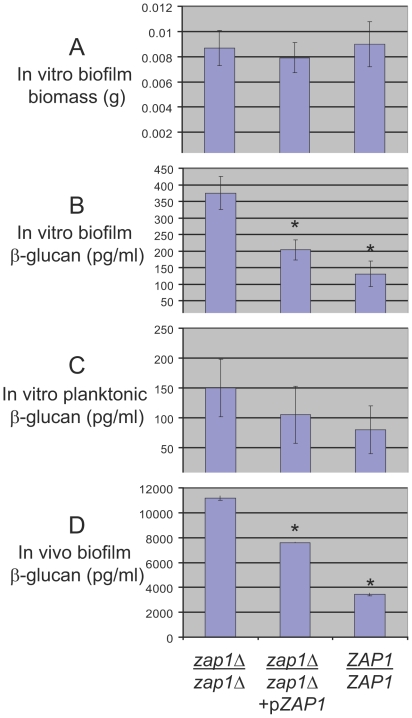
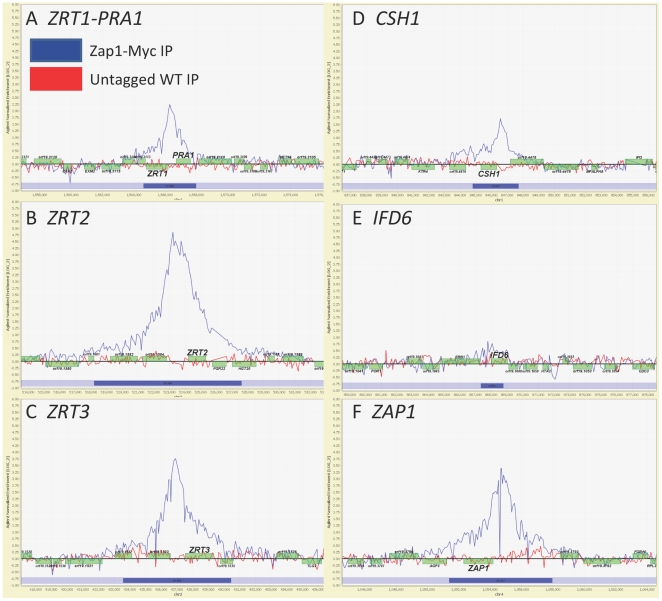
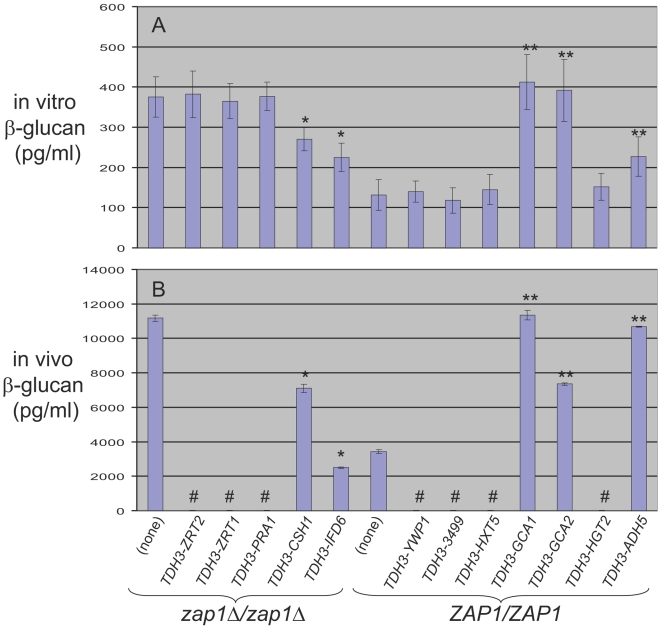
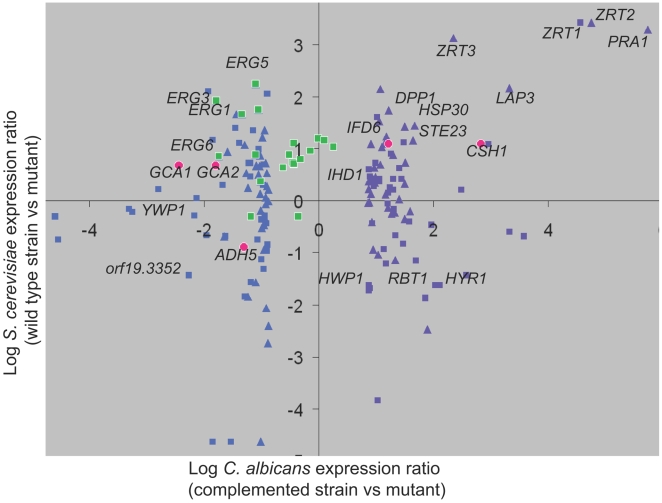
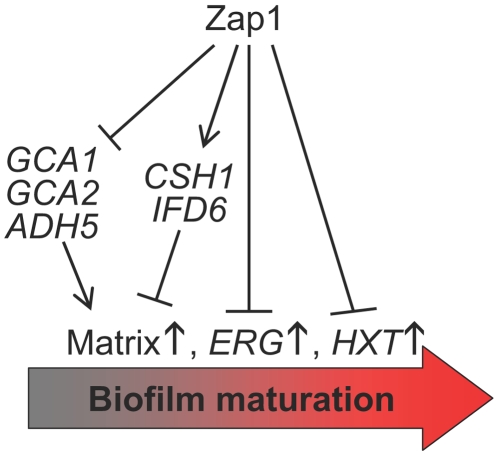
A biofilm is a surface-associated population of microorganisms embedded in a matrix of extracellular polymeric substances. Biofilms are a major natural growth form of microorganisms and the cause of pervasive device-associated infection. This report focuses on the biofilm matrix of Candida albicans, the major fungal pathogen of humans. We report here that the C. albicans zinc-response transcription factor Zap1 is a negative regulator of a major matrix component, soluble beta-1,3 glucan, in both in vitro and in vivo biofilm models. To understand the mechanistic relationship between Zap1 and matrix, we identified Zap1 target genes through expression profiling and full genome chromatin immunoprecipitation. On the basis of these results, we designed additional experiments showing that two glucoamylases, Gca1 and Gca2, have positive roles in matrix production and may function through hydrolysis of insoluble beta-1,3 glucan chains. We also show that a group of alcohol dehydrogenases Adh5, Csh1, and Ifd6 have roles in matrix production: Adh5 acts positively, and Csh1 and Ifd6, negatively. We propose that these alcohol dehydrogenases generate quorum-sensing aryl and acyl alcohols that in turn govern multiple events in biofilm maturation. Our findings define a novel regulatory circuit and its mechanism of control of a process central to infection.
Overview
The claims and statistics of this paper haven’t been checked yet.
Free: it reads the open-access text and checks the first 5 claims that cite a source we can check. Create a free account to check every claim.
Integrity signals
Registry
Cites
Statistics
Figures
Verification
Claims the paper makes
The claims and statistics of this paper haven’t been checked yet.
Free: it reads the open-access text and checks the first 5 claims that cite a source we can check. Create a free account to check every claim.
Claims other papers make about this one
Each is checked against this paper’s own text: does it say what the citing paper says it does?
The source backs part of the claim, not all of it — or backs it for a different population, condition or comparison.
In the citing paper
“Two known transcriptional regulators of biofilm matrix production in C. albicans are Rlm1 and Zap1.”
From Candida albicans Biofilms and Human Disease (2015) · cites this paper as [144]
Experimental — accuracy not yet measuredThe check wasn’t confident either way, so it gives no verdict — never disputed.
In the citing paper
“GCA1 is transcribed during rat oral infection and its transcription is regulated by carbohydrates [67,70].”
From Carbon source‐induced reprogramming of the cell wall proteome and secretome modulates the adherence and drug resistance of the fungal pathogen C andida albicans (2012) · cites this paper as [67]
Experimental — accuracy not yet measuredIn the citing paper
“Deletion of RLM1 causes a reduction in matrix levels (136), whereas deletion of ZAP1 leads to an increase in the accumulation of extracellular matrix material, probably by upregulating the glucoamylases Gca1 and Gca2 (144).”
From Candida albicans Biofilms and Human Disease (2015) · cites this paper as [144]
Self-check
Percentages, sums and reported differences re-computed from the paper’s own numbers.
The self-check needs the paper’s full text.
Citations
Cites
Biofilms: Survival Mechanisms of Clinically Relevant Microorganisms
Donlan, R. M., & Costerton, J. W. (2002) · Clinical Microbiology Reviews · doi:10.1128/cmr.15.2.167-193.2002 · Cited by 6,644 · cited 1×
“intravascular catheters [2].”
Fitting a mixture model by expectation maximization to discover motifs in biopolymers.
Bailey, T. L., & Elkan, C. (1994) · PubMed · Cited by 5,806
Longtine, M. S., Mckenzie III, A., Demarini, D. J., Shah, N. G., Wach, A., Brachat, A., Philippsen, P., & Pringle, J. R. (1998) · Yeast · doi:10.1002/(sici)1097-0061(199807)14:10<953::aid-yea293>3.0.co;2-u · Cited by 5,345 · cited 1×
“PCR was done using template pFA6a13myc-kanMX6 [47] and primers AHO276 and AHO277 to generate a 568-bp product containing a 13myc epitope tag and linker sequences with flanking XhoI sites.”
MethodPhysiological heterogeneity in biofilms
Stewart, P. S., & Franklin, M. J. (2008) · Nature Reviews Microbiology · doi:10.1038/nrmicro1838 · Cited by 2,327 · cited 1×
“albicans cells were grown in biofilms, which are substantially anaerobic [27].”
BackgroundTranscriptional regulatory code of a eukaryotic genome
Harbison, C. T., Gordon, D. B., Lee, T. I., Rinaldi, N. J., Macisaac, K. D., Danford, T. W., Hannett, N. M., Tagne, J.-B., Reynolds, D. B., Yoo, J., et al. (2004) · Nature · doi:10.1038/nature02800 · Cited by 2,143
Biofilms: the matrix revisited
Branda, S. S., Vik, Å., Friedman, L., & Kolter, R. (2005) · Trends in Microbiology · doi:10.1016/j.tim.2004.11.006 · Cited by 1,791 · cited 1×
“Other matrix components include proteins, fatty acids, and nucleic acids [6,7].”
BackgroundHazelwood, L. A., Daran, J.-M., van Maris, A. J. A., Pronk, J. T., & Dickinson, J. R. (2008) · Applied and Environmental Microbiology · doi:10.1128/aem.02625-07 · Cited by 1,547
Biofilm Formation: A Clinically Relevant Microbiological Process
Donlan, R. M. (2001) · Clinical Infectious Diseases · doi:10.1086/322972 · Cited by 1,343 · cited 1×
“Biofilms are common microbial growth forms in nature and are a leading cause of human infection [1].”
BackgroundThe biofilm matrix – an immobilized but dynamic microbial environment
Sutherland, I. (2001) · Trends in Microbiology · doi:10.1016/s0966-842x(01)02012-1 · Cited by 1,265 · cited 2×
“Matrix is a defining characteristic of biofilms [3–6], and has”
BackgroundGötz, F. (2002) · Molecular Microbiology · doi:10.1046/j.1365-2958.2002.02827.x · Cited by 1,178 · cited 1×
“A glistening appearance can be associated with accumulation of extracellular polymers, as in the case of Staphylococcus biofilms [13].”
Background
Cited by
Candida albicans pathogenicity mechanisms
Mayer, F. L., Wilson, D., & Hube, B. (2013) · Virulence · doi:10.4161/viru.22913 · Cited by 1,848
Candida albicans Biofilms and Human Disease
Nobile, C. J., & Johnson, A. D. (2015) · Annual Review of Microbiology · doi:10.1146/annurev-micro-091014-104330 · Cited by 1,057
Self-citationCandida albicans biofilms: development, regulation, and molecular mechanisms
Gulati, M., & Nobile, C. J. (2016) · Microbes and Infection · doi:10.1016/j.micinf.2016.01.002 · Cited by 738
“Deletion of RLM1 causes a reduction in 319 matrix levels [39], while deletion of ZAP1, leads to an increase in the accumulation of 320 extracellular matrix material, probably by upregulating two glucoamylase enzymes, 321 Gca1 and Gca2 [40].”
BackgroundSelf-citationA Recently Evolved Transcriptional Network Controls Biofilm Development in Candida albicans
Nobile, C. J., Fox, E. P., Nett, J. E., Sorrells, T. R., Mitrovich, Q. M., Hernday, A. D., Tuch, B. B., Andes, D. R., & Johnson, A. D. (2012) · Cell · doi:10.1016/j.cell.2011.10.048 · Cited by 711
“…transcription regulator and differential gene expression, we find a range of 38%–56%, comparable to or greater than the associations documented for other C. albicans transcription regulators (Askew et al., 2011; Lavoie et al., 2010; Nobile et al., 2009; Sellam et al., 2009; Tuch et al., 2010).”
BackgroundResultInfluentialSelf-citationCandida Biofilms: Threats, Challenges, and Promising Strategies
Cavalheiro, M., & Teixeira, M. C. (2018) · Frontiers in Medicine · doi:10.3389/fmed.2018.00028 · Cited by 690
“Csr1 has also been found to participate in the control of filamentous growth (87).”
BackgroundMechanisms of Antifungal Drug Resistance
Cowen, L. E., Sanglard, D., Howard, S. J., Rogers, P. D., & Perlin, D. S. (2015) · Cold Spring Harbor Perspectives in Medicine · doi:10.1101/cshperspect.a019752 · Cited by 647
“Other cellular proteins, such as the transcription factor Zap1, alcohol dehydrogenases Adh5, Csh1, and Ifd6, as well as glucoamylases, CaGca1 and CaGca2, also affect matrix production and resistance phenotypes (Nobile et al. 2009).”
BackgroundDevelopment and regulation of single- and multi-species Candida albicans biofilms
Lohse, M. B., Gulati, M., Johnson, A. D., & Nobile, C. J. (2018) · Nature Reviews Microbiology · doi:10.1038/nrmicro.2017.107 · Cited by 643
Self-citationGenetic control of Candida albicans biofilm development
Finkel, J. S., & Mitchell, A. P. (2011) · Nature Reviews Microbiology · doi:10.1038/nrmicro2475 · Cited by 612
“Similarly, the zinc-responsive transcription factor Zap1 (also known as Csr1 and Sur1) is a regulator of extracellular matrix accumulation, indicating that alterations in zinc levels might alter matrix formatio”
Self-citationRamage, G., Rajendran, R., Sherry, L., & Williams, C. (2012) · International Journal of Microbiology · doi:10.1155/2012/528521 · Cited by 583
“albicans biofilm models through expression profiling and full genome chromatin immunoprecipitation [156].”
BackgroundFalsetta, M. L., Klein, M. I., Colonne, P. M., Scott-Anne, K., Gregoire, S., Pai, C.-H., Gonzalez-Begne, M., Watson, G., Krysan, D. J., Bowen, W. H., et al. (2014) · Infection and Immunity · doi:10.1128/iai.00087-14 · Cited by 561
“Although -1,3-glucan is present close to the inner cell wall, it can be secreted extracellularly (58) (see below).”
BackgroundCandida albicans, a major human fungal pathogen
Kim, J., & Sudbery, P. (2011) · The Journal of Microbiology · doi:10.1007/s12275-011-1064-7 · Cited by 488
Mechanisms of Candida Biofilm Drug Resistance
Taff, H. T., Mitchell, K. F., Edward, J. A., & Andes, D. R. (2013) · Future Microbiology · doi:10.2217/fmb.13.101 · Cited by 422
“As a negative regulator of matrix glucan production, mutants deficient in ZAP1 accumulate high quantities of extracellular biofilm matrix [100].”
BackgroundSelf-citationBiofilm of Candida albicans : formation, regulation and resistance
Pereira, R., Santos Fontenelle, R. O., Brito, E. H. S., & Morais, S. M. (2021) · Journal of Applied Microbiology · doi:10.1111/jam.14949 · Cited by 368
“The exclusion of Rlm1 causes a reduction in matrix thickness while the exclusion of Zap1 leads to an increase in the accumulation of extracellular matrix material, probably due to the positive regulation of two glucoamylase enzymes, Gca1 and Gca2 (Nobile et al. 2009; Nett et al. 2011).”
BackgroundCandida Species Biofilms’ Antifungal Resistance
Silva, S., Rodrigues, C., Araújo, D., Rodrigues, M., & Henriques, M. (2017) · Journal of Fungi · doi:10.3390/jof3010008 · Cited by 302
“A group of alcohol dehydrogenases ADH5, CSH1, and LFD6 also have roles in matrix production, with ADH5 acting positively, and CSH1 and LFD6 acting negatively [138].”
BackgroundNovel Entries in a Fungal Biofilm Matrix Encyclopedia
Zarnowski, R., Westler, W. M., Lacmbouh, G. A., Marita, J. M., Bothe, J. R., Bernhardt, J., Lounes-Hadj Sahraoui, A., Fontaine, J., Sanchez, H., Hatfield, R. D., et al. (2014) · mBio · doi:10.1128/mbio.01333-14 · Cited by 315
“-1,3-glucan was not found in the free (neutral) fraction by NMR methods but was identified in the glycoprotein fraction using the Glucatell assay as previously described (10, 14).”
MethodSelf-citationChen, C., Pande, K., French, S. D., Tuch, B. B., & Noble, S. M. (2011) · Cell Host & Microbe · doi:10.1016/j.chom.2011.07.005 · Cited by 314
“Cells were collected by centrifugation at 4 C andwashed twice with 20mMTris-HCl (pH 7.5)/150 mMNaCl, followed by freezing in liquid N2 and storage at 80 C. Cell lysis, DNA shearing, and ChIP-Chip were performed as described (Nobile et al., 2009).”
InfluentialKong, E. F., Tsui, C., Kucharíková, S., Andes, D., Van Dijck, P., & Jabra-Rizk, M. A. (2016) · mBio · doi:10.1128/mbio.01365-16 · Cited by 294
“albicans in biofilm, where the zap1 /zap1 mutant accumulated significantly less farnesol (46).”
BackgroundSelf-citationTasting the fungal cell wall: Tasting fungal cell wall
Latgé, J.-P. (2010) · Cellular Microbiology · doi:10.1111/j.1462-5822.2010.01474.x · Cited by 295
“…it has a composition and a structure rich in polysaccharides often similar to the ones of the alkali-soluble fraction and traps many immunogenic secreted glycoproteins and GPI-anchored proteins involved in cell aggregation (Smukalla et al., 2008; Beauvais et al., 2009; Nobile et al., 2009).”
BackgroundHsp90 Governs Dispersion and Drug Resistance of Fungal Biofilms
Robbins, N., Uppuluri, P., Nett, J., Rajendran, R., Ramage, G., Lopez-Ribot, J. L., Andes, D., & Cowen, L. E. (2011) · PLoS Pathogens · doi:10.1371/journal.ppat.1002257 · Cited by 291
“Given Hsp90’s high degree of connectivity in diverse signalling cascades, it could also affect biofilm drug resistance in a multitude of other ways, such as by regulating remodeling of the cell wall and cell membrane [27,28], signalling cascades important for matrix production [29,52], or the function of contactdepend…”
BackgroundSelf-citationA Candida Biofilm-Induced Pathway for Matrix Glucan Delivery: Implications for Drug Resistance
Taff, H. T., Nett, J. E., Zarnowski, R., Ross, K. M., Sanchez, H., Cain, M. T., Hamaker, J., Mitchell, A. P., & Andes, D. R. (2012) · PLoS Pathogens · doi:10.1371/journal.ppat.1002848 · Cited by 291
“We asked if these glucan modification enzymes were functioning in conjunction with the previously described Zap1-regulated matrix production [31].”
BackgroundSelf-citationCandida albicans biofilms and polymicrobial interactions
Ponde, N. O., Lortal, L., Ramage, G., Naglik, J. R., & Richardson, J. P. (2021) · Critical Reviews in Microbiology · doi:10.1080/1040841x.2020.1843400 · Cited by 281
“Zap1p is a zinc regulator that negatively regulates the formation of b-1,3 glucan through its target genes GCA1 and GCA2 (Nobile et al. 2009; Mayer et al. 2013; Nobile and Johnson 2015).”
BackgroundGerwien, F., Skrahina, V., Kasper, L., Hube, B., & Brunke, S. (2018) · FEMS Microbiology Reviews · doi:10.1093/femsre/fux050 · Cited by 250
“albicans Zap1 ortholog, also called Csr1, controls zinc homeostasis including Pra1 expression (Nobile et al. 2009), but is, of note, also involved in filamentation and biofilm matrix elab-”
BackgroundInfluentialFungal Biofilms, Drug Resistance, and Recurrent Infection
Desai, J. V., Mitchell, A. P., & Andes, D. R. (2014) · Cold Spring Harbor Perspectives in Medicine · doi:10.1101/cshperspect.a019729 · Cited by 252
Self-citationMartins, M., Uppuluri, P., Thomas, D. P., Cleary, I. A., Henriques, M., Lopez-Ribot, J. L., & Oliveira, R. (2010) · Mycopathologia · doi:10.1007/s11046-009-9264-y · Cited by 250
“C. albicans ECM abundance was recently shown to be regulated positively by the glucoamylases Gca1 and Gca2 and the alcohol dehydrogenase Adh5 and negatively by the alcohol dehydrogenases Csh1 and Ifd6 [12].”
BackgroundCandida albicans Scavenges Host Zinc via Pra1 during Endothelial Invasion
Citiulo, F., Jacobsen, I. D., Miramón, P., Schild, L., Brunke, S., Zipfel, P., Brock, M., Hube, B., & Wilson, D. (2012) · PLoS Pathogens · doi:10.1371/journal.ppat.1002777 · Cited by 242
“As noted by Nobile and colleagues [17], PRA1 shares its upstream intergenic region with ZRT1, which encodes a predicted high affinity zinc transporter.”
BackgroundResultInfluentialPortrait of Candida albicans Adherence Regulators
Finkel, J. S., Xu, W., Huang, D., Hill, E. M., Desai, J. V., Woolford, C. A., Nett, J. E., Taff, H., Norice, C. T., Andes, D. R., et al. (2012) · PLoS Pathogens · doi:10.1371/journal.ppat.1002525 · Cited by 228
“Overexpression of ZAP1 in the 30 adherence defective mutants was accomplished by replacing the endogenous ZAP1 promoter (at one allele) with the promoter of TDH3 as described previously [20].”
BackgroundMethodResultSelf-citationFox, E. P., Cowley, E. S., Nobile, C. J., Hartooni, N., Newman, D. K., & Johnson, A. D. (2014) · Current Biology · doi:10.1016/j.cub.2014.08.057 · Cited by 207
Self-citationSchwarzmüller, T., Ma, B., Hiller, E., Istel, F., Tscherner, M., Brunke, S., Ames, L., Firon, A., Green, B., Cabral, V., et al. (2014) · PLoS Pathogens · doi:10.1371/journal.ppat.1004211 · Cited by 191
Hypoxia and Fungal Pathogenesis: To Air or Not To Air?
Grahl, N., Shepardson, K. M., Chung, D., & Cramer, R. A. (2012) · Eukaryotic Cell · doi:10.1128/ec.00031-12 · Cited by 179
“speculate that regulators of biofilm formation may also have roles in fungal hypoxia 414 adaptation that have been largely unexamined (39, 81, 97).”
BackgroundUpdate on Antifungal Drug Resistance
Perlin, D. S., Shor, E., & Zhao, Y. (2015) · Current Clinical Microbiology Reports · doi:10.1007/s40588-015-0015-1 · Cited by 174
Antifungal therapy with an emphasis on biofilms
Pierce, C. G., Srinivasan, A., Uppuluri, P., Ramasubramanian, A. K., & López-Ribot, J. L. (2013) · Current Opinion in Pharmacology · doi:10.1016/j.coph.2013.08.008 · Cited by 173
An expanded regulatory network temporally controls C andida albicans biofilm formation
Fox, E. P., Bui, C. K., Nett, J. E., Hartooni, N., Mui, M. C., Andes, D. R., Nobile, C. J., & Johnson, A. D. (2015) · Molecular Microbiology · doi:10.1111/mmi.13002 · Cited by 173
“Synthesis of cDNA and dye coupling was performed as described in Nobile et al. (2009).”
MethodSelf-citationAntifungal drug resistance of oral fungi
Niimi, M., Firth, N. A., & Cannon, R. D. (2010) · Odontology · doi:10.1007/s10266-009-0118-3 · Cited by 166
Candida albicans: A Model Organism for Studying Fungal Pathogens
Kabir, M. A., Hussain, M. A., & Ahmad, Z. (2012) · ISRN Microbiology · doi:10.5402/2012/538694 · Cited by 148
“A number of transcription factors including Efg1p, Cph1p, Efh1p, Rap1p, Ino4p, and Tec1p have been identified and they are implicated in the regulation of biofilm formation [119–121].”
BackgroundContributions of the Biofilm Matrix to Candida Pathogenesis
Nett, J. E., & Andes, D. R. (2020) · Journal of Fungi · doi:10.3390/jof6010021 · Cited by 157
“Zap1 serves as a negative regulator of matrix production, as genetic deletion leads to increased extracellular matrix production, presumably due to the upregulation of glucoamylases [63].”
BackgroundSelf-citationEne, I. V., Heilmann, C. J., Sorgo, A. G., Walker, L. A., de Koster, C. G., Munro, C. A., Klis, F. M., & Brown, A. J. P. (2012) · Proteomics · doi:10.1002/pmic.201200228 · Cited by 159
“Thus, Gca1, a predicted secreted glucoamylase shown to promote biofilm matrix formation [67], was exclusively detected in the lactate supernatant (Fig.”
BackgroundBiofilms and vulvovaginal candidiasis
Rodríguez-Cerdeira, C., Gregorio, M. C., Molares-Vila, A., López-Barcenas, A., Fabbrocini, G., Bardhi, B., Sinani, A., Sánchez-Blanco, E., Arenas-Guzmán, R., & Hernandez-Castro, R. (2019) · Colloids and Surfaces B: Biointerfaces · doi:10.1016/j.colsurfb.2018.11.011 · Cited by 133
Bacterial biofilm inhibitors: An overview
Kalia, V. C., Patel, S. K. S., & Lee, J.-K. (2023) · Ecotoxicology and Environmental Safety · doi:10.1016/j.ecoenv.2023.115389 · Cited by 161
Bonhomme, J., Chauvel, M., Goyard, S., Roux, P., Rossignol, T., & d'Enfert, C. (2011) · Molecular Microbiology · doi:10.1111/j.1365-2958.2011.07626.x · Cited by 144
“This latter approach might prevent identification of mutants that have a moderate biofilm defect although work by Nobile et al. (2009) has now shown that qualitative inspection of biofilms developed on silicone could identify biofilms with relatively subtle alterations.”
BackgroundInfluentialMechanism of Candida pathogenesis: Revisiting the vital drivers
Mba, I. E., & Nweze, E. I. (2020) · European Journal of Clinical Microbiology & Infectious Diseases · doi:10.1007/s10096-020-03912-w · Cited by 143
Portrait of Candida Species Biofilm Regulatory Network Genes
Araújo, D., Henriques, M., & Silva, S. M. (2016) · Trends in Microbiology · doi:10.1016/j.tim.2016.09.004 · Cited by 157
Sherry, L., Rajendran, R., Lappin, D. F., Borghi, E., Perdoni, F., Falleni, M., Tosi, D., Smith, K., Williams, C., Jones, B., et al. (2014) · BMC Microbiology · doi:10.1186/1471-2180-14-182 · Cited by 134
“Of interest was the positive correlation with ZAP1 expression at 4 h, which is a negative regulator of matrix production [49].”
BackgroundIn Vitro Culturing and Screening of Candida albicans Biofilms
Gulati, M., Lohse, M. B., Ennis, C. L., Gonzalez, R. E., Perry, A. M., Bapat, P., Arevalo, A. V., Rodriguez, D. L., & Nobile, C. J. (2018) · Current Protocols in Microbiology · doi:10.1002/cpmc.60 · Cited by 129
Self-citationRole of Calprotectin in Withholding Zinc and Copper from Candida albicans
Besold, A. N., Gilston, B. A., Radin, J. N., Ramsoomair, C., Culbertson, E. M., Li, C. X., Cormack, B. P., Chazin, W. J., Kehl-Fie, T. E., & Culotta, V. C. (2018) · Infection and Immunity · doi:10.1128/iai.00779-17 · Cited by 136
“extracellular space and delivers it to Zrt1 for import into the cell (12, 45, 46).”
BackgroundFungal Super Glue: The Biofilm Matrix and Its Composition, Assembly, and Functions
Mitchell, K. F., Zarnowski, R., & Andes, D. R. (2016) · PLOS Pathogens · doi:10.1371/journal.ppat.1005828 · Cited by 132
Self-citationStructure of the transcriptional network controlling white‐opaque switching in C andida albicans
Hernday, A. D., Lohse, M. B., Fordyce, P. M., Nobile, C. J., DeRisi, J. L., & Johnson, A. D. (2013) · Molecular Microbiology · doi:10.1111/mmi.12329 · Cited by 131
Self-citationDisruption of the intestinal mucosal barrier in Candida albicans infections
Yan, L., Yang, C., & Tang, J. (2013) · Microbiological Research · doi:10.1016/j.micres.2013.02.008 · Cited by 128
MochiView: versatile software for genome browsing and DNA motif analysis
Homann, O. R., & Johnson, A. D. (2010) · BMC Biology · doi:10.1186/1741-7007-8-49 · Cited by 132
“Zap1 transcription factor [33].”
Self-citationBiofilm Exopolysaccharides of Pathogenic Fungi: Lessons from Bacteria
Sheppard, D. C., & Howell, P. L. (2016) · Journal of Biological Chemistry · doi:10.1074/jbc.r116.720995 · Cited by 123
“Notable among these is Bcr1p, which positively regulates the expression of numerous adhesins during the initial phase of biofilm formation (71), and Zap1p, a transcriptional repressor of genes required for biofilm extracellular matrix production (72).”
BackgroundAdapting to survive: How Candida overcomes host-imposed constraints during human colonization
Alves, R., Barata-Antunes, C., Casal, M., Brown, A. J. P., Van Dijck, P., & Paiva, S. (2020) · PLOS Pathogens · doi:10.1371/journal.ppat.1008478 · Cited by 122
Crawford, A., & Wilson, D. (2015) · FEMS Yeast Research · doi:10.1093/femsyr/fov071 · Cited by 122
“…albicans prevented the reassociation of soluble Pra1 to the fungal cell, indicating that, in addition to functioning as a zinc transporter (Kim et al. 2008; Nobile et al. 2009; Wilson 2015), Zrt1 also serves as a receptor for the Pra1 zincophore (Citiulo et al. 2012; Wilson, Citiulo and Hube 2012).”
BackgroundInfluentialFungal zinc metabolism and its connections to virulence
Staats, C. C., Kmetzsch, L., Schrank, A., & Vainstein, M. H. (2013) · Frontiers in Cellular and Infection Microbiology · doi:10.3389/fcimb.2013.00065 · Cited by 117
Fungal Biofilms: Relevance in the Setting of Human Disease
Martinez, L. R., & Fries, B. C. (2010) · Current Fungal Infection Reports · doi:10.1007/s12281-010-0035-5 · Cited by 115
“Studies recently showed that the C. albicans zinc-response transcription factor ZAP1 is a negative regulator of a major matrix component, soluble β-1,3 glucan, in both in vitro and in vivo biofilm models [ 96 ].”
BackgroundCandida albicans biofilms: building a heterogeneous, drug-tolerant environment
Bonhomme, J., & d’Enfert, C. (2013) · Current Opinion in Microbiology · doi:10.1016/j.mib.2013.03.007 · Cited by 120
Fox, E. P., & Nobile, C. J. (2012) · Transcription · doi:10.4161/trns.22281 · Cited by 114
Self-citationChauvel, M., Nesseir, A., Cabral, V., Znaidi, S., Goyard, S., Bachellier-Bassi, S., Firon, A., Legrand, M., Diogo, D., Naulleau, C., et al. (2012) · PLoS ONE · doi:10.1371/journal.pone.0045912 · Cited by 102
“It has been shown that deletion of CSR1/ZAP1 affects filamentous growth [10,13,17,33,76].”
BackgroundCandida albicans Dispersed Cells Are Developmentally Distinct from Biofilm and Planktonic Cells
Uppuluri, P., Acosta Zaldívar, M., Anderson, M. Z., Dunn, M. J., Berman, J., Lopez Ribot, J. L., & Köhler, J. R. (2018) · mBio · doi:10.1128/mbio.01338-18 · Cited by 107
Iron and copper as virulence modulators in human fungal pathogens
Ding, C., Festa, R. A., Sun, T., & Wang, Z. (2014) · Molecular Microbiology · doi:10.1111/mmi.12653 · Cited by 103
“Candida Zap1 controls extracellular matrix production during biofilm formation (Nobile et al., 2009).”
BackgroundCandida Biofilms: An Update on Developmental Mechanisms and Therapeutic Challenges
de Barros, P. P., Rossoni, R. D., de Souza, C. M., Scorzoni, L., Fenley, J. D. C., & Junqueira, J. C. (2020) · Mycopathologia · doi:10.1007/s11046-020-00445-w · Cited by 121
“decreases b-1,3 glucan levels and hence negatively regulates matrix production [39, 53].”
BackgroundInfluentialCandida albicans Interactions with Mucosal Surfaces during Health and Disease
Nikou, S.-A., Kichik, N., Brown, R., Ponde, N., Ho, J., Naglik, J., & Richardson, J. (2019) · Pathogens · doi:10.3390/pathogens8020053 · Cited by 103
“Zinc homeostasis in C. albicans is regulated by the transcriptional activator Zap1p which controls the expression of several genes including the zinc transporters ZRT1-3 and the vacuolar zinc importer ZRC1 [165,166].”
BackgroundActivation and Alliance of Regulatory Pathways in C. albicans during Mammalian Infection
Xu, W., Solis, N. V., Ehrlich, R. L., Woolford, C. A., Filler, S. G., & Mitchell, A. P. (2015) · PLOS Biology · doi:10.1371/journal.pbio.1002076 · Cited by 103
“Growth of rpn4Δ/Δ, sut1Δ/Δ, and zap1Δ/Δmutants, as well as respective complemented strains, in low zinc medium [41], plotted as A600 versus time.”
BackgroundMethodSelf-citationElucidating Drug Resistance in Human Fungal Pathogens
Xie, J. L., Polvi, E. J., Shekhar-Guturja, T., & Cowen, L. E. (2014) · Future Microbiology · doi:10.2217/fmb.14.18 · Cited by 100
Transcriptional control of hyphal morphogenesis in Candida albicans
Villa, S., Hamideh, M., Weinstock, A., Qasim, M. N., Hazbun, T. R., Sellam, A., Hernday, A. D., & Thangamani, S. (2020) · FEMS Yeast Research · doi:10.1093/femsyr/foaa005 · Cited by 117
“ZAP1 mutants develop biofilms in a rat model of catheter-associated infection, (Kim et al. 2008; Nobile et al. 2009) CTA4 Mutation in Cta4p reduced filamentation under hyphae inducing conditions containing serum.”
BackgroundSelf-citationHnisz, D., Bardet, A. F., Nobile, C. J., Petryshyn, A., Glaser, W., Schöck, U., Stark, A., & Kuchler, K. (2012) · PLoS Genetics · doi:10.1371/journal.pgen.1003118 · Cited by 100
“formation [23], biofilm matrix regulation [24], carbohydrate”
MethodSelf-citationBraun, S. J., Garcia, J. F., Rowley, M., Rougemaille, M., Shankar, S., & Madhani, H. D. (2011) · Cell · doi:10.1016/j.cell.2010.11.051 · Cited by 115
“Chromatin Immunoprecipitation ChIP experiments were performed essentially as described (Nobile et al., 2009).”
Brucker, K. D., Tan, Y., Vints, K., Cremer, K. D., Braem, A., Verstraeten, N., Michiels, J. J., Vleugels, J., Cammue, B. P. A., & Thevissen, K. (2015) · Antimicrobial Agents and Chemotherapy · doi:10.1128/aac.04650-14 · Cited by 108
“5- to 2-fold more -1,3-glucan than does the wild type (35).”
BackgroundInfluentialAntifungal Compounds against Candida Infections from Traditional Chinese Medicine
Liu, X., Ma, Z., Zhang, J., & Yang, L. (2017) · BioMed Research International · doi:10.1155/2017/4614183 · Cited by 91
“albicans is farnesol, one autoregulatory sesquiterpene alcohol that could prevent the filamentation (through repressing the Ras1-cAMP-PKA signaling pathway [147]), shrink the biofilm (if added before attachment or after formation but not during the initial stages of biofilm growth [148]), and block other virulence fac…”
BackgroundBruns, S., Seidler, M., Albrecht, D., Salvenmoser, S., Remme, N., Hertweck, C., Brakhage, A. A., Kniemeyer, O., & Müller, F. C. (2010) · PROTEOMICS · doi:10.1002/pmic.201000129 · Cited by 95
“[28] Thomas, D. P., Bachmann, S. P., Lopez-Ribot, J. L., Proteo- mics for the analysis of the Candida albicans biofilm lifestyle.”
BackgroundInfluentialCandida albicans Biofilm Development and Its Genetic Control
Desai, J. V., & Mitchell, A. P. (2015) · Microbiology Spectrum · doi:10.1128/microbiolspec.mb-0005-2014 · Cited by 94
Self-citationGómez-Gaviria, M., & Mora-Montes, H. M. (2020) · Infection and Drug Resistance · doi:10.2147/idr.s247944 · Cited by 110
Sahni, N., Yi, S., Daniels, K. J., Huang, G., Srikantha, T., & Soll, D. R. (2010) · PLoS Biology · doi:10.1371/journal.pbio.1000363 · Cited by 89
“measure of biofilm matrix formation [46], was diminished 4-fold in tec1/tec1 cells in the absence of a-pheromone and 8-fold in the presence of a-pheromone, when compared to control cells”
MethodChun, C. D., Brown, J. C. S., & Madhani, H. D. (2011) · Cell Host & Microbe · doi:10.1016/j.chom.2011.02.003 · Cited by 96
“Experiments were performed as previously described (Nobile et al., 2009) withC.”
MethodInfluentialZap1 Regulates Zinc Homeostasis and Modulates Virulence in Cryptococcus gattii
Schneider, R. D. O., Fogaça, N. D. S. S., Kmetzsch, L., Schrank, A., Vainstein, M. H., & Staats, C. C. (2012) · PLoS ONE · doi:10.1371/journal.pone.0043773 · Cited by 81
“The ZIP family of zinc transporters is positively regulated by ZAP1 in yeasts [18,31].”
BackgroundMethodInfluentialThe Extracellular Matrix of Fungal Biofilms
Mitchell, K. F., Żarnowski, R., & Andes, D. R. (2016) · Advances in experimental medicine and biology · doi:10.1007/5584_2016_6 · Cited by 111
Self-citationFungal Cell Wall Proteins and Signaling Pathways Form a Cytoprotective Network to Combat Stresses
Ibe, C., & Munro, C. A. (2021) · Journal of Fungi · doi:10.3390/jof7090739 · Cited by 85
A Histone Deacetylase Complex Mediates Biofilm Dispersal and Drug Resistance in Candida albicans
Nobile, C. J., Fox, E. P., Hartooni, N., Mitchell, K. F., Hnisz, D., Andes, D. R., Kuchler, K., & Johnson, A. D. (2014) · mBio · doi:10.1128/mbio.01201-14 · Cited by 87
“Biofilm matrix -1,3-glucan level measurements were performed as described previously (55), with the following modifications.”
MethodSelf-citationYi, S., Sahni, N., Daniels, K. J., Lu, K. L., Srikantha, T., Huang, G., Garnaas, A. M., & Soll, D. R. (2011) · PLoS Biology · doi:10.1371/journal.pbio.1001117 · Cited by 81
“Methods for measuring adhesion [15], biofilm biomass [23], release of b-glucan [18,84], biofilm thickness [20], and cell density [23] have been described previously in detail.”
MethodPlasticity of Candida albicans Biofilms
Soll, D. R., & Daniels, K. J. (2016) · Microbiology and Molecular Biology Reviews · doi:10.1128/mmbr.00068-15 · Cited by 78
Regulatory Role of Glycerol in Candida albicans Biofilm Formation
Desai, J. V., Bruno, V. M., Ganguly, S., Stamper, R. J., Mitchell, K. F., Solis, N., Hill, E. M., Xu, W., Filler, S. G., Andes, D. R., et al. (2013) · mBio · doi:10.1128/mbio.00637-12 · Cited by 87
Self-citationBaker, C. R., Booth, L. N., Sorrells, T. R., & Johnson, A. D. (2012) · Cell · doi:10.1016/j.cell.2012.08.018 · Cited by 82
Self-citationChen, C., & Noble, S. M. (2012) · PLoS Pathogens · doi:10.1371/journal.ppat.1002956 · Cited by 83
“albicans knockout mutants, complemented (gene addback) strains, and strains containing Myc-tagged fusion proteins was performed as previously described [6,42,43,44].”
MethodGenetics and Molecular Biology in Candida albicans
Hernday, A. D., Noble, S. M., Mitrovich, Q. M., & Johnson, A. D. (2010) · Methods in enzymology on CD-ROM/Methods in enzymology · doi:10.1016/s0076-6879(10)70031-8 · Cited by 84
“This protocol has also been used, with increased lysis times, to perform ChIP with C. albicans biofilms (Nobile et al., 2009) and with both yeast and mycelial forms of Histoplasma capsulatum (Nguyen and Sil 2008; Webster and Sil, 2008).”
Self-citationCandida Species: New Insights into Biofilm Formation
Cuéllar-Cruz, M., López-Romero, E., Villagómez-Castro, J. C., & Ruiz-Baca, E. (2012) · Future Microbiology · doi:10.2217/fmb.12.48 · Cited by 80
“albicans, since it regulates the morphological yeast to hyphae shift [64] and the formation of the exopolymeric matrix [65,66].”
BackgroundFuture directions for anti-biofilm therapeutics targetingCandida
Nett, J. E. (2014) · Expert Review of Anti-infective Therapy · doi:10.1586/14787210.2014.885838 · Cited by 96
“Another potential approach would be to identify inhibitors of the pathways known to regulate biofilm matrix production and delivery [44,71,72].”
BackgroundSelf-citationThe Significance of Lipids to Biofilm Formation in Candida albicans: An Emerging Perspective
Alim, D., Sircaik, S., & Panwar, S. L. (2018) · Journal of Fungi · doi:10.3390/jof4040140 · Cited by 86
“Rlm1 and Zap1 are the two transcriptional regulators that regulate the matrix production [35,36].”
BackgroundDominguez, E., Zarnowski, R., Sanchez, H., Covelli, A. S., Westler, W. M., Azadi, P., Nett, J., Mitchell, A. P., & Andes, D. R. (2018) · mBio · doi:10.1128/mbio.00451-18 · Cited by 77
Self-citationA Conserved Transcriptional Regulator Governs Fungal Morphology in Widely Diverged Species
Cain, C. W., Lohse, M. B., Homann, O. R., Sil, A., & Johnson, A. D. (2012) · Genetics · doi:10.1534/genetics.111.134080 · Cited by 75
“Chromatin immunoprecipitation experiments were performed as previously described (Nobile et al. 2009).”
MethodSelf-citationHershkovitz, V., Sela, N., Taha-Salaime, L., Liu, J., Rafael, G., Kessler, C., Aly, R., Levy, M., Wisniewski, M., & Droby, S. (2013) · BMC Genomics · doi:10.1186/1471-2164-14-168 · Cited by 74
“Overexpression of ZRT2, improves the growth of the zap1_/zap1_ mutant on a low-zinc medium [32].”
BackgroundDu, H., Guan, G., Xie, J., Sun, Y., Tong, Y., Zhang, L., & Huang, G. (2012) · PLoS ONE · doi:10.1371/journal.pone.0029707 · Cited by 74
“Biofilm development is controlled by a number of transcription factors including Tec1, Bcr1, Ume6, Efg1 and Zap1 [12,14,15,23,24].”
Intercalation of a new tier of transcription regulation into an ancient circuit
Booth, L. N., Tuch, B. B., & Johnson, A. D. (2010) · Nature · doi:10.1038/nature09560 · Cited by 75
Self-citationGenomic signatures of adaptation to wine biological ageing conditions in biofilm‐forming flor yeasts
Coi, A. L., Bigey, F., Mallet, S., Marsit, S., Zara, G., Gladieux, P., Galéote, V., Budroni, M. A., Dequin, S., & Legras, J. (2017) · Molecular Ecology · doi:10.1111/mec.14053 · Cited by 78
“albicans, zinc has an essential role in biofilm formation (Nobile et al. 2009), and ZRT1 is”
BackgroundJiménez-López, C., Collette, J. R., Brothers, K. M., Shepardson, K. M., Cramer, R. A., Wheeler, R. T., & Lorenz, M. C. (2013) · Eukaryotic Cell · doi:10.1128/ec.00290-12 · Cited by 74
“albicans Zap1p, a conserved regulator of zinc acquisition, has evolved a second function to control biofilm matrix production (53).”
BackgroundMorici, P., Fais, R., Rizzato, C., Tavanti, A., & Lupetti, A. (2016) · PLoS ONE · doi:10.1371/journal.pone.0167470 · Cited by 81
Fungal biofilms in human health and disease
Ramage, G., Kean, R., Rautemaa-Richardson, R., Williams, C., & Lopez-Ribot, J. L. (2025) · Nature Reviews Microbiology · doi:10.1038/s41579-025-01147-0 · Cited by 72
“Rlm1 and the zinc-response regulator Zap1 are important regulators of ECM production and during biofilm maturation 196 .”
Lee, J., Kim, Y., Khadke, S. K., Yamano, A., Watanabe, A., & Lee, J. (2019) · ACS Infectious Diseases · doi:10.1021/acsinfecdis.9b00033 · Cited by 74
Identification of novel mechanisms involved in generating localized vulvodynia pain
Falsetta, M. L., Foster, D. C., Woeller, C. F., Pollock, S. J., Bonham, A. D., Haidaris, C. G., Stodgell, C. J., & Phipps, R. P. (2015) · American Journal of Obstetrics and Gynecology · doi:10.1016/j.ajog.2015.02.002 · Cited by 69
“At the same time, our results clearly show that Dectin-1 signaling feeds into a specific part of the NFkB pathway that is referred to as the canonical arm and is associated with the production of IL-6 and COX-2 (rate-limiting enzyme involved in PGE2 production).(36,54-58) Inhibition of NFkB successfully diminishes cyt…”
BackgroundResistance of Candida albicans Biofilms to Drugs and the Host Immune System
Sandai, D. A., Tabana, Y., Ouweini, A. E., & Ishola, O. A. (2016) · Jundishapur Journal of Microbiology · doi:10.5812/jjm.37385 · Cited by 77
“(58), alternative metabolic pathways resulted in hexose byproducts.”
BackgroundSelective antibiofilm properties and biocompatibility of nano-ZnO and nano-ZnO/Ag coated surfaces
Rosenberg, M., Visnapuu, M., Vija, H., Kisand, V., Kasemets, K., Kahru, A., & Ivask, A. (2020) · Scientific Reports · doi:10.1038/s41598-020-70169-w · Cited by 67
“al have demonstrated that sub-inhibitory Zn concentrations can indeed interrupt yeast to hyphal differentiation in Candida biofilms [85] and it has been suggested that zinc-responsive transcription factor Zap1 is a negative regulator of biofilm matrix accumulation and maturation [86] also directing the yeast-hypha bal…”
BackgroundAssessment and Optimizations of Candida albicans In Vitro Biofilm Assays
Lohse, M. B., Gulati, M., Valle Arevalo, A., Fishburn, A., Johnson, A. D., & Nobile, C. J. (2017) · Antimicrobial Agents and Chemotherapy · doi:10.1128/aac.02749-16 · Cited by 66
Self-citationZinc Limitation Induces a Hyper-Adherent Goliath Phenotype in Candida albicans
Malavia, D., Lehtovirta-Morley, L. E., Alamir, O., Weiß, E., Gow, N. A. R., Hube, B., & Wilson, D. (2017) · Frontiers in Microbiology · doi:10.3389/fmicb.2017.02238 · Cited by 66
“albicans also controls the expression of the Cell surface targets of adherence regulators (CSTAR) genes, a regulon composed of multiple putative and described adhesin genes (Nobile et al., 2009; Finkel et al., 2012).”
Background
Metadata
- Authors
- Nobile, C. J., Nett, J. E., Hernday, A. D., Homann, O. R., Deneault, J.-S., Nantel, A., Andes, D. R., Johnson, A. D., & Mitchell, A. P.
- Affiliations
- University of California, San Francisco (US)
- University of Wisconsin–Madison (US)
- Carnegie Mellon University (US)
- Corresponding author
- Mitchell, Aaron P.
- ORCID
- Venue
- PLoS Biology
- Publisher
- Public Library of Science (PLoS)
- Published
- 2009-06-16
- Volume
- 7
- Issue
- 6
- Pages
- e1000133
- ISSN
- 1544-9173 (ISSN-L)
- 1545-7885
- PMC
- PMC2688839
- OpenAlex
- W2106769310
- Cited by
- 337
- References
- 54
- Citations by year
- 2026: 11 · 2025: 7 · 2024: 22 · 2023: 35 · 2022: 14 · 2021: 13 · 2020: 26 · 2019: 16 · 2018: 12 · 2017: 26 · 2016: 23 · 2015: 26 · 2014: 23 · 2013: 17 · 2012: 30
- FWCI
- 15.18
- Type
- journal article
- Language
- en
- Open access
- gold
- doi.org
- Locations
- PLoS Biology (publishedVersion, cc-by)
- Europe PMC (PubMed Central) (publishedVersion, cc-by)
- PubMed Central (publishedVersion, cc-by)
- PubMed (publishedVersion)
- NPARC (submittedVersion)
- DOAJ (DOAJ: Directory of Open Access Journals) (submittedVersion)
- eScholarship (California Digital Library) (submittedVersion)
- Figshare (submittedVersion, cc-by)
- Funders
- National Institutes of Health
- National Heart, Lung, and Blood Institute (T32HL007899)
- National Institute of Allergy and Infectious Diseases (R01AI049187, K08 AI01767, R01AI067703, K08AI001767, R01 AI 49187, R01AI073289)
- Topics
- Health Sciences › Medicine › Infectious Diseases › Antifungal resistance and susceptibility
- Life Sciences › Biochemistry, Genetics and Molecular Biology › Molecular Biology › Fungal and yeast genetics research
- Life Sciences › Biochemistry, Genetics and Molecular Biology › Molecular Biology › Bacterial biofilms and quorum sensing
- Keywords
- Candida albicans, biofilm matrix, Zap1, β-1,3-glucan, glucoamylase, alcohol dehydrogenase, ADH5, quorum sensing, transcriptional regulation, biofilm maturation, fungal virulence
- MeSH terms
- Binding Sites, Candida albicans, Fungal Proteins, Genes, Fungal, Microscopy, Electron, Scanning, Saccharomyces cerevisiae, Gene Expression Regulation, Fungal, Regulon, Biofilms, Microscopy, Confocal, Chromatin Immunoprecipitation
About these checks
Registry, retraction, Cites and statistics results are computed, not judged, with one exception: a printed reference that no index lists is read once by a model before it counts as a citation error. Claims are extracted by a model and kept only when their quote appears verbatim in the text; each cited source is then checked, with a model’s help, for whether it says what the claim relies on. Those verdicts can be wrong — read the claim’s quote and the cited source before relying on one.
Statistics and arithmetic are recomputed, not judged.
Confidence bands are shown only for fields calibrated on our annotated test set. None is calibrated yet, so no band is shown.
What counts as a claim ›How we measure confidence ›How we check this ›
Are you an author, or do you see a problem with this page? Request a review
Data sources
Bibliographic data: Semantic Scholar, OpenAlex, Crossref.
Contains information from the Semantic Scholar Academic Graph Datasets, made available under the ODC Attribution License (ODC-BY 1.0).
Semantic Scholar’s data is described in: Kinney, R., et al. (2023). The Semantic Scholar Open Data Platform. arXiv:2301.10140.
