

The DOI matches its Crossref record; 51 of the 51 references it cites were found in a registry or an index.
The Dynamics of Human Body Weight Change
Open accessAbstract
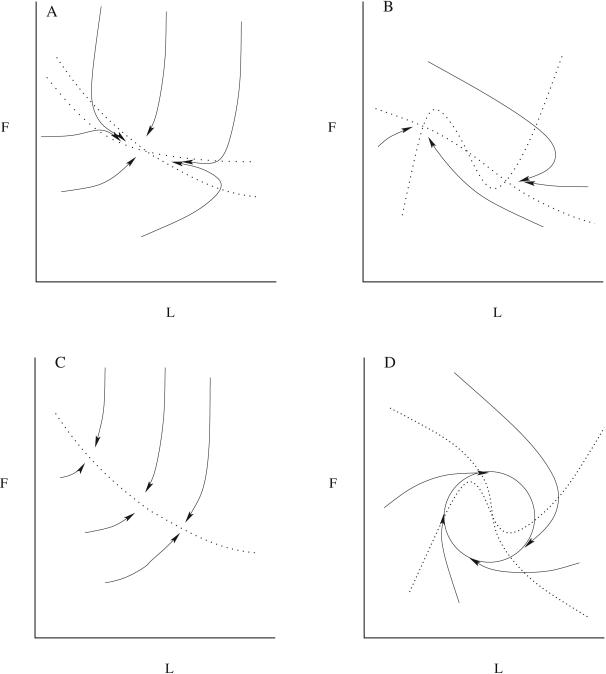
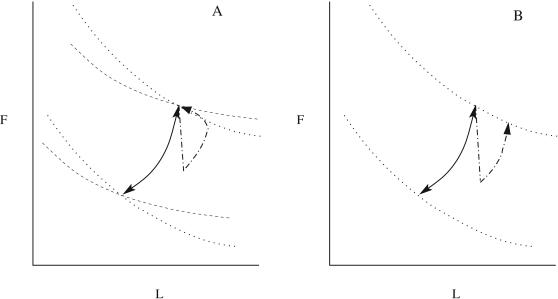
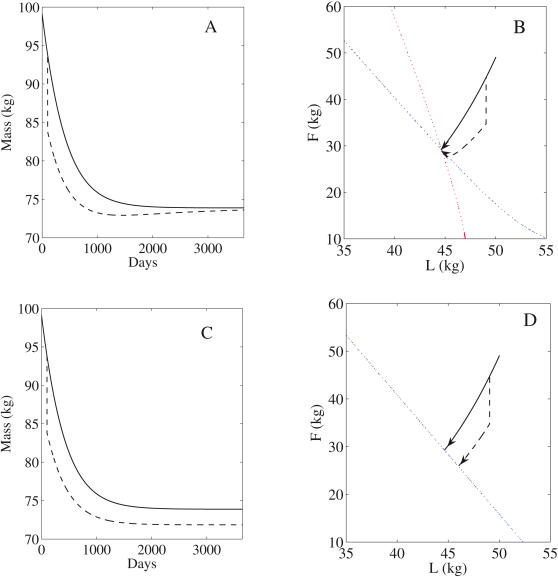
An imbalance between energy intake and energy expenditure will lead to a change in body weight (mass) and body composition (fat and lean masses). A quantitative understanding of the processes involved, which currently remains lacking, will be useful in determining the etiology and treatment of obesity and other conditions resulting from prolonged energy imbalance. Here, we show that a mathematical model of the macronutrient flux balances can capture the long-term dynamics of human weight change; all previous models are special cases of this model. We show that the generic dynamic behavior of body composition for a clamped diet can be divided into two classes. In the first class, the body composition and mass are determined uniquely. In the second class, the body composition can exist at an infinite number of possible states. Surprisingly, perturbations of dietary energy intake or energy expenditure can give identical responses in both model classes, and existing data are insufficient to distinguish between these two possibilities. Nevertheless, this distinction has important implications for the efficacy of clinical interventions that alter body composition and mass.
Overview
The claims and statistics of this paper haven’t been checked yet.
Run the check — free, no account needed. It reads the open-access text and checks the sources it cites.
Integrity signals
Registry
Cites
Statistics
Figures
Verification
Claims the paper makes
The claims and statistics of this paper haven’t been checked yet.
Run the check — free, no account needed. It reads the open-access text and checks the sources it cites.
Claims other papers make about this one
Each is checked against this paper’s own text: does it say what the citing paper says it does?
In the citing paper
“The integrated systems by which the brain and body communicate to regulate body weight may indicate single or multiple set-points for weight that may be difficult to adjust 12,19–21.”
From Cellular bioenergetics as a target for obesity therapy (2010) · cites this paper as [21]
Self-check
Percentages, sums and reported differences re-computed from the paper’s own numbers.
The self-check needs the paper’s full text.
Citations
Cites
Nonlinear Oscillations, Dynamical Systems, and Bifurcations of Vector Fields
Guckenheimer, J., & Holmes, P. (1983) · Applied Mathematical Sciences · doi:10.1007/978-1-4612-1140-2 · Cited by 16,144
Nonlinear Dynamics and Chaos: With Applications to Physics, Biology, Chemistry, and Engineering
Strogatz, S. H., Friedman, M. J., Mallinckrodt, A. J., & McKay, S. R. (1994) · Computers in Physics · doi:10.1063/1.4823332 · Cited by 4,654
Strogatz, S. H. (1998) · doi:10.1142/3481 · Cited by 4,542
Nonlinear Dynamics and Chaos: With Applications to Physics, Biology, Chemistry and Engineering
Strogatz, S. H., & Fox, R. F. (1995) · Physics Today · doi:10.1063/1.2807947 · Cited by 2,584
Obesity and the Environment: Where Do We Go from Here?
Hill, J. O., Wyatt, H. R., Reed, G. W., & Peters, J. C. (2003) · Science · doi:10.1126/science.1079857 · Cited by 2,180
THE BIOLOGY OF HUMAN STARVATION
Keys, A., BROŽEK, J., & Henschel, A. (1951) · The Medical Journal of Australia · doi:10.5694/j.1326-5377.1951.tb56499.x · Cited by 2,135
The Biology of Human Starvation: Volume I
KEYS, A., BROŽEK, J., HENSCHEL, A., MICKELSEN, O., & TAYLOR, H. L. (1950) · doi:10.5749/j.ctv9b2tqv · Cited by 2,039
Changes in Energy Expenditure Resulting from Altered Body Weight
Leibel, R. L., Rosenbaum, M., & Hirsch, J. (1995) · New England Journal of Medicine · doi:10.1056/nejm199503093321001 · Cited by 2,012
Report of the task group on reference man
(1979) · Annals of the ICRP · doi:10.1016/0146-6453(79)90123-4 · Cited by 1,715
Nonlinear oscillations, dynamical systems, and bifurcations of vector fields
Cowan, J. D. (1986) · Mathematical Biosciences · doi:10.1016/0025-5564(86)90154-9 · Cited by 1,080
Understanding and Addressing the Epidemic of Obesity: An Energy Balance Perspective
Hill, J. O. (2006) · Endocrine Reviews · doi:10.1210/er.2006-0032 · Cited by 610
Cunningham, J. (1991) · The American Journal of Clinical Nutrition · doi:10.1093/ajcn/54.6.963 · Cited by 607
Stiegler, P., & Cunliffe, A. (2006) · Sports Medicine · doi:10.2165/00007256-200636030-00005 · Cited by 474
Age and aerobic exercise training effects on whole body and muscle protein metabolism
Short, K. R., Vittone, J. L., Bigelow, M. L., Proctor, D. N., & Nair, K. S. (2004) · American Journal of Physiology-Endocrinology and Metabolism · doi:10.1152/ajpendo.00366.2003 · Cited by 470
Lean Body Mass-Body Fat Interrelationships in Humans
Forbes, G. B. (2009) · Nutrition Reviews · doi:10.1111/j.1753-4887.1987.tb02684.x · Cited by 342
Layman, D. K., Evans, E., Baum, J. I., Seyler, J., Erickson, D. J., & Boileau, R. A. (2005) · The Journal of Nutrition · doi:10.1093/jn/135.8.1903 · Cited by 330
What is the required energy deficit per unit weight loss?
Hall, K. D. (2008) · International Journal of Obesity · doi:10.1038/sj.ijo.0803720 · Cited by 229
Self-citationObesity as an adaptation to a high-fat diet: evidence from a cross-sectional study
Astrup, A. V., Buemann, B., Western, P., Toubro, S., Raben, A., & CHRISTENSEN, N. J. (1994) · American Journal of Clinical Nutrition · doi:10.1093/ajcn/59.2.350 · Cited by 213
Experiments on the metabolism of matter and energy in the human body, 1898-1900
Atwater, W. O., Benedict, F. G., & States., U. (1902) · Govt. Print. Off. eBooks · doi:10.5962/bhl.title.123031 · Cited by 204
Energy intake, physical activity and body weight: a simulation model
Westerterp, K. R., Donkers, J. H. H. L. M., Fredrix, E. W. H. M., & oekhoudt, P. (1995) · British Journal Of Nutrition · doi:10.1079/bjn19950037 · Cited by 202
Relationship of resting metabolic rate to body composition and protein turnover
Welle, S. L., & Nair, K. S. (1990) · American Journal of Physiology-Endocrinology and Metabolism · doi:10.1152/ajpendo.1990.258.6.e990 · Cited by 185
Pasarica, M., Shin, A. C., Yu, M., Yang, H., Rathod, M. A., Jen, K. C., MohanKumar, S. M. J., MohanKumar, P. S., Markward, N., & Dhurandhar, N. V. (2006) · Obesity · doi:10.1038/oby.2006.222 · Cited by 160
Body Fat Content Influences the Body Composition Response to Nutrition and Exercise
Forbes, G. B. (2000) · Annals of the New York Academy of Sciences · doi:10.1111/j.1749-6632.2000.tb06482.x · Cited by 147
Body fat and fat-free mass inter-relationships: Forbes's theory revisited
Hall, K. D. (2007) · British Journal of Nutrition · doi:10.1017/s0007114507691946 · Cited by 129
Self-citationVangipuram, S. D., Yu, M., Tian, J., Stanhope, K. L., Pasarica, M., Havel, P. J., Heydari, A. R., & Dhurandhar, N. V. (2006) · International Journal of Obesity · doi:10.1038/sj.ijo.0803366 · Cited by 122
Biller, B. M. K., Sesmilo, G., Baum, H. B. A., Hayden, D., Schoenfeld, D., & Klibanski, A. (2000) · The Journal of Clinical Endocrinology & Metabolism · doi:10.1210/jcem.85.3.6474 · Cited by 107
Computational model of in vivo human energy metabolism during semistarvation and refeeding
Hall, K. D. (2006) · American Journal of Physiology-Endocrinology and Metabolism · doi:10.1152/ajpendo.00523.2005 · Cited by 107
Self-citationThe Effects of Exercise Training on Fat-Mass Loss in Obese Patients During Energy Intake Restriction
Hansen, D., Dendale, P., Berger, J., van Loon, L. J. C., & Meeusen, R. (2007) · Sports Medicine · doi:10.2165/00007256-200737010-00003 · Cited by 106
Viruses as an Etiology of Obesity
Atkinson, R. L. (2007) · Mayo Clinic Proceedings · doi:10.4065/82.10.1192 · Cited by 105
Elia, M., Stubbs, R. J., & Henry, C. J. K. (1999) · Obesity Research · doi:10.1002/j.1550-8528.1999.tb00720.x · Cited by 105
Pattern of lean and fat deposition in adults
Dugdale, A. E., & Payne, P. (1977) · Nature · doi:10.1038/266349a0 · Cited by 93
Quantitative analysis of the energy requirements for development of obesity
Christiansen, E., Garby, L., & Sørensen, T. I. A. (2005) · Journal of Theoretical Biology · doi:10.1016/j.jtbi.2004.11.012 · Cited by 68
A model for the prediction of energy balance and body weight
Payne, P., & Dugdale, A. E. (1977) · Annals of Human Biology · doi:10.1080/03014467700002521 · Cited by 64
Astrup, A. V., Buemann, B., Christensen, N. J., & Madsen, J. (1992) · American Journal of Physiology-Endocrinology and Metabolism · doi:10.1152/ajpendo.1992.262.3.e282 · Cited by 51
Carbohydrate—Fat Interactions and Obesity Examined by a Two‐Compartment Computer Model
Flatt, J. P. (2004) · Obesity Research · doi:10.1038/oby.2004.252 · Cited by 50
A Respiration Calorimeter With Appliances For The Direct Determination Of Oxygen
Atwater, W. O., & Benedict, F. (2009) · Nutrition Reviews · doi:10.1111/j.1753-4887.1983.tb07139.x · Cited by 45
The equations governing weight change in human beings
Antonetti, V. W. (1973) · American Journal of Clinical Nutrition · doi:10.1093/ajcn/26.1.64 · Cited by 44
Weight Loss during Fasting: Implications for the Obese
Forbes, G. B. (1970) · American Journal of Clinical Nutrition · doi:10.1093/ajcn/23.9.1212 · Cited by 43
Dynamics of starvation in humans
Song, B., & Thomas, D. M. (2006) · Journal of Mathematical Biology · doi:10.1007/s00285-006-0037-7 · Cited by 41
Body Weight Setpoint, Metabolic Adaption and Human Starvation
Kozusko, F. (2001) · Bulletin of Mathematical Biology · doi:10.1006/bulm.2001.0229 · Cited by 40
Growth, thermogenesis, and hyperphagia
ALPERT, S. (1990) · American Journal of Clinical Nutrition · doi:10.1093/ajcn/52.5.784 · Cited by 37
A two-reservoir energy model of the human body
Alpert, S. (1979) · The American Journal of Clinical Nutrition · doi:10.1093/ajcn/32.8.1710 · Cited by 34
Jordan, P. N., & Hall, K. D. (2008) · American Journal of Clinical Nutrition · doi:10.1093/ajcn/87.3.692 · Cited by 31
Self-citationHow adaptations of substrate utilization regulate body composition
Hall, K. D., Bain, H., & Chow, C. C. (2007) · International Journal of Obesity · doi:10.1038/sj.ijo.0803608 · Cited by 30
Self-citationExperiments on the Metabolism of Matter and Energy in the Human Body 1898-1900
Atwater, W. O., & Benedict, F. G. (2009) · University of Florida Digital Collections (University of Florida) · Cited by 29
Twenty-four–hour energy expenditure and substrate utilization in body builders
Bosselaers, I., Buemann, B., Victor, O. J., & Astrup, A. V. (1994) · American Journal of Clinical Nutrition · doi:10.1093/ajcn/59.1.10 · Cited by 23
Biexponential Model for Predicting Weight Loss after Gastric Surgery for Obesity
Livingston, E. H., Sebastian, J. L., Huerta, S., Yip, I., & Heber, D. (2001) · Journal of Surgical Research · doi:10.1006/jsre.2001.6286 · Cited by 22
Patterns in food intake correlate with body mass index
Periwal, V., & Chow, C. C. (2006) · American Journal of Physiology-Endocrinology and Metabolism · doi:10.1152/ajpendo.00122.2006 · Cited by 21
Self-citationA limit on the energy transfer rate from the human fat store in hypophagia
Alpert, S. (2004) · Journal of Theoretical Biology · doi:10.1016/j.jtbi.2004.08.029 · Cited by 19
Girardier, L. (1994) · Archives of Physiology and Biochemistry · doi:10.3109/13813459109045389 · Cited by 7
Hall, K. D., & Jordan, P. N. (2008) · The FASEB Journal · doi:10.1096/fasebj.22.1_supplement.305.1 · Cited by 2
Self-citation
Research works printed but not linked: 2
- K Hall, 2002, Can a temporary high fat diet cause persistent obesity via acquired leptin resistance? Insights from a mathematical model., Diabetes, 51(S2), A607
- L Girardier, 1994, [autoregulation of body weight and body composition in man. a systematic approach through models and simulation]., Arch Int Physiol Biochim Biophys, 102, A23
Cited by
Sorted by citations
Quantification of the effect of energy imbalance on bodyweight
Hall, K. D., Sacks, G., Chandramohan, D., Chow, C. C., Wang, Y. C., Gortmaker, S. L., & Swinburn, B. A. (2011) · The Lancet · doi:10.1016/s0140-6736(11)60812-x · Cited by 1,165
Self-citationCellular bioenergetics as a target for obesity therapy
Tseng, Y.-H., Cypess, A. M., & Kahn, C. R. (2010) · Nature Reviews Drug Discovery · doi:10.1038/nrd3138 · Cited by 591
Thomas, D. M., Bouchard, C., Church, T., Slentz, C., Kraus, W. E., Redman, L. M., Martin, C. K., Silva, A. M., Vossen, M., Westerterp, K., et al. (2012) · Obesity Reviews · doi:10.1111/j.1467-789x.2012.01012.x · Cited by 280
Changes in energy expenditure with weight gain and weight loss in humans
Müller, M. J., Enderle, J., & Bosy-Westphal, A. (2016) · Current Obesity Reports · doi:10.1007/s13679-016-0237-4 · Cited by 267
Blundell, J. E., Caudwell, P., Gibbons, C., Hopkins, M., Näslund, E., King, N. A., & Finlayson, G. (2012) · British Journal of Nutrition · doi:10.1017/s0007114511003138 · Cited by 225
Metadata
- Authors
- Chow, C. C., & Hall, K. D.
- Affiliations
- National Institutes of Health (US)
- Corresponding author
- Chow, Carson C.
- Venue
- PLoS Computational Biology
- Publisher
- Public Library of Science (PLoS)
- Published
- 2008-03-28
- Volume
- 4
- Issue
- 3
- Pages
- e1000045
- ISSN
- 1553-734X (ISSN-L)
- 1553-7358
- PMC
- PMC2266991
- OpenAlex
- W2103014115
- Cited by
- 156
- References
- 51
- Citations by year
- 2026: 9 · 2025: 5 · 2024: 13 · 2023: 3 · 2022: 7 · 2021: 7 · 2020: 2 · 2019: 12 · 2018: 4 · 2017: 9 · 2016: 9 · 2015: 6 · 2014: 13 · 2013: 8 · 2012: 12
- FWCI
- 5.48
- Type
- journal article
- Language
- en
- Open access
- gold
- doi.org
- Licence
- Locations
- PLoS Computational Biology (publishedVersion, public-domain)
- PubMed Central (publishedVersion, public-domain)
- PubMed (publishedVersion)
- arXiv (Cornell University) (submittedVersion)
- RePEc: Research Papers in Economics (submittedVersion)
- DOAJ (DOAJ: Directory of Open Access Journals) (submittedVersion, cc-by-sa)
- arXiv (Cornell University) (public-domain)
- Funders
- National Institutes of Health
- National Institute of Diabetes and Digestive and Kidney Diseases
- Topics
- Life Sciences › Neuroscience › Endocrine and Autonomic Systems › Regulation of Appetite and Obesity
- Health Sciences › Medicine › Public Health, Environmental and Occupational Health › Obesity, Physical Activity, Diet
- Health Sciences › Medicine › Physiology (medical) › Body Composition Measurement Techniques
- Keywords
- weight change, energy balance, energy expenditure, body composition, fat mass, lean body mass, obesity, mathematical model, dynamical systems, multiple steady states, energy intake
- MeSH terms
- Body Composition, Computer Simulation, Eating, Energy Metabolism, Humans, Kinetics, Models, Biological, Obesity, Weight Gain, Weight Loss
About these checks
Registry, retraction, Cites and statistics results are computed, not judged, with one exception: a printed reference that no index lists is read once by a model before it counts as a citation error. Claims are extracted by a model and kept only when their quote appears verbatim in the text; each cited source is then checked, with a model’s help, for whether it says what the claim relies on. Those verdicts can be wrong — read the claim’s quote and the cited source before relying on one.
Statistics and arithmetic are recomputed, not judged.
Confidence bands are shown only for fields calibrated on our annotated test set. None is calibrated yet, so no band is shown.
What counts as a claim ›How we measure confidence ›How we check this ›
Are you an author, or do you see a problem with this page? Request a review
