

Efficient Reverse-Engineering of a Developmental Gene Regulatory Network
Open accessThe DOI matches its Crossref record; 111 of the 113 references it cites were found in a registry or an index.
Abstract
Understanding the complex regulatory networks underlying development and evolution of multi-cellular organisms is a major problem in biology. Computational models can be used as tools to extract the regulatory structure and dynamics of such networks from gene expression data. This approach is called reverse engineering. It has been successfully applied to many gene networks in various biological systems. However, to reconstitute the structure and non-linear dynamics of a developmental gene network in its spatial context remains a considerable challenge. Here, we address this challenge using a case study: the gap gene network involved in segment determination during early development of Drosophila melanogaster. A major problem for reverse-engineering pattern-forming networks is the significant amount of time and effort required to acquire and quantify spatial gene expression data. We have developed a simplified data processing pipeline that considerably increases the throughput of the method, but results in data of reduced accuracy compared to those previously used for gap gene network inference. We demonstrate that we can infer the correct network structure using our reduced data set, and investigate minimal data requirements for successful reverse engineering. Our results show that timing and position of expression domain boundaries are the crucial features for determining regulatory network structure from data, while it is less important to precisely measure expression levels. Based on this, we define minimal data requirements for gap gene network inference. Our results demonstrate the feasibility of reverse-engineering with much reduced experimental effort. This enables more widespread use of the method in different developmental contexts and organisms. Such systematic application of data-driven models to real-world networks has enormous potential. Only the quantitative investigation of a large number of developmental gene regulatory networks will allow us to discover whether there are rules or regularities governing development and evolution of complex multi-cellular organisms.
Overview
The claims and statistics of this paper haven’t been checked yet.
Free: it reads the open-access text and checks the first 5 claims that cite a source we can check. Create a free account to check every claim.
Integrity signals
Registry
Cites
Statistics
Figures


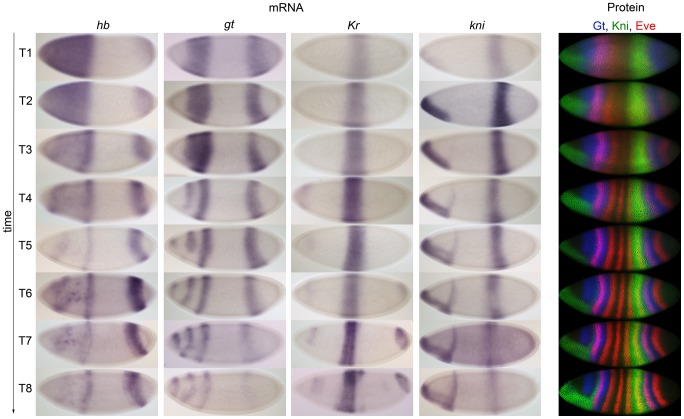
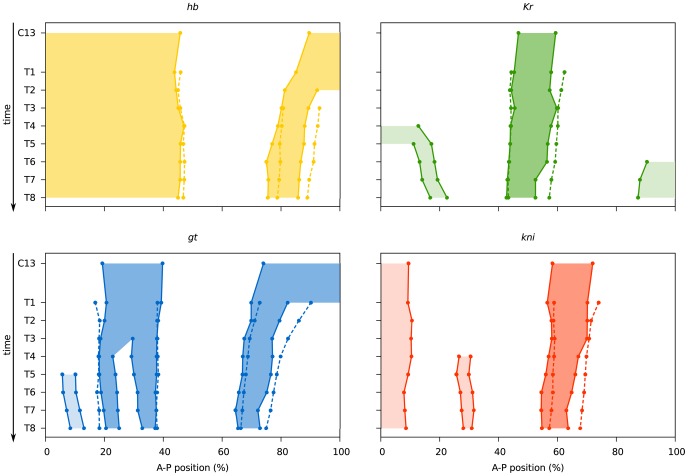
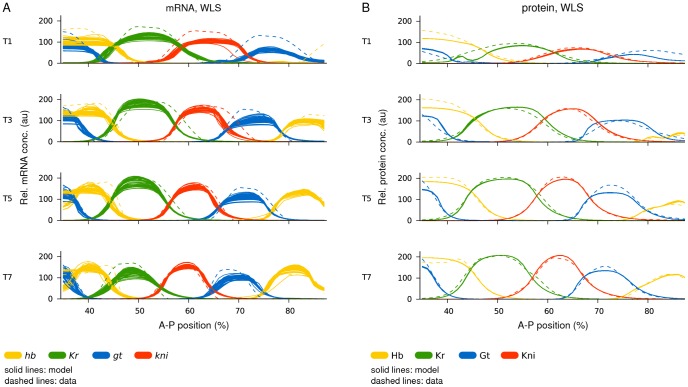

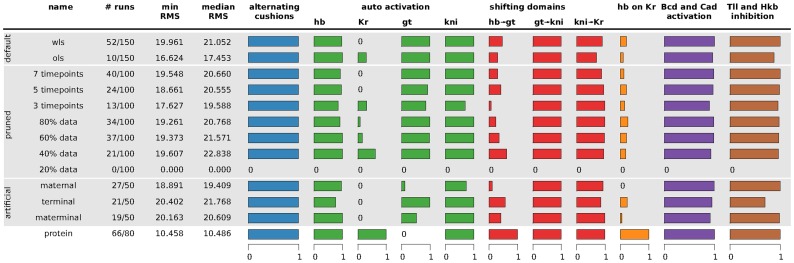
Verification
Claims the paper makes
The claims and statistics of this paper haven’t been checked yet.
Free: it reads the open-access text and checks the first 5 claims that cite a source we can check. Create a free account to check every claim.
Claims other papers make about this one
Each is checked against this paper’s own text: does it say what the citing paper says it does?
In the citing paper
“In the case of evolutionary and developmental biology, reverse engineering of gene regulatory networks (GRNs) and numerical (in silico) evolutionary simulations have been used [15,16] to explain observed phenomena and, more importantly, to suggest new hypotheses and future experimental work.”
From Reverse engineering and identification in systems biology: strategies, perspectives and challenges (2014) · cites this paper as [16]
Self-check
Percentages, sums and reported differences re-computed from the paper’s own numbers.
The self-check needs the paper’s full text.
Citations
Cites
System Identification: Theory for the User
Lennart Ljung, A. (1987) · Cited by 17,690
Principal warps: thin-plate splines and the decomposition of deformations
Bookstein, F. L. (1989) · IEEE Transactions on Pattern Analysis and Machine Intelligence · doi:10.1109/34.24792 · Cited by 4,913
Computer graphics: principles and practice
(2014) · Choice Reviews Online · doi:10.5860/choice.51-2713 · Cited by 4,651
Ljung, L. (1999) · Wiley Encyclopedia of Electrical and Electronics Engineering · doi:10.1002/047134608x.w1046 · Cited by 3,778
Gonzalez, R. C., & Woods, R. E. (1977) · SDÜ Bilgi Merkezi · Cited by 3,736
Morphological Image Analysis: Principles and Applications
(2000) · Sensor Review · doi:10.1108/sr.2000.08720cae.001 · Cited by 3,537
Modeling and Simulation of Genetic Regulatory Systems: A Literature Review
de Jong, H. (2002) · Journal of Computational Biology · doi:10.1089/10665270252833208 · Cited by 2,663
SUNDIALS: Suite of nonlinear and differential/algebraic equation solvers
Hindmarsh, A. C., Brown, P. N., Grant, K. E., Lee, S. L., Serban, R., Shumaker, D. E., & Woodward, C. S. (2005) · ACM Transactions on Mathematical Software · doi:10.1145/1089014.1089020 · Cited by 2,556 · cited 2×
“equations that is generated at each integration step [68].”
BackgroundTautz, D., & Pfeifle, C. (1989) · Chromosoma · doi:10.1007/bf00291041 · Cited by 2,523 · cited 1×
“Wild-type blastoderm-stage Drosophila embryos were collected after 4 hrs of egg laying and stained with a colorimetric in situ hybridisation protocol adapted from [52] and [53].”
MethodMargolin, A. A., Nemenman, I., Basso, K., Wiggins, C., Stolovitzky, G., Favera, R. D., & Califano, A. (2006) · BMC Bioinformatics · doi:10.1186/1471-2105-7-s1-s7 · Cited by 2,420
Research works printed but not linked: 2
- Lam J Delosme JM 1988 An efficient simulated annealing schedule: derivation. New Haven, CT: Yale Electrical Engineering Department. Technical Report 8816
- Lam J Delosme JM 1988 An efficient simulated annealing schedule: implementation and evaluation. New Haven, CT: Yale Electrical Engineering Department. Technical Report 8817
Cited by
Structure and dynamics of molecular networks: A novel paradigm of drug discovery
Csermely, P., Korcsmáros, T., Kiss, H. J. M., London, G., & Nussinov, R. (2013) · Pharmacology & Therapeutics · doi:10.1016/j.pharmthera.2013.01.016 · Cited by 892
“This is one reason, why combination of various methods (or the use of iterative approaches) may outperform individual methodologies (Liang et al., 1998a; Akutsu et al., 1999; Ideker et al., 2000; Kholodenko et al., 2002; Yeung et al., 2002; Segal et al., 2003; Tegnér et al., 2003; Friedman, 2004; Tegnér & Bjorkegren,…”
MethodInfluentialReverse engineering and identification in systems biology: strategies, perspectives and challenges
Villaverde, A. F., & Banga, J. R. (2014) · Journal of The Royal Society Interface · doi:10.1098/rsif.2013.0505 · Cited by 229
“In the case of evolutionary and developmental biology, reverse engineering of gene regulatory networks (GRNs) and numerical (in silico) evolutionary simulations have been used [15,16] to explain observed phenomena”
Accurate measurements of dynamics and reproducibility in small genetic networks
Dubuis, J. O., Samanta, R., & Gregor, T. (2013) · Molecular Systems Biology · doi:10.1038/msb.2012.72 · Cited by 172
Biosystems Design by Machine Learning
Volk, M., Lourentzou, I., Mishra, S., Vo, L. T., Zhai, C., & Zhao, H. (2020) · ACS Synthetic Biology · doi:10.1021/acssynbio.0c00129 · Cited by 164
Janssens, H., Siggens, K., Cicin-Sain, D., Jiménez-Guri, E., Musy, M., Akam, M. E., & Jaeger, J. (2014) · EvoDevo · doi:10.1186/2041-9139-5-1 · Cited by 114
“These networks can then be analyzed to gain insights into the regulatory processes underlying observed gene expression or phenotypic traits (for example, see [42-49]).”
BackgroundSelf-citationModularity, criticality, and evolvability of a developmental gene regulatory network
Verd, B., Monk, N., & Jaeger, J. (2019) · eLife · doi:10.7554/elife.42832 · Cited by 109
Self-citationRecent advances in machine learning applications in metabolic engineering
Patra, P., B.R., D., Kundu, P., Das, M., & Ghosh, A. (2023) · Biotechnology Advances · doi:10.1016/j.biotechadv.2022.108069 · Cited by 82
Lobo, D., & Levin, M. G. (2015) · PLoS Computational Biology · doi:10.1371/journal.pcbi.1004295 · Cited by 84
A damped oscillator imposes temporal order on posterior gap gene expression in Drosophila
Verd, B., Clark, E., Wotton, K. R., Janssens, H., Jiménez-Guri, E., Crombach, A., & Jaeger, J. (2018) · PLoS Biology · doi:10.1371/journal.pbio.2003174 · Cited by 77
“We obtain values for parameters R, λ, W , E, and h by fitting the model to data over a full spatial range covering the segmented trunk region between 35 and 92% A–P position [26,32,35, 36].”
BackgroundMethodInfluentialSelf-citationWotton, K. R., Jiménez-Guri, E., Crombach, A., Janssens, H., Alcaine-Colet, A., Lemke, S., Schmidt‐Ott, U., & Jaeger, J. (2015) · RECERCAT (Consorci de Serveis Universitaris de Catalunya) · doi:10.7554/elife.04785.001 · Cited by 71
Self-citationBioPreDyn-bench: a suite of benchmark problems for dynamic modelling in systems biology
Villaverde, A. F., Henriques, D., Smallbone, K., Bongard, S., Schmid, J., Cicin-Sain, D., Crombach, A., Sáez-Rodríguez, J., Mauch, K., Balsa‐Canto, E., et al. (2015) · BMC Systems Biology · doi:10.1186/s12918-015-0144-4 · Cited by 85
“This proportionality of variation with expression level reflects the fact that gap domains (showing high levels of expression) show more variation than those regions of the embryo in which a gene is not expressed [29].”
BackgroundMethodInfluentialSelf-citationDurant, F., Lobo, D., Hammelman, J., & Levin, M. G. (2016) · Regeneration · doi:10.1002/reg2.54 · Cited by 67
“The reverse engineering of the regulatory network controlling the early patterning of the Drosophila embryo from one-dimensional gene expression data represents one of the most successful applications of these heuristic methods (Reinitz et al. 1995, 1998; Jaeger et al. 2004; Perkins et al. 2006; Manu et al. 2009; Crom…”
MethodAdapting machine-learning algorithms to design gene circuits
Hiscock, T. W. (2019) · BMC Bioinformatics · doi:10.1186/s12859-019-2788-3 · Cited by 71
Dynamic Maternal Gradients Control Timing and Shift-Rates for Drosophila Gap Gene Expression
Verd, B., Crombach, A., & Jaeger, J. (2017) · PLoS Computational Biology · doi:10.1371/journal.pcbi.1005285 · Cited by 62
“[21], modified to include time-variable external regulatory 158 inputs as previously described [26,34].”
Self-citationGap Gene Regulatory Dynamics Evolve along a Genotype Network
Crombach, A., Wotton, K. R., Jiménez-Guri, E., & Jaeger, J. (2016) · Molecular Biology and Evolution · doi:10.1093/molbev/msw013 · Cited by 53
“melanogaster models [65,66] to represent an equivalent set of a gap domains in each species.”
InfluentialSelf-citationLobikin, M., Lobo, D., Blackiston, D. J., Martyniuk, C. J., Tkachenko, E., & Levin, M. G. (2015) · Science Signaling · doi:10.1126/scisignal.aac6609 · Cited by 57
Jaeger, J., & Crombach, A. (2012) · Advances in experimental medicine and biology · doi:10.1007/978-1-4614-3567-9_5 · Cited by 60
Self-citationReverse-Engineering Post-Transcriptional Regulation of Gap Genes in Drosophila melanogaster
Becker, K., Balsa‐Canto, E., Cicin-Sain, D., Hoermann, A., Janssens, H., Banga, J. R., & Jaeger, J. (2013) · PLoS Computational Biology · doi:10.1371/journal.pcbi.1003281 · Cited by 48
“The extent of this movement is on the same order of magnitude as the analogous shifts of the corresponding protein domains (Figure 2B, Supplementary Table S1) [22,59,66].”
BackgroundMethodResultInfluentialSelf-citationWu, H., Manu, Jiao, R., & Ma, J. (2015) · Nature Communications · doi:10.1038/ncomms10031 · Cited by 49
Comparative transcriptomics of early dipteran development
Jiménez-Guri, E., Huerta‐Cepas, J., Cozzuto, L., Wotton, K. R., Kang, H., Himmelbauer, H., Roma, G., Gabaldón, T., & Jaeger, J. (2013) · BMC Genomics · doi:10.1186/1471-2164-14-123 · Cited by 45
“[95] and Kosman [96], which is described in detail in [97].”
BackgroundSelf-citationData‐driven modelling of a gene regulatory network for cell fate decisions in the growing limb bud
Uzkudun, M., Marcon, L., & Sharpe, J. A. (2015) · Molecular Systems Biology · doi:10.15252/msb.20145882 · Cited by 40
“…to be a non-quantitative technique; however, previous studies in Drosophila (in a static 1D domain) have shown that successful reverse-engineering of gene regulatory networks does not require knowledge of the absolute concentrations of gene products (Jaeger et al , 2004; Crombach et al , 2012).”
MethodResultA Staging Scheme for the Development of the Moth Midge Clogmia albipunctata
Jiménez-Guri, E., Wotton, K. R., Gavilán, B., & Jaeger, J. (2014) · PLoS ONE · doi:10.1371/journal.pone.0084422 · Cited by 41
“Pictures for DAPI counterstaining, in situ hybridisation, and antibody staining experiments were acquired and processed as described in [21].”
MethodSelf-citationLogical modelling of Drosophila signalling pathways
Mbodj, A., Junion, G., Brun, C., Furlong, E. E. M., & Thieffry, D. (2013) · Molecular BioSystems · doi:10.1039/c3mb70187e · Cited by 41
Crombach, A., Garcia-Solache, M. A., & Jaeger, J. (2014) · Biosystems · doi:10.1016/j.biosystems.2014.06.003 · Cited by 36
Self-citationLiang, Y., & Kelemen, A. (2017) · Briefings in Bioinformatics · doi:10.1093/bib/bbx036 · Cited by 41
“Note that the aim of reverse engineering is to infer, analyze and understand, through the interplay and the functional and regulatory mechanisms of biological systems [21, 25].”
BackgroundLack of tailless leads to an increase in expression variability in Drosophila embryos
Janssens, H., Crombach, A., Wotton, K. R., Cicin-Sain, D., Surkova, S. Y., Lim, C. L., Samsonova, M. G., Akam, M. E., & Jaeger, J. (2013) · Developmental Biology · doi:10.1016/j.ydbio.2013.01.010 · Cited by 32
“A detailed description of the protocol can be found in Crombach et al. (2012). lacZ riboprobe (Jiang et al.”
Self-citationLobo, D., Lobikin, M., & Levin, M. (2017) · Scientific Reports · doi:10.1038/srep41339 · Cited by 30
Castro‐González, C., Luengo-Oroz, M. A., Duloquin, L., Savy, T., Rizzi, B., Salomé‐Desnoulez, S., Doursat, R., Kergosien, Y. L., Ledesma‐Carbayo, M. J., Bourgine, P., et al. (2014) · PLoS Computational Biology · doi:10.1371/journal.pcbi.1003670 · Cited by 33
“The spatiotemporal data offered by a 4D atlas of gene expression with resolution at the cellular level is expected to provide the necessary measurements for further modeling of the GRN dynamics and possible integration of the genetic and cellular levels of organization [19].”
BackgroundZhou, X., Ling, M., Qingde, L., Tang, S., Wu, J., & Hu, H. (2023) · IEEE Transactions on Computational Biology and Bioinformatics · doi:10.1109/tcbb.2023.3323552 · Cited by 31
A Staging Scheme for the Development of the Scuttle Fly Megaselia abdita
Wotton, K. R., Jiménez-Guri, E., Matheu, B. G., & Jaeger, J. (2014) · PLoS ONE · doi:10.1371/journal.pone.0084421 · Cited by 31
“In Situ Hybridisation In situ hybridisation was carried out as described in [34]”
MethodSelf-citationCrombach, A., Cicin-Sain, D., Wotton, K. R., & Jaeger, J. (2012) · PLoS ONE · doi:10.1371/journal.pone.0046658 · Cited by 27
“V system and wing imaginal disk of Drosophila (refs).”
BackgroundMethodResultInfluentialSelf-citationParallel simulated annealing using an adaptive resampling interval
Lou, Z., & Reinitz, J. (2016) · Parallel Computing · doi:10.1016/j.parco.2016.02.001 · Cited by 31
“AC CE PT ED M AN US CR IP T tions in developmental biology and systems biology rely heavily on this particular method of optimization [2, 3, 4, 5, 6].”
BackgroundMethodShift happens: The developmental and evolutionary dynamics of the gap gene system
Jaeger, J. (2018) · Current Opinion in Systems Biology · doi:10.1016/j.coisb.2018.08.004 · Cited by 24
Self-citationBioimage Informatics in the context of Drosophila research
Jug, F., Pietzsch, T., Preibisch, S., & Tomančák, P. (2014) · Methods · doi:10.1016/j.ymeth.2014.04.004 · Cited by 23
Cicin-Sain, D., Hermoso, A., Crombach, A., Wotton, K. R., Jiménez-Guri, E., Taly, J.-F., Roma, G., & Jaeger, J. (2014) · Nucleic Acids Research · doi:10.1093/nar/gku1142 · Cited by 20
“These data were further post-processed and re-scaled to facilitate comparison between species as previously described (19).”
BackgroundMethodInfluentialSelf-citationDynamical modules in metabolism, cell and developmental biology
Jaeger, J., & Monk, N. (2021) · Interface Focus · doi:10.1098/rsfs.2021.0011 · Cited by 20
Self-citationPredicting Ancestral Segmentation Phenotypes from Drosophila to Anopheles Using In Silico Evolution
Rothschild, J., Tsimiklis, P., Siggia, E. D., & François, P. (2016) · PLoS Genetics · doi:10.1371/journal.pgen.1006052 · Cited by 20
Lobo, D., Morokuma, J., & Levin, M. G. (2016) · Bioinformatics · doi:10.1093/bioinformatics/btw299 · Cited by 20
“…directly from experimental data (Bonneau et al. , 2006; Schmidt and Lipson, 2009; Sirbu et al. , 2010; Yeung et al. , 2002), including biological development (Becker et al. , 2013; Crombach et al. , 2012; Jaeger et al. , 2004; Manu et al. , 2009; Perkins et al. , 2006; Reinitz et al. , 1995, 1998).”
MethodReverse-engineering biological networks from large data setsPreprint
Natale, J. L., Hofmann, D., Hernández, D. G., & Nemenman, I. M. (2017) · bioRxiv (Cold Spring Harbor Laboratory) · doi:10.1101/142034 · Cited by 20
Botman, D., Röttinger, É., Martindale, M. Q., de Jong, J., & Kaandorp, J. A. (2014) · PLoS ONE · doi:10.1371/journal.pone.0103341 · Cited by 16
“[28] for Drosophila.”
Dynamic positional information: Patterning mechanism versus precision in gradient-driven systems
Jaeger, J., & Verd, B. (2019) · Current topics in developmental biology/Current Topics in Developmental Biology · doi:10.1016/bs.ctdb.2019.11.017 · Cited by 16
Self-citationMaternal Co-ordinate Gene Regulation and Axis Polarity in the Scuttle Fly Megaselia abdita
Wotton, K. R., Jiménez-Guri, E., & Jaeger, J. (2015) · PLoS Genetics · doi:10.1371/journal.pgen.1005042 · Cited by 15
“For antibody stains, wild-type blastoderm-stage embryos were collected after 4 hrs of egg laying and stained with a colorimetric protocol adapted from the in situ protocol published in [85].”
MethodSelf-citationBridging physiological and evolutionary time‐scales in a gene regulatory network
Marchand, G., Huynh‐Thu, V. A., Kane, N. C., Arribat, S., Varès, D., Rengel, D., Balzergue, S., Rieseberg, L. H., Vincourt, P., Geurts, P., et al. (2014) · New Phytologist · doi:10.1111/nph.12818 · Cited by 18
“To date, systems biology approaches, such as GRN inference, have been mostly restricted to model species, such as yeast (Dikicioglu et al., 2011), Drosophila (Crombach et al., 2012), or Arabidopsis (Ma et al., 2007), and are typically performed under laboratory conditions.”
BackgroundMethods of biological network inference for reverse engineering cancer chemoresistance mechanisms
Lecca, P. (2013) · Drug Discovery Today · doi:10.1016/j.drudis.2013.10.026 · Cited by 15
S100A4 and its role in metastasis – computational integration of data on biological networks
Buetti‐Dinh, A., Pivkin, I. V., & Friedman, R. (2015) · Molecular BioSystems · doi:10.1039/c5mb00110b · Cited by 15
Hoermann, A., Cicin-Sain, D., & Jaeger, J. (2016) · Developmental Biology · doi:10.1016/j.ydbio.2016.01.005 · Cited by 16
“Additional repression caused by the appearance of the posterior hb domain leads to narrowing and anterior shift of the posterior gt domain (Crombach et al., 2012b; Eldon and Pirrotta, 1991; Jaeger et al., 2004b; Kraut and Levine, 1991a, 1991b; Mohler et al., 1989).”
BackgroundMethodSelf-citationComputing a Worm: Reverse-Engineering Planarian Regeneration
Lobo, D., & Levin, M. G. (2016) · Emergence, complexity and computation · doi:10.1007/978-3-319-33921-4_24 · Cited by 15
Approximated gene expression trajectories for gene regulatory network inference on cell tracks
Spiess, K., Taylor, S. E., Fulton, T., Toh, K., Saunders, D., Hwang, S., Wang, Y., Paige, B., Steventon, B., & Verd, B. (2024) · iScience · doi:10.1016/j.isci.2024.110840 · Cited by 14
Zheng, Z., Christley, S., Chiu, W. T. Y., Blitz, I. L., Xie, X. S., Cho, K. W. Y., & Nie, Q. H. (2014) · BMC Systems Biology · doi:10.1186/1752-0509-8-3 · Cited by 13
“melanogaster [46-49].”
Dynamic maternal gradients and morphogenetic networks in Drosophila early embryo
Surkova, S. Y., Golubkova, E. V., Мамон, Л. А., & Samsonova, M. G. (2018) · Biosystems · doi:10.1016/j.biosystems.2018.10.009 · Cited by 11
Li, J., Wei, H., Liu, T., & Zhao, P. X. (2013) · Nucleic Acids Research · doi:10.1093/nar/gkt983 · Cited by 11
Bandodkar, P. U., Shaikh, R., & Reeves, G. T. (2023) · Bioinformatics · doi:10.1093/bioinformatics/btad403 · Cited by 9
Crombach, A., & Jaeger, J. (2021) · Springer eBooks · doi:10.1007/978-3-030-71737-7_4 · Cited by 9
Self-citationDescriptive vs. Mechanistic Network Models in Plant Development in the Post-Genomic Era
Dávila-Velderrain, J., Martínez‐García, J. C., & Alvarez-Buylla, E. R. (2015) · Methods in molecular biology · doi:10.1007/978-1-4939-2444-8_23 · Cited by 7
MoCha: Molecular Characterization of Unknown Pathways
Lobo, D., Hammelman, J., & Levin, M. G. (2016) · Journal of Computational Biology · doi:10.1089/cmb.2015.0211 · Cited by 10
“…et al., 2006; Molinelli et al., 2013) as well as from in situ hybridization and immunohistochemical images (Reinitz et al., 1995; Perkins et al., 2006; Fomekong-Nanfack et al., 2007; Crombach et al., 2012; Becker et al., 2013) statistically quantify the fit between the data and model output.”
BackgroundCuration and annotation of planarian gene expression patterns with segmented reference morphologies
Roy, J., Cheung, E., Bhatti, J., Muneem, A., & Lobo, D. (2020) · Bioinformatics · doi:10.1093/bioinformatics/btaa023 · Cited by 9
Dynamical Modularity of the Genotype-Phenotype Map
Jaeger, J., & Monk, N. (2021) · Springer eBooks · doi:10.1007/978-3-030-71737-7_11 · Cited by 14
Self-citationFor a new dialogue between theoretical and empirical studies in evo-devo
Fusco, G. (2015) · Frontiers in Ecology and Evolution · doi:10.3389/fevo.2015.00097 · Cited by 8
“…truly general theory of evolution (Rice, 2004, 2011), through systems-biology approaches based on mathematical modeling of gene regulatory networks (Crombach et al., 2012; Jaeger and Monk, 2014), and computational studies on the origin of innovations at the level of basic biological systems, such…”
BackgroundHeFeng, F. Q., Wang, W., Zheng, P., Sudhakar, P., Sun, J., & Zeng, A. (2013) · Integrative Biology · doi:10.1039/c3ib40180d · Cited by 7
Huang, K., Tian, J., Сун, Л., Hu, H., Huang, X., Zhou, S., Deng, A., Zhou, Z., Jiang, M., Li, G., et al. (2025) · BMC Genomics · doi:10.1186/s12864-025-11434-y · Cited by 7
“However, considering the complex regulatory relationships and hidden functional patterns that genes often exhibit in organisms [16, 17], these discarded genes may actually be upstream or downstream interacting genes of critical value.”
Stable developmental patterns of gene expression without morphogen gradients
Majka, M., Becker, N. B., ten Wolde, P. R., Zagórski, M., & Sokolowski, T. R. (2024) · PLoS Computational Biology · doi:10.1371/journal.pcbi.1012555 · Cited by 9
Wotton, K. R. (2014) · Arthropod Structure & Development · doi:10.1016/j.asd.2014.08.001 · Cited by 6
Self-citationHigh-resolution gene expression data from blastoderm embryos of the scuttle fly Megaselia abdita
Wotton, K. R., Jiménez-Guri, E., Crombach, A., Cicin-Sain, D., & Jaeger, J. (2015) · Scientific Data · doi:10.1038/sdata.2015.5 · Cited by 6
Self-citationScatter Search Applied to the Inference of a Development Gene Network
Abdol, A. M., Cicin-Sain, D., Kaandorp, J. A., & Crombach, A. (2017) · Computation · doi:10.3390/computation5020022 · Cited by 6
“melanogaster mRNA expression data (Figure 4a) [14], while we obtained similar results for protein expression data (Figure 4c,d) [13].”
BackgroundMethodResultInfluentialSelf-citationClassification-Based Inference of Dynamical Models of Gene Regulatory Networks
Fehr, D. A., Handzlik, J. E., Manu, & Loh, Y. L. (2019) · G3 Genes Genomes Genetics · doi:10.1534/g3.119.400603 · Cited by 6
A non-linear reverse-engineering method for inferring genetic regulatory networks
Wu, S., Cui, T., Zhang, X., & Tian, T. (2020) · PeerJ · doi:10.7717/peerj.9065 · Cited by 5
“Although the non-linearity has been addressed by the reverse-engineering methods with the cost of more unknown parameters (Chickarmane & Peterson, 2008; Crombach et al., 2012; Meister et al., 2013; Li & Wang, 2013; Wang et al., 2016), the issue of protein heterodimers and/or synergistic effect between genes has not be…”
Erdoğdu, U., Polat, F., & Alhajj, R. (2017) · Artificial Intelligence in Medicine · doi:10.1016/j.artmed.2017.06.007 · Cited by 4
Inference of Gene Regulatory Network with S-system and Artificial Bee Colony Algorithm
Mahfuz, O. B., & Showkat, D. (2018) · International Conference on Informatics, Electronics & Vision (ICIEV) · doi:10.1109/iciev.2018.8641008 · Cited by 4
“The genes, regulators and regulatory connection between them make a genetic regulatory network [9].”
BackgroundWotton, K. R., Jiménez-Guri, E., Crombach, A., Janssens, H., Alcaine-Colet, A., Lemke, S., Schmidt‐Ott, U., & Jaeger, J. (2015) · eLife · doi:10.7554/elife.04785 · Cited by 72
“P position; Figure 10) (Crombach et al., 2012a).”
BackgroundMethodResultInfluentialSelf-citationBioPreDyn-bench: benchmark problems for kinetic modelling in systems biologyPreprint
Villaverde, A. F., Henriques, D., B, K. S. A., Bongard, S., Schmid, J., Cicin-Sain, D., Crombach, A., Sáez-Rodríguez, J., Mauch, K., Balsa‐Canto, E., et al. (2014) · arXiv (Cornell University) · doi:10.48550/arxiv.1407.5856 · Cited by 3
“The fit is measured with a weighted least squares scheme (WLS) with variable weights, which, in the case of the mRNA data used here [29], are inversely related to the level of expression.”
BackgroundMethodInfluentialSelf-citationMultifaceted effects on even-skipped transcriptional dynamics upon Krüppel dosage changes
Lin, S., & Lim, B. (2024) · Development · doi:10.1242/dev.202132 · Cited by 3
Duk, M. A., Gursky, V. V., Samsonova, M. G., & Surkova, S. Y. (2021) · Life · doi:10.3390/life11111232 · Cited by 2
Developmental Pattern Formation: Spanish Contributions from a Biophysical Perspective
Buceta, J., & Guitou, L. (2023) · Biophysica · doi:10.3390/biophysica3020022 · Cited by 1
Patterning, Dynamics and Evolution in the Ocellar Complex of the Fruit Fly
Aguilar‐Hidalgo, D., Casares, F., & Lemos, M. C. (2017) · Understanding complex systems · doi:10.1007/978-3-319-72218-4_2 · Cited by 1
Taslim, C., Allen, T. T., Lauria, M., & Tseng, S. (2020) · Journal of Industrial and Production Engineering · doi:10.1080/21681015.2020.1784299 · Cited by 1
Castro‐González, C. (2013) · UPM Digital Archive (Technical University of Madrid) · doi:10.20868/upm.thesis.14939
Arsene, C., Ardevan, D., & Bulzu, P. (2014) · Lecture notes in computer science · doi:10.1007/978-3-319-09042-9_12
strategies, perspectives and challenges Reverse engineering and identification in systems biology:
Villaverde, A. F., & Banga, J. R. (2014)
Dynamic Maternal Gradients Control Timing and Shift-Rates for Drosophila Gap Gene ExpressionPreprint
Verd, B., Crombach, A., & Jaeger, J. (2016) · bioRxiv (Cold Spring Harbor Laboratory) · doi:10.1101/068064
Self-citationMatsumoto, H., Kiryu, H., Kojima, Y., Yaginuma, S., & Nikaido, I. (2017) · bioRxiv (Cold Spring Harbor Laboratory) · doi:10.1101/213025 · Cited by 1
“Several theoretical studies have been conducted to describe the spatial expression patterns of gap genes and infer the GRN by using reaction–diffusion (RD) and similar models[6, 7, 8, 9, 10, 11, 12, 13, 14, 15, 16].”
BackgroundHuang, K., Tian, J., Сун, Л., Xie, P., Zhou, S., Deng, A., Mo, P., Zhou, Z., Jiang, M., Li, G., et al. (2023) · bioRxiv (Cold Spring Harbor Laboratory) · doi:10.1101/2023.09.26.559592 · Cited by 2
DataXflowGen for GenAI-driven model generation
Crouch, S. A. W., & Breitenbach, T. (2026) · Scientific Reports · doi:10.1038/s41598-026-56492-8 · Cited by 1
On the Modeling of Developmental Gene Regulatory Networks
Davidson, E. H., & Peter, I. S. (2015) · Elsevier eBooks · doi:10.1016/b978-0-12-404729-7.00006-x · Cited by 2
Metadata
- Authors
- Crombach, A., Wotton, K. R., Cicin-Sain, D., Ashyraliyev, M., & Jaeger, J.
- Affiliations
- Universitat Pompeu Fabra (ES)
- Bahçeşehir University (TR)
- Corresponding author
- Jaeger, Johannes
- Venue
- PLoS Computational Biology
- Publisher
- Public Library of Science (PLoS)
- Published
- 2012-07-12
- Volume
- 8
- Issue
- 7
- Pages
- e1002589
- ISSN
- 1553-734X (ISSN-L)
- 1553-7358
- PMC
- PMC3395622
- OpenAlex
- W2051676319
- Cited by
- 83
- References
- 113
- Citations by year
- 2026: 1 · 2025: 1 · 2024: 3 · 2023: 4 · 2022: 1 · 2021: 4 · 2020: 4 · 2019: 4 · 2018: 4 · 2017: 8 · 2016: 9 · 2015: 13 · 2014: 14 · 2013: 11 · 2012: 2
- FWCI
- 5.15
- Type
- journal article
- Language
- en
- Open access
- gold
- doi.org
- Locations
- PLoS Computational Biology (publishedVersion, cc-by)
- Europe PMC (PubMed Central) (publishedVersion, cc-by)
- PubMed Central (publishedVersion, cc-by)
- PubMed (publishedVersion)
- DOAJ (DOAJ: Directory of Open Access Journals) (submittedVersion, cc-by-sa)
- Figshare (submittedVersion, cc-by)
- Figshare (submittedVersion)
- Open Research Exeter (University of Exeter) (submittedVersion, other-oa)
- Funders
- European Commission (KBBE-2011-5, FP7-KBBE-2011–5, 289434, FP7-KBBE)
- Ministerio de Economía y Competitividad (BFU2009-10184)
- Agència de Gestió d'Ajuts Universitaris i de Recerca (BFU2009-10184, SGR Grant 406)
- FP7 Food, Agriculture and Fisheries, Biotechnology (289434)
- Topics
- Life Sciences › Biochemistry, Genetics and Molecular Biology › Molecular Biology › Gene Regulatory Network Analysis
- Life Sciences › Biochemistry, Genetics and Molecular Biology › Molecular Biology › Developmental Biology and Gene Regulation
- Life Sciences › Biochemistry, Genetics and Molecular Biology › Molecular Biology › Genomics and Chromatin Dynamics
- Keywords
- gene regulatory network inference, reverse engineering, Drosophila melanogaster, spatial gene expression, developmental gene regulation
- MeSH terms
- Animals, Computer Simulation, Drosophila melanogaster, Hybridization, Genetic, Models, Genetic, RNA, Messenger, Gene Expression, Genes, Insect, Computational Biology, Drosophila Proteins, Gene Regulatory Networks
About these checks
Registry, retraction, Cites and statistics results are computed, not judged, with one exception: a printed reference that no index lists is read once by a model before it counts as a citation error. Claims are extracted by a model and kept only when their quote appears verbatim in the text; each cited source is then checked, with a model’s help, for whether it says what the claim relies on. Those verdicts can be wrong — read the claim’s quote and the cited source before relying on one.
Statistics and arithmetic are recomputed, not judged.
Confidence bands are shown only for fields calibrated on our annotated test set. None is calibrated yet, so no band is shown.
What counts as a claim ›How we measure confidence ›How we check this ›
Are you an author, or do you see a problem with this page? Request a review
Data sources
Bibliographic data: Semantic Scholar, OpenAlex, Crossref.
Contains information from the Semantic Scholar Academic Graph Datasets, made available under the ODC Attribution License (ODC-BY 1.0).
Semantic Scholar’s data is described in: Kinney, R., et al. (2023). The Semantic Scholar Open Data Platform. arXiv:2301.10140.
