

The DOI matches its Crossref record; 75 of the 76 references it cites were found in a registry or an index, and 1 are not checked yet.
Embodied Choice: How Action Influences Perceptual Decision Making
Open accessAbstract
Embodied Choice considers action performance as a proper part of the decision making process rather than merely as a means to report the decision. The central statement of embodied choice is the existence of bidirectional influences between action and decisions. This implies that for a decision expressed by an action, the action dynamics and its constraints (e.g. current trajectory and kinematics) influence the decision making process. Here we use a perceptual decision making task to compare three types of model: a serial decision-then-action model, a parallel decision-and-action model, and an embodied choice model where the action feeds back into the decision making. The embodied model incorporates two key mechanisms that together are lacking in the other models: action preparation and commitment. First, action preparation strategies alleviate delays in enacting a choice but also modify decision termination. Second, action dynamics change the prospects and create a commitment effect to the initially preferred choice. Our results show that these two mechanisms make embodied choice models better suited to combine decision and action appropriately to achieve suitably fast and accurate responses, as usually required in ecologically valid situations. Moreover, embodied choice models with these mechanisms give a better account of trajectory tracking experiments during decision making. In conclusion, the embodied choice framework offers a combined theory of decision and action that gives a clear case that embodied phenomena such as the dynamics of actions can have a causal influence on central cognition.
Overview
The claims and statistics of this paper haven’t been checked yet.
Run the check — free, no account needed. It reads the open-access text and checks the sources it cites.
Integrity signals
Registry
Cites
Statistics
Figures
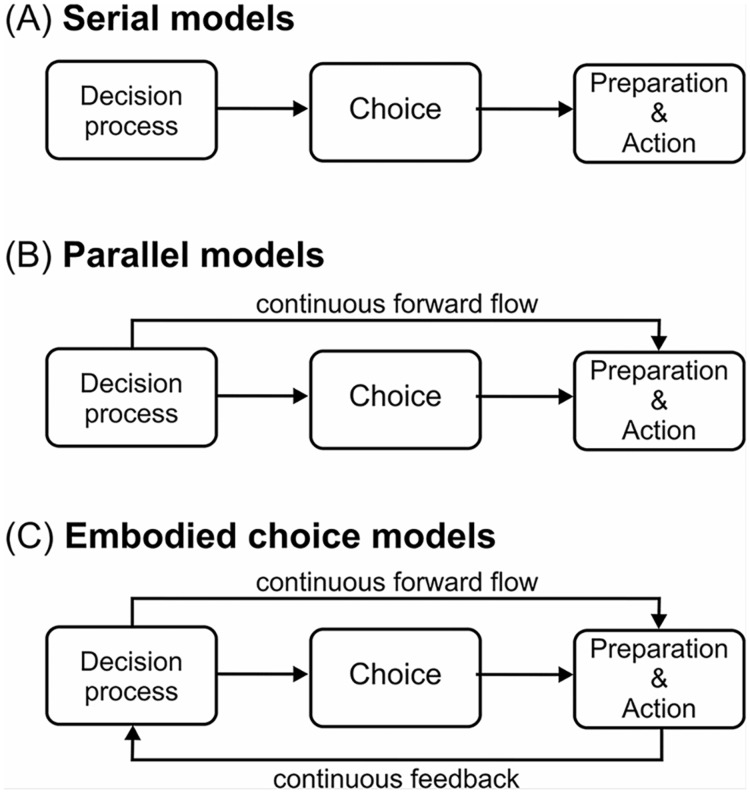
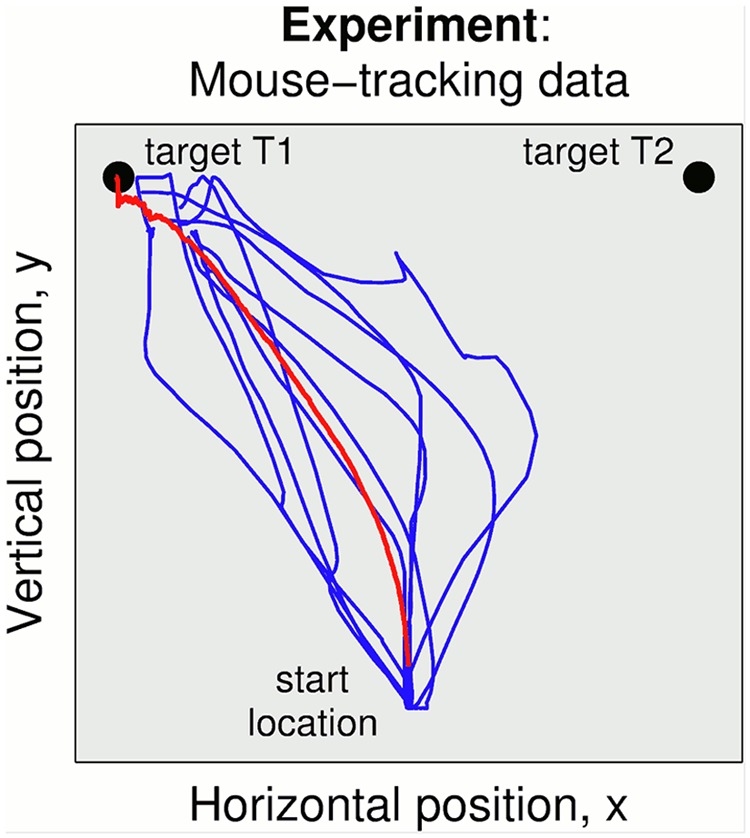
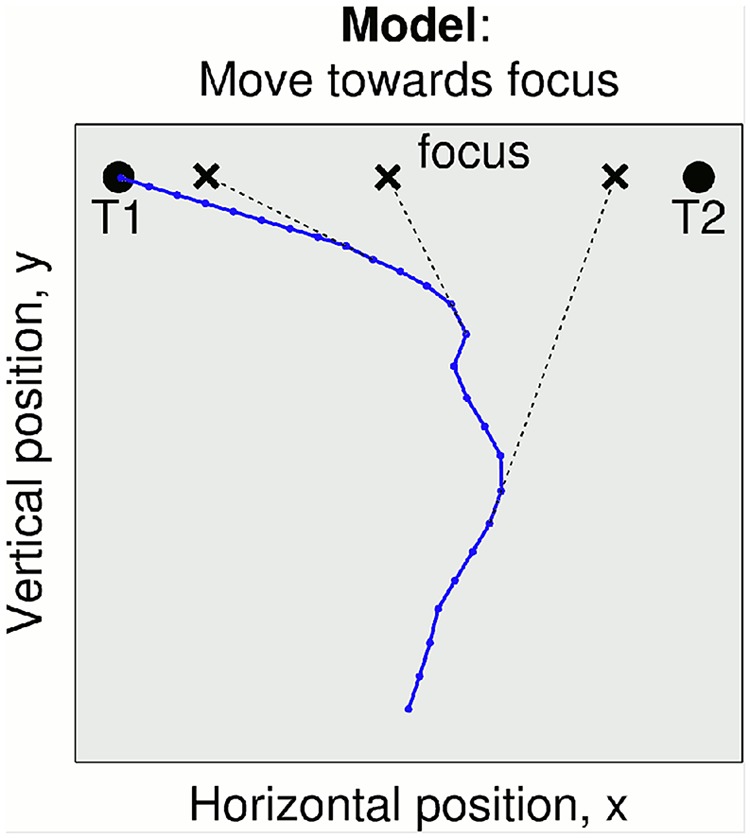
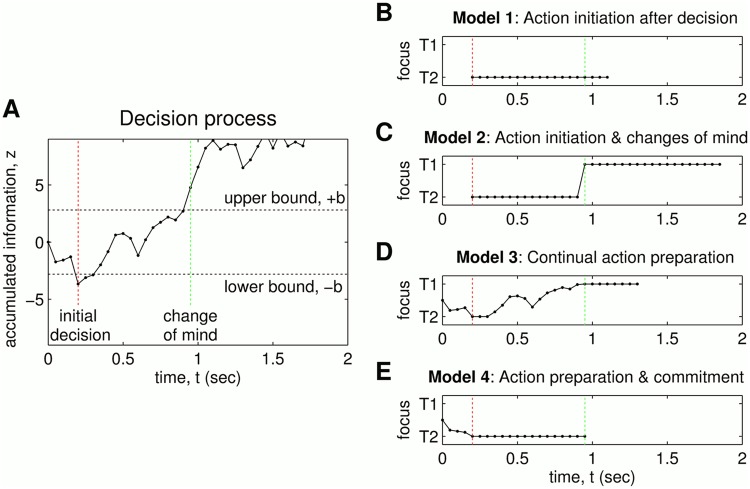
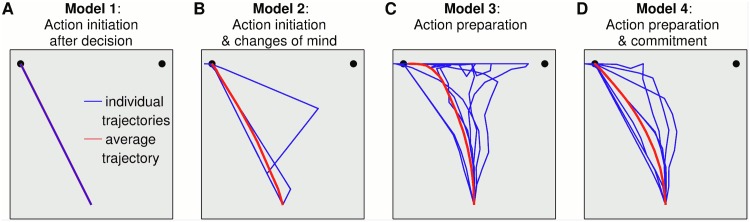
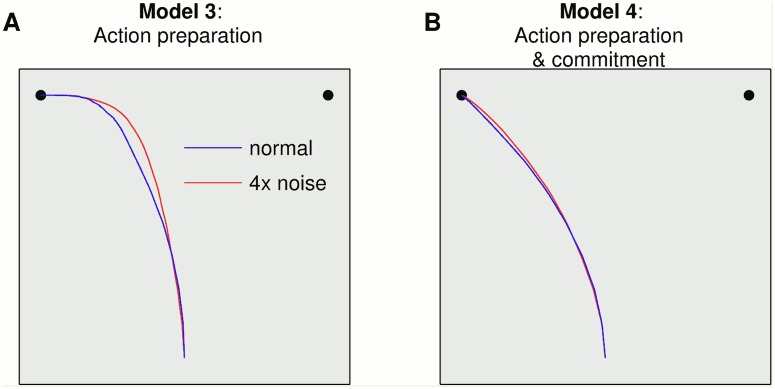
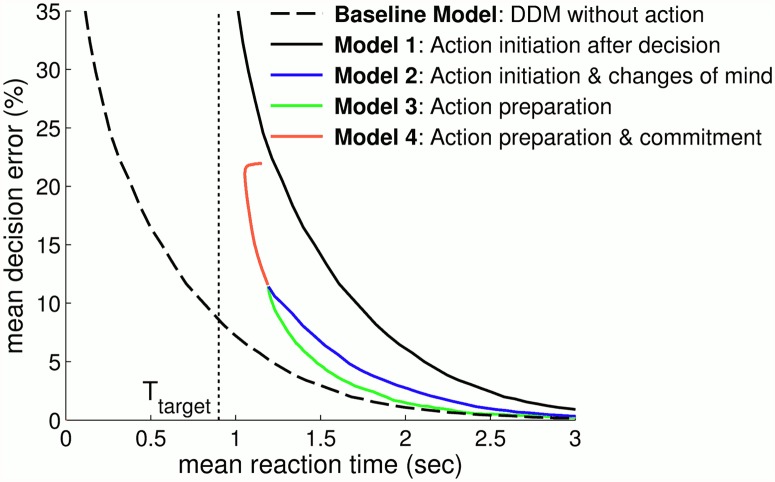
Verification
Claims the paper makes
The claims and statistics of this paper haven’t been checked yet.
Run the check — free, no account needed. It reads the open-access text and checks the sources it cites.
Claims other papers make about this one
Each is checked against this paper’s own text: does it say what the citing paper says it does?
The source backs part of the claim, not all of it — or backs it for a different population, condition or comparison.
In the citing paper
“The expected precision or confidence about preferred outcomes reports on the progress towards the goal – like spatial proximity or sub-goals (Lepora and Pezzulo, 2015, Maisto et al., 2015) – and in accordance with early cybernetic models of purposive action such as the Test-Operate-Test-Exit (TOTE) model (Miller et al., 1960) precision can be updated (in a Bayes optimal fashion) during goal-direct”
From Active Inference, homeostatic regulation and adaptive behavioural control (2015) · cites this paper as Lepora and Pezzulo, 2015
Experimental — accuracy not yet measured
Self-check
Percentages, sums and reported differences re-computed from the paper’s own numbers.
The self-check needs the paper’s full text.
Citations
Cites
The Ecological Approach to Visual Perception
Bornstein, M. H., & Gibson, J. J. (1980) · The Journal of Aesthetics and Art Criticism · doi:10.2307/429816 · Cited by 22,935
The Ecological Approach to Visual Perception: Classic Edition
Gibson, J. J. (2014) · doi:10.4324/9781315740218 · Cited by 12,132
Axten, N., Newell, A., & Simon, H. A. (1973) · Contemporary Sociology A Journal of Reviews · doi:10.2307/2063712 · Cited by 6,886
The Senses Considered as Perceptual Systems
West, C. K., & Gibson, J. J. (1969) · Journal of Aesthetic Education · doi:10.2307/3331482 · Cited by 6,344
Newell, A. (1972) · Cited by 6,222
Ratcliff, R. (1978) · Psychological Review · doi:10.1037/0033-295x.85.2.59 · Cited by 4,513
The Neural Basis of Decision Making
Gold, J. I., & Shadlen, M. N. (2007) · Annual Review of Neuroscience · doi:10.1146/annurev.neuro.29.051605.113038 · Cited by 3,764
Optimal feedback control as a theory of motor coordination
Todorov, E., & Jordan, M. I. (2002) · Nature Neuroscience · doi:10.1038/nn963 · Cited by 3,081
The Diffusion Decision Model: Theory and Data for Two-Choice Decision Tasks
Ratcliff, R., & McKoon, G. (2008) · Neural Computation · doi:10.1162/neco.2008.12-06-420 · Cited by 3,059
The Senses Considered as Perceptual Systems
Kensler, G. L., & Gibson, J. J. (1969) · Studies in Art Education · doi:10.2307/1319633 · Cited by 2,773
Cited by
Sorted by citations
Active Inference, homeostatic regulation and adaptive behavioural control
Pezzulo, G., Rigoli, F., & Friston, K. (2015) · Progress in Neurobiology · doi:10.1016/j.pneurobio.2015.09.001 · Cited by 650
“The expected precision or confidence about preferred outcomes reports on the progress towards the goal – like spatial proximity or sub-goals (Lepora and Pezzulo, 2015; Maisto et al., 2015) – and in accordance with early cybernetic models of purposive action such as the Test-Operate-Test-Exit (TOTE)…”
Self-citationNavigating the Affordance Landscape: Feedback Control as a Process Model of Behavior and Cognition
Pezzulo, G., & Cisek, P. (2016) · Trends in Cognitive Sciences · doi:10.1016/j.tics.2016.03.013 · Cited by 419
Self-citationHierarchical active inference: A theory of motivated control
Pezzulo, G., Rigoli, F., & Friston, K. J. (2018) · Trends in Cognitive Sciences · doi:10.1016/j.tics.2018.01.009 · Cited by 334
Self-citationHow Mouse-tracking Can Advance Social Cognitive Theory
Stillman, P. E., Shen, X., & Ferguson, M. J. (2018) · Trends in Cognitive Sciences · doi:10.1016/j.tics.2018.03.012 · Cited by 168
Multistable Perception and the Role of the Frontoparietal Cortex in Perceptual Inference
Brascamp, J. W., Sterzer, P., Blake, R., & Knapen, T. H. J. (2017) · Annual Review of Psychology · doi:10.1146/annurev-psych-010417-085944 · Cited by 173
Doing Psychological Science by Hand
Freeman, J. B. (2018) · Current Directions in Psychological Science · doi:10.1177/0963721417746793 · Cited by 161
Mutual anticipation can contribute to self-organization in human crowds
Murakami, H., Feliciani, C., Nishiyama, Y., & Nishinari, K. (2021) · Science Advances · doi:10.1126/sciadv.abe7758 · Cited by 122
Models, movements, and minds: bridging the gap between decision making and action
Wispinski, N. J., Gallivan, J. P., & Chapman, C. S. (2018) · Annals of the New York Academy of Sciences · doi:10.1111/nyas.13973 · Cited by 112
Active inference as a theory of sentient behavior
Pezzulo, G., Parr, T., & Friston, K. (2024) · Biological Psychology · doi:10.1016/j.biopsycho.2023.108741 · Cited by 109
Self-citationDecision-making in schizophrenia: A predictive-coding perspective
Sterzer, P., Voss, M., Schlagenhauf, F., & Heinz, A. (2018) · NeuroImage · doi:10.1016/j.neuroimage.2018.05.074 · Cited by 105
Yoo, S. B. M., Hayden, B. Y., & Pearson, J. M. (2021) · Philosophical Transactions of the Royal Society B Biological Sciences · doi:10.1098/rstb.2019.0664 · Cited by 101
Beyond simple laboratory studies: Developing sophisticated models to study rich behavior
Maselli, A., Gordon, J. R., Eluchans, M., Lancia, G. L., Thiery, T., Moretti, R., Cisek, P., & Pezzulo, G. (2023) · Physics of Life Reviews · doi:10.1016/j.plrev.2023.07.006 · Cited by 101
Self-citationInteractional leader–follower sensorimotor communication strategies during repetitive joint actions
Candidi, M., Curioni, A., Donnarumma, F., Sacheli, L. M., & Pezzulo, G. (2015) · Journal of The Royal Society Interface · doi:10.1098/rsif.2015.0644 · Cited by 92
Self-citationAction perception as hypothesis testing
Donnarumma, F., Costantini, M., Ambrosini, E., Friston, K., & Pezzulo, G. (2017) · Cortex · doi:10.1016/j.cortex.2017.01.016 · Cited by 90
Self-citationThe road towards understanding embodied decisions
Gordon, J. R., Maselli, A., Lancia, G. L., Thiery, T., Cisek, P., & Pezzulo, G. (2021) · Neuroscience & Biobehavioral Reviews · doi:10.1016/j.neubiorev.2021.09.034 · Cited by 102
Self-citationActive inference and robot control: a case study
Pio‐Lopez, L., Nizard, A., Friston, K. J., & Pezzulo, G. (2016) · Journal of The Royal Society Interface · doi:10.1098/rsif.2016.0616 · Cited by 91
Self-citationToward a neuroscience of natural behavior
Cisek, P., & Green, A. M. (2024) · Current Opinion in Neurobiology · doi:10.1016/j.conb.2024.102859 · Cited by 97
Embodied Cognition With and Without Mental Representations: The Case of Embodied Choices in Sports
Raab, M., & Araújo, D. (2019) · Frontiers in Psychology · doi:10.3389/fpsyg.2019.01825 · Cited by 83
Design factors in mouse-tracking: What makes a difference?
Kieslich, P. J., Schoemann, M., Grage, T., Hepp, J., & Scherbaum, S. (2019) · Behavior Research Methods · doi:10.3758/s13428-019-01228-y · Cited by 70
Track It to Crack It: Dissecting Processing Stages with Finger Tracking
Dotan, D., Pinheiro‐Chagas, P., Roumi, F. A., & Dehaene, S. (2019) · Trends in Cognitive Sciences · doi:10.1016/j.tics.2019.10.002 · Cited by 73
Fatigue increases the perception of future effort during decision making
Iodice, P., Calluso, C., Barca, L., Bertollo, M., Ripari, P., & Pezzulo, G. (2017) · Psychology of sport and exercise · doi:10.1016/j.psychsport.2017.08.013 · Cited by 77
Self-citationReaching decisions during ongoing movements
Michalski, J., Green, A. M., & Cisek, P. (2020) · Journal of Neurophysiology · doi:10.1152/jn.00613.2019 · Cited by 62
Decisions reduce sensitivity to subsequent information
Bronfman, Z. Z., Brezis, N., Moran, R., Tsetsos, K., Donner, T. H., & Usher, M. (2015) · Proceedings of the Royal Society B Biological Sciences · doi:10.1098/rspb.2015.0228 · Cited by 69
A Neural Mechanism of Social Categorization
Stolier, R. M., & Freeman, J. B. (2017) · Journal of Neuroscience · doi:10.1523/jneurosci.3334-16.2017 · Cited by 62
Motor Cost Influences Perceptual Decisions
Marcos, E., Cos, I., Girard, B., & Verschure, P. F. M. J. (2015) · PLoS ONE · doi:10.1371/journal.pone.0144841 · Cited by 61
Donnarumma, F., Maisto, D., & Pezzulo, G. (2016) · PLoS Computational Biology · doi:10.1371/journal.pcbi.1004864 · Cited by 63
Self-citationIn situ examination of decision-making skills and gaze behaviour of basketball players
van Maarseveen, M. J. J., Savelsbergh, G. J. P., & Oudejans, R. R. D. (2017) · Human Movement Science · doi:10.1016/j.humov.2017.12.006 · Cited by 60
Tracking Second Thoughts: Continuous and Discrete Revision Processes during Visual Lexical Decision
Barca, L., & Pezzulo, G. (2015) · PLoS ONE · doi:10.1371/journal.pone.0116193 · Cited by 56
Self-citationFunctional Oxides for Photoneuromorphic Engineering: Toward a Solar Brain
Pérez‐Tomás, A. (2019) · Advanced Materials Interfaces · doi:10.1002/admi.201900471 · Cited by 51
Motor heuristics and embodied choices: how to choose and act
Raab, M. (2017) · Current Opinion in Psychology · doi:10.1016/j.copsyc.2017.02.029 · Cited by 48
Model-Based Approaches to Active Perception and Control
Pezzulo, G., Donnarumma, F., Iodice, P., Maisto, D., & Stoianov, I. P. (2017) · Entropy · doi:10.3390/e19060266 · Cited by 42
Self-citationPrefrontal Goal Codes Emerge as Latent States in Probabilistic Value Learning
Stoianov, I., Genovesio, A., & Pezzulo, G. (2016) · Journal of Cognitive Neuroscience · doi:10.1162/jocn_a_00886 · Cited by 44
Self-citationDecision urgency invigorates movement in humans
Thura, D. (2020) · Behavioural Brain Research · doi:10.1016/j.bbr.2020.112477 · Cited by 39
Movement tracking of psychological processes: A tutorial using mousetrapPreprint
Wulff, D. U., Kieslich, P. J., Henninger, F., Haslbeck, J. M. B., & Schulte‐Mecklenbeck, M. (2021) · doi:10.31234/osf.io/v685r · Cited by 41
Motor invariants in action execution and perception
Torricelli, F., Tomassini, A., Pezzulo, G., Pozzo, T., Fadiga, L., & D’Ausilio, A. (2022) · Physics of Life Reviews · doi:10.1016/j.plrev.2022.11.003 · Cited by 46
Self-citationIodice, P., Ferrante, C., Brunetti, L., Cabib, S., Protasi, F., Walton, M. E., & Pezzulo, G. (2017) · Scientific Reports · doi:10.1038/s41598-017-00561-6 · Cited by 40
Self-citationIncreased heart rate after exercise facilitates the processing of fearful but not disgusted faces
Pezzulo, G., Iodice, P., Barca, L., Chaussé, P., Monceau, S., & Mermillod, M. (2018) · Scientific Reports · doi:10.1038/s41598-017-18761-5 · Cited by 46
Self-citationHead, Heart, and Gut in Decision Making: Development of a Multiple Brain Preference Questionnaire
Soosalu, G., Henwood, S. M., & Deo, A. (2019) · SAGE Open · doi:10.1177/2158244019837439 · Cited by 52
Schoemann, M., Lüken, M., Grage, T., Kieslich, P. J., & Scherbaum, S. (2019) · Behavior Research Methods · doi:10.3758/s13428-018-1179-4 · Cited by 41
Mutual information-enhanced digital twin promotes vision-guided robotic grasping
Hu, F.-W. (2022) · Advanced Engineering Informatics · doi:10.1016/j.aei.2022.101562 · Cited by 36
Tracking and simulating dynamics of implicit stereotypes: A situated social cognition perspective.
Smeding, A., Quinton, J., Lauer, K., Barca, L., & Pezzulo, G. (2016) · Journal of Personality and Social Psychology · doi:10.1037/pspa0000063 · Cited by 35
Self-citationA Kiosk Station for the Assessment of Multiple Cognitive Domains and Cognitive Enrichment of Monkeys
Womelsdorf, T., Thomas, C., Neumann, A. R., Watson, M. R., Boroujeni, K. B., Hassani, S. A., Parker, J. M., & Hoffman, K. L. (2021) · Frontiers in Behavioral Neuroscience · doi:10.3389/fnbeh.2021.721069 · Cited by 30
Slowing the body slows down time perception
Kock, R. D., Zhou, W., Joiner, W. M., & Wiener, M. (2021) · eLife · doi:10.7554/elife.63607 · Cited by 39
Analysis of hand kinematics reveals inter-individual differences in intertemporal decision dynamics
Calluso, C., Committeri, G., Pezzulo, G., Lepora, N. F., & Tosoni, A. (2015) · Experimental Brain Research · doi:10.1007/s00221-015-4427-1 · Cited by 32
Self-citationGriffith, T., Baker, S.-A., & Lepora, N. F. (2021) · Journal of Mathematical Psychology · doi:10.1016/j.jmp.2021.102544 · Cited by 28
Self-citationEmbodied decisions during walking
Grießbach, E., Raßbach, P., Herbort, O., & Cañal‐Bruland, R. (2022) · Journal of Neurophysiology · doi:10.1152/jn.00149.2022 · Cited by 29
Movement characteristics impact decision-making and vice versa
Carsten, T., Fievez, F., & Duqué, J. (2023) · Scientific Reports · doi:10.1038/s41598-023-30325-4 · Cited by 29
Changes of Mind after Movement Onset Depend on the State of the Motor System
Cos, I., Pezzulo, G., & Cisek, P. (2021) · eNeuro · doi:10.1523/eneuro.0174-21.2021 · Cited by 28
Self-citationIntrachoice Dynamics Shape Social Decisions
Chen, F., Zhu, Z., Shen, Q., Krajbich, I. M., & Hare, T. A. (2023) · Management Science · doi:10.1287/mnsc.2023.4732 · Cited by 28
How do you hold your mouse? Tracking the compatibility effect between hand posture and stimulus size
Flumini, A., Barca, L., Borghi, A. M., & Pezzulo, G. (2014) · Psychological Research · doi:10.1007/s00426-014-0622-0 · Cited by 27
Self-citationGrage, T., Schoemann, M., Kieslich, P. J., & Scherbaum, S. (2019) · Attention Perception & Psychophysics · doi:10.3758/s13414-019-01889-z · Cited by 26
Voigt, L., Friedrich, J. C., Grove, P. A., Heinrich, N., Ittlinger, S., Iskra, M., Koop, L., Michirev, A., Sparascio, S., & Raab, M. (2022) · Asian Journal of Sport and Exercise Psychology · doi:10.1016/j.ajsep.2022.09.006 · Cited by 25
Quétard, B., Quinton, J., Mermillod, M., Barca, L., Pezzulo, G., Colomb, M., & Izaute, M. (2016) · Journal of Vision · doi:10.1167/16.11.28 · Cited by 25
Self-citationA review of the neurobiomechanical processes underlying secure gripping in object manipulation
O’Shea, H., & Redmond, S. J. (2021) · Neuroscience & Biobehavioral Reviews · doi:10.1016/j.neubiorev.2021.01.007 · Cited by 26
Body dynamics of gait affect value-based decisions
Grießbach, E., Incagli, F., Herbort, O., & Cañal‐Bruland, R. (2021) · Scientific Reports · doi:10.1038/s41598-021-91285-1 · Cited by 24
Ultimate Grounding of Abstract Concepts: A Graded Account
Reinboth, T., & Farkaš, I. (2022) · Journal of Cognition · doi:10.5334/joc.214 · Cited by 28
Embodied decisions as active inference
Priorelli, M., Stoianov, I. P., & Pezzulo, G. (2025) · PLoS Computational Biology · doi:10.1371/journal.pcbi.1013180 · Cited by 23
Self-citationEmerging Practices in Game-Based Assessment
Verma, V., Baron, T., Bansal, A., & Amresh, A. (2019) · Advances in game-based learning · doi:10.1007/978-3-030-15569-8_16 · Cited by 25
Embodied Decision-Making Style: Below and Beyond Cognition
Connors, B. L., & Rende, R. (2018) · Frontiers in Psychology · doi:10.3389/fpsyg.2018.01123 · Cited by 24
Vulchanova, M., Chahboun, S., Galindo‐Prieto, B., & Vulchanov, V. (2019) · Cognitive Neuropsychology · doi:10.1080/02643294.2019.1652155 · Cited by 24
Enachescu, V., Schrater, P., Schaal, S., & Christopoulos, V. (2021) · PLoS Computational Biology · doi:10.1371/journal.pcbi.1009429 · Cited by 21
Huesmann, K., & Loffing, F. (2024) · Frontiers in Psychology · doi:10.3389/fpsyg.2024.1396873 · Cited by 20
Murakami, H., Tomaru, T., Feliciani, C., & Nishiyama, Y. (2022) · iScience · doi:10.1016/j.isci.2022.105474 · Cited by 20
Movement Matters! Understanding the Developmental Trajectory of Embodied Planning
Musculus, L., Ruggeri, A., & Raab, M. (2021) · Frontiers in Psychology · doi:10.3389/fpsyg.2021.633100 · Cited by 20
Heuer, H., Seegelke, C., & Wühr, P. (2023) · Journal of Cognition · doi:10.5334/joc.252 · Cited by 20
Rat movements reflect internal decision dynamics in an evidence accumulation task
Kane, G. A., Senne, R. A., & Scott, B. B. (2024) · Journal of Neurophysiology · doi:10.1152/jn.00181.2024 · Cited by 17
Lancia, G. L., Eluchans, M., D’Alessandro, M., Spiers, H. J., & Pezzulo, G. (2023) · PLoS Computational Biology · doi:10.1371/journal.pcbi.1010829 · Cited by 21
Self-citationHsu, H., Ke, C., Kuan, T., Yang, H., Tsai, C.-L., & Kuo, L. (2017) · PM&R · doi:10.1016/j.pmrj.2017.07.001 · Cited by 18
The response dynamics of recognition memory: Sensitivity and bias.
Koop, G. J., & Criss, A. H. (2015) · Journal of Experimental Psychology Learning Memory and Cognition · doi:10.1037/xlm0000202 · Cited by 18
Playing ‘Pong’ Together: Emergent Coordination in a Doubles Interception Task
Benerink, N. H., Zaal, F. T. J. M., Casanova, R., Bonnardel, N., & Bootsma, R. J. (2016) · Frontiers in Psychology · doi:10.3389/fpsyg.2016.01910 · Cited by 18
A Dynamical System for Prioritizing and Coordinating Motivations
Reverdy, P. B., & Koditschek, D. E. (2018) · SIAM Journal on Applied Dynamical Systems · doi:10.1137/17m111972x · Cited by 18
Quétard, B., Quinton, J., Colomb, M., Pezzulo, G., Barca, L., Izaute, M., Appadoo, O. K., & Mermillod, M. (2015) · Cognitive Processing · doi:10.1007/s10339-015-0673-1 · Cited by 17
Self-citationModeling Motor Control in Continuous Time Active Inference: A Survey
Priorelli, M., Maggiore, F., Maselli, A., Donnarumma, F., Maisto, D., Mannella, F., Stoianov, I. P., & Pezzulo, G. (2023) · IEEE Transactions on Cognitive and Developmental Systems · doi:10.1109/tcds.2023.3338491 · Cited by 18
Self-citationBiomechanical costs influence decisions made during ongoing actions
Canaveral, C. A., Lata, W., Green, A. M., & Cisek, P. (2024) · Journal of Neurophysiology · doi:10.1152/jn.00090.2024 · Cited by 16
Walser, R. S., Seeber, I., & Maier, R. K. (2019) · AIS Transactions on Human-Computer Interaction · doi:10.17705/1thci.00119 · Cited by 16
Risky decisions are influenced by individual attributes as a function of risk preference
Lee, D. G., D’Alessandro, M., Iodice, P., Calluso, C., Rustichini, A., & Pezzulo, G. (2023) · Cognitive Psychology · doi:10.1016/j.cogpsych.2023.101614 · Cited by 13
Self-citationEmbodied Decisions and the Predictive Brain
Burr, C. (2017) · PhilPapers (PhilPapers Foundation) · doi:10.15502/9783958573086 · Cited by 18
Rapid, systematic updating of movement by accumulated decision evidence
Molano‐Mazón, M., Garcia-Duran, A., Pastor‐Ciurana, J., Hernández-Navarro, L., Bektic, L., Lombardo, D., de la Rocha, J., & Hyafil, A. (2024) · Nature Communications · doi:10.1038/s41467-024-53586-7 · Cited by 15
Deciding while moving: Cognitive interference biases value-based decisions
Raßbach, P., Grießbach, E., Cañal‐Bruland, R., & Herbort, O. (2021) · Acta Psychologica · doi:10.1016/j.actpsy.2021.103449 · Cited by 15
Moving forward in perceptual decision making
Sterzer, P. (2016) · Proceedings of the National Academy of Sciences · doi:10.1073/pnas.1605619113 · Cited by 15
Embodied decision making in athletes and other animals
Maselli, A., Iodice, P., Cisek, P., & Pezzulo, G. (2025) · Psychology of sport and exercise · doi:10.1016/j.psychsport.2025.102915 · Cited by 18
Self-citationSensorimotor Coarticulation in the Execution and Recognition of Intentional Actions
Donnarumma, F., Dindo, H., & Pezzulo, G. (2017) · Frontiers in Psychology · doi:10.3389/fpsyg.2017.00237 · Cited by 16
Self-citationPfister, R., Bogon, J., Foerster, A., Kunde, W., & Moeller, B. (2022) · Journal of Cognition · doi:10.5334/joc.212 · Cited by 14
Barca, L., Benedetti, F., & Pezzulo, G. (2015) · Journal of Cognitive Psychology · doi:10.1080/20445911.2015.1101117 · Cited by 14
Self-citationThe integrated control of decision and movement vigor
Thura, D., Haith, A. M., Derosière, G., & Duqué, J. (2025) · Trends in Cognitive Sciences · doi:10.1016/j.tics.2025.07.005 · Cited by 20
Decision heuristics in contexts integrating action selection and execution
Dundon, N. M., Colas, J. T., Garrett, N., Babenko, V., Rizor, E. J., Yang, D., MacNamara, M., Petzold, L. R., & Grafton, S. T. (2023) · Scientific Reports · doi:10.1038/s41598-023-33008-2 · Cited by 13
Adversarial inference: predictive minds in the attention economy
Bruineberg, J. P. (2023) · Neuroscience of Consciousness · doi:10.1093/nc/niad019 · Cited by 16
DIANA, a Process-Oriented Model of Human Auditory Word Recognition
ten Bosch, L., Boves, L., & Ernestus, M. (2022) · Brain Sciences · doi:10.3390/brainsci12050681 · Cited by 15
Evidence for entropy maximisation in human free choice behaviour
Rens, N., Lancia, G. L., Eluchans, M., Schwartenbeck, P., Cunnington, R., & Pezzulo, G. (2022) · Cognition · doi:10.1016/j.cognition.2022.105328 · Cited by 13
Self-citationDamian, M. F., Ye, W., OH, M., & Yang, S. (2018) · Bilingualism Language and Cognition · doi:10.1017/s1366728918000901 · Cited by 13
Beyond reach: Do symmetric changes in motor costs affect decision making? A registered report
Zgonnikov, A., Atiya, N. A. A., O’Hora, D. P., Rañó, I., & Wong‐Lin, K. (2019) · Judgment and Decision Making · doi:10.1017/s1930297500006136 · Cited by 13
Elite Players Invest Additional Time for Making Better Embodied Choices
Hinz, M., Lehmann, N., & Musculus, L. (2022) · Frontiers in Psychology · doi:10.3389/fpsyg.2022.873474 · Cited by 13
Online Movements Reflect Ongoing Deliberation
Calalo, J. A., Ngo, T. T., Sullivan, S. R., Strand, K., Buggeln, J. H., Lokesh, R., Roth, A. M., Carter, M. J., Kurtzer, I. L., & Cashaback, J. G. A. (2025) · Journal of Neuroscience · doi:10.1523/jneurosci.1913-24.2025 · Cited by 17
Multiple timescales of body schema reorganization due to plastic surgery
Iodice, P., Scuderi, N., Saggini, R., & Pezzulo, G. (2015) · Human Movement Science · doi:10.1016/j.humov.2015.04.009 · Cited by 16
Self-citationMoral decisions in the age of COVID-19: Your choices really matter
Donnarumma, F., & Pezzulo, G. (2021) · Social Sciences & Humanities Open · doi:10.1016/j.ssaho.2021.100149 · Cited by 14
Self-citationMannella, F., & Tummolini, L. (2022) · Philosophical Transactions of the Royal Society B Biological Sciences · doi:10.1098/rstb.2021.0370 · Cited by 14
Predictive Learning of Error Recovery with a Sensorized Passivity‐Based Soft Anthropomorphic Hand
Gilday, K., Thuruthel, T. G., & Fumiya Iida, A. (2023) · Advanced Intelligent Systems · doi:10.1002/aisy.202200390 · Cited by 14
Smeding, A., Gautheron, F., & Quinton, J. (2023) · Appetite · doi:10.1016/j.appet.2023.107006 · Cited by 12
Computer mouse tracking reveals motor signatures in a cognitive task of spatial language grounding
Lins, J., & Schöner, G. (2019) · Attention Perception & Psychophysics · doi:10.3758/s13414-019-01847-9 · Cited by 12
Quétard, B., Spatola, N., Parris, B. A., Ferrand, L., & Augustinova, M. (2023) · PLoS ONE · doi:10.1371/journal.pone.0279036 · Cited by 11
Metadata
- Authors
- Lepora, N. F., & Pezzulo, G.
- Affiliations
- University of the West of England (GB)
- National Research Council (IT)
- Corresponding author
- Pezzulo, Giovanni
- Venue
- PLOS Computational Biology
- Publisher
- Public Library of Science (PLoS)
- Published
- 2015-04-07
- Volume
- 11
- Issue
- 4
- Pages
- e1004110
- ISSN
- 1553-734X (ISSN-L)
- 1553-7358
- PMC
- PMC4388485
- OpenAlex
- W2060215462
- Cited by
- 209
- References
- 76
- Citations by year
- 2026: 16 · 2025: 23 · 2024: 22 · 2023: 22 · 2022: 26 · 2021: 25 · 2020: 9 · 2019: 15 · 2018: 12 · 2017: 18 · 2016: 9 · 2015: 11
- FWCI
- 10.02
- Type
- journal article
- Language
- en
- Open access
- gold
- doi.org
- Licence
- Locations
- PLoS Computational Biology (publishedVersion, cc-by)
- PubMed Central (publishedVersion, cc-by)
- PubMed (publishedVersion)
- RePEc: Research Papers in Economics (submittedVersion)
- DOAJ (DOAJ: Directory of Open Access Journals) (submittedVersion, cc-by-sa)
- Bristol Research (University of Bristol) (submittedVersion, other-oa)
- Explore Bristol Research (submittedVersion, other-oa)
- Funders
- Nvidia
- European Commission (270108)
- Topics
- Life Sciences › Neuroscience › Cognitive Neuroscience › Embodied and Extended Cognition
- Life Sciences › Neuroscience › Cognitive Neuroscience › Motor Control and Adaptation
- Life Sciences › Neuroscience › Cognitive Neuroscience › Neural and Behavioral Psychology Studies
- Keywords
- perceptual decision making, action preparation, commitment effect, trajectory tracking, response latency, response accuracy
- MeSH terms
- Animals, Choice Behavior, Decision Making, Decision Support Techniques, Models, Neurological, Motivation, Perception, Task Performance and Analysis, Ecosystem, Mice
About these checks
Registry, retraction, Cites and statistics results are computed, not judged, with one exception: a printed reference that no index lists is read once by a model before it counts as a citation error. Claims are extracted by a model and kept only when their quote appears verbatim in the text; each cited source is then checked, with a model’s help, for whether it says what the claim relies on. Those verdicts can be wrong — read the claim’s quote and the cited source before relying on one.
Statistics and arithmetic are recomputed, not judged.
Confidence bands are shown only for fields calibrated on our annotated test set. None is calibrated yet, so no band is shown.
What counts as a claim ›How we measure confidence ›How we check this ›
Are you an author, or do you see a problem with this page? Request a review
