

Feed-Forward versus Feedback Inhibition in a Basic Olfactory Circuit
Open accessThe DOI matches its Crossref record; 71 of the 71 references it cites were found in a registry or an index.
Abstract
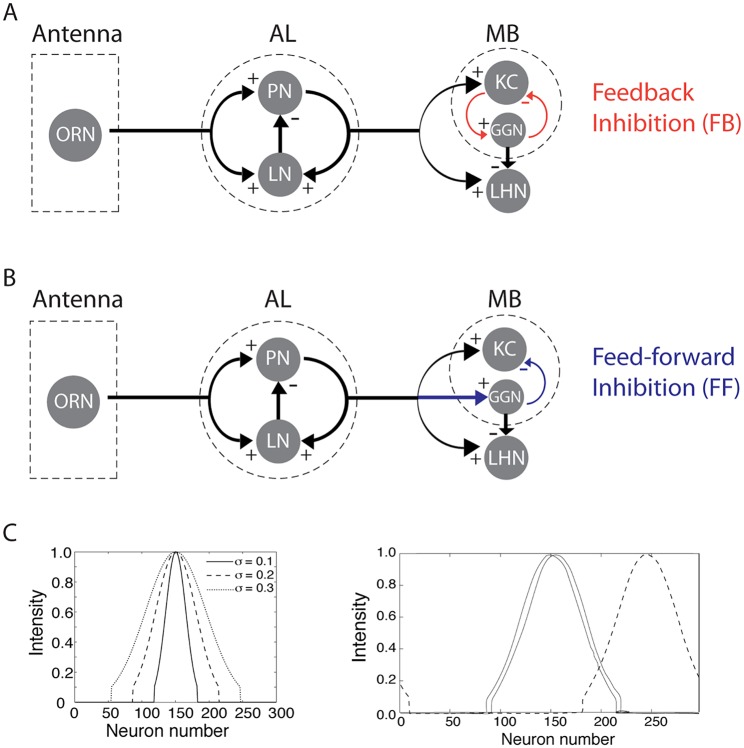
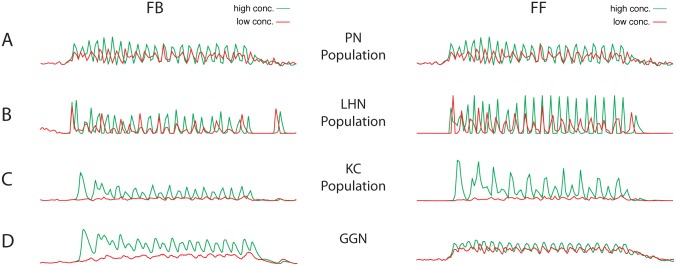
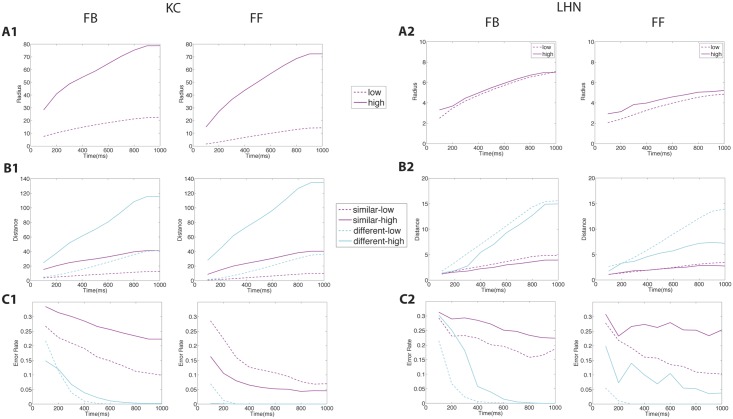
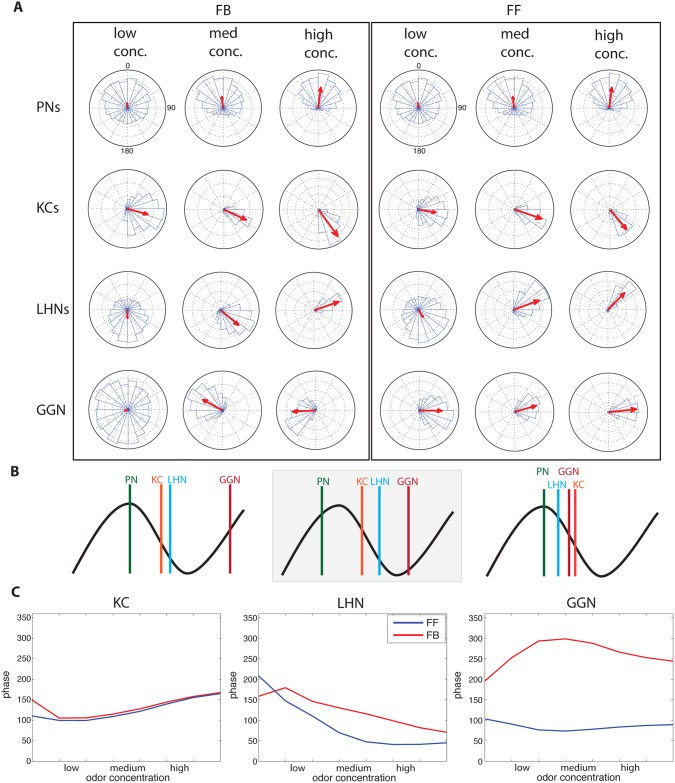
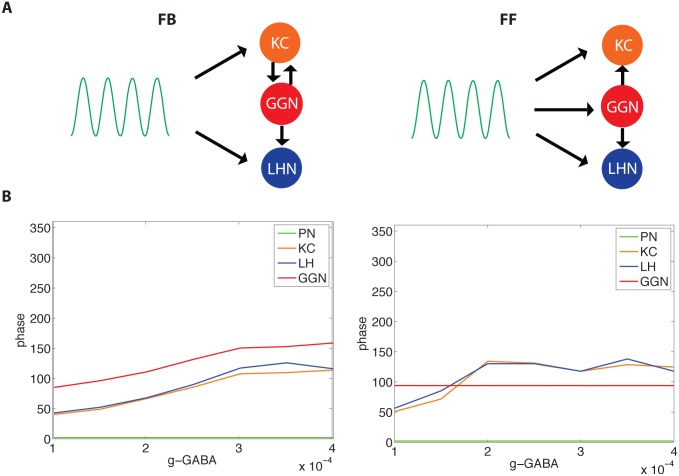
Inhibitory interneurons play critical roles in shaping the firing patterns of principal neurons in many brain systems. Despite difference in the anatomy or functions of neuronal circuits containing inhibition, two basic motifs repeatedly emerge: feed-forward and feedback. In the locust, it was proposed that a subset of lateral horn interneurons (LHNs), provide feed-forward inhibition onto Kenyon cells (KCs) to maintain their sparse firing--a property critical for olfactory learning and memory. But recently it was established that a single inhibitory cell, the giant GABAergic neuron (GGN), is the main and perhaps sole source of inhibition in the mushroom body, and that inhibition from this cell is mediated by a feedback (FB) loop including KCs and the GGN. To clarify basic differences in the effects of feedback vs. feed-forward inhibition in circuit dynamics we here use a model of the locust olfactory system. We found both inhibitory motifs were able to maintain sparse KCs responses and provide optimal odor discrimination. However, we further found that only FB inhibition could create a phase response consistent with data recorded in vivo. These findings describe general rules for feed-forward versus feedback inhibition and suggest GGN is potentially capable of providing the primary source of inhibition to the KCs. A better understanding of how inhibitory motifs impact post-synaptic neuronal activity could be used to reveal unknown inhibitory structures within biological networks.
Overview
The claims and statistics of this paper haven’t been checked yet.
Free: it reads the open-access text and checks the first 5 claims that cite a source we can check. Create a free account to check every claim.
Integrity signals
Registry
Cites
Statistics
Figures


Verification
Claims the paper makes
The claims and statistics of this paper haven’t been checked yet.
Free: it reads the open-access text and checks the first 5 claims that cite a source we can check. Create a free account to check every claim.
Claims other papers make about this one
Each is checked against this paper’s own text: does it say what the citing paper says it does?
In the citing paper
“The reciprocal loop circuit motif, in which X excites Y and Y inhibits X, can modulate the duration and magnitude of incoming excitatory signals and prevent an overly excited state, but can also lead to the emergence of oscillations, because the feedback inhibition of Y cannot fully suppress the firing of X47,48.”
From Comparative connectomics of Drosophila descending and ascending neurons (2025) · cites this paper as [47]
Self-check
Percentages, sums and reported differences re-computed from the paper’s own numbers.
The self-check needs the paper’s full text.
Citations
Cites
Hodgkin, A. L., & Huxley, A. F. (1952) · The Journal of Physiology · doi:10.1113/jphysiol.1952.sp004764 · Cited by 23,191 · cited 2×
“Membrane potentials: PN and LN membrane potential equations [26]”
BackgroundMethodMarr, D. (1969) · The Journal of Physiology · doi:10.1113/jphysiol.1969.sp008820 · Cited by 3,253 · cited 1×
“, olfactory cortex [52], hippocampus [4, 53], cerebellum [54, 55], LGN [56]), feedforward inhibition mediated by a population of inhibitory cells in the locust lateral horn (LH) was until recently thought to provide the necessary inhibitory input to the Kenyon cells (KCs) of the mushroom body [9, 23].”
BackgroundHow Inhibition Shapes Cortical Activity
Isaacson, J. S., & Scanziani, M. (2011) · Neuron · doi:10.1016/j.neuron.2011.09.027 · Cited by 1,678
The role of phase synchronization in memory processes
Fell, J., & Axmacher, N. (2011) · Nature Reviews Neuroscience · doi:10.1038/nrn2979 · Cited by 1,620 · cited 3×
“Since plasticity of the KCs-> bLN-2 pathway is based on spike timing [16], the stability of spike timing in KCs may support reliable synaptic changes and communication between the KCs and bLN-2s [63, 64] The FB inhibitory motif produced spike phase responses matching those observed in vivo.”
BackgroundMethodSparse coding of sensory inputs
Olshausen, B. A., & Field, D. J. (2004) · Current Opinion in Neurobiology · doi:10.1016/j.conb.2004.07.007 · Cited by 1,404 · cited 1×
“Sparse codes support learning and memory by reducing interference between memory traces, increase storage capacity, and save energy expended by action potentials [16, 18, 50, 51].”
BackgroundMushroom body memoir: from maps to models
Heisenberg, M. (2003) · Nature Reviews Neuroscience · doi:10.1038/nrn1074 · Cited by 1,286
Bronshtein, I. N., Semendyayev, K. A., Musiol, G., & Muehlig, H. (2004) · Springer eBooks · doi:10.1007/978-3-662-05382-9 · Cited by 1,239
Enforcement of Temporal Fidelity in Pyramidal Cells by Somatic Feed-Forward Inhibition
Pouille, F., & Scanziani, M. (2001) · Science · doi:10.1126/science.1060342 · Cited by 1,097
Kanerva, P. (1988) · Medical Entomology and Zoology · Cited by 976
Oscillations and Sparsening of Odor Representations in the Mushroom Body
Perez-Orive, J., Mazor, O., Turner, G. C., Cassenaer, S., Wilson, R. I., & Laurent, G. (2002) · Science · doi:10.1126/science.1070502 · Cited by 806 · cited 6×
“Anatomical evidence suggests that GGN inhibits both the KCs in the mushroom body (MB) and the LHNs in the lateral horn (LH), yet KCs fire sparsely while LHNs respond to odors with dense spiking [9, 12].”
BackgroundResultInfluential
Cited by
Re-evaluating Circuit Mechanisms Underlying Pattern Separation
Cayco-Gajic, N. A., & Silver, R. A. (2019) · Neuron · doi:10.1016/j.neuron.2019.01.044 · Cited by 222
“Feedback inhibition adaptively regulates excitability (Hamann et al., 2002; Papadopoulou et al., 2011; Gupta and Stopfer 2012; Lin et al., 2014; Temprana et al., 2014; Kee et al., 2015), in part by matching spike threshold to the overall activity level (Mitchell and Silver, 2003; Billings et al.”
Gorur-Shandilya, S., Demir, M., Long, J., Clark, D. A., & Emonet, T. (2017) · eLife · doi:10.7554/elife.27670 · Cited by 97
“Thus it could be a useful tool in modeling ORN responses received by PNs, or in constructing computational models of the antennal lobe (Assisi et al., 2011; Bazhenov et al., 2001; Berck et al., 2016; Capurro et al., 2012; Chong et al., 2012; Hopfield, 1991; Kee et al., 2015; Koulakov et al., 2007; Luo et al., 2010; Sa…”
Central processing in the mushroom bodies
Stopfer, M. (2014) · Current Opinion in Insect Science · doi:10.1016/j.cois.2014.10.009 · Cited by 62
Self-citationComparative connectomics of Drosophila descending and ascending neurons
Stürner, T., Brooks, P., Serratosa Capdevila, L., Morris, B. J., Javier, A., Fang, S., Gkantia, M., Cachero, S., Beckett, I. R., Marin, E. C., et al. (2025) · Nature · doi:10.1038/s41586-025-08925-z · Cited by 43
A neural network model for familiarity and context learning during honeybee foraging flights
Müller, J., Nawrot, M. P., Menzel, R., & Landgraf, T. (2017) · Biological Cybernetics · doi:10.1007/s00422-017-0732-z · Cited by 39
Betkiewicz, R., Lindner, B., & Nawrot, M. P. (2020) · eNeuro · doi:10.1523/eneuro.0305-18.2020 · Cited by 32
“Several studies have suggested that either feedforward inhibition [56] or feedback inhibition 282 [2, 57, 12, 58, 59] causes temporally sparse responses.”
A clustering neural network model of insect olfaction
Pehlevan, C., Genkin, A., & Chklovskii, D. B. (2017) · Asilomar Conference on Signals, Systems and Computers (ACSSC) · doi:10.1109/acssc.2017.8335410 · Cited by 30
Feedback inhibition and its control in an insect olfactory circuit
Ray, S., Aldworth, Z., & Stopfer, M. (2020) · eLife · doi:10.7554/elife.53281 · Cited by 30
Self-citationPinna, A., & Colasanti, A. (2021) · Frontiers in Pharmacology · doi:10.3389/fphar.2021.689473 · Cited by 30
“Their fast inhibitory control is fundamental in restricting and refining AP firings of postsynaptic neurons, enabling temporal processing and synchronized firing of excitatory neuronal populations (Isaacson and Scanziani, 2011; Kee et al., 2015) which results in an optimal excitation and inhibition balance in cortical…”
BackgroundA computational model of conditioning inspired by Drosophila olfactory system
Faghihi, F., Moustafa, A. A., Heinrich, R., & Wörgötter, F. (2016) · Neural Networks · doi:10.1016/j.neunet.2016.11.002 · Cited by 30
Control of Absence Seizures by the Thalamic Feed-Forward Inhibition
Chen, M., Guo, D., Xia, Y., & Yao, D. (2017) · Frontiers in Computational Neuroscience · doi:10.3389/fncom.2017.00031 · Cited by 26
“…(FFI) has been observed in multiple brain regions, including the neocortex, thalamus, hippocampal, and basal ganglia (Sloviter, 1991; Sun et al., 2005; Assisi et al., 2007; Tepper et al., 2008; Kee et al., 2015; Paz and Huguenard, 2015; Khubieh et al., 2016; Lindahl and Hellgren Kotaleski, 2016).”
BackgroundA neuromorphic model of olfactory processing and sparse coding in the Drosophila larva brain
Jürgensen, A.-M., Khalili, A., Chicca, E., Indiveri, G., & Nawrot, M. P. (2021) · Neuromorphic Computing and Engineering · doi:10.1088/2634-4386/ac3ba6 · Cited by 23
“3B showed that inhibitory feedback has the strongest effect, confirming experimental [110, 111] and modeling results [25, 27, 28, 112].”
ResultInvestigating visual navigation using spiking neural network models of the insect mushroom bodies
Jesusanmi, O. O., Amin, A. A., Domcsek, N., Knight, J. C., Philippides, A. O., Nowotny, T., & Graham, P. (2024) · Frontiers in Physiology · doi:10.3389/fphys.2024.1379977 · Cited by 22
Dynamics and bifurcations in multistable 3-cell neural networks
Collens, J., Pusuluri, K., Kelley, A., Knapper, D., Xing, T., Basodi, S., Alacam, D., & Shilnikov, A. L. (2020) · Chaos An Interdisciplinary Journal of Nonlinear Science · doi:10.1063/5.0011374 · Cited by 21
Chen, K., Forrest, A. M., Burgos, G.-G., & Kozai, T. D. Y. (2024) · Journal of Neural Engineering · doi:10.1088/1741-2552/ad5049 · Cited by 18
“Thus, feed-forward inhibition is critical for maintaining interlaminar network connectivity [101, 103].”
BackgroundInfluentialDifferential effects of adaptation on odor discrimination
Haney, S., Saha, D., Raman, B., & Bazhenov, M. (2018) · Journal of Neurophysiology · doi:10.1152/jn.00389.2017 · Cited by 17
“All network interconnections were random with 0.5 probability, suitable for our scaled-down network (Assisi et al. 2012; Bazhenov et al. 2001b; Kee et al. 2015).”
MethodInfluentialSelf-citationOlfactory receptor neurons generate multiple response motifs, increasing coding space dimensionality
Kim, B., Haney, S., Millán, A. P., Joshi, S., Aldworth, Z., Rulkov, N. F., Kim, A. T., Bazhenov, M., & Stopfer, M. (2023) · eLife · doi:10.7554/elife.79152 · Cited by 17
Self-citationLeváková, M., Kostal, L., Monsempès, C., Lucas, P., & Kobayashi, R. (2019) · Journal of The Royal Society Interface · doi:10.1098/rsif.2019.0246 · Cited by 18
Computational exposition of multistable rhythms in 4-cell neural circuits
Pusuluri, K., Basodi, S., & SHILNIKOV, A. L. (2019) · Communications in Nonlinear Science and Numerical Simulation · doi:10.1016/j.cnsns.2019.105139 · Cited by 19
“Such understanding is also essential to study motor 300 control, dynamic memory, information processing, and decision making in animals and humans [65].”
BackgroundThe functional logic of odor information processing in the Drosophila antennal lobe
Lazar, A. A., Liu, T., & Yeh, C.-H. (2023) · PLoS Computational Biology · doi:10.1371/journal.pcbi.1011043 · Cited by 17
The Anterior Piriform Cortex and Predator Odor Responses: Modulation by Inhibitory Circuits
Matsukawa, M., Yoshikawa, M., Katsuyama, N., Aizawa, S., & Sato, T. (2022) · Frontiers in Behavioral Neuroscience · doi:10.3389/fnbeh.2022.896525 · Cited by 14
“The feedforward inhibition usually occurs when excitatory inputs activate inhibitory cells, which then inhibit postsynaptic excitatory neurons (Kee et al., 2015).”
BackgroundTakahashi, N., Katoh, K., Watanabe, H., Nakayama, Y., Iwasaki, M., Mizunami, M., & Nishino, H. (2016) · The Journal of Comparative Neurology · doi:10.1002/cne.24108 · Cited by 16
“…the moth appear to be hymenopteran- and lepidopteran-specific elaborations to process multimodal input, especially for visual input, in accordance with highly compartmentalized MB calyces according to sensory modalities (Gronenberg, 2001; Ehmer and Gronenberg, 2002, 2004; Kinoshita et al., 2015).”
BackgroundThe Tripod neuron: a minimal structural reduction of the dendritic tree
Quaresima, A., Fitz, H., Duarte, R., den Broek, D. V., Hagoort, P., & Petersson, K. M. (2022) · The Journal of Physiology · doi:10.1113/jp283399 · Cited by 15
“The fast-spiking PV interneurons acting on the soma are associated with feed-forward, time-precise inhibition, while the slower action of SST cells regulates the dendritic potential via feedback inhibition (Kee et al., 2015; Tepper et al., 2008; Tremblay et al., 2016).”
BackgroundReal and complex behavior for networks of coupled logistic maps
Rǎdulescu, A., & Pignatelli, A. (2016) · Nonlinear Dynamics · doi:10.1007/s11071-016-3115-4 · Cited by 11
“However, although network data demonstrate the statistical significance between the effects of the two [11,12], it is not yet clearwhy feed-forward loops are advantageousover feedback loops in dynamical systems.”
BackgroundRegulation of gamma‐frequency oscillation by feedforward inhibition: A computational modeling study
Rennó‐Costa, C., Teixeira, D. G., & Soltész, I. (2019) · Hippocampus · doi:10.1002/hipo.23093 · Cited by 12
“Importantly, the different functions of feedforward and feedback inhibition occur concurrently with their effects on excitation (Isaacson & Scanziani, 2011; Kee, Sanda, Gupta, Stopfer, & Bazhenov, 2015).”
BackgroundOptimality of sparse olfactory representations is not affected by network plasticity
Assisi, C. G., Stopfer, M., & Bazhenov, M. (2020) · PLoS Computational Biology · doi:10.1371/journal.pcbi.1007461 · Cited by 11
“Thus, cyclic inhibition regulates the sparseness of KC responses in an adaptive, concentration dependent manner [33,34].”
BackgroundMethodInfluentialSelf-citationFournier, L. A., Phadke, R. A., Salgado, M., Brack, A., Nocon, J. C., Bolshakova, S., Grant, J. R., Padró-Luna, N. M., Sen, K., & Cruz‐Martín, A. (2024) · iScience · doi:10.1016/j.isci.2024.110800 · Cited by 9
Control of sampling rate in map-based models of spiking neurons
Rulkov, N. F., & NEIMAN, A. B. (2018) · Communications in Nonlinear Science and Numerical Simulation · doi:10.1016/j.cnsns.2018.01.021 · Cited by 9
Synaptic delays shape dynamics and function in multimodal neural motifs
Qie, X., Zang, J., Liu, S., & SHILNIKOV, A. L. (2025) · Chaos An Interdisciplinary Journal of Nonlinear Science · doi:10.1063/5.0233640 · Cited by 7
Wahlstrom‐Helgren, S., & Klyachko, V. A. (2016) · Journal of Neurophysiology · doi:10.1152/jn.00413.2016 · Cited by 7
“…2010; Pan and Zucker 2009; Tsodyks et al. 1998; Tsodyks and Markram 1997; Varela et al. 1997) or feed-forward inhibition (Goudar and Buonomano 2015; Kee et al. 2015; Saraga et al. 2008; Zhou et al. 2012) have been developed, to the best of our knowledge neither the role of STP in modulating…”
BackgroundLarge time step discrete-time modeling of sharp wave activity in hippocampal area CA3
Malerba, P., Rulkov, N. F., & Bazhenov, M. (2018) · Communications in Nonlinear Science and Numerical Simulation · doi:10.1016/j.cnsns.2018.12.009 · Cited by 6
Self-citationDynamics of Odor-Evoked Activity Patterns in the Olfactory System
Nowotny, T., & Szyszka, P. (2017) · Nonlinear systems and complexity · doi:10.1007/978-3-319-53673-6_15 · Cited by 4
Galashin, A. S., Konakov, M. V., & Dynnik, V. V. (2024) · Биофизика · doi:10.31857/s0006302924040073 · Cited by 2
Galashin, A. S., Konakov, M. V., & Dynnik, V. V. (2024) · BIOPHYSICS · doi:10.1134/s0006350924700726 · Cited by 1
“Neural networks are open dynamic systems with a large number of positive and negative feedback loops [61–63], which play an important role in generating a variety of rhythmic processes in the brain in normal and in various pathologies [64].”
Purkinje cell branch morphology determines effect of inhibition and SK2 modulation on somatic pausesPreprint
Chou, P.-J., Schutter, E. D., & Cirtala, G. (2025) · bioRxiv (Cold Spring Harbor Laboratory) · doi:10.1101/2025.03.31.646261 · Cited by 1
“Feed-forward inhibi=on (FFI) is a ubiquitous circuit mo=f that plays a key role in processes such as sensory percep=on (Kee et al., 2015; Wang et al., 2018) and motor behavior (Jelitai, 2016).”
Machine Learning Classification Informed by a Functional Biophysical SystemPreprint
Platt, J. A., Miller, A., Fuller, L., & Abarbanel, H. D. I. (2019) · arXiv (Cornell University) · doi:10.48550/arxiv.1911.08589
“Numerous studies both experimental [6–8] and computational [4, 9–15] have characterized the insect olfactory system in terms of its ability to classify odors and mixtures of odors.”
BackgroundBandyopadhyay, A., Sharma, G., & Chowdhury, S. R. (2020) · IEEE Conference on Computational Intelligence in Bioinformatics and Computational Biology (CIBCB) · doi:10.1109/cibcb48159.2020.9277698
“…neural inhibition system has been analyzed by both experimentally and theoretically; however, this study provides a new tool integrating astrocyte with neural network based on the simple Hodgkin-Huxley model rather than rigorous computation to analyse several aspects of E/I dynamics [21]–[23].”
MethodKim, B., Haney, S., Millán, A. P., Joshi, S., Aldworth, Z., Rulkov, N. F., Kim, A. T., Bazhenov, M., & Stopfer, M. (2022) · eLife · doi:10.7554/elife.79152.sa2
Self-citationRole of the AMPA receptor auxiliary subunit CKAMP44 in the olfactory bulb
Kegel, M. (2020) · heiDOK (Heidelberg University) · doi:10.11588/heidok.00028885
Loayza, J. (2023) · Nottingham ePrints (University of Nottingham) · Cited by 1
Contrôle peptidergique de la douleur : modulation des voies descendantes par les systèmes relaxine.
Abboud, C. (2021) · theses.fr (ABES) · doi:10.70675/d4d32122z1374z427ezae6dzda0f030e61ca
Metadata
- Authors
- Kee, T., Sanda, P., Gupta, N., Stopfer, M., & Bazhenov, M.
- Affiliations
- University of California, Riverside (US)
- Indian Institute of Technology Kanpur (IN)
- National Institutes of Health (US)
- Corresponding author
- Bazhenov, Maxim
- Venue
- PLOS Computational Biology
- Publisher
- Public Library of Science (PLoS)
- Published
- 2015-10-12
- Volume
- 11
- Issue
- 10
- Pages
- e1004531
- ISSN
- 1553-734X (ISSN-L)
- 1553-7358
- PMC
- PMC4601731
- OpenAlex
- W2130171498
- Cited by
- 40
- References
- 70
- Citations by year
- 2025: 3 · 2024: 5 · 2023: 3 · 2022: 2 · 2021: 3 · 2020: 5 · 2019: 6 · 2018: 3 · 2017: 5 · 2016: 4
- FWCI
- 1.87
- Type
- journal article
- Language
- en
- Open access
- gold
- doi.org
- Licence
- public-domain
- creativecommons.org/publicdomain/zero/1.0/ (vor)
- Locations
- PLoS Computational Biology (publishedVersion, public-domain)
- Europe PMC (PubMed Central) (publishedVersion, public-domain)
- PubMed Central (publishedVersion, public-domain)
- PubMed (publishedVersion)
- DOAJ (DOAJ: Directory of Open Access Journals) (submittedVersion, cc-by-sa)
- Funders
- National Institute on Deafness and Other Communication Disorders (R01DC012943)
- Topics
- Life Sciences › Neuroscience › Cellular and Molecular Neuroscience › Neurobiology and Insect Physiology Research
- Life Sciences › Neuroscience › Cognitive Neuroscience › Neural dynamics and brain function
- Life Sciences › Neuroscience › Cellular and Molecular Neuroscience › Neuroscience and Neuropharmacology Research
- Keywords
- feedforward inhibition, product inhibition, olfactory circuitry, Kenyon cells, mushroom body, odor discrimination, phase response, locusts, inhibitory interneurons
- MeSH terms
- Action Potentials, Animals, Computer Simulation, Grasshoppers, Models, Neurological, Nerve Net, Neural Inhibition, Synaptic Transmission, Olfactory Pathways, Smell, Excitatory Postsynaptic Potentials, Mushroom Bodies, Feedback, Physiological
About these checks
Registry, retraction, Cites and statistics results are computed, not judged, with one exception: a printed reference that no index lists is read once by a model before it counts as a citation error. Claims are extracted by a model and kept only when their quote appears verbatim in the text; each cited source is then checked, with a model’s help, for whether it says what the claim relies on. Those verdicts can be wrong — read the claim’s quote and the cited source before relying on one.
Statistics and arithmetic are recomputed, not judged.
Confidence bands are shown only for fields calibrated on our annotated test set. None is calibrated yet, so no band is shown.
What counts as a claim ›How we measure confidence ›How we check this ›
Are you an author, or do you see a problem with this page? Request a review
Data sources
Bibliographic data: Semantic Scholar, OpenAlex, Crossref.
Contains information from the Semantic Scholar Academic Graph Datasets, made available under the ODC Attribution License (ODC-BY 1.0).
Semantic Scholar’s data is described in: Kinney, R., et al. (2023). The Semantic Scholar Open Data Platform. arXiv:2301.10140.
