

The Multilayer Connectome of Caenorhabditis elegans
Open accessThe DOI matches its Crossref record; 137 of the 137 references it cites were found in a registry or an index.
Abstract
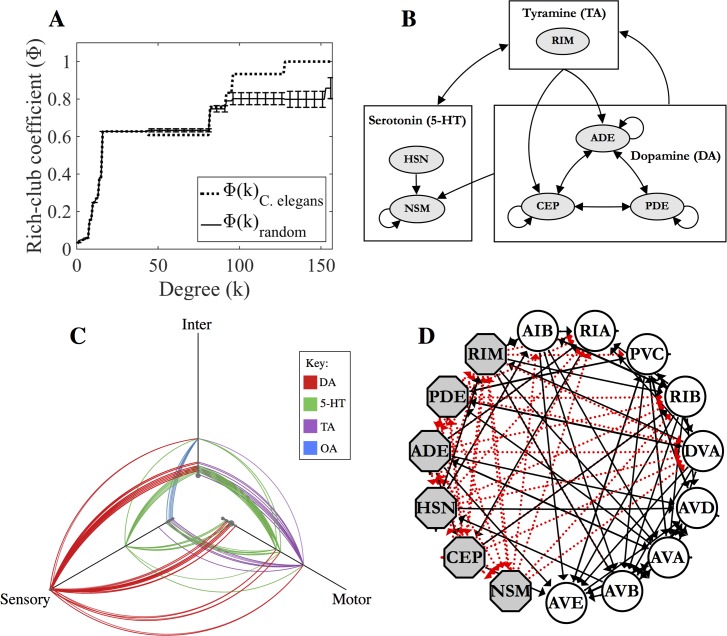
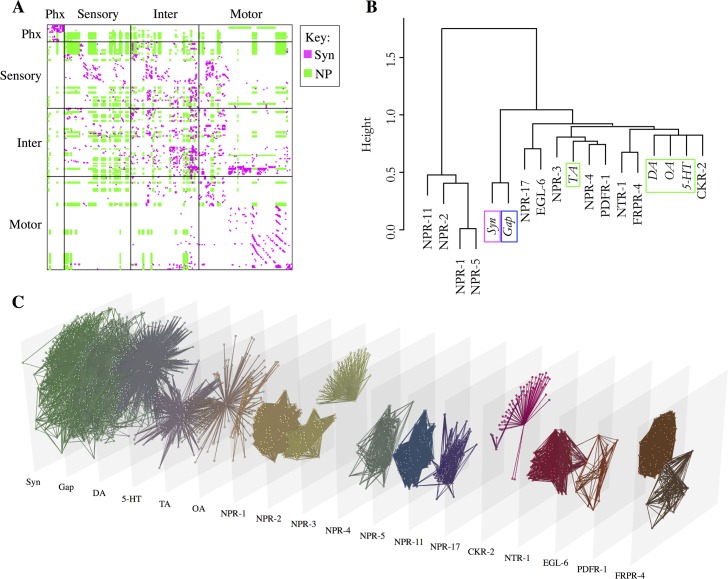
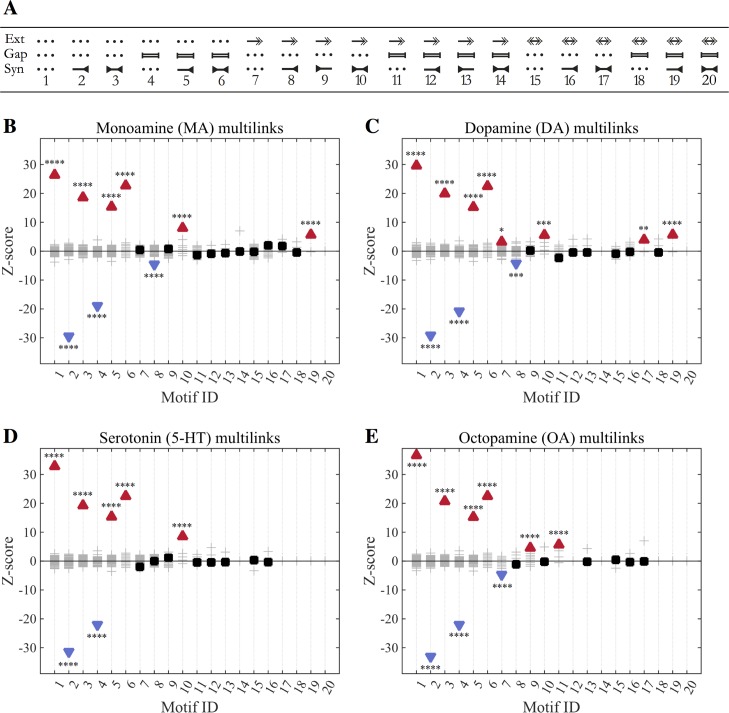
Connectomics has focused primarily on the mapping of synaptic links in the brain; yet it is well established that extrasynaptic volume transmission, especially via monoamines and neuropeptides, is also critical to brain function and occurs primarily outside the synaptic connectome. We have mapped the putative monoamine connections, as well as a subset of neuropeptide connections, in C. elegans based on new and published gene expression data. The monoamine and neuropeptide networks exhibit distinct topological properties, with the monoamine network displaying a highly disassortative star-like structure with a rich-club of interconnected broadcasting hubs, and the neuropeptide network showing a more recurrent, highly clustered topology. Despite the low degree of overlap between the extrasynaptic (or wireless) and synaptic (or wired) connectomes, we find highly significant multilink motifs of interaction, pinpointing locations in the network where aminergic and neuropeptide signalling modulate synaptic activity. Thus, the C. elegans connectome can be mapped as a multiplex network with synaptic, gap junction, and neuromodulator layers representing alternative modes of interaction between neurons. This provides a new topological plan for understanding how aminergic and peptidergic modulation of behaviour is achieved by specific motifs and loci of integration between hard-wired synaptic or junctional circuits and extrasynaptic signals wirelessly broadcast from a small number of modulatory neurons.
Overview
The claims and statistics of this paper haven’t been checked yet.
Free: it reads the open-access text and checks the first 5 claims that cite a source we can check. Create a free account to check every claim.
Integrity signals
Registry
Cites
Statistics
Figures
Verification
Claims the paper makes
The claims and statistics of this paper haven’t been checked yet.
Free: it reads the open-access text and checks the first 5 claims that cite a source we can check. Create a free account to check every claim.
Claims other papers make about this one
Each is checked against this paper’s own text: does it say what the citing paper says it does?
The cited source says what the claim attributes to it.
In the citing paper
“Here, the analysis of reducibility revealed that the monoamine networks have a unique structure, with information complementary to that provided by neuropeptide networks 90 .”
From Complex networks from classical to quantum (2019) · cites this paper as [90]
The cited source says what the claim attributes to it.
In the citing paper
“the connectome of the nematode Caenorhabditis elegans -one of the most studied in the fi eld because of its small size, with ~300 neuronal cells -has been mapped to a multiplex network where layers encode synaptic, gap junction, and neuromodulator interactions.”
From Complex networks from classical to quantum (2019) · cites this paper as [90]
Self-check
Percentages, sums and reported differences re-computed from the paper’s own numbers.
The self-check needs the paper’s full text.
Citations
Cites
Cytoscape: A software Environment for integrated models of biomolecular interaction networks
Shannon, P., Markiel, A., Ozier, O., Baliga, N. S., Wang, J. T., Ramage, D., Amin, N., Schwikowski, B., & Ideker, T. (2003) · Genome Research · doi:10.1101/gr.1239303 · Cited by 51,888
Collective dynamics of ‘small-world’ networks
Watts, D. J., & Strogatz, S. H. (1998) · Nature · doi:10.1038/30918 · Cited by 43,060 · cited 2×
“Here we present a draft monoamine connectome, along with a partial neuropeptide connectome, for the nematode C. elegans, based on new and published expression PLOS Computational Biology | DOI:10.1371/journal.pcbi.1005283 December 16, 2016 1 / 31 OPENACCESS Citation: Bentley B, Branicky R, Barnes…”
BackgroundMethodInfluentialEmergence of Scaling in Random Networks
Barabási, A.-L., & Albert, R. (1999) · Science · doi:10.1126/science.286.5439.509 · Cited by 36,135
Hierarchical Grouping to Optimize an Objective Function
Ward, J. H. (1963) · Journal of the American Statistical Association · doi:10.1080/01621459.1963.10500845 · Cited by 20,598
The Structure and Function of Complex Networks
Newman, M. E. J. (2003) · SIAM Review · doi:10.1137/s003614450342480 · Cited by 18,719
Social Network Analysis: Methods and Applications
Wasserman, S. S., & Faust, K. (1994) · Cited by 17,989
Modularity and community structure in networks
Newman, M. E. J. (2006) · Proceedings of the National Academy of Sciences · doi:10.1073/pnas.0601602103 · Cited by 12,256 · cited 1×
“(DOCX)”
Complex brain networks: graph theoretical analysis of structural and functional systems
Bullmore, E., & Sporns, O. (2009) · Nature Reviews Neuroscience · doi:10.1038/nrn2575 · Cited by 11,820
Self-citationComplex network measures of brain connectivity: Uses and interpretations
Rubinov, M., & Sporns, O. (2010) · NeuroImage · doi:10.1016/j.neuroimage.2009.10.003 · Cited by 11,522
The structure of the nervous system of the nematode Caenorhabditis elegans
White, J. G., Southgate, E., Thomson, J. N., & Brenner, S. (1986) · Philosophical Transactions of the Royal Society of London. B, Biological Sciences · doi:10.1098/rstb.1986.0056 · Cited by 5,589 · cited 1×
“The monoamine and neuropeptide networks exhibit distinct topological properties, with the monoamine network displaying a highly disassortative star-like structure with a rich- club of interconnected broadcasting hubs, and the neuropeptide network showing a more recurrent, highly clustered topology.”
Background
Cited by
Items 101–200 of 317
Pattern Discovery in Multilayer Networks
Ren, Y., Sarkar, A., Veltri, P., Ay, A. A., Dobra, A., & Kahveci, T. (2021) · IEEE Transactions on Computational Biology and Bioinformatics · doi:10.1109/tcbb.2021.3105001 · Cited by 23
Single-cell tracking reveals super-spreading brain cancer cells with high persistence
Nousi, A., Søgaard, M. T., Audoin, M., & Jauffred, L. (2021) · Biochemistry and Biophysics Reports · doi:10.1016/j.bbrep.2021.101120 · Cited by 23
Structure of general-population antibody titer distributions to influenza A virus
Nhat, N. T. D., Todd, S., de Bruin, E., Thao, T. T. N., Vy, N. H. T., Tran, Q. M., Vinh, D. N., van Beek, J., Ánh, P. H., Lam, H. M., et al. (2017) · Scientific Reports · doi:10.1038/s41598-017-06177-0 · Cited by 23
The neuropeptidergic connectome of C. elegansPreprint
Ripoll-Sánchez, L., Watteyne, J., Sun, H., Fernandez, R. W., Taylor, S. R., Weinreb, A., Hammarlund, M., Miller, D. M., Hobert, O., Beets, I., et al. (2022) · bioRxiv (Cold Spring Harbor Laboratory) · doi:10.1101/2022.10.30.514396 · Cited by 23
Self-citationNonsynaptic encoding of behavior by neuropeptides
Jékely, G., & Yuste, R. (2024) · Current Opinion in Behavioral Sciences · doi:10.1016/j.cobeha.2024.101456 · Cited by 22
“Systematic expression and receptor deorphanization studies have begun to reveal cellular-resolution multi-layer peptidergic connectomes for entire organs or organisms [18,24,28–31].”
BackgroundPhenotypes can be robust and evolvable if mutations have non-local effects on sequence constraints
Weiß, M., & Ahnert, S. E. (2018) · Journal of The Royal Society Interface · doi:10.1098/rsif.2017.0618 · Cited by 25
What would a synthetic connectome look like?
Rabinowitch, I. (2019) · Physics of Life Reviews · doi:10.1016/j.plrev.2019.06.005 · Cited by 22
Sederberg, A., & Nemenman, I. M. (2020) · PLoS Computational Biology · doi:10.1371/journal.pcbi.1007875 · Cited by 21
Chromatin Network Analyses: Towards Structure-Function Relationships in Epigenomics
Pancaldi, V. (2021) · Frontiers in Bioinformatics · doi:10.3389/fbinf.2021.742216 · Cited by 20
“elegans connectome, showing the potential of such an approach in epigenomics (Bentley et al., 2016).”
BackgroundNovel Technological Advances in Functional Connectomics in C. elegans
DiLoreto, E. M., Chute, C. D., Bryce, S., & Srinivasan, J. (2019) · Journal of Developmental Biology · doi:10.3390/jdb7020008 · Cited by 19
“In addition, extrasynaptic signaling between neurons within nervous system happens via monoamines and neuropeptides, occurring primarily outside the synaptic connectome [13].”
BackgroundFieseler, C., Kunert-Graf, J. M., & Kutz, J. N. (2018) · Journal of Biomechanics · doi:10.1016/j.jbiomech.2018.03.046 · Cited by 19
“Another direction is to study a diffusive neuromodulator in combination with the underlying synaptic network ([4]), as a wave-like effect might be produced by this interplay.”
BackgroundPersistence in multilayer ecological network consisting of harvested patches
Kundu, S., Majhi, S., & Ghosh, D. (2021) · Chaos An Interdisciplinary Journal of Nonlinear Science · doi:10.1063/5.0047221 · Cited by 19
From asynchronous to synchronous chimeras in ecological multiplex network
Kundu, S., Majhi, S., & Ghosh, D. (2019) · The European Physical Journal Special Topics · doi:10.1140/epjst/e2019-900013-1 · Cited by 19
Distinct neuropeptide-receptor modules regulate a sex-specific behavioral response to a pheromone
Reilly, D. K., McGlame, E. J., Vandewyer, E., Robidoux, A. N., Muirhead, C. S., Northcott, H. T., Joyce, W., Alkema, M. J., Gegear, R. J., Beets, I., et al. (2021) · Communications Biology · doi:10.1038/s42003-021-02547-7 · Cited by 19
Dynamics of a multiplex neural network with delayed couplings
Mao, X., Li, X., Ding, W., Wang, S., Zhou, X., & Qiao, L. (2021) · Applied Mathematics and Mechanics · doi:10.1007/s10483-021-2709-6 · Cited by 18
Memory shapes microbial populations
Gokhale, C. S., Giaimo, S., & Remigi, P. (2021) · PLoS Computational Biology · doi:10.1371/journal.pcbi.1009431 · Cited by 19
Mapping and decoding neuropeptide signaling networks in nervous system function
Beets, I., & Watteyne, J. (2025) · Current Opinion in Neurobiology · doi:10.1016/j.conb.2025.103027 · Cited by 17
Neural mechanisms of dopamine function in learning and memory in Caenorhabditis elegans
McMillen, A., & Chew, Y. L. (2023) · Neuronal Signaling · doi:10.1042/ns20230057 · Cited by 17
“For example, in C. elegans there are few dopaminergic neurons that primarily act in an ‘extra-synaptic’ manner on over 100 neuronal targets (based on receptor expression), predominantly motor neurons [41].”
BackgroundInfluentialSelf-citationConnectome to behaviour: modelling Caenorhabditis elegans at cellular resolution
Larson, S., Gleeson, P., & Brown, A. E. (2018) · Philosophical Transactions of the Royal Society B Biological Sciences · doi:10.1098/rstb.2017.0366 · Cited by 17
Invariance and stability conditions of interlayer synchronization manifold
Rakshit, S., Bera, B. K., & Ghosh, D. (2020) · Physical review. E · doi:10.1103/physreve.101.012308 · Cited by 17
Haspel, G., Baker, B., Beets, I., Boyden, E. S., Brown, J., Church, G. M., Cohen, N., Colón‐Ramos, D. A., Dyer, E., Fang-Yen, C. M., et al. (2023) · arXiv (Cornell University) · doi:10.48550/arxiv.2308.06578 · Cited by 17
“…(White et al. 1986; Cook et al. 2019; Witvliet et al. 2021; Brittin et al. 2021) poorly predict interactive patterns of neural and muscle activity (Bentley et al. 2016; Yemini et al. 2021; Susoy et al. 2021; Uzel, Kato, and Zimmer 2022; Beets et al. 2022; Ripoll-Sánchez et al. 2022; Dag et al.…”
BackgroundSelf-citationWong, J. Y. H., Wan, B. A., Bland, T., Montagnese, M., McLachlan, A., O’Kane, C. J., Zhang, S. W., & Masuda-Nakagawa, L. M. (2021) · Learning & Memory · doi:10.1101/lm.052159.120 · Cited by 17
“Circuit of odor discrimination in Drosophila larva www.learnmem.org 62 Learning & Memory receptors (Bentley et al. 2016), and this may be the case for Oamb in PN terminals. sVUM1 neurons have dense core vesicles (DCV), and these might release peptides together with OA (Tao et al. 2019).”
Graph Signal Separation Based on Smoothness or Sparsity in the Frequency Domain
Mohammadi, S., Babaie‐Zadeh, M., & Thanou, D. (2023) · IEEE Transactions on Signal and Information Processing over Networks · doi:10.1109/tsipn.2023.3254443 · Cited by 16
“In more complicated structures like transportation [3] and biological [4], [5] networks, multiple types of relationships can exist between data samples.”
BackgroundZhang, Y., Iino, Y., & Schafer, W. R. (2024) · Genetics · doi:10.1093/genetics/iyae105 · Cited by 16
Self-citationBianconi, G. (2018) · Oxford University Press eBooks · doi:10.1093/oso/9780198753919.003.0010 · Cited by 16
Cellular diversity and developmental hierarchy in the planarian nervous system
Wyss, L. S., Bray, S. R., & Wang, B. (2022) · Current Opinion in Genetics & Development · doi:10.1016/j.gde.2022.101960 · Cited by 16
Synchronization Patterns in Modular Neuronal Networks: A Case Study of C. elegans
Pournaki, A., Merfort, L., Ruiz, J., Kouvaris, N. E., Hövel, P., & Hizanidis, J. (2019) · Frontiers in Applied Mathematics and Statistics · doi:10.3389/fams.2019.00052 · Cited by 16
“[69], where a multilayer analysis of the three networks delineates topological overlaps between the two synaptic networks and discrepancies between the wireless and the synaptic networks.”
BackgroundInfluentialAdaptive robustness through incoherent signaling mechanisms in a regenerative brain
Bray, S. R., Wyss, L. S., Chai, C., Lozada, M. E., & Wang, B. (2024) · Cell Reports · doi:10.1016/j.celrep.2024.114580 · Cited by 15
“As previous studies have demonstrated ‘‘rich club’’ small-world networks in a variety of neural systems, 86 we defaulted to using a network with k = 8 ; b = 0 : 001.”
Владиславовна, Р. Е., Strelkova, G. I., & Анищенко, В. С. (2020) · Chaos Solitons & Fractals · doi:10.1016/j.chaos.2020.110477 · Cited by 15
Tyraminergic corollary discharge filters reafferent perception in a chemosensory neuron
Riedl, J., Fieseler, C., & Zimmer, M. (2022) · Current Biology · doi:10.1016/j.cub.2022.05.051 · Cited by 16
“TA is a well-known modulator of behavior over longer timescales, such as in hunger versus satiety, attention, and learning, and was suggested to constitute an extrasynaptic signaling network.(60) Repeated TA release from RIM neurons signals to the intestine modulating stress adaptation.”
Dopamine receptor DOP-1 engages a sleep pathway to modulate swimming in C. elegans
Xu, Y., Zhang, L., Liu, Y., Topalidou, I., Hassinan, C. W., Ailion, M., Zhao, Z., Wang, T., Chen, Z., & Bai, J. (2021) · iScience · doi:10.1016/j.isci.2021.102247 · Cited by 15
Bridging the gap between the connectome and whole-brain activity in C. elegansPreprint
Creamer, M. S., Leifer, A. M., & Pillow, J. W. (2024) · bioRxiv (Cold Spring Harbor Laboratory) · doi:10.1101/2024.09.22.614271 · Cited by 14
A CNN-based neuromorphic model for classification and decision control
Arena, P., Calí, M., Patané, L., Portera, A., & Spinosa, A. G. (2018) · Nonlinear Dynamics · doi:10.1007/s11071-018-4673-4 · Cited by 13
Chronic vs acute manipulations reveal degeneracy in a thermosensory neuron network
Yeon, J., Takeishi, A., & Sengupta, P. (2021) · PubMed Central · doi:10.17912/micropub.biology.000355 · Cited by 13
“elegans, we instead favor the hypothesis that this compensation and degeneracy instead arises from reconfiguration of the ‘wireless’ connectome (Bargmann and Marder, 2013; Bentley et al., 2016).”
BackgroundNeuropeptide signalling shapes feeding and reproductive behaviours in male Caenorhabditis elegans
Gadenne, M. J., Hardege, I., Yemini, E., Suleski, D., Jaggers, P., Beets, I., Schafer, W. R., & Chew, Y. L. (2022) · Life Science Alliance · doi:10.26508/lsa.202201420 · Cited by 14
“…class of neuromodulators, called neuropeptides, have been shown in multiple experimental models to be required for broad modulatory actions (Bargmann, 2012), because of their ability to trigger responses “extrasynaptically” between neurons not physically connected by synapses (Bentley et al, 2016).”
BackgroundSelf-citationGenetics of Behavior in C. elegans
Walker, D. S., Chew, Y. L., & Schafer, W. R. (2017) · Oxford University Press eBooks · doi:10.1093/oxfordhb/9780190456757.013.5 · Cited by 13
Self-citationVenkatesh, K., Ripoll-Sánchez, L., Beets, I., & Schafer, W. R. (2025) · Journal of Biosciences · doi:10.1007/s12038-025-00513-7 · Cited by 12
“Nevertheless, this new neuromodulatory connectome (figure 1B) has revealed previously unknown extrasynaptic neuron–neuron connections and identified novel features important for information processing (Bentley et al .”
InfluentialSelf-citationUsing neurons to maintain autonomy: Learning from C. elegans
Bechtel, W., & Bich, L. (2023) · Biosystems · doi:10.1016/j.biosystems.2023.105017 · Cited by 13
Finding Conserved Patterns in Multilayer Networks
Ren, Y., Sarkar, A., Ay, A. A., Dobra, A., & Kahveci, T. (2019) · ACM International Conference on Bioinformatics, Computational Biology, and Health Informatics (ACM-BCB) · doi:10.1145/3307339.3342184 · Cited by 12
“In the literature [2, 3, 19], the multilink, which is the organization of edges between the same pair of nodes across all layers, is the basic network motifs.”
BackgroundNoise-driven cell differentiation and the emergence of spatiotemporal patterns
Safdari, H., Kalirad, A., Picioreanu, C., Tusserkani, R., Goliaei, B., & Sadeghi, M. (2020) · PLoS ONE · doi:10.1371/journal.pone.0232060 · Cited by 12
Exploration-Exploitation Paradigm for Networked Biological Systems
Dichio, V., & Fallani, F. D. V. (2024) · Physical Review Letters · doi:10.1103/physrevlett.132.098402 · Cited by 12
Theoretical Physics for Biological Systems
Lecca, P., & Re, A. (2019) · CRC Press eBooks · doi:10.1201/b22433 · Cited by 12
Discrete escape responses are generated by neuropeptide-mediated circuit logicPreprint
Imambocus, B. N., Wittich, A., Tenedini, F. M., Zhou, F., Hu, C., Sauter, K., Varela, E. M., Herédia, F., Casimiro, A. P., Macedo, A., et al. (2020) · bioRxiv (Cold Spring Harbor Laboratory) · doi:10.1101/2020.09.22.307033 · Cited by 13
The dopaminergic system of Caenorhabditis elegans
Muralidhara, I., & Hardege, I. (2025) · Royal Society Open Science · doi:10.1098/rsos.250843 · Cited by 11
“Owing to the expression pattern of C. elegans neurotransmitter GPCRs, they are thought to act predominately via extrasynaptic signalling [56], however, recent studies in mammals have started to challenge this view, suggesting that certain dopamine functions necessitate spatiotemporal precision…”
InfluentialModel Based Inference of Synaptic Plasticity Rules
Mehta, Y., Tyulmankov, D., Rajagopalan, A. E., Turner, G. C., Fitzgerald, J. E., & Funke, J. (2024) · neural information processing systems · doi:10.52202/079017-1537 · Cited by 12
Tan, F., Xu, S., Li, Y., Chu, Y., & Zhang, Z. (2022) · Neurocomputing · doi:10.1016/j.neucom.2022.04.054 · Cited by 11
Mask Combination of Multi-Layer Graphs for Global Structure Inference
Bayram, E., Thanou, D., Vural, E., & Frossard, P. (2020) · IEEE Transactions on Signal and Information Processing over Networks · doi:10.1109/tsipn.2020.2995515 · Cited by 11
“Examples include social networks that relate individuals based on different types of connections or behavioral similarities [1], [2], biological networks where different modes of interactions exist between neurons or brain regions [3], [4], transportation”
BackgroundVisual Analysis of Multilayer Networks
McGee, F., Renoust, B., Archambault, D., Ghoniem, M., Kerren, A., Pinaud, B., Pohl, M., Otjacques, B., Mélançon, G., & von Landesberger, T. (2021) · Synthesis lectures on visualization · doi:10.2200/s01094ed1v01y202104vis012 · Cited by 10
Haspel, G., Deng, L., Alfonso, M. B. H., & Tanvir, Z. (2020) · Elsevier eBooks · doi:10.1016/b978-0-12-816477-8.00001-6 · Cited by 10
Kim, J., Florman, J., Santos, J. A., Alkema, M. J., & Shlizerman, E. (2019) · bioRxiv (Cold Spring Harbor Laboratory) · doi:10.1101/724328 · Cited by 10
Brainlike Networks of Nanowires and Nanoparticles: A Change of Perspective
Daniels, R. K., Arnold, M. D., Heywood, Z. E., Mallinson, J. B., Bones, P. J., & Brown, S. A. (2023) · Physical Review Applied · doi:10.1103/physrevapplied.20.034021 · Cited by 9
An Eigenvector Centrality for Multiplex Networks with Data
Pedroche, F., Tortosa, L., & Vicent, J. F. (2019) · Symmetry · doi:10.3390/sym11060763 · Cited by 9
“Multiplex networks have been applied in wide areas of science, such as transportation networks [9], social networks [10], financial networks [11] or biological networks [12].”
MethodHyper-diffusion on multiplex networks
Ghorbanchian, R., Latora, V., & Bianconi, G. (2022) · Journal of Physics Complexity · doi:10.1088/2632-072x/ac8fd4 · Cited by 9
Visual Analysis of Multilayer Networks
McGee, F., Ghoniem, M., Otjacques, B., Renoust, B., Archambault, D., Kerren, A., Pinaud, B., Mélançon, G., Pohl, M., & von Landesberger, T. (2021) · Synthesis lectures on visualization · doi:10.1007/978-3-031-02608-9 · Cited by 9
Seif, A., & Zarei, M. (2025) · Chaos Solitons & Fractals · doi:10.1016/j.chaos.2025.116412 · Cited by 8
Biological substrates of structure-function coupling in brain networks
Fotiadis, P., Arnsten, A. F. T., Parkes, L., Satterthwaite, T. D., Shinohara, R. T., & Bassett, D. S. (2026) · Neuroscience & Biobehavioral Reviews · doi:10.1016/j.neubiorev.2026.106581 · Cited by 8
Zarei, M., Xie, D., Jiang, F., Bagirov, A., Huang, B., Raj, A., Nagarajan, S. S., & Guo, S. (2022) · BMC Biology · doi:10.1186/s12915-022-01286-3 · Cited by 8
“Such connectivity may be direct, indirect through a subnetwork [18], or via wireless neuro-modulatory communications [19].”
Computational Models of Typical and Atypical Brain Network Development
Vértes, P. E. (2022) · Biological Psychiatry · doi:10.1016/j.biopsych.2022.11.012 · Cited by 8
“At the same time, models will seek to capture increasingly complex features of brain networks, including features from algebraic topology (60, 61) and multiplex representations of brain networks (62).”
BackgroundSelf-citationMultilayer adaptive networks in neuronal processing
Hernández, A., & Amigó, J. M. (2018) · The European Physical Journal Special Topics · doi:10.1140/epjst/e2018-800037-y · Cited by 8
Whole-body connectome of a segmented annelid larvaPreprint
Verasztó, C., Jasek, S., Gühmann, M., Bezares-Calderón, L. A., Williams, E. A., Shahidi, R., & Jékely, G. (2024) · eLife · doi:10.7554/elife.97964.1 · Cited by 8
Whole-body connectome of a segmented annelid larvaPreprint
Verasztó, C., Jasek, S., Gühmann, M., Bezares-Calderón, L. A., Williams, E. A., Shahidi, R., & Jékely, G. (2025) · eLife · doi:10.7554/elife.97964.2 · Cited by 9
Agnosticism about artificial consciousness
McClelland, T. (2026) · Mind & Language · doi:10.1111/mila.70010 · Cited by 7
“Although whole-brain emulations are a long way from emulating a human brain, they can emulate the neural connectome of more simple organisms such as Caenorhabditis elegans and, more recently, the larval fruit fly (Bentley et al., 2016; Winding et al., 2023).”
A Reservoir Computing Approach to Word Sense Disambiguation
Simov, K., Koprinkova‐Hristova, P., Popov, A., & Osenova, P. (2020) · Cognitive Computation · doi:10.1007/s12559-020-09758-w · Cited by 7
Exact and approximate role assignment for multi-layer networks
Petrov, T., & Tognazzi, S. (2021) · Journal of Complex Networks · doi:10.1093/comnet/cnab027 · Cited by 7
Goodness of fit for log-linear ERGMsPreprint
Gross, E., Petrović, S., & Stasi, D. (2021) · arXiv (Cornell University) · doi:10.48550/arxiv.2104.03167 · Cited by 7
“…protein-protein interaction networks and neuronal networks have been used as examples of scale-free networks, that is, networks whose degree distribution follows a power law (Jeong et al. (2000), Tanaka (2005), Wagner and Fell (2001), Albert (2005), Clauset et al. (2009), Bentley et al. (2016)).”
MethodSchmitt, O., Eipert, P., Schwanke, S., Leßmann, F., Jennifer, M., Beier, J., Kadir, K., Karnitzki, A., Sellner, L., Klünker, A.-C., et al. (2018) · Briefings in Bioinformatics · doi:10.1093/bib/bby048 · Cited by 6
Agnosticism About Artificial ConsciousnessPreprint
McClelland, T. (2024) · arXiv (Cornell University) · doi:10.48550/arxiv.2412.13145 · Cited by 6
“Although whole-brain emulations are a long way from emulating a human brain, they can emulate the neural connectome of more simple organisms such as Caenorhabditis elegans and, more recently, the larval fruit fly (Bentley et al., 2016; Winding et al., 2023).”
Multiplexons: Limits of Multiplex NetworksPreprint
Ganguly, A., & Bhattacharya, B. B. (2025) · arXiv (Cornell University) · doi:10.48550/arxiv.2510.08639 · Cited by 6
“The brain of C. elegans consists of 302 neurons, which are connected by two types of links: synaptic (chemical) connections and gap junctions (electrical connections), resulting in a multiplex network with two layers (see [13] and [18, Section 4.7] for more details).”
InfluentialSocial balance in directed networks
Hao, B., Platnick, E., & Kovács, I. A. (2025) · Communications Physics · doi:10.1038/s42005-025-02221-y · Cited by 6
“For instance, applying our methods to C. elegans neuronal networks 33 – 35 , which contain approximately 300 neurons with signed, directed synapses, could reveal whether principles of social balance have analogs in the neuronal organization.”
Brain functions emerge as thermal equilibrium states of the connectome
Moutuou, E.-K. M., & Benali, H. (2025) · Physical Review Research · doi:10.1103/jmqh-bqnc · Cited by 5
“This indicates that direct connections via extracellular neuro-transmitters [8] dynamically and selectively add to the original graph, altering its computational and functional properties by establishing new functional connections.”
BackgroundResultBecerra, D., Calixto, A., & Orio, P. (2023) · International journal of psychological research · doi:10.21500/20112084.6487 · Cited by 5
“…or be integrated in a progressively bigger and more comprehensive type of models such as the c302 modeling framework from the OpenWorm project (Gleeson et al., 2018), or the multilayered connectome, which encompasses the different kinds of modulation present in C. elegans (Bentley et al., 2016).”
BackgroundA Transcriptome Community-and-Module Approach of the Human Mesoconnectome
Paredes, O., López, J. B., Covantes-Osuna, C., Ocegueda-Hernández, V., Romo‐Vázquez, R., & Morales, J. A. (2021) · Entropy · doi:10.3390/e23081031 · Cited by 5
“Other studies focus on the molecules, proteins, hormones, neurotransmitters, genes, and transcripts [12–15].”
BackgroundTowards a functional connectome in Drosophila
Vogt, K. (2020) · Journal of Neurogenetics · doi:10.1080/01677063.2020.1712598 · Cited by 5
“…animals, receptors situated at the postsynaptic density are not only modulated by pre-synaptically released neurotransmitters, but also by molecules and peptides released extrasynaptically or from other nearby presynaptic sites (Bentley et al., 2016; De-Miguel & Trueta, 2005; Lendvai & Vizi, 2008).”
BackgroundWhen Artificial Intelligence and Computational Neuroscience Meet
Alexandre, F., Dominey, P. F., Gaussier, P., Girard, B., Khamassi, M., & Rougier, N. P. (2020) · Springer eBooks · doi:10.1007/978-3-030-06170-8_9 · Cited by 5
The undiscovered country: ten grand challenges in rotifer biology
WALLACE, R. L., Hochberg, R., & Walsh, E. J. (2023) · Hydrobiologia · doi:10.1007/s10750-023-05247-x · Cited by 4
“This has been advanced for many species including Caenorhabditis elegans (Maupas, 1900) (Sohn et al., 2011; Bentley et al., 2016).”
Expressive probabilistic sampling in recurrent neural networks
Chen, S., Jiang, L., Rao, R. P. N., & Shea‐Brown, E. (2023) · neural information processing systems · doi:10.52202/075280-1520 · Cited by 6
Neuromodulation: The Fevered Mind of the Worm
Ringstad, N. (2017) · Current Biology · doi:10.1016/j.cub.2017.03.005 · Cited by 4
Huang, T., Sun, Y., Zhang, Z., Deng, S., & Peng, R. (2017) · Neuroreport · doi:10.1097/wnr.0000000000000875 · Cited by 4
The Need for More Integration Between Machine Learning and Neuroscience
Hernández, A., & Amigó, J. M. (2020) · Nonlinear physical science · doi:10.1007/978-981-15-9034-4_2 · Cited by 4
Bentley, B. L. (2017) · Apollo (University of Cambridge) · doi:10.17863/cam.16873 · Cited by 4
Self-citationGuillermin, M. L. (2018) · eScholarship (California Digital Library) · Cited by 4
Venturini, S., Cristofari, A., Rinaldi, F., & Tudisco, F. (2023) · arXiv (Cornell University) · doi:10.48550/arxiv.2306.00152 · Cited by 4
“In fact, the construction of the networks in many applications is not straightforward, and making an informed a-priori assessment on the presence of noise, the different types of layer structures, and the clustering information content in general, can be very complicated (Bentley et al., 2016; Choobdar et al., 2019; P…”
BackgroundAdaptation and Synchronization in Complex Systems
Sawicki, J. (2025) · Current research in systematic musicology · doi:10.1007/978-3-031-97003-0_3 · Cited by 3
Neuroethology: Generating complex behavioral sequences with distributed nerve nets
Frost, W. N. (2023) · Current Biology · doi:10.1016/j.cub.2023.04.004 · Cited by 3
Scaling Properties for Artificial Neural Network Models of a Small Nervous System
Simeon, Q., Venâncio, L., Skuhersky, M., Nayebi, A., Boyden, E. S., & Yang, G. R. (2024) · IEEE SoutheastCon · doi:10.1109/southeastcon52093.2024.10500049 · Cited by 3
Dopaminergic Modulation of Short‐Term Associative Memory in Caenorhabditis elegans
McMillen, A., Minervini, C., Green, R., Johnson, M., Ansaar, R., & Chew, Y. L. (2025) · Journal of Neurochemistry · doi:10.1111/jnc.70200 · Cited by 3
Self-citationPropagation on Multi-relational Graphs for Node Regression
Bayram, E. (2021) · Studies in computational intelligence · doi:10.1007/978-3-030-93409-5_14 · Cited by 3
Bianconi, G. (2018) · Oxford University Press eBooks · doi:10.1093/oso/9780198753919.003.0005 · Cited by 3
White, J. G. (2020) · Journal of Neurogenetics · doi:10.1080/01677063.2020.1834543 · Cited by 3
“…become apparent that there is a parallel pattern of connections within the C. elegans nervous system that is not realized from the anatomical reconstructions, but in which long range diffusion of neuropeptides and some neurotransmitters link pre- and postsynaptic partners (Bentley et al., 2016).”
BackgroundDynamical processes and emergent behaviors in multiplex networksPreprint
Battiston, F., Frasca, M., Gómez‐Gardeñes, J., Min, B., Radicchi, F., Santoro, A., & Latora, V. (2026) · arXiv (Cornell University) · doi:10.48550/arxiv.2605.04199 · Cited by 3
The Controllability of Caenorhabditis elegans Neural Network from Larva to Adult
Liu, J., Zhao, P., Wang, G., Fang, T., & Yuan, Y. (2025) · Biomimetics · doi:10.3390/biomimetics10110744 · Cited by 2
Causal Leverage Density: A Universal Framework for Semantic Information
Sowinski, D. R., Holler, S., Wong, M., Segal, G., Parkinson, D., Vidal, C., Cleaves, J. H., Sinhadc, P., Prabhu, A., & Bartlett, S. (2025) · ALIFE · doi:10.1162/isal.a.871 · Cited by 2
Complex Systems as Multilayer Networks
Bianconi, G. (2018) · Oxford University Press eBooks · doi:10.1093/oso/9780198753919.003.0001 · Cited by 2
Bianconi, G. (2018) · Oxford University Press eBooks · doi:10.1093/oso/9780198753919.003.0013 · Cited by 2
Neuronal motifs reveal backbone structure and influential neurons of neural network in C. elegans
Liu, J., Yuan, Y., Zhao, P., Gu, X., Huo, H., Li, Z., & Fang, T. (2023) · Journal of Complex Networks · doi:10.1093/comnet/cnad013 · Cited by 2
Semantic representation of neural circuit knowledge in Caenorhabditis elegans
Prakash, S. J., Auken, K. M. V., Hill, D. P., & Sternberg, P. W. (2023) · Brain Informatics · doi:10.1186/s40708-023-00208-5 · Cited by 2
Innate Orientating Behavior of a Multi-Legged Robot Driven by the Neural Circuits of C. elegans
Hu, K., Zhang, Y., Ding, F., Yang, D., Yu, Y., Yu, Y., Wang, Q., & Baoyin, H. (2024) · Biomimetics · doi:10.3390/biomimetics9060314 · Cited by 2
Discovering motifs to fingerprint multi-layer networks: a case study on the connectome of C. Elegans
Sharma, D. K., Renz, M., & Hövel, P. (2025) · The European Physical Journal B · doi:10.1140/epjb/s10051-024-00848-4 · Cited by 2
“Similar to monoamines, neuropeptides form a small wired network but a vast wireless network[30], suggesting their potential involvement in all C. elegans behaviors.”
Interdependent Multilayer Networks
Bianconi, G. (2018) · Oxford University Press eBooks · doi:10.1093/oso/9780198753919.003.0011 · Cited by 2
Neuromodulation of Sex-Specific Pheromone-Mediated Behaviors
Reilly, D. K. (2020) · Digital WPI · Cited by 2
Metadata
- Authors
- Bentley, B., Branicky, R., Barnes, C. L., Chew, Y. L., Yemini, E., Bullmore, E. T., Vértes, P. E., & Schafer, W. R.
- Affiliations
- MRC Laboratory of Molecular Biology (GB)
- Howard Hughes Medical Institute (US)
- Columbia University (US)
- GlaxoSmithKline (United Kingdom) (GB)
- University of Cambridge (GB)
- Corresponding author
- Schafer, William R.
- ORCID
- Venue
- PLOS Computational Biology
- Publisher
- Public Library of Science (PLoS)
- Published
- 2016-12-16
- Volume
- 12
- Issue
- 12
- Pages
- e1005283
- ISSN
- 1553-734X (ISSN-L)
- 1553-7358
- PMC
- PMC5215746
- OpenAlex
- W2514803758
- Cited by
- 269
- References
- 136
- Citations by year
- 2026: 6 · 2025: 21 · 2024: 22 · 2023: 24 · 2022: 33 · 2021: 34 · 2020: 27 · 2019: 27 · 2018: 53 · 2017: 21 · 2016: 1
- FWCI
- 19.07
- Type
- journal article
- Language
- en
- Update notices
- new_version (2017-01-04)
- Open access
- gold
- doi.org
- Licence
- Locations
- PLoS Computational Biology (publishedVersion, cc-by)
- Europe PMC (PubMed Central) (publishedVersion, cc-by)
- PubMed Central (publishedVersion, cc-by)
- PubMed (publishedVersion)
- arXiv (Cornell University) (submittedVersion)
- Apollo (University of Cambridge) (submittedVersion, cc-by)
- DOAJ (DOAJ: Directory of Open Access Journals) (submittedVersion, cc-by-sa)
- Figshare (submittedVersion, cc-by)
- Queen Mary Research Online (Queen Mary University of London) (submittedVersion, cc-by)
- arXiv (Cornell University)
- Apollo (cc-by)
- Columbia Academic Commons (Columbia University)
- Funders
- Wellcome Trust (WT103784MA)
- Medical Research Council (MC-A022-5PB91, MR/K020706/1)
- National Institutes of Health (5T32DK007328-37)
- Topics
- Life Sciences › Neuroscience › Cellular and Molecular Neuroscience › Neurobiology and Insect Physiology Research
- Life Sciences › Neuroscience › Cellular and Molecular Neuroscience › Neuroscience and Neuropharmacology Research
- Life Sciences › Neuroscience › Cognitive Neuroscience › Neural dynamics and brain function
- Keywords
- Caenorhabditis elegans, connectome, monoamine signaling, neuropeptide signaling, gap junctions, neuromodulation, multiplex networks, network motifs, network topology, synaptic connectivity, modulatory neurons, gene expression
- MeSH terms
- Animals, Biogenic Monoamines, Signal Transduction, Caenorhabditis elegans, Computational Biology, Connectome
About these checks
Registry, retraction, Cites and statistics results are computed, not judged, with one exception: a printed reference that no index lists is read once by a model before it counts as a citation error. Claims are extracted by a model and kept only when their quote appears verbatim in the text; each cited source is then checked, with a model’s help, for whether it says what the claim relies on. Those verdicts can be wrong — read the claim’s quote and the cited source before relying on one.
Statistics and arithmetic are recomputed, not judged.
Confidence bands are shown only for fields calibrated on our annotated test set. None is calibrated yet, so no band is shown.
What counts as a claim ›How we measure confidence ›How we check this ›
Are you an author, or do you see a problem with this page? Request a review
Data sources
Bibliographic data: Semantic Scholar, OpenAlex, Crossref.
Contains information from the Semantic Scholar Academic Graph Datasets, made available under the ODC Attribution License (ODC-BY 1.0).
Semantic Scholar’s data is described in: Kinney, R., et al. (2023). The Semantic Scholar Open Data Platform. arXiv:2301.10140.
