

The Multilayer Connectome of Caenorhabditis elegans
Open accessThe DOI matches its Crossref record; 137 of the 137 references it cites were found in a registry or an index.
Abstract
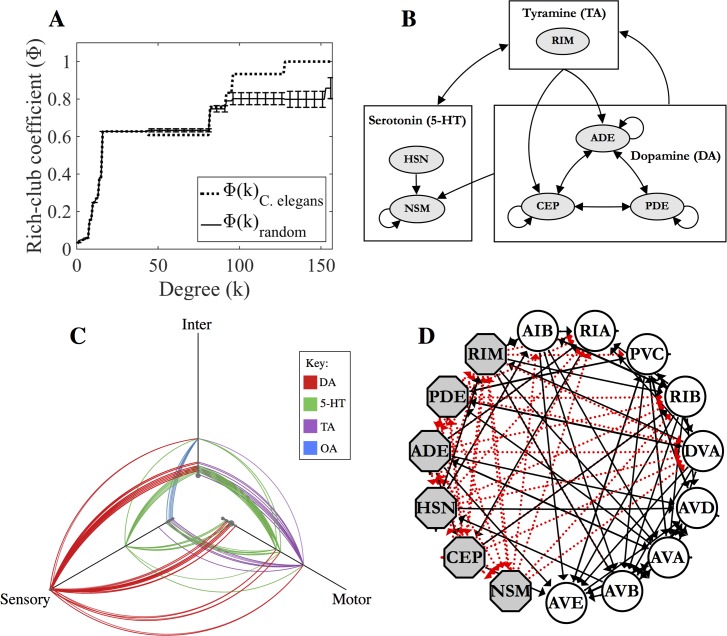
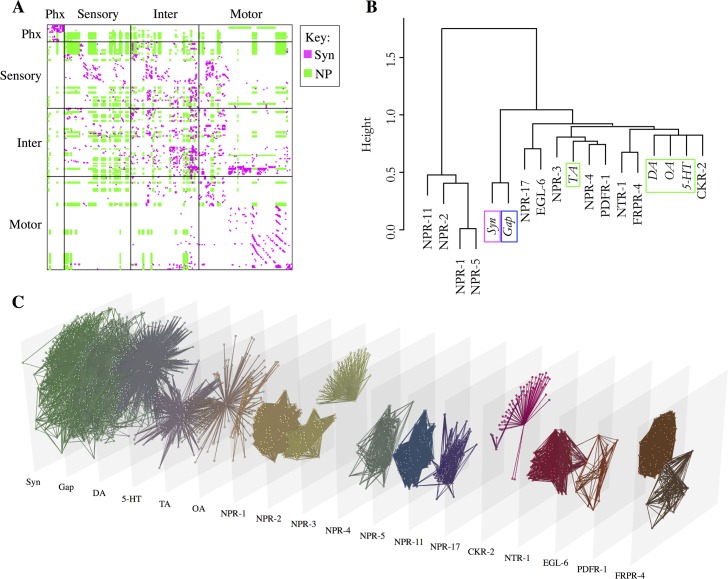
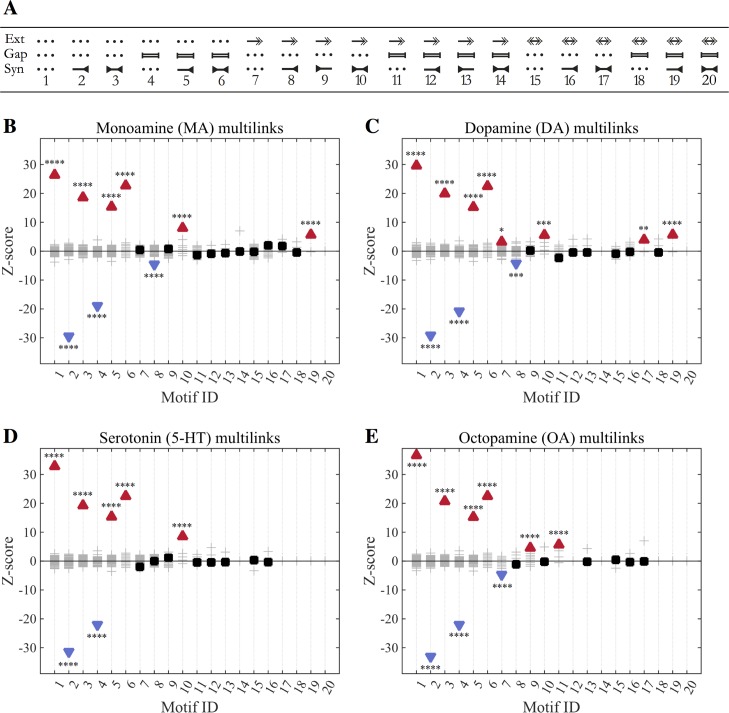
Connectomics has focused primarily on the mapping of synaptic links in the brain; yet it is well established that extrasynaptic volume transmission, especially via monoamines and neuropeptides, is also critical to brain function and occurs primarily outside the synaptic connectome. We have mapped the putative monoamine connections, as well as a subset of neuropeptide connections, in C. elegans based on new and published gene expression data. The monoamine and neuropeptide networks exhibit distinct topological properties, with the monoamine network displaying a highly disassortative star-like structure with a rich-club of interconnected broadcasting hubs, and the neuropeptide network showing a more recurrent, highly clustered topology. Despite the low degree of overlap between the extrasynaptic (or wireless) and synaptic (or wired) connectomes, we find highly significant multilink motifs of interaction, pinpointing locations in the network where aminergic and neuropeptide signalling modulate synaptic activity. Thus, the C. elegans connectome can be mapped as a multiplex network with synaptic, gap junction, and neuromodulator layers representing alternative modes of interaction between neurons. This provides a new topological plan for understanding how aminergic and peptidergic modulation of behaviour is achieved by specific motifs and loci of integration between hard-wired synaptic or junctional circuits and extrasynaptic signals wirelessly broadcast from a small number of modulatory neurons.
Overview
The claims and statistics of this paper haven’t been checked yet.
Free: it reads the open-access text and checks the first 5 claims that cite a source we can check. Create a free account to check every claim.
Integrity signals
Registry
Cites
Statistics
Figures
Verification
Claims the paper makes
The claims and statistics of this paper haven’t been checked yet.
Free: it reads the open-access text and checks the first 5 claims that cite a source we can check. Create a free account to check every claim.
Claims other papers make about this one
Each is checked against this paper’s own text: does it say what the citing paper says it does?
The cited source says what the claim attributes to it.
In the citing paper
“Here, the analysis of reducibility revealed that the monoamine networks have a unique structure, with information complementary to that provided by neuropeptide networks 90 .”
From Complex networks from classical to quantum (2019) · cites this paper as [90]
The cited source says what the claim attributes to it.
In the citing paper
“the connectome of the nematode Caenorhabditis elegans -one of the most studied in the fi eld because of its small size, with ~300 neuronal cells -has been mapped to a multiplex network where layers encode synaptic, gap junction, and neuromodulator interactions.”
From Complex networks from classical to quantum (2019) · cites this paper as [90]
Self-check
Percentages, sums and reported differences re-computed from the paper’s own numbers.
The self-check needs the paper’s full text.
Citations
Cites
Cytoscape: A software Environment for integrated models of biomolecular interaction networks
Shannon, P., Markiel, A., Ozier, O., Baliga, N. S., Wang, J. T., Ramage, D., Amin, N., Schwikowski, B., & Ideker, T. (2003) · Genome Research · doi:10.1101/gr.1239303 · Cited by 51,888
Collective dynamics of ‘small-world’ networks
Watts, D. J., & Strogatz, S. H. (1998) · Nature · doi:10.1038/30918 · Cited by 43,060 · cited 2×
“Here we present a draft monoamine connectome, along with a partial neuropeptide connectome, for the nematode C. elegans, based on new and published expression PLOS Computational Biology | DOI:10.1371/journal.pcbi.1005283 December 16, 2016 1 / 31 OPENACCESS Citation: Bentley B, Branicky R, Barnes…”
BackgroundMethodInfluentialEmergence of Scaling in Random Networks
Barabási, A.-L., & Albert, R. (1999) · Science · doi:10.1126/science.286.5439.509 · Cited by 36,135
Hierarchical Grouping to Optimize an Objective Function
Ward, J. H. (1963) · Journal of the American Statistical Association · doi:10.1080/01621459.1963.10500845 · Cited by 20,598
The Structure and Function of Complex Networks
Newman, M. E. J. (2003) · SIAM Review · doi:10.1137/s003614450342480 · Cited by 18,719
Social Network Analysis: Methods and Applications
Wasserman, S. S., & Faust, K. (1994) · Cited by 17,989
Modularity and community structure in networks
Newman, M. E. J. (2006) · Proceedings of the National Academy of Sciences · doi:10.1073/pnas.0601602103 · Cited by 12,256 · cited 1×
“(DOCX)”
Complex brain networks: graph theoretical analysis of structural and functional systems
Bullmore, E., & Sporns, O. (2009) · Nature Reviews Neuroscience · doi:10.1038/nrn2575 · Cited by 11,820
Self-citationComplex network measures of brain connectivity: Uses and interpretations
Rubinov, M., & Sporns, O. (2010) · NeuroImage · doi:10.1016/j.neuroimage.2009.10.003 · Cited by 11,522
The structure of the nervous system of the nematode Caenorhabditis elegans
White, J. G., Southgate, E., Thomson, J. N., & Brenner, S. (1986) · Philosophical Transactions of the Royal Society of London. B, Biological Sciences · doi:10.1098/rstb.1986.0056 · Cited by 5,589 · cited 1×
“The monoamine and neuropeptide networks exhibit distinct topological properties, with the monoamine network displaying a highly disassortative star-like structure with a rich- club of interconnected broadcasting hubs, and the neuropeptide network showing a more recurrent, highly clustered topology.”
Background
Cited by
Bassett, D. S., & Sporns, O. (2017) · Nature Neuroscience · doi:10.1038/nn.4502 · Cited by 2,398
“Building on the as yet unparalleled achievement of mapping the neuronal wiring of the nematode C. elegans 10 , the reconstruction of synaptic connectivity among neurons at the ultrastructural level has evolved rapidly, as has measurement of extra-synaptic connectivity 11 .”
BackgroundGeneration of circadian rhythms in the suprachiasmatic nucleus
Hastings, M. H., Maywood, E. S., & Brancaccio, M. (2018) · Nature Reviews Neuroscience · doi:10.1038/s41583-018-0026-z · Cited by 1,065
Network science of biological systems at different scales: A review
Gosak, M., Markovič, R., Dolenšek, J., Slak Rupnik, M., Marhl, M., Stožer, A., & Perc, M. (2018) · Physics of Life Reviews · doi:10.1016/j.plrev.2017.11.003 · Cited by 419
“…signals propagating through synapses and neuronal dendrites, or with diffusion of ions through gap junctions [131,185] Later, Bentley et al. [186] expanded this representation by additionally integrating monoamine neuromodulator layers It has been argued that the multilayer approach…”
BackgroundThe physics of brain network structure, function and control
Lynn, C. W., & Bassett, D. S. (2019) · Nature Reviews Physics · doi:10.1038/s42254-019-0040-8 · Cited by 400
Hulse, B. K., Haberkern, H., Franconville, R., Turner-Evans, D., Takemura, S.-Y., Wolff, T., Noorman, M., Dreher, M., Dan, C., Parekh, R., et al. (2021) · eLife · doi:10.7554/elife.66039 · Cited by 392
Multilayer Networks: Structure and Function
Bianconi, G. (2018) · doi:10.1093/oso/9780198753919.001.0001 · Cited by 334
NeuroPAL: A Multicolor Atlas for Whole-Brain Neuronal Identification in C. elegans
Yemini, E., Lin, A., Nejatbakhsh, A., Varol, E., Sun, R., Mena, G. E., Samuel, A. D. T., Paninski, L., Venkatachalam, V., & Hobert, O. (2021) · Cell · doi:10.1016/j.cell.2020.12.012 · Cited by 307
“These non-synaptic signaling networks include: (1) pervasive neuropeptidergic signaling (Bargmann and Marder, 2013), (2) extensive aminergic signaling (Bentley et al., 2016), and (3) potential extrasynaptic signaling as hinted by our expression maps of the metabotropic neurotransmitter receptors (see Expression Maps f…”
Self-citationMore is different in real-world multilayer networks
De Domenico, M. (2023) · Nature Physics · doi:10.1038/s41567-023-02132-1 · Cited by 204
A mobile pathogenicity chromosome in Fusarium oxysporum for infection of multiple cucurbit species
van Dam, P., Fokkens, L., Ayukawa, Y., van der Gragt, M., ter Horst, A., Brankovics, B., Houterman, P. M., Arie, T., & Rep, M. (2017) · Scientific Reports · doi:10.1038/s41598-017-07995-y · Cited by 202
Vaiana, M., & Muldoon, S. F. (2018) · Journal of Nonlinear Science · doi:10.1007/s00332-017-9436-8 · Cited by 173
The neuropeptidergic connectome of C. elegans
Ripoll-Sánchez, L., Watteyne, J., Sun, H., Fernandez, R., Taylor, S. R., Weinreb, A., Bentley, B. L., Hammarlund, M., Miller, D. M., Hobert, O., et al. (2023) · Neuron · doi:10.1016/j.neuron.2023.09.043 · Cited by 162
“The monoamine network used in this work was made following the same procedure by Bentley et al. 45 The monoamine expression for the 302 neurons comes from the neurotransmitter atlas of C. elegans 83 and receptor expression for the 302 neurons comes from the single-cell expression data from the…”
InfluentialSelf-citationColloquium: Control of dynamics in brain networks
Tang, E., & Bassett, D. S. (2018) · Reviews of Modern Physics · doi:10.1103/revmodphys.90.031003 · Cited by 160
“From 302 neurons in the nematode worm C. elegans (Bentley et al. , 2016; Varier and Kaiser, 2011) to some 86 billion neurons in the adult human (von Bartheld et al. , 2016; Herculano-Houzel et al. , 2007), the units that drive brain function are large in their number but even more complicated in…”
BackgroundThe State of the Art in Multilayer Network Visualization
McGee, F., Ghoniem, M., Mélançon, G., Otjacques, B., & Pinaud, B. (2019) · Computer Graphics Forum · doi:10.1111/cgf.13610 · Cited by 158
“They are also used in other domains that depend on complex systems theory [8, 29,42].”
BackgroundNeural signal propagation atlas of Caenorhabditis elegans
Randi, F., Sharma, A. K., Dvali, S., & Leifer, A. M. (2023) · Nature · doi:10.1038/s41586-023-06683-4 · Cited by 153
“Extrasynaptic signalling forms an additional layer of communication not visible from anatomy 49 and its molecular machinery is ubiquitous in mammals 50 and C. elegans 38,51,52 .”
Complex networks from classical to quantum
Biamonte, J., Faccin, M., & De Domenico, M. (2019) · Communications Physics · doi:10.1038/s42005-019-0152-6 · Cited by 149
System-wide mapping of peptide-GPCR interactions in C. elegans
Beets, I., Zels, S., Vandewyer, E., Demeulemeester, J., Caers, J., Baytemur, E., Courtney, A., Golinelli, L., Hasakioğulları, İ., Schafer, W. R., et al. (2023) · Cell Reports · doi:10.1016/j.celrep.2023.113058 · Cited by 146
“30,106,107 Knowledge of ligand-receptor interactions is therefore crucial to delineate which nodes or cells in the network can communicate with each other.”
Self-citationGenerative models for network neuroscience: prospects and promise
Betzel, R. F., & Bassett, D. S. (2017) · Journal of The Royal Society Interface · doi:10.1098/rsif.2017.0623 · Cited by 128
Sarma, G., Lee, C. W., Portegys, T., Ghayoomie, V., Jacobs, T. W., Alicea, B., Cantarelli, M., Currie, M., Gerkin, R. C., Gingell, S., et al. (2018) · Philosophical Transactions of the Royal Society B Biological Sciences · doi:10.1098/rstb.2017.0382 · Cited by 131
Modeling somatic and dendritic spike mediated plasticity at the single neuron and network level
Bono, J., & Clopath, C. (2017) · Nature Communications · doi:10.1038/s41467-017-00740-z · Cited by 123
Ciliomotor circuitry underlying whole-body coordination of ciliary activity in the Platynereis larva
Verasztó, C., Ueda, N., Bezares-Calderón, L. A., Panzera, A., Williams, E. A., Shahidi, R., & Jékely, G. (2017) · eLife · doi:10.7554/elife.26000 · Cited by 111
Synaptic and peptidergic connectome of a neurosecretory center in the annelid brain
Williams, E. A., Verasztó, C., Jasek, S., Conzelmann, M., Shahidi, R., Bauknecht, P., Mirabeau, O., & Jékely, G. (2017) · eLife · doi:10.7554/elife.26349 · Cited by 119
“In Caenorhabditis elegans, the spatial mapping of monoamines and neuropeptides and their G protein-coupled receptors (GPCRs) revealed interconnected networks of synaptic and non-synaptic signaling (Bentley et al., 2016).”
BackgroundBetzel, R. F., Bertolero, M. A., Gordon, E. M., Gratton, C., Dosenbach, N. U. F., & Bassett, D. S. (2019) · NeuroImage · doi:10.1016/j.neuroimage.2019.07.003 · Cited by 122
“Conceptually, rather than letting layers represent different connection modalities (Bentley et al., 2016; Battiston et al., 2017), frequency bands (De Domenico et al.”
Centralities of nodes and influences of layers in large multiplex networks
Rahmede, C., Iacovacci, J., Arenas, À., & Bianconi, G. (2017) · Journal of Complex Networks · doi:10.1093/comnet/cnx050 · Cited by 119
“Other major examples of multiplex networks range from transportation networks [24, 31] to social [20, 22, 32–34], finan-cial [35, 36] and biological networks [16, 30, 37, 38].”
BackgroundThe chemical brain hypothesis for the origin of nervous systems
Jékely, G. (2021) · Philosophical Transactions of the Royal Society B · doi:10.1098/rstb.2019.0761 · Cited by 108
“In peptidergic (or other paracrine) networks, ‘sending’ peptide-expressing cells connect to ‘receiving’ receptor-expressing cells [39].”
BackgroundA neuropeptidergic circuit gates selective escape behavior of Drosophila larvae
Imambocus, B. N., Zhou, F., Formozov, A., Wittich, A., Tenedini, F. M., Hu, C., Sauter, K., Macarenhas Varela, E., Herédia, F., Casimiro, A. P., et al. (2022) · Current Biology · doi:10.1016/j.cub.2021.10.069 · Cited by 92
The long and the short of it – a perspective on peptidergic regulation of circuits and behaviour
Jékely, G., Melzer, S., Beets, I., Kadow, I. C. G., Koene, J., Haddad, S., & Holden-Dye, L. (2018) · Journal of Experimental Biology · doi:10.1242/jeb.166710 · Cited by 106
Relationships between Human Brain Structural Connectomes and Traits
Zhang, Z., Allen, G. I., Zhu, H., & Dunson, D. B. (2018) · NeuroImage · doi:10.1016/j.neuroimage.2019.04.027 · Cited by 101
Single‐cell transcriptomics of suprachiasmatic nuclei reveal a Prokineticin‐driven circadian network
Morris, E. L., Patton, A. P., Chesham, J. E., Crisp, A., Adamson, A. D., & Hastings, M. H. (2021) · The EMBO Journal · doi:10.15252/embj.2021108614 · Cited by 90
“…neuronal populations by scRNASeq allowed us to expand this binary model by adapting approaches used successfully in C . elegans and mouse neocortex (Zingg et al , 2014; Bentley et al , 2016) to infer relationships between cellular nodes, as conferred by neuropeptide ligand and receptor expression.”
Delay controls chimera relay synchronization in multiplex networks
Sawicki, J., Omelchenko, I., Zakharova, A., & Schöll, E. (2018) · Physical review. E · doi:10.1103/physreve.98.062224 · Cited by 86
c302: a multiscale framework for modelling the nervous system of Caenorhabditis elegans
Gleeson, P., Lung, D., Grosu, R., Hasani, R., & Larson, S. (2018) · Philosophical Transactions of the Royal Society B Biological Sciences · doi:10.1098/rstb.2017.0379 · Cited by 84
Synchronization in a temporal multiplex neuronal hypernetwork
Rakshit, S., Bera, B. K., & Ghosh, D. (2018) · Physical review. E · doi:10.1103/physreve.98.032305 · Cited by 82
Guo, Y., Zhao, Y., Tang, X., Na, T., Pan, J., Zhao, H., & Liu, S. (2021) · Water Research · doi:10.1016/j.watres.2020.116802 · Cited by 81
Birth and Stabilization of Phase Clusters by Multiplexing of Adaptive Networks
Berner, R., Sawicki, J., & Schöll, E. (2020) · Physical Review Letters · doi:10.1103/physrevlett.124.088301 · Cited by 82
Colloquium: Multiscale modeling of brain network organization
Presigny, C., & Fallani, F. D. V. (2022) · Reviews of Modern Physics · doi:10.1103/revmodphys.94.031002 · Cited by 77
“At the level of single neuron, Bentley et al. (2016) proposed a multiplex approach to represent synaptic connections (structural) as well as extrasynaptic signaling interactions (functional) inferred from gene expression data of the C. Elegans worm.”
BackgroundMultilink communities of multiplex networks
Mondragón, R. J., Iacovacci, J., & Bianconi, G. (2018) · PLoS ONE · doi:10.1371/journal.pone.0193821 · Cited by 74
“[12] Barry Bentley, Robyn Branicky, Christopher L Barnes, Yee Lian Chew, Eviatar Yemini, Edward T Bullmore, Petra E Vértes, and William R Schafer.”
Chew, Y. L., Tanizawa, Y., Cho, Y., Zhao, B., Yu, A. J., Ardiel, E. L., Rabinowitch, I., Bai, J., Rankin, C. H., Lu, H., et al. (2018) · Neuron · doi:10.1016/j.neuron.2018.08.003 · Cited by 76
“, 2017), most of which are known or thought to function extrasynaptically (Bentley et al., 2016).”
Self-citationRich-club in the brain’s macrostructure: Insights from graph theoretical analysis
Kim, D.-J., & Min, B.-K. (2020) · Computational and Structural Biotechnology Journal · doi:10.1016/j.csbj.2020.06.039 · Cited by 73
“…small number of modulatory neurons was revealed in the full hermaphrodite C. elegans network with all 302 neurons using the aminergic signaling map [42], in which the monoamine network contains a distinct rich-club comprising dopamine, serotonin, and tyramine-releasing neurons corresponding to…”
Heavy-tailed neuronal connectivity arises from Hebbian self-organization
Lynn, C. W., Holmes, C. M., & Palmer, S. E. (2024) · Nature Physics · doi:10.1038/s41567-023-02332-9 · Cited by 76
Integrating Hi-C and FISH data for modeling of the 3D organization of chromosomes
Abbas, A., He, X., Niu, J., Zhou, B., Zhu, G., Ma, T., Song, J., Gao, J. T., Zhang, M. Q., & Zeng, J. (2019) · Nature Communications · doi:10.1038/s41467-019-10005-6 · Cited by 72
Comparing multilayer brain networks between groups: Introducing graph metrics and recommendations
Mandke, K. N., Meier, J. M., Brookes, M. J., O’Dea, R. D., Mieghem, P. V., Stam, C. J., Hillebrand, A., & Tewarie, P. K. B. (2017) · NeuroImage · doi:10.1016/j.neuroimage.2017.11.016 · Cited by 71
“elegans, where gap junctions and neuromodulator layers were grouped into different layers (Bentley et al., 2016; Nicosia and Latora, 2015; De Domenico et al., 2015a).”
Özbey, N. P., Imanikia, S., Krueger, C., Hardege, I., Morud, J., Sheng, M., Schafer, W. R., Casanueva, O., & Taylor, R. C. (2020) · Developmental Cell · doi:10.1016/j.devcel.2020.10.024 · Cited by 69
“elegans, tyramine acts both synaptically and extra-synaptically, and its roles include the modulation of egg laying, reversal behavior, and head oscillation (Alkema et al., 2005; Bentley et al., 2016; Pirri et al., 2009).”
BackgroundSelf-citationA network engineering perspective on probing and perturbing cognition with neurofeedback
Bassett, D. S., & Khambhati, A. N. (2017) · Annals of the New York Academy of Sciences · doi:10.1111/nyas.13338 · Cited by 61
“…beinterestinginthefuturetoextendthesemodels tostatisticallyestimatethesetofeitherstructural orextrasynaptic 171 connections that are being utilized at a particular moment in time and how that set might change as humans perform a cognitively effortful task.”
BackgroundA set of hub neurons and non-local connectivity features support global brain dynamics in C. elegans
Uzel, K., Kato, S., & Zimmer, M. (2022) · Current Biology · doi:10.1016/j.cub.2022.06.039 · Cited by 54
“elegans neurotransmitter and neuromodulator receptors(77) is characterized and mapped, it might be possible to extend our studies to a signed connectome and to the extra-synaptic communication networks of neuromodulators.(78)Moreover,we tookadvantageof anexperimental paradigm using paralyzed animals; hence, neuronal a…”
A Genetic Model of the Connectome
Barabási, D. L., & Barabási, A.-Ĺ. (2019) · Neuron · doi:10.1016/j.neuron.2019.10.031 · Cited by 67
“Extrasynaptic signaling, leading to a wireless connectome, also plays a key role in brain function (Bentley et al., 2016) and can be addressed within the framework introduced above, helping us identify bicliques specific for each neuromodulator.”
BackgroundDebate: what is personhood in the age of AI?
Gunkel, D. J., & Wales, J. J. (2021) · AI & Society · doi:10.1007/s00146-020-01129-1 · Cited by 63
Modularity maximization as a flexible and generic framework for brain network exploratory analysis
Esfahlani, F. Z., Jo, Y., Puxeddu, M. G., Merritt, H., Tanner, J., Greenwell, S. A., Patel, R., Faskowitz, J., & Betzel, R. F. (2021) · NeuroImage · doi:10.1016/j.neuroimage.2021.118607 · Cited by 57
Whole-animal connectome and cell-type complement of the three-segmented Platynereis dumerilii larva
Verasztó, C., Jasek, S., Gühmann, M., Shahidi, R., Ueda, N., Beard, J. D., Mendes, S., Heinz, K., Bezares-Calderón, L. A., Williams, E., et al. (2020) · doi:10.1101/2020.08.21.260984 · Cited by 54
“…and modulators in small and stereotypical nervous systems is to correlate transgenically labelled neurons to EM reconstructions, an approach extensively used in C. elegans (Bentley et al., 2016) and also possible in Platynereis larvae (Bezares-Calderón et al., 2018; Verasztó et al., 2017a).”
BackgroundMethodHulse, B. K., Haberkern, H., Franconville, R., Turner-Evans, D. B., Takemura, S., Wolff, T., Noorman, M., Dreher, M., Dan, C., Parekh, R., et al. (2020) · doi:10.1101/2020.12.08.413955 · Cited by 392
“…Takemura et al., 2017a; Takemura et al., 2017b; White et al., 1986; Zheng et al., 2018) will continue to accelerate studies of circuit function (Bentley et al., 2016; Deutsch et al., 2020; Eschbach and Zlatic, 2020; Gordus et al., 2015; Jovanic et al., 2016; Morimoto et al., 2020; Ohyama et…”
BackgroundTimpson, W. L., Killoran, C., Maranda, L., Picarillo, A. P., & Bloch‐Salisbury, E. (2017) · Advances in Neonatal Care · doi:10.1097/anc.0000000000000441 · Cited by 49
PyPNS: Multiscale Simulation of a Peripheral Nerve in Python
Lubba, C. H., Guen, Y. L., Jarvis, S., Jones, N. S., Cork, S. C., Eftekhar, A., & Schultz, S. R. (2018) · Neuroinformatics · doi:10.1007/s12021-018-9383-z · Cited by 50
Isomorphisms in Multilayer Networks
Kivelä, M., & Porter, M. A. (2017) · IEEE Transactions on Network Science and Engineering · doi:10.1109/tnse.2017.2753963 · Cited by 48
McLachlan, I. G., Kramer, T. S., Dua, M., DiLoreto, E. M., Gomes, M. A., Dag, U., Srinivasan, J., & Flavell, S. W. (2022) · eLife · doi:10.7554/elife.79557 · Cited by 47
Multilayer Network Science: From Cells to Societies
Artime, O., Benigni, B., Bertagnolli, G., d’Andrea, V., Gallotti, R., Ghavasieh, A., Raimondo, S., & Domenico, M. D. (2022) · Cambridge University Press eBooks · doi:10.1017/9781009085809 · Cited by 47
Reducing the influence of intramodular connectivity in participation coefficient
Pedersen, M., Omidvarnia, A., Shine, J. M., Jackson, G. D., & Zalesky, A. (2020) · Network Neuroscience · doi:10.1162/netn_a_00127 · Cited by 44
“…interconnected acrossarangeofsubnetworksforming a selective “rich-club” responsible for a bulk of neural signaling in the nervous system of the C. elegans nematode (Arnatkeviˇci¯ut˙e, Fulcher, Pocock, & Fornito, 2018; Bentley et al., 2016; Bertolero, Yeo, & D’Esposito, 2017; Towlson et al., 2013).”
BackgroundEffect of topology upon relay synchronization in triplex neuronal networks
Drauschke, F., Sawicki, J., Berner, R., Omelchenko, I., & Schöll, E. (2020) · Chaos An Interdisciplinary Journal of Nonlinear Science · doi:10.1063/5.0008341 · Cited by 43
Stožer, A., Šterk, M., Leitgeb, E. P., Markovič, R., Klemen, M. S., Ellis, C. E., Bombek, L. K., Dolenšek, J., MacDonald, P. E., & Gosak, M. (2022) · Frontiers in Endocrinology · doi:10.3389/fendo.2022.922640 · Cited by 44
Anneser, L., Satou, C., Hotz, H.-R., & Friedrich, R. W. (2023) · Current Biology · doi:10.1016/j.cub.2023.12.003 · Cited by 43
“This combinatorial view of neuromodulation has emerged from pioneering studies in invertebrates, 1,3,18 but different neuromodulators can be co-released 16 and jointly regulate network function also in vertebrates.”
InfluentialHurley, A. I., & Bassler, B. L. (2017) · PLoS Genetics · doi:10.1371/journal.pgen.1006826 · Cited by 42
Chew, Y. L., Grundy, L. J., Brown, A. E., Beets, I., & Schafer, W. R. (2018) · Philosophical Transactions of the Royal Society B Biological Sciences · doi:10.1098/rstb.2017.0368 · Cited by 42
Self-citationACaenorhabditis elegansMass Spectrometric Resource for Neuropeptidomics
Bael, S. V., Zels, S., Boonen, K., Beets, I., Schoofs, L., & Temmerman, L. (2018) · Journal of the American Society for Mass Spectrometry · doi:10.1007/s13361-017-1856-z · Cited by 44
Filtering Methods for Subgraph Matching on Multiplex Networks
Moorman, J. D., Chen, Q., Tu, T. K., Boyd, Z. M., & Bertozzi, A. L. (2018) · IEEE International Conference on Big Data (BigData) · doi:10.1109/bigdata.2018.8622566 · Cited by 41
“Multiplex networks can be used to model systems found in a wide variety of disciplines, such as social networks [2], ecological networks [3], and neural networks [4].”
BackgroundNeuropeptide signaling network of Caenorhabditis elegans: from structure to behavior
Watteyne, J., Chudinova, A., Ripoll-Sánchez, L., Schafer, W. R., & Beets, I. (2024) · Genetics · doi:10.1093/genetics/iyae141 · Cited by 40
Self-citationChemical synaptic multiplexing enhances rhythmicity in neuronal networks
Kundu, S., Majhi, S., & Ghosh, D. (2019) · Nonlinear Dynamics · doi:10.1007/s11071-019-05277-y · Cited by 40
Graphical-model framework for automated annotation of cell identities in dense cellular images
Chaudhary, S., Lee, S. A., Li, Y., Patel, D. S., & Lu, H. (2021) · eLife · doi:10.7554/elife.60321 · Cited by 40
“…the utility of our framework for gene-expression localization analyses, which is important for many problems, for example mapping the cellular atlas of neurotransmitters ( Gendrel et al., 2016 ; Pereira et al., 2015 ), receptors ( Vidal et al., 2018 ), and neuropeptides ( Bentley et al., 2016 ).”
BackgroundDynamic functional connectivity in the static connectome of Caenorhabditis elegans
Flavell, S. W., & Gordus, A. G. (2022) · Current Opinion in Neurobiology · doi:10.1016/j.conb.2021.12.002 · Cited by 41
Thiel, D. J., Yáñez-Guerra, L. A., Kieswetter, A., Cole, A. G., Temmerman, L., Technau, U., & Jékely, G. (2024) · eLife · doi:10.7554/elife.90674 · Cited by 41
Complex partial synchronization patterns in networks of delay-coupled neurons
Nikitin, D., Omelchenko, I., Zakharova, A., Avetyan, M., Fradkov, А. L., & Schöll, E. (2019) · Philosophical Transactions of the Royal Society A Mathematical Physical and Engineering Sciences · doi:10.1098/rsta.2018.0128 · Cited by 39
“In neural systems, multilayer networks represent, for instance, neurons in different areas of the brain or neurons connected either by a chemical link or by an electrical synapsis [79,80].”
BackgroundFenyves, B. G., Szilágyi, G. S., Vassy, Z., Sőti, C., & Csermely, P. (2020) · PLoS Computational Biology · doi:10.1371/journal.pcbi.1007974 · Cited by 39
“extrasynaptic, slow-scale, neuromodulatory transmission) [47,74,75]; 5) even in the case of ionotropic receptors, there are likely a number of additional ligand-gated ion channels that are still uncharacterized [84].”
BackgroundMethodInfluentialIdentifying Condition-Specific Modules by Clustering Multiple Networks
Ma, X., Sun, P., & Qin, G. (2017) · IEEE Transactions on Computational Biology and Bioinformatics · doi:10.1109/tcbb.2017.2761339 · Cited by 38
“For example, proteins in biological systems can have physical, co-localization, genetic or many other types of interactions [12], [13].”
BackgroundBidel, F., Meirovitch, Y., Schalek, R. L., Lu, X., Pavarino, E. C., Yang, F., Peleg, A., Wu, Y., Shomrat, T., Berger, D. R., et al. (2023) · eLife · doi:10.7554/elife.84257 · Cited by 40
“Both the AF-Nm and the NM boutons were filled with large vesicles and usually lacked synaptic outputs, suggesting that these are release sites of neuromodulators or neuropeptides that are involved in extrasynaptic volume transmission (Bentley et al., 2016).”
BackgroundCaenorhabditis elegans and the network control framework—FAQs
Towlson, E. K., Vértes, P. E., Yan, G. F., Chew, Y. L., Walker, D. S., Schafer, W. R., & Barabási, A.-Ĺ. (2018) · Philosophical Transactions of the Royal Society B Biological Sciences · doi:10.1098/rstb.2017.0372 · Cited by 38
“In addition to synaptic ("wired") connections, neurons also signal to each other using neuromodulators such as monoamines and peptides, connections that are mostly extrasynaptic ("wireless") (35).”
BackgroundSelf-citationToker, I. A., Ripoll-Sánchez, L., Geiger, L. T., Sussfeld, A., Saini, K. S., Beets, I., Vértes, P. E., Schafer, W. R., Ben‐David, E., & Hobert, O. (2025) · Current Biology · doi:10.1016/j.cub.2025.05.036 · Cited by 37
“These changes are best illustrated in the broadcasting network structure of monoaminergic signals, 89 where a very small number of either serotonergic, dopaminergic, tyraminergic, or octopaminergic neurons, respectively, retain their signaling capacity, but a distinct set of downstream neurons…”
Self-citationDisrupted core-periphery structure of multimodal brain networks in Alzheimer’s disease
Guillon, J., Chávez, M., Battiston, F., Attal, Y., Corte, V. L., de Schotten, M. T., Dubois, B., Schwartz, D., Colliot, O., & Fallani, F. D. V. (2019) · Network Neuroscience · doi:10.1162/netn_a_00087 · Cited by 37
“Main applications in neuroscience have focused on the characterization of higher order network motifs (Battiston, Nicosia, Chavez, & Latora, 2017; Crofts, Forrester, & O’Dea, 2016; Pedersen, Zalesky, Omidvarnia, & Jackson, 2018) and node centrality (Bentley et al., 2016; De Domenico, Sasai, & Arenas, 2016; Guillon et…”
BackgroundStability of spontaneous, correlated activity in mouse auditory cortex
Betzel, R. F., Wood, K. C., Angeloni, C. F., Geffen, M. N., & Bassett, D. S. (2019) · PLoS Computational Biology · doi:10.1371/journal.pcbi.1007360 · Cited by 37
Neuromodulatory pathways in learning and memory: Lessons from invertebrates
Damme, S. V., Fruyt, N. D., Watteyne, J., Kenis, S., Peymen, K., Schoofs, L., & Beets, I. (2020) · Journal of Neuroendocrinology · doi:10.1111/jne.12911 · Cited by 37
Nine quick tips for analyzing network data
Miele, V., Matias, C., Robin, S. S., & Dray, S. (2019) · PLoS Computational Biology · doi:10.1371/journal.pcbi.1007434 · Cited by 36
Toward Principles of Brain Network Organization and Function
Kulkarni, S., & Bassett, D. S. (2025) · Annual Review of Biophysics · doi:10.1146/annurev-biophys-030722-110624 · Cited by 37
Topology and dynamics of higher-order multiplex networks
Krishnagopal, S., & Bianconi, G. (2023) · Chaos Solitons & Fractals · doi:10.1016/j.chaos.2023.114296 · Cited by 34
“The results provided on this work may be relevant to a variety of complex systems displaying higher-order interactions of different type, including brain networks which are known to be both multilayer and higher-order [17, 34–38, 80, 81, 85].”
BackgroundNeuronal stability in medial frontal cortex sets individual variability in decision-making
Kurikawa, T., Haga, T., Handa, T., Harukuni, R., & Fukai, T. (2018) · Nature Neuroscience · doi:10.1038/s41593-018-0263-5 · Cited by 32
Morud, J., Hardege, I., Liu, H., Wu, T., Choi, M.-K., Basu, S., Zhang, Y., & Schafer, W. R. (2021) · Current Biology · doi:10.1016/j.cub.2021.07.036 · Cited by 31
“Current Biolo aminergic neurons express no known aminergic receptor.(13) We reasoned that some of the uncharacterized Cys-loop LGICs might be receptors for monoamines.”
BackgroundSelf-citationMultilayer network modeling of integrated biological systems
Domenico, M. D. (2017) · Physics of Life Reviews · doi:10.1016/j.plrev.2017.12.006 · Cited by 31
“elegans, a multilayer network with alternative modes of interaction (synaptic, gap junction, and neuromodulator) between neurons has been introduced [23, 24], allowing for a better understanding of aminergic and peptidergic modulation of behaviour [25].”
BackgroundMultilayer network analysis of C. elegans: Looking into the locomotory circuitry
Maertens, T., Schöll, E., Ruiz, J., & Hövel, P. (2020) · Neurocomputing · doi:10.1016/j.neucom.2020.11.015 · Cited by 30
“These represent different modes of interactions between the nodes and define the multilayer network [5].”
BackgroundMethodInfluentialKopchock, R. J., Ravi, B., Bode, A., & Collins, K. M. (2021) · Journal of Neuroscience · doi:10.1523/jneurosci.2150-20.2021 · Cited by 30
Tataridas-Pallas, N., Thompson, M. A., Howard, A., Brown, I. R., Ezcurra, M., Wu, Z., Silva, I. G., Saunter, C. D., Kuerten, T., Weinkove, D., et al. (2021) · PLoS Genetics · doi:10.1371/journal.pgen.1009358 · Cited by 29
Neuromodulators: an essential part of survival
Alcedo, J., & Prahlad, V. (2020) · Journal of Neurogenetics · doi:10.1080/01677063.2020.1839066 · Cited by 29
“Caenorhabditis elegans synthesizes four monoamine neuromodulators—octopamine (OA), tyramine (TA), dopamine (DA), and serotonin (5-HT)—but lack histamine, epinephrine, and norepinephrine, which are found in vertebrates (Bentley et al., 2016; Chase & Koelle, 2007).”
BackgroundSubgraph Matching on Multiplex Networks
Moorman, J. D., Tu, T. K., Chen, Q., He, X., & Bertozzi, A. L. (2021) · IEEE Transactions on Network Science and Engineering · doi:10.1109/tnse.2021.3056329 · Cited by 29
“M ULTIPLEX networks (labeled directed multigraphs, Definition 1.1) [32] are increasingly useful data structures for representing entities and their interactions in disciplines such as bioinformatics [73], social networks [65], ecological networks [49], and neural networks [5].”
BackgroundInfluentialA tonically active master neuron modulates mutually exclusive motor states at two timescales
Meng, J., Ahamed, T., Yu, B., Hung, W., Mouridi, S. E., Wang, Z., Zhang, Y., Wen, Q., Boulin, T., Gao, S., et al. (2024) · Science Advances · doi:10.1126/sciadv.adk0002 · Cited by 28
Whole-body connectome of a segmented annelid larvaPreprint
Verasztó, C., Jasek, S., Gühmann, M., Bezares-Calderón, L. A., Williams, E. A., Shahidi, R., & Jékely, G. (2025) · eLife · doi:10.7554/elife.97964 · Cited by 28
Intralayer synchronization in neuronal multiplex network
Bera, B. K., Rakshit, S., & Ghosh, D. (2019) · The European Physical Journal Special Topics · doi:10.1140/epjst/e2019-900007-8 · Cited by 27
Ascaris suum Informs Extrasynaptic Volume Transmission in Nematodes
Atkinson, L. E., Liu, Y., McKay, F., Vandewyer, E., Viau, C., Irvine, A., Rosa, B. A., Li, Z., Liang, Q., Marks, N. J., et al. (2021) · ACS Chemical Neuroscience · doi:10.1021/acschemneuro.1c00281 · Cited by 27
Neuronally produced betaine acts via a ligand-gated ion channel to control behavioral states
Hardege, I., Morud, J., Yu, J., Wilson, T. S., Schroeder, F. C., & Schafer, W. R. (2022) · Proceedings of the National Academy of Sciences · doi:10.1073/pnas.2201783119 · Cited by 28
“This is consistent with the fact that tyramine, another neuromodulator released from the RIM neurons (31), also appears to function mostly extrasynaptically (32).”
ResultSelf-citationMiles, J., Townend, S., Milonaitytė, D., Smith, W., Hodge, F., Westhead, D. R., & van Oosten‐Hawle, P. (2023) · PLoS Biology · doi:10.1371/journal.pbio.3001605 · Cited by 27
“It achieves this through wired synaptic connections whereby neurotransmitters such as serotonin and tyramine function as key regulators of the cell nonautonomous HSR or the cell nonautonomous UPR ER , respectively [4,9–14].”
Whole-body connectome of a segmented annelid larva
Verasztó, C., Jasek, S., Gühmann, M., Bezares-Calderón, L. A., Williams, E. A., Shahidi, R., & Jékely, G. (2025) · eLife · doi:10.1101/2024.03.17.585258 · Cited by 27
“Signalling occurs specifically between groups of cells, organised into multilayered networks with precise synaptic and neuromodulatory connectivity ( Bentley et al., 2016 ).”
Agryzkov, T., Curado, M., Pedroche, F., Tortosa, L., & Vicent, J. F. (2019) · Symmetry · doi:10.3390/sym11020284 · Cited by 26
“Other major examples of multiplex networks range from transportation networks [13] to social [14], financial [15] and biological networks [16].”
BackgroundNonlinear Control in the Nematode C. elegans
Morrison, M., Fieseler, C., & Kutz, J. N. (2021) · Frontiers in Computational Neuroscience · doi:10.3389/fncom.2020.616639 · Cited by 26
“elegans dynamics beyond simple synaptic connections to include additional layers, particularly the slower dynamics of neuromodulators [33, 34].”
BackgroundConnectal Coding: Discovering the Structures Linking Cognitive Phenotypes to Individual Histories
Vogelstein, J. T., Bridgeford, E., Pedigo, B. D., Chung, J., Levin, K., Mensh, B. D., & Priebe, C. E. (2019) · Current Opinion in Neurobiology · doi:10.1016/j.conb.2019.04.005 · Cited by 23
Clues to basis of exploratory behaviour of the C. elegans snout from head somatotropy
White, J. G. (2018) · Philosophical Transactions of the Royal Society B Biological Sciences · doi:10.1098/rstb.2017.0367 · Cited by 26
Pathak, A., Chatterjee, N., & Sinha, S. (2020) · PLoS Computational Biology · doi:10.1371/journal.pcbi.1007602 · Cited by 25
“Moreover, having their synapses localized within a small region allows them to be activated by neuromodulation through diffusion of peptides and other molecules [82, 83].”
BackgroundExtrasynaptic signaling enables an asymmetric juvenile motor circuit to produce symmetric undulation
Lu, Y., Ahamed, T., Mulcahy, B., Meng, J., Witvliet, D. K., Guan, S. A., Holmyard, D. P., Hung, W., Wen, Q., Chisholm, A. D., et al. (2022) · Current Biology · doi:10.1016/j.cub.2022.09.002 · Cited by 25
Whole animal modeling: piecing together nematode locomotion
Cohen, N., & Denham, J. E. (2018) · Current Opinion in Systems Biology · doi:10.1016/j.coisb.2018.12.002 · Cited by 24
Metadata
- Authors
- Bentley, B., Branicky, R., Barnes, C. L., Chew, Y. L., Yemini, E., Bullmore, E. T., Vértes, P. E., & Schafer, W. R.
- Affiliations
- MRC Laboratory of Molecular Biology (GB)
- Howard Hughes Medical Institute (US)
- Columbia University (US)
- GlaxoSmithKline (United Kingdom) (GB)
- University of Cambridge (GB)
- Corresponding author
- Schafer, William R.
- ORCID
- Venue
- PLOS Computational Biology
- Publisher
- Public Library of Science (PLoS)
- Published
- 2016-12-16
- Volume
- 12
- Issue
- 12
- Pages
- e1005283
- ISSN
- 1553-734X (ISSN-L)
- 1553-7358
- PMC
- PMC5215746
- OpenAlex
- W2514803758
- Cited by
- 269
- References
- 136
- Citations by year
- 2026: 6 · 2025: 21 · 2024: 22 · 2023: 24 · 2022: 33 · 2021: 34 · 2020: 27 · 2019: 27 · 2018: 53 · 2017: 21 · 2016: 1
- FWCI
- 19.07
- Type
- journal article
- Language
- en
- Update notices
- new_version (2017-01-04)
- Open access
- gold
- doi.org
- Licence
- Locations
- PLoS Computational Biology (publishedVersion, cc-by)
- Europe PMC (PubMed Central) (publishedVersion, cc-by)
- PubMed Central (publishedVersion, cc-by)
- PubMed (publishedVersion)
- arXiv (Cornell University) (submittedVersion)
- Apollo (University of Cambridge) (submittedVersion, cc-by)
- DOAJ (DOAJ: Directory of Open Access Journals) (submittedVersion, cc-by-sa)
- Figshare (submittedVersion, cc-by)
- Queen Mary Research Online (Queen Mary University of London) (submittedVersion, cc-by)
- arXiv (Cornell University)
- Apollo (cc-by)
- Columbia Academic Commons (Columbia University)
- Funders
- Wellcome Trust (WT103784MA)
- Medical Research Council (MC-A022-5PB91, MR/K020706/1)
- National Institutes of Health (5T32DK007328-37)
- Topics
- Life Sciences › Neuroscience › Cellular and Molecular Neuroscience › Neurobiology and Insect Physiology Research
- Life Sciences › Neuroscience › Cellular and Molecular Neuroscience › Neuroscience and Neuropharmacology Research
- Life Sciences › Neuroscience › Cognitive Neuroscience › Neural dynamics and brain function
- Keywords
- Caenorhabditis elegans, connectome, monoamine signaling, neuropeptide signaling, gap junctions, neuromodulation, multiplex networks, network motifs, network topology, synaptic connectivity, modulatory neurons, gene expression
- MeSH terms
- Animals, Biogenic Monoamines, Signal Transduction, Caenorhabditis elegans, Computational Biology, Connectome
About these checks
Registry, retraction, Cites and statistics results are computed, not judged, with one exception: a printed reference that no index lists is read once by a model before it counts as a citation error. Claims are extracted by a model and kept only when their quote appears verbatim in the text; each cited source is then checked, with a model’s help, for whether it says what the claim relies on. Those verdicts can be wrong — read the claim’s quote and the cited source before relying on one.
Statistics and arithmetic are recomputed, not judged.
Confidence bands are shown only for fields calibrated on our annotated test set. None is calibrated yet, so no band is shown.
What counts as a claim ›How we measure confidence ›How we check this ›
Are you an author, or do you see a problem with this page? Request a review
Data sources
Bibliographic data: Semantic Scholar, OpenAlex, Crossref.
Contains information from the Semantic Scholar Academic Graph Datasets, made available under the ODC Attribution License (ODC-BY 1.0).
Semantic Scholar’s data is described in: Kinney, R., et al. (2023). The Semantic Scholar Open Data Platform. arXiv:2301.10140.
