

The Multilayer Connectome of Caenorhabditis elegans
Open accessThe DOI matches its Crossref record; 137 of the 137 references it cites were found in a registry or an index.
Abstract
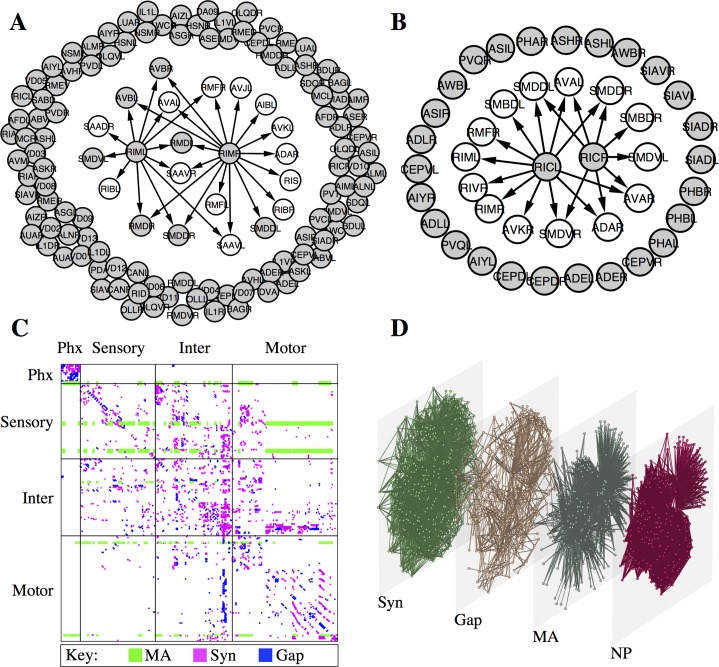
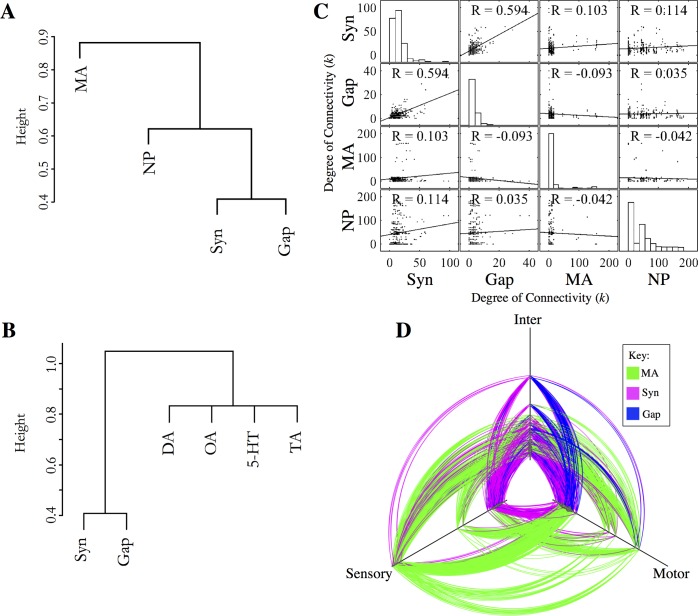
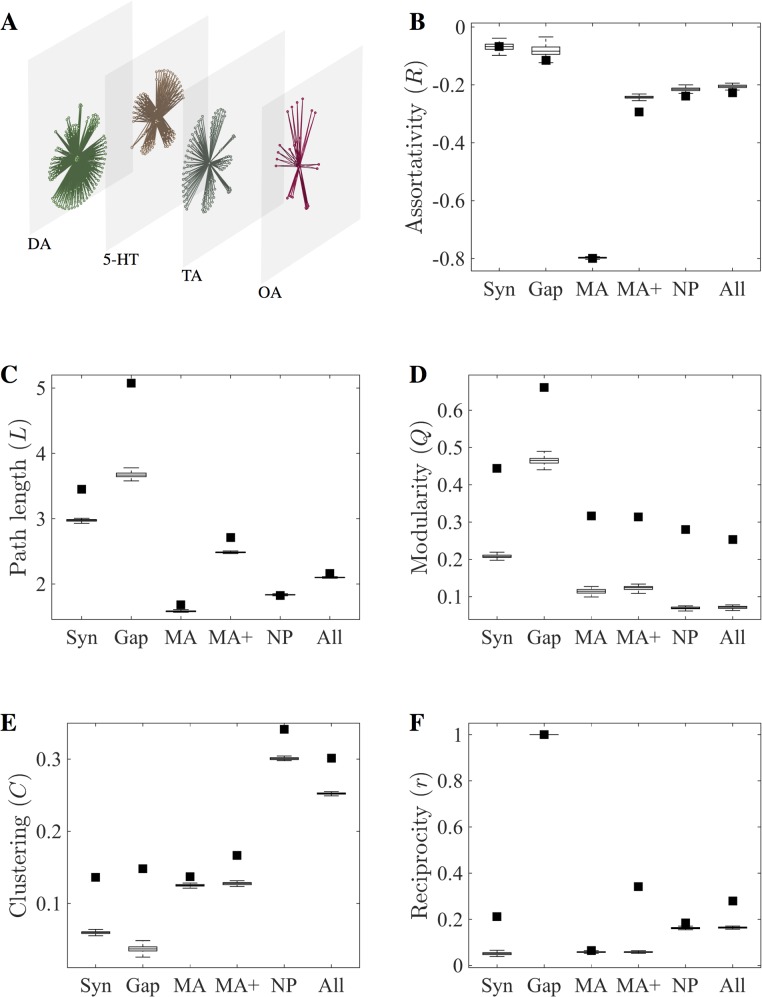
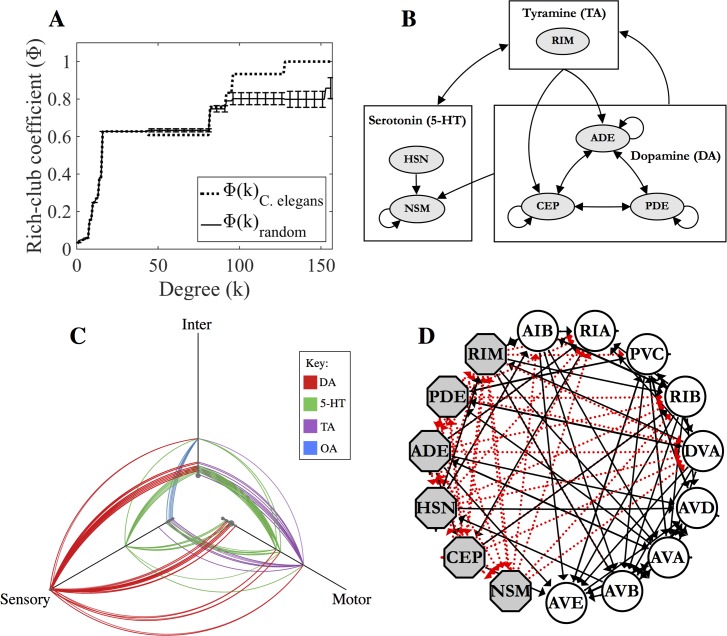
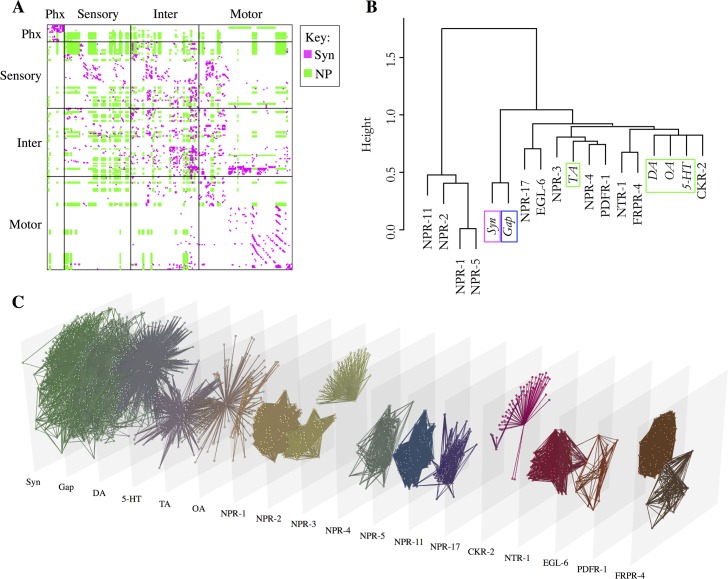
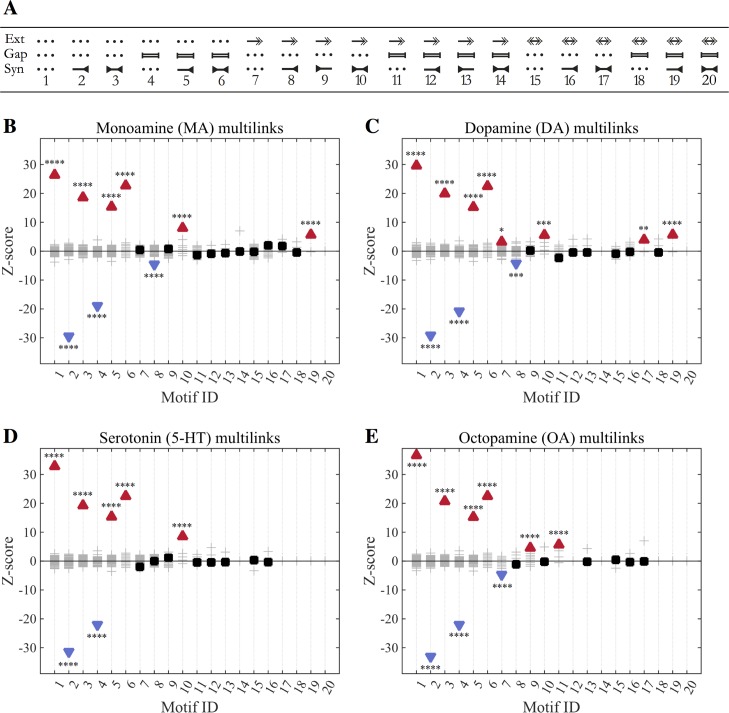
Connectomics has focused primarily on the mapping of synaptic links in the brain; yet it is well established that extrasynaptic volume transmission, especially via monoamines and neuropeptides, is also critical to brain function and occurs primarily outside the synaptic connectome. We have mapped the putative monoamine connections, as well as a subset of neuropeptide connections, in C. elegans based on new and published gene expression data. The monoamine and neuropeptide networks exhibit distinct topological properties, with the monoamine network displaying a highly disassortative star-like structure with a rich-club of interconnected broadcasting hubs, and the neuropeptide network showing a more recurrent, highly clustered topology. Despite the low degree of overlap between the extrasynaptic (or wireless) and synaptic (or wired) connectomes, we find highly significant multilink motifs of interaction, pinpointing locations in the network where aminergic and neuropeptide signalling modulate synaptic activity. Thus, the C. elegans connectome can be mapped as a multiplex network with synaptic, gap junction, and neuromodulator layers representing alternative modes of interaction between neurons. This provides a new topological plan for understanding how aminergic and peptidergic modulation of behaviour is achieved by specific motifs and loci of integration between hard-wired synaptic or junctional circuits and extrasynaptic signals wirelessly broadcast from a small number of modulatory neurons.
Overview
The claims and statistics of this paper haven’t been checked yet.
Free: it reads the open-access text and checks the first 5 claims that cite a source we can check. Create a free account to check every claim.
Integrity signals
Registry
Cites
Statistics
Figures
Verification
Claims the paper makes
The claims and statistics of this paper haven’t been checked yet.
Free: it reads the open-access text and checks the first 5 claims that cite a source we can check. Create a free account to check every claim.
Claims other papers make about this one
Each is checked against this paper’s own text: does it say what the citing paper says it does?
The cited source says what the claim attributes to it.
In the citing paper
“Here, the analysis of reducibility revealed that the monoamine networks have a unique structure, with information complementary to that provided by neuropeptide networks 90 .”
From Complex networks from classical to quantum (2019) · cites this paper as [90]
The cited source says what the claim attributes to it.
In the citing paper
“the connectome of the nematode Caenorhabditis elegans -one of the most studied in the fi eld because of its small size, with ~300 neuronal cells -has been mapped to a multiplex network where layers encode synaptic, gap junction, and neuromodulator interactions.”
From Complex networks from classical to quantum (2019) · cites this paper as [90]
Self-check
Percentages, sums and reported differences re-computed from the paper’s own numbers.
The self-check needs the paper’s full text.
Citations
Cites
Cytoscape: A software Environment for integrated models of biomolecular interaction networks
Shannon, P., Markiel, A., Ozier, O., Baliga, N. S., Wang, J. T., Ramage, D., Amin, N., Schwikowski, B., & Ideker, T. (2003) · Genome Research · doi:10.1101/gr.1239303 · Cited by 51,888
Collective dynamics of ‘small-world’ networks
Watts, D. J., & Strogatz, S. H. (1998) · Nature · doi:10.1038/30918 · Cited by 43,060 · cited 2×
“Here we present a draft monoamine connectome, along with a partial neuropeptide connectome, for the nematode C. elegans, based on new and published expression PLOS Computational Biology | DOI:10.1371/journal.pcbi.1005283 December 16, 2016 1 / 31 OPENACCESS Citation: Bentley B, Branicky R, Barnes…”
BackgroundMethodInfluentialEmergence of Scaling in Random Networks
Barabási, A.-L., & Albert, R. (1999) · Science · doi:10.1126/science.286.5439.509 · Cited by 36,135
Hierarchical Grouping to Optimize an Objective Function
Ward, J. H. (1963) · Journal of the American Statistical Association · doi:10.1080/01621459.1963.10500845 · Cited by 20,598
The Structure and Function of Complex Networks
Newman, M. E. J. (2003) · SIAM Review · doi:10.1137/s003614450342480 · Cited by 18,719
Social Network Analysis: Methods and Applications
Wasserman, S. S., & Faust, K. (1994) · Cited by 17,989
Modularity and community structure in networks
Newman, M. E. J. (2006) · Proceedings of the National Academy of Sciences · doi:10.1073/pnas.0601602103 · Cited by 12,256 · cited 1×
“(DOCX)”
Complex brain networks: graph theoretical analysis of structural and functional systems
Bullmore, E., & Sporns, O. (2009) · Nature Reviews Neuroscience · doi:10.1038/nrn2575 · Cited by 11,820
Self-citationComplex network measures of brain connectivity: Uses and interpretations
Rubinov, M., & Sporns, O. (2010) · NeuroImage · doi:10.1016/j.neuroimage.2009.10.003 · Cited by 11,522
The structure of the nervous system of the nematode Caenorhabditis elegans
White, J. G., Southgate, E., Thomson, J. N., & Brenner, S. (1986) · Philosophical Transactions of the Royal Society of London. B, Biological Sciences · doi:10.1098/rstb.1986.0056 · Cited by 5,589 · cited 1×
“The monoamine and neuropeptide networks exhibit distinct topological properties, with the monoamine network displaying a highly disassortative star-like structure with a rich- club of interconnected broadcasting hubs, and the neuropeptide network showing a more recurrent, highly clustered topology.”
BackgroundAssortative Mixing in Networks
Newman, M. E. J. (2002) · Physical Review Letters · doi:10.1103/physrevlett.89.208701 · Cited by 4,988
Hierarchical Grouping to Optimize an Objective Function
Ward, J. H. (1963) · Journal of the American Statistical Association · doi:10.2307/2282967 · Cited by 3,294
The economy of brain network organization
Bullmore, E., & Sporns, O. (2012) · Nature Reviews Neuroscience · doi:10.1038/nrn3214 · Cited by 3,284
Self-citationKivela, M., Arenas, A., Barthelemy, M., Gleeson, J. P., Moreno, Y., & Porter, M. A. (2014) · Journal of Complex Networks · doi:10.1093/comnet/cnu016 · Cited by 3,235
The structure and dynamics of multilayer networks
Boccaletti, S., Bianconi, G., Criado, R., del Genio, C. I., Gómez-Gardeñes, J., Romance, M., Sendiña-Nadal, I., Wang, Z., & Zanin, M. (2014) · Physics Reports · doi:10.1016/j.physrep.2014.07.001 · Cited by 3,125
The structure and dynamics of multilayer networksPreprint
Wangk, Z., & Zaninm, M. (2016) · Cited by 2,992
Rich-club organization of the human connectome
van den Heuvel, M. P., & Sporns, O. (2011) · The Journal of Neuroscience · doi:10.1523/jneurosci.3539-11.2011 · Cited by 2,354
Social Network Analysis: Methods and Applications
Lazega, E., Wasserman, S., & Faust, K. (1995) · Revue Française de Sociologie · doi:10.2307/3322457 · Cited by 1,558
Diffusion in Brain Extracellular Space
Syková, E., & Nicholson, C. (2008) · Physiological Reviews · doi:10.1152/physrev.00027.2007 · Cited by 1,481
Network ‘Small-World-Ness’: A Quantitative Method for Determining Canonical Network Equivalence
Humphries, M. D., & Gurney, K. (2008) · PLoS ONE · doi:10.1371/journal.pone.0002051 · Cited by 1,442 · cited 1×
“Thus, the C. elegans connectome can be mapped as a multiplex network with synaptic, gap junction, and neuromodulator layers representing alternative modes of interaction between neurons.”
BackgroundEvolutionary dynamics of group interactions on structured populations: a review
Perc, M., Gómez-Gardeñes, J., Szolnoki, A., Floría, L. M., & Moreno, Y. (2013) · Journal of The Royal Society Interface · doi:10.1098/rsif.2012.0997 · Cited by 1,340
Community Structure in Directed Networks
Leicht, E. A., & Newman, M. E. J. (2008) · Physical Review Letters · doi:10.1103/physrevlett.100.118703 · Cited by 1,116
Network attributes for segregation and integration in the human brain
Sporns, O. (2013) · Current Opinion in Neurobiology · doi:10.1016/j.conb.2012.11.015 · Cited by 1,067
Graph theoretical analysis of complex networks in the brain
Stam, C. J., & Reijneveld, J. C. (2007) · Nonlinear Biomedical Physics · doi:10.1186/1753-4631-1-3 · Cited by 1,035 · cited 1×
“Despite the low degree of overlap between the extra- synaptic (or wireless) and synaptic (or wired) connectomes, we find highly significant multilink motifs of interaction, pinpointing locations in the network where aminergic and neu- ropeptide signalling modulate synaptic activity.”
BackgroundDetecting rich-club ordering in complex networks
Colizza, V., Flammini, A., Serrano, M. A., & Vespignani, A. (2006) · Nature Physics · doi:10.1038/nphys209 · Cited by 1,001
Collective dynamics of 'small-world' networks
Watts, D. J., & Strogatz, S. H. (2011) · The Structure and Dynamics of Networks · doi:10.1515/9781400841356.301 · Cited by 988
Neuromodulation of neuronal circuits: back to the future
Marder, E. (2012) · Neuron · doi:10.1016/j.neuron.2012.09.010 · Cited by 904 · cited 2×
“…5, 2016 Published: December 16, 2016 Copyright: © 2016 Bentley et al. This is an open access article distributed under the terms of the Creative Commons Attribution License, which permits unrestricted use, distribution, and reproduction in any medium, provided the original author and source are…”
BackgroundInfluentialEvolutionary dynamics of group interactions on structured populations: a review
Perz, M., Gómez‐Gardeñes, J., Szolnoki, A., Florı́a, L. M., & Moreno, Y. (2013) · Repository of the Academy's Library (Library of the Hungarian Academy of Sciences) · Cited by 883
Structural Properties of the Caenorhabditis elegans Neuronal Network
Varshney, L. R., Chen, B. L., Paniagua, E., Hall, D. H., & Chklovskii, D. B. (2011) · PLoS Computational Biology · doi:10.1371/journal.pcbi.1001066 · Cited by 867 · cited 1×
“Despite the low degree of overlap between the extra- synaptic (or wireless) and synaptic (or wired) connectomes, we find highly significant multilink motifs of interaction, pinpointing locations in the network where aminergic and neu- ropeptide signalling modulate synaptic activity.”
BackgroundA circuit for navigation in Caenorhabditis elegans
Gray, J. M., Hill, J. J., & Bargmann, C. I. (2005) · Proceedings of the National Academy of Sciences · doi:10.1073/pnas.0409009101 · Cited by 811
Pathogenic bacteria induce aversive olfactory learning in Caenorhabditis elegans
Zhang, Y., Lu, H., & Bargmann, C. I. (2005) · Nature · doi:10.1038/nature04216 · Cited by 809
FANMOD: a tool for fast network motif detection
Wernicke, S., & Rasche, F. (2006) · Bioinformatics · doi:10.1093/bioinformatics/btl038 · Cited by 745
Structural reducibility of multilayer networks
De Domenico, M., Nicosia, V., Arenas, A., & Latora, V. (2015) · Nature Communications · doi:10.1038/ncomms7864 · Cited by 661
Wiring optimization can relate neuronal structure and function
Chen, B. L., Hall, D. H., & Chklovskii, D. B. (2006) · Proceedings of the National Academy of Sciences · doi:10.1073/pnas.0506806103 · Cited by 650
Pierce, S. B., Costa, M., Wisotzkey, R., Devadhar, S., Homburger, S. A., Buchman, A. R., Ferguson, K. C., Heller, J., Platt, D. M., Pasquinelli, A. A., et al. (2001) · Genes & Development · doi:10.1101/gad.867301 · Cited by 650
The pharynx of Caenorhabditis elegans
Albertson, D. G., & Thompson, J. N. (1976) · Philosophical Transactions of the Royal Society of London. B, Biological Sciences · doi:10.1098/rstb.1976.0085 · Cited by 649
Food and metabolic signalling defects in a Caenorhabditis elegans serotonin-synthesis mutant
Sze, J. Y., Victor, M., Loer, C., Shi, Y., & Ruvkun, G. (2000) · Nature · doi:10.1038/35000609 · Cited by 617
The Rich-Club Phenomenon in the Internet Topology
Zhou, S., & Mondragon, R. J. (2004) · IEEE Communications Letters · doi:10.1109/lcomm.2004.823426 · Cited by 611
Neural regulation of thermotaxis in Caenorhabditis elegans
Mori, I., & Ohshima, Y. (1995) · Nature · doi:10.1038/376344a0 · Cited by 594
Beyond the connectome: how neuromodulators shape neural circuits
Bargmann, C. I. (2012) · BioEssays · doi:10.1002/bies.201100185 · Cited by 505 · cited 1×
“…23, 2016 Accepted: December 5, 2016 Published: December 16, 2016 Copyright: © 2016 Bentley et al. This is an open access article distributed under the terms of the Creative Commons Attribution License, which permits unrestricted use, distribution, and reproduction in any medium, provided the…”
BackgroundA hub-and-spoke circuit drives pheromone attraction and social behaviour in C. elegans
Macosko, E. Z., Pokala, N., Feinberg, E. H., Chalasani, S. H., Butcher, R. A., Clardy, J., & Bargmann, C. I. (2009) · Nature · doi:10.1038/nature07886 · Cited by 485 · cited 1×
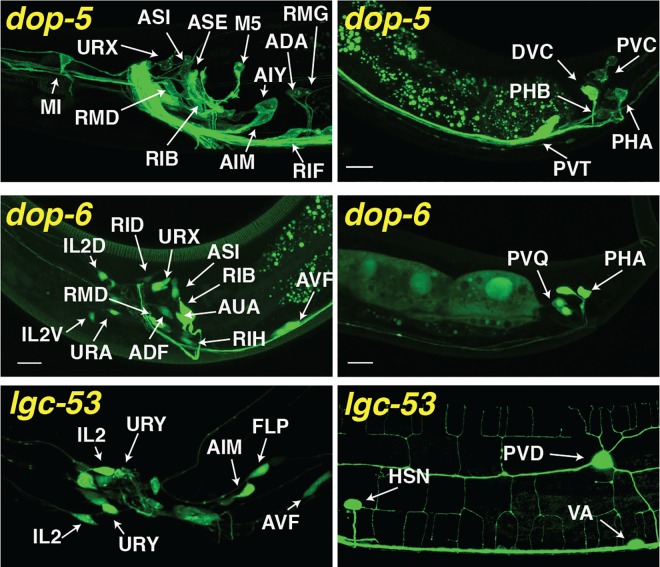
“M5 (Kim and Li, 2004) flp-18 Expr3017 AVA, AIY, RIG, RIM, M2, M3 (Kim and Li, 2004) flp-21 Expr3020 ASI, ASH, ASE, ADL, MC, M4, FLP, URA (Kim and Li, 2004) Expr12181 RMG, ASJ, URX, M2, ASK, ASG, ADF (Macosko et al., 2009) nlp-1 Expr1686 ASI, AWC, PHB, BDU (Nathoo et al., 2001) Marker88 HSN (Karakuzu et al., 2009) nlp-…”
Tyramine Functions Independently of Octopamine in the Caenorhabditis elegans Nervous System
Alkema, M. J., Hunter-Ensor, M., Ringstad, N., & Horvitz, H. R. (2005) · Neuron · doi:10.1016/j.neuron.2005.02.024 · Cited by 398
MuxViz: a tool for multilayer analysis and visualization of networks
De Domenico, M., Porter, M. A., & Arenas, A. (2015) · Journal of Complex Networks · doi:10.1093/comnet/cnu038 · Cited by 379
High-Throughput In Vivo Analysis of Gene Expression in Caenorhabditis elegans
Hunt-Newbury, R., Viveiros, R., Johnsen, R., Mah, A., Anastas, D., Fang, L., Halfnight, E., Lee, D., Lin, J., Lorch, A., et al. (2007) · PLoS Biology · doi:10.1371/journal.pbio.0050237 · Cited by 376
Statistical mechanics of multiplex networks: Entropy and overlap
Bianconi, G. (2013) · Physical Review E · doi:10.1103/physreve.87.062806 · Cited by 365
A cellular and regulatory map of the cholinergic nervous system of C. elegans
Pereira, L., Kratsios, P., Serrano-Saiz, E., Sheftel, H., Mayo, A. E., Hall, D. H., White, J. G., LeBoeuf, B., Garcia, L. R., Alon, U., et al. (2015) · eLife · doi:10.7554/elife.12432 · Cited by 365
WormBase 2016: expanding to enable helminth genomic research
Howe, K. L., Bolt, B. J., Cain, S., Chan, J., Chen, W. J., Davis, P., Done, J., Down, T., Gao, S., Grove, C., et al. (2016) · Nucleic Acids Research · doi:10.1093/nar/gkv1217 · Cited by 355
The Rich Club of the C. elegans Neuronal Connectome
Towlson, E. K., Vértes, P. E., Ahnert, S. E., Schafer, W. R., & Bullmore, E. T. (2013) · The Journal of Neuroscience · doi:10.1523/jneurosci.3784-12.2013 · Cited by 343
Self-citationNathoo, A. N., Moeller, R. A., Westlund, B. A., & Hart, A. C. (2001) · Proceedings of the National Academy of Sciences · doi:10.1073/pnas.241231298 · Cited by 340
Biogenic amine neurotransmitters in C. elegans
Chase, D. (2007) · WormBook · doi:10.1895/wormbook.1.132.1 · Cited by 316
Rich Club Organization of Macaque Cerebral Cortex and Its Role in Network Communication
Harriger, L., van den Heuvel, M. P., & Sporns, O. (2012) · PLoS ONE · doi:10.1371/journal.pone.0046497 · Cited by 303 · cited 1×
“(DOCX)”
The Neural Circuits and Synaptic Mechanisms Underlying Motor Initiation in C. elegans
Piggott, B. J., Liu, J., Feng, Z., Wescott, S. A., & Xu, X. Z. S. (2011) · Cell · doi:10.1016/j.cell.2011.08.053 · Cited by 299
Mechanism of extrasynaptic dopamine signaling in Caenorhabditis elegans
Chase, D. L., Pepper, J. S., & Koelle, M. R. (2004) · Nature Neuroscience · doi:10.1038/nn1316 · Cited by 295
Expression and regulation of an FMRFamide‐related neuropeptide gene family in Caenorhabditis elegans
Kim, K., & Li, C. (2004) · Journal of Comparative Neurology · doi:10.1002/cne.20189 · Cited by 293 · cited 2×
“URX (Kim and Li, 2004) flp-13 Expr3014 ASE, ASG, ASK, BAG, DD, I5, M3, M5 (Kim and Li, 2004) Expr12005 ALA (Nelson et al., 2015) flp-15 Expr3015 PHA, I2 (Nelson et al., 2015) flp-17 Expr3016 BAG, M5 (Kim and Li, 2004) flp-18 Expr3017 AVA, AIY, RIG, RIM, M2, M3 (Kim and Li, 2004) flp-21 Expr3020 ASI, ASH, ASE, ADL, MC,…”
Duerr, J. S., Frisby, D. L., Gaskin, J., Duke, A., Asermely, K., Huddleston, D., Eiden, L. E., & Rand, J. B. (1999) · The Journal of Neuroscience · doi:10.1523/jneurosci.19-01-00072.1999 · Cited by 282
The neuronal genome of Caenorhabditis elegans
Hobert, O. (2013) · WormBook · doi:10.1895/wormbook.1.161.1 · Cited by 279
Modular Control of Glutamatergic Neuronal Identity in C. elegans by Distinct Homeodomain Proteins
Serrano-Saiz, E., Poole, R. J., Felton, T., Zhang, F., De La Cruz, E. D., & Hobert, O. (2013) · Cell · doi:10.1016/j.cell.2013.09.052 · Cited by 270
Oxytocin/vasopressin-related peptides have an ancient role in reproductive behavior
Garrison, J. L., Macosko, E. Z., Bernstein, S., Pokala, N., Albrecht, D. R., & Bargmann, C. I. (2012) · Science · doi:10.1126/science.1226201 · Cited by 266
Measuring and modeling correlations in multiplex networks
Nicosia, V., & Latora, V. (2015) · Physical Review E · doi:10.1103/physreve.92.032805 · Cited by 258 · cited 1×
“RIC is excluded from the TA network due to co-expression of tbh-1 which converts TA to OA (DOCX)”
BackgroundInhibition of Caenorhabditis elegans social feeding by FMRFamide-related peptide activation of NPR-1
Rogers, C., Reale, V., Kim, K., Chatwin, H., Li, C., Evans, P., & de Bono, M. (2003) · Nature Neuroscience · doi:10.1038/nn1140 · Cited by 258
Olfactory learning skews mushroom body output pathways to steer behavioral choice in Drosophila
Owald, D., & Waddell, S. (2015) · Current Opinion in Neurobiology · doi:10.1016/j.conb.2015.10.002 · Cited by 249
MuxViz: a tool for multilayer analysis and visualization of networks
Domenico, M. D., Porter, M. A., & Arenas, A. (2014) · Cited by 249
Wenick, A. S., & Hobert, O. (2004) · Developmental Cell · doi:10.1016/j.devcel.2004.05.004 · Cited by 239
Tsalik, E. L., Niacaris, T., Wenick, A. S., Pau, K., Avery, L., & Hobert, O. (2003) · Developmental Biology · doi:10.1016/s0012-1606(03)00447-0 · Cited by 239
Neuropeptide feedback modifies odor-evoked dynamics in Caenorhabditis elegans olfactory neurons
Chalasani, S. H., Kato, S., Albrecht, D. R., Nakagawa, T., Abbott, L. F., & Bargmann, C. I. (2010) · Nature Neuroscience · doi:10.1038/nn.2526 · Cited by 237 · cited 2×
“t al., 2003) npr-4 Expr8975 BDU, BAG, AVA, PQR, RIV (Cohen et al., 2009) npr-5 Expr8976 AWB, AWA, AUA, ASK, ASJ, ASI, ASG, ASE, AIA, ADF, PHB, PHA, IL2 (Cohen et al., 2009) npr-11 Expr12179 AIA, AIY (Chalasani et al., 2010) frpr-4 N/A RIA, PVM, AVE, I1, DVA (Nelson et al., 2015) npr-17 Expr12182 AVG, ASI, PVP, PVQ, PQ…”
InfluentialDopamine modulates the plasticity of mechanosensory responses in Caenorhabditis elegans
Sanyal, S., Wintle, R. F., Kindt, K. S., Nuttley, W. M., Arvan, R., Fitzmaurice, P., Bigras, E., Merz, D. C., Hébert, T. E., van der Kooy, D., et al. (2004) · The EMBO Journal · doi:10.1038/sj.emboj.7600057 · Cited by 236
Self-citationLi, C. (2008) · WormBook · doi:10.1895/wormbook.1.142.1 · Cited by 234
Menichetti, G., Remondini, D., Panzarasa, P., Mondragón, R. J., & Bianconi, G. (2014) · PLoS ONE · doi:10.1371/journal.pone.0097857 · Cited by 227
Learning and Innovative Elements of Strategy Adoption Rules Expand Cooperative Network Topologies
Wang, S., Szalay, M. S., Zhang, C., & Csermely, P. (2008) · PLoS ONE · doi:10.1371/journal.pone.0001917 · Cited by 223
Smith, C. J., Watson, J. D., Spencer, W. C., O'Brien, T., Cha, B., Albeg, A., Treinin, M., & Miller, D. M. (2010) · Developmental Biology · doi:10.1016/j.ydbio.2010.05.502 · Cited by 208
Catecholamine receptor polymorphisms affect decision-making in C. elegans
Bendesky, A., Tsunozaki, M., Rockman, M. V., Kruglyak, L., & Bargmann, C. I. (2011) · Nature · doi:10.1038/nature09821 · Cited by 204
Connectomics-Based Analysis of Information Flow in the Drosophila Brain
Shih, C.-T., Sporns, O., Yuan, S.-L., Su, T.-S., Lin, Y.-J., Chuang, C.-C., Wang, T.-Y., Lo, C.-C., Greenspan, R. J., & Chiang, A.-S. (2015) · Current Biology · doi:10.1016/j.cub.2015.03.021 · Cited by 200 · cited 1×
“(DOCX)”
Vértes, P. E., & Bullmore, E. T. (2015) · Journal of Child Psychology and Psychiatry · doi:10.1111/jcpp.12365 · Cited by 197 · cited 1×
“Author Summary Connectomics represents an effort to map brain structure at the level of individual neurons and their synaptic connections.”
BackgroundSelf-citationCoates, J. C., & de Bono, M. (2002) · Nature · doi:10.1038/nature01170 · Cited by 197
Topological generalizations of network motifs
Kashtan, N., Itzkovitz, S., Milo, R., & Alon, U. (2004) · Physical Review E · doi:10.1103/physreve.70.031909 · Cited by 194
Hobson, R. J., Hapiak, V., Xiao, H., Buehrer, K. L., Komuniecki, P. R., & Komuniecki, R. W. (2006) · Genetics · doi:10.1534/genetics.105.044495 · Cited by 190
Vasopressin/Oxytocin-Related Signaling Regulates Gustatory Associative Learning in C. elegans
Beets, I., Janssen, T., Meelkop, E., Temmerman, L., Suetens, N., Rademakers, S., Jansen, G., & Schoofs, L. (2012) · Science · doi:10.1126/science.1226860 · Cited by 183
Food sensitizes C. elegans avoidance behaviours through acute dopamine signalling
Ezcurra, M., Tanizawa, Y., Swoboda, P., & Schafer, W. R. (2011) · The EMBO Journal · doi:10.1038/emboj.2011.22 · Cited by 180
Self-citationSemi-automated reconstruction of neural circuits using electron microscopy
Chklovskii, D. B., Vitaladevuni, S., & Scheffer, L. K. (2010) · Current Opinion in Neurobiology · doi:10.1016/j.conb.2010.08.002 · Cited by 171
Pirri, J. K., McPherson, A. D., Donnelly, J. L., Francis, M. M., & Alkema, M. J. (2009) · Neuron · doi:10.1016/j.neuron.2009.04.013 · Cited by 169
Bounova, G., & Weck, O. L. D. (2012) · Physical Review E · doi:10.1103/physreve.85.016117 · Cited by 162
Rich Club Organization and Intermodule Communication in the Cat Connectome
de Reus, M. A., & van den Heuvel, M. P. (2013) · Journal of Neuroscience · doi:10.1523/jneurosci.1448-13.2013 · Cited by 162
Monoaminergic Orchestration of Motor Programs in a Complex C. elegans Behavior
Donnelly, J. L., Clark, C. M., Leifer, A. M., Pirri, J. K., Haburčák, M., Francis, M. M., Samuel, A. D. T., & Alkema, M. J. (2013) · PLoS Biology · doi:10.1371/journal.pbio.1001529 · Cited by 160
Jang, H., Kim, K., Neal, S. J., Macosko, E., Kim, D., Butcher, R. A., Zeiger, D. M., Bargmann, C. I., & Sengupta, P. (2012) · Neuron · doi:10.1016/j.neuron.2012.06.034 · Cited by 139
FMRFamide neuropeptides and acetylcholine synergistically inhibit egg-laying by C. elegans
Ringstad, N., & Horvitz, H. R. (2008) · Nature Neuroscience · doi:10.1038/nn.2186 · Cited by 138 · cited 2×
“Expr12178 AS, DA, DB, VA, VB (Hu!et!al.,!2011) ntr-1 Expr11372 ASH, RIC, ADL, ADF, PVW, PVR, PVQ, I2 (Garrison et al., 2012) Expr11369 BDU, ASE, PQR (Beets et al., 2012) egl-6 Expr8338 HSN, DVA, SDQ (Ringstad and Horvitz, 2008) pdfr-1 Expr10592 AVM, AVD, RIF, ALM, PVW, PVQ, PVM, PVC, PQR, PLM, PHA, OLL, DB2, URY, URX,…”
InfluentialEvolution and overview of classical transmitter molecules and their receptors
Walker, R. J., Brooks, H. L., & Holden-Dye, L. (1996) · Parasitology · doi:10.1017/s0031182000077878 · Cited by 135 · cited 1×
“PEV was supported by a Bioinformatics Research Fellowship from the Medical Research Council (UK) (MR/ K020706/1).”
MethodCoordinated Regulation of Foraging and Metabolism in C. elegans by RFamide Neuropeptide Signaling
Cohen, M., Reale, V., Olofsson, B., Knights, A. J., Evans, P. D., & de Bono, M. (2009) · Cell Metabolism · doi:10.1016/j.cmet.2009.02.003 · Cited by 133
Ligand-Gated Chloride Channels Are Receptors for Biogenic Amines in C. elegans
Ringstad, N., Abe, N., & Horvitz, H. R. (2009) · Science · doi:10.1126/science.1169243 · Cited by 132
Wragg, R. T., Hapiak, V., Miller, S. B., Harris, G. P., Gray, J., Komuniecki, P. R., & Komuniecki, R. W. (2007) · The Journal of Neuroscience · doi:10.1523/jneurosci.3495-07.2007 · Cited by 130
Hypoxia activates a latent circuit for processing gustatory information in C. elegans
Pocock, R., & Hobert, O. (2010) · Nature Neuroscience · doi:10.1038/nn.2537 · Cited by 125
PDF-1 neuropeptide signaling modulates a neural circuit for mate-searching behavior in C. elegans
Barrios, A., Ghosh, R., Fang, C., Emmons, S. W., & Barr, M. M. (2012) · Nature Neuroscience · doi:10.1038/nn.3253 · Cited by 124
Trueta, C., & De-Miguel, F. F. (2012) · Frontiers in Physiology · doi:10.3389/fphys.2012.00319 · Cited by 122
Suo, S., Kimura, Y., & Van Tol, H. H. M. (2006) · The Journal of Neuroscience · doi:10.1523/jneurosci.0819-06.2006 · Cited by 117
Beyond the wiring diagram: signalling through complex neuromodulator networks
Brezina, V. (2010) · Philosophical Transactions of the Royal Society B: Biological Sciences · doi:10.1098/rstb.2010.0105 · Cited by 117
Keating, C. D., Kriek, N., Daniels, M., Ashcroft, N., Hopper, N. A., Siney, E. J., Holden-Dye, L. M., & Burke, J. F. (2003) · Current Biology · doi:10.1016/j.cub.2003.09.003 · Cited by 115
Discovery of a Cholecystokinin-Gastrin-Like Signaling System in Nematodes
Janssen, T., Meelkop, E., Lindemans, M., Verstraelen, K., Husson, S. J., Temmerman, L., Nachman, R. J., & Schoofs, L. (2008) · Endocrinology · doi:10.1210/en.2007-1772 · Cited by 110
Dopamine counteracts octopamine signalling in a neural circuit mediating food response in C. elegans
Suo, S., Culotti, J. G., & Tol, H. H. M. V. (2009) · The EMBO Journal · doi:10.1038/emboj.2009.194 · Cited by 109
Li, Z., Li, Y., Yi, Y., Huang, W., Yang, S., Niu, W., Zhang, L., Xu, Z., Qu, A., Wu, Z., et al. (2012) · Nature Communications · doi:10.1038/ncomms1780 · Cited by 102 · cited 1×
“(DOCX)”
Dittman, J. S., & Kaplan, J. M. (2008) · Journal of Neuroscience · doi:10.1523/jneurosci.0378-08.2008 · Cited by 101
Carnell, L., Illi, J., Hong, S. W., & McIntire, S. L. (2005) · Journal of Neuroscience · doi:10.1523/jneurosci.3399-05.2005 · Cited by 100
Sugiura, M., Fuke, S., Suo, S., Sasagawa, N., Tol, H. H. M. V., & Ishiura, S. (2005) · Journal of Neurochemistry · doi:10.1111/j.1471-4159.2005.03268.x · Cited by 98
Özcan, G. G., Gustafson, M. A., Pepper, J. S., Horvitz, H. R., & Koelle, M. R. (2012) · Genetics · doi:10.1534/genetics.112.142125 · Cited by 96
Kubiak, T. M., Larsen, M. J., Nulf, S. C., Zantello, M. R., Burton, K. J., Bowman, J. W., Modric, T., & Lowery, D. E. (2003) · Journal of Biological Chemistry · doi:10.1074/jbc.m304861200 · Cited by 94 · cited 1×
“gand EC 50 Reference NPY(npr) / RFamide receptor group NPR-1 FLP-18 ~ 100 nM (Rogersetal.,2003) FLP-21 2.5 nM (Kubiak!etal.,2003a) NPR-2 FLP-21 34.4 nM (Ezcurra!et!al.,!2016) NPR-3 FLP-15 162-599 nM (Kubiak et al., 2003b) NPR-4 FLP-1 0.4-9 μM (Geary et al., 2002) FLP-4 5-80 nM (Geary et al., 2002) FLP-18 5 nM-1.2 μM (…”
InfluentialCloning and characterization of a Caenorhabditis elegans D2‐like dopamine receptor
Suo, S., Sasagawa, N., & Ishiura, S. (2003) · Journal of Neurochemistry · doi:10.1046/j.1471-4159.2003.01896.x · Cited by 93
Harris, G. P., Hapiak, V. M., Wragg, R. T., Miller, S. B., Hughes, L. J., Hobson, R. J., Steven, R., Bamber, B., & Komuniecki, R. W. (2009) · The Journal of Neuroscience · doi:10.1523/jneurosci.4585-08.2009 · Cited by 93
Hu, Z., Pym, E. C. G., Babu, K., Vashlishan Murray, A. B., & Kaplan, J. M. (2011) · Neuron · doi:10.1016/j.neuron.2011.04.021 · Cited by 90
Zhang, F., Bhattacharya, A., Nelson, J. C., Abe, N., Gordon, P., Lloret-Fernandez, C., Maicas, M., Flames, N., Mann, R. S., Colón-Ramos, D. A., et al. (2014) · Development · doi:10.1242/dev.099721 · Cited by 90
Janssen, T., Husson, S. J., Lindemans, M., Mertens, I., Rademakers, S., Donck, K. V., Geysen, J., Jansen, G., & Schoofs, L. (2008) · Journal of Biological Chemistry · doi:10.1074/jbc.m709060200 · Cited by 87
Cunningham, K. A., Hua, Z., Srinivasan, S., Liu, J., Lee, B. H., Edwards, R. H., & Ashrafi, K. (2012) · Cell Metabolism · doi:10.1016/j.cmet.2012.05.014 · Cited by 86 · cited 1×
“! 2! ser-4 Expr2710 RIB, PVT, DVC, DVA, RIS! (Tsalik et al., 2003) Expr10554 AIB, NSM! (Gurel et al., 2012) N/A M1, RIM (Shyn, 2003) ser-5 Expr12174 ! ASH, AWB (Hapiak et al., 2009) Expr12172 ! AVJ (Cunningham et al., 2012) ser-7 (Expr3759 MC, M2, M3, M4, M5, I2, I3, I4, I6 Hobson!et!al.,! 2006) mod-1 Expr10023 RIM, R…”
Jafari, G., Xie, Y., Kullyev, A., Liang, B., & Sze, J. Y. (2011) · Journal of Neuroscience · doi:10.1523/jneurosci.1692-11.2011 · Cited by 84
Dual Excitatory and Inhibitory Serotonergic Inputs Modulate Egg Laying inCaenorhabditis elegans
Hapiak, V., Hobson, R. J., Hughes, L. J., Smith, K., Harris, G. P., Condon, C., Komuniecki, P. R., & Komuniecki, R. W. (2009) · Genetics · doi:10.1534/genetics.108.096891 · Cited by 83 · cited 1×
“xpr3962 RMD, RMF, RMH (Xiaoetal.,2006) ! 2! ser-4 Expr2710 RIB, PVT, DVC, DVA, RIS! (Tsalik et al., 2003) Expr10554 AIB, NSM! (Gurel et al., 2012) N/A M1, RIM (Shyn, 2003) ser-5 Expr12174 ! ASH, AWB (Hapiak et al., 2009) Expr12172 ! AVJ (Cunningham et al., 2012) ser-7 (Expr3759 MC, M2, M3, M4, M5, I2, I3, I4, I6 Hobso…”
Fuxé, K., Borroto‐Escuela, D. O., Romero‐Fernandez, W., Díaz-Cabiale, Z., Rivera, A., Ferraro, L., Tanganelli, S., Tarakanov, A. O., Garriga, P., Narváez, J. Á., et al. (2012) · Frontiers in Physiology · doi:10.3389/fphys.2012.00136 · Cited by 82
Synchronization in weighted scale-free networks with degree–degree correlation
Sorrentino, F., di Bernardo, M., Huerta-Cuellar, G., & Boccaletti, S. (2006) · Physica D Nonlinear Phenomena · doi:10.1016/j.physd.2006.09.030 · Cited by 82
Harris, G., Mills, H., Wragg, R., Hapiak, V., Castelletto, M., Korchnak, A., & Komuniecki, R. W. (2010) · Journal of Neuroscience · doi:10.1523/jneurosci.0497-10.2010 · Cited by 79
Cis-regulatory mechanisms of left/right asymmetric neuron-subtype specification in C. elegans
Etchberger, J. F., Flowers, E. B., Poole, R. J., Bashllari, E., & Hobert, O. (2009) · Development · doi:10.1242/dev.030064 · Cited by 75
Dernovici, S., Starc, T., Dent, J. A., & Ribeiro, P. (2007) · Developmental Neurobiology · doi:10.1002/dneu.20340 · Cited by 75
Volume Transmission in the Brain: Beyond the Synapse
Taber, K. H., & Hurley, R. A. (2014) · The Journal of Neuropsychiatry and Clinical Neurosciences · doi:10.1176/appi.neuropsych.13110351 · Cited by 73
Rex, E., Molitor, S. C., Hapiak, V., Xiao, H., Henderson, M., & Komuniecki, R. W. (2004) · Journal of Neurochemistry · doi:10.1111/j.1471-4159.2004.02787.x · Cited by 71 · cited 1×
“rns Marker WormBase ID Neurons Reference ser-2 Expr2707 BDU, AVH, AUA, ALN, RID, RIC, AIZ, RIA, AIY, PVT, PVD, PVC, OLL, NSM, LUA, DVA, DA09, CAN, SIA, SDQ, SAB, RME (Tsaliketal., 2003) Expr3206 PVD (Rex et al., 2004) Expr10758 VD (Donnelly et al., 2013) tyra-2 Expr3415 ASI, ASH, ASG, ASE, ALM, PVD, NSM, MC, CAN (Rex…”
An opioid-like system regulating feeding behavior in C. elegans
Cheong, M. C., Artyukhin, A. B., You, Y., & Avery, L. (2015) · eLife · doi:10.7554/elife.06683 · Cited by 71
Rex, E., Hapiak, V., Hobson, R. J., Smith, K., Xiao, H., & Komuniecki, R. W. (2005) · Journal of Neurochemistry · doi:10.1111/j.1471-4159.2005.03180.x · Cited by 70
Ezak, M. J., & Ferkey, D. M. (2010) · PLoS ONE · doi:10.1371/journal.pone.0009487 · Cited by 67
Lin, Z., Canales, J. J., Björgvinsson, Þ., Thomsen, M., Qu, H., Liu, Q., Torres, G. E., & Caine, S. B. (2011) · Progress in molecular biology and translational science · doi:10.1016/b978-0-12-385506-0.00001-6 · Cited by 65 · cited 1×
“We describe the structural properties of these "wireless" networks, including their topological features and modes of interaction with the wired synaptic and gap junction connectomes.”
Kubiak, T. M., Larsen, M. J., Zantello, M. R., Bowman, J. W., Nulf, S. C., & Lowery, D. E. (2003) · Journal of Biological Chemistry · doi:10.1074/jbc.m304056200 · Cited by 64
Bhattacharya, R., Touroutine, D., Barbagallo, B., Climer, J. R., Lambert, C. M., Clark, C. M., Alkema, M. J., & Francis, M. M. (2014) · PLoS Genetics · doi:10.1371/journal.pgen.1004584 · Cited by 63
Genetic Analysis of RGS Protein Function in Caenorhabditis elegans
Chase, D. L., & Koelle, M. R. (2004) · Methods in enzymology on CD-ROM/Methods in enzymology · doi:10.1016/s0076-6879(04)89018-9 · Cited by 59
Neuropeptidergic Signaling and Active Feeding State Inhibit Nociception inCaenorhabditis elegans
Ezcurra, M., Walker, D. S., Beets, I., Swoboda, P., & Schafer, W. R. (2016) · Journal of Neuroscience · doi:10.1523/jneurosci.1128-15.2016 · Cited by 57
Self-citationTanaka, D., Furusawa, K., Kameyama, K., Okamoto, H., & Doi, M. (2007) · Neuropharmacology · doi:10.1016/j.neuropharm.2007.04.017 · Cited by 56
Xiao, H., Hapiak, V., Smith, K., Lin, L., Hobson, R. J., Plenefisch, J. D., & Komuniecki, R. W. (2006) · Developmental Biology · doi:10.1016/j.ydbio.2006.06.044 · Cited by 48
Kubiak, T. M., Larsen, M. J., Bowman, J. W., Geary, T. G., & Lowery, D. E. (2007) · Biopolymers · doi:10.1002/bip.20850 · Cited by 47
MIG-32 and SPAT-3A are PRC1 homologs that control neuronal migration inCaenorhabditis elegans
Karakuzu, O., Wang, D. P., & Cameron, S. (2009) · Development · doi:10.1242/dev.029363 · Cited by 36
Extrasynaptic Neurotransmission as a Way of Modulating Neuronal Functions
De‐Miguel, F. F., & Fuxé, K. (2012) · Frontiers in Physiology · doi:10.3389/fphys.2012.00016 · Cited by 36
Chan, J., Staab, T. A., Wang, H., Mazzasette, C., Butte, Z., & Sieburth, D. (2013) · Journal of Neuroscience · doi:10.1523/jneurosci.1359-13.2013 · Cited by 33
Nelson, M. D., Janssen, T., York, N., Lee, K. H., Schoofs, L., & Raizen, D. M. (2015) · PLoS ONE · doi:10.1371/journal.pone.0142938 · Cited by 33 · cited 3×
“μM (Geary et al., 2002) FLP-5 1-8 μM (Geary et al., 2002) FLP-18 180-800 nM (Geary et al., 2002) FLP-21 1-10 nM (Geary et al., 2002) NLP-1 1-100 μM? (Chalasani et al., 2010) FRPR-4 FLP-13 67-541 nM (Nelson et al., 2015) Somatostatin / Urotensin II receptor group NPR-17 FLP-24 0.1-1 μM (Cheong et al., 2015) Gastrin / C…”
InfluentialLuo, J., Xu, Z., Tan, Z., Zhang, Z., & Ma, L. (2014) · Genetics · doi:10.1534/genetics.114.172239 · Cited by 28 · cited 1×
“ASH, ASG, ASE, AQR, RIG, PQR, PHB, PHA, OLQ, IL2L, IL2R, URX, SMBDL, SMBDR, RMG, RIV, DD, VD, M3, SAADL, SAADR, SDQ (Coates and de Bono, 2002) npr-2 Expr12242 ADF, AIZ, ASH, FLP, OLQ, PVD, PVQ, SAB (Luo et al., 2015) npr-3 Expr2766 AS, DA, DB, VA, VB (Keating et al., 2003) npr-4 Expr8975 BDU, BAG, AVA, PQR, RIV (Cohen…”
Yoshida, M., Oami, E., Wang, M., Ishiura, S., & Suo, S. (2014) · Journal of Neuroscience Research · doi:10.1002/jnr.23345 · Cited by 25
Mills, H., Hapiak, V., Harris, G. P., Summers, P., & Komuniecki, R. W. (2012) · Worm · doi:10.4161/worm.20467 · Cited by 16
Cited by
Bassett, D. S., & Sporns, O. (2017) · Nature Neuroscience · doi:10.1038/nn.4502 · Cited by 2,398
“Building on the as yet unparalleled achievement of mapping the neuronal wiring of the nematode C. elegans 10 , the reconstruction of synaptic connectivity among neurons at the ultrastructural level has evolved rapidly, as has measurement of extra-synaptic connectivity 11 .”
BackgroundGeneration of circadian rhythms in the suprachiasmatic nucleus
Hastings, M. H., Maywood, E. S., & Brancaccio, M. (2018) · Nature Reviews Neuroscience · doi:10.1038/s41583-018-0026-z · Cited by 1,065
Network science of biological systems at different scales: A review
Gosak, M., Markovič, R., Dolenšek, J., Slak Rupnik, M., Marhl, M., Stožer, A., & Perc, M. (2018) · Physics of Life Reviews · doi:10.1016/j.plrev.2017.11.003 · Cited by 419
“…signals propagating through synapses and neuronal dendrites, or with diffusion of ions through gap junctions [131,185] Later, Bentley et al. [186] expanded this representation by additionally integrating monoamine neuromodulator layers It has been argued that the multilayer approach…”
BackgroundThe physics of brain network structure, function and control
Lynn, C. W., & Bassett, D. S. (2019) · Nature Reviews Physics · doi:10.1038/s42254-019-0040-8 · Cited by 400
Hulse, B. K., Haberkern, H., Franconville, R., Turner-Evans, D., Takemura, S.-Y., Wolff, T., Noorman, M., Dreher, M., Dan, C., Parekh, R., et al. (2021) · eLife · doi:10.7554/elife.66039 · Cited by 392
Metadata
- Authors
- Bentley, B., Branicky, R., Barnes, C. L., Chew, Y. L., Yemini, E., Bullmore, E. T., Vértes, P. E., & Schafer, W. R.
- Affiliations
- MRC Laboratory of Molecular Biology (GB)
- Howard Hughes Medical Institute (US)
- Columbia University (US)
- GlaxoSmithKline (United Kingdom) (GB)
- University of Cambridge (GB)
- Corresponding author
- Schafer, William R.
- ORCID
- Venue
- PLOS Computational Biology
- Publisher
- Public Library of Science (PLoS)
- Published
- 2016-12-16
- Volume
- 12
- Issue
- 12
- Pages
- e1005283
- ISSN
- 1553-734X (ISSN-L)
- 1553-7358
- PMC
- PMC5215746
- OpenAlex
- W2514803758
- Cited by
- 269
- References
- 136
- Citations by year
- 2026: 6 · 2025: 21 · 2024: 22 · 2023: 24 · 2022: 33 · 2021: 34 · 2020: 27 · 2019: 27 · 2018: 53 · 2017: 21 · 2016: 1
- FWCI
- 19.07
- Type
- journal article
- Language
- en
- Update notices
- new_version (2017-01-04)
- Open access
- gold
- doi.org
- Licence
- Locations
- PLoS Computational Biology (publishedVersion, cc-by)
- Europe PMC (PubMed Central) (publishedVersion, cc-by)
- PubMed Central (publishedVersion, cc-by)
- PubMed (publishedVersion)
- arXiv (Cornell University) (submittedVersion)
- Apollo (University of Cambridge) (submittedVersion, cc-by)
- DOAJ (DOAJ: Directory of Open Access Journals) (submittedVersion, cc-by-sa)
- Figshare (submittedVersion, cc-by)
- Queen Mary Research Online (Queen Mary University of London) (submittedVersion, cc-by)
- arXiv (Cornell University)
- Apollo (cc-by)
- Columbia Academic Commons (Columbia University)
- Funders
- Wellcome Trust (WT103784MA)
- Medical Research Council (MC-A022-5PB91, MR/K020706/1)
- National Institutes of Health (5T32DK007328-37)
- Topics
- Life Sciences › Neuroscience › Cellular and Molecular Neuroscience › Neurobiology and Insect Physiology Research
- Life Sciences › Neuroscience › Cellular and Molecular Neuroscience › Neuroscience and Neuropharmacology Research
- Life Sciences › Neuroscience › Cognitive Neuroscience › Neural dynamics and brain function
- Keywords
- Caenorhabditis elegans, connectome, monoamine signaling, neuropeptide signaling, gap junctions, neuromodulation, multiplex networks, network motifs, network topology, synaptic connectivity, modulatory neurons, gene expression
- MeSH terms
- Animals, Biogenic Monoamines, Signal Transduction, Caenorhabditis elegans, Computational Biology, Connectome
About these checks
Registry, retraction, Cites and statistics results are computed, not judged, with one exception: a printed reference that no index lists is read once by a model before it counts as a citation error. Claims are extracted by a model and kept only when their quote appears verbatim in the text; each cited source is then checked, with a model’s help, for whether it says what the claim relies on. Those verdicts can be wrong — read the claim’s quote and the cited source before relying on one.
Statistics and arithmetic are recomputed, not judged.
Confidence bands are shown only for fields calibrated on our annotated test set. None is calibrated yet, so no band is shown.
What counts as a claim ›How we measure confidence ›How we check this ›
Are you an author, or do you see a problem with this page? Request a review
Data sources
Bibliographic data: Semantic Scholar, OpenAlex, Crossref.
Contains information from the Semantic Scholar Academic Graph Datasets, made available under the ODC Attribution License (ODC-BY 1.0).
Semantic Scholar’s data is described in: Kinney, R., et al. (2023). The Semantic Scholar Open Data Platform. arXiv:2301.10140.
