

The DOI matches its Crossref record; 36 of the 36 references it cites were found in a registry or an index.
MAPS: Model-based analysis of long-range chromatin interactions from PLAC-seq and HiChIP experiments
Open accessPublished version of a preprint
Abstract
Hi-C and chromatin immunoprecipitation (ChIP) have been combined to identify long-range chromatin interactions genome-wide at reduced cost and enhanced resolution, but extracting information from the resulting datasets has been challenging. Here we describe a computational method, MAPS, Model-based Analysis of PLAC-seq and HiChIP, to process the data from such experiments and identify long-range chromatin interactions. MAPS adopts a zero-truncated Poisson regression framework to explicitly remove systematic biases in the PLAC-seq and HiChIP datasets, and then uses the normalized chromatin contact frequencies to identify significant chromatin interactions anchored at genomic regions bound by the protein of interest. MAPS shows superior performance over existing software tools in the analysis of chromatin interactions from multiple PLAC-seq and HiChIP datasets centered on different transcriptional factors and histone marks. MAPS is freely available at https://github.com/ijuric/MAPS.
Overview
The claims and statistics of this paper haven’t been checked yet.
Run the check — free, no account needed. It reads the open-access text and checks the sources it cites.
Integrity signals
Registry
Cites
Statistics
Figures
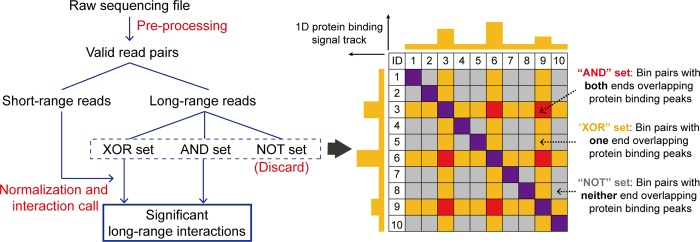
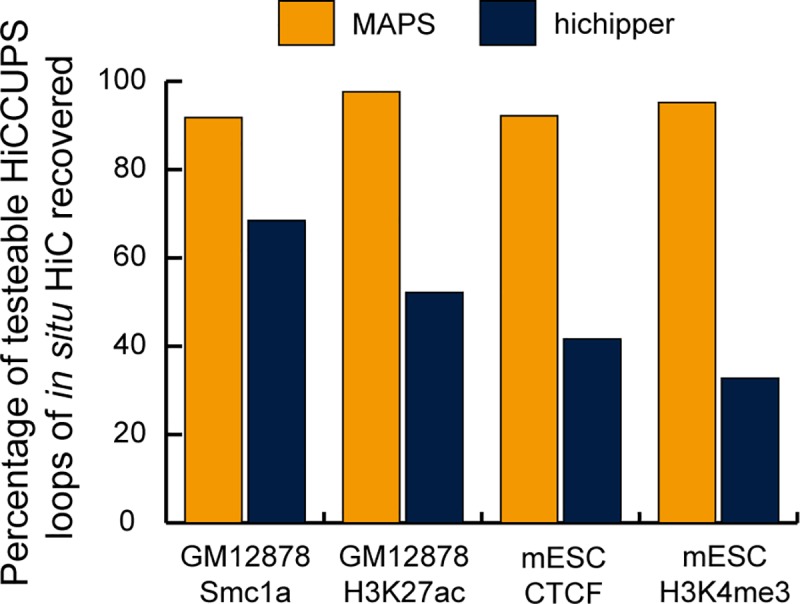
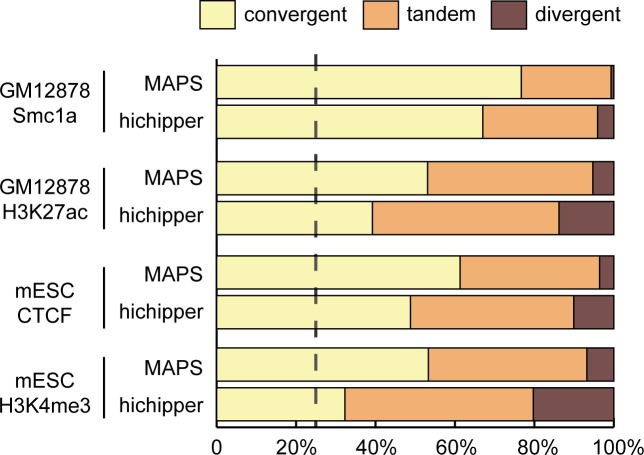
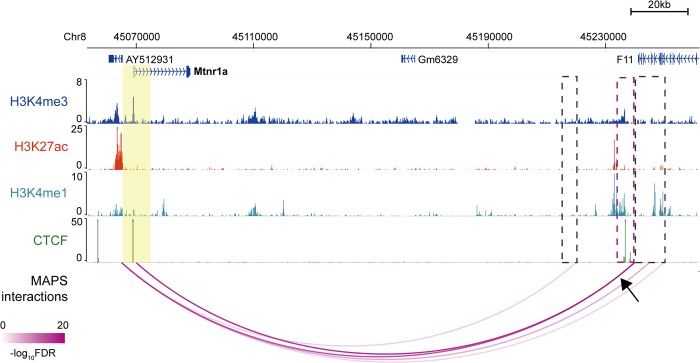
Verification
Claims the paper makes
The claims and statistics of this paper haven’t been checked yet.
Run the check — free, no account needed. It reads the open-access text and checks the sources it cites.
Claims other papers make about this one
Each is checked against this paper’s own text: does it say what the citing paper says it does?
The source backs part of the claim, not all of it — or backs it for a different population, condition or comparison.
In the citing paper
“Chromatin loops were identified between active promoters and distal regulatory regions in microglia, neurons and oligodendrocytes (26).”
From Brain cell type–specific enhancer–promoter interactome maps and disease - risk association (2019) · cites this paper as [26]
Experimental — accuracy not yet measured
Self-check
Percentages, sums and reported differences re-computed from the paper’s own numbers.
The self-check needs the paper’s full text.
Citations
Cites
Model-based Analysis of ChIP-Seq (MACS)
Zhang, Y., Liu, T., Meyer, C. A., Eeckhoute, J., Johnson, D. S., Bernstein, B. E., Nusbaum, C., Myers, R. M., Brown, M., Li, W., et al. (2008) · Genome Biology · doi:10.1186/gb-2008-9-9-r137 · Cited by 18,386
Self-citationA 3D Map of the Human Genome at Kilobase Resolution Reveals Principles of Chromatin Looping
Rao, S. S. P., Huntley, M. H., Durand, N. C., Stamenova, E. K., Bochkov, I. D., Robinson, J. T., Sanborn, A. L., Machol, I., Omer, A. D., Lander, E. S., et al. (2014) · Cell · doi:10.1016/j.cell.2014.11.021 · Cited by 9,212
Comprehensive Mapping of Long-Range Interactions Reveals Folding Principles of the Human Genome
Lieberman-Aiden, E., van Berkum, N. L., Williams, L., Imakaev, M., Ragoczy, T., Telling, A., Amit, I., Lajoie, B. R., Sabo, P. J., Dorschner, M. O., et al. (2009) · Science · doi:10.1126/science.1181369 · Cited by 8,898
Buenrostro, J. D., Giresi, P. G., Zaba, L. C., Chang, H. Y., & Greenleaf, W. J. (2013) · Nature Methods · doi:10.1038/nmeth.2688 · Cited by 6,422
Capturing Chromosome Conformation
Dekker, J., Rippe, K., Dekker, M., & Kleckner, N. (2002) · Science · doi:10.1126/science.1067799 · Cited by 3,652
Formation of chromosomal domains by loop extrusion
Fudenberg, G., Imakaev, M., Lu, C., Goloborodko, A., Abdennur, N., & Mirny, L. A. (2016) · Cell Reports · doi:10.1016/j.celrep.2016.04.085 · Cited by 2,003
Mediator and cohesin connect gene expression and chromatin architecture
Kagey, M. H., Newman, J. J., Bilodeau, S., Zhan, Y., Orlando, D. A., van Berkum, N. L., Ebmeier, C. C., Goossens, J., Rahl, P. B., Levine, S. S., et al. (2010) · Nature · doi:10.1038/nature09380 · Cited by 1,939
Formation of Chromosomal Domains by Loop Extrusion
Fudenberg, G., Imakaev, M., Lu, C. W., Goloborodko, A., Abdennur, N. A., & Mirny, L. (2015) · bioRxiv · doi:10.1101/024620 · Cited by 1,858
Sanborn, A. L., Rao, S. S. P., Huang, S.-C., Durand, N. C., Huntley, M. H., Jewett, A. I., Bochkov, I. D., Chinnappan, D., Cutkosky, A., Li, J., et al. (2015) · Proceedings of the National Academy of Sciences · doi:10.1073/pnas.1518552112 · Cited by 1,730
The long-range interaction landscape of gene promoters
Sanyal, A., Lajoie, B. R., Jain, G., & Dekker, J. (2012) · Nature · doi:10.1038/nature11279 · Cited by 1,489
Khan, A., Fornés, O., Stigliani, A., Gheorghe, M., Castro-Mondragon, J. A., van der Lee, R., Bessy, A., Chèneby, J., Kulkarni, S. R., Tan, G., et al. (2017) · Nucleic Acids Research · doi:10.1093/nar/gkx1126 · Cited by 1,457
Iterative correction of Hi-C data reveals hallmarks of chromosome organization
Imakaev, M., Fudenberg, G., McCord, R. P., Naumova, N., Goloborodko, A., Lajoie, B. R., Dekker, J., & Mirny, L. A. (2012) · Nature Methods · doi:10.1038/nmeth.2148 · Cited by 1,423
Multiscale 3D Genome Rewiring during Mouse Neural Development
Bonev, B., Mendelson Cohen, N., Szabo, Q., Fritsch, L., Papadopoulos, G. L., Lubling, Y., Xu, X., Lv, X., Hugnot, J.-P., Tanay, A., et al. (2017) · Cell · doi:10.1016/j.cell.2017.09.043 · Cited by 1,338
HiChIP: Efficient and sensitive analysis of protein-directed genome architecturePreprint
Mumbach, M. R., Rubin, A. J., Flynn, R. A., Dai, C., Khavari, P., Greenleaf, W., & Chang, H. Y. (2016) · Nature Methods · doi:10.1101/073619 · Cited by 997
CTCF-Mediated Human 3D Genome Architecture Reveals Chromatin Topology for Transcription
Tang, Z., Luo, O. J., Li, X., Zheng, M., Zhu, J. J., Szalaj, P., Trzaskoma, P., Magalska, A., Wlodarczyk, J., Ruszczycki, B., et al. (2015) · Cell · doi:10.1016/j.cell.2015.11.024 · Cited by 982
Khan, A., Fornes, O., Stigliani, A., Gheorghe, M., Castro-Mondragon, J., van der Lee, R., Bessy, A., Chèneby, J., Kulkarni, S. R., Tan, G., et al. (2017) · Nucleic Acids Research · doi:10.1093/nar/gkx1188 · Cited by 973
Higher-Order Inter-chromosomal Hubs Shape 3D Genome Organization in the Nucleus
Quinodoz, S. A., Ollikainen, N., Tabak, B., Palla, A., Schmidt, J. M., Detmar, E., Lai, M. M., Shishkin, A. A., Bhat, P., Takei, Y., et al. (2018) · Cell · doi:10.1016/j.cell.2018.05.024 · Cited by 892
A compendium of chromatin contact maps reveals spatially active regions in the human genome
Schmitt, A. D., Hu, M., Jung, I., Xu, Z., Qiu, Y., Tan, C. L., Li, Y., Lin, S., Lin, Y., Barr, C. L., et al. (2016) · Cell Reports · doi:10.1016/j.celrep.2016.10.061 · Cited by 866
Self-citationYaffe, E., & Tanay, A. (2011) · Nature Genetics · doi:10.1038/ng.947 · Cited by 614
Mumbach, M. R., Satpathy, A. T., Boyle, E. A., Dai, C., Gowen, B. G., Cho, S. W., Nguyen, M. L., Rubin, A. J., Granja, J. M., Kazane, K. R., et al. (2017) · Nature Genetics · doi:10.1038/ng.3963 · Cited by 490
Statistical confidence estimation for Hi-C data reveals regulatory chromatin contactsPreprint
Ay, F., Bailey, T. L., & Noble, W. S. (2014) · Genome Research · doi:10.1101/gr.160374.113 · Cited by 479
The pluripotent regulatory circuitry connecting promoters to their long-range interacting elements
Schoenfelder, S., Furlan-Magaril, M., Mifsud, B., Tavares-Cadete, F., Sugar, R., Javierre, B.-M., Nagano, T., Katsman, Y., Sakthidevi, M., Wingett, S. W., et al. (2015) · Genome Research · doi:10.1101/gr.185272.114 · Cited by 460
Robust 4C-seq data analysis to screen for regulatory DNA interactions
van de Werken, H. J. G., Landan, G., Holwerda, S. J. B., Hoichman, M., Klous, P., Chachik, R., Splinter, E., Valdes‐Quezada, C., Öz, Y., Bouwman, B. A. M., et al. (2012) · Nature Methods · doi:10.1038/nmeth.2173 · Cited by 391
The Three-Dimensional Organization of Mammalian Genomes
Yu, M., & Ren, B. (2017) · Annual Review of Cell and Developmental Biology · doi:10.1146/annurev-cellbio-100616-060531 · Cited by 373 · cited 1×
“Specifically, we define a bin pair (i, j) as an statistically significant bin pair if it satisfies the following three criteria simultaneously: (1) xij ≥ 12, (2) xij ?̃?ij ⁄ ≥ 2 and (3) qij < 0.”
BackgroundSelf-citationMapping of long-range chromatin interactions by proximity ligation-assisted ChIP-seq
Fang, R., Yu, M., Li, G., Chee, S., Liu, T., Schmitt, A. D., & Ren, B. (2016) · Cell Research · doi:10.1038/cr.2016.137 · Cited by 344
Self-citationGenome-wide mapping and analysis of chromosome architecture
Schmitt, A. D., Hu, M., & Ren, B. (2016) · Nature Reviews Molecular Cell Biology · doi:10.1038/nrm.2016.104 · Cited by 344 · cited 1×
“Specifically, we define a bin pair (i, j) as an statistically significant bin pair if it satisfies the following three criteria simultaneously: (1) xij ≥ 12, (2) xij ?̃?ij ⁄ ≥ 2 and (3) qij < 0.”
BackgroundSelf-citationKieffer-Kwon, K.-R., Tang, Z., Mathé, E. A., Qian, J., Sung, M., Li, G., Resch, W., Baek, S., Pruett, N. D., Grøntved, L., et al. (2013) · Cell · doi:10.1016/j.cell.2013.11.039 · Cited by 337
LHX2- and LDB1-mediated trans interactions regulate olfactory receptor choice
Monahan, K. D., Horta, A., & Lomvardas, S. (2019) · Nature · doi:10.1038/s41586-018-0845-0 · Cited by 318
Mapping of long-range chromatin interactions by proximity ligation-assisted ChIP-seqPreprint
Fang, R.-X., Yu, M., Li, G., Chee, S., Liu, T., Schmitt, A., & Ren, B. (2016) · Cell Research · doi:10.1101/074294 · Cited by 298
Self-citationHiCNorm: removing biases in Hi-C data via Poisson regression
Hu, M., Deng, K., Selvaraj, S., Qin, Z., Ren, B., & Liu, J. S. (2012) · Bioinform. · doi:10.1093/bioinformatics/bts570 · Cited by 250
Self-citationCRISPR Reveals a Distal Super-Enhancer Required for Sox2 Expression in Mouse Embryonic Stem Cells
Li, Y., Rivera, C. M., Ishii, H., Jin, F., Selvaraj, S., Lee, A. Y., Dixon, J. R., & Ren, B. (2014) · PLoS ONE · doi:10.1371/journal.pone.0114485 · Cited by 212
Self-citationMoorthy, S. D., Davidson, S., Shchuka, V. M., Singh, G., Malek-Gilani, N., Langroudi, L., Martchenko, A., So, V., Macpherson, N. N., & Mitchell, J. A. (2016) · Genome Research · doi:10.1101/gr.210930.116 · Cited by 202
hichipper: a preprocessing pipeline for calling DNA loops from HiChIP data
Lareau, C., & Aryee, M. (2018) · Nature Methods · doi:10.1038/nmeth.4583 · Cited by 162
Gribnau, J., Hochedlinger, K., Hata, K., Li, E., & Jaenisch, R. (2003) · Genes & Development · doi:10.1101/gad.1059603 · Cited by 128
Oct4 dependence of chromatin structure within the extended Nanog locus in ES cellsPreprint
Levasseur, D. N., Wang, J., Dorschner, M. O., Stamatoyannopoulos, J. A., & Orkin, S. H. (2008) · Genes & Development · doi:10.1101/gad.1606308 · Cited by 114
Mango: a bias-correcting ChIA-PET analysis pipeline
Phanstiel, D. H., Boyle, A. P., Heidari, N., & Snyder, M. P. (2015) · Bioinformatics · doi:10.1093/bioinformatics/btv336 · Cited by 114
Research works printed but not linked: 1
- CE Grant, 2011, FIMO: scanning for occurrences of a given motif, Bioinformatics (Oxford, England), 27, 1017, 10.1093/bioinformatics/btr064 · DOI · Paper page
Cited by
Sorted by citations
Brain cell type–specific enhancer–promoter interactome maps and disease - risk association
Nott, A., Holtman, I. R., Coufal, N. G., Schlachetzki, J. C. M., Yu, M., Hu, R., Han, C. Z., Pena, M., Xiao, J., Wu, Y., et al. (2019) · Science · doi:10.1126/science.aay0793 · Cited by 699
Self-citationCircular ecDNA promotes accessible chromatin and high oncogene expression
Wu, S., Turner, K. M., Nguyen, N., Raviram, R., Erb, M. L., Santini, J., Luebeck, J., Rajkumar, U., Diao, Y., Li, B., et al. (2019) · Nature · doi:10.1038/s41586-019-1763-5 · Cited by 661
“the minimum fold change range we used from MACC2 is the default [5-50].”
Self-citationAn ultra high-throughput method for single-cell joint analysis of open chromatin and transcriptome
Zhu, C., Yu, M., Huang, H., Juric, I., Abnousi, A., Hu, R., Lucero, J., Behrens, M. M., Hu, M., & Ren, B. (2019) · Nature Structural & Molecular Biology · doi:10.1038/s41594-019-0323-x · Cited by 344
Self-citationPromoter-proximal CTCF binding promotes distal enhancer-dependent gene activation
Kubo, N., Ishii, H., Xiong, X., Bianco, S., Meitinger, F., Hu, R., Hocker, J. D., Conte, M., Gorkin, D., Yu, M., et al. (2021) · Nature Structural & Molecular Biology · doi:10.1038/s41594-020-00539-5 · Cited by 289
Self-citationIdentification of significant chromatin contacts from HiChIP data by FitHiChIP
Bhattacharyya, S., Chandra, V., Vijayanand, P., & Ay, F. (2019) · Nature Communications · doi:10.1038/s41467-019-11950-y · Cited by 238
“A more recent tool, MAPS, 16 does not explicitly correct for this peak to RE site distance effect, which is also the case for our method.”
Method
Metadata
- Authors
- Juric, I., Yu, M., Abnousi, A., Raviram, R., Fang, R., Zhao, Y., Zhang, Y., Qiu, Y., Yang, Y., Li, Y., Ren, B., & Hu, M.
- Affiliations
- Ludwig Cancer Research (US)
- Cleveland Clinic (US)
- University of California San Diego (US)
- University of North Carolina at Chapel Hill (US)
- Corresponding author
- Ren, Bing
- Hu, Ming
- ORCID
- Venue
- PLOS Computational Biology
- Publisher
- Public Library of Science (PLoS)
- Published
- 2019-04-15
- Volume
- 15
- Issue
- 4
- Pages
- e1006982
- ISSN
- 1553-734X (ISSN-L)
- 1553-7358
- PMC
- PMC6483256
- OpenAlex
- W2951448241
- Cited by
- 121
- References
- 35
- Citations by year
- 2026: 11 · 2025: 10 · 2024: 22 · 2023: 12 · 2022: 23 · 2021: 22 · 2020: 10 · 2019: 10
- FWCI
- 5.62
- Type
- journal article
- Language
- en
- Update notices
- new_version (2019-04-25)
- Open access
- gold
- doi.org
- Licence
- Locations
- PLoS Computational Biology (publishedVersion, cc-by)
- bioRxiv (Cold Spring Harbor Laboratory) (acceptedVersion, cc-by-nc-nd)
- PubMed Central (publishedVersion, cc-by)
- PubMed (publishedVersion)
- Carolina Digital Repository (University of North Carolina at Chapel Hill) (submittedVersion, other-oa)
- DOAJ (DOAJ: Directory of Open Access Journals) (submittedVersion, cc-by-sa)
- Figshare (submittedVersion, cc-by)
- UNC Libraries
- Funders
- Foundation for the National Institutes of Health (U54DK107977, R01HL129132)
- Topics
- Life Sciences › Biochemistry, Genetics and Molecular Biology › Molecular Biology › Genomics and Chromatin Dynamics
- Life Sciences › Biochemistry, Genetics and Molecular Biology › Molecular Biology › Chromatin Remodeling and Cancer
- Life Sciences › Biochemistry, Genetics and Molecular Biology › Molecular Biology › Bioinformatics and Genomic Networks
- Keywords
- long-range chromatin interactions, HiChIP, Hi-C, transcription factor binding sites, histone modifications, model-based analysis, maps
- MeSH terms
- Chromatin, Chromosome Mapping, Computer Simulation, Humans, Software, Genome, Sequence Analysis, DNA, Computational Biology, Genomics, Chromatin Assembly and Disassembly, Histone Code, Chromatin Immunoprecipitation, High-Throughput Nucleotide Sequencing
About these checks
Registry, retraction, Cites and statistics results are computed, not judged, with one exception: a printed reference that no index lists is read once by a model before it counts as a citation error. Claims are extracted by a model and kept only when their quote appears verbatim in the text; each cited source is then checked, with a model’s help, for whether it says what the claim relies on. Those verdicts can be wrong — read the claim’s quote and the cited source before relying on one.
Statistics and arithmetic are recomputed, not judged.
Confidence bands are shown only for fields calibrated on our annotated test set. None is calibrated yet, so no band is shown.
What counts as a claim ›How we measure confidence ›How we check this ›
Are you an author, or do you see a problem with this page? Request a review
