

A HIF1α Regulatory Loop Links Hypoxia and Mitochondrial Signals in Pheochromocytomas
Open accessThe DOI matches its Crossref record; 44 of the 46 references it cites were found in a registry or an index; 4 of the 31 sources its claims cite were checked for support.
Abstract
Pheochromocytomas are neural crest-derived tumors that arise from inherited or sporadic mutations in at least six independent genes. The proteins encoded by these multiple genes regulate distinct functions. We show here a functional link between tumors with VHL mutations and those with disruption of the genes encoding for succinate dehydrogenase (SDH) subunits B (SDHB) and D (SDHD). A transcription profile of reduced oxidoreductase is detected in all three of these tumor types, together with an angiogenesis/hypoxia profile typical of VHL dysfunction. The oxidoreductase defect, not previously detected in VHL-null tumors, is explained by suppression of the SDHB protein, a component of mitochondrial complex II. The decrease in SDHB is also noted in tumors with SDHD mutations. Gain-of-function and loss-of-function analyses show that the link between hypoxia signals (via VHL) and mitochondrial signals (via SDH) is mediated by HIF1alpha. These findings explain the shared features of pheochromocytomas with VHL and SDH mutations and suggest an additional mechanism for increased HIF1alpha activity in tumors.
Overview
CoChat Summary
TL;DR
This study links pheochromocytomas with VHL mutations to those with SDHB or SDHD mutations through a shared hypoxia/angiogenesis and reduced oxidoreductase expression signature. It proposes a HIF1α–SDHB regulatory loop in which HIF1α suppresses SDHB, impairing mitochondrial complex II and further stabilizing HIF1α.
Key findings
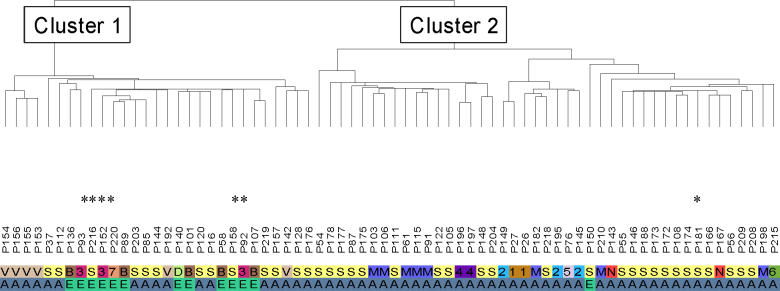
- Unsupervised clustering of 76 primary pheochromocytomas/paragangliomas identified two dominant clusters: Cluster 1 contained all VHL and SDH tumors, while Cluster 2 contained all MEN2 and NF1 tumors; Cluster 1 included 12 of 13 extra-adrenal tumors, though more than half of Cluster 1 tumors were adrenal.
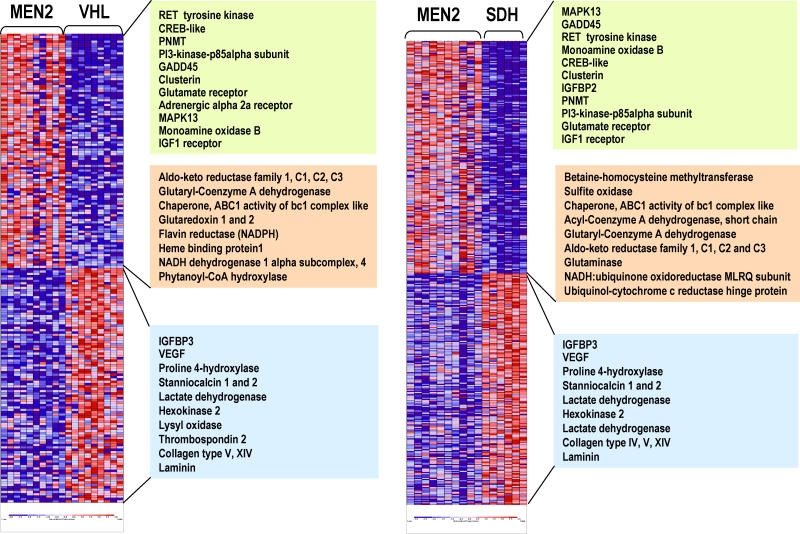
- Cluster 1 tumors showed a hypoxia/angiogenesis signature plus coordinated suppression of oxidoreductase enzymes; supervised predictors distinguished MEN2 from VHL and MEN2 from SDH tumors with extensive gene overlap, and over 92% of the cohort was correctly assigned to one of the two classes.
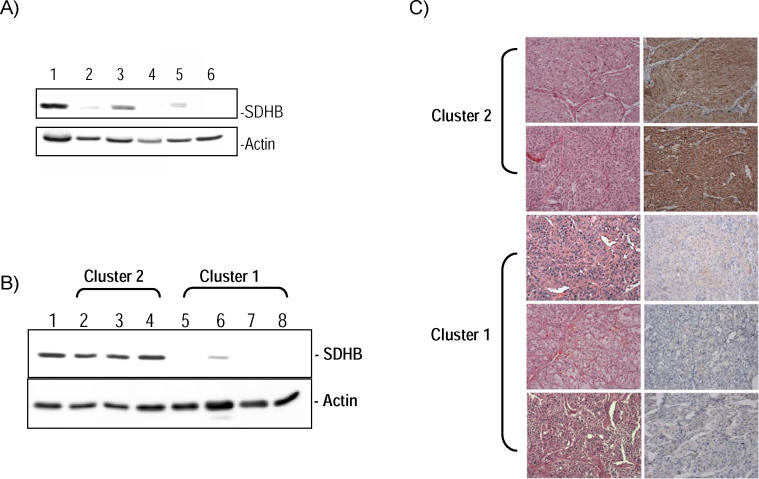
- SDHB protein was reduced in all tumors with SDH mutations and also suppressed in the majority of VHL-mutant and sporadic Cluster 1 tumors tested by immunoblot; SDHB immunostaining was highly concordant with immunoblot findings.
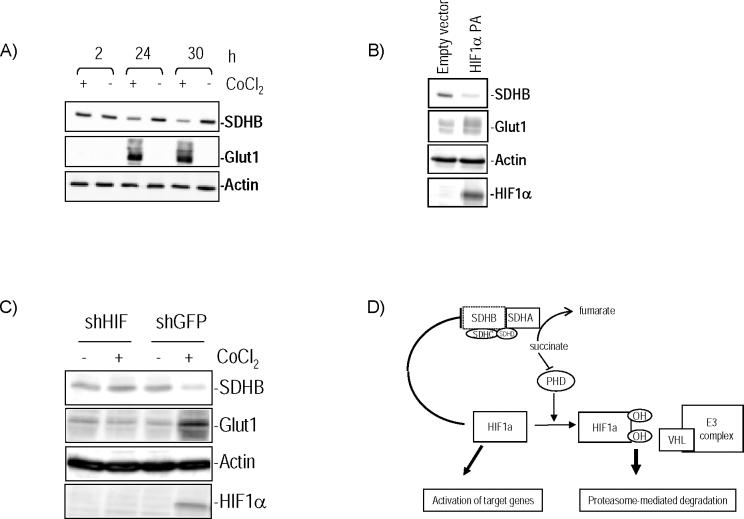
- In cell models, cobalt chloride reduced SDHB protein, expression of nondegradable HIF1αP402A/P564A downregulated SDHB, and HIF1α shRNA prevented cobalt chloride–induced SDHB reduction, supporting HIF1α-dependent SDHB regulation.
Methods
- Tumor specimens: 76 catecholamine-secreting pheochromocytomas or paragangliomas, including hereditary, familial undetermined, and sporadic tumors; 13 were extra-adrenal; no head/neck paragangliomas or SDHC-mutant tumors were included.
- Expression profiling: 84 tumor samples including six replicates were hybridized to Affymetrix U133A arrays; after excluding four poor-quality scans, 76 unique tumors were analyzed using dChip normalization, unsupervised hierarchical clustering, supervised k-nearest neighbor and weighted-voting models, and GSEA.
- Validation: DNA sequencing of RET, VHL, SDHD, SDHB, and SDHC in familial samples and 20 sporadic tumors; quantitative real-time PCR, Western blotting, immunohistochemistry, and cell-line experiments in HEK293, MPC 9/3L, and A2058 cells with cobalt chloride, HIF1α mutant, or HIF1α shRNA.
Limitations
- The paper states that limited tumor material prevented quantitation of HIF1α and HIF2α protein levels in primary samples.
- The paper states that HIF1α effects were less marked than those of hypoxia-mimetic agents, suggesting additional factors besides HIF1α may be involved in SDHB suppression, and that the precise mechanisms linking HIF1α and SDHB remain to be identified.
- The paper notes that long-term follow-up was not available to precisely define one VHL family as VHL type 2C; evident from the text, the series excluded head/neck paragangliomas and SDHC-mutant tumors, and only 20 sporadic tumors were sequenced.
Model-written summary. Check it against the paper before relying on it.
Integrity signals
Registry
Cites
Statistics
Figures
Verification
Claims the paper makes
2 Valid · 1 Not valid · 19 Not checked · 72 Own results and interpretations
Some cited sources support this claim and some don’t — read each source’s verdict below.
In the paper
“The two prototype genes of Cluster 2 (RET and NF1) are linked by their common ability to activate the RAS/RAF/MAP kinase signaling cascade [16,17].”
§ A HIF1α Regulatory Loop Links Hypoxia and Mitochondrial Signals in Pheochromocytomas > Results > Suppressed SDHB Expression Is a Common Feature of VHL and SDH Tumors
What the sources say
- Disputedcites [16] Ballester R Marchuk D Boguski M Saulino A Letcher R 1990 The NF1 locus encodes a protein functionally related to mammalian GAP and yeast IRA proteins Cell 63 851 859 2121371 sourceExperimental — accuracy not yet measured
The Abstract (page not supplied) reports that an NF1 segment inhibits both wild-type and activated H-ras in yeast, contrary to the claim that NF1 activates the signaling cascade. The paper establishes a functional link between NF1 and RAS, but it does not report that NF1 and RET share an ability to activate a RAS/RAF/MAP kinase cascade. (LLM, conf=0.88)
Checked by a reasoning model — may be wrong.
- Partly supportedcites [17] Califano D Rizzo C D'Alessio A Colucci-D'Amato GL Cali G 2000 Signaling through Ras is essential for ret oncogene-induced cell differentiation in PC12 cells J Biol Chem 275 19297 19305 10748077 sourceExperimental — accuracy not yet measured
The paper reports that active RET mutants trigger Ras signaling in PC12 cells, and its discussion links RET to the Ras/MAP kinase pathway (Discussion; page not provided). It does not address NF1, so it cannot establish the claimed common ability of RET and NF1 to activate the cascade. (LLM, conf=0.86)
plainstates an association- Asserted: passes — The authors put it forward as true.
- Checkable: passes — It can be checked against evidence.
- Load-bearing: passes — The paper’s conclusions depend on it.
- Based: passes — The paper gives a reason why it holds.
- Disputed
The cited sources support only part of this claim — read each source’s verdict below.
In the paper
“Mitochondrial complex II is a component of the electron transport chain, and mutations of SDHB or SDHD genes that abrogate the oxidoreductase function of complex II can cause pheochromocytomas [9,14,15].”
§ A HIF1α Regulatory Loop Links Hypoxia and Mitochondrial Signals in Pheochromocytomas > Results > Suppressed SDHB Expression Is a Common Feature of VHL and SDH Tumors
What the sources say
- Partly supportedcites [9] Gimenez-Roqueplo AP Favier J Rustin P Mourad JJ Plouin PF 2001 The R22X mutation of the SDHD gene in hereditary paraganglioma abolishes the enzymatic activity of complex II in the mitochondrial respiratory chain and activates the hypoxia pathway Am J Hum Genet 69 1186 1197 11605159 PMC1235531 sourceExperimental — accuracy not yet measured
Our copy squarely supports the SDHD branch: the Results (Enzyme-Function Studies) and Abstract report that the R22X SDHD mutation with maternal LOH gave 'a complete and selective loss of complex II enzymatic activity in the inherited pheochromocytoma', and the Discussion links that defect to angiogenic-factor overproduction and tumour growth (though hedged: 'probably involved … possibly in tumor development', 'unclear whether the activation of hypoxia pathways is or is not sufficient to induce tumorigenesis by itself'). The SDHB branch is not this paper's finding: the Introduction only credits 'inactivating SDHB gene mutations … detected in two kindreds' to Astuti et al. 2001b, without measuring complex II activity or specifying pheochromocytoma for SDHB. So only half of the disjunctive claim, plus its causal strength, is carried by this source. (LLM, conf=0.70)
- Not checked yetcites [14] Gimenez-Roqueplo AP Favier J Rustin P Rieubland C Kerlan V 2002 Functional consequences of a SDHB gene mutation in an apparently sporadic pheochromocytoma J Clin Endocrinol Metab 87 4771 4774 12364472 source
- Not checked yetcites [15] Yankovskaya V Horsefield R Tornroth S Luna-Chavez C Miyoshi H 2003 Architecture of succinate dehydrogenase and reactive oxygen species generation Science 299 700 704 12560550 source
plainstates a cause- Asserted: passes — The authors put it forward as true.
- Checkable: passes — It can be checked against evidence.
- Load-bearing: passes — The paper’s conclusions depend on it.
- Based: passes — The paper gives a reason why it holds.
- Partly supported
The cited sources support only part of this claim — read each source’s verdict below.
In the paper
“These clinical observations and the finding of increased expression of HIF targets in tumors with SDH mutations [9,10] have suggested the possibility that the VHL and SDH syndromes intersect at the molecular level.”
§ A HIF1α Regulatory Loop Links Hypoxia and Mitochondrial Signals in Pheochromocytomas > Introduction
What the sources say
- Partly supportedcites [9] Gimenez-Roqueplo AP Favier J Rustin P Mourad JJ Plouin PF 2001 The R22X mutation of the SDHD gene in hereditary paraganglioma abolishes the enzymatic activity of complex II in the mitochondrial respiratory chain and activates the hypoxia pathway Am J Hum Genet 69 1186 1197 11605159 PMC1235531 sourceExperimental — accuracy not yet measured
Our copy fully supports the HIF-target half of the sentence: the Abstract reports VEGF and EPAS1/HIF2α mRNA three- and sixfold higher in the SDHD-mutant (R22X) pheochromocytoma than in sporadic controls, the Results (fig. 7) give the Mann-Whitney statistics for that increase, and the Discussion describes 'strong expression of hypoxia-inducible transcription factors (EPAS1/HIF2α and HIF1α) and genes encoding some of the targets of these factors' in the paragangliomas, alongside the family's clinical observations. What the source does not contain is the convergence with VHL: searches for 'VHL', 'von Hippel-Lindau' and oxygen-sensing comparisons returned no passage in which this paper links SDH to the VHL syndrome or pathway — its stated conclusion is only that complex II loss is 'associated with a high expression of angiogenic factors' and that it remains 'unclear whether the activation of hypoxia pathways is or is not sufficient to induce tumorigenesis'. The assertion that the VHL and SDH syndromes intersect at the molecular level is therefore the citing authors' inference, not a point this paper makes. (LLM, conf=0.68)
- Not checked yetcites [10] Gimenez-Roqueplo AP Favier J Rustin P Rieubland C Crespin M 2003 Mutations in the SDHB gene are associated with extra-adrenal and/or malignant phaeochromocytomas Cancer Res 63 5615 5621 14500403
hedgedstates an association- Asserted: passes — The authors put it forward as true.
- Checkable: passes — It can be checked against evidence.
- Load-bearing: passes — The paper’s conclusions depend on it.
- Based: passes — The paper gives a reason why it holds.
- Partly supported
A result the paper reports from its own data — it cites no other source for it, so there is none to check. The quote shows it is in the paper.
In the paper
“We found that the expression of SDHB is reduced in all tumors with SDH (both SDHB and SDHD) mutations in this cohort (Figure 3A)”
§ A HIF1α Regulatory Loop Links Hypoxia and Mitochondrial Signals in Pheochromocytomas > Results > Suppressed SDHB Expression Is a Common Feature of VHL and SDH Tumors
plainstates an association- Asserted: passes — The authors put it forward as true.
- Checkable: passes — It can be checked against evidence.
- Load-bearing: passes — The paper’s conclusions depend on it.
- Based: passes — The paper gives a reason why it holds.
A result the paper reports from its own data — it cites no other source for it, so there is none to check. The quote shows it is in the paper.
In the paper
“In two cell line models, HEK293 and mouse pheochromocytoma cell line (MPC) 9/3L, exposure to the hypoxia-mimetic agent cobalt chloride reduced SDHB protein expression (Figure 4A).”
§ A HIF1α Regulatory Loop Links Hypoxia and Mitochondrial Signals in Pheochromocytomas > Results > HIF1α Contributes to SDHB Regulation
plainstates a causen = 2- Asserted: passes — The authors put it forward as true.
- Checkable: passes — It can be checked against evidence.
- Load-bearing: passes — The paper’s conclusions depend on it.
- Based: passes — The paper gives a reason why it holds.
50 more claims
Create a free account to see all 94 claims and to verify the 27 references still open.
- It may state two separate claims as one. 19
- Probably not a substantial claim. 29
Claims other papers make about this one
Each is checked against this paper’s own text: does it say what the citing paper says it does?
The source backs part of the claim, not all of it — or backs it for a different population, condition or comparison.
In the citing paper
“For example, the HIF1α transcription factor accumulates in SDH and FH mutant tumors, presumably due to inhibition of the EglN prolyl hydroxylases (Dahia et al., 2005; Isaacs et al., 2005; Pollard et al., 2005, 2007; Selak et al., 2005).”
From Influence of Metabolism on Epigenetics and Disease (2013) · cites this paper as Dahia et al., 2005
Experimental — accuracy not yet measuredThe cited source says what the claim attributes to it.
In the citing paper
“In addition, patients harbouring mutations in SDH have increased HIF-1α activity23,24 and circulating succinate25.”
From Succinate is an inflammatory signal that induces IL-1β through HIF-1α (2013) · cites this paper as [24]
Self-check
Percentages, sums and reported differences re-computed from the paper’s own numbers.
Each contradiction between two passages listed here was confirmed by an independent check.
Rated minor: it would not touch a result — a value no result rests on, a p-value that stays on the same side of the significance level, or a conflict that is clerical, resolved elsewhere in the paper, or outside its own findings.
In the paper
§ A HIF1α Regulatory Loop Links Hypoxia and Mitochondrial Signals in Pheochromocytomas > Results > Suppressed SDHB Expression Is a Common Feature of VHL and SDH Tumors
“lanes 5–7”
§ A HIF1α Regulatory Loop Links Hypoxia and Mitochondrial Signals in Pheochromocytomas > Results > Suppressed SDHB Expression Is a Common Feature of VHL and SDH Tumors
“tumors 16, 85, 101, and 152, respectively”
Citations
Cites
Cluster analysis and display of genome-wide expression patterns
Eisen, M. B., Spellman, P. T., Brown, P. O., & Botstein, D. (1998) · Proceedings of the National Academy of Sciences · doi:10.1073/pnas.95.25.14863 · Cited by 16,184 · cited 1×
“Gene filtering and hierarchical clustering analysis were also performed in dChip [29].”
Golub, T. R., Slonim, D. K., Tamayo, P., Huard, C., Gaasenbeek, M., Mesirov, J. P., Coller, H., Loh, M. L., Downing, J. R., Caligiuri, M. A., et al. (1999) · Science · doi:10.1126/science.286.5439.531 · Cited by 11,516
Mootha, V. K., Lindgren, C. M., Eriksson, K.-F., Subramanian, A., Sihag, S., Lehar, J., Puigserver, P., Carlsson, E., Ridderstråle, M., Laurila, E., et al. (2003) · Nature Genetics · doi:10.1038/ng1180 · Cited by 10,197 · cited 1×
“To gather insights into the function of genes associated with the clusters defined by the comparisons described above, we used a statistical method designed to test for the enrichment of groups of genes in data generated from expression studies, GSEA [”
MethodJaakkola, P., Mole, D. R., Tian, Y.-M., Wilson, M. I., Gielbert, J., Gaskell, S. J., Kriegsheim, A. V., Hebestreit, H. F., Mukherji, M., Schofield, C. J., et al. (2001) · Science · doi:10.1126/science.1059796 · Cited by 5,535
HIFα Targeted for VHL-Mediated Destruction by Proline Hydroxylation: Implications for O 2 Sensing
Ivan, M., Kondo, K., Yang, H., Kim, W., Valiando, J., Ohh, M., Salic, A., Asara, J. M., Lane, W. S., & Kaelin Jr., W. G. (2001) · Science · doi:10.1126/science.1059817 · Cited by 4,735
Model-based analysis of oligonucleotide arrays: Expression index computation and outlier detection.
Li, C., & Wong, W. H. (2001) · Proceedings of the National Academy of Sciences · doi:10.1073/pnas.98.1.31 · Cited by 3,133 · cited 1×
“The reliability of the clusters was verified by a resampling method based on the standard errors for expression values [30].”
Self-citationSuccinate links TCA cycle dysfunction to oncogenesis by inhibiting HIF-α prolyl hydroxylase
Selak, M. A., Armour, S. M., MacKenzie, E. D., Boulahbel, H., Watson, D. G., Mansfield, K. D., Pan, Y., Simon, M. C., Thompson, C. B., & Gottlieb, E. (2005) · Cancer Cell · doi:10.1016/j.ccr.2004.11.022 · Cited by 2,108 · cited 1×
“(D) Proposed model of HIF1α and SDHB interregulation. HIF1α downregulates SDHB, which leads to complex II dysfunction. High succinate levels resulting from loss of complex II, in turn, inhibit prolyl hydroxylase (PHD) activity [”
BackgroundMLL translocations specify a distinct gene expression profile that distinguishes a unique leukemia
Armstrong, S. A., Staunton, J. E., Silverman, L. B., Pieters, R., den Boer, M. L., Minden, M. D., Sallan, S. E., Lander, E. S., Golub, T. R., & Korsmeyer, S. J. (2002) · Nature Genetics · doi:10.1038/ng765 · Cited by 1,723
Mutations in SDHD , a Mitochondrial Complex II Gene, in Hereditary Paraganglioma
Baysal, B. E., Ferrell, R. E., Willett-Brozick, J. E., Lawrence, E. C., Myssiorek, D., Bosch, A., Mey, A. V. D., Taschner, P. E. M., Rubinstein, W. S., Myers, E. N., et al. (2000) · Science · doi:10.1126/science.287.5454.848 · Cited by 1,638 · cited 1×
“encode subunits of SDH, the enzyme that composes mitochondrial complex II [”
Kanellopoulou, C., Muljo, S. A., Kung, A. L., Ganesan, S., Drapkin, R., Jenuwein, T., Livingston, D. M., & Rajewsky, K. (2005) · Genes & Development · doi:10.1101/gad.1248505 · Cited by 1,254
Self-citation
Cited by
Items 201–300 of 442
Baysal, B. E., Lawrence, E. C., & Ferrell, R. E. (2007) · BMC Biology · doi:10.1186/1741-7007-5-12 · Cited by 39
“The paraganglia specificity of PGL tumors [4] and data from global gene-expression analysis [11], cell biology [12], animal-model studies [13], and gene-environment interaction and population genetics [14] support the hypothesis that constitutive hypoxic stimulation underlies the pathogenesis of PGL.”
BackgroundPowerhouse down: Complex II dissociation in the respiratory chain
Hwang, M., Rohlena, J., Dong, L., Neužil, J., & Grimm, S. (2014) · Mitochondrion · doi:10.1016/j.mito.2014.06.001 · Cited by 44
Mapping of Succinate Dehydrogenase Losses in 2258 Epithelial Neoplasms
Miettinen, M., Sarlomo‐Rikala, M., McCue, P. A., Czapiewski, P., Langfort, R., Waloszczyk, P., Ważny, K., Biernat, W., Lasota, J. P., & Wang, Z. (2013) · Applied immunohistochemistry & molecular morphology · doi:10.1097/pai.0b013e31828bfdd3 · Cited by 41
Structural and functional consequences of succinate dehydrogenase subunit B mutations
Kim, E., Rath, E. M., Tsang, V., Duff, A. P., Robinson, B. G., Church, W. B., Benn, D. E., Dwight, T., & Clifton-Bligh, R. J. (2015) · Endocrine Related Cancer · doi:10.1530/erc-15-0099 · Cited by 40
“…any of the subunits of SDH, also known as complex II of the mitochondrial respiratory chain (MCII), have been associated with development of PC/PGL and also renal cell cancers, gastrointestinal stromal tumours and pituitary adenomas (Dahia et al. 2005, Dwight et al. 2013, Gill et al. 2010, 2011).”
BackgroundSelf-citationPang, Y., Yang, C., Schovanek, J., Wang, H., Bullova, P., Caisova, V., Gupta, G., Wolf, K. I., Semenza, G. L., Zhuang, Z., et al. (2017) · Oncotarget · doi:10.18632/oncotarget.16224 · Cited by 37
A xenograft and cell line model of SDH-deficient pheochromocytoma derived from Sdhb+/− rats
Powers, J. F., Cochran, B., Baleja, J., Sikes, H. D., Pattison, A., Zhang, X., Lomakin, I., Shepard-Barry, A., Pacák, K., Moon, S. J., et al. (2020) · Endocrine Related Cancer · doi:10.1530/erc-19-0474 · Cited by 42
Self-citationRecent advances in the management of pheochromocytoma and paraganglioma
Tanabe, A., & Naruse, M. (2020) · Hypertension Research · doi:10.1038/s41440-020-0531-0 · Cited by 45
Lee, S. M., & Policarpio‐Nicolas, M. L. (2015) · Archives of Pathology & Laboratory Medicine · doi:10.5858/arpa.2013-0703-rs · Cited by 37
“suppressor, when it becomes defective, it gives rise to the overexpression of several hypoxia-inducible genes that are believed to result in proliferation of paraganglia.(20) Multiple head and neck paragangliomas and the occurrence of head and neck paragangliomas together with pheochromocytomas are more commonly seen…”
BackgroundToledo, R. A., & Jiménez, C. (2018) · F1000Research · doi:10.12688/f1000research.13995.1 · Cited by 39
Bouthelier, A., & Aragonés, J. (2020) · Biochimica et Biophysica Acta (BBA) - Molecular Cell Research · doi:10.1016/j.bbamcr.2020.118733 · Cited by 42
Current views on cell metabolism in SDHx-related pheochromocytoma and paraganglioma
Vícha, A., Taïeb, D., & Pacák, K. (2014) · Endocrine Related Cancer · doi:10.1530/erc-13-0398 · Cited by 37
“The stabilization of HIF1a rather than HIF2a increases glycolysis (due to overexpression of some glycolytic enzymes) and can regulate glutaminolysis.”
InfluentialStem cells, evolutionary aspects and pathology of the adrenal medulla: A new developmental paradigm
Kastriti, M. E., Kameneva, P., & Adameyko, I. I. (2020) · Molecular and Cellular Endocrinology · doi:10.1016/j.mce.2020.110998 · Cited by 43
“Based on these studies, paraganglioma and pheochromocytoma tumors can be classified into three main clusters: a kinase signaling cluster, a pseudohypoxia cluster and a Wnt-altered subtype (Dahia et al., 2005; Burnichon et al., 2011; Fishbein et al., 2017).”
BackgroundCasey, R. T., Neumann, H. P. H., & Maher, E. R. (2020) · Human Molecular Genetics · doi:10.1093/hmg/ddaa201 · Cited by 39
Integrative epigenomic and genomic analysis of malignant pheochromocytoma
Sandgren, J., Andersson, R., Rada-Iglesias, Á., Enroth, S., Åkerström, G., Dumanski, J. P., Komorowski, J., Westin, G., & Wadelius, C. (2010) · Experimental & Molecular Medicine · doi:10.3858/emm.2010.42.7.050 · Cited by 37
“The MAPK pathway is more prevalently activated in adrenergic sporadic and MEN-associated pheochromocytomas in contrast to VHL-associated and noradrenergic sporadic cases (Eisenhofer et al., 2004; Dahia et al., 2005).”
BackgroundResultThree autocrine feedback loops determine HIF1α expression in chronic hypoxia
Qutub, A. A., & Popel, A. S. (2007) · Biochimica et Biophysica Acta (BBA) - Molecular Cell Research · doi:10.1016/j.bbamcr.2007.07.004 · Cited by 43
Zhang, D., Wang, W., Xiang, B., Li, N., Huang, S., Zhou, W., Sun, Y., Wang, X., Ma, J., Li, G., et al. (2013) · Tumor Biology · doi:10.1007/s13277-013-0781-4 · Cited by 36
Role of Mitochondrial Mutations in Cancer
Baysal, B. E. (2006) · Endocrine Pathology · doi:10.1385/ep:17:3:203 · Cited by 41
“Second, in contrast to PGL tumors, which show robust and global upregulation of hypoxiainduced pathways [ 14 ], the gene expression profile of HLRCC-related uterine fibroids shows upregulation of carbohydrate metabolism- and glycolysis-related genes [19].”
BackgroundResultFlynn, A., Dwight, T., Harris, J., Benn, D. E., Zhou, L., Hogg, A., Catchpoole, D. R., James, P. A., Duncan, E. L., Trainer, A. H., et al. (2016) · The Journal of Clinical Endocrinology & Metabolism · doi:10.1210/jc.2015-3889 · Cited by 35
Self-citationFlynn, A., Pattison, A., Balachander, S., Boehm, E., Bowen, B., Dwight, T., Rossello, F. J., Hofmann, O., Martelotto, L. G., Zethoven, M., et al. (2025) · Nature Communications · doi:10.1038/s41467-025-57595-y · Cited by 42
Self-citationHRAS mutation prevalence and associated expression patterns in pheochromocytoma
Stenman, A., Welander, J., Gustavsson, I., Brunaud, L., Bäckdahl, M., Söderkvist, P., Gimm, O., Juhlin, C. C., & Larsson, C. (2016) · Genes Chromosomes and Cancer · doi:10.1002/gcc.22347 · Cited by 36
Guha, A., Musil, Z., Vícha, A., Zelinka, T., Pacák, K., Astl, J., & Chovanec, M. (2019) · Neoplasma · doi:10.4149/neo_2018_181208n933 · Cited by 35
Saito, Y., Ishii, K., Aita, Y., Ikeda, T., Kawakami, Y., Shimano, H., Hara, H., & Takekoshi, K. (2015) · Neurochemical Research · doi:10.1007/s11064-015-1738-3 · Cited by 39
“Consistent with this hypothesis, high levels of HIF1a have been observed in HPPS tumor tissue [4, 10, 12, 16].”
BackgroundOxygen Concentration Controls Epigenetic Effects in Models of Familial Paraganglioma
Her, Y. F., Nelson-Holte, M. H., & Maher, L. J. (2015) · PLoS ONE · doi:10.1371/journal.pone.0127471 · Cited by 35
Hypoxia-inducible C-to-U coding RNA editing downregulates SDHB in monocytes
Baysal, B., Jong, K. D., Liu, B., Wang, J., Patnaik, S., Wallace, P., & Taggart, R. (2013) · PeerJ · doi:10.7717/peerj.152 · Cited by 27
“…1973), show increased severity with increased altitudes (Astrom et al., 2003; Cerecer-Gil et al., 2010) and share transcriptome characteristics with Von-Hippel Lindau (VHL) disease tumors (Dahia et al., 2005; Baysal et al. (2013), PeerJ, DOI 10.7717/peerj.152 2/23 Lopez-Jimenez et al., 2010).”
BackgroundInfluentialThe Warburg Phenomenon and Other Metabolic Alterations of Cancer Cells
Dakubo, G. D. (2010) · Springer eBooks · doi:10.1007/978-3-642-11416-8_2 · Cited by 43
“Glutamine carbon in the TCA cycle has been detectable in aspartate, which can be used to synthesize nucleotides, aspartate, and arginine (DeBerardinis et al. 2007).”
Jiménez, C., Armaiz-Peña, G., Dahia, P. L. M., Lü, Y., Toledo, R. A., Varghese, J. M., & Habra, M. A. (2022) · Cancers · doi:10.3390/cancers14030467 · Cited by 35
Self-citationVerma, A. M. (2006) · Current Opinion in Clinical Nutrition & Metabolic Care · doi:10.1097/01.mco.0000232895.28674.79 · Cited by 34
Crona, J., Backman, S., Maharjan, R., Mayrhofer, M., Stalberg, P. L. H., Isaksson, A., Hellman, P., & Björklund, P. (2015) · Clinical Cancer Research · doi:10.1158/1078-0432.ccr-14-2854 · Cited by 36
Corrado, M., Scorrano, L., & Campello, S. (2016) · Oncotarget · doi:10.18632/oncotarget.8727 · Cited by 35
Pheochromocytomas and Paragangliomas: Bypassing Cellular Respiration
Cascón, A., Remacha, L., Calsina, B., & Robledo, M. (2019) · Cancers · doi:10.3390/cancers11050683 · Cited by 35
“In this pioneering study, it was shown that SDH mutations, and the subsequent accumulation of succinate, caused a pseudohypoxic transcription profile similar to the one originated by VHL dysfunction [16,63,105].”
BackgroundRole of succinate dehydrogenase deficiency and oncometabolites in gastrointestinal stromal tumors
Zhao, Y., Feng, F., Guo, Q., Wang, Y., & Zhao, R. (2020) · World Journal of Gastroenterology · doi:10.3748/wjg.v26.i34.5074 · Cited by 53
Mechanisms regulating immune surveillance of cellular stress in cancer
Seelige, R., Searles, S. C., & Bui, J. D. (2017) · Cellular and Molecular Life Sciences · doi:10.1007/s00018-017-2597-7 · Cited by 38
Khatami, F., Amoli, M. M., & Tavangar, S. M. (2018) · Endocrine Regulations · doi:10.2478/enr-2018-0006 · Cited by 33
PTEN gene loss, but not mutation, in benign and malignant phaeochromocytomas
van Nederveen, F. H., Perren, A. A., Dannenberg, H., Petri, B., Dinjens, W. N. M., Komminoth, P., & de Krijger, R. R. (2006) · The Journal of Pathology · doi:10.1002/path.1968 · Cited by 34
“Another explanation for genetic instability is the recent discovery of up-regulation of hypoxia-inducible factor 1α (HIF1α) in at least a subset of PCCs with VHL, SDHB, or SDHD mutations [30].”
BackgroundAdrenal Medulla and Paraganglia
McNicol, A. M. (2009) · Springer eBooks · doi:10.1007/978-1-4419-1069-1_12 · Cited by 34
Pathophysiology and Diagnosis of Disorders of the Adrenal Medulla: Focus on Pheochromocytoma
Lenders, J. W. M., & Eisenhofer, G. (2014) · Comprehensive physiology · doi:10.1002/cphy.c130034 · Cited by 32
Age-dependent obesity and mitochondrial dysfunction
Li, Q. O. Y., Soro-Arnáiz, I., & Aragonés, J. (2017) · Adipocyte · doi:10.1080/21623945.2017.1297346 · Cited by 32
Pseudohypoxic pheochromocytomas and paragangliomas dominate in children
Redlich, A., Pamporaki, C., Lessel, L., Frühwald, M. C., Vorwerk, P., & Kuhlen, M. (2021) · Pediatric Blood & Cancer · doi:10.1002/pbc.28981 · Cited by 33
Pheochromocytoma: Gasping for Air
Jochmanová, I., Zhuang, Z., & Pacák, K. (2015) · Hormones and Cancer · doi:10.1007/s12672-015-0231-4 · Cited by 31
Rapizzi, E., Ercolino, T., Canu, L., Giaché, V., Francalanci, M., Pratesi, C., Valeri, A., & Mannelli, M. (2012) · Endocrine Related Cancer · doi:10.1530/erc-11-0263 · Cited by 31
“This observation is in accordance with that previously reported by Dahia et al. (2005) and by Favier et al. (2009).”
HIF2A gain-of-function mutations detected in duodenal gangliocytic paraganglioma
Zhuang, Z., Yang, C., Ryška, A., Ji, Y., Hou, Y., Graybill, S. D., Bullova, P., Lubensky, I. A., Klöppel, G., & Pacák, K. (2016) · Endocrine Related Cancer · doi:10.1530/erc-16-0148 · Cited by 29
Korpershoek, E., Pacák, K., & Martiniova, L. (2012) · Endocrine Pathology · doi:10.1007/s12022-012-9194-y · Cited by 29
ATRX driver mutation in a composite malignant pheochromocytoma
Comino‐Méndez, I., Tejera, Á. M., Currás-Freixes, M., Remacha, L., Gonzálvo, P., Tonda, R., Letón, R., Blasco, M. A., Robledo, M., & Cascón, A. (2016) · Cancer Genetics · doi:10.1016/j.cancergen.2016.04.058 · Cited by 32
Treatment and outcome of metastatic paraganglioma of the spine
Jia, Q., Yin, H., Yang, J. M., Wu, Z., Yan, W., Zhou, W., Yang, X., & Xiao, J. (2017) · European Spine Journal · doi:10.1007/s00586-017-5140-5 · Cited by 27
“The reasons that PG cells were inclining to spread to the skeleton were still unclear, but the homing mechanism has been proposed because of strong CXCR4 and CCR9 expression [10, 23].”
BackgroundPheochromocytomas and Paragangliomas: Clinical and Genetic Approaches
Costa, M. H. S., Ortiga-Carvalho, T. M., Violante, A. D., & Vaisman, M. (2015) · Frontiers in Endocrinology · doi:10.3389/fendo.2015.00126 · Cited by 29
Yao, L., Barontini, M., Niederle, B., Jech, M., Pfragner, R., & Dahia, P. L. M. (2010) · The Journal of Clinical Endocrinology & Metabolism · doi:10.1210/jc.2009-2245 · Cited by 27
Self-citationCancer Stem Cells in Pheochromocytoma and Paraganglioma
Scriba, L. D., Bornstein, S. R., Santambrogio, A., Mueller, G., Huebner, A., Hauer, J., Schedl, A., Wielockx, B., Eisenhofer, G., Andoniadou, C. L., et al. (2020) · Frontiers in Endocrinology · doi:10.3389/fendo.2020.00079 · Cited by 27
Succinate dehydrogenase and MYC-associated factor X mutations in pituitary neuroendocrine tumours
Loughrey, P. B., Roncaroli, F., Healy, E. G., Weir, P., Madhu, B., Casey, R. T., Hunter, S. J., & Korbonits, M. (2022) · Endocrine Related Cancer · doi:10.1530/erc-22-0157 · Cited by 28
Self-citationRole of microenvironment on neuroblastoma SK-N-AS SDHB-silenced cell metabolism and function
Rapizzi, E., Fucci, R., Giannoni, E., Canu, L., Richter, S., Cirri, P., & Mannelli, M. (2015) · Endocrine Related Cancer · doi:10.1530/erc-14-0479 · Cited by 28
“…succinate, which is responsible for a wide spectrum of pathways that range from the pseudo-hypoxia response to epigenetic reprogramming (Dahia et al. 2005, Pollard et al. 2005, Selak et al. 2005, Koivunen et al. 2007, Goffrini et al. 2009, Letouzé et al. 2013; for recent reviews, see…”
BackgroundMitochondrial Deficiencies in the Predisposition to Paraganglioma
Lussey‐Lepoutre, C., Buffet, A., Gimenez‐Roqueplo, A., & Favier, J. (2017) · Metabolites · doi:10.3390/metabo7020017 · Cited by 32
“Transcriptomic studies further confirmed this initial observation by demonstrating that unsupervised classification of PPGL tumours allowed separating them into two major clusters of expression: cluster 1, characterized by a hypoxic signature, which comprised all TCA cycle mutations (cluster 1A) on one side and VHL an…”
ResultThe Emerging Role of Succinate Dehyrogenase Genes (SDHx) in Tumorigenesis
Nazar, E., Khatami, F., Saffar, H., & Tavangar, S. M. (2019) · International Journal of Hematology-Oncology and Stem Cell Research · doi:10.18502/ijhoscr.v13i2.692 · Cited by 37
The Occurrence of SDHB Gene Mutations in Pheochromocytoma
van Nederveen, F. H., Dinjens, W. N. M., Korpershoek, E., & de Krijger, R. R. (2006) · Annals of the New York Academy of Sciences · doi:10.1196/annals.1353.018 · Cited by 26
MYO5B mutations in pheochromocytoma/paraganglioma promote cancer progression
Tomić, T. T., Olausson, J., Rehammar, A., Deland, L., Muth, A., Ejeskär, K., Nilsson, S., Kristiansson, E., Nilsson, O., & Abel, F. (2020) · PLoS Genetics · doi:10.1371/journal.pgen.1008803 · Cited by 26
Kuo, M. J. M., Nazari, M. A., Jha, A., & Pacák, K. (2022) · Frontiers in Endocrinology · doi:10.3389/fendo.2022.936178 · Cited by 30
Tumour microenvironment in pheochromocytoma and paraganglioma
Martinelli, S., Amore, F., Canu, L., Maggi, M., & Rapizzi, E. (2023) · Frontiers in Endocrinology · doi:10.3389/fendo.2023.1137456 · Cited by 29
Analysis of SDHAF3 in familial and sporadic pheochromocytoma and paraganglioma
Dwight, T., Na, U., Kim, E., Zhu, Y., Richardson, A. L., Robinson, B. G., Tucker, K., Gill, A. J., Benn, D. E., Clifton-Bligh, R. J., et al. (2017) · BMC Cancer · doi:10.1186/s12885-017-3486-z · Cited by 26
Self-citationEvenepoel, L., van Nederveen, F. H., Oudijk, L., Papathomas, T. G., Restuccia, D. F., Belt, E. J. T., de Herder, W. W., Feelders, R. A., Franssen, G. J. H., Hamoir, M., et al. (2017) · The Journal of Clinical Endocrinology & Metabolism · doi:10.1210/jc.2017-01314 · Cited by 29
Dai, M., Bu, S., & Miao, Z. (2025) · Frontiers in Immunology · doi:10.3389/fimmu.2025.1630310 · Cited by 29
Flores, S. K., Estrada-Zuniga, C. M., Thallapureddy, K., Armaiz-Peña, G., & Dahia, P. L. M. (2021) · Cancers · doi:10.3390/cancers13184602 · Cited by 28
Self-citationTMEM127 suppresses tumor development by promoting RET ubiquitination, positioning, and degradation
Guo, Q., Cheng, Z., Gonzalez‐Cantu, H., Rotondi, M. L., Huelgas‐Morales, G., Ethiraj, P., Qiu, Z., Lefkowitz, J., Song, W., Landry, B. N., et al. (2023) · Cell Reports · doi:10.1016/j.celrep.2023.113070 · Cited by 26
Self-citationMicroarray analysis reveals differential expression of benign and malignant pheochromocytoma
Waldmann, J., Fendrich, V., Holler, J. P. N., Buchholz, M., Heinmöller, E., Langer, P., Ramaswamy, A., Samans, B., Walz, M. K., Rothmund, Μ., et al. (2010) · Endocrine Related Cancer · doi:10.1677/erc-09-0118 · Cited by 26
Pheochromocytoma and paraganglioma in Fontan patients: Common more than expected
Song, M. K., Kim, G. B., Bae, E. J., Lee, Y. A., Kim, H., Min, S., Kim, J. H., & Won, J. (2018) · Congenital Heart Disease · doi:10.1111/chd.12625 · Cited by 27
Flores, S. K., Cheng, Z., Jasper, A. M., Natori, K., Okamoto, T., Tanabe, A., Gotoh, K., Shibata, H., Sakurai, A., Nakai, T., et al. (2019) · The Journal of Clinical Endocrinology & Metabolism · doi:10.1210/jc.2019-00235 · Cited by 26
Self-citationCasey, R. T., ten Hoopen, R., Ochoa, E., Challis, B., Whitworth, J., Smith, P., Martín, J., Clark, G. R., Rodger, F., Maranian, M. J., et al. (2019) · Scientific Reports · doi:10.1038/s41598-019-46124-9 · Cited by 25
von Arx, C., Capozzi, M., López-Jiménez, E., Ottaiano, A., Tatangelo, F., Di Mauro, A., Nasti, G., Tornesello, M. L., & Tafuto, S. (2019) · Journal of Clinical Medicine · doi:10.3390/jcm8091277 · Cited by 24
Emerging role of dopamine in neovascularization of pheochromocytoma and paraganglioma
Osinga, T. E., Links, T. P., Dullaart, R. P. F., Pacák, K., van der Horst‐Schrivers, A. N. A., Kerstens, M. N., & Kema, I. P. (2017) · The FASEB Journal · doi:10.1096/fj.201601131r · Cited by 32
The role of mutation of metabolism-related genes in genomic hypermethylation
Waterfall, J. J., Killian, J. K., & Meltzer, P. S. (2014) · Biochemical and Biophysical Research Communications · doi:10.1016/j.bbrc.2014.08.003 · Cited by 24
Genetically Modeled Mice with Mutations in Mitochondrial Metabolic Enzymes for the Study of Cancer
Piruat, J. I., & Millán‐Uclés, Á. (2014) · Frontiers in Oncology · doi:10.3389/fonc.2014.00200 · Cited by 23
La génétique des paragangliomes et des phéochromocytomes
Favier, J., & Gimenez‐Roqueplo, A. (2012) · médecine/sciences · doi:10.1051/medsci/2012286016 · Cited by 29
“Les études de transcriptomique réalisées avec différentes collections américaines [8, 9], espagnoles [10] et françaises [11, 12] ont révélé qu’après une classification non supervisée, chaque PGL/PCC ségrégeait selon son génotype dans l’un de deux clusters qui ont été définis.”
BackgroundMolecular and cellular biology of pheochromocytomas and extra-adrenal paragangliomas
Tischler, A. S. (2006) · Endocrine Pathology · doi:10.1007/s12022-006-0003-3 · Cited by 25
Self-citationAdvances in paraganglioma–pheochromocytoma cell lines and xenografts
Bayley, J., & Devilee, P. (2020) · Endocrine Related Cancer · doi:10.1530/erc-19-0434 · Cited by 26
Oudijk, L., van Nederveen, F. H., Badoual, C., Tissier, F., Tischler, A. S., Smid, M., Gaal, J., Lussey‐Lepoutre, C., Gimenez‐Roqueplo, A., Dinjens, W. N. M., et al. (2015) · PLoS ONE · doi:10.1371/journal.pone.0121361 · Cited by 29
“[7,8] Ten to 17% of PCCs and sympathetic PGLs are malignant, in which cases the prognosis of patients is poor and treatment basically palliative.”
BackgroundSelf-citationHIF-2alpha: Achilles' heel of pseudohypoxic subtype paraganglioma and other related conditions
Tella, S. H., Taïeb, D., & Pacák, K. (2017) · European Journal of Cancer · doi:10.1016/j.ejca.2017.08.023 · Cited by 24
“[2] underlying the importance of hypoxia-inducible factors (HIFs) in PGL pathogenesis, the existence of mutated HIF2A in these tumours [3], oncometabolites role on HIFs stabilisation, and a recent concept proposing how hereditary PGLs converge on the hypoxia-signalling pathway [4], brought solid evidence of the existe…”
BackgroundPowers, J. F., & Tischler, A. S. (2020) · Endocrine Pathology · doi:10.1007/s12022-020-09633-2 · Cited by 21
Self-citationFliedner, S. M. J., Brabant, G. E., & Lehnert, H. (2018) · Cell and Tissue Research · doi:10.1007/s00441-017-2760-3 · Cited by 28
Rodent models of pheochromocytoma, parallels in rodent and human tumorigenesis
Lussey‐Lepoutre, C., Buffet, A., Morin, A., Goncalves, J., & Favier, J. (2018) · Cell and Tissue Research · doi:10.1007/s00441-018-2797-y · Cited by 25
Tyrosine kinase receptors as molecular targets in pheochromocytomas and paragangliomas
Cassol, C. A., Winer, D. A., Liu, W., Guo, M., Ezzat, S., & Asa, S. L. (2014) · Modern Pathology · doi:10.1038/modpathol.2013.233 · Cited by 24
Molecular targeted therapies in adrenal, pituitary and parathyroid malignancies
Angelousi, A. G., Dimitriadis, G. K., Zografos, G., Nölting, S., Kaltsas, G., & Grossman, A. B. (2017) · Endocrine Related Cancer · doi:10.1530/erc-16-0542 · Cited by 21
Self-citationGhosal, S., Das, S., Pang, Y. K., Gonzales, M. K., Huynh, T., Yang, Y., Taïeb, D., Crona, J., Shankavaram, U. T., & Pacák, K. (2019) · International Journal of Cancer · doi:10.1002/ijc.32654 · Cited by 21
Ogasawara, T., Fujii, Y. R., Kakiuchi, N., Shiozawa, Y., Sakamoto, R., Ogawa, Y., Ootani, K., Ito, E., Tanaka, T., Watanabe, K., et al. (2022) · The Journal of Clinical Endocrinology & Metabolism · doi:10.1210/clinem/dgac362 · Cited by 22
Zhou, Y., Cui, Y., Zhang, D., & Tong, A. (2022) · The Journal of Clinical Endocrinology & Metabolism · doi:10.1210/clinem/dgac657 · Cited by 26
Hereditary succinate dehydrogenase-deficient renal cell carcinoma
Rogala, J., & Zhou, M. (2023) · Seminars in Diagnostic Pathology · doi:10.1053/j.semdp.2023.11.001 · Cited by 21
Waldmann, J., Langer, P., Habbe, N., Fendrich, V., Ramaswamy, A., Rothmund, Μ., Bartsch, D. K., & Slater, E. P. (2009) · Endocrine · doi:10.1007/s12020-009-9178-y · Cited by 21
Merlo, A., Fernández, S. B. D. Q., Sáenz‐de‐Santa‐María, I., Pitiot, A. S., Balbín, M., Astudillo, A., Scola, B., Arístegui, M., Quer, M., Suarez, C. M., et al. (2013) · The Journal of Clinical Endocrinology & Metabolism · doi:10.1210/jc.2013-1636 · Cited by 20
Hoekstra, A. S., Addie, R. D., Ras, C., Seifar, R. M., Ruivenkamp, C. A. L., Bruijn, I. H. B., Hes, F. J., Jansen, J. C., Corssmit, E. P. M., Corver, W. E., et al. (2016) · Human Molecular Genetics · doi:10.1093/hmg/ddw218 · Cited by 22
A unique model for SDH-deficient GIST: an endocrine-related cancer
Powers, J. F., Cochran, B., Baleja, J., Sikes, H. D., Zhang, X., Lomakin, I., Langford, T. F., Stein, K. T., & Tischler, A. S. (2018) · Endocrine Related Cancer · doi:10.1530/erc-18-0115 · Cited by 21
Self-citationTargeting pheochromocytoma/paraganglioma with polyamine inhibitors
Rai, S. K., Bril, F., Hatch, H. M., Xu, Y., Shelton, L. M., Kalavalapalli, S., Click, A., Lee, D., Beecher, C., Kirby, A., et al. (2020) · Metabolism · doi:10.1016/j.metabol.2020.154297 · Cited by 21
Self-citationBechmann, N., & Eisenhofer, G. (2021) · Experimental and Clinical Endocrinology & Diabetes · doi:10.1055/a-1526-5263 · Cited by 24
“PPGLs are most broadly classified into two main clusters in accordance with their transcriptional profiles [21, 22].”
BackgroundThe Genetic Landscape of Pheochromocytomas and Paragangliomas: Somatic Mutations Take Center Stage
Dahia, P. L. M. (2013) · The Journal of Clinical Endocrinology & Metabolism · doi:10.1210/jc.2013-2191 · Cited by 21
“Accordingly, NF1-mutant pheochromocytomas have a transcriptional pattern that reflects the activation of downstream effectors of RAS and kinase receptor pathways (10, 18).”
BackgroundSelf-citationHolec, M., Kléma, J., Železný, F., & Tolar, J. (2012) · BMC Bioinformatics · doi:10.1186/1471-2105-13-s10-s15 · Cited by 20
Transcriptome Analysis of lncRNAs in Pheochromocytomas and Paragangliomas
Job, S., Georges, A. B., Burnichon, N., Buffet, A., Amar, L., Bertherat, J. Y., Bouatia‐Naji, N., de Reyniès, A., Drui, D., Lussey‐Lepoutre, C., et al. (2019) · The Journal of Clinical Endocrinology & Metabolism · doi:10.1210/clinem/dgz168 · Cited by 19
The NF1 gene: a frequent mutational target in sporadic pheochromocytomas and beyond
Welander, J., Söderkvist, P., & Gimm, O. (2013) · Endocrine Related Cancer · doi:10.1530/erc-13-0046 · Cited by 22
Fliedner, S. M. J., Shankavaram, U. T., Marzouca, G., ELKAHLOUN, A. G., Jochmanová, I., Därr, R., Linehan, W. M., Timmers, H. J. L. M., Tischler, A. S., Papaspyrou, K., et al. (2016) · Neoplasia · doi:10.1016/j.neo.2016.07.008 · Cited by 22
Self-citationGenetic Analysis of High Altitude Paragangliomas
Jech, M., Alvarado‐Cabrero, I., Albores‐Saavedra, J., Dahia, P. L. M., & Tischler, A. S. (2006) · Endocrine Pathology · doi:10.1385/ep:17:2:201 · Cited by 19
“The diagnosis of PGL was confirmed by review of the histology (Fig. 1). Genetic analysis of deparaffinized tumor tissue was performed by sequencing of the entire coding regions of SDHB and SDHD as previously reported [9, 10 ].”
MethodSelf-citationMillán‐Uclés, Á., Castro, B. D., García‐Flores, P., Báez, A., Pérez‐Simón, J. A., López‐Barneo, J., & Piruat, J. I. (2014) · PLoS ONE · doi:10.1371/journal.pone.0085528 · Cited by 21
Developmental role of PHD2 in the pathogenesis of pseudohypoxic pheochromocytoma
Eckardt, L., Prange‐Barczynska, M., Hodson, E. J., Fielding, J. W., Cheng, X., Lima, J. D. C. C., Kurlekar, S., Douglas, G., Ratcliffe, P. J., & Bishop, T. (2021) · Endocrine Related Cancer · doi:10.1530/erc-21-0211 · Cited by 16
Zhao, Z., Rothery, R. A., & Weiner, J. H. (2006) · Biochemistry and Cell Biology · doi:10.1139/o06-188 · Cited by 18
“As mentioned earlier, metabolic imbalance and dysfunction of the tricarboxylic acid cycle can also trigger tumor formation (Briere et al. 2005, 2006; Dahia et al. 2005; Pollard et al. 2005; Selak et al. 2005; Vanharanta et al. 2006).”
BackgroundFrom Transcriptional Profiling to Tumor Biology in Pheochromocytoma and Paraganglioma
Cascón, A., & Tennant, D. A. (2012) · Endocrine Pathology · doi:10.1007/s12022-012-9195-x · Cited by 17
Gupta, P., Strange, K., Telange, R., Guo, A., Hatch, H. M., Sobh, A., Elie, J., Carter, A. M., Totenhagen, J. W., Tan, C., et al. (2022) · Cell Reports · doi:10.1016/j.celrep.2022.111218 · Cited by 18
TheVHL gene is epigenetically inactivated in pheochromocytomas and abdominal paragangliomas
Stenman, A., Kiss, N. B., Caramuta, S., Sulaiman, L. R., Svahn, F., Bäckdahl, M., Höög, A., Juhlin, C. C., & Larsson, C. (2013) · Epigenetics · doi:10.4161/epi.26686 · Cited by 19
Metadata
- Authors
- Dahia, P. L. M., Ross, K. N., Wright, M. E., Hayashida, C. Y., Santagata, S., Barontini, M., Kung, A. L., Sanso, G., Powers, J. F., Tischler, A. S., Hodin, R., Heitritter, S., Moore, F., Dluhy, R., Sosa, J. A., Ocal, I. T., Benn, D. E., Marsh, D. J., Robinson, B. G., Schneider, K., Garber, J., Arum, S. M., Korbonits, M., Grossman, A., Pigny, P., Toledo, S. P. A., Nosé, V., Li, C., & Stiles, C. D.
- Affiliations
- Harvard University (US)
- Broad Institute (US)
- Universidade de São Paulo (BR)
- Brigham and Women's Hospital (US)
- Hospital General de Niños Ricardo Gutierrez (AR)
- Tufts University (US)
- Yale University (US)
- The University of Sydney (AU)
- Boston University (US)
- St Bartholomew's Hospital (GB)
- Université de Lille (FR)
- Corresponding author
- Dahia, Patricia L. M
- ORCID
- Venue
- PLoS Genetics
- Publisher
- Public Library of Science (PLoS)
- Published
- 2005-07-25
- Volume
- 1
- Issue
- 1
- Pages
- e8
- ISSN
- 1553-7390 (ISSN-L)
- 1553-7404
- PMC
- PMC1183527
- OpenAlex
- W2093711185
- Semantic Scholar
- 95012d4d3ac3f080e7e5247a25cf9caa2d5312a5
- Cited by
- 443
- References
- 46
- Citations by year
- 2026: 10 · 2025: 7 · 2024: 14 · 2023: 15 · 2022: 17 · 2021: 11 · 2020: 24 · 2019: 19 · 2018: 20 · 2017: 30 · 2016: 18 · 2015: 34 · 2014: 34 · 2013: 36 · 2012: 26
- FWCI
- 17.50
- Type
- journal article
- Language
- en
- Open access
- gold
- doi.org
- Locations
- PLoS Genetics (publishedVersion, cc-by)
- Europe PMC (PubMed Central) (publishedVersion, cc-by)
- PubMed Central (publishedVersion, cc-by)
- PubMed (publishedVersion)
- Figshare (submittedVersion, cc-by)
- DOAJ (DOAJ: Directory of Open Access Journals) (submittedVersion, cc-by-sa)
- eScholarship (California Digital Library) (submittedVersion)
- eScholarship (California Digital Library) (submittedVersion, cc-by)
- UTS ePRESS (University of Technology Sydney) (submittedVersion, other-oa)
- Queen Mary Research Online (Queen Mary University of London) (submittedVersion, cc-by)
- Funders
- Dana Foundation
- Massachusetts General Hospital
- National Institutes of Health (CA48017, HD 24926)
- National Cancer Institute (R01CA048017)
- National Institute of Neurological Disorders and Stroke (R01NS037685)
- Topics
- Health Sciences › Medicine › Surgery › Adrenal and Paraganglionic Tumors
- Life Sciences › Biochemistry, Genetics and Molecular Biology › Cancer Research › Cancer, Hypoxia, and Metabolism
- Health Sciences › Medicine › Oncology › Ear and Head Tumors
- Keywords
- pheochromocytoma, HIF-1α, hypoxia, mitochondrial signaling, succinate dehydrogenase, SDHB, SDHD, VHL mutation, tumor angiogenesis, neural crest-derived tumors, transcriptional regulation
About these checks
Registry, retraction, Cites and statistics results are computed, not judged, with one exception: a printed reference that no index lists is read once by a model before it counts as a citation error. Claims are extracted by a model and kept only when their quote appears verbatim in the text; each cited source is then checked, with a model’s help, for whether it says what the claim relies on. Those verdicts can be wrong — read the claim’s quote and the cited source before relying on one.
The claim verdicts this report counts are experimental: their accuracy is not yet measured.
A language model drew the claims from the paper on 2026-10-06, under version 3 of the claim definition (model deepseek-v4.1-flash, prompt extract-v3).
A second model labelled each claim on 2026-10-06 (model jev-1.13-20260917, definition revision gold-guideline-v0.2).
Cited sources are checked with a language model’s help (gpt-6-sol and qwen3.8-omni-flash).
Statistics and arithmetic are recomputed, not judged.
Confidence bands are shown only for fields calibrated on our annotated test set. None is calibrated yet, so no band is shown.
What counts as a claim ›How we measure confidence ›How we check this ›
Are you an author, or do you see a problem with this page? Request a review
Data sources
Bibliographic data: Semantic Scholar, OpenAlex, Crossref.
Contains information from the Semantic Scholar Academic Graph Datasets, made available under the ODC Attribution License (ODC-BY 1.0).
Semantic Scholar’s data is described in: Kinney, R., et al. (2023). The Semantic Scholar Open Data Platform. arXiv:2301.10140.
