

The DOI matches its Crossref record; 80 of the 80 references it cites were found in a registry or an index.
Widespread Genomic Signatures of Natural Selection in Hominid Evolution
Open accessAbstract
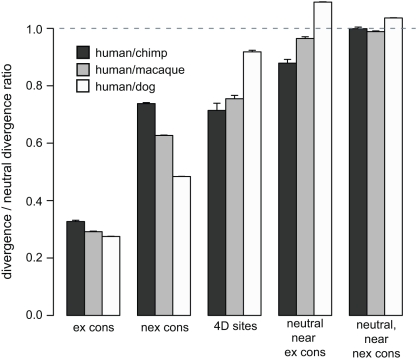
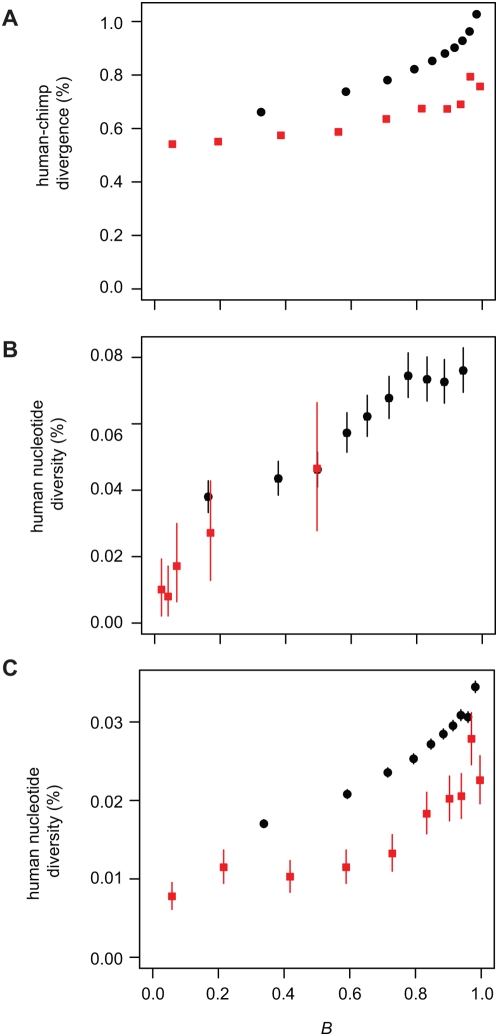
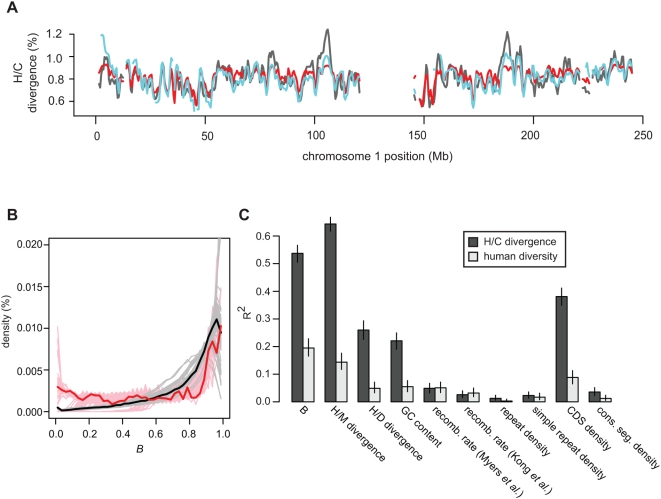
Selection acting on genomic functional elements can be detected by its indirect effects on population diversity at linked neutral sites. To illuminate the selective forces that shaped hominid evolution, we analyzed the genomic distributions of human polymorphisms and sequence differences among five primate species relative to the locations of conserved sequence features. Neutral sequence diversity in human and ancestral hominid populations is substantially reduced near such features, resulting in a surprisingly large genome average diversity reduction due to selection of 19-26% on the autosomes and 12-40% on the X chromosome. The overall trends are broadly consistent with "background selection" or hitchhiking in ancestral populations acting to remove deleterious variants. Average selection is much stronger on exonic (both protein-coding and untranslated) conserved features than non-exonic features. Long term selection, rather than complex speciation scenarios, explains the large intragenomic variation in human/chimpanzee divergence. Our analyses reveal a dominant role for selection in shaping genomic diversity and divergence patterns, clarify hominid evolution, and provide a baseline for investigating specific selective events.
Overview
The claims and statistics of this paper haven’t been checked yet.
Run the check — free, no account needed. It reads the open-access text and checks the sources it cites.
Integrity signals
Registry
Cites
Statistics
Figures
Verification
Claims the paper makes
The claims and statistics of this paper haven’t been checked yet.
Run the check — free, no account needed. It reads the open-access text and checks the sources it cites.
Claims other papers make about this one
Each is checked against this paper’s own text: does it say what the citing paper says it does?
The source backs part of the claim, not all of it — or backs it for a different population, condition or comparison.
In the citing paper
“In particular, background selection (i.e., the selective removal of deleterious alleles across the genome) appears to play a primary role in shaping the highly polygenic architecture of human traits and diseases [1, 7–9].”
From Denisovan and Neanderthal archaic introgression differentially impacted the genetics of complex traits in modern populations (2022) · cites this paper as [1]
Experimental — accuracy not yet measuredThe cited source says what the claim attributes to it.
In the citing paper
“To ensure the observed differences between aSNPs and naSNPs were not caused by different levels of background selection we downloaded from https://github.com/gmcvicker/bkgd the bed file containing the list of pre-computed values for the B-statistic in hg19 coordinates [32].”
From Denisovan introgression has shaped the immune system of present-day Papuans (2022) · cites this paper as [32]
The check wasn’t confident either way, so it gives no verdict — never disputed.
In the citing paper
“Genomic features related to natural selection are enriched for loci associated with complex traits [1, 7–9].”
From Denisovan and Neanderthal archaic introgression differentially impacted the genetics of complex traits in modern populations (2022) · cites this paper as [1]
Experimental — accuracy not yet measured
Self-check
Percentages, sums and reported differences re-computed from the paper’s own numbers.
The self-check needs the paper’s full text.
Citations
Cites
Kimura, M. (1980) · Journal of Molecular Evolution · doi:10.1007/bf01731581 · Cited by 29,778
Initial sequencing and analysis of the human genome
International Human Genome Sequencing Consortium, Whitehead Institute for Biomedical Research, C. F. G. R., Lander, E. S., Linton, L. M., Birren, B., Nusbaum, C., Zody, M. C., Baldwin, J., Devon, K., Dewar, K., et al. (2001) · Nature · doi:10.1038/35057062 · Cited by 24,216
Evolutionary trees from DNA sequences: A maximum likelihood approach.
Felsenstein, J. (1981) · Journal of Molecular Evolution · doi:10.1007/bf01734359 · Cited by 14,571
The Human Genome Browser at UCSC
Kent, W. J., Sugnet, C. W., Furey, T. S., Roskin, K. M., Pringle, T. H., Zahler, A. M., & Haussler, A. D. (2002) · Genome Research · doi:10.1101/gr.229102 · Cited by 10,400
Tandem repeats finder: a program to analyze DNA sequences
Benson, G. (1999) · Nucleic Acids Research · doi:10.1093/nar/27.2.573 · Cited by 9,374
Practical Methods of Optimization
Fletcher, R. (2000) · Wiley eBooks · doi:10.1002/9781118723203 · Cited by 7,649
Base-Calling of Automated Sequencer Traces Using Phred. I. Accuracy AssessmentPreprint
Ewing, B., Hillier, L., Wendl, M. C., & Green, P. (1998) · Genome Research · doi:10.1101/gr.8.3.175 · Cited by 6,993
Self-citationBase-Calling of Automated Sequencer Traces Using Phred. II. Error Probabilities
Ewing, B., & Green, P. (1998) · Genome Research · doi:10.1101/gr.8.3.186 · Cited by 5,439
Self-citationA second generation human haplotype map of over 3.1 million SNPs
The International HapMap Consortium (2007) · Nature · doi:10.1038/nature06258 · Cited by 4,438
Evolutionarily conserved elements in vertebrate, insect, worm, and yeast genomes
Siepel, A., Bejerano, G., Pedersen, J. S., Hinrichs, A. S., Hou, M., Rosenbloom, K., Clawson, H., Spieth, J., Hillier, L. W., Richards, S., et al. (2005) · Genome Research · doi:10.1101/gr.3715005 · Cited by 3,971 · cited 5×
“Gcons extends the two-state phylogenetic Hidden Markov Model (phyloHMM) approach used by phastCons [23] by incorporating alignment gap information.”
BackgroundMethodInfluential
Research works printed but not linked: 1
- M Galassi, 2006, GNU Scientific Library Reference Manual (2nd Ed.).
Cited by
Sorted by citations
Items 201–300 of 458
Evolution of local mutation rate and its determinants
Terekhanova, N. V., Seplyarskiy, V. B., Soldatov, R., & Bazykin, G. A. (2017) · Molecular Biology and Evolution · doi:10.1093/molbev/msx060 · Cited by 30
A test for ancient selective sweeps and an application to candidate sites in modern humans
Racimo, F., Kuhlwilm, M., & Slatkin, M. (2014) · Molecular Biology and Evolution · doi:10.1093/molbev/msu255 · Cited by 30
How Linked Selection Shapes the Diversity Landscape inFicedulaFlycatchers
Rettelbach, A., Nater, A., & Ellegren, H. (2019) · Genetics · doi:10.1534/genetics.119.301991 · Cited by 31
Polygenic adaptation leads to a higher reproductive fitness of native Tibetans at high altitude
He, Y., Guo, Y., Zheng, W., Yue, T., Zhang, H., Wang, B., Feng, Z., Ouzhuluobu, Cui, C., Liu, K., et al. (2023) · Current Biology · doi:10.1016/j.cub.2023.08.021 · Cited by 31
Zhen, Y., Huber, C. D., Davies, R. W., & Lohmueller, K. E. (2020) · Genome Research · doi:10.1101/gr.256636.119 · Cited by 32
Ancient DNA reveals pervasive directional selection across West Eurasia
Akbari, A., Perry, A., Barton, A. R., Kariminejad, M., Gazal, S., Li, Z., Zeng, Y., Mittnik, A., Patterson, N. J., Mah, M., et al. (2026) · Nature · doi:10.1038/s41586-026-10358-1 · Cited by 48
NRE: a tool for exploring neutral loci in the human genome
Arbiza, L., Zhong, E., & Keinan, A. (2012) · BMC Bioinformatics · doi:10.1186/1471-2105-13-301 · Cited by 33
Sequencing era methods for identifying signatures of selection in the genome
Horscroft, C., Ennis, S., Pengelly, R. J., Sluckin, T. J., & Collins, A. R. (2018) · Briefings in Bioinformatics · doi:10.1093/bib/bby064 · Cited by 32
Agrawal, A. F., & Hartfield, M. (2015) · Genetics · doi:10.1534/genetics.115.181024 · Cited by 30
GPN-MSA: an alignment-based DNA language model for genome-wide variant effect prediction
Benegas, G., Albors, C., Aw, A. J., Ye, C., & Song, Y. S. (2023) · doi:10.1101/2023.10.10.561776 · Cited by 118
“• B Statistic [53], nucleotide diversity [54] and recombination rate [54] are mathematical quantities derived from evolutionary models, and are computed directly on the genomic position of the variant.”
Hill-Robertson Interference Reduces Genetic Diversity on a Young Plant Y-Chromosome
Hough, J., Wang, W., Barrett, S. C. H., & Wright, S. (2017) · Genetics · doi:10.1534/genetics.117.300142 · Cited by 28
An evolutionary transcriptomics approach links CD36 to membrane remodeling in replicative senescence
Saitou, M., Lizardo, D. Y., Taşkent, R. Ö., Millner, A., Gökçümen, Ö., & Atilla‐Gokcumen, G. E. (2018) · Molecular Omics · doi:10.1039/c8mo00099a · Cited by 31
An evolutionary compass for detecting signals of polygenic selection and mutational bias
Uricchio, L. H., Kitano, H. C., Gusev, A., & Zaitlen, N. (2019) · Evolution Letters · doi:10.1002/evl3.97 · Cited by 29
Castellano, D., Eyre‐Walker, A., & Munch, K. (2019) · Genome Biology and Evolution · doi:10.1093/gbe/evz215 · Cited by 30
Pope, N. S., Singh, A., Childers, A. K., Kapheim, K. M., Evans, J. D., & López-Uribe, M. M. (2023) · Proceedings of the National Academy of Sciences · doi:10.1073/pnas.2208116120 · Cited by 32
Functional primate genomics—leveraging the medical potential
Enard, W. (2012) · Journal of Molecular Medicine · doi:10.1007/s00109-012-0901-4 · Cited by 30
Chen, Z., Zhang, M., Lv, F., Ren, X., Li, W., Liu, M., Nam, K., Bruford, M. W., & Li, M.-H. (2018) · Genome Biology and Evolution · doi:10.1093/gbe/evy085 · Cited by 29
Adams, R. H. J., Schield, D. R., Card, D. C., & Castoe, T. A. (2018) · Systematic Biology · doi:10.1093/sysbio/syy034 · Cited by 27
Characterizing the effect of background selection on the polygenicity of brain-related traits
Wendt, F. R., Pathak, G. A., Overstreet, C., Tylee, D. S., Gelernter, J., Atkinson, E. G., & Polimanti, R. (2021) · Genomics · doi:10.1016/j.ygeno.2020.11.032 · Cited by 27
Mutation saturation for fitness effects at human CpG sites
Agarwal, I., & Przeworski, M. (2021) · eLife · doi:10.7554/elife.71513 · Cited by 32
An Autosomal Analysis Gives No Genetic Evidence for Complex Speciation of Humans and Chimpanzees
Yamamichi, M., Gojobori, J., & Innan, H. (2011) · Molecular Biology and Evolution · doi:10.1093/molbev/msr172 · Cited by 29
Li, X., Yung, G., Zhou, H., Sun, R., Li, Z., Hou, K., Zhang, M. J., Liu, Y., Arapoglou, T., Wang, C., et al. (2022) · The American Journal of Human Genetics · doi:10.1016/j.ajhg.2022.01.017 · Cited by 26
A selection pressure landscape for 870 human polygenic traits
Song, W., Shi, Y., Wang, W., Pan, W., Qian, W., Yu, S., Zhao, M., & Lin, G. N. (2021) · Nature Human Behaviour · doi:10.1038/s41562-021-01231-4 · Cited by 25
Robust and accurate Bayesian inference of genome-wide genealogies for hundreds of genomes
Deng, Y. K., Nielsen, R., & Song, Y. S. (2025) · Nature Genetics · doi:10.1038/s41588-025-02317-9 · Cited by 71
Schrider, D. R., & Kern, A. D. (2015) · Genome Biology and Evolution · doi:10.1093/gbe/evv228 · Cited by 26
Barroso, G. V., & Dutheil, J. Y. (2023) · Peer Community Journal · doi:10.24072/pcjournal.267 · Cited by 30
Demographic modeling of admixed Latin American populations from whole genomes
Medina-Muñoz, S. G., Vecchyo, D. O., Cruz‐Hervert, L. P., Ferreyra-Reyes, L. D., García‐García, L., Moreno‐Estrada, A., & Ragsdale, A. P. (2023) · The American Journal of Human Genetics · doi:10.1016/j.ajhg.2023.08.015 · Cited by 22
Nonadaptive processes in primate and human evolution
Harris, E. E. (2010) · American Journal of Physical Anthropology · doi:10.1002/ajpa.21439 · Cited by 23
The Evolutionary Interplay of Somatic and Germline Mutation Rates
Beichman, A. C., Zhu, L., & Harris, K. (2024) · Annual Review of Biomedical Data Science · doi:10.1146/annurev-biodatasci-102523-104225 · Cited by 28
Limited role of generation time changes in driving the evolution of the mutation spectrum in humans
Gao, Z., Zhang, Y., Cramer, N., Przeworski, M., & Moorjani, P. (2023) · eLife · doi:10.7554/elife.81188 · Cited by 22
The promise and limitations of population exomics for human evolution studies
Tennessen, J. A., O’Connor, T. D., Bamshad, M. J., & Akey, J. M. (2011) · Genome biology · doi:10.1186/gb-2011-12-9-127 · Cited by 21
Selection leads to false inferences of introgression using popular methods
Smith, M. L., & Hahn, M. W. (2024) · Genetics · doi:10.1093/genetics/iyae089 · Cited by 22
Selection in the Introgressed Regions of the Chimpanzee Genome
Nye, J., Laayouni, H., Kuhlwilm, M., Mondal, M., Marquès‐Bonet, T., & Bertranpetit, J. (2018) · Genome Biology and Evolution · doi:10.1093/gbe/evy077 · Cited by 19
Adaptation to Extreme Environments in an Admixed Human Population from the Atacama Desert
Vicuña, L., Fernández, M. I., Vial, C., Valdebenito, P., Chaparro, E., Espinoza, K., Ziegler, A., Bustamante, A., & Eyheramendy, S. (2019) · Genome Biology and Evolution · doi:10.1093/gbe/evz172 · Cited by 19
Detection of Selection Signatures on the X Chromosome in Three Sheep Breeds
Zhu, C., Fan, H., Yuan, Z., Hu, S., Zhang, L., Wei, C., Zhang, Q., Zhao, F., & Du, L. (2015) · International Journal of Molecular Sciences · doi:10.3390/ijms160920360 · Cited by 19
Population-Specific Genetic and Expression Differentiation in Europeans
Jiang, X., & Assis, R. (2020) · Genome Biology and Evolution · doi:10.1093/gbe/evaa021 · Cited by 18
Genetic diversity and population structure of Tongcheng pigs in China using whole-genome SNP chip
Yuan, J., Zhou, X., Xu, G., Xu, S., & Liu, B. (2022) · Frontiers in Genetics · doi:10.3389/fgene.2022.910521 · Cited by 19
An approximate likelihood method reveals ancient gene flow between human, chimpanzee and gorilla
Galtier, N. (2024) · Peer Community Journal · doi:10.24072/pcjournal.359 · Cited by 19
Whole-genome sequencing data offer insights into human demography
Pritchard, J. K. (2011) · Nature Genetics · doi:10.1038/ng.953 · Cited by 19
Polymerase ζ Activity Is Linked to Replication Timing in Humans: Evidence from Mutational Signatures
Seplyarskiy, V. B., Bazykin, G. A., & Soldatov, R. (2015) · Molecular Biology and Evolution · doi:10.1093/molbev/msv184 · Cited by 21
Craig, R. J., Suh, A., Mi, W., & Ellegren, H. (2017) · Molecular Ecology · doi:10.1111/mec.14462 · Cited by 18
Identification of African-Specific Admixture between Modern and Archaic Humans
Wall, J. D., Ratan, A., Stawiski, E., Wall, J. D., Stawiski, E., Ratan, A., Kim, H. L., Kim, C., Gupta, R. K., Suryamohan, K., et al. (2019) · The American Journal of Human Genetics · doi:10.1016/j.ajhg.2019.11.005 · Cited by 19
Meyerson, W. U., Leisman, J., Navarro, F. C. P., & Gerstein, M. (2020) · BMC Bioinformatics · doi:10.1186/s12859-020-3508-8 · Cited by 21
The Impact of Linked Selection in Chimpanzees: A Comparative Study
Pfeifer, S. P., & Jensen, J. D. (2016) · Genome Biology and Evolution · doi:10.1093/gbe/evw240 · Cited by 17
Sweeps in time: leveraging the joint distribution of branch lengths
Bisschop, G., Lohse, K., & Setter, D. (2021) · Genetics · doi:10.1093/genetics/iyab119 · Cited by 19
Sianta, S. A., Peischl, S., Moeller, D. A., & Brandvain, Y. J. (2022) · Evolution · doi:10.1093/evolut/qpac013 · Cited by 21
Uncovering Footprints of Natural Selection Through Spectral Analysis of Genomic Summary Statistics
Arnab, S. P., Amin, M. R., & DeGiorgio, M. (2023) · Molecular Biology and Evolution · doi:10.1093/molbev/msad157 · Cited by 21
Heraghty, S. D., Jackson, J. M., & Lozier, J. D. (2023) · Molecular Ecology · doi:10.1111/mec.17125 · Cited by 18
Primate molecular phylogenetics in a genomic era
Ting, N., & Sterner, K. N. (2012) · Molecular Phylogenetics and Evolution · doi:10.1016/j.ympev.2012.08.021 · Cited by 18
An expanded phenotype centric benchmark of variant prioritisation tools
Anderson, D. R., & Lassmann, T. (2022) · Human Mutation · doi:10.1002/humu.24362 · Cited by 18
Dominance shifts increase the likelihood of soft selective sweeps
Muralidhar, P., & Veller, C. (2022) · Evolution · doi:10.1111/evo.14459 · Cited by 16
Johnson, R., Burch, K. S., Hou, K., Paciuc, M., Pasaniuc, B., & Sankararaman, S. (2021) · PLoS Computational Biology · doi:10.1371/journal.pcbi.1009483 · Cited by 16
Genomic partitioning of inbreeding depression in humans
Yengo, L., Yang, J., Keller, M. C., Goddard, M. E., Wray, N. R., & Visscher, P. M. (2021) · The American Journal of Human Genetics · doi:10.1016/j.ajhg.2021.06.005 · Cited by 15
A quantitative genetic model of background selection in humans
Buffalo, V., & Kern, A. D. (2024) · PLoS Genetics · doi:10.1371/journal.pgen.1011144 · Cited by 20
Kim, B., Kim, D. S., Shin, J., Leem, S., Cho, M., Kim, H., Gu, K., Seo, J. Y., You, S. W., Martin, A. R., et al. (2024) · Nature Communications · doi:10.1038/s41467-024-49031-4 · Cited by 18
Soni, V., & Jensen, J. D. (2025) · G3 Genes Genomes Genetics · doi:10.1093/g3journal/jkaf019 · Cited by 16
Identifying adaptive alleles in the human genome: from selection mapping to functional validation
Werren, E. A., Garcia, O. A., & Bigham, A. W. (2020) · Human Genetics · doi:10.1007/s00439-020-02206-7 · Cited by 17
Di, C., Murga-Moreno, J., Salazar‐Tortosa, D. F., Lauterbur, M. E., & Enard, D. (2021) · eLife · doi:10.7554/elife.69026 · Cited by 14
Recombination of the porcine X chromosome: a high density linkage map
Fernández, A. I., Muñoz, M., Alves, E., Folch, J. M., Noguera, J. L., Miguel Pérez-enciso, A., Rodríguez, M. D. C., & Silio, L. F. (2014) · BMC Genetics · doi:10.1186/s12863-014-0148-x · Cited by 16
Shpak, M., Lawrence, K. N., & Pool, J. E. (2025) · Genome Biology and Evolution · doi:10.1093/gbe/evaf080 · Cited by 19
Thom, G., Moreira, L. R., Batista, R., Gehara, M., Aleixo, A. L. P., & Smith, B. T. (2024) · Genome Biology and Evolution · doi:10.1093/gbe/evae002 · Cited by 15
Koch, E. M., & Novembre, J. (2017) · G3 Genes Genomes Genetics · doi:10.1534/g3.117.039651 · Cited by 13
A signature of Neanderthal introgression on molecular mechanisms of environmental responses
Findley, A. S., Zhang, X., Boye, C., Lin, Y. L., Kalita, C. A., Barreiro, L., Lohmueller, K. E., Pique-Regi, R., & Luca, F. (2021) · PLoS Genetics · doi:10.1371/journal.pgen.1009493 · Cited by 14
Efficient Detection and Characterization of Targets of Natural Selection Using Transfer Learning
Arnab, S. P., dos Santos, A. L. C., Fumagalli, M., & DeGiorgio, M. (2025) · Molecular Biology and Evolution · doi:10.1093/molbev/msaf094 · Cited by 14
Lu, Y. C., Li, W., Li, Y., Zhai, W., Zhou, X., Wu, Z., Jiang, S., Liu, T., Wang, H., Hu, R., et al. (2022) · BMC Biology · doi:10.1186/s12915-022-01432-x · Cited by 17
Lin, Y.-J., Menon, A. S., Hu, Z., & Brenner, S. E. (2024) · Human Genomics · doi:10.1186/s40246-024-00663-z · Cited by 17
Uricchio, L. H., Torres, R., Witte, J. S., & Hernandez, R. D. (2014) · Genetic Epidemiology · doi:10.1002/gepi.21866 · Cited by 14
Multiple stages of evolutionary change in anthrax toxin receptor expression in humans
Choate, L. A., Barshad, G., McMahon, P. W., Said, I., Rice, E. J., Munn, P. R., Lewis, J. J., & Danko, C. G. (2021) · Nature Communications · doi:10.1038/s41467-021-26854-z · Cited by 11
PHACT: Phylogeny-Aware Computing of Tolerance for Missense Mutations
Kuru, N., Dereli, O., Akkoyun, E., Bırcan, A., Taştan, Ö., & Adebalı, O. (2022) · Molecular Biology and Evolution · doi:10.1093/molbev/msac114 · Cited by 15
Accurate inference of population history in the presence of background selectionPreprint
Cousins, T., Tabin, D. R., Patterson, N. J., Reich, D., & Durvasula, A. (2024) · bioRxiv (Cold Spring Harbor Laboratory) · doi:10.1101/2024.01.18.576291 · Cited by 14
A high-coverage genome from a 200,000-year-old DenisovanPreprint
Peyrégne, S., Massilani, D., Swiel, Y., Boyle, M. J., Iasi, L. N. M., Sümer, A. P., Mesa, A. B., de Filippo, C., Viola, B., Essel, E., et al. (2025) · bioRxiv (Cold Spring Harbor Laboratory) · doi:10.1101/2025.10.20.683404 · Cited by 19
Comparative genetic architectures of schizophrenia in East Asian and European populationsPreprint
Lam, M., Chen, C.-Y., Li, Z., Martin, A. R., Bryois, J., Ma, X., Gaspar, H., Ikeda, M., Benyamin, B., Brown, B. C., et al. (2018) · bioRxiv (Cold Spring Harbor Laboratory) · doi:10.1101/445874 · Cited by 14
Loh, P., Bhatia, G., Gusev, A., Finucane, H. K., Bulik-Sullivan, B. K., Pollack, S. J., de Candia, T. R., Lee, S., Wray, N. R., Kendler, K. S., et al. (2015) · bioRxiv (Cold Spring Harbor Laboratory) · doi:10.1101/016527 · Cited by 13
Ancestral polymorphisms inDrosophila pseudoobscuraandDrosophila miranda
Nowell, R. W., Charlesworth, B., & Haddrill, P. R. (2011) · Genetics Research · doi:10.1017/s0016672311000206 · Cited by 12
Drosophila Functional Elements Are Embedded in Structurally Constrained Sequences
Kenigsberg, E., & Tanay, A. (2013) · PLoS Genetics · doi:10.1371/journal.pgen.1003512 · Cited by 12
Viruses rule over adaptation in conserved human proteinsPreprint
Castellano, D., Uricchio, L. H., Munch, K., & Enard, D. (2019) · bioRxiv (Cold Spring Harbor Laboratory) · doi:10.1101/555060 · Cited by 12
Adams, C. J., Conery, M., Auerbach, B. J., Jensen, S. T., Mathieson, I., & Voight, B. (2023) · bioRxiv · doi:10.1371/journal.pgen.1010807 · Cited by 12
Wang, Z., Zhong, Z., Xie, X., Wang, F., Pan, D., Wang, Q., Pan, Y., Xiao, Q., & Tan, Z. (2024) · Animals · doi:10.3390/ani14020201 · Cited by 11
Gray, O. A., Witonsky, D., Jousma, J., Sobreira, D. R., Alstyne, A. V., Huang, R., Fang, Y. H., & Rienzo, A. D. (2025) · PLoS Genetics · doi:10.1371/journal.pgen.1011570 · Cited by 13
Searching for ancient balanced polymorphisms shared between Neanderthals and Modern Humans
Viscardi, L. H., Paixão‐Côrtes, V. R., Comas, D., Salzano, F. M., Rovaris, D. L., Bau, C. H. D., Amorim, C. E. G., & Bortolini, M. C. (2018) · Genetics and Molecular Biology · doi:10.1590/1678-4685-gmb-2017-0308 · Cited by 10
Amster, G., Murphy, D. A., Milligan, W. R., & Sella, G. (2020) · Proceedings of the National Academy of Sciences · doi:10.1073/pnas.1915664117 · Cited by 13
In silico phylogenomics using complete genomes: a case study on the evolution of hominoidsPreprint
Costa, I., Prosdocimi, F., & Jennings, W. B. (2016) · Genome Research · doi:10.1101/gr.203950.115 · Cited by 11
Insights for variant clinical interpretation based on a benchmark of 65 variant effect predictors
Radjasandirane, R., Diharce, J., Gelly, J.-C., & de Brevern, A. G. (2025) · Genomics · doi:10.1016/j.ygeno.2025.111036 · Cited by 15
Digital Image Processing to Detect Adaptive Evolution
Amin, M. R., Hasan, M., & DeGiorgio, M. (2024) · Molecular Biology and Evolution · doi:10.1093/molbev/msae242 · Cited by 9
Wang, T., Zhou, M., Guo, J., Guo, Y., Ding, K., Wang, P., & Wang, Z. (2021) · BMC Genomic Data · doi:10.1186/s12863-021-00971-6 · Cited by 10
Novo, I., López‐Cortegano, E., & Caballero, A. (2021) · Human Genetics · doi:10.1007/s00439-021-02308-w · Cited by 9
Background Selection From Unlinked Sites Causes Nonindependent Evolution of Deleterious Mutations
Matheson, J., & Joanna Masel, A. (2024) · Genome Biology and Evolution · doi:10.1093/gbe/evae050 · Cited by 10
Life History Effects on Neutral Diversity Levels of Autosomes and Sex Chromosomes
Amster, G., & Sella, G. (2020) · Genetics · doi:10.1534/genetics.120.303119 · Cited by 9
Matthey‐Doret, R., & Whitlock, M. C. (2018) · bioRxiv (Cold Spring Harbor Laboratory) · doi:10.1101/326256 · Cited by 10
Selection against archaic hominin genetic variation in regulatory regionsPreprint
Telis, N., Aguilar, R., & Harris, K. (2019) · bioRxiv (Cold Spring Harbor Laboratory) · doi:10.1101/708230 · Cited by 10
Inference of Coalescence Times and Variant Ages Using Convolutional Neural Networks
Saada, J. N., Tsangalidou, Z., Stricker, M., & Palamara, P. F. (2023) · Molecular Biology and Evolution · doi:10.1093/molbev/msad211 · Cited by 11
Population Genomic Scans for Natural Selection and Demography
Cheng, X., & Steinrücken, M. (2024) · Annual Review of Genetics · doi:10.1146/annurev-genet-111523-102651 · Cited by 10
An efficient and robust ABC approach to infer the rate and strength of adaptation
Murga-Moreno, J., Casillas, S., Barbadilla, A., Uricchio, L. H., & Enard, D. (2024) · G3 Genes Genomes Genetics · doi:10.1093/g3journal/jkae031 · Cited by 11
Gamazon, E. R., Konkashbaev, A. I., Derks, E. M., Cox, N. J., & Lee, Y. (2017) · Scientific Reports · doi:10.1038/s41598-017-05744-9 · Cited by 9
Population Genomics and Phylogeography
Ottenburghs, J., Lavretsky, P., Peters, J. L., Kawakami, T., & Kraus, R. H. S. (2019) · Springer eBooks · doi:10.1007/978-3-030-16477-5_8 · Cited by 9
A Population Genetic Signature of Polygenic Local AdaptationPreprint
Berg, J. J., & Coop, G. (2013) · bioRxiv (Cold Spring Harbor Laboratory) · doi:10.1101/000026 · Cited by 9
Expanding the stdpopsim species catalog, and lessons learned for realistic genome simulationsPreprint
Lauterbur, M. E., Cavassim, M. I. A., Gladstein, A. L., Gower, G., Pope, N. S., Tsambos, G., Adrion, J. R., Belsare, S., Biddanda, A., Caudill, V. R., et al. (2022) · bioRxiv (Cold Spring Harbor Laboratory) · doi:10.1101/2022.10.29.514266 · Cited by 9
A model for background selection in nonequilibrium populations
Barroso, G. V., & Ragsdale, A. P. (2026) · Genetics · doi:10.1093/genetics/iyag081 · Cited by 7
Emergence and influence of sequence bias in evolutionarily malleable, mammalian tandem arrays
Brovkina, M. V., Chapman, M. A., Holding, M. L., & Clowney, E. J. (2023) · BMC Biology · doi:10.1186/s12915-023-01673-4 · Cited by 9
Amin, M. R., Hasan, M., Arnab, S. P., & DeGiorgio, M. (2023) · Molecular Biology and Evolution · doi:10.1093/molbev/msad216 · Cited by 9
Metadata
- Authors
- McVicker, G., Gordon, D., Davis, C., & Green, P.
- Affiliations
- University of Washington (US)
- Howard Hughes Medical Institute (US)
- Corresponding author
- McVicker, Graham
- Green, Phil
- Venue
- PLoS Genetics
- Publisher
- Public Library of Science (PLoS)
- Published
- 2009-05-08
- Volume
- 5
- Issue
- 5
- Pages
- e1000471
- ISSN
- 1553-7390 (ISSN-L)
- 1553-7404
- PMC
- PMC2669884
- OpenAlex
- W2032311106
- Cited by
- 456
- References
- 80
- Citations by year
- 2026: 24 · 2025: 25 · 2024: 37 · 2023: 34 · 2022: 23 · 2021: 29 · 2020: 38 · 2019: 33 · 2018: 33 · 2017: 23 · 2016: 25 · 2015: 25 · 2014: 30 · 2013: 16 · 2012: 25
- FWCI
- 11.83
- Type
- journal article
- Language
- en
- Open access
- gold
- doi.org
- Locations
- PLoS Genetics (publishedVersion, cc-by)
- PubMed Central (publishedVersion, cc-by)
- PubMed (publishedVersion)
- DOAJ (DOAJ: Directory of Open Access Journals) (submittedVersion, cc-by-sa)
- Figshare (submittedVersion, cc-by)
- Funders
- Howard Hughes Medical Institute
- Natural Sciences and Engineering Research Council of Canada
- Topics
- Life Sciences › Biochemistry, Genetics and Molecular Biology › Genetics › Evolution and Genetic Dynamics
- Life Sciences › Biochemistry, Genetics and Molecular Biology › Genetics › Forensic and Genetic Research
- Life Sciences › Biochemistry, Genetics and Molecular Biology › Genetics › Genetic diversity and population structure
- Keywords
- natural selection, hominid evolution, human polymorphism, background selection, hitchhiking, X chromosome, human-chimpanzee divergence
- MeSH terms
- Animals, Pan troglodytes, Humans, Markov Chains, Models, Genetic, Primates, Recombination, Genetic, Selection, Genetic, X Chromosome, Hominidae, Genome, Human, Confidence Intervals, Likelihood Functions, Conserved Sequence, Evolution, Molecular, Polymorphism, Single Nucleotide, Chromosomes, Human, X
About these checks
Registry, retraction, Cites and statistics results are computed, not judged, with one exception: a printed reference that no index lists is read once by a model before it counts as a citation error. Claims are extracted by a model and kept only when their quote appears verbatim in the text; each cited source is then checked, with a model’s help, for whether it says what the claim relies on. Those verdicts can be wrong — read the claim’s quote and the cited source before relying on one.
Statistics and arithmetic are recomputed, not judged.
Confidence bands are shown only for fields calibrated on our annotated test set. None is calibrated yet, so no band is shown.
What counts as a claim ›How we measure confidence ›How we check this ›
Are you an author, or do you see a problem with this page? Request a review
