

DNA Specificity Determinants Associate with Distinct Transcription Factor Functions
Open accessThe DOI matches its Crossref record; 53 of the 53 references it cites were found in a registry or an index.
Abstract
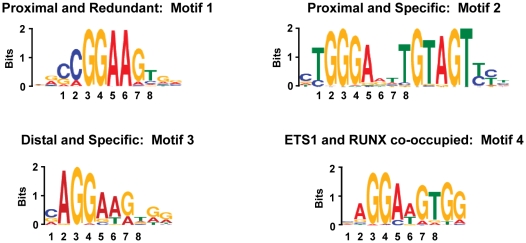
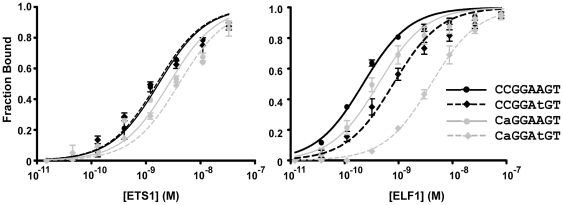
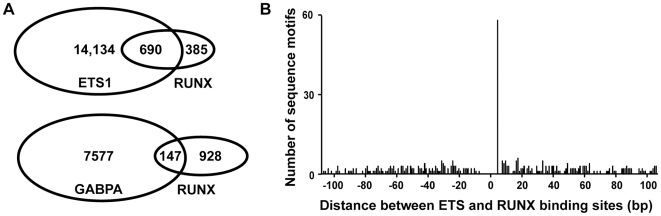
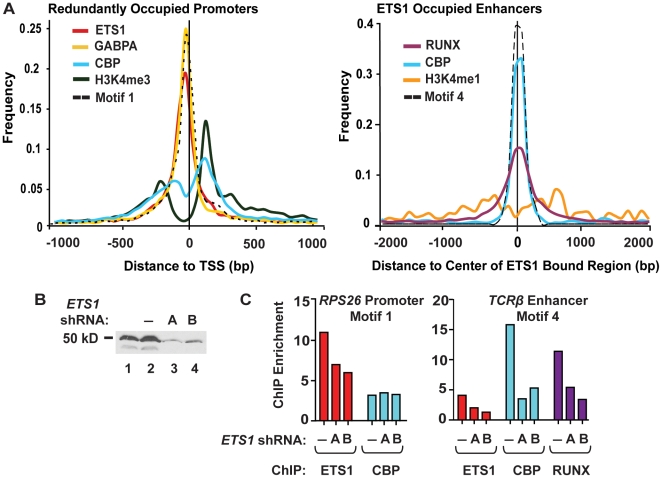
To elucidate how genomic sequences build transcriptional control networks, we need to understand the connection between DNA sequence and transcription factor binding and function. Binding predictions based solely on consensus predictions are limited, because a single factor can use degenerate sequence motifs and because related transcription factors often prefer identical sequences. The ETS family transcription factor, ETS1, exemplifies these challenges. Unexpected, redundant occupancy of ETS1 and other ETS proteins is observed at promoters of housekeeping genes in T cells due to common sequence preferences and the presence of strong consensus motifs. However, ETS1 exhibits a specific function in T cell activation; thus, unique transcriptional targets are predicted. To uncover the sequence motifs that mediate specific functions of ETS1, a genome-wide approach, chromatin immunoprecipitation coupled with high-throughput sequencing (ChIP-seq), identified both promoter and enhancer binding events in Jurkat T cells. A comparison with DNase I sensitivity both validated the dataset and also improved accuracy. Redundant occupancy of ETS1 with the ETS protein GABPA occurred primarily in promoters of housekeeping genes, whereas ETS1 specific occupancy occurred in the enhancers of T cell-specific genes. Two routes to ETS1 specificity were identified: an intrinsic preference of ETS1 for a variant of the ETS family consensus sequence and the presence of a composite sequence that can support cooperative binding with a RUNX transcription factor. Genome-wide occupancy of RUNX factors corroborated the importance of this partnership. Furthermore, genome-wide occupancy of co-activator CBP indicated tight co-localization with ETS1 at specific enhancers, but not redundant promoters. The distinct sequences associated with redundant versus specific ETS1 occupancy were predictive of promoter or enhancer location and the ontology of nearby genes. These findings demonstrate that diversity of DNA binding motifs may enable variable transcription factor function at different genomic sites.
Overview
The claims and statistics of this paper haven’t been checked yet.
Free: it reads the open-access text and checks the first 5 claims that cite a source we can check. Create a free account to check every claim.
Integrity signals
Registry
Cites
Statistics
Figures


Verification
Claims the paper makes
The claims and statistics of this paper haven’t been checked yet.
Free: it reads the open-access text and checks the first 5 claims that cite a source we can check. Create a free account to check every claim.
Claims other papers make about this one
Each is checked against this paper’s own text: does it say what the citing paper says it does?
The cited source says what the claim attributes to it.
In the citing paper
“This selection would be necessary at enhancers, where ERG (62) and ETS1 specificity (65) is observed, but not at redundant promoter-binding sites where the ETS-binding sequence can be protected from DNA methylation as a result of proximity to, or inclusion in, hypomethylated CpG islands.”
From Genomic and biochemical insights into the specificity of ETS transcription factors (2011) · cites this paper as [65]
The cited source says what the claim attributes to it.
In the citing paper
“Thus, the ETS/RUNX sequence motif is predictive of the function of nearby genes (65).”
From Genomic and biochemical insights into the specificity of ETS transcription factors (2011) · cites this paper as [65]
In the citing paper
“Quantitative DNA-binding studies indicate that the affinity of different ETS proteins for the same consensus sequence many vary by only ~10-fold, whereas the affinity of the same protein for variant consensus sites differs by ~5- to 80-fold (53, 56, 65).”
From Genomic and biochemical insights into the specificity of ETS transcription factors (2011) · cites this paper as [65]
In the citing paper
“ERK2 phosphorylates Thr38, as well as a nonconsensus acceptor Ser41, within the unstructured N-terminal region of ETS1, immediately adjacent to its PNT domain.”
From Genomic and biochemical insights into the specificity of ETS transcription factors (2011) · cites this paper as [65]
In the citing paper
“The reported overlap for ETS1 and GABPA shows most GABPA-bound regions are also occupied by ETS1 in Jurkat cells (65, 136).”
From Genomic and biochemical insights into the specificity of ETS transcription factors (2011) · cites this paper as [65]
6 more claims about this paper
Create a free account to see every claim other papers make about this one.
Self-check
Percentages, sums and reported differences re-computed from the paper’s own numbers.
The self-check needs the paper’s full text.
Citations
Cites
DNA methylation patterns and epigenetic memory
Bird, A. (2002) · Genes & Development · doi:10.1101/gad.947102 · Cited by 7,124 · cited 1×
“. The CpG islands at housekeeping promoters are generally hypomethylated, whereas CpG dinucleotides distributed in lower density throughout the genome are likely to be methylated”
BackgroundHigh-Resolution Profiling of Histone Methylations in the Human Genome
Barski, A., Cuddapah, S., Cui, K., Roh, T.-Y., Schones, D. E., Wang, Z., Wei, G., Chepelev, I., & Zhao, K. (2007) · Cell · doi:10.1016/j.cell.2007.05.009 · Cited by 6,845
Fitting a mixture model by expectation maximization to discover motifs in biopolymers.
Bailey, T. L., & Elkan, C. (1994) · PubMed · Cited by 5,806
Heintzman, N. D., Stuart, R. K., Hon, G., Fu, Y., Ching, C. W., Hawkins, R. D., Barrera, L. O., Van Calcar, S., Qu, C., Ching, K. A., et al. (2007) · Nature Genetics · doi:10.1038/ng1966 · Cited by 3,398 · cited 4×
“p300 has a strong correlation with enhancers [21,30,46].”
BackgroundInfluentialGenome-scale DNA methylation maps of pluripotent and differentiated cells
Meissner, A., Mikkelsen, T. S., Gu, H., Wernig, M., Hanna, J., Sivachenko, A., Zhang, X., Bernstein, B. E., Nusbaum, C., Jaffe, D. B., et al. (2008) · Nature · doi:10.1038/nature07107 · Cited by 2,536
ChIP-seq accurately predicts tissue-specific activity of enhancers
Visel, A., Blow, M. J., Li, Z., Zhang, T., Akiyama, J. A., Holt, A., Plajzer-Frick, I., Shoukry, M., Wright, C., Chen, F., et al. (2009) · Nature · doi:10.1038/nature07730 · Cited by 1,639 · cited 2×
“p300 has a strong correlation with enhancers [21,30,46].”
BackgroundLarge-scale analysis of the human and mouse transcriptomes
Su, A. I., Cooke, M. P., Ching, K. A., Hakak, Y., Walker, J. R., Wiltshire, T., Orth, A. P., Vega, R. G., Sapinoso, L. M., Moqrich, A., et al. (2002) · Proceedings of the National Academy of Sciences · doi:10.1073/pnas.012025199 · Cited by 1,466 · cited 1×
“Tissue specific gene lists were derived from the GNF SymAtlas database [52] and were based on the level of mRNA in T cells or pancreas compared to the median in all surveyed tissues with cutoffs (20-fold higher for T cells, 5fold higher for pancreas) that returned similar sized lists.”
MethodHigh-Resolution Mapping and Characterization of Open Chromatin across the Genome
Boyle, A. P., Davis, S., Shulha, H. P., Meltzer, P., Margulies, E. H., Weng, Z., Furey, T. S., & Crawford, G. E. (2008) · Cell · doi:10.1016/j.cell.2007.12.014 · Cited by 1,415 · cited 1×
“Jurkat cell line) identifies DNase I accessible regions as mapped by high-throughput sequencing and ChIP-chip”
BackgroundGenome-wide mapping of HATs and HDACs reveals distinct functions in active and inactive genes
Wang, Z., Zang, C., Cui, K., Schones, D. E., Barski, A., Peng, W., & Zhao, K. (2009) · Cell · doi:10.1016/j.cell.2009.06.049 · Cited by 1,344 · cited 1×
“p300 has a strong correlation with enhancers [21,30,46].”
BackgroundHertz, G. Z., & Stormo, G. D. (1999) · Bioinformatics · doi:10.1093/bioinformatics/15.7.563 · Cited by 1,243 · cited 4×
“PATSER score cutoffs used were Motif 1:9; Motif 2:12; Motif 4:10.3.”
BackgroundInfluential
Cited by
Items 101–198 of 198
Ets1 suppresses atopic dermatitis by suppressing pathogenic T cell responses
Lee, C., Kwon, H., Kang, H.-J., Kim, Y., Nam, J. H., Won, Y. H., Park, S., Kim, T., Kang, K., Rudra, D., et al. (2019) · JCI Insight · doi:10.1172/jci.insight.124202 · Cited by 23
“In T cells, Ets1 modulates various T cell–specific genes such as Tcra and Tcrb (24).”
BackgroundRUNX3 Facilitates Growth of Ewing Sarcoma Cells
Bledsoe, K. L., McGee‐Lawrence, M. E., Camilleri, E. T., Wang, X., Riester, S. M., van Wijnen, A. J., Oliveira, A. M., & Westendorf, J. J. (2014) · Journal of Cellular Physiology · doi:10.1002/jcp.24663 · Cited by 25
“ChIP-seq data show that RUNX and ETS1 recognition sequences are adjacent to each other in many promoters (Hollenhorst et al., 2009).”
Shiina, M., Hamada, K., Inoue-Bungo, T., Shimamura, M., Uchiyama, A., Baba, S., Sato, K., Yamamoto, M., & Ogata, K. (2014) · Journal of Molecular Biology · doi:10.1016/j.jmb.2014.07.020 · Cited by 29
“S1b), which is reportedly occupied by Ets1 and Runx1 in T cell lines [27].”
Multiple ETS Family Proteins Regulate PF4 Gene Expression by Binding to the Same ETS Binding Site
Okada, Y., Nobori, H., Shimizu, M., Watanabe, M., Yonekura, M., Nakai, T., Kamikawa, Y., Wakimura, A., Funahashi, N., Naruse, H., et al. (2011) · PLoS ONE · doi:10.1371/journal.pone.0024837 · Cited by 25
CREsted: modeling genomic and synthetic cell-type-specific enhancers across tissues and species
Kempynck, N., Winter, S. D., Blaauw, C. H., Konstantakos, V., Ekşi, E. C., Dieltiens, S., Abaffyová, D., Bercier, V., Taskiran, I. I., Hulselmans, G. J., et al. (2026) · Nature Methods · doi:10.1038/s41592-026-03057-2 · Cited by 34
“…sequencing (ChIP–seq) data (EBF1, PAX5, POU2F2 in B cells, CEBPA and SPI1 in CD14 + monocytes, and RUNX1, ETS1 and GATA3 in CD4 + T cells 50–54 ) and observed an overall high precision (average precision over all thresholds for all TFs of 0.75) that increased with prediction score (Fig.”
InfluentialMartin, V., Zhuang, F., Zhang, Y., Pinheiro, K., & Gordân, R. (2023) · Nucleic Acids Research · doi:10.1093/nar/gkad872 · Cited by 20
“Co-operativity between ETS1 and RUNX1 at d = 5, and specifically in the + / + orientation ( where 81.8%, or 266 / 325 regions were labelled as cooperative; Supplementary Table S6 ) , has been widely investigated in molecular, structural and bioinformatic studies ( 26–28 , 30 , 44 , 45 ) .”
BackgroundInfluentialLi, R., Li, X., Ning, S., Ye, J., Han, L., Kang, C., & Li, X. (2014) · PLoS ONE · doi:10.1371/journal.pone.0101903 · Cited by 21
Chen, Y., & Sawyers, C. L. (2010) · Cancer Cell · doi:10.1016/j.ccr.2010.04.022 · Cited by 22
“Examples include coregulation of Ras-responsive Cancer Cel elements by ETS and JUN factors, endothelial specific genes by ETS and Forkhead factors, erythroid and megakaryocytic specific genes by ETS and GATA factors, and T cell-specific genes by ETS and RUNX factors (Hollenhorst et al., 2009).”
BackgroundDittmer, J. (2011) · Oncology Reports · doi:10.3892/or.2011.1409 · Cited by 21
“It is thought that expression pattern, post-translational modifications, preferences for cooperating transcription factors and the sequence flanking the core binding motif are major factors that determine which Ets factor regulates which genes under certain conditions (6-8).”
Madison, B. J., Clark, K. A., Bhachech, N., Hollenhorst, P. C., Graves, B. J., & Currie, S. L. (2018) · Journal of Biological Chemistry · doi:10.1074/jbc.ra118.003352 · Cited by 22
Self-citationDirect ChIP-Seq significance analysis improves target prediction
Bansal, M., Mendiratta, G., Anand, S. K., Kushwaha, R., Kim, H. R., Kustagi, M., Iyer, A. P., Chaganti, R. S. K., Califano, A., & Sumazin, P. (2015) · BMC Genomics · doi:10.1186/1471-2164-16-s5-s4 · Cited by 21
“To test the reproducibility of target genes identified by dIP using replicate experiments, we used the ETS1 ChIP-seq experiments [19] containing 3 replicates of IPs and 4 replicates of IgG control assays.”
MethodUnstructured transcription factor interactions enable emergent specificity
Abidi, A. A., Cattoglio, C., Tang, N. N., Fan, V. B., Dailey, G. M., Hay, A. D., Kunamaneni, P., Milkie, D. E., Darzacq, X., Betzig, E., et al. (2026) · Science · doi:10.1126/science.aeb6487 · Cited by 36
“…numbers of potential binding sites, only a minority of which are occupied (7, 8); TFs with identical motif preferences occupy distinct genomic loci (9–11); and many This work is licensed under a Creative Commons Attribution 4.0 International License, which allows reusers to distribute, remix,…”
InfluentialActivation of Mouse Tcrb: Uncoupling RUNX1 Function from Its Cooperative Binding with ETS1
Zhao, J., Osipovich, O. A., Koues, O. I., Majumder, K., & Oltz, E. M. (2017) · The Journal of Immunology · doi:10.4049/jimmunol.1700146 · Cited by 20
“Although these TFs can bind to isolated sites in the genome, compound ETS–RUNX motifs are commonly employed to attain tissue-specific cooperativity between family members in a number of cell lineages.”
BackgroundInfluentialAnterograde regulation of mitochondrial genes and FGF21 signaling by hepatic LSD1
Cao, Y., Tang, L., Du, K., Paraiso, K. D., Sun, Q., Liu, Z., Ye, X., Fang, Y., Yuan, F., Chen, H., et al. (2021) · JCI Insight · doi:10.1172/jci.insight.147692 · Cited by 20
“binding in the enhancer/promoter region (12, 35).”
Logic and lineage impacts on functional transcription factor deployment for T-cell fate commitment
Rothenberg, E. V. (2021) · Biophysical Journal · doi:10.1016/j.bpj.2021.04.002 · Cited by 17
“In T lineage cells, Ets1 collaborates with Runx1 to bind to composite Ets/Runx sites (24-26).”
BackgroundInge, M. M., Miller, R., Hook, H., Bray, D., Keenan, J. L., Zhao, R. W., Gilmore, T. D., & Siggers, T. (2024) · Nucleic Acids Research · doi:10.1093/nar/gkae706 · Cited by 22
“ETS factors regulate housekeeping genes in a number of cell types ( 65 ,66 ).”
BackgroundFinding subtypes of transcription factor motif pairs with distinct regulatory roles
Bais, A. S., Kaminski, N., & Benos, P. V. (2011) · Nucleic Acids Research · doi:10.1093/nar/gkr205 · Cited by 17
Jiang, B., Liu, J. S., & Bulyk, M. L. (2013) · Bioinformatics · doi:10.1093/bioinformatics/btt152 · Cited by 17
Xhani, S., Esaki, S., Huang, K., Erlitzki, N., & Poon, G. M. K. (2017) · The Journal of Physical Chemistry B · doi:10.1021/acs.jpcb.7b00325 · Cited by 18
Bertke, M. M., Dubiak, K. M., Cronin, L., Zeng, E., & Huber, P. W. (2019) · BMC Genomics · doi:10.1186/s12864-019-5773-3 · Cited by 15
Cornes, B. K., Brody, J. A., Nikpoor, N., Morrison, A. C., Dang, H. C. P., Ahn, B. S., Wang, S., Dauriz, M., Barzilay, J. I., Dupuis, J., et al. (2014) · Circulation Cardiovascular Genetics · doi:10.1161/circgenetics.113.000169 · Cited by 14
STEME: A Robust, Accurate Motif Finder for Large Data Sets
Reid, J. E., & Wernisch, L. (2014) · PLoS ONE · doi:10.1371/journal.pone.0090735 · Cited by 16
“This can happen in several ways: in vitro derived motifs in the literature may not accurately represent in vivo specificities; the transcription factors may have context dependent binding specificities subject to the presence of co-factors [25]; or a factor may have more than one mode of binding [26].”
BackgroundBulyk, M. L., & Walhout, A. J. M. (2012) · Elsevier eBooks · doi:10.1016/b978-0-12-385944-0.00004-6 · Cited by 14
He, G., Tolic, A., Bashkin, J. K., & Poon, G. M. K. (2015) · Nucleic Acids Research · doi:10.1093/nar/gkv267 · Cited by 18
“ChIP-Seq data for genomic preferences in vivo were as curated by the HOMER Motif Database for murine PU.1 (4) and human Ets-1 (50), the JASPAR Database for murine Ets-1 (MA0098), and the human ENCODE Consortium for human PU.1 (51).”
MethodUechi, L., Dashti, M. J. S., Wilbur, J. D., French, J. L., Jumbe, N. L., Meaney, M. J., Gluckman, P. D., Karnani, N., Sakhanenko, N. A., Galas, D. J., et al. (2020) · PLoS ONE · doi:10.1371/journal.pone.0242684 · Cited by 17
Barborič, M., & Fujinaga, K. (2016) · eLife · doi:10.7554/elife.12686 · Cited by 12
FARE-CAFE: a database of functional and regulatory elements of cancer-associated fusion events
Korla, P. K., Cheng, J., Huang, C., Tsai, J. J. P., Liu, Y.-H., Kurubanjerdjit, N., Hsieh, W., Chen, H.-Y., & Ng, K. (2015) · Database · doi:10.1093/database/bav086 · Cited by 12
“The ETS1 (from Metacore) acts as a transcription repressor for the wild-type 30 gene but a transcription enhancer for two FGs in which ETS1 activates the 50 gene— PAX5-JAK2 (23, 24) and RUNX1-CBFA2T3 (25, 26).”
BackgroundStructure and Biophysics of CBFβ/RUNX and Its Translocation Products
Tahirov, T. H., & Bushweller, J. H. (2017) · Advances in experimental medicine and biology · doi:10.1007/978-981-10-3233-2_2 · Cited by 12
ETS 1 and SP 1 drive DHX 15 expression in acute lymphoblastic leukaemia
Chen, X., Cai, Y., Liu, Q., Pan, L., Shi, S., Liu, X., Chen, Y., Li, J., Wang, J., Li, Y., et al. (2018) · Journal of Cellular and Molecular Medicine · doi:10.1111/jcmm.13525 · Cited by 12
“Peripheral blood was collected from 121 newly diagnosed patients with ALL (78 males and 43 females; median age 32 [15-81] years) at Fujian Medical University Union Hospital and from 6 healthy donors (2 males and 4 females; median age 30 [20-45] years) following the ethical guidelines of our institution and in accordan…”
MethodLuchtel, R. A., Zhao, Y., Aggarwal, R. K., Pradhan, K., & Maqbool, S. B. (2022) · Blood Advances · doi:10.1182/bloodadvances.2022007725 · Cited by 12
“ETS1 ChIP-seq data for Jurkat cells were accessed through GSE17954.”
MethodCistrome plasticity and mechanisms of cistrome reprogramming
García-Bassets, I., & Wang, D. (2012) · Cell Cycle · doi:10.4161/cc.21281 · Cited by 13
Umhoefer, J. M., Arce, M. M., Kasinathan, S., Whalen, S., Dajani, R., Subramanya, S., Goudy, L., Belk, J. A., Zhou, R. W., Pham, M. T. N., et al. (2025) · Immunity · doi:10.1016/j.immuni.2025.10.020 · Cited by 17
ETS1 Function in Leukemia and Lymphoma
Luchtel, R. A. (2024) · Advances in experimental medicine and biology · doi:10.1007/978-3-031-62731-6_16 · Cited by 11
Antoniolli, M., Solovey, M., Hildebrand, J. A., Freyholdt, T., Strobl, C. D., Bararia, D., Keay, W. D., Adolph, L., Heide, M., Passerini, V., et al. (2025) · Cell Death and Differentiation · doi:10.1038/s41418-025-01445-3 · Cited by 13
Epigenetic mechanisms and developmental choice hierarchies in T-lymphocyte development
Rothenberg, E. V. (2013) · Briefings in Functional Genomics · doi:10.1093/bfgp/elt027 · Cited by 10
Liu, J., Shively, C. A., & Mitra, R. D. (2020) · Nucleic Acids Research · doi:10.1093/nar/gkaa141 · Cited by 12
The dispositional genome: primus inter pares
Austin, C. J. (2014) · Biology & Philosophy · doi:10.1007/s10539-014-9454-y · Cited by 11
Presnell, S. R., Zhang, L., Chlebowy, C. N., Al‐Attar, A., & Lutz, C. T. (2012) · The Journal of Immunology · doi:10.4049/jimmunol.1103352 · Cited by 9
“We speculate that Runx1, which is expressed in both pre-NK cells and NK cells (46, 47, 49), forms complexes with Ets1 and CREB at the 2DL4 promoter via protein–protein interactions (50, 51, 56), compensating for CREB’s poor affinity for methylated DNA (our findings and FIGURE 9.”
BackgroundJiang, Y., Lin, M., Jicha, G. A., Ding, X., McIlwrath, S. L., Fardo, D. W., Broster, L. S., Schmitt, F. A., Kryscio, R. J., & Lipsky, R. H. (2017) · Aging · doi:10.18632/aging.101228 · Cited by 12
“Although these ETS transcription factors display binding site selectivity based on differences in nucleotide sequences that flank the core GGAA/T motif in vitro, convergent findings from different groups have shown that ETS family member proteins display overlapping DNA binding patterns between some family members in…”
BackgroundCanonical BAF complex regulates the oncogenic program in human T-cell acute lymphoblastic leukemia
Aoki, K., Hyuga, M., Tarumoto, Y., Nishibuchi, G., Ueda, A., Ochi, Y., Sugino, S., Mikami, T., Kobushi, H., Kato, I., et al. (2023) · Blood · doi:10.1182/blood.2023020857 · Cited by 10
Liu, L., Liu, Y., Zhang, X., Chen, M., Wu, H., Lin, M., Zhan, Y., Zhuang, C., Lin, J., Li, J., et al. (2016) · Oncotarget · doi:10.18632/oncotarget.7192 · Cited by 8
“The ETS-1 shRNA sequence was 5′-CTGATGTAAGGCAATTAAT-3′ [20].”
Yu, M., Thorner, K., Parameswaran, S., Wei, W., Yu, C., Lin, X., Kopan, R., & Hass, M. R. (2024) · Development · doi:10.1242/dev.202556 · Cited by 8
Wen, L., Zhu, Z., Yang, C., Liu, L., Zuo, X., Morris, D. L., Dou, J. F., Ye, L., Cheng, Y. Y., Guo, H. M., et al. (2017) · British Journal of Dermatology · doi:10.1111/bjd.15362 · Cited by 7
Truncated ERG proteins affect the aggressiveness of prostate cancer
Wu, F., Ding, S., & Lü, J. (2013) · Medical Hypotheses · doi:10.1016/j.mehy.2012.12.012 · Cited by 7
Ouma, W. Z., Mejía‐Guerra, M. K., Yılmaz, A., Pareja-Tobes, P., Li, W., Doseff, A. I., & Grotewold, E. (2015) · Scientific Reports · doi:10.1038/srep08635 · Cited by 8
Stintzing, S., Zhang, W., Heinemann, V., Neureiter, D., Kemmerling, R., Kirchner, T., Jung, A., Folwaczny, M., Yang, D., Ning, Y., et al. (2015) · Molecular Cancer Therapeutics · doi:10.1158/1535-7163.mct-15-0121 · Cited by 8
Genetic determinants of chromatin accessibility in T cell activation across humansPreprint
Gate, R. E., Cheng, C. S., Aiden, A. P., Siba, A., Tabaka, M., Lituiev, D., Machol, I., Gordon, M. G., Subramaniam, M., Shamim, M., et al. (2016) · bioRxiv (Cold Spring Harbor Laboratory) · doi:10.1101/090241 · Cited by 10
A Dual Role for NKG7 in T-cell Cytotoxicity and Longevity
Dong, H., Ham, H., Barham, W. J., Wen, T., Hirdler, J. B., Mao, Z., Ashton, D. S., Zhang, W., Lucien, F., da Silva, H. B., et al. (2025) · Cancer Immunology Research · doi:10.1158/2326-6066.cir-25-0384 · Cited by 7
“It is a member of the ETS transcription factor family, which is known to regulate T-cell and NK-cell differentiation and activation (14–16) through binding to the promoters of T cell–relevant effector genes, such as those encoding perforin and cFos, to suppress gene expression (17–19).”
Sengupta, M., & Morel, L. M. (2011) · Protein & Cell · doi:10.1007/s13238-011-1136-9 · Cited by 4
“, 2004); more specifically to the enhancer regions (Hollenhorst et al., 2009).”
BackgroundMethodGABPα Binding to Overlapping ETS and CRE DNA Motifs Is Enhanced by CREB1: Custom DNA Microarrays
He, X., Syed, K. S., Tillo, D., Mann, I. K., Weirauch, M. T., & Vinson, C. (2015) · G3 Genes Genomes Genetics · doi:10.1534/g3.115.020248 · Cited by 4
“All SNPs to the ETS motif core GGA trinucleotide are poorly bound and all form hydrogen bonds with the ETS protein domain (Hollenhorst et al. 2009).”
Redundant function of Ets1 and Ets2 in regulating M-phase progression in post-natal angiogenesisPreprint
Ghosh, S., MarElia, C. B., Hildreth, B. E., Lefler, J. E., Sharma, S. M., & Ostrowski, M. C. (2020) · bioRxiv (Cold Spring Harbor Laboratory) · doi:10.1101/2020.02.19.956417 · Cited by 4
Acevedo-Luna, N., Mariño‐Ramírez, L., Halbert, A., Hansen, U. M., Landsman, D., & Spouge, J. L. (2016) · BMC Bioinformatics · doi:10.1186/s12859-016-1354-5 · Cited by 4
“GABPA redundantly occupies ETS1 TFBSs in promoters of housekeeping genes, whereas ETS1 specifically occupies the ETS1 TFBSs in enhancers of T cellspecific genes [56].”
A computational method for prediction of rSNPs in human genome
Li, R. P., Han, J., Liu, J., Zheng, J., & Liu, R. (2016) · Computational Biology and Chemistry · doi:10.1016/j.compbiolchem.2016.04.001 · Cited by 3
Biological Functions of the Duplicated GGAA-motifs in Various Human Promoter Regions
Uchiumi, F., Miyazaki, S., & Tanuma, S.-I. (2011) · YAKUGAKU ZASSHI · doi:10.1248/yakushi.131.1787 · Cited by 4
Development of High-Throughput Screening Assays for Inhibitors of ETS Transcription Factors
Currie, S. L., Warner, S. L., Vankayalapati, H., Liu, X., Sharma, S., Bearss, D. J., & Graves, B. J. (2018) · SLAS DISCOVERY · doi:10.1177/2472555218798571 · Cited by 5
“In contrast, consensus ETS sites, such as SC1, are redundantly regulated by multiple ETS factors and control the expression of housekeeping genes.(15) These in vitro assays are suitable for ETS factors with high clinical relevance, such as ERG and ETV1, and can be used for performing high-throughput screens of these f…”
BackgroundSelf-citationEncounters across networks: Windows into principles of genomic regulation
Rothenberg, E. V. (2019) · Marine Genomics · doi:10.1016/j.margen.2019.01.003 · Cited by 4
“When the factor depends on another factor for its binding to certain sites, as has been shown for certain factor pairs or complexes (Ets1:Runx1, Pax5:Ets1, Tal1:E2A:Lmo2:Ldb1:Gata factor “pentameric complexes”)(Wadman et al. 1997; Wheat et al. 1999; Hollenhorst et al. 2009; El Omari et al. 2013; Hoang et al. 2016), th…”
BackgroundUmhoefer, J. M., Arce, M. M., Whalen, S., Dajani, R., Goudy, L., Kasinathan, S., Belk, J. A., Zhang, W., Zhou, R., Subramanya, S., et al. (2024) · bioRxiv (Cold Spring Harbor Laboratory) · doi:10.1101/2024.08.30.610436 · Cited by 3
“We conducted ChIP-seq for select regulators in Tregs and analyzed available regulator ChIP-seq datasets in Tregs, T cells, and T cell lines 33,34,43,35–42 .”
Bu, L., Huang, S., Rao, Z., Wu, C., Sun, B., Liu, Y., He, L., & Zhao, D. (2024) · Molecular Therapy — Nucleic Acids · doi:10.1016/j.omtn.2024.102397 · Cited by 2
“58 The above studies indirectly suggested that the genes with sharp CHD6 peaks are associated with HK programs.”
Salem, M. A., Varkey, A., Estrada, M. D., Sharma, K., Eisele, C. D., Chakravarti, N., Lee, D. A., Freud, A. G., Mundy-Bosse, B. L., & Collins, P. L. (2026) · European Journal of Immunology · doi:10.1002/eji.70142 · Cited by 2
Rest, J. S., Bullaughey, K., Morris, G. P., & Li, W. (2012) · PLoS ONE · doi:10.1371/journal.pone.0032274 · Cited by 4
“chromatin modifications [27] and methylation [15].”
BackgroundZhou, J. Y., Huo, H., He, R., Lu, Y., Peng, Y., Zou, X., & Jiang, S. (2025) · Scientific Reports · doi:10.1038/s41598-025-01442-z · Cited by 2
Ma, F., Braikia, F.-Z., & Sen, R. (2024) · Frontiers in Epigenetics and Epigenomics · doi:10.3389/freae.2024.1489362 · Cited by 1
RUNX1 regulates promoter activity in the absence of cognate DNA binding motifs
Woodworth, A. M., Hardy, K., Taberlay, P. C., Dickinson, J. L., & Holloway, A. F. (2024) · Journal of Cellular Biochemistry · doi:10.1002/jcb.30570 · Cited by 2
Transcriptional regulation of transcription Factor 8
Broege, A. (2010) · University of Minnesota Digital Conservancy (University of Minnesota)
Cortez, R., & Carolina, V. (2015) · Dipòsit Digital de la Universitat de Barcelona (Universitat de Barcelona)
Algorithms and Models for Genome Biology
Zou, J. (2014) · Digital Access to Scholarship at Harvard (DASH) (Harvard University)
Genome-Scale Technology Driven Advances to Research into Normal and Malignant Haematopoiesis
Göttgens, B. (2012) · Scientifica · doi:10.6064/2012/437956
Article Rapid Evolutionary Rewiring of a Structurally Constrained Eye Enhancer
Swanson, C. I., Schwimmer, D. B., & Barolo, S. (2011)
Zhang, T., & Zhang, W. (2016) · Translational Andrology and Urology · doi:10.21037/tau.2016.s141
“The sequence of ETS-1 shRNA has been previously provided [19].”
Liu, Y., Liu, L., Huang, W., & Cai, Z. (2016) · Translational Andrology and Urology · doi:10.21037/tau.2016.s128
“The ETS-1 shRNA sequence was 5′-CTGATGTAAGGCAATTAAT-3′ [20].”
ERG Cooperates with Androgen Receptor in Regulating Trefoil Factor 3 in Prostate Cancer
Rickman, D. S., Chen, Y., Banerjee, S., Pan, Y., Yu, J., Vuong, T., Perner, S., Lafargue, C. J., Mertz, K. D., Setlur, S. R., et al. (2010)
Investigation of KLF5 Function in Normal Hematopoiesis.
Shahrin, N. H., Brown, A. L., Diakiw, S. M., & D’Andrea, R. J. (2012) · Blood · doi:10.1182/blood.v120.21.2313.2313
Temporal Control of Organogenesis by PHA-4/FOXA
Hsu, H.-T. (2014) · J. Willard Marriott Library · doi:10.26053/0h-f7se-c200
Genome function, ChIP-Seq and personalized diagnostics
Pareek, C. S., & Tretyn, A. (2013) · doi:10.2217/ebo.12.225 · Cited by 1
Zou, J. (2013)
Grotewold, E., & Jiang, N. (2019) · Faculty Opinions – Post-Publication Peer Review of the Biomedical Literature · doi:10.3410/f.736262302.793568555
Effect of CLN3-loss-of-function on cellular metabolism and signalling
Więciorek-Płuciennik, K. (2022) · eDiss (Georg-August-Universität Göttingen) · doi:10.53846/goediss-9277
Miller, T. W., Balko, J. M., Fox, E. M., Ghazoui, Z. F., Dunbier, A. K., Anderson, H., Dowsett, M., Jiang, A., Smith, R. A., Maira, S.-M., et al. (2023) · doi:10.1158/2159-8290.22528751
Miller, T. W., Balko, J. M., Fox, E. M., Ghazoui, Z. F., Dunbier, A. K., Anderson, H., Dowsett, M., Jiang, A., Smith, R. A., Maira, S.-M., et al. (2023) · doi:10.1158/2159-8290.22528751.v1
Yu, M., Thorner, K., Parameswaran, S., Wei, W., Yu, C., Lin, X., Kopan, R., & Hass, M. R. (2023) · bioRxiv (Cold Spring Harbor Laboratory) · doi:10.1101/2023.11.21.568117
Antoniolli, M., Solovey, M., Strobl, C. D., Bararia, D., Keay, W. D., Hildebrand, J. A., Adolph, L., Heide, M., Passerini, V., Freyholdt, T., et al. (2023) · bioRxiv (Cold Spring Harbor Laboratory) · doi:10.1101/2023.12.12.571212
Tsuda, S., Nagaraja, S., Kim, J., Araujo, A. D., Getzler, A. J., Albao, D. S., Venables, T., Diao, H., Heeg, M., Kee, B. L., et al. (2024) · SSRN Electronic Journal · doi:10.2139/ssrn.4868248
Tserel, L., Kolde, R., Rebane, A., Kisand, K., Org, T., Peterson, H., Vilo, J., & Peterson, P. (2021) · Figshare · doi:10.6084/m9.figshare.14434664
Tserel, L., Kolde, R., Rebane, A., Kisand, K., Org, T., Peterson, H., Vilo, J., & Peterson, P. (2021) · Figshare · doi:10.6084/m9.figshare.14434667
Tserel, L., Kolde, R., Rebane, A., Kisand, K., Org, T., Peterson, H., Vilo, J., & Peterson, P. (2021) · Figshare · doi:10.6084/m9.figshare.14434661
Tserel, L., Kolde, R., Rebane, A., Kisand, K., Org, T., Peterson, H., Vilo, J., & Peterson, P. (2021) · Figshare · doi:10.6084/m9.figshare.14434655
Tserel, L., Kolde, R., Rebane, A., Kisand, K., Org, T., Peterson, H., Vilo, J., & Peterson, P. (2021) · Figshare · doi:10.6084/m9.figshare.14434670
Tserel, L., Kolde, R., Rebane, A., Kisand, K., Org, T., Peterson, H., Vilo, J., & Peterson, P. (2021) · Figshare · doi:10.6084/m9.figshare.14434658
Tserel, L., Kolde, R., Rebane, A., Kisand, K., Org, T., Peterson, H., Vilo, J., & Peterson, P. (2021) · Figshare · doi:10.6084/m9.figshare.14434673
Tserel, L., Kolde, R., Rebane, A., Kisand, K., Org, T., Peterson, H., Vilo, J., & Peterson, P. (2021) · Figshare · doi:10.6084/m9.figshare.14434649
Tserel, L., Kolde, R., Rebane, A., Kisand, K., Org, T., Peterson, H., Vilo, J., & Peterson, P. (2021) · Figshare · doi:10.6084/m9.figshare.14434676
Roos‐Weil, D. (2018) · theses.fr (ABES) · doi:10.70675/1030cb13z12b8z4f7cz8f8az165206a6209a
Feng, J., Meng, Y., Liang, J., Zhang, Y., Wang, R., Li, Y., Cui, X., Yang, Z., Xing, L., & Wu, C. (2026) · Microorganisms · doi:10.3390/microorganisms14071588
“ETS proteins promote gene expression by recruiting co-activator complexes [18], and ETS1 binding is methylation-sensitive, requiring a demethylated CpG motif [19,20].”
Zhou, W. (2012) · ScholarsArchive (Brigham Young University)
Metadata
- Authors
- Hollenhorst, P. C., Chandler, K. J., Poulsen, R. L., Johnson, W. E., Speck, N. A., & Graves, B. J.
- Affiliations
- University of Utah (US)
- Brigham Young University (US)
- Abramson Cancer Center (US)
- Corresponding author
- Graves, Barbara J.
- Venue
- PLoS Genetics
- Publisher
- Public Library of Science (PLoS)
- Published
- 2009-12-18
- Volume
- 5
- Issue
- 12
- Pages
- e1000778
- ISSN
- 1553-7390 (ISSN-L)
- 1553-7404
- PMC
- PMC2787013
- OpenAlex
- W2127600515
- Cited by
- 198
- References
- 53
- Citations by year
- 2026: 4 · 2025: 4 · 2024: 8 · 2023: 7 · 2022: 3 · 2021: 13 · 2020: 7 · 2019: 11 · 2018: 8 · 2017: 9 · 2016: 13 · 2015: 16 · 2014: 18 · 2013: 16 · 2012: 23
- FWCI
- 8.18
- Type
- journal article
- Language
- en
- Open access
- gold
- doi.org
- Locations
- PLoS Genetics (publishedVersion, cc-by)
- Europe PMC (PubMed Central) (publishedVersion, cc-by)
- PubMed Central (publishedVersion, cc-by)
- PubMed (publishedVersion)
- DOAJ (DOAJ: Directory of Open Access Journals) (submittedVersion, cc-by-sa)
- Figshare (submittedVersion, cc-by)
- Funders
- Huntsman Cancer Institute
- National Institutes of Health (CA42014)
- National Heart, Lung, and Blood Institute (HL089969, R01HL089969)
- National Cancer Institute (R01CA058343, CA42014, P30CA042014)
- National Institute of General Medical Sciences (GM 38663, R01GM038663)
- Topics
- Life Sciences › Biochemistry, Genetics and Molecular Biology › Molecular Biology › Genomics and Chromatin Dynamics
- Life Sciences › Biochemistry, Genetics and Molecular Biology › Molecular Biology › Chromatin Remodeling and Cancer
- Life Sciences › Biochemistry, Genetics and Molecular Biology › Molecular Biology › Gene Regulatory Network Analysis
- Keywords
- ETS1, ETS transcription factors, DNA sequence specificity, transcription factor binding motifs, enhancer binding, promoter binding, T cell activation, GABPA, RUNX, DNase I sensitivity, housekeeping genes, chromatin occupancy
- MeSH terms
- Base Sequence, Binding Sites, Enhancer Elements, Genetic, Humans, Lymphocyte Activation, Promoter Regions, Genetic, Protein Binding, T-Lymphocytes, Transcription Factors, Genome, Human, Jurkat Cells, Core Binding Factor alpha Subunits, Proto-Oncogene Protein c-ets-1, GA-Binding Protein Transcription Factor, Gene Regulatory Networks
About these checks
Registry, retraction, Cites and statistics results are computed, not judged, with one exception: a printed reference that no index lists is read once by a model before it counts as a citation error. Claims are extracted by a model and kept only when their quote appears verbatim in the text; each cited source is then checked, with a model’s help, for whether it says what the claim relies on. Those verdicts can be wrong — read the claim’s quote and the cited source before relying on one.
Statistics and arithmetic are recomputed, not judged.
Confidence bands are shown only for fields calibrated on our annotated test set. None is calibrated yet, so no band is shown.
What counts as a claim ›How we measure confidence ›How we check this ›
Are you an author, or do you see a problem with this page? Request a review
Data sources
Bibliographic data: Semantic Scholar, OpenAlex, Crossref.
Contains information from the Semantic Scholar Academic Graph Datasets, made available under the ODC Attribution License (ODC-BY 1.0).
Semantic Scholar’s data is described in: Kinney, R., et al. (2023). The Semantic Scholar Open Data Platform. arXiv:2301.10140.
