

The DOI matches its Crossref record; 50 of the 52 references it cites were found in a registry or an index.
The Genetic Interpretation of Area under the ROC Curve in Genomic Profiling
Open accessAbstract
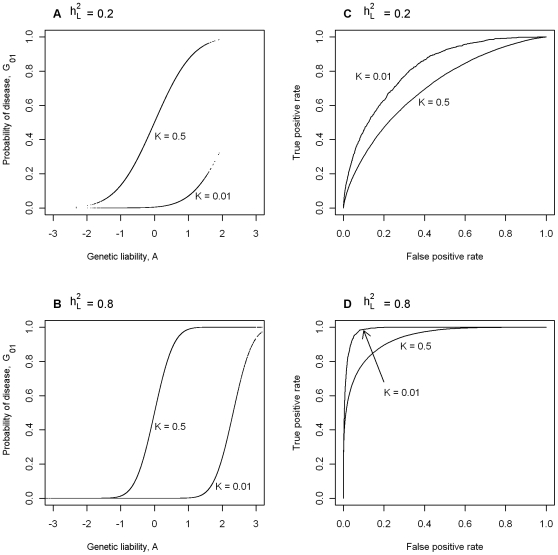
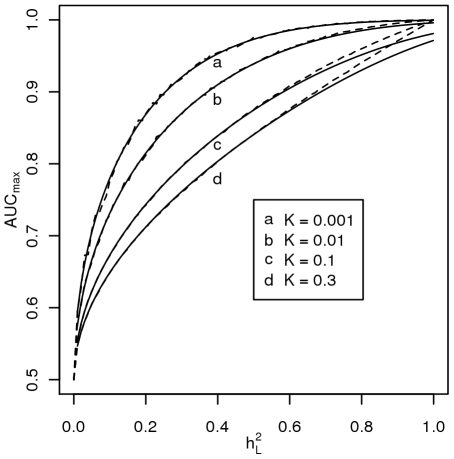
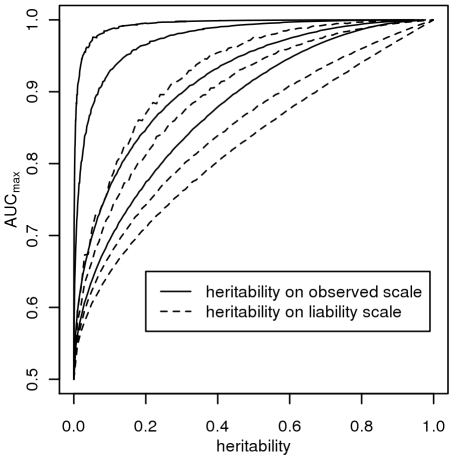
Genome-wide association studies in human populations have facilitated the creation of genomic profiles which combine the effects of many associated genetic variants to predict risk of disease. The area under the receiver operator characteristic (ROC) curve is a well established measure for determining the efficacy of tests in correctly classifying diseased and non-diseased individuals. We use quantitative genetics theory to provide insight into the genetic interpretation of the area under the ROC curve (AUC) when the test classifier is a predictor of genetic risk. Even when the proportion of genetic variance explained by the test is 100%, there is a maximum value for AUC that depends on the genetic epidemiology of the disease, i.e. either the sibling recurrence risk or heritability and disease prevalence. We derive an equation relating maximum AUC to heritability and disease prevalence. The expression can be reversed to calculate the proportion of genetic variance explained given AUC, disease prevalence, and heritability. We use published estimates of disease prevalence and sibling recurrence risk for 17 complex genetic diseases to calculate the proportion of genetic variance that a test must explain to achieve AUC = 0.75; this varied from 0.10 to 0.74. We provide a genetic interpretation of AUC for use with predictors of genetic risk based on genomic profiles. We provide a strategy to estimate proportion of genetic variance explained on the liability scale from estimates of AUC, disease prevalence, and heritability (or sibling recurrence risk) available as an online calculator.
Overview
The claims and statistics of this paper haven’t been checked yet.
Run the check — free, no account needed. It reads the open-access text and checks the sources it cites.
Integrity signals
Registry
Cites
Statistics
Figures
Verification
Claims the paper makes
The claims and statistics of this paper haven’t been checked yet.
Run the check — free, no account needed. It reads the open-access text and checks the sources it cites.
Claims other papers make about this one
Each is checked against this paper’s own text: does it say what the citing paper says it does?
The cited source says what the claim attributes to it.
In the citing paper
“Using equations from Wray et al. 2010 and our current heritability estimates, the 88 variant PRS explained a minimum 16% of the genetic liability of PD assuming a global prevalence of 0.5% (2,31).”
From Identification of novel risk loci, causal insights, and heritable risk for Parkinson's disease: a meta-analysis of genome-wide association studies (2019) · cites this paper as Wray et al. 2010
In the citing paper
“Using LDSC on a meta-analysis of all 11 clinically-ascertained datasets from our GWAS and estimated the liability-scale heritability of PD as 0.22 (95% CI 0.18 – 0.26), only slightly lower than a previous estimate derived using GCTA (0.27, 95% CI 0.17 – 0.38) (2,16,30).”
From Identification of novel risk loci, causal insights, and heritable risk for Parkinson's disease: a meta-analysis of genome-wide association studies (2019) · cites this paper as [30]
In the citing paper
“maximum potential AUC estimated at 85% using the equations from Wray et al. 2010”
From Identification of novel risk loci, causal insights, and heritable risk for Parkinson's disease: a meta-analysis of genome-wide association studies (2019) · cites this paper as Wray et al. 2010
Self-check
Percentages, sums and reported differences re-computed from the paper’s own numbers.
The self-check needs the paper’s full text.
Citations
Cites
The meaning and use of the area under a receiver operating characteristic (ROC) curve.
Hanley, J. A., & McNeil, B. J. (1982) · Radiology · doi:10.1148/radiology.143.1.7063747 · Cited by 21,856
Introduction to Quantitative Genetics.
Edwards, A. W. F., & Falconer, D. S. (1982) · Biometrics · doi:10.2307/2529912 · Cited by 21,447
Genome-wide association study of 14,000 cases of seven common diseases and 3,000 shared controls
The Wellcome Trust Case Control Consortium, Management Committee, Burton, P. R., Clayton, D. G., Cardon, L. R., Craddock, N., Deloukas, P., Duncanson, A., Kwiatkowski, D. P., McCarthy, M. I., et al. (2007) · Nature · doi:10.1038/nature05911 · Cited by 9,442
Genetics and Analysis of Quantitative Traits
(2002) · Journal of Animal Breeding and Genetics · doi:10.1046/j.1439-0388.2002.00356.x · Cited by 6,176
Basic principles of ROC analysis
Metz, C. E. (1978) · Seminars in Nuclear Medicine · doi:10.1016/s0001-2998(78)80014-2 · Cited by 6,122
Global variation in copy number in the human genome
Redon, R., Ishikawa, S., Fitch, K. R., Feuk, L., Perry, G. H., Andrews, T. D., Fiegler, H., Shapero, M. H., Carson, A. R., Chen, W., et al. (2006) · Nature · doi:10.1038/nature05329 · Cited by 4,377
Introduction to Quantitative Genetics
J.-M., G., & Falconer, D. S. (1962) · Population · doi:10.2307/1525780 · Cited by 3,773
Genetic Epidemiology of Major Depression: Review and Meta-Analysis
Sullivan, P. F., Neale, M. C., & Kendler, K. S. (2000) · American Journal of Psychiatry · doi:10.1176/appi.ajp.157.10.1552 · Cited by 3,431
ROCR: visualizing classifier performance in R
Sing, T., Sander, O., Beerenwinkel, N., & Lengauer, T. (2005) · Computer applications in the biosciences · doi:10.1093/bioinformatics/bti623 · Cited by 3,172
Introduction to quantitative genetics
Falconer, D. S. (1960) · Helmholtz Centre for Ocean Research Kiel (GEOMAR) · Cited by 3,170
Research works printed but not linked: 1
- M McGue, 1983, The transmission of schizophrenia under a multifactorial threshold model., American Journal of Human Genetics, 35, 1161
Cited by
Sorted by citations
Nalls, M. A., Blauwendraat, C., Vallerga, C. L., Heilbron, K., Bandres-Ciga, S., Chang, D., Tan, M., Kia, D. A., Noyce, A. J., Xue, A., et al. (2019) · The Lancet Neurology · doi:10.1016/s1474-4422(19)30320-5 · Cited by 2,454
the DIAbetes Genetics Replication And Meta-analysis (DIAGRAM) Consortium, Morris, A. P., Voight, B. F., Teslovich, T. M., Ferreira, T., Segrè, A. V., Steinthorsdottir, V., Strawbridge, R. J., Khan, H., Grallert, H., et al. (2012) · Nature Genetics · doi:10.1038/ng.2383 · Cited by 1,912
Power and predictive accuracy of polygenic risk scores
Dudbridge, F. (2013) · PLoS Genetics · doi:10.1371/journal.pgen.1003348 · Cited by 1,509
“What sample size would have sufficient power to detect association of the polygenic score? For breast cancer the heritability of liability is estimated as 44% [21].”
BackgroundMethodInfluentialThe personal and clinical utility of polygenic risk scores
Torkamani, A., Wineinger, N. E., & Topol, E. J. (2018) · Nature Reviews Genetics · doi:10.1038/s41576-018-0018-x · Cited by 1,655
The mystery of missing heritability: Genetic interactions create phantom heritability
Zuk, O., Hechter, E., Sunyaev, S. R., & Lander, E. S. (2012) · Proceedings of the National Academy of Sciences · doi:10.1073/pnas.1119675109 · Cited by 1,542
Modeling Linkage Disequilibrium Increases Accuracy of Polygenic Risk Scores
Vilhjálmsson, B. J., Yang, J., Finucane, H. K., Gusev, A., Lindström, S., Ripke, S., Genovese, G., Loh, P.-R., Bhatia, G., Do, R., et al. (2015) · The American Journal of Human Genetics · doi:10.1016/j.ajhg.2015.09.001 · Cited by 1,303
Polygenic risk scores: from research tools to clinical instruments
Lewis, C. M., & Vassos, E. (2020) · Genome Medicine · doi:10.1186/s13073-020-00742-5 · Cited by 1,360
Estimating Missing Heritability for Disease from Genome-wide Association Studies
Lee, S. H., Wray, N. R., Goddard, M. E., & Visscher, P. M. (2011) · The American Journal of Human Genetics · doi:10.1016/j.ajhg.2011.02.002 · Cited by 1,064
Xue, A., Wu, Y., Zhu, Z., Zhang, F., Kemper, K. E., Zheng, Z., Yengo, L., Lloyd‐Jones, L. R., Sidorenko, J., Wu, Y., et al. (2018) · Nature Communications · doi:10.1038/s41467-018-04951-w · Cited by 897
Polygenic Modeling with Bayesian Sparse Linear Mixed Models
Zhou, X., Carbonetto, P. S., & Stephens, M. (2013) · PLoS Genetics · doi:10.1371/journal.pgen.1003264 · Cited by 802
LDpred2: better, faster, stronger
Privé, F., Arbel, J., & Vilhjálmsson, B. J. (2021) · Bioinformatics · doi:10.1093/bioinformatics/btaa1029 · Cited by 726
Developing and evaluating polygenic risk prediction models for stratified disease prevention
Chatterjee, N., Shi, J., & García‐Closas, M. (2016) · Nature Reviews Genetics · doi:10.1038/nrg.2016.27 · Cited by 712
Pitfalls of predicting complex traits from SNPs
Wray, N. R., Yang, J., Hayes, B. J., Price, A. L., Goddard, M. E., & Visscher, P. M. (2013) · Nature Reviews Genetics · doi:10.1038/nrg3457 · Cited by 690
Research Review: Polygenic methods and their application to psychiatric traits
Wray, N. R., Lee, S., Mehta, D., Vinkhuyzen, A. A. E., Dudbridge, F., & Middeldorp, C. M. (2014) · Journal of Child Psychology and Psychiatry · doi:10.1111/jcpp.12295 · Cited by 683
Towards clinical utility of polygenic risk scores
Lambert, S. A., Abraham, G., & Inouye, M. (2019) · Human Molecular Genetics · doi:10.1093/hmg/ddz187 · Cited by 586
Bezzina, C. R., Barc, J., Mizusawa, Y., Remme, C. A., Gourraud, J., Simonet, F., Verkerk, A. O., Schwartz, P. J., Crotti, L., Dagradi, F., et al. (2013) · Nature Genetics · doi:10.1038/ng.2712 · Cited by 546
Do, C. B., Tung, J. Y., Dorfman, E., Kiefer, A. K., Drabant, E. M., Francke, U., Mountain, J. L., Goldman, S. M., Tanner, C. M., Langston, J. W., et al. (2011) · PLoS Genetics · doi:10.1371/journal.pgen.1002141 · Cited by 515
Improving reporting standards for polygenic scores in risk prediction studies
Wand, H., Lambert, S. A., Tamburro, C. P., Iacocca, M. A., O’Sullivan, J. W., Sillari, C. H., Kullo, I. J., Rowley, R. K., Dron, J. S., Brockman, D., et al. (2021) · Nature · doi:10.1038/s41586-021-03243-6 · Cited by 484
Genetic signatures of exceptional longevity in humans
Sebastiani, P., Solovieff, N., DeWan, A. T., Walsh, K. M., Puca, A., Hartley, S. W., Melista, E., Andersen, S., Dworkis, D. A., Wilk, J. B., et al. (2012) · PLoS ONE · doi:10.1371/journal.pone.0029848 · Cited by 464
Detecting epistasis in human complex traits
Wei, W., Hemani, G., & Haley, C. (2014) · Nature Reviews Genetics · doi:10.1038/nrg3747 · Cited by 415
Moser, G., Lee, S., Hayes, B. J., Goddard, M. E., Wray, N. R., & Visscher, P. M. (2015) · PLoS Genetics · doi:10.1371/journal.pgen.1004969 · Cited by 387
Sharp, S. A., Rich, S. S., Wood, A. R., Jones, S. E., Beaumont, R. N., Harrison, J. W., Schneider, D. A., Locke, J. M., Tyrrell, J., Weedon, M. N., et al. (2019) · Diabetes Care · doi:10.2337/dc18-1785 · Cited by 366
Chatterjee, N., Wheeler, B., Sampson, J. N., Hartge, P. A., Chanock, S. J., & Park, J.-H. (2013) · Nature Genetics · doi:10.1038/ng.2579 · Cited by 359
A Better Coefficient of Determination for Genetic Profile Analysis
Lee, S., Goddard, M. E., Wray, N. R., & Visscher, P. M. (2012) · Genetic Epidemiology · doi:10.1002/gepi.21614 · Cited by 338
The heritability of human disease: estimation, uses and abuses.
Tenesa, A., & Haley, C. S. (2013) · Nature Reviews Genetics · doi:10.1038/nrg3377 · Cited by 283
Hints of hidden heritability in GWAS
Gibson, G. (2010) · Nature Genetics · doi:10.1038/ng0710-558 · Cited by 281
Modeling 3D Facial Shape from DNA
Claes, P., Liberton, D. K., Daniels, K., Rosana, K. M., Quillen, E. E., Pearson, L. N., McEvoy, B., Bauchet, M., Zaidi, A. A., Yao, W., et al. (2014) · PLoS Genetics · doi:10.1371/journal.pgen.1004224 · Cited by 202
Torkamani, A., Andersen, K. G., Steinhubl, S. R., & Topol, E. J. (2017) · Cell · doi:10.1016/j.cell.2017.08.007 · Cited by 253
Rahmioglu, N., Nyholt, D. R., Morris, A. P., Missmer, S. A., Montgomery, G. W., & Zondervan, K. T. (2014) · Human Reproduction Update · doi:10.1093/humupd/dmu015 · Cited by 238
Ng, M. C. Y., Shriner, D., Chen, B. H., Li, J., Chen, W., Guo, X., Liu, J., Bielinski, S. J., Yanek, L. R., Nalls, M. A., et al. (2014) · PLoS Genetics · doi:10.1371/journal.pgen.1004517 · Cited by 243
Correction: Power and Predictive Accuracy of Polygenic Risk Scores
Dudbridge, F. (2013) · PLoS Genetics · doi:10.1371/annotation/b91ba224-10be-409d-93f4-7423d502cba0 · Cited by 221
The Predictive Capacity of Personal Genome Sequencing
Roberts, N. J., Vogelstein, J. T., Parmigiani, G., Kinzler, K. W., Vogelstein, B., & Velculescu, V. E. (2012) · Science Translational Medicine · doi:10.1126/scitranslmed.3003380 · Cited by 216
The Genetics of Extreme Longevity: Lessons from the New England Centenarian Study
Sebastiani, P., & Perls, T. T. (2012) · Frontiers in Genetics · doi:10.3389/fgene.2012.00277 · Cited by 207
Making the Most of Clumping and Thresholding for Polygenic Scores
Privé, F., Vilhjálmsson, B. J., Aschard, H., & Blum, M. G. B. (2019) · The American Journal of Human Genetics · doi:10.1016/j.ajhg.2019.11.001 · Cited by 208
Familial risk of epilepsy: a population-based study
Peljto, A. L., Barker‐Cummings, C., Vasoli, V. M., Leibson, C. L., Hauser, W. A., Buchhalter, J., & Ottman, R. (2014) · Brain · doi:10.1093/brain/awt368 · Cited by 201
Abraham, G., Malik, R., Yonova‐Doing, E., Salim, A., Wang, T., Danesh, J., Butterworth, A. S., Howson, J. M. M., Inouye, M., & Dichgans, M. (2019) · Nature Communications · doi:10.1038/s41467-019-13848-1 · Cited by 191
Transitions between phases of genomic differentiation during stick-insect speciation
Riesch, R., Muschick, M., Lindtke, D., Villoutreix, R., Comeault, A. A., Farkas, T. E., Lucek, K., Hellen, E., Soria‐Carrasco, V., Dennis, S. R., et al. (2017) · Nature Ecology & Evolution · doi:10.1038/s41559-017-0082 · Cited by 185
Polygenic score prediction captures nearly all common genetic risk for Alzheimer's disease
Escott-Price, V., Shoai, M., Pither, R., Williams, J., & Hardy, J. (2017) · Neurobiology of Aging · doi:10.1016/j.neurobiolaging.2016.07.018 · Cited by 183
Genetic risk prediction in complex disease
Jostins, L., & Barrett, J. C. (2011) · Human Molecular Genetics · doi:10.1093/hmg/ddr378 · Cited by 185
Transcriptional risk scores link GWAS to eQTLs and predict complications in Crohn's disease
Marigorta, U. M., Denson, L. A., Hyams, J. S., Mondal, K., Prince, J., Walters, T. D., Griffiths, A., Noe, J. D., Crandall, W. V., Rosh, J. R., et al. (2017) · Nature Genetics · doi:10.1038/ng.3936 · Cited by 166
Diagnosis and treatment of type 1 diabetes at the dawn of the personalized medicine era
Akil, A. A., Yassin, E., Al-Maraghi, A., ALIYEV, E. E., Al-Malki, K., & Fakhro, K. A. (2021) · Journal of Translational Medicine · doi:10.1186/s12967-021-02778-6 · Cited by 217
Current status of genome-wide association studies in cancer
Chung, C. C., & Chanock, S. J. (2011) · Human Genetics · doi:10.1007/s00439-011-1030-9 · Cited by 166
Improving genetic prediction by leveraging genetic correlations among human diseases and traits
Maier, R. M., Zhu, Z., Lee, S., Trzaskowski, M., Ruderfer, D. M., Stahl, E. A., Ripke, S., Wray, N. R., Yang, J., Visscher, P. M., et al. (2018) · Nature Communications · doi:10.1038/s41467-017-02769-6 · Cited by 157
The contribution of genetic variants to disease depends on the ruler
Witte, J. S., Visscher, P. M., & Wray, N. R. (2014) · Nature Reviews Genetics · doi:10.1038/nrg3786 · Cited by 163
Migliorini, G., Fiege, B., Hosking, F. J., Ma, Y. P., Kumar, R., Sherborne, A. L., Filho, M. I. D. S., Vijayakrishnan, J., Koehler, R., Thomsen, H., et al. (2013) · Blood · doi:10.1182/blood-2013-03-491316 · Cited by 164
Epigenome-based cancer risk prediction: rationale, opportunities and challenges
Widschwendter, M., Jones, A., Evans, I., Reisel, D., Dillner, J., Sundström, K., Steyerberg, E. W., Vergouwe, Y., Wegwarth, O., Rebitschek, F. G., et al. (2018) · Nature Reviews Clinical Oncology · doi:10.1038/nrclinonc.2018.30 · Cited by 163
Machine learning for genetic prediction of psychiatric disorders: a systematic review
Bracher‐Smith, M., Crawford, K. L., & Escott‐Price, V. (2020) · Molecular Psychiatry · doi:10.1038/s41380-020-0825-2 · Cited by 162
Direct-to-consumer genetic testing
Horton, R., Crawford, G., Freeman, L., Fenwick, A., Wright, C. F., & Lucassen, A. (2019) · BMJ · doi:10.1136/bmj.l5688 · Cited by 151
Igo, R. P., Kinzy, T. G., & Bailey, J. N. C. (2019) · Current Protocols in Human Genetics · doi:10.1002/cphg.95 · Cited by 160
Milk Production and Fertility in Cattle
Berry, D. P., Friggens, N. C., Lucy, M. C., & Roche, J. R. (2015) · Annual Review of Animal Biosciences · doi:10.1146/annurev-animal-021815-111406 · Cited by 149
Polygenic Scores to Assess Atherosclerotic Cardiovascular Disease Risk
Aragam, K. G., & Natarajan, P. (2020) · Circulation Research · doi:10.1161/circresaha.120.315928 · Cited by 148
Genetic Signatures of Exceptional Longevity in Humans
Sebastiani, P., Solovieff, N., Puca, A., Hartley, S. W., Melista, E., Andersen, S., Dworkis, D. A., Wilk, J. B., Myers, R. H., Steinberg, M. H., et al. (2010) · Science · doi:10.1126/science.1190532 · Cited by 141
RetractedAUC-RF: A New Strategy for Genomic Profiling with Random Forest
Calle, M. L., Urrea, V., Boulesteix, A., & Malats, N. (2011) · Human Heredity · doi:10.1159/000330778 · Cited by 138
Rare Genetic Variants of Large Effect Influence Risk of Type 1 Diabetes
Forgetta, V., Manousaki, D., Istomine, R., Ross, S. A., Tessier, M.-C., Marchand, L., Li, M., Qu, H., Bradfield, J. P., Grant, S. F. A., et al. (2020) · Diabetes · doi:10.2337/db19-0831 · Cited by 139
Translating biomarkers to clinical practice
Perlis, R. H. (2011) · Molecular Psychiatry · doi:10.1038/mp.2011.63 · Cited by 134
Dunlop, M. G., Tenesa, A., Farrington, S. M., Ballereau, S. J., Brewster, D., Koessler, T., Pharoah, P. D. P., Schafmayer, C., Hampe, J., Völzke, H., et al. (2012) · Gut · doi:10.1136/gutjnl-2011-300537 · Cited by 133
Artificial intelligence, physiological genomics, and precision medicine
Williams, A. M., Liu, Y., Regner, K. R., Jotterand, F., Liu, P., & Liang, M. (2018) · Physiological Genomics · doi:10.1152/physiolgenomics.00119.2017 · Cited by 131
Palaiokostas, C., Cariou, S., Bestin, A., Bruant, J.-S., Haffray, P., Morin, T., Cabon, J., Allal, F., Vandeputte, M., & Houston, R. D. (2018) · Genetics Selection Evolution · doi:10.1186/s12711-018-0401-2 · Cited by 127
Bergholdt, R., Brorsson, C., Palleja, A., Berchtold, L. A., Fløyel, T., Bang-Berthelsen, C. H., Frederiksen, K. S., Jensen, L. J., Størling, J., & Pociot, F. (2012) · Diabetes · doi:10.2337/db11-1263 · Cited by 125
Abraham, G., Kowalczyk, A., Zobel, J., & Inouye, M. (2012) · Genetic Epidemiology · doi:10.1002/gepi.21698 · Cited by 118
PRECISION MEDICINE - THE GOLDEN GATE FOR DETECTION, TREATMENT AND PREVENTION OF ALZHEIMER’S DISEASE
Hampel, H. J., O’Bryant, S. E., Castrillo, J. I., Ritchie, C. W., Rojkova, K., Broich, K., Benda, N., Nisticò, R., Frank, R., Dubois, B., et al. (2016) · The Journal of Prevention of Alzheimer s Disease · doi:10.14283/jpad.2016.112 · Cited by 117
Genomic risk prediction of complex human disease and its clinical application
Abraham, G., & Inouye, M. (2015) · Current Opinion in Genetics & Development · doi:10.1016/j.gde.2015.06.005 · Cited by 114
Comparison of Family History and SNPs for Predicting Risk of Complex Disease
Do, C. B., Hinds, D. A., Francke, U., & Eriksson, N. (2012) · PLoS Genetics · doi:10.1371/journal.pgen.1002973 · Cited by 118
Multhaup, M., Seldin, M. M., Jaffe, A. E., Lei, X., Kirchner, H., Mondal, P., Li, Y., Rodriguez, V., Drong, A., Hussain, M. A., et al. (2015) · Cell Metabolism · doi:10.1016/j.cmet.2014.12.014 · Cited by 112
Genetic studies of Crohn's disease: Past, present and future
Liu, J. Z., & Anderson, C. A. (2014) · Best Practice & Research Clinical Gastroenterology · doi:10.1016/j.bpg.2014.04.009 · Cited by 117
Yin, L., Zhang, H., Zhou, X., Yuan, X., Zhao, S., Li, X., & Liu, X. (2020) · Genome biology · doi:10.1186/s13059-020-02052-w · Cited by 107
Accurate and Robust Genomic Prediction of Celiac Disease Using Statistical Learning
Abraham, G., Tye–Din, J. A., Bhalala, O. G., Kowalczyk, A., Zobel, J., & Inouye, M. (2014) · PLoS Genetics · doi:10.1371/journal.pgen.1004137 · Cited by 107
Type 1 Diabetes Candidate Genes Linked to Pancreatic Islet Cell Inflammation and Beta-Cell Apoptosis
Størling, J., & Pociot, F. (2017) · Genes · doi:10.3390/genes8020072 · Cited by 103
Romagnoni, A., Jégou, S., Steen, K. V., Wainrib, G., Hugot, J., Peyrin‐Biroulet, L., Chamaillard, M., Colombel, J.-F., Cottone, M., D’Amato, M., et al. (2019) · Scientific Reports · doi:10.1038/s41598-019-46649-z · Cited by 104
From Galton to GWAS: quantitative genetics of human height
Visscher, P. M., McEvoy, B., & Yang, J. (2010) · Genetics Research · doi:10.1017/s0016672310000571 · Cited by 102
Type 1 diabetes genome‐wide association studies: not to be lost in translation
Pociot, F. (2017) · Clinical & Translational Immunology · doi:10.1038/cti.2017.51 · Cited by 101
Lakhani, C. M., Tierney, B. T., Manrai, A. K., Yang, J., Visscher, P. M., & Patel, C. J. (2019) · Nature Genetics · doi:10.1038/s41588-018-0313-7 · Cited by 97
Recent advances in polygenic scores: translation, equitability, methods and FAIR tools
Xiang, R., Kelemen, M., Xu, Y., Harris, L. W., Parkinson, H., Inouye, M., & Lambert, S. A. (2024) · Genome Medicine · doi:10.1186/s13073-024-01304-9 · Cited by 102
Describing the genetic architecture of epilepsy through heritability analysis
Speed, D., O'Brien, T. J., Palotie, A. V., Shkura, K., Marson, A. G., Balding, D. J., & Johnson, M. R. (2014) · Brain · doi:10.1093/brain/awu206 · Cited by 91
Systematic Review of Polygenic Risk Scores for Type 1 and Type 2 Diabetes
Padilla-Martínez, F., Collin, F., Kwaśniewski, M., & Kretowski, A. J. (2020) · International Journal of Molecular Sciences · doi:10.3390/ijms21051703 · Cited by 93
Informed Conditioning on Clinical Covariates Increases Power in Case-Control Association Studies
Zaitlen, N., Lindström, S., Paşaniuc, B., Cornelis, M. C., Genovese, G., Pollack, S. J., Barton, A. C., Bickeböller, H., Bowden, D. W., Eyre, S., et al. (2012) · PLoS Genetics · doi:10.1371/journal.pgen.1003032 · Cited by 79
Polygenic Risk Scores have high diagnostic capacity in ankylosing spondylitis
Li, Z., Wu, X., Leo, P. J., de Guzman, E., Akkoç, N., Bréban, M., Macfarlane, G. J., Mahmoudi, M., Marzo‐Ortega, H., Anderson, L. K., et al. (2021) · Annals of the Rheumatic Diseases · doi:10.1136/annrheumdis-2020-219446 · Cited by 83
Gompert, Z., Jahner, J. P., Scholl, C. F., Wilson, J. S., Lucas, L. K., Soria‐Carrasco, V., Fordyce, J. A., Nice, C. C., Buerkle, C. A., & Forister, M. L. (2015) · Molecular Ecology · doi:10.1111/mec.13199 · Cited by 86
Genetic Cardiovascular Risk Prediction
Thanassoulis, G., & Vasan, R. S. (2010) · Circulation · doi:10.1161/circulationaha.109.909309 · Cited by 85
Bailey, J. N. C., & Igo, R. P. (2016) · Current Protocols in Human Genetics · doi:10.1002/cphg.20 · Cited by 85
Mowry, B. J., & Gratten, J. (2012) · Molecular Psychiatry · doi:10.1038/mp.2012.34 · Cited by 82
Mieth, B., Kloft, M., Rodríguez, J. A., Sonnenburg, S., Vobruba, R., Morcillo-Suárez, C., Farré, X., Marigorta, U. M., Fehr, E., Dickhaus, T., et al. (2016) · Scientific Reports · doi:10.1038/srep36671 · Cited by 85
Sieberts, S. K., Zhu, F., Garcı́a-Garcı́a, J., Stahl, E. A., Pratap, A., Pandey, G. S., Pappas, D. A., Aguilar, D., Anton, B., Bonet, J., et al. (2016) · Nature Communications · doi:10.1038/ncomms12460 · Cited by 79
Iyegbe, C. O., Campbell, D., Butler, A. W., Ajnakina, O., & Sham, P. C. (2014) · Social Psychiatry and Psychiatric Epidemiology · doi:10.1007/s00127-014-0823-2 · Cited by 78
Towards the application of precision medicine in Age-Related Macular Degeneration
Cascella, R., Strafella, C., Caputo, V., Errichiello, V., Zampatti, S., Milano, F., Potenza, S., Mauriello, S., Novelli, G., Ricci, F., et al. (2018) · Progress in Retinal and Eye Research · doi:10.1016/j.preteyeres.2017.11.004 · Cited by 76
Abraham, G., Rutten‐Jacobs, L. C. A., & Inouye, M. (2021) · Stroke · doi:10.1161/strokeaha.120.032619 · Cited by 78
Lello, L., Raben, T. G., Yong, S. Y., Tellier, L. C. A. M., & Hsu, S. (2019) · Scientific Reports · doi:10.1038/s41598-019-51258-x · Cited by 82
Bayesian analysis of rare variants in genetic association studies
Yi, N., & Zhi, D. (2010) · Genetic Epidemiology · doi:10.1002/gepi.20554 · Cited by 74
Genome-wide association studies and genetic risk assessment of liver diseases
Krawczyk, M. J., Müllenbach, R., Weber, S. N., Zimmer, V., & Lammert, F. (2010) · Nature Reviews Gastroenterology & Hepatology · doi:10.1038/nrgastro.2010.170 · Cited by 74
The Role of Genetics in Advancing Precision Medicine for Alzheimer’s Disease—A Narrative Review
Freudenberg‐Hua, Y., Li, W., & Davies, P. (2018) · Frontiers in Medicine · doi:10.3389/fmed.2018.00108 · Cited by 80
Pan, H., Liu, Z., Ma, J., Li, Y., Zhao, Y., Zhou, X., Xiang, Y., Wang, Y., Zhou, X. C., He, R., et al. (2023) · npj Parkinson s Disease · doi:10.1038/s41531-023-00456-6 · Cited by 76
The Parkinson's Disease Mendelian Randomization Research Portal
Noyce, A. J., Bandrés‐Ciga, S., Kim, J., Heilbron, K., Kia, D. A., Hemani, G., Xue, A., Lawlor, D. A., Smith, G. D., Durán, R., et al. (2019) · Movement Disorders · doi:10.1002/mds.27873 · Cited by 74
Agerbo, E., Trabjerg, B. B., Børglum, A. D., Schork, A. J., Vilhjálmsson, B. J., Pedersen, C. B., Hakulinen, C. A., Albiñana, C., HOUGAARD, D. M., Grove, J., et al. (2021) · JAMA Psychiatry · doi:10.1001/jamapsychiatry.2020.4172 · Cited by 79
Variation at 3p24.1 and 6q23.3 influences the risk of Hodgkin’s lymphoma
Frampton, M., Filho, M. I. D. S., Broderick, P., Thomsen, H., Försti, A., Vijayakrishnan, J., Cooke, R., Enciso-Mora, V., Hoffmann, P., Nöthen, M. M., et al. (2013) · Nature Communications · doi:10.1038/ncomms3549 · Cited by 72
Zare, Y., Shook, G. E., Collins, M. T., & Kirkpatrick, B. W. (2014) · PLoS ONE · doi:10.1371/journal.pone.0088380 · Cited by 70
Insights from an autism imaging biomarker challenge: Promises and threats to biomarker discovery
Traut, N., Heuer, K., Lemaître, G., Beggiato, A., Germanaud, D., Elmaleh, M., Bethegnies, A., Bonnasse‐Gahot, L., Cai, W., Chambon, S., et al. (2022) · NeuroImage · doi:10.1016/j.neuroimage.2022.119171 · Cited by 66
Polygenic Scores in Epidemiology: Risk Prediction, Etiology, and Clinical Utility
Maher, B. S. (2015) · Current Epidemiology Reports · doi:10.1007/s40471-015-0055-3 · Cited by 69
Ranlund, S. M., Calafato, S., Thygesen, J. H., Lin, K., Cahn, W., Crespo‐Facorro, B., de Zwarte, S. M. C., Díez, Á., Forti, M. D., GROUP, et al. (2017) · American Journal of Medical Genetics Part B Neuropsychiatric Genetics · doi:10.1002/ajmg.b.32581 · Cited by 68
The Scope of Big Data in One Medicine: Unprecedented Opportunities and Challenges
McCue, M. E., & McCoy, A. M. (2017) · Frontiers in Veterinary Science · doi:10.3389/fvets.2017.00194 · Cited by 75
A Polygenic Risk Score for Idiopathic Pulmonary Fibrosis and Interstitial Lung Abnormalities
Moll, M. R., Peljto, A. L., Kim, J. S., Xu, H., Debban, C. L., Chen, X., Menon, A. A., Putman, R. K., Ghosh, A., Saferali, A., et al. (2023) · American Journal of Respiratory and Critical Care Medicine · doi:10.1164/rccm.202212-2257oc · Cited by 63
Metadata
- Authors
- Wray, N. R., Yang, J., Goddard, M. E., & Visscher, P. M.
- Affiliations
- QIMR Berghofer Medical Research Institute (AU)
- The University of Melbourne (AU)
- Corresponding author
- Wray, Naomi R.
- Venue
- PLoS Genetics
- Publisher
- Public Library of Science (PLoS)
- Published
- 2010-02-26
- Volume
- 6
- Issue
- 2
- Pages
- e1000864
- ISSN
- 1553-7390 (ISSN-L)
- 1553-7404
- PMC
- PMC2829056
- OpenAlex
- W1990700240
- Cited by
- 334
- References
- 52
- Citations by year
- 2026: 11 · 2025: 16 · 2024: 9 · 2023: 16 · 2022: 13 · 2021: 26 · 2020: 27 · 2019: 28 · 2018: 14 · 2017: 24 · 2016: 14 · 2015: 19 · 2014: 30 · 2013: 22 · 2012: 34
- FWCI
- 15.45
- Type
- journal article
- Language
- en
- Open access
- gold
- doi.org
- Locations
- PLoS Genetics (publishedVersion, cc-by)
- Europe PMC (PubMed Central) (publishedVersion, cc-by)
- PubMed Central (publishedVersion, cc-by)
- PubMed (publishedVersion)
- DOAJ (DOAJ: Directory of Open Access Journals) (submittedVersion, cc-by-sa)
- Figshare (submittedVersion, cc-by)
- Minerva Access (University of Melbourne) (submittedVersion, cc-by)
- Funders
- Medical Research Council
- Australian Research Council (DP0770096)
- National Health and Medical Research Council (496688, 442915, DP0770096, 389892)
- Topics
- Life Sciences › Biochemistry, Genetics and Molecular Biology › Genetics › Genetic Associations and Epidemiology
- Life Sciences › Biochemistry, Genetics and Molecular Biology › Genetics › Genetic and phenotypic traits in livestock
- Life Sciences › Biochemistry, Genetics and Molecular Biology › Genetics › Genetic Mapping and Diversity in Plants and Animals
- Keywords
- area under the ROC curve, genomic profiling, genetic risk prediction, heritability, disease prevalence, sibling recurrence risk, liability scale, complex genetic disorders, genome-wide association study, genetic epidemiology
- MeSH terms
- Aged, 80 and over, Disease, Humans, Macular Degeneration, ROC Curve, Genome, Human, Prevalence, Area Under Curve, Gene Expression Profiling, Inheritance Patterns
About these checks
Registry, retraction, Cites and statistics results are computed, not judged, with one exception: a printed reference that no index lists is read once by a model before it counts as a citation error. Claims are extracted by a model and kept only when their quote appears verbatim in the text; each cited source is then checked, with a model’s help, for whether it says what the claim relies on. Those verdicts can be wrong — read the claim’s quote and the cited source before relying on one.
Statistics and arithmetic are recomputed, not judged.
Confidence bands are shown only for fields calibrated on our annotated test set. None is calibrated yet, so no band is shown.
What counts as a claim ›How we measure confidence ›How we check this ›
Are you an author, or do you see a problem with this page? Request a review
