

Evidence that Adaptation in Drosophila Is Not Limited by Mutation at Single Sites
Open accessThe DOI matches its Crossref record; 50 of the 51 references it cites were found in a registry or an index.
Abstract
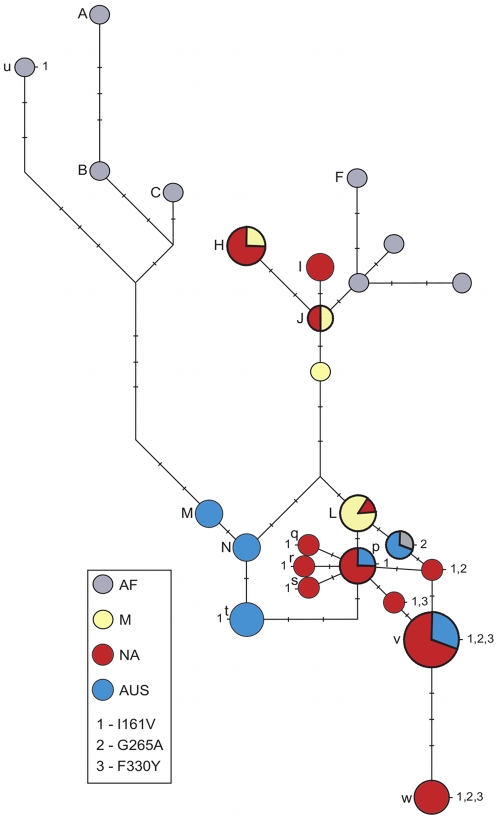
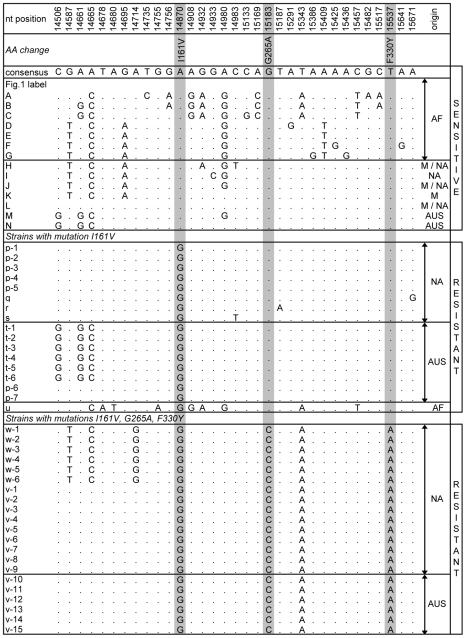
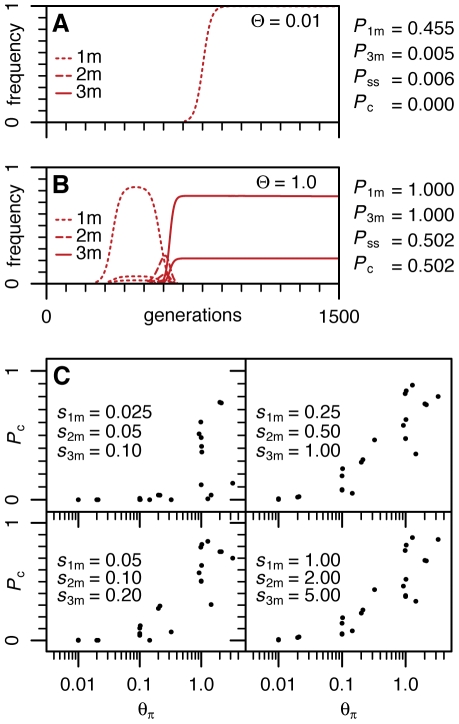
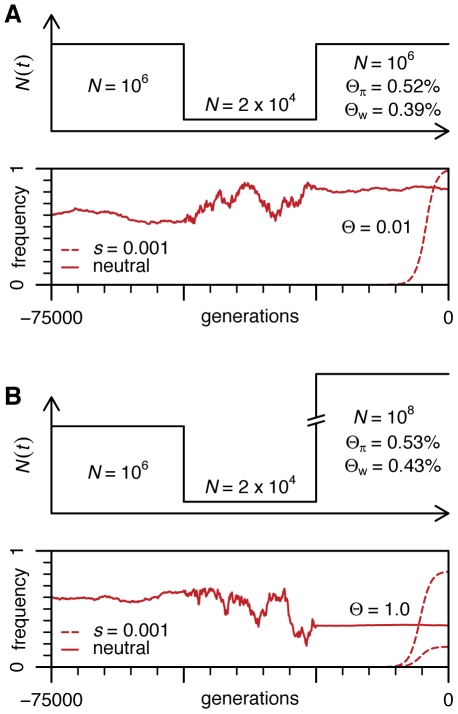
Adaptation in eukaryotes is generally assumed to be mutation-limited because of small effective population sizes. This view is difficult to reconcile, however, with the observation that adaptation to anthropogenic changes, such as the introduction of pesticides, can occur very rapidly. Here we investigate adaptation at a key insecticide resistance locus (Ace) in Drosophila melanogaster and show that multiple simple and complex resistance alleles evolved quickly and repeatedly within individual populations. Our results imply that the current effective population size of modern D. melanogaster populations is likely to be substantially larger (> or = 100-fold) than commonly believed. This discrepancy arises because estimates of the effective population size are generally derived from levels of standing variation and thus reveal long-term population dynamics dominated by sharp--even if infrequent--bottlenecks. The short-term effective population sizes relevant for strong adaptation, on the other hand, might be much closer to census population sizes. Adaptation in Drosophila may therefore not be limited by waiting for mutations at single sites, and complex adaptive alleles can be generated quickly without fixation of intermediate states. Adaptive events should also commonly involve the simultaneous rise in frequency of independently generated adaptive mutations. These so-called soft sweeps have very distinct effects on the linked neutral polymorphisms compared to the standard hard sweeps in mutation-limited scenarios. Methods for the mapping of adaptive mutations or association mapping of evolutionarily relevant mutations may thus need to be reconsidered.
Overview
The claims and statistics of this paper haven’t been checked yet.
Free: it reads the open-access text and checks the first 5 claims that cite a source we can check. Create a free account to check every claim.
Integrity signals
Registry
Cites
Statistics
Figures
Verification
Claims the paper makes
The claims and statistics of this paper haven’t been checked yet.
Free: it reads the open-access text and checks the first 5 claims that cite a source we can check. Create a free account to check every claim.
Claims other papers make about this one
Each is checked against this paper’s own text: does it say what the citing paper says it does?
The cited source says what the claim attributes to it.
In the citing paper
“As previously noted (Hawks et al. 2007;Karasov et al. 2010;Pritchard et al. 2010), effective population size is one of the most important factors limiting the availability of adaptive mutations.”
From The timing of pigmentation lightening in Europeans (2013) · cites this paper as Karasov et al. 2010
Self-check
Percentages, sums and reported differences re-computed from the paper’s own numbers.
The self-check needs the paper’s full text.
Citations
Cites
TCS: a computer program to estimate gene genealogies
Clement, M., Posada, D., & Crandall, K. A. (2000) · Molecular Ecology · doi:10.1046/j.1365-294x.2000.01020.x · Cited by 9,861 · cited 1×
“The most parsimonious haplotype network was constructed using TCS 1.21”
MethodInfluentialTHE GENETIC BASIS OF EVOLUTIONARY CHANGE
Felsenstein, J. (1975) · Evolution · doi:10.1111/j.1558-5646.1975.tb00851.x · Cited by 3,912
Generating samples under a Wright–Fisher neutral model of genetic variation
Hudson, R. R. (2002) · Bioinformatics · doi:10.1093/bioinformatics/18.2.337 · Cited by 2,364 · cited 2×
“In these more complex scenarios we assessed H by using coalescent simulations to estimate the average heterozygosity per site (Hp) at neutral sites and by summing H across all subpopulations (HS) [26].”
MethodRozas, J., & Rozas, R. (1999) · Bioinformatics · doi:10.1093/bioinformatics/15.2.174 · Cited by 1,968 · cited 2×
“Estimation of H p and divergence Measures of H p and divergence with Drosophila simulans at the Ace locus were obtained using DnaSP [ 45 ] .”
MethodEffective population size and patterns of molecular evolution and variation
Charlesworth, B. (2009) · Nature Reviews Genetics · doi:10.1038/nrg2526 · Cited by 1,685 · cited 3×
“or larger - and consequently most single nucleotide mutations exist in the population at every given time – estimated values of H in eukaryotes are typically much smaller than one [1].”
BackgroundInfluentialMathematical Population Genetics
Baake, E., Ewens, W. J., & Wakolbinger, A. (2006) · Oberwolfach Reports · doi:10.4171/owr/2005/40 · Cited by 1,624
Widespread parallel evolution in sticklebacks by repeated fixation of Ectodysplasin alleles.
Colosimo, P. F., Hosemann, K. E., Balabhadra, S., Villarreal, G., Dickson, M., Grimwood, J., Schmutz, J., Myers, R. M., Schluter, D., & Kingsley, D. M. (2005) · Science · doi:10.1126/science.1107239 · Cited by 1,448 · cited 2×
“resistant alleles predate environmental changes [8,9].”
BackgroundDarwinian Evolution Can Follow Only Very Few Mutational Paths to Fitter Proteins
Weinreich, D. M., Delaney, N. F., DePristo, M. A., & Hartl, D. L. (2006) · Science · doi:10.1126/science.1123539 · Cited by 1,415 · cited 1×
“This raises the question of whether the widespread use of the weak mutation, strong selection (‘‘WMSS’’) model for the study of adaptation should be broadened to include cases of strong mutation [34,35].”
BackgroundThe Genetic Basis of Evolutionary Change.
Felsenstein, J., & Lewontin, R. C. (1975) · Evolution · doi:10.2307/2407274 · Cited by 1,384
Mathematical Population Genetics
Ewens, W. J. (2004) · Interdisciplinary Applied Mathematics · doi:10.1007/978-0-387-21822-9 · Cited by 1,229
Research works printed but not linked: 1
- Ashburner M 1989 Drosophila: A Laboratory Handbook and Manual New York Cold Spring Harbor Laboratory Press
Cited by
Items 101–200 of 258
Chromosomal rearrangements as a source of new gene formation in Drosophila yakuba
Stewart, N. B., & Rogers, R. L. (2019) · PLoS Genetics · doi:10.1371/journal.pgen.1008314 · Cited by 48
The Genome of Drosophila innubila Reveals Lineage-Specific Patterns of Selection in Immune Genes
Hill, T., Koseva, B. S., & Unckless, R. L. (2019) · Molecular Biology and Evolution · doi:10.1093/molbev/msz059 · Cited by 50
“innubila 10–30 thousand years ago, however this is more than enough time for adaptation to occur in Drosophila (Aminetzach et al. 2005; Karasov et al. 2010).”
BackgroundSignatures of Insecticide Selection in the Genome of Drosophila melanogaster
Duneau, D., Sun, H., Revah, J., Miguel, K. S., Kunerth, H. D., Caldas, I. V., Messer, P. W., Scott, J. G., & Buchon, N. (2018) · G3 Genes Genomes Genetics · doi:10.1534/g3.118.200537 · Cited by 46
“…several low-450 frequency haplotypes with only one resistance mutation (100, 010, and 001) that did not appear to cluster with any of the other resistance haplotypes, suggesting that these haplotypes arose independently from wildtype alleles, as has been proposed previously (Karasov et al. 2010).”
Self-citationElevated Linkage Disequilibrium and Signatures of Soft Sweeps Are Common in Drosophila melanogaster
Garud, N. R., & Petrov, D. A. (2016) · Genetics · doi:10.1534/genetics.115.184002 · Cited by 50
“The sharing of these haplotypes support the finding by Karasov et al. (2010) where it was observed that North American and Australian D. melanogaster strains share a haplotype bearing the three adaptive mutations, suggesting an out-of-Africa origin for this haplotype.”
BackgroundResultInfluentialSelf-citationGarud, N. R., & Rosenberg, N. A. (2015) · Theoretical Population Biology · doi:10.1016/j.tpb.2015.04.001 · Cited by 49
“…three peaks coincided with the loci Ace, Cyp6g1, and CHKov1, prominent cases of adaptation previously discovered by detailed focused analyses (Daborn et al., 2001; Catania et al., 2004; Menozzi et al., 2004; Aminetzach et al., 2005; Karasov et al., 2010; Schmidt et al., 2010; Magwire et al., 2011).”
Genetic constraints on adaptation: a theoretical primer for the genomics era
Connallon, T., & Hall, M. D. (2018) · Annals of the New York Academy of Sciences · doi:10.1111/nyas.13536 · Cited by 49
How Much Does Ne Vary Among Species?
Galtier, N., & Rousselle, M. M. C. (2020) · Genetics · doi:10.1534/genetics.120.303622 · Cited by 43
Lockwood, B. L., Gupta, T., & Scavotto, R. (2017) · Journal of Evolutionary Biology · doi:10.1111/jeb.13234 · Cited by 41
Van, A. L., Gladieux, P., Lemaire, C., Cornille, A., Giraud, T., Durel, C.-É., Caffier, V., & Cam, B. L. (2012) · Evolutionary Applications · doi:10.1111/j.1752-4571.2012.00246.x · Cited by 41
“The vast-scale and homogenous availability of nutrients in the agro-ecosystem is also expected to enable the development of very large populations of pathogens, thereby increasing the efficiency of selection and accelerating adaptation (Karasov et al. 2010).”
BackgroundKreiner, J. M., Sandler, G., Stern, A. J., Tranel, P. J., Weigel, D., Stinchcombe, J. R., & Wright, S. I. (2022) · eLife · doi:10.7554/elife.70242 · Cited by 43
“, 2019), a new TSR mutation at any of the eight adaptive ALS mutations should arise at a rate of Θπ/2—once every six generations (i.e. 0.041/2 x 8 known TSR loci = 0.164 TSR mutations per generation; see also Charlesworth, 2009; Karasov et al., 2010).”
BackgroundInfluentialHübner, S., Rashkovetsky, E., Kim, Y. B., Oh, J. H., Michalak, K., Weiner, D., Korol, A., Nevo, E., & Michalak, P. (2013) · Proceedings of the National Academy of Sciences · doi:10.1073/pnas.1321533111 · Cited by 44
“Exonic sequences of nine genes were enriched in slope-specific SNPs in this region, including Ace, a key insecticide resistance locus that encodes acetylcholinesterase (AChE) (42, 43) and is capable of rapid evolution in D.”
BackgroundGene family amplification facilitates adaptation in freshwater unionid bivalve Megalonaias nervosa
Rogers, R. L., Grizzard, S. L., Titus‐McQuillan, J. E., Bockrath, K., Patel, S., Wares, J. P., Garner, J. T., & Moore, C. C. (2021) · Molecular Ecology · doi:10.1111/mec.15786 · Cited by 41
“Historically, duplicate genes and TEs have been well studied in model organisms where it has been possible to estimate prevalence (Adams et al., 2000; Drosophila 12 Genomes Consortium et al., 2007; Goffeau et al., 1996; International Human Genome Sequencing Consortium et al., 2001), mutation rates (Adrion et al., 2017…”
BackgroundResultInfluentialA Population Genomic Assessment of Three Decades of Evolution in a Natural Drosophila Population
Lange, J. D., Bastide, H., Lack, J., & Pool, J. E. (2021) · Molecular Biology and Evolution · doi:10.1093/molbev/msab368 · Cited by 44
“2020), and at least four orders of magnitude lower than suggested from a study of recurrent adaptive mutations (Karasov et al. 2010).”
BackgroundInfluentialGenome-Wide Patterns of Genetic Polymorphism and Signatures of Selection in Plasmodium vivax
Cornejo, O. E., Fisher, D., & Escalante, A. A. (2014) · Genome Biology and Evolution · doi:10.1093/gbe/evu267 · Cited by 45
Ali, S., Soubeyrand, S., Gladieux, P., Giraud, T., Leconte, M., Gautier, A., Mboup, M., Chen, W., de Vallavieille-Pope, C., & Enjalbert, J. (2016) · Molecular Ecology Resources · doi:10.1111/1755-0998.12511 · Cited by 38
“Yet, frequency of sexual reproduction and population sizes over short timescales is the key population parameters that determine the probability of emergence of new damaging pathogenic lineages (Karasov et al. 2010; Gladieux et al. 2015).”
BackgroundLeroy, T., Lemaire, C., Dunemann, F., & Cam, B. L. (2013) · BMC Evolutionary Biology · doi:10.1186/1471-2148-13-64 · Cited by 37
“Indeed, in pathogens, higher fecundity associated with large effective sizes and shorter generation times enhances the rise of new mutants able to settle on new hosts [3-6].”
BackgroundMachado, H. E., Bergland, A. O., Taylor, R. W., Tilk, S., Behrman, E. L., Dyer, K., Fabian, D. K., Flatt, T., González, J., Karasov, T. L., et al. (2018) · bioRxiv (Cold Spring Harbor Laboratory) · doi:10.1101/337543 · Cited by 42
“…constitutes a profound stochastic evolutionary force acting on linked variation that is likely to rival in strength genetic draft due to selective sweeps and should be much stronger over seasonal timescales than random genetic drift in populations as large as D. melanogaster (Karasov et al. 2010).”
BackgroundSelf-citationSimilar evolutionary potentials in an obligate ant parasite and its two host species
Pennings, P. S., Achenbach, A., & Foitzik, S. (2011) · Journal of Evolutionary Biology · doi:10.1111/j.1420-9101.2010.02223.x · Cited by 40
“This is known for wellstudied species such as Drosophila melanogaster and humans (Charlesworth, 2009, Karasov et al., 2010) and it is likely to be the case for many other species.”
BackgroundVector control with driving Y chromosomes: modelling the evolution of resistance
Beaghton, A. K., Beaghton, P. J., & Burt, A. (2017) · Malaria Journal · doi:10.1186/s12936-017-1932-7 · Cited by 38
“gambiae is larger than the inverse of the nucleotide mutation rate [46].”
Hybrids and horizontal transfer: introgression allows adaptive allele discovery
Schmickl, R., Marburger, S., Bray, S., & Yant, L. J. (2017) · Journal of Experimental Botany · doi:10.1093/jxb/erx297 · Cited by 39
Investigating the evolutionary origins of the first three SARS-CoV-2 variants of concern
Ghafari, M., Liu, Q., Dhillon, A., Katzourakis, A., & Weissman, D. B. (2022) · Frontiers in Virology · doi:10.3389/fviro.2022.942555 · Cited by 40
“before subsequent VOCs, or the mutation supply is large, in which case one expects many VOCs 66 with only a short waiting time [19].”
BackgroundKennington, W. J., & Hoffmann, A. A. (2013) · BMC Evolutionary Biology · doi:10.1186/1471-2148-13-100 · Cited by 36
“melanogaster populations [29].”
Parallel Evolution of Copy-Number Variation across Continents inDrosophila melanogaster
Schrider, D. R., Hahn, M. W., & Begun, D. J. (2016) · Molecular Biology and Evolution · doi:10.1093/molbev/msw014 · Cited by 35
“Thus, it is plausible that Ace is the target of selection on both continents, but with independently arising variants spreading in a relatively short period of time.”
ResultInfluentialSelective Sweeps Under Dominance and Inbreeding
Hartfield, M., & Bataillon, T. M. (2020) · G3 Genes Genomes Genetics · doi:10.1534/g3.119.400919 · Cited by 38
“Soft sweeps have been reported in Drosophila (Karasov et al. 2010; Garud et al. 2015; Garud and Petrov 2016; Vy et al. 2017), humans (Peter et al. 2012; Schrider and Kern 2017), maize (Fustier et al. 2017), Anopheles mosquitoes (Xue et al. 2019), and pathogens including Plasmodium falciparum (Anderson et al. 2016) and…”
BackgroundStatistical questions in experimental evolution
Desai, M. M. (2013) · Journal of Statistical Mechanics Theory and Experiment · doi:10.1088/1742-5468/2013/01/p01003 · Cited by 36
Guio, L., & González, J. (2019) · Methods in molecular biology · doi:10.1007/978-1-4939-9074-0_16 · Cited by 36
Understanding the adaptive consequences of hatchery-wild interactions in Alaska salmon
Grant, W. S. (2011) · Environmental Biology of Fishes · doi:10.1007/s10641-011-9929-5 · Cited by 40
“2002; Reed and Frankham 2003), and to interactions between genes (Karasov et al. 2010).”
Inferring Adaptive Introgression Using Hidden Markov Models
Svedberg, J., Shchur, V., Reinman, S., Nielsen, R., & Corbett-Detig, R. B. (2021) · Molecular Biology and Evolution · doi:10.1093/molbev/msab014 · Cited by 40
“melanogaster is not limited by de novo mutations (Karasov et al. 2010), but little is known about how the balance of de novo mutations and gene flow has shaped current day patterns of pesticide resistance.”
BackgroundResultInfluentialTandem Duplications and the Limits of Natural Selection in Drosophila yakuba and Drosophila simulans
Rogers, R. L., Cridland, J. M., Shao, L., Hu, T. T., Andolfatto, P., & Thornton, K. (2015) · PLoS ONE · doi:10.1371/journal.pone.0132184 · Cited by 34
“Drosophila have large population sizes in comparison to other multicellular eukaryotes with Ne 10(5)−10(6) [21–23] and absolute numbers of individuals sufficient to provide large numbers of SNPs at many sites every generation [24].”
BackgroundCompensatory Evolution and the Origins of Innovations
Rajon, É., & Masel, J. (2013) · Genetics · doi:10.1534/genetics.112.148627 · Cited by 34
Gulisija, D., Kim, Y., & Plotkin, J. B. (2016) · Genetics · doi:10.1534/genetics.115.185702 · Cited by 37
A cosmopolitan inversion facilitates seasonal adaptation in overwintering Drosophila
Nunez, J. C. B., Lenhart, B. A., Bangerter, A. S., Murray, C. S., Mazzeo, G. R., Yu, Y., Nystrom, T. L., Tern, C., Erickson, P. A., & Bergland, A. O. (2023) · Genetics · doi:10.1093/genetics/iyad207 · Cited by 40
“While the large census sizes of D. melanogaster ensure that it is not mutation-limited (Karasov et al. 2010), ultimately selection acts on individuals living and reproducing within finite populations where local demographics have an oversized role (Wright 1931).”
BackgroundAggarwal, D. D., Rashkovetsky, E., Michalak, P., Cohen, I., Ronin, Y. I., Zhou, D., Haddad, G. G., & Korol, A. (2015) · BMC Biology · doi:10.1186/s12915-015-0206-5 · Cited by 34
“melanogaster is one of the organisms that, at least outside of its native habitats in Africa, seems to undergo boom-bust cycles, dramatically reducing the long-term effective population size and allowing adaptation in the boom years to occur in populations of large short-term effective population size, enabling short-…”
BackgroundTerekhanova, N. V., Barmintseva, A. E., Kondrashov, A. S., Bazykin, G. A., & Mugue, N. S. (2019) · Genome Biology and Evolution · doi:10.1093/gbe/evz175 · Cited by 33
The clarifying role of time series data in the population genetics of HIV
Feder, A. F., Pennings, P. S., & Petrov, D. A. (2021) · PLoS Genetics · doi:10.1371/journal.pgen.1009050 · Cited by 31
Self-citationA two-step adaptive walk rewires nutrient transport in a challenging edaphic environment
Tergemina, E., Elfarargi, A. F., Flis, P., Fulgione, A., Göktay, M., Neto, C., Scholle, M., Flood, P. J., Xerri, S.-A., Zicola, J., et al. (2022) · Science Advances · doi:10.1126/sciadv.abm9385 · Cited by 32
“For example, are multilocus adaptive processes likely to involve proteins that interact at the molecular level or those that have distinct cellular functions? To what extent does the first evolutionary step limit subsequent steps? Do epistasis and pleiotropy limit evolutionary paths? Does the mode of adaptation fit a…”
BackgroundIndependently evolved and gene flow‐accelerated pesticide resistance in two‐spotted spider mites
Shi, P., Cao, L., Gong, Y., Ma, L., Song, W., Chen, J.-C., Hoffmann, A. A., & Wei, S. (2019) · Ecology and Evolution · doi:10.1002/ece3.4916 · Cited by 32
Gupta, A., & Adami, C. (2016) · PLoS Genetics · doi:10.1371/journal.pgen.1005960 · Cited by 33
“Previous studies of epistatic interactions in adaptive evolution emphasized their importance for adaptation [2, 14, 18, 20, 21, 26, 82].”
BackgroundPu, J. Y., Sun, H., Wang, J., Wu, M., Wang, K., Denholm, I., & Han, Z. (2016) · Insect Biochemistry and Molecular Biology · doi:10.1016/j.ibmb.2016.08.008 · Cited by 29
Mateo, L., Rech, G. E., & González, J. (2018) · Scientific Reports · doi:10.1038/s41598-018-34267-0 · Cited by 30
Chen, J., Liu, C., Li, W., Zhang, W., Wang, Y., Clark, A. G., & Lü, J. (2024) · Science Advances · doi:10.1126/sciadv.adh3425 · Cited by 29
When virulence originates from non-agricultural hosts: New insights into plant breeding
Leroy, T., Cam, B. L., & Lemaire, C. (2014) · Infection Genetics and Evolution · doi:10.1016/j.meegid.2013.12.022 · Cited by 25
“Recombination can mix old polymorphisms in genomes and redistribute new genotypes in the adaptive landscape, thus leading to the discovery of new optimal adaptive peaks (Barton, 2010; Karasov et al., 2010).”
BackgroundImpact of Genetic Architecture on the Relative Rates of X versus Autosomal Adaptive Substitution
Connallon, T., Singh, N. D., & Clark, A. G. (2012) · Molecular Biology and Evolution · doi:10.1093/molbev/mss057 · Cited by 26
“A large experimental literature explicitly deals with this issue of genetic parallelism and repeatability during adaptation, by using a combination of experimental evolution and genetic mapping of convergently evolved adaptive phenotypes (experimental evolution: e.g., Weinreich et al. 2006; Bollback and Huelsenbeck 20…”
BackgroundThe Dynamics of Genetic Draft in Rapidly Adapting Populations
Kosheleva, K., & Desai, M. M. (2013) · Genetics · doi:10.1534/genetics.113.156430 · Cited by 23
“Several recent studies also suggest that classic “hard” selective sweeps may be rare in Drosophila (Sella et al. 2009; Karasov et al. 2010) and humans (Pritchard et al. 2010; Hernandez et al. 2011), implying that models that better account for linkage between sites need to be explored.”
BackgroundGreen, L., Battlay, P., Fournier‐Level, A., Good, R. T., & Robin, C. (2019) · Proceedings of the National Academy of Sciences · doi:10.1073/pnas.1821713116 · Cited by 23
High throughput sequencing reveals Drosophila suzukii responses to insecticides
Mishra, R., Chiu, J. C., Hua, G., Tawari, N. R., Adang, M. J., & Sial, A. A. (2017) · Insect Science · doi:10.1111/1744-7917.12498 · Cited by 27
“A species which, has been shown to develop insecticide resistance at a much faster rate than anticipated by prior population models (Karasov et al., 2010).”
ResultRhode, C., Vervalle, J., der Merwe, A. E. B., & Roodt‐Wilding, R. (2013) · Marine Genomics · doi:10.1016/j.margen.2013.03.001 · Cited by 22
“It is, therefore, not possible to discern at present whether the significant LD is due to functional linkage or because of hitch-hiking as a result of a recent selective sweep (Karasov et al., 2010).”
BackgroundBashalkhanov, S., Eckert, A. J., & Rajora, O. P. (2013) · Molecular Ecology · doi:10.1111/mec.12546 · Cited by 25
Population Genomics on the Fly: Recent Advances in Drosophila
Haudry, A., Laurent, S., & Kapun, M. (2020) · Methods in molecular biology · doi:10.1007/978-1-0716-0199-0_15 · Cited by 23
Wright, K. M., Gaudinier, A., Hellsten, U., Jeong, A. L., Sreedasyam, A., Holalu, S. V., Flores‐Vergara, M. A., CARVAJAL, A. R., Xu, C. A., Chapman, J., et al. (2015) · bioRxiv (Cold Spring Harbor Laboratory) · doi:10.1101/029900 · Cited by 21
Khatri, B. S., & Burt, A. (2022) · Proceedings of the National Academy of Sciences · doi:10.1073/pnas.2200567119 · Cited by 21
Karageorgi, M., Lyulina, A. S., Bitter, M. C., Lappo, E., Greenblum, S. I., Mouza, Z. K., Tran, C., Huynh, A. V., Oken, H., SCHMIDT, P. S., et al. (2025) · Nature Ecology & Evolution · doi:10.1038/s41559-025-02853-x · Cited by 23
“The substitution G368A was misannotated in the study of adaptation of D. melanogaster to organophosphate insecticides by Karasov and colleagues 29 .”
Self-citationWhat Has a Century of Quantitative Genetics Taught Us About Nature's Genetic Tool Kit?
Jakobson, C. M., & Jarosz, D. F. (2020) · Annual Review of Genetics · doi:10.1146/annurev-genet-021920-102037 · Cited by 19
Nunez, J. C. B., Rong, S., Ferranti, D. A., Damian‐Serrano, A., Neil, K. B., Glenner, H., Elyanow, R., Brown, B. R. P., Rosenblad, M. A., Blomberg, A., et al. (2021) · Molecular Ecology · doi:10.1111/mec.15949 · Cited by 18
Bendall, E. E., Bagley, R. K., Sousa, V. C., & Linnen, C. R. (2022) · Molecular Ecology · doi:10.1111/mec.16410 · Cited by 18
Evolution of resistance under alternative models of selective interference
Madgwick, P. G., & Kanitz, R. (2021) · Journal of Evolutionary Biology · doi:10.1111/jeb.13919 · Cited by 22
“…populations (Barnes et al., 2017; Feder et al., 2016; Frenkel et al., 2015; Hawkins et al., 2019; Weedall et al., 2020), but there is debate around the genomic methods that are used to detect hard sweeps (Garud et al., 2015; Hernandez et al., 2011; Karasov et al., 2010; Redman et al., 2015).”
BackgroundVy, H. M. T., Won, Y., & Kim, Y. (2017) · Molecular Biology and Evolution · doi:10.1093/molbev/msx207 · Cited by 17
Khatri, B. S., & Burt, A. (2019) · Molecular Biology and Evolution · doi:10.1093/molbev/msz081 · Cited by 18
The Limits to Estimating Population-Genetic Parameters with Temporal Data
Lynch, M., & Ho, W.-C. (2020) · Genome Biology and Evolution · doi:10.1093/gbe/evaa056 · Cited by 18
THE POPULATION BIOLOGY OF FUNGAL INVASIONS
Gladieux, P., Feurtey, A., Hood, M. E., Snirc, A., Clavel, J., Dutech, C., Roy, M., & Giraud, T. (2016) · Wiley eBooks · doi:10.1002/9781119072799.ch5 · Cited by 17
Tree Sequences as a General-Purpose Tool for Population Genetic Inference
Whitehouse, L. S., Ray, D. D., & Schrider, D. R. (2024) · Molecular Biology and Evolution · doi:10.1093/molbev/msae223 · Cited by 16
“…signatures of “soft sweeps” (Hermisson and Pennings 2017), which may be common in large, rapidly evolving populations (Hermisson and Pennings 2005; Karasov et al. 2010; Garud et al. 2015) and which produce somewhat different signatures than classic “hard” sweeps (Przeworski et al. 2005; Berg…”
Fitness valleys constrain HIV ‐1's adaptation to its secondary chemokine coreceptor
da Silva, J., & Wyatt, S. K. (2014) · Journal of Evolutionary Biology · doi:10.1111/jeb.12329 · Cited by 16
Dominance shifts increase the likelihood of soft selective sweeps
Muralidhar, P., & Veller, C. (2022) · Evolution · doi:10.1111/evo.14459 · Cited by 17
Conserved Transcription Factors Steer Growth-Related Genomic Programs in Daphnia
Spanier, K. I., Jansen, M. W. J. C., Decaestecker, E., Hulselmans, G. J., Becker, D., Colbourne, J. K., Orsini, L., Meester, L. D., & Aerts, S. (2017) · Genome Biology and Evolution · doi:10.1093/gbe/evx127 · Cited by 17
“Discoveries made from ecological genomics include adaptive variation arising from both de novo (Karasov et al. 2010) and standing genetic variation (Colosimo et al. 2005); phenotypes that evolve by selection on multiple small effect loci (Burke et al. 2010) or on a few loci of major effect…”
BackgroundImpacts of Recurrent Hitchhiking on Divergence and Demographic Inference in Drosophila
Lange, J. D., & Pool, J. E. (2018) · Genome Biology and Evolution · doi:10.1093/gbe/evy142 · Cited by 15
“It has been shown that selection may be prevalent in large fly populations (Sella et al. 2009; Karasov et al. 2010; Langley et al. 2012) since there is more opportunity for selection to occur.”
BackgroundInference of selective sweep parameters through supervised learningPreprint
Caldas, I. V., Clark, A. G., & Messer, P. W. (2022) · bioRxiv (Cold Spring Harbor Laboratory) · doi:10.1101/2022.07.19.500702 · Cited by 19
“Here, several point mutations that confer resistance to a variety of pesticides have independently evolved and recently spread through the population (Duneau et al., 2018; Fournier et al., 1993; Karasov et al., 2010).”
BackgroundResultSelf-citationMcCoy, R. C., & Akey, J. M. (2017) · Genome biology · doi:10.1186/s13059-017-1280-5 · Cited by 19
“If short-term N e exceeds long-term N e , as would be expected in a recurrent bottleneck scenario, long-term N e may greatly underestimate the availability of new mutations [9].”
BackgroundEffective population size and evolutionary dynamics in outbred laboratory populations of Drosophila
Mueller, L. D., Joshi, A., Santos, M. A., & Rose, M. R. (2013) · Journal of Genetics · doi:10.1007/s12041-013-0296-1 · Cited by 14
“A similar view of Drosophila evolution in natural environments has also been proposed recently by Karasov et al. (2010).”
BackgroundChen, L., Guo, L., Zhang, H., Sun, X.-N., Liu, Y., Ji, J., Xue, W., Wybouw, N., Leeuwen, T. V., Xue, X., et al. (2025) · Communications Biology · doi:10.1038/s42003-025-08658-9 · Cited by 13
Multiple haplotype reconstruction from allele frequency data
Pelizzola, M., Behr, M., Li, H., Munk, A., & Futschik, A. (2021) · Nature Computational Science · doi:10.1038/s43588-021-00056-5 · Cited by 13
Porretta, D., Mastrantonio, V., Lucchesi, V., Bellini, R., VONTAS, J. G., & Urbanelli, S. (2022) · Pest Management Science · doi:10.1002/ps.6775 · Cited by 15
Mastrantonio, V., Porretta, D., Lucchesi, V., Güz, N., Çağatay, N. S., Bellini, R., VONTAS, J. G., & Urbanelli, S. (2021) · Insects · doi:10.3390/insects12080676 · Cited by 12
“Multiple evolutionary origins in separate geographic areas have been suggested in different species for point mutations at the insecticide target sites, such as the gamma-aminobutyric acid (GABA) receptors [21], the acetylcholinesterase [22], and the voltage-gated sodium channel (VGSC) [23,24].”
BackgroundThe effect of recurrent mutation on the linkage disequilibrium under a selective sweep
Pokalyuk, C. (2011) · Journal of Mathematical Biology · doi:10.1007/s00285-011-0411-y · Cited by 12
Stearns, F. W., & Fenster, C. B. (2016) · Ecology and Evolution · doi:10.1002/ece3.2558 · Cited by 13
Beres, Z. T., Yang, X., Jin, L., Zhao, W., Mackey, D. M., & Snow, A. A. (2018) · International Journal of Plant Sciences · doi:10.1086/696701 · Cited by 12
“For example, target-site mutations that increase the production of the target protein have been documented in fungi (Leroux and Walker 2011), insects (Karasov et al. 2010), and agricultural weeds (Délye et al. 2013; Heap 2017; Laforest et al. 2017; Tranel 2017).”
BackgroundZhong, L., Yang, Q., Yan, X., Yu, C., Liu, S., Zhang, X., & Zhu, Y. (2017) · Molecular Ecology · doi:10.1111/mec.14209 · Cited by 15
“, 2011), pesticide resistance at the Ace locus (Karasov et al., 2010; Menozzi et al., 2004) and DDT resistance at the Cyp6g1 locus (Chung et al.”
BackgroundWith a little help from my friends: cooperation can accelerate the rate of adaptive valley crossing
Obolski, U., Lewin‐Epstein, O., Even-Tov, E., Ram, Y., & Hadany, L. (2017) · BMC Evolutionary Biology · doi:10.1186/s12862-017-0983-2 · Cited by 13
Genomic Responses to Climate Change: Making the Most of the Drosophila Model
Rodrigues, M. F., & Cogni, R. (2021) · Frontiers in Genetics · doi:10.3389/fgene.2021.676218 · Cited by 10
Hsu, M.-K., & Chen, F. (2012) · PLoS ONE · doi:10.1371/journal.pone.0048413 · Cited by 9
“Secondly, we compared the proportions of genes that encode VuORF transcripts in the three studied model organisms, which have an Ne of approximately 10 4 (human), 10(5) (mouse), and 10(6) (fruit fly), respectively [18,19,20].”
MethodA major 6 Mb superlocus is involved in pyrethroid resistance in the common bed bug Cimex lectularius
Haberkorn, C., David, J., Henri, H., Delpuech, J., Lasseur, R., Vavre, F., & Varaldi, J. (2023) · Evolutionary Applications · doi:10.1111/eva.13550 · Cited by 9
“In species with large (recent) effective population size, the very same mutant may be repeatedly selected in different environments under similar selective pressure, through convergent evolution (Karasov et al., 2010).”
BackgroundZhang, M., Azad, P., & Woodruff, R. C. (2010) · Genetica · doi:10.1007/s10709-010-9535-z · Cited by 12
“... Schlotterer 2001; Zeyl and DeVisser 2001; Rozen et al. 2002; Estes and Lynch 2003; Joseph and Hall 2004 ;O rr1998, 2005a, b, 2009, 2010; Pelz et al. 2005; Barrett et al. 2006, 2007; Betancourt and Bolback 2006; Gillespie 2006; Eyre-Walker and Keightley 2007; Silander et al. 2007; Ferenci 2008; Bell and Gonzalez 20…”
BackgroundRenault, D., Elfiky, A. A., & Mohamed, A. A. (2022) · Environmental Science and Pollution Research · doi:10.1007/s11356-022-23309-w · Cited by 9
“However, this view has been refuted by several studies who reported that adaptation to man-made contaminants can occur rapidly, as found with the mutations at the ace locus which occurred during three independent mutations, producing multiple simple and complex resistant-ace alleles in the fruit fly Drosophila melanog…”
Soft selective sweeps are the primary mode of recent adaptation in Drosophila melanogasterPreprint
Garud, N. R., Messer, P. W., Buzbas, E. O., & Petrov, D. A. (2013) · arXiv (Cornell University) · Cited by 10
Self-citationHernandes, N., Qi, X. M., Bhide, S., Brown, C., Camm, B. J., Baxter, S. W., & Robin, C. (2024) · Pest Management Science · doi:10.1002/ps.8003 · Cited by 8
Davison, C., Tallman, S., Croix, M. D. S., Antonio, M., Oggioni, M. R., Kwambana-Adams, B., Freund, F., & Beleza, S. S. (2024) · PLoS Genetics · doi:10.1371/journal.pgen.1011317 · Cited by 8
Molecular population genetics of the NADPH cytochrome P450 reductase (CPR) gene in Anopheles minimus
Srivastava, H., Huong, N. T., Arunyawat, U., & Das, A. (2014) · Genetica · doi:10.1007/s10709-014-9775-4 · Cited by 8
“Although role of natural selection in insecticide resistance gene in Anopheles has not been well understood, genetic association studies and role of different forces in evolution of IR in mosquitoes are known (Daborn et al. 2002; Karasov et al. 2010).”
BackgroundSpatial structure alters the site frequency spectrum produced by hitchhiking
Min, J., Gupta, M., Desai, M. M., & Weissman, D. B. (2022) · Genetics · doi:10.1093/genetics/iyac139 · Cited by 9
Concepts and complexities of population genetics
Onstad, D. W., & Gassmann, A. J. (2022) · Elsevier eBooks · doi:10.1016/b978-0-12-823787-8.00005-2 · Cited by 8
How does evolution work in superabundant microbes?
Filatov, D. A., & Kirkpatrick, M. (2024) · Trends in Microbiology · doi:10.1016/j.tim.2024.01.009 · Cited by 9
“This process has been seen during the evolution of insecticide resistance in Drosophila [47].”
A genetic polymorphism evolving in parallel in two cell compartments and in two clades
Watt, W. B., Hudson, R. R., Wang, B., & Wang, E. (2013) · BMC Evolutionary Biology · doi:10.1186/1471-2148-13-9 · Cited by 9
“) Genome-wide surveys can at best evoke working hypotheses to be tested by study of varying mechanisms in specific gene systems [56-58].”
BackgroundConcepts and Complexities of Population Genetics
Onstad, D. W., & Gassmann, A. J. (2013) · Elsevier eBooks · doi:10.1016/b978-0-12-396955-2.00005-9 · Cited by 9
Joint inference of adaptive and demographic history from temporal population genomic data
Pavinato, V. A. C., Mita, S. D., Marin, J., & Navascués, M. (2022) · Peer Community Journal · doi:10.24072/pcjournal.203 · Cited by 9
Sanctis, B. D., Krukov, I., & de Koning, A. P. J. (2017) · Scientific Reports · doi:10.1038/s41598-017-12239-0 · Cited by 8
“Such considerations may be important for understanding adaptation in organisms with “boom and bust” population dynamics 23 .”
BackgroundDiscovery of malathion resistance QTL in Drosophila melanogaster using a bulked phenotyping approach
Macdonald, S. J., & Long, A. D. (2022) · G3 Genes Genomes Genetics · doi:10.1093/g3journal/jkac279 · Cited by 7
Gene flow accelerates adaptation to a parasite
Lewis, J. A., Kandala, P., Penley, M. J., & Morran, L. T. (2023) · Evolution · doi:10.1093/evolut/qpad048 · Cited by 8
Enrichment of Hard Sweeps on the X Chromosome in Drosophila melanogaster
Harris, M., & Garud, N. R. (2022) · Molecular Biology and Evolution · doi:10.1093/molbev/msac268 · Cited by 9
“…in Drosophila , which encodes the enzyme acetylcholinesterase that catalyzes the breakdown of the neurotransmitter acetylcholine and has evolved adaptations in response to pesticides (Hoffmann et al. 1992; Fournier and Mutero 1994; Mutero et al. 1994; Menozzi et al. 2004; Karasov et al. 2010).”
The Rate of Molecular Evolution When Mutation May Not Be WeakPreprint
de Koning, A. P. J., & Sanctis, B. D. (2018) · bioRxiv (Cold Spring Harbor Laboratory) · doi:10.1101/259507 · Cited by 8
“…to determine how the implications of classical population genetic theory might change under the degrees of mutation pressure observed in natural populations (Charlesworth and Jain, 2014; Karasov et al., 2010; Kryazhimskiy and Plotkin, 2008; Messer et al., 2016; Pennings and Hermisson, 2006).”
BackgroundInfluentialMartin, N. S., Schaper, S., Camargo, C. Q., & Louis, A. A. (2024) · Molecular Biology and Evolution · doi:10.1093/molbev/msae085 · Cited by 8
“Since bursts lead to repeated introductions of the same phenotype, they are reminiscent of the discussion around “soft sweeps” (Karasov et al. 2010; Jensen 2014; Schrider and Kern 2017), fixation events in which several advantageous alleles sweep to fixation in parallel.”
BackgroundA framework for estimating the fixation time of an advantageous allele in stepping‐stone models
Hartfield, M. (2012) · Journal of Evolutionary Biology · doi:10.1111/j.1420-9101.2012.02560.x · Cited by 6
The genetic architecture and spatiotemporal dynamics of adaptation across human‐modified landscapes
Kreiner, J. M. (2025) · New Phytologist · doi:10.1111/nph.70520 · Cited by 6
“In large populations where both mutational input and standing variation are high, adaptation should proceed rapidly and repeatedly under strong selection (Gillespie, 1983; Karasov et al ., 2010; Kreiner et al ., 2022b).”
Metadata
- Authors
- Karasov, T., Messer, P. W., & Petrov, D. A.
- Affiliations
- Stanford University (US)
- Fred Hutch Cancer Center (US)
- Corresponding author
- Petrov, Dmitri A.
- Venue
- PLoS Genetics
- Publisher
- Public Library of Science (PLoS)
- Published
- 2010-06-17
- Volume
- 6
- Issue
- 6
- Pages
- e1000924
- ISSN
- 1553-7390 (ISSN-L)
- 1553-7404
- PMC
- PMC2887467
- OpenAlex
- W2014335315
- Cited by
- 257
- References
- 51
- Citations by year
- 2026: 4 · 2025: 6 · 2024: 10 · 2023: 9 · 2022: 15 · 2021: 16 · 2020: 14 · 2019: 14 · 2018: 17 · 2017: 22 · 2016: 21 · 2015: 25 · 2014: 13 · 2013: 31 · 2012: 17
- FWCI
- 12.76
- Type
- journal article
- Language
- en
- Open access
- gold
- doi.org
- Locations
- PLoS Genetics (publishedVersion, cc-by)
- PubMed Central (publishedVersion, cc-by)
- PubMed (publishedVersion)
- DOAJ (DOAJ: Directory of Open Access Journals) (submittedVersion, cc-by-sa)
- Figshare (submittedVersion, cc-by)
- Funders
- National Science Foundation
- National Institutes of Health
- National Institute of General Medical Sciences (R01GM089926)
- Topics
- Life Sciences › Biochemistry, Genetics and Molecular Biology › Genetics › Evolution and Genetic Dynamics
- Life Sciences › Biochemistry, Genetics and Molecular Biology › Genetics › Genetic diversity and population structure
- Life Sciences › Biochemistry, Genetics and Molecular Biology › Genetics › Genetic and phenotypic traits in livestock
- Keywords
- Drosophila melanogaster, insecticide resistance, ACE gene, effective population size, soft sweeps, hard sweeps, standing genetic variation, population bottleneck, association mapping, adaptive mutation
- MeSH terms
- Adaptation, Biological, Alleles, Animals, Drosophila melanogaster, Mutation, Evolution, Molecular
About these checks
Registry, retraction, Cites and statistics results are computed, not judged, with one exception: a printed reference that no index lists is read once by a model before it counts as a citation error. Claims are extracted by a model and kept only when their quote appears verbatim in the text; each cited source is then checked, with a model’s help, for whether it says what the claim relies on. Those verdicts can be wrong — read the claim’s quote and the cited source before relying on one.
Statistics and arithmetic are recomputed, not judged.
Confidence bands are shown only for fields calibrated on our annotated test set. None is calibrated yet, so no band is shown.
What counts as a claim ›How we measure confidence ›How we check this ›
Are you an author, or do you see a problem with this page? Request a review
Data sources
Bibliographic data: Semantic Scholar, OpenAlex, Crossref.
Contains information from the Semantic Scholar Academic Graph Datasets, made available under the ODC Attribution License (ODC-BY 1.0).
Semantic Scholar’s data is described in: Kinney, R., et al. (2023). The Semantic Scholar Open Data Platform. arXiv:2301.10140.
