

RAB-10-Dependent Membrane Transport Is Required for Dendrite Arborization
The DOI matches its Crossref record; 55 of the 55 references it cites were found in a registry or an index.
Abstract
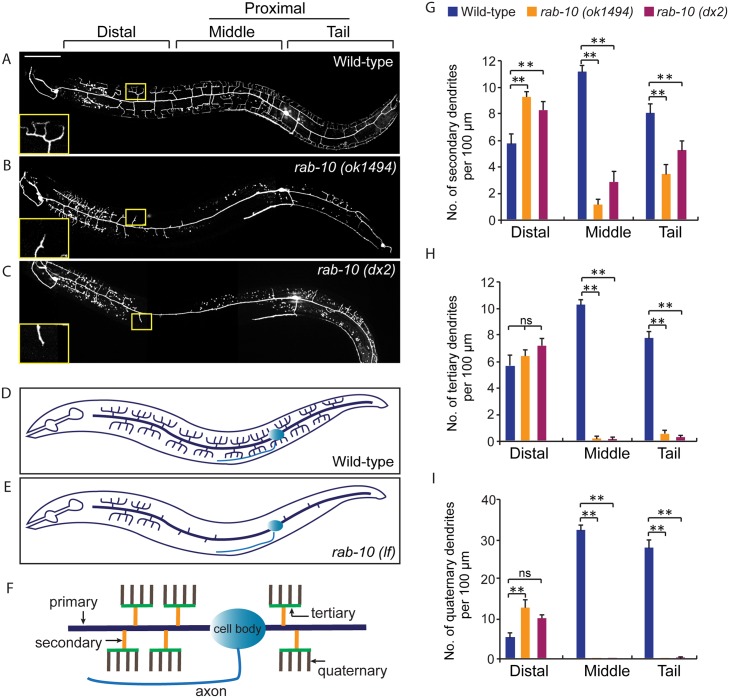
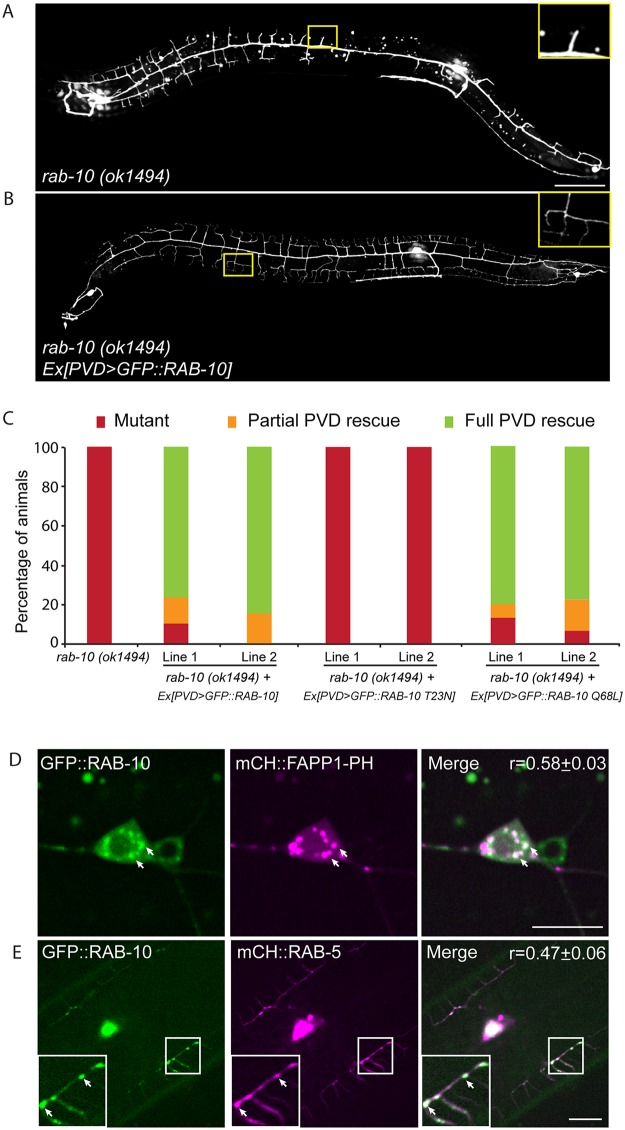
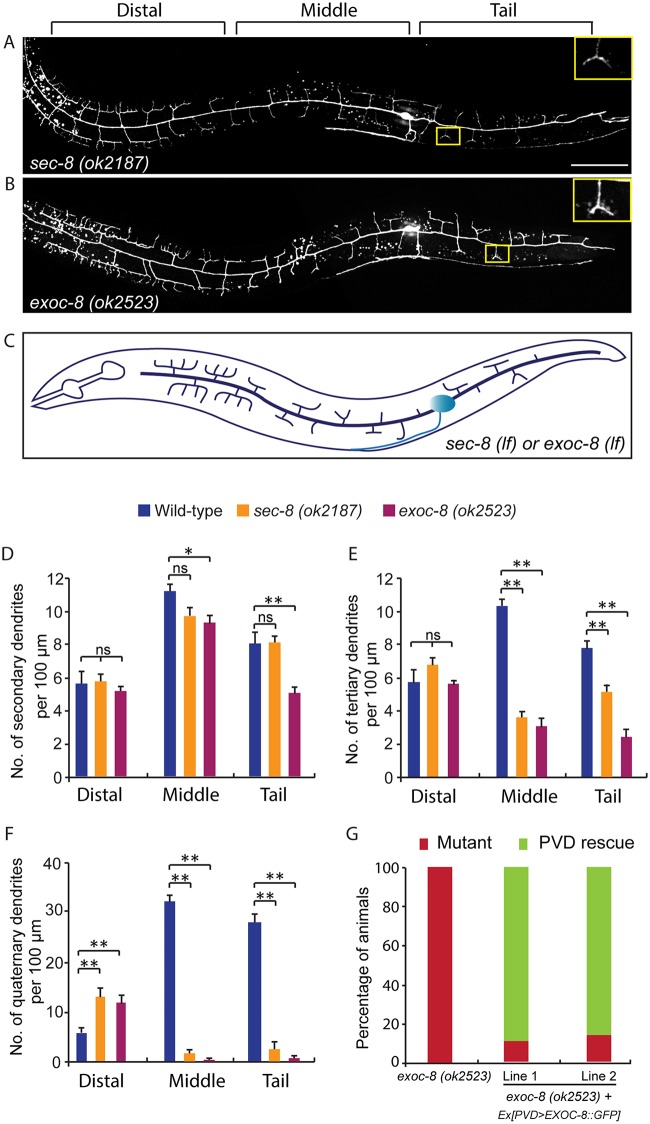
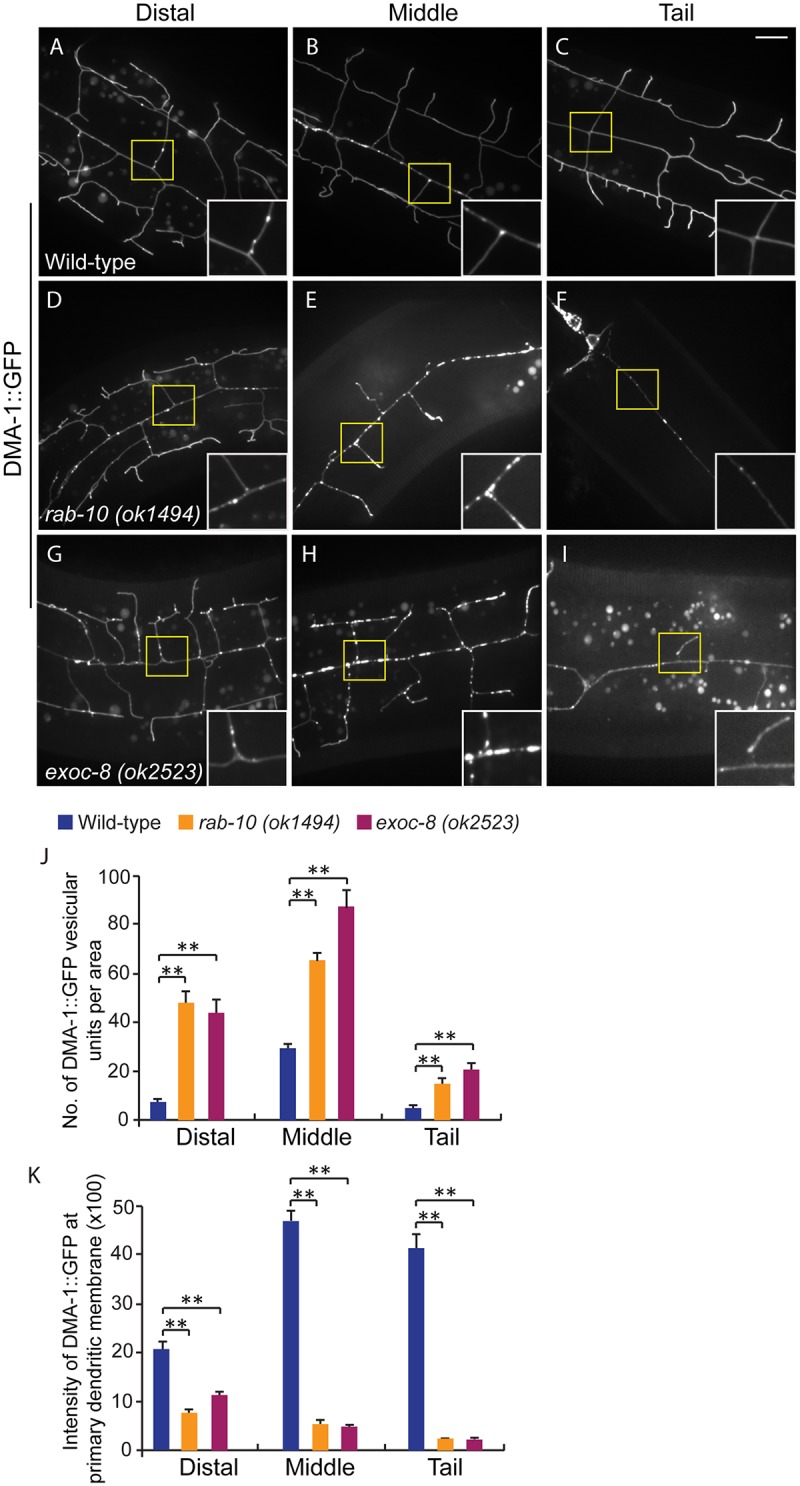
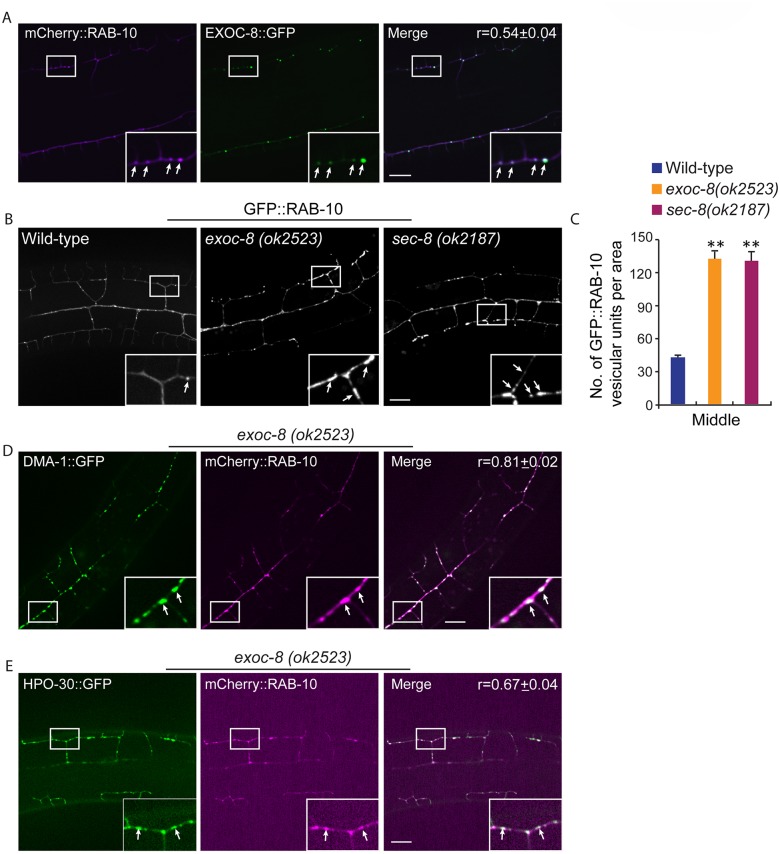
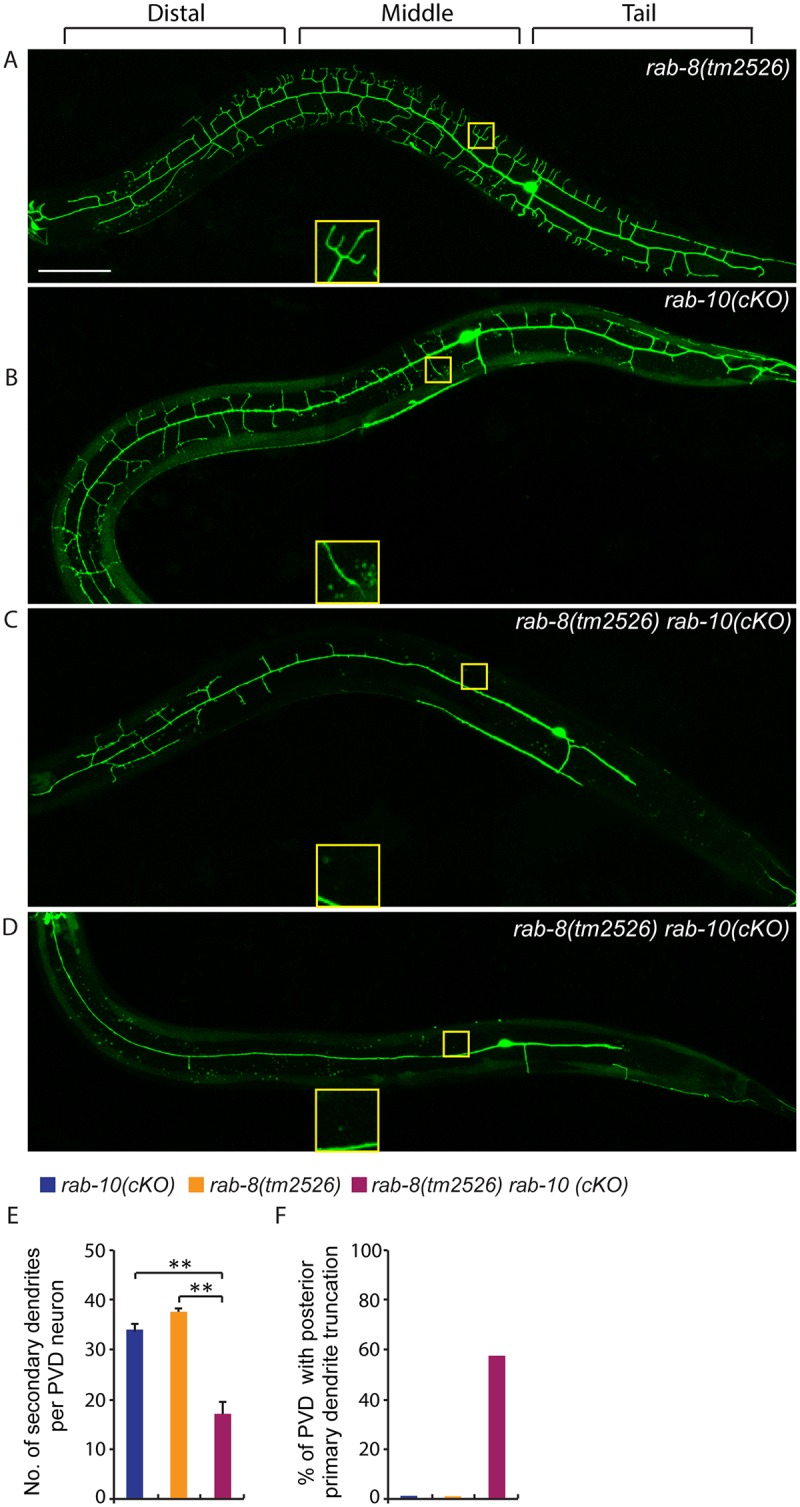
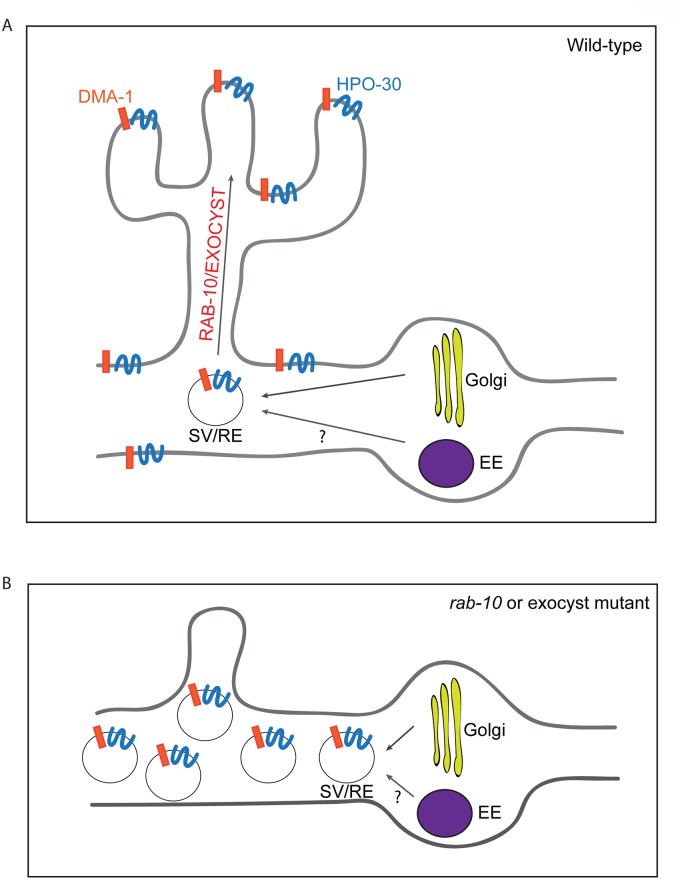
Formation of elaborately branched dendrites is necessary for the proper input and connectivity of many sensory neurons. Previous studies have revealed that dendritic growth relies heavily on ER-to-Golgi transport, Golgi outposts and endocytic recycling. How new membrane and associated cargo is delivered from the secretory and endosomal compartments to sites of active dendritic growth, however, remains unknown. Using a candidate-based genetic screen in C. elegans, we have identified the small GTPase RAB-10 as a key regulator of membrane trafficking during dendrite morphogenesis. Loss of rab-10 severely reduced proximal dendritic arborization in the multi-dendritic PVD neuron. RAB-10 acts cell-autonomously in the PVD neuron and localizes to the Golgi and early endosomes. Loss of function mutations of the exocyst complex components exoc-8 and sec-8, which regulate tethering, docking and fusion of transport vesicles at the plasma membrane, also caused proximal dendritic arborization defects and led to the accumulation of intracellular RAB-10 vesicles. In rab-10 and exoc-8 mutants, the trans-membrane proteins DMA-1 and HPO-30, which promote PVD dendrite stabilization and branching, no longer localized strongly to the proximal dendritic membranes and instead were sequestered within intracellular vesicles. Together these results suggest a crucial role for the Rab10 GTPase and the exocyst complex in controlling membrane transport from the secretory and/or endosomal compartments that is required for dendritic growth.
Overview
The claims and statistics of this paper haven’t been checked yet.
Free: it reads the open-access text and checks the first 5 claims that cite a source we can check. Create a free account to check every claim.
Integrity signals
Registry
Cites
Statistics
Figures
Verification
Claims the paper makes
The claims and statistics of this paper haven’t been checked yet.
Free: it reads the open-access text and checks the first 5 claims that cite a source we can check. Create a free account to check every claim.
Claims other papers make about this one
Each is checked against this paper’s own text: does it say what the citing paper says it does?
In the citing paper
“RAB10 function has also been linked to neuronal morphology and polarization, playing a critical role in axonal development and dendrite arborization.46,47”
From RAB10: an Alzheimer’s disease resilience locus and potential drug target (2018) · cites this paper as [47]
Self-check
Percentages, sums and reported differences re-computed from the paper’s own numbers.
The self-check needs the paper’s full text.
Citations
Cites
Rab11 regulates recycling through the pericentriolar recycling endosome.
Ullrich, O., Reinsch, S., Urbé, S., Zerial, M., & Parton, R. G. (1996) · The Journal of cell biology · doi:10.1083/jcb.135.4.913 · Cited by 1,197
Rabs and their effectors: achieving specificity in membrane traffic
Grosshans, B. L., Ortiz, D., & Novick, P. (2006) · Proceedings of the National Academy of Sciences · doi:10.1073/pnas.0601617103 · Cited by 1,005 · cited 1×
“Rab GTPases are molecular switches that exert their functions by recruiting and releasing specific effectors [34].”
Toward Improving Caenorhabditis elegans Phenome Mapping With an ORFeome-Based RNAi Library
Rual, J.-F., Ceron, J., Koreth, J., Hao, T., Nicot, A.-S., Hirozane-Kishikawa, T., Vandenhaute, J., Orkin, S. H., Hill, D. E., van den Heuvel, S., et al. (2004) · Genome Research · doi:10.1101/gr.2505604 · Cited by 920
BI-DIRECTIONAL PROTEIN TRANSPORT BETWEEN THE ER AND GOLGI
Lee, M. C. S., Miller, E. A., Goldberg, J., Orci, L., & Schekman, R. (2004) · Annual Review of Cell and Developmental Biology · doi:10.1146/annurev.cellbio.20.010403.105307 · Cited by 813
The exocyst is an effector for Sec4p, targeting secretory vesicles to sites of exocytosis
Guo, W., Roth, D., Walch-Solimena, C., & Novick, P. (1999) · The EMBO Journal · doi:10.1093/emboj/18.4.1071 · Cited by 627
Hobert, O. (2002) · BioTechniques · doi:10.2144/02324bm01 · Cited by 624
Grindstaff, K. K., Yeaman, C., Anandasabapathy, N., Hsu, S.-C., Rodriguez-Boulan, E., Scheller, R. H., & Nelson, W. J. (1998) · Cell · doi:10.1016/s0092-8674(00)81435-x · Cited by 460
Pereira-Leal, J. B., & Seabra, M. C. (2000) · Journal of Molecular Biology · doi:10.1006/jmbi.2000.4010 · Cited by 458
The exocyst complex in polarized exocytosis
He, B., & Guo, W. (2009) · Current Opinion in Cell Biology · doi:10.1016/j.ceb.2009.04.007 · Cited by 438
Growing Dendrites and Axons Differ in Their Reliance on the Secretory Pathway
Ye, B., Zhang, Y., Song, W., Younger, S. H., Jan, L. Y., & Jan, Y. N. (2007) · Cell · doi:10.1016/j.cell.2007.06.032 · Cited by 380
Self-citation
Cited by
Rab 10—a traffic controller in multiple cellular pathways and locations
Chua, C. E. L., & Tang, B. L. (2018) · Journal of Cellular Physiology · doi:10.1002/jcp.26503 · Cited by 80
RAB10: an Alzheimer’s disease resilience locus and potential drug target
Tavana, J., Rosene, M., Jensen, N., Ridge, P. G., Kauwe, J. S. K., & Karch, C. M. (2018) · Clinical Interventions in Aging · doi:10.2147/cia.s159148 · Cited by 62
“RAB10 function has also been linked to neuronal morphology and polarization, playing a critical role in axonal development and dendrite arborization.(46,47) During neuronal development, RAB10 associates with plasmalemmal precursor vesicles, which are linked to kinesin 1 via c-Jun N-terminal protein kinaseinteracting p…”
Rab10 Phosphorylation is a Prominent Pathological Feature in Alzheimer’s Disease
Yan, T., Wang, L., Gao, J., Siedlak, S. L., Huntley, M. L., Termsarasab, P., Perry, G., Chen, S. G., & Wang, X. (2018) · Journal of Alzheimer's Disease · doi:10.3233/jad-180023 · Cited by 42
Kramer, D. A., Narvaez-Ortiz, H. Y., Patel, U., Shi, R., Shen, K., Nolen, B. J., Roche, J., & Chen, B. (2023) · eLife · doi:10.7554/elife.88492 · Cited by 7
Metadata
- Authors
- Zou, W., Yadav, S., DeVault, L., Jan, Y. N., & Sherwood, D. R.
- Venue
- PLOS Genetics
- Publisher
- Public Library of Science (PLoS)
- Published
- 2015-09-22
- Volume
- 11
- Issue
- 9
- Pages
- e1005484
- ISSN
- 1553-7404
- PMC
- PMC4578882
- Cited by
- 96
- References
- 55
- Language
- en
- Update notices
- correction (2016-09-09)
About these checks
Registry, retraction, Cites and statistics results are computed, not judged, with one exception: a printed reference that no index lists is read once by a model before it counts as a citation error. Claims are extracted by a model and kept only when their quote appears verbatim in the text; each cited source is then checked, with a model’s help, for whether it says what the claim relies on. Those verdicts can be wrong — read the claim’s quote and the cited source before relying on one.
Statistics and arithmetic are recomputed, not judged.
Confidence bands are shown only for fields calibrated on our annotated test set. None is calibrated yet, so no band is shown.
What counts as a claim ›How we measure confidence ›How we check this ›
Are you an author, or do you see a problem with this page? Request a review
Data sources
Bibliographic data: Semantic Scholar, OpenAlex, Crossref.
Contains information from the Semantic Scholar Academic Graph Datasets, made available under the ODC Attribution License (ODC-BY 1.0).
Semantic Scholar’s data is described in: Kinney, R., et al. (2023). The Semantic Scholar Open Data Platform. arXiv:2301.10140.
