

The DOI matches its Crossref record; 110 of the 111 references it cites were found in a registry or an index.
KdmB, a Jumonji Histone H3 Demethylase, Regulates Genome-Wide H3K4 Trimethylation and Is Required for Normal Induction of Secondary Metabolism in Aspergillus nidulans
Open accessAbstract
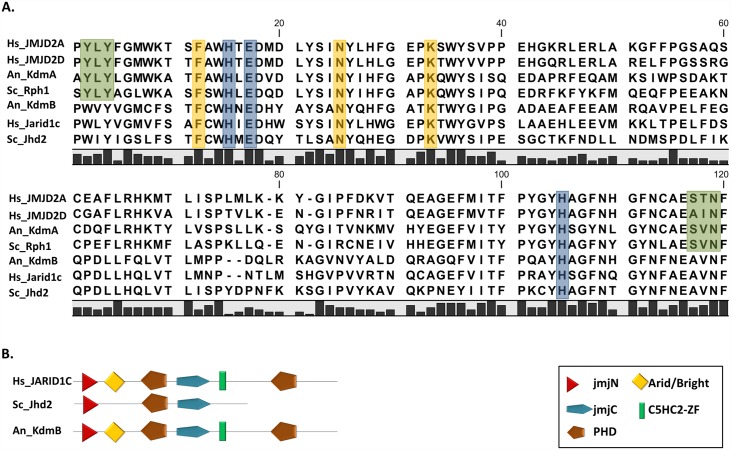
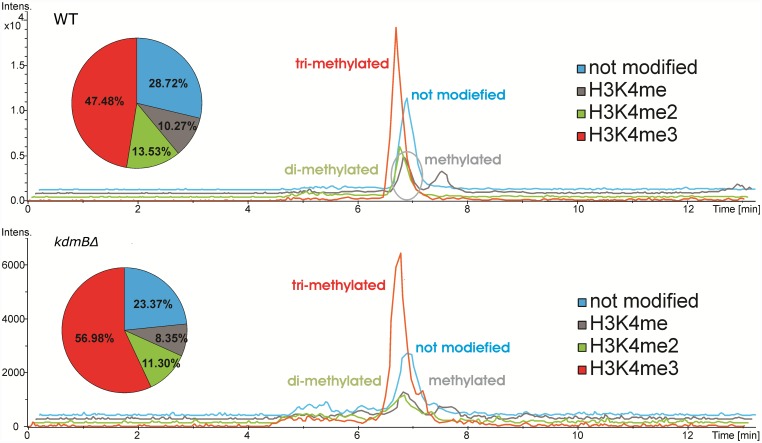
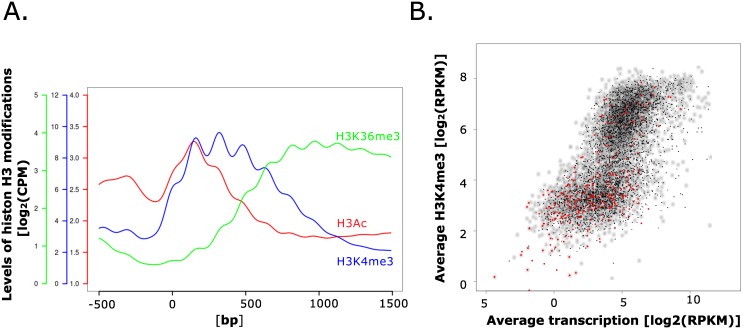
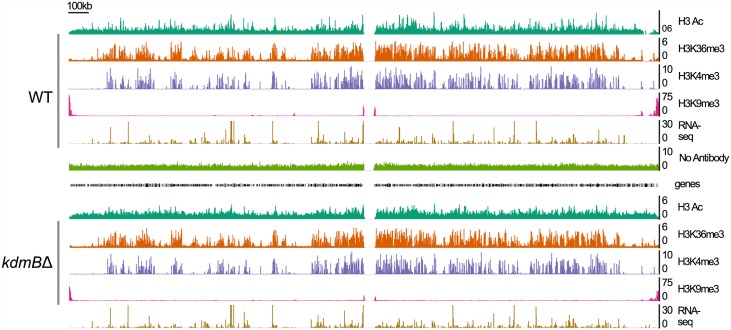
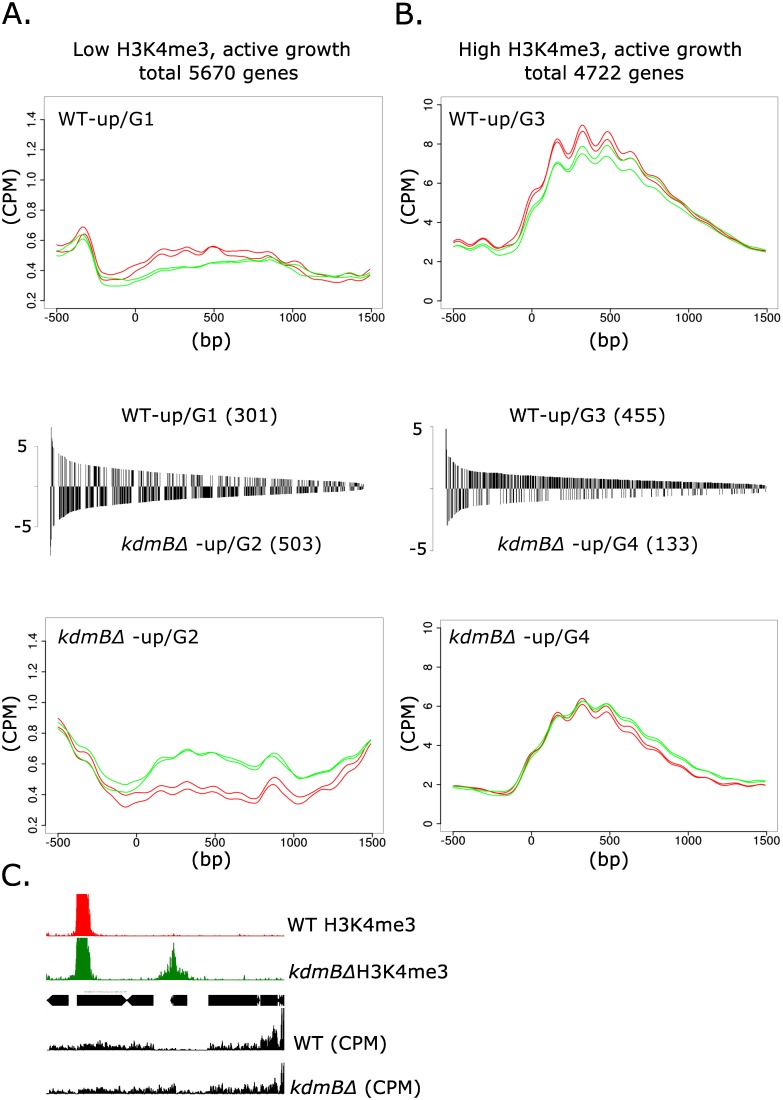
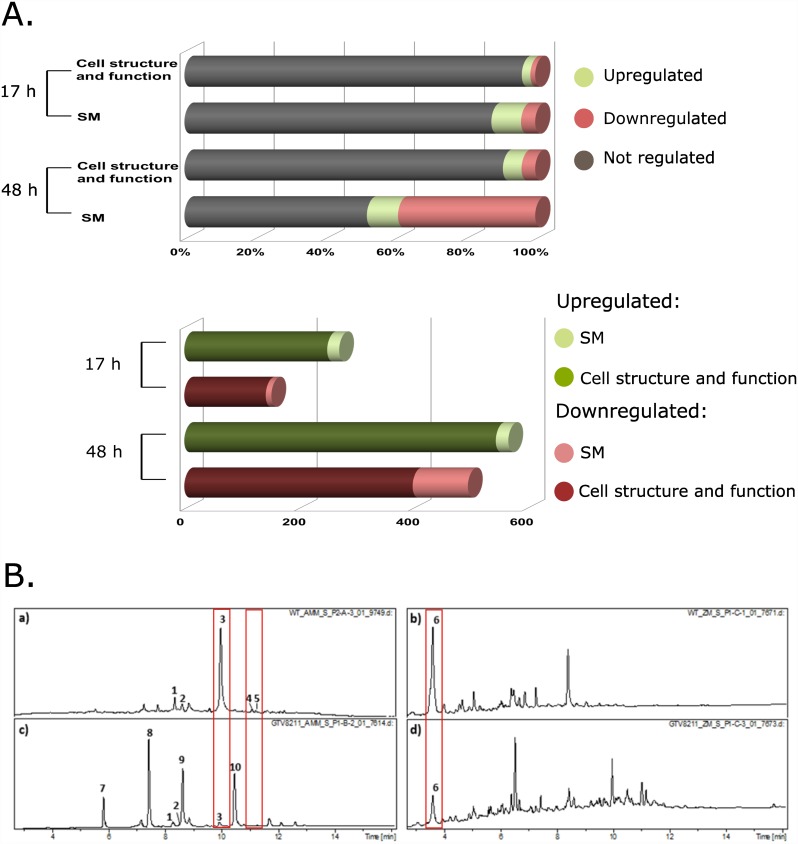
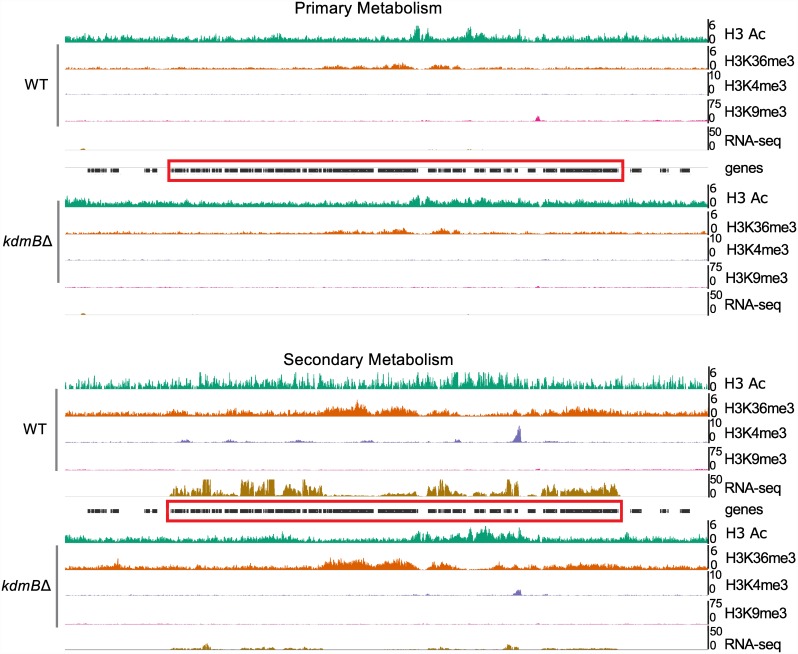
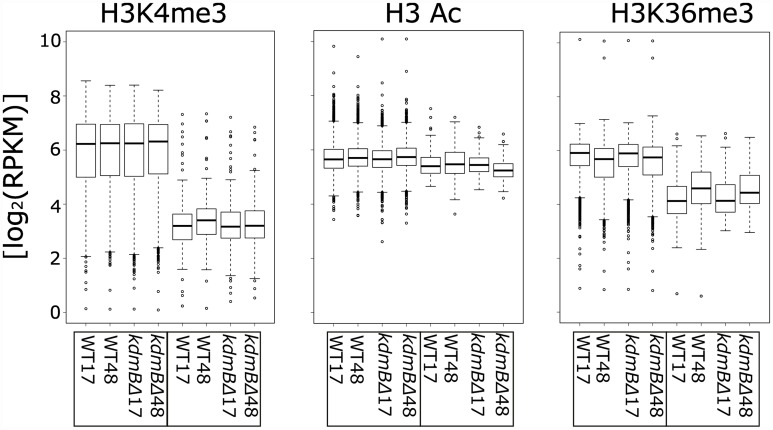
Histone posttranslational modifications (HPTMs) are involved in chromatin-based regulation of fungal secondary metabolite biosynthesis (SMB) in which the corresponding genes-usually physically linked in co-regulated clusters-are silenced under optimal physiological conditions (nutrient-rich) but are activated when nutrients are limiting. The exact molecular mechanisms by which HPTMs influence silencing and activation, however, are still to be better understood. Here we show by a combined approach of quantitative mass spectrometry (LC-MS/MS), genome-wide chromatin immunoprecipitation (ChIP-seq) and transcriptional network analysis (RNA-seq) that the core regions of silent A. nidulans SM clusters generally carry low levels of all tested chromatin modifications and that heterochromatic marks flank most of these SM clusters. During secondary metabolism, histone marks typically associated with transcriptional activity such as H3 trimethylated at lysine-4 (H3K4me3) are established in some, but not all gene clusters even upon full activation. KdmB, a Jarid1-family histone H3 lysine demethylase predicted to comprise a BRIGHT domain, a zinc-finger and two PHD domains in addition to the catalytic Jumonji domain, targets and demethylates H3K4me3 in vivo and mediates transcriptional downregulation. Deletion of kdmB leads to increased transcription of about ~1750 genes across nutrient-rich (primary metabolism) and nutrient-limiting (secondary metabolism) conditions. Unexpectedly, an equally high number of genes exhibited reduced expression in the kdmB deletion strain and notably, this group was significantly enriched for genes with known or predicted functions in secondary metabolite biosynthesis. Taken together, this study extends our general knowledge about multi-domain KDM5 histone demethylases and provides new details on the chromatin-level regulation of fungal secondary metabolite production.
Overview
The claims and statistics of this paper haven’t been checked yet.
Run the check — free, no account needed. It reads the open-access text and checks the sources it cites.
Integrity signals
Registry
Cites
Statistics
Figures
Verification
Claims the paper makes
The claims and statistics of this paper haven’t been checked yet.
Run the check — free, no account needed. It reads the open-access text and checks the sources it cites.
Claims other papers make about this one
Each is checked against this paper’s own text: does it say what the citing paper says it does?
In the citing paper
“Several genes were assigned to clusters that showed enrichment for gene sets consistent with their known functions, including KDM1B,41 BRSK2,42 and ITSN143 consistent with published functional evidence”
From Exome sequencing of 457 autism families recruited online provides evidence for autism risk genes (2019) · cites this paper as [41]
Self-check
Percentages, sums and reported differences re-computed from the paper’s own numbers.
The self-check needs the paper’s full text.
Citations
Cites
BEDTools: a flexible suite of utilities for comparing genomic features
Quinlan, A. R., & Hall, I. M. (2010) · Bioinformatics · doi:10.1093/bioinformatics/btq033 · Cited by 27,437
HTSeq—a Python framework to work with high-throughput sequencing data
Anders, S., Pyl, P. T., & Huber, W. (2015) · Bioinformatics · doi:10.1093/bioinformatics/btu638 · Cited by 21,464
Robinson, J. T., Thorvaldsdóttir, H., Winckler, W., Guttman, M., Lander, E. S., Getz, G., & Mesirov, J. P. (2011) · Nature Biotechnology · doi:10.1038/nbt.1754 · Cited by 15,390
ggplot2: Elegant Graphics for Data Analysis
Wickham, H. (2009) · doi:10.1007/978-0-387-98141-3 · Cited by 14,447
Bioconductor: open software development for computational biology and bioinformatics
Gentleman, R. C., Carey, V. J., Bates, D. M., Bolstad, B., Dettling, M., Dudoit, S., Ellis, B., Gautier, L., Ge, Y., Gentry, J., et al. (2004) · Genome biology · doi:10.1186/gb-2004-5-10-r80 · Cited by 12,082
Chromatin modifications and their function
Kouzarides, T. (2007) · Cell · doi:10.1016/j.cell.2007.02.005 · Cited by 10,883
Integrative Genomics Viewer (IGV): high-performance genomics data visualization and exploration
Thorvaldsdottir, H., Robinson, J. T., & Mesirov, J. P. (2013) · Briefings in Bioinformatics · doi:10.1093/bib/bbs017 · Cited by 9,049
Regulation of chromatin by histone modifications
Bannister, A. J., & Kouzarides, T. (2011) · Cell Research · doi:10.1038/cr.2011.22 · Cited by 6,012
Chen, X., Xiu, M., Xing, J., Yu, S., Min, D., & Guo, F. (2017) · Cellular Physiology and Biochemistry · doi:10.1159/000479439 · Cited by 5,760
The Role of Chromatin during Transcription
Li, B., Carey, M., & Workman, J. L. (2007) · Cell · doi:10.1016/j.cell.2007.01.015 · Cited by 3,503
Research works printed but not linked: 2
- A. Gacek-Matthews, KdmA, a histone H3 demethylase with bipartite function, differentially regulates primary and secondary metabolism in Aspergillus nidulans, Molecular microbiology. accepted with minor revision
- A Gacek-Matthews, 2015, KdmA, a histone H3 demethylase with bipartite function, differentially regulates primary and secondary metabolism in Aspergillus nidulans, Mol Microbiol
Cited by
Sorted by citations
Items 101–122 of 122
Ferraro, A. R., Ameri, A. J., Lu, Z., Kamei, M., Schmitz, R. J., & Lewis, Z. A. (2021) · Figshare · doi:10.6084/m9.figshare.14812401
Self-citationHuang, L., Li, X., Dong, L., Wang, B., & Pan, L. (2021) · Figshare · doi:10.6084/m9.figshare.16576053
Huang, D., Xiao, F., Hao, H., Hua, F., Luo, Z., Huang, Z., Li, Q., Chen, S., Cheng, X., Zhang, X., et al. (2020) · Figshare · doi:10.6084/m9.figshare.13151818
Huang, D., Xiao, F., Hao, H., Hua, F., Luo, Z., Huang, Z., Li, Q., Chen, S., Cheng, X., Zhang, X., et al. (2020) · Figshare · doi:10.6084/m9.figshare.13151815
Huang, D., Xiao, F., Hao, H., Hua, F., Luo, Z., Huang, Z., Li, Q., Chen, S., Cheng, X., Zhang, X., et al. (2020) · Figshare · doi:10.6084/m9.figshare.13151812
Ferraro, A. R., Ameri, A. J., Lu, Z., Kamei, M., Schmitz, R. J., & Lewis, Z. A. (2021) · Figshare · doi:10.6084/m9.figshare.14812416
Self-citationHuang, D., Xiao, F., Hao, H., Hua, F., Luo, Z., Huang, Z., Li, Q., Chen, S., Cheng, X., Zhang, X., et al. (2020) · Figshare · doi:10.6084/m9.figshare.13151809
Huang, L., Li, X., Dong, L., Wang, B., & Pan, L. (2021) · Figshare · doi:10.6084/m9.figshare.16576041
Ferraro, A. R., Ameri, A. J., Lu, Z., Kamei, M., Schmitz, R. J., & Lewis, Z. A. (2021) · Figshare · doi:10.6084/m9.figshare.14812407
Self-citationFerraro, A. R., Ameri, A. J., Lu, Z., Kamei, M., Schmitz, R. J., & Lewis, Z. A. (2021) · Figshare · doi:10.6084/m9.figshare.14812413
Self-citationHuang, L., Li, X., Dong, L., Wang, B., & Pan, L. (2021) · Figshare · doi:10.6084/m9.figshare.16576044
Schüller, A., Studt, L., Berger, H., Silvestrini, L., Labuda, R., Güldener, U., Gorfer, M., Bacher, M., Doppler, M., Gasparotto, E., et al. (2023) · Figshare · doi:10.6084/m9.figshare.23575458
Self-citationFerraro, A. R., Ameri, A. J., Lu, Z., Kamei, M., Schmitz, R. J., & Lewis, Z. A. (2021) · Figshare · doi:10.6084/m9.figshare.14812422
Self-citationFerraro, A. R., Ameri, A. J., Lu, Z., Kamei, M., Schmitz, R. J., & Lewis, Z. A. (2021) · Figshare · doi:10.6084/m9.figshare.14812404
Self-citationHuang, D., Xiao, F., Hao, H., Hua, F., Luo, Z., Huang, Z., Li, Q., Chen, S., Cheng, X., Zhang, X., et al. (2020) · Figshare · doi:10.6084/m9.figshare.13151821
Ferraro, A. R., Ameri, A. J., Lu, Z., Kamei, M., Schmitz, R. J., & Lewis, Z. A. (2021) · Figshare · doi:10.6084/m9.figshare.14812395
Self-citationLiao, X., Yao, L., Wang, J., Chen, Y., Chen, S., Qi, Z., & Chen, Y. (2026) · Environmental Microbiology · doi:10.1111/1462-2920.70354
Yin, L., Liu, X. D., Chen, J. K., Ding, N., Chen, H., Lin, H., Ma, Z., Shao, Q., Wang, D., & Zhang, P. (2026) · Molecules · doi:10.3390/molecules31132367
Impact of chromatin changes in pathogenesis of infectious diseases: A pathogen view
Ropolo, A., Touz, M. C., Feliziani, C., & Rivero, M. R. (2026) · Elsevier eBooks · doi:10.1016/b978-0-443-19001-8.00029-5
Pang, M., Guo, D., Li, Y., Chen, Y., Du, R., Liu, J., Hu, J., Li, H., Li, Z., Pan, G., et al. (2026) · Synthetic and Systems Biotechnology · doi:10.1016/j.synbio.2026.10.001
Metadata
- Authors
- Gacek-Matthews, A., Berger, H., Sasaki, T., Wittstein, K., Gruber, C., Lewis, Z. A., & Strauss, J.
- Affiliations
- AIT Austrian Institute of Technology GmbH (AT)
- University of Georgia (US)
- Helmholtz Centre for Infection Research (DE)
- Corresponding author
- Strauss, Joseph
- Venue
- PLOS Genetics
- Publisher
- Public Library of Science (PLoS)
- Published
- 2016-08-22
- Volume
- 12
- Issue
- 8
- Pages
- e1006222
- ISSN
- 1553-7390 (ISSN-L)
- 1553-7404
- PMC
- PMC4993369
- OpenAlex
- W2512239244
- Cited by
- 105
- References
- 111
- Citations by year
- 2026: 6 · 2025: 5 · 2024: 10 · 2023: 9 · 2022: 16 · 2021: 19 · 2020: 15 · 2019: 9 · 2018: 7 · 2017: 9
- FWCI
- 4.33
- Type
- journal article
- Language
- en
- Open access
- gold
- doi.org
- Licence
- Locations
- PLoS Genetics (publishedVersion, cc-by)
- Europe PMC (PubMed Central) (publishedVersion, cc-by)
- PubMed Central (publishedVersion, cc-by)
- PubMed (publishedVersion)
- HZI (Helmholtz Centre for Infection Research) (submittedVersion, other-oa)
- DOAJ (DOAJ: Directory of Open Access Journals) (submittedVersion, cc-by-sa)
- Figshare (submittedVersion, cc-by)
- Funders
- Austrian Science Fund (F3703)
- Lower Austria Science Fund NFB (LS12-009)
- American Cancer Society (RSG-14-184-01-DMC.)
- Topics
- Life Sciences › Biochemistry, Genetics and Molecular Biology › Molecular Biology › Genomics and Chromatin Dynamics
- Life Sciences › Immunology and Microbiology › Applied Microbiology and Biotechnology › Microbial Natural Products and Biosynthesis
- Life Sciences › Biochemistry, Genetics and Molecular Biology › Molecular Biology › Fungal and yeast genetics research
- Keywords
- H3K4 trimethylation, histone demethylation, Aspergillus nidulans, fungal secondary metabolism, secondary metabolite gene clusters, chromatin regulation, nutrient limitation, transcriptional downregulation, heterochromatin, gene silencing
- MeSH terms
- Aspergillus nidulans, Chromatin, Histones, Humans, Gene Expression Regulation, Fungal, Genome, DNA Methylation, Tandem Mass Spectrometry, Histone Demethylases, Jumonji Domain-Containing Histone Demethylases, Secondary Metabolism
About these checks
Registry, retraction, Cites and statistics results are computed, not judged, with one exception: a printed reference that no index lists is read once by a model before it counts as a citation error. Claims are extracted by a model and kept only when their quote appears verbatim in the text; each cited source is then checked, with a model’s help, for whether it says what the claim relies on. Those verdicts can be wrong — read the claim’s quote and the cited source before relying on one.
Statistics and arithmetic are recomputed, not judged.
Confidence bands are shown only for fields calibrated on our annotated test set. None is calibrated yet, so no band is shown.
What counts as a claim ›How we measure confidence ›How we check this ›
Are you an author, or do you see a problem with this page? Request a review
