

The DOI matches its Crossref record; 60 of the 60 references it cites were found in a registry or an index.
Loss of C9orf72 Enhances Autophagic Activity via Deregulated mTOR and TFEB Signaling
Open accessAbstract
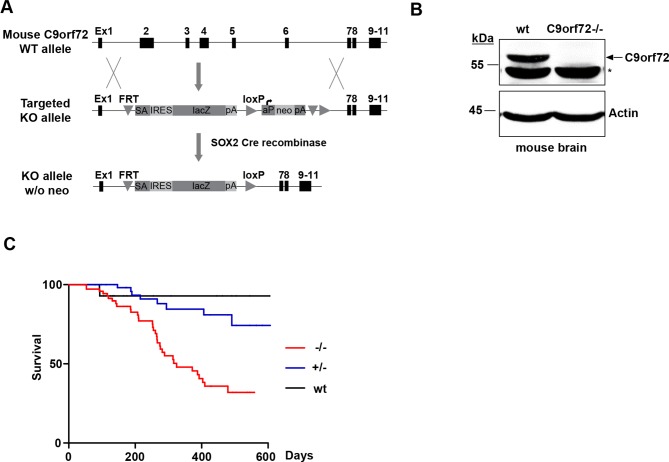
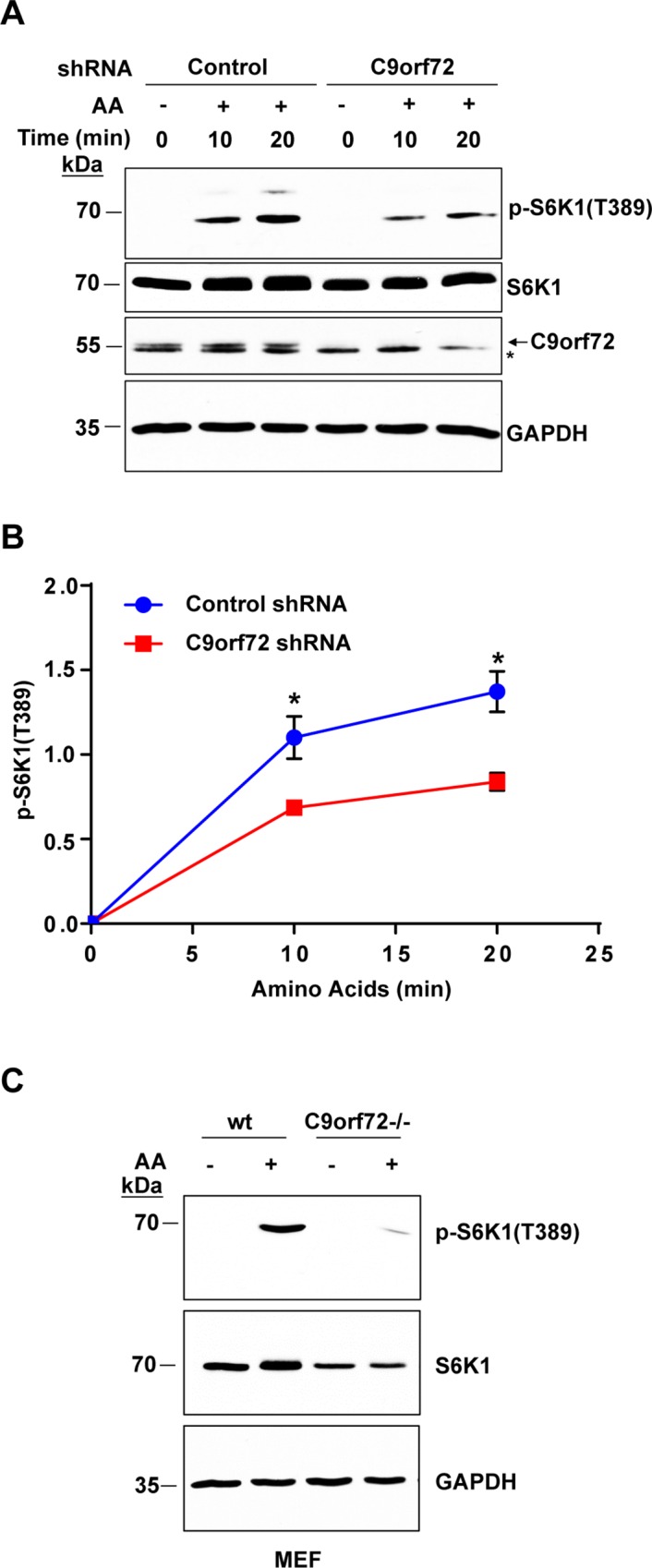
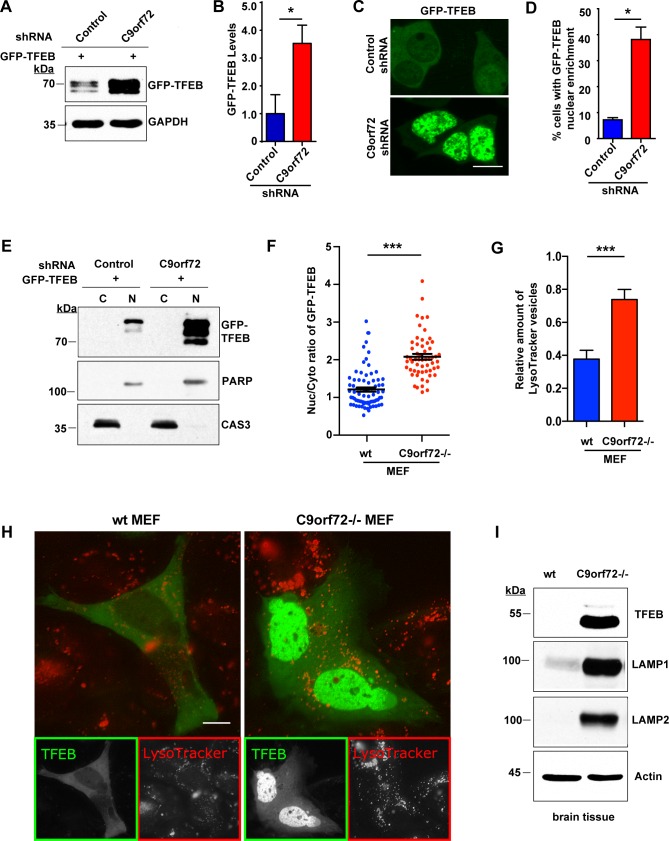
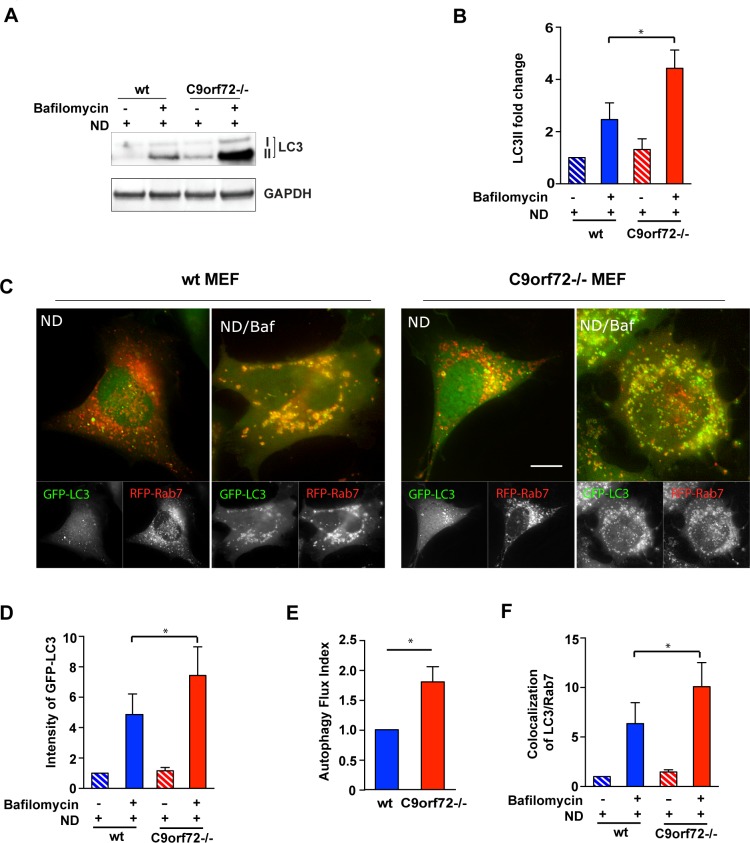
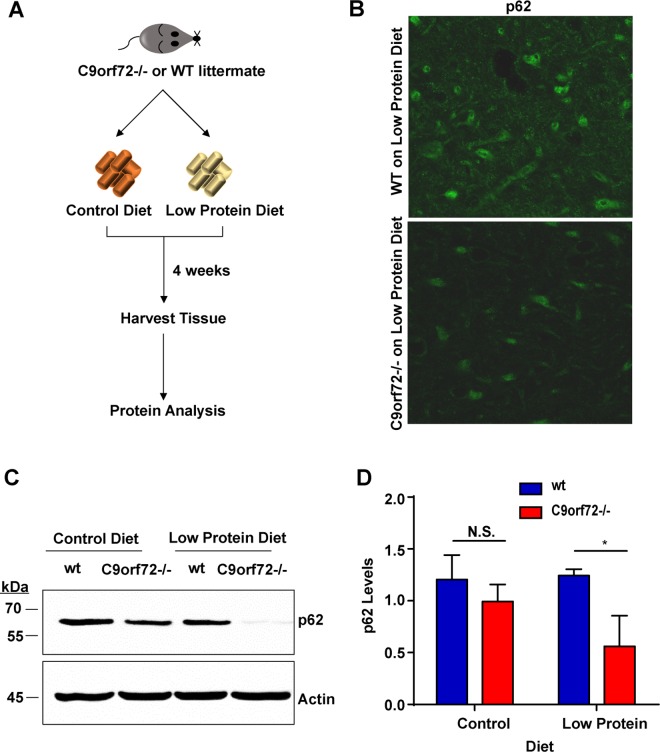
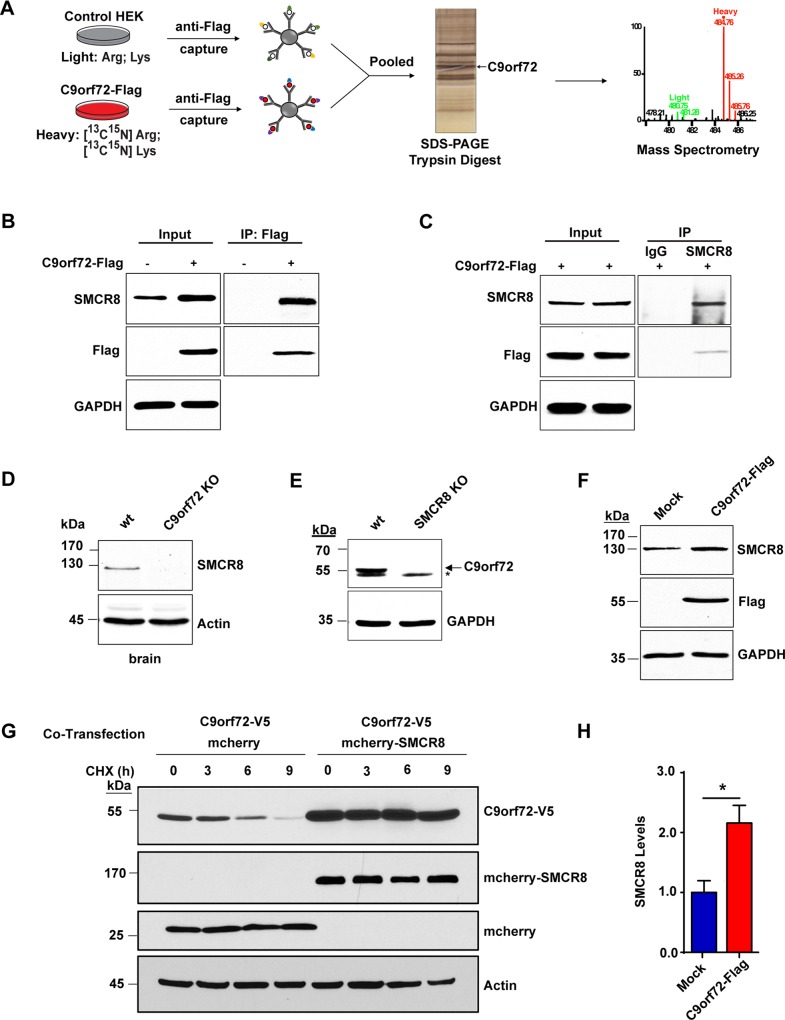
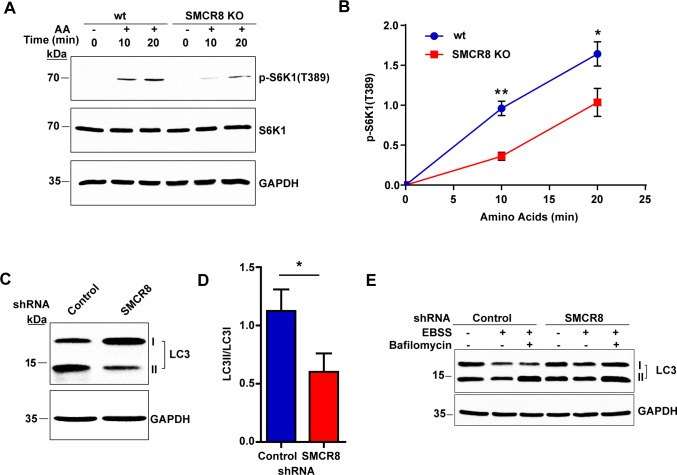
The most common cause of the neurodegenerative diseases amyotrophic lateral sclerosis and frontotemporal dementia is a hexanucleotide repeat expansion in C9orf72. Here we report a study of the C9orf72 protein by examining the consequences of loss of C9orf72 functions. Deletion of one or both alleles of the C9orf72 gene in mice causes age-dependent lethality phenotypes. We demonstrate that C9orf72 regulates nutrient sensing as the loss of C9orf72 decreases phosphorylation of the mTOR substrate S6K1. The transcription factor EB (TFEB), a master regulator of lysosomal and autophagy genes, which is negatively regulated by mTOR, is substantially up-regulated in C9orf72 loss-of-function animal and cellular models. Consistent with reduced mTOR activity and increased TFEB levels, loss of C9orf72 enhances autophagic flux, suggesting that C9orf72 is a negative regulator of autophagy. We identified a protein complex consisting of C9orf72 and SMCR8, both of which are homologous to DENN-like proteins. The depletion of C9orf72 or SMCR8 leads to significant down-regulation of each other's protein level. Loss of SMCR8 alters mTOR signaling and autophagy. These results demonstrate that the C9orf72-SMCR8 protein complex functions in the regulation of metabolism and provide evidence that loss of C9orf72 function may contribute to the pathogenesis of relevant diseases.
Overview
The claims and statistics of this paper haven’t been checked yet.
Run the check — free, no account needed. It reads the open-access text and checks the sources it cites.
Integrity signals
Registry
Cites
Statistics
Figures
Verification
Claims the paper makes
The claims and statistics of this paper haven’t been checked yet.
Run the check — free, no account needed. It reads the open-access text and checks the sources it cites.
Claims other papers make about this one
Each is checked against this paper’s own text: does it say what the citing paper says it does?
In the citing paper
“Paradoxically, however, c9orf72 knockout in mouse (which models the loss of function attributed to the hexanucleotide repeat expansion) enhances autophagy by de-repressing MTOR and, in turn, increasing TFEB nuclear translocation [179,180].”
From Autophagy and ALS: mechanistic insights and therapeutic implications (2022) · cites this paper as [180]
Self-check
Percentages, sums and reported differences re-computed from the paper’s own numbers.
The self-check needs the paper’s full text.
Citations
Cites
Repertoires of Autophagy in the Pathogenesis of Ocular Diseases
Li, Y., Jiang, Q. L., Cao, G.-F., Yao, J., & Yan, B. (2015) · Cellular Physiology and Biochemistry · doi:10.1159/000373980 · Cited by 16,351
mTOR Signaling in Growth Control and Disease
Laplante, M., & Sabatini, D. M. (2012) · Cell · doi:10.1016/j.cell.2012.03.017 · Cited by 8,509
Cui, C., Cui, J., Jin, F., Cui, Y., Li, R., Jiang, X., Tian, Y., Wang, R. C., Jiang, P., & Gao, J. (2017) · Cellular Physiology and Biochemistry · doi:10.1159/000479571 · Cited by 5,214
DeJesus-Hernandez, M., Mackenzie, I. R., Boeve, B. F., Boxer, A. L., Baker, M., Rutherford, N. J., Nicholson, A. M., Finch, N. A., Flynn, H., Adamson, J., et al. (2011) · Neuron · doi:10.1016/j.neuron.2011.09.011 · Cited by 4,936
A Hexanucleotide Repeat Expansion in C9ORF72 Is the Cause of Chromosome 9p21-Linked ALS-FTD
Renton, A. E., Majounie, E., Waite, A., Simón-Sánchez, J., Rollinson, S., Gibbs, J. R., Schymick, J. C., Laaksovirta, H., van Swieten, J. C., Myllykangas, L., et al. (2011) · Neuron · doi:10.1016/j.neuron.2011.09.010 · Cited by 4,409
TFEB Links Autophagy to Lysosomal Biogenesis
Settembre, C., Di Malta, C., Polito, V. A., Arencibia, M. G., Vetrini, F., Erdin, S., Erdin, S. U., Huynh, T., Medina, D., Colella, P., et al. (2011) · Science · doi:10.1126/science.1204592 · Cited by 3,365
A Gene Network Regulating Lysosomal Biogenesis and Function
Sardiello, M., Palmieri, M., di Ronza, A., Medina, D. L., Valenza, M., Gennarino, V. A., Di Malta, C., Donaudy, F., Embrione, V., Polishchuk, R. S., et al. (2009) · Science · doi:10.1126/science.1174447 · Cited by 2,543
Mizushima, N., Yamamoto, A., Matsui, M., Yoshimori, T., & Ohsumi, Y. (2004) · Molecular Biology of the Cell · doi:10.1091/mbc.e03-09-0704 · Cited by 2,105
The role of autophagy in neurodegenerative disease
Nixon, R. A. (2013) · Nature Medicine · doi:10.1038/nm.3232 · Cited by 2,059
Signals from the lysosome: a control centre for cellular clearance and energy metabolism
Settembre, C., Fraldi, A., Medina, D. L., & Ballabio, A. (2013) · Nature Reviews Molecular Cell Biology · doi:10.1038/nrm3565 · Cited by 1,755
Mutations of optineurin in amyotrophic lateral sclerosis
Maruyama, H., Morino, H., Ito, H., Izumi, Y., Kato, H., Watanabe, Y., Kinoshita, Y., Kamada, M., Nodera, H., Suzuki, H., et al. (2010) · Nature · doi:10.1038/nature08971 · Cited by 1,265
The C9orf72 GGGGCC Repeat Is Translated into Aggregating Dipeptide-Repeat Proteins in FTLD/ALS
Mori, K., Weng, S., Arzberger, T., May, S., Rentzsch, K., Kremmer, E., Schmid, B., Kretzschmar, H. A., Cruts, M., Broeckhoven, C. V., et al. (2013) · Science · doi:10.1126/science.1232927 · Cited by 1,248
Ash, P. E. A., Bieniek, K. F., Gendron, T. F., Caulfield, T. R., Lin, W.-L., DeJesus‐Hernandez, M., van Blitterswijk, M., Jansen‐West, K. R., Paul, J. W., Rademakers, R., et al. (2013) · Neuron · doi:10.1016/j.neuron.2013.02.004 · Cited by 1,127
The C9orf72 repeat expansion disrupts nucleocytoplasmic transport.
Zhang, K., Donnelly, C. J., Haeusler, A. R., Grima, J. C., Machamer, J. B., Steinwald, P., Daley, E. L., Miller, S. J., Cunningham, K. M., Vidensky, S., et al. (2015) · Nature · doi:10.1038/nature14973 · Cited by 982
Self-citationC9orf72 nucleotide repeat structures initiate molecular cascades of disease
Haeusler, A. R., Donnelly, C. J., Periz, G., Simko, E. A. J., Shaw, P. G., Kim, M.-S., Maragakis, N. J., Troncoso, J. C., Pandey, A., Sattler, R., et al. (2014) · Nature · doi:10.1038/nature13124 · Cited by 978
Self-citationRole for Rab7 in maturation of late autophagic vacuoles
Jäger, S., Bucci, C., Tanida, I., Ueno, T., Kominami, E., Säftig, P., & Eskelinen, E. (2004) · Journal of Cell Science · doi:10.1242/jcs.01370 · Cited by 970
Exome sequencing in amyotrophic lateral sclerosis identifies risk genes and pathways
Cirulli, E. T., Lasseigne, B. N., Petrovski, S., Sapp, P. C., Dion, P. A., Leblond, C. S., Couthouis, J., Lu, Y.-F., Wang, Q., Krueger, B. J., et al. (2015) · Science · doi:10.1126/science.aaa3650 · Cited by 966
Levine, M. E., Suarez, J. A., Brandhorst, S., Balasubramanian, P., Cheng, C.-W., Madia, F., Fontana, L., Mirisola, M. G., Guevara-Aguirre, J., Wan, J., et al. (2014) · Cell Metabolism · doi:10.1016/j.cmet.2014.02.006 · Cited by 910
RNA Toxicity from the ALS/FTD C9ORF72 Expansion Is Mitigated by Antisense Intervention
Donnelly, C. J., Zhang, P.-W., Pham, J. T., Haeusler, A. R., Mistry, N. A., Vidensky, S., Daley, E. L., Poth, E. M., Hoover, B., Fines, D. M., et al. (2013) · Neuron · doi:10.1016/j.neuron.2013.10.015 · Cited by 877
Self-citationRAN proteins and RNA foci from antisense transcripts in C9ORF72 ALS and frontotemporal dementia
Zu, T., Liu, Y., Báñez-Coronel, M., Reid, T. S., Pletniková, O., Lewis, J. M., Miller, T. M., Harms, M. B., Falchook, A. E., Subramony, S. H., et al. (2013) · Proceedings of the National Academy of Sciences · doi:10.1073/pnas.1315438110 · Cited by 777
C9orf72 repeat expansions cause neurodegeneration in Drosophila through arginine-rich proteins
Mizielinska, S., Grönke, S., Niccoli, T., Ridler, C. E., Clayton, E. L., Devoy, A., Moens, T., Norona, F. E., Woollacott, I. O. C., Pietrzyk, J., et al. (2014) · Science · doi:10.1126/science.1256800 · Cited by 740
Rab7 is required for the normal progression of the autophagic pathway in mammalian cells
Gutierrez, M. G., Munafó, D. B., Berón, W., & Colombo, M. I. (2004) · Journal of Cell Science · doi:10.1242/jcs.01114 · Cited by 680
Poly-dipeptides encoded by the C9orf72 repeats bind nucleoli, impede RNA biogenesis, and kill cells
Kwon, I., Xiang, S., Kato, M., Wu, L. C., Theodoropoulos, P., Wang, T., Kim, J., Yun, J., Xie, Y., & McKnight, S. L. (2014) · Science · doi:10.1126/science.1254917 · Cited by 656
Gijselinck, I., Langenhove, T. V., van der Zee, J., Sleegers, K., Philtjens, S., Kleinberger, G., Janssens, J., Bettens, K., Cauwenberghe, C. V., Pereson, S., et al. (2011) · The Lancet Neurology · doi:10.1016/s1474-4422(11)70261-7 · Cited by 655
<emph type="ital">SQSTM1</emph> Mutations in Familial and Sporadic Amyotrophic Lateral Sclerosis
Fecto, F. (2011) · Archives of Neurology · doi:10.1001/archneurol.2011.250 · Cited by 650
Lagier‐Tourenne, C., Baughn, M. W., Rigo, F., Sun, S., Liu, P., Li, H., Jiang, J., Watt, A. T., Chun, S. J., Katz, M., et al. (2013) · Proceedings of the National Academy of Sciences · doi:10.1073/pnas.1318835110 · Cited by 585
Tsun, Z.-Y., Bar-Peled, L., Chantranupong, L., Zoncu, R., Wang, T., Kim, C., Spooner, E., & Sabatini, D. M. (2013) · Molecular Cell · doi:10.1016/j.molcel.2013.09.016 · Cited by 565
C9orf72 is required for proper macrophage and microglial function in mice
O’Rourke, J. G., Bogdanik, L., Yáñez, A., Lall, D., Wolf, A. J., Muhammad, A. K. M. G., Ho, R., Carmona, S., Vit, J. P., Zarrow, J., et al. (2016) · Science · doi:10.1126/science.aaf1064 · Cited by 550
Jiang, J., Zhu, Q., Gendron, T. F., Saberi, S., McAlonis-Downes, M., Seelman, A., Stauffer, J. E., Jafar-nejad, P., Drenner, K., Schulte, D., et al. (2016) · Neuron · doi:10.1016/j.neuron.2016.04.006 · Cited by 536
Zhu, Y., Maßen, S., Terenzio, M., Lang, V., Chen-Lindner, S., Eils, R., Novak, I., Đikić, I., Hamacher‐Brady, A., & Brady, N. R. (2012) · Journal of Biological Chemistry · doi:10.1074/jbc.m112.399345 · Cited by 504
Self-citationBaba, M., Hong, S., Sharma, N. D., Warren, M. B., Nickerson, M. L., Iwamatsu, A., Esposito, D., Gillette, W., Hopkins, R. F., Hartley, J. L., et al. (2006) · Proceedings of the National Academy of Sciences · doi:10.1073/pnas.0603781103 · Cited by 490
Farg, M. A., Sundaramoorthy, V., Sultana, J. M., Yang, S., Atkinson, R. A. K., Levina, V., Halloran, M. A., Gleeson, P. A., Blair, I. P., Soo, K. Y., et al. (2014) · Human Molecular Genetics · doi:10.1093/hmg/ddu068 · Cited by 478
Al-Sarraj, S., King, A., Troakes, C., Smith, B., Maekawa, S., Bodi, I., Rogelj, B., Al-Chalabi, A., Hortobágyi, T., & Shaw, C. E. (2011) · Acta Neuropathologica · doi:10.1007/s00401-011-0911-2 · Cited by 475
Sellier, C., Campanari, M., Julie Corbier, C., Gaucherot, A., Kolb‐Cheynel, I., Oulad‐Abdelghani, M., Ruffenach, F., Page, A., Ciura, S., Kabashi, E., et al. (2016) · The EMBO Journal · doi:10.15252/embj.201593350 · Cited by 414
The C9orf72 protein interacts with Rab1a and the ULK1 complex to regulate initiation of autophagy
Webster, C. P., Smith, E. F., Bauer, C. S., Moller, A., Hautbergue, G. M., Ferraiuolo, L., Myszczynska, M. A., Higginbottom, A., Walsh, M. J., Whitworth, A. J., et al. (2016) · The EMBO Journal · doi:10.15252/embj.201694401 · Cited by 404
C9orf72 BAC Mouse Model with Motor Deficits and Neurodegenerative Features of ALS/FTD
Liu, Y., Pattamatta, A., Zu, T., Reid, T. S., Bardhi, O., Borchelt, D., Yachnis, A. T., & Ranum, L. P. W. (2016) · Neuron · doi:10.1016/j.neuron.2016.04.005 · Cited by 368
Recruitment of folliculin to lysosomes supports the amino acid–dependent activation of Rag GTPases
Petit, C. S., Roczniak-Ferguson, A., & Ferguson, S. M. (2013) · Journal of Cell Biology · doi:10.1083/jcb.201307084 · Cited by 355
Ciura, S., Lattante, S., Le Ber, I., Latouche, M., Tostivint, H., Brice, A., & Kabashi, E. (2013) · Annals of Neurology · doi:10.1002/ana.23946 · Cited by 333
Levine, T. P., Daniels, R. D., Gatta, A. T., Wong, L. H., & Hayes, M. J. (2013) · Bioinformatics · doi:10.1093/bioinformatics/bts725 · Cited by 321
Belzil, V., Bauer, P., Prudencio, M., Gendron, T. F., Stetler, C. T., Yan, I. K., Pregent, L., Daughrity, L. M., Baker, M., Rademakers, R., et al. (2013) · Acta Neuropathologica · doi:10.1007/s00401-013-1199-1 · Cited by 309
C 9orf72 ablation in mice does not cause motor neuron degeneration or motor deficits
Koppers, M., Blokhuis, A. M., Westeneng, H., Terpstra, M. L., Zundel, C. A. C., de Sá, R. V., Schellevis, R. D., Waite, A. J., Blake, D. J., Veldink, J. H., et al. (2015) · Annals of Neurology · doi:10.1002/ana.24453 · Cited by 301
Waite, A. J., Bäumer, D., East, S. Z., Neal, J., Morris, H. R., Ansorge, O., & Blake, D. J. (2014) · Neurobiology of Aging · doi:10.1016/j.neurobiolaging.2014.01.016 · Cited by 298
C9orf72 BAC Transgenic Mice Display Typical Pathologic Features of ALS/FTD
O’Rourke, J. G., Bogdanik, L., Muhammad, A. K. M. G., Gendron, T. F., Kim, K. J., Austin, A., Cady, J., Liu, E. Y., Zarrow, J., Grant, S., et al. (2015) · Neuron · doi:10.1016/j.neuron.2015.10.027 · Cited by 298
Sullivan, P. M., Zhou, X., Robins, A. M., Paushter, D. H., Kim, D., Smolka, M. B., & Hu, F. (2016) · Acta Neuropathologica Communications · doi:10.1186/s40478-016-0324-5 · Cited by 295
Hypermethylation of the CpG Island Near the G4C2 Repeat in ALS with a C9orf72 Expansion
Xi, Z., Zinman, L. H., Moreno, D., Schymick, J. C., Liang, Y., Sato, C., Zheng, Y., Ghani, M., Dib, S., Keith, J. L., et al. (2013) · The American Journal of Human Genetics · doi:10.1016/j.ajhg.2013.04.017 · Cited by 281
Peters, O. M., Cabrera, G. T., Tran, H., Gendron, T. F., McKeon, J. E., Metterville, J., Weiss, A., Wightman, N., Salameh, J. S., Kim, J., et al. (2015) · Neuron · doi:10.1016/j.neuron.2015.11.018 · Cited by 278
DENN Domain Proteins: Regulators of Rab GTPases
Marat, A. L., Dokainish, H., & McPherson, P. S. (2011) · Journal of Biological Chemistry · doi:10.1074/jbc.r110.217067 · Cited by 272
Loss-of-function mutations in the C9ORF72 mouse ortholog cause fatal autoimmune disease
Burberry, A., Suzuki, N., Wang, J.-Y., Moccia, R., Mordes, D. A., Stewart, M. H., Suzuki-Uematsu, S., Ghosh, S., Singh, A., Merkle, F. T., et al. (2016) · Science Translational Medicine · doi:10.1126/scitranslmed.aaf6038 · Cited by 269
Self-citationAtanasio, A., Decman, V., White, D., Ramos, M., Ikiz, B., Lee, H.-C., Siao, C.-J., Brydges, S., LaRosa, E., Bai, Y., et al. (2016) · Scientific Reports · doi:10.1038/srep23204 · Cited by 263
Zhang, D., Iyer, L. M., He, F., & Aravind, L. (2012) · Frontiers in Genetics · doi:10.3389/fgene.2012.00283 · Cited by 244
A C9ORF72/SMCR8-containing complex regulates ULK1 and plays a dual role in autophagy
Yang, M., Liang, C., Swaminathan, K., Herrlinger, S., Lai, F., Shiekhattar, R., & Chen, J.-F. (2016) · Science Advances · doi:10.1126/sciadv.1601167 · Cited by 238
Autophagy and Its Normal and Pathogenic States in the Brain
Yamamoto, A., & Yue, Z. (2014) · Annual Review of Neuroscience · doi:10.1146/annurev-neuro-071013-014149 · Cited by 204
C9orf72 binds SMCR8, localizes to lysosomes, and regulates mTORC1 signaling
Amick, J., Roczniak-Ferguson, A., & Ferguson, S. M. (2016) · Molecular Biology of the Cell · doi:10.1091/mbc.e16-01-0003 · Cited by 201
Deletion of C9ORF72 Results in Motor Neuron Degeneration and Stress Sensitivity in C. elegans
Therrien, M., Rouleau, G. A., Dion, P. A., & Parker, J. A. (2013) · PLoS ONE · doi:10.1371/journal.pone.0083450 · Cited by 183
C9orf72 hypermethylation protects against repeat expansion-associated pathology in ALS/FTD
Liu, E. Y., Russ, J., Wu, K., Neal, D., Suh, E., McNally, A. G., Irwin, D. J., Van Deerlin, V. M., & Lee, E. B. (2014) · Acta Neuropathologica · doi:10.1007/s00401-014-1286-y · Cited by 180
Sudria-Lopez, E., Koppers, M., de Wit, M., van der Meer, C., Westeneng, H.-J., Zundel, C. A. C., Youssef, S. A., Harkema, L., de Bruin, A., Veldink, J. H., et al. (2016) · Acta Neuropathologica · doi:10.1007/s00401-016-1581-x · Cited by 130
Quantitation of autophagy by luciferase release assay
Ketteler, R., & Seed, B. (2008) · Autophagy · doi:10.4161/auto.6401 · Cited by 48
A new method for generating high purity motoneurons from mouse embryonic stem cells
McCreedy, D. A., Brown, C. R., Butts, J. C., Xu, H. Y., Huettner, J. E., & Sakiyama‐Elbert, S. E. (2014) · Biotechnology and Bioengineering · doi:10.1002/bit.25260 · Cited by 34
A pathway sensor for genome-wide screens of intracellular proteolytic cleavage
Ketteler, R., Sun, Z., Kovacs, K. F., He, W.-W., & Seed, B. (2008) · Genome biology · doi:10.1186/gb-2008-9-4-r64 · Cited by 32
Zapata, P. A. M., Beese, C. J., Jünger, A., Dalmasso, G., Brady, N. R., & Hamacher‐Brady, A. (2016) · BMC Cancer · doi:10.1186/s12885-016-2388-9 · Cited by 11
Self-citation
Cited by
Sorted by citations
Guidelines for the use and interpretation of assays for monitoring autophagy (4th edition) 1
Klionsky, D. J., Abdel-Aziz, A. K., Abdelfatah, S., Abdellatif, M., Abdoli, A., Abel, S., Abeliovich, H., Abildgaard, M. H., Abudu, Y. P., Acevedo-Arozena, A., et al. (2021) · Autophagy · doi:10.1080/15548627.2020.1797280 · Cited by 2,897
Self-citationThe mammalian ULK1 complex and autophagy initiation
Zachari, M., & Ganley, I. G. (2017) · Essays in Biochemistry · doi:10.1042/ebc20170021 · Cited by 789
C9orf72-mediated ALS and FTD: multiple pathways to disease
Balendra, R., & Isaacs, A. M. (2018) · Nature Reviews Neurology · doi:10.1038/s41582-018-0047-2 · Cited by 715
Song, H., Feng, X., Zhang, H., Luo, Y., Huang, J., Lin, M., Jin, J., Ding, X., Wu, S.-J., Huang, H., et al. (2019) · Autophagy · doi:10.1080/15548627.2019.1586246 · Cited by 519
“Secondly, Inhibition of mTOR activity has been reported to upregulate the GFP-TFEB protein level [33].”
BackgroundThe different autophagy degradation pathways and neurodegeneration
Fleming, A., Bourdenx, M., Fujimaki, M., Karabiyik, C., Krause, G. J., Lopez, A., Martín‐Segura, A., Puri, C., Scrivo, A., Skidmore, J., et al. (2022) · Neuron · doi:10.1016/j.neuron.2022.01.017 · Cited by 500
Metadata
- Authors
- Ugolino, J., Ji, Y. J., Conchina, K., Chu, J., Nirujogi, R. S., Pandey, A., Brady, N. R., Hamacher-Brady, A., & Wang, J.
- Affiliations
- Johns Hopkins University (US)
- Corresponding author
- Wang, Jiou
- Venue
- PLOS Genetics
- Publisher
- Public Library of Science (PLoS)
- Published
- 2016-11-22
- Volume
- 12
- Issue
- 11
- Pages
- e1006443
- ISSN
- 1553-7390 (ISSN-L)
- 1553-7404
- PMC
- PMC5119725
- OpenAlex
- W2555959842
- Cited by
- 185
- References
- 60
- Citations by year
- 2026: 8 · 2025: 7 · 2024: 16 · 2023: 15 · 2022: 11 · 2021: 29 · 2020: 37 · 2019: 22 · 2018: 22 · 2017: 18
- FWCI
- 19.36
- Type
- journal article
- Language
- en
- Open access
- gold
- doi.org
- Licence
- Locations
- PLoS Genetics (publishedVersion, cc-by)
- Europe PMC (PubMed Central) (publishedVersion, cc-by)
- PubMed Central (publishedVersion, cc-by)
- PubMed (publishedVersion)
- DOAJ (DOAJ: Directory of Open Access Journals) (submittedVersion, cc-by-sa)
- Figshare (submittedVersion, cc-by)
- Funders
- National Institutes of Health (NS074324, NS089616)
- The Robert Packard Center for ALS Research at Johns Hopkins
- National Cancer Institute (5T32CA009110)
- Maryland Technology Development Corporation (15075235)
- U.S. Department of Defense (US) (W81XWH-15-1-0069)
- Topics
- Life Sciences › Biochemistry, Genetics and Molecular Biology › Cell Biology › Autophagy in Disease and Therapy
- Health Sciences › Medicine › Clinical Neurology › Amyotrophic Lateral Sclerosis Research
- Life Sciences › Biochemistry, Genetics and Molecular Biology › Aging › Genetics, Aging, and Longevity in Model Organisms
- Keywords
- C9orf72, SMCR8, autophagy, mTOR signaling, TFEB, S6K1 phosphorylation, nutrient sensing, amyotrophic lateral sclerosis, frontotemporal dementia, hexanucleotide repeat expansion, lysosomal function, protein complexes, metabolic regulation
- MeSH terms
- C9orf72 Protein, Alleles, Amyotrophic Lateral Sclerosis, Animals, Autophagy, Carrier Proteins, Gene Expression Regulation, Humans, Phenotype, Signal Transduction, Guanine Nucleotide Exchange Factors, Ribosomal Protein S6 Kinases, 90-kDa, DNA Repeat Expansion, Mice, Basic Helix-Loop-Helix Leucine Zipper Transcription Factors, Frontotemporal Dementia, TOR Serine-Threonine Kinases
About these checks
Registry, retraction, Cites and statistics results are computed, not judged, with one exception: a printed reference that no index lists is read once by a model before it counts as a citation error. Claims are extracted by a model and kept only when their quote appears verbatim in the text; each cited source is then checked, with a model’s help, for whether it says what the claim relies on. Those verdicts can be wrong — read the claim’s quote and the cited source before relying on one.
Statistics and arithmetic are recomputed, not judged.
Confidence bands are shown only for fields calibrated on our annotated test set. None is calibrated yet, so no band is shown.
What counts as a claim ›How we measure confidence ›How we check this ›
Are you an author, or do you see a problem with this page? Request a review
