

The DOI matches its Crossref record; 156 of the 156 references it cites were found in a registry or an index.
Genetic compensation: A phenomenon in search of mechanisms
Open accessAbstract
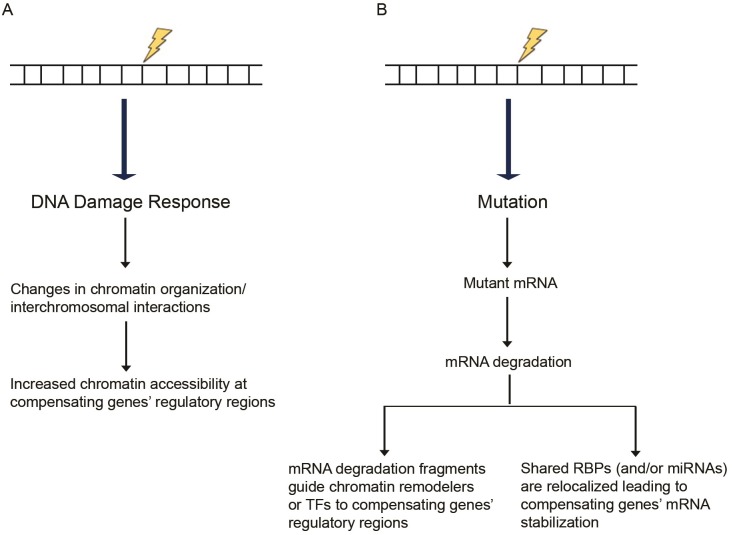
Several recent studies in a number of model systems including zebrafish, Arabidopsis, and mouse have revealed phenotypic differences between knockouts (i.e., mutants) and knockdowns (e.g., antisense-treated animals). These differences have been attributed to a number of reasons including off-target effects of the antisense reagents. An alternative explanation was recently proposed based on a zebrafish study reporting that genetic compensation was observed in egfl7 mutant but not knockdown animals. Dosage compensation was first reported in Drosophila in 1932, and genetic compensation in response to a gene knockout was first reported in yeast in 1969. Since then, genetic compensation has been documented many times in a number of model organisms; however, our understanding of the underlying molecular mechanisms remains limited. In this review, we revisit studies reporting genetic compensation in higher eukaryotes and outline possible molecular mechanisms, which may include both transcriptional and posttranscriptional processes.
Overview
The claims and statistics of this paper haven’t been checked yet.
Run the check — free, no account needed. It reads the open-access text and checks the sources it cites.
Integrity signals
Registry
Cites
Statistics
Figures
Verification
Claims the paper makes
The claims and statistics of this paper haven’t been checked yet.
Run the check — free, no account needed. It reads the open-access text and checks the sources it cites.
Claims other papers make about this one
Each is checked against this paper’s own text: does it say what the citing paper says it does?
In the citing paper
“Even in the case of a true gene knockout, however, the time required for a single cell clone to propagate might be sufficient for cells to establish genetic compensation, thereby altering expression patterns of related proteins to make up for the loss of one protein [4].”
From Advances in targeted degradation of endogenous proteins (2019) · cites this paper as [4]
Self-check
Percentages, sums and reported differences re-computed from the paper’s own numbers.
The self-check needs the paper’s full text.
Citations
Cites
Network biology: understanding the cell's functional organization
Barabási, A.-L., & Oltvai, Z. N. (2004) · Nature Reviews Genetics · doi:10.1038/nrg1272 · Cited by 7,903
(2008) · doi:10.1038/nrg2290 · Cited by 5,199
Functional profiling of the Saccharomyces cerevisiae genome
Giaever, G., Chu, A. M., Ni, L., Connelly, C., Riles, L., Véronneau, S., Dow, S., Lucau-Danila, A., Anderson, K., André, B., et al. (2002) · Nature · doi:10.1038/nature00935 · Cited by 4,316
Gene Action in the X-chromosome of the Mouse (Mus musculus L.)
LYON, M. F. (1961) · Nature · doi:10.1038/190372a0 · Cited by 3,978
The Transcriptional Landscape of the Mammalian Genome
Carninci, P., Kasukawa, T., Katayama, S., Gough, J., Frith, M. C., Maeda, N., Oyama, R., Ravasi, T., Lenhard, B., Wells, C. A., et al. (2005) · Science · doi:10.1126/science.1112014 · Cited by 3,492
Nature, Nurture, or Chance: Stochastic Gene Expression and Its Consequences
Raj, A., & van Oudenaarden, A. (2008) · Cell · doi:10.1016/j.cell.2008.09.050 · Cited by 2,593
Antisense Transcription in the Mammalian Transcriptome
Katayama, S., Tomaru, Y., Kasukawa, T., Waki, K., Nakanishi, M., Nakamura, M., Nishida, H., Yap, C.-S., Suzuki, M., Kawai, J., et al. (2005) · Science · doi:10.1126/science.1112009 · Cited by 1,699
MicroRNAs and their targets: recognition, regulation and an emerging reciprocal relationship
Pasquinelli, A. E. (2012) · Nature Reviews Genetics · doi:10.1038/nrg3162 · Cited by 1,642
Aquaporin-4 deletion in mice reduces brain edema after acute water intoxication and ischemic stroke
Manley, G. T., Fujimura, M., Ma, T., Noshita, N., Filiz, F., Bollen, A. W., Chan, P. H., & Verkman, A. S. (2000) · Nature Medicine · doi:10.1038/72256 · Cited by 1,501
RNA‐binding proteins and post‐transcriptional gene regulation
Glisovic, T., Bachorik, J. L., Yong, J., & Dreyfuss, G. (2008) · FEBS Letters · doi:10.1016/j.febslet.2008.03.004 · Cited by 1,398
Research works printed but not linked: 2
- Muller HJ, editor Further studies on the nature and causes of gene mutations. Proceedings of the 6th International Congress of Genetics; 1932.
- A Hagelkruys, 2014, A single allele of Hdac2 but not Hdac1 is sufficient for normal mouse brain development in the absence of its paralog, Development (Cambridge, England), 141, 604, 10.1242/dev.100487 · DOI · Paper page
Cited by
Sorted by citations
Items 201–300 of 830
Balan, I. S., Warnock, K. T., Puché, A. C., Gondré‐Lewis, M. C., & Aurelian, L. (2017) · Brain Behavior and Immunity · doi:10.1016/j.bbi.2017.11.008 · Cited by 24
de Francisco, P., Martín‐González, A., Turkewitz, A. P., & Gutiérrez, J. C. (2018) · Environmental Microbiology · doi:10.1111/1462-2920.14251 · Cited by 24
Kalev‐Altman, R., Hanael, E., Zelinger, E., Blum, M., Ornan, E. M., & Sela‐Donenfeld, D. (2020) · The FASEB Journal · doi:10.1096/fj.201901217rr · Cited by 24
Extracellular Vesicles in Pathophysiology: A Prudent Target That Requires Careful Consideration
Shahi, S. K., Kang, T., & Fonseka, P. (2024) · Cells · doi:10.3390/cells13090754 · Cited by 26
Ammonia excretion by the fish gill: discoveries and ideas that shaped our current understanding
Zimmer, A. M. (2024) · Journal of Comparative Physiology B · doi:10.1007/s00360-024-01561-5 · Cited by 23
Combined gene essentiality scoring improves the prediction of cancer dependency maps
Wang, W., Malyutina, A., Pessia, A., Saarela, J., Heckman, C. A., & Tang, J. P. (2019) · EBioMedicine · doi:10.1016/j.ebiom.2019.10.051 · Cited by 23
Involvement of TRPC4 and 5 Channels in Persistent Firing in Hippocampal CA1 Pyramidal Cells
Arboit, A., Reboreda, A., & Yoshida, M. (2020) · Cells · doi:10.3390/cells9020365 · Cited by 25
Assessment of Autism Zebrafish Mutant Models Using a High-Throughput Larval Phenotyping Platform
Colón-Rodríguez, A., Uribe‐Salazar, J. M., Weyenberg, K., Sriram, A., Quezada, A., Kaya, G., Jao, E., Radke, B., Lein, P. J., & Dennis, M. Y. (2020) · Frontiers in Cell and Developmental Biology · doi:10.3389/fcell.2020.586296 · Cited by 23
Defect-buffering cellular plasticity increases robustness of metazoan embryogenesis
Xiao, L., Fan, D., Qi, H., Cong, Y., & Du, Z. (2022) · Cell Systems · doi:10.1016/j.cels.2022.07.001 · Cited by 24
Characterization of Two-Component System CitB Family in Salmonella Pullorum
Kang, X., Zhou, X., Tang, Y., Jiang, Z., Chen, J., Mohsin, M., & Yue, M. (2022) · International Journal of Molecular Sciences · doi:10.3390/ijms231710201 · Cited by 23
Liu, Q., Guo, Q., Fang, L., Yao, H., Scheller, A., Kirchhoff, F., & Huang, W. (2022) · Journal of Neurochemistry · doi:10.1111/jnc.15693 · Cited by 23
Feng, Q., Cubría-Radío, M., Vavrdová, T., Winter, F. D., Schilling, N., Huysmans, M., Nanda, A. K., Melnyk, C. W., & Nowack, M. K. (2023) · PLANT PHYSIOLOGY · doi:10.1093/plphys/kiad130 · Cited by 23
Zebrafish Models of Rare Hereditary Pediatric Diseases
Varga, M., Ralbovszki, D. M., Balogh, E., Hamar, R., Keszthelyi, M., & Tory, K. (2018) · Diseases · doi:10.3390/diseases6020043 · Cited by 26
Kumar, K. D. K., Singh, S., Schmelzle, S. M., Vogel, P., Fruhner, C., Hanswillemenke, A., Brun, A., Wettengel, J., Füll, Y., Funk, L.-M., et al. (2024) · Nature Communications · doi:10.1038/s41467-024-50395-w · Cited by 24
Xu, R., Pan, Y., Zheng, K., Chen, M., Yin, C., Hu, Q., Wang, J., Yu, Q., Li, P., Tai, Y., et al. (2024) · Theranostics · doi:10.7150/thno.97856 · Cited by 23
BEN-solo factors partition active chromatin to ensure proper gene activation in Drosophila
Ueberschär, M., Wang, H., Zhang, C., Kondo, S., Aoki, T., Schedl, P. D., Lai, E. C., Wen, J., & Dai, Q. (2019) · Nature Communications · doi:10.1038/s41467-019-13558-8 · Cited by 22
Kim, M.-J., & O’Connor, M. B. (2020) · Development · doi:10.1242/dev.190868 · Cited by 21
Zebrafish Vascular Mural Cell Biology: Recent Advances, Development, and Functions
Ando, K., Ishii, T., & Fukuhara, S. (2021) · Life · doi:10.3390/life11101041 · Cited by 22
Beyond Mendelian Inheritance: Genetic Buffering and Phenotype Variability
Rossi, A., & Kontarakis, Z. (2021) · Phenomics · doi:10.1007/s43657-021-00030-1 · Cited by 23
Śledziowska, M., Winczura, K., Jones, M., Almaghrabi, R. O. M., Mischo, H. E., Hebenstreit, D., García, P., & Grzechnik, P. (2021) · Human Molecular Genetics · doi:10.1093/hmg/ddac228 · Cited by 22
Su, T., Liu, H., Wu, Y.-C., Wang, J., He, F., Li, H., Li, S., Wang, L., Li, L., Cao, J., et al. (2024) · Plant Biotechnology Journal · doi:10.1111/pbi.14409 · Cited by 22
Setting up for gastrulation in zebrafish
Marlow, F. L. (2020) · Current topics in developmental biology/Current Topics in Developmental Biology · doi:10.1016/bs.ctdb.2019.08.002 · Cited by 21
Amhr2-Cre–Mediated Global Tspo Knockout
Fan, J., Campioli, E., Sottas, C. M., Zirkin, B. R., & Papadopoulos, V. (2020) · Journal of the Endocrine Society · doi:10.1210/jendso/bvaa001 · Cited by 23
Wang, M., Zhang, S., Shi, Y., Yang, Y., & Wu, Y. (2020) · Journal of Insect Physiology · doi:10.1016/j.jinsphys.2020.104023 · Cited by 22
Nrf2 Regulates Basal Glutathione Production in Astrocytes
He, J., & Hewett, S. J. (2025) · International Journal of Molecular Sciences · doi:10.3390/ijms26020687 · Cited by 25
Huning, L., & Kunkel, G. R. (2020) · BMC Molecular and Cell Biology · doi:10.1186/s12860-020-0247-7 · Cited by 21
Zimmer, A. M., & Perry, S. F. (2020) · Comparative Biochemistry and Physiology Part A Molecular & Integrative Physiology · doi:10.1016/j.cbpa.2020.110722 · Cited by 21
Faesel, N., Kolodziejczyk, M. H., Koch, M., & Fendt, M. (2020) · Brain Research · doi:10.1016/j.brainres.2020.147199 · Cited by 23
Dictyostelium discoideum as a Model for Investigating Neurodegenerative Diseases
Haver, H. N., & Scaglione, K. M. (2021) · Frontiers in Cellular Neuroscience · doi:10.3389/fncel.2021.759532 · Cited by 20
Loss of HOXA10 causes endometrial hyperplasia progressing to endometrial cancer
Mishra, A., Ganguli, N., Majumdar, S. S., & Modi, D. N. (2022) · Journal of Molecular Endocrinology · doi:10.1530/jme-22-0051 · Cited by 21
Geiseler, S. J., Hadzic, A., Lambertus, M., Forbord, K. M., Sajedi, G., Liesz, A., & Morland, C. (2024) · International Journal of Molecular Sciences · doi:10.3390/ijms25021232 · Cited by 20
CRISPR-Cas9 mediated dsRNase knockout improves RNAi efficiency in the fall armyworm
Koo, J., Zhu, G., & Palli, S. R. (2024) · Pesticide Biochemistry and Physiology · doi:10.1016/j.pestbp.2024.105839 · Cited by 21
Moreno‐Fernández, R. D., Nieto-Quero, A., Gómez-Salas, F. J., Chun, J. J. M., Estivill‐Torrús, G., de Fonseca, F. R., Santín, L. J., Pérez‐Martín, M., & Pedraza, C. (2018) · Disease Models & Mechanisms · doi:10.1242/dmm.035519 · Cited by 22
CRISPR/Cas9-mediated genome editing in sea urchins
Lin, C.-Y., Oulhen, N., Wessel, G. M., & Su, Y. (2018) · Methods in cell biology · doi:10.1016/bs.mcb.2018.10.004 · Cited by 21
Mitochondrial DNA Damage Does Not Determine C. elegans Lifespan
Ng, L. F., Ng, L. T., van Breugel, M., Halliwell, B. B., & Gruber, J. (2019) · Frontiers in Genetics · doi:10.3389/fgene.2019.00311 · Cited by 22
Proteasome activator PA200 regulates myofibroblast differentiation
Welk, V., Meul, T., Lukas, C., Kammerl, I. E., Mulay, S. R., Schamberger, A. C., Semren, N., Fernandez, I. E., Anders, H., Günther, A., et al. (2019) · Scientific Reports · doi:10.1038/s41598-019-51665-0 · Cited by 21
Left-right asymmetric heart jogging increases the robustness of dextral heart looping in zebrafish
Grimes, D. T., Patterson, V. L., Luna-Arvizu, G., Schottenfeld-Roames, J., Irons, Z. H., & Burdine, R. D. (2019) · Developmental Biology · doi:10.1016/j.ydbio.2019.11.012 · Cited by 21
Poplawski, S. G., Garbett, K. A., McMahan, R. L., Kordasiewicz, H. B., Zhao, H. T., Kennedy, A. J., Goleva, S. B., Sanders, T. H., Motley, S. T., Swayze, E. E., et al. (2020) · Molecular Therapy — Nucleic Acids · doi:10.1016/j.omtn.2020.01.027 · Cited by 21
Lin, L.-F., Lyu, Q., Kwan, P., Zhao, J., Fan, R., Chai, A., Lai, C. S. W., Chan, Y., Shen, X., & Lai, K. (2020) · PLoS Genetics · doi:10.1371/journal.pgen.1008587 · Cited by 22
Jordan, C. J., & Xi, Z.-X. (2022) · Frontiers in Neuroscience · doi:10.3389/fnins.2021.811192 · Cited by 20
Transcriptional adaptation: where mRNA decay meets genetic compensation
Falcucci, L., Juvik, B., & Stainier, D. Y. R. (2025) · Current Opinion in Genetics & Development · doi:10.1016/j.gde.2025.102369 · Cited by 20
Self-citationSiemian, J. N., Borja, C. B., Sarsfield, S., Kisner, A., & Aponte, Y. (2019) · Scientific Reports · doi:10.1038/s41598-019-48537-y · Cited by 19
Overexpression approaches to advance understanding of Candida albicans
Rai, L. S., van Wijlick, L., Chauvel, M., d’Enfert, C., Legrand, M., & Bachellier‐Bassi, S. (2021) · Molecular Microbiology · doi:10.1111/mmi.14818 · Cited by 17
Borràs, D., Barchi, L., Schulz, K., Moglia, A., Acquadro, A., Kamranfar, I., Balazadeh, S., & Lanteri, S. (2021) · Frontiers in Genetics · doi:10.3389/fgene.2021.743902 · Cited by 20
History and Classification of CRISPR/Cas System
Khan, Z., Ali, Z., Khan, A. A., Sattar, T., Zeshan, A., Saboor, T., & Binyamin, B. (2022) · Springer eBooks · doi:10.1007/978-981-16-6305-5_2 · Cited by 21
Владимировна, Г. Е. (2022) · Plant Biology · doi:10.1111/plb.13477 · Cited by 20
Reversible Myc hypomorphism identifies a key Myc-dependency in early cancer evolution
Sodir, N. M., Pellegrinet, L., Kortlever, R. M., Campos, T., Kwon, Y.-W., Kim, S., Garcia, D. A., Perfetto, A., Anastasiou, P., Swigart, L. B., et al. (2022) · Nature Communications · doi:10.1038/s41467-022-34079-x · Cited by 18
Zhao, S., Zhao, H., Zhao, L., Cheng, X., Zheng, Z., Wu, M., Wen, W., Wang, S., Zhou, Z., Xie, H., et al. (2024) · Nature Communications · doi:10.1038/s41467-024-45442-5 · Cited by 20
Shi, H., Williams, M. J., Satas, G., Weiner, A. C., McPherson, A., & Shah, S. P. (2024) · Nature Communications · doi:10.1038/s41467-024-46710-0 · Cited by 19
Ultramicronized N-palmitoylethanolamine associated with analgesics: Effects against persistent pain
Nobili, S., Micheli, L., Lucarini, E., Toti, A., Ghelardini, C., & Mannelli, L. D. C. (2024) · Pharmacology & Therapeutics · doi:10.1016/j.pharmthera.2024.108649 · Cited by 22
Zebrafish models of candidate human epilepsy-associated genes provide evidence of hyperexcitability
LaCoursiere, C. M., Ullmann, J. F. P., Koh, H. Y., Turner, L. H., Baker, C. M., Robens, B. K., Shao, W., Rotenberg, A., McGraw, C. M., & Poduri, A. (2024) · iScience · doi:10.1016/j.isci.2024.110172 · Cited by 20
Premature Termination Codon-Bearing mRNA Mediates Genetic Compensation Response
Ma, Z., & Chen, J. (2020) · Zebrafish · doi:10.1089/zeb.2019.1824 · Cited by 19
Smeriglio, P., Grandi, F. C., Taylor, S. E. B., Zalc, A., & Bhutani, N. (2020) · JBMR Plus · doi:10.1002/jbm4.10383 · Cited by 20
Liu, D.-J., Zhang, F., Chen, Y., Jin, Y., Zhang, Y., Chen, S.-B., Xie, Y., Huang, Q., Zhao, W., Wang, L., et al. (2020) · Cell Discovery · doi:10.1038/s41421-020-00203-8 · Cited by 19
ER-to-Golgi transport and SEC23-dependent COPII vesicles regulate T cell alloimmunity
Kim, S., Khoriaty, R. N., Li, L., McClune, M., Kalfa, T. A., Wu, J. J., Peltier, D., Fujiwara, H., Sun, Y., Oravecz-Wilson, K. I., et al. (2021) · Journal of Clinical Investigation · doi:10.1172/jci136574 · Cited by 18
The good, the bad, and the ugly: Evolutionary and pathological aspects of gene dosage alterations
Basilicata, M. F., & Valsecchi, C. I. K. (2021) · PLoS Genetics · doi:10.1371/journal.pgen.1009906 · Cited by 19
Jiang, C., Yan, H., Shen, X., Zhang, Y., Wang, Y., Sun, S., Jiang, H., Zang, H., Zhao, X., Hou, N., et al. (2022) · Frontiers in Microbiology · doi:10.3389/fmicb.2022.921549 · Cited by 19
Aquino, R., de Concini, V., Dhénain, M., Lam, S., Gosset, D., Baquedano, L., Forero, M. G., Menuet, A., Baril, P., & Pichon, C. (2023) · Cells · doi:10.3390/cells12050694 · Cited by 21
A forebrain undivided: Unleashing model organisms to solve the mysteries of holoprosencephaly
Grinblat, Y., & Lipinski, R. J. (2019) · Developmental Dynamics · doi:10.1002/dvdy.41 · Cited by 21
Reply to: Ptbp1 deletion does not induce astrocyte-to-neuron conversion
Hao, Y., Hu, J., Xue, Y., Dowdy, S. F., Mobley, W. C., Qian, H., & Fu, X. (2023) · Nature · doi:10.1038/s41586-023-06067-8 · Cited by 18
Villagómez, F. R., Díaz‐Valencia, J. D., Ovalle‐García, E., Antillón, A., Ortega‐Blake, I., Romero‐Ramírez, H., Cerna-Cortés, J. F., Rosales-Reyes, R., Santos‐Argumedo, L., & Patiño‐López, G. (2021) · Scientific Reports · doi:10.1038/s41598-021-00450-z · Cited by 18
Cho, H.-J., Lee, W. S., Jeong, J., & Lee, J.-S. (2022) · Comparative Biochemistry and Physiology Part C Toxicology & Pharmacology · doi:10.1016/j.cbpc.2022.109428 · Cited by 21
Modeling Neuronal Diseases in Zebrafish in the Era of CRISPR
Espino-Saldaña, Á. E., Rodríguez-Ortiz, R., Pereida‐Jaramillo, E., & Martínez‐Torres, A. (2019) · Current Neuropharmacology · doi:10.2174/1570159x17666191001145550 · Cited by 18
Plants use identical inhibitors to protect their cell wall pectin against microbes and insects
Kirsch, R., Vurmaz, E., Schaefer, C., Eberl, F., Sporer, T., Haeger, W., & Pauchet, Y. (2020) · Ecology and Evolution · doi:10.1002/ece3.6180 · Cited by 18
miR-15a/16-1 deletion in activated B cells promotes plasma cell and mature B-cell neoplasms
Sewastianik, T., Straubhaar, J., Zhao, J., Samur, M., Adler, K., Tanton, H., Shanmugam, V., Nadeem, O., Dennis, P. S., Pillai, V., et al. (2021) · Blood · doi:10.1182/blood.2020009088 · Cited by 18
Activation of PKCε-ALDH2 Axis Prevents 4-HNE-Induced Pain in Mice
Martins, B. B., Hösch, N. G., Alcantara, Q. A., Budas, G. R., Chen, C., Mochly‐Rosen, D., Ferreira, J. C. B., & Zambelli, V. O. (2021) · Biomolecules · doi:10.3390/biom11121798 · Cited by 16
Carlton, A. J., Jeng, J., Grandi, F. C., Faveri, F. D., Ceriani, F., Tomasi, L. D., Underhill, A., Johnson, S. L., Legan, P. K., Kros, C. J., et al. (2023) · The EMBO Journal · doi:10.15252/embj.2022112118 · Cited by 16
Potential safety implications of fatty acid-binding protein inhibition
Warren, W. G., Osborn, M., Duffy, P., Yates, A., & O’Sullivan, S. E. (2024) · Toxicology and Applied Pharmacology · doi:10.1016/j.taap.2024.117079 · Cited by 17
Kozol, R. A. (2018) · Journal of Developmental Biology · doi:10.3390/jdb6040029 · Cited by 18
Normal spermatogenesis in Fank1 (fibronectin type 3 and ankyrin repeat domains 1) mutant mice
Zhang, J., Zhang, X., Zhang, Y., Zeng, W., Zhao, S., & Liu, M. (2019) · PeerJ · doi:10.7717/peerj.6827 · Cited by 19
Deka, B., Chandra, P., & Singh, K. K. (2020) · Biochimie · doi:10.1016/j.biochi.2020.10.011 · Cited by 17
Zhu, P., Qiu, Q., Harris, P. C., Xu, X., & Lin, X. (2021) · Journal of the American Society of Nephrology · doi:10.1681/asn.2020070991 · Cited by 17
Corticosteroid treatment exacerbates nephrotic syndrome in a zebrafish model of magi2a knockout
Jobst‐Schwan, T., Hoogstraten, C. A., Kolvenbach, C. M., Schmidt, J. M., Kolb, A., Eddy, K., Schneider, R., Ashraf, S., Widmeier, E., Majmundar, A. J., et al. (2019) · Kidney International · doi:10.1016/j.kint.2018.12.026 · Cited by 17
Tek (Tie2) is not required for cardiovascular development in zebrafish
Jiang, Z., Carlantoni, C., Allanki, S., Ebersberger, I., & Stainier, D. Y. R. (2020) · Development · doi:10.1242/dev.193029 · Cited by 17
Self-citationPain persists in mice lacking both Substance P and CGRPα signalingPreprint
MacDonald, D. I., Jayabalan, M., Seaman, J. T., Balaji, R., Nickolls, A. R., & Chesler, A. T. (2024) · eLife · doi:10.7554/elife.93754 · Cited by 18
Chiang, C.-Y., Ching, Y., Chang, T.-Y., Hu, L.-S., Yong, Y. S., Keak, P. Y., Mustika, I., Lin, M., & Liao, B. (2019) · Computational and Structural Biotechnology Journal · doi:10.1016/j.csbj.2019.12.009 · Cited by 17
Highly efficient manipulation of nervous system gene expression with NEPTUNE
Mangold, K., Mašek, J., He, J., Lendahl, U., Fuchs, E. V., & Andersson, E. R. (2021) · Cell Reports Methods · doi:10.1016/j.crmeth.2021.100043 · Cited by 16
Transcriptomic changes during stage progression of mycosis fungoides
Xiao, M. Z. X., Hennessey, D., Iyer, A., O’Keefe, S. J., Zhang, F., Sivanand, A., & Gniadecki, R. (2021) · British Journal of Dermatology · doi:10.1111/bjd.20760 · Cited by 16
Alzheimer's disease/dementia-associated brain pathology in aging DPP6-KO mice
Lin, L., Petralia, R. S., Holtzclaw, L. A., Wang, Y., Abebe, D. T., & Hoffman, D. A. (2022) · Neurobiology of Disease · doi:10.1016/j.nbd.2022.105887 · Cited by 17
Therapeutic Potential of PTB Inhibition Through Converting Glial Cells to Neurons in the Brain
Fu, X.-D., & Mobley, W. C. (2023) · Annual Review of Neuroscience · doi:10.1146/annurev-neuro-083022-113120 · Cited by 16
Bravo‐Estupiñan, D. M., Aguilar‐Guerrero, K., Quirós, S., Acón, M., Marín‐Müller, C., Ibáñez-Hernández, M. Á., & Mora-Rodríguez, R. A. (2023) · Cancer Medicine · doi:10.1002/cam4.6719 · Cited by 16
Versatile Genome Engineering Techniques Advance Human Ocular Disease Researches in Zebrafish
Zheng, S., Han, R., Xiang, L., Zhuang, Y., & Jin, Z. (2018) · Frontiers in Cell and Developmental Biology · doi:10.3389/fcell.2018.00075 · Cited by 16
Looking to the future of zebrafish as a model to understand the genetic basis of eye disease
Cavodeassi, F., & Wilson, S. W. (2019) · Human Genetics · doi:10.1007/s00439-019-02055-z · Cited by 16
HSP-Target of Therapeutic Agents in Sepsis Treatment
Vulczak, A., Catalão, C. H. R., de Freitas, L. A. P., & Rocha, M. J. A. (2019) · International Journal of Molecular Sciences · doi:10.3390/ijms20174255 · Cited by 16
Young, R., Ewan, K., Ferrer, V. P., Allende, M., Godovac-Zimmermann, J., Dale, T., & Wilson, S. (2019) · bioRxiv · doi:10.7554/elife.51447 · Cited by 13
Deflandre, B., Thiébaut, N., Planckaert, S., Jourdan, S., Anderssen, S., Hanikenne, M., Devreese, B. V., Francis, I. M., & Rigali, S. (2020) · Biochimica et Biophysica Acta (BBA) - Gene Regulatory Mechanisms · doi:10.1016/j.bbagrm.2020.194615 · Cited by 14
Role of Kv1.3 Channels in Platelet Functions and Thrombus Formation
Fan, C., Yang, X., Wang, W. W., Wang, J., Li, W., Guo, M., Huang, S., Wang, Z., & Liu, K. (2020) · Arteriosclerosis Thrombosis and Vascular Biology · doi:10.1161/atvbaha.120.314278 · Cited by 16
Immunopharmacology and Quantitative Analysis of Tyrosine Kinase Signaling
Brian, B. F., Guerrero, C. R., & Freedman, T. S. (2020) · Current Protocols in Immunology · doi:10.1002/cpim.104 · Cited by 16
MYC dosage compensation is mediated by miRNA-transcription factor interactions in aneuploid cancer
Acón, M., Geiß, C., Torres-Calvo, J., Bravo‐Estupiñan, D. M., Oviedo, G., Arias-Arias, J. L., Rojas-Matey, L. A., Baéz, E., Vásquez-Vargas, G., Oses-Vargas, Y., et al. (2021) · iScience · doi:10.1016/j.isci.2021.103407 · Cited by 16
Fish mutant, where is thy phenotype?
Balciunas, D. (2018) · PLoS Genetics · doi:10.1371/journal.pgen.1007197 · Cited by 16
Activation of Rho Family GTPases by Small Molecules
Palsuledesai, C. C., Surviladze, Z., Waller, A., Miscioscia, T. F., Guo, Y., Wu, Y., Strouse, J., Romero, E., Salas, V. M., Curpan, R. F., et al. (2018) · ACS Chemical Biology · doi:10.1021/acschembio.8b00038 · Cited by 18
Beckers, A., Ott, T., Schuster-Gossler, K., Boldt, K., Alten, L., Ueffing, M., Blum, M., & Gossler, A. (2018) · Scientific Reports · doi:10.1038/s41598-018-33045-2 · Cited by 16
GIPC proteins negatively modulate Plexind1 signaling during vascular development
Carretero-Ortega, J., Chhangawala, Z., Hunt, S., Narvaez, C., Menéndez, J., Gay, C. M., Zygmunt, T., Li, X., & Torres‐Vázquez, J. (2019) · eLife · doi:10.7554/elife.30454 · Cited by 16
Preferential targeting of MCL-1 by a hydrocarbon-stapled BIM BH3 peptide
Hadji, A., Schmitt, G. K., Schnorenberg, M. R., Roach, L. E., Hickey, C. M., Leak, L. B., Tirrell, M., & LaBelle, J. L. (2019) · Oncotarget · doi:10.18632/oncotarget.27262 · Cited by 16
Karakaya, M., Macrı̀, S., & Porfiri, M. (2020) · iScience · doi:10.1016/j.isci.2020.101418 · Cited by 15
STK25 and MST3 Have Overlapping Roles to Regulate Rho GTPases during Cortical Development
Matsuki, T., Iio, A., Ueda, M., Tsuneura, Y., Howell, B. W., & Nakayama, A. (2021) · Journal of Neuroscience · doi:10.1523/jneurosci.0523-21.2021 · Cited by 14
IL-1R8 silencing improves the anti-tumor function of freshly isolated human NK cells
Landolina, N., Mariotti, F. R., Ingegnere, T., Alicata, C., Ricci, B., Pelosi, A., Veneziani, I., Azzarone, B. G., Garlanda, C., Mantovani, A., et al. (2022) · Journal for ImmunoTherapy of Cancer · doi:10.1136/jitc-2021-003858 · Cited by 15
Wang, Y., Mack, J. A., Hascall, V., & Maytin, E. V. (2022) · American Journal Of Pathology · doi:10.1016/j.ajpath.2022.08.003 · Cited by 15
Ampong, I. (2024) · Cogent Business & Management · doi:10.1080/23311975.2024.2315690 · Cited by 15
Zimmer, A. M., Shir-Mohammadi, K., Kwong, R. W. M., & Perry, S. F. (2019) · Journal of Experimental Biology · doi:10.1242/jeb.215111 · Cited by 15
Metadata
- Authors
- El-Brolosy, M. A., & Stainier, D. Y. R.
- Affiliations
- Max Planck Institute for Heart and Lung Research (DE)
- Corresponding author
- Stainier, Didier Y. R.
- Venue
- PLOS Genetics
- Publisher
- Public Library of Science (PLoS)
- Published
- 2017-07-13
- Volume
- 13
- Issue
- 7
- Pages
- e1006780
- ISSN
- 1553-7390 (ISSN-L)
- 1553-7404
- PMC
- PMC5509088
- OpenAlex
- W2735720719
- Cited by
- 829
- References
- 156
- Citations by year
- 2026: 60 · 2025: 84 · 2024: 89 · 2023: 91 · 2022: 114 · 2021: 109 · 2020: 120 · 2019: 104 · 2018: 54 · 2017: 4
- FWCI
- 7.22
- Type
- journal article
- Language
- en
- Open access
- gold
- doi.org
- Licence
- Locations
- PLoS Genetics (publishedVersion, cc-by)
- Europe PMC (PubMed Central) (publishedVersion, cc-by)
- PubMed Central (publishedVersion, cc-by)
- PubMed (publishedVersion)
- DOAJ (DOAJ: Directory of Open Access Journals) (submittedVersion, cc-by-sa)
- MPG.PuRe (Max Planck Society) (submittedVersion)
- Funders
- Deutsche Forschungsgemeinschaft
- Max-Planck-Gesellschaft
- Topics
- Life Sciences › Biochemistry, Genetics and Molecular Biology › Molecular Biology › Developmental Biology and Gene Regulation
- Life Sciences › Biochemistry, Genetics and Molecular Biology › Molecular Biology › RNA Research and Splicing
- Life Sciences › Biochemistry, Genetics and Molecular Biology › Cell Biology › Zebrafish Biomedical Research Applications
- Keywords
- genetic compensation, dosage compensation, gene knockout, gene knockdown, off-target effects, EGFL7, transcriptional regulation, post-transcriptional regulation, molecular mechanisms
- MeSH terms
- Animals, Dosage Compensation, Genetic, Drosophila, Transcription, Genetic, Zebrafish, Arabidopsis, Models, Animal, Zebrafish Proteins, Mutant Proteins, Mice, Gene Knockdown Techniques, Gene Knockout Techniques
About these checks
Registry, retraction, Cites and statistics results are computed, not judged, with one exception: a printed reference that no index lists is read once by a model before it counts as a citation error. Claims are extracted by a model and kept only when their quote appears verbatim in the text; each cited source is then checked, with a model’s help, for whether it says what the claim relies on. Those verdicts can be wrong — read the claim’s quote and the cited source before relying on one.
Statistics and arithmetic are recomputed, not judged.
Confidence bands are shown only for fields calibrated on our annotated test set. None is calibrated yet, so no band is shown.
What counts as a claim ›How we measure confidence ›How we check this ›
Are you an author, or do you see a problem with this page? Request a review
