

Mitochondrial proline catabolism activates Ras1/cAMP/PKA-induced filamentation in Candida albicans
Open accessPublished version of a preprint
The DOI matches its Crossref record; 107 of the 108 references it cites were found in a registry or an index.
Abstract
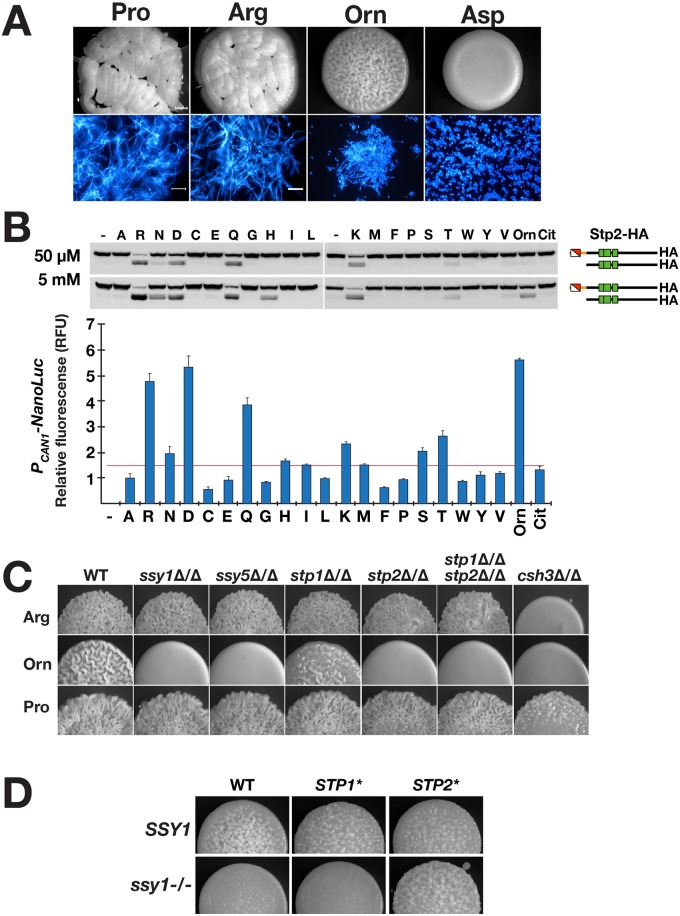
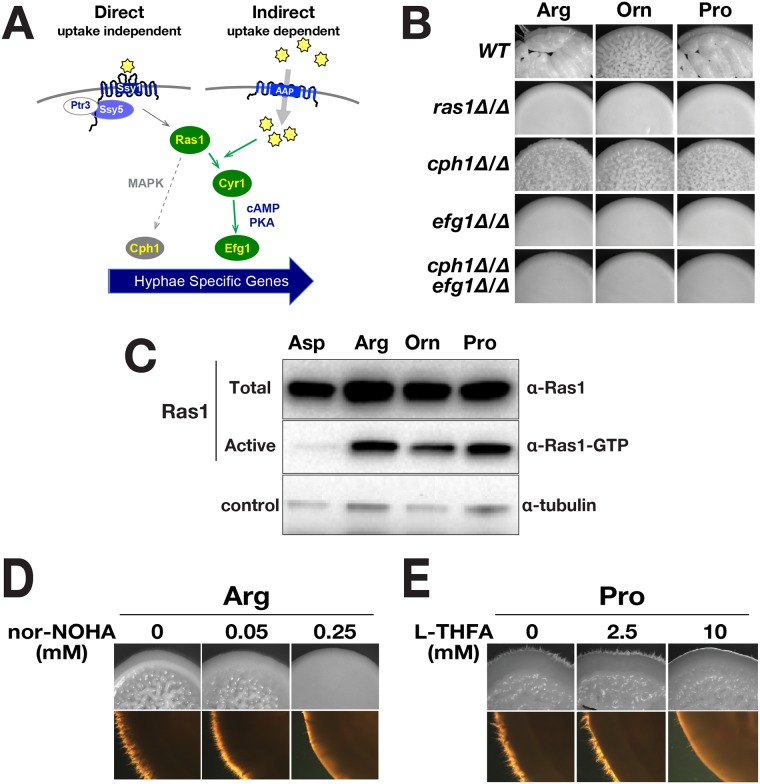
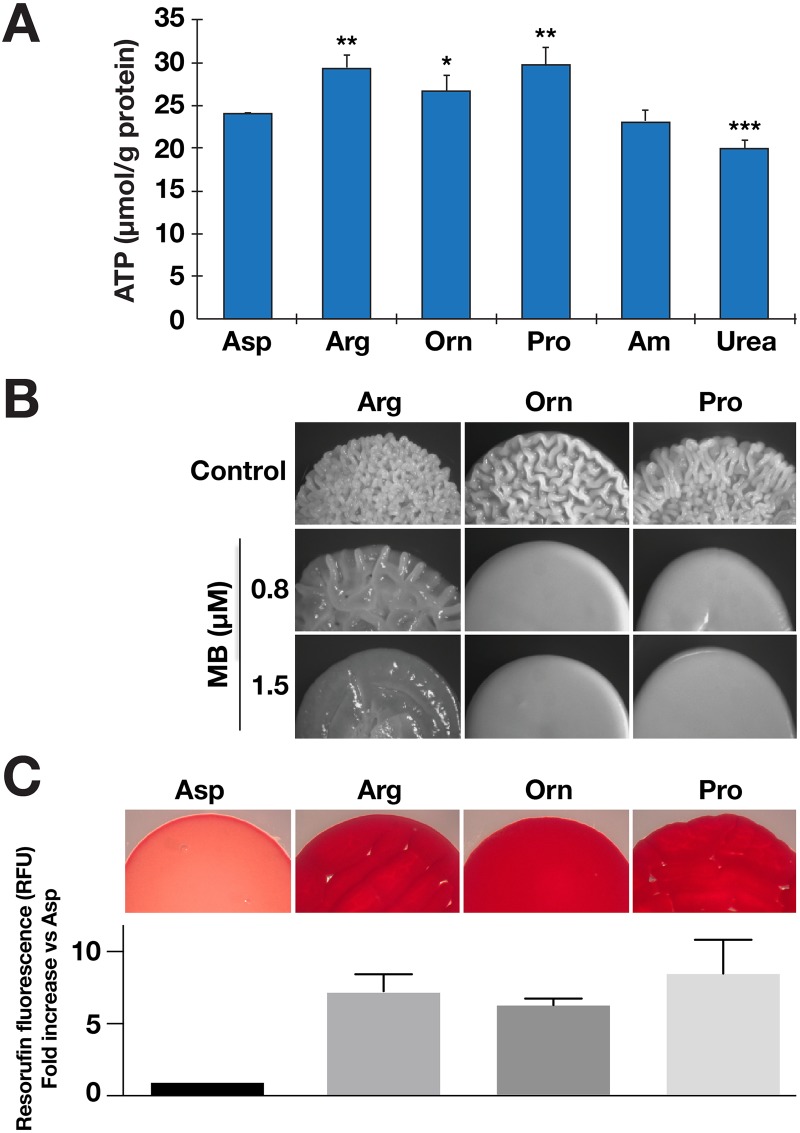
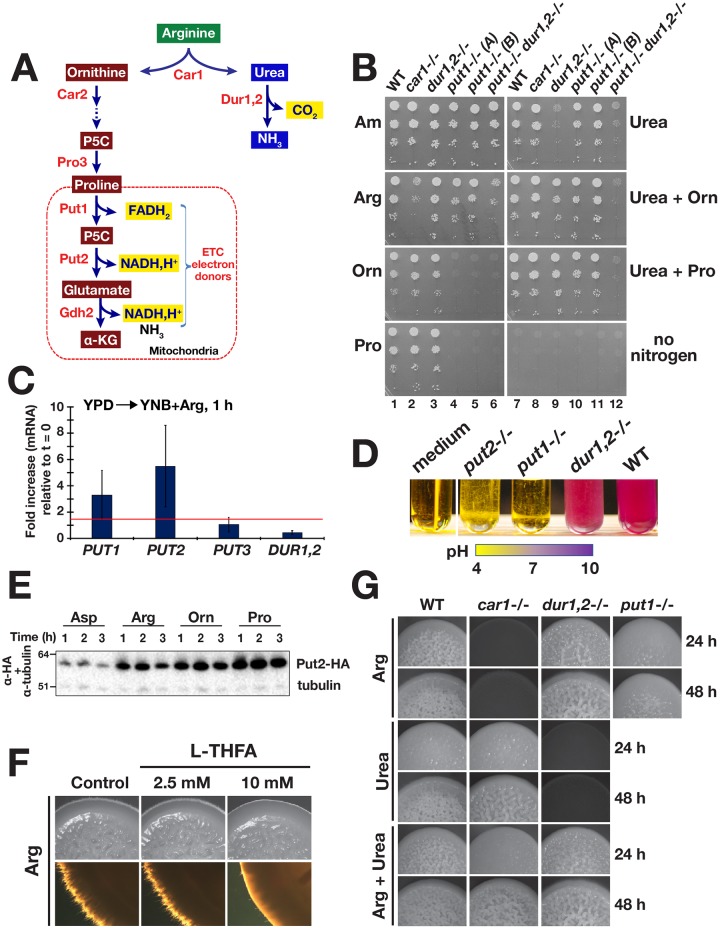
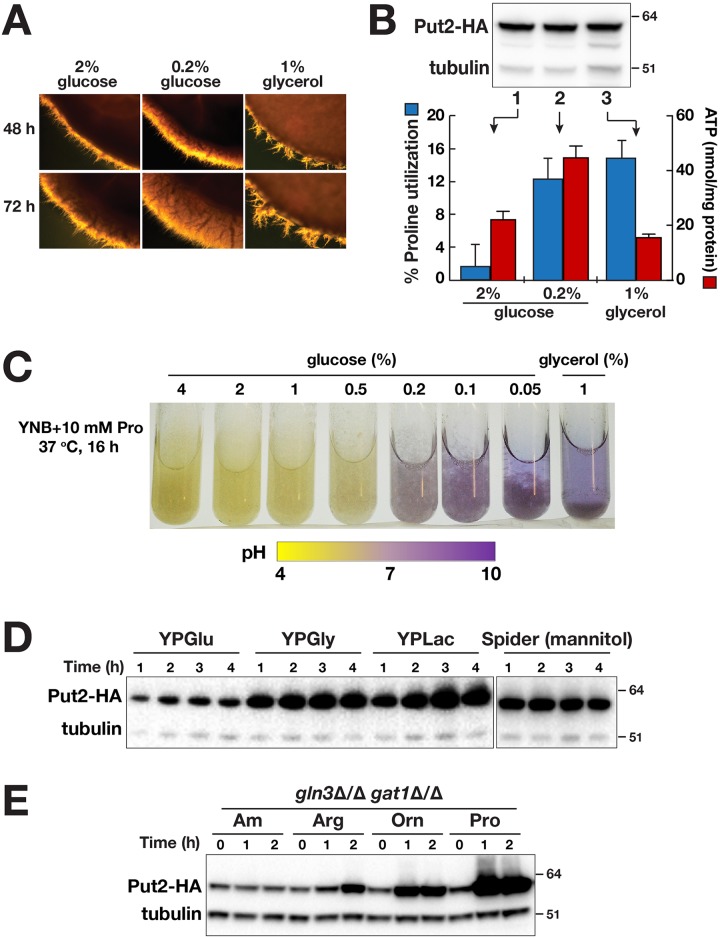
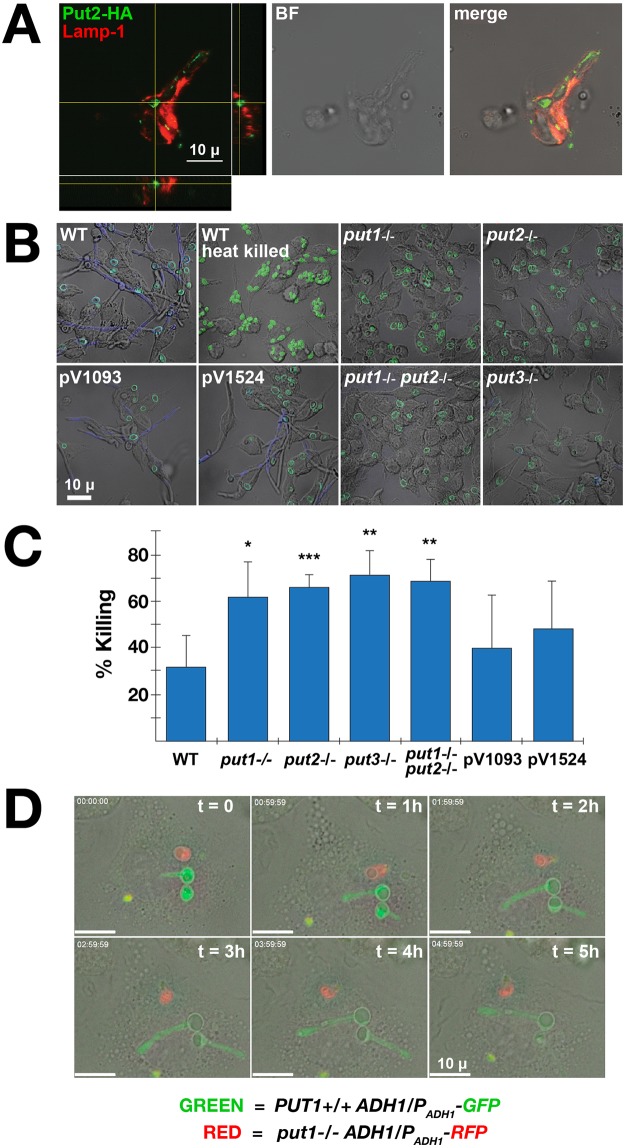
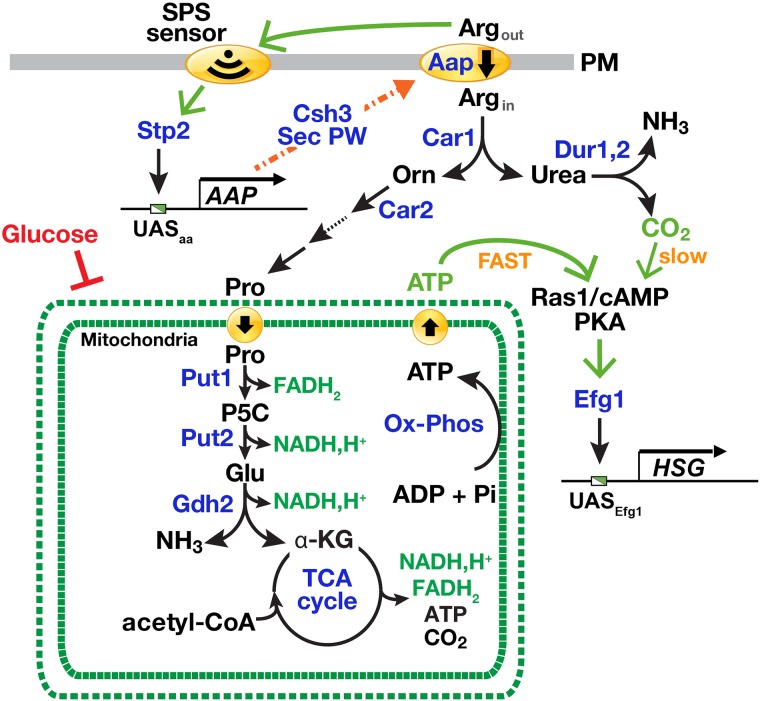
Abstract Amino acids are among the earliest identified inducers of yeast-to-hyphal transitions in Candida albicans , an opportunistic fungal pathogen of humans. Here, we show that the morphogenic amino acids arginine, ornithine and proline are internalized and metabolized in mitochondria via a PUT1 - and PUT2 -dependent pathway that results in enhanced ATP production. Elevated ATP levels correlate with Ras1/cAMP/PKA pathway activation and Efg1-induced gene expression. The magnitude of amino acid-induced filamentation is linked to glucose availability; high levels of glucose repress mitochondrial function thereby dampening filamentation. Furthermore, arginine-induced morphogenesis occurs more rapidly and independently of Dur1,2-catalyzed urea degradation, indicating that mitochondrial-generated ATP, not CO 2 , is the primary morphogenic signal derived from arginine metabolism. The important role of the SPS-sensor of extracellular amino acids in morphogenesis is the consequence of induced amino acid permease gene expression, i.e., SPS-sensor activation enhances the capacity of cells to take up morphogenic amino acids, a requisite for their catabolism. C. albicans cells engulfed by murine macrophages filament, resulting in macrophage lysis. Phagocytosed put1-/- and put2 -/- cells do not filament and do not lyse macrophages, consistent with a critical role of mitochondrial proline metabolism in virulence.
Overview
The claims and statistics of this paper haven’t been checked yet.
Free: it reads the open-access text and checks the first 5 claims that cite a source we can check. Create a free account to check every claim.
Integrity signals
Registry
Cites
Statistics
Figures
Verification
Claims the paper makes
The claims and statistics of this paper haven’t been checked yet.
Free: it reads the open-access text and checks the first 5 claims that cite a source we can check. Create a free account to check every claim.
Claims other papers make about this one
Each is checked against this paper’s own text: does it say what the citing paper says it does?
The source backs part of the claim, not all of it — or backs it for a different population, condition or comparison.
In the citing paper
“Proline dehydrogenase (Put1) and ∆1-pyrroline-5-carboxylate dehydrogenase (Put2), localized in mitochondria, are two key enzymes essential for amino acid catabolism in C. albicans to produce NH3 to alkalinize environment [32,33].”
From The F 1 F o -ATP synthase α subunit of Candida albicans induces inflammatory responses by controlling amino acid catabolism (2023) · cites this paper as [33]
Experimental — accuracy not yet measuredThe source backs part of the claim, not all of it — or backs it for a different population, condition or comparison.
In the citing paper
“Put1 and Put2 are two essential enzymes in amino acid catabolism in C. albicans to alkalinize environment [33].”
From The F 1 F o -ATP synthase α subunit of Candida albicans induces inflammatory responses by controlling amino acid catabolism (2023) · cites this paper as [33]
Experimental — accuracy not yet measuredThe source backs part of the claim, not all of it — or backs it for a different population, condition or comparison.
In the citing paper
“Mitochondrial proline dehydrogenase (Put1) and ∆1-pyrroline-5-carboxylate dehydrogenase (Put2) are two essential enzymes of amino acid catabolism and their deletion dramatically prevents C. albicans from alkalizing environment [33].”
From The F 1 F o -ATP synthase α subunit of Candida albicans induces inflammatory responses by controlling amino acid catabolism (2023) · cites this paper as [33]
Experimental — accuracy not yet measured
Self-check
Percentages, sums and reported differences re-computed from the paper’s own numbers.
The self-check needs the paper’s full text.
Citations
Cites
QUAST: quality assessment tool for genome assemblies
Gurevich, A., Saveliev, V., Vyahhi, N., & Tesler, G. (2013) · Bioinformatics · doi:10.1093/bioinformatics/btt086 · Cited by 11,172
Nonfilamentous C. albicans Mutants Are Avirulent
Lo, H.-J., Köhler, J. R., DiDomenico, B., Loebenberg, D., Cacciapuoti, A., & Fink, G. R. (1997) · Cell · doi:10.1016/s0092-8674(00)80358-x · Cited by 1,809
Engineered Luciferase Reporter from a Deep Sea Shrimp Utilizing a Novel Imidazopyrazinone Substrate
Hall, M. P., Unch, J., Binkowski, B. F., Valley, M. P., Butler, B. L., Wood, M. G., Otto, P., Zimmerman, K., Vidugiris, G., Machleidt, T., et al. (2012) · ACS Chemical Biology · doi:10.1021/cb3002478 · Cited by 1,598
Assembling Single-Cell Genomes and Mini-Metagenomes From Chimeric MDA Products
Nurk, S., Bankevich, A., Antipov, D., Gurevich, A. A., Korobeynikov, A., Lapidus, A., Prjibelski, A. D., Pyshkin, A., Sirotkin, A., Sirotkin, Y., et al. (2013) · Journal of Computational Biology · doi:10.1089/cmb.2013.0084 · Cited by 1,327
Kullberg, B. J., & Arendrup, M. C. (2015) · New England Journal of Medicine · doi:10.1056/nejmra1315399 · Cited by 1,315 · cited 1×
“Immunosuppression, or microbial dysbiosis, can predispose an 42 individual to infection, enabling this fungus to initiate and develop a spectrum of pathologies, 43 including superficial mucocutaneous or even life-threatening invasive infections [1, 2].”
BackgroundYeast Carbon Catabolite Repression
Gancedo, J. M. (1998) · Microbiology and Molecular Biology Reviews · doi:10.1128/mmbr.62.2.334-361.1998 · Cited by 1,273
Growth of Candida albicans hyphae
Sudbery, P. E. (2011) · Nature Reviews Microbiology · doi:10.1038/nrmicro2636 · Cited by 1,110
Bone Marrow-Derived Macrophages (BMM): Isolation and Applications
Weischenfeldt, J., & Porse, B. (2008) · Cold Spring Harbor Protocols · doi:10.1101/pdb.prot5080 · Cited by 955
The distinct morphogenic states of Candida albicans
Sudbery, P., Gow, N., & Berman, J. (2004) · Trends in Microbiology · doi:10.1016/j.tim.2004.05.008 · Cited by 876
Pyruvate Metabolism inSaccharomyces cerevisiae
PRONK, J. T., YDE STEENSMA, H., & VAN DIJKEN, J. P. (1996) · Yeast · doi:10.1002/(sici)1097-0061(199612)12:16<1607::aid-yea70>3.0.co;2-4 · Cited by 792
Cited by
Candida albicans and Candida glabrata : global priority pathogens
Katsipoulaki, M., Stappers, M. H. T., Malavia-Jones, D., Brunke, S., Hube, B., & Gow, N. A. R. (2024) · Microbiology and Molecular Biology Reviews · doi:10.1128/mmbr.00021-23 · Cited by 180
From Jekyll to Hyde: The Yeast–Hyphal Transition of Candida albicans
Chow, E. W. L., Pang, L. M., & Wang, Y. (2021) · Pathogens · doi:10.3390/pathogens10070859 · Cited by 178
The Multifaceted Roles of Proline in Cell Behavior
Patriarca, E. J., Cermola, F., D’Aniello, C., Fico, A., Guardiola, O., Cesare, D. D., & Minchiotti, G. (2021) · Frontiers in Cell and Developmental Biology · doi:10.3389/fcell.2021.728576 · Cited by 153
Arginine metabolism in myeloid cells in health and disease
Karadima, E., Chavakis, T., & Alexaki, V. I. (2025) · Seminars in Immunopathology · doi:10.1007/s00281-025-01038-9 · Cited by 97
“Finally, proline catabolism in Candida albicans cells was shown to be essential for its hyphal growth in phagosomes of engulfing macrophages, a process that C. albicans uses to escape killing by macrophages [111].”
Jin, X., Zhang, M., Lu, J., Duan, X., Chen, J., Liu, Y., Chang, W., & Lou, H. (2021) · Journal of Advanced Research · doi:10.1016/j.jare.2021.06.016 · Cited by 75
Metadata
- Authors
- Silao, F. G. S., Ward, M., Ryman, K., Wallström, A., Brindefalk, B., Udekwu, K., & Ljungdahl, P. O.
- Affiliations
- Stockholm University (SE)
- Corresponding author
- Ljungdahl, Per O.
- ORCID
- Venue
- PLOS Genetics
- Publisher
- Public Library of Science (PLoS)
- Published
- 2019-02-11
- Volume
- 15
- Issue
- 2
- Pages
- e1007976
- ISSN
- 1553-7390 (ISSN-L)
- 1553-7404
- PMC
- PMC6386415
- OpenAlex
- W2950010168
- Cited by
- 93
- References
- 108
- Citations by year
- 2026: 14 · 2025: 8 · 2024: 14 · 2023: 10 · 2022: 12 · 2021: 14 · 2020: 15 · 2019: 6
- FWCI
- 3.87
- Type
- journal article
- Language
- en
- Update notices
- new_version (2019-02-22)
- Open access
- gold
- doi.org
- Licence
- Locations
- PLoS Genetics (publishedVersion, cc-by)
- bioRxiv (Cold Spring Harbor Laboratory) (acceptedVersion)
- Europe PMC (PubMed Central) (publishedVersion, cc-by)
- PubMed Central (publishedVersion, cc-by)
- PubMed (publishedVersion)
- DOAJ (DOAJ: Directory of Open Access Journals) (submittedVersion, cc-by-sa)
- Figshare (submittedVersion, cc-by)
- Funders
- Vetenskapsrådet (2015-04202)
- FP7 People: Marie-Curie Actions (MC-ITN-606786)
- Topics
- Life Sciences › Biochemistry, Genetics and Molecular Biology › Molecular Biology › Fungal and yeast genetics research
- Health Sciences › Medicine › Infectious Diseases › Antifungal resistance and susceptibility
- Health Sciences › Medicine › Infectious Diseases › Fungal Infections and Studies
- Keywords
- Candida albicans, yeast-to-hypha transition, arginine metabolism, ornithine metabolism, amino acid uptake, EFG1, amino acid permease, ATP production, macrophage phagocytosis, fungal virulence, immune evasion
- MeSH terms
- RAW 264.7 Cells, Cyclic AMP, Adenosine Triphosphate, Amino Acids, Animals, Candida albicans, Fungal Proteins, Humans, Macrophages, Mitochondria, Morphogenesis, Proline, Proline Oxidase, Virulence, Signal Transduction, Cyclic AMP-Dependent Protein Kinases, ras Proteins, Hyphae, Mice
About these checks
Registry, retraction, Cites and statistics results are computed, not judged, with one exception: a printed reference that no index lists is read once by a model before it counts as a citation error. Claims are extracted by a model and kept only when their quote appears verbatim in the text; each cited source is then checked, with a model’s help, for whether it says what the claim relies on. Those verdicts can be wrong — read the claim’s quote and the cited source before relying on one.
Statistics and arithmetic are recomputed, not judged.
Confidence bands are shown only for fields calibrated on our annotated test set. None is calibrated yet, so no band is shown.
What counts as a claim ›How we measure confidence ›How we check this ›
Are you an author, or do you see a problem with this page? Request a review
Data sources
Bibliographic data: Semantic Scholar, OpenAlex, Crossref.
Contains information from the Semantic Scholar Academic Graph Datasets, made available under the ODC Attribution License (ODC-BY 1.0).
Semantic Scholar’s data is described in: Kinney, R., et al. (2023). The Semantic Scholar Open Data Platform. arXiv:2301.10140.
