

Mitochondrial proline catabolism activates Ras1/cAMP/PKA-induced filamentation in Candida albicans
Open accessPublished version of a preprint
The DOI matches its Crossref record; 107 of the 108 references it cites were found in a registry or an index.
Abstract
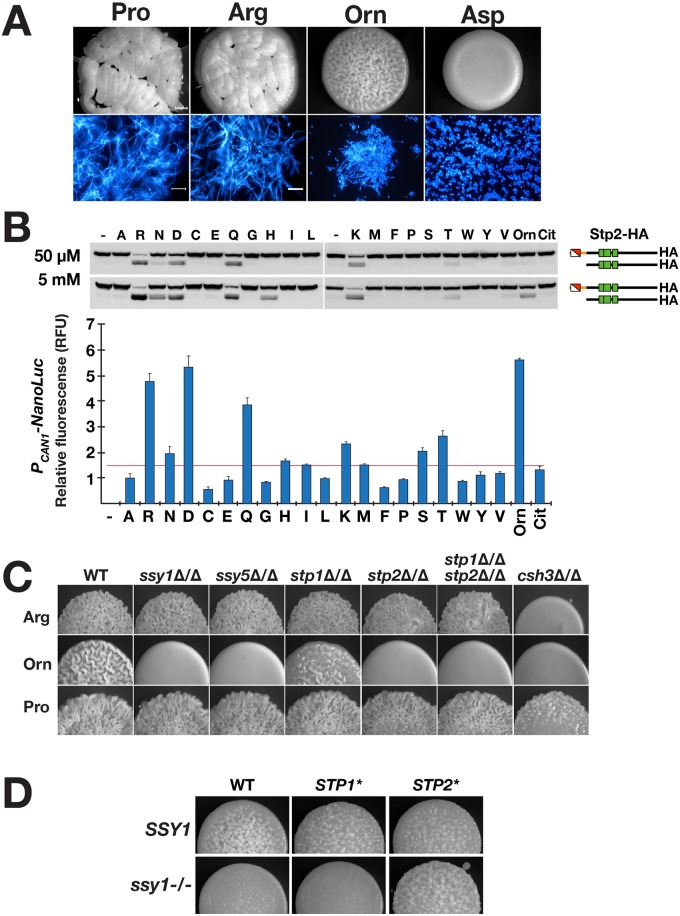
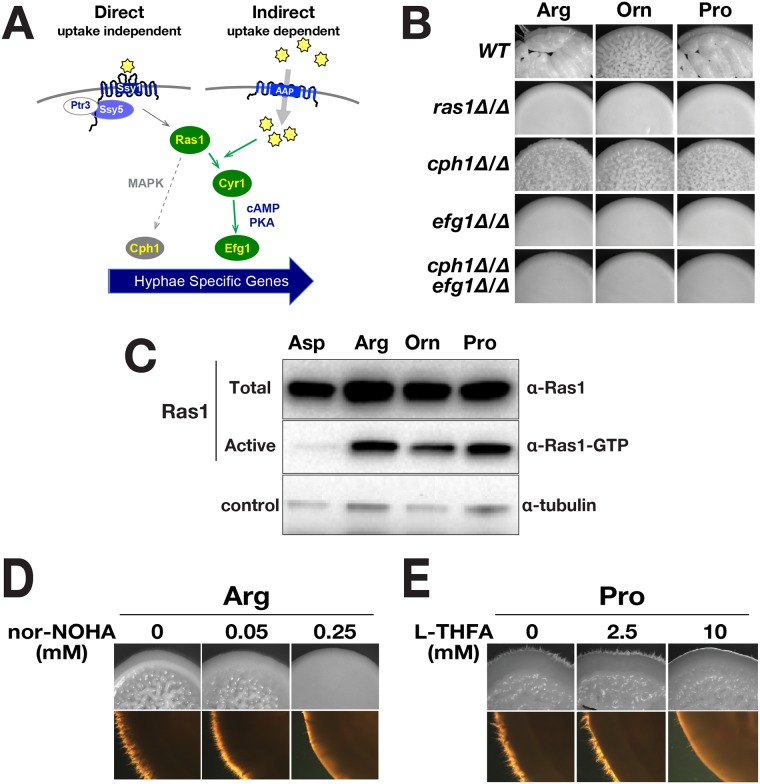
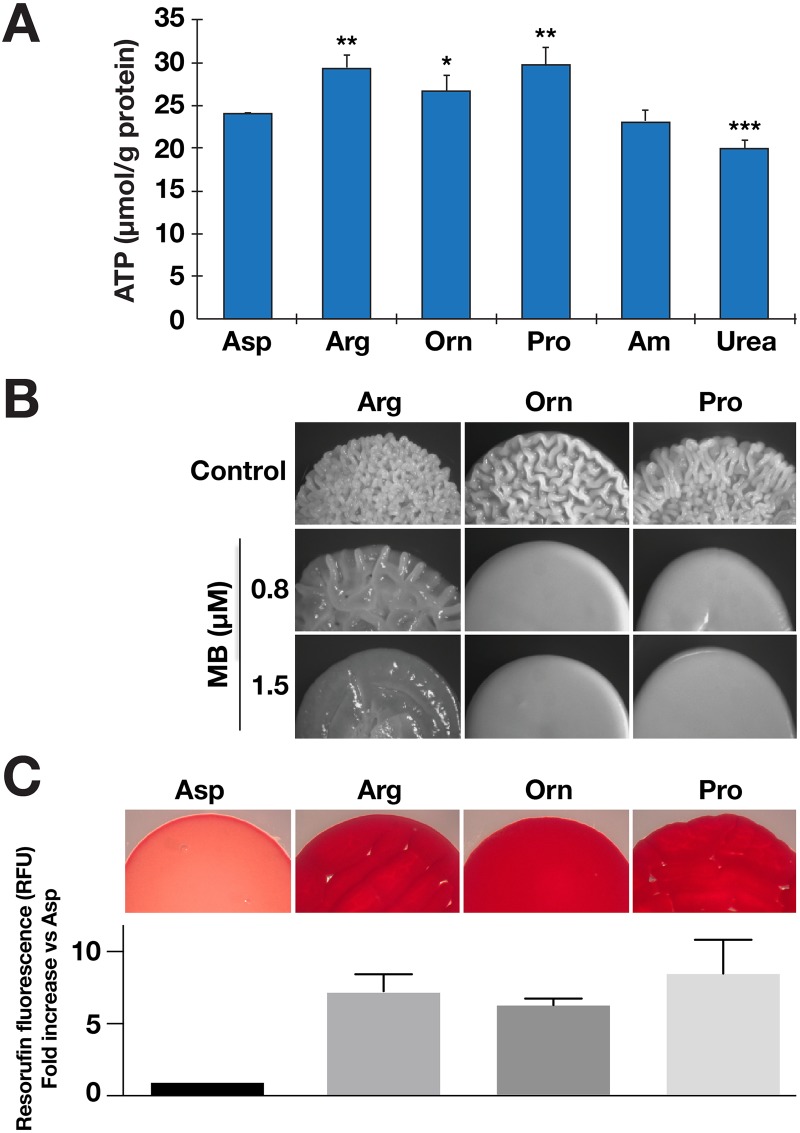
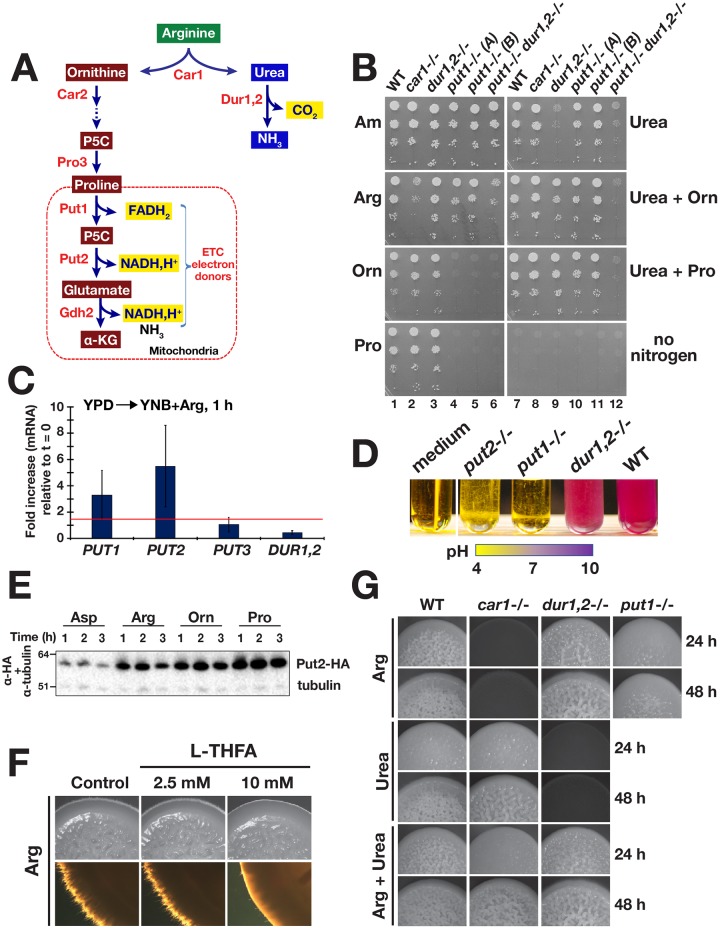
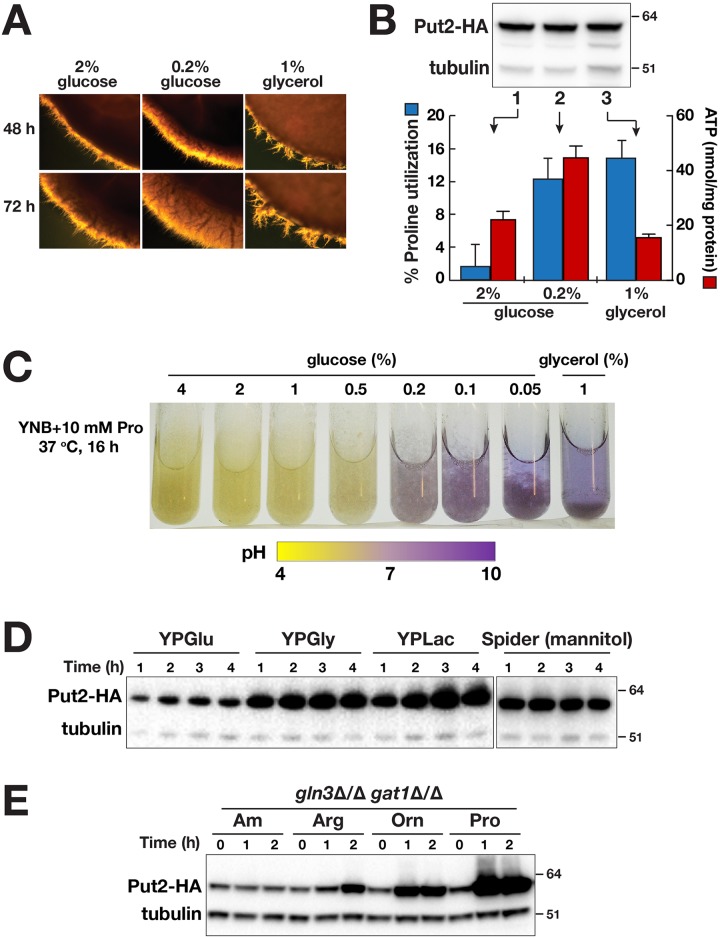
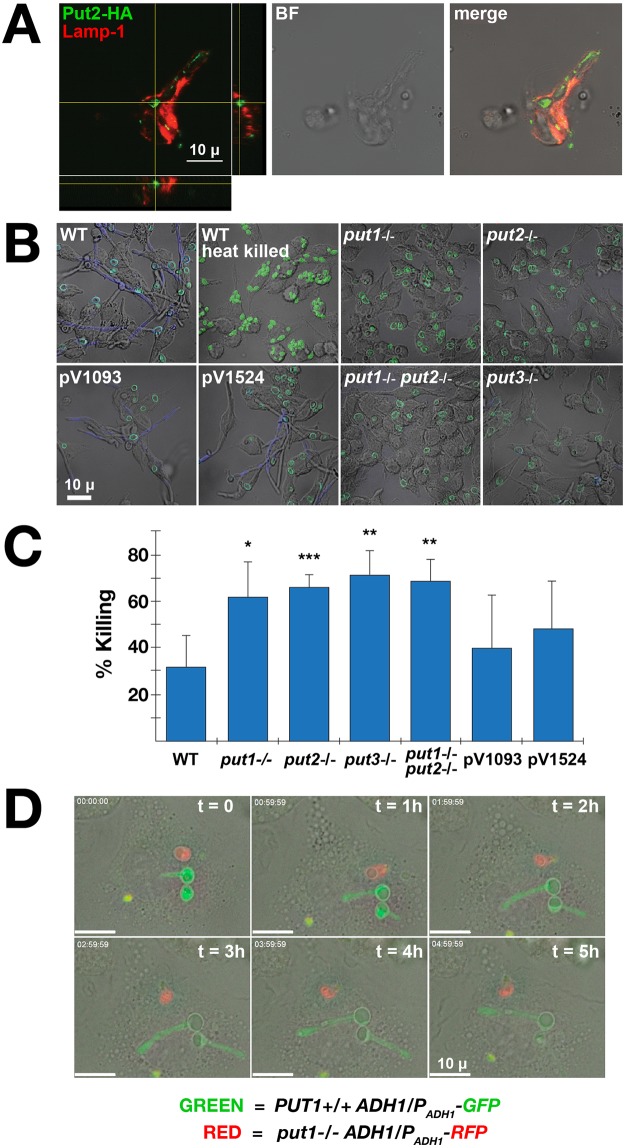
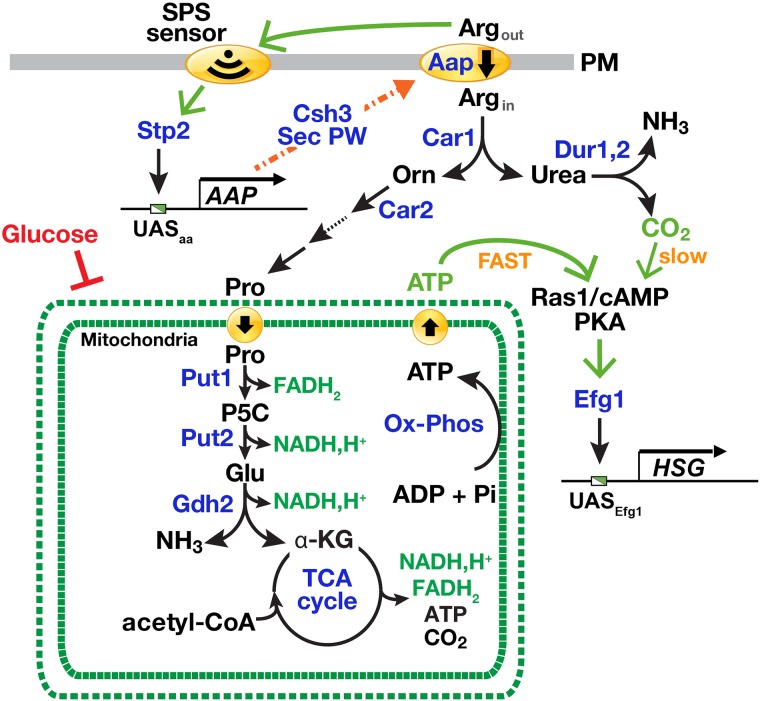
Abstract Amino acids are among the earliest identified inducers of yeast-to-hyphal transitions in Candida albicans , an opportunistic fungal pathogen of humans. Here, we show that the morphogenic amino acids arginine, ornithine and proline are internalized and metabolized in mitochondria via a PUT1 - and PUT2 -dependent pathway that results in enhanced ATP production. Elevated ATP levels correlate with Ras1/cAMP/PKA pathway activation and Efg1-induced gene expression. The magnitude of amino acid-induced filamentation is linked to glucose availability; high levels of glucose repress mitochondrial function thereby dampening filamentation. Furthermore, arginine-induced morphogenesis occurs more rapidly and independently of Dur1,2-catalyzed urea degradation, indicating that mitochondrial-generated ATP, not CO 2 , is the primary morphogenic signal derived from arginine metabolism. The important role of the SPS-sensor of extracellular amino acids in morphogenesis is the consequence of induced amino acid permease gene expression, i.e., SPS-sensor activation enhances the capacity of cells to take up morphogenic amino acids, a requisite for their catabolism. C. albicans cells engulfed by murine macrophages filament, resulting in macrophage lysis. Phagocytosed put1-/- and put2 -/- cells do not filament and do not lyse macrophages, consistent with a critical role of mitochondrial proline metabolism in virulence.
Overview
The claims and statistics of this paper haven’t been checked yet.
Free: it reads the open-access text and checks the first 5 claims that cite a source we can check. Create a free account to check every claim.
Integrity signals
Registry
Cites
Statistics
Figures
Verification
Claims the paper makes
The claims and statistics of this paper haven’t been checked yet.
Free: it reads the open-access text and checks the first 5 claims that cite a source we can check. Create a free account to check every claim.
Claims other papers make about this one
Each is checked against this paper’s own text: does it say what the citing paper says it does?
The source backs part of the claim, not all of it — or backs it for a different population, condition or comparison.
In the citing paper
“Proline dehydrogenase (Put1) and ∆1-pyrroline-5-carboxylate dehydrogenase (Put2), localized in mitochondria, are two key enzymes essential for amino acid catabolism in C. albicans to produce NH3 to alkalinize environment [32,33].”
From The F 1 F o -ATP synthase α subunit of Candida albicans induces inflammatory responses by controlling amino acid catabolism (2023) · cites this paper as [33]
Experimental — accuracy not yet measuredThe source backs part of the claim, not all of it — or backs it for a different population, condition or comparison.
In the citing paper
“Put1 and Put2 are two essential enzymes in amino acid catabolism in C. albicans to alkalinize environment [33].”
From The F 1 F o -ATP synthase α subunit of Candida albicans induces inflammatory responses by controlling amino acid catabolism (2023) · cites this paper as [33]
Experimental — accuracy not yet measuredThe source backs part of the claim, not all of it — or backs it for a different population, condition or comparison.
In the citing paper
“Mitochondrial proline dehydrogenase (Put1) and ∆1-pyrroline-5-carboxylate dehydrogenase (Put2) are two essential enzymes of amino acid catabolism and their deletion dramatically prevents C. albicans from alkalizing environment [33].”
From The F 1 F o -ATP synthase α subunit of Candida albicans induces inflammatory responses by controlling amino acid catabolism (2023) · cites this paper as [33]
Experimental — accuracy not yet measured
Self-check
Percentages, sums and reported differences re-computed from the paper’s own numbers.
The self-check needs the paper’s full text.
Citations
Cites
QUAST: quality assessment tool for genome assemblies
Gurevich, A., Saveliev, V., Vyahhi, N., & Tesler, G. (2013) · Bioinformatics · doi:10.1093/bioinformatics/btt086 · Cited by 11,172
Nonfilamentous C. albicans Mutants Are Avirulent
Lo, H.-J., Köhler, J. R., DiDomenico, B., Loebenberg, D., Cacciapuoti, A., & Fink, G. R. (1997) · Cell · doi:10.1016/s0092-8674(00)80358-x · Cited by 1,809
Engineered Luciferase Reporter from a Deep Sea Shrimp Utilizing a Novel Imidazopyrazinone Substrate
Hall, M. P., Unch, J., Binkowski, B. F., Valley, M. P., Butler, B. L., Wood, M. G., Otto, P., Zimmerman, K., Vidugiris, G., Machleidt, T., et al. (2012) · ACS Chemical Biology · doi:10.1021/cb3002478 · Cited by 1,598
Assembling Single-Cell Genomes and Mini-Metagenomes From Chimeric MDA Products
Nurk, S., Bankevich, A., Antipov, D., Gurevich, A. A., Korobeynikov, A., Lapidus, A., Prjibelski, A. D., Pyshkin, A., Sirotkin, A., Sirotkin, Y., et al. (2013) · Journal of Computational Biology · doi:10.1089/cmb.2013.0084 · Cited by 1,327
Kullberg, B. J., & Arendrup, M. C. (2015) · New England Journal of Medicine · doi:10.1056/nejmra1315399 · Cited by 1,315 · cited 1×
“Immunosuppression, or microbial dysbiosis, can predispose an 42 individual to infection, enabling this fungus to initiate and develop a spectrum of pathologies, 43 including superficial mucocutaneous or even life-threatening invasive infections [1, 2].”
BackgroundYeast Carbon Catabolite Repression
Gancedo, J. M. (1998) · Microbiology and Molecular Biology Reviews · doi:10.1128/mmbr.62.2.334-361.1998 · Cited by 1,273
Growth of Candida albicans hyphae
Sudbery, P. E. (2011) · Nature Reviews Microbiology · doi:10.1038/nrmicro2636 · Cited by 1,110
Bone Marrow-Derived Macrophages (BMM): Isolation and Applications
Weischenfeldt, J., & Porse, B. (2008) · Cold Spring Harbor Protocols · doi:10.1101/pdb.prot5080 · Cited by 955
The distinct morphogenic states of Candida albicans
Sudbery, P., Gow, N., & Berman, J. (2004) · Trends in Microbiology · doi:10.1016/j.tim.2004.05.008 · Cited by 876
Pyruvate Metabolism inSaccharomyces cerevisiae
PRONK, J. T., YDE STEENSMA, H., & VAN DIJKEN, J. P. (1996) · Yeast · doi:10.1002/(sici)1097-0061(199612)12:16<1607::aid-yea70>3.0.co;2-4 · Cited by 792
Suppression of Hyphal Formation in Candida albicans by Mutation of a STE12 Homolog
Liu, H., Köhler, J., & Fink, G. R. (1994) · Science · doi:10.1126/science.7992058 · Cited by 786
The SAT1 flipper, an optimized tool for gene disruption in Candida albicans
Reuß, O., Vik, Å., Kolter, R., & Morschhäuser, J. (2004) · Gene · doi:10.1016/j.gene.2004.06.021 · Cited by 742
Transcriptional Response of Candida albicans upon Internalization by Macrophages
Lorenz, M. C., Bender, J. A., & Fink, G. R. (2004) · Eukaryotic Cell · doi:10.1128/ec.3.5.1076-1087.2004 · Cited by 712
Shui, J., Wang, M., Du, F., & Dai, L. (2015) · Science Advances · doi:10.1126/sciadv.1400129 · Cited by 671
Stoldt, V. R. (1997) · The EMBO Journal · doi:10.1093/emboj/16.8.1982 · Cited by 598
Regulation of Amino Acid, Nucleotide, and Phosphate Metabolism in Saccharomyces cerevisiae
Ljungdahl, P. O., & Daignan-Fornier, B. (2012) · Genetics · doi:10.1534/genetics.111.133306 · Cited by 546
Self-citationCandida albicans cell-type switching and functional plasticity in the mammalian host
Noble, S. M., Gianetti, B. A., & Witchley, J. N. (2017) · Nature Reviews Microbiology · doi:10.1038/nrmicro.2016.157 · Cited by 521 · cited 3×
“49 albicans can assume at least three distinct morphologies: yeast-like, pseudohyphae, and true 50 hyphae, where the latter two are commonly referred to as filamentous morphologies (for review 51 see [4-7].”
BackgroundBiswas, S., Van Dijck, P., & Datta, A. (2007) · Microbiology and Molecular Biology Reviews · doi:10.1128/mmbr.00009-06 · Cited by 516
Skrzypek, M. S., Binkley, J., Binkley, G., Miyasato, S. R., Simison, M., & Sherlock, G. (2017) · Nucleic Acids Research · doi:10.1093/nar/gkw924 · Cited by 455
Fungal Adenylyl Cyclase Integrates CO2 Sensing with cAMP Signaling and Virulence
Klengel, T., Liang, W.-J., Chaloupka, J., Ruoff, C., Schröppel, K., Naglik, J. R., Eckert, S. E., Mogensen, E. G., Haynes, K., Tuite, M. F., et al. (2005) · Current Biology · doi:10.1016/j.cub.2005.10.040 · Cited by 409
Feasting, fasting and fermenting: glucose sensing in yeast and other cells
Johnston, M. (1999) · Trends in Genetics · doi:10.1016/s0168-9525(98)01637-0 · Cited by 385 · cited 1×
“, the well-characterized Crabtree effect [70].”
Increasing NADH oxidation reduces overflow metabolism in Saccharomyces cerevisiae
Vemuri, G. N., Eiteman, M. A., McEwen, J. E., Olsson, L., & Nielsen, J. (2007) · Proceedings of the National Academy of Sciences · doi:10.1073/pnas.0607469104 · Cited by 365
The Fungal Pathogen Candida albicans Autoinduces Hyphal Morphogenesis by Raising Extracellular pH
Vylkova, S., Carman, A. J., Danhof, H. A., Collette, J. R., Zhou, H., & Lorenz, M. C. (2011) · mBio · doi:10.1128/mbio.00055-11 · Cited by 365
A Candida albicans CRISPR system permits genetic engineering of essential genes and gene families
Vyas, V. K., Barrasa, M. I., & Fink, G. R. (2015) · Science Advances · doi:10.1126/sciadv.1500248 · Cited by 362 · cited 1×
“The solo system plasmids pV1093 or pV1524 were used [85, 86].”
MethodRas Signaling Is Required for Serum-Induced Hyphal Differentiation in Candida albicans
Feng, Q., Summers, E., Guo, B., & Fink, G. (1999) · Journal of Bacteriology · doi:10.1128/jb.181.20.6339-6346.1999 · Cited by 346
Rocha, C. R. C., Schröppel, K., Harcus, D., Marcil, A., Dignard, D., Taylor, B. N., Thomas, D. Y., Whiteway, M., & Leberer, E. (2001) · Molecular Biology of the Cell · doi:10.1091/mbc.12.11.3631 · Cited by 344
Glucose repression in Saccharomyces cerevisiae
Kayikci, Ö., & Nielsen, J. (2015) · FEMS Yeast Research · doi:10.1093/femsyr/fov068 · Cited by 332
Xue, Y., Batlle, M., & Hirsch, J. P. (1998) · The EMBO Journal · doi:10.1093/emboj/17.7.1996 · Cited by 303
Leberer, E., Harcus, D., Dignard, D., Johnson, L., Ushinsky, S., Thomas, D. Y., & Schröppel, K. (2001) · Molecular Microbiology · doi:10.1046/j.1365-2958.2001.02672.x · Cited by 295
Lactate signalling regulates fungal β-glucan masking and immune evasion
Ballou, E. R., Avelar, G. M., Childers, D. S., Mackie, J., Bain, J. M., Wagener, J., Kastora, S. L., Panea, M. D., Hardison, S. E., Walker, L. A., et al. (2016) · Nature Microbiology · doi:10.1038/nmicrobiol.2016.238 · Cited by 269
The MAP kinase signal transduction network in Candida albicans
Monge, R. A., Román, E., Nombela, C., & Pla, J. (2006) · Microbiology · doi:10.1099/mic.0.28616-0 · Cited by 263
Felk, A., Kretschmar, M., Albrecht, A., Schaller, M., Beinhauer, S., Nichterlein, T., Sanglard, D., Korting, H. C., Schäfer, W., & Hube, B. (2002) · Infection and Immunity · doi:10.1128/iai.70.7.3689-3700.2002 · Cited by 260
Transcriptional regulation of carbohydrate metabolism in the human pathogen Candida albicans
Askew, C., Sellam, A., Epp, E., Hogues, H., Mullick, A., Nantel, A., & Whiteway, M. (2009) · PLoS Pathogens · doi:10.1371/journal.ppat.1000612 · Cited by 260
Metabolism impacts upon Candida immunogenicity and pathogenicity at multiple levels
Brown, A. J. P., Brown, G. D., Netea, M. G., & Gow, N. A. R. (2014) · Trends in Microbiology · doi:10.1016/j.tim.2014.07.001 · Cited by 258
TUP1, CPH1 and EFG1 Make Independent Contributions to Filamentation in Candida albicans
Braun, B. R., & Johnson, A. D. (2000) · Genetics · doi:10.1093/genetics/155.1.57 · Cited by 257
Dramatic Enhancement of Genome Editing by CRISPR/Cas9 Through Improved Guide RNA Design
Farboud, B., & Meyer, B. J. (2015) · Genetics · doi:10.1534/genetics.115.175166 · Cited by 246
Control of Candida albicans Metabolism and Biofilm Formation by Pseudomonas aeruginosa Phenazines
Morales, D. K., Grahl, N., Okegbe, C., Dietrich, L. E. P., Jacobs, N. J., & Hogan, D. A. (2013) · mBio · doi:10.1128/mbio.00526-12 · Cited by 242
Morphogenesis and cell cycle progression in Candida albicans
Berman, J. (2006) · Current Opinion in Microbiology · doi:10.1016/j.mib.2006.10.007 · Cited by 237
Metabolic crosstalk between host and pathogen: sensing, adapting and competing
Olive, A. J., & Sassetti, C. M. (2016) · Nature Reviews Microbiology · doi:10.1038/nrmicro.2016.12 · Cited by 229
Nitrogen metabolism in durum wheat under salinity: accumulation of proline and glycine betaine
Carillo, P., Mastrolonardo, G., Nacca, F., Parisi, D., Verlotta, A., & Fuggi, A. (2008) · Functional Plant Biology · doi:10.1071/fp08108 · Cited by 218
Maidan, M. M., De Rop, L., Serneels, J., Exler, S., Rupp, S., Tournu, H., Thevelein, J. M., & Van Dijck, P. (2005) · Molecular Biology of the Cell · doi:10.1091/mbc.e04-09-0780 · Cited by 201
Ragout—a reference-assisted assembly tool for bacterial genomes
Kolmogorov, M., Raney, B., Paten, B., & Pham, S. (2014) · Bioinformatics · doi:10.1093/bioinformatics/btu280 · Cited by 197
Steegborn, C. (2014) · Biochimica et Biophysica Acta (BBA) - Molecular Basis of Disease · doi:10.1016/j.bbadis.2014.08.012 · Cited by 196
Dynamic aspects of vacuolar and cytosolic amino acid pools of Saccharomyces cerevisiae
Kitamoto, K., Yoshizawa, K., Ohsumi, Y., & Anraku, Y. (1988) · Journal of Bacteriology · doi:10.1128/jb.170.6.2683-2686.1988 · Cited by 191
The Ras/cAMP/PKA signaling pathway and virulence in Candida albicans
Hogan, D. A., & Sundstrom, P. (2009) · Future Microbiology · doi:10.2217/fmb.09.106 · Cited by 186
Vylkova, S., & Lorenz, M. C. (2014) · PLoS Pathogens · doi:10.1371/journal.ppat.1003995 · Cited by 174
Ghosh, S., Navarathna, D. H. M. L. P., Roberts, D. D., Cooper, J. T., Atkin, A. L., Petro, T. M., & Nickerson, K. W. (2009) · Infection and Immunity · doi:10.1128/iai.01452-08 · Cited by 165
Ammonium Toxicity and Potassium Limitation in Yeast
Hess, D. C., Lu, W., Rabinowitz, J. D., & Botstein, D. (2006) · PLoS Biology · doi:10.1371/journal.pbio.0040351 · Cited by 154
Mucosal Immunity and Candida albicans Infection
Moyes, D. L., & Naglik, J. R. (2011) · Clinical and Developmental Immunology · doi:10.1155/2011/346307 · Cited by 138
Hoof, D. V., Pinkse, M. W. H., Oostwaard, D. W., Mummery, C. L., Heck, A. J. R., & Krijgsveld, J. (2007) · Nature Methods · doi:10.1038/nmeth0907-677 · Cited by 133
l-Proline is essential for the intracellular differentiation of Trypanosoma cruzi
Tonelli, R. R., Silber, A. M., Almeida-de-Faria, M., Hirata, I. Y., Colli, W., & Alves, M. J. M. (2004) · Cellular Microbiology · doi:10.1111/j.1462-5822.2004.00397.x · Cited by 127
Miwa, T., Takagi, Y., Shinozaki, M., Yun, C.-W., Schell, W. A., Perfect, J. R., Kumagai, H., & Tamaki, H. (2004) · Eukaryotic Cell · doi:10.1128/ec.3.4.919-931.2004 · Cited by 125
Hnisz, D., Majer, O., Frohner, I. E., Komnenovic, V., & Kuchler, K. (2010) · PLoS Pathogens · doi:10.1371/journal.ppat.1000889 · Cited by 124
Maidan, M. M., Thevelein, J. M., & Van Dijck, P. (2005) · Biochemical Society Transactions · doi:10.1042/bst0330291 · Cited by 123
Brandriss, M. C., & Magasanik, B. (1979) · Journal of Bacteriology · doi:10.1128/jb.140.2.498-503.1979 · Cited by 122
Martínez, P., & Ljungdahl, P. O. (2005) · Molecular and Cellular Biology · doi:10.1128/mcb.25.21.9435-9446.2005 · Cited by 114
Self-citationProline Metabolism is Essential for Trypanosoma brucei brucei Survival in the Tsetse Vector
Mantilla, B. S., Marchese, L., Casas-Sánchez, A., Dyer, N. A., Ejeh, N., Biran, M., Bringaud, F., Lehane, M. J., Acosta-Serrano, Á., & Silber, A. M. (2017) · PLoS Pathogens · doi:10.1371/journal.ppat.1006158 · Cited by 112
Grahl, N., Demers, E. G., Lindsay, A. K., Harty, C. E., Willger, S. D., Piispanen, A. E., & Hogan, D. A. (2015) · PLOS Pathogens · doi:10.1371/journal.ppat.1005133 · Cited by 111
Fleck, C. B., Schöbel, F., & Brock, M. (2011) · International Journal of Medical Microbiology · doi:10.1016/j.ijmm.2011.04.007 · Cited by 110
New CRISPR Mutagenesis Strategies Reveal Variation in Repair Mechanisms among Fungi
Vyas, V. K., Bushkin, G. G., Bernstein, D. A., Getz, M. A., Sewastianik, M., Barrasa, M. I., Bartel, D. P., & Fink, G. R. (2018) · mSphere · doi:10.1128/msphere.00154-18 · Cited by 107
Stimulation of respiration by methylene blue in rat liver mitochondria
Visarius, T. M., Stucki, J. W., & Lauterburg, B. H. (1997) · FEBS Letters · doi:10.1016/s0014-5793(97)00767-9 · Cited by 103
Velasco, I., Tenreiro, S., Calderón, I. L., & André, B. (2004) · Eukaryotic Cell · doi:10.1128/ec.3.6.1492-1503.2004 · Cited by 102
Custot, J., Moali, C., Brollo, M., Boucher, J., Delaforge, M., Mansuy, D., Tenu, J., & Zimmermann, J. (1997) · Journal of the American Chemical Society · doi:10.1021/ja970285o · Cited by 96
Bambach, A., Fernandes, M. P., Ghosh, A., Kruppa, M., Alex, D., Li, D., Fonzi, W. A., Chauhan, N., Sun, N., Agrellos, O. A., et al. (2009) · Eukaryotic Cell · doi:10.1128/ec.00066-09 · Cited by 95
Membrane Insertion of Uracil Permease, a Poly topic Yeast Plasma Membrane Protein
Silve, S., Volland, C., Garnier, C., Jund, R., Chevallier, M. R., & Haguenauer‐Tsapis, R. (1991) · Molecular and Cellular Biology · doi:10.1128/mcb.11.2.1114 · Cited by 95
Germination of Candida albicans induced by proline
Dabrowa, N., Taxer, S. S., & Howard, D. H. (1976) · Infection and Immunity · doi:10.1128/iai.13.3.830-835.1976 · Cited by 88
The sites of interaction of triphenyltetrazolium chloride with mitochondrial respiratory chains
Rich, P. (2001) · FEMS Microbiology Letters · doi:10.1016/s0378-1097(01)00317-2 · Cited by 85
Fang, H., & Wang, Y. (2006) · Molecular Microbiology · doi:10.1111/j.1365-2958.2006.05248.x · Cited by 83
STUDIES ON THE PHYSIOLOGICAL BASES OF MORPHOGENESIS IN FUNGI
Nickerson, W. J., & Edwards, G. A. (1949) · The Journal of General Physiology · doi:10.1085/jgp.33.1.41 · Cited by 83
Glucose Sensing Network in Candida albicans : a Sweet Spot for Fungal Morphogenesis
Sabina, J., & Brown, V. (2009) · Eukaryotic Cell · doi:10.1128/ec.00138-09 · Cited by 81
The catalysed NADH reduction of resazurin to resorufin
Candeias, L. P., Macfarlane, D. P. S., McWhinnie, S. L. W., Maidwell, N. L., Roeschlaub, C. A., Sammes, P. G., & Whittlesey, R. (1998) · Journal of the Chemical Society Perkin Transactions 2 · doi:10.1039/a806431h · Cited by 80 · cited 1×
“The redox258 sensitive dye resazurin can be used in liquid culture to monitor the reducing capacity of the 259 intracellular environment [45]; resazurin is non-fluorescent, but is readily reduced by NADH or 260 to a lesser extent by NADPH to highly red fluorescent resorufin (excitation 560 nm, emission 261 590 nm).”
BackgroundLand, G. A., McDonald, W. C., Stjernholm, R. L., & Friedman, L. (1975) · Infection and Immunity · doi:10.1128/iai.12.1.119-127.1975 · Cited by 78
Zhang, M., White, T. A., Schuermann, J. P., Baban, B. A., Becker, D. F., & Tanner, J. J. (2004) · Biochemistry · doi:10.1021/bi048737e · Cited by 76
Martins, R. M., Covarrubias, C., Rojas, R., Silber, A. M., & Yoshida, N. (2009) · Infection and Immunity · doi:10.1128/iai.00138-09 · Cited by 76
Siddiqui, A. H., & Brandriss, M. C. (1989) · Molecular and Cellular Biology · doi:10.1128/mcb.9.11.4706 · Cited by 75
Zou, H., Fang, H., Zhu, Y., & Wang, Y. (2010) · Molecular Microbiology · doi:10.1111/j.1365-2958.2009.06980.x · Cited by 74
Jiménez-López, C., Collette, J. R., Brothers, K. M., Shepardson, K. M., Cramer, R. A., Wheeler, R. T., & Lorenz, M. C. (2013) · Eukaryotic Cell · doi:10.1128/ec.00290-12 · Cited by 74
Brega, E., Zufferey, R., & Mamoun, C. B. (2004) · Eukaryotic Cell · doi:10.1128/ec.3.1.135-143.2004 · Cited by 72
Land, G. A., McDonald, W. C., Stjernholm, R. L., & Friedman, T. L. (1975) · Infection and Immunity · doi:10.1128/iai.11.5.1014-1023.1975 · Cited by 71
Bicho, C. C., de Lima Alves, F., Chen, Z. A., Rappsilber, J., & Sawin, K. E. (2010) · Molecular & Cellular Proteomics · doi:10.1074/mcp.m110.000208 · Cited by 71
GLN3 encodes a global regulator of nitrogen metabolism and virulence of C. albicans
Liao, W.-L., Ramón, A., & Fonzi, W. A. (2007) · Fungal Genetics and Biology · doi:10.1016/j.fgb.2007.08.006 · Cited by 68
Proline: an essential intermediate in arginine degradation in Saccharomyces cerevisiae
Brandriss, M. C., & Magasanik, B. (1980) · Journal of Bacteriology · doi:10.1128/jb.143.3.1403-1410.1980 · Cited by 66
Ras Signaling Gets Fine-Tuned: Regulation of Multiple Pathogenic Traits of Candida albicans
Inglis, D. O., & Sherlock, G. (2013) · Eukaryotic Cell · doi:10.1128/ec.00094-13 · Cited by 66
Luciferase NanoLuc as a reporter for gene expression and protein levels in Saccharomyces cerevisiae
Masser, A. E., Kandasamy, G., Kaimal, J. M., & Andréasson, C. (2016) · Yeast · doi:10.1002/yea.3155 · Cited by 63
Involvement of Candida albicans NADH dehydrogenase complex I in filamentation
McDonough, J. A., Bhattacherjee, V., Sadlon, T., & Hostetter, M. K. (2002) · Fungal Genetics and Biology · doi:10.1016/s1087-1845(02)00007-5 · Cited by 61
Martínez, P., & Ljungdahl, P. O. (2004) · Molecular Microbiology · doi:10.1046/j.1365-2958.2003.03845.x · Cited by 58
Self-citationLee, K. K., & Boelsterli, U. A. (2014) · Redox Biology · doi:10.1016/j.redox.2014.03.003 · Cited by 57
Brandriss, M. C., & Magasanik, B. (1981) · Journal of Bacteriology · doi:10.1128/jb.145.3.1359-1364.1981 · Cited by 56
Lößner, C., Warnken, U. H., Pscherer, A., & Schnölzer, M. (2011) · Analytical Biochemistry · doi:10.1016/j.ab.2011.01.011 · Cited by 50
Expression of Matrix Metalloproteinases during Experimental Candida albicans Keratitis
Yuan, X., Mitchell, B. M., & Wilhelmus, K. R. (2009) · Investigative Ophthalmology & Visual Science · doi:10.1167/iovs.08-2390 · Cited by 49
Hogan, D. A., & Mühlschlegel, F. A. (2011) · Current Opinion in Microbiology · doi:10.1016/j.mib.2011.09.014 · Cited by 48
Dabas, N., & Morschhäuser, J. (2008) · Molecular Microbiology · doi:10.1111/j.1365-2958.2008.06297.x · Cited by 47
Davis, M. M., Álvarez, F. J., Ryman, K., Holm, Å., Ljungdahl, P. O., & Engström, Y. (2011) · PLoS ONE · doi:10.1371/journal.pone.0027434 · Cited by 44
Self-citationWang, Y. (2013) · PLoS Pathogens · doi:10.1371/journal.ppat.1003612 · Cited by 43
A computational approach to correct arginine-to-proline conversion in quantitative proteomics
Park, S. K., Liao, L., Kim, J. Y., & Yates, J. R. (2009) · Nature Methods · doi:10.1038/nmeth0309-184 · Cited by 43
Holmes, A. R., & Shepherd, M. G. (1987) · Microbiology · doi:10.1099/00221287-133-11-3219 · Cited by 43 · cited 3×
“17 morphogenesis [14] and with early reports that amino acid catabolism promotes filamentous 441 growth [12, 13, 53].”
BackgroundMembrane Insertion of Uracil Permease, a Poly topic Yeast Plasma Membrane Protein
Silve, S., Volland, C., Garnier, C., et al. (1991) · Molecular and Cellular Biology · doi:10.1128/mcb.11.2.1114-1124.1991 · Cited by 42
Effects of proline analog binding on the spectroscopic and redox properties of PutA
Zhu, W., Gincherman, Y., Docherty, P., Spilling, C. D., & Becker, D. (2002) · Archives of Biochemistry and Biophysics · doi:10.1016/s0003-9861(02)00535-0 · Cited by 41 · cited 7×
“As expected, pharmacological inhibition of Put1 by L-THFA inhibited arginine-induced morphogenesis (Fig.”
BackgroundInfluentialC-Sibelia: an easy-to-use and highly accurate tool for bacterial genome comparison
Minkin, I., Pham, H., Starostina, E. V., Vyahhi, N., & Pham, S. (2013) · F1000Research · doi:10.12688/f1000research.2-258.v1 · Cited by 36
Proline Uptake in Candida albicans
DABROWA, N., & HOWARD, D. H. (1981) · Microbiology · doi:10.1099/00221287-127-2-391 · Cited by 36 · cited 1×
“The weak filamentation observed in 545 the csh3∆/∆ mutant grown in 10 mM proline can be attributed to the residual uptake of proline 546 as previously described [35]; apparently, the residual systems are expressed and function at high 547 extracellular concentrations of proline [53, 72].”
BackgroundKraidlova, L., Schrevens, S., Tournu, H., Van Zeebroeck, G., Sychrova, H., & Van Dijck, P. (2016) · mSphere · doi:10.1128/msphere.00284-16 · Cited by 35
Niimi, M., Kamiyama, A., & Tokunaga, M. (1988) · Medical Mycology · doi:10.1080/02681218880000271 · Cited by 32
Marczak, J. E., & Brandriss, M. C. (1989) · Molecular and Cellular Biology · doi:10.1128/mcb.9.11.4696-4705.1989 · Cited by 30 · cited 1×
“Finally, the mitochondrial P5C is converted to glutamate by the PUT2 gene product (Marczak and Brandriss, 1989; Siddiqui and Brandriss, 1989), which is then converted to α-ketoglutarate via Gdh2.”
BackgroundHyphal formation of Candida albicans is controlled by electron transfer system
Watanabe, T., Ogasawara, A., Mikami, T., & Matsumoto, T. (2006) · Biochemical and Biophysical Research Communications · doi:10.1016/j.bbrc.2006.07.066 · Cited by 30
Ebikeme, C., Peacock, L., Coustou, V., Rivière, L., Bringaud, F., Gibson, W. C., & Barrett, M. P. (2008) · Parasitology · doi:10.1017/s0031182008004241 · Cited by 26
Put3 Positively Regulates Proline Utilization in Candida albicans
Tebung, W. A., Omran, R. P., Fulton, D. L., Morschhäuser, J., & Whiteway, M. S. (2017) · mSphere · doi:10.1128/msphere.00354-17 · Cited by 20
Cihlar, R. L., & Calderone, R. (2009) · Methods in molecular biology · doi:10.1007/978-1-60327-151-6 · Cited by 10
Cited by
Candida albicans and Candida glabrata : global priority pathogens
Katsipoulaki, M., Stappers, M. H. T., Malavia-Jones, D., Brunke, S., Hube, B., & Gow, N. A. R. (2024) · Microbiology and Molecular Biology Reviews · doi:10.1128/mmbr.00021-23 · Cited by 180
From Jekyll to Hyde: The Yeast–Hyphal Transition of Candida albicans
Chow, E. W. L., Pang, L. M., & Wang, Y. (2021) · Pathogens · doi:10.3390/pathogens10070859 · Cited by 178
The Multifaceted Roles of Proline in Cell Behavior
Patriarca, E. J., Cermola, F., D’Aniello, C., Fico, A., Guardiola, O., Cesare, D. D., & Minchiotti, G. (2021) · Frontiers in Cell and Developmental Biology · doi:10.3389/fcell.2021.728576 · Cited by 153
Arginine metabolism in myeloid cells in health and disease
Karadima, E., Chavakis, T., & Alexaki, V. I. (2025) · Seminars in Immunopathology · doi:10.1007/s00281-025-01038-9 · Cited by 97
“Finally, proline catabolism in Candida albicans cells was shown to be essential for its hyphal growth in phagosomes of engulfing macrophages, a process that C. albicans uses to escape killing by macrophages [111].”
Jin, X., Zhang, M., Lu, J., Duan, X., Chen, J., Liu, Y., Chang, W., & Lou, H. (2021) · Journal of Advanced Research · doi:10.1016/j.jare.2021.06.016 · Cited by 75
Metadata
- Authors
- Silao, F. G. S., Ward, M., Ryman, K., Wallström, A., Brindefalk, B., Udekwu, K., & Ljungdahl, P. O.
- Affiliations
- Stockholm University (SE)
- Corresponding author
- Ljungdahl, Per O.
- ORCID
- Venue
- PLOS Genetics
- Publisher
- Public Library of Science (PLoS)
- Published
- 2019-02-11
- Volume
- 15
- Issue
- 2
- Pages
- e1007976
- ISSN
- 1553-7390 (ISSN-L)
- 1553-7404
- PMC
- PMC6386415
- OpenAlex
- W2950010168
- Cited by
- 93
- References
- 108
- Citations by year
- 2026: 14 · 2025: 8 · 2024: 14 · 2023: 10 · 2022: 12 · 2021: 14 · 2020: 15 · 2019: 6
- FWCI
- 3.87
- Type
- journal article
- Language
- en
- Update notices
- new_version (2019-02-22)
- Open access
- gold
- doi.org
- Licence
- Locations
- PLoS Genetics (publishedVersion, cc-by)
- bioRxiv (Cold Spring Harbor Laboratory) (acceptedVersion)
- Europe PMC (PubMed Central) (publishedVersion, cc-by)
- PubMed Central (publishedVersion, cc-by)
- PubMed (publishedVersion)
- DOAJ (DOAJ: Directory of Open Access Journals) (submittedVersion, cc-by-sa)
- Figshare (submittedVersion, cc-by)
- Funders
- Vetenskapsrådet (2015-04202)
- FP7 People: Marie-Curie Actions (MC-ITN-606786)
- Topics
- Life Sciences › Biochemistry, Genetics and Molecular Biology › Molecular Biology › Fungal and yeast genetics research
- Health Sciences › Medicine › Infectious Diseases › Antifungal resistance and susceptibility
- Health Sciences › Medicine › Infectious Diseases › Fungal Infections and Studies
- Keywords
- Candida albicans, yeast-to-hypha transition, arginine metabolism, ornithine metabolism, amino acid uptake, EFG1, amino acid permease, ATP production, macrophage phagocytosis, fungal virulence, immune evasion
- MeSH terms
- RAW 264.7 Cells, Cyclic AMP, Adenosine Triphosphate, Amino Acids, Animals, Candida albicans, Fungal Proteins, Humans, Macrophages, Mitochondria, Morphogenesis, Proline, Proline Oxidase, Virulence, Signal Transduction, Cyclic AMP-Dependent Protein Kinases, ras Proteins, Hyphae, Mice
About these checks
Registry, retraction, Cites and statistics results are computed, not judged, with one exception: a printed reference that no index lists is read once by a model before it counts as a citation error. Claims are extracted by a model and kept only when their quote appears verbatim in the text; each cited source is then checked, with a model’s help, for whether it says what the claim relies on. Those verdicts can be wrong — read the claim’s quote and the cited source before relying on one.
Statistics and arithmetic are recomputed, not judged.
Confidence bands are shown only for fields calibrated on our annotated test set. None is calibrated yet, so no band is shown.
What counts as a claim ›How we measure confidence ›How we check this ›
Are you an author, or do you see a problem with this page? Request a review
Data sources
Bibliographic data: Semantic Scholar, OpenAlex, Crossref.
Contains information from the Semantic Scholar Academic Graph Datasets, made available under the ODC Attribution License (ODC-BY 1.0).
Semantic Scholar’s data is described in: Kinney, R., et al. (2023). The Semantic Scholar Open Data Platform. arXiv:2301.10140.
