

Eight Americas: investigating mortality disparities across races, counties, and race-counties in the United States.
Open accessThe DOI matches its Crossref record; 50 of the 50 references it cites were found in a registry or an index.
Abstract
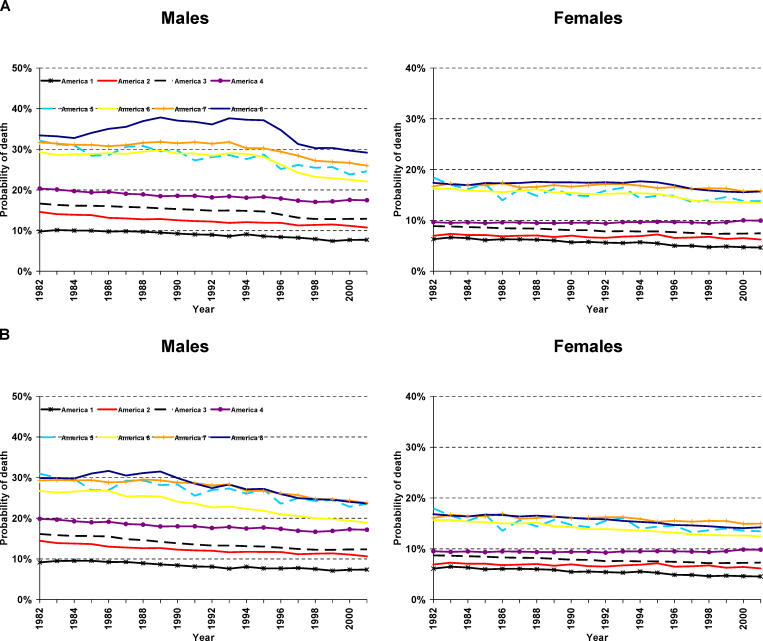
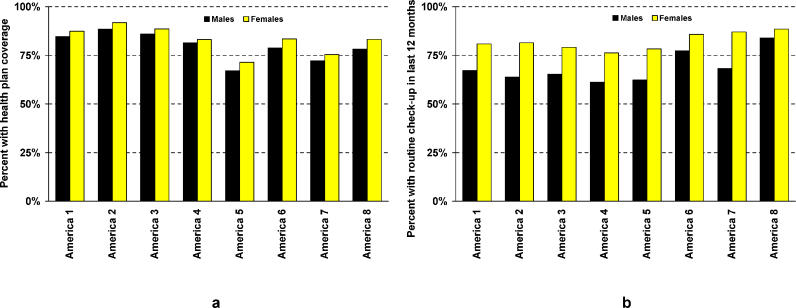
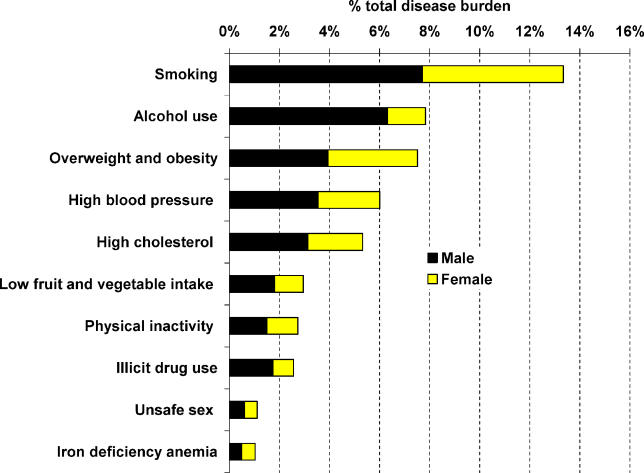
BACKGROUND: The gap between the highest and lowest life expectancies for race-county combinations in the United States is over 35 y. We divided the race-county combinations of the US population into eight distinct groups, referred to as the "eight Americas," to explore the causes of the disparities that can inform specific public health intervention policies and programs. METHODS AND FINDINGS: The eight Americas were defined based on race, location of the county of residence, population density, race-specific county-level per capita income, and cumulative homicide rate. Data sources for population and mortality figures were the Bureau of the Census and the National Center for Health Statistics. We estimated life expectancy, the risk of mortality from specific diseases, health insurance, and health-care utilization for the eight Americas. The life expectancy gap between the 3.4 million high-risk urban black males and the 5.6 million Asian females was 20.7 y in 2001. Within the sexes, the life expectancy gap between the best-off and the worst-off groups was 15.4 y for males (Asians versus high-risk urban blacks) and 12.8 y for females (Asians versus low-income southern rural blacks). Mortality disparities among the eight Americas were largest for young (15-44 y) and middle-aged (45-59 y) adults, especially for men. The disparities were caused primarily by a number of chronic diseases and injuries with well-established risk factors. Between 1982 and 2001, the ordering of life expectancy among the eight Americas and the absolute difference between the advantaged and disadvantaged groups remained largely unchanged. Self-reported health plan coverage was lowest for western Native Americans and low-income southern rural blacks. Crude self-reported health-care utilization, however, was slightly higher for the more disadvantaged populations. CONCLUSIONS: Disparities in mortality across the eight Americas, each consisting of millions or tens of millions of Americans, are enormous by all international standards. The observed disparities in life expectancy cannot be explained by race, income, or basic health-care access and utilization alone. Because policies aimed at reducing fundamental socioeconomic inequalities are currently practically absent in the US, health disparities will have to be at least partly addressed through public health strategies that reduce risk factors for chronic diseases and injuries.
Overview
The claims and statistics of this paper haven’t been checked yet.
Free: it reads the open-access text and checks the first 5 claims that cite a source we can check. Create a free account to check every claim.
Integrity signals
Registry
Cites
Statistics
Figures
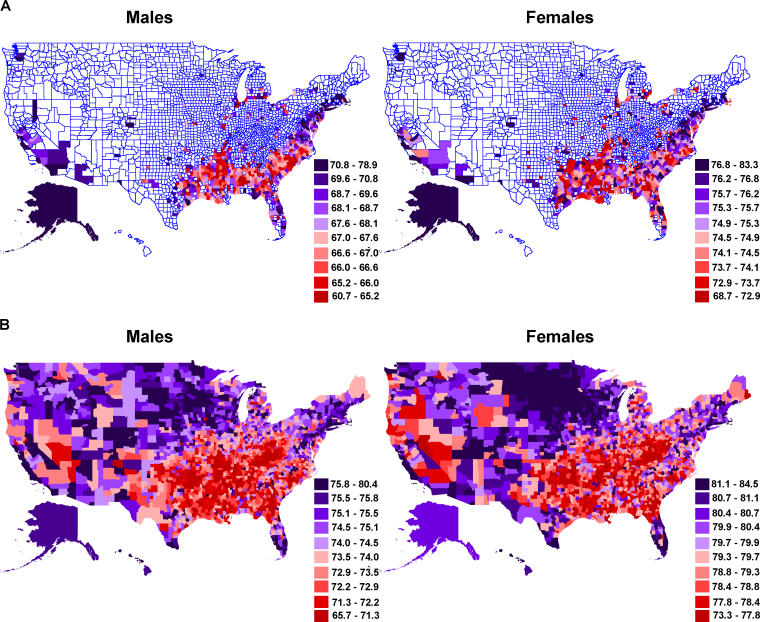
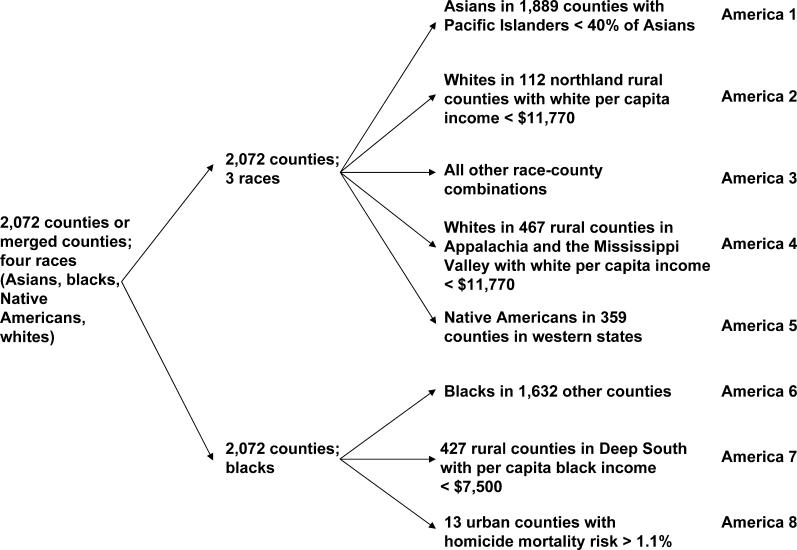
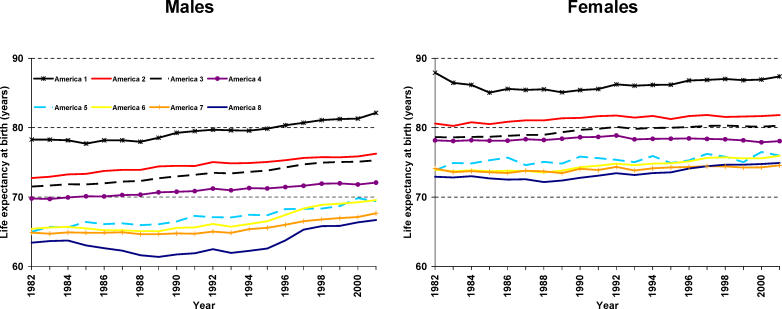
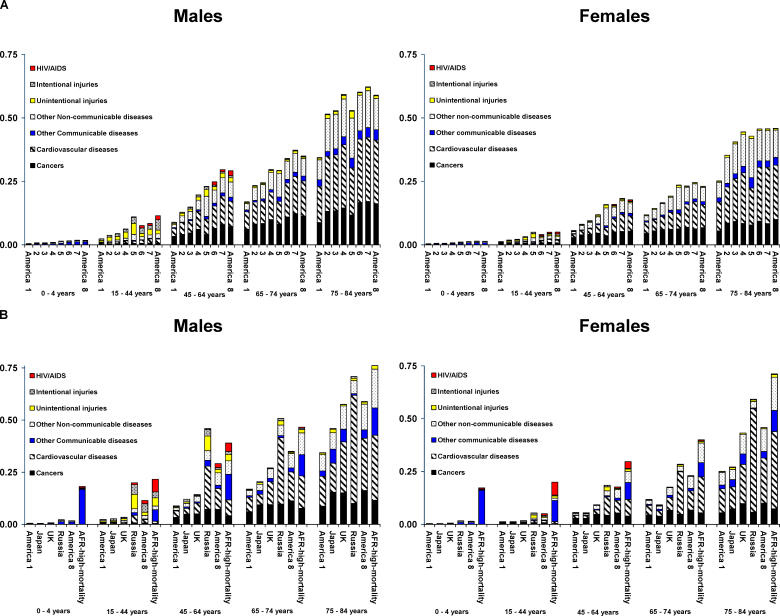
Verification
Claims the paper makes
The claims and statistics of this paper haven’t been checked yet.
Free: it reads the open-access text and checks the first 5 claims that cite a source we can check. Create a free account to check every claim.
Claims other papers make about this one
Each is checked against this paper’s own text: does it say what the citing paper says it does?
The check wasn’t confident either way, so it gives no verdict — never disputed.
In the citing paper
“Site-specific differences in the incidence of candidemia might be due to differences in the percentages of patients with underlying conditions such as diabetes and other immunosuppressive conditions (40,41), differences in practice patterns and use of antibiotics, and differences in use of antifungals and CVCs, all of which contribute to the risk for candidemia.”
From Population-Based Active Surveillance for Culture-Confirmed Candidemia — Four Sites, United States, 2012–2016 (2019) · cites this paper as [41]
Experimental — accuracy not yet measured
Self-check
Percentages, sums and reported differences re-computed from the paper’s own numbers.
The self-check needs the paper’s full text.
Citations
Cites
Yusuf, S., Hawken, S., Ôunpuu, S., Dans, T., Avezum, A., Lanas, F., McQueen, M., Budaj, A., Pais, P., Varigos, J., et al. (2004) · The Lancet · doi:10.1016/s0140-6736(04)17018-9 · Cited by 12,026
Unequal treatment: confronting racial and ethnic disparities in health care
(2003) · Choice Reviews Online · doi:10.5860/choice.40-5843 · Cited by 7,043
The World Health Report 2002 - Reducing Risks, Promoting Healthy Life
Not Available, N. A. (2003) · Education for Health: Change in Learning & Practice · doi:10.1080/1357628031000116808 · Cited by 6,046
Selected major risk factors and global and regional burden of disease
Ezzati, M., Lopez, A. D., Rodgers, A., Vander Hoorn, S., & Murray, C. J. (2002) · The Lancet · doi:10.1016/s0140-6736(02)11403-6 · Cited by 3,594
Self-citationGlobal Burden of Disease and Risk Factors
(2006) · World Bank, Washington, DC eBooks · doi:10.1596/978-0-8213-6262-4 · Cited by 2,605
Self-citationDemography, Measuring and Modeling Population Processes
Veron, J., Preston, S. H., Heuveline, P., & Guillot, M. (2002) · Population (French Edition) · doi:10.2307/1535065 · Cited by 1,709
Pappas, G., Queen, S., Hadden, W., & Fisher, G. (1993) · New England Journal of Medicine · doi:10.1056/nejm199307083290207 · Cited by 1,524
Area Deprivation and Widening Inequalities in US Mortality, 1969–1998
Singh, G. K. (2003) · American Journal of Public Health · doi:10.2105/ajph.93.7.1137 · Cited by 1,423 · cited 1×
“Researchers have also drawn attention to substantial disparities in mortality and functional health status nationally and within race groups in relation to income, social class, education, and community characteristics [6–16].”
BackgroundThe Influence Of Income On Health: Views Of An Epidemiologist
Marmot, M. (2002) · Health Affairs · doi:10.1377/hlthaff.21.2.31 · Cited by 848 · cited 1×
“Important research in the past few decades has illustrated the critical role of individual and community-level socioeconomic factors, be it in absolute or relative terms, in health outcomes [11,24,37,38].”
BackgroundCooper, R., Cutler, J., Desvigne-Nickens, P., Fortmann, S. P., Friedman, L., Havlik, R., Hogelin, G., Marler, J., McGovern, P., Morosco, G., et al. (2000) · Circulation · doi:10.1161/01.cir.102.25.3137 · Cited by 831 · cited 1×
“Multiple investigations have documented the consistent gap in all measures of mortality by race, particularly between black and white Americans [1–5].”
Background
Research works printed but not linked: 1
- Nelson DE Holtzman D Waller M Leutzinger CL Condon K 1998 Objectives and design of the Behavioral Risk Factor Surveillance System Proceedings of the Survey Research Methods Section, American Statistical Association National Meeting (1998) Alexandria (Virginia) American Statistical Association Available: http://www.amstat.org/sections/srms/proceedings/papers/1998_032.pdf. Accessed 11 July 2006.
Cited by
Items 601–700 of 833
Social determinants of health: How social and environmental factors affect human health
Olden, K. (2022) · Elsevier eBooks · doi:10.1016/b978-0-12-824010-6.00007-1 · Cited by 3
Wheat, J. R., Gardner, A. J., & Moore, C. E. (2025) · Southern Medical Journal · doi:10.14423/smj.0000000000001803 · Cited by 3
System Dynamics Modeling to Rethink Health System Reform
Homer, J. B., Milstein, B., & Hirsch, G. B. (2020) · Oxford University Press eBooks · doi:10.1093/oso/9780190880743.003.0013 · Cited by 3
Bowleg, L., Massie, J. S., Holt, S. L., Boone, C. A., Mbaba, M., Stroman, W. A., Urada, L. A., & Raj, A. (2020) · American Journal of Men s Health · doi:10.1177/1557988320943352 · Cited by 3
“The most promising and effective health interventions for poor urban Black men will likely be those that are gender, culturally, and intersectionally-specific and address the social–structural contexts and realities of what it means to be a poor Black man—especially one with a criminal record, a history of substance u…”
BackgroundInfluentialExplaining Spatial Disparities in Fatal Drug Overdoses, 1970-2016
Davlasheridze, M., & Goetz, S. J. (2021) · Review of Regional Studies · doi:10.52324/001c.31015 · Cited by 3
“…on all causes of mortality (Cosby et al. (2019); McLaughlin and Stokes (2002); Yang and Jensen (2015); Yang et al. (2011)) and life expectancy (Murray et al. (2006)), in general, as well as on the mortality rates related to specific causes of deaths such as cancer, other chronic conditions,…”
BackgroundState of Global Health in a Radically Unequal World: Patterns and Prospects
Schrecker, T., & Labonté, R. (2021) · Cambridge University Press eBooks · doi:10.1017/9781108692137.002 · Cited by 3
Declines in Health and Support Between Parents and Adult Children: Insights from Diabetes
Cunningham, S. A., Beckles, G. L., & Nielsen, J. (2022) · Population Research and Policy Review · doi:10.1007/s11113-022-09708-4 · Cited by 3
“Diabetes is a 1701 1 3 Declines in Health and Support Between Parents and Adult… common, potentially debilitating, and costly condition that affects over 29 million people in the USA (American Diabetes Association, 2013; Centers for Disease Control & Prevention, 2015; Geiss et al., 2014; Gregg et al., 2016; Murray et…”
BackgroundInfluentialAssessing the Impact of an Incentivized Employee Wellness Program on Participation and Weight
Fink, J. T. (2014) · UWM Digital Commons (University of Wisconsin–Milwaukee) · Cited by 3
Geographic Disparities in US Mortality: “Hot-Spotting” Large Databases
Basu, S., & Siddiqi, A. (2014) · Epidemiology · doi:10.1097/ede.0000000000000085 · Cited by 3
Societal Determinants and Determination of Health
Birn, A., & Kumar, R. (2021) · Cambridge University Press eBooks · doi:10.1017/9781108692137.003 · Cited by 3
Responsibility for Global Health
Buchanan, A. E., & DeCamp, M. W. (2021) · Cambridge University Press eBooks · doi:10.1017/9781108692137.010 · Cited by 3
Turner, J. A. (2012) · Choice Reviews Online · doi:10.5860/choice.49-3376 · Cited by 3
Schwandt, H., Currie, J., Bär, M., Banks, J. W., Bertoli, P., Bütikofer, A., Cattan, S., Chao, B. Z.-Y., da Costa, C. H., González, L., et al. (2021) · National Bureau of Economic Research · doi:10.3386/w29203 · Cited by 4
“Recent events, notably the Black Lives Matter movement and the disproportionate impact of the COVID-19 pandemic on the Black population, have highlighted the persistent gap in life expectancy between Black Americans and other Americans (1, 2).”
The Causal Effects of Place on Health and Longevity
Deryugina, T., & Molitor, D. (2021) · National Bureau of Economic Research · doi:10.3386/w29321 · Cited by 3
“Correlational studies have found that, on average, regions with higher levels of per-capita health spending have no better health outcomes than lower-spending regions (for a discussion, see Skinner and Fisher 2010).”
BackgroundInfluentialTranslating Sweetness: Type 2 Diabetes, Race, Research, and Outreach
Battle, J. (2012) · eScholarship (California Digital Library) · Cited by 3
Robertson-James, C., & Bowleg, L. (2012) · iDEA - Drexel University Institutional Repository · doi:10.17918/etd-7190 · Cited by 3
Poor Health in Rich Countries: A Role for Open Access Journals
Editors, T. P. M. (2013) · PLoS Medicine · doi:10.1371/journal.pmed.1001543 · Cited by 3
“Although income is not the sole explanation for poor health indicators in the US, tens of millions of Americans, characterized in part by race and relative poverty, experience levels of health that are typical of middle-income or low-income countries [3].”
BackgroundSocial Stratification and Health. Four Essays on the Social Determinants of Health and WellbeingPreprint
Präg, P. (2017) · SocArXiv (OSF Preprints) · doi:10.31235/osf.io/3rn8m · Cited by 3
Reyes, B. (2023) · eScholarship (California Digital Library) · Cited by 3
Understanding and Practicing Social Medicine
Mukherjee, J. S. (2021) · Oxford University Press eBooks · doi:10.1093/oso/9780197607251.003.0005 · Cited by 2
National Trends in Hospitalizations for Appendectomy in Children, 2001-2017
Santos, L. C., Gao, J., Fabiano, R. C., Mejia, P. F., Robinson, L. B., & Camargo, C. A. (2025) · Türk anesteziyoloji ve reanimasyon derneği dergisi · doi:10.4274/tjar.2025.241755 · Cited by 2
“…different regions of the U.S. 28 Disparities in health outcomes have been shown to be affected by many variables beyond the healthcare setting, 28,29 race, income, healthcare access and utilization may influence not only when patients will seek care for one specific condition, but also the…”
Health Disparities and Precision Medicine
Shaaban, S., & Ji, Y. (2025) · Advances in Molecular Pathology · doi:10.1016/j.yamp.2025.05.008 · Cited by 2
Dissanayake, M. V., Jackson, J. W., Urrutia, R. P., Martin, C. L., Funk, M. J., & Wood, M. E. (2026) · The Journal of Rural Health · doi:10.1111/jrh.70114 · Cited by 2
Bhattarai, B., & Mohapatra, B. (2026) · Journal of Speech Language and Hearing Research · doi:10.1044/2025_jslhr-25-00176 · Cited by 2
LEWIS, C. (2026) · The Journal of Legal Analysis · doi:10.1093/jla/laaf014 · Cited by 2
Cardiovascular Risk Factors in Migrants: Beyond the First Generation
Bamoshmoosh, M. (2018) · Updates in hypertension and cardiovascular protection · doi:10.1007/978-3-319-93148-7_21 · Cited by 2
Stoesz, D. (2016) · Open Scholarship Institutional Repository (Washington University in St. Louis) · doi:10.7936/k7xg9qmm · Cited by 2
“Sandwiched between Jim Crow and the civil rights movement, and extended through welfare reform of 1996 and health reform of 2010, the exclusion replicated diminished citizenship for African Americans and Hispanics through education, welfare, and health care, which continues today.”
ResultInfluentialValera, P. A., Taylor, R. J., & Chatters, L. M. (2018) · Research in race and ethnic relations · doi:10.1108/s0195-744920180000020003 · Cited by 2
Vellipuram, A., Hussain, Z. S., Rawla, P., Rodriguez, G. J., Maud, A., Cruz‐Flores, S., & Khatri, R. (2020) · Current Cardiology Reports · doi:10.1007/s11886-020-01283-4 · Cited by 2
Abdul‐Ghani, S., Lathan, E. C., Miao, A., Gibbons, R., Eghbalzad, L., Powers, A. D., & Fani, N. (2023) · Mental Health Science · doi:10.1002/mhs2.36 · Cited by 2
Farina, M. P., Klopack, E. T., & Crimmins, E. M. (2025) · The Journals of Gerontology Series A · doi:10.1093/gerona/glaf153 · Cited by 2
Marshall, C. (2007) · PubMed Central · Cited by 2
Fetal Origins of Renal Disparities
Patel, U. D. (2010) · Seminars in Nephrology · doi:10.1016/j.semnephrol.2009.10.002 · Cited by 2
Albert, C. M., Chen, P., Anderson, M. E., CAIN, M. E., Fishman, G. I., Narayan, S. M., Olgin, J. E., Spooner, P. M., Stevenson, W. G., Wagoner, D. R. V., et al. (2011) · Heart Rhythm · doi:10.1016/j.hrthm.2011.10.024 · Cited by 2
The Generation in Between: A Perspective from the Keystone IV Conference
Chen, F. M., Bliss, E., Dunn, A., Edgoose, J. Y. C., Elliott, T. C., Maxwell, L., Morris, C. G., & Phillips, R. L. (2016) · The Journal of the American Board of Family Medicine · doi:10.3122/jabfm.2016.s1.150404 · Cited by 2
“Indeed, population health is more dependent on geography than any other factor.(3) We have special programs in rural health, urban underserved, refugee and immigrant communities, schools, and hospitals.”
BackgroundIs the grass greener? From health statistics to policy decisions
Crook, E. D., & Hundley, T. J. (2008) · The Lancet · doi:10.1016/s0140-6736(08)61595-0 · Cited by 2
Reach and Responsibility in US Health Care: President Obama’s Reform
Huidal, M. B. (2011) · Hérodote · doi:10.3917/her.143.0137 · Cited by 2
Davis, S. K., Forge, N., Adams, M. A., & Rothenberg, R. (2014) · Journal of Black Studies · doi:10.1177/0021934714555184 · Cited by 2
“Murray, Kulkarni, and Michaud (2006) found that neighborhood levels of economic well-being were highly correlated with the occurrence of HIV.”
BackgroundRural-Urban Residence and Mortality among Three Cohorts of U.S. Adults
Ziller, E. C., Mhs, J. D. L., & Ahrens, K. A. (2020) · Cited by 2
Martiny, S. E., & Renger, D. (2021) · Springer eBooks · doi:10.1007/978-3-658-30684-7_68-1 · Cited by 2
Mensah, G. A. (2021) · Contemporary cardiology · doi:10.1007/978-3-030-81034-4_5 · Cited by 2
Debt, Structural Adjustment, and Health
Rudin, J., & Sanders, D. M. (2021) · Cambridge University Press eBooks · doi:10.1017/9781108692137.013 · Cited by 2
Challenging the Global Extractive Order: A Global Health Justice Imperative
Schrecker, T., Birn, A., & Aguilera, M. (2021) · Cambridge University Press eBooks · doi:10.1017/9781108692137.020 · Cited by 2
Animals, the Environment, and Global Health
Benatar, D. (2021) · Cambridge University Press eBooks · doi:10.1017/9781108692137.025 · Cited by 2
Evidence Negating the Healthy Worker Eff ect
(2009) · Springer eBooks · doi:10.1007/978-3-642-03720-7_8 · Cited by 2
Baid, D., Yun, B., & Zang, E. X. (2023) · SSM - Population Health · doi:10.1016/j.ssmph.2023.101360 · Cited by 2
“Pre-pandemic literature also suggests that mortality risks vary significantly between Black and White individuals, which may be confounded by demographic factors such as age, gender, rural/urban residential status, and share of immigrants (Duelberg, 1992; Jackson et al., 2000; Levine et al., 2001; Murray et al., 2006;…”
Integrated Sociology Programs: Five Pillars to Guide Blended Curriculum Design
Nathenson, S. L., & Chapman, K. A. (2023) · Journal of Applied Social Science · doi:10.1177/19367244221139449 · Cited by 2
“Driven by racial and socioeconomic disparities, medical sociologists and other researchers have observed differences of over 20 years in average life expectancy across America (Murray et al. 2006).”
BackgroundInfluentialRobust Outcomes for Hispanic Lung Transplant Recipients in the United States
Bremer, M., Gama, G. J., Rao, O., Golts, E. M., Kurup, D., Kafi, A., Lin, C. M., Yung, G., & Afshar, K. (2023) · OBM Transplantation · doi:10.21926/obm.transplant.2302180 · Cited by 2
Safer Sexual Practices and HIV Screening Behavior among Rural California American Indians
Hodge, F. S., & Sinha, K. (2010) · Californian Journal of Health Promotion · doi:10.32398/cjhp.v8i1.2026 · Cited by 2
Primary and secondary prevention of hepatitis C virus among rural appalachian people who use drugs
Stephens, D. B. (2014) · UKnowledge (University of Kentucky) · Cited by 2
The Value of Transportation for Improving the Quality of Life of the Rural ElderlyPreprint
Israel, A., Mjelde, J. W., Dudensing, R. M., Cherrington, L. K., Jin, Y., & Chen, J. (2012) · RePEc: Research Papers in Economics · doi:10.22004/ag.econ.119667 · Cited by 2
Cognitive epidemiology of ethnic health and the CHRM2 vagal vigour hypothesisPreprint
Frye, R. A. (2009) · Nature Precedings · doi:10.1038/npre.2009.2862.1 · Cited by 2
The Role of Occupations in Differentiating Health Trajectories in Later LifePreprint
Engelman, M., & Jackson, H. M. (2015) · SSRN Electronic Journal · doi:10.2139/ssrn.2634674 · Cited by 2
“12 et al., 2012, Murray et al., 2006, Herd, 2011).”
Learning to Address Health Inequality in the United States with a Bayesian Decision NetworkPreprint
Sethi, T., Mittal, A., Maheshwari, S., & Chugh, S. (2018) · arXiv (Cornell University) · doi:10.48550/arxiv.1809.09215 · Cited by 2
“However, we exploited the fact that certain variables such as State-policy are known to have a causal influence on healthcare inequities (Fisher et al. 2003a; Fisher et al. 2003b; Gottlieb et al. 2010; Murray et al. 2006; Braveman et al. 2010).”
BackgroundInjustice and Inequalities in Health
Sreenivasan, G. (2020) · Oxford University Press eBooks · doi:10.1093/acrefore/9780190228637.013.235 · Cited by 2
Schwandt, H., Currie, J., Bär, M., Banks, J. W., Bertoli, P., Bütikofer, A., Cattan, S., Chao, B. Z.-Y., da Costa, C. H., González, L., et al. (2021) · SSRN Electronic Journal · doi:10.2139/ssrn.3934762 · Cited by 2
Mortalidade e expectativa de vida: tendências e desigualdades sociais
Belon, A. P. (2011) · doi:10.47749/t/unicamp.2011.790394 · Cited by 2
Gamboni, A. (2018) · IRIS Research product catalog (Sapienza University of Rome) · Cited by 2
Montoya, M. C., & Krysan, D. J. (2020) · UR Research (University of Rochester) · Cited by 2
Conclusions and Policy Implications for Aging in Rural Places
Berry, E. H., & Glasgow, N. (2012) · Springer eBooks · doi:10.1007/978-94-007-5567-3_19 · Cited by 1
Interphilosophies Dialogue: Creating a Paradigm for Global Health Ethics*
Benatar, S. R., Daibes, I., & Tomsons, S. (2021) · Cambridge University Press eBooks · doi:10.1017/9781108692137.029 · Cited by 1
Cosby, A. G., Lebakula, V., Bergene, K. D., Méndez, G. R., Bumgarner, M., & Peluso, A. (2026) · British Journal of Cancer · doi:10.1038/s41416-026-03339-8 · Cited by 1
“Urban places often have favourable health and mortality measures in comparison to rural places; this could be attributed to capacity of urban centres to drive innovations in health care, therefore increasing access, and promotion of healthier lifestyles [2, 32, 33, 37 – 44].”
Factors associated with longevity in companion dogs: initial findings from the Dog Aging Project
Chiu, W. A., Dunbar, M. D., 한강, Harrison, B. R., Keyser, A. J., Litwin, P. E., Akey, J. M., Anderson, R. M., Borenstein, E., Castelhano, M. G., et al. (2026) · GeroScience · doi:10.1007/s11357-026-02448-9 · Cited by 1
Cardiomyocyte disintegration during Anderson–Fabry's disease
Dennert, R. M., Schalla, S. M., & Heymans, S. R. B. (2009) · European Heart Journal · doi:10.1093/eurheartj/ehp564 · Cited by 1
Yoon, S., Lalwani, A. K., & Vargas, P. T. (2008) · ACR North American Advances · Cited by 1
Dyslipidemia treatment in African–Americans:should race be a factor?
Ferdinand, G. K. C. (2006) · Future Lipidology · doi:10.2217/17460875.1.6.653 · Cited by 1
“7 years in 2001 [5].”
Practice of Postponing Human Aging
Kristjuhan, Ü. (2010) · Rejuvenation Research · doi:10.1089/rej.2009.0952 · Cited by 1
Hispanic Patients' Role Preferences in Primary Care Treatment Decision Making
Cato, K. (2014) · Columbia Academic Commons (Columbia University) · doi:10.7916/d8000058 · Cited by 1
Adjustment to Aging: A Cross-Cultural Perspective
von Humboldt, S. (2016) · International perspectives on aging · doi:10.1007/978-94-017-7576-2_6 · Cited by 1
James, W., Matthews, K. C., Albrecht, P. A., Fox, S., & Church, A. E. (2017) · Journal of Preventive Medicine And Care · doi:10.14302/issn.2474-3585.jpmc-17-1449 · Cited by 1
Prengaman, M. V. (2016) · UNM’s Digital Repository (University of New Mexico) · Cited by 1
Dooley, T. P. (2019) · Gonggong guanli xuebao · Cited by 1
What Predicts a Mayoral Official’s Opinion about the Role of Stress in Health Disparities?
Cuevas, A. G., Levine, S., & Purtle, J. (2019) · Journal of Racial and Ethnic Health Disparities · doi:10.1007/s40615-019-00639-z · Cited by 1
Can Unconventional Oil and Gas Reduce the Rural Mortality Penalty? A Study of U.S. Counties
Mayer, A. (2020) · Journal of rural and community development · doi:10.63315/tq9cqp85 · Cited by 1
Williams, R. A. (2020) · Springer eBooks · doi:10.1007/978-3-030-41960-8_8 · Cited by 1
Angulo, O. P. M., Ostos-Ortiz, O.-L., & Ramos, R. R. R. (2020) · Universidad Santo Tomás eBooks · doi:10.15332/li.lib.2022.00275 · Cited by 1
International Human Rights Law and the Social Determinants of Health
Forman, L. (2021) · Cambridge University Press eBooks · doi:10.1017/9781108692137.009 · Cited by 2
Evaluating Global Health Impact and Increasing Access to Essential Medicines
Hassoun, N. (2021) · Cambridge University Press eBooks · doi:10.1017/9781108692137.034 · Cited by 1
Justice and Global Health: Planetary Considerations
ten Have, H. (2021) · Cambridge University Press eBooks · doi:10.1017/9781108692137.026 · Cited by 1
Mass Migration and Health in the Anthropocene Epoch
Straehle, C. (2021) · Cambridge University Press eBooks · doi:10.1017/9781108692137.024 · Cited by 1
The International Arms Trade and Global Health
Kennedy, J., McCoy, D., & Gafton, J. (2021) · Cambridge University Press eBooks · doi:10.1017/9781108692137.014 · Cited by 1
Teaching Global Health Ethics: An Ecological Perspective
Elton, S., & Cole, D. C. (2021) · Cambridge University Press eBooks · doi:10.1017/9781108692137.039 · Cited by 1
Health Systems and Health and Healthcare Reform
McKee, M. (2021) · Cambridge University Press eBooks · doi:10.1017/9781108692137.006 · Cited by 1
Geopolitics, Disease, and Inequalities in Emerging Economies
Gómez, E. J. (2021) · Cambridge University Press eBooks · doi:10.1017/9781108692137.017 · Cited by 1
Global Health Governance for Developing Sustainability
Ruggiero, E. D. (2021) · Cambridge University Press eBooks · doi:10.1017/9781108692137.037 · Cited by 1
The Health Impact Fund: How to Make New Medicines Accessible to All
Pogge, T. W. (2021) · Cambridge University Press eBooks · doi:10.1017/9781108692137.033 · Cited by 1
Giving Voice to African Thought in Medical Research Ethics
Tangwa, G. B. (2021) · Cambridge University Press eBooks · doi:10.1017/9781108692137.028 · Cited by 1
Dwyer, J. (2021) · Cambridge University Press eBooks · doi:10.1017/9781108692137.038 · Cited by 1
Global Health Research: Changing the Agenda
Pang, T., Amul, G. G. H., & Amul, H. (2021) · Cambridge University Press eBooks · doi:10.1017/9781108692137.031 · Cited by 1
Pandemic Preparedness and Response: A Biosocial Analysis
Mukherjee, J. S. (2021) · Oxford University Press eBooks · doi:10.1093/oso/9780197607251.003.0012 · Cited by 1
McDowell, I. (2023) · Springer eBooks · doi:10.1007/978-3-031-28986-6_1 · Cited by 1
Lin, C.-Y., & Chin, H. L. (2025) · Neuroepidemiology · doi:10.1159/000545259 · Cited by 1
“This study, like others, showed geographic health disparities in the USA [37].”
Jordan, M. R. (2017) · OhioLink ETD Center (Ohio Library and Information Network) · Cited by 1
Possibilities of prolonging human life in the near future.
Kristjuhan, Ü. (2013) · Agronomy Research · Cited by 1
Global Development and Population Health
Schrecker, T., & Labonté, R. (2013) · Elsevier eBooks · doi:10.1016/b978-0-12-409548-9.01832-7 · Cited by 1
Karolyne, H. (2014) · ThinkIR: The University of Louisville's Institutional Repository (University of Louisville) · doi:10.18297/etd/1742 · Cited by 1
Overcoming the 911 Fear Factor
Caraballo, H., & Lorenzo, R. A. D. (2014) · Annals of Emergency Medicine · doi:10.1016/j.annemergmed.2014.12.006 · Cited by 1
“Health disparities by race, income, and geography are pervasive and complex.(2) Among the wealthiest countries, the United States ranks last with regard to access to care for individuals with low income.”
BackgroundDoes Patient-Centered Care affect Racial Disparities in Health?
Slade, C. P. (2007) · Digital Archive @ GSU · doi:10.57709/1359740 · Cited by 1
Metadata
- Authors
- Murray, C. J. L., Kulkarni, S. C., Michaud, C., Tomijima, N., Bulzacchelli, M. T., Iandiorio, T. J., & Ezzati, M.
- Affiliations
- Harvard University (US)
- Corresponding author
- Ezzati, Majid
- Venue
- PLoS Medicine
- Publisher
- Public Library of Science (PLoS)
- Published
- 2006-09-12
- Volume
- 3
- Issue
- 9
- Pages
- e260
- ISSN
- 1549-1277 (ISSN-L)
- 1549-1676
- PMC
- PMC1564165
- OpenAlex
- W2163209812
- Cited by
- 762
- References
- 48
- Citations by year
- 2026: 8 · 2025: 19 · 2024: 16 · 2023: 21 · 2022: 34 · 2021: 81 · 2020: 39 · 2019: 45 · 2018: 32 · 2017: 35 · 2016: 60 · 2015: 30 · 2014: 46 · 2013: 47 · 2012: 53
- FWCI
- 28.53
- Type
- journal article
- Language
- en
- Update notices
- correction (2006-12-26)
- Open access
- gold
- doi.org
- Locations
- PLoS Medicine (publishedVersion, cc-by)
- Europe PMC (PubMed Central) (publishedVersion, cc-by)
- PubMed (publishedVersion)
- Digital Access to Scholarship at Harvard (DASH) (Harvard University) (submittedVersion, cc-by)
- RePEc: Research Papers in Economics (submittedVersion)
- DOAJ (DOAJ: Directory of Open Access Journals) (submittedVersion, cc-by-sa)
- University Libraries (University of Maryland) (submittedVersion)
- Figshare (submittedVersion, cc-by)
- Digital Repository at the University of Maryland (University of Maryland College Park)
- Funders
- Centers for Disease Control and Prevention
- U.S. Public Health Service (U36 CCU300430-23)
- National Institute on Aging (P01 AG17625, P01AG017625)
- Topics
- Social Sciences › Health › Health disparities and outcomes
- Health Sciences › Medicine › Oncology › Global Cancer Incidence and Screening
- Social Sciences › Demography › Insurance, Mortality, Demography, Risk Management
- Keywords
- health disparities, mortality disparities, life expectancy, racial disparities, socioeconomic disparities, county income, homicide, chronic disease, injuries, health insurance coverage, health care utilization, Native Americans, African Americans, Asian Americans, urban-rural differences, risk factors
- MeSH terms
- Adolescent, Adult, Age Factors, Delivery of Health Care, Female, Geography, Health Services Accessibility, Humans, Life Expectancy, Male, Middle Aged, Mortality, Patient Acceptance of Health Care, Risk Factors, Sex Factors, Socioeconomic Factors, United States, Racial Groups
About these checks
Registry, retraction, Cites and statistics results are computed, not judged, with one exception: a printed reference that no index lists is read once by a model before it counts as a citation error. Claims are extracted by a model and kept only when their quote appears verbatim in the text; each cited source is then checked, with a model’s help, for whether it says what the claim relies on. Those verdicts can be wrong — read the claim’s quote and the cited source before relying on one.
Statistics and arithmetic are recomputed, not judged.
Confidence bands are shown only for fields calibrated on our annotated test set. None is calibrated yet, so no band is shown.
What counts as a claim ›How we measure confidence ›How we check this ›
Are you an author, or do you see a problem with this page? Request a review
Data sources
Bibliographic data: Semantic Scholar, OpenAlex, Crossref.
Contains information from the Semantic Scholar Academic Graph Datasets, made available under the ODC Attribution License (ODC-BY 1.0).
Semantic Scholar’s data is described in: Kinney, R., et al. (2023). The Semantic Scholar Open Data Platform. arXiv:2301.10140.
