

Eight Americas: investigating mortality disparities across races, counties, and race-counties in the United States.
Open accessThe DOI matches its Crossref record; 50 of the 50 references it cites were found in a registry or an index.
Abstract
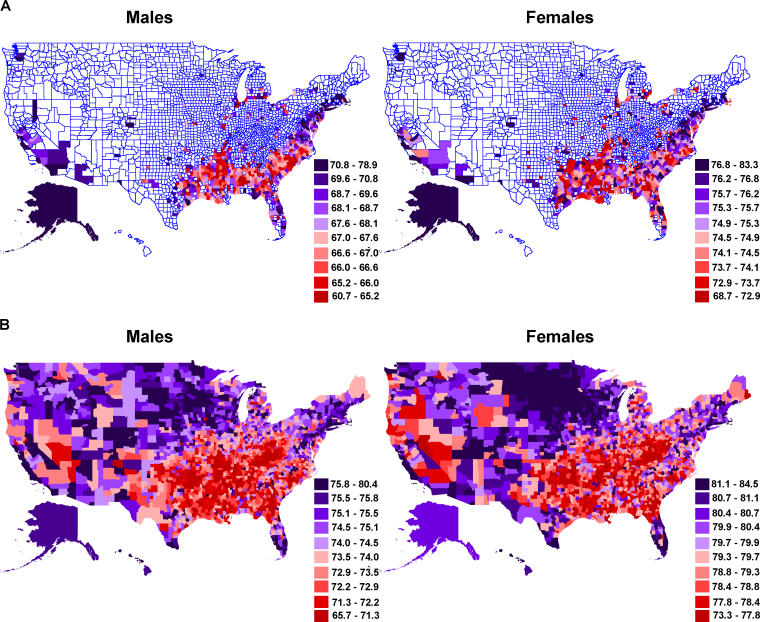
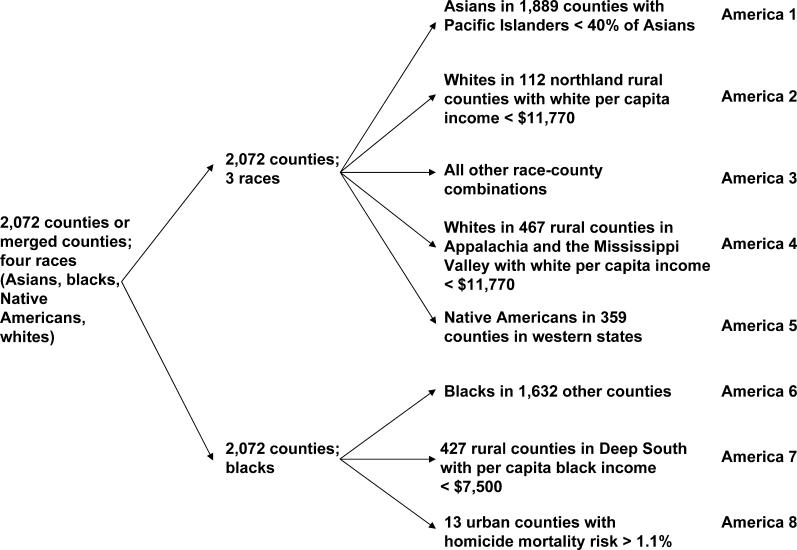
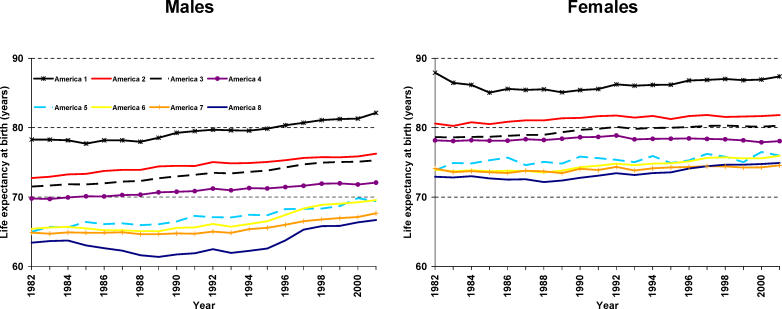
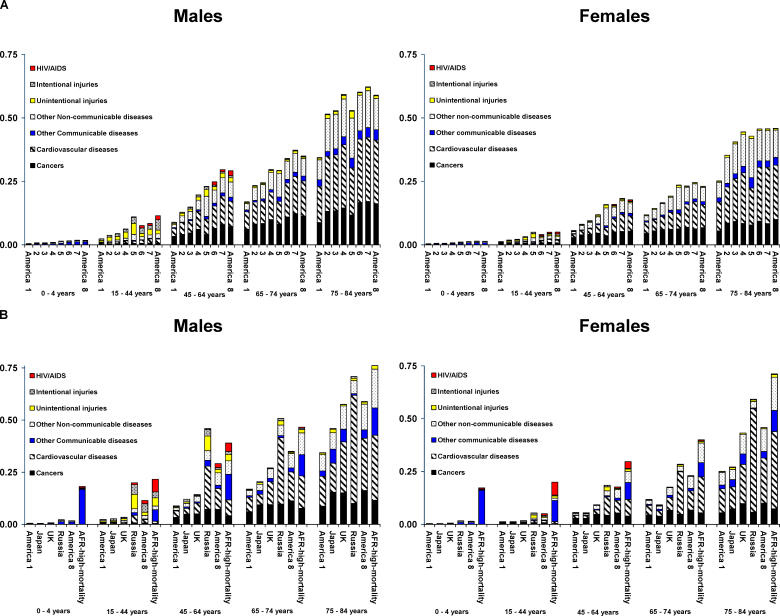
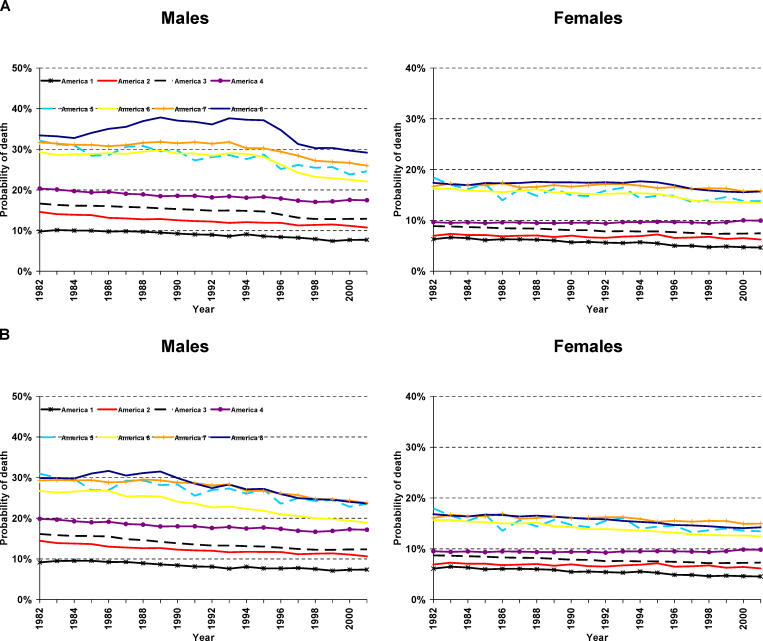
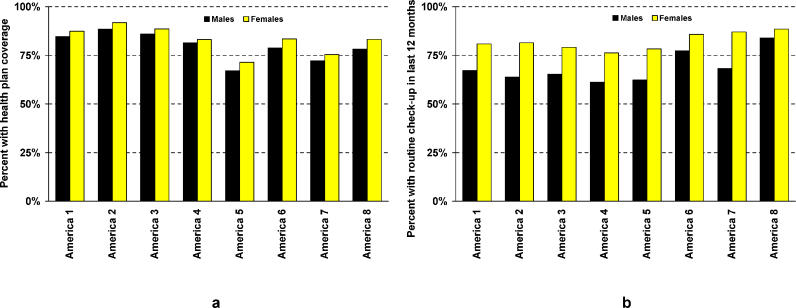
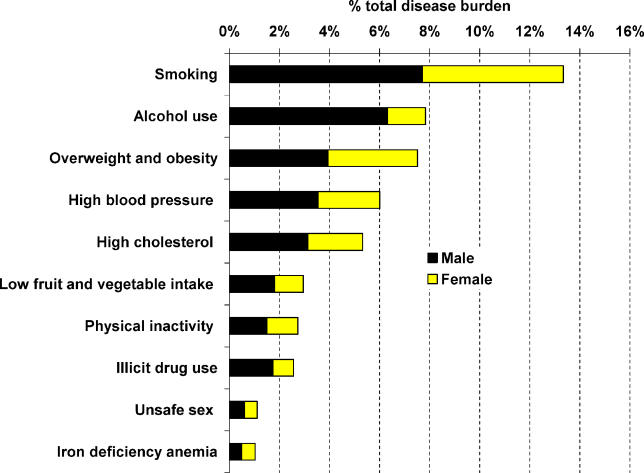
BACKGROUND: The gap between the highest and lowest life expectancies for race-county combinations in the United States is over 35 y. We divided the race-county combinations of the US population into eight distinct groups, referred to as the "eight Americas," to explore the causes of the disparities that can inform specific public health intervention policies and programs. METHODS AND FINDINGS: The eight Americas were defined based on race, location of the county of residence, population density, race-specific county-level per capita income, and cumulative homicide rate. Data sources for population and mortality figures were the Bureau of the Census and the National Center for Health Statistics. We estimated life expectancy, the risk of mortality from specific diseases, health insurance, and health-care utilization for the eight Americas. The life expectancy gap between the 3.4 million high-risk urban black males and the 5.6 million Asian females was 20.7 y in 2001. Within the sexes, the life expectancy gap between the best-off and the worst-off groups was 15.4 y for males (Asians versus high-risk urban blacks) and 12.8 y for females (Asians versus low-income southern rural blacks). Mortality disparities among the eight Americas were largest for young (15-44 y) and middle-aged (45-59 y) adults, especially for men. The disparities were caused primarily by a number of chronic diseases and injuries with well-established risk factors. Between 1982 and 2001, the ordering of life expectancy among the eight Americas and the absolute difference between the advantaged and disadvantaged groups remained largely unchanged. Self-reported health plan coverage was lowest for western Native Americans and low-income southern rural blacks. Crude self-reported health-care utilization, however, was slightly higher for the more disadvantaged populations. CONCLUSIONS: Disparities in mortality across the eight Americas, each consisting of millions or tens of millions of Americans, are enormous by all international standards. The observed disparities in life expectancy cannot be explained by race, income, or basic health-care access and utilization alone. Because policies aimed at reducing fundamental socioeconomic inequalities are currently practically absent in the US, health disparities will have to be at least partly addressed through public health strategies that reduce risk factors for chronic diseases and injuries.
Overview
The claims and statistics of this paper haven’t been checked yet.
Free: it reads the open-access text and checks the first 5 claims that cite a source we can check. Create a free account to check every claim.
Integrity signals
Registry
Cites
Statistics
Figures
Verification
Claims the paper makes
The claims and statistics of this paper haven’t been checked yet.
Free: it reads the open-access text and checks the first 5 claims that cite a source we can check. Create a free account to check every claim.
Claims other papers make about this one
Each is checked against this paper’s own text: does it say what the citing paper says it does?
The check wasn’t confident either way, so it gives no verdict — never disputed.
In the citing paper
“Site-specific differences in the incidence of candidemia might be due to differences in the percentages of patients with underlying conditions such as diabetes and other immunosuppressive conditions (40,41), differences in practice patterns and use of antibiotics, and differences in use of antifungals and CVCs, all of which contribute to the risk for candidemia.”
From Population-Based Active Surveillance for Culture-Confirmed Candidemia — Four Sites, United States, 2012–2016 (2019) · cites this paper as [41]
Experimental — accuracy not yet measured
Self-check
Percentages, sums and reported differences re-computed from the paper’s own numbers.
The self-check needs the paper’s full text.
Citations
Cites
Yusuf, S., Hawken, S., Ôunpuu, S., Dans, T., Avezum, A., Lanas, F., McQueen, M., Budaj, A., Pais, P., Varigos, J., et al. (2004) · The Lancet · doi:10.1016/s0140-6736(04)17018-9 · Cited by 12,026
Unequal treatment: confronting racial and ethnic disparities in health care
(2003) · Choice Reviews Online · doi:10.5860/choice.40-5843 · Cited by 7,043
The World Health Report 2002 - Reducing Risks, Promoting Healthy Life
Not Available, N. A. (2003) · Education for Health: Change in Learning & Practice · doi:10.1080/1357628031000116808 · Cited by 6,046
Selected major risk factors and global and regional burden of disease
Ezzati, M., Lopez, A. D., Rodgers, A., Vander Hoorn, S., & Murray, C. J. (2002) · The Lancet · doi:10.1016/s0140-6736(02)11403-6 · Cited by 3,594
Self-citationGlobal Burden of Disease and Risk Factors
(2006) · World Bank, Washington, DC eBooks · doi:10.1596/978-0-8213-6262-4 · Cited by 2,605
Self-citationDemography, Measuring and Modeling Population Processes
Veron, J., Preston, S. H., Heuveline, P., & Guillot, M. (2002) · Population (French Edition) · doi:10.2307/1535065 · Cited by 1,709
Pappas, G., Queen, S., Hadden, W., & Fisher, G. (1993) · New England Journal of Medicine · doi:10.1056/nejm199307083290207 · Cited by 1,524
Area Deprivation and Widening Inequalities in US Mortality, 1969–1998
Singh, G. K. (2003) · American Journal of Public Health · doi:10.2105/ajph.93.7.1137 · Cited by 1,423 · cited 1×
“Researchers have also drawn attention to substantial disparities in mortality and functional health status nationally and within race groups in relation to income, social class, education, and community characteristics [6–16].”
BackgroundThe Influence Of Income On Health: Views Of An Epidemiologist
Marmot, M. (2002) · Health Affairs · doi:10.1377/hlthaff.21.2.31 · Cited by 848 · cited 1×
“Important research in the past few decades has illustrated the critical role of individual and community-level socioeconomic factors, be it in absolute or relative terms, in health outcomes [11,24,37,38].”
BackgroundCooper, R., Cutler, J., Desvigne-Nickens, P., Fortmann, S. P., Friedman, L., Havlik, R., Hogelin, G., Marler, J., McGovern, P., Morosco, G., et al. (2000) · Circulation · doi:10.1161/01.cir.102.25.3137 · Cited by 831 · cited 1×
“Multiple investigations have documented the consistent gap in all measures of mortality by race, particularly between black and white Americans [1–5].”
Background
Research works printed but not linked: 1
- Nelson DE Holtzman D Waller M Leutzinger CL Condon K 1998 Objectives and design of the Behavioral Risk Factor Surveillance System Proceedings of the Survey Research Methods Section, American Statistical Association National Meeting (1998) Alexandria (Virginia) American Statistical Association Available: http://www.amstat.org/sections/srms/proceedings/papers/1998_032.pdf. Accessed 11 July 2006.
Cited by
Dormann, C. F., Elith, J., Bacher, S., Buchmann, C., Carl, G., Carré, G., Marquéz, J. R. G., Gruber, B., Lafourcade, B., Leitão, P. J., et al. (2013) · Ecography · doi:10.1111/j.1600-0587.2012.07348.x · Cited by 9,998
Higgins, S. M. F., Macken, A. P., Cullen, W., Saunders, J., Dunne, C. P., & O’Gorman, C. S. (2013) · PubMed · doi:10.34961/9953 · Cited by 4,806
Heidenreich, P. A., Trogdon, J. G., Khavjou, O. A., Butler, J., Dracup, K., Ezekowitz, M. D., Finkelstein, E. A., Hong, Y., Johnston, S. C., Khera, A., et al. (2011) · Circulation · doi:10.1161/cir.0b013e31820a55f5 · Cited by 3,208
The Association Between Income and Life Expectancy in the United States, 2001–2014
Chetty, R., Stepner, M., Abraham, S., Lin, S., Scuderi, B., Turner, N., Bergeron, A., & Cutler, D. (2016) · JAMA · doi:10.1001/jama.2016.4226 · Cited by 2,812
Havranek, E. P., Mujahid, M. S., Barr, D. A., Blair, I. V., Cohen, M. S., Cruz-Flores, S., Davey-Smith, G., Dennison-Himmelfarb, C. R., Lauer, M. S., Lockwood, D. W., et al. (2015) · Circulation · doi:10.1161/cir.0000000000000228 · Cited by 1,472
U.S. Disparities in Health: Descriptions, Causes, and Mechanisms
Adler, N. E., & Rehkopf, D. H. (2008) · Annual Review of Public Health · doi:10.1146/annurev.publhealth.29.020907.090852 · Cited by 1,212
We can do better―improving the health of the American people
Schroeder, S. A. (2007) · New England Journal of Medicine · doi:10.1056/nejmsa073350 · Cited by 1,065
Achieving health equity: from root causes to fair outcomes
Marmot, M. (2007) · The Lancet · doi:10.1016/s0140-6736(07)61385-3 · Cited by 940
The Gap Gets Bigger: Changes In Mortality And Life Expectancy, By Education, 1981–2000
Meara, E. R., Richards, S., & Cutler, D. M. (2008) · Health Affairs · doi:10.1377/hlthaff.27.2.350 · Cited by 850
Decline in Cardiovascular Mortality: Possible Causes and Implications
Mensah, G. A., Wei, G. S., Sorlie, P. D., Fine, L. J., Rosenberg, Y., Kaufmann, P. G., Mussolino, M. E., Hsu, L. L., Addou, E., Engelgau, M. M., et al. (2017) · Circulation Research · doi:10.1161/circresaha.116.309115 · Cited by 847
Inequalities in non-communicable diseases and effective responses
Di Cesare, M., Khang, Y.-H., Asaria, P., Blakely, T., Cowan, M. J., Farzadfar, F., Guerrero, R., Ikeda, N., Kyobutungi, C., Msyamboza, K. P., et al. (2013) · The Lancet · doi:10.1016/s0140-6736(12)61851-0 · Cited by 678
Self-citationHow race becomes biology: Embodiment of social inequality
Gravlee, C. C. (2009) · American Journal of Physical Anthropology · doi:10.1002/ajpa.20983 · Cited by 625
Gender equality in science, medicine, and global health: where are we at and why does it matter?
Shannon, G., Jansen, M., Williams, K., Cáceres, C., Motta, A., Odhiambo, A., Eleveld, A., & Mannell, J. (2019) · The Lancet · doi:10.1016/s0140-6736(18)33135-0 · Cited by 534
Cruz-Flores, S., Rabinstein, A., Biller, J., Elkind, M. S. V., Griffith, P., Gorelick, P. B., Howard, G., Leira, E. C., Morgenstern, L. B., Ovbiagele, B., et al. (2011) · Stroke · doi:10.1161/str.0b013e3182213e24 · Cited by 507
Bowleg, L. (2013) · Sex Roles · doi:10.1007/s11199-012-0152-4 · Cited by 507
“2009), and mortality and morbidity (Murray et al. 2006).”
BackgroundGregg, E. W., Cheng, Y. J., Srinivasan, M., Lin, J., Geiss, L. S., Albright, A. L., & Imperatore, G. (2018) · The Lancet · doi:10.1016/s0140-6736(18)30314-3 · Cited by 480
Health Disparities due to Diminished Return among Black Americans: Public Policy Solutions
Assari, S. (2018) · Social Issues and Policy Review · doi:10.1111/sipr.12042 · Cited by 433
“112 C© 2018 The Society for the Psychological Study of Social Issues of childhood chronic disease (Miller, 2000), and higher mortality and morbidity of Blacks later in life (McClellan et al., 2006; Murray et al., 2006).”
BackgroundLeveraging the Social Determinants of Health: What Works?
Taylor, L. A., Tan, A. X., Coyle, C. E., Ndumele, C., Rogan, E., Canavan, M., Curry, L. A., & Bradley, E. H. (2016) · PLOS ONE · doi:10.1371/journal.pone.0160217 · Cited by 374
Civil registration systems and vital statistics: successes and missed opportunities
Mahapatra, P., Shibuya, K., Lopez, A. D., Coullare, F., Notzon, F. C., Rao, C., & Szreter, S. (2007) · The Lancet · doi:10.1016/s0140-6736(07)61308-7 · Cited by 352
Ezzati, M., Friedman, A. B., Kulkarni, S. C., & Murray, C. J. L. (2008) · PLoS Medicine · doi:10.1371/journal.pmed.0050066 · Cited by 346
“There were two reasons for forming merged county units: (1) to avoid unstable death rates, smaller counties were merged with adjacent counties to form units with a total population of at least 10,000 males and 10,000 females in 1990 [14]; and (2) to account for changes in county definitions and lines, such as formatio…”
Self-citationOdgers, C. L., Caspi, A., Bates, C. J., Sampson, R. J., & Moffitt, T. E. (2012) · Journal of Child Psychology and Psychiatry · doi:10.1111/j.1469-7610.2012.02565.x · Cited by 344
“For example, comparisons between socio-demographic and geographically clustered subgroups in the United States reveal average life expectancies ranging from the highest on record to those typically observed in developing countries (Murray et al., 2006).”
BackgroundThe Burden of Disease and the Changing Task of Medicine
Jones, D. S., Podolsky, S. H., & Greene, J. A. (2012) · New England Journal of Medicine · doi:10.1056/nejmp1113569 · Cited by 332
Chronic Kidney Disease in the United States: A Public Policy Imperative
Rettig, R. A., Norris, K., & Nissenson, A. R. (2008) · Clinical Journal of the American Society of Nephrology · doi:10.2215/cjn.02330508 · Cited by 307
“Within America, there remain marked differences in health outcomes by sociocultural, racial/ethnic, and geographic stratifications (10,11).”
BackgroundGrowth and Persistence of Place-Based Mortality in the United States: The Rural Mortality Penalty
Cosby, A. G., McDoom-Echebiri, M. M., James, W., Khandekar, H., Brown, W., & Hanna, H. L. (2019) · American Journal of Public Health · doi:10.2105/ajph.2018.304787 · Cited by 300
Interdisciplinarity and Systems Science to Improve Population Health
Mabry, P. L., Olster, D. H., Morgan, G. D., & Abrams, D. B. (2008) · American Journal of Preventive Medicine · doi:10.1016/j.amepre.2008.05.018 · Cited by 292
Colen, C. G., Ramey, D. M., Cooksey, E. C., & Williams, D. R. (2018) · Social Science & Medicine · doi:10.1016/j.socscimed.2017.04.051 · Cited by 269
“These inequalities are primarily the result of excessive rates of chronic disease among racial minorities (Geronimus et al. 2011; Harper et al. 2012; Murray et al. 2006).”
BackgroundDwyer-Lindgren, L., Kendrick, P., Kelly, Y. O., Sylte, D. O., Schmidt, C., Blacker, B. F., Daoud, F., Abdi, A. A., Baumann, M., Mouhanna, F., et al. (2022) · The Lancet · doi:10.1016/s0140-6736(22)00876-5 · Cited by 262
Self-citationExtended Cost-Effectiveness Analysis for Health Policy Assessment: A Tutorial
Verguet, S., Kim, J. J., & Jamison, D. T. (2016) · PharmacoEconomics · doi:10.1007/s40273-016-0414-z · Cited by 251
“In the USA, for example, recent investigations have pointed to the wide differences in mortality outcomes and life expectancy at birth between states and racial groups [22, 23].”
BackgroundStevens, G., Dias, R. H., Thomas, K. J. A., Rivera, J. A., Carvalho, N., Barquera, S., Hill, K., & Ezzati, M. (2008) · PLoS Medicine · doi:10.1371/journal.pmed.0050125 · Cited by 249
Self-citationPearson, T. A., Palaniappan, L. P., Artinian, N. T., Carnethon, M. R., Criqui, M. H., Daniels, S. R., Fonarow, G. C., Fortmann, S. P., Franklin, B. A., Galloway, J. M., et al. (2013) · Circulation · doi:10.1161/cir.0b013e31828f8a94 · Cited by 246
“To target intervention programs to groups with the greatest burdens, surveillance is increasingly used to identify health disparities/inequities in smaller population subgroups based on race, ethnicity, socioeconomic status, disability, and geographic location.(97) Continuous surveillance extending before, during, and…”
BackgroundThe Fall and Rise of US Inequities in Premature Mortality: 1960–2002
Krieger, N., Rehkopf, D. H., Chen, J. T., Waterman, P. D., Marcelli, E., & Kennedy, M. (2008) · PLoS Medicine · doi:10.1371/journal.pmed.0050046 · Cited by 242
Patel, S. A., Winkel, M., Ali, M. K., Narayan, K. M. V., & Mehta, N. K. (2015) · Annals of Internal Medicine · doi:10.7326/m14-1753 · Cited by 240
Race, Gender, and Socioeconomic Disparities in CKD in the United States
Norris, K., & Nissenson, A. R. (2008) · Journal of the American Society of Nephrology · doi:10.1681/asn.2008030276 · Cited by 232
“Geocultural/socioeconomic differences ( 89 ) (urban and rural based health exposures, practices, and healthcare access issues; e.g., Southeast US stroke belt, etc.).”
BackgroundFiscella, K., & Kitzman, H. (2009) · Pediatrics · doi:10.1542/peds.2008-0533 · Cited by 224
Aral, S. O., Adimora, A. A., & Fenton, K. A. (2008) · The Lancet · doi:10.1016/s0140-6736(08)61118-6 · Cited by 222
Global emergence of unprecedented lifetime exposure to climate extremes
Grant, L., Vanderkelen, I., Gudmundsson, L., Fischer, E. M., Seneviratne, S. I., & Thiery, W. (2025) · Nature · doi:10.1038/s41586-025-08907-1 · Cited by 225
“In the United States, where the population faces exposure to all extremes analysed in this study, city centres attract young people 26 and disparities in life expectancy have been found across race–county combinations 27 and rural–urban residency 28 .”
Gong, G., Phillips, S. G., Hudson, C., Curti, D., & Philips, B. U. (2019) · Health Affairs · doi:10.1377/hlthaff.2019.00722 · Cited by 220
Miller, C. E., & Vasan, R. S. (2021) · Social Science & Medicine · doi:10.1016/j.socscimed.2020.113443 · Cited by 219
Psychotropic medication use and polypharmacy in children with autism spectrum disorders
Spencer, D., Marshall, J., Post, B., Kulakodlu, M., Newschaffer, C., Dennen, T., Azocar, F., & Jain, A. (2013) · PEDIATRICS · doi:10.1542/peds.2012-3774 · Cited by 215
Global public health: a scorecard
Beaglehole, R., & Bonita, R. (2008) · The Lancet · doi:10.1016/s0140-6736(08)61558-5 · Cited by 212
Multilevel Interventions To Address Health Disparities Show Promise In Improving Population Health
Paskett, E., Thompson, B., Ammerman, A. S., Ortega, A. N., Marsteller, J., & Richardson, D. (2016) · Health Affairs · doi:10.1377/hlthaff.2015.1360 · Cited by 211
Toda, M., Williams, S. R., Berkow, E. L., Farley, M. M., Harrison, L. H., Bonner, L., Marceaux, K. M., Hollick, R., Zhang, A. Y., Schaffner, W., et al. (2019) · MMWR Surveillance Summaries · doi:10.15585/mmwr.ss6808a1 · Cited by 198
Cohen, S. A., & Greaney, M. L. (2022) · Current Epidemiology Reports · doi:10.1007/s40471-022-00313-9 · Cited by 200
Riley, A. R. (2018) · Journal of Racial and Ethnic Health Disparities · doi:10.1007/s40615-017-0378-5 · Cited by 197
“Policy implemented at the state level can influence premature mortality differently for whites and nonwhites depending on their region of residence [64].”
BackgroundNiño, M., Harris, C., Drawve, G., & Fitzpatrick, K. M. (2021) · SSM - Population Health · doi:10.1016/j.ssmph.2020.100717 · Cited by 196
“, 2011), and higher rates of mortality (Murray et al., 2006).”
Avendano, M., & Kawachi, I. (2014) · Annual Review of Public Health · doi:10.1146/annurev-publhealth-032013-182411 · Cited by 195
“In a series of studies, Murray and colleagues sub-divided the US into eight race-county combinations, referred to as the ‘Eight Americas’, and found large differences in life expectancy between these groups(62, 63).”
BackgroundMultiple Chronic Conditions and Life Expectancy: A Life Table Analysis
DuGoff, E. H., Canudas-Romo, V., Buttorff, C., Leff, B., & Anderson, G. F. (2014) · Medical Care · doi:10.1097/mlr.0000000000000166 · Cited by 193
Koh, H. K., Oppenheimer, S. C., Massin-Short, S. B., Emmons, K. M., Geller, A. C., & Viswanath, K. (2010) · American Journal of Public Health · doi:10.2105/ajph.2009.167353 · Cited by 192
“The Institute of Medicine formed a Roundtable on Racial and Ethnic Health Disparities, which has sponsored several national conferences and reviewed the critical ‘‘Eight Americas’’ report.(16)”
BackgroundDanaei, G., Rimm, E. B., Oza, S., Kulkarni, S. C., Murray, C. J. L., & Ezzati, M. (2010) · PLoS Medicine · doi:10.1371/journal.pmed.1000248 · Cited by 191
“3 years for women, with even larger disparities for race–county combinations [1,2].”
BackgroundMethodInfluentialSelf-citationThe Growing Impact of Globalization for Health and Public Health Practice
Labonté, R., Mohindra, K., & Schrecker, T. (2011) · Annual Review of Public Health · doi:10.1146/annurev-publhealth-031210-101225 · Cited by 189
Mortality Inequality: The Good News from a County-Level Approach
Currie, J., & Schwandt, H. (2016) · Journal of Economic Perspectives · doi:10.1257/jep.30.2.29 · Cited by 152
Place-Based Drivers of Mortality: Evidence from Migration
Finkelstein, A., Gentzkow, M., & Williams, H. (2021) · American Economic Review · doi:10.1257/aer.20190825 · Cited by 183
Sex, Race, and Geographic Region Influence Clinical Outcomes Following Primary HIV-1 Infection
Meditz, A. L., MaWhinney, S., Allshouse, A., Feser, W., Markowitz, M., Little, S., Hecht, R., Daar, E. S., Collier, A. C., Margolick, J., et al. (2011) · The Journal of Infectious Diseases · doi:10.1093/infdis/jiq085 · Cited by 180
“These results are consistent with findings from other studies from the United States and Europe that access to medical care explains only part of the socioeconomic variability in health outcomes [30, 42, 43].”
Mogford, E., Gould, L., & DeVoght, A. (2011) · Health Promotion International · doi:10.1093/heapro/daq049 · Cited by 172
“over the 20th century, health inequities both between and within countries are increasing (Murray et al., 2006; Berkman, 2009).”
BackgroundFor the Public's Health: Investing in a Healthier Future
Mays, G. P. (2012) · Cited by 172
The global burden of COPD: epidemiology and effect of prevention strategies
de Oca, M. M., Perez-Padilla, R., Celli, B., Aaron, S. D., Wehrmeister, F. C., Amaral, A. F. S., Mannino, D., Zheng, J., Salvi, S., Obaseki, D., et al. (2025) · The Lancet Respiratory Medicine · doi:10.1016/s2213-2600(24)00339-4 · Cited by 171
Falling behind: life expectancy in US counties from 2000 to 2007 in an international context
Kulkarni, S. C., Levin-Rector, A., Ezzati, M., & Murray, C. J. (2011) · Population Health Metrics · doi:10.1186/1478-7954-9-16 · Cited by 150
“Large disparities in health outcomes have been documented in the US in relation to race, community of residence, and individual and community socioeconomic factors [5,8,16-29].”
BackgroundResultInfluentialSelf-citationBansal, N., Katz, R., Robinson-Cohen, C., Odden, M. C., Dalrymple, L., Shlipak, M. G., Sarnak, M. J., Siscovick, D. S., Zelnick, L., Psaty, B. M., et al. (2017) · JAMA Cardiology · doi:10.1001/jamacardio.2016.4652 · Cited by 168
Inequality, Family Processes, and Health in the “New” Rural America
Burton, L. M., Lichter, D. T., Baker, R. S., & Eason, J. M. (2013) · American Behavioral Scientist · doi:10.1177/0002764213487348 · Cited by 167
“The ways in which ghetto stigma exacerbates the physical and mental health vulnerabilities (e.g., high blood pressure and anxiety) of poor White and racial minority families who reside within them, as well as mostly privileged Whites who reside outside of ghetto boundaries, have been highlighted in recent ethnographic…”
BackgroundInfluentialKirchner, T. R., & Shiffman, S. (2016) · Social Psychiatry and Psychiatric Epidemiology · doi:10.1007/s00127-016-1277-5 · Cited by 147
“Findings from three large longitudinal studies [2–5], together spanning the period from 1979 to 2014, indicate that lifespan disparities are largely due to neighborhood residents’ moment-to-moment mental health and wellbeing, insofar as these factors drive behavioral decisions—whether to exercise or smoke cigarettes,…”
BackgroundThe physiology of optimizing health with a focus on exercise as medicine
Pedersen, B. K. (2019) · Annual Review of Physiology · doi:10.1146/annurev-physiol-020518-114339 · Cited by 163
Left behind: widening disparities for males and females in US county life expectancy, 1985–2010
Wang, H., Schumacher, A. E., Levitz, C. E., Mokdad, A. H., & Murray, C. J. (2013) · Population Health Metrics · doi:10.1186/1478-7954-11-8 · Cited by 147
“8% of premature deaths in the US in 2010 [9,36].”
BackgroundSelf-citationEzzati, M., Horwitz, M. E. M., Thomas, D. S. K., Friedman, A. B., Roach, R. C., Clark, T., Murray, C. J. L., & Honigman, B. (2011) · Journal of Epidemiology & Community Health · doi:10.1136/jech.2010.112938 · Cited by 161
“Life expectancy did not rise monotonically at 500e900 m possibly due to socio-demographic composition of these counties, namely (1) the proportion of county population that are Asian (with longer life expectancy) or black (with shorter life expectancy) and (2) the balance between Caucasians from the Northern Plains (w…”
Self-citationTrends in education gradients of ‘preventable’ mortality: A test of fundamental cause theory
Masters, R. K., Link, B. G., & Phelan, J. C. (2015) · Social Science & Medicine · doi:10.1016/j.socscimed.2014.10.023 · Cited by 160
“Respondents' residential region of country at time of survey (Northeast, Midwest, South, West) was also included to account for residual geographical variation in mortality risk (Murray et al., 2006).”
BackgroundThe Double Disparity Facing Rural Local Health Departments
Harris, J. K., Beatty, K., Leider, J. P., Knudson, A., Anderson, B. L., & Meit, M. (2016) · Annual Review of Public Health · doi:10.1146/annurev-publhealth-031914-122755 · Cited by 160
“Although we found that many health challenges were consistent across rural areas, some rural areas fared better or worse on certain health behaviors and outcomes compared with others (90, 93, 94).”
Higher Cardiovascular Disease Prevalence and Mortality among Younger Blacks Compared to Whites
Jolly, S., Vittinghoff, E., Chattopadhyay, A., & Bibbins-Domingo, K. (2010) · The American Journal of Medicine · doi:10.1016/j.amjmed.2010.04.020 · Cited by 158
All Rural Places Are Not Created Equal: Revisiting the Rural Mortality Penalty in the United States
James, W. (2014) · American Journal of Public Health · doi:10.2105/ajph.2014.301989 · Cited by 154
Racial Differences in Mortality Among Those with CKD
Mehrotra, R., Kermah, D., Fried, L. F., Adler, S. G., & Norris, K. C. (2008) · Journal of the American Society of Nephrology · doi:10.1681/asn.2007070747 · Cited by 152
“9 For this analysis, CKD was defined as the presence of any one of the following: (1) Stage 3, 4, or 5 CKD; (2) stage 1 or 2 CKD with overt albuminuria (albumin/creatinine ratio 250 mg/g in men and 355 mg/g in women); and (3) a random selection of 54% of individuals with stage 1 and 73% of individuals with stage 2 CKD…”
MethodThe Environmental Account of Obesity: A Case for Feminist Skepticism
Kirkland, A. R. (2010) · Signs · doi:10.1086/655916 · Cited by 154
“There is no doubt that food environments have changed, that intolerable health disparities exist along lines of race and class, that there are some weight differences by race and class, and that, while the link between body fat and health is often misstated and exaggerated, there are correlations between weight and so…”
BackgroundGarabedian, L. F., Chu, P., Toh, S., Zaslavsky, A. M., & Soumerai, S. B. (2014) · Annals of Internal Medicine · doi:10.7326/m13-1887 · Cited by 147
Racial and Ethnic Disparities in Severe Maternal Morbidity in the United States
Liese, K. L., Mogos, M. F., Abboud, S., DeCocker, K., Koch, A. R., & GELLER, S. E. (2019) · Journal of Racial and Ethnic Health Disparities · doi:10.1007/s40615-019-00577-w · Cited by 141
America’s Declining Well-Being, Health, and Life Expectancy: Not Just a White Problem
Muennig, P. A., Reynolds, M., Fink, D. S., Zafari, Z., & Geronimus, A. T. (2018) · American Journal of Public Health · doi:10.2105/ajph.2018.304585 · Cited by 121
“The “stroke belt,” where employment opportunity has been contracting for some time, suffers from absolute increases in mortality, whereas urban innovation centers such as San Francisco, California; Portland, Oregon; and New York City show drops in mortality.(12) If healthy people leave poorer counties to seek job oppo…”
Inequality in mortality decreased among the young while increasing for older adults, 1990–2010
Currie, J., & Schwandt, H. (2016) · Science · doi:10.1126/science.aaf1437 · Cited by 114
“Similarly, single counties that experienced declining life expectancy (11, 12) tend to be o n Se pt em be r 1, 2 01 6”
Assessment of Racial Disparities in Primary Care Physician Specialty Referrals
Landon, B. E., Onnela, J.-P. “., Meneades, L. M., O’Malley, A. J., & Keating, N. L. (2021) · JAMA Network Open · doi:10.1001/jamanetworkopen.2020.29238 · Cited by 137
The Past, Present, and Future of Geodemographic Research in the United States and United Kingdom
Singleton, A. D., & Spielman, S. E. (2013) · The Professional Geographer · doi:10.1080/00330124.2013.848764 · Cited by 134
Mensah, G. A., Cooper, R., Siega‐Riz, A. M., Cooper, L. A., Smith, J. D., Brown, C. H., Westfall, J. M., Ofili, E., Price, L. N., Arteaga, S. S., et al. (2018) · Circulation Research · doi:10.1161/circresaha.117.312243 · Cited by 133
“Although CVD disparities by race/ethnicity have been recognized for decades,(31) geographic disparities have only recently begun to receive more attention.(32,33) For example, Roth et al(33) showed a 4-fold difference in the mortality from hypertensive heart disease between counties at the 10th and 90th percentiles of…”
BackgroundWhat can we conclude from death registration? Improved methods for evaluating completeness
Murray, C. J. L., Rajaratnam, J. K., Marcus, J., Laakso, T., & Lopez, A. D. (2010) · PLoS Medicine · doi:10.1371/journal.pmed.1000262 · Cited by 131
“We use the 2,072 counties or merged county units developed to assure a minimum population size in each aggregate [28–30].”
Self-citationAssociation of a Genetic Risk Score With Body Mass Index Across Different Birth Cohorts
Walter, S., Mejía-Guevara, I., Estrada, K., Liu, S. Y., & Glymour, M. M. (2016) · JAMA · doi:10.1001/jama.2016.8729 · Cited by 130
Perceived control reduces mortality risk at low, not high, education levels.
Turiano, N. A., Chapman, B. P., Agrigoroaei, S., Infurna, F. J., & Lachman, M. (2014) · Health Psychology · doi:10.1037/hea0000022 · Cited by 114
Race, Neighborhood Economic Status, Income Inequality and Mortality
Mode, N. A., Evans, M. K., & Zonderman, A. B. (2016) · PLoS ONE · doi:10.1371/journal.pone.0154535 · Cited by 127
“Mortality disparities across racial and economic groups in the United States (US) are well established [1].”
BackgroundBenjamins, M. R., Silva, A., Saiyed, N. S., & Maio, F. G. D. (2021) · JAMA Network Open · doi:10.1001/jamanetworkopen.2020.32086 · Cited by 126
Monnat, S. M., Peters, D. J., Berg, M. T., & Hochstetler, A. L. (2019) · American Journal of Public Health · doi:10.2105/ajph.2019.305136 · Cited by 125
Chin, T., Kahn, R. J., Li, R., Chen, J. T., Krieger, N., Buckee, C. O., Balsari, S., & Kiang, M. V. (2020) · BMJ Open · doi:10.1136/bmjopen-2020-039886 · Cited by 124
Kindig, D. A., & Cheng, E. R. (2013) · Health Affairs · doi:10.1377/hlthaff.2011.0892 · Cited by 119
The Implications of Increased Survivorship for Mortality Variation in Aging Populations
Engelman, M., Canudas‐Romo, V., & Agree, E. M. (2010) · Population and Development Review · doi:10.1111/j.1728-4457.2010.00344.x · Cited by 105
Preliminary Evidence for an Emerging Nonmetropolitan Mortality Penalty in the United States
Cosby, A. G., Neaves, T. T., Cossman, R. E., Cossman, J. S., James, W. L., Feierabend, N., Mirvis, D. M., Jones, C. A., & Farrigan, T. (2008) · American Journal of Public Health · doi:10.2105/ajph.2007.123778 · Cited by 115
James, W., & Cossman, J. S. (2016) · The Journal of Rural Health · doi:10.1111/jrh.12181 · Cited by 121
“Murray et al’s “Eight Americas” found massive mortality and life expectancy disparities across regions based on race-county combinations, with favorable outcomes in a white dominant region in the Great Plains (America 2) and unfavorable outcomes for blacks in the Deep South (America 7).(18) Similarly, substantial mort…”
BackgroundAging Populations, Mortality, and Life Expectancy
Crimmins, E. M., & Zhang, Y. S. (2019) · Annual Review of Sociology · doi:10.1146/annurev-soc-073117-041351 · Cited by 122
Shkolnikov, V. M., Andreev, E. M., Zhang, Z., Oeppen, J., & Vaupel, J. W. (2011) · Demography · doi:10.1007/s13524-011-0015-6 · Cited by 113
Xue, J. L., Eggers, P. W., Agodoa, L. Y., Foley, R. N., & Collins, A. J. (2007) · Journal of the American Society of Nephrology · doi:10.1681/asn.2006050524 · Cited by 117
“Racial disparity in mortality and life expectancy in the United States did not change between 1982 and 2001, which cannot be explained by income or basic health care access and utilization factors alone (22).”
BackgroundResultThe Meanings of Work for Older Workers
Smyer, M. A., & Pitt‐Catsouphes, M. (2007) · Bucknell Digital Commons (Bucknell University) · Cited by 117
Mortality Inequality in Canada and the United States: Divergent or Convergent Trends?
Baker, M., Currie, J., & Schwandt, H. (2019) · Journal of Labor Economics · doi:10.1086/703259 · Cited by 116
Geographic Divergence in Mortality in the United States
Fenelon, A. T. (2013) · Population and Development Review · doi:10.1111/j.1728-4457.2013.00630.x · Cited by 116
Global Cardiovascular Health Promotion and Disease Prevention: 2011 and Beyond
Labarthe, D. R., & Dunbar, S. B. (2012) · Circulation · doi:10.1161/circulationaha.111.087726 · Cited by 114
Geographic and Racial Variation in Premature Mortality in the U.S.: Analyzing the Disparities
Cullen, M. R., Cummins, C., & Fuchs, V. R. (2012) · PLoS ONE · doi:10.1371/journal.pone.0032930 · Cited by 113
“Following Deaton, Ezzati, Murray and others [3,8,12] we use the whole US population as our study frame, but break the country down to the more granular county level by using as our metric of observation S70 rather than LE, Figure 1.”
MethodSchwandt, H., Currie, J., Bär, M., Banks, J. W., Bertoli, P., Bütikofer, A., Cattan, S., Chao, B. Z.-Y., da Costa, C. H., González, L., et al. (2021) · Proceedings of the National Academy of Sciences · doi:10.1073/pnas.2104684118 · Cited by 112
“R events, notably the Black Lives Matter movement and the disproportionate impact of the COVID-19 pandemic on the Black population, have highlighted the persistent gap in life expectancy between Black Americans and other Americans (1, 2).”
Krieger, N., Chen, J. T., Coull, B. A., Beckfield, J., Kiang, M. V., & Waterman, P. D. (2014) · Epidemiology · doi:10.1097/ede.0000000000000104 · Cited by 111
Changes in the age-at-death distribution in four low mortality countries: A nonparametric approach
Ouellette, N., & Bourbeau, R. R. (2011) · Demographic Research · doi:10.4054/demres.2011.25.19 · Cited by 109
“…for these results is not simple, but the large body of literature documenting socioeconomic inequalities prevailing in the USA and major differentials with respect to health plan coverage, health care access, and health care utilization (Murray et al. 2006) must account for some part of it.”
BackgroundEmerging trends in non-communicable disease mortality in South Africa, 1997 - 2010
Nojilana, B., Bradshaw, D., Wyk, V. P., Msemburi, W., Laubscher, R., Somdyala, N. I. M., Joubert, J., Groenewald, P., & Dorrington, R. (2016) · South African Medical Journal · doi:10.7196/samj.2016.v106i5.10674 · Cited by 107
“[47] The higher mortality rates from cardiomyopathy among black Africans compared with other groups may be attributable to underlying low socioeconomic status,[47,48] environmental factors and historical issues (such as forced displacement, extreme poverty, and limited access to healthcare and education, employment an…”
BackgroundPoverty, Wealth, and Health Care Utilization: A Geographic Assessment
Cooper, R. A., Cooper, M. A., McGinley, E. L., Fan, X., & Rosenthal, J. T. (2012) · Journal of Urban Health · doi:10.1007/s11524-012-9689-3 · Cited by 107
Metadata
- Authors
- Murray, C. J. L., Kulkarni, S. C., Michaud, C., Tomijima, N., Bulzacchelli, M. T., Iandiorio, T. J., & Ezzati, M.
- Affiliations
- Harvard University (US)
- Corresponding author
- Ezzati, Majid
- Venue
- PLoS Medicine
- Publisher
- Public Library of Science (PLoS)
- Published
- 2006-09-12
- Volume
- 3
- Issue
- 9
- Pages
- e260
- ISSN
- 1549-1277 (ISSN-L)
- 1549-1676
- PMC
- PMC1564165
- OpenAlex
- W2163209812
- Cited by
- 762
- References
- 48
- Citations by year
- 2026: 8 · 2025: 19 · 2024: 16 · 2023: 21 · 2022: 34 · 2021: 81 · 2020: 39 · 2019: 45 · 2018: 32 · 2017: 35 · 2016: 60 · 2015: 30 · 2014: 46 · 2013: 47 · 2012: 53
- FWCI
- 28.53
- Type
- journal article
- Language
- en
- Update notices
- correction (2006-12-26)
- Open access
- gold
- doi.org
- Locations
- PLoS Medicine (publishedVersion, cc-by)
- Europe PMC (PubMed Central) (publishedVersion, cc-by)
- PubMed (publishedVersion)
- Digital Access to Scholarship at Harvard (DASH) (Harvard University) (submittedVersion, cc-by)
- RePEc: Research Papers in Economics (submittedVersion)
- DOAJ (DOAJ: Directory of Open Access Journals) (submittedVersion, cc-by-sa)
- University Libraries (University of Maryland) (submittedVersion)
- Figshare (submittedVersion, cc-by)
- Digital Repository at the University of Maryland (University of Maryland College Park)
- Funders
- Centers for Disease Control and Prevention
- U.S. Public Health Service (U36 CCU300430-23)
- National Institute on Aging (P01 AG17625, P01AG017625)
- Topics
- Social Sciences › Health › Health disparities and outcomes
- Health Sciences › Medicine › Oncology › Global Cancer Incidence and Screening
- Social Sciences › Demography › Insurance, Mortality, Demography, Risk Management
- Keywords
- health disparities, mortality disparities, life expectancy, racial disparities, socioeconomic disparities, county income, homicide, chronic disease, injuries, health insurance coverage, health care utilization, Native Americans, African Americans, Asian Americans, urban-rural differences, risk factors
- MeSH terms
- Adolescent, Adult, Age Factors, Delivery of Health Care, Female, Geography, Health Services Accessibility, Humans, Life Expectancy, Male, Middle Aged, Mortality, Patient Acceptance of Health Care, Risk Factors, Sex Factors, Socioeconomic Factors, United States, Racial Groups
About these checks
Registry, retraction, Cites and statistics results are computed, not judged, with one exception: a printed reference that no index lists is read once by a model before it counts as a citation error. Claims are extracted by a model and kept only when their quote appears verbatim in the text; each cited source is then checked, with a model’s help, for whether it says what the claim relies on. Those verdicts can be wrong — read the claim’s quote and the cited source before relying on one.
Statistics and arithmetic are recomputed, not judged.
Confidence bands are shown only for fields calibrated on our annotated test set. None is calibrated yet, so no band is shown.
What counts as a claim ›How we measure confidence ›How we check this ›
Are you an author, or do you see a problem with this page? Request a review
Data sources
Bibliographic data: Semantic Scholar, OpenAlex, Crossref.
Contains information from the Semantic Scholar Academic Graph Datasets, made available under the ODC Attribution License (ODC-BY 1.0).
Semantic Scholar’s data is described in: Kinney, R., et al. (2023). The Semantic Scholar Open Data Platform. arXiv:2301.10140.
