

Seventy-Five Trials and Eleven Systematic Reviews a Day: How Will We Ever Keep Up?
Open accessThe DOI matches its Crossref record; 32 of the 32 references it cites were found in a registry or an index.
Abstract
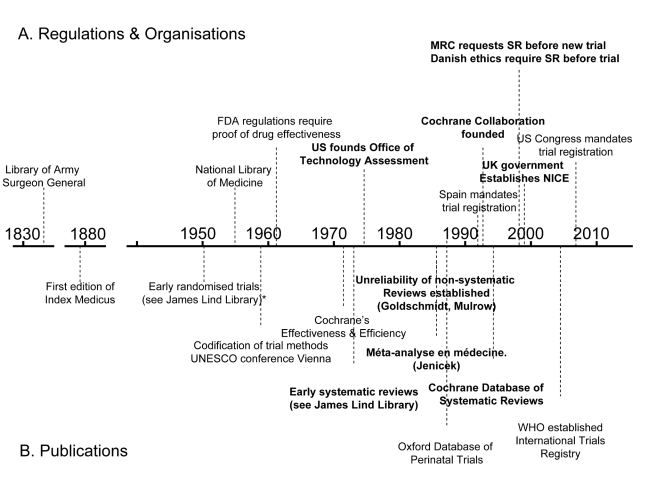
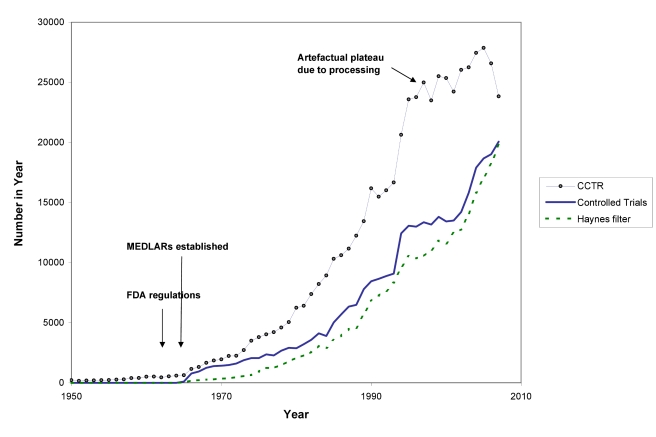
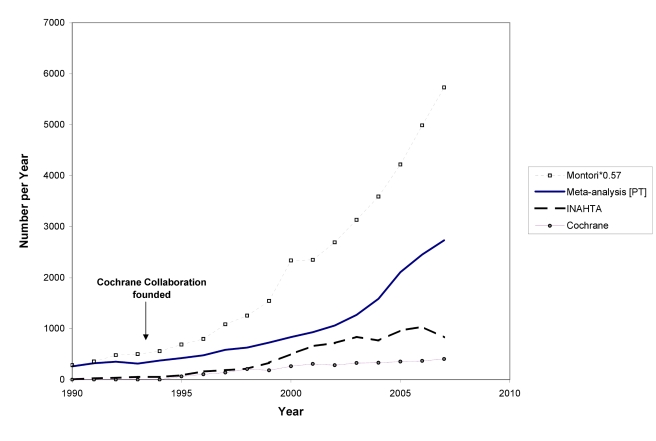
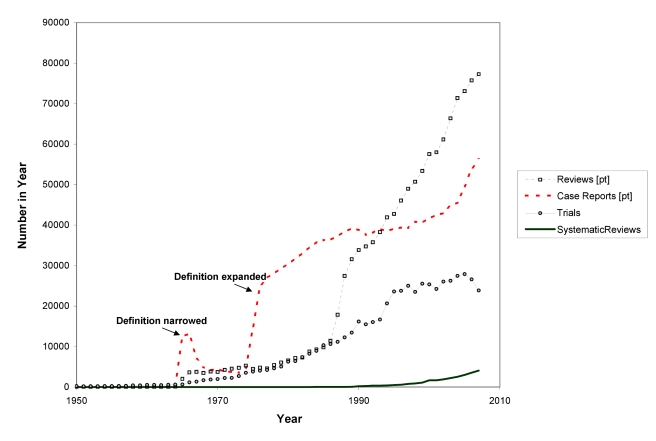
When Archie Cochrane reproached the medical profession for not having critical summaries of all randomised controlled trials, about 14 reports of trials were being published per day. There are now 75 trials, and 11 systematic reviews of trials, per day and a plateau in growth has not yet been reached. Although trials, reviews, and health technology assessments have undoubtedly had major impacts, the staple of medical literature synthesis remains the non-systematic narrative review. Only a small minority of trial reports are being analysed in up-to-date systematic reviews. Given the constraints, Archie Cochrane's vision will not be achieved without some serious changes in course. To meet the needs of patients, clinicians, and policymakers, unnecessary trials need to be reduced, and systematic reviews need to be prioritised. Streamlining and innovation in methods of systematic reviewing are necessary to enable valid answers to be found for most patient questions. Finally, clinicians and patients require open access to these important resources.
Overview
The claims and statistics of this paper haven’t been checked yet.
Free: it reads the open-access text and checks the first 5 claims that cite a source we can check. Create a free account to check every claim.
Integrity signals
Registry
Cites
Statistics
Figures
Verification
Claims the paper makes
The claims and statistics of this paper haven’t been checked yet.
Free: it reads the open-access text and checks the first 5 claims that cite a source we can check. Create a free account to check every claim.
Claims other papers make about this one
Each is checked against this paper’s own text: does it say what the citing paper says it does?
The source backs part of the claim, not all of it — or backs it for a different population, condition or comparison.
In the citing paper
“However, such reviews have become ever more complicated, due to the complexity of interventions being studied and the amount of evidence being published which needs to be incorporated [1].”
From Making progress with the automation of systematic reviews: principles of the International Collaboration for the Automation of Systematic Reviews (ICASR) (2018) · cites this paper as [1]
Experimental — accuracy not yet measuredThe source backs part of the claim, not all of it — or backs it for a different population, condition or comparison.
In the citing paper
“When the number of studies is an order of magnitude greater than that, the inability of narrative processes to adequately summarize the outcomes increases exponentially 2,3 .”
From Meta-analysis and the science of research synthesis (2018) · cites this paper as [3]
Experimental — accuracy not yet measuredThe source backs part of the claim, not all of it — or backs it for a different population, condition or comparison.
In the citing paper
“The number of RCTs published accelerates every year,3”
From Trialstreamer: A living, automatically updated database of clinical trial reports (2020) · cites this paper as [3]
Experimental — accuracy not yet measuredThe source backs part of the claim, not all of it — or backs it for a different population, condition or comparison.
In the citing paper
“Screening references is a time‐consuming step necessary for systematic reviews and guideline development.”
From Prioritising references for systematic reviews with RobotAnalyst: A user study (2018) · cites this paper as [4]
Experimental — accuracy not yet measuredThe source backs part of the claim, not all of it — or backs it for a different population, condition or comparison.
In the citing paper
“However, systematic review methodology and the language used to express that methodology, has progressed significantly since their appearance in healthcare in the 1970’s and 80’s [7, 8].”
From What kind of systematic review should I conduct? A proposed typology and guidance for systematic reviewers in the medical and health sciences (2018) · cites this paper as [7]
Experimental — accuracy not yet measured
5 more claims about this paper
Create a free account to see every claim other papers make about this one.
Self-check
Percentages, sums and reported differences re-computed from the paper’s own numbers.
The self-check needs the paper’s full text.
Citations
Cites
Avoidable waste in the production and reporting of research evidence
Chalmers, I., & Glasziou, P. (2009) · The Lancet · doi:10.1016/s0140-6736(09)60329-9 · Cited by 2,208
Self-citationMeta-Analysis in Clinical Research
L'ABBÉ, K. A., DETSKY, A. S., & O'ROURKE, K. (1987) · Annals of Internal Medicine · doi:10.7326/0003-4819-107-2-224 · Cited by 1,267 · cited 1×
“By the mid-1980s, the need to minimise the likelihood of being misled by the effects of biases and the play of chance in reviews of research evidence was being made evident in articles [10–14] and textbooks [15].”
BackgroundMeta-Analyses of Randomized Controlled Trials
Sacks, H. S., Berrier, J., Reitman, D., Ancona-Berk, V. A., & Chalmers, T. C. (1987) · New England Journal of Medicine · doi:10.1056/nejm198702193160806 · Cited by 1,250
Clinical Trial Registration: A Statement from the International Committee of Medical Journal Editors
De Angelis, C., Drazen, J. M., Frizelle, F. A., Haug, C., Hoey, J., Horton, R., Kotzin, S., Laine, C., Marusic, A., Overbeke, A. J. P. M., et al. (2004) · New England Journal of Medicine · doi:10.1056/nejme048225 · Cited by 1,241
Publication bias in clinical trials due to statistical significance or direction of trial results
Hopewell, S., Loudon, K., Clarke, M. J., Oxman, A. D., & Dickersin, K. (2009) · Cochrane Database of Systematic Reviews · doi:10.1002/14651858.mr000006.pub3 · Cited by 898
Epidemiology and reporting characteristics of systematic reviews.
Moher, D., Tetzlaff, J., Tricco, A. C., Sampson, M., & Altman, D. G. (2007) · PLoS Medicine · doi:10.1371/journal.pmed.0040078 · Cited by 891 · cited 2×
“variously estimated at between six and 16 (Cochrane reviews now include an average of over 12 trials per review [27,28]; M Clarke, personal communication), but many reviews have covered much the same territory.”
BackgroundThe Medical Review Article: State of the Science
MULROW, C. D. (1987) · Annals of Internal Medicine · doi:10.7326/0003-4819-106-3-485 · Cited by 856 · cited 1×
“By the mid-1980s, the need to minimise the likelihood of being misled by the effects of biases and the play of chance in reviews of research evidence was being made evident in articles [10–14] and textbooks [15].”
BackgroundHow Quickly Do Systematic Reviews Go Out of Date? A Survival Analysis
Shojania, K. G., Sampson, M., Ansari, M. T., Ji, J., Doucette, S., & Moher, D. (2007) · Annals of Internal Medicine · doi:10.7326/0003-4819-147-4-200708210-00179 · Cited by 838 · cited 1×
“now many years out of date [26].”
Avoidable Waste in the Production and Reporting of Research Evidence
Chalmers, I., & Glasziou, P. (2009) · Obstetrics & Gynecology · doi:10.1097/aog.0b013e3181c3020d · Cited by 600 · cited 1×
“duction and reporting of research evidence [29].”
Self-citationGuidelines for reading literature reviews.
Oxman, A. D., & Guyatt, G. H. (1988) · Europe PMC (PubMed Central) · Cited by 549
Research works printed but not linked: 3
- Duncan A 1773 Introduction. Medical and Philosophical Commentaries. Volume First, Part I. London: J Murray 6 7
- Chalmers I 1979 Randomized controlled trials of fetal monitoring 1973–1977. Thalhammer O Baumgarten K Pollak A Perinatal Medicine Stuttgart Georg Thieme 260 265
- Koch GG 2006 No improvement – still less than half of the Cochrane reviews are up to date. XIV Cochrane Colloquium, Dublin, Ireland
Cited by
Items 801–900 of 1,002
Modernizing evidence synthesis for evidence-based medicine
Saldanha, I. J., Adam, G. P., Schmid, C. H., Trikalinos, T. A., & Konnyu, K. J. (2023) · Elsevier eBooks · doi:10.1016/b978-0-323-91200-6.00006-1 · Cited by 4
Approaching the body of evidence: Key concepts of Overviews
Cruzat, B., Reveco-Guzmán, K., Encina-Meneses, M., Ortiz-Muñoz, L. E., & Bracchiglione, J. (2023) · Medwave · doi:10.5867/medwave.2023.05.2704 · Cited by 3
“In addition, it can often be difficult to conduct comprehensive systematic reviews of the literature to obtain orderly information on a broad topic, among other things, because of the time involved and the associated methodological difficulties [5].”
Bevan, R., Turbitt, O., & Aboshokor, M. (2023) · International Workshop on Semantic Evaluation (SemEval) · doi:10.18653/v1/2023.semeval-1.179 · Cited by 7
“These represent a valuable resource for researchers and medical practitioners but leveraging this data can be challenging due to the large volume of historical clinical trials and the rate at which new trials are conducted (Bastian et al., 2010).”
BackgroundMahendra, R., Spina, D., & Verspoor, K. M. (2023) · International Workshop on Semantic Evaluation (SemEval) · doi:10.18653/v1/2023.semeval-1.316 · Cited by 6
“However, in recent years, the number of CTRs published has increased significantly, making it difficult for clinicians to stay up-to-date with the latest research (Bastian et al., 2010).”
Exploring evidence selection with the inclusion network
Fu, Y., Clarke, C. V., Moer, M. W. V., & Schneider, J. (2024) · Quantitative Science Studies · doi:10.1162/qss_a_00287 · Cited by 3
“The overwhelming number of systematic reviews (Bastian, Glasziou, & Chalmers, 2010) and their production and selective publication for marketing purposes (Ioannidis, 2016) intensifies the importance of studying conflicting conclusions in systematic reviews.”
BackgroundAstaneh, B., Shahraki, H. R., Astaneh, V., & Guyatt, G. H. (2024) · PLoS ONE · doi:10.1371/journal.pone.0307681 · Cited by 3
Literature Filtering for Systematic Reviews with Transformers
Hawkins, J., & Tivey, D. R. (2024) · International Conference on Communications, Computing and Artificial Intelligence (CCCAI) · doi:10.1145/3676581.3676582 · Cited by 3
“The expanding volumes of literature and growing number of active research areas are increasing the burden of thorough systematic reviews[6, 28].”
In-Person Healthcare Simulation: An Umbrella Review of the Literature
Palaganas, J. C., Mosher, C. J., Wawersik, D., Eller, S., Kirkpatrick, A. J., Lazarovici, M., Brown, K. M., Stapleton, S., Hughes, P. G., Tarbet, A., et al. (2024) · Simulation in Healthcare The Journal of the Society for Simulation in Healthcare · doi:10.1097/sih.0000000000000822 · Cited by 4
Boesen, K., Hirt, J., Düblin, P., Laubli, H. P., Kasenda, B., Hemkens, L. G., & Janiaud, P. (2026) · Health Science Reports · doi:10.1002/hsr2.72221 · Cited by 3
“PubMed PubReMiner [33] was also used to identify additional free text terms and controlled vocabulary used in relevant publications.”
Guideline-Based Decision Support Systems for Prevention and Management of Chronic Diseases
Peek, N. B. (2011) · InTeh eBooks · doi:10.5772/16882 · Cited by 3
Water, Water, Everywhere, and Not a Drop to Drink
Carnahan, D. H. (2014) · JAMA Internal Medicine · doi:10.1001/jamainternmed.2014.1 · Cited by 3
Piso, B., Semlitsch, T., Reinsperger, I., Breuer, J., Kaminski-Hartenthaler, A., Kien, C., Thaler, K. J., & Siebenhofer, A. (2015) · Zeitschrift für Evidenz Fortbildung und Qualität im Gesundheitswesen · doi:10.1016/j.zefq.2015.06.007 · Cited by 3
Concannon, T. W., Khodyakov, D., Kotzias, V. I., Fahey, G., Graff, J. S., & Dubois, R. W. (2015) · Rand health quarterly · doi:10.7249/rhq-06-01-03 · Cited by 3
What Does the Evidence Say? Models to Help Make Sense of the Biomedical Literature
Wallace, B. (2019) · International Joint Conference on Artificial Intelligence · doi:10.24963/ijcai.2019/899 · Cited by 4
“In 2012, about 75 articles describing clinical trials were published every day, on average [Bastian et al., 2010].”
Systematic review of bibliometric studies on SARS-CoV-2
Silva, T. F., de Melo, A. A., dos Santos, D. L. A., Vaz, E. C., Corvalán, L. C. J., Ribeiro, M. D. L., & Rodrigues, F. M. (2020) · REVISTA CIÊNCIAS EM SAÚDE · doi:10.21876/rcshci.v10i3.1023 · Cited by 3
Major Publications in the Critical Care Pharmacotherapy Literature: 2020
Bissell, B. D., Campbell, J., Collins, R. D., Cook, C. L., Desai, D., DeWitt, J., Eche, I. M., Eche, I. J., Elsamadisi, P., Juul, J. J., et al. (2021) · Critical Care Explorations · doi:10.1097/cce.0000000000000590 · Cited by 4
“Critical care practitioners commit significant time staying up-to-date with the most pertinent medical literature (1).”
BackgroundMurthy, L., Shepperd, S., Clarke, M. J., Garner, S. E., Lavis, J. N., & Roberts, N. W. (2011) · Cochrane Database of Systematic Reviews · doi:10.1002/14651858.cd009401 · Cited by 3
Informative Reporting of Systematic Reviews inRadiology
Bossuyt, P. M. (2013) · Radiology · doi:10.1148/radiol.13131614 · Cited by 4
Gates, A., Gates, M., Sim, S., Elliott, S. A., Pillay, J., & Hartling, L. (2021) · doi:10.23970/ahrqepcmethodscreatingefficiencies · Cited by 3
Lunny, C., Whitelaw, S., Chi, Y., Zhang, J. H., Ferri, N., Kanji, S., Pieper, D., Shea, B., Dourka, J., Veroniki, A. A., et al. (2023) · Research Square · doi:10.21203/rs.3.rs-2416773/v1 · Cited by 3
Lee, K., Datta, S., Paek, H., Rastegar-Mojarad, M., Huang, L., He, L., Wang, S., Wang, J., & Wang, X. (2024) · medRxiv · doi:10.1101/2024.07.03.24309897 · Cited by 6
“Additionally, with around 20,000 new trials starting annually 11,12 , the volume and complexity of ongoing clinical research create a pressing need for more efficient SLR approaches.”
BackgroundA Scoping Review of Adopted Information Extraction Methods for RCTs.
Aletaha, A., Nemati-Anaraki, L., Keshtkar, A., Sedghi, S., Keramatfar, A., & Korolyova, A. (2023) · Medical Journal of The Islamic Republic of Iran · doi:10.47176/mjiri.37.95 · Cited by 2
“As far as we are faced with structured and unstructured information in biomedical text, and this is challenging in practice to extract purpose-driven information to address specific clinical research questions and review research evidence to conduct research in clinical trials (18, 19).”
BackgroundRobleto, E., & Shehadeh, L. A. (2025) · American Journal of Physiology. Heart and Circulatory Physiology · doi:10.1152/ajpheart.00374.2025 · Cited by 2
Mathisen, M., Hjelmesaeth, J. S., Aune, E., Ruddox, V. D. B., & Otterstad, J. E. (2013) · Tidsskrift for Den norske legeforening · doi:10.4045/tidsskr.13.0613 · Cited by 4
“15, 2013; 133: 1615 – 7 of review articles published is growing constantly (5, 6).”
Attitude, Skills and Barriers in Practice of Evidence Based Medicine
Chandran, V. P., Khan, S. I., Pai, K. G., Athira, B., Devi, E. S., Khera, K., & Thunga, G. (2022) · Indian Journal of Pharmaceutical Sciences · doi:10.36468/pharmaceutical-sciences.1030 · Cited by 2
“About 75 clinical trials and 11 systematic reviews are published on daily basis[4].”
BackgroundNitelikli Bilimsel Araştırma Makalesi Nasıl Yazılır?
Şenel, A., Çalgi, B., Boz, C., Mutlu, E. K., Tarakçı, E., Doğan, E. N. K., Türkmen, E., Çavdar, F. A., Gülüstan, F., Güzeldere, H. K. B., et al. (2024) · doi:10.5152/6900 · Cited by 2
Wielandt, V., Oyarzo, J. F., Jusakos, M., Lunecke, G., Biscay, D., Bosio, C., Zambrano-Achig, P., Pinto, S., Bignon, M., Gabriel Rada, G., et al. (2024) · Journal of Oral & Facial Pain and Headache · doi:10.22514/jofph.2024.015 · Cited by 2
Cano, B. H. S., da Silva, G. F. M. V., Bottari, G. D., Balbinot, E. L., Uggioni, M. L. R., Roever, L., da Rosa, M. I., & Grande, A. J. (2025) · BMC Medical Research Methodology · doi:10.1186/s12874-025-02501-9 · Cited by 3
“However, given the exuberant number of publications in the biomedical field on this topic [11], healthcare professionals and decision-makers in clinical practice face the daunting task of accessing this information with quality.”
Worley, E., Suh, E. H., Abrukin, L., Defilippo, M., Kamler, J. J., Polavarapu, M., & Wyer, P. C. (2025) · Western Journal of Emergency Medicine · doi:10.5811/westjem.20921 · Cited by 2
Paediatric cancers of the head and neck: An umbrella review
Daniel, J. B., Jensen, E. D., Poirier, B., Logan, R. M., Krishnan, S., & Sethi, S. (2025) · Journal of Pediatric Surgery Open · doi:10.1016/j.yjpso.2025.100226 · Cited by 2
Tsuge, T., Yamamoto, N., Tomita, Y., Hagiyama, A., Shiratsuchi, D., Okamura, M., Kaneko, T., Suzuki, K., Nakashima, Y., Taito, S., et al. (2025) · Cureus · doi:10.7759/cureus.95695 · Cited by 2
Wir brauchen weniger, dafür bessere systematische Reviews! Ein Aufruf zum Handeln
Braun, C., Grummich, K., Möhler, R., Schaefer, C., & Pieper, D. (2025) · Zeitschrift für Evidenz Fortbildung und Qualität im Gesundheitswesen · doi:10.1016/j.zefq.2025.10.008 · Cited by 2
Decide less, communicate more: On the construct validity of end-to-end fact-checking in medicine
Joseph, S. A., Chen, L., Wei, B., Mackert, M., Marshall, I. J., Liang, P. P., Kouzy, R., Wallace, B., & Li, J. J. (2026) · Findings of the Association for Computational Linguistics: ACL (Findings of ACL) · doi:10.18653/v1/2026.findings-acl.496 · Cited by 2
Carras, M. C., Qureshi, R., Naaman, K., Aldayel, F., Date, M., Aljuboori, D., & Thrul, J. (2025) · JMIR Formative Research · doi:10.2196/69707 · Cited by 2
“Staying up to date with the latest literature poses a significant challenge for researchers and practitioners alike [1], and it is difficult to familiarize oneself with the literature when diving into a new subject area [2].”
Tsuge, T., Yamamoto, N., Tomita, Y., Hagiyama, A., Shiratsuchi, D., Okamura, M., Kaneko, T., Suzuki, K., Nakashima, Y., Taito, S., et al. (2025) · American Journal of Physical Medicine & Rehabilitation · doi:10.1097/phm.0000000000002860 · Cited by 2
Neuroleadership in Twenty-First-Century Education: A Systematic Review
Revilla-Briceño, Y. T., Cieza-Mostacero, S. E., & Hidalgo-Lama, J. A. (2026) · Emerging Science Journal · doi:10.28991/esj-2025-sied1-022 · Cited by 2
“They enable scholars and practitioners alike to distinguish between evidence-based practice and literature grounded primarily in theoretical exposition [34].”
Xu, C., Doi, S. A. R., Vohra, S., Furuya‐Kanamori, L., Wang, Y., Tang, L., Tian, Y., Fan, S., Peng, Z., Mayo‐Wilson, E., et al. (2026) · BMC Medicine · doi:10.1186/s12916-026-04709-y · Cited by 3
“While traditional methods such as systematic reviews (including living systematic reviews) [15] have been adopted for this purpose, there exist two major challenges: the reviews are highly resource-intensive [16] and they can become outdated very quickly [17].”
Self-citationKonstantinidis, M., Kontouli, K., Zhelnov, P., Stratton, C., McGowan, J., Simmonds, M. C., Moher, D., Tricco, A. C., & Veroniki, A. A. (2026) · Journal of Clinical Epidemiology · doi:10.1016/j.jclinepi.2026.112389 · Cited by 2
Bhattacharya, S., Singh, A. K., Singh, A. K., Rishi, N. N., Bharti, S., Gupta, S. K., Gupta, N., Singh, A. K., Saxena, D., Sahish, S., et al. (2026) · Journal of Family Medicine and Primary Care · doi:10.4103/jfmpc.jfmpc_427_26 · Cited by 2
“[5] highlighted that the volume of systematic reviews challenges the absorptive capacity of clinicians and policymakers.”
Naye, F., Ouellet, S., Yousefi, F., Cachinho, C., Bergeron, F., Bhattacharyya, O. K., Stamenova, V., & Sasseville, M. (2026) · Journal of Medical Internet Research · doi:10.2196/96882 · Cited by 2
“At the same time, the volume of clinical evidence continues to expand at a pace that exceeds clinicians’ capacity to remain aligned with current best practices [10].”
„Garbage in – garbage out“ – wenn die journalistischen Quellen vergiftet sind
Zimmermann, T. P. (2014) · Springer eBooks · doi:10.1007/978-3-658-02427-7_19 · Cited by 2
Bradley-Ridout, G., & Epworth, A. (2020) · Journal of the Canadian Health Libraries Association / Journal de l Association de bilbiothèques de la santé du Canada · doi:10.29173/jchla29459 · Cited by 2
Houlding-Braunberger, E., Petkovic, J., Lebel, N., & Tugwell, P. (2021) · International Journal for Equity in Health · doi:10.1186/s12939-021-01477-4 · Cited by 3
Hersh, W. (2020) · Health informatics · doi:10.1007/978-3-030-47686-1_2 · Cited by 2
Bilimsel Araştırma Makalesinde Giriş Bölümü Yazımı
Yeldan, İ., & Türkmen, E. (2024) · doi:10.5152/6905 · Cited by 2
Artificial intelligence applied in human health technology assessment: a scoping review protocol
Komoda, D. S., Cardoso, M. M. D. A., Fernandes, B. D., Visacri, M. B., & Corrêa, C. R. S. (2024) · JBI Evidence Synthesis · doi:10.11124/jbies-23-00377 · Cited by 2
Citation patterns of Cochrane Reviews and other systematic reviews: a bibliometric analysis
Rosengaard, L. O., Andersen, M. Z., Rosenberg, J., & Fonnes, S. (2025) · Current Medical Research and Opinion · doi:10.1080/03007995.2024.2442045 · Cited by 2
Accelerating Systematic Reviews Via Natural Language Processing
Nasser, F., Trad, F. S., Chakhtoura, M., Fuleihan, G. E., & Chehab, A. (2024) · International Conference on Computer and Applications (ICCA) · doi:10.1109/icca62237.2024.10927953 · Cited by 2
“Given the massive and rapidly expanding number of published SRs, accompanied with the complexity of research, researchers are starting to semi-automate the process by using machine learning tools in research analysis [9,10].”
Teperikidis, E., Trampoukis, C., & Polymenakos, K. (2025) · Journal of Cardiovascular Pharmacology · doi:10.1097/fjc.0000000000001768 · Cited by 3
Promoting informed health choices: the long and winding road
Oxman, A. D., Chalmers, I., & Glasziou, P. (2025) · Journal of the Royal Society of Medicine · doi:10.1177/01410768251384317 · Cited by 2
“8 But many evaluations (both randomised and non-randomised) do not take adequate steps to reduce the risk of bias.”
Self-citationTopic-specific living databases of clinical trials: A scoping review of public databases
Boesen, K., Hemkens, L. G., Janiaud, P., & Hirt, J. (2026) · Clinical Trials · doi:10.1177/17407745251400635 · Cited by 2
Searching for randomized controlled trials and systematic reviews on exercise. A descriptive study
Grande, A. J., Hoffmann, T., & Glasziou, P. (2014) · Sao Paulo Medical Journal · doi:10.1590/1516-3180.2013.8040011 · Cited by 2
Self-citationGlass, G. E., Mosahebi, A., & Shakib, K. (2015) · British Journal of Oral and Maxillofacial Surgery · doi:10.1016/j.bjoms.2015.08.272 · Cited by 2
Nurse Leader Strategies to Transform Healthcare
Sharts‐Hopko, N. C. (2014) · Nurse Leader · doi:10.1016/j.mnl.2013.07.009 · Cited by 2
Same Topic of Systematic Review, Same Conclusion?
Tian, J., Li, L., Liu, A.-P., & Yang, K. (2012) · Asian Pacific Journal of Cancer Prevention · doi:10.7314/apjcp.2012.13.10.5325 · Cited by 2
“Bastian et al (2010) reported that eleven SRs were published per day, but as for one topic, there were more than one SR and sometimes different conclusions.”
BackgroundFrom junk science pawn to public-led trials
Price, A. I. (2022) · Journal of the Bahrain Medical Society · doi:10.26715/jbms.25_2_9 · Cited by 2
Bekhuis, T., Tseytlin, E., & Mitchell, K. J. (2015) · IEEE International Conference on Bioinformatics and Biomedicine (BIBM) · doi:10.1109/bibm.2015.7359810 · Cited by 3
“In general, the rate of SR production is inadequate because the research literature is growing exponentially and global demand for reviews is high (Figures 1 and 2) [8].”
BackgroundSheble, L. (2014) · Carolina Digital Repository (University of North Carolina at Chapel Hill) · doi:10.17615/j9w4-6429 · Cited by 7
Changing approaches to research synthesis affect social and intellectual structures of science
Sheble, L. (2016) · Proceedings of the Association for Information Science and Technology · doi:10.1002/pra2.2016.14505301076 · Cited by 2
Crowdsourcing a Comprehensive Clinical Trial Repository
van Valkenhoef, G., & Kuiper, J. (2014) · University of Groningen research database (University of Groningen / Centre for Information Technology) · Cited by 2
Hacia la investigación basada en la evidencia
Lund, H., Brunnhuber, K., Juhl, C. B., Robinson, K. A., Leenaars, M., Dorch, B. F., Jamtvedt, G., Nortvedt, M. W., Christensen, R., & Chalmers, I. (2018) · University of Southern Denmark Research Portal (University of Southern Denmark) · doi:10.14306/renhyd.22.1.572 · Cited by 3
Self-citationPearson, L. N., & Schmidt, R. L. (2018) · Laboratory Medicine · doi:10.1093/labmed/lmy069 · Cited by 3
Louscher, B. M., Allareddy, V., & Elangovan, S. (2019) · SAGE Open · doi:10.1177/2158244019835941 · Cited by 2
Machine learning approach to literature mining for the genetics of complex diseases
Schuster, J. S., Superdock, M., Agudelo, A., Stey, P., Padbury, J. F., Sarkar, I. N., & Uzun, A. (2019) · Database · doi:10.1093/database/baz124 · Cited by 2
Arora, P., Look, K. A., & Kreling, D. H. (2019) · Journal of Comparative Effectiveness Research · doi:10.2217/cer-2019-0127 · Cited by 2
Evidence based medicine and pharmacy curriculum: an insight into Indian perspective
Chandran, V. P., Khan, S. A., Kulyadi, G. P., Devi, E. S., & Thunga, G. (2020) · Bangladesh Journal of Medical Science · doi:10.3329/bjms.v19i4.46613 · Cited by 2
Varganova, D. L., Pavlov, C. S., & Svistunov, A. А. (2019) · Sechenov Medical Journal · doi:10.47093/22187332.2019.4.31-39 · Cited by 3
How to publish in pediatrics journals with impact factor: Role of open access journals
Pulido, M. (2021) · Anales de Pediatría (English Edition) · doi:10.1016/j.anpede.2021.01.004 · Cited by 2
Stakeholder engagement in the design and conduct of pragmatic randomized trials
Concannon, T. W., Stem, K., Chaplin, J. E., & Girman, C. J. (2021) · Elsevier eBooks · doi:10.1016/b978-0-12-817663-4.00014-3 · Cited by 4
Treadwell, J. S., Crocker, J. C., Rushforth, A., Mahtani, K. R., & Greenhalgh, T. (2021) · British Journal of General Practice · doi:10.3399/bjgp.2020.1027 · Cited by 5
“…participants were positive about the idea of increasing their use of QIRx in practice but described important challenges, which need to be considered when designing solutions. meaning that clinicians need to seek it from the literature, which many have neither the time 11 nor expertise 12 to do.”
The principles of evidence-based medicine
Johnson, M. J., & Currow, D. C. (2021) · doi:10.1093/med/9780198821328.003.0120 · Cited by 2
Automation in Healthcare Systematic Review
Ruiz, R. L., & Duffy, V. G. (2021) · Lecture notes in computer science · doi:10.1007/978-3-030-90966-6_9 · Cited by 9
Kartchner, D., Al-Hussaini, I., Turner, H., Deng, J., Lohiya, S., Bathala, P., & Mitchell, C. S. (2023) · International ACM SIGIR Conference on Research and Development in Information Retrieval (SIGIR) · doi:10.1145/3539618.3591897 · Cited by 2
“On average, 75+ clinical trials are published each day [6].”
BackgroundRech, M. M., Ramos, M. B., Piva, F. E., Pertile, M. E., Kleber, F. D., de Aguiar, P. H. P., & Franceschini, P. R. (2023) · World Neurosurgery · doi:10.1016/j.wneu.2023.08.006 · Cited by 2
An Introduction to Interpreting Meta-analyses for Orthodontists
Spineli, L., & Pandis, N. (2023) · Seminars in orthodontics · doi:10.1053/j.sodo.2023.12.002 · Cited by 1
FAIR reporting of clinical trials for public health practice
Balas, E. A., Bussi, B. S., Asem, N., Amour, C., Mwanziva, C. E., Vasquez, J., Labib, N. A., Price, M., Mahande, M. J., Baskar, R., et al. (2024) · Proceedings of the European Academy of Sciences and Arts · doi:10.4081/peasa.19 · Cited by 2
Tarnished Gold by Steve Hickey and Hilary Roberts: EBM as An Avatar of Modern Medicine
Wyer, P. C., & Silva, S. A. (2013) · European Journal for Person Centered Healthcare · doi:10.5750/ejpch.v1i1.643 · Cited by 2
“This has been driven throughout by the ever expanding explosion of published research [9,15] and of universal electronic access to such”
BackgroundNever mind the quality feel the width or less is more?
Richards, D. (2011) · Evidence-Based Dentistry · doi:10.1038/sj.ebd.6400767 · Cited by 2
Through the looking glass: evaluating the dissemination of research in cardiology
Ross, J. S., & Nallamothu, B. K. (2012) · European Heart Journal · doi:10.1093/eurheartj/ehs160 · Cited by 2
The strength of evidence: low dose morphine for chronic breathlessness
Currow, D. C., Ekström, M. P., & Johnson, M. J. (2018) · Internal Medicine Journal · doi:10.1111/imj.13660 · Cited by 2
Cochrane systematic reviews: contributions and perspectives
Boutron, I. (2018) · Joint Bone Spine · doi:10.1016/j.jbspin.2018.09.013 · Cited by 2
NIHR’s research signals in The BMJ
Cook, S., Lamont, T., Cook, R., Evans, T., & Davidson, P. (2019) · BMJ · doi:10.1136/bmj.l513 · Cited by 2
«Af ovenstaaende korte Fremstilling tør formentlig fremgaa…»
Haug, C. J. (2011) · Tidsskrift for Den norske legeforening · doi:10.4045/tidsskr.11.12e1 · Cited by 2
Enough evidence and other endings: a descriptive study of stable Cochrane systematic reviews in 2019Preprint
Bastian, H., & Hemkens, L. G. (2019) · medRxiv · doi:10.1101/19013912 · Cited by 2
“(11) Methods for updating systematic reviews became a widespread concern among systematic reviewers and users of systematic reviews, as well as an area of study.”
BackgroundSelf-citationEvidence synthesis – Curtail, introspect, and transform
Krishnan, V. (2020) · Journal of the World Federation of Orthodontists · doi:10.1016/j.ejwf.2020.07.003 · Cited by 2
Cummings, J. A., Zagrodney, J. L., & Day, T. E. (2015) · PLoS ONE · doi:10.1371/journal.pone.0131852 · Cited by 2
Improving the currency of orthodontic evidence
Fathipour, B., Huang, G. J., & Pandis, N. (2023) · American Journal of Orthodontics and Dentofacial Orthopedics · doi:10.1016/j.ajodo.2023.01.005 · Cited by 2
Liposomal bupivacaine: Defining efficacy, how effective is effective?
Bertram-Ralph, E., Maguire, O., & Columb, M. O. (2023) · European Journal of Anaesthesiology · doi:10.1097/eja.0000000000001879 · Cited by 2
Empowering Transformers for Evidence-Based MedicinePreprint
Mohammed, S., Fiaidhi, J., & Shaik, H. (2023) · medRxiv · doi:10.1101/2023.12.25.23300520 · Cited by 3
“However, the growing number of medical publications and clinical trials are sharply increasing which makes it extremely difficult to stay updated [1].”
BackgroundOrben, A. C., Purba, A. K., Fokas, I., Gunschera, L. J., Yap, Z. Y., Davidson, B. C., Davis, O. S. P., Ellis, D. A., Goodyear, V. A., Haworth, C. M. A., et al. (2026) · Apollo (University of Cambridge) · doi:10.17863/cam.129596 · Cited by 3
Research Note: Adaptive trials
Marsh, J., Schultz, A., Saville, B. R., Berry, S. M., & Snelling, T. (2019) · Journal of physiotherapy · doi:10.1016/j.jphys.2019.02.004 · Cited by 1
Machine Learning in Evidence Synthesis Research
Carrasco‐Labra, A., Urquhart, O., & Spallek, H. (2021) · Springer eBooks · doi:10.1007/978-3-030-71881-7_12 · Cited by 2
Bilimsel Araştırma Makalesinde Metot Bölümü Yazımı
Mutlu, E. K., & Şenel, A. (2024) · doi:10.5152/6906 · Cited by 1
Konstantinidis, M., Stratton, C., Tsokani, S., Elliott, J., Simmonds, M. C., McGowan, J., Moher, D., Tricco, A. C., & Veroniki, A. A. (2025) · JBI Evidence Synthesis · doi:10.11124/jbies-24-00279 · Cited by 2
“6 , 7 The need for up-to-date evidence was further demonstrated during the COVID-19 pandemic, during which decision-makers and policy-makers were required to make critical decisions based on rapidly evolving evidence.”
Barrett-Catton, E., Jones, E. P., & Carlson, R. (2025) · Medical Reference Services Quarterly · doi:10.1080/02763869.2025.2471879 · Cited by 1
Qin, X., Yao, M., Luo, X., Liu, J., Ma, Y., Liu, Y., Li, H., Deng, K., Zou, K., Li, L., et al. (2025) · Research Synthesis Methods · doi:10.1017/rsm.2025.3 · Cited by 1
Spineli, L. M., Sierra, A. M. G., & Yepes-Núñez, J. J. (2025) · BMC Medical Research Methodology · doi:10.1186/s12874-025-02634-x · Cited by 1
“The explosion in publications of primary and secondary research of disparate quality necessitated even more the synergy of software and human effort in evidence synthesis, also leading to the development of a new generation of systematic reviews called living systematic reviews [3–5].”
Young, B. A., Dawahare, J. C., Lin, E. H., Feingold, C. L., Liu, J. N., & Stone, A. V. (2025) · The American Journal of Sports Medicine · doi:10.1177/03635465251337755 · Cited by 1
“3,9,36 The abstracts of these studies offer an efficient way to digest the full text.”
Framing evidence synthesis production with the lens of sustainable knowledge
Rada, G., Ávila, C., Pesce, F., & Verdugo‐Paiva, F. (2025) · Journal of Clinical Epidemiology · doi:10.1016/j.jclinepi.2025.112027 · Cited by 1
The Importance of Antibiotics in Facial Fracture Treatment—A Systematic Meta-Review
Bengtsson, M., Naimi‐Akbar, A., Johansson-Berggren, J., Dybeck-Udd, S., Magnusson, M., & Lund, B. K. (2025) · Craniomaxillofacial Trauma & Reconstruction · doi:10.3390/cmtr18040048 · Cited by 1
Metadata
- Authors
- Bastian, H., Glasziou, P., & Chalmers, I.
- Affiliations
- Institute for Quality and Efficiency in Health Care (DE)
- Bond University (AU)
- Corresponding author
- Bastian, Hilda
- Venue
- PLoS Medicine
- Publisher
- Public Library of Science (PLoS)
- Published
- 2010-09-21
- Volume
- 7
- Issue
- 9
- Pages
- e1000326
- ISSN
- 1549-1277 (ISSN-L)
- 1549-1676
- PMC
- PMC2943439
- OpenAlex
- W2146668368
- Cited by
- 1,188
- References
- 32
- Citations by year
- 2026: 48 · 2025: 57 · 2024: 70 · 2023: 77 · 2022: 79 · 2021: 126 · 2020: 100 · 2019: 102 · 2018: 83 · 2017: 76 · 2016: 76 · 2015: 71 · 2014: 62 · 2013: 86 · 2012: 44
- FWCI
- 14.05
- Type
- journal article
- Language
- en
- Open access
- gold
- doi.org
- Locations
- PLoS Medicine (publishedVersion, cc-by)
- PubMed Central (publishedVersion, cc-by)
- PubMed (publishedVersion)
- e-publications@bond (Bond University) (submittedVersion)
- Bond University Research Portal (Bond University) (submittedVersion, cc-by)
- RePEc: Research Papers in Economics (submittedVersion)
- DOAJ (DOAJ: Directory of Open Access Journals) (submittedVersion, cc-by-sa)
- Funders
- Center for Clinical and Translational Research
- U.S. National Library of Medicine
- Topics
- Social Sciences › Decision Sciences › Statistics, Probability and Uncertainty › Meta-analysis and systematic reviews
- Social Sciences › Library and Information Sciences › Academic Publishing and Open Access
- Health Sciences › Medicine › Public Health, Environmental and Occupational Health › Clinical practice guidelines implementation
- Keywords
- systematic reviews, randomized controlled trials, health technology assessment, open access, evidence synthesis, Cochrane Collaboration
- MeSH terms
- Humans, Policy Making, Publishing, Review Literature as Topic, Randomized Controlled Trials as Topic, Evidence-Based Medicine, Biomedical Technology
About these checks
Registry, retraction, Cites and statistics results are computed, not judged, with one exception: a printed reference that no index lists is read once by a model before it counts as a citation error. Claims are extracted by a model and kept only when their quote appears verbatim in the text; each cited source is then checked, with a model’s help, for whether it says what the claim relies on. Those verdicts can be wrong — read the claim’s quote and the cited source before relying on one.
Statistics and arithmetic are recomputed, not judged.
Confidence bands are shown only for fields calibrated on our annotated test set. None is calibrated yet, so no band is shown.
What counts as a claim ›How we measure confidence ›How we check this ›
Are you an author, or do you see a problem with this page? Request a review
Data sources
Bibliographic data: Semantic Scholar, OpenAlex, Crossref.
Contains information from the Semantic Scholar Academic Graph Datasets, made available under the ODC Attribution License (ODC-BY 1.0).
Semantic Scholar’s data is described in: Kinney, R., et al. (2023). The Semantic Scholar Open Data Platform. arXiv:2301.10140.
