

Seventy-Five Trials and Eleven Systematic Reviews a Day: How Will We Ever Keep Up?
Open accessThe DOI matches its Crossref record; 32 of the 32 references it cites were found in a registry or an index.
Abstract
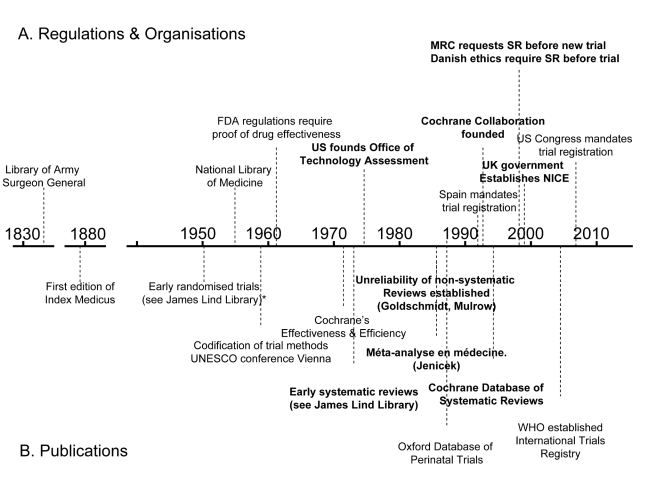
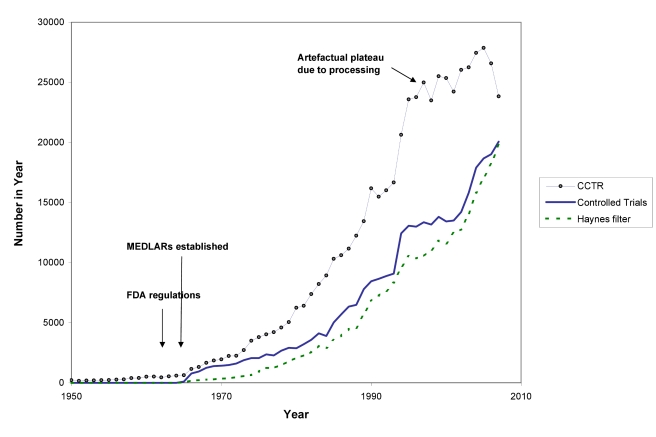
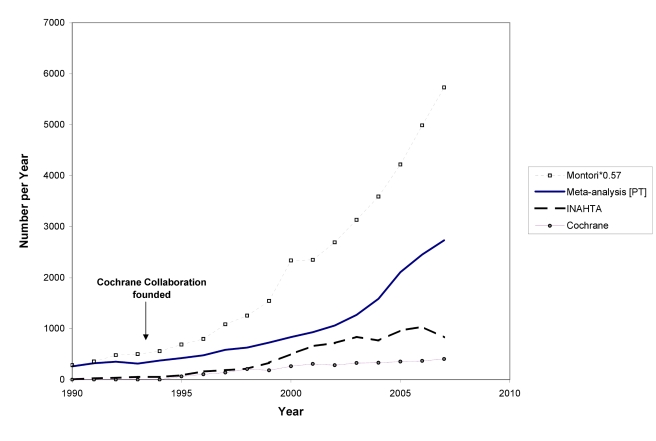
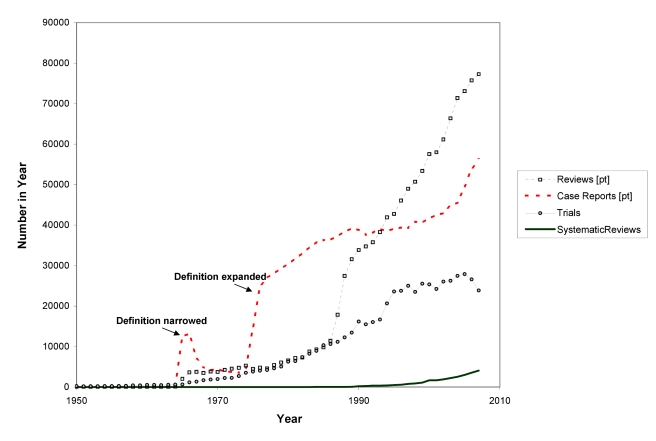
When Archie Cochrane reproached the medical profession for not having critical summaries of all randomised controlled trials, about 14 reports of trials were being published per day. There are now 75 trials, and 11 systematic reviews of trials, per day and a plateau in growth has not yet been reached. Although trials, reviews, and health technology assessments have undoubtedly had major impacts, the staple of medical literature synthesis remains the non-systematic narrative review. Only a small minority of trial reports are being analysed in up-to-date systematic reviews. Given the constraints, Archie Cochrane's vision will not be achieved without some serious changes in course. To meet the needs of patients, clinicians, and policymakers, unnecessary trials need to be reduced, and systematic reviews need to be prioritised. Streamlining and innovation in methods of systematic reviewing are necessary to enable valid answers to be found for most patient questions. Finally, clinicians and patients require open access to these important resources.
Overview
The claims and statistics of this paper haven’t been checked yet.
Free: it reads the open-access text and checks the first 5 claims that cite a source we can check. Create a free account to check every claim.
Integrity signals
Registry
Cites
Statistics
Figures
Verification
Claims the paper makes
The claims and statistics of this paper haven’t been checked yet.
Free: it reads the open-access text and checks the first 5 claims that cite a source we can check. Create a free account to check every claim.
Claims other papers make about this one
Each is checked against this paper’s own text: does it say what the citing paper says it does?
The source backs part of the claim, not all of it — or backs it for a different population, condition or comparison.
In the citing paper
“However, such reviews have become ever more complicated, due to the complexity of interventions being studied and the amount of evidence being published which needs to be incorporated [1].”
From Making progress with the automation of systematic reviews: principles of the International Collaboration for the Automation of Systematic Reviews (ICASR) (2018) · cites this paper as [1]
Experimental — accuracy not yet measuredThe source backs part of the claim, not all of it — or backs it for a different population, condition or comparison.
In the citing paper
“When the number of studies is an order of magnitude greater than that, the inability of narrative processes to adequately summarize the outcomes increases exponentially 2,3 .”
From Meta-analysis and the science of research synthesis (2018) · cites this paper as [3]
Experimental — accuracy not yet measuredThe source backs part of the claim, not all of it — or backs it for a different population, condition or comparison.
In the citing paper
“The number of RCTs published accelerates every year,3”
From Trialstreamer: A living, automatically updated database of clinical trial reports (2020) · cites this paper as [3]
Experimental — accuracy not yet measuredThe source backs part of the claim, not all of it — or backs it for a different population, condition or comparison.
In the citing paper
“Screening references is a time‐consuming step necessary for systematic reviews and guideline development.”
From Prioritising references for systematic reviews with RobotAnalyst: A user study (2018) · cites this paper as [4]
Experimental — accuracy not yet measuredThe source backs part of the claim, not all of it — or backs it for a different population, condition or comparison.
In the citing paper
“However, systematic review methodology and the language used to express that methodology, has progressed significantly since their appearance in healthcare in the 1970’s and 80’s [7, 8].”
From What kind of systematic review should I conduct? A proposed typology and guidance for systematic reviewers in the medical and health sciences (2018) · cites this paper as [7]
Experimental — accuracy not yet measured
5 more claims about this paper
Create a free account to see every claim other papers make about this one.
Self-check
Percentages, sums and reported differences re-computed from the paper’s own numbers.
The self-check needs the paper’s full text.
Citations
Cites
Avoidable waste in the production and reporting of research evidence
Chalmers, I., & Glasziou, P. (2009) · The Lancet · doi:10.1016/s0140-6736(09)60329-9 · Cited by 2,208
Self-citationMeta-Analysis in Clinical Research
L'ABBÉ, K. A., DETSKY, A. S., & O'ROURKE, K. (1987) · Annals of Internal Medicine · doi:10.7326/0003-4819-107-2-224 · Cited by 1,267 · cited 1×
“By the mid-1980s, the need to minimise the likelihood of being misled by the effects of biases and the play of chance in reviews of research evidence was being made evident in articles [10–14] and textbooks [15].”
BackgroundMeta-Analyses of Randomized Controlled Trials
Sacks, H. S., Berrier, J., Reitman, D., Ancona-Berk, V. A., & Chalmers, T. C. (1987) · New England Journal of Medicine · doi:10.1056/nejm198702193160806 · Cited by 1,250
Clinical Trial Registration: A Statement from the International Committee of Medical Journal Editors
De Angelis, C., Drazen, J. M., Frizelle, F. A., Haug, C., Hoey, J., Horton, R., Kotzin, S., Laine, C., Marusic, A., Overbeke, A. J. P. M., et al. (2004) · New England Journal of Medicine · doi:10.1056/nejme048225 · Cited by 1,241
Publication bias in clinical trials due to statistical significance or direction of trial results
Hopewell, S., Loudon, K., Clarke, M. J., Oxman, A. D., & Dickersin, K. (2009) · Cochrane Database of Systematic Reviews · doi:10.1002/14651858.mr000006.pub3 · Cited by 898
Epidemiology and reporting characteristics of systematic reviews.
Moher, D., Tetzlaff, J., Tricco, A. C., Sampson, M., & Altman, D. G. (2007) · PLoS Medicine · doi:10.1371/journal.pmed.0040078 · Cited by 891 · cited 2×
“variously estimated at between six and 16 (Cochrane reviews now include an average of over 12 trials per review [27,28]; M Clarke, personal communication), but many reviews have covered much the same territory.”
BackgroundThe Medical Review Article: State of the Science
MULROW, C. D. (1987) · Annals of Internal Medicine · doi:10.7326/0003-4819-106-3-485 · Cited by 856 · cited 1×
“By the mid-1980s, the need to minimise the likelihood of being misled by the effects of biases and the play of chance in reviews of research evidence was being made evident in articles [10–14] and textbooks [15].”
BackgroundHow Quickly Do Systematic Reviews Go Out of Date? A Survival Analysis
Shojania, K. G., Sampson, M., Ansari, M. T., Ji, J., Doucette, S., & Moher, D. (2007) · Annals of Internal Medicine · doi:10.7326/0003-4819-147-4-200708210-00179 · Cited by 838 · cited 1×
“now many years out of date [26].”
Avoidable Waste in the Production and Reporting of Research Evidence
Chalmers, I., & Glasziou, P. (2009) · Obstetrics & Gynecology · doi:10.1097/aog.0b013e3181c3020d · Cited by 600 · cited 1×
“duction and reporting of research evidence [29].”
Self-citationGuidelines for reading literature reviews.
Oxman, A. D., & Guyatt, G. H. (1988) · Europe PMC (PubMed Central) · Cited by 549
Research works printed but not linked: 3
- Duncan A 1773 Introduction. Medical and Philosophical Commentaries. Volume First, Part I. London: J Murray 6 7
- Chalmers I 1979 Randomized controlled trials of fetal monitoring 1973–1977. Thalhammer O Baumgarten K Pollak A Perinatal Medicine Stuttgart Georg Thieme 260 265
- Koch GG 2006 No improvement – still less than half of the Cochrane reviews are up to date. XIV Cochrane Colloquium, Dublin, Ireland
Cited by
Items 201–300 of 1,002
Tsujimoto, Y., Tsujimoto, H., Kataoka, Y., Kimachi, M., Shimizu, S., Ikenoue, T., Fukuma, S., Yamamoto, Y., & Fukuhara, S. (2017) · Journal of Clinical Epidemiology · doi:10.1016/j.jclinepi.2017.02.008 · Cited by 71
Hartling, L., Vandermeer, B., & Fernandes, R. M. (2014) · Evidence-Based Child Health: A Cochrane Review Journal · doi:10.1002/ebch.1968 · Cited by 67
Reality of evidence-based practice in palliative care.
Visser, C., Hadley, G., & Wee, B. (2015) · PubMed Central · doi:10.7497/j.issn.2095-3941.2015.0041 · Cited by 91
Paramedic literature search filters: optimised for clinicians and academics
Olaussen, A., Semple, W. M., Oteir, A., Todd, P., & Williams, B. A. (2017) · BMC Medical Informatics and Decision Making · doi:10.1186/s12911-017-0544-z · Cited by 69
Boutron, I., Créquit, P., Williams, H. C., Meerpohl, J. J., Craig, J. C., & Ravaud, P. (2020) · Journal of Clinical Epidemiology · doi:10.1016/j.jclinepi.2020.01.024 · Cited by 70
“4 Introduction Results of more than 30 000 new randomised controlled trials (RCTs) are published every year [1].”
BackgroundMallick, R., Mandal, S., & Chouhan, P. (2020) · Children and Youth Services Review · doi:10.1016/j.childyouth.2020.105478 · Cited by 77
Hopewell, S., Boutron, I., Altman, D. G., & Ravaud, P. (2013) · BMJ Open · doi:10.1136/bmjopen-2013-003342 · Cited by 66
Turner, L., Boutron, I., Hróbjartsson, A., Altman, D. G., & Moher, D. (2013) · Systematic Reviews · doi:10.1186/2046-4053-2-79 · Cited by 62
“One estimate suggests 75 trials and 11 systematic reviews are published daily [1].”
BackgroundCoster, S., Li, Y., & Norman, I. J. (2020) · International Journal of Nursing Studies · doi:10.1016/j.ijnurstu.2020.103698 · Cited by 70
Doherty, C., Keogh, A., Davenport, J., Lawlor, A., Smyth, B., & Caulfield, B. (2019) · Journal of science and medicine in sport · doi:10.1016/j.jsams.2019.09.013 · Cited by 72
Lum, M., Wolfenden, L., Jones, J. Z., Grady, A., Christian, H. E., Reilly, K., & Yoong, S. L. (2022) · International Journal of Environmental Research and Public Health · doi:10.3390/ijerph19041963 · Cited by 70
A Case Study of Discordant Overlapping Meta-Analyses: Vitamin D Supplements and Fracture
Bolland, M. J., & Grey, A. (2014) · PLoS ONE · doi:10.1371/journal.pone.0115934 · Cited by 59
“Introduction The number of meta-analyses published in recent years has dramatically increased [1, 2].”
BackgroundPublication Bias, with a Focus on Psychiatry: Causes and Solutions
Turner, E. H. (2013) · CNS Drugs · doi:10.1007/s40263-013-0067-9 · Cited by 70
“Because it is hard to manage the volume of new medical information [65], readers—”
BackgroundAgoritsas, T., Merglen, A., Courvoisier, D. S., Combescure, C., Garin, N., Perrier, A., & Perneger, T. (2012) · Journal of Medical Internet Research · doi:10.2196/jmir.2021 · Cited by 72
Helfer, B., Prosser, A., Samara, M. T., Geddes, J. R., Cipriani, A., Davis, J. M., Mavridis, D., Salanti, G., & Leucht, S. (2015) · BMC Medicine · doi:10.1186/s12916-015-0317-4 · Cited by 63
“The number of systematic reviews is growing rapidly in 2010 approximately 11 such studies were published per day, which corresponds to the number of randomized controlled trials (RCTs) published three decades ago [2].”
BackgroundMethodCommunication in Diagnostic Radiology: Meeting the Challenges of Complexity
Larson, D. B., Froehle, C. M., Johnson, N. D., & Towbin, A. J. (2014) · American Journal of Roentgenology · doi:10.2214/ajr.14.12949 · Cited by 68
“Systems Thinking The remarkable achievements that occur in modern health care, including in radiology, are based in large part on the explosion in scientific knowledge derived from decades of societal investments in biomedical research [20].”
BackgroundÄlgå, A., Eriksson, O., & Nordberg, M. E. (2020) · Journal of Medical Internet Research · doi:10.2196/21559 · Cited by 68
“Keeping track of the growing evidence base in medicine is becoming increasingly difficult owing to a large number of publications [7].”
Toward modernizing the systematic review pipeline in genetics: efficient updating via data mining
Wallace, B. C., Small, K., Brodley, C. E., Lau, J., Schmid, C. H., Bertram, L., Lill, C. M., Cohen, J. T., & Trikalinos, T. A. (2012) · Genetics in Medicine · doi:10.1038/gim.2012.7 · Cited by 62
Quality and transparency of overviews of systematic reviews
Li, L., Tian, J., Tian, H., Sun, R., Liu, Y., & Yang, K. (2012) · Journal of Evidence-Based Medicine · doi:10.1111/j.1756-5391.2012.01185.x · Cited by 62
“00 (4) Norway (4) 5, 10(9) 2009 (9) Neoplasms (1) ≥8.”
BackgroundInfluentialDevelopment of a Search Strategy for an Evidence Based Retrieval Service
Ho, G. J., Liew, S. M., Ng, C. J., Hisham Shunmugam, R., & Glasziou, P. (2016) · PLOS ONE · doi:10.1371/journal.pone.0167170 · Cited by 53
Self-citationRefining Boolean queries to identify relevant studies for systematic review updates
Alharbi, A., & Stevenson, M. (2020) · Journal of the American Medical Informatics Association · doi:10.1093/jamia/ocaa148 · Cited by 68
“The pace of scientific publication in medicine and related fields also means that evidence bases are constantly changing and review conclusions can quickly become out of date.(4) In fact, it has been estimated that 7% of systematic reviews in the medical field are already out of date by the time of publication, with a…”
BackgroundPowell-Smith, A., & Goldacre, B. (2016) · F1000Research · doi:10.12688/f1000research.10010.1 · Cited by 58
Marquez, C., Johnson, A. M., Jassemi, S., Park, J., Moore, J. E., Blaine, C., Bourdon, G., Chignell, M., Ellen, M. E., Fortin, J., et al. (2018) · Implementation Science · doi:10.1186/s13012-018-0779-9 · Cited by 61
“One of the major contributors to the suboptimal use of evidence is the volume of research evidence produced [5].”
BackgroundAutomating Risk of Bias Assessment for Clinical Trials
Marshall, I. J., Kuiper, J., & Wallace, B. C. (2015) · IEEE Journal of Biomedical and Health Informatics · doi:10.1109/jbhi.2015.2431314 · Cited by 59
Common Methodological Problems in Randomized Controlled Trials of Preventive Interventions
Steeger, C. M., Buckley, P. R., Pampel, F. C., Gust, C. J., & Hill, K. G. (2021) · Prevention Science · doi:10.1007/s11121-021-01263-2 · Cited by 63
Systematic reviews: A brief historical overview
Hong, Q. N., & Pluye, P. (2018) · Education for Information · doi:10.3233/efi-180219 · Cited by 73
“This means that it took less than 10 years (2007-2014) to reach the same number of documents (10 million) that took more than 100 years to index (1865 - 2006) (Bastian et al., 2010; U.S. National Library of Medicine, 2013).”
Abraha, I., Cruz-Jentoft, A. J., Soiza, R. L., O’Mahony, D., & Cherubini, A. (2015) · BMJ Open · doi:10.1136/bmjopen-2014-007488 · Cited by 60
“32 We opted to look for the evidence based on SRs, as most of the interventions are covered by SRs.”
UMLS-based data augmentation for natural language processing of clinical research literature
Kang, T., Perotte, A., Tang, Y., Ta, C., & Weng, C. (2021) · Journal of the American Medical Informatics Association · doi:10.1093/jamia/ocaa309 · Cited by 55
Becker, K. D., & Chorpita, B. F. (2023) · Journal of Clinical Child & Adolescent Psychology · doi:10.1080/15374416.2023.2169926 · Cited by 57
“…of the impact of interventions on an array of engagement outcomes as well as the extent to which these discrete engagement dimensions covary, not just within individual studies, not just within psychology, but across the 75 RCTs published per day in healthcare fields (Bastian et al., 2010).”
BackgroundChambergo‐Michilot, D., Diaz-Barrera, M. E., & Benites-Zapata, V. A. (2021) · Revista Peruana de Medicina Experimental y Salud Pública · doi:10.17843/rpmesp.2021.381.6501 · Cited by 82
“Definición La existencia de las UR responde a la abrumadora proliferación de RS, ya que se publican hasta 11 por día (15).”
BackgroundRoutine piloting in systematic reviews—a modified approach?
Long, L. (2014) · Systematic Reviews · doi:10.1186/2046-4053-3-77 · Cited by 60
“A continuous growth in the publication of research papers, together with advances in the ability to identify published reports of controlled trials and information about on-going and unpublished studies in registers, means that there is a constantly expanding volume of research papers available [5-7].”
BackgroundHoffmann, T. C., Walker, M. F., Langhorne, P., Eames, S., Thomas, E., & Glasziou, P. (2015) · BMJ Open · doi:10.1136/bmjopen-2015-009051 · Cited by 53
Self-citationBradbury‐Jones, C., Breckenridge, J. P., Clark, M., Herber, O. R., Jones, C., & Taylor, J. S. (2019) · International Journal of Social Research Methodology · doi:10.1080/13645579.2019.1576328 · Cited by 59
on behalf of the Ethics of Pragmatic Trials project, Nicholls, S. G., Carroll, K., Zwarenstein, M., Brehaut, J. C., Weijer, C., Hey, S. P., Goldstein, C. E., Graham, I. D., Grimshaw, J. M., et al. (2019) · Trials · doi:10.1186/s13063-019-3899-x · Cited by 56
“Studies have suggested as many as 75 trials are published on a daily basis [2].”
BackgroundData Market Design: A Systematic Literature Review
Driessen, S. W., Monsieur, G., & van den Heuvel, W. (2022) · IEEE Access · doi:10.1109/access.2022.3161478 · Cited by 68
“This is valuable to practitioners, who often do not have time to keep up with all available research [37], as well as scientists,”
BackgroundSystematic Reviews and Meta-Analyses of Diagnostic Test Accuracy: The PRISMA-DTA Statement
Frank, R. A., Bossuyt, P. M., & McInnes, M. D. F. (2018) · Radiology · doi:10.1148/radiol.2018180850 · Cited by 58
Dal-Ré, R., Ross, J. S., & Marušić, A. (2016) · Journal of Clinical Epidemiology · doi:10.1016/j.jclinepi.2016.01.017 · Cited by 55
“trials published in a 6-month period [28], it is difficult to generalize the results obtained to what is published by hundreds of journals publishing trial results.”
ResultAli, O., Osmanaj, V., Kwiatek, P., Alryalat, M. A. A., Chimhundu, R., & Dwivedi, Y. K. (2023) · Economic Research-Ekonomska Istraživanja · doi:10.1080/1331677x.2023.2210661 · Cited by 61
“It is challenging for marketing consultants and experts to check relevant articles for evidence-based practice because of the huge numbers of continually updating information systems (IS) and marketing publications (Bastian et al., 2010).”
Mijumbi, R., Oxman, A. D., Panisset, U. D. B., & Sewankambo, N. K. (2014) · Implementation Science · doi:10.1186/s13012-014-0114-z · Cited by 56
“A large amount of health research done globally to help improve lives and strengthen health systems results in about one million publications annually and another equal amount of unpublished work [1-3].”
Gates, A., Vandermeer, B., & Hartling, L. (2017) · Journal of Clinical Epidemiology · doi:10.1016/j.jclinepi.2017.12.015 · Cited by 60
Martin, E. K., Beckmann, M. M., Barnsbee, L. N., Halton, K. A., Merollini, K. M. D., & Graves, N. (2018) · BJOG An International Journal of Obstetrics & Gynaecology · doi:10.1111/1471-0528.15125 · Cited by 59
Soboczenski, F., Trikalinos, T. A., Kuiper, J., Bias, R. G., Wallace, B. C., & Marshall, I. J. (2019) · BMC Medical Informatics and Decision Making · doi:10.1186/s12911-019-0814-z · Cited by 53
The impact of theatre on social competencies: a meta-analytic evaluation
Lewandowska, K., & Węziak‐Białowolska, D. (2022) · Arts & Health · doi:10.1080/17533015.2022.2130947 · Cited by 63
“Although reviews and meta-analyses based on less than 10 studies are common and considered a valid source of evidence (Bastian et al., 2010; Mallett & Clarke, 2002), we recognize that larger samples could lead to more precise calculations of effect sizes and strengthen our findings.”
ResultRussell-Rose, T., & Chamberlain, J. (2017) · JMIR Medical Informatics · doi:10.2196/medinform.7680 · Cited by 49
“As the volume of published studies increases each year [1], the gap between research knowledge and professional practice grows [2].”
BackgroundSystematic reviews and meta-analysis
Askie, L. M., & Offringa, M. (2015) · Seminars in Fetal and Neonatal Medicine · doi:10.1016/j.siny.2015.10.002 · Cited by 60
Modernizing the systematic review process to inform comparative effectiveness: tools and methods
Wallace, B. C., Dahabreh, I. J., Schmid, C. H., Lau, J., & Trikalinos, T. A. (2013) · Journal of Comparative Effectiveness Research · doi:10.2217/cer.13.17 · Cited by 51
Research Note: The smallest worthwhile effect of a health intervention.
Ferreira, M. (2018) · Journal of Physiotherapy · doi:10.1016/j.jphys.2018.07.008 · Cited by 48
Sadoughi, F., Ali, O., & Erfannia, L. (2019) · Health Informatics Journal · doi:10.1177/1460458219879340 · Cited by 59
“30 Health personnel should not focus on a single study on which to base their decisions, since studies may have certain biases and the results may be inconclusive.”
BackgroundBecker, M., Neugebauer, E. A. M., & Eikermann, M. (2013) · Journal of Clinical Epidemiology · doi:10.1016/j.jclinepi.2013.06.021 · Cited by 61
“As with CPGs, there is still the need for innovative and efficient ways to update systematic reviews [4,28].”
Bucci, R., Montanaro, D., Rongo, R., Valletta, R., Michelotti, A., & D’Antò, V. (2019) · Journal of Oral Rehabilitation · doi:10.1111/joor.12766 · Cited by 51
Prioritization and sequential exclusion of articles in systematic reviews
Saif‐Ur‐Rahman, K., Hasan, M., Hossain, S., Anwar, I., Hirakawa, Y., & Yatsuya, H. (2022) · Campbell Systematic Reviews · doi:10.1002/cl2.1229 · Cited by 51
“The increase in the number of scientific articles being published in scientific journals is exponential (Bastian et al., 2010).”
BackgroundSystematic Reviews and Librarians: A Primer for Managers
Gore, G. C., & Jones, J. A. A. (2015) · Partnership The Canadian Journal of Library and Information Practice and Research · doi:10.21083/partnership.v10i1.3343 · Cited by 53
Hoffmann, T., Erueti, C., Thorning, S., & Glasziou, P. (2012) · BMJ · doi:10.1136/bmj.e3223 · Cited by 51
Self-citationThe role of crowdsourcing in industry 4.0: a systematic literature review
Vianna, F. R. P. M., Graeml, A. R., & Peinado, J. (2020) · International Journal of Computer Integrated Manufacturing · doi:10.1080/0951192x.2020.1736714 · Cited by 55
“…in the search for references, in the application of careful methods of selection and maintenance of papers in the corpus of analysis of a review study, allowing the summarisation of the information obtained in order to meet the objective de fi ned for the work (Bastian, Glasziou, and Chalmers 2010).”
MethodBougioukas, K. I., Bouras, E., Avgerinos, K. I., Dardavessis, T., & Haidich, A. (2020) · Health Information & Libraries Journal · doi:10.1111/hir.12318 · Cited by 57
Bibliometrics Study on Authorship Trends in Periodontal Literature From 1995 to 2010
Geminiani, A., Ercoli, C., Feng, C., & Caton, J. G. (2013) · Journal of Periodontology · doi:10.1902/jop.2013.130354 · Cited by 50
Evidence inference 2.0: More data, better models.
DeYoung, J., Lehman, E., Nye, B., Marshall, I., & Wallace, B. C. (2020) · Proceedings of the 19th SIGBioMed Workshop on Biomedical Language Processing · doi:10.18653/v1/2020.bionlp-1.13 · Cited by 49
A Critical Review of Literature Review Methodologies
Farrukh, A., & Sajjad, A. (2023) · Review of management literature · doi:10.1108/s2754-586520230000002006 · Cited by 60
Devine, E. B., Alfonso‐Cristancho, R., Devlin, A., Edwards, T. C., Farrokhi, E. T., Kessler, L. G., Lavallee, D. C., Patrick, D. L., Sullivan, S. D., Tarczy-Hornoch, P. Z., et al. (2013) · Journal of Clinical Epidemiology · doi:10.1016/j.jclinepi.2013.04.007 · Cited by 50
“007 evidence to guide decisions [1,2].”
Topic search filters: a systematic scoping review
Damarell, R. A., May, N., Hammond, S., Sladek, R. M., & Tieman, J. J. (2019) · Health Information & Libraries Journal · doi:10.1111/hir.12244 · Cited by 48
Identification of problems in search strategies in Cochrane Reviews
Franco, J. V. A., Garrote, V. L., Escobar Liquitay, C. M., & Vietto, V. (2018) · Research Synthesis Methods · doi:10.1002/jrsm.1302 · Cited by 48
“wileyonlinelibr information for a specific health topic.(1) For this purpose, systematic reviews (SRs) aim to identify, select, critically appraise, and synthesize a body of evidence within a specific area to assist these decisions.”
BackgroundCrowdsourcing the Citation Screening Process for Systematic Reviews: Validation Study
Nama, N., Sampson, M., Barrowman, N., Sandarage, R., Menon, K., Macartney, G., Murto, K., Vaccani, J.-P., Katz, S., Zemek, R., et al. (2019) · Journal of Medical Internet Research · doi:10.2196/12953 · Cited by 50
“Moreover, given the rise in the volume of primary literature, clinicians, scientists, and policy makers increasingly rely on SRs to inform decision making on important issues [2].”
Rathbone, J., Carter, M., Hoffmann, T., & Glasziou, P. (2016) · Systematic Reviews · doi:10.1186/s13643-016-0197-5 · Cited by 45
“With the growth [3] and scatter of research [4], finding relevant and up-to-date information is becoming increasingly difficult.”
BackgroundSelf-citationBhatia, A., Krieger, N., & Subramanian, S. V. (2019) · Milbank Quarterly · doi:10.1111/1468-0009.12376 · Cited by 52
Trial Forge Guidance 2: how to decide if a further Study Within A Trial (SWAT) is needed
Treweek, S. P., Bevan, S., Bower, P., Briel, M., Campbell, M., Christie, J., Collett, C., Cotton, S. C., Devane, D., Elfeky, A., et al. (2020) · Trials · doi:10.1186/s13063-019-3980-5 · Cited by 52
Heneghan, C., Mahtani, K. R., Goldacre, B. M., Godlee, F., Macdonald, H., & Jarvies, D. (2017) · BMJ Evidence-Based Medicine · doi:10.1136/ebmed-2017-j2973rep · Cited by 55
Systems of service: reflections on the moral foundations of improvement
Davidoff, F. (2011) · BMJ Quality & Safety · doi:10.1136/bmjqs.2010.046177 · Cited by 50
Hopewell, S., Boutron, I., Altman, D. G., & Ravaud, P. (2015) · Journal of Clinical Epidemiology · doi:10.1016/j.jclinepi.2015.03.006 · Cited by 47
“The number of published systematic reviews is growing rapidly and it is estimated that there are now approximately 75 new trials, and 11 new systematic reviews of trials published per day [3].”
BackgroundMeta-analysis of Systematic Literature Review Methods
Tikito, I., & Souissi, N. (2019) · International Journal of Modern Education and Computer Science · doi:10.5815/ijmecs.2019.02.03 · Cited by 52
“Seven years ago, the article [6] confirm researchers using the Systematic review approach are increasing every day, with 11 published articles per day and no signs of slowing down.”
BackgroundPrevention of non-communicable disease: best buys, wasted buys, and contestable buys
Isaranuwatchai, W., Teerawattananon, Y., Archer, R. A., Luz, A., Sharma, M., Rattanavipapong, W., Anothaisintawee, T., Bacon, R. L., Bhatia, T., Bump, J. B., et al. (2020) · BMJ · doi:10.1136/bmj.m141 · Cited by 47
CORE: A Global Aggregation Service for Open Access Papers
Knoth, P., Herrmannová, D., Cancellieri, M., Anastasiou, L., Pontika, N., Pearce, S., Gyawali, B., & Pride, D. (2023) · Scientific Data · doi:10.1038/s41597-023-02208-w · Cited by 79
Using machine learning to disentangle homonyms in large text corpora
Roll, U., Correia, R. A., & Berger‐Tal, O. (2018) · Conservation Biology · doi:10.1111/cobi.13044 · Cited by 46
“The data-deluge problem has been specifically raised with respect to systematic reviews (Bastian et al. 2010; Lefebvre et al. 2013 ever-expanding data.”
BackgroundSemEval-2023 Task 7: Multi-Evidence Natural Language Inference for Clinical Trial Data
Jullien, M., Valentino, M., Frost, H., O’Regan, P., Landers, D., & Freitas, A. (2023) · International Workshop on Semantic Evaluation (SemEval) · doi:10.18653/v1/2023.semeval-1.307 · Cited by 91
Laver, K., Cumming, R. G., Dyer, S. M., Agar, M. R., Anstey, K. J., Beattie, E., Brodaty, H., Broe, T., Clemson, L. M., Crotty, M., et al. (2016) · Australian Occupational Therapy Journal · doi:10.1111/1440-1630.12309 · Cited by 51
Collaboration challenges in systematic reviews: a survey of health sciences librarians
Nicholson, J., McCrillis, A. M., & Williams, J. D. (2017) · Journal of the Medical Library Association JMLA · doi:10.5195/jmla.2017.176 · Cited by 53
“One estimate correctly predicted that at least 4,000 reviews would be published annually by 2010 and that this number would continue to increase [8].”
BackgroundMoffa, M., Cronk, R., Fejfar, D., Dancausse, S., Padilla, L. A., & Bartram, J. (2018) · The Science of The Total Environment · doi:10.1016/j.scitotenv.2018.12.286 · Cited by 54
Pretraining to Recognize PICO Elements from Randomized Controlled Trial Literature.
Tian, K., Shirui, Z., & Chunhua, W. (2019) · Studies in Health Technology and Informatics · doi:10.3233/shti190209 · Cited by 45
“It is practically impossible to catch up with the explosion of the biomedical scientific literature and realize fast and effective evidence retrieval and decision making for EBM practitioners [2; 3].”
BackgroundBekhuis, T., Tseytlin, E., Mitchell, K. J., & Demner-Fushman, D. (2014) · PLoS ONE · doi:10.1371/journal.pone.0086277 · Cited by 45
“In 2010, Bastian et al [5] reported that while 75 trials and 11 SRs are published daily, synthesis seriously lags report of evidence in trials.”
BackgroundInfluentialSystematic reviews: Separating fact from fiction
Haddaway, N., & Bilotta, G. S. (2015) · Environment International · doi:10.1016/j.envint.2015.07.011 · Cited by 50
“SMmethods have been used by a variety of different evidence synthesis coordinating body reviews, for example by: the Evidence for Policy and Practice Information and Co-ordinating Centre (EPPI-Centre) to describe evidence on the relationship between obesity and sedentary behaviour in youngpeople (Kalra andNewman, 2009…”
BackgroundInfluentialCummings, J. A., Zagrodney, J. M., & Day, T. E. (2015) · PLOS ONE · doi:10.1371/journal.pone.0125208 · Cited by 23
“, human) trials are published in biomedical journals [10], open data policies are poised to impact countless individuals who participate in human subjects research.”
BackgroundWiles, L., Hooper, T. D., Hibbert, P. D., White, L., Mealing, N. M., Jaffé, A., Cowell, C. T. C. T., Harris, M., Runciman, W. B., Goldstein, S., et al. (2015) · BMJ Open · doi:10.1136/bmjopen-2015-007748 · Cited by 45
Reus, C. R., Phé, V., Dechartres, A., Grilo, N., Chartier-Kastler, E. J., & Mozer, P. (2018) · European Urology Focus · doi:10.1016/j.euf.2018.10.009 · Cited by 45
Coronado‐Zarco, R., de León, A. O.-G., García-Lara, A., Quinzaños-Fresnedo, J., Nava‐Bringas, T. I., & Macías‐Hernández, S. I. (2019) · Osteoporosis and Sarcopenia · doi:10.1016/j.afos.2019.09.005 · Cited by 50
Sakzewski, L., Ziviani, J. M., & Boyd, R. N. (2013) · Physical & Occupational Therapy In Pediatrics · doi:10.3109/01942638.2013.861890 · Cited by 51
“Rapid growth in the number of published clinical trials and systematic reviews (Bastian et al., 2010) and an increasing scatter of publications across a number of journals (Hoffmann et al., 2012) both limit practitioners’ abilities to keep up to date with evidence.”
BackgroundThomas, J. (2013) · OA Evidence-Based Medicine · doi:10.13172/2053-2636-1-2-1109 · Cited by 44
Multimodal prognostic features of seizure freedom in epilepsy surgery
Alim‐Marvasti, A., Vakharia, V. N., & Duncan, J. S. (2022) · Journal of Neurology Neurosurgery & Psychiatry · doi:10.1136/jnnp-2021-327119 · Cited by 49
Zakim, D. (2016) · Journal of Internal Medicine · doi:10.1111/joim.12509 · Cited by 47
“The knowledge base for medical practice is enormous, and is expanding continuously [21] and growing in complexity.”
BackgroundLurasidone in the Treatment of Bipolar Depression: Systematic Review of Systematic Reviews
Fornaro, M., Berardis, D. D., Perna, G., Solmi, M., Veronese, N., Orsolini, L., Buonaguro, E. F., Iasevoli, F., Köhler, C. A., Carvalho, A. F., et al. (2017) · BioMed Research International · doi:10.1155/2017/3084859 · Cited by 46
Cuenca‐Martínez, F., Reina‐Varona, Á., Castillo‐García, J., Touche, R. L., Angulo, S., & Suso‐Martí, L. (2021) · European Journal of Pain · doi:10.1002/ejp.1870 · Cited by 48
“Several authors are concerned about the massive number of reviews and meta- analyses that are published every day (Bastian et al., 2010; Ioannidis, 2016).”
BackgroundTowards Nuts and Bolts of Conducting Literature Review: A Typology of Literature Review
Taherdoost, H. (2023) · Electronics · doi:10.3390/electronics12040800 · Cited by 56
Approaches for supporting adolescents’ reading motivation: existing research and future priorities
Webber, C., Wilkinson, K., Duncan, L. G., & McGeown, S. P. (2023) · Frontiers in Education · doi:10.3389/feduc.2023.1254048 · Cited by 53
“NRs are common within medical literature (Bastian et al., 2010; Baethge et al., 2019) and are used to summarize a body of research in a way which allows greater flexibility in terms of selection criteria, thematic inclusion, and exploration of specific research questions than a systematic review (Baethge et al.”
BackgroundSocial histories of public health misinformation and infodemics: case studies of four pandemics
Jin, S. L., Kolis, J., Parker, J., Proctor, D. A., Prybylski, D., Wardle, C., Abad, N. S., Brookmeyer, K. A., Voegeli, C., & Chiou, H. (2024) · The Lancet Infectious Diseases · doi:10.1016/s1473-3099(24)00105-1 · Cited by 46
Large language models in clinical trials: applications, technical advances, and future directions
Lin, A., Wang, Z., Jiang, A., Chen, L., Qi, C., Zhu, L., Mou, W., Gan, W., Zeng, D., Xiao, M., et al. (2025) · BMC Medicine · doi:10.1186/s12916-025-04348-9 · Cited by 48
“However, with the exponential growth of medical literature in recent years, researchers are increasingly challenged to stay abreast of contemporary advancements [34].”
Improving the conduct of systematic reviews: a process mining perspective
Pham, B., Bagheri, E., Rios, P., Pourmasoumi, A., Robson, R. C., Hwee, J., Isaranuwatchai, W., Darvesh, N., Page, M. J., & Tricco, A. C. (2018) · Journal of Clinical Epidemiology · doi:10.1016/j.jclinepi.2018.06.011 · Cited by 40
Conceptual and practical classification of research reviews and other evidence synthesis products
Littell, J. H. (2018) · Campbell Systematic Reviews · doi:10.4073/cmdp.2018.1 · Cited by 51
“This rise in research synthesis activity is due, in part, to increased research output (Bastian et al., 2010) and awareness that synthesized evidence is more robust and potentially more useful than results of individual studies (Grimshaw, Eccles, Lavis, Hill, & Squires, 2012).”
ResultHacke, C., & Nunan, D. (2019) · Journal of Clinical Epidemiology · doi:10.1016/j.jclinepi.2019.11.015 · Cited by 46
Świerz, M. J., Storman, D., Zając, J., Koperny, M., Węglarz, P., Staśkiewicz, W., Górecka, M., Skuza, A. A., Wach, A. A., Kaluzinska, K., et al. (2021) · BMC Medical Research Methodology · doi:10.1186/s12874-021-01457-w · Cited by 43
A semi-supervised approach using label propagation to support citation screening
Kontonatsios, G., Brockmeier, A. J., Przybyła, P., McNaught, J., Mu, T., Goulermas, J. Y., & Ananiadou, S. (2017) · Journal of Biomedical Informatics · doi:10.1016/j.jbi.2017.06.018 · Cited by 42
“Such reviews are becoming increasingly difficult to manually develop and update due to the exponential growth of the biomedical literature (e.g., on average 75 trials and 11 systematic reviews are published daily in MEDLINE [18]).”
BackgroundScott, S. D., Albrecht, L., Given, L. M., Hartling, L., Johnson, D. W., Jabbour, M., & Klassen, T. P. (2017) · Canadian Journal of Emergency Medicine · doi:10.1017/cem.2016.406 · Cited by 41
A practical guide to preclinical systematic review and meta-analysis
Soliman, N., Rice, A. S. C., & Vollert, J. (2020) · Pain · doi:10.1097/j.pain.0000000000001974 · Cited by 44
“This problem is exacerbated by the exponentially increasing number of publications.(4) In preclinical neuropathic pain research, the number of articles retrieved by a systematic search rose from 6506 in 2012 to 12,614 in 2015.”
Background
Metadata
- Authors
- Bastian, H., Glasziou, P., & Chalmers, I.
- Affiliations
- Institute for Quality and Efficiency in Health Care (DE)
- Bond University (AU)
- Corresponding author
- Bastian, Hilda
- Venue
- PLoS Medicine
- Publisher
- Public Library of Science (PLoS)
- Published
- 2010-09-21
- Volume
- 7
- Issue
- 9
- Pages
- e1000326
- ISSN
- 1549-1277 (ISSN-L)
- 1549-1676
- PMC
- PMC2943439
- OpenAlex
- W2146668368
- Cited by
- 1,188
- References
- 32
- Citations by year
- 2026: 48 · 2025: 57 · 2024: 70 · 2023: 77 · 2022: 79 · 2021: 126 · 2020: 100 · 2019: 102 · 2018: 83 · 2017: 76 · 2016: 76 · 2015: 71 · 2014: 62 · 2013: 86 · 2012: 44
- FWCI
- 14.05
- Type
- journal article
- Language
- en
- Open access
- gold
- doi.org
- Locations
- PLoS Medicine (publishedVersion, cc-by)
- PubMed Central (publishedVersion, cc-by)
- PubMed (publishedVersion)
- e-publications@bond (Bond University) (submittedVersion)
- Bond University Research Portal (Bond University) (submittedVersion, cc-by)
- RePEc: Research Papers in Economics (submittedVersion)
- DOAJ (DOAJ: Directory of Open Access Journals) (submittedVersion, cc-by-sa)
- Funders
- Center for Clinical and Translational Research
- U.S. National Library of Medicine
- Topics
- Social Sciences › Decision Sciences › Statistics, Probability and Uncertainty › Meta-analysis and systematic reviews
- Social Sciences › Library and Information Sciences › Academic Publishing and Open Access
- Health Sciences › Medicine › Public Health, Environmental and Occupational Health › Clinical practice guidelines implementation
- Keywords
- systematic reviews, randomized controlled trials, health technology assessment, open access, evidence synthesis, Cochrane Collaboration
- MeSH terms
- Humans, Policy Making, Publishing, Review Literature as Topic, Randomized Controlled Trials as Topic, Evidence-Based Medicine, Biomedical Technology
About these checks
Registry, retraction, Cites and statistics results are computed, not judged, with one exception: a printed reference that no index lists is read once by a model before it counts as a citation error. Claims are extracted by a model and kept only when their quote appears verbatim in the text; each cited source is then checked, with a model’s help, for whether it says what the claim relies on. Those verdicts can be wrong — read the claim’s quote and the cited source before relying on one.
Statistics and arithmetic are recomputed, not judged.
Confidence bands are shown only for fields calibrated on our annotated test set. None is calibrated yet, so no band is shown.
What counts as a claim ›How we measure confidence ›How we check this ›
Are you an author, or do you see a problem with this page? Request a review
Data sources
Bibliographic data: Semantic Scholar, OpenAlex, Crossref.
Contains information from the Semantic Scholar Academic Graph Datasets, made available under the ODC Attribution License (ODC-BY 1.0).
Semantic Scholar’s data is described in: Kinney, R., et al. (2023). The Semantic Scholar Open Data Platform. arXiv:2301.10140.
